IMPORTANT: Do not use your browsers back button to go back to a question. This will leave the test in progress.
2025 P2
Test-summary
0 of 398 questions completed
Questions:
- 1
- 2
- 3
- 4
- 5
- 6
- 7
- 8
- 9
- 10
- 11
- 12
- 13
- 14
- 15
- 16
- 17
- 18
- 19
- 20
- 21
- 22
- 23
- 24
- 25
- 26
- 27
- 28
- 29
- 30
- 31
- 32
- 33
- 34
- 35
- 36
- 37
- 38
- 39
- 40
- 41
- 42
- 43
- 44
- 45
- 46
- 47
- 48
- 49
- 50
- 51
- 52
- 53
- 54
- 55
- 56
- 57
- 58
- 59
- 60
- 61
- 62
- 63
- 64
- 65
- 66
- 67
- 68
- 69
- 70
- 71
- 72
- 73
- 74
- 75
- 76
- 77
- 78
- 79
- 80
- 81
- 82
- 83
- 84
- 85
- 86
- 87
- 88
- 89
- 90
- 91
- 92
- 93
- 94
- 95
- 96
- 97
- 98
- 99
- 100
- 101
- 102
- 103
- 104
- 105
- 106
- 107
- 108
- 109
- 110
- 111
- 112
- 113
- 114
- 115
- 116
- 117
- 118
- 119
- 120
- 121
- 122
- 123
- 124
- 125
- 126
- 127
- 128
- 129
- 130
- 131
- 132
- 133
- 134
- 135
- 136
- 137
- 138
- 139
- 140
- 141
- 142
- 143
- 144
- 145
- 146
- 147
- 148
- 149
- 150
- 151
- 152
- 153
- 154
- 155
- 156
- 157
- 158
- 159
- 160
- 161
- 162
- 163
- 164
- 165
- 166
- 167
- 168
- 169
- 170
- 171
- 172
- 173
- 174
- 175
- 176
- 177
- 178
- 179
- 180
- 181
- 182
- 183
- 184
- 185
- 186
- 187
- 188
- 189
- 190
- 191
- 192
- 193
- 194
- 195
- 196
- 197
- 198
- 199
- 200
- 201
- 202
- 203
- 204
- 205
- 206
- 207
- 208
- 209
- 210
- 211
- 212
- 213
- 214
- 215
- 216
- 217
- 218
- 219
- 220
- 221
- 222
- 223
- 224
- 225
- 226
- 227
- 228
- 229
- 230
- 231
- 232
- 233
- 234
- 235
- 236
- 237
- 238
- 239
- 240
- 241
- 242
- 243
- 244
- 245
- 246
- 247
- 248
- 249
- 250
- 251
- 252
- 253
- 254
- 255
- 256
- 257
- 258
- 259
- 260
- 261
- 262
- 263
- 264
- 265
- 266
- 267
- 268
- 269
- 270
- 271
- 272
- 273
- 274
- 275
- 276
- 277
- 278
- 279
- 280
- 281
- 282
- 283
- 284
- 285
- 286
- 287
- 288
- 289
- 290
- 291
- 292
- 293
- 294
- 295
- 296
- 297
- 298
- 299
- 300
- 301
- 302
- 303
- 304
- 305
- 306
- 307
- 308
- 309
- 310
- 311
- 312
- 313
- 314
- 315
- 316
- 317
- 318
- 319
- 320
- 321
- 322
- 323
- 324
- 325
- 326
- 327
- 328
- 329
- 330
- 331
- 332
- 333
- 334
- 335
- 336
- 337
- 338
- 339
- 340
- 341
- 342
- 343
- 344
- 345
- 346
- 347
- 348
- 349
- 350
- 351
- 352
- 353
- 354
- 355
- 356
- 357
- 358
- 359
- 360
- 361
- 362
- 363
- 364
- 365
- 366
- 367
- 368
- 369
- 370
- 371
- 372
- 373
- 374
- 375
- 376
- 377
- 378
- 379
- 380
- 381
- 382
- 383
- 384
- 385
- 386
- 387
- 388
- 389
- 390
- 391
- 392
- 393
- 394
- 395
- 396
- 397
- 398
Information
This is a 25 question test covering (P2)
Emailing your test score: In order for your test to register in our system and receive your test score via email, you must click on the blue Finish Test button at the end of the test.
You have already completed the quiz before. Hence you can not start it again.
Test is loading...
You must sign in or sign up to start the quiz.
You have to finish following quiz, to start this quiz:
Results
0 of 398 questions answered correctly
Your time:
Time has elapsed
You have reached 0 of 0 points, (0)
| Average score |
|
| Your score |
|
Categories
- Not categorized 0%
- Catalog and Information Systems Skills 0%
- Communications 0%
- Customer Relations and Sales Skills 0%
- General Operations 0%
- Inventory Management 0%
- Merchandising 0%
- Product Knowledge 0%
- Shop Operations 0%
- Vehicle Identification 0%
- Vehicle Systems Knowledge 0%
-
Your score is noted above and is also broken out by Content Area. Click on the Restart test button to start a new test or go back to the All Tests page to take a different test.
Clicking the Restart test button will start a fresh test with some different questions presented in a new random order.
Clicking on the View questions button will open the entire test below for you to review your answers and help reinforce the material.
- 1
- 2
- 3
- 4
- 5
- 6
- 7
- 8
- 9
- 10
- 11
- 12
- 13
- 14
- 15
- 16
- 17
- 18
- 19
- 20
- 21
- 22
- 23
- 24
- 25
- 26
- 27
- 28
- 29
- 30
- 31
- 32
- 33
- 34
- 35
- 36
- 37
- 38
- 39
- 40
- 41
- 42
- 43
- 44
- 45
- 46
- 47
- 48
- 49
- 50
- 51
- 52
- 53
- 54
- 55
- 56
- 57
- 58
- 59
- 60
- 61
- 62
- 63
- 64
- 65
- 66
- 67
- 68
- 69
- 70
- 71
- 72
- 73
- 74
- 75
- 76
- 77
- 78
- 79
- 80
- 81
- 82
- 83
- 84
- 85
- 86
- 87
- 88
- 89
- 90
- 91
- 92
- 93
- 94
- 95
- 96
- 97
- 98
- 99
- 100
- 101
- 102
- 103
- 104
- 105
- 106
- 107
- 108
- 109
- 110
- 111
- 112
- 113
- 114
- 115
- 116
- 117
- 118
- 119
- 120
- 121
- 122
- 123
- 124
- 125
- 126
- 127
- 128
- 129
- 130
- 131
- 132
- 133
- 134
- 135
- 136
- 137
- 138
- 139
- 140
- 141
- 142
- 143
- 144
- 145
- 146
- 147
- 148
- 149
- 150
- 151
- 152
- 153
- 154
- 155
- 156
- 157
- 158
- 159
- 160
- 161
- 162
- 163
- 164
- 165
- 166
- 167
- 168
- 169
- 170
- 171
- 172
- 173
- 174
- 175
- 176
- 177
- 178
- 179
- 180
- 181
- 182
- 183
- 184
- 185
- 186
- 187
- 188
- 189
- 190
- 191
- 192
- 193
- 194
- 195
- 196
- 197
- 198
- 199
- 200
- 201
- 202
- 203
- 204
- 205
- 206
- 207
- 208
- 209
- 210
- 211
- 212
- 213
- 214
- 215
- 216
- 217
- 218
- 219
- 220
- 221
- 222
- 223
- 224
- 225
- 226
- 227
- 228
- 229
- 230
- 231
- 232
- 233
- 234
- 235
- 236
- 237
- 238
- 239
- 240
- 241
- 242
- 243
- 244
- 245
- 246
- 247
- 248
- 249
- 250
- 251
- 252
- 253
- 254
- 255
- 256
- 257
- 258
- 259
- 260
- 261
- 262
- 263
- 264
- 265
- 266
- 267
- 268
- 269
- 270
- 271
- 272
- 273
- 274
- 275
- 276
- 277
- 278
- 279
- 280
- 281
- 282
- 283
- 284
- 285
- 286
- 287
- 288
- 289
- 290
- 291
- 292
- 293
- 294
- 295
- 296
- 297
- 298
- 299
- 300
- 301
- 302
- 303
- 304
- 305
- 306
- 307
- 308
- 309
- 310
- 311
- 312
- 313
- 314
- 315
- 316
- 317
- 318
- 319
- 320
- 321
- 322
- 323
- 324
- 325
- 326
- 327
- 328
- 329
- 330
- 331
- 332
- 333
- 334
- 335
- 336
- 337
- 338
- 339
- 340
- 341
- 342
- 343
- 344
- 345
- 346
- 347
- 348
- 349
- 350
- 351
- 352
- 353
- 354
- 355
- 356
- 357
- 358
- 359
- 360
- 361
- 362
- 363
- 364
- 365
- 366
- 367
- 368
- 369
- 370
- 371
- 372
- 373
- 374
- 375
- 376
- 377
- 378
- 379
- 380
- 381
- 382
- 383
- 384
- 385
- 386
- 387
- 388
- 389
- 390
- 391
- 392
- 393
- 394
- 395
- 396
- 397
- 398
- Answered
- Review
-
Question 1 of 398
1. Question
Category: Catalog and Information Systems SkillsTwo parts specialists are discussing how to determine the proper resource to identify a needed part for a vehicle repair. Specialist A says that a parts specialist should use the vehicle’s service manual to find the part number based on the system being repaired. Specialist B says that a parts specialist should rely on the technician’s description of the part’s appearance and location to select the correct part from the inventory. Which specialist is correct?
CorrectThe correct answer is C. Specialist A and Specialist B together provide valid approaches for determining the proper resource to identify a needed part, making C the best answer. Specialist A is correct because the vehicle’s service manual is a primary, authoritative resource that lists exact part numbers, specifications, and diagrams for components based on the system being repaired. For example, if a technician is replacing a serpentine belt, the service manual will specify the correct belt length and type for the vehicle’s engine configuration, ensuring accuracy. Specialist B is also correct because the technician’s description of a part’s appearance and location (e.g., “a small black relay near the battery”) can be a practical resource in situations where the manual isn’t immediately available or when confirming the part in stock matches the repair context. While A offers precision and B offers flexibility, both methods are straightforward applications of knowledge a parts specialist can use effectively depending on the situation, making C the most comprehensive and correct choice.
Incorrect Answers:
Answer A: Specialist A’s approach might seem like the best choice to someone who values documented accuracy, as service manuals provide detailed, manufacturer-approved data—such as a part number for a specific fuel pump tied to a VIN or model year. This method minimizes guesswork and is ideal for complex repairs. However, A alone isn’t the best answer because it overlooks scenarios where a manual isn’t accessible (e.g., a digital system is down) or when the technician’s firsthand observation can quickly confirm a part’s identity from inventory. Specialist B’s input adds a practical backup that’s often used in real-world shops, making A close to correct but incomplete without B’s contribution.
Answer B: Specialist B’s method might appeal to someone who thinks a technician’s description—like “a round sensor with two pins under the hood”—can often pinpoint a part, especially in a fast-paced environment where inventory is visually checked. This approach can work, particularly for common parts like fuses or filters, and leverages the technician’s repair context. However, B alone is not the best because descriptions can be vague or inaccurate (e.g., mistaking a coolant sensor for an oil sensor), risking errors without a definitive resource like a manual. Compared to A’s reliable data, B’s method is secondary and less consistent, making it close but not optimal as the sole answer.
Answer D: Choosing “neither” might tempt someone who believes a parts catalog or VIN decoder is the only proper resource, arguing that manuals and descriptions miss broader options or updates. However, Specialist A’s service manual is a standard, accurate tool for identifying parts, and B’s technician input is a practical supplement in many cases. Dismissing both ignores their combined utility—manuals for precision, descriptions for confirmation. D is incorrect because C captures two legitimate, ASE-aligned methods, making “neither” an unnecessary rejection of workable solutions.
IncorrectThe correct answer is C. Specialist A and Specialist B together provide valid approaches for determining the proper resource to identify a needed part, making C the best answer. Specialist A is correct because the vehicle’s service manual is a primary, authoritative resource that lists exact part numbers, specifications, and diagrams for components based on the system being repaired. For example, if a technician is replacing a serpentine belt, the service manual will specify the correct belt length and type for the vehicle’s engine configuration, ensuring accuracy. Specialist B is also correct because the technician’s description of a part’s appearance and location (e.g., “a small black relay near the battery”) can be a practical resource in situations where the manual isn’t immediately available or when confirming the part in stock matches the repair context. While A offers precision and B offers flexibility, both methods are straightforward applications of knowledge a parts specialist can use effectively depending on the situation, making C the most comprehensive and correct choice.
Incorrect Answers:
Answer A: Specialist A’s approach might seem like the best choice to someone who values documented accuracy, as service manuals provide detailed, manufacturer-approved data—such as a part number for a specific fuel pump tied to a VIN or model year. This method minimizes guesswork and is ideal for complex repairs. However, A alone isn’t the best answer because it overlooks scenarios where a manual isn’t accessible (e.g., a digital system is down) or when the technician’s firsthand observation can quickly confirm a part’s identity from inventory. Specialist B’s input adds a practical backup that’s often used in real-world shops, making A close to correct but incomplete without B’s contribution.
Answer B: Specialist B’s method might appeal to someone who thinks a technician’s description—like “a round sensor with two pins under the hood”—can often pinpoint a part, especially in a fast-paced environment where inventory is visually checked. This approach can work, particularly for common parts like fuses or filters, and leverages the technician’s repair context. However, B alone is not the best because descriptions can be vague or inaccurate (e.g., mistaking a coolant sensor for an oil sensor), risking errors without a definitive resource like a manual. Compared to A’s reliable data, B’s method is secondary and less consistent, making it close but not optimal as the sole answer.
Answer D: Choosing “neither” might tempt someone who believes a parts catalog or VIN decoder is the only proper resource, arguing that manuals and descriptions miss broader options or updates. However, Specialist A’s service manual is a standard, accurate tool for identifying parts, and B’s technician input is a practical supplement in many cases. Dismissing both ignores their combined utility—manuals for precision, descriptions for confirmation. D is incorrect because C captures two legitimate, ASE-aligned methods, making “neither” an unnecessary rejection of workable solutions.
-
Question 2 of 398
2. Question
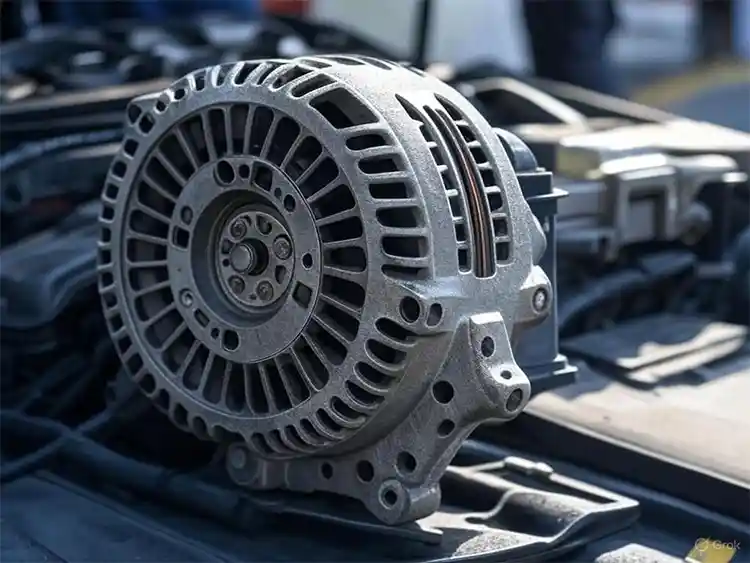
Category: Catalog and Information Systems SkillsA parts specialist is tasked with identifying the correct replacement alternator for a 2018 Ford F-150 with a 3.5L EcoBoost engine. How should the parts specialist determine the proper resource to identify the needed part?
CorrectThe correct answer is D. The manufacturer’s parts catalog, accessed using the vehicle identification number (VIN), is the most reliable and precise resource for identifying the correct replacement alternator. The VIN provides specific details about the vehicle, including its make, model, engine type, production date, and trim level, all of which can affect alternator specifications (e.g., amperage output or pulley type). For a 2018 Ford F-150 with a 3.5L EcoBoost engine, variations in alternator design may exist due to options like towing packages or heavy-duty electrical systems. The manufacturer’s catalog, often available through dealership resources or official parts databases, ensures the parts specialist selects the exact part number intended for that vehicle, minimizing errors and ensuring compatibility.
Incorrect Answers:
Answer A: While the owner’s manual provides useful information about the vehicle, such as maintenance schedules or general component descriptions, it does not typically include specific part numbers for replacement components like an alternator. The manual is designed for consumer use, not for parts identification in a professional setting. This option is close to being correct because it involves a vehicle-specific resource, but it lacks the precision and detail required for a parts specialist, making it less effective than the manufacturer’s catalog.
Answer B: A general automotive parts catalog (e.g., from an aftermarket supplier) can provide alternator options based on the vehicle’s make, model, and engine (2018 Ford F-150, 3.5L EcoBoost). However, these catalogs often list multiple compatible parts, including aftermarket alternatives, and may not account for specific VIN-related variations like production changes or optional equipment. This makes it less precise than the manufacturer’s catalog, though it’s a plausible resource, which makes it close to correct but not the best choice for ensuring an exact match.
Answer C: Online forums can offer anecdotal advice or experiences from other technicians, but they are not a formal or reliable resource for parts identification. Information from forums may be outdated, incomplete, or specific to a different vehicle configuration, leading to potential errors. This option is the least accurate, as it relies on subjective input rather than verified data, making it an inappropriate choice for a parts specialist aiming to identify the correct alternator with certainty.
IncorrectThe correct answer is D. The manufacturer’s parts catalog, accessed using the vehicle identification number (VIN), is the most reliable and precise resource for identifying the correct replacement alternator. The VIN provides specific details about the vehicle, including its make, model, engine type, production date, and trim level, all of which can affect alternator specifications (e.g., amperage output or pulley type). For a 2018 Ford F-150 with a 3.5L EcoBoost engine, variations in alternator design may exist due to options like towing packages or heavy-duty electrical systems. The manufacturer’s catalog, often available through dealership resources or official parts databases, ensures the parts specialist selects the exact part number intended for that vehicle, minimizing errors and ensuring compatibility.
Incorrect Answers:
Answer A: While the owner’s manual provides useful information about the vehicle, such as maintenance schedules or general component descriptions, it does not typically include specific part numbers for replacement components like an alternator. The manual is designed for consumer use, not for parts identification in a professional setting. This option is close to being correct because it involves a vehicle-specific resource, but it lacks the precision and detail required for a parts specialist, making it less effective than the manufacturer’s catalog.
Answer B: A general automotive parts catalog (e.g., from an aftermarket supplier) can provide alternator options based on the vehicle’s make, model, and engine (2018 Ford F-150, 3.5L EcoBoost). However, these catalogs often list multiple compatible parts, including aftermarket alternatives, and may not account for specific VIN-related variations like production changes or optional equipment. This makes it less precise than the manufacturer’s catalog, though it’s a plausible resource, which makes it close to correct but not the best choice for ensuring an exact match.
Answer C: Online forums can offer anecdotal advice or experiences from other technicians, but they are not a formal or reliable resource for parts identification. Information from forums may be outdated, incomplete, or specific to a different vehicle configuration, leading to potential errors. This option is the least accurate, as it relies on subjective input rather than verified data, making it an inappropriate choice for a parts specialist aiming to identify the correct alternator with certainty.
-
Question 3 of 398
3. Question
Category: Catalog and Information Systems SkillsA parts specialist needs to identify the correct replacement fuel pump for a 2020 Chevrolet Silverado 1500 with a 5.3L V8 engine. The vehicle has been modified with an aftermarket performance package that includes a high-output fuel system. How should the parts specialist determine the proper resource to identify the needed part?
CorrectThe correct answer is A. Identifying the correct fuel pump for a modified 2020 Chevrolet Silverado 1500 requires analysis and reasoning due to the aftermarket performance package. The vehicle’s VIN, when used with the manufacturer’s parts catalog, provides the baseline OEM fuel pump specification for a stock 5.3L V8 engine. However, the high-output fuel system modification means the stock pump may have been replaced with an aftermarket unit designed for increased flow or pressure. To ensure accuracy, the parts specialist must cross-reference the VIN-derived OEM data with the aftermarket supplier’s specifications (e.g., from the performance package manufacturer) to confirm compatibility with the modified system. This dual-step process accounts for both the vehicle’s original configuration and its current modified state, making it the best approach. The moderate difficulty stems from the need to reason through the impact of the modification and select a resource combination that addresses it.
Incorrect Answers:
Answer B: The OEM parts catalog, accessed via the VIN, is a reliable resource for identifying the factory-specified fuel pump for a 2020 Chevrolet Silverado 1500 with a 5.3L V8. However, this approach assumes the vehicle remains in its stock configuration. Since the truck has an aftermarket performance package with a high-output fuel system, the OEM pump may no longer be suitable (e.g., insufficient flow rate). This option is close to correct because it’s a standard and precise method for unmodified vehicles, but it fails to account for the modification, making it incomplete for this scenario.
Answer C: A general aftermarket parts catalog can list fuel pumps compatible with a 2020 Chevrolet Silverado 1500, 5.3L V8, and may even include high-performance options. However, without specific reference to the aftermarket performance package installed, the specialist risks selecting a pump that doesn’t match the exact flow or pressure requirements of the modified system. This option is close to correct because it considers aftermarket parts, which aligns with the vehicle’s modification, but it lacks the precision of verifying with the specific supplier’s specs, making it less reliable than cross-referencing with the VIN and supplier data.
Answer D: Reviewing the service history could reveal the part number of the fuel pump installed with the performance package, assuming the modification was documented. However, this method relies on the availability and accuracy of past records, which may not exist or may reflect an outdated or incorrect part (e.g., if the pump was replaced again). It’s an impractical primary resource compared to directly accessing current manufacturer and supplier data, as it introduces unnecessary uncertainty and doesn’t guarantee compatibility with the current setup. This option is less effective and requires assumptions, making it the least suitable choice.
IncorrectThe correct answer is A. Identifying the correct fuel pump for a modified 2020 Chevrolet Silverado 1500 requires analysis and reasoning due to the aftermarket performance package. The vehicle’s VIN, when used with the manufacturer’s parts catalog, provides the baseline OEM fuel pump specification for a stock 5.3L V8 engine. However, the high-output fuel system modification means the stock pump may have been replaced with an aftermarket unit designed for increased flow or pressure. To ensure accuracy, the parts specialist must cross-reference the VIN-derived OEM data with the aftermarket supplier’s specifications (e.g., from the performance package manufacturer) to confirm compatibility with the modified system. This dual-step process accounts for both the vehicle’s original configuration and its current modified state, making it the best approach. The moderate difficulty stems from the need to reason through the impact of the modification and select a resource combination that addresses it.
Incorrect Answers:
Answer B: The OEM parts catalog, accessed via the VIN, is a reliable resource for identifying the factory-specified fuel pump for a 2020 Chevrolet Silverado 1500 with a 5.3L V8. However, this approach assumes the vehicle remains in its stock configuration. Since the truck has an aftermarket performance package with a high-output fuel system, the OEM pump may no longer be suitable (e.g., insufficient flow rate). This option is close to correct because it’s a standard and precise method for unmodified vehicles, but it fails to account for the modification, making it incomplete for this scenario.
Answer C: A general aftermarket parts catalog can list fuel pumps compatible with a 2020 Chevrolet Silverado 1500, 5.3L V8, and may even include high-performance options. However, without specific reference to the aftermarket performance package installed, the specialist risks selecting a pump that doesn’t match the exact flow or pressure requirements of the modified system. This option is close to correct because it considers aftermarket parts, which aligns with the vehicle’s modification, but it lacks the precision of verifying with the specific supplier’s specs, making it less reliable than cross-referencing with the VIN and supplier data.
Answer D: Reviewing the service history could reveal the part number of the fuel pump installed with the performance package, assuming the modification was documented. However, this method relies on the availability and accuracy of past records, which may not exist or may reflect an outdated or incorrect part (e.g., if the pump was replaced again). It’s an impractical primary resource compared to directly accessing current manufacturer and supplier data, as it introduces unnecessary uncertainty and doesn’t guarantee compatibility with the current setup. This option is less effective and requires assumptions, making it the least suitable choice.
-
Question 4 of 398
4. Question
Category: Catalog and Information Systems SkillsA parts specialist needs to identify the correct replacement brake pads for a 2022 Toyota Camry. How should the parts specialist determine the proper resource to identify the needed part?
CorrectThe correct answer is B. For a parts specialist, the manufacturer’s parts catalog is the most straightforward and reliable resource to identify the correct replacement brake pads for a 2022 Toyota Camry. This catalog, provided by Toyota, lists parts specifically designed for the vehicle based on basic identifiers like make (Toyota), model (Camry), and year (2022). It ensures the brake pads match the vehicle’s original equipment specifications, such as size, material, and mounting design. This is a very easy question because it requires only basic recall of a standard parts identification method, with no complex analysis needed. The manufacturer’s catalog is the best choice due to its direct link to the vehicle’s factory standards.
Incorrect Answers:
Answer A: Asking a technician could provide a part number, especially if they’ve worked on a 2022 Toyota Camry before, making this option close to correct. However, it relies on the technician’s memory or availability, which isn’t a formal resource. It’s less reliable than the manufacturer’s catalog because human error or lack of specific knowledge about that exact vehicle could lead to an incorrect part, especially if variations exist (e.g., hybrid vs. non-hybrid Camry). This isn’t the best method for consistent accuracy.
Answer C: An aftermarket parts website can identify brake pads for a 2022 Toyota Camry by make and model, often providing compatible options, which makes this close to correct. However, these sites may offer multiple alternatives (e.g., ceramic vs. semi-metallic pads) that differ from the OEM specs, and they might not account for specific trim or regional variations. While useful, this resource is less authoritative than the manufacturer’s catalog, which guarantees the exact factory part match, making it a secondary choice.
Answer D: A general automotive repair manual might mention brake pad replacement for a 2022 Toyota Camry, but it’s not designed for parts identification. It typically provides repair procedures, not specific part numbers, and lacks the detailed, vehicle-specific cataloging of the manufacturer’s resource. This option is the least effective because it doesn’t serve the primary purpose of a parts specialist’s task, requiring more effort and offering less precision.
IncorrectThe correct answer is B. For a parts specialist, the manufacturer’s parts catalog is the most straightforward and reliable resource to identify the correct replacement brake pads for a 2022 Toyota Camry. This catalog, provided by Toyota, lists parts specifically designed for the vehicle based on basic identifiers like make (Toyota), model (Camry), and year (2022). It ensures the brake pads match the vehicle’s original equipment specifications, such as size, material, and mounting design. This is a very easy question because it requires only basic recall of a standard parts identification method, with no complex analysis needed. The manufacturer’s catalog is the best choice due to its direct link to the vehicle’s factory standards.
Incorrect Answers:
Answer A: Asking a technician could provide a part number, especially if they’ve worked on a 2022 Toyota Camry before, making this option close to correct. However, it relies on the technician’s memory or availability, which isn’t a formal resource. It’s less reliable than the manufacturer’s catalog because human error or lack of specific knowledge about that exact vehicle could lead to an incorrect part, especially if variations exist (e.g., hybrid vs. non-hybrid Camry). This isn’t the best method for consistent accuracy.
Answer C: An aftermarket parts website can identify brake pads for a 2022 Toyota Camry by make and model, often providing compatible options, which makes this close to correct. However, these sites may offer multiple alternatives (e.g., ceramic vs. semi-metallic pads) that differ from the OEM specs, and they might not account for specific trim or regional variations. While useful, this resource is less authoritative than the manufacturer’s catalog, which guarantees the exact factory part match, making it a secondary choice.
Answer D: A general automotive repair manual might mention brake pad replacement for a 2022 Toyota Camry, but it’s not designed for parts identification. It typically provides repair procedures, not specific part numbers, and lacks the detailed, vehicle-specific cataloging of the manufacturer’s resource. This option is the least effective because it doesn’t serve the primary purpose of a parts specialist’s task, requiring more effort and offering less precision.
-
Question 5 of 398
5. Question
Category: Catalog and Information Systems SkillsA parts specialist is tasked with identifying a replacement fuel pump for a 2018 Ford F-150 with a 3.5L EcoBoost engine and a specific bed length that affects fuel tank configuration. The specialist must select the most appropriate computer resource to ensure the correct part is identified. How should the parts specialist determine the best computer resource to use?
CorrectThe correct answer is C. The OEM (Original Equipment Manufacturer) service information system is the best computer resource for this scenario because it provides detailed, vehicle-specific parts identification tied directly to the vehicle’s build data, such as the VIN, engine type, and configuration options (e.g., bed length affecting the fuel tank and pump). For a 2018 Ford F-150 with a 3.5L EcoBoost, variations in fuel pump design could depend on factors like tank size or mounting, which are precisely documented in the OEM system. This resource integrates factory-level data, ensuring the parts specialist accounts for all variables in a multi-step process: identifying the vehicle, cross-referencing build-specific details, and confirming the exact part number. This requires deeper understanding of resource capabilities and multi-step reasoning to match the part to the vehicle’s unique configuration.
Incorrect Answers:
Answer A: This is incorrect because a general online parts retailer’s website, while user-friendly and vehicle-specific to some extent, often lacks the granularity needed for complex configurations like bed length or engine-specific fuel pump variations. These sites typically rely on broad compatibility data and may not account for all OEM build nuances, risking an incorrect part selection. This answer is close to being correct because it involves a computer resource tied to the vehicle’s make and model, but it falls short of the precision and depth provided by an OEM system, making it less reliable for this multi-step identification task.
Answer B: This is incorrect because, while a manufacturer-specific electronic parts catalog (e.g., Ford’s parts catalog) is a strong resource and uses VIN filtering, it is typically a standalone tool focused solely on parts lookup and may not integrate the full scope of vehicle build data (e.g., production changes or service notes) available in an OEM service information system. This answer is very close to correct, as it’s manufacturer-specific and VIN-based, but it lacks the comprehensive tie-in to build-specific details that the OEM system offers, making it slightly less optimal for ensuring accuracy in this complex scenario.
Answer D: This is incorrect because an aftermarket parts database, while useful for cross-referencing parts across multiple vehicles, often provides generalized compatibility rather than precise, OEM-level build-specific data. For a fuel pump tied to a specific bed length and engine, this resource might list multiple options without clarifying which one matches the exact configuration, increasing the risk of error. This answer serves as a distractor, as it’s a plausible computer resource but lacks the depth and specificity required for the task.
IncorrectThe correct answer is C. The OEM (Original Equipment Manufacturer) service information system is the best computer resource for this scenario because it provides detailed, vehicle-specific parts identification tied directly to the vehicle’s build data, such as the VIN, engine type, and configuration options (e.g., bed length affecting the fuel tank and pump). For a 2018 Ford F-150 with a 3.5L EcoBoost, variations in fuel pump design could depend on factors like tank size or mounting, which are precisely documented in the OEM system. This resource integrates factory-level data, ensuring the parts specialist accounts for all variables in a multi-step process: identifying the vehicle, cross-referencing build-specific details, and confirming the exact part number. This requires deeper understanding of resource capabilities and multi-step reasoning to match the part to the vehicle’s unique configuration.
Incorrect Answers:
Answer A: This is incorrect because a general online parts retailer’s website, while user-friendly and vehicle-specific to some extent, often lacks the granularity needed for complex configurations like bed length or engine-specific fuel pump variations. These sites typically rely on broad compatibility data and may not account for all OEM build nuances, risking an incorrect part selection. This answer is close to being correct because it involves a computer resource tied to the vehicle’s make and model, but it falls short of the precision and depth provided by an OEM system, making it less reliable for this multi-step identification task.
Answer B: This is incorrect because, while a manufacturer-specific electronic parts catalog (e.g., Ford’s parts catalog) is a strong resource and uses VIN filtering, it is typically a standalone tool focused solely on parts lookup and may not integrate the full scope of vehicle build data (e.g., production changes or service notes) available in an OEM service information system. This answer is very close to correct, as it’s manufacturer-specific and VIN-based, but it lacks the comprehensive tie-in to build-specific details that the OEM system offers, making it slightly less optimal for ensuring accuracy in this complex scenario.
Answer D: This is incorrect because an aftermarket parts database, while useful for cross-referencing parts across multiple vehicles, often provides generalized compatibility rather than precise, OEM-level build-specific data. For a fuel pump tied to a specific bed length and engine, this resource might list multiple options without clarifying which one matches the exact configuration, increasing the risk of error. This answer serves as a distractor, as it’s a plausible computer resource but lacks the depth and specificity required for the task.
-
Question 6 of 398
6. Question
Category: Catalog and Information Systems SkillsA parts specialist needs to identify the correct replacement brake rotor for a 2020 Toyota Camry. How should the parts specialist determine the best computer resource to use?
CorrectThe correct answer is D. The manufacturer’s electronic parts catalog is the best computer resource for identifying the correct replacement brake rotor for a 2020 Toyota Camry. This tool is designed specifically for parts identification, providing accurate, vehicle-specific data such as part numbers, diagrams, and compatibility details based on the make, model, and year. For a straightforward task like this, the catalog ensures the parts specialist selects the exact rotor (e.g., accounting for variations like front vs. rear or trim-specific designs) without unnecessary steps.
Incorrect Answers:
Answer A: This is incorrect because a general online auto parts website, while convenient and vehicle-specific to some degree, may not provide the precision or reliability of a manufacturer’s catalog. These sites often aggregate data from multiple sources and might list compatible but not exact OEM-equivalent parts, potentially leading to errors (e.g., a rotor with slightly different dimensions). This answer is close to being correct because it involves a computer resource tied to the vehicle, but it lacks the authority and specificity of the manufacturer’s catalog, making it less optimal.
Answer B: This is incorrect because an aftermarket parts database, while useful for finding compatible parts, typically focuses on broad compatibility rather than the exact OEM specifications provided by the manufacturer’s catalog. For a 2020 Toyota Camry, it might list multiple rotor options without clarifying which matches the original design, requiring additional verification. This answer is close to correct since it’s vehicle-specific and computer-based, but it’s not the best choice due to its lack of precision compared to the manufacturer’s resource.
Answer C: This is incorrect because a digital repair manual is intended for repair procedures and technical specifications, not direct parts identification. While it might include rotor dimensions or torque specs, it rarely provides part numbers or a streamlined lookup process like a parts catalog. This option requires more effort and interpretation, making it less practical for the task. It’s a plausible distractor but clearly not the best resource for a parts specialist.
IncorrectThe correct answer is D. The manufacturer’s electronic parts catalog is the best computer resource for identifying the correct replacement brake rotor for a 2020 Toyota Camry. This tool is designed specifically for parts identification, providing accurate, vehicle-specific data such as part numbers, diagrams, and compatibility details based on the make, model, and year. For a straightforward task like this, the catalog ensures the parts specialist selects the exact rotor (e.g., accounting for variations like front vs. rear or trim-specific designs) without unnecessary steps.
Incorrect Answers:
Answer A: This is incorrect because a general online auto parts website, while convenient and vehicle-specific to some degree, may not provide the precision or reliability of a manufacturer’s catalog. These sites often aggregate data from multiple sources and might list compatible but not exact OEM-equivalent parts, potentially leading to errors (e.g., a rotor with slightly different dimensions). This answer is close to being correct because it involves a computer resource tied to the vehicle, but it lacks the authority and specificity of the manufacturer’s catalog, making it less optimal.
Answer B: This is incorrect because an aftermarket parts database, while useful for finding compatible parts, typically focuses on broad compatibility rather than the exact OEM specifications provided by the manufacturer’s catalog. For a 2020 Toyota Camry, it might list multiple rotor options without clarifying which matches the original design, requiring additional verification. This answer is close to correct since it’s vehicle-specific and computer-based, but it’s not the best choice due to its lack of precision compared to the manufacturer’s resource.
Answer C: This is incorrect because a digital repair manual is intended for repair procedures and technical specifications, not direct parts identification. While it might include rotor dimensions or torque specs, it rarely provides part numbers or a streamlined lookup process like a parts catalog. This option requires more effort and interpretation, making it less practical for the task. It’s a plausible distractor but clearly not the best resource for a parts specialist.
-
Question 7 of 398
7. Question
Category: Catalog and Information Systems SkillsA parts specialist is reviewing an online catalog to order a replacement alternator for a customer’s vehicle. The catalog includes a footnote that states, “Verify output amperage matches the original equipment (OE) specification.” What should the parts specialist do to interpret this footnote correctly?
CorrectThe correct answer is A. The footnote in the catalog instructs the parts specialist to “verify output amperage matches the original equipment (OE) specification.” This means the specialist must confirm that the replacement alternator’s amperage output aligns with what the vehicle manufacturer originally specified. Matching the OE specification ensures proper electrical system performance, compatibility with the vehicle’s wiring, and avoidance of issues like undercharging (if too low) or overloading (if too high). This straightforward application of catalog instructions makes it the best and most accurate action.
Incorrect Answers:
Answer B: While this option might seem appealing because higher amperage could theoretically support more electrical accessories, it misinterprets the footnote. The instruction is to match the OE specification, not to exceed it. Installing an alternator with significantly higher amperage could overload the vehicle’s electrical system, damage components like the battery or wiring, or cause the alternator to fail prematurely due to mismatched demand. This makes it close to correct (since it involves selecting an alternator) but ultimately incorrect due to ignoring the OE match requirement.
Answer C: This choice also seems plausible because reducing amperage might lower strain on the system in some contexts, making it close to correct in terms of considering output. However, the footnote explicitly requires matching the OE specification, not altering it. A lower amperage alternator could lead to insufficient power for the vehicle’s electrical components (e.g., lights, ignition, or accessories), causing undercharging of the battery or system malfunctions. This deviates from the catalog’s guidance, making it incorrect.
Answer D: Ignoring the footnote entirely is a clear misstep. Catalog footnotes provide critical information to ensure the correct part is selected. Ordering based only on make and model without verifying the amperage specification could result in an incompatible alternator, leading to performance issues or customer dissatisfaction. This option is the furthest from correct because it disregards the footnote’s purpose and the specialist’s responsibility to interpret it.
IncorrectThe correct answer is A. The footnote in the catalog instructs the parts specialist to “verify output amperage matches the original equipment (OE) specification.” This means the specialist must confirm that the replacement alternator’s amperage output aligns with what the vehicle manufacturer originally specified. Matching the OE specification ensures proper electrical system performance, compatibility with the vehicle’s wiring, and avoidance of issues like undercharging (if too low) or overloading (if too high). This straightforward application of catalog instructions makes it the best and most accurate action.
Incorrect Answers:
Answer B: While this option might seem appealing because higher amperage could theoretically support more electrical accessories, it misinterprets the footnote. The instruction is to match the OE specification, not to exceed it. Installing an alternator with significantly higher amperage could overload the vehicle’s electrical system, damage components like the battery or wiring, or cause the alternator to fail prematurely due to mismatched demand. This makes it close to correct (since it involves selecting an alternator) but ultimately incorrect due to ignoring the OE match requirement.
Answer C: This choice also seems plausible because reducing amperage might lower strain on the system in some contexts, making it close to correct in terms of considering output. However, the footnote explicitly requires matching the OE specification, not altering it. A lower amperage alternator could lead to insufficient power for the vehicle’s electrical components (e.g., lights, ignition, or accessories), causing undercharging of the battery or system malfunctions. This deviates from the catalog’s guidance, making it incorrect.
Answer D: Ignoring the footnote entirely is a clear misstep. Catalog footnotes provide critical information to ensure the correct part is selected. Ordering based only on make and model without verifying the amperage specification could result in an incompatible alternator, leading to performance issues or customer dissatisfaction. This option is the furthest from correct because it disregards the footnote’s purpose and the specialist’s responsibility to interpret it.
-
Question 8 of 398
8. Question
Category: Catalog and Information Systems SkillsA parts specialist is ordering a water pump for a 2018 Ford F-150 with a 3.5L EcoBoost engine. The catalog lists multiple options and includes a footnote stating, “Check pulley type and mounting configuration against OE specifications; some applications require an updated design due to service bulletin TSB 19-2035.” What should the parts specialist do to ensure the correct water pump is selected?
CorrectThe correct answer is B. The footnote references a specific technical service bulletin (TSB 19-2035), indicating that some 2018 F-150s with the 3.5L EcoBoost engine require an updated water pump design due to changes in pulley type or mounting configuration. To interpret this correctly, the parts specialist must: (1) locate and review the TSB to understand the issue and affected vehicles, (2) check the vehicle’s production date (typically found via VIN) to determine if it falls within the TSB’s scope, and (3) ensure the replacement water pump’s pulley type and mounting configuration match the updated OE specifications if the TSB applies—or the original design if it does not. This methodical approach ensures compatibility and addresses the complexity of catalog interpretation, making B the best answer.
Incorrect Answers:
Answer A: This option is close to correct because it acknowledges the importance of pulley type and suggests a verification step, which shows some reasoning. However, it falls short of the deeper understanding required. The footnote emphasizes matching OE specifications and references a TSB, implying that “most common” may not suffice—some vehicles need the updated design. Waiting to verify fitment upon delivery risks ordering the wrong part, leading to delays, returns, or installation issues. This approach skips the critical research step tied to the TSB, making it less precise and proactive than B.
Answer C: This choice is also close to correct, as it considers the “updated design” mentioned in the footnote, suggesting an attempt to address the TSB. However, it oversimplifies the problem by assuming the updated water pump applies universally to all 2018 F-150s with the 3.5L engine. The footnote’s phrasing (“some applications require an updated design”) and TSB reference indicate that only certain vehicles—likely based on production date or specific conditions—are affected. Without researching the TSB or verifying the vehicle’s details, this risks selecting an incompatible part for vehicles not covered by the update, rendering it incorrect despite its plausibility.
Answer D: This option is the furthest from correct and demonstrates a lack of understanding of the footnote’s intent. Selecting a part based solely on cost ignores the specific instructions to match OE specifications and address the TSB. Advising the technician to modify the pulley shifts responsibility away from the parts specialist and could lead to improper fitment, warranty issues, or system failure (e.g., misalignment affecting belt tension). The footnote exists to prevent such guesswork, making this a poor choice that fails to engage with the catalog’s guidance or the complexity of the situation.
IncorrectThe correct answer is B. The footnote references a specific technical service bulletin (TSB 19-2035), indicating that some 2018 F-150s with the 3.5L EcoBoost engine require an updated water pump design due to changes in pulley type or mounting configuration. To interpret this correctly, the parts specialist must: (1) locate and review the TSB to understand the issue and affected vehicles, (2) check the vehicle’s production date (typically found via VIN) to determine if it falls within the TSB’s scope, and (3) ensure the replacement water pump’s pulley type and mounting configuration match the updated OE specifications if the TSB applies—or the original design if it does not. This methodical approach ensures compatibility and addresses the complexity of catalog interpretation, making B the best answer.
Incorrect Answers:
Answer A: This option is close to correct because it acknowledges the importance of pulley type and suggests a verification step, which shows some reasoning. However, it falls short of the deeper understanding required. The footnote emphasizes matching OE specifications and references a TSB, implying that “most common” may not suffice—some vehicles need the updated design. Waiting to verify fitment upon delivery risks ordering the wrong part, leading to delays, returns, or installation issues. This approach skips the critical research step tied to the TSB, making it less precise and proactive than B.
Answer C: This choice is also close to correct, as it considers the “updated design” mentioned in the footnote, suggesting an attempt to address the TSB. However, it oversimplifies the problem by assuming the updated water pump applies universally to all 2018 F-150s with the 3.5L engine. The footnote’s phrasing (“some applications require an updated design”) and TSB reference indicate that only certain vehicles—likely based on production date or specific conditions—are affected. Without researching the TSB or verifying the vehicle’s details, this risks selecting an incompatible part for vehicles not covered by the update, rendering it incorrect despite its plausibility.
Answer D: This option is the furthest from correct and demonstrates a lack of understanding of the footnote’s intent. Selecting a part based solely on cost ignores the specific instructions to match OE specifications and address the TSB. Advising the technician to modify the pulley shifts responsibility away from the parts specialist and could lead to improper fitment, warranty issues, or system failure (e.g., misalignment affecting belt tension). The footnote exists to prevent such guesswork, making this a poor choice that fails to engage with the catalog’s guidance or the complexity of the situation.
-
Question 9 of 398
9. Question
Category: Catalog and Information Systems SkillsA parts specialist is ordering a brake rotor for a 2020 Toyota Camry. The catalog lists several rotor options and includes a footnote stating, “Confirm rotor diameter and hat height match OE specifications; some models equipped with 16-inch wheels require a larger rotor.” What should the parts specialist do to interpret this footnote correctly?
CorrectThe correct answer is C. The footnote specifies that rotor diameter and hat height must match OE specifications and notes that “some models equipped with 16-inch wheels require a larger rotor.” To ensure the correct part, the parts specialist must: (1) check the vehicle’s wheel size (e.g., by inspecting the tire sidewall or customer records) to determine if it has 16-inch wheels, and (2) measure the original rotor’s diameter and hat height (or reference OE specs via VIN or service data) to confirm the exact match. This approach directly addresses the footnote’s conditions, ensuring compatibility with the vehicle’s specific configuration. It requires reasoning beyond basic recall, making C the best and most precise answer.
Incorrect Answers:
Answer A: This option is close to correct because it considers the footnote’s mention of a “larger rotor” for some models, suggesting an attempt to align with the catalog’s guidance. However, it overgeneralizes by assuming the largest rotor fits all configurations without verifying the vehicle’s wheel size or OE specifications. If the Camry has smaller wheels (e.g., 15-inch), a larger rotor could be incompatible, causing clearance issues or improper brake performance. This lack of specific analysis makes it less accurate than C, despite its plausibility.
Answer B: This choice ignores the footnote entirely, relying on basic catalog lookup without further reasoning. While year, make, and model provide a starting point, the footnote explicitly warns that rotor size varies by wheel size (e.g., 16-inch wheels requiring a larger rotor). Without verifying this detail, the specialist risks ordering the wrong part, especially since “some models” implies variation within the 2020 Camry lineup. This option is the furthest from correct due to its failure to engage with the footnote’s instructions.
Answer D: This answer is close to correct in that it selects a rotor from the catalog, implying some consideration of options, but it misinterprets the footnote’s intent. The note emphasizes matching OE specifications, not minimizing cost, and highlights that 16-inch wheel models need a larger rotor—not a smaller one. Choosing the smallest diameter could lead to inadequate braking performance or fitment issues if the vehicle requires the larger size. The assumption of “most configurations” lacks the reasoning required to address the footnote’s specific conditions, making it incorrect.
IncorrectThe correct answer is C. The footnote specifies that rotor diameter and hat height must match OE specifications and notes that “some models equipped with 16-inch wheels require a larger rotor.” To ensure the correct part, the parts specialist must: (1) check the vehicle’s wheel size (e.g., by inspecting the tire sidewall or customer records) to determine if it has 16-inch wheels, and (2) measure the original rotor’s diameter and hat height (or reference OE specs via VIN or service data) to confirm the exact match. This approach directly addresses the footnote’s conditions, ensuring compatibility with the vehicle’s specific configuration. It requires reasoning beyond basic recall, making C the best and most precise answer.
Incorrect Answers:
Answer A: This option is close to correct because it considers the footnote’s mention of a “larger rotor” for some models, suggesting an attempt to align with the catalog’s guidance. However, it overgeneralizes by assuming the largest rotor fits all configurations without verifying the vehicle’s wheel size or OE specifications. If the Camry has smaller wheels (e.g., 15-inch), a larger rotor could be incompatible, causing clearance issues or improper brake performance. This lack of specific analysis makes it less accurate than C, despite its plausibility.
Answer B: This choice ignores the footnote entirely, relying on basic catalog lookup without further reasoning. While year, make, and model provide a starting point, the footnote explicitly warns that rotor size varies by wheel size (e.g., 16-inch wheels requiring a larger rotor). Without verifying this detail, the specialist risks ordering the wrong part, especially since “some models” implies variation within the 2020 Camry lineup. This option is the furthest from correct due to its failure to engage with the footnote’s instructions.
Answer D: This answer is close to correct in that it selects a rotor from the catalog, implying some consideration of options, but it misinterprets the footnote’s intent. The note emphasizes matching OE specifications, not minimizing cost, and highlights that 16-inch wheel models need a larger rotor—not a smaller one. Choosing the smallest diameter could lead to inadequate braking performance or fitment issues if the vehicle requires the larger size. The assumption of “most configurations” lacks the reasoning required to address the footnote’s specific conditions, making it incorrect.
-
Question 10 of 398
10. Question
Category: Catalog and Information Systems SkillsTwo parts specialists are discussing how to interpret catalog footnotes when ordering a replacement alternator. Specialist A says that the parts specialist should interpret a footnote stating “OE 120 amps” as meaning the alternator matches the original equipment’s amperage output. Specialist B says that the parts specialist should interpret the footnote “w/ heated windshield option” as indicating the alternator is only compatible with vehicles equipped with a heated windshield. Which specialist is correct?
CorrectThe correct answer is B. Specialist B provides the correct interpretation of catalog footnotes in this context. A footnote like “w/ heated windshield option” typically indicates a specific compatibility requirement—here, the alternator is designed for vehicles equipped with a heated windshield, which often demands higher electrical output or a unique configuration. For a parts specialist, this footnote signals a critical condition for proper fitment and function. Misinterpreting or ignoring it could lead to ordering an alternator incompatible with the vehicle’s electrical system, causing underperformance or installation issues. Specialist B’s explanation aligns with the practical role of footnotes in automotive catalogs: they clarify specific applications or conditions beyond basic specs. Since Specialist A’s interpretation is incorrect (see below), B alone is the best answer.
Incorrect Answers:
Answer A: Specialist A’s explanation might seem plausible to someone who assumes “OE 120 amps” guarantees a direct match to the original equipment. However, this interpretation is incomplete and potentially misleading. In automotive catalogs, “OE” (original equipment) followed by a specification like “120 amps” typically indicates the alternator is an OE-style replacement with a rated output of 120 amps—not necessarily that it matches the vehicle’s original alternator exactly. Without additional context (e.g., a specific vehicle application or part number cross-reference), this footnote alone doesn’t confirm compatibility. For example, the vehicle might require a 150-amp alternator, and assuming “OE 120 amps” fits could lead to an underpowered replacement. A parts specialist must verify fitment beyond the footnote, making A’s interpretation insufficiently precise and incorrect as the sole answer.
Answer C: This option might appeal to someone who thinks both specialists offer useful insights. While Specialist B’s interpretation is correct, Specialist A’s is not (as explained above). Combining them doesn’t strengthen the answer—A’s inaccuracy undermines the pair. Catalog footnotes serve distinct purposes: A’s footnote (“OE 120 amps”) describes a specification, but misreading it as a guaranteed match is a mistake, whereas B’s footnote (“w/ heated windshield option”) defines a compatibility requirement, which B correctly interprets. Since only one interpretation is accurate, “both” over credits A’s flawed reasoning, making C incorrect.
Answer D: Choosing “neither” might tempt someone who believes both miss deeper nuances (e.g., cross-referencing part numbers or checking amperage needs). However, Specialist B’s interpretation is correct and actionable for a parts specialist—it directly addresses how to use a footnote to ensure compatibility. Rejecting B dismisses a valid explanation, while A’s error doesn’t negate B’s accuracy.
IncorrectThe correct answer is B. Specialist B provides the correct interpretation of catalog footnotes in this context. A footnote like “w/ heated windshield option” typically indicates a specific compatibility requirement—here, the alternator is designed for vehicles equipped with a heated windshield, which often demands higher electrical output or a unique configuration. For a parts specialist, this footnote signals a critical condition for proper fitment and function. Misinterpreting or ignoring it could lead to ordering an alternator incompatible with the vehicle’s electrical system, causing underperformance or installation issues. Specialist B’s explanation aligns with the practical role of footnotes in automotive catalogs: they clarify specific applications or conditions beyond basic specs. Since Specialist A’s interpretation is incorrect (see below), B alone is the best answer.
Incorrect Answers:
Answer A: Specialist A’s explanation might seem plausible to someone who assumes “OE 120 amps” guarantees a direct match to the original equipment. However, this interpretation is incomplete and potentially misleading. In automotive catalogs, “OE” (original equipment) followed by a specification like “120 amps” typically indicates the alternator is an OE-style replacement with a rated output of 120 amps—not necessarily that it matches the vehicle’s original alternator exactly. Without additional context (e.g., a specific vehicle application or part number cross-reference), this footnote alone doesn’t confirm compatibility. For example, the vehicle might require a 150-amp alternator, and assuming “OE 120 amps” fits could lead to an underpowered replacement. A parts specialist must verify fitment beyond the footnote, making A’s interpretation insufficiently precise and incorrect as the sole answer.
Answer C: This option might appeal to someone who thinks both specialists offer useful insights. While Specialist B’s interpretation is correct, Specialist A’s is not (as explained above). Combining them doesn’t strengthen the answer—A’s inaccuracy undermines the pair. Catalog footnotes serve distinct purposes: A’s footnote (“OE 120 amps”) describes a specification, but misreading it as a guaranteed match is a mistake, whereas B’s footnote (“w/ heated windshield option”) defines a compatibility requirement, which B correctly interprets. Since only one interpretation is accurate, “both” over credits A’s flawed reasoning, making C incorrect.
Answer D: Choosing “neither” might tempt someone who believes both miss deeper nuances (e.g., cross-referencing part numbers or checking amperage needs). However, Specialist B’s interpretation is correct and actionable for a parts specialist—it directly addresses how to use a footnote to ensure compatibility. Rejecting B dismisses a valid explanation, while A’s error doesn’t negate B’s accuracy.
-
Question 11 of 398
11. Question
Category: Catalog and Information Systems SkillsTwo parts specialists are discussing how to interpret catalog footnotes when ordering a replacement water pump. Specialist A says that the parts specialist should interpret a footnote stating “w/ manual transmission” as meaning the water pump is only compatible with vehicles equipped with a manual transmission. Specialist B says that the parts specialist should interpret a footnote stating “cast iron housing” as meaning the water pump is an exact match for the original equipment material. Which specialist is correct?
CorrectThe correct answer is C. Both specialists provide accurate interpretations of catalog footnotes, making C the best answer. Specialist A correctly interprets “w/ manual transmission” as a compatibility footnote indicating the water pump is designed specifically for vehicles with a manual transmission. This is a common catalog notation, as transmission type can affect water pump design (e.g., pulley size or mounting). For a parts specialist, this ensures the right part is ordered for the vehicle’s configuration—ignoring it could lead to fitment issues. Specialist B also correctly interprets “cast iron housing” as a specification footnote indicating the water pump’s material matches the original equipment’s construction. While not a guarantee of exact OE fitment, it’s a reasonable assumption in context that the material aligns with the stock part, aiding in proper replacement selection. Together, A and B demonstrate how footnotes guide compatibility and specification decisions, offering a complete and practical understanding for a parts specialist.
Incorrect Answers:
Answer A: Specialist A’s interpretation is correct—”w/ manual transmission” clearly limits the water pump’s application to manual transmission vehicles, a straightforward and critical detail for ordering. This might seem sufficient to someone focused solely on fitment. However, excluding Specialist B’s input overlooks another valid use of footnotes: material specification. “Cast iron housing” provides useful information about the part’s construction, which can be essential for matching the original pump’s durability or weight characteristics. While A is accurate, it’s incomplete without B’s contribution, making A alone less comprehensive than C and thus incorrect as the best answer.
Answer B: Specialist B’s explanation might appeal to someone prioritizing material matching, and “cast iron housing” does reasonably suggest the water pump replicates the original’s material—a key detail for replacement accuracy. However, this interpretation alone misses the compatibility aspect that Specialist A addresses. A footnote like “w/ manual transmission” is equally critical, as ordering a pump without confirming transmission compatibility could result in a mismatch, regardless of material. B’s focus is valid but narrow, lacking the broader application context A provides. Since both aspects enhance a parts specialist’s decision-making, B alone isn’t the best answer compared to C.
Answer D: Opting for “neither” might tempt someone who thinks both interpretations oversimplify footnotes (e.g., missing part number verification or additional specs). However, both A and B are correct in their specific contexts: A ensures compatibility with the vehicle’s transmission, and B aligns the material with the original part.
IncorrectThe correct answer is C. Both specialists provide accurate interpretations of catalog footnotes, making C the best answer. Specialist A correctly interprets “w/ manual transmission” as a compatibility footnote indicating the water pump is designed specifically for vehicles with a manual transmission. This is a common catalog notation, as transmission type can affect water pump design (e.g., pulley size or mounting). For a parts specialist, this ensures the right part is ordered for the vehicle’s configuration—ignoring it could lead to fitment issues. Specialist B also correctly interprets “cast iron housing” as a specification footnote indicating the water pump’s material matches the original equipment’s construction. While not a guarantee of exact OE fitment, it’s a reasonable assumption in context that the material aligns with the stock part, aiding in proper replacement selection. Together, A and B demonstrate how footnotes guide compatibility and specification decisions, offering a complete and practical understanding for a parts specialist.
Incorrect Answers:
Answer A: Specialist A’s interpretation is correct—”w/ manual transmission” clearly limits the water pump’s application to manual transmission vehicles, a straightforward and critical detail for ordering. This might seem sufficient to someone focused solely on fitment. However, excluding Specialist B’s input overlooks another valid use of footnotes: material specification. “Cast iron housing” provides useful information about the part’s construction, which can be essential for matching the original pump’s durability or weight characteristics. While A is accurate, it’s incomplete without B’s contribution, making A alone less comprehensive than C and thus incorrect as the best answer.
Answer B: Specialist B’s explanation might appeal to someone prioritizing material matching, and “cast iron housing” does reasonably suggest the water pump replicates the original’s material—a key detail for replacement accuracy. However, this interpretation alone misses the compatibility aspect that Specialist A addresses. A footnote like “w/ manual transmission” is equally critical, as ordering a pump without confirming transmission compatibility could result in a mismatch, regardless of material. B’s focus is valid but narrow, lacking the broader application context A provides. Since both aspects enhance a parts specialist’s decision-making, B alone isn’t the best answer compared to C.
Answer D: Opting for “neither” might tempt someone who thinks both interpretations oversimplify footnotes (e.g., missing part number verification or additional specs). However, both A and B are correct in their specific contexts: A ensures compatibility with the vehicle’s transmission, and B aligns the material with the original part.
-
Question 12 of 398
12. Question
Category: Catalog and Information Systems SkillsA parts specialist is assisting a technician who is diagnosing a recurring issue with a vehicle’s air conditioning system. The technician asks if there are any Technical Service Bulletins (TSBs) related to the problem. How should the parts specialist use TSBs in this situation?
CorrectThe correct answer is D. This is the best answer because it leverages the VIN, which provides the most precise identification of the vehicle, including its make, model, year, and specific production details. TSBs are often issued for particular VIN ranges or configurations, especially for complex systems like air conditioning. By searching with the VIN and focusing on the air conditioning system, the parts specialist ensures the technician receives the most accurate and relevant TSB, streamlining the diagnostic process. This reflects a straightforward application of knowledge about how TSBs are organized and accessed, making it the optimal choice for a parts specialist.
Incorrect Answers:
Answer A: While using the vehicle’s make, model, and year is a reasonable starting point for accessing TSBs, this approach is too broad. It does not focus on the specific issue (the air conditioning system) and could overwhelm the technician with irrelevant information. A parts specialist’s role includes efficiently narrowing down resources to support the technician’s needs, and providing a list of all bulletins without filtering for relevance fails to meet this expectation. This makes it less precise and less helpful than the correct answer.
Answer B: This answer is close to being correct because it narrows the search to the air conditioning system, which aligns with the technician’s request. However, it assumes the parts specialist can identify “the most relevant bulletin” without additional context, such as the vehicle’s exact configuration. It also lacks the precision of using the VIN, which ensures the TSB matches the specific vehicle. Without the VIN, the search might miss bulletins tied to unique production runs or sub-models, making this a good but not the best approach.
Answer C: This approach is far too generic. TSBs are manufacturer-specific and often tied to particular vehicle models or systems. Searching for general air conditioning issues across all makes and models would provide irrelevant and potentially misleading information, as the technician needs guidance tailored to the specific vehicle in question. This method does not use TSBs effectively and wastes the technician’s time.
IncorrectThe correct answer is D. This is the best answer because it leverages the VIN, which provides the most precise identification of the vehicle, including its make, model, year, and specific production details. TSBs are often issued for particular VIN ranges or configurations, especially for complex systems like air conditioning. By searching with the VIN and focusing on the air conditioning system, the parts specialist ensures the technician receives the most accurate and relevant TSB, streamlining the diagnostic process. This reflects a straightforward application of knowledge about how TSBs are organized and accessed, making it the optimal choice for a parts specialist.
Incorrect Answers:
Answer A: While using the vehicle’s make, model, and year is a reasonable starting point for accessing TSBs, this approach is too broad. It does not focus on the specific issue (the air conditioning system) and could overwhelm the technician with irrelevant information. A parts specialist’s role includes efficiently narrowing down resources to support the technician’s needs, and providing a list of all bulletins without filtering for relevance fails to meet this expectation. This makes it less precise and less helpful than the correct answer.
Answer B: This answer is close to being correct because it narrows the search to the air conditioning system, which aligns with the technician’s request. However, it assumes the parts specialist can identify “the most relevant bulletin” without additional context, such as the vehicle’s exact configuration. It also lacks the precision of using the VIN, which ensures the TSB matches the specific vehicle. Without the VIN, the search might miss bulletins tied to unique production runs or sub-models, making this a good but not the best approach.
Answer C: This approach is far too generic. TSBs are manufacturer-specific and often tied to particular vehicle models or systems. Searching for general air conditioning issues across all makes and models would provide irrelevant and potentially misleading information, as the technician needs guidance tailored to the specific vehicle in question. This method does not use TSBs effectively and wastes the technician’s time.
-
Question 13 of 398
13. Question
Category: Catalog and Information Systems SkillsA parts specialist is assisting a technician troubleshooting a recurring issue with a variable valve timing (VVT) system on a 2018 gasoline-powered vehicle. The technician has already replaced the VVT solenoid but the problem persists. How should the parts specialist use Technical Service Bulletins (TSBs) to best support the technician in resolving this issue?
CorrectThe correct answer is A. Technical Service Bulletins are manufacturer-issued documents that provide specific guidance for known issues, often including updated parts, revised procedures, or software updates that address problems not covered in standard repair manuals. For a parts specialist, the most effective use of TSBs in this scenario is to identify whether the VVT solenoid issue stems from an outdated part number, a superseded component, or an installation nuance (e.g., torque specs, alignment, or wiring updates) that wasn’t followed during the initial replacement. Since the solenoid was already replaced but the issue persists, a deeper investigation into TSBs tied directly to the VVT system for this specific vehicle (make, model, year) could reveal a manufacturer-acknowledged defect or a procedural update critical to proper function.
Incorrect Answers:
Answer B: While this approach might seem reasonable, it lacks the specificity needed to resolve a recurring issue tied to a particular vehicle. TSBs are not generic diagnostic guides; they are issued for specific makes, models, and years to address known problems or updates. A parts specialist focusing on broad, non-vehicle-specific TSBs would waste time on irrelevant information and fail to pinpoint a solution tailored to the 2018 vehicle in question. This option is close to correct because it involves VVT systems and TSBs, but it misses the critical step of narrowing the scope to the exact vehicle, making it less effective than (A).
Answer C: Since the technician has already replaced the VVT solenoid and the issue persists, simply looking for TSBs that reiterate failure codes or recommend another replacement doesn’t advance the troubleshooting process. TSBs might list diagnostic trouble codes (DTCs), but the parts specialist’s role here is to dig deeper—beyond the obvious replacement—into potential manufacturer updates like revised part designs or installation quirks. This option is close to correct because it targets the VVT solenoid and TSBs, but it fails to account for the multi-step reasoning required to address why the new part didn’t fix the issue, rendering it less precise than (A).
Answer D: While engine performance issues (e.g., misfires or rough running) could overlap with VVT symptoms, this approach is too broad and indirect for a parts specialist tasked with supporting a specific VVT system concern. TSBs unrelated to VVT might lead to a wild goose chase, ignoring the technician’s focus on the VVT system and the prior solenoid replacement. This option requires reasoning but lacks the targeted, system-specific application of TSBs that the situation demands, making it an inefficient and unlikely solution compared to (A).
IncorrectThe correct answer is A. Technical Service Bulletins are manufacturer-issued documents that provide specific guidance for known issues, often including updated parts, revised procedures, or software updates that address problems not covered in standard repair manuals. For a parts specialist, the most effective use of TSBs in this scenario is to identify whether the VVT solenoid issue stems from an outdated part number, a superseded component, or an installation nuance (e.g., torque specs, alignment, or wiring updates) that wasn’t followed during the initial replacement. Since the solenoid was already replaced but the issue persists, a deeper investigation into TSBs tied directly to the VVT system for this specific vehicle (make, model, year) could reveal a manufacturer-acknowledged defect or a procedural update critical to proper function.
Incorrect Answers:
Answer B: While this approach might seem reasonable, it lacks the specificity needed to resolve a recurring issue tied to a particular vehicle. TSBs are not generic diagnostic guides; they are issued for specific makes, models, and years to address known problems or updates. A parts specialist focusing on broad, non-vehicle-specific TSBs would waste time on irrelevant information and fail to pinpoint a solution tailored to the 2018 vehicle in question. This option is close to correct because it involves VVT systems and TSBs, but it misses the critical step of narrowing the scope to the exact vehicle, making it less effective than (A).
Answer C: Since the technician has already replaced the VVT solenoid and the issue persists, simply looking for TSBs that reiterate failure codes or recommend another replacement doesn’t advance the troubleshooting process. TSBs might list diagnostic trouble codes (DTCs), but the parts specialist’s role here is to dig deeper—beyond the obvious replacement—into potential manufacturer updates like revised part designs or installation quirks. This option is close to correct because it targets the VVT solenoid and TSBs, but it fails to account for the multi-step reasoning required to address why the new part didn’t fix the issue, rendering it less precise than (A).
Answer D: While engine performance issues (e.g., misfires or rough running) could overlap with VVT symptoms, this approach is too broad and indirect for a parts specialist tasked with supporting a specific VVT system concern. TSBs unrelated to VVT might lead to a wild goose chase, ignoring the technician’s focus on the VVT system and the prior solenoid replacement. This option requires reasoning but lacks the targeted, system-specific application of TSBs that the situation demands, making it an inefficient and unlikely solution compared to (A).
-
Question 14 of 398
14. Question
Category: Catalog and Information Systems SkillsA parts specialist is supporting a technician diagnosing an intermittent fault in the electronic throttle control (ETC) system of a 2020 diesel-powered truck. The technician has replaced the throttle position sensor (TPS) based on a diagnostic trouble code (DTC), but the issue reoccurs under specific load conditions. How should the parts specialist best use Technical Service Bulletins (TSBs) to assist the technician in resolving this problem?
CorrectThe correct answer is B. Technical Service Bulletins are manufacturer-specific documents that often detail fixes for recurring issues, such as software updates, revised parts, or component interactions not covered in standard repair manuals. In this case, the technician replaced the TPS, but the intermittent fault persists under specific load conditions, suggesting the issue may not be solely hardware-related. A parts specialist’s best approach is to search for TSBs tied to the exact vehicle (2020 diesel truck, make, model, year) that might indicate a known ETC system problem—such as an engine control module (ECM) software update to recalibrate throttle response or a revised ETC component (e.g., throttle body or wiring harness) that interacts with the TPS. This requires multi-step reasoning: recognizing the failure of the initial repair, understanding TSBs’ role in providing targeted solutions, and applying vehicle-specific knowledge to find a fix beyond the obvious part swap.
Incorrect Answers:
Answer A: While this option involves TSBs and the ETC system, it’s too broad to effectively address the specific issue with this 2020 truck. TSBs are not generic diagnostic manuals; they target known problems for particular vehicles. Searching across all diesel models might yield irrelevant or conflicting information, missing a critical update specific to this truck’s make and model (e.g., a software patch or part revision). This answer is close to correct because it focuses on ETC and TSBs, but it lacks the vehicle-specific focus and multi-step reasoning needed to resolve the recurring fault, making it less effective than (B).
Answer C: Since the TPS has already been replaced and the issue persists, focusing solely on TPS-related TSBs (e.g., installation steps or compatibility) is unlikely to uncover the root cause. The problem’s recurrence under specific load conditions suggests a broader ETC system issue, possibly involving software or another component interacting with the TPS. This option is close to correct because it ties TSBs to the ETC and TPS, but it fails to advance beyond the already-attempted repair, lacking the deeper analysis required to identify a manufacturer-specific fix like a software update—making it inferior to (B).
Answer D: This approach casts too wide a net, focusing on generic diesel performance rather than the specific ETC system fault. While engine performance issues (e.g., fuel delivery) might influence throttle behavior, the technician’s focus on the ETC and the prior TPS replacement point to a more targeted problem. TSBs unrelated to the ETC system would likely lead the parts specialist astray, ignoring the need for a vehicle-specific solution. This option requires some reasoning but lacks the precision and system-specific application that (B) provides, rendering it inefficient.
IncorrectThe correct answer is B. Technical Service Bulletins are manufacturer-specific documents that often detail fixes for recurring issues, such as software updates, revised parts, or component interactions not covered in standard repair manuals. In this case, the technician replaced the TPS, but the intermittent fault persists under specific load conditions, suggesting the issue may not be solely hardware-related. A parts specialist’s best approach is to search for TSBs tied to the exact vehicle (2020 diesel truck, make, model, year) that might indicate a known ETC system problem—such as an engine control module (ECM) software update to recalibrate throttle response or a revised ETC component (e.g., throttle body or wiring harness) that interacts with the TPS. This requires multi-step reasoning: recognizing the failure of the initial repair, understanding TSBs’ role in providing targeted solutions, and applying vehicle-specific knowledge to find a fix beyond the obvious part swap.
Incorrect Answers:
Answer A: While this option involves TSBs and the ETC system, it’s too broad to effectively address the specific issue with this 2020 truck. TSBs are not generic diagnostic manuals; they target known problems for particular vehicles. Searching across all diesel models might yield irrelevant or conflicting information, missing a critical update specific to this truck’s make and model (e.g., a software patch or part revision). This answer is close to correct because it focuses on ETC and TSBs, but it lacks the vehicle-specific focus and multi-step reasoning needed to resolve the recurring fault, making it less effective than (B).
Answer C: Since the TPS has already been replaced and the issue persists, focusing solely on TPS-related TSBs (e.g., installation steps or compatibility) is unlikely to uncover the root cause. The problem’s recurrence under specific load conditions suggests a broader ETC system issue, possibly involving software or another component interacting with the TPS. This option is close to correct because it ties TSBs to the ETC and TPS, but it fails to advance beyond the already-attempted repair, lacking the deeper analysis required to identify a manufacturer-specific fix like a software update—making it inferior to (B).
Answer D: This approach casts too wide a net, focusing on generic diesel performance rather than the specific ETC system fault. While engine performance issues (e.g., fuel delivery) might influence throttle behavior, the technician’s focus on the ETC and the prior TPS replacement point to a more targeted problem. TSBs unrelated to the ETC system would likely lead the parts specialist astray, ignoring the need for a vehicle-specific solution. This option requires some reasoning but lacks the precision and system-specific application that (B) provides, rendering it inefficient.
-
Question 15 of 398
15. Question
Category: Catalog and Information Systems SkillsA parts specialist is helping a technician who needs information about a known issue with a vehicle’s fuel pump. How should the parts specialist use Technical Service Bulletins (TSBs) to assist the technician?
CorrectThe correct answer is C. Technical Service Bulletins (TSBs) are manufacturer-issued notices that provide information about known issues, recalls, or updates for specific vehicles, often including parts like the fuel pump. For a parts specialist, the simplest and most direct way to assist a technician with a fuel pump concern is to look up TSBs tied to that vehicle’s make, model, and year. This could reveal a documented problem, such as a defective pump design or installation tip, requiring only basic recall of what TSBs are used for.
Incorrect Answers:
Answer A: While a service manual provides repair procedures, it’s not a Technical Service Bulletin. TSBs are separate documents that highlight known issues or updates beyond standard manuals. This option is close to correct because it involves assisting the technician with fuel pump information, but it misses the specific purpose of TSBs, which is to address manufacturer-identified problems rather than general procedures—making it less appropriate than (C).
Answer B: A parts catalog lists available components but doesn’t provide context about known issues or fixes, which is the role of TSBs. This action might help identify a part, but it doesn’t directly use TSBs to address the technician’s need for information about a fuel pump issue. It’s close to correct since it relates to parts support, but it lacks the connection to TSBs’ purpose, making (C) the better choice.
Answer D: TSBs are vehicle-specific, not broad overviews of systems across all makes and models. Searching for general fuel system TSBs would be inefficient and unlikely to pinpoint the issue for the technician’s specific vehicle. This option is less plausible than (A) or (B) because it misaligns with how TSBs are structured, but it’s included as a distractor for basic understanding, reinforcing why (C) is correct.
IncorrectThe correct answer is C. Technical Service Bulletins (TSBs) are manufacturer-issued notices that provide information about known issues, recalls, or updates for specific vehicles, often including parts like the fuel pump. For a parts specialist, the simplest and most direct way to assist a technician with a fuel pump concern is to look up TSBs tied to that vehicle’s make, model, and year. This could reveal a documented problem, such as a defective pump design or installation tip, requiring only basic recall of what TSBs are used for.
Incorrect Answers:
Answer A: While a service manual provides repair procedures, it’s not a Technical Service Bulletin. TSBs are separate documents that highlight known issues or updates beyond standard manuals. This option is close to correct because it involves assisting the technician with fuel pump information, but it misses the specific purpose of TSBs, which is to address manufacturer-identified problems rather than general procedures—making it less appropriate than (C).
Answer B: A parts catalog lists available components but doesn’t provide context about known issues or fixes, which is the role of TSBs. This action might help identify a part, but it doesn’t directly use TSBs to address the technician’s need for information about a fuel pump issue. It’s close to correct since it relates to parts support, but it lacks the connection to TSBs’ purpose, making (C) the better choice.
Answer D: TSBs are vehicle-specific, not broad overviews of systems across all makes and models. Searching for general fuel system TSBs would be inefficient and unlikely to pinpoint the issue for the technician’s specific vehicle. This option is less plausible than (A) or (B) because it misaligns with how TSBs are structured, but it’s included as a distractor for basic understanding, reinforcing why (C) is correct.
-
Question 16 of 398
16. Question
Category: Catalog and Information Systems SkillsA parts specialist is assisting a technician who needs a replacement alternator for a 2015 sedan. How should the parts specialist use an interchange list to find the correct part?
CorrectThe correct answer is D. An interchange list is a tool that shows which parts are compatible across different vehicles or models, often listing equivalent part numbers from various manufacturers or years. For a parts specialist, the simplest way to find a replacement alternator is to use the interchange list to confirm which alternators fit the 2015 sedan, based on its make, model, and year. (D) is the best answer because it directly applies the interchange list’s purpose to the task at hand.
Incorrect Answers:
Answer A: A service manual provides repair procedures and specs, not a list of compatible parts across models or brands, which is the role of an interchange list. This option is close to correct because it involves finding alternator information, but it doesn’t use the interchange list as asked, making it less relevant than (D) for this specific task.
Answer B: A manufacturer’s catalog lists original equipment (OE) parts for a specific vehicle, but it doesn’t show interchangeability with other models or aftermarket options like an interchange list does. This is close to correct since it helps identify an alternator, but it skips the interchange list’s function of finding compatible alternatives, so (D) is the better choice.
Answer C: A general parts database might provide specs like voltage (e.g., 12V), but it doesn’t focus on interchangeability across vehicles, which is the interchange list’s purpose. This option is less plausible as it strays further from the question’s focus, but it serves as a distractor for basic understanding, reinforcing why (D) is correct.
IncorrectThe correct answer is D. An interchange list is a tool that shows which parts are compatible across different vehicles or models, often listing equivalent part numbers from various manufacturers or years. For a parts specialist, the simplest way to find a replacement alternator is to use the interchange list to confirm which alternators fit the 2015 sedan, based on its make, model, and year. (D) is the best answer because it directly applies the interchange list’s purpose to the task at hand.
Incorrect Answers:
Answer A: A service manual provides repair procedures and specs, not a list of compatible parts across models or brands, which is the role of an interchange list. This option is close to correct because it involves finding alternator information, but it doesn’t use the interchange list as asked, making it less relevant than (D) for this specific task.
Answer B: A manufacturer’s catalog lists original equipment (OE) parts for a specific vehicle, but it doesn’t show interchangeability with other models or aftermarket options like an interchange list does. This is close to correct since it helps identify an alternator, but it skips the interchange list’s function of finding compatible alternatives, so (D) is the better choice.
Answer C: A general parts database might provide specs like voltage (e.g., 12V), but it doesn’t focus on interchangeability across vehicles, which is the interchange list’s purpose. This option is less plausible as it strays further from the question’s focus, but it serves as a distractor for basic understanding, reinforcing why (D) is correct.
-
Question 17 of 398
17. Question
Category: Catalog and Information Systems SkillsA parts specialist is helping a technician find a replacement brake rotor for a 2018 pickup truck. How should the parts specialist use an interchange list to identify the correct part?
CorrectThe correct answer is A. An interchange list is a tool designed to identify parts that are compatible across different vehicles, models, or manufacturers, based on factors like make, model, and year. For a parts specialist, using the interchange list to find brake rotors that fit the 2018 pickup truck is the most direct and appropriate method. This requires only basic recall of the interchange list’s purpose—matching compatible parts. (A) is the best answer because it correctly applies the interchange list to the task as specified.
Incorrect Answers:
Answer B: A repair manual provides technical details and procedures, not a list of interchangeable parts across vehicles or brands, which is what an interchange list offers. This option is close to correct because it involves finding brake rotor information, but it doesn’t use the interchange list as the question requires, making it less suitable than (A).
Answer C: A parts catalog lists original equipment (OE) part numbers for a specific vehicle, but it doesn’t show compatibility with other models or aftermarket options like an interchange list does. This is close to correct since it helps identify a brake rotor, but it bypasses the interchange list’s role in finding alternatives, so (A) is the better answer.
Answer D: A general database might list specs like rotor diameter or thickness, but it’s not designed to show interchangeability across vehicles, which is the interchange list’s function. This option is less relevant as a distractor, but it tests basic understanding, highlighting why (A) is the correct use of the tool in question.
IncorrectThe correct answer is A. An interchange list is a tool designed to identify parts that are compatible across different vehicles, models, or manufacturers, based on factors like make, model, and year. For a parts specialist, using the interchange list to find brake rotors that fit the 2018 pickup truck is the most direct and appropriate method. This requires only basic recall of the interchange list’s purpose—matching compatible parts. (A) is the best answer because it correctly applies the interchange list to the task as specified.
Incorrect Answers:
Answer B: A repair manual provides technical details and procedures, not a list of interchangeable parts across vehicles or brands, which is what an interchange list offers. This option is close to correct because it involves finding brake rotor information, but it doesn’t use the interchange list as the question requires, making it less suitable than (A).
Answer C: A parts catalog lists original equipment (OE) part numbers for a specific vehicle, but it doesn’t show compatibility with other models or aftermarket options like an interchange list does. This is close to correct since it helps identify a brake rotor, but it bypasses the interchange list’s role in finding alternatives, so (A) is the better answer.
Answer D: A general database might list specs like rotor diameter or thickness, but it’s not designed to show interchangeability across vehicles, which is the interchange list’s function. This option is less relevant as a distractor, but it tests basic understanding, highlighting why (A) is the correct use of the tool in question.
-
Question 18 of 398
18. Question
Category: Catalog and Information Systems SkillsA parts specialist is assisting a technician who needs to source a replacement water pump for a 2019 SUV. How should the parts specialist use internet sites to find the correct part?
CorrectThe correct answer is B. Internet sites, particularly those of online parts suppliers (e.g., AutoZone, RockAuto, or OEM portals), allow parts specialists to quickly search for and verify parts by entering vehicle-specific details like make, model, and year. For a 2019 SUV water pump, this method provides a direct, reliable way to find the correct part, often with part numbers, pricing, and availability. (B) is the best answer because it aligns with the practical, standard use of internet sites for this task.
Incorrect Answers:
Answer A: While forums might offer advice or experiences, they’re not a primary or reliable source for parts specialists to find specific parts like a water pump for a 2019 SUV. This option is close to correct because it involves using the internet and could lead to part-related info, but it’s less direct and authoritative than a supplier’s website, making (B) the better choice.
Answer C: A manufacturer’s website might provide technical data or manuals, but it’s typically not used to source or purchase parts directly—it’s more for reference than procurement. This is close to correct since it uses an internet site and relates to the water pump, but it doesn’t address finding the part itself, so (B) is more appropriate.
Answer D: Social media groups might discuss parts, but they’re informal and not a standard tool for parts specialists to source components accurately. This option is less plausible as it’s unreliable for professional use, serving as a distractor to emphasize why (B)’s structured supplier site is the correct approach.
IncorrectThe correct answer is B. Internet sites, particularly those of online parts suppliers (e.g., AutoZone, RockAuto, or OEM portals), allow parts specialists to quickly search for and verify parts by entering vehicle-specific details like make, model, and year. For a 2019 SUV water pump, this method provides a direct, reliable way to find the correct part, often with part numbers, pricing, and availability. (B) is the best answer because it aligns with the practical, standard use of internet sites for this task.
Incorrect Answers:
Answer A: While forums might offer advice or experiences, they’re not a primary or reliable source for parts specialists to find specific parts like a water pump for a 2019 SUV. This option is close to correct because it involves using the internet and could lead to part-related info, but it’s less direct and authoritative than a supplier’s website, making (B) the better choice.
Answer C: A manufacturer’s website might provide technical data or manuals, but it’s typically not used to source or purchase parts directly—it’s more for reference than procurement. This is close to correct since it uses an internet site and relates to the water pump, but it doesn’t address finding the part itself, so (B) is more appropriate.
Answer D: Social media groups might discuss parts, but they’re informal and not a standard tool for parts specialists to source components accurately. This option is less plausible as it’s unreliable for professional use, serving as a distractor to emphasize why (B)’s structured supplier site is the correct approach.
-
Question 19 of 398
19. Question
Category: Catalog and Information Systems SkillsA parts specialist is assisting a technician troubleshooting a persistent issue with a 2021 hybrid vehicle’s battery cooling fan, which continues to malfunction despite replacing the fan assembly with an OEM part. How should the parts specialist use internet sites to best support the technician in resolving this issue?
CorrectThe correct answer is B. Internet sites, particularly manufacturer technical service portals (e.g., OEM websites or subscription services like ALLDATA), provide access to detailed, vehicle-specific information such as recalls, technical service bulletins (TSBs), or software updates that address known issues. In this scenario, the battery cooling fan was replaced with an OEM part, yet the problem persists, suggesting a deeper issue—possibly a design flaw, wiring problem, or software calibration not resolved by the replacement. A parts specialist using the manufacturer’s portal can investigate whether a recall, updated part, or specific fix (e.g., a revised fan relay or ECM update) exists for the 2021 hybrid’s battery cooling system. This requires multi-step reasoning: recognizing the failure of the initial repair, understanding the portal’s role in providing authoritative updates, and applying vehicle-specific knowledge to find a solution beyond a simple part swap.
Incorrect Answers:
Answer A: While an online parts supplier’s site (e.g., RockAuto) can list updated part numbers, it typically doesn’t provide context about why the original part failed or if a broader fix (like a recall or software update) is needed. Since the fan was already replaced with an OEM part and the issue persists, just sourcing another part number lacks the deeper investigation required. This option is close to correct because it uses an internet site and targets the fan, but it doesn’t address the underlying cause or leverage manufacturer-specific updates, making it less effective than (B).
Answer C: Forums can offer anecdotal insights from technicians or owners, potentially identifying patterns in hybrid battery cooling issues. However, they lack the authority and specificity of a manufacturer’s portal, and the information may not apply directly to the 2021 hybrid in question. This option is close to correct since it involves internet sites and could lead to useful clues, but it’s less reliable and requires sifting through unverified data, falling short of (B)’s targeted, official approach.
Answer D: A broad Google search might yield generic information about hybrid cooling systems, but it’s too unfocused to address the specific 2021 hybrid’s issue. It doesn’t use a structured, vehicle-specific resource and risks irrelevant or misleading results. This option requires minimal reasoning and lacks the precision needed for the scenario, making it the least effective compared to (B).
IncorrectThe correct answer is B. Internet sites, particularly manufacturer technical service portals (e.g., OEM websites or subscription services like ALLDATA), provide access to detailed, vehicle-specific information such as recalls, technical service bulletins (TSBs), or software updates that address known issues. In this scenario, the battery cooling fan was replaced with an OEM part, yet the problem persists, suggesting a deeper issue—possibly a design flaw, wiring problem, or software calibration not resolved by the replacement. A parts specialist using the manufacturer’s portal can investigate whether a recall, updated part, or specific fix (e.g., a revised fan relay or ECM update) exists for the 2021 hybrid’s battery cooling system. This requires multi-step reasoning: recognizing the failure of the initial repair, understanding the portal’s role in providing authoritative updates, and applying vehicle-specific knowledge to find a solution beyond a simple part swap.
Incorrect Answers:
Answer A: While an online parts supplier’s site (e.g., RockAuto) can list updated part numbers, it typically doesn’t provide context about why the original part failed or if a broader fix (like a recall or software update) is needed. Since the fan was already replaced with an OEM part and the issue persists, just sourcing another part number lacks the deeper investigation required. This option is close to correct because it uses an internet site and targets the fan, but it doesn’t address the underlying cause or leverage manufacturer-specific updates, making it less effective than (B).
Answer C: Forums can offer anecdotal insights from technicians or owners, potentially identifying patterns in hybrid battery cooling issues. However, they lack the authority and specificity of a manufacturer’s portal, and the information may not apply directly to the 2021 hybrid in question. This option is close to correct since it involves internet sites and could lead to useful clues, but it’s less reliable and requires sifting through unverified data, falling short of (B)’s targeted, official approach.
Answer D: A broad Google search might yield generic information about hybrid cooling systems, but it’s too unfocused to address the specific 2021 hybrid’s issue. It doesn’t use a structured, vehicle-specific resource and risks irrelevant or misleading results. This option requires minimal reasoning and lacks the precision needed for the scenario, making it the least effective compared to (B).
-
Question 20 of 398
20. Question
Category: Catalog and Information Systems SkillsTwo parts specialists are discussing how a parts specialist provides technical support to a service center regarding brake system components. Specialist A says that the parts specialist should identify the correct brake pads by cross-referencing the vehicle’s make, model, and year, and then explain pad material differences (e.g., ceramic vs. semi-metallic) to help technicians choose based on customer needs. Specialist B says that the parts specialist should provide torque specifications for brake caliper bolts and recommend inventory stock levels based on common brake repairs for that service center. Which specialist is correct?
CorrectThe correct answer is C. Specialist A and Specialist B together offer a comprehensive approach to how a parts specialist provides technical support to a service center, making C the best answer. A parts specialist’s role extends beyond simply supplying parts—it includes technical knowledge and support tailored to the service center’s needs. Specialist A is correct that identifying brake pads by vehicle specifics (make, model, year) is a fundamental task, as brake components vary widely across applications (e.g., a 2019 Ford F-150 may require different pads than a 2020 model due to design changes). Explaining pad material differences—like ceramic (quieter, less dust) versus semi-metallic (better heat dissipation)—further aids technicians in matching parts to customer priorities (e.g., performance vs. comfort), enhancing service quality. Specialist B is also correct that providing torque specs for caliper bolts (e.g., 25 ft-lbs for a specific model) ensures proper installation, preventing issues like uneven braking or component failure—critical technical support for safety-related systems. Additionally, recommending stock levels based on common repairs (e.g., stocking more pads for a popular local vehicle) optimizes inventory efficiency and reduces downtime. Together, A and B cover identification, technical guidance, and inventory support—key facets of a parts specialist’s role—making C the most complete and effective answer for a technician seeking practical support.
Incorrect Answers:
Answer A: Specialist A’s approach might seem sufficient to someone who views parts support as primarily about part identification and selection. Cross-referencing vehicle details and explaining pad materials are indeed critical tasks that directly assist technicians in meeting customer needs (e.g., a customer with a noisy brake complaint might prefer ceramic pads). However, this answer is incomplete. A parts specialist’s technical support role isn’t limited to part selection—it also involves providing installation-related data (like torque specs) and inventory insights, as Specialist B suggests. Without these, the service center might face delays (e.g., waiting for torque info from elsewhere) or stock shortages, reducing efficiency. A alone is correct but lacks the broader scope that B adds, making it less than the best answer when C combines both strengths.
Answer B: Specialist B’s suggestion might appeal to someone who prioritizes mechanical precision and inventory management. Providing torque specs is a valuable technical support function, as incorrect torque can lead to brake failure (e.g., loose caliper bolts causing rotor damage), and recommending stock levels based on repair trends (e.g., more pads for sedans in a commuter area) is proactive and practical. However, this approach misses a core duty: identifying the right parts. Without Specialist A’s focus on cross-referencing and explaining pad options, the technician might install incompatible or suboptimal components (e.g., semi-metallic pads on a luxury car needing quieter ceramic ones), undermining service quality. B alone is useful but incomplete, making it incorrect as the sole best answer compared to C’s fuller picture.
Answer D: Choosing “neither” might tempt someone who thinks both specialists miss additional details, like providing diagnostic tips or full brake system specs (e.g., rotor thickness). While such extras could enhance support, the question focuses on practical technical assistance, and both A and B offer valid, relevant contributions: A ensures correct parts and informed choices, B aids installation and inventory planning. Rejecting both overlooks their combined utility—identifying parts, guiding selection, ensuring proper installation, and managing stock—which aligns with a parts specialist’s real-world role. D dismisses these strengths unnecessarily, making it incorrect when C synthesizes the best of A and B for a moderate-level reasoning scenario.
IncorrectThe correct answer is C. Specialist A and Specialist B together offer a comprehensive approach to how a parts specialist provides technical support to a service center, making C the best answer. A parts specialist’s role extends beyond simply supplying parts—it includes technical knowledge and support tailored to the service center’s needs. Specialist A is correct that identifying brake pads by vehicle specifics (make, model, year) is a fundamental task, as brake components vary widely across applications (e.g., a 2019 Ford F-150 may require different pads than a 2020 model due to design changes). Explaining pad material differences—like ceramic (quieter, less dust) versus semi-metallic (better heat dissipation)—further aids technicians in matching parts to customer priorities (e.g., performance vs. comfort), enhancing service quality. Specialist B is also correct that providing torque specs for caliper bolts (e.g., 25 ft-lbs for a specific model) ensures proper installation, preventing issues like uneven braking or component failure—critical technical support for safety-related systems. Additionally, recommending stock levels based on common repairs (e.g., stocking more pads for a popular local vehicle) optimizes inventory efficiency and reduces downtime. Together, A and B cover identification, technical guidance, and inventory support—key facets of a parts specialist’s role—making C the most complete and effective answer for a technician seeking practical support.
Incorrect Answers:
Answer A: Specialist A’s approach might seem sufficient to someone who views parts support as primarily about part identification and selection. Cross-referencing vehicle details and explaining pad materials are indeed critical tasks that directly assist technicians in meeting customer needs (e.g., a customer with a noisy brake complaint might prefer ceramic pads). However, this answer is incomplete. A parts specialist’s technical support role isn’t limited to part selection—it also involves providing installation-related data (like torque specs) and inventory insights, as Specialist B suggests. Without these, the service center might face delays (e.g., waiting for torque info from elsewhere) or stock shortages, reducing efficiency. A alone is correct but lacks the broader scope that B adds, making it less than the best answer when C combines both strengths.
Answer B: Specialist B’s suggestion might appeal to someone who prioritizes mechanical precision and inventory management. Providing torque specs is a valuable technical support function, as incorrect torque can lead to brake failure (e.g., loose caliper bolts causing rotor damage), and recommending stock levels based on repair trends (e.g., more pads for sedans in a commuter area) is proactive and practical. However, this approach misses a core duty: identifying the right parts. Without Specialist A’s focus on cross-referencing and explaining pad options, the technician might install incompatible or suboptimal components (e.g., semi-metallic pads on a luxury car needing quieter ceramic ones), undermining service quality. B alone is useful but incomplete, making it incorrect as the sole best answer compared to C’s fuller picture.
Answer D: Choosing “neither” might tempt someone who thinks both specialists miss additional details, like providing diagnostic tips or full brake system specs (e.g., rotor thickness). While such extras could enhance support, the question focuses on practical technical assistance, and both A and B offer valid, relevant contributions: A ensures correct parts and informed choices, B aids installation and inventory planning. Rejecting both overlooks their combined utility—identifying parts, guiding selection, ensuring proper installation, and managing stock—which aligns with a parts specialist’s real-world role. D dismisses these strengths unnecessarily, making it incorrect when C synthesizes the best of A and B for a moderate-level reasoning scenario.
-
Question 21 of 398
21. Question
Category: Catalog and Information Systems SkillsA parts specialist is using a service information to identify components of a vacuum-type Exhaust Gas Recirculation (EGR) system. Which term should the specialist recognize as the primary indicator of the EGR valve’s position?
CorrectThe correct answer is A. The EGR position sensor voltage is the primary term a parts specialist should recognize as the indicator of the EGR valve’s position in a vacuum-type EGR system. This term refers to the electrical signal generated by the EGR position sensor, which directly measures the valve’s physical position (e.g., closed, partially open, or fully open). In automotive service manuals and parts catalogs, “EGR position sensor voltage” is a standard term used to describe this critical diagnostic parameter. It is a basic, widely recognized concept that reflects the valve’s operation, making it the best choice for a parts specialist to understand when identifying or troubleshooting EGR system components.
Incorrect Answers:
Answer B: This answer is incorrect because “EGR solenoid current” refers to the electrical current flowing through the EGR solenoid, which controls the application of vacuum to the EGR valve, rather than directly indicating the valve’s position. While the solenoid’s operation is related to the EGR system (it opens or closes the vacuum passage), the current itself does not measure or reflect the valve’s physical position. This term might seem close to correct because it involves the EGR system’s electrical components, but it is less specific and relevant than the position sensor voltage for determining the valve’s actual state. A parts specialist would not primarily rely on this term to understand the valve’s position.
Answer C: This answer is incorrect because “EGR valve vacuum pressure” refers to the vacuum level applied to the EGR valve to actuate it, not a direct measurement of the valve’s position. While vacuum pressure is a critical factor in operating a vacuum-type EGR system (it causes the valve to open or close), it is an indirect indicator and not a standard term for tracking the valve’s position in service resources. This option is close to being correct because it relates to the system’s mechanics, but it lacks the precision and specificity of the EGR position sensor voltage, which is the industry-standard term for position feedback. For a parts specialist, this term is secondary and less commonly emphasized in manuals.
Answer D: This answer is incorrect because “EGR temperature reading” relates to the temperature of the exhaust gases or the EGR system, not the position of the EGR valve. Some advanced EGR systems may use temperature sensors for diagnostics, but this is not a standard indicator of valve position in a vacuum-type system. This term is unrelated to the basic function of tracking the valve’s movement, making it an obvious distractor. A parts specialist would not associate this term with the valve’s position, as it serves a different diagnostic purpose entirely.
IncorrectThe correct answer is A. The EGR position sensor voltage is the primary term a parts specialist should recognize as the indicator of the EGR valve’s position in a vacuum-type EGR system. This term refers to the electrical signal generated by the EGR position sensor, which directly measures the valve’s physical position (e.g., closed, partially open, or fully open). In automotive service manuals and parts catalogs, “EGR position sensor voltage” is a standard term used to describe this critical diagnostic parameter. It is a basic, widely recognized concept that reflects the valve’s operation, making it the best choice for a parts specialist to understand when identifying or troubleshooting EGR system components.
Incorrect Answers:
Answer B: This answer is incorrect because “EGR solenoid current” refers to the electrical current flowing through the EGR solenoid, which controls the application of vacuum to the EGR valve, rather than directly indicating the valve’s position. While the solenoid’s operation is related to the EGR system (it opens or closes the vacuum passage), the current itself does not measure or reflect the valve’s physical position. This term might seem close to correct because it involves the EGR system’s electrical components, but it is less specific and relevant than the position sensor voltage for determining the valve’s actual state. A parts specialist would not primarily rely on this term to understand the valve’s position.
Answer C: This answer is incorrect because “EGR valve vacuum pressure” refers to the vacuum level applied to the EGR valve to actuate it, not a direct measurement of the valve’s position. While vacuum pressure is a critical factor in operating a vacuum-type EGR system (it causes the valve to open or close), it is an indirect indicator and not a standard term for tracking the valve’s position in service resources. This option is close to being correct because it relates to the system’s mechanics, but it lacks the precision and specificity of the EGR position sensor voltage, which is the industry-standard term for position feedback. For a parts specialist, this term is secondary and less commonly emphasized in manuals.
Answer D: This answer is incorrect because “EGR temperature reading” relates to the temperature of the exhaust gases or the EGR system, not the position of the EGR valve. Some advanced EGR systems may use temperature sensors for diagnostics, but this is not a standard indicator of valve position in a vacuum-type system. This term is unrelated to the basic function of tracking the valve’s movement, making it an obvious distractor. A parts specialist would not associate this term with the valve’s position, as it serves a different diagnostic purpose entirely.
-
Question 22 of 398
22. Question
Category: Catalog and Information Systems SkillsA parts specialist is referencing a parts catalog to order components for a vacuum-type Exhaust Gas Recirculation (EGR) system. Which term should the specialist recognize as the component that controls vacuum flow to the EGR valve?
CorrectThe correct answer is B. The EGR solenoid is the correct term a parts specialist should recognize as the component that controls vacuum flow to the EGR valve in a vacuum-type EGR system. In automotive parts catalogs and service resources, the EGR solenoid is consistently identified as the electrically operated valve that regulates the application of manifold vacuum to the EGR valve, allowing it to open or close based on commands from the engine control module (ECM). This is a fundamental and widely understood term in the industry, making it the best choice for a parts specialist to identify when ordering or referencing EGR system components.
Incorrect Answers:
Answer A: This answer is incorrect because the EGR position sensor does not control vacuum flow to the EGR valve; instead, it monitors the valve’s position and sends a voltage signal to the ECM to confirm its operation. While this component is part of the EGR system and closely related to its function (making it a plausible distractor), it is a sensing device, not a control mechanism. A parts specialist might confuse this term with the solenoid due to their interconnected roles, but the solenoid is the specific component responsible for vacuum control, making it the better answer.
Answer C: This answer is incorrect because “EGR vacuum regulator” is not a standard term for a distinct component in most vacuum-type EGR systems. While it sounds plausible and might suggest a device that regulates vacuum (making it close to correct), the actual component that performs this function is the EGR solenoid in typical automotive terminology. Some systems may use similar-sounding terms, but in parts catalogs and ASE contexts, the EGR solenoid is the recognized name for the vacuum-controlling component. This distractor tests the specialist’s ability to distinguish precise terminology.
Answer D: This answer is incorrect because the EGR temperature sensor measures the temperature of exhaust gases in some EGR systems, not the vacuum flow to the EGR valve. It has no role in controlling vacuum and is unrelated to the function described in the question.
IncorrectThe correct answer is B. The EGR solenoid is the correct term a parts specialist should recognize as the component that controls vacuum flow to the EGR valve in a vacuum-type EGR system. In automotive parts catalogs and service resources, the EGR solenoid is consistently identified as the electrically operated valve that regulates the application of manifold vacuum to the EGR valve, allowing it to open or close based on commands from the engine control module (ECM). This is a fundamental and widely understood term in the industry, making it the best choice for a parts specialist to identify when ordering or referencing EGR system components.
Incorrect Answers:
Answer A: This answer is incorrect because the EGR position sensor does not control vacuum flow to the EGR valve; instead, it monitors the valve’s position and sends a voltage signal to the ECM to confirm its operation. While this component is part of the EGR system and closely related to its function (making it a plausible distractor), it is a sensing device, not a control mechanism. A parts specialist might confuse this term with the solenoid due to their interconnected roles, but the solenoid is the specific component responsible for vacuum control, making it the better answer.
Answer C: This answer is incorrect because “EGR vacuum regulator” is not a standard term for a distinct component in most vacuum-type EGR systems. While it sounds plausible and might suggest a device that regulates vacuum (making it close to correct), the actual component that performs this function is the EGR solenoid in typical automotive terminology. Some systems may use similar-sounding terms, but in parts catalogs and ASE contexts, the EGR solenoid is the recognized name for the vacuum-controlling component. This distractor tests the specialist’s ability to distinguish precise terminology.
Answer D: This answer is incorrect because the EGR temperature sensor measures the temperature of exhaust gases in some EGR systems, not the vacuum flow to the EGR valve. It has no role in controlling vacuum and is unrelated to the function described in the question.
-
Question 23 of 398
23. Question
Category: Catalog and Information Systems SkillsA parts specialist is using a service manual to identify parts of a vacuum-type Exhaust Gas Recirculation (EGR) system. Which term should the specialist recognize as the component that physically allows exhaust gases to enter the intake manifold?
CorrectThe correct answer is C. The EGR valve is the correct term a parts specialist should recognize as the component that physically allows exhaust gases to enter the intake manifold in a vacuum-type EGR system. In service manuals and parts catalogs, the EGR valve is consistently identified as the mechanical device that opens and closes to regulate the flow of exhaust gases from the exhaust system into the intake manifold, reducing combustion temperatures and nitrogen oxide (NOx) emissions.
Incorrect Answers:
Answer A: This answer is incorrect because the EGR solenoid does not physically allow exhaust gases to enter the intake manifold. Instead, it controls the vacuum that actuates the EGR valve, indirectly influencing its operation. The solenoid is an electrical component that opens or closes a vacuum passage, but it is not the part that directly manages exhaust gas flow. This option is close to correct because it’s a key part of the EGR system, but the EGR valve is the specific component responsible for the physical action described, making it the better answer.
Answer B: This answer is incorrect because the EGR position sensor does not control or allow exhaust gas flow into the intake manifold. Its role is to monitor the EGR valve’s position and send a voltage signal to the engine control module (ECM) for feedback, ascended to monitor the valve’s operation. It has no direct role in physically allowing exhaust gases to enter the intake manifold, making it an incorrect choice. This option is close to correct because it’s part of the EGR system and related to the valve’s function, but it’s not the component that performs the physical action, so it’s less accurate than the EGR valve.
Answer D: This answer is incorrect because the EGR vacuum hose is not a component that physically allows exhaust gases to enter the intake manifold. It is a conduit that delivers vacuum pressure from the solenoid to the EGR valve, enabling the valve to open, but it does not directly regulate or facilitate the flow of exhaust gases. This is a distractor that tests basic understanding, as the hose is part of the system but not the key component responsible for the described action.
IncorrectThe correct answer is C. The EGR valve is the correct term a parts specialist should recognize as the component that physically allows exhaust gases to enter the intake manifold in a vacuum-type EGR system. In service manuals and parts catalogs, the EGR valve is consistently identified as the mechanical device that opens and closes to regulate the flow of exhaust gases from the exhaust system into the intake manifold, reducing combustion temperatures and nitrogen oxide (NOx) emissions.
Incorrect Answers:
Answer A: This answer is incorrect because the EGR solenoid does not physically allow exhaust gases to enter the intake manifold. Instead, it controls the vacuum that actuates the EGR valve, indirectly influencing its operation. The solenoid is an electrical component that opens or closes a vacuum passage, but it is not the part that directly manages exhaust gas flow. This option is close to correct because it’s a key part of the EGR system, but the EGR valve is the specific component responsible for the physical action described, making it the better answer.
Answer B: This answer is incorrect because the EGR position sensor does not control or allow exhaust gas flow into the intake manifold. Its role is to monitor the EGR valve’s position and send a voltage signal to the engine control module (ECM) for feedback, ascended to monitor the valve’s operation. It has no direct role in physically allowing exhaust gases to enter the intake manifold, making it an incorrect choice. This option is close to correct because it’s part of the EGR system and related to the valve’s function, but it’s not the component that performs the physical action, so it’s less accurate than the EGR valve.
Answer D: This answer is incorrect because the EGR vacuum hose is not a component that physically allows exhaust gases to enter the intake manifold. It is a conduit that delivers vacuum pressure from the solenoid to the EGR valve, enabling the valve to open, but it does not directly regulate or facilitate the flow of exhaust gases. This is a distractor that tests basic understanding, as the hose is part of the system but not the key component responsible for the described action.
-
Question 24 of 398
24. Question
Category: Catalog and Information Systems SkillsA parts specialist is using a factory-level parts catalog to identify a drum brake system component that has caused uneven braking and excessive pedal travel after a recent brake shoe replacement. Which term should the specialist determine as the most likely component to inspect based on its role in maintaining consistent brake shoe clearance and hydraulic pressure distribution?
CorrectThe correct answer is A. The wheel cylinder is the most likely component a parts specialist should identify in this scenario, as it plays a critical role in maintaining consistent brake shoe clearance and hydraulic pressure distribution within a drum brake system. The wheel cylinder is a hydraulic actuator that converts brake fluid pressure from the master cylinder into mechanical force, pushing the brake shoes outward against the drum to create friction. If a wheel cylinder is malfunctioning—due to a leak, seized piston, or uneven pressure distribution—it can cause uneven braking (e.g., one shoe engaging more than the other) and excessive pedal travel (e.g., from fluid loss or air in the system). This issue might not be immediately obvious after a brake shoe replacement, as the focus is typically on shoes and drums, requiring the specialist to reason through hydraulic system interactions. Identifying this component demands deeper understanding of drum brake dynamics and multi-step reasoning: interpreting symptoms (uneven braking and pedal travel), considering the effects of a recent repair, and pinpointing a hydraulic component affecting shoe clearance and pressure.
Incorrect Answers:
Answer B: This answer is incorrect because, while the brake adjuster (often a star wheel or self-adjusting mechanism) maintains brake shoe clearance by compensating for wear, it is less likely to directly cause both uneven braking and excessive pedal travel in this context. A malfunctioning adjuster might result in uneven shoe-to-drum clearance, leading to inconsistent braking, but it wouldn’t typically affect hydraulic pressure or cause excessive pedal travel unless paired with another failure (e.g., a hydraulic issue). This option is close to correct because it relates to shoe clearance, a key factor in brake performance, but it lacks the direct tie to hydraulic pressure distribution that the wheel cylinder provides. The reasoning here is simpler than for the wheel cylinder, as it doesn’t fully account for the pedal travel symptom.
Answer C: This answer is incorrect because the brake shoe hold-down spring secures the brake shoes to the backing plate, preventing excessive movement, but it does not directly influence hydraulic pressure distribution or maintain shoe clearance during braking. A broken or weak hold-down spring could allow a shoe to shift, potentially causing minor uneven braking, but it wouldn’t typically result in excessive pedal travel, which is more indicative of a hydraulic issue. This option is close to correct because it affects shoe positioning, which could subtly impact braking consistency, but it doesn’t address the full scope of the symptoms as Ascendancy makes it less likely than the wheel cylinder as the primary cause. The reasoning required is less complex, as it focuses on mechanical rather than hydraulic system interactions.
Answer D: This answer is incorrect because the brake drum, while critical to the braking process as the surface the shoes press against, is unlikely to cause both uneven braking and excessive pedal travel after a recent brake shoe replacement unless it is severely out-of-round or damaged—a condition that would likely be noticed during the repair. Uneven wear on the drum could contribute to inconsistent braking, but it doesn’t directly affect pedal travel, which is tied to hydraulic system integrity. This distractor requires less multi-step reasoning, as it focuses on a static component rather than a dynamic, pressure-related one like the wheel cylinder.
IncorrectThe correct answer is A. The wheel cylinder is the most likely component a parts specialist should identify in this scenario, as it plays a critical role in maintaining consistent brake shoe clearance and hydraulic pressure distribution within a drum brake system. The wheel cylinder is a hydraulic actuator that converts brake fluid pressure from the master cylinder into mechanical force, pushing the brake shoes outward against the drum to create friction. If a wheel cylinder is malfunctioning—due to a leak, seized piston, or uneven pressure distribution—it can cause uneven braking (e.g., one shoe engaging more than the other) and excessive pedal travel (e.g., from fluid loss or air in the system). This issue might not be immediately obvious after a brake shoe replacement, as the focus is typically on shoes and drums, requiring the specialist to reason through hydraulic system interactions. Identifying this component demands deeper understanding of drum brake dynamics and multi-step reasoning: interpreting symptoms (uneven braking and pedal travel), considering the effects of a recent repair, and pinpointing a hydraulic component affecting shoe clearance and pressure.
Incorrect Answers:
Answer B: This answer is incorrect because, while the brake adjuster (often a star wheel or self-adjusting mechanism) maintains brake shoe clearance by compensating for wear, it is less likely to directly cause both uneven braking and excessive pedal travel in this context. A malfunctioning adjuster might result in uneven shoe-to-drum clearance, leading to inconsistent braking, but it wouldn’t typically affect hydraulic pressure or cause excessive pedal travel unless paired with another failure (e.g., a hydraulic issue). This option is close to correct because it relates to shoe clearance, a key factor in brake performance, but it lacks the direct tie to hydraulic pressure distribution that the wheel cylinder provides. The reasoning here is simpler than for the wheel cylinder, as it doesn’t fully account for the pedal travel symptom.
Answer C: This answer is incorrect because the brake shoe hold-down spring secures the brake shoes to the backing plate, preventing excessive movement, but it does not directly influence hydraulic pressure distribution or maintain shoe clearance during braking. A broken or weak hold-down spring could allow a shoe to shift, potentially causing minor uneven braking, but it wouldn’t typically result in excessive pedal travel, which is more indicative of a hydraulic issue. This option is close to correct because it affects shoe positioning, which could subtly impact braking consistency, but it doesn’t address the full scope of the symptoms as Ascendancy makes it less likely than the wheel cylinder as the primary cause. The reasoning required is less complex, as it focuses on mechanical rather than hydraulic system interactions.
Answer D: This answer is incorrect because the brake drum, while critical to the braking process as the surface the shoes press against, is unlikely to cause both uneven braking and excessive pedal travel after a recent brake shoe replacement unless it is severely out-of-round or damaged—a condition that would likely be noticed during the repair. Uneven wear on the drum could contribute to inconsistent braking, but it doesn’t directly affect pedal travel, which is tied to hydraulic system integrity. This distractor requires less multi-step reasoning, as it focuses on a static component rather than a dynamic, pressure-related one like the wheel cylinder.
-
Question 25 of 398
25. Question
Category: Catalog and Information Systems SkillsA parts specialist is using a factory-level parts catalog to identify a component abbreviated as “WSS” in a vehicle’s braking or suspension system. Which term should the specialist recognize as the correct meaning of “WSS” based on its common usage in automotive resources?
CorrectThe correct answer is B. Wheel Speed Sensor is the correct term a parts specialist should recognize as the meaning of the abbreviation “WSS” in a factory-level parts catalog. In automotive resources, “WSS” commonly stands for Wheel Speed Sensor, a critical component in anti-lock braking systems (ABS) and traction control systems. It monitors the rotational speed of each wheel and sends this data to the vehicle’s electronic control module (ECM) to prevent wheel lockup or slippage. This is a widely accepted abbreviation in the industry, and identifying it requires straightforward application of knowledge about common automotive terms and their abbreviations.
Incorrect Answers:
Answer A: This answer is incorrect because “Wheel Speed Solenoid” is not a standard term or abbreviation in automotive resources, and “WSS” does not typically represent it. A solenoid is an electromechanical device that could theoretically be part of a braking system (e.g., in ABS valve control), but it is not commonly associated with wheel speed measurement or abbreviated as “WSS.” This option is close to correct because it involves a plausible component related to braking and uses the “WS” prefix, making it a reasonable distractor. However, “Wheel Speed Sensor” is the established term, making this less accurate.
Answer C: This answer is incorrect because “Wheel Stability System” is not a recognized component or standard abbreviation in parts catalogs, and “WSS” is not used to denote it. While it might suggest a broader system like electronic stability control (ESC), such systems are typically abbreviated differently (e.g., “ESC” or “ESP”) and refer to a collection of components rather than a single part. This option is close to correct because it relates to vehicle dynamics and stability, which overlap with the function of a wheel speed sensor, but it lacks specificity and industry-standard usage, making it less appropriate than “Wheel Speed Sensor.”
Answer D: This answer is incorrect because “Wheel Suspension Spring” refers to a suspension component (a spring supporting the wheel assembly), but “WSS” is not an accepted abbreviation for it in automotive resources. Springs are typically listed as “coil spring” or “leaf spring” without such an abbreviation. This option serves as a straightforward distractor, as it fits the suspension context but does not align with the common usage of “WSS” in braking or speed-monitoring systems, making it clearly incorrect compared to the correct answer.
IncorrectThe correct answer is B. Wheel Speed Sensor is the correct term a parts specialist should recognize as the meaning of the abbreviation “WSS” in a factory-level parts catalog. In automotive resources, “WSS” commonly stands for Wheel Speed Sensor, a critical component in anti-lock braking systems (ABS) and traction control systems. It monitors the rotational speed of each wheel and sends this data to the vehicle’s electronic control module (ECM) to prevent wheel lockup or slippage. This is a widely accepted abbreviation in the industry, and identifying it requires straightforward application of knowledge about common automotive terms and their abbreviations.
Incorrect Answers:
Answer A: This answer is incorrect because “Wheel Speed Solenoid” is not a standard term or abbreviation in automotive resources, and “WSS” does not typically represent it. A solenoid is an electromechanical device that could theoretically be part of a braking system (e.g., in ABS valve control), but it is not commonly associated with wheel speed measurement or abbreviated as “WSS.” This option is close to correct because it involves a plausible component related to braking and uses the “WS” prefix, making it a reasonable distractor. However, “Wheel Speed Sensor” is the established term, making this less accurate.
Answer C: This answer is incorrect because “Wheel Stability System” is not a recognized component or standard abbreviation in parts catalogs, and “WSS” is not used to denote it. While it might suggest a broader system like electronic stability control (ESC), such systems are typically abbreviated differently (e.g., “ESC” or “ESP”) and refer to a collection of components rather than a single part. This option is close to correct because it relates to vehicle dynamics and stability, which overlap with the function of a wheel speed sensor, but it lacks specificity and industry-standard usage, making it less appropriate than “Wheel Speed Sensor.”
Answer D: This answer is incorrect because “Wheel Suspension Spring” refers to a suspension component (a spring supporting the wheel assembly), but “WSS” is not an accepted abbreviation for it in automotive resources. Springs are typically listed as “coil spring” or “leaf spring” without such an abbreviation. This option serves as a straightforward distractor, as it fits the suspension context but does not align with the common usage of “WSS” in braking or speed-monitoring systems, making it clearly incorrect compared to the correct answer.
-
Question 26 of 398
26. Question
Category: Catalog and Information Systems SkillsA parts specialist is using a factory-level parts catalog to identify a component abbreviated as “PCV” in a vehicle’s emission control system. Which term should the specialist recognize as the correct meaning of “PCV” based on its common usage in automotive resources?
CorrectThe correct answer is C. Positive Crankcase Ventilation is the correct term a parts specialist should recognize as the meaning of the abbreviation “PCV” in a factory-level parts catalog. In automotive resources, “PCV” commonly refers to the Positive Crankcase Ventilation system, specifically the PCV valve, which regulates the flow of crankcase gases back into the intake manifold to reduce emissions and maintain engine pressure balance. This is a standard abbreviation in the industry, widely associated with emission control systems.
Incorrect Answers:
Answer A: This answer is incorrect because “Pressure Control Valve” is not the standard meaning of “PCV” in automotive resources, particularly in the context of emission control systems. While a pressure control valve could theoretically exist in other vehicle systems (e.g., transmission or fuel systems), it is not commonly abbreviated as “PCV” nor tied to crankcase ventilation. This option is a distractor because it sounds plausible and involves pressure regulation, but it lacks the specific industry-standard usage of “Positive Crankcase Ventilation,” making it less accurate.
Answer B: This answer is incorrect because “Positive Crankcase Ventilator” is not a recognized term or abbreviation in automotive parts catalogs. While it closely resembles “Positive Crankcase Ventilation” and might seem like a reasonable guess (making it a close-to-correct distractor), the correct term is “Ventilation,” referring to the system or valve, not “Ventilator,” which implies a different function (e.g., a device that ventilates). The subtle difference tests the specialist’s precision in recognizing standard terminology, with “Positive Crankcase Ventilation” being the established choice.
Answer D: This answer is incorrect because “Purge Control Valve” relates to a different emission control component—part of the evaporative emissions (EVAP) system—that manages fuel vapor flow from the charcoal canister to the intake manifold. While it’s abbreviated as “PCV” in some non-automotive contexts, in automotive resources, it’s typically distinct from the crankcase ventilation system and more often linked to terms like “purge valve” or “canister purge valve.” This option is a distractor because it’s also emission-related, but it doesn’t match the common usage of “PCV” for crankcase ventilation.
IncorrectThe correct answer is C. Positive Crankcase Ventilation is the correct term a parts specialist should recognize as the meaning of the abbreviation “PCV” in a factory-level parts catalog. In automotive resources, “PCV” commonly refers to the Positive Crankcase Ventilation system, specifically the PCV valve, which regulates the flow of crankcase gases back into the intake manifold to reduce emissions and maintain engine pressure balance. This is a standard abbreviation in the industry, widely associated with emission control systems.
Incorrect Answers:
Answer A: This answer is incorrect because “Pressure Control Valve” is not the standard meaning of “PCV” in automotive resources, particularly in the context of emission control systems. While a pressure control valve could theoretically exist in other vehicle systems (e.g., transmission or fuel systems), it is not commonly abbreviated as “PCV” nor tied to crankcase ventilation. This option is a distractor because it sounds plausible and involves pressure regulation, but it lacks the specific industry-standard usage of “Positive Crankcase Ventilation,” making it less accurate.
Answer B: This answer is incorrect because “Positive Crankcase Ventilator” is not a recognized term or abbreviation in automotive parts catalogs. While it closely resembles “Positive Crankcase Ventilation” and might seem like a reasonable guess (making it a close-to-correct distractor), the correct term is “Ventilation,” referring to the system or valve, not “Ventilator,” which implies a different function (e.g., a device that ventilates). The subtle difference tests the specialist’s precision in recognizing standard terminology, with “Positive Crankcase Ventilation” being the established choice.
Answer D: This answer is incorrect because “Purge Control Valve” relates to a different emission control component—part of the evaporative emissions (EVAP) system—that manages fuel vapor flow from the charcoal canister to the intake manifold. While it’s abbreviated as “PCV” in some non-automotive contexts, in automotive resources, it’s typically distinct from the crankcase ventilation system and more often linked to terms like “purge valve” or “canister purge valve.” This option is a distractor because it’s also emission-related, but it doesn’t match the common usage of “PCV” for crankcase ventilation.
-
Question 27 of 398
27. Question
Category: Catalog and Information Systems SkillsA parts specialist is using a parts catalog to identify a component abbreviated as “SRS” in a vehicle’s safety system, specifically related to airbags. Which term should the specialist recognize as the correct meaning of “SRS” based on its common usage in automotive resources?
CorrectThe correct answer is D. Supplemental Restraint System is the correct term a parts specialist should recognize as the meaning of the abbreviation “SRS” in a factory-level parts catalog. In automotive resources, “SRS” universally refers to the Supplemental Restraint System, which includes airbags and related components (e.g., sensors, modules, and wiring) designed to supplement seat belts in protecting occupants during a collision. This is a standard abbreviation in the industry, explicitly tied to airbag systems as specified in the question.
Incorrect Answers:
Answer A: This answer is incorrect because “Safety Restraint Sensor” is not a standard term or abbreviation for “SRS” in automotive resources. While sensors are part of the SRS (e.g., crash sensors that trigger airbag deployment), the abbreviation “SRS” encompasses the entire system, not just the sensors. This option is close to correct because it relates to safety and restraint, making it a plausible distractor, but it’s too narrow and lacks the industry-standard recognition of “Supplemental Restraint System.”
Answer B: This answer is incorrect because “Supplemental Response System” is not a recognized term in automotive parts catalogs or safety system documentation. It sounds vaguely plausible due to the use of “Supplemental” and “System,” which align with the concept of airbags responding to a crash (making it a close-to-correct distractor), but it does not match the precise, widely accepted terminology of “Supplemental Restraint System.” This option tests the specialist’s ability to distinguish a fabricated term from the correct one.
Answer C: This answer is incorrect because “Secondary Restraint Switch” is not a standard component or abbreviation in automotive resources related to airbags. While a switch (e.g., an airbag on/off switch) might exist in some vehicles, “SRS” refers to the entire airbag system, not a single switch, and “Secondary” is not the accepted descriptor (“Supplemental” is). This distractor is less convincing but serves to ensure the question remains straightforward by offering an option that misaligns with common usage.
IncorrectThe correct answer is D. Supplemental Restraint System is the correct term a parts specialist should recognize as the meaning of the abbreviation “SRS” in a factory-level parts catalog. In automotive resources, “SRS” universally refers to the Supplemental Restraint System, which includes airbags and related components (e.g., sensors, modules, and wiring) designed to supplement seat belts in protecting occupants during a collision. This is a standard abbreviation in the industry, explicitly tied to airbag systems as specified in the question.
Incorrect Answers:
Answer A: This answer is incorrect because “Safety Restraint Sensor” is not a standard term or abbreviation for “SRS” in automotive resources. While sensors are part of the SRS (e.g., crash sensors that trigger airbag deployment), the abbreviation “SRS” encompasses the entire system, not just the sensors. This option is close to correct because it relates to safety and restraint, making it a plausible distractor, but it’s too narrow and lacks the industry-standard recognition of “Supplemental Restraint System.”
Answer B: This answer is incorrect because “Supplemental Response System” is not a recognized term in automotive parts catalogs or safety system documentation. It sounds vaguely plausible due to the use of “Supplemental” and “System,” which align with the concept of airbags responding to a crash (making it a close-to-correct distractor), but it does not match the precise, widely accepted terminology of “Supplemental Restraint System.” This option tests the specialist’s ability to distinguish a fabricated term from the correct one.
Answer C: This answer is incorrect because “Secondary Restraint Switch” is not a standard component or abbreviation in automotive resources related to airbags. While a switch (e.g., an airbag on/off switch) might exist in some vehicles, “SRS” refers to the entire airbag system, not a single switch, and “Secondary” is not the accepted descriptor (“Supplemental” is). This distractor is less convincing but serves to ensure the question remains straightforward by offering an option that misaligns with common usage.
-
Question 28 of 398
28. Question
Category: Catalog and Information Systems SkillsA parts specialist is using a factory-level parts catalog to identify a component abbreviated as “CVT” in a vehicle’s transmission system. Which term should the specialist recognize as the correct meaning of “CVT” based on its common usage in automotive resources?
CorrectThe correct answer is A. Continuously Variable Transmission is the correct term a parts specialist should recognize as the meaning of the abbreviation “CVT” in a factory-level parts catalog. In automotive resources, “CVT” universally stands for Continuously Variable Transmission, a type of automatic transmission that uses a belt or pulley system to provide seamless gear ratio changes, improving fuel efficiency and smooth power delivery.
Incorrect Answers:
Answer B: This answer is incorrect because “Controlled Variable Torque” is not a recognized term or abbreviation for “CVT” in automotive resources. While it sounds plausible due to the inclusion of “Variable” and a transmission-related concept like torque (making it a close-to-correct distractor), it does not align with the standard terminology or function of a CVT. This option tests the specialist’s ability to distinguish a fabricated term from the widely accepted “Continuously Variable Transmission.”
Answer C: This answer is incorrect because “Constant Velocity Transaxle” is not the standard meaning of “CVT” in automotive contexts. The term might evoke “constant velocity joints” (CV joints) used in drivelines, but “CVT” specifically refers to the transmission type, not a transaxle or joint system. This option is close to correct because it relates to vehicle drivetrain components and uses “CV,” making it a reasonable distractor, but it lacks the precision and industry-standard usage of “Continuously Variable Transmission.”
Answer D: This answer is incorrect because “Compact Variable Transmission” is not a standard term or abbreviation in automotive resources. While “Compact” and “Variable” might suggest a smaller or adjustable transmission, it does not reflect the actual design or function of a CVT, which focuses on continuous ratio variation rather than size. This distractor is less convincing but ensures the question remains straightforward by offering an option that deviates from common usage.
IncorrectThe correct answer is A. Continuously Variable Transmission is the correct term a parts specialist should recognize as the meaning of the abbreviation “CVT” in a factory-level parts catalog. In automotive resources, “CVT” universally stands for Continuously Variable Transmission, a type of automatic transmission that uses a belt or pulley system to provide seamless gear ratio changes, improving fuel efficiency and smooth power delivery.
Incorrect Answers:
Answer B: This answer is incorrect because “Controlled Variable Torque” is not a recognized term or abbreviation for “CVT” in automotive resources. While it sounds plausible due to the inclusion of “Variable” and a transmission-related concept like torque (making it a close-to-correct distractor), it does not align with the standard terminology or function of a CVT. This option tests the specialist’s ability to distinguish a fabricated term from the widely accepted “Continuously Variable Transmission.”
Answer C: This answer is incorrect because “Constant Velocity Transaxle” is not the standard meaning of “CVT” in automotive contexts. The term might evoke “constant velocity joints” (CV joints) used in drivelines, but “CVT” specifically refers to the transmission type, not a transaxle or joint system. This option is close to correct because it relates to vehicle drivetrain components and uses “CV,” making it a reasonable distractor, but it lacks the precision and industry-standard usage of “Continuously Variable Transmission.”
Answer D: This answer is incorrect because “Compact Variable Transmission” is not a standard term or abbreviation in automotive resources. While “Compact” and “Variable” might suggest a smaller or adjustable transmission, it does not reflect the actual design or function of a CVT, which focuses on continuous ratio variation rather than size. This distractor is less convincing but ensures the question remains straightforward by offering an option that deviates from common usage.
-
Question 29 of 398
29. Question
Category: Catalog and Information Systems SkillsWhen locating a replacement ring and pinion gear assembly or differential components, a Parts Specialist needs to know ________?
CorrectThe correct answer is B. To accurately source a replacement ring and pinion gear assembly or differential components, a Parts Specialist must identify the exact rear axle model (e.g., GM 8.5″, Ford 9″, Dana 60), as Original Equipment Manufacturers (OEMs) use various axle designs from multiple suppliers (e.g., Dana, American Axle). The axle model dictates the gear ratio (e.g., 3.73:1), ring gear diameter (e.g., 8.5 inches), spline count (e.g., 28 or 31), and whether it’s a limited-slip or open differential—all critical for compatibility. Identification methods include visual inspection (e.g., cover shape, bolt count), the axle assembly number stamped on the tube (e.g., “123456-789”), a tag on the differential, or cover bolt patterns (e.g., 10-bolt vs. 12-bolt). This ensures the correct parts match the vehicle’s driveline, making B the essential information.
Incorrect Answers:
Answer A: This is incorrect because tire size (e.g., 265/70R17) affects speedometer calibration but isn’t directly required to identify differential components, which depend on axle specs.
Answer C: Axle shaft length: This is incorrect because axle shaft length (e.g., 31 inches) is a secondary detail; it’s determined by the axle model and housing, not a primary identifier for ring and pinion or differential parts.
Answer D: This is incorrect because U-joint size (e.g., 1310 series) relates to driveshaft connections, not the internal differential components like the ring and pinion, which are axle-specific.
IncorrectThe correct answer is B. To accurately source a replacement ring and pinion gear assembly or differential components, a Parts Specialist must identify the exact rear axle model (e.g., GM 8.5″, Ford 9″, Dana 60), as Original Equipment Manufacturers (OEMs) use various axle designs from multiple suppliers (e.g., Dana, American Axle). The axle model dictates the gear ratio (e.g., 3.73:1), ring gear diameter (e.g., 8.5 inches), spline count (e.g., 28 or 31), and whether it’s a limited-slip or open differential—all critical for compatibility. Identification methods include visual inspection (e.g., cover shape, bolt count), the axle assembly number stamped on the tube (e.g., “123456-789”), a tag on the differential, or cover bolt patterns (e.g., 10-bolt vs. 12-bolt). This ensures the correct parts match the vehicle’s driveline, making B the essential information.
Incorrect Answers:
Answer A: This is incorrect because tire size (e.g., 265/70R17) affects speedometer calibration but isn’t directly required to identify differential components, which depend on axle specs.
Answer C: Axle shaft length: This is incorrect because axle shaft length (e.g., 31 inches) is a secondary detail; it’s determined by the axle model and housing, not a primary identifier for ring and pinion or differential parts.
Answer D: This is incorrect because U-joint size (e.g., 1310 series) relates to driveshaft connections, not the internal differential components like the ring and pinion, which are axle-specific.
-
Question 30 of 398
30. Question
Category: Catalog and Information Systems SkillsWhich of the following are not included in a parts catalog?
CorrectThe correct answer is A. Parts catalogs, whether paper or digital (e.g., AC Delco, NAPA), are designed to provide comprehensive part information, including product lines (e.g., brakes, filters), issue date (e.g., “January 2025” for currency), and form numbers (e.g., “Form 1234” for section identification). These elements ensure users can navigate, verify timeliness, and reference specific sections. Correction forms, however, are separate documents or processes (e.g., submitted to publishers for errors), not typically embedded within the catalog itself, which focuses on part listings and specs, making A the item not included.
Incorrect Answers:
Answer B: This is incorrect as an exception because catalogs list product lines (e.g., ignition, cooling) to categorize parts, a standard feature for usability.
Answer C: This is incorrect as an exception because the issue date ensures the catalog’s relevance (e.g., updated quarterly), a common inclusion on covers or headers.
Answer D: This is incorrect as an exception because form numbers identify sections or pages (e.g., “Engine – Form 5678”), aiding navigation and ordering, routinely found in catalogs.
IncorrectThe correct answer is A. Parts catalogs, whether paper or digital (e.g., AC Delco, NAPA), are designed to provide comprehensive part information, including product lines (e.g., brakes, filters), issue date (e.g., “January 2025” for currency), and form numbers (e.g., “Form 1234” for section identification). These elements ensure users can navigate, verify timeliness, and reference specific sections. Correction forms, however, are separate documents or processes (e.g., submitted to publishers for errors), not typically embedded within the catalog itself, which focuses on part listings and specs, making A the item not included.
Incorrect Answers:
Answer B: This is incorrect as an exception because catalogs list product lines (e.g., ignition, cooling) to categorize parts, a standard feature for usability.
Answer C: This is incorrect as an exception because the issue date ensures the catalog’s relevance (e.g., updated quarterly), a common inclusion on covers or headers.
Answer D: This is incorrect as an exception because form numbers identify sections or pages (e.g., “Engine – Form 5678”), aiding navigation and ordering, routinely found in catalogs.
-
Question 31 of 398
31. Question
Category: Catalog and Information Systems SkillsWhich of the following are not a part of researching multiple applications for a single part number?
CorrectThe correct answer is A. When researching multiple applications for a part number (e.g., a water pump fitting various models), Parts Specialists rely on online parts catalogs (for real-time data), footnotes (for application-specific notes like “w/ AC”), and supersession lists (for updated part numbers, e.g., replacing 12345 with 12346). These resources ensure accuracy across vehicle makes, years, and configurations. A discrepancy report, however, tracks inventory or order errors (e.g., shipped vs. received quantities), not part application details, making it irrelevant to this task and A the correct exception.
Incorrect Answers:
Answer B: This is incorrect as an exception because it provides detailed application data (e.g., fits 2015-2020 F-150, 5.0L), essential for cross-referencing multiple uses.
Answer C: This is incorrect as an exception because footnotes clarify exceptions or conditions (e.g., “excludes hybrid”), critical for ensuring part fit across applications.
Answer D: This is incorrect as an exception because it updates obsolete part numbers to current ones, vital for identifying all valid applications over time.
IncorrectThe correct answer is A. When researching multiple applications for a part number (e.g., a water pump fitting various models), Parts Specialists rely on online parts catalogs (for real-time data), footnotes (for application-specific notes like “w/ AC”), and supersession lists (for updated part numbers, e.g., replacing 12345 with 12346). These resources ensure accuracy across vehicle makes, years, and configurations. A discrepancy report, however, tracks inventory or order errors (e.g., shipped vs. received quantities), not part application details, making it irrelevant to this task and A the correct exception.
Incorrect Answers:
Answer B: This is incorrect as an exception because it provides detailed application data (e.g., fits 2015-2020 F-150, 5.0L), essential for cross-referencing multiple uses.
Answer C: This is incorrect as an exception because footnotes clarify exceptions or conditions (e.g., “excludes hybrid”), critical for ensuring part fit across applications.
Answer D: This is incorrect as an exception because it updates obsolete part numbers to current ones, vital for identifying all valid applications over time.
-
Question 32 of 398
32. Question
Category: Catalog and Information Systems SkillsWhen referring to multiple part applications, a footnote is used for ________?
CorrectThe correct answer is B. In parts catalogs, whether paper-based or digital (e.g., NAPA ProLink, ACDelco e-catalogs), a footnote is an annotation—typically marked with an asterisk, number, or letter—that provides supplementary details about a part number with multiple applications. For example, a water pump (part #12345) might fit various vehicles (e.g., 2015-2020 Ford F-150), but a footnote could clarify specific conditions like “*Fits 3.5L EcoBoost only” or “*Requires adapter for 4WD models.” This additional information ensures Parts Specialists understand fitment nuances across different makes, models, years, or configurations, preventing misapplication during sales or installation. Footnotes are a standard feature in catalog design (e.g., per Automotive Aftermarket Industry Association guidelines), enhancing accuracy and customer service, making B the precise purpose of their use.
Incorrect Answers:
Answer A: This is incorrect because checking inventory involves stock levels (e.g., 5 units available), tracked via inventory management systems or catalog stock indicators, not footnotes, which focus on application details.
Answer C: This is incorrect because back order status (e.g., “out of stock, expected 2 weeks”) is noted in order systems or catalog availability fields, not via footnotes, which provide technical rather than supply information.
Answer D: This is incorrect because locating special parts (e.g., OEM-specific or rare items) relies on catalog sections, indexes, or special order codes, not footnotes, which clarify existing part applications rather than guide part sourcing.
IncorrectThe correct answer is B. In parts catalogs, whether paper-based or digital (e.g., NAPA ProLink, ACDelco e-catalogs), a footnote is an annotation—typically marked with an asterisk, number, or letter—that provides supplementary details about a part number with multiple applications. For example, a water pump (part #12345) might fit various vehicles (e.g., 2015-2020 Ford F-150), but a footnote could clarify specific conditions like “*Fits 3.5L EcoBoost only” or “*Requires adapter for 4WD models.” This additional information ensures Parts Specialists understand fitment nuances across different makes, models, years, or configurations, preventing misapplication during sales or installation. Footnotes are a standard feature in catalog design (e.g., per Automotive Aftermarket Industry Association guidelines), enhancing accuracy and customer service, making B the precise purpose of their use.
Incorrect Answers:
Answer A: This is incorrect because checking inventory involves stock levels (e.g., 5 units available), tracked via inventory management systems or catalog stock indicators, not footnotes, which focus on application details.
Answer C: This is incorrect because back order status (e.g., “out of stock, expected 2 weeks”) is noted in order systems or catalog availability fields, not via footnotes, which provide technical rather than supply information.
Answer D: This is incorrect because locating special parts (e.g., OEM-specific or rare items) relies on catalog sections, indexes, or special order codes, not footnotes, which clarify existing part applications rather than guide part sourcing.
-
Question 33 of 398
33. Question
Category: Catalog and Information Systems SkillsIdentify the part resource that provides additional catalog update information.
CorrectThe correct answer is C. Parts bulletins are periodic publications (e.g., monthly or quarterly updates from manufacturers like Denso or Bosch) distributed to Parts Specialists via email, online portals, or print. They provide critical catalog update information, such as new part numbers, discontinued items, supersessions (e.g., old #123 replaced by #456), application changes (e.g., expanded fitment for a filter), or corrections to prior catalog data. These bulletins ensure catalogs remain current between full revisions (e.g., annual catalog reprints), maintaining accuracy for inventory and sales. As a primary resource for catalog maintenance, per industry practices (e.g., Auto Care Association standards), C is the correct answer for delivering timely updates.
Incorrect Answers:
Answer A: This is incorrect because an illustrated parts guide (e.g., a diagram book) provides static visual references for part identification, not dynamic updates on catalog changes like bulletins do.
Answer B: This is incorrect because online service information (e.g., ALLDATA, Mitchell 1) offers repair procedures and Technical Service Bulletins (TSBs) for mechanics, not parts-specific catalog updates, unless specifically a parts-focused TSB, which is less common.
Answer D: This is incorrect because a buyer’s guide (e.g., a consumer pricing booklet) lists parts and costs for end-users, lacking the technical update details on part numbers or applications found in bulletins.
IncorrectThe correct answer is C. Parts bulletins are periodic publications (e.g., monthly or quarterly updates from manufacturers like Denso or Bosch) distributed to Parts Specialists via email, online portals, or print. They provide critical catalog update information, such as new part numbers, discontinued items, supersessions (e.g., old #123 replaced by #456), application changes (e.g., expanded fitment for a filter), or corrections to prior catalog data. These bulletins ensure catalogs remain current between full revisions (e.g., annual catalog reprints), maintaining accuracy for inventory and sales. As a primary resource for catalog maintenance, per industry practices (e.g., Auto Care Association standards), C is the correct answer for delivering timely updates.
Incorrect Answers:
Answer A: This is incorrect because an illustrated parts guide (e.g., a diagram book) provides static visual references for part identification, not dynamic updates on catalog changes like bulletins do.
Answer B: This is incorrect because online service information (e.g., ALLDATA, Mitchell 1) offers repair procedures and Technical Service Bulletins (TSBs) for mechanics, not parts-specific catalog updates, unless specifically a parts-focused TSB, which is less common.
Answer D: This is incorrect because a buyer’s guide (e.g., a consumer pricing booklet) lists parts and costs for end-users, lacking the technical update details on part numbers or applications found in bulletins.
-
Question 34 of 398
34. Question
Category: Catalog and Information Systems SkillsA customer enters a store with a used water pump. The vehicle year, make, model are known but not the engine displacement or code. What resources would a Parts Specialist reference in order to determine correct engine size without the ability to see the vehicle?
CorrectThe correct answer is A. When a customer presents a used water pump with known year, make, and model (e.g., 2018 Ford F-150) but unknown engine size (e.g., 2.7L, 3.5L, or 5.0L), an online parts catalog (e.g., Rock Auto, AutoZone’s e-catalog) offers detailed illustrations of water pumps by application. These visuals show physical differences—like mounting bolt patterns (e.g., 4 vs. 6 bolts), pulley types (e.g., 6-rib vs. 8-rib), or housing shapes (e.g., curved vs. straight)—tied to specific engine displacements. For instance, a 3.5L EcoBoost pump might have an extra coolant port absent on a 5.0L version. By comparing the customer’s pump to these images, a Parts Specialist can visually match it to the correct engine, bypassing the need for VIN or vehicle inspection, making A the most practical and effective resource.
Incorrect Answers:
Answer B: This is incorrect because TSBs (e.g., Ford TSB 18-1234) address specific issues (e.g., coolant leaks) and require engine size for lookup, offering no visual comparison for an unknown engine.
Answer C: This is incorrect because the manual lists all possible engines for a model (e.g., F-150: 2.7L, 3.5L, 5.0L), not narrowing it down without VIN or engine code, rendering it unhelpful here.
Answer D: This is incorrect because the number is often a casting number (e.g., “RF-12345”) for manufacturing, not a part number tied to engine size, requiring catalog cross-referencing that still needs visual confirmation.
IncorrectThe correct answer is A. When a customer presents a used water pump with known year, make, and model (e.g., 2018 Ford F-150) but unknown engine size (e.g., 2.7L, 3.5L, or 5.0L), an online parts catalog (e.g., Rock Auto, AutoZone’s e-catalog) offers detailed illustrations of water pumps by application. These visuals show physical differences—like mounting bolt patterns (e.g., 4 vs. 6 bolts), pulley types (e.g., 6-rib vs. 8-rib), or housing shapes (e.g., curved vs. straight)—tied to specific engine displacements. For instance, a 3.5L EcoBoost pump might have an extra coolant port absent on a 5.0L version. By comparing the customer’s pump to these images, a Parts Specialist can visually match it to the correct engine, bypassing the need for VIN or vehicle inspection, making A the most practical and effective resource.
Incorrect Answers:
Answer B: This is incorrect because TSBs (e.g., Ford TSB 18-1234) address specific issues (e.g., coolant leaks) and require engine size for lookup, offering no visual comparison for an unknown engine.
Answer C: This is incorrect because the manual lists all possible engines for a model (e.g., F-150: 2.7L, 3.5L, 5.0L), not narrowing it down without VIN or engine code, rendering it unhelpful here.
Answer D: This is incorrect because the number is often a casting number (e.g., “RF-12345”) for manufacturing, not a part number tied to engine size, requiring catalog cross-referencing that still needs visual confirmation.
-
Question 35 of 398
35. Question
Category: Catalog and Information Systems SkillsParts Specialist A states that cooling system additives/conditioners can help provide the correct antifreeze mixture. Parts Specialist B states that cooling system additives/conditioners cannot protect against cylinder wall pitting. Which Parts Specialist is correct?
CorrectThe correct answer is C. Parts Specialist A is correct because cooling system additives, often referred to as Supplemental Coolant Additives (SCAs), can enhance the antifreeze mixture by fortifying its properties. SCAs, available as liquids (e.g., Prestone Coolant Conditioner), powders, or filter charges (e.g., Fleetguard DCA4), contain chemicals like nitrites, silicates, or phosphates that boost corrosion resistance, stabilize pH, and improve heat transfer in ethylene glycol or propylene glycol-based coolants (e.g., maintaining a 50/50 mix’s effectiveness). This supplementation ensures the mixture protects against rust and scale, aligning with manufacturer specs (e.g., ASTM D3306). Parts Specialist B is also correct because SCAs do not protect against cylinder wall pitting, a form of cavitation erosion caused by vapor bubble collapse in diesel engines under high pressure (e.g., 1000-2000 psi). Pitting requires specific wet-sleeve liner protection (e.g., via nitrite-heavy additives in heavy-duty coolants like OAT or NOAT), not general SCAs, which focus on broader corrosion prevention rather than cavitation-specific issues. Both statements reflect accurate cooling system knowledge, making C the correct choice.
Incorrect Answers:
Answer A: This is incorrect because while A is true, B is also accurate. Limiting the answer to A overlooks B’s valid point about the limitation of additives regarding cylinder wall pitting.
Answer B: This is incorrect because although B is correct, A’s statement about enhancing antifreeze mixtures is equally valid, making B alone incomplete.
Answer D: This is incorrect because both statements are factually correct, supported by coolant additive functionality and limitations in automotive applications.
IncorrectThe correct answer is C. Parts Specialist A is correct because cooling system additives, often referred to as Supplemental Coolant Additives (SCAs), can enhance the antifreeze mixture by fortifying its properties. SCAs, available as liquids (e.g., Prestone Coolant Conditioner), powders, or filter charges (e.g., Fleetguard DCA4), contain chemicals like nitrites, silicates, or phosphates that boost corrosion resistance, stabilize pH, and improve heat transfer in ethylene glycol or propylene glycol-based coolants (e.g., maintaining a 50/50 mix’s effectiveness). This supplementation ensures the mixture protects against rust and scale, aligning with manufacturer specs (e.g., ASTM D3306). Parts Specialist B is also correct because SCAs do not protect against cylinder wall pitting, a form of cavitation erosion caused by vapor bubble collapse in diesel engines under high pressure (e.g., 1000-2000 psi). Pitting requires specific wet-sleeve liner protection (e.g., via nitrite-heavy additives in heavy-duty coolants like OAT or NOAT), not general SCAs, which focus on broader corrosion prevention rather than cavitation-specific issues. Both statements reflect accurate cooling system knowledge, making C the correct choice.
Incorrect Answers:
Answer A: This is incorrect because while A is true, B is also accurate. Limiting the answer to A overlooks B’s valid point about the limitation of additives regarding cylinder wall pitting.
Answer B: This is incorrect because although B is correct, A’s statement about enhancing antifreeze mixtures is equally valid, making B alone incomplete.
Answer D: This is incorrect because both statements are factually correct, supported by coolant additive functionality and limitations in automotive applications.
-
Question 36 of 398
36. Question
Category: Catalog and Information Systems SkillsA Parts Specialist is evaluating different car batteries. Which battery provides the best cost value per month?
CorrectThe correct answer is D. To determine the best cost value per month, divide the battery price by its warranty duration (in months), assuming the warranty reflects expected service life. For Answer D: $59.95 ÷ 75 months = $0.7993, rounded to $0.80 per month (or precisely $0.7993). Comparing this to the others—Answer A: $39.95 ÷ 40 = $0.99875 ($1.00), Answer B: $42.95 ÷ 50 = $0.859 ($0.86), Answer C: $54.95 ÷ 60 = $0.91583 ($0.92)—D offers the lowest cost per month at $0.80. This calculation, a standard metric for Parts Specialists evaluating battery value (e.g., per industry practices like those from Battery Council International), assumes equal quality and prorated replacement, making D the best cost-per-month option due to its extended warranty spreading the cost over more time.
Incorrect Answers:
Answer A: This is incorrect because $39.95 ÷ 40 = $0.99875 ($1.00 per month), higher than D’s $0.80, offering less value despite the lower upfront cost due to a shorter warranty.
Answer B: This is incorrect because $42.95 ÷ 50 = $0.859 ($0.86 per month), exceeding D’s $0.80, providing less cost efficiency over its lifespan.
Answer C: This is incorrect because $54.95 ÷ 60 = $0.91583 ($0.92 per month), still above D’s $0.80, making it less economical despite a longer warranty than A or B.
IncorrectThe correct answer is D. To determine the best cost value per month, divide the battery price by its warranty duration (in months), assuming the warranty reflects expected service life. For Answer D: $59.95 ÷ 75 months = $0.7993, rounded to $0.80 per month (or precisely $0.7993). Comparing this to the others—Answer A: $39.95 ÷ 40 = $0.99875 ($1.00), Answer B: $42.95 ÷ 50 = $0.859 ($0.86), Answer C: $54.95 ÷ 60 = $0.91583 ($0.92)—D offers the lowest cost per month at $0.80. This calculation, a standard metric for Parts Specialists evaluating battery value (e.g., per industry practices like those from Battery Council International), assumes equal quality and prorated replacement, making D the best cost-per-month option due to its extended warranty spreading the cost over more time.
Incorrect Answers:
Answer A: This is incorrect because $39.95 ÷ 40 = $0.99875 ($1.00 per month), higher than D’s $0.80, offering less value despite the lower upfront cost due to a shorter warranty.
Answer B: This is incorrect because $42.95 ÷ 50 = $0.859 ($0.86 per month), exceeding D’s $0.80, providing less cost efficiency over its lifespan.
Answer C: This is incorrect because $54.95 ÷ 60 = $0.91583 ($0.92 per month), still above D’s $0.80, making it less economical despite a longer warranty than A or B.
-
Question 37 of 398
37. Question
Category: Catalog and Information Systems SkillsParts Specialist A states that each parts section in a catalog includes a form number. Parts Specialist B states that a parts catalog cover should identify the product and the manufacturer. Which Parts Specialist is correct?
CorrectThe correct answer is C. Parts Specialist A is correct because each section in a parts catalog (e.g., “Brakes,” “Cooling Systems”) typically includes a form number (e.g., “Form 5678”), a unique identifier for that section’s content. This number, standardized in catalog design (e.g., by suppliers like Gates or Standard Motor Products), aids navigation, ordering, and updates, ensuring specialists can reference specific listings efficiently. Parts Specialist B is also correct because the catalog cover should identify the product (e.g., “Automotive Parts Catalog”) and manufacturer (e.g., “AC Delco,” “NAPA”), per industry norms (e.g., Automotive Aftermarket Industry Association guidelines). This branding and scope clarification, often with an issue date (e.g., “2025 Edition”), ensures users know the catalog’s purpose and authority. Both statements reflect essential catalog features, making C the correct choice.
Incorrect Answers:
Answer A: This is incorrect because while A is true, B is also accurate. Limiting the answer to A overlooks B’s valid cover identification requirement.
Answer B: This is incorrect because although B is correct, A’s statement about form numbers is equally valid, making B alone incomplete.
Answer D: This is incorrect because both statements are factually correct, aligning with standard catalog structure and presentation practices.
IncorrectThe correct answer is C. Parts Specialist A is correct because each section in a parts catalog (e.g., “Brakes,” “Cooling Systems”) typically includes a form number (e.g., “Form 5678”), a unique identifier for that section’s content. This number, standardized in catalog design (e.g., by suppliers like Gates or Standard Motor Products), aids navigation, ordering, and updates, ensuring specialists can reference specific listings efficiently. Parts Specialist B is also correct because the catalog cover should identify the product (e.g., “Automotive Parts Catalog”) and manufacturer (e.g., “AC Delco,” “NAPA”), per industry norms (e.g., Automotive Aftermarket Industry Association guidelines). This branding and scope clarification, often with an issue date (e.g., “2025 Edition”), ensures users know the catalog’s purpose and authority. Both statements reflect essential catalog features, making C the correct choice.
Incorrect Answers:
Answer A: This is incorrect because while A is true, B is also accurate. Limiting the answer to A overlooks B’s valid cover identification requirement.
Answer B: This is incorrect because although B is correct, A’s statement about form numbers is equally valid, making B alone incomplete.
Answer D: This is incorrect because both statements are factually correct, aligning with standard catalog structure and presentation practices.
-
Question 38 of 398
38. Question
Category: General OperationsA service parts professional is processing a bulk order for a repair shop that includes multiple items: a $120 alternator, a $50 water pump, and an $80 brake pad set. The shop qualifies for a tiered discount structure based on total purchase value: 5% off for totals between $100-$199, 10% off for totals between $200-$299, and 15% off for totals of $300 or more. Additionally, a promotional 5% discount applies to brake pad sets this month, which can be stacked with the tiered discount. How should the parts professional calculate the final price for this order?
CorrectThe correct answer is A. To determine the final price correctly, the parts professional must follow a logical sequence that respects the structure of the discounts. First, calculate the total pre-discount price: $120 (alternator) + $50 (water pump) + $80 (brake pad set) = $250. Next, apply the tiered discount based on this total. Since $250 falls within the $200-$299 range, a 10% discount applies to the entire order: $250 × 0.10 = $25, so the subtotal becomes $250 – $25 = $225. Then, apply the additional 5% promotional discount to the brake pad set’s original price of $80: $80 × 0.05 = $4. Subtract this from the subtotal: $225 – $4 = $221. This method ensures the tiered discount is based on the full pre-discount total (as is typical in tiered systems) while stacking the promotional discount on the specific item it targets, yielding a final price of $221. This multi-step process reflects real-world parts pricing complexity and requires careful reasoning.
Incorrect Answers:
Answer B: Incorrect because applying the brake pad discount first ($80 × 0.05 = $4, so $80 – $4 = $76) changes the initial total to $120 + $50 + $76 = $246. The tiered discount remains 10% (since $246 is still in the $200-$299 range), so $246 × 0.10 = $24.60, and the final price becomes $246 – $24.60 = $221.40. While the result is close, this approach is less accurate because tiered discounts are typically calculated on the original total before item-specific promotions, per standard industry practice. This method also risks misaligning with policy intent, as the tiered discount should reflect the full purchase value to incentivize larger orders.
Answer C: Incorrect because the problem states the promotional discount “can be stacked” with the tiered discount, meaning both apply. Calculating only the tiered discount on the $250 total (10% = $25) results in $250 – $25 = $225, but this overlooks the additional 5% brake pad discount ($80 × 0.05 = $4), which would further reduce the price to $221. Ignoring the promotional discount contradicts the given conditions and overcharges the customer, making this approach invalid.
Answer D: Incorrect because this ignores the tiered discount structure and the promotional brake pad discount rules. Discounting each item individually—alternator: $120 × 0.10 = $12, so $108; water pump: $50 × 0.10 = $5, so $45; brake pads: $80 × 0.10 = $8, so $72—yields a total of $108 + $45 + $72 = $225. This method fails to account for the tiered discount being based on the total ($250 qualifies for 10% on the whole order, not per item) and omits the additional 5% brake pad discount. The result is higher than the correct price ($221) and does not align with the specified discount policy, demonstrating a misunderstanding of the system.
Difficulty Rating: 4 (Difficult) – This question requires deeper understanding of discount stacking rules, multi-step arithmetic, and reasoning about how tiered and promotional discounts interact. It involves calculating a total, applying a conditional discount based on a range, and then adjusting a specific item’s price, making it more complex than straightforward percentage applications.
IncorrectThe correct answer is A. To determine the final price correctly, the parts professional must follow a logical sequence that respects the structure of the discounts. First, calculate the total pre-discount price: $120 (alternator) + $50 (water pump) + $80 (brake pad set) = $250. Next, apply the tiered discount based on this total. Since $250 falls within the $200-$299 range, a 10% discount applies to the entire order: $250 × 0.10 = $25, so the subtotal becomes $250 – $25 = $225. Then, apply the additional 5% promotional discount to the brake pad set’s original price of $80: $80 × 0.05 = $4. Subtract this from the subtotal: $225 – $4 = $221. This method ensures the tiered discount is based on the full pre-discount total (as is typical in tiered systems) while stacking the promotional discount on the specific item it targets, yielding a final price of $221. This multi-step process reflects real-world parts pricing complexity and requires careful reasoning.
Incorrect Answers:
Answer B: Incorrect because applying the brake pad discount first ($80 × 0.05 = $4, so $80 – $4 = $76) changes the initial total to $120 + $50 + $76 = $246. The tiered discount remains 10% (since $246 is still in the $200-$299 range), so $246 × 0.10 = $24.60, and the final price becomes $246 – $24.60 = $221.40. While the result is close, this approach is less accurate because tiered discounts are typically calculated on the original total before item-specific promotions, per standard industry practice. This method also risks misaligning with policy intent, as the tiered discount should reflect the full purchase value to incentivize larger orders.
Answer C: Incorrect because the problem states the promotional discount “can be stacked” with the tiered discount, meaning both apply. Calculating only the tiered discount on the $250 total (10% = $25) results in $250 – $25 = $225, but this overlooks the additional 5% brake pad discount ($80 × 0.05 = $4), which would further reduce the price to $221. Ignoring the promotional discount contradicts the given conditions and overcharges the customer, making this approach invalid.
Answer D: Incorrect because this ignores the tiered discount structure and the promotional brake pad discount rules. Discounting each item individually—alternator: $120 × 0.10 = $12, so $108; water pump: $50 × 0.10 = $5, so $45; brake pads: $80 × 0.10 = $8, so $72—yields a total of $108 + $45 + $72 = $225. This method fails to account for the tiered discount being based on the total ($250 qualifies for 10% on the whole order, not per item) and omits the additional 5% brake pad discount. The result is higher than the correct price ($221) and does not align with the specified discount policy, demonstrating a misunderstanding of the system.
Difficulty Rating: 4 (Difficult) – This question requires deeper understanding of discount stacking rules, multi-step arithmetic, and reasoning about how tiered and promotional discounts interact. It involves calculating a total, applying a conditional discount based on a range, and then adjusting a specific item’s price, making it more complex than straightforward percentage applications.
-
Question 39 of 398
39. Question
Category: General OperationsA service parts professional is tasked with determining multiple selling prices for an Exhaust Gas Recirculation (EGR) system kit, which includes an EGR valve (cost $60), a solenoid (cost $40), and a position sensor (cost $25), with a total cost of $125. The goal is to set tiered pricing for three customer types—retail, fleet, and wholesale—while maintaining a minimum 40% overall profit margin and adjusting markups based on market demand. How should the parts professional determine the best approach to establish these selling prices?
CorrectThe correct answer is B. Answer B is correct because this method requires a deeper understanding of pricing strategies and multi-step reasoning. The parts professional must analyze the cost structure, calculate tiered markups to meet the 40% minimum profit margin, and adjust for market demand—all of which demand critical thinking. Here’s how it works:
Total cost = $60 (EGR valve) + $40 (solenoid) + $25 (position sensor) = $125.
Cost contribution:
- EGR valve: $60 ÷ $125 = 48%
- Solenoid: $40 ÷ $125 = 32%
- Position sensor: $25 ÷ $125 = 20%
- Minimum profit margin = 40%, so total selling price must be at least $125 ÷ (1 – 0.40) = $208.33.
Tiered markups:
Retail (60% markup):
- EGR valve: $60 × 1.60 = $96
- Solenoid: $40 × 1.60 = $64
- Position sensor: $25 × 1.60 = $40
- Total = $96 + $64 + $40 = $200 (margin = ($200 – $125) ÷ $200 = 37.5%, adjust up slightly to $210 for 40% margin).
Fleet (50% markup):
- EGR valve: $60 × 1.50 = $90
- Solenoid: $40 × 1.50 = $60
- Position sensor: $25 × 1.50 = $37.50
- Total = $187.50 (margin = 33.3%, adjust to $208.33 for 40%).
Wholesale (40% markup):
- EGR valve: $60 × 1.40 = $84
- Solenoid: $40 × 1.40 = $56
- Position sensor: $25 × 1.40 = $35
- Total = $175 (margin = 28.6%, adjust to $208.33 for 40%).
Adjust based on demand: If EGR valves are in high demand, increase retail to $100, reducing solenoid to $60 to balance.
This approach ensures the 40% margin, reflects cost contributions, and adapts to market conditions, requiring multi-step calculations and analysis.
Incorrect Answers:
Answer A: Incorrect because a uniform 50% markup is too simplistic and ignores tiered pricing needs. Calculations:
- EGR valve: $60 × 1.50 = $90
- Solenoid: $40 × 1.50 = $60
- Position sensor: $25 × 1.50 = $37.50
- Total = $187.50
- Margin = ($187.50 – $125) ÷ $187.50 = 33.3%, below the 40% minimum.
This meets neither the margin goal nor the requirement for multiple selling prices across customer types, lacking the depth of reasoning required.
Answer C: Incorrect because this arbitrary method doesn’t ensure the 40% margin consistently and overlooks cost contributions. Calculations:
- EGR valve: $60 × 2 = $120, Solenoid: $40 × 2 = $80, Sensor: $25 × 2 = $50
Total = $250 (margin = 50%, acceptable). - Fleet (10% less):
- Total = $250 × 0.90 = $225 (margin = 44.4%, acceptable).
- Wholesale (20% less):
- Total = $250 × 0.80 = $200 (margin = 37.5%, below 40%).
This fails for wholesale and doesn’t adjust for demand or component-specific pricing.
Answer D: Incorrect because it ignores tiered pricing and applies inconsistent markups without justification. Calculations:
- EGR valve: $60 × 1.40 = $84
- Solenoid: $40 × 1.50 = $60
- Position sensor: $25 × 1.50 = $37.50
- Total = $181.50
- Margin = ($181.50 – $125) ÷ $181.50 = 31.1%, below 40%.
This misses the margin target and fails to differentiate prices for customer types.
IncorrectThe correct answer is B. Answer B is correct because this method requires a deeper understanding of pricing strategies and multi-step reasoning. The parts professional must analyze the cost structure, calculate tiered markups to meet the 40% minimum profit margin, and adjust for market demand—all of which demand critical thinking. Here’s how it works:
Total cost = $60 (EGR valve) + $40 (solenoid) + $25 (position sensor) = $125.
Cost contribution:
- EGR valve: $60 ÷ $125 = 48%
- Solenoid: $40 ÷ $125 = 32%
- Position sensor: $25 ÷ $125 = 20%
- Minimum profit margin = 40%, so total selling price must be at least $125 ÷ (1 – 0.40) = $208.33.
Tiered markups:
Retail (60% markup):
- EGR valve: $60 × 1.60 = $96
- Solenoid: $40 × 1.60 = $64
- Position sensor: $25 × 1.60 = $40
- Total = $96 + $64 + $40 = $200 (margin = ($200 – $125) ÷ $200 = 37.5%, adjust up slightly to $210 for 40% margin).
Fleet (50% markup):
- EGR valve: $60 × 1.50 = $90
- Solenoid: $40 × 1.50 = $60
- Position sensor: $25 × 1.50 = $37.50
- Total = $187.50 (margin = 33.3%, adjust to $208.33 for 40%).
Wholesale (40% markup):
- EGR valve: $60 × 1.40 = $84
- Solenoid: $40 × 1.40 = $56
- Position sensor: $25 × 1.40 = $35
- Total = $175 (margin = 28.6%, adjust to $208.33 for 40%).
Adjust based on demand: If EGR valves are in high demand, increase retail to $100, reducing solenoid to $60 to balance.
This approach ensures the 40% margin, reflects cost contributions, and adapts to market conditions, requiring multi-step calculations and analysis.
Incorrect Answers:
Answer A: Incorrect because a uniform 50% markup is too simplistic and ignores tiered pricing needs. Calculations:
- EGR valve: $60 × 1.50 = $90
- Solenoid: $40 × 1.50 = $60
- Position sensor: $25 × 1.50 = $37.50
- Total = $187.50
- Margin = ($187.50 – $125) ÷ $187.50 = 33.3%, below the 40% minimum.
This meets neither the margin goal nor the requirement for multiple selling prices across customer types, lacking the depth of reasoning required.
Answer C: Incorrect because this arbitrary method doesn’t ensure the 40% margin consistently and overlooks cost contributions. Calculations:
- EGR valve: $60 × 2 = $120, Solenoid: $40 × 2 = $80, Sensor: $25 × 2 = $50
Total = $250 (margin = 50%, acceptable). - Fleet (10% less):
- Total = $250 × 0.90 = $225 (margin = 44.4%, acceptable).
- Wholesale (20% less):
- Total = $250 × 0.80 = $200 (margin = 37.5%, below 40%).
This fails for wholesale and doesn’t adjust for demand or component-specific pricing.
Answer D: Incorrect because it ignores tiered pricing and applies inconsistent markups without justification. Calculations:
- EGR valve: $60 × 1.40 = $84
- Solenoid: $40 × 1.50 = $60
- Position sensor: $25 × 1.50 = $37.50
- Total = $181.50
- Margin = ($181.50 – $125) ÷ $181.50 = 31.1%, below 40%.
This misses the margin target and fails to differentiate prices for customer types.
-
Question 40 of 398
40. Question
Category: General OperationsA service parts professional is tasked with understanding the need and procedure for special ordering a discontinued Exhaust Gas Recirculation (EGR) valve for a 2015 vehicle, which is no longer stocked by the local warehouse. The customer requires the part within three days for an emissions test. How should the parts professional determine the best approach to handle this special order?
CorrectThe correct answer is C. Answer C is correct because this method requires deeper understanding of parts identification, sourcing strategies, and multi-step reasoning. Special orders for discontinued parts involve complexity due to availability, compatibility, and time constraints. Here’s why this is the best approach:
- Step 1: Verify the part number against the VIN. The Vehicle Identification Number (VIN) ensures the exact EGR valve specification (e.g., vacuum-type, port size) matches the 2015 vehicle, avoiding errors from generic catalog lookups.
- Step 2: Check manufacturer and aftermarket supplier databases. The original equipment manufacturer (OEM) may have limited stock, but aftermarket suppliers (e.g., Dorman, Standard Motor Products) often produce replacements for discontinued parts. This requires cross-referencing part numbers and availability across multiple sources.
- Step 3: Expedite from the fastest source. With a three-day deadline, the professional must compare shipping options (e.g., overnight vs. two-day) and confirm delivery timelines, balancing cost and urgency. For example, an aftermarket supplier with a warehouse 200 miles away might offer next-day shipping, meeting the emissions test deadline.
This process ensures accuracy, leverages industry resources, and meets the customer’s timeline, demanding critical thinking and procedural knowledge.
Incorrect Answers:
Answer A: Incorrect because this approach skips critical steps and risks failure due to lack of due diligence. For a discontinued part, the manufacturer may no longer produce or stock it, and contacting them without confirming availability wastes time. Even if available, production delays or backorder status could exceed the three-day window.
Answer B: Incorrect because universal parts often require significant adaptation (e.g., machining mounts, adjusting vacuum ports), which introduces compatibility risks and potential emissions test failure. The parts professional must understand that EGR systems are vehicle-specific due to ECM calibration and emissions standards. Without verifying fitment or performance specs, this approach could lead to improper exhaust gas recirculation, misfires, or legal issues.
Answer D: Incorrect because substituting parts from a different model year without thorough validation is unreliable and risky. Newer EGR valves may differ in design (e.g., electronic vs. vacuum actuation, flow rates), rendering them incompatible with the 2015 vehicle’s system. Relying solely on the technician for confirmation shifts responsibility and skips the parts professional’s duty to research interchangeability (e.g., via OEM bulletins or interchange guides).
IncorrectThe correct answer is C. Answer C is correct because this method requires deeper understanding of parts identification, sourcing strategies, and multi-step reasoning. Special orders for discontinued parts involve complexity due to availability, compatibility, and time constraints. Here’s why this is the best approach:
- Step 1: Verify the part number against the VIN. The Vehicle Identification Number (VIN) ensures the exact EGR valve specification (e.g., vacuum-type, port size) matches the 2015 vehicle, avoiding errors from generic catalog lookups.
- Step 2: Check manufacturer and aftermarket supplier databases. The original equipment manufacturer (OEM) may have limited stock, but aftermarket suppliers (e.g., Dorman, Standard Motor Products) often produce replacements for discontinued parts. This requires cross-referencing part numbers and availability across multiple sources.
- Step 3: Expedite from the fastest source. With a three-day deadline, the professional must compare shipping options (e.g., overnight vs. two-day) and confirm delivery timelines, balancing cost and urgency. For example, an aftermarket supplier with a warehouse 200 miles away might offer next-day shipping, meeting the emissions test deadline.
This process ensures accuracy, leverages industry resources, and meets the customer’s timeline, demanding critical thinking and procedural knowledge.
Incorrect Answers:
Answer A: Incorrect because this approach skips critical steps and risks failure due to lack of due diligence. For a discontinued part, the manufacturer may no longer produce or stock it, and contacting them without confirming availability wastes time. Even if available, production delays or backorder status could exceed the three-day window.
Answer B: Incorrect because universal parts often require significant adaptation (e.g., machining mounts, adjusting vacuum ports), which introduces compatibility risks and potential emissions test failure. The parts professional must understand that EGR systems are vehicle-specific due to ECM calibration and emissions standards. Without verifying fitment or performance specs, this approach could lead to improper exhaust gas recirculation, misfires, or legal issues.
Answer D: Incorrect because substituting parts from a different model year without thorough validation is unreliable and risky. Newer EGR valves may differ in design (e.g., electronic vs. vacuum actuation, flow rates), rendering them incompatible with the 2015 vehicle’s system. Relying solely on the technician for confirmation shifts responsibility and skips the parts professional’s duty to research interchangeability (e.g., via OEM bulletins or interchange guides).
-
Question 41 of 398
41. Question
Category: General Operations
A service parts professional is processing an order for a remanufactured alternator that is heavy (15 lbs) and requires a core return, with the customer requesting standard delivery. How should the parts professional determine the best approach to understand the need and procedure for handling charges?
CorrectThe correct answer is D. Answer D is correct because this approach requires some analysis and reasoning. The parts professional must consider multiple factors—weight, packaging, and core return logistics—to determine appropriate handling charges.
Evaluate weight and packaging needs: At 15 lbs, the alternator exceeds typical lightweight thresholds (e.g., under 5 lbs), increasing shipping costs (e.g., $12–$15 via UPS Ground). Its metal components require sturdy packaging (e.g., reinforced box, padding) to prevent damage, adding minor handling costs (e.g., $2–$3).
Account for core return shipping: Remanufactured alternators often include a core charge (e.g., $20–$50), refundable upon return of the old unit. The professional must arrange return shipping (e.g., prepaid label, $10–$15), either absorbed by the business or passed to the customer, impacting total handling charges.
Clarify charges with the customer: Explaining the breakdown (e.g., $15 shipping + $3 packaging + $12 core return = $30) ensures understanding and agreement, avoiding disputes over unexpected fees. This method involves analyzing the part’s physical and procedural requirements and applying that reasoning to customer communication.
Incorrect Answers:
Answer A: Incorrect because this approach overlooks key elements of handling charges. A flat fee (e.g., $15 for 15 lbs) might cover outbound shipping but neglects packaging needs and the core return, which requires separate logistics. Ignoring the core process could lead to unrecovered costs or customer confusion about the refund.
Answer B: Incorrect because this partially addresses the issue but fails to fully analyze the alternator’s needs. Focusing solely on core return (e.g., $12 label fee) ignores the weight-driven shipping cost and packaging for a 15-lb part. Standard rates might underestimate total expenses, reducing profitability or service quality.
Answer C: Incorrect because standard delivery doesn’t eliminate handling considerations. The alternator’s 15-lb weight increases shipping costs beyond lightweight items, and core return logistics add complexity. Assuming no charges risks financial loss or damage in transit due to inadequate packaging, requiring no real analysis.
IncorrectThe correct answer is D. Answer D is correct because this approach requires some analysis and reasoning. The parts professional must consider multiple factors—weight, packaging, and core return logistics—to determine appropriate handling charges.
Evaluate weight and packaging needs: At 15 lbs, the alternator exceeds typical lightweight thresholds (e.g., under 5 lbs), increasing shipping costs (e.g., $12–$15 via UPS Ground). Its metal components require sturdy packaging (e.g., reinforced box, padding) to prevent damage, adding minor handling costs (e.g., $2–$3).
Account for core return shipping: Remanufactured alternators often include a core charge (e.g., $20–$50), refundable upon return of the old unit. The professional must arrange return shipping (e.g., prepaid label, $10–$15), either absorbed by the business or passed to the customer, impacting total handling charges.
Clarify charges with the customer: Explaining the breakdown (e.g., $15 shipping + $3 packaging + $12 core return = $30) ensures understanding and agreement, avoiding disputes over unexpected fees. This method involves analyzing the part’s physical and procedural requirements and applying that reasoning to customer communication.
Incorrect Answers:
Answer A: Incorrect because this approach overlooks key elements of handling charges. A flat fee (e.g., $15 for 15 lbs) might cover outbound shipping but neglects packaging needs and the core return, which requires separate logistics. Ignoring the core process could lead to unrecovered costs or customer confusion about the refund.
Answer B: Incorrect because this partially addresses the issue but fails to fully analyze the alternator’s needs. Focusing solely on core return (e.g., $12 label fee) ignores the weight-driven shipping cost and packaging for a 15-lb part. Standard rates might underestimate total expenses, reducing profitability or service quality.
Answer C: Incorrect because standard delivery doesn’t eliminate handling considerations. The alternator’s 15-lb weight increases shipping costs beyond lightweight items, and core return logistics add complexity. Assuming no charges risks financial loss or damage in transit due to inadequate packaging, requiring no real analysis.
-
Question 42 of 398
42. Question
Category: General OperationsA service parts professional receives an international order for an alternator pulley requiring a specific belt tension specification. The manufacturer provides the tension as 150 newtons (N), but the customer’s service manual lists requirements in pounds-force (lbf). How should the parts professional identify and convert the units of measure to ensure compatibility?
CorrectThe correct answer is A. This approach requires some analysis and reasoning. The parts professional must identify the units, apply a conversion, and ensure accuracy for the customer, involving moderate critical thinking. Here’s why it works:
- Recognize units as force measurements: Newtons (N) and pounds-force (lbf) both measure force, critical for belt tension specs. Misidentifying them could lead to errors, so this step establishes the context.
- Convert using a factor: The standard conversion is 1 N = 0.224809 lbf. Thus, 150 N × 0.224809 = 33.72135 lbf, rounded to 33.7 lbf for practicality. This requires applying a known formula, not just recall.
- Confirm with the customer: Verifying the converted value (33.7 lbf) against the manual’s range ensures the pulley meets the specification, adding a reasoning step to validate compatibility.
This method combines unit identification, calculation, and application, requiring analysis beyond basic recall.
Incorrect Answers:
Answer B: Incorrect because newtons and pounds-force are not interchangeable; 150 N is much less than 150 lbf (150 lbf ≈ 667 N). This assumption skips analysis entirely, risking an under-tensioned belt that could slip or fail.
Answer C: Incorrect because this misidentifies the unit type—newtons measure force, while kilograms measure mass. The conversion (150 N ÷ 9.81 m/s² = 15.29 kg) is irrelevant here, as the customer needs force (lbf), not mass.
Answer D: Incorrect because relying on a tool without understanding the units risks errors (e.g., converting to unrelated units like watts). Without verifying that 150 N = 33.7 lbf, the professional can’t ensure accuracy.
IncorrectThe correct answer is A. This approach requires some analysis and reasoning. The parts professional must identify the units, apply a conversion, and ensure accuracy for the customer, involving moderate critical thinking. Here’s why it works:
- Recognize units as force measurements: Newtons (N) and pounds-force (lbf) both measure force, critical for belt tension specs. Misidentifying them could lead to errors, so this step establishes the context.
- Convert using a factor: The standard conversion is 1 N = 0.224809 lbf. Thus, 150 N × 0.224809 = 33.72135 lbf, rounded to 33.7 lbf for practicality. This requires applying a known formula, not just recall.
- Confirm with the customer: Verifying the converted value (33.7 lbf) against the manual’s range ensures the pulley meets the specification, adding a reasoning step to validate compatibility.
This method combines unit identification, calculation, and application, requiring analysis beyond basic recall.
Incorrect Answers:
Answer B: Incorrect because newtons and pounds-force are not interchangeable; 150 N is much less than 150 lbf (150 lbf ≈ 667 N). This assumption skips analysis entirely, risking an under-tensioned belt that could slip or fail.
Answer C: Incorrect because this misidentifies the unit type—newtons measure force, while kilograms measure mass. The conversion (150 N ÷ 9.81 m/s² = 15.29 kg) is irrelevant here, as the customer needs force (lbf), not mass.
Answer D: Incorrect because relying on a tool without understanding the units risks errors (e.g., converting to unrelated units like watts). Without verifying that 150 N = 33.7 lbf, the professional can’t ensure accuracy.
-
Question 43 of 398
43. Question
Category: General OperationsA service parts professional is sourcing a replacement piston for a customer’s engine rebuild. The customer specifies a 3.8-liter engine, but the parts catalog lists piston compatibility in cubic inches (cu in). How should the parts professional identify and convert the units of measure to ensure the correct piston is selected?
CorrectThe correct answer is B. The parts professional must recognize the unit types, apply a conversion, and ensure accuracy, involving moderate critical thinking. Here’s why it’s the best choice:
- Identify both as volume units: Liters and cubic inches measure engine displacement (volume), critical for piston compatibility. Correct identification sets the stage for an accurate conversion.
- Convert using a factor: The standard conversion is 1 liter = 61.0237 cu in. Thus, 3.8 liters × 61.0237 = 231.89006 cu in, rounded to 231.9 cu in for practicality. This requires applying a known formula, not just guessing.
- Verify with the catalog: Cross-checking 231.9 cu in against the catalog ensures the piston matches the 3.8-liter engine’s displacement (common for engines like the Ford 3.8L V6), adding a reasoning step to confirm fitment.
This method combines unit recognition, calculation, and application, requiring analysis beyond basic recall.
Incorrect Answers:
Answer A: Incorrect because this relies on a flawed assumption without analysis. 3.8 liters is 231.9 cu in, not 380 cu in (which is closer to 6.2 liters). This overestimate could lead to an oversized piston, causing engine damage.
Answer C: Incorrect because liters and cubic inches are not equivalent; 1 liter = 61.0237 cu in, so 3.8 liters is far larger than 3.8 cu in (about 0.06 liters). This misidentification would result in a drastically undersized piston, failing to function.
Answer D: Incorrect because this introduces an unnecessary step and imprecise estimation. 3.8 liters ÷ 3.785 = 1.004 gal (not 0.84), and converting gallons to cubic inches (1 gal = 231 cu in) gives 231 cu in, but “estimating” adds error risk (e.g., rounding to 230 or 240).
IncorrectThe correct answer is B. The parts professional must recognize the unit types, apply a conversion, and ensure accuracy, involving moderate critical thinking. Here’s why it’s the best choice:
- Identify both as volume units: Liters and cubic inches measure engine displacement (volume), critical for piston compatibility. Correct identification sets the stage for an accurate conversion.
- Convert using a factor: The standard conversion is 1 liter = 61.0237 cu in. Thus, 3.8 liters × 61.0237 = 231.89006 cu in, rounded to 231.9 cu in for practicality. This requires applying a known formula, not just guessing.
- Verify with the catalog: Cross-checking 231.9 cu in against the catalog ensures the piston matches the 3.8-liter engine’s displacement (common for engines like the Ford 3.8L V6), adding a reasoning step to confirm fitment.
This method combines unit recognition, calculation, and application, requiring analysis beyond basic recall.
Incorrect Answers:
Answer A: Incorrect because this relies on a flawed assumption without analysis. 3.8 liters is 231.9 cu in, not 380 cu in (which is closer to 6.2 liters). This overestimate could lead to an oversized piston, causing engine damage.
Answer C: Incorrect because liters and cubic inches are not equivalent; 1 liter = 61.0237 cu in, so 3.8 liters is far larger than 3.8 cu in (about 0.06 liters). This misidentification would result in a drastically undersized piston, failing to function.
Answer D: Incorrect because this introduces an unnecessary step and imprecise estimation. 3.8 liters ÷ 3.785 = 1.004 gal (not 0.84), and converting gallons to cubic inches (1 gal = 231 cu in) gives 231 cu in, but “estimating” adds error risk (e.g., rounding to 230 or 240).
-
Question 44 of 398
44. Question
Category: General OperationsA service parts professional is tasked with organizing a shipment of mixed alternator components arriving from multiple suppliers for inventory integration. The parts include bolts (labeled B1, B2, B10), washers (W-A, W-B, W-C), and pulleys (P12X, P13Y, P2Z), with catalog entries using inconsistent alpha, numeric, and alphanumeric sequences. How should the parts professional determine the best approach to sequence these components for efficient inventory tracking and retrieval?
CorrectThe correct answer is C. It requires deep understanding of sequencing logic, multi-step reasoning, and validation against an external system. Here’s why it works:
Identify sequence type for each group:
- Bolts (B1, B2, B10) use an alpha prefix (B) with numeric suffixes, implying a numeric sequence within a category.
- Washers (W-A, W-B, W-C) use an alpha prefix (W) with alpha suffixes, suggesting a purely alphabetical order.
- Pulleys (P12X, P13Y, P2Z) use an alpha prefix (P) with alphanumeric suffixes (numbers + letters), requiring a combined sort.
Apply a hybrid sort:
- Bolts: Sort numerically within the B prefix → B1, B2, B10 (not B1, B10, B2, as numeric logic prevails).
- Washers: Sort alphabetically by suffix → W-A, W-B, W-C (consistent with alpha-only progression).
- Pulleys: Sort alphanumerically → P2Z, P12X, P13Y (P2Z first due to lower number, then 12 vs. 13, with X/Y as tiebreakers).
- Validate against catalog logic: Cross-check with the catalog to ensure the sequence aligns with manufacturer intent (e.g., B10 might be a larger size, P13Y a specific variant), adjusting if discrepancies arise.
Incorrect Answers:
Answer A: Incorrect because this oversimplifies the problem and misinterprets sequence types. Sorting numerically first (1, 2, 10) then by prefix (B1, B2, B10, P12X, P13Y, P2Z, W-A, W-B, W-C) ignores washers’ alpha suffixes (W-A isn’t numeric) and pulleys’ alphanumeric complexity (P2Z precedes P12X in alphanumeric, not numeric, logic
Answer B: Incorrect because this discards numeric significance entirely, leading to chaos. Bolts would be B1, B10, B2 (alphabetically by “1,” “10,” “2”), washers W-A, W-B, W-C (correctly), and pulleys P12X, P13Y, P2Z (ignoring numbers, still somewhat alphabetical). This fails to reflect functional order (e.g., B10 might be a distinct size) and misses the technical nuance of alphanumeric sorting.
Answer D: Incorrect because this forces an artificial numeric system onto diverse sequences, losing meaning. Assigning B1 = 1, W-A = 2, P12X = 3, etc., is arbitrary and ignores alpha significance (W-A isn’t “2” in any standard) and pulley complexity (P12X vs. P13Y reduced to order of arrival.
IncorrectThe correct answer is C. It requires deep understanding of sequencing logic, multi-step reasoning, and validation against an external system. Here’s why it works:
Identify sequence type for each group:
- Bolts (B1, B2, B10) use an alpha prefix (B) with numeric suffixes, implying a numeric sequence within a category.
- Washers (W-A, W-B, W-C) use an alpha prefix (W) with alpha suffixes, suggesting a purely alphabetical order.
- Pulleys (P12X, P13Y, P2Z) use an alpha prefix (P) with alphanumeric suffixes (numbers + letters), requiring a combined sort.
Apply a hybrid sort:
- Bolts: Sort numerically within the B prefix → B1, B2, B10 (not B1, B10, B2, as numeric logic prevails).
- Washers: Sort alphabetically by suffix → W-A, W-B, W-C (consistent with alpha-only progression).
- Pulleys: Sort alphanumerically → P2Z, P12X, P13Y (P2Z first due to lower number, then 12 vs. 13, with X/Y as tiebreakers).
- Validate against catalog logic: Cross-check with the catalog to ensure the sequence aligns with manufacturer intent (e.g., B10 might be a larger size, P13Y a specific variant), adjusting if discrepancies arise.
Incorrect Answers:
Answer A: Incorrect because this oversimplifies the problem and misinterprets sequence types. Sorting numerically first (1, 2, 10) then by prefix (B1, B2, B10, P12X, P13Y, P2Z, W-A, W-B, W-C) ignores washers’ alpha suffixes (W-A isn’t numeric) and pulleys’ alphanumeric complexity (P2Z precedes P12X in alphanumeric, not numeric, logic
Answer B: Incorrect because this discards numeric significance entirely, leading to chaos. Bolts would be B1, B10, B2 (alphabetically by “1,” “10,” “2”), washers W-A, W-B, W-C (correctly), and pulleys P12X, P13Y, P2Z (ignoring numbers, still somewhat alphabetical). This fails to reflect functional order (e.g., B10 might be a distinct size) and misses the technical nuance of alphanumeric sorting.
Answer D: Incorrect because this forces an artificial numeric system onto diverse sequences, losing meaning. Assigning B1 = 1, W-A = 2, P12X = 3, etc., is arbitrary and ignores alpha significance (W-A isn’t “2” in any standard) and pulley complexity (P12X vs. P13Y reduced to order of arrival.
-
Question 45 of 398
45. Question
Category: General OperationsA service parts professional is assisting a technician in selecting a replacement piston for an engine rebuild. The original piston is worn, and the catalog lists options based on bore diameter in millimeters (mm), with tolerances specified. The technician provides a measurement of 3.543 inches from the cylinder bore using a dial bore gauge. How should the parts professional determine the correct piston size using precision measuring tools to ensure proper fit?
CorrectThe correct answer is D. It involves precise conversion, cross-verification, and technical application to ensure fitment. Here’s why it works:
- Convert 3.543 inches to 90.01 mm: Using the conversion factor (1 inch = 25.4 mm), 3.543 × 25.4 = 89.9922 mm, rounded to 90.01 mm for precision. This step demands accurate calculation beyond rough estimates.
- Verify with a second tool: A dial bore gauge is precise, but confirming with a telescoping gauge (transferred to a micrometer) ensures the 3.543-inch reading isn’t skewed by tool error or bore wear (e.g., ovality). This adds a reasoning layer to validate the measurement.
- Account for clearance and tolerance: Piston-to-bore clearance (typically 0.001–0.002 inches or 0.025–0.050 mm) must be factored in. For a 90.01 mm bore, a piston of 89.96–89.98 mm might be selected, depending on catalog tolerances (e.g., +0.01 mm). This requires understanding engine specs and catalog data.
Incorrect Answers:
Answer A: Incorrect because rounding 3.543 inches (90.01 mm) to 90 mm loses precision, risking an improper fit. It skips verification and clearance considerations, assuming the catalog’s “closest” size accounts for tolerances without reasoning through them.
Answer B: Incorrect because a worn piston’s diameter (e.g., 89.8 mm) will be smaller than the bore due to wear and clearance, not reflecting the cylinder’s true size (90.01 mm). Ordering based on this ignores the bore measurement and tolerances, leading to a loose fit.
Answer C: Incorrect because estimating 3.543 inches as 3.5 inches (88.9 mm) introduces a 1.11 mm error, far exceeding typical tolerances. Selecting a “slightly larger” piston (e.g., 89 mm) for a 90.01 mm bore reverses clearance logic, risking seizure.
IncorrectThe correct answer is D. It involves precise conversion, cross-verification, and technical application to ensure fitment. Here’s why it works:
- Convert 3.543 inches to 90.01 mm: Using the conversion factor (1 inch = 25.4 mm), 3.543 × 25.4 = 89.9922 mm, rounded to 90.01 mm for precision. This step demands accurate calculation beyond rough estimates.
- Verify with a second tool: A dial bore gauge is precise, but confirming with a telescoping gauge (transferred to a micrometer) ensures the 3.543-inch reading isn’t skewed by tool error or bore wear (e.g., ovality). This adds a reasoning layer to validate the measurement.
- Account for clearance and tolerance: Piston-to-bore clearance (typically 0.001–0.002 inches or 0.025–0.050 mm) must be factored in. For a 90.01 mm bore, a piston of 89.96–89.98 mm might be selected, depending on catalog tolerances (e.g., +0.01 mm). This requires understanding engine specs and catalog data.
Incorrect Answers:
Answer A: Incorrect because rounding 3.543 inches (90.01 mm) to 90 mm loses precision, risking an improper fit. It skips verification and clearance considerations, assuming the catalog’s “closest” size accounts for tolerances without reasoning through them.
Answer B: Incorrect because a worn piston’s diameter (e.g., 89.8 mm) will be smaller than the bore due to wear and clearance, not reflecting the cylinder’s true size (90.01 mm). Ordering based on this ignores the bore measurement and tolerances, leading to a loose fit.
Answer C: Incorrect because estimating 3.543 inches as 3.5 inches (88.9 mm) introduces a 1.11 mm error, far exceeding typical tolerances. Selecting a “slightly larger” piston (e.g., 89 mm) for a 90.01 mm bore reverses clearance logic, risking seizure.
-
Question 46 of 398
46. Question
Category: General OperationsA service parts professional is processing a customer purchase of an alternator priced at $120, and the customer wants to use a $50 gift card toward the transaction. The store’s policy requires tracking gift card balances and issuing receipts for remaining amounts. How should the parts professional perform the transaction for the gift card to ensure accuracy and compliance?
CorrectThe correct answer is A. This is correct because this approach requires some analysis and reasoning. The parts professional must calculate the remaining amount, apply store policy, and ensure proper documentation. Here’s why it works:
- Deduct the $50 gift card: Subtracting $50 from $120 leaves $70, correctly applying the gift card as partial payment. This step involves basic math but requires understanding its role in the transaction.
- Charge the customer $70: The remaining balance is charged via another payment method (e.g., cash, credit), ensuring the full $120 is covered. This aligns with standard retail practice.
- Provide a receipt showing $0 balance: Since the $50 gift card is fully used ($120 – $50 = $70, no excess), the balance becomes $0. The receipt reflects this, complying with the policy to track balances and provide transparency.
Incorrect Answers:
Answer B: Incorrect because treating the gift card as a discount without reducing the charged amount contradicts its purpose as payment. Charging $120 despite $50 coverage overcharges the customer, and failing to adjust the balance (leaving it at $50) violates the policy to track usage.
Answer C: Incorrect because this unnecessarily complicates the transaction and misuses the gift card. Charging $120 and refunding $50 back to the card (keeping it at $50) nets the same $70 payment but creates extra steps and confusion.
Answer D: Incorrect because a $50 gift card can’t cover $120, and issuing a new $50 card implies adding value not present. This misinterprets the gift card’s limit and store policy, potentially costing the business $50.
IncorrectThe correct answer is A. This is correct because this approach requires some analysis and reasoning. The parts professional must calculate the remaining amount, apply store policy, and ensure proper documentation. Here’s why it works:
- Deduct the $50 gift card: Subtracting $50 from $120 leaves $70, correctly applying the gift card as partial payment. This step involves basic math but requires understanding its role in the transaction.
- Charge the customer $70: The remaining balance is charged via another payment method (e.g., cash, credit), ensuring the full $120 is covered. This aligns with standard retail practice.
- Provide a receipt showing $0 balance: Since the $50 gift card is fully used ($120 – $50 = $70, no excess), the balance becomes $0. The receipt reflects this, complying with the policy to track balances and provide transparency.
Incorrect Answers:
Answer B: Incorrect because treating the gift card as a discount without reducing the charged amount contradicts its purpose as payment. Charging $120 despite $50 coverage overcharges the customer, and failing to adjust the balance (leaving it at $50) violates the policy to track usage.
Answer C: Incorrect because this unnecessarily complicates the transaction and misuses the gift card. Charging $120 and refunding $50 back to the card (keeping it at $50) nets the same $70 payment but creates extra steps and confusion.
Answer D: Incorrect because a $50 gift card can’t cover $120, and issuing a new $50 card implies adding value not present. This misinterprets the gift card’s limit and store policy, potentially costing the business $50.
-
Question 47 of 398
47. Question
Category: General OperationsA parts specialist is processing an e-commerce order for a $150 alternator on the company’s online platform. The customer applies a $75 digital gift card code during checkout, and the system requires the specialist to validate the transaction and update the gift card balance. How should the parts specialist perform the transaction for the e-commerce gift card to ensure accuracy and proper processing?
CorrectThe correct answer is B. The parts specialist must validate the gift card, calculate the remaining amount, and ensure system accuracy, involving moderate critical thinking. Here’s why it works:
- Verify the $75 gift card code: Checking the code’s validity (e.g., active, not expired) ensures it can be applied, a necessary step in e-commerce to prevent errors or fraud.
- Deduct it from the $150 total: Subtracting $75 from $150 leaves $75, correctly using the gift card as partial payment. This requires basic math but also understanding its role in the transaction.
- Charge the remaining $75: The balance is charged to another payment method (e.g., credit card), completing the $150 payment. This aligns with e-commerce checkout logic.
- Update the system to reflect a $0 balance: Since the $75 gift card is fully used ($150 – $75 = $75), the balance drops to $0. Updating the system ensures accurate tracking, per e-commerce requirements.
Incorrect Answers:
Answer A: Incorrect because charging $150 despite a $75 gift card overcharges the customer, and a manual note doesn’t adjust the payment or update the system balance.
Answer C: Incorrect because this bypasses the gift card’s purpose during checkout, requiring an unnecessary refund step. It fails to validate or deduct the gift card upfront, complicating the process and risking system errors (e.g., untracked balance).
Answer D: Incorrect because treating the gift card as a discount without reducing the charge overpays the order, and issuing a new $75 card doubles the gift card value without basis.
IncorrectThe correct answer is B. The parts specialist must validate the gift card, calculate the remaining amount, and ensure system accuracy, involving moderate critical thinking. Here’s why it works:
- Verify the $75 gift card code: Checking the code’s validity (e.g., active, not expired) ensures it can be applied, a necessary step in e-commerce to prevent errors or fraud.
- Deduct it from the $150 total: Subtracting $75 from $150 leaves $75, correctly using the gift card as partial payment. This requires basic math but also understanding its role in the transaction.
- Charge the remaining $75: The balance is charged to another payment method (e.g., credit card), completing the $150 payment. This aligns with e-commerce checkout logic.
- Update the system to reflect a $0 balance: Since the $75 gift card is fully used ($150 – $75 = $75), the balance drops to $0. Updating the system ensures accurate tracking, per e-commerce requirements.
Incorrect Answers:
Answer A: Incorrect because charging $150 despite a $75 gift card overcharges the customer, and a manual note doesn’t adjust the payment or update the system balance.
Answer C: Incorrect because this bypasses the gift card’s purpose during checkout, requiring an unnecessary refund step. It fails to validate or deduct the gift card upfront, complicating the process and risking system errors (e.g., untracked balance).
Answer D: Incorrect because treating the gift card as a discount without reducing the charge overpays the order, and issuing a new $75 card doubles the gift card value without basis.
-
Question 48 of 398
48. Question
Category: General OperationsA parts specialist is processing a $200 purchase for an starter and must handle the transaction differently depending on whether the customer uses a debit card or a credit card. The store’s policy requires immediate payment verification for debit cards and allows a 24-hour hold for credit cards, with a 2% fee for declined debit transactions and a 3% fee for credit card processing. How should the parts specialist perform the transaction to account for these differences between a debit card and a credit card purchase?
CorrectThe correct answer is C. It accounts for policy differences, payment mechanics, and fee application with precision. Here’s why it works:
Debit card process:
- Confirm funds availability: Debit cards draw directly from a bank account, so the specialist must verify sufficient funds (e.g., via POS terminal) to avoid declines, per the immediate verification policy.
- Charge $200: If funds are available, $200 is debited instantly, completing the transaction.
- $4 fee if declined: A 2% fee on $200 is $4, applied only if the transaction fails (e.g., insufficient funds), requiring a retry with the fee added ($204 total).
Credit card process:
- Place a $200 hold: Credit cards allow a 24-hour hold (authorization) to reserve funds without charging, aligning with the policy’s flexibility.
- Charge $206 after 24 hours if approved: Post-hold, the transaction finalizes with a 3% fee ($200 × 0.03 = $6), totaling $206, reflecting processing costs once confirmed.
Incorrect Answers:
Answer A: Incorrect because this ignores the policy’s distinct requirements—immediate debit verification vs. credit hold—and omits fees (2% decline, 3% processing).
Answer B: Incorrect because while it verifies debit funds correctly, it misapplies the credit card process. Charging $206 upfront skips the 24-hour hold, violating policy, and assumes approval without authorization.
Answer D: Incorrect because it misinterprets fees: the 2% ($4) debit fee applies only on decline, not always, overcharging successful transactions; for credit, omitting the hold and 3% fee ($6) contradicts policy and undercharges.
IncorrectThe correct answer is C. It accounts for policy differences, payment mechanics, and fee application with precision. Here’s why it works:
Debit card process:
- Confirm funds availability: Debit cards draw directly from a bank account, so the specialist must verify sufficient funds (e.g., via POS terminal) to avoid declines, per the immediate verification policy.
- Charge $200: If funds are available, $200 is debited instantly, completing the transaction.
- $4 fee if declined: A 2% fee on $200 is $4, applied only if the transaction fails (e.g., insufficient funds), requiring a retry with the fee added ($204 total).
Credit card process:
- Place a $200 hold: Credit cards allow a 24-hour hold (authorization) to reserve funds without charging, aligning with the policy’s flexibility.
- Charge $206 after 24 hours if approved: Post-hold, the transaction finalizes with a 3% fee ($200 × 0.03 = $6), totaling $206, reflecting processing costs once confirmed.
Incorrect Answers:
Answer A: Incorrect because this ignores the policy’s distinct requirements—immediate debit verification vs. credit hold—and omits fees (2% decline, 3% processing).
Answer B: Incorrect because while it verifies debit funds correctly, it misapplies the credit card process. Charging $206 upfront skips the 24-hour hold, violating policy, and assumes approval without authorization.
Answer D: Incorrect because it misinterprets fees: the 2% ($4) debit fee applies only on decline, not always, overcharging successful transactions; for credit, omitting the hold and 3% fee ($6) contradicts policy and undercharges.
-
Question 49 of 398
49. Question
Category: General OperationsA parts specialist is handling a cash transaction for a set of brake pads priced at $87.50. The customer provides a $100 bill, and store policy requires verifying cash authenticity, calculating change with tax (8% sales tax), and logging large cash payments (over $50) in the system for inventory tracking. How should the parts specialist perform the cash transaction to ensure accuracy and compliance?
CorrectThe correct answer is D. It integrates verification, tax calculation, change computation, and policy compliance. Here’s why it works:
- Authenticate the $100 bill: Using a counterfeit detector pen or UV light ensures the cash is genuine, a critical step per policy to prevent fraud, requiring technical knowledge of verification tools.
- Compute $87.50 plus 8% tax: Sales tax is 8% of $87.50 = $7.00 (0.08 × 87.50), so total = $87.50 + $7.00 = $94.50. This demands precise calculation beyond the base price.
- Provide $5.50 change: From $100, subtract $94.50 = $5.50 ($100 – $94.50), ensuring accurate cash handling, a multi-step process tied to the tax addition.
- Log the $94.50 as a large cash sale: Policy flags payments over $50, and $94.50 qualifies. Logging the actual sale amount (not the $100 tendered) aligns with inventory tracking, requiring reasoning about policy intent.
Incorrect Answers:
Answer A: Incorrect because it skips authentication, violating policy and risking counterfeit acceptance. Ignoring tax ($87.50 + $7 = $94.50) undercharges the customer, and $12.50 change ($100 – $87.50) reflects this error. Not logging a $87.50 sale (over $50) further breaches policy.
Answer B: Incorrect because while it correctly verifies and calculates tax ($94.50) and change ($5.50), it misinterprets “standard transaction” as not logging it as a large cash sale. Policy requires special logging for over $50, and $94.50 qualifies.
Answer C: Incorrect because it omits tax ($7.00), undercharging at $87.50 instead of $94.50, and returns $12.50 ($100 – $87.50) instead of $5.50. Logging $100 (cash tendered) rather than $94.50 (sale amount) misaligns with inventory tracking.
IncorrectThe correct answer is D. It integrates verification, tax calculation, change computation, and policy compliance. Here’s why it works:
- Authenticate the $100 bill: Using a counterfeit detector pen or UV light ensures the cash is genuine, a critical step per policy to prevent fraud, requiring technical knowledge of verification tools.
- Compute $87.50 plus 8% tax: Sales tax is 8% of $87.50 = $7.00 (0.08 × 87.50), so total = $87.50 + $7.00 = $94.50. This demands precise calculation beyond the base price.
- Provide $5.50 change: From $100, subtract $94.50 = $5.50 ($100 – $94.50), ensuring accurate cash handling, a multi-step process tied to the tax addition.
- Log the $94.50 as a large cash sale: Policy flags payments over $50, and $94.50 qualifies. Logging the actual sale amount (not the $100 tendered) aligns with inventory tracking, requiring reasoning about policy intent.
Incorrect Answers:
Answer A: Incorrect because it skips authentication, violating policy and risking counterfeit acceptance. Ignoring tax ($87.50 + $7 = $94.50) undercharges the customer, and $12.50 change ($100 – $87.50) reflects this error. Not logging a $87.50 sale (over $50) further breaches policy.
Answer B: Incorrect because while it correctly verifies and calculates tax ($94.50) and change ($5.50), it misinterprets “standard transaction” as not logging it as a large cash sale. Policy requires special logging for over $50, and $94.50 qualifies.
Answer C: Incorrect because it omits tax ($7.00), undercharging at $87.50 instead of $94.50, and returns $12.50 ($100 – $87.50) instead of $5.50. Logging $100 (cash tendered) rather than $94.50 (sale amount) misaligns with inventory tracking.
-
Question 50 of 398
50. Question
Category: General OperationsA parts specialist is approached by a customer requesting to return a recently purchased battery without a receipt. Store policy allows returns within 30 days with proof of purchase, but the manager can approve exceptions if evidence of sale exists. The battery has a unique serial number, and the system tracks sales by date and item. How should the parts specialist best work with the manager to solve this customer’s return request?
CorrectThe correct answer is A. It leverages technical tools, policy interpretation, and collaboration effectively. Here’s why it works:
- Check the battery’s serial number: The unique serial number (e.g., BAT-12345) identifies the specific unit, a technical step requiring knowledge of part tracking.
- Search the system for a matching sale within 30 days: Using the POS or inventory system to query sales by serial number and date range (e.g., March 3–April 2, 2025) verifies purchase history, a multi-step process needing system proficiency.
- Present findings to the manager: Compiling evidence (e.g., sale date, price) and delivering a concise report (e.g., “Sold March 15 for $120”) ensures informed decision-making, aligning with the manager’s authority for exceptions.
- Recommend approval if confirmed: Suggesting approval based on data (e.g., within 30 days) shows reasoning through policy flexibility, enhancing collaboration.
Incorrect Answers:
Answer B: Incorrect because this rigid approach skips investigation and proactive collaboration. Policy allows manager discretion, and the serial number offers a verification path. Waiting for escalation wastes time and misses the specialist’s role in problem-solving.
Answer C: Incorrect because bypassing verification risks fraud or loss (e.g., battery from another store). Processing without manager approval violates policy, and post-notification lacks reasoning or collaboration.
Answer D: Incorrect because relying on customer recall and manual review (e.g., flipping through receipts) is inefficient and error-prone compared to serial number tracking. Not confirming via the system leaves the manager uninformed, weakening the recommendation.
IncorrectThe correct answer is A. It leverages technical tools, policy interpretation, and collaboration effectively. Here’s why it works:
- Check the battery’s serial number: The unique serial number (e.g., BAT-12345) identifies the specific unit, a technical step requiring knowledge of part tracking.
- Search the system for a matching sale within 30 days: Using the POS or inventory system to query sales by serial number and date range (e.g., March 3–April 2, 2025) verifies purchase history, a multi-step process needing system proficiency.
- Present findings to the manager: Compiling evidence (e.g., sale date, price) and delivering a concise report (e.g., “Sold March 15 for $120”) ensures informed decision-making, aligning with the manager’s authority for exceptions.
- Recommend approval if confirmed: Suggesting approval based on data (e.g., within 30 days) shows reasoning through policy flexibility, enhancing collaboration.
Incorrect Answers:
Answer B: Incorrect because this rigid approach skips investigation and proactive collaboration. Policy allows manager discretion, and the serial number offers a verification path. Waiting for escalation wastes time and misses the specialist’s role in problem-solving.
Answer C: Incorrect because bypassing verification risks fraud or loss (e.g., battery from another store). Processing without manager approval violates policy, and post-notification lacks reasoning or collaboration.
Answer D: Incorrect because relying on customer recall and manual review (e.g., flipping through receipts) is inefficient and error-prone compared to serial number tracking. Not confirming via the system leaves the manager uninformed, weakening the recommendation.
-
Question 51 of 398
51. Question
Category: General OperationsA parts specialist is assisting a manager in resolving a dispute between two other parts specialists over a $250 alternator sale. Specialist A claims they processed the sale and deserve the commission, while Specialist B insists, they sourced the part from a rare supplier, entitling them to the credit. Store policy awards commission to the seller unless sourcing effort is documented, and the manager must approve splits. How should the parts specialist best work with the manager to resolve this dispute between the other specialists?
CorrectThe correct answer is C. It involves technical investigation, policy application, and collaborative resolution. Here’s why it works:
- Investigate the sale record for A’s transaction: Checking the POS system (e.g., timestamp, employee ID) confirms Specialist A processed the $250 sale, establishing their claim per policy’s default commission rule.
- Check inventory logs for B’s sourcing: Reviewing purchase orders or supplier correspondence (e.g., a rare alternator from a specialty vendor) verifies Specialist B’s effort, requiring system navigation and documentation analysis.
- Compile evidence: Combining data (e.g., “A sold it on April 1; B ordered it March 28”) creates a factual basis, demanding synthesis of multiple sources.
- Propose a commission split to the manager: Based on findings (e.g., 70% to A for the sale, 30% to B for sourcing if documented), the specialist applies policy nuance and recommends a fair split, leveraging the manager’s approval authority.
Incorrect Answers:
Answer A: Incorrect because an even split (50/50) without evidence ignores policy (commission to seller unless sourcing is proven).
Answer B: Incorrect because dismissing B’s claim without checking inventory logs overlooks policy exceptions for documented sourcing.
Answer D: Incorrect because relying on self-reports (e.g., “I sold it” vs. “I found it”) without verifying records risks bias and inaccuracy. Passing unverified claims to the manager avoids the specialist’s role in investigation and reasoning.
IncorrectThe correct answer is C. It involves technical investigation, policy application, and collaborative resolution. Here’s why it works:
- Investigate the sale record for A’s transaction: Checking the POS system (e.g., timestamp, employee ID) confirms Specialist A processed the $250 sale, establishing their claim per policy’s default commission rule.
- Check inventory logs for B’s sourcing: Reviewing purchase orders or supplier correspondence (e.g., a rare alternator from a specialty vendor) verifies Specialist B’s effort, requiring system navigation and documentation analysis.
- Compile evidence: Combining data (e.g., “A sold it on April 1; B ordered it March 28”) creates a factual basis, demanding synthesis of multiple sources.
- Propose a commission split to the manager: Based on findings (e.g., 70% to A for the sale, 30% to B for sourcing if documented), the specialist applies policy nuance and recommends a fair split, leveraging the manager’s approval authority.
Incorrect Answers:
Answer A: Incorrect because an even split (50/50) without evidence ignores policy (commission to seller unless sourcing is proven).
Answer B: Incorrect because dismissing B’s claim without checking inventory logs overlooks policy exceptions for documented sourcing.
Answer D: Incorrect because relying on self-reports (e.g., “I sold it” vs. “I found it”) without verifying records risks bias and inaccuracy. Passing unverified claims to the manager avoids the specialist’s role in investigation and reasoning.
-
Question 52 of 398
52. Question
Category: General OperationsA parts specialist is responsible for maintaining and cleaning store end caps displaying high-turnover items like oil filters and wiper blades. Store policy requires weekly cleaning, inventory checks against sales data, and ensuring safety compliance (e.g., no items over 50 lbs above 5 feet). The end caps are 6 feet tall with multiple shelves, and some items are dusty from customer handling. How should the parts specialist maintain and clean the store end caps effectively?
CorrectThe correct answer is D. It integrates policy compliance, safety, and inventory accuracy with a systematic process. Here’s why it works:
- Schedule weekly cleaning: Per policy, cleaning must occur weekly (e.g., every Monday), ensuring consistency and addressing dust from customer handling, requiring planning and adherence.
- Use a step ladder for safe access: At 6 feet tall, end caps need safe reaching (OSHA recommends ladders for heights over 4 feet), showing technical understanding of safety protocols beyond casual reach.
- Verify inventory against sales data: Cross-checking shelf stock (e.g., 10 oil filters) with POS sales (e.g., 8 sold, 2 remain) ensures accuracy, a multi-step process using system data to adjust stock levels.
- Reposition items per weight and height standards: Ensuring no items over 50 lbs (e.g., heavy filter cases) are above 5 feet requires weighing or checking labels and reorganizing, applying safety rules with reasoning.
Incorrect Answers:
Answer A: Incorrect because while it meets the weekly cleaning requirement, it skips inventory verification and safety compliance (e.g., heavy items above 5 feet). Restocking without data risks over- or under-stocking, lacking the multi-step reasoning.
Answer B: Incorrect because monthly cleaning violates weekly policy, and sorting by size ignores weight-height safety rules (e.g., a large, heavy item could be high up).
Answer C: Incorrect because cleaning only top shelves neglects lower ones, risking dust buildup. Visual inventory checks (e.g., “looks about right”) lack precision compared to sales data, and casual repositioning (“if noticed”) misses systematic safety enforcement.
IncorrectThe correct answer is D. It integrates policy compliance, safety, and inventory accuracy with a systematic process. Here’s why it works:
- Schedule weekly cleaning: Per policy, cleaning must occur weekly (e.g., every Monday), ensuring consistency and addressing dust from customer handling, requiring planning and adherence.
- Use a step ladder for safe access: At 6 feet tall, end caps need safe reaching (OSHA recommends ladders for heights over 4 feet), showing technical understanding of safety protocols beyond casual reach.
- Verify inventory against sales data: Cross-checking shelf stock (e.g., 10 oil filters) with POS sales (e.g., 8 sold, 2 remain) ensures accuracy, a multi-step process using system data to adjust stock levels.
- Reposition items per weight and height standards: Ensuring no items over 50 lbs (e.g., heavy filter cases) are above 5 feet requires weighing or checking labels and reorganizing, applying safety rules with reasoning.
Incorrect Answers:
Answer A: Incorrect because while it meets the weekly cleaning requirement, it skips inventory verification and safety compliance (e.g., heavy items above 5 feet). Restocking without data risks over- or under-stocking, lacking the multi-step reasoning.
Answer B: Incorrect because monthly cleaning violates weekly policy, and sorting by size ignores weight-height safety rules (e.g., a large, heavy item could be high up).
Answer C: Incorrect because cleaning only top shelves neglects lower ones, risking dust buildup. Visual inventory checks (e.g., “looks about right”) lack precision compared to sales data, and casual repositioning (“if noticed”) misses systematic safety enforcement.
-
Question 53 of 398
53. Question
Category: General OperationsA parts specialist is tasked with maintaining and cleaning store displays for impulse purchase items like air fresheners and keychains near the checkout. Store policy mandates bi-weekly cleaning, stock rotation to ensure freshness (items expire in 6 months), and strategic placement to maximize sales (high-traffic visibility, no clutter over 3 feet high). The displays are 4 feet tall with hooks and bins, and some items are faded or dusty. How should the parts specialist maintain and clean these store displays effectively?
CorrectThe correct answer is C. It balances cleanliness, inventory management, and sales strategy with policy compliance. Here’s why it works:
- Schedule bi-weekly cleaning with a damp cloth: Policy requires cleaning every two weeks (e.g., every other Tuesday), and a damp cloth removes dust and fading effectively from impulse items, requiring planning and tool selection.
- Rotate stock by checking expiration dates: Items expire in 6 months, so checking dates (e.g., “Exp. Sept 2025”) and moving older stock (e.g., March 2025) forward ensures freshness, a multi-step process using date analysis.
- Arrange items below 3 feet for visibility and safety: Keeping displays under 3 feet avoids clutter, ensures high-traffic visibility (e.g., eye level at checkout), and aligns with policy, demanding spatial reasoning and sales psychology.
Incorrect Answers:
Answer A: Incorrect because monthly cleaning violates bi-weekly policy, and a dry cloth is less effective on dusty/faded items. Random restocking ignores expiration, risking stale goods, and stacking to 4 feet breaches the 3-foot clutter rule, reducing visibility.
Answer B: Incorrect because while it meets cleaning and height rules, skipping expiration checks risks selling outdated items (e.g., past 6 months), undermining freshness.
Answer D: Incorrect because weekly cleaning exceeds policy (unnecessary effort), and front-loading new stock buries older items, ignoring expiration rotation (e.g., March 2025 stock unsold). Piling to 4 feet violates the 3-foot rule, cluttering visibility.
IncorrectThe correct answer is C. It balances cleanliness, inventory management, and sales strategy with policy compliance. Here’s why it works:
- Schedule bi-weekly cleaning with a damp cloth: Policy requires cleaning every two weeks (e.g., every other Tuesday), and a damp cloth removes dust and fading effectively from impulse items, requiring planning and tool selection.
- Rotate stock by checking expiration dates: Items expire in 6 months, so checking dates (e.g., “Exp. Sept 2025”) and moving older stock (e.g., March 2025) forward ensures freshness, a multi-step process using date analysis.
- Arrange items below 3 feet for visibility and safety: Keeping displays under 3 feet avoids clutter, ensures high-traffic visibility (e.g., eye level at checkout), and aligns with policy, demanding spatial reasoning and sales psychology.
Incorrect Answers:
Answer A: Incorrect because monthly cleaning violates bi-weekly policy, and a dry cloth is less effective on dusty/faded items. Random restocking ignores expiration, risking stale goods, and stacking to 4 feet breaches the 3-foot clutter rule, reducing visibility.
Answer B: Incorrect because while it meets cleaning and height rules, skipping expiration checks risks selling outdated items (e.g., past 6 months), undermining freshness.
Answer D: Incorrect because weekly cleaning exceeds policy (unnecessary effort), and front-loading new stock buries older items, ignoring expiration rotation (e.g., March 2025 stock unsold). Piling to 4 feet violates the 3-foot rule, cluttering visibility.
-
Question 54 of 398
54. Question
Category: General OperationsA parts specialist is tasked with training a new employee on processing special orders for alternators. The process involves verifying part compatibility using VINs, navigating the store’s inventory system, contacting suppliers for availability, and documenting orders per policy (within 48 hours, with cost estimates). The new employee struggles with system navigation and supplier communication. How should the parts specialist work with employee training to ensure effective skill development?
CorrectThe correct answer is D. It systematically builds skills while addressing the employee’s specific weaknesses. Here’s why it works:
- Break the process into steps: Dividing tasks (e.g., VIN lookup, system search, supplier call, documentation) clarifies complexity, requiring the specialist to analyze and sequence the workflow.
- Model each with a VIN example: Demonstrating each step (e.g., entering a VIN like 1HGCM82633A004352 to find an alternator) shows practical application, addressing system navigation struggles with hands-on clarity.
- Supervise a guided practice order: Overseeing the employee’s attempt (e.g., calling a supplier for a 2020 Honda alternator) provides real-time feedback, tackling communication issues with support.
- Review documentation for accuracy: Checking the order (e.g., cost estimate $120, logged within 48 hours) ensures policy compliance, requiring technical evaluation and reasoning.
Incorrect Answers:
Answer A: Incorrect because one demo doesn’t address navigation or communication struggles, and independent practice risks overwhelming the employee.
Answer B: Incorrect because verbal explanation alone doesn’t model system use or supplier calls, leaving the employee unsupported.
Answer C: Incorrect because while shadowing helps, a manual and observation don’t target specific weaknesses (navigation, communication). Testing on a real order without guided practice risks errors, lacking the multi-step supervision.
IncorrectThe correct answer is D. It systematically builds skills while addressing the employee’s specific weaknesses. Here’s why it works:
- Break the process into steps: Dividing tasks (e.g., VIN lookup, system search, supplier call, documentation) clarifies complexity, requiring the specialist to analyze and sequence the workflow.
- Model each with a VIN example: Demonstrating each step (e.g., entering a VIN like 1HGCM82633A004352 to find an alternator) shows practical application, addressing system navigation struggles with hands-on clarity.
- Supervise a guided practice order: Overseeing the employee’s attempt (e.g., calling a supplier for a 2020 Honda alternator) provides real-time feedback, tackling communication issues with support.
- Review documentation for accuracy: Checking the order (e.g., cost estimate $120, logged within 48 hours) ensures policy compliance, requiring technical evaluation and reasoning.
Incorrect Answers:
Answer A: Incorrect because one demo doesn’t address navigation or communication struggles, and independent practice risks overwhelming the employee.
Answer B: Incorrect because verbal explanation alone doesn’t model system use or supplier calls, leaving the employee unsupported.
Answer C: Incorrect because while shadowing helps, a manual and observation don’t target specific weaknesses (navigation, communication). Testing on a real order without guided practice risks errors, lacking the multi-step supervision.
-
Question 55 of 398
55. Question
Category: General OperationsA parts specialist is assisting a customer renting a torque wrench from the store’s tool loan program to install an alternator. The customer is unfamiliar with torque settings, and the tool requires calibration checks, proper use (e.g., 90 ft-lbs for alternator bolts), and a return within 48 hours per policy. How should the parts specialist teach the customer about using the rental tool effectively?
CorrectThe correct answer is A. It ensures the customer masters the tool through hands-on teaching and policy clarity. Here’s why it works:
- Demonstrate calibration and use with a sample bolt: Showing how to check calibration (e.g., zeroing the wrench) and applying torque (e.g., tightening a bolt to 20 ft-lbs) on a sample provides practical, visual learning, addressing the customer’s inexperience with technical depth.
- Explain torque settings for the alternator: Detailing 90 ft-lbs for alternator bolts (per typical specs) ties the tool to the task, requiring the specialist to reason through application specifics and convey them clearly.
- Review return policy with a checklist: Walking through a checklist (e.g., “Return by April 4, 2025, 5 PM, clean condition”) ensures the 48-hour policy is understood, adding a structured step to reinforce compliance.
Incorrect Answers:
Answer B: Incorrect because relying on a manual and brief instructions doesn’t address inexperience or calibration needs. It skips hands-on teaching and risks misuse (e.g., over-torquing).
Answer C: Incorrect because a brief demo without calibration explanation leaves gaps in understanding, and a vague return reminder (“soon”) ignores the 48-hour policy’s precision.
Answer D: Incorrect because verbal description without demonstration fails to teach practical use, and unsupervised practice risks errors (e.g., incorrect settings). Checking understanding post-departure is impossible and skips real-time guidance.
IncorrectThe correct answer is A. It ensures the customer masters the tool through hands-on teaching and policy clarity. Here’s why it works:
- Demonstrate calibration and use with a sample bolt: Showing how to check calibration (e.g., zeroing the wrench) and applying torque (e.g., tightening a bolt to 20 ft-lbs) on a sample provides practical, visual learning, addressing the customer’s inexperience with technical depth.
- Explain torque settings for the alternator: Detailing 90 ft-lbs for alternator bolts (per typical specs) ties the tool to the task, requiring the specialist to reason through application specifics and convey them clearly.
- Review return policy with a checklist: Walking through a checklist (e.g., “Return by April 4, 2025, 5 PM, clean condition”) ensures the 48-hour policy is understood, adding a structured step to reinforce compliance.
Incorrect Answers:
Answer B: Incorrect because relying on a manual and brief instructions doesn’t address inexperience or calibration needs. It skips hands-on teaching and risks misuse (e.g., over-torquing).
Answer C: Incorrect because a brief demo without calibration explanation leaves gaps in understanding, and a vague return reminder (“soon”) ignores the 48-hour policy’s precision.
Answer D: Incorrect because verbal description without demonstration fails to teach practical use, and unsupervised practice risks errors (e.g., incorrect settings). Checking understanding post-departure is impossible and skips real-time guidance.
-
Question 56 of 398
56. Question
Category: General OperationsTwo parts specialists are discussing how a parts specialist identifies potential safety risks related to inventory management. Specialist A says that the parts specialist should monitor inventory turnover to identify slow-moving parts that could become obsolete or degrade, such as rubber seals or brake pads, and check stock levels against vehicle recall notices to ensure defective parts aren’t supplied. Specialist B says that the parts specialist should focus solely on ordering parts with the fastest turnover to avoid stocking hazardous materials and rely on supplier warnings to flag safety risks. Which specialist is correct?
CorrectThe correct answer is A. Specialist A provides a deeper, multi-step approach to identifying safety risks, which aligns with the proactive role of a parts specialist in automotive service. Monitoring inventory turnover—calculated as cost of goods sold divided by average inventory—helps identify slow-moving parts that may degrade over time (e.g., rubber seals losing elasticity or brake pads expiring), posing safety risks if installed. Cross-referencing stock levels with vehicle recall notices adds a critical layer of reasoning: it ensures defective or recalled parts (e.g., faulty airbags or fuel pumps) are flagged and removed before reaching technicians or customers. This dual strategy requires understanding inventory metrics, part lifecycles, and external safety data, making it a comprehensive and accurate method for risk identification. A technician using this approach can prevent safety issues like brake failure or component malfunctions, directly tied to inventory management. Thus, Specialist A alone is correct.
Incorrect Answers:
Answer B: Specialist B’s approach might seem practical to someone focused on efficiency, as ordering parts with fast turnover (e.g., oil filters or spark plugs) could minimize excess stock. However, this method is flawed and incomplete for identifying safety risks. First, focusing solely on fast-moving parts ignores slow-moving inventory that might degrade and become hazardous—such as old batteries leaking acid or outdated sensors failing. Second, relying entirely on supplier warnings is reactive and risky; suppliers may not always issue timely or comprehensive alerts, leaving recalled or defective parts undetected (e.g., a mislabeled batch of brake lines). B’s strategy lacks the depth of analysis and proactive reasoning required, making it insufficient and incorrect as the sole answer.
Answer C: Choosing “both” might appeal to someone seeking a balanced view, as A and B each address inventory in different ways. However, this is incorrect because Specialist B’s method undermines safety rather than enhancing it. While A’s approach is robust—combining turnover analysis with recall checks—B’s focus on fast-turnover parts and supplier reliance introduces gaps that could miss critical risks (e.g., a slow-moving recalled part not flagged by a supplier). Combining A’s accurate, multi-step reasoning with B’s flawed logic dilutes the effectiveness of the solution. The question demands a precise, safety-focused method, and only A delivers that, making C incorrect.
Answer D: Opting for “neither” might tempt someone who thinks both specialists miss additional factors, like regular shelf-life audits or technician feedback on part failures. However, this dismisses Specialist A’s valid and practical approach. A’s method of using turnover to spot degrading parts and checking recalls directly addresses safety risks with actionable steps, requiring deeper understanding of inventory dynamics and industry safety protocols. While not exhaustive (e.g., it doesn’t mention part testing), it’s a strong, correct framework within the question’s scope. Rejecting A overlooks its effectiveness, making D incorrect when A stands as the best answer.
IncorrectThe correct answer is A. Specialist A provides a deeper, multi-step approach to identifying safety risks, which aligns with the proactive role of a parts specialist in automotive service. Monitoring inventory turnover—calculated as cost of goods sold divided by average inventory—helps identify slow-moving parts that may degrade over time (e.g., rubber seals losing elasticity or brake pads expiring), posing safety risks if installed. Cross-referencing stock levels with vehicle recall notices adds a critical layer of reasoning: it ensures defective or recalled parts (e.g., faulty airbags or fuel pumps) are flagged and removed before reaching technicians or customers. This dual strategy requires understanding inventory metrics, part lifecycles, and external safety data, making it a comprehensive and accurate method for risk identification. A technician using this approach can prevent safety issues like brake failure or component malfunctions, directly tied to inventory management. Thus, Specialist A alone is correct.
Incorrect Answers:
Answer B: Specialist B’s approach might seem practical to someone focused on efficiency, as ordering parts with fast turnover (e.g., oil filters or spark plugs) could minimize excess stock. However, this method is flawed and incomplete for identifying safety risks. First, focusing solely on fast-moving parts ignores slow-moving inventory that might degrade and become hazardous—such as old batteries leaking acid or outdated sensors failing. Second, relying entirely on supplier warnings is reactive and risky; suppliers may not always issue timely or comprehensive alerts, leaving recalled or defective parts undetected (e.g., a mislabeled batch of brake lines). B’s strategy lacks the depth of analysis and proactive reasoning required, making it insufficient and incorrect as the sole answer.
Answer C: Choosing “both” might appeal to someone seeking a balanced view, as A and B each address inventory in different ways. However, this is incorrect because Specialist B’s method undermines safety rather than enhancing it. While A’s approach is robust—combining turnover analysis with recall checks—B’s focus on fast-turnover parts and supplier reliance introduces gaps that could miss critical risks (e.g., a slow-moving recalled part not flagged by a supplier). Combining A’s accurate, multi-step reasoning with B’s flawed logic dilutes the effectiveness of the solution. The question demands a precise, safety-focused method, and only A delivers that, making C incorrect.
Answer D: Opting for “neither” might tempt someone who thinks both specialists miss additional factors, like regular shelf-life audits or technician feedback on part failures. However, this dismisses Specialist A’s valid and practical approach. A’s method of using turnover to spot degrading parts and checking recalls directly addresses safety risks with actionable steps, requiring deeper understanding of inventory dynamics and industry safety protocols. While not exhaustive (e.g., it doesn’t mention part testing), it’s a strong, correct framework within the question’s scope. Rejecting A overlooks its effectiveness, making D incorrect when A stands as the best answer.
-
Question 57 of 398
57. Question
Category: General OperationsTwo parts specialists are discussing how a parts specialist identifies potential safety risks while assisting a customer with a battery change. Specialist A says that the parts specialist should check the inventory turnover of batteries to ensure old stock isn’t sold, as aged batteries might leak or fail, and confirm the battery matches the vehicle’s specifications using the catalog. Specialist B says that the parts specialist should verify the battery’s production date to avoid selling expired stock and cross-check the customer’s vehicle history for recalls or prior battery issues that could indicate a safety concern. Which specialist is correct?
CorrectThe correct answer is B. Specialist B provides a precise, multi-step approach tailored to identifying safety risks during a battery change, making it the correct answer. Verifying the battery’s production date directly addresses the risk of selling expired stock—batteries degrade over time (e.g., losing charge capacity or leaking acid after 2-3 years), which could lead to failure or hazards like corrosion in the vehicle. Cross-checking the customer’s vehicle history for recalls (e.g., a faulty charging system) or prior battery issues (e.g., repeated failures suggesting an underlying electrical fault) adds a critical layer of reasoning. This method requires understanding battery shelf life, vehicle-specific safety data, and how past issues signal risks, offering a proactive, customer-focused solution. For example, if a recall indicates a defective alternator overloading batteries, B’s approach catches this before a sale, preventing potential fires or breakdowns. Thus, Specialist B alone is correct.
Incorrect Answers:
Answer A: Specialist A’s approach might seem reasonable to someone prioritizing inventory management, as inventory turnover (cost of goods sold divided by average inventory) can flag slow-moving stock like old batteries that might degrade. Confirming the battery matches vehicle specs via the catalog is also valid to ensure compatibility (e.g., correct voltage or size). However, this method is less effective for safety risks in this context. Turnover is a broad metric and doesn’t pinpoint individual battery age as precisely as a production date—high turnover might still include recently stocked but old batteries. Catalog matching addresses fitment, not degradation or vehicle-specific hazards like recalls. A’s strategy lacks the depth and specificity needed to catch immediate safety concerns during a customer interaction, making it incorrect as the sole answer.
Answer C: Choosing “both” might appeal to someone valuing a combined approach, as A ensures compatibility and B targets expiration and vehicle history. However, this is incorrect because Specialist A’s method dilutes the focus on immediate safety risks. While A’s turnover check and catalog use are useful for general inventory health and fitment, they don’t directly address battery-specific degradation (e.g., a battery within turnover norms could still be expired) or vehicle-related hazards (e.g., a recall A ignores). B’s targeted steps—production date and history check—fully cover the safety scope without needing A’s broader, less precise tools here. Combining them overcomplicates the process, making C incorrect when B alone suffices.
Answer D: Opting for “neither” might tempt someone who thinks both miss additional steps, like testing the battery’s charge or inspecting for physical damage. However, this dismisses Specialist B’s effective approach. B’s focus on production date directly mitigates the risk of selling degraded stock, and the vehicle history check catches systemic safety issues—both actionable and relevant to a battery change. While not exhaustive (e.g., it doesn’t include a voltmeter test), B’s method requires deeper reasoning and aligns with the question’s intent. Rejecting B overlooks its practical strength, making D incorrect when B is the best answer.
IncorrectThe correct answer is B. Specialist B provides a precise, multi-step approach tailored to identifying safety risks during a battery change, making it the correct answer. Verifying the battery’s production date directly addresses the risk of selling expired stock—batteries degrade over time (e.g., losing charge capacity or leaking acid after 2-3 years), which could lead to failure or hazards like corrosion in the vehicle. Cross-checking the customer’s vehicle history for recalls (e.g., a faulty charging system) or prior battery issues (e.g., repeated failures suggesting an underlying electrical fault) adds a critical layer of reasoning. This method requires understanding battery shelf life, vehicle-specific safety data, and how past issues signal risks, offering a proactive, customer-focused solution. For example, if a recall indicates a defective alternator overloading batteries, B’s approach catches this before a sale, preventing potential fires or breakdowns. Thus, Specialist B alone is correct.
Incorrect Answers:
Answer A: Specialist A’s approach might seem reasonable to someone prioritizing inventory management, as inventory turnover (cost of goods sold divided by average inventory) can flag slow-moving stock like old batteries that might degrade. Confirming the battery matches vehicle specs via the catalog is also valid to ensure compatibility (e.g., correct voltage or size). However, this method is less effective for safety risks in this context. Turnover is a broad metric and doesn’t pinpoint individual battery age as precisely as a production date—high turnover might still include recently stocked but old batteries. Catalog matching addresses fitment, not degradation or vehicle-specific hazards like recalls. A’s strategy lacks the depth and specificity needed to catch immediate safety concerns during a customer interaction, making it incorrect as the sole answer.
Answer C: Choosing “both” might appeal to someone valuing a combined approach, as A ensures compatibility and B targets expiration and vehicle history. However, this is incorrect because Specialist A’s method dilutes the focus on immediate safety risks. While A’s turnover check and catalog use are useful for general inventory health and fitment, they don’t directly address battery-specific degradation (e.g., a battery within turnover norms could still be expired) or vehicle-related hazards (e.g., a recall A ignores). B’s targeted steps—production date and history check—fully cover the safety scope without needing A’s broader, less precise tools here. Combining them overcomplicates the process, making C incorrect when B alone suffices.
Answer D: Opting for “neither” might tempt someone who thinks both miss additional steps, like testing the battery’s charge or inspecting for physical damage. However, this dismisses Specialist B’s effective approach. B’s focus on production date directly mitigates the risk of selling degraded stock, and the vehicle history check catches systemic safety issues—both actionable and relevant to a battery change. While not exhaustive (e.g., it doesn’t include a voltmeter test), B’s method requires deeper reasoning and aligns with the question’s intent. Rejecting B overlooks its practical strength, making D incorrect when B is the best answer.
-
Question 58 of 398
58. Question
Category: General OperationsTwo parts specialists are discussing how a parts specialist should handle hazardous materials, such as brake cleaner or used batteries, in the inventory process. Specialist A says that the parts specialist should track inventory turnover to prioritize selling hazardous materials quickly and store them in a designated area away from flammable items to reduce risk. Specialist B says that the parts specialist should order hazardous materials only as needed to minimize stock and rely on supplier guidelines for safe disposal of expired or used items. Which specialist is correct?
CorrectThe correct answer is C. Specialist A and Specialist B together provide a comprehensive and effective approach to handling hazardous materials, making C the correct answer. Specialist A’s strategy of tracking inventory turnover—calculated as cost of goods sold divided by average inventory—ensures hazardous materials (e.g., brake cleaner with volatile chemicals or batteries prone to leaking) are sold before they degrade or expire, reducing risks like chemical leaks or explosions. Storing them in a designated area away from flammable items (e.g., gasoline or rags) aligns with safety regulations (e.g., OSHA standards) and prevents accidents like fires. Specialist B’s approach of ordering only as needed minimizes excess stock, lowering the volume of hazardous materials on-site and thus the potential for mishandling or prolonged exposure risks. Relying on supplier guidelines for disposal (e.g., recycling used batteries per EPA rules) ensures compliance with legal and environmental standards. Together, A and B cover proactive management (turnover and storage) and lean inventory with proper disposal, offering a multi-step, safety-focused process. For example, A prevents a leaking battery igniting near fuel, while B ensures its safe removal—equipping a parts specialist to handle hazardous materials thoroughly. Thus, C) Both A and B is correct.
Incorrect Answers:
Answer A: Specialist A’s method might seem sufficient to someone focused on inventory control, as turnover tracking prioritizes moving hazardous stock (e.g., selling aerosol cans before they rust) and segregated storage reduces immediate risks. However, this approach is incomplete. It addresses on-site management but ignores the supply chain and end-of-life handling. Without B’s just-in-time ordering, excess hazardous stock could still accumulate if demand drops, increasing risk over time (e.g., a surplus of flammable solvents). Additionally, A doesn’t cover disposal—expired brake cleaner or used batteries could pile up unsafely without guidance. A’s reactive focus lacks the full lifecycle reasoning needed, making it incorrect as the sole best answer.
Answer B: Specialist B’s suggestion might appeal to someone prioritizing minimal inventory, as ordering only as needed reduces hazardous material volume (e.g., fewer acid-filled batteries on shelves) and supplier disposal guidelines ensure compliance (e.g., proper battery recycling). However, this approach is flawed alone because it overlooks active stock management. Without A’s turnover tracking, existing hazardous items might sit too long and degrade (e.g., a forgotten can of brake cleaner leaking). Relying solely on suppliers for disposal also assumes perfect communication, which could fail if guidelines are unclear or delayed. B’s strategy misses on-site risk mitigation, making it insufficient and incorrect as the sole answer.
Answer D: Opting for “neither” might seem reasonable to someone who thinks both miss details like employee training or spill response plans. However, this dismisses the combined strengths of A and B. Specialist A’s turnover and storage tactics actively manage risks during inventory handling, while B’s lean ordering and disposal focus prevent overstock and ensure safe removal. Together, they form a practical, multi-step framework—tracking, storing, ordering, and disposing—that addresses key safety aspects without requiring an exhaustive list (e.g., hazmat certifications). Rejecting both overlooks their complementary value, making D incorrect when C offers the best synthesis.
IncorrectThe correct answer is C. Specialist A and Specialist B together provide a comprehensive and effective approach to handling hazardous materials, making C the correct answer. Specialist A’s strategy of tracking inventory turnover—calculated as cost of goods sold divided by average inventory—ensures hazardous materials (e.g., brake cleaner with volatile chemicals or batteries prone to leaking) are sold before they degrade or expire, reducing risks like chemical leaks or explosions. Storing them in a designated area away from flammable items (e.g., gasoline or rags) aligns with safety regulations (e.g., OSHA standards) and prevents accidents like fires. Specialist B’s approach of ordering only as needed minimizes excess stock, lowering the volume of hazardous materials on-site and thus the potential for mishandling or prolonged exposure risks. Relying on supplier guidelines for disposal (e.g., recycling used batteries per EPA rules) ensures compliance with legal and environmental standards. Together, A and B cover proactive management (turnover and storage) and lean inventory with proper disposal, offering a multi-step, safety-focused process. For example, A prevents a leaking battery igniting near fuel, while B ensures its safe removal—equipping a parts specialist to handle hazardous materials thoroughly. Thus, C) Both A and B is correct.
Incorrect Answers:
Answer A: Specialist A’s method might seem sufficient to someone focused on inventory control, as turnover tracking prioritizes moving hazardous stock (e.g., selling aerosol cans before they rust) and segregated storage reduces immediate risks. However, this approach is incomplete. It addresses on-site management but ignores the supply chain and end-of-life handling. Without B’s just-in-time ordering, excess hazardous stock could still accumulate if demand drops, increasing risk over time (e.g., a surplus of flammable solvents). Additionally, A doesn’t cover disposal—expired brake cleaner or used batteries could pile up unsafely without guidance. A’s reactive focus lacks the full lifecycle reasoning needed, making it incorrect as the sole best answer.
Answer B: Specialist B’s suggestion might appeal to someone prioritizing minimal inventory, as ordering only as needed reduces hazardous material volume (e.g., fewer acid-filled batteries on shelves) and supplier disposal guidelines ensure compliance (e.g., proper battery recycling). However, this approach is flawed alone because it overlooks active stock management. Without A’s turnover tracking, existing hazardous items might sit too long and degrade (e.g., a forgotten can of brake cleaner leaking). Relying solely on suppliers for disposal also assumes perfect communication, which could fail if guidelines are unclear or delayed. B’s strategy misses on-site risk mitigation, making it insufficient and incorrect as the sole answer.
Answer D: Opting for “neither” might seem reasonable to someone who thinks both miss details like employee training or spill response plans. However, this dismisses the combined strengths of A and B. Specialist A’s turnover and storage tactics actively manage risks during inventory handling, while B’s lean ordering and disposal focus prevent overstock and ensure safe removal. Together, they form a practical, multi-step framework—tracking, storing, ordering, and disposing—that addresses key safety aspects without requiring an exhaustive list (e.g., hazmat certifications). Rejecting both overlooks their complementary value, making D incorrect when C offers the best synthesis.
-
Question 59 of 398
59. Question
Category: General OperationsTwo parts specialists are discussing how a parts specialist would identify potential fraud during a customer purchase. Specialist A says that the parts specialist should monitor inventory turnover to spot unusual sales patterns, such as a sudden spike in high-value parts like alternators, and verify the customer’s payment method matches their identity. Specialist B says that the parts specialist should track the frequency of orders for expensive items and flag fraud if the customer insists on paying with multiple credit cards from different names. Which specialist is correct?
CorrectThe correct answer is D. Neither Specialist A nor Specialist B provides a fully accurate or effective method for identifying potential fraud during a customer purchase, making D the correct answer. Specialist A’s use of inventory turnover (cost of goods sold divided by average inventory) to spot unusual sales patterns, like a spike in alternator sales, is a broad metric that reflects overall stock movement, not specific fraudulent transactions—such a spike could stem from legitimate demand (e.g., a recall). Verifying payment method against identity is a basic step, but it’s too vague and reactive, missing deeper fraud indicators like return patterns or customer behavior. Specialist B’s focus on order frequency for expensive items might catch bulk-buying scams, and flagging multiple credit cards with different names sounds intuitive, but it’s overly narrow—legitimate customers (e.g., shop owners) might use multiple cards, and fraudsters often use single, stolen cards. Both approaches lack the multi-step reasoning needed, such as cross-referencing purchase history, checking for fake IDs, or analyzing return fraud (e.g., returning stolen parts for cash). A better method would combine specific transaction red flags (e.g., mismatched billing addresses) with proactive verification (e.g., calling the card issuer), which neither A nor B fully addresses. Thus, D) Neither A nor B is correct.
Incorrect Answers:
Answer A: Specialist A’s approach might seem sufficient to someone who views inventory trends as a fraud signal, as a sudden sales spike in high-value parts could suggest theft or scams. Verifying payment against identity (e.g., checking ID with a credit card) adds a layer of security. However, this method is incomplete and misaligned. Inventory turnover is a lagging indicator, not a real-time fraud detector—spikes could reflect seasonal sales, not fraud. Payment verification is a standard practice but misses sophisticated fraud like stolen cards with fake IDs or online scams. A lacks the depth to catch nuanced fraud (e.g., a customer buying parts to return with a forged receipt), making it incorrect as the sole best answer.
Answer B: Specialist B’s suggestion might appeal to someone focused on suspicious payment behavior, as frequent orders of expensive items (e.g., catalytic converters) and multiple cards with different names could hint at fraud, like a ring using stolen accounts. However, this approach is flawed and limited. Order frequency alone doesn’t confirm fraud—repair shops often bulk-order legitimately—and multiple cards aren’t inherently fraudulent without context (e.g., a business owner using separate accounts). B misses broader indicators like delivery address mismatches or fake customer profiles, relying too heavily on a single, ambiguous red flag. Its narrow scope makes it insufficient, so B alone is incorrect.
Answer C: Choosing “both” might tempt someone who thinks combining A’s turnover monitoring and payment checks with B’s order tracking and card scrutiny covers more ground. However, this is incorrect because neither method, alone or together, fully addresses fraud detection. A’s turnover and ID check are too general and reactive, while B’s frequency and card focus are too specific and easily misinterpreted. Together, they still miss critical steps—like verifying card authorization in real-time or spotting return fraud patterns—leaving gaps a fraudster could exploit (e.g., using one stolen card for small, frequent purchases). C fails to deliver a cohesive, effective strategy, making it incorrect when D recognizes their shortcomings.
IncorrectThe correct answer is D. Neither Specialist A nor Specialist B provides a fully accurate or effective method for identifying potential fraud during a customer purchase, making D the correct answer. Specialist A’s use of inventory turnover (cost of goods sold divided by average inventory) to spot unusual sales patterns, like a spike in alternator sales, is a broad metric that reflects overall stock movement, not specific fraudulent transactions—such a spike could stem from legitimate demand (e.g., a recall). Verifying payment method against identity is a basic step, but it’s too vague and reactive, missing deeper fraud indicators like return patterns or customer behavior. Specialist B’s focus on order frequency for expensive items might catch bulk-buying scams, and flagging multiple credit cards with different names sounds intuitive, but it’s overly narrow—legitimate customers (e.g., shop owners) might use multiple cards, and fraudsters often use single, stolen cards. Both approaches lack the multi-step reasoning needed, such as cross-referencing purchase history, checking for fake IDs, or analyzing return fraud (e.g., returning stolen parts for cash). A better method would combine specific transaction red flags (e.g., mismatched billing addresses) with proactive verification (e.g., calling the card issuer), which neither A nor B fully addresses. Thus, D) Neither A nor B is correct.
Incorrect Answers:
Answer A: Specialist A’s approach might seem sufficient to someone who views inventory trends as a fraud signal, as a sudden sales spike in high-value parts could suggest theft or scams. Verifying payment against identity (e.g., checking ID with a credit card) adds a layer of security. However, this method is incomplete and misaligned. Inventory turnover is a lagging indicator, not a real-time fraud detector—spikes could reflect seasonal sales, not fraud. Payment verification is a standard practice but misses sophisticated fraud like stolen cards with fake IDs or online scams. A lacks the depth to catch nuanced fraud (e.g., a customer buying parts to return with a forged receipt), making it incorrect as the sole best answer.
Answer B: Specialist B’s suggestion might appeal to someone focused on suspicious payment behavior, as frequent orders of expensive items (e.g., catalytic converters) and multiple cards with different names could hint at fraud, like a ring using stolen accounts. However, this approach is flawed and limited. Order frequency alone doesn’t confirm fraud—repair shops often bulk-order legitimately—and multiple cards aren’t inherently fraudulent without context (e.g., a business owner using separate accounts). B misses broader indicators like delivery address mismatches or fake customer profiles, relying too heavily on a single, ambiguous red flag. Its narrow scope makes it insufficient, so B alone is incorrect.
Answer C: Choosing “both” might tempt someone who thinks combining A’s turnover monitoring and payment checks with B’s order tracking and card scrutiny covers more ground. However, this is incorrect because neither method, alone or together, fully addresses fraud detection. A’s turnover and ID check are too general and reactive, while B’s frequency and card focus are too specific and easily misinterpreted. Together, they still miss critical steps—like verifying card authorization in real-time or spotting return fraud patterns—leaving gaps a fraudster could exploit (e.g., using one stolen card for small, frequent purchases). C fails to deliver a cohesive, effective strategy, making it incorrect when D recognizes their shortcomings.
-
Question 60 of 398
60. Question
Category: General OperationsA parts specialist is tasked with sourcing a component for a customer who requests a “PCM” for a vehicle with an advanced emissions control system. The specialist must interpret the request using parts industry terminology, acronyms, and alternative names to ensure the correct part is provided. How should the parts specialist determine the best component to recommend?
CorrectThe correct answer is A. In the automotive parts industry, “PCM” is a widely recognized acronym for Powertrain Control Module, a critical electronic component that manages both engine and transmission operations. For a vehicle with an advanced emissions control system, the PCM plays a key role in regulating parameters like fuel injection, ignition timing, and exhaust gas recirculation (EGR) to meet emissions standards. A parts specialist must understand this terminology and its application, then confirm the part’s compatibility with the vehicle’s make, model, and emissions system (e.g., by checking VIN-specific data or catalog details). This requires deeper understanding of industry acronyms and multi-step reasoning—cross-referencing the term with the vehicle’s systems and the customer’s context. The correct identification of “PCM” as the Powertrain Control Module directly addresses the customer’s need for an emissions-related component, ensuring accurate sourcing.
Incorrect Answers:
Answer B: While “PCM” can stand for Pulse Code Modulator in electronics or audio contexts, this interpretation is incorrect in the automotive parts industry, especially for a vehicle with an advanced emissions control system. A Pulse Code Modulator relates to signal processing (e.g., in audio or telecommunications), not powertrain or emissions functions. A parts specialist applying this definition would source an irrelevant part, failing to meet the customer’s needs. This option is incorrect because it misapplies an acronym outside the automotive context, requiring the specialist to recognize the error through industry-specific knowledge.
Answer C: “Pressure Control Module” is not a standard automotive acronym for “PCM” and is an unlikely alternative name in the parts industry. While pressure-related modules exist (e.g., in ABS systems), they are typically called by more specific terms like “ABS Control Module.” This option is incorrect because it reflects a misunderstanding of common terminology and misaligns with the emissions control context. A parts specialist must reason that “PCM” does not typically relate to brake systems, making this a flawed choice that tests deeper industry awareness.
Answer D: “Particulate Control Module” is not a recognized term or acronym for “PCM” in the automotive field. While diesel vehicles with particulate filters (DPF) have emissions-related modules, these are usually integrated into the Powertrain Control Module (PCM) or called something specific like “DPF Controller.” This option is incorrect because it invents a term that doesn’t align with standard parts nomenclature.
IncorrectThe correct answer is A. In the automotive parts industry, “PCM” is a widely recognized acronym for Powertrain Control Module, a critical electronic component that manages both engine and transmission operations. For a vehicle with an advanced emissions control system, the PCM plays a key role in regulating parameters like fuel injection, ignition timing, and exhaust gas recirculation (EGR) to meet emissions standards. A parts specialist must understand this terminology and its application, then confirm the part’s compatibility with the vehicle’s make, model, and emissions system (e.g., by checking VIN-specific data or catalog details). This requires deeper understanding of industry acronyms and multi-step reasoning—cross-referencing the term with the vehicle’s systems and the customer’s context. The correct identification of “PCM” as the Powertrain Control Module directly addresses the customer’s need for an emissions-related component, ensuring accurate sourcing.
Incorrect Answers:
Answer B: While “PCM” can stand for Pulse Code Modulator in electronics or audio contexts, this interpretation is incorrect in the automotive parts industry, especially for a vehicle with an advanced emissions control system. A Pulse Code Modulator relates to signal processing (e.g., in audio or telecommunications), not powertrain or emissions functions. A parts specialist applying this definition would source an irrelevant part, failing to meet the customer’s needs. This option is incorrect because it misapplies an acronym outside the automotive context, requiring the specialist to recognize the error through industry-specific knowledge.
Answer C: “Pressure Control Module” is not a standard automotive acronym for “PCM” and is an unlikely alternative name in the parts industry. While pressure-related modules exist (e.g., in ABS systems), they are typically called by more specific terms like “ABS Control Module.” This option is incorrect because it reflects a misunderstanding of common terminology and misaligns with the emissions control context. A parts specialist must reason that “PCM” does not typically relate to brake systems, making this a flawed choice that tests deeper industry awareness.
Answer D: “Particulate Control Module” is not a recognized term or acronym for “PCM” in the automotive field. While diesel vehicles with particulate filters (DPF) have emissions-related modules, these are usually integrated into the Powertrain Control Module (PCM) or called something specific like “DPF Controller.” This option is incorrect because it invents a term that doesn’t align with standard parts nomenclature.
-
Question 61 of 398
61. Question
Category: General OperationsA parts specialist receives a request for an “ABS” component for a vehicle with an advanced braking system. To ensure the correct part is supplied, the specialist must interpret the term using parts industry terminology, acronyms, and alternative names. How should the parts specialist determine the best component to recommend?
CorrectThe correct answer is B. In the automotive parts industry, “ABS” is a standard acronym for Anti-lock Braking System, a critical safety component that prevents wheel lockup during braking by modulating hydraulic pressure via an electronic control module. For a vehicle with an advanced braking system, the ABS module integrates wheel speed sensors and hydraulic valves to maintain traction and stability. A parts specialist must recognize this acronym, understand its function, and confirm the part’s compatibility with the vehicle’s specific system (e.g., by cross-referencing the VIN or catalog specifications). This requires deeper knowledge of industry terminology and multi-step reasoning—linking the acronym to the braking system and verifying its role. Identifying “ABS” as the Anti-lock Braking System module directly addresses the request for a braking-related component, ensuring the correct part is sourced.
Incorrect Answers:
Answer A: While “ABS” could theoretically stand for Air Brake System in heavy-duty or commercial vehicles with pneumatic brakes, this is not the standard interpretation in the context of a typical passenger vehicle with an advanced braking system. Air brake systems are uncommon in light-duty vehicles, and the term “ABS” in automotive parts overwhelmingly refers to Anti-lock Braking System. This option is incorrect because it misapplies the acronym to a less likely system, requiring the specialist to reason through context and industry norms to reject it.
Answer C: “Accelerator Boost Sensor” is not a recognized term or acronym for “ABS” in the automotive industry. While sensors related to throttle or boost (e.g., in turbocharged engines) exist, they are not abbreviated as “ABS” nor tied to braking systems. This option is incorrect because it fabricates a meaning unrelated to the context of an advanced braking system. A parts specialist must use critical thinking to dismiss this as an implausible alternative, testing their depth of terminology knowledge.
Answer D: “Auxiliary Battery System” is not a standard interpretation of “ABS” in the parts industry. While some vehicles have secondary batteries (e.g., in hybrids), they are not referred to as “ABS,” which is reserved for the Anti-lock Braking System. This option is incorrect because it misaligns the acronym with an unrelated system, ignoring the braking context. The specialist must reason that “ABS” pertains to braking, not power supply, making this a flawed choice that demands industry-specific understanding to rule out.
IncorrectThe correct answer is B. In the automotive parts industry, “ABS” is a standard acronym for Anti-lock Braking System, a critical safety component that prevents wheel lockup during braking by modulating hydraulic pressure via an electronic control module. For a vehicle with an advanced braking system, the ABS module integrates wheel speed sensors and hydraulic valves to maintain traction and stability. A parts specialist must recognize this acronym, understand its function, and confirm the part’s compatibility with the vehicle’s specific system (e.g., by cross-referencing the VIN or catalog specifications). This requires deeper knowledge of industry terminology and multi-step reasoning—linking the acronym to the braking system and verifying its role. Identifying “ABS” as the Anti-lock Braking System module directly addresses the request for a braking-related component, ensuring the correct part is sourced.
Incorrect Answers:
Answer A: While “ABS” could theoretically stand for Air Brake System in heavy-duty or commercial vehicles with pneumatic brakes, this is not the standard interpretation in the context of a typical passenger vehicle with an advanced braking system. Air brake systems are uncommon in light-duty vehicles, and the term “ABS” in automotive parts overwhelmingly refers to Anti-lock Braking System. This option is incorrect because it misapplies the acronym to a less likely system, requiring the specialist to reason through context and industry norms to reject it.
Answer C: “Accelerator Boost Sensor” is not a recognized term or acronym for “ABS” in the automotive industry. While sensors related to throttle or boost (e.g., in turbocharged engines) exist, they are not abbreviated as “ABS” nor tied to braking systems. This option is incorrect because it fabricates a meaning unrelated to the context of an advanced braking system. A parts specialist must use critical thinking to dismiss this as an implausible alternative, testing their depth of terminology knowledge.
Answer D: “Auxiliary Battery System” is not a standard interpretation of “ABS” in the parts industry. While some vehicles have secondary batteries (e.g., in hybrids), they are not referred to as “ABS,” which is reserved for the Anti-lock Braking System. This option is incorrect because it misaligns the acronym with an unrelated system, ignoring the braking context. The specialist must reason that “ABS” pertains to braking, not power supply, making this a flawed choice that demands industry-specific understanding to rule out.
-
Question 62 of 398
62. Question
Category: General OperationsA parts specialist is asked to source a “DSO” component for a technician diagnosing an intermittent electrical issue in a vehicle’s ignition system. To provide the correct part, the specialist must interpret the term using parts industry terminology, acronyms, and alternative names. How should the parts specialist determine the best component to recommend?
CorrectThe correct answer is C. In the automotive industry, “DSO” commonly stands for Digital Storage Oscilloscope, a sophisticated diagnostic tool used by technicians to analyze electrical signals, such as voltage patterns in an ignition system. For diagnosing an intermittent issue, a DSO is ideal because it captures and stores waveforms, allowing detailed analysis of irregularities (e.g., misfires or sensor malfunctions) that might not be evident with basic tools. A parts specialist must recognize that “DSO” in this context refers to equipment rather than a vehicle component, then confirm its suitability for ignition diagnostics (e.g., ensuring it has the right bandwidth or probes). This requires deeper understanding of industry terminology—distinguishing tools from parts—and multi-step reasoning to connect the acronym to the diagnostic need. Identifying “DSO” as a Digital Storage Oscilloscope directly supports the technician’s request for diagnosing an electrical issue in the ignition system.
Incorrect Answers:
Answer A: “Distributor Shaft Oscillator” is not a recognized term or acronym for “DSO” in the automotive parts industry. While distributors are part of older ignition systems, no component is commonly called a “DSO,” and modern vehicles often use distributorless ignition. This option is incorrect because it invents a term that doesn’t match standard nomenclature or the diagnostic context. A parts specialist must reason that a physical part like this wouldn’t fit the need for diagnosing an intermittent electrical issue, requiring industry knowledge to reject it.
Answer B: “Dynamic Sensor Output” is not a standard acronym for “DSO” in automotive terminology. Variable valve timing systems use sensors (e.g., camshaft position sensors), but they aren’t referred to as “DSO,” and this doesn’t align with diagnosing an ignition system issue. This option is incorrect because it misapplies the acronym to an unrelated system, testing the specialist’s ability to discern context. The specialist must use critical thinking to rule this out, as it fails to address the electrical diagnostic need.
Answer D: “Differential Speed Output” is not a typical interpretation of “DSO” in the parts industry. While traction control systems monitor wheel speeds, their components (e.g., wheel speed sensors) aren’t abbreviated as “DSO,” and this is unrelated to ignition diagnostics. This option is incorrect because it misaligns the acronym with a different vehicle system, ignoring the electrical focus.
IncorrectThe correct answer is C. In the automotive industry, “DSO” commonly stands for Digital Storage Oscilloscope, a sophisticated diagnostic tool used by technicians to analyze electrical signals, such as voltage patterns in an ignition system. For diagnosing an intermittent issue, a DSO is ideal because it captures and stores waveforms, allowing detailed analysis of irregularities (e.g., misfires or sensor malfunctions) that might not be evident with basic tools. A parts specialist must recognize that “DSO” in this context refers to equipment rather than a vehicle component, then confirm its suitability for ignition diagnostics (e.g., ensuring it has the right bandwidth or probes). This requires deeper understanding of industry terminology—distinguishing tools from parts—and multi-step reasoning to connect the acronym to the diagnostic need. Identifying “DSO” as a Digital Storage Oscilloscope directly supports the technician’s request for diagnosing an electrical issue in the ignition system.
Incorrect Answers:
Answer A: “Distributor Shaft Oscillator” is not a recognized term or acronym for “DSO” in the automotive parts industry. While distributors are part of older ignition systems, no component is commonly called a “DSO,” and modern vehicles often use distributorless ignition. This option is incorrect because it invents a term that doesn’t match standard nomenclature or the diagnostic context. A parts specialist must reason that a physical part like this wouldn’t fit the need for diagnosing an intermittent electrical issue, requiring industry knowledge to reject it.
Answer B: “Dynamic Sensor Output” is not a standard acronym for “DSO” in automotive terminology. Variable valve timing systems use sensors (e.g., camshaft position sensors), but they aren’t referred to as “DSO,” and this doesn’t align with diagnosing an ignition system issue. This option is incorrect because it misapplies the acronym to an unrelated system, testing the specialist’s ability to discern context. The specialist must use critical thinking to rule this out, as it fails to address the electrical diagnostic need.
Answer D: “Differential Speed Output” is not a typical interpretation of “DSO” in the parts industry. While traction control systems monitor wheel speeds, their components (e.g., wheel speed sensors) aren’t abbreviated as “DSO,” and this is unrelated to ignition diagnostics. This option is incorrect because it misaligns the acronym with a different vehicle system, ignoring the electrical focus.
-
Question 63 of 398
63. Question
Category: General OperationsA parts specialist is tasked with sourcing a “WSS” component for a vehicle experiencing erratic braking behavior tied to its stability control system. To ensure the correct part is provided, the specialist must interpret the term using parts industry terminology, acronyms, and alternative names. How should the parts specialist determine the best component to recommend?
CorrectThe correct answer is D. In the automotive parts industry, “WSS” is a widely accepted acronym for Wheel Speed Sensor, a critical component in modern braking and stability control systems. The WSS monitors the rotational speed of each wheel, sending data to the vehicle’s electronic control module (e.g., ABS or ESC) to prevent wheel lockup or loss of traction during braking. For a vehicle with erratic braking behavior linked to stability control, the WSS is a likely culprit, as its failure can disrupt system inputs. A parts specialist must recognize this acronym, understand its function in the context of stability control, and confirm compatibility (e.g., by matching part numbers to the vehicle’s axle and system specs). This requires deeper knowledge of terminology and multi-step reasoning—connecting “WSS” to the symptom and system. Identifying “WSS” as a Wheel Speed Sensor directly addresses the issue tied to the stability control system, ensuring the correct part is sourced.
Incorrect Answers:
Answer A: “Water Separation System” is not a standard acronym for “WSS” in the automotive industry and is more commonly associated with fuel-water separators in diesel engines (often called “WIF” for Water In Fuel). This option is incorrect because it misapplies “WSS” to an unrelated system, ignoring the braking and stability context. A parts specialist must reason that fuel filtration doesn’t influence erratic braking, requiring industry knowledge to reject this as a plausible interpretation.
Answer B: “Windshield Sensor Switch” is not a recognized term or acronym for “WSS” in automotive parts terminology. While rain sensors exist for wiper systems, they aren’t abbreviated as “WSS,” and this has no connection to braking or stability control. This option is incorrect because it fabricates a meaning irrelevant to the scenario. The specialist must use critical thinking to dismiss this, recognizing that wiper controls don’t affect braking behavior, testing their depth of understanding.
Answer C: “Wastegate Solenoid Sensor” is not a standard acronym for “WSS,” and while wastegate solenoids regulate turbocharger boost, they aren’t typically called “WSS” nor linked to braking systems. This option is incorrect because it misaligns the acronym with an unrelated engine component, overlooking the stability control context. A parts specialist must leverage industry-specific knowledge to rule this out, as turbocharger issues wouldn’t cause erratic braking.
IncorrectThe correct answer is D. In the automotive parts industry, “WSS” is a widely accepted acronym for Wheel Speed Sensor, a critical component in modern braking and stability control systems. The WSS monitors the rotational speed of each wheel, sending data to the vehicle’s electronic control module (e.g., ABS or ESC) to prevent wheel lockup or loss of traction during braking. For a vehicle with erratic braking behavior linked to stability control, the WSS is a likely culprit, as its failure can disrupt system inputs. A parts specialist must recognize this acronym, understand its function in the context of stability control, and confirm compatibility (e.g., by matching part numbers to the vehicle’s axle and system specs). This requires deeper knowledge of terminology and multi-step reasoning—connecting “WSS” to the symptom and system. Identifying “WSS” as a Wheel Speed Sensor directly addresses the issue tied to the stability control system, ensuring the correct part is sourced.
Incorrect Answers:
Answer A: “Water Separation System” is not a standard acronym for “WSS” in the automotive industry and is more commonly associated with fuel-water separators in diesel engines (often called “WIF” for Water In Fuel). This option is incorrect because it misapplies “WSS” to an unrelated system, ignoring the braking and stability context. A parts specialist must reason that fuel filtration doesn’t influence erratic braking, requiring industry knowledge to reject this as a plausible interpretation.
Answer B: “Windshield Sensor Switch” is not a recognized term or acronym for “WSS” in automotive parts terminology. While rain sensors exist for wiper systems, they aren’t abbreviated as “WSS,” and this has no connection to braking or stability control. This option is incorrect because it fabricates a meaning irrelevant to the scenario. The specialist must use critical thinking to dismiss this, recognizing that wiper controls don’t affect braking behavior, testing their depth of understanding.
Answer C: “Wastegate Solenoid Sensor” is not a standard acronym for “WSS,” and while wastegate solenoids regulate turbocharger boost, they aren’t typically called “WSS” nor linked to braking systems. This option is incorrect because it misaligns the acronym with an unrelated engine component, overlooking the stability control context. A parts specialist must leverage industry-specific knowledge to rule this out, as turbocharger issues wouldn’t cause erratic braking.
-
Question 64 of 398
64. Question
Category: General OperationsA parts specialist is asked to source an “ADAS” component for a vehicle with a malfunctioning lane-keeping assist feature. To ensure the correct part is supplied, the specialist must interpret the term using parts industry terminology, acronyms, and alternative names. How should the parts specialist determine the best component to recommend?
CorrectThe correct answer is A. In the automotive industry, “ADAS” stands for Advanced Driver Assistance Systems, encompassing technologies like lane-keeping assist, adaptive cruise control, and collision avoidance. For a malfunctioning lane-keeping assist feature, the relevant ADAS component could be a camera, radar, or control module that monitors lane position and adjusts steering. A parts specialist must recognize this acronym, understand its broad application, and narrow it to the specific part by analyzing the system’s needs (e.g., consulting the vehicle’s service manual or VIN-specific catalog). This requires deeper knowledge of terminology and multi-step reasoning—linking “ADAS” to the symptom, identifying the subsystem, and verifying compatibility. Identifying “ADAS” as Advanced Driver Assistance Systems directly addresses the lane-keeping issue, ensuring the correct component is sourced.
Incorrect Answers:
Answer B: “Automatic Differential Adjustment System” is not a recognized acronym for “ADAS” in the automotive parts industry. While differentials are part of drivetrain systems, they aren’t tied to lane-keeping assist, and no such system is commonly abbreviated as “ADAS.” This option is incorrect because it misapplies the acronym to an unrelated mechanical function. A parts specialist must reason that drivetrain components don’t influence lane-keeping, requiring industry knowledge to reject this interpretation.
Answer C: “Air Distribution Adjustment Sensor” is not a standard term or acronym for “ADAS” in automotive terminology. HVAC systems control climate, not driver assistance features like lane-keeping. This option is incorrect because it fabricates a meaning irrelevant to the context. The specialist must use critical thinking to dismiss this, recognizing that air distribution has no bearing on lane-keeping assist, testing their depth of understanding.
Answer D: “Alternator Drive Activation Switch” is not a valid acronym for “ADAS” nor a common industry term. The charging system, managed by the alternator, is unrelated to lane-keeping assist or driver assistance technologies. This option is incorrect because it misaligns the acronym with an electrical component outside the ADAS scope. A parts specialist must leverage industry-specific knowledge to rule this out.
IncorrectThe correct answer is A. In the automotive industry, “ADAS” stands for Advanced Driver Assistance Systems, encompassing technologies like lane-keeping assist, adaptive cruise control, and collision avoidance. For a malfunctioning lane-keeping assist feature, the relevant ADAS component could be a camera, radar, or control module that monitors lane position and adjusts steering. A parts specialist must recognize this acronym, understand its broad application, and narrow it to the specific part by analyzing the system’s needs (e.g., consulting the vehicle’s service manual or VIN-specific catalog). This requires deeper knowledge of terminology and multi-step reasoning—linking “ADAS” to the symptom, identifying the subsystem, and verifying compatibility. Identifying “ADAS” as Advanced Driver Assistance Systems directly addresses the lane-keeping issue, ensuring the correct component is sourced.
Incorrect Answers:
Answer B: “Automatic Differential Adjustment System” is not a recognized acronym for “ADAS” in the automotive parts industry. While differentials are part of drivetrain systems, they aren’t tied to lane-keeping assist, and no such system is commonly abbreviated as “ADAS.” This option is incorrect because it misapplies the acronym to an unrelated mechanical function. A parts specialist must reason that drivetrain components don’t influence lane-keeping, requiring industry knowledge to reject this interpretation.
Answer C: “Air Distribution Adjustment Sensor” is not a standard term or acronym for “ADAS” in automotive terminology. HVAC systems control climate, not driver assistance features like lane-keeping. This option is incorrect because it fabricates a meaning irrelevant to the context. The specialist must use critical thinking to dismiss this, recognizing that air distribution has no bearing on lane-keeping assist, testing their depth of understanding.
Answer D: “Alternator Drive Activation Switch” is not a valid acronym for “ADAS” nor a common industry term. The charging system, managed by the alternator, is unrelated to lane-keeping assist or driver assistance technologies. This option is incorrect because it misaligns the acronym with an electrical component outside the ADAS scope. A parts specialist must leverage industry-specific knowledge to rule this out.
-
Question 65 of 398
65. Question
Category: General OperationsA parts specialist is faced with a customer requesting an expedited return of a defective alternator outside the standard 30-day return window, citing an urgent repair need. To handle the situation correctly, the specialist must implement the company’s policies and procedures. How should the parts specialist determine the best course of action?
CorrectThe correct answer is B. A parts specialist must balance customer needs with company policies, requiring a deep understanding of procedural nuances and multi-step reasoning. Most automotive parts companies have return policies that include exceptions for defective items or provisions for manager discretion, even beyond standard timeframes like 30 days. By reviewing the policy, the specialist can identify if the defective alternator qualifies for an exception (e.g., warranty coverage or proof of defect) and follow the prescribed steps—such as documenting the issue, obtaining approval, or issuing a replacement. This approach ensures compliance while addressing the customer’s urgency. Following this method upholds company standards and resolves the issue effectively.
Incorrect Answers:
Answer A: While customer satisfaction is important, approving the return without checking policy violates company procedures, potentially leading to financial loss or inventory discrepancies. This option is incorrect because it ignores the need for structured decision-making. A parts specialist must reason that bypassing policy risks inconsistency and accountability, requiring deeper knowledge of procedural importance to reject this approach.
Answer C: Denying the return based solely on the 30-day limit overlooks potential exceptions (e.g., defective parts or extended warranties) that many policies include. This option is incorrect because it reflects a rigid, incomplete application of rules, missing opportunities to escalate or verify.
Answer D: Issuing a refund without documentation (e.g., proof of purchase or defect) disregards standard procedures, risking fraud or inventory errors. This option is incorrect because it assumes intent without evidence, bypassing necessary checks. A parts specialist must understand that policies exist to protect both the company and customer, requiring multi-step reasoning to document and validate the return, ruling out this haphazard approach.
IncorrectThe correct answer is B. A parts specialist must balance customer needs with company policies, requiring a deep understanding of procedural nuances and multi-step reasoning. Most automotive parts companies have return policies that include exceptions for defective items or provisions for manager discretion, even beyond standard timeframes like 30 days. By reviewing the policy, the specialist can identify if the defective alternator qualifies for an exception (e.g., warranty coverage or proof of defect) and follow the prescribed steps—such as documenting the issue, obtaining approval, or issuing a replacement. This approach ensures compliance while addressing the customer’s urgency. Following this method upholds company standards and resolves the issue effectively.
Incorrect Answers:
Answer A: While customer satisfaction is important, approving the return without checking policy violates company procedures, potentially leading to financial loss or inventory discrepancies. This option is incorrect because it ignores the need for structured decision-making. A parts specialist must reason that bypassing policy risks inconsistency and accountability, requiring deeper knowledge of procedural importance to reject this approach.
Answer C: Denying the return based solely on the 30-day limit overlooks potential exceptions (e.g., defective parts or extended warranties) that many policies include. This option is incorrect because it reflects a rigid, incomplete application of rules, missing opportunities to escalate or verify.
Answer D: Issuing a refund without documentation (e.g., proof of purchase or defect) disregards standard procedures, risking fraud or inventory errors. This option is incorrect because it assumes intent without evidence, bypassing necessary checks. A parts specialist must understand that policies exist to protect both the company and customer, requiring multi-step reasoning to document and validate the return, ruling out this haphazard approach.
-
Question 66 of 398
66. Question
Category: General OperationsA parts specialist is assisting a technician who needs a tool to remove a seized suspension bushing from a vehicle’s control arm, requiring significant force to press it out. How should the parts specialist determine the best tool to suggest?
CorrectThe correct answer is D. A parts specialist must grasp the basic function of a hydraulic press—using hydraulic fluid to generate and apply significant, controlled force—and match it to the task, requiring deeper understanding and multi-step reasoning. A hydraulic press is designed for pressing operations, such as removing seized bushings, by exerting steady, high-pressure force (often tons) through a ram or piston. For a seized suspension bushing, the specialist must recognize that this tool can safely and effectively push the bushing out of the control arm when paired with proper adapters or fixtures, then confirm its capacity (e.g., tonnage) suits the job. Advising a hydraulic press directly addresses the need for significant, controlled force, ensuring an accurate recommendation.
Incorrect Answers:
Answer A: A torque wrench applies precise rotational force to tighten or loosen fasteners, not linear pressing force for removing bushings. This option is incorrect because it misapplies the tool’s function to a pressing task. The specialist must reason that rotational torque won’t extract a seized bushing, requiring knowledge of tool purposes to reject this choice.
Answer B: A pneumatic impact gun delivers rapid, rotational impacts for removing bolts or nuts, not steady pressing force for bushings. This option is incorrect because it overestimates the tool’s suitability for a linear extraction task. The specialist must understand that impact force differs from hydraulic pressing, making this inadequate for the job and testing their grasp of tool functions.
Answer C: A ball joint separator uses leverage or wedging to disconnect tapered ball joints, not to press out cylindrical bushings from housings. This option is incorrect because it misaligns the tool’s purpose with the task’s requirements. The specialist must differentiate between separating and pressing functions, using reasoning to rule this out as insufficient for the bushing removal.
IncorrectThe correct answer is D. A parts specialist must grasp the basic function of a hydraulic press—using hydraulic fluid to generate and apply significant, controlled force—and match it to the task, requiring deeper understanding and multi-step reasoning. A hydraulic press is designed for pressing operations, such as removing seized bushings, by exerting steady, high-pressure force (often tons) through a ram or piston. For a seized suspension bushing, the specialist must recognize that this tool can safely and effectively push the bushing out of the control arm when paired with proper adapters or fixtures, then confirm its capacity (e.g., tonnage) suits the job. Advising a hydraulic press directly addresses the need for significant, controlled force, ensuring an accurate recommendation.
Incorrect Answers:
Answer A: A torque wrench applies precise rotational force to tighten or loosen fasteners, not linear pressing force for removing bushings. This option is incorrect because it misapplies the tool’s function to a pressing task. The specialist must reason that rotational torque won’t extract a seized bushing, requiring knowledge of tool purposes to reject this choice.
Answer B: A pneumatic impact gun delivers rapid, rotational impacts for removing bolts or nuts, not steady pressing force for bushings. This option is incorrect because it overestimates the tool’s suitability for a linear extraction task. The specialist must understand that impact force differs from hydraulic pressing, making this inadequate for the job and testing their grasp of tool functions.
Answer C: A ball joint separator uses leverage or wedging to disconnect tapered ball joints, not to press out cylindrical bushings from housings. This option is incorrect because it misaligns the tool’s purpose with the task’s requirements. The specialist must differentiate between separating and pressing functions, using reasoning to rule this out as insufficient for the bushing removal.
-
Question 67 of 398
67. Question
Category: General OperationsA parts specialist is assisting a technician who needs a tool to remove a seized suspension bushing from a vehicle’s control arm, requiring significant force to press it out. How should the parts specialist determine the best tool to suggest?
CorrectThe correct answer is B. Parts Specialist B is correct because multiplying a decimal number (representing the discount percentage) by the original price accurately calculates the total discount amount. For instance, if a customer is offered a 10% discount on a $100 item, converting 10% to a decimal (0.10) and multiplying it by the original price ($100 × 0.10 = $10) yields the discount amount ($10). The customer would then subtract this discount from the original price ($100 – $10 = $90) to determine the final price. This method is a standard practice in pricing calculations and ensures accuracy in determining the discount. Parts Specialist A, however, is incorrect because moving a decimal two places to the right of a percentage does not convert it into a whole number in a meaningful way for this context. For example, taking 10% and moving the decimal two places to the right (from 10 to 1000) results in an entirely different value that does not represent a whole number conversion relevant to pricing or discounts.
Incorrect Answers:
Answer A: Parts Specialist A’s method is flawed. Moving the decimal two places to the right of a percentage (e.g., 10% becomes 1000) does not align with any standard mathematical process for converting percentages to whole numbers in pricing scenarios. This approach is irrelevant and produces inaccurate results.
Answer C: Parts Specialist B’s statement is accurate. Parts Specialist A’s method does not work as described, making it impossible for both to be correct.
Answer D: Parts Specialist B’s statement is valid and reflects a correct application of discount calculation, so it’s not true that neither is correct.
IncorrectThe correct answer is B. Parts Specialist B is correct because multiplying a decimal number (representing the discount percentage) by the original price accurately calculates the total discount amount. For instance, if a customer is offered a 10% discount on a $100 item, converting 10% to a decimal (0.10) and multiplying it by the original price ($100 × 0.10 = $10) yields the discount amount ($10). The customer would then subtract this discount from the original price ($100 – $10 = $90) to determine the final price. This method is a standard practice in pricing calculations and ensures accuracy in determining the discount. Parts Specialist A, however, is incorrect because moving a decimal two places to the right of a percentage does not convert it into a whole number in a meaningful way for this context. For example, taking 10% and moving the decimal two places to the right (from 10 to 1000) results in an entirely different value that does not represent a whole number conversion relevant to pricing or discounts.
Incorrect Answers:
Answer A: Parts Specialist A’s method is flawed. Moving the decimal two places to the right of a percentage (e.g., 10% becomes 1000) does not align with any standard mathematical process for converting percentages to whole numbers in pricing scenarios. This approach is irrelevant and produces inaccurate results.
Answer C: Parts Specialist B’s statement is accurate. Parts Specialist A’s method does not work as described, making it impossible for both to be correct.
Answer D: Parts Specialist B’s statement is valid and reflects a correct application of discount calculation, so it’s not true that neither is correct.
-
Question 68 of 398
68. Question
Category: General OperationsIf an auto part had an original retail price of $25, and the part was discounted by 7%, the discounted price would be ________.
CorrectThe correct answer is A. The discounted price is correctly calculated as $23.25 because a 7% discount on a $25 item involves converting the percentage to a decimal (7% = 0.07) and multiplying it by the original price ($25 × 0.07 = $1.75). This $1.75 represents the discount amount. Subtracting the discount from the original price ($25.00 – $1.75 = $23.25) provides the final discounted price. This step-by-step calculation ensures precision and aligns with standard retail pricing practices, where the discount reduces the customer’s cost by the exact percentage specified.
Incorrect Answers:
Answer B: This value suggests a smaller discount than 7%. If $25 – $24.25 = $0.75, the discount would be $0.75 ÷ $25 = 0.03, or 3%, which is less than the 7% specified in the question.
Answer C: This implies a much larger discount. A $5 discount ($25 – $20 = $5) would be 20% of $25 ($5 ÷ $25 = 0.20), far exceeding the 7% discount stated.
Answer D: This represents an even larger discrepancy. A $7 discount ($25 – $18 = $7) equates to 28% ($7 ÷ $25 = 0.28), which is significantly higher than 7%.
IncorrectThe correct answer is A. The discounted price is correctly calculated as $23.25 because a 7% discount on a $25 item involves converting the percentage to a decimal (7% = 0.07) and multiplying it by the original price ($25 × 0.07 = $1.75). This $1.75 represents the discount amount. Subtracting the discount from the original price ($25.00 – $1.75 = $23.25) provides the final discounted price. This step-by-step calculation ensures precision and aligns with standard retail pricing practices, where the discount reduces the customer’s cost by the exact percentage specified.
Incorrect Answers:
Answer B: This value suggests a smaller discount than 7%. If $25 – $24.25 = $0.75, the discount would be $0.75 ÷ $25 = 0.03, or 3%, which is less than the 7% specified in the question.
Answer C: This implies a much larger discount. A $5 discount ($25 – $20 = $5) would be 20% of $25 ($5 ÷ $25 = 0.20), far exceeding the 7% discount stated.
Answer D: This represents an even larger discrepancy. A $7 discount ($25 – $18 = $7) equates to 28% ($7 ÷ $25 = 0.28), which is significantly higher than 7%.
-
Question 69 of 398
69. Question
Category: General OperationsThis question contains the word EXCEPT. Assure to read the question carefully before choosing your answer.
All of the following are steps that may be utilized to calculate a selling price, EXCEPT?
CorrectThe correct answer is C. Multiplying the purchase cost by a 200% markup is the exception because it does not represent a general step in calculating a selling price unless the markup is specifically 200%, which is not implied as a universal rule here. The standard process involves determining the purchase cost (e.g., $55), deciding on a markup percentage (e.g., 10%), and then multiplying the purchase cost by 100% plus the markup percentage (e.g., 100% + 10% = 110%, so $55 × 1.10 = $60.50). This method ensures the selling price reflects the cost plus the desired profit margin. In contrast, automatically applying a 200% markup (e.g., $55 × 2.00 = $110) assumes a fixed markup percentage, which is not a flexible or typical step unless explicitly stated.
Incorrect Answers:
Answer A: Incorrect as an exception because this is a fundamental step. The purchase cost is the baseline figure needed to calculate any selling price, making it an essential part of the process.
Answer B: Incorrect as an exception because establishing the markup percentage is a critical decision in pricing strategy, allowing businesses to set profit margins appropriately.
Answer D: Incorrect as an exception because this is the mathematically correct and widely accepted method for applying a markup to determine the selling price, as shown in the example ($55 × 110% = $60.50).
IncorrectThe correct answer is C. Multiplying the purchase cost by a 200% markup is the exception because it does not represent a general step in calculating a selling price unless the markup is specifically 200%, which is not implied as a universal rule here. The standard process involves determining the purchase cost (e.g., $55), deciding on a markup percentage (e.g., 10%), and then multiplying the purchase cost by 100% plus the markup percentage (e.g., 100% + 10% = 110%, so $55 × 1.10 = $60.50). This method ensures the selling price reflects the cost plus the desired profit margin. In contrast, automatically applying a 200% markup (e.g., $55 × 2.00 = $110) assumes a fixed markup percentage, which is not a flexible or typical step unless explicitly stated.
Incorrect Answers:
Answer A: Incorrect as an exception because this is a fundamental step. The purchase cost is the baseline figure needed to calculate any selling price, making it an essential part of the process.
Answer B: Incorrect as an exception because establishing the markup percentage is a critical decision in pricing strategy, allowing businesses to set profit margins appropriately.
Answer D: Incorrect as an exception because this is the mathematically correct and widely accepted method for applying a markup to determine the selling price, as shown in the example ($55 × 110% = $60.50).
-
Question 70 of 398
70. Question
Category: General OperationsA customer does not want to wait for a stock order to arrive and wishes to place a special order. Parts Specialist A states that the customer may be asked to pay for the shipping. Parts Specialist B states that the shipping fee may be based on the product purchase price. Which Parts Specialist is correct?
CorrectThe correct answer is C. Both Parts Specialists are correct because their statements align with common practices in retail operations, particularly for special orders. Parts Specialist A is accurate in stating that the customer may be asked to pay for shipping, as this depends on store policy—some businesses charge customers for expedited or special order shipping, while others might absorb the cost. For example, if a part must be sourced from a distant supplier, the customer might be responsible for the additional shipping fee. Parts Specialist B is also correct because shipping fees may be based on the product purchase price, a practice seen in many industries where shipping costs scale with item value or weight (e.g., 5% of a $100 item could be $5). Since both statements are plausible and policy-dependent, they are both valid.
Incorrect Answers:
Answer A: Parts Specialist B’s statement is also true. Limiting correctness to A ignores the possibility that shipping fees can indeed vary with purchase price.
Answer B: Parts Specialist A’s statement is also accurate. Excluding A overlooks the common practice of charging customers for special order shipping.
Answer D: both statements are reasonable and reflect real-world practices, so it’s not true that neither is correct.
IncorrectThe correct answer is C. Both Parts Specialists are correct because their statements align with common practices in retail operations, particularly for special orders. Parts Specialist A is accurate in stating that the customer may be asked to pay for shipping, as this depends on store policy—some businesses charge customers for expedited or special order shipping, while others might absorb the cost. For example, if a part must be sourced from a distant supplier, the customer might be responsible for the additional shipping fee. Parts Specialist B is also correct because shipping fees may be based on the product purchase price, a practice seen in many industries where shipping costs scale with item value or weight (e.g., 5% of a $100 item could be $5). Since both statements are plausible and policy-dependent, they are both valid.
Incorrect Answers:
Answer A: Parts Specialist B’s statement is also true. Limiting correctness to A ignores the possibility that shipping fees can indeed vary with purchase price.
Answer B: Parts Specialist A’s statement is also accurate. Excluding A overlooks the common practice of charging customers for special order shipping.
Answer D: both statements are reasonable and reflect real-world practices, so it’s not true that neither is correct.
-
Question 71 of 398
71. Question
Category: General OperationsIf a customer returns a $50.00 part and is charged a 5% restocking fee, how much money is refunded to the customer?
CorrectThe correct answer is B. The refund amount is $47.50 because a 5% restocking fee on a $50.00 part is calculated by converting the percentage to a decimal (5% = 0.05) and multiplying it by the original price ($50 × 0.05 = $2.50). This $2.50 is the fee retained by the business. Subtracting the restocking fee from the original price ($50.00 – $2.50 = $47.50) determines the amount refunded to the customer. This calculation ensures the business accounts for handling costs while refunding the majority of the customer’s payment, consistent with typical return policies.
Incorrect Answers:
Answer A: This represents only the restocking fee itself ($50 × 0.05 = $2.50 is the fee, not the refund), not the amount returned to the customer. The refund must account for the remaining value after the fee.
Answer C: This assumes no restocking fee is applied, ignoring the 5% charge specified in the question, which reduces the refund amount.
Answer D: This implies a larger fee. A $5 deduction ($50 – $45 = $5) would be a 10% fee ($5 ÷ $50 = 0.10), double the 5% stated.
IncorrectThe correct answer is B. The refund amount is $47.50 because a 5% restocking fee on a $50.00 part is calculated by converting the percentage to a decimal (5% = 0.05) and multiplying it by the original price ($50 × 0.05 = $2.50). This $2.50 is the fee retained by the business. Subtracting the restocking fee from the original price ($50.00 – $2.50 = $47.50) determines the amount refunded to the customer. This calculation ensures the business accounts for handling costs while refunding the majority of the customer’s payment, consistent with typical return policies.
Incorrect Answers:
Answer A: This represents only the restocking fee itself ($50 × 0.05 = $2.50 is the fee, not the refund), not the amount returned to the customer. The refund must account for the remaining value after the fee.
Answer C: This assumes no restocking fee is applied, ignoring the 5% charge specified in the question, which reduces the refund amount.
Answer D: This implies a larger fee. A $5 deduction ($50 – $45 = $5) would be a 10% fee ($5 ÷ $50 = 0.10), double the 5% stated.
-
Question 72 of 398
72. Question
Category: General OperationsOf the four engine displacement choices, which one is considered to be 6.6 liters?
CorrectThe correct answer is D. Answer D is correct because engine displacement is often measured in cubic inches in the automotive industry, and converting this to liters requires the conversion factor of 1 liter = 61.02374 cubic inches. To find the cubic inch equivalent of 6.6 liters, multiply 6.6 by 61.02374 (6.6 × 61.02374 = 402.756684 cubic inches), which rounds to approximately 403 cubic inches. Among the options, 403 cubic inches is the closest match to a 6.6-liter engine. This conversion is critical in automotive contexts where engine sizes are specified in both metric (liters) and imperial (cubic inches) units, and 403 cubic inches aligns with known engine displacements marketed as 6.6 liters, such as certain V8 engines.
Incorrect Answers:
Answer A: A 302 cubic inch engine converts to approximately 5.0 liters (302 ÷ 61.02374 ≈ 4.95 liters, typically rounded to 5.0 liters). This is significantly less than 6.6 liters, making it an unsuitable match.
Answer B: A 350 cubic inch engine converts to approximately 5.7 liters (350 ÷ 61.02374 ≈ 5.74 liters, commonly marketed as 5.7 liters). While closer than 302, it still falls short of 6.6 liters.
Answer C: A 427 cubic inch engine converts to approximately 7.0 liters (427 ÷ 61.02374 ≈ 6.998 liters, rounded to 7.0 liters). This exceeds 6.6 liters, disqualifying it as the correct choice.
IncorrectThe correct answer is D. Answer D is correct because engine displacement is often measured in cubic inches in the automotive industry, and converting this to liters requires the conversion factor of 1 liter = 61.02374 cubic inches. To find the cubic inch equivalent of 6.6 liters, multiply 6.6 by 61.02374 (6.6 × 61.02374 = 402.756684 cubic inches), which rounds to approximately 403 cubic inches. Among the options, 403 cubic inches is the closest match to a 6.6-liter engine. This conversion is critical in automotive contexts where engine sizes are specified in both metric (liters) and imperial (cubic inches) units, and 403 cubic inches aligns with known engine displacements marketed as 6.6 liters, such as certain V8 engines.
Incorrect Answers:
Answer A: A 302 cubic inch engine converts to approximately 5.0 liters (302 ÷ 61.02374 ≈ 4.95 liters, typically rounded to 5.0 liters). This is significantly less than 6.6 liters, making it an unsuitable match.
Answer B: A 350 cubic inch engine converts to approximately 5.7 liters (350 ÷ 61.02374 ≈ 5.74 liters, commonly marketed as 5.7 liters). While closer than 302, it still falls short of 6.6 liters.
Answer C: A 427 cubic inch engine converts to approximately 7.0 liters (427 ÷ 61.02374 ≈ 6.998 liters, rounded to 7.0 liters). This exceeds 6.6 liters, disqualifying it as the correct choice.
-
Question 73 of 398
73. Question
Category: General OperationsA customer asks for a 22” wiper blade for an import vehicle. However, your import wiper blades are only sold as measured in centimeters. How many centimeters is 22 inches?
CorrectThe correct answer is B. Answer B is correct because converting inches to centimeters uses the standard conversion factor of 1 inch = 2.54 centimeters. For a 22-inch wiper blade, multiply 22 by 2.54 (22 × 2.54 = 55.88 centimeters), which rounds to 56 centimeters in practical applications, such as retail sizing where precise decimals are typically avoided. This ensures the customer receives a wiper blade that matches their request when dealing with metric-based inventory, a common scenario for import vehicles manufactured in countries using the metric system.
Incorrect Answers:
Answer A: 25.4 centimeters equals only 10 inches (25.4 ÷ 2.54 = 10), far less than 22 inches. This might represent the conversion of a single inch multiplied by 10, but it doesn’t align with the question’s requirement.
Answer C: 50 centimeters converts to approximately 19.69 inches (50 ÷ 2.54 ≈ 19.69), which is less than 22 inches. This underestimates the length needed for the wiper blade.
Answer D: 62 centimeters converts to approximately 24.41 inches (62 ÷ 2.54 ≈ 24.41), exceeding 22 inches. This would result in a wiper blade too long for the customer’s specification.
IncorrectThe correct answer is B. Answer B is correct because converting inches to centimeters uses the standard conversion factor of 1 inch = 2.54 centimeters. For a 22-inch wiper blade, multiply 22 by 2.54 (22 × 2.54 = 55.88 centimeters), which rounds to 56 centimeters in practical applications, such as retail sizing where precise decimals are typically avoided. This ensures the customer receives a wiper blade that matches their request when dealing with metric-based inventory, a common scenario for import vehicles manufactured in countries using the metric system.
Incorrect Answers:
Answer A: 25.4 centimeters equals only 10 inches (25.4 ÷ 2.54 = 10), far less than 22 inches. This might represent the conversion of a single inch multiplied by 10, but it doesn’t align with the question’s requirement.
Answer C: 50 centimeters converts to approximately 19.69 inches (50 ÷ 2.54 ≈ 19.69), which is less than 22 inches. This underestimates the length needed for the wiper blade.
Answer D: 62 centimeters converts to approximately 24.41 inches (62 ÷ 2.54 ≈ 24.41), exceeding 22 inches. This would result in a wiper blade too long for the customer’s specification.
-
Question 74 of 398
74. Question
Category: General OperationsWhich of the following number/letter combinations is last in a sequence of part numbers?
CorrectThe correct answer is D. Answer D, 4991A, is the last in the sequence because part numbers are typically ordered numerically based on their digits, with letters serving as secondary identifiers when numbers are equal. Comparing the options: 4900 (B), 4949 (C), 4971 (A), and 4991 (D), the numerical value 4991 is the highest. The letter “A” in 4991A doesn’t alter its position since the primary sorting criterion is the number, and no other option exceeds 4991. In inventory management, identifying the last part number in a sequence is crucial for tasks like stock organization or determining the latest version of a part.
Incorrect Answers:
Answer A: 4971 is less than 4991. Even though “G” comes later alphabetically than “A,” the numerical value takes precedence, placing 4971G before 4991A in a standard sequence.
Answer B: 4900 is the lowest number among the options, making it an earlier entry in the sequence regardless of the letter “F.”
Answer C: 4949 is less than 4991. The letter “A” matches 4991A’s letter, but the lower number ensures it precedes 4991A.
IncorrectThe correct answer is D. Answer D, 4991A, is the last in the sequence because part numbers are typically ordered numerically based on their digits, with letters serving as secondary identifiers when numbers are equal. Comparing the options: 4900 (B), 4949 (C), 4971 (A), and 4991 (D), the numerical value 4991 is the highest. The letter “A” in 4991A doesn’t alter its position since the primary sorting criterion is the number, and no other option exceeds 4991. In inventory management, identifying the last part number in a sequence is crucial for tasks like stock organization or determining the latest version of a part.
Incorrect Answers:
Answer A: 4971 is less than 4991. Even though “G” comes later alphabetically than “A,” the numerical value takes precedence, placing 4971G before 4991A in a standard sequence.
Answer B: 4900 is the lowest number among the options, making it an earlier entry in the sequence regardless of the letter “F.”
Answer C: 4949 is less than 4991. The letter “A” matches 4991A’s letter, but the lower number ensures it precedes 4991A.
-
Question 75 of 398
75. Question
Category: General OperationsWhich of the following number/letter combinations is first in a sequence of part numbers?
CorrectThe correct answer is B. Answer B, F21334A, is the first in the sequence because part numbers are typically sorted alphanumerically, starting with the letter prefix and then the numerical portion. Comparing the letters first: F (B), G (C), H (D), and K (A), “F” comes earliest alphabetically. Even if comparing numerically, 21334 (B) follows after 11122 (C) and 12123 (D) but before 34567 (A), yet the initial letter “F” ensures B is the earliest due to alphabetical precedence in mixed alphanumeric sequences. This method is common in parts cataloging, where prefixes denote categories or manufacturers, making F21334A the starting point among these options.
Incorrect Answers:
Answer A: “K” is the last letter alphabetically among F, G, H, and K, placing it later in the sequence despite its higher number (34567).
Answer C: “G” follows “F” alphabetically. Although 11122 is the lowest number, the letter prefix takes priority, making it later than F21334A.
Answer D: “H” comes after “F” and “G” alphabetically, and 12123, while less than 21334, doesn’t overcome the earlier letter advantage of “F” in B.
IncorrectThe correct answer is B. Answer B, F21334A, is the first in the sequence because part numbers are typically sorted alphanumerically, starting with the letter prefix and then the numerical portion. Comparing the letters first: F (B), G (C), H (D), and K (A), “F” comes earliest alphabetically. Even if comparing numerically, 21334 (B) follows after 11122 (C) and 12123 (D) but before 34567 (A), yet the initial letter “F” ensures B is the earliest due to alphabetical precedence in mixed alphanumeric sequences. This method is common in parts cataloging, where prefixes denote categories or manufacturers, making F21334A the starting point among these options.
Incorrect Answers:
Answer A: “K” is the last letter alphabetically among F, G, H, and K, placing it later in the sequence despite its higher number (34567).
Answer C: “G” follows “F” alphabetically. Although 11122 is the lowest number, the letter prefix takes priority, making it later than F21334A.
Answer D: “H” comes after “F” and “G” alphabetically, and 12123, while less than 21334, doesn’t overcome the earlier letter advantage of “F” in B.
-
Question 76 of 398
76. Question
Category: General OperationsWhat is the above tool used to measure?
CorrectThe correct answer is C. Answer C is correct because the tool referenced (assumed to be a dial-type torque wrench based on the original context) is specifically designed to measure tightening torque. Torque wrenches, including dial models, apply a precise rotational force (measured in units like foot-pounds or Newton-meters) to fasteners such as bolts or nuts, ensuring they are tightened to manufacturer specifications. The dial display provides a real-time reading of the torque applied, making it an essential tool in automotive repair for tasks like securing engine components. Unlike other tools, a dial-type torque wrench is not intended for linear measurements or clearance checks, solidifying its role in torque measurement.
Incorrect Answers:
Answer A: Bolt stretch – the elongation of a bolt under tension, is typically measured with specialized tools like a micrometer or a bolt stretch gauge, not a torque wrench, which measures rotational force rather than physical deformation.
Answer B: Rocker arm clearance – (valve lash) is measured with feeler gauges, which assess the gap between components, not a torque wrench designed for force application.
Answer D: Pushrod length requires a pushrod length checker or caliper for precise linear measurement, not a torque wrench, which focuses on rotational tightening force.
IncorrectThe correct answer is C. Answer C is correct because the tool referenced (assumed to be a dial-type torque wrench based on the original context) is specifically designed to measure tightening torque. Torque wrenches, including dial models, apply a precise rotational force (measured in units like foot-pounds or Newton-meters) to fasteners such as bolts or nuts, ensuring they are tightened to manufacturer specifications. The dial display provides a real-time reading of the torque applied, making it an essential tool in automotive repair for tasks like securing engine components. Unlike other tools, a dial-type torque wrench is not intended for linear measurements or clearance checks, solidifying its role in torque measurement.
Incorrect Answers:
Answer A: Bolt stretch – the elongation of a bolt under tension, is typically measured with specialized tools like a micrometer or a bolt stretch gauge, not a torque wrench, which measures rotational force rather than physical deformation.
Answer B: Rocker arm clearance – (valve lash) is measured with feeler gauges, which assess the gap between components, not a torque wrench designed for force application.
Answer D: Pushrod length requires a pushrod length checker or caliper for precise linear measurement, not a torque wrench, which focuses on rotational tightening force.
-
Question 77 of 398
77. Question
Category: General OperationsWhich of the following tools is utilized to measure valve clearance (lash) with solid valve lifters?
CorrectThe correct answer is B. Answer B is correct because a feeler gauge is the precise tool designed to measure valve clearance (lash), which is the small gap between the valve stem and the rocker arm or camshaft lobe in an engine with solid lifters. This clearance, typically a few thousandths of an inch, ensures proper valve operation and thermal expansion. A feeler gauge consists of thin, calibrated metal strips of varying thicknesses (e.g., 0.010 inches, 0.015 inches) that are inserted into the gap to determine its size by feel—when the correct blade fits snugly without forcing it, the measurement is accurate. This tool is standard in automotive repair for valve adjustments, especially with solid lifters that lack the self-adjusting hydraulic mechanism, making precise manual measurement essential.
Incorrect Answers:
Answer A: A micrometer is a precision instrument used to measure external or internal dimensions of solid objects (e.g., a shaft diameter) down to thousandths of an inch. It’s not practical for measuring the fractional space between moving engine components like valve lash, as it requires a fixed surface to clamp onto, not a dynamic gap.
Answer C: A telescoping gauge is used to measure the internal diameter of cylindrical objects (e.g., engine bores) by expanding within the space and then being measured with a micrometer. It’s unsuitable for the thin, open clearance between a valve and rocker arm, lacking the finesse needed for such a small gap.
Answer D: A dial caliper measures lengths, widths, or depths of objects (e.g., a bolt’s length) with jaws or a depth probe. It cannot effectively measure the minute, fractional space of valve lash, as its design is too bulky and not intended for insertion into tight engine gaps.
IncorrectThe correct answer is B. Answer B is correct because a feeler gauge is the precise tool designed to measure valve clearance (lash), which is the small gap between the valve stem and the rocker arm or camshaft lobe in an engine with solid lifters. This clearance, typically a few thousandths of an inch, ensures proper valve operation and thermal expansion. A feeler gauge consists of thin, calibrated metal strips of varying thicknesses (e.g., 0.010 inches, 0.015 inches) that are inserted into the gap to determine its size by feel—when the correct blade fits snugly without forcing it, the measurement is accurate. This tool is standard in automotive repair for valve adjustments, especially with solid lifters that lack the self-adjusting hydraulic mechanism, making precise manual measurement essential.
Incorrect Answers:
Answer A: A micrometer is a precision instrument used to measure external or internal dimensions of solid objects (e.g., a shaft diameter) down to thousandths of an inch. It’s not practical for measuring the fractional space between moving engine components like valve lash, as it requires a fixed surface to clamp onto, not a dynamic gap.
Answer C: A telescoping gauge is used to measure the internal diameter of cylindrical objects (e.g., engine bores) by expanding within the space and then being measured with a micrometer. It’s unsuitable for the thin, open clearance between a valve and rocker arm, lacking the finesse needed for such a small gap.
Answer D: A dial caliper measures lengths, widths, or depths of objects (e.g., a bolt’s length) with jaws or a depth probe. It cannot effectively measure the minute, fractional space of valve lash, as its design is too bulky and not intended for insertion into tight engine gaps.
-
Question 78 of 398
78. Question
Category: General OperationsA customer wishes to write a check for their purchase. Which of these is usually required to be written on the check?
CorrectThe correct answer is B. Answer B is correct because a driver’s license number is typically required to be written on a check as a form of identification to verify the customer’s identity. When accepting a check, businesses need assurance that the payer is legitimate and can be traced if the check bounces. A state-issued driver’s license, which includes a unique number and often a photo, is a widely accepted standard for this purpose. The customer writes this number on the check (often prompted by the cashier), and it may be cross-checked with the presented ID, enhancing security and reducing fraud risk in retail transactions like auto parts sales.
Incorrect Answers:
Answer A: A social security number is highly sensitive personal information not typically required for check transactions in retail settings. It’s unnecessary for identification in this context and poses privacy risks, making it an impractical and uncommon choice.
Answer C: The checking account number is pre-printed on the check by the bank (along with the routing number), not written by the customer. It identifies the account but doesn’t serve as personal identification for the transaction.
Answer D: A VIN identifies a specific vehicle, not the customer. While relevant for parts compatibility, it has no bearing on verifying the payer’s identity for a check payment, making it irrelevant in this scenario.
IncorrectThe correct answer is B. Answer B is correct because a driver’s license number is typically required to be written on a check as a form of identification to verify the customer’s identity. When accepting a check, businesses need assurance that the payer is legitimate and can be traced if the check bounces. A state-issued driver’s license, which includes a unique number and often a photo, is a widely accepted standard for this purpose. The customer writes this number on the check (often prompted by the cashier), and it may be cross-checked with the presented ID, enhancing security and reducing fraud risk in retail transactions like auto parts sales.
Incorrect Answers:
Answer A: A social security number is highly sensitive personal information not typically required for check transactions in retail settings. It’s unnecessary for identification in this context and poses privacy risks, making it an impractical and uncommon choice.
Answer C: The checking account number is pre-printed on the check by the bank (along with the routing number), not written by the customer. It identifies the account but doesn’t serve as personal identification for the transaction.
Answer D: A VIN identifies a specific vehicle, not the customer. While relevant for parts compatibility, it has no bearing on verifying the payer’s identity for a check payment, making it irrelevant in this scenario.
-
Question 79 of 398
79. Question
Category: General OperationsWhich of the following task is a Parts Specialist not responsible for?
CorrectThe correct answer is A. Answer A is correct and the exception because managing staff schedules is typically a supervisory or managerial duty, not a core responsibility of a Parts Specialist. A Parts Specialist focuses on customer-facing and operational tasks within an auto parts store, such as assisting customers, handling transactions, and managing inventory-related processes. Scheduling staff requires authority over personnel and involves administrative oversight, which falls under the purview of store managers or supervisors, not a specialist whose primary role is parts sales and service.
Incorrect Answers:
Answer B: As an exception because this is a key task for a Parts Specialist. They must clarify pricing, promotions, or special offers to ensure customers understand their purchase, making it a routine part of customer service in sales.
Answer C: As an exception because handling core returns (e.g., refunding deposits for old parts like batteries or alternators) is a standard duty. Parts Specialists manage these exchanges to maintain inventory and customer satisfaction, aligning with their operational role.
Answer D: As an exception because processing credit payments is a fundamental task. Parts Specialists use point-of-sale systems to handle credit card transactions, ensuring smooth sales—a core aspect of their job.
IncorrectThe correct answer is A. Answer A is correct and the exception because managing staff schedules is typically a supervisory or managerial duty, not a core responsibility of a Parts Specialist. A Parts Specialist focuses on customer-facing and operational tasks within an auto parts store, such as assisting customers, handling transactions, and managing inventory-related processes. Scheduling staff requires authority over personnel and involves administrative oversight, which falls under the purview of store managers or supervisors, not a specialist whose primary role is parts sales and service.
Incorrect Answers:
Answer B: As an exception because this is a key task for a Parts Specialist. They must clarify pricing, promotions, or special offers to ensure customers understand their purchase, making it a routine part of customer service in sales.
Answer C: As an exception because handling core returns (e.g., refunding deposits for old parts like batteries or alternators) is a standard duty. Parts Specialists manage these exchanges to maintain inventory and customer satisfaction, aligning with their operational role.
Answer D: As an exception because processing credit payments is a fundamental task. Parts Specialists use point-of-sale systems to handle credit card transactions, ensuring smooth sales—a core aspect of their job.
-
Question 80 of 398
80. Question
Category: General OperationsTwo Parts Specialists are discussing customer communication skills. Parts Specialist A states that non-verbal communication is more reliable and efficient than verbal communication. Parts Specialist B states that non-verbal communication is used to support verbal communications. Which Parts Specialist is correct?
CorrectThe correct answer is B. Parts Specialist B is correct because non-verbal communication—such as gestures, facial expressions, eye contact, and body language—serves as a complementary tool that enhances and supports verbal communication. For example, nodding while explaining a discount reinforces agreement, or maintaining eye contact while discussing a part’s features conveys confidence and attentiveness. In customer service, verbal communication provides the primary message (e.g., “This part costs $50”), while non-verbal cues add emphasis, clarity, or emotional tone, making the interaction more effective. Parts Specialist A is incorrect because, while non-verbal communication is powerful, it’s not inherently more reliable or efficient than verbal communication. Verbal communication delivers specific, unambiguous information critical in technical sales, whereas non-verbal cues alone can be misinterpreted without context.
Incorrect Answers:
Answer A: Parts Specialist A overstates the role of non-verbal communication. It’s not more reliable (e.g., a smile can’t specify a price) or efficient (e.g., explaining a return policy requires words), making A’s claim inaccurate.
Answer C: Only B’s statement aligns with communication principles. A’s assertion contradicts the supportive role of non-verbal cues, so both cannot be correct.
Answer D: Only B’s statement is valid and reflects how non-verbal communication functions in practice, supporting verbal exchanges effectively in a retail setting.
IncorrectThe correct answer is B. Parts Specialist B is correct because non-verbal communication—such as gestures, facial expressions, eye contact, and body language—serves as a complementary tool that enhances and supports verbal communication. For example, nodding while explaining a discount reinforces agreement, or maintaining eye contact while discussing a part’s features conveys confidence and attentiveness. In customer service, verbal communication provides the primary message (e.g., “This part costs $50”), while non-verbal cues add emphasis, clarity, or emotional tone, making the interaction more effective. Parts Specialist A is incorrect because, while non-verbal communication is powerful, it’s not inherently more reliable or efficient than verbal communication. Verbal communication delivers specific, unambiguous information critical in technical sales, whereas non-verbal cues alone can be misinterpreted without context.
Incorrect Answers:
Answer A: Parts Specialist A overstates the role of non-verbal communication. It’s not more reliable (e.g., a smile can’t specify a price) or efficient (e.g., explaining a return policy requires words), making A’s claim inaccurate.
Answer C: Only B’s statement aligns with communication principles. A’s assertion contradicts the supportive role of non-verbal cues, so both cannot be correct.
Answer D: Only B’s statement is valid and reflects how non-verbal communication functions in practice, supporting verbal exchanges effectively in a retail setting.
-
Question 81 of 398
81. Question
Category: General OperationsWhich of the following is the LEAST likely area to be cleaned and maintained by a Parts Specialist?
CorrectThe correct answer is D. Answer D is correct because cleaning and maintaining customer cars is typically the responsibility of service technicians or lot attendants, not a Parts Specialist. A Parts Specialist’s role centers on sales, inventory management, and customer service within the store environment, so their maintenance duties are confined to the retail space—keeping it presentable and functional for customers. Washing or maintaining customer vehicles, such as detailing or prepping them for pickup, falls outside their scope and is handled by staff in the service department, ensuring a clear division of labor in an auto shop.
Incorrect Answers:
Answer A: Parts Specialists regularly clean counter tops to maintain a professional workspace. This involves wiping down surfaces after transactions to remove dust, grease, or spills, a common task in their daily routine.
Answer B: Organizing and cleaning shelves is essential for inventory management. Parts Specialists ensure parts are accessible and the area is tidy, making this a standard responsibility.
Answer C: Maintaining displays (e.g., arranging promotional items or dusting shelves) enhances the store’s appearance and sales appeal, falling squarely within a Parts Specialist’s duties.
IncorrectThe correct answer is D. Answer D is correct because cleaning and maintaining customer cars is typically the responsibility of service technicians or lot attendants, not a Parts Specialist. A Parts Specialist’s role centers on sales, inventory management, and customer service within the store environment, so their maintenance duties are confined to the retail space—keeping it presentable and functional for customers. Washing or maintaining customer vehicles, such as detailing or prepping them for pickup, falls outside their scope and is handled by staff in the service department, ensuring a clear division of labor in an auto shop.
Incorrect Answers:
Answer A: Parts Specialists regularly clean counter tops to maintain a professional workspace. This involves wiping down surfaces after transactions to remove dust, grease, or spills, a common task in their daily routine.
Answer B: Organizing and cleaning shelves is essential for inventory management. Parts Specialists ensure parts are accessible and the area is tidy, making this a standard responsibility.
Answer C: Maintaining displays (e.g., arranging promotional items or dusting shelves) enhances the store’s appearance and sales appeal, falling squarely within a Parts Specialist’s duties.
-
Question 82 of 398
82. Question
Category: General OperationsTwo Parts Specialists are discussing new employee training. Parts Specialist A states that a senior Parts Specialist may be asked to train a new Parts Specialist. Parts Specialist B states that a Parts Specialist is to never show their inexperience by asking for help to locate a part. Which Parts Specialist is correct?
CorrectThe correct answer is A. Parts Specialist A is correct because it’s a common and effective practice in retail environments, including auto parts stores, for a senior Parts Specialist to train a new employee. Senior staff possess the experience, product knowledge, and operational expertise needed to guide newcomers through tasks like inventory management, customer service, and system usage. This mentorship ensures consistency in service quality and helps new hires adapt quickly. Parts Specialist B is incorrect because refusing to ask for help when locating a part contradicts efficient teamwork and customer service principles. Asking for assistance, especially as a novice, saves time, reduces errors (e.g., providing the wrong part), and prioritizes the customer’s needs over personal pride, aligning with a collaborative workplace culture.
Incorrect Answers:
Answer B: Parts Specialist B’s stance is impractical and detrimental. Not asking for help could delay service (e.g., searching aimlessly for a part) or lead to mistakes, undermining the store’s reputation and efficiency, making B’s statement invalid.
Answer C: Is incorrect because only A’s statement is accurate. B’s assertion conflicts with effective training and operational practices, so both cannot be correct simultaneously.
Answer D: Is incorrect because A’s statement reflects a standard training approach. It’s not true that neither is correct, as A’s role in training is a widely accepted responsibility for experienced staff.
IncorrectThe correct answer is A. Parts Specialist A is correct because it’s a common and effective practice in retail environments, including auto parts stores, for a senior Parts Specialist to train a new employee. Senior staff possess the experience, product knowledge, and operational expertise needed to guide newcomers through tasks like inventory management, customer service, and system usage. This mentorship ensures consistency in service quality and helps new hires adapt quickly. Parts Specialist B is incorrect because refusing to ask for help when locating a part contradicts efficient teamwork and customer service principles. Asking for assistance, especially as a novice, saves time, reduces errors (e.g., providing the wrong part), and prioritizes the customer’s needs over personal pride, aligning with a collaborative workplace culture.
Incorrect Answers:
Answer B: Parts Specialist B’s stance is impractical and detrimental. Not asking for help could delay service (e.g., searching aimlessly for a part) or lead to mistakes, undermining the store’s reputation and efficiency, making B’s statement invalid.
Answer C: Is incorrect because only A’s statement is accurate. B’s assertion conflicts with effective training and operational practices, so both cannot be correct simultaneously.
Answer D: Is incorrect because A’s statement reflects a standard training approach. It’s not true that neither is correct, as A’s role in training is a widely accepted responsibility for experienced staff.
-
Question 83 of 398
83. Question
Category: General OperationsTwo Parts Specialists are discussing proper safety practices. Parts Specialist A states that a Parts Specialist will need to be properly trained on how to lift heavy objects. Parts Specialist B states that heavy components may be moved with handling equipment like a crane or forklift. Which Parts Specialist is correct?
CorrectThe correct answer is C. Both Parts Specialists are correct because their statements address complementary aspects of workplace safety in a parts facility. Parts Specialist A is accurate since proper training on lifting techniques (e.g., bending at the knees, keeping the load close to the body) is essential to prevent injuries like back strain when handling moderately heavy items, such as batteries or brake rotors. Employers are obligated under occupational safety regulations (e.g., OSHA guidelines) to provide this education. Parts Specialist B is also correct because extremely heavy components (e.g., engine blocks, transmissions) exceed safe manual lifting limits and require equipment like cranes or forklifts. Such tools, along with training on their operation, are standard in parts warehouses to ensure safety and efficiency, making both statements valid and interconnected.
Incorrect Answers:
Answer A: While A is true, B’s statement about using handling equipment is equally valid. Limiting correctness to A ignores the necessity of mechanical aids for heavier loads, a critical safety practice.
Answer B: Is incorrect because B’s statement, though accurate, doesn’t negate A’s point about manual lifting training. Both are essential, so excluding A overlooks a key safety component.
Answer D: Is incorrect because both statements align with standard safety protocols. It’s not true that neither is correct, as they reflect employer responsibilities and practical operations in a parts facility.
IncorrectThe correct answer is C. Both Parts Specialists are correct because their statements address complementary aspects of workplace safety in a parts facility. Parts Specialist A is accurate since proper training on lifting techniques (e.g., bending at the knees, keeping the load close to the body) is essential to prevent injuries like back strain when handling moderately heavy items, such as batteries or brake rotors. Employers are obligated under occupational safety regulations (e.g., OSHA guidelines) to provide this education. Parts Specialist B is also correct because extremely heavy components (e.g., engine blocks, transmissions) exceed safe manual lifting limits and require equipment like cranes or forklifts. Such tools, along with training on their operation, are standard in parts warehouses to ensure safety and efficiency, making both statements valid and interconnected.
Incorrect Answers:
Answer A: While A is true, B’s statement about using handling equipment is equally valid. Limiting correctness to A ignores the necessity of mechanical aids for heavier loads, a critical safety practice.
Answer B: Is incorrect because B’s statement, though accurate, doesn’t negate A’s point about manual lifting training. Both are essential, so excluding A overlooks a key safety component.
Answer D: Is incorrect because both statements align with standard safety protocols. It’s not true that neither is correct, as they reflect employer responsibilities and practical operations in a parts facility.
-
Question 84 of 398
84. Question
Category: General OperationsWhich of the following lists all information regarding hazardous materials and is required by law to be provided by the manufacturer?
CorrectThe correct answer is A. Answer A is correct because Safety Data Sheets (SDS) are comprehensive documents mandated by federal law (e.g., OSHA’s Hazard Communication Standard, 29 CFR 1910.1200) to be supplied by manufacturers for hazardous materials. An SDS includes detailed sections like chemical identification, hazards, composition, first-aid measures, handling/storage, and disposal considerations—providing a complete resource for safe use. Unlike other options, the SDS is standardized, legally required, and universally accessible to workers handling substances like solvents, cleaners, or lubricants common in auto parts settings, ensuring compliance and safety.
Incorrect Answers:
Answer B: Is incorrect because while labels provide basic hazard warnings (e.g., “flammable”) and usage instructions, they lack the exhaustive detail of an SDS (e.g., ecological or toxicological data) and aren’t legally mandated to include all such information.
Answer C: A manufacturer’s website may offer supplementary data, but it’s not a legally required medium for comprehensive hazard information, nor is it standardized or always accessible in a workplace like an SDS.
Answer D: Online service information typically refers to repair or technical data, not a full, legally mandated compilation of hazardous material details. It’s neither required by law nor sufficient compared to an SDS.
IncorrectThe correct answer is A. Answer A is correct because Safety Data Sheets (SDS) are comprehensive documents mandated by federal law (e.g., OSHA’s Hazard Communication Standard, 29 CFR 1910.1200) to be supplied by manufacturers for hazardous materials. An SDS includes detailed sections like chemical identification, hazards, composition, first-aid measures, handling/storage, and disposal considerations—providing a complete resource for safe use. Unlike other options, the SDS is standardized, legally required, and universally accessible to workers handling substances like solvents, cleaners, or lubricants common in auto parts settings, ensuring compliance and safety.
Incorrect Answers:
Answer B: Is incorrect because while labels provide basic hazard warnings (e.g., “flammable”) and usage instructions, they lack the exhaustive detail of an SDS (e.g., ecological or toxicological data) and aren’t legally mandated to include all such information.
Answer C: A manufacturer’s website may offer supplementary data, but it’s not a legally required medium for comprehensive hazard information, nor is it standardized or always accessible in a workplace like an SDS.
Answer D: Online service information typically refers to repair or technical data, not a full, legally mandated compilation of hazardous material details. It’s neither required by law nor sufficient compared to an SDS.
-
Question 85 of 398
85. Question
Category: General OperationsWho is required to maintain the Safety Data Sheets (SDSs) and make available to all employees for use in a parts facility?
CorrectThe correct answer is B. Answer B is correct because employers are legally responsible under OSHA’s Hazard Communication Standard (29 CFR 1910.1200) to maintain Safety Data Sheets (SDSs) and ensure they’re accessible to all employees in a parts facility. SDSs detail critical information—chemical identity, hazards, handling, PPE requirements, and more—for safe management of hazardous materials like paints or degreasers. Employers must keep an organized, up-to-date SDS binder or digital system, provide training on its use, and ensure availability during work hours. While manufacturers supply SDSs with products, the employer bears the ongoing duty to manage and disseminate them within the workplace.
Incorrect Answers:
Answer A: Employee use SDSs for safety but aren’t responsible for maintaining or distributing them. This duty exceeds their role and falls to management for consistency and compliance.
Answer C: Fire departments may request SDSs during emergencies, they don’t maintain or provide them for facility employees. This responsibility lies with the employer, not external entities.
Answer D: Manufacturers create and provide SDSs to purchasers, but they don’t maintain them at the facility or ensure employee access—that obligation transfers to the employer upon receipt.
IncorrectThe correct answer is B. Answer B is correct because employers are legally responsible under OSHA’s Hazard Communication Standard (29 CFR 1910.1200) to maintain Safety Data Sheets (SDSs) and ensure they’re accessible to all employees in a parts facility. SDSs detail critical information—chemical identity, hazards, handling, PPE requirements, and more—for safe management of hazardous materials like paints or degreasers. Employers must keep an organized, up-to-date SDS binder or digital system, provide training on its use, and ensure availability during work hours. While manufacturers supply SDSs with products, the employer bears the ongoing duty to manage and disseminate them within the workplace.
Incorrect Answers:
Answer A: Employee use SDSs for safety but aren’t responsible for maintaining or distributing them. This duty exceeds their role and falls to management for consistency and compliance.
Answer C: Fire departments may request SDSs during emergencies, they don’t maintain or provide them for facility employees. This responsibility lies with the employer, not external entities.
Answer D: Manufacturers create and provide SDSs to purchasers, but they don’t maintain them at the facility or ensure employee access—that obligation transfers to the employer upon receipt.
-
Question 86 of 398
86. Question
Category: General OperationsThis question contains the word EXCEPT. Assure to read the question carefully before choosing your answer.
While leaving his place of employment for the day, a Parts Specialist determines the store’s rear door will not lock. All of the following are appropriate actions, EXCEPT?
CorrectThe correct answer is D. Answer D is correct and the exception because blocking the door with a pallet of heavy boxes is an inadequate and unsafe response to a security issue. It doesn’t secure the store against theft, as boxes can be moved, and it creates a fire hazard by obstructing an emergency exit, violating safety codes (e.g., NFPA 101). Proper actions involve reporting, assessing, and resolving the issue formally. The other options align with a Parts Specialist’s responsibility to ensure store security and safety before leaving, making D the least appropriate choice.
Incorrect Answers:
Answer A: Notifying a manager or owner is a critical step. It escalates the issue to someone with authority to coordinate repairs or security measures, a key duty for any employee closing up.
Answer B: Evaluating the lock (e.g., checking for a stuck mechanism) provides useful information for reporting or fixing the issue, making it a proactive and appropriate action.
Answer C: Remaining until the door is secured (e.g., awaiting a locksmith or manager) ensures the store’s safety, reflecting a Parts Specialist’s commitment to operational integrity.
IncorrectThe correct answer is D. Answer D is correct and the exception because blocking the door with a pallet of heavy boxes is an inadequate and unsafe response to a security issue. It doesn’t secure the store against theft, as boxes can be moved, and it creates a fire hazard by obstructing an emergency exit, violating safety codes (e.g., NFPA 101). Proper actions involve reporting, assessing, and resolving the issue formally. The other options align with a Parts Specialist’s responsibility to ensure store security and safety before leaving, making D the least appropriate choice.
Incorrect Answers:
Answer A: Notifying a manager or owner is a critical step. It escalates the issue to someone with authority to coordinate repairs or security measures, a key duty for any employee closing up.
Answer B: Evaluating the lock (e.g., checking for a stuck mechanism) provides useful information for reporting or fixing the issue, making it a proactive and appropriate action.
Answer C: Remaining until the door is secured (e.g., awaiting a locksmith or manager) ensures the store’s safety, reflecting a Parts Specialist’s commitment to operational integrity.
-
Question 87 of 398
87. Question
Category: General OperationsThe acronym DLC stands for which of the following?
CorrectThe correct answer is C. Answer C is correct because “DLC” stands for Data Link Connector, as defined by the Society of Automotive Engineers (SAE) Standard J1930. The Data Link Connector is a standardized 12- or 16-pin port in vehicles (typically located under the dashboard) used to interface with diagnostic tools for retrieving engine and system data, such as trouble codes. This term is widely recognized in the automotive industry, ensuring consistency in communication and diagnostics across manufacturers. The SAE standard establishes precise terminology, making “Data Link Connector” the authoritative definition for DLC in this context.
Incorrect Answers:
Answer A: This term is unrelated to automotive diagnostics. It’s a protocol concept in telecommunications for managing data transmission, not a physical connector in vehicles.
Answer B: “Digital” isn’t part of the SAE J1930 definition. While the DLC handles digital signals, the standard term is “Data,” making this a misleading variation.
Answer D: “Line” deviates from the SAE-standardized “Link.” Though “Diagnostic” aligns with its purpose, the precise acronym DLC corresponds to “Data Link Connector.”
IncorrectThe correct answer is C. Answer C is correct because “DLC” stands for Data Link Connector, as defined by the Society of Automotive Engineers (SAE) Standard J1930. The Data Link Connector is a standardized 12- or 16-pin port in vehicles (typically located under the dashboard) used to interface with diagnostic tools for retrieving engine and system data, such as trouble codes. This term is widely recognized in the automotive industry, ensuring consistency in communication and diagnostics across manufacturers. The SAE standard establishes precise terminology, making “Data Link Connector” the authoritative definition for DLC in this context.
Incorrect Answers:
Answer A: This term is unrelated to automotive diagnostics. It’s a protocol concept in telecommunications for managing data transmission, not a physical connector in vehicles.
Answer B: “Digital” isn’t part of the SAE J1930 definition. While the DLC handles digital signals, the standard term is “Data,” making this a misleading variation.
Answer D: “Line” deviates from the SAE-standardized “Link.” Though “Diagnostic” aligns with its purpose, the precise acronym DLC corresponds to “Data Link Connector.”
-
Question 88 of 398
88. Question
Category: General OperationsThis question contains the word EXCEPT. Assure to read the question carefully before choosing your answer.
A company’s policies and procedures may provide all of the following, EXCEPT?
CorrectThe correct answer is C. Answer C is correct and the exception because a company’s policies and procedures are formal documents designed to govern workplace operations, safety, and conduct—not personal preferences like coffee choices. Policies set rules (e.g., dress code) and principles (e.g., ethical behavior), while procedures detail how to implement them (e.g., reporting incidents). Coffee preferences are trivial, individual matters outside the scope of such frameworks, making this the least relevant option. The other choices align with typical policy/procedure objectives, ensuring structure and clarity in professional settings.
Incorrect Answers:
Answer A: This is a core purpose of policies, providing boundaries (e.g., no smoking) and expectations (e.g., punctuality) to standardize employee behavior.
Answer B: Procedures often include detailed emergency protocols (e.g., evacuation steps during a fire), critical for safety compliance and preparedness.
Answer D: Policies offer frameworks (e.g., approval processes) to guide choices, ensuring consistency and alignment with company goals.
IncorrectThe correct answer is C. Answer C is correct and the exception because a company’s policies and procedures are formal documents designed to govern workplace operations, safety, and conduct—not personal preferences like coffee choices. Policies set rules (e.g., dress code) and principles (e.g., ethical behavior), while procedures detail how to implement them (e.g., reporting incidents). Coffee preferences are trivial, individual matters outside the scope of such frameworks, making this the least relevant option. The other choices align with typical policy/procedure objectives, ensuring structure and clarity in professional settings.
Incorrect Answers:
Answer A: This is a core purpose of policies, providing boundaries (e.g., no smoking) and expectations (e.g., punctuality) to standardize employee behavior.
Answer B: Procedures often include detailed emergency protocols (e.g., evacuation steps during a fire), critical for safety compliance and preparedness.
Answer D: Policies offer frameworks (e.g., approval processes) to guide choices, ensuring consistency and alignment with company goals.
-
Question 89 of 398
89. Question
Category: General OperationsA set of V blocks and a dial indicator are used for checking which of the following?
CorrectThe correct answer is D. Answer D is correct because a set of V blocks and a dial indicator are specifically used to measure camshaft runout—the degree of wobble or deviation from true rotation. V blocks cradle the camshaft’s journals to hold it steady, while the dial indicator’s probe contacts the camshaft surface. As the camshaft is rotated, the indicator measures variations (e.g., 0.001 inches), detecting bends or manufacturing defects that affect engine timing and performance. This setup is a standard automotive procedure for camshaft inspection, ensuring precision in a critical component.
Incorrect Answers:
Answer A: Checking a pushrod for bends typically uses a flat surface (e.g., glass) and feeler gauges or a straightedge, not V blocks and a dial indicator, which are designed for rotational measurements.
Answer B: Connecting rod straightness is assessed with specialized jigs or alignment fixtures, not V blocks, which are ill-suited for the rod’s shape and purpose.
Answer C: Balance shaft checks involve bearing alignment or vibration analysis, often requiring different tools (e.g., alignment bars), not the V block/dial indicator setup tailored for camshafts.
IncorrectThe correct answer is D. Answer D is correct because a set of V blocks and a dial indicator are specifically used to measure camshaft runout—the degree of wobble or deviation from true rotation. V blocks cradle the camshaft’s journals to hold it steady, while the dial indicator’s probe contacts the camshaft surface. As the camshaft is rotated, the indicator measures variations (e.g., 0.001 inches), detecting bends or manufacturing defects that affect engine timing and performance. This setup is a standard automotive procedure for camshaft inspection, ensuring precision in a critical component.
Incorrect Answers:
Answer A: Checking a pushrod for bends typically uses a flat surface (e.g., glass) and feeler gauges or a straightedge, not V blocks and a dial indicator, which are designed for rotational measurements.
Answer B: Connecting rod straightness is assessed with specialized jigs or alignment fixtures, not V blocks, which are ill-suited for the rod’s shape and purpose.
Answer C: Balance shaft checks involve bearing alignment or vibration analysis, often requiring different tools (e.g., alignment bars), not the V block/dial indicator setup tailored for camshafts.
-
Question 90 of 398
90. Question
Category: General OperationsWhat tool is shown in the above picture?
CorrectThe correct answer is A. Answer A is correct because vise grips (assumed depicted in the missing image) are locking pliers with an adjustable jaw and a lever mechanism that clamps tightly onto objects. This distinguishes them from other tools by their ability to lock in place, making them ideal for gripping bolts, nuts, or parts during automotive repairs. Their unique design—featuring a knurled adjustment screw and release lever—sets them apart in function and appearance, aligning with common parts specialist knowledge.
Incorrect Answers:
Answer B: Sliding jaw pliers (e.g., channel locks) adjust via a pivot but don’t lock, lacking the vise grip’s clamping mechanism and distinct lever design.
Answer C: Clamps (e.g., C-clamps) are stationary tools for holding workpieces, not handheld pliers with adjustable, locking jaws like vise grips.
Answer D: A caliper measures dimensions (e.g., thickness) with jaws or probes, not gripping or locking, making it entirely unrelated to the vise grip’s purpose.
IncorrectThe correct answer is A. Answer A is correct because vise grips (assumed depicted in the missing image) are locking pliers with an adjustable jaw and a lever mechanism that clamps tightly onto objects. This distinguishes them from other tools by their ability to lock in place, making them ideal for gripping bolts, nuts, or parts during automotive repairs. Their unique design—featuring a knurled adjustment screw and release lever—sets them apart in function and appearance, aligning with common parts specialist knowledge.
Incorrect Answers:
Answer B: Sliding jaw pliers (e.g., channel locks) adjust via a pivot but don’t lock, lacking the vise grip’s clamping mechanism and distinct lever design.
Answer C: Clamps (e.g., C-clamps) are stationary tools for holding workpieces, not handheld pliers with adjustable, locking jaws like vise grips.
Answer D: A caliper measures dimensions (e.g., thickness) with jaws or probes, not gripping or locking, making it entirely unrelated to the vise grip’s purpose.
-
Question 91 of 398
91. Question
Category: General OperationsThis question contains the word EXCEPT. Assure to read the question carefully before choosing your answer.
All of the following are effective sales strategies when selling a service tool, EXCEPT?
CorrectThe correct answer is C. Answer C is correct and the exception because sending a customer to another store’s website undermines the Parts Specialist’s goal of making a sale at their own store. Effective sales strategies focus on retaining the customer by highlighting benefits (e.g., quality, warranty) and incentives (e.g., discounts) specific to their business. Directing customers elsewhere risks losing the sale and contradicts the objective of promoting the store’s value, such as expert advice or immediate availability, making it a counterproductive approach.
Incorrect Answers:
Answer A: Offering a discount incentivizes purchase, lowering cost barriers and boosting appeal, a proven sales tactic.
Answer B: Brochures provide detailed information (e.g., features, specs), aiding decision-making and reinforcing the tool’s value.
Answer D: A hands-on demo builds confidence in the tool’s utility, increasing the likelihood of a sale through direct experience.
IncorrectThe correct answer is C. Answer C is correct and the exception because sending a customer to another store’s website undermines the Parts Specialist’s goal of making a sale at their own store. Effective sales strategies focus on retaining the customer by highlighting benefits (e.g., quality, warranty) and incentives (e.g., discounts) specific to their business. Directing customers elsewhere risks losing the sale and contradicts the objective of promoting the store’s value, such as expert advice or immediate availability, making it a counterproductive approach.
Incorrect Answers:
Answer A: Offering a discount incentivizes purchase, lowering cost barriers and boosting appeal, a proven sales tactic.
Answer B: Brochures provide detailed information (e.g., features, specs), aiding decision-making and reinforcing the tool’s value.
Answer D: A hands-on demo builds confidence in the tool’s utility, increasing the likelihood of a sale through direct experience.
-
Question 92 of 398
92. Question
Category: General OperationsA parts specialist is processing a retail sale for a customer who is purchasing a new alternator and has a credit from a previous return of a defective part. How should the parts specialist handle the sales and credit invoicing?
CorrectThe correct answer is A. Correct because confirming the return credit ensures accuracy and leverages the system’s capabilities, while applying it directly to the purchase streamlines the transaction. Providing a receipt with the adjusted total demonstrates transparency, keeps the customer informed of the credit application, and adheres to professional standards for retail sales and invoicing. This approach balances efficiency, accuracy, and customer service, making it the best practice for a parts specialist.
Incorrect Answers:
Answer B: Incorrect because, while checking and applying the credit is appropriate, failing to detail the adjustment on the receipt lacks transparency. This could confuse the customer about how the final total was calculated, potentially leading to mistrust or inquiries later. Although close to correct, it falls short of the best practice by not fully informing the customer.
Answer C: Incorrect because processing the sale at full price and then issuing a separate credit memo is inefficient and unnecessarily complicates the transaction. While verifying the credit is a good step, separating the credit application from the sale creates extra paperwork and delays the customer’s understanding of the final cost. This option is close to correct but less effective than integrating the credit directly into the sale.
Answer D: Incorrect because manually deducting the credit bypasses proper system protocols, risking errors in inventory or financial records. Additionally, not providing a detailed receipt leaves the customer without clear documentation of the transaction, which is unprofessional and could lead to disputes. This option is nearly correct in intent but flawed in execution and documentation.
IncorrectThe correct answer is A. Correct because confirming the return credit ensures accuracy and leverages the system’s capabilities, while applying it directly to the purchase streamlines the transaction. Providing a receipt with the adjusted total demonstrates transparency, keeps the customer informed of the credit application, and adheres to professional standards for retail sales and invoicing. This approach balances efficiency, accuracy, and customer service, making it the best practice for a parts specialist.
Incorrect Answers:
Answer B: Incorrect because, while checking and applying the credit is appropriate, failing to detail the adjustment on the receipt lacks transparency. This could confuse the customer about how the final total was calculated, potentially leading to mistrust or inquiries later. Although close to correct, it falls short of the best practice by not fully informing the customer.
Answer C: Incorrect because processing the sale at full price and then issuing a separate credit memo is inefficient and unnecessarily complicates the transaction. While verifying the credit is a good step, separating the credit application from the sale creates extra paperwork and delays the customer’s understanding of the final cost. This option is close to correct but less effective than integrating the credit directly into the sale.
Answer D: Incorrect because manually deducting the credit bypasses proper system protocols, risking errors in inventory or financial records. Additionally, not providing a detailed receipt leaves the customer without clear documentation of the transaction, which is unprofessional and could lead to disputes. This option is nearly correct in intent but flawed in execution and documentation.
-
Question 93 of 398
93. Question
Category: General OperationsA parts specialist is handling a wholesale order for a repair shop purchasing multiple brake pads and rotors, with a credit due from a prior return of defective rotors. How should the parts specialist process the sale and credit invoicing?
CorrectThe correct answer is B. Correct because verifying the return credit ensures accuracy, and applying it before finalizing the order streamlines the transaction within the system, reducing the chance of errors. Providing an invoice that details both the credit and the net total offers full transparency, which is critical for wholesale clients like repair shops that rely on precise documentation for their accounting. This method aligns with professional standards for wholesale sales and credit invoicing, balancing efficiency, clarity, and customer service, making it the best approach.
Incorrect Answers:
Answer A: Incorrect because processing the order at full price and applying the credit afterward creates an unnecessary two-step process, which is less efficient and risks confusion if the updated invoice isn’t promptly received or understood by the shop. While close to correct, this approach lacks the immediacy and integration of applying the credit during the initial transaction, falling short of optimal wholesale invoicing practice.
Answer C: Incorrect because manually deducting the credit bypasses system automation, increasing the risk of calculation errors and undermining accurate record-keeping. Additionally, providing an invoice without credit details lacks transparency, which can frustrate wholesale clients who need clear breakdowns for their records. This option is nearly correct but fails in execution and documentation clarity.
Answer D: Incorrect because, while applying the credit during processing is efficient, issuing a separate credit note alongside an invoice showing the original total complicates the documentation. Wholesale clients prefer a single, comprehensive invoice that integrates all adjustments for simplicity and accounting purposes. This option is close to correct but less effective due to the unnecessary separation of credit information.
IncorrectThe correct answer is B. Correct because verifying the return credit ensures accuracy, and applying it before finalizing the order streamlines the transaction within the system, reducing the chance of errors. Providing an invoice that details both the credit and the net total offers full transparency, which is critical for wholesale clients like repair shops that rely on precise documentation for their accounting. This method aligns with professional standards for wholesale sales and credit invoicing, balancing efficiency, clarity, and customer service, making it the best approach.
Incorrect Answers:
Answer A: Incorrect because processing the order at full price and applying the credit afterward creates an unnecessary two-step process, which is less efficient and risks confusion if the updated invoice isn’t promptly received or understood by the shop. While close to correct, this approach lacks the immediacy and integration of applying the credit during the initial transaction, falling short of optimal wholesale invoicing practice.
Answer C: Incorrect because manually deducting the credit bypasses system automation, increasing the risk of calculation errors and undermining accurate record-keeping. Additionally, providing an invoice without credit details lacks transparency, which can frustrate wholesale clients who need clear breakdowns for their records. This option is nearly correct but fails in execution and documentation clarity.
Answer D: Incorrect because, while applying the credit during processing is efficient, issuing a separate credit note alongside an invoice showing the original total complicates the documentation. Wholesale clients prefer a single, comprehensive invoice that integrates all adjustments for simplicity and accounting purposes. This option is close to correct but less effective due to the unnecessary separation of credit information.
-
Question 94 of 398
94. Question
Category: General OperationsA parts specialist is processing an online order for a customer purchasing a fuel pump, with a credit due from a prior return of a faulty filter ordered online. How should the parts specialist handle the sale and credit invoicing for this online transaction?
CorrectThe correct answer is C. Correct because confirming the return credit ensures accuracy, and applying it before processing payment integrates the adjustment seamlessly into the online transaction, preventing overcharges and simplifying the process. Emailing a receipt that details both the credit and the final total provides transparency, which is essential for online customers who rely on digital documentation for their records. This approach aligns with best practices for online sales and credit invoicing, offering efficiency, clarity, and excellent customer service, making it the optimal choice.
Incorrect Answers:
Answer A: Incorrect because processing the order at full price and applying the credit afterward requires an additional step, which can delay the customer’s receipt of the final total and risks confusion if the updated receipt isn’t immediately clear. While close to correct, this method is less efficient and less customer-friendly for online transactions, where immediate accuracy is expected.
Answer B: Incorrect because manually applying the credit outside the system increases the risk of errors and undermines the automation typically used in online sales platforms. Additionally, sending a receipt without credit details lacks transparency, potentially leaving the customer uncertain about how the total was calculated. This option is nearly correct but falls short in execution and documentation.
Answer D: Incorrect because, while applying the credit during payment processing is efficient, providing a receipt with the original total and a separate credit confirmation complicates the documentation. Online customers prefer a single, clear receipt that integrates all adjustments, and splitting the information can lead to confusion or bookkeeping issues. This choice is close to correct but less effective due to its fragmented communication.
IncorrectThe correct answer is C. Correct because confirming the return credit ensures accuracy, and applying it before processing payment integrates the adjustment seamlessly into the online transaction, preventing overcharges and simplifying the process. Emailing a receipt that details both the credit and the final total provides transparency, which is essential for online customers who rely on digital documentation for their records. This approach aligns with best practices for online sales and credit invoicing, offering efficiency, clarity, and excellent customer service, making it the optimal choice.
Incorrect Answers:
Answer A: Incorrect because processing the order at full price and applying the credit afterward requires an additional step, which can delay the customer’s receipt of the final total and risks confusion if the updated receipt isn’t immediately clear. While close to correct, this method is less efficient and less customer-friendly for online transactions, where immediate accuracy is expected.
Answer B: Incorrect because manually applying the credit outside the system increases the risk of errors and undermines the automation typically used in online sales platforms. Additionally, sending a receipt without credit details lacks transparency, potentially leaving the customer uncertain about how the total was calculated. This option is nearly correct but falls short in execution and documentation.
Answer D: Incorrect because, while applying the credit during payment processing is efficient, providing a receipt with the original total and a separate credit confirmation complicates the documentation. Online customers prefer a single, clear receipt that integrates all adjustments, and splitting the information can lead to confusion or bookkeeping issues. This choice is close to correct but less effective due to its fragmented communication.
-
Question 95 of 398
95. Question
Category: General OperationsParts Specialist A states that to convert a percentage into a whole number, place a decimal two places to the right of the percentage. Parts Specialist B states that multiplying a decimal number by the original price will yield the total discount. Which Parts Specialist is correct?
CorrectThe correct answer is B. Parts Specialist B is correct because multiplying a decimal number (representing the discount percentage) by the original price accurately calculates the total discount amount. For instance, if a customer is offered a 10% discount on a $100 item, converting 10% to a decimal (0.10) and multiplying it by the original price ($100 × 0.10 = $10) yields the discount amount ($10). The customer would then subtract this discount from the original price ($100 – $10 = $90) to determine the final price. This method is a standard practice in pricing calculations and ensures accuracy in determining the discount. Parts Specialist A, however, is incorrect because moving a decimal two places to the right of a percentage does not convert it into a whole number in a meaningful way for this context. For example, taking 10% and moving the decimal two places to the right (from 10 to 1000) results in an entirely different value that does not represent a whole number conversion relevant to pricing or discounts.
Incorrect Answers:
Answer A: Parts Specialist A’s method is flawed. Moving the decimal two places to the right of a percentage (e.g., 10% becomes 1000) does not align with any standard mathematical process for converting percentages to whole numbers in pricing scenarios. This approach is irrelevant and produces inaccurate results.
Answer C: Parts Specialist B’s statement is accurate. Parts Specialist A’s method does not work as described, making it impossible for both to be correct.
Answer D: Parts Specialist B’s statement is valid and reflects a correct application of discount calculation, so it’s not true that neither is correct.
IncorrectThe correct answer is B. Parts Specialist B is correct because multiplying a decimal number (representing the discount percentage) by the original price accurately calculates the total discount amount. For instance, if a customer is offered a 10% discount on a $100 item, converting 10% to a decimal (0.10) and multiplying it by the original price ($100 × 0.10 = $10) yields the discount amount ($10). The customer would then subtract this discount from the original price ($100 – $10 = $90) to determine the final price. This method is a standard practice in pricing calculations and ensures accuracy in determining the discount. Parts Specialist A, however, is incorrect because moving a decimal two places to the right of a percentage does not convert it into a whole number in a meaningful way for this context. For example, taking 10% and moving the decimal two places to the right (from 10 to 1000) results in an entirely different value that does not represent a whole number conversion relevant to pricing or discounts.
Incorrect Answers:
Answer A: Parts Specialist A’s method is flawed. Moving the decimal two places to the right of a percentage (e.g., 10% becomes 1000) does not align with any standard mathematical process for converting percentages to whole numbers in pricing scenarios. This approach is irrelevant and produces inaccurate results.
Answer C: Parts Specialist B’s statement is accurate. Parts Specialist A’s method does not work as described, making it impossible for both to be correct.
Answer D: Parts Specialist B’s statement is valid and reflects a correct application of discount calculation, so it’s not true that neither is correct.
-
Question 96 of 398
96. Question
Category: Inventory ManagementA parts specialist is tasked with reporting lost sales at an auto parts store. The store manager wants to identify trends in customer demand for unavailable parts. How should the parts specialist determine the best method to report a lost sale for a customer requesting a specific brake rotor that is not in stock?
CorrectThe correct answer is A. Reporting lost sales effectively requires capturing specific, actionable data that can be analyzed later to identify trends and adjust inventory. Recording the part number, customer details, and date of the request in the store’s lost sales log provides a comprehensive record that includes the exact item (brake rotor part number), who requested it, and when. This allows the store manager to track demand patterns, assess how frequently this part is requested, and make informed purchasing decisions. This method ensures the data is systematic, documented, and usable for long-term planning, making it the best choice for reporting lost sales.
Incorrect Answers:
Answer B: This is close to being correct because it captures some relevant information (vehicle make and model), which could help identify the part indirectly. However, it lacks specificity (e.g., the exact part number) and doesn’t include critical details like the date or customer information. Additionally, “without further action” implies no formal reporting process, making it incomplete and less useful for tracking trends compared to Answer A.
Answer C: This option is plausible since it involves communication with the manager, who needs the data. However, verbal reporting lacks documentation, making it prone to oversight or forgetting. It doesn’t create a record for future analysis, which is less effective than Answer A’s systematic approach, especially for identifying long-term trends.
Answer D: This is irrelevant to reporting lost sales. While it might help the customer, it doesn’t address the store’s need to track its own demand patterns. It shifts focus away from internal reporting and provides no useful data for inventory management.
IncorrectThe correct answer is A. Reporting lost sales effectively requires capturing specific, actionable data that can be analyzed later to identify trends and adjust inventory. Recording the part number, customer details, and date of the request in the store’s lost sales log provides a comprehensive record that includes the exact item (brake rotor part number), who requested it, and when. This allows the store manager to track demand patterns, assess how frequently this part is requested, and make informed purchasing decisions. This method ensures the data is systematic, documented, and usable for long-term planning, making it the best choice for reporting lost sales.
Incorrect Answers:
Answer B: This is close to being correct because it captures some relevant information (vehicle make and model), which could help identify the part indirectly. However, it lacks specificity (e.g., the exact part number) and doesn’t include critical details like the date or customer information. Additionally, “without further action” implies no formal reporting process, making it incomplete and less useful for tracking trends compared to Answer A.
Answer C: This option is plausible since it involves communication with the manager, who needs the data. However, verbal reporting lacks documentation, making it prone to oversight or forgetting. It doesn’t create a record for future analysis, which is less effective than Answer A’s systematic approach, especially for identifying long-term trends.
Answer D: This is irrelevant to reporting lost sales. While it might help the customer, it doesn’t address the store’s need to track its own demand patterns. It shifts focus away from internal reporting and provides no useful data for inventory management.
-
Question 97 of 398
97. Question
Category: Inventory ManagementA parts specialist notices that a customer frequently requests a specific oil filter that the store doesn’t stock. To report this as a lost sale and help improve future inventory, what is the most effective approach?
CorrectThe correct answer is A. The goal of reporting lost sales is to provide detailed data that helps the store optimize inventory. Logging the oil filter part number identifies the exact item, the quantity requested shows the demand level, and the frequency of requests highlights a recurring trend. This information, entered into a lost sales system, creates a clear record that management can analyze to justify stocking the part. It’s specific, actionable, and directly supports the objective of improving future inventory, making it the best approach.
Incorrect Answers:
Answer B: This is close to being correct because it tracks the customer and could lead to a future sale. However, it focuses on customer service rather than reporting lost sales for inventory purposes. It doesn’t provide enough data (e.g., part number or demand frequency) for trend analysis, making it less effective than Answer A.
Answer C: This option is somewhat reasonable since it notes demand, but it lacks critical details like the part number, quantity, or frequency. A vague note is harder to act on and less useful for identifying specific trends compared to Answer A’s detailed logging.
Answer D: This bypasses the reporting process entirely and jumps to a solution. While proactive, it doesn’t document the lost sale or establish a trend, which could lead to overstocking or missing broader demand patterns. It’s less systematic than Answer A.
IncorrectThe correct answer is A. The goal of reporting lost sales is to provide detailed data that helps the store optimize inventory. Logging the oil filter part number identifies the exact item, the quantity requested shows the demand level, and the frequency of requests highlights a recurring trend. This information, entered into a lost sales system, creates a clear record that management can analyze to justify stocking the part. It’s specific, actionable, and directly supports the objective of improving future inventory, making it the best approach.
Incorrect Answers:
Answer B: This is close to being correct because it tracks the customer and could lead to a future sale. However, it focuses on customer service rather than reporting lost sales for inventory purposes. It doesn’t provide enough data (e.g., part number or demand frequency) for trend analysis, making it less effective than Answer A.
Answer C: This option is somewhat reasonable since it notes demand, but it lacks critical details like the part number, quantity, or frequency. A vague note is harder to act on and less useful for identifying specific trends compared to Answer A’s detailed logging.
Answer D: This bypasses the reporting process entirely and jumps to a solution. While proactive, it doesn’t document the lost sale or establish a trend, which could lead to overstocking or missing broader demand patterns. It’s less systematic than Answer A.
-
Question 98 of 398
98. Question
Category: Inventory ManagementA customer requests a serpentine belt that the store doesn’t carry, and the parts specialist needs to report this as a lost sale. What is the best way to ensure the report contributes to accurate inventory forecasting?
CorrectThe correct answer is A. Accurate inventory forecasting relies on detailed, relevant data about lost sales. Entering the belt’s part number identifies the exact item, the date tracks when demand occurred, and a note about customer urgency indicates priority or potential repeat requests. Stored in a lost sales database, this information allows management to analyze patterns, assess demand urgency, and adjust stock levels effectively. This combination of specificity and context makes it the best method for contributing to forecasting.
Incorrect Answers:
Answer B: This is close to being correct because it communicates the issue to the decision-maker and includes some detail (brand). However, a memo isn’t a systematic reporting method, lacks key data (e.g., date, urgency), and doesn’t integrate into a database for forecasting. It’s less efficient and actionable than Answer A.
Answer C: This provides useful procurement details but doesn’t fully address lost sales reporting. Price and supplier info help with ordering, not tracking demand or forecasting trends. It misses essential data like the date or customer need, making it less relevant than Answer A.
Answer D: This focuses on customer interaction rather than reporting. Noting their response might hint at demand, but it’s vague and lacks critical details (e.g., part number). It doesn’t contribute meaningfully to inventory forecasting compared to Answer A’s structured approach.
IncorrectThe correct answer is A. Accurate inventory forecasting relies on detailed, relevant data about lost sales. Entering the belt’s part number identifies the exact item, the date tracks when demand occurred, and a note about customer urgency indicates priority or potential repeat requests. Stored in a lost sales database, this information allows management to analyze patterns, assess demand urgency, and adjust stock levels effectively. This combination of specificity and context makes it the best method for contributing to forecasting.
Incorrect Answers:
Answer B: This is close to being correct because it communicates the issue to the decision-maker and includes some detail (brand). However, a memo isn’t a systematic reporting method, lacks key data (e.g., date, urgency), and doesn’t integrate into a database for forecasting. It’s less efficient and actionable than Answer A.
Answer C: This provides useful procurement details but doesn’t fully address lost sales reporting. Price and supplier info help with ordering, not tracking demand or forecasting trends. It misses essential data like the date or customer need, making it less relevant than Answer A.
Answer D: This focuses on customer interaction rather than reporting. Noting their response might hint at demand, but it’s vague and lacks critical details (e.g., part number). It doesn’t contribute meaningfully to inventory forecasting compared to Answer A’s structured approach.
-
Question 99 of 398
99. Question
Category: Inventory ManagementA parts specialist is responsible for verifying incoming merchandise at an auto parts store. A shipment of alternators arrives from a supplier. How should the parts specialist determine the best method to confirm the shipment matches the order?
CorrectThe correct answer is B. Verifying incoming merchandise requires ensuring that what was shipped matches what was ordered, both in type and quantity. The packing slip, provided by the supplier with the shipment, lists the specific part numbers and quantities sent. Comparing this directly to the physical alternators received allows the parts specialist to confirm accuracy at the point of delivery. This method ensures that any discrepancies (e.g., wrong parts, missing items) are caught immediately, making it the best choice for verification. It balances documentation with physical inspection, providing a reliable and practical approach.
Incorrect Answers:
Answer A: This is close to being correct because it involves cross-referencing key documents. However, the invoice is typically sent separately (often after delivery) and reflects billing, not necessarily what was physically shipped. The packing slip, tied to the shipment itself, is more immediate and relevant for verifying incoming merchandise at the time of receipt, making Answer B superior.
Answer C: This is somewhat reasonable since damaged packaging could indicate issues with the contents. However, it skips verifying part numbers and quantities, assuming correctness based on appearance alone. This risks missing errors like wrong parts or short shipments, making it less thorough than Answer B.
Answer D: This skips verification entirely, relying on the system to catch errors later. Without cross-checking against the packing slip, incorrect or missing items could be entered, leading to inventory discrepancies. It’s inefficient and error-prone compared to Answer B.
IncorrectThe correct answer is B. Verifying incoming merchandise requires ensuring that what was shipped matches what was ordered, both in type and quantity. The packing slip, provided by the supplier with the shipment, lists the specific part numbers and quantities sent. Comparing this directly to the physical alternators received allows the parts specialist to confirm accuracy at the point of delivery. This method ensures that any discrepancies (e.g., wrong parts, missing items) are caught immediately, making it the best choice for verification. It balances documentation with physical inspection, providing a reliable and practical approach.
Incorrect Answers:
Answer A: This is close to being correct because it involves cross-referencing key documents. However, the invoice is typically sent separately (often after delivery) and reflects billing, not necessarily what was physically shipped. The packing slip, tied to the shipment itself, is more immediate and relevant for verifying incoming merchandise at the time of receipt, making Answer B superior.
Answer C: This is somewhat reasonable since damaged packaging could indicate issues with the contents. However, it skips verifying part numbers and quantities, assuming correctness based on appearance alone. This risks missing errors like wrong parts or short shipments, making it less thorough than Answer B.
Answer D: This skips verification entirely, relying on the system to catch errors later. Without cross-checking against the packing slip, incorrect or missing items could be entered, leading to inventory discrepancies. It’s inefficient and error-prone compared to Answer B.
-
Question 100 of 398
100. Question
Category: Inventory ManagementA parts specialist is preparing an outgoing order of spark plugs for a customer pickup. The order was placed online. How should the specialist best verify that the merchandise matches the customer’s request before releasing it?
CorrectThe correct answer is B. Verifying outgoing merchandise ensures the customer receives exactly what they ordered. The online order provides the definitive record of the customer’s request, including specific part numbers and quantities. Matching these details with the physical spark plugs pulled from inventory confirms accuracy before the order leaves the store. This method is direct, relies on the original order data, and prevents errors proactively, making it the best approach for verification. It requires reasoning to prioritize the order document over other methods.
Incorrect Answers:
Answer A: This is close to being correct because it involves customer input, which could clarify intent. However, it’s impractical for every order, especially if the customer is unavailable, and the online order already provides the necessary details. It adds an unnecessary step compared to Answer B’s efficient use of existing data.
Answer C: This is reasonable since fitment charts ensure compatibility, but it assumes the specialist knows the vehicle details and ignores the specific part numbers requested online. The customer might have ordered a preferred brand or type, making this less precise than Answer B’s direct match to the order.
Answer D: This reactive approach risks customer dissatisfaction and returns. It avoids proactive verification, which could lead to shipping incorrect items. It’s far less effective than Answer B’s preventive method.
IncorrectThe correct answer is B. Verifying outgoing merchandise ensures the customer receives exactly what they ordered. The online order provides the definitive record of the customer’s request, including specific part numbers and quantities. Matching these details with the physical spark plugs pulled from inventory confirms accuracy before the order leaves the store. This method is direct, relies on the original order data, and prevents errors proactively, making it the best approach for verification. It requires reasoning to prioritize the order document over other methods.
Incorrect Answers:
Answer A: This is close to being correct because it involves customer input, which could clarify intent. However, it’s impractical for every order, especially if the customer is unavailable, and the online order already provides the necessary details. It adds an unnecessary step compared to Answer B’s efficient use of existing data.
Answer C: This is reasonable since fitment charts ensure compatibility, but it assumes the specialist knows the vehicle details and ignores the specific part numbers requested online. The customer might have ordered a preferred brand or type, making this less precise than Answer B’s direct match to the order.
Answer D: This reactive approach risks customer dissatisfaction and returns. It avoids proactive verification, which could lead to shipping incorrect items. It’s far less effective than Answer B’s preventive method.
-
Question 101 of 398
101. Question
Category: Inventory ManagementA parts specialist receives a bulk shipment of oil filters and must verify the incoming merchandise before adding it to stock. How should the specialist determine the best way to ensure the shipment is correct?
CorrectThe correct answer is B. Verifying incoming bulk merchandise requires confirming that the shipment aligns with what was ordered, both in type and amount. The delivery receipt (or packing slip) details the specific oil filter part numbers and quantities shipped. Cross-checking these against the unpacked items ensures the specialist catches discrepancies (e.g., wrong filters, short counts) before they enter inventory. This method combines documentation with physical verification, offering a thorough and accurate process, making it the best choice. It involves reasoning to prioritize specific data over assumptions
Incorrect Answers:
Answer A: This is close to being correct because counting boxes checks quantity at a high level. However, it doesn’t verify part numbers or ensure the boxes contain the right filters. A supplier could send the correct number of boxes with incorrect items, making this less reliable than Answer B’s detailed check.
Answer C: This ensures the shipment comes from an approved source, which is useful for quality control. However, it doesn’t confirm the part numbers or quantities, missing the core task of verifying the merchandise itself. It’s tangential compared to Answer B’s focus on contents.
Answer D: This might catch a fitment issue, but it’s impractical for a bulk shipment and only checks one item. It doesn’t verify quantities or ensure all filters match the order, making it far less comprehensive than Answer B.
IncorrectThe correct answer is B. Verifying incoming bulk merchandise requires confirming that the shipment aligns with what was ordered, both in type and amount. The delivery receipt (or packing slip) details the specific oil filter part numbers and quantities shipped. Cross-checking these against the unpacked items ensures the specialist catches discrepancies (e.g., wrong filters, short counts) before they enter inventory. This method combines documentation with physical verification, offering a thorough and accurate process, making it the best choice. It involves reasoning to prioritize specific data over assumptions
Incorrect Answers:
Answer A: This is close to being correct because counting boxes checks quantity at a high level. However, it doesn’t verify part numbers or ensure the boxes contain the right filters. A supplier could send the correct number of boxes with incorrect items, making this less reliable than Answer B’s detailed check.
Answer C: This ensures the shipment comes from an approved source, which is useful for quality control. However, it doesn’t confirm the part numbers or quantities, missing the core task of verifying the merchandise itself. It’s tangential compared to Answer B’s focus on contents.
Answer D: This might catch a fitment issue, but it’s impractical for a bulk shipment and only checks one item. It doesn’t verify quantities or ensure all filters match the order, making it far less comprehensive than Answer B.
-
Question 102 of 398
102. Question
Category: Inventory ManagementA parts specialist is preparing for an annual physical inventory at an auto parts store. What is the most comprehensive reason for performing this process to ensure inventory accuracy and operational efficiency?
CorrectThe correct answer is C. Performing a physical inventory is a multi-step process that goes beyond simple verification. The most comprehensive reason involves reconciling the physical count (what’s actually on the shelves) with perpetual inventory records (the ongoing digital tally) and then analyzing why discrepancies exist. This requires deeper understanding because it encompasses identifying errors (e.g., theft, data entry mistakes, damaged goods), adjusting records, and implementing fixes to improve future accuracy and efficiency. For a parts specialist, this means not just counting parts but reasoning through causes like unrecorded sales or misplaced items, making it the best answer for a thorough approach to inventory management.
Incorrect Answers:
Answer A: This is close to being correct because it involves checking inventory accuracy against an external source (supplier records). However, it’s narrower than Answer C, focusing only on incoming merchandise rather than the entire stock. It misses the broader purpose of reconciling all records and addressing root causes, limiting its scope and depth.
Answer B: This is also close to correct and part of the process, as identifying discrepancies is a key step in a physical inventory. However, it stops at detection without addressing reconciliation or analyzing why variances occur (e.g., shrinkage, process failures). Answer C includes this step and extends it further, making it more comprehensive.
Answer D: This is unrelated to the core purpose of a physical inventory. While stock levels might influence pricing decisions, the primary goal is accuracy and operational control, not price adjustments. It lacks the depth and reasoning required compared to Answer C.
IncorrectThe correct answer is C. Performing a physical inventory is a multi-step process that goes beyond simple verification. The most comprehensive reason involves reconciling the physical count (what’s actually on the shelves) with perpetual inventory records (the ongoing digital tally) and then analyzing why discrepancies exist. This requires deeper understanding because it encompasses identifying errors (e.g., theft, data entry mistakes, damaged goods), adjusting records, and implementing fixes to improve future accuracy and efficiency. For a parts specialist, this means not just counting parts but reasoning through causes like unrecorded sales or misplaced items, making it the best answer for a thorough approach to inventory management.
Incorrect Answers:
Answer A: This is close to being correct because it involves checking inventory accuracy against an external source (supplier records). However, it’s narrower than Answer C, focusing only on incoming merchandise rather than the entire stock. It misses the broader purpose of reconciling all records and addressing root causes, limiting its scope and depth.
Answer B: This is also close to correct and part of the process, as identifying discrepancies is a key step in a physical inventory. However, it stops at detection without addressing reconciliation or analyzing why variances occur (e.g., shrinkage, process failures). Answer C includes this step and extends it further, making it more comprehensive.
Answer D: This is unrelated to the core purpose of a physical inventory. While stock levels might influence pricing decisions, the primary goal is accuracy and operational control, not price adjustments. It lacks the depth and reasoning required compared to Answer C.
-
Question 103 of 398
103. Question
Category: Inventory ManagementA parts specialist is tasked with explaining to a new employee why the store conducts a quarterly physical inventory. What is the primary reason that reflects a deep understanding of inventory management principles?
CorrectThe correct answer is C. A physical inventory’s primary reason, at a deeper level, is to validate the perpetual inventory system (the running record updated with sales and receipts) by comparing it to a physical count. This process requires multi-step reasoning: counting parts, comparing to records, identifying variances, and then diagnosing issues like shrinkage (theft or loss), process errors (e.g., miscounts during receiving), or unrecorded transactions. For a parts specialist, understanding this ensures not just accuracy but also operational improvements, such as tightening security or refining procedures. This holistic view makes it the best answer, reflecting advanced inventory management insight.
Incorrect Answers:
Answer A: This is close to being correct because physical inventories can inform stock levels, especially before high-demand periods. However, it’s a secondary benefit, not the primary reason. It focuses on outcomes (stock availability) rather than the process of validating records and solving discrepancies, lacking the depth of Answer C.
Answer B: This is somewhat reasonable since a physical inventory could verify part identities. However, it’s a narrow focus on part numbers, ignoring quantities, record accuracy, and underlying issues like loss or errors. Answer C encompasses this as part of a broader validation process, making it more complete.
Answer D: While valuation might be a byproduct (e.g., for accounting), it’s not the primary reason for a physical inventory. It skips the critical steps of reconciling records and addressing variances, offering a superficial goal compared to Answer C’s operational focus.
IncorrectThe correct answer is C. A physical inventory’s primary reason, at a deeper level, is to validate the perpetual inventory system (the running record updated with sales and receipts) by comparing it to a physical count. This process requires multi-step reasoning: counting parts, comparing to records, identifying variances, and then diagnosing issues like shrinkage (theft or loss), process errors (e.g., miscounts during receiving), or unrecorded transactions. For a parts specialist, understanding this ensures not just accuracy but also operational improvements, such as tightening security or refining procedures. This holistic view makes it the best answer, reflecting advanced inventory management insight.
Incorrect Answers:
Answer A: This is close to being correct because physical inventories can inform stock levels, especially before high-demand periods. However, it’s a secondary benefit, not the primary reason. It focuses on outcomes (stock availability) rather than the process of validating records and solving discrepancies, lacking the depth of Answer C.
Answer B: This is somewhat reasonable since a physical inventory could verify part identities. However, it’s a narrow focus on part numbers, ignoring quantities, record accuracy, and underlying issues like loss or errors. Answer C encompasses this as part of a broader validation process, making it more complete.
Answer D: While valuation might be a byproduct (e.g., for accounting), it’s not the primary reason for a physical inventory. It skips the critical steps of reconciling records and addressing variances, offering a superficial goal compared to Answer C’s operational focus.
-
Question 104 of 398
104. Question
Category: Inventory ManagementA parts specialist is reviewing the results of a physical inventory that revealed multiple discrepancies. What is the most thorough reason for conducting this inventory to improve store operations over time?
CorrectThe correct answer is C. The most thorough reason for a physical inventory involves a multi-step process: aligning physical stock (what’s counted) with recorded data (the inventory system) and then investigating why discrepancies exist, such as patterns of loss (e.g., theft, damage) or mismanagement (e.g., unrecorded sales, shelving errors). This requires deeper understanding because it’s not just about correcting numbers but analyzing trends to prevent future issues, like improving security or training staff. For a parts specialist, this reason ties directly to long-term operational improvement.
Incorrect Answers:
Answer A: This is close to correct because adjusting records is a key outcome of a physical inventory. However, it’s a single step—correcting data—without the deeper reasoning of investigating why discrepancies occurred or how to prevent them. Answer C includes this adjustment plus broader analysis, making it more comprehensive.
Answer B: This is plausible since shipment errors could cause discrepancies. However, it’s limited to one potential cause (receiving issues) and doesn’t address other factors like theft, sales errors, or overall stock alignment. Answer C covers this as part of a larger investigation, offering greater depth.
Answer D: While a physical inventory might reveal slow-moving stock, this is a secondary use, not the primary reason. It focuses. Concurrent on sales strategy rather than accuracy and operational efficiency, missing the multi-step reasoning of Answer C.
IncorrectThe correct answer is C. The most thorough reason for a physical inventory involves a multi-step process: aligning physical stock (what’s counted) with recorded data (the inventory system) and then investigating why discrepancies exist, such as patterns of loss (e.g., theft, damage) or mismanagement (e.g., unrecorded sales, shelving errors). This requires deeper understanding because it’s not just about correcting numbers but analyzing trends to prevent future issues, like improving security or training staff. For a parts specialist, this reason ties directly to long-term operational improvement.
Incorrect Answers:
Answer A: This is close to correct because adjusting records is a key outcome of a physical inventory. However, it’s a single step—correcting data—without the deeper reasoning of investigating why discrepancies occurred or how to prevent them. Answer C includes this adjustment plus broader analysis, making it more comprehensive.
Answer B: This is plausible since shipment errors could cause discrepancies. However, it’s limited to one potential cause (receiving issues) and doesn’t address other factors like theft, sales errors, or overall stock alignment. Answer C covers this as part of a larger investigation, offering greater depth.
Answer D: While a physical inventory might reveal slow-moving stock, this is a secondary use, not the primary reason. It focuses. Concurrent on sales strategy rather than accuracy and operational efficiency, missing the multi-step reasoning of Answer C.
-
Question 105 of 398
105. Question
Category: Inventory ManagementA parts specialist conducts a physical inventory and discovers that the recorded quantity of brake pads is significantly lower than the actual stock on hand. How should the specialist best identify the cause of this discrepancy and report it effectively?
CorrectThe correct answer is D. Explanation: Identifying the cause of an inventory discrepancy where recorded stock is lower than physical stock requires a multi-step process: reviewing multiple data sources (sales for unrecorded transactions, receiving for over-deliveries, returns for unprocessed credits) to pinpoint the exact issue—such as a missed sale entry, extra unlogged shipment, or unrecorded return. Cross-referencing these records provides a comprehensive view, ruling out single-source assumptions. Reporting it in a detailed discrepancy report ensures the manager has actionable data to correct the system and address root causes (e.g., process gaps).
Incorrect Answers:
Answer A: This is close to correct because unrecorded sales could explain excess physical stock, and reviewing sales is a logical step. However, it’s limited to one cause, missing other possibilities like receiving or returns errors. Verbal reporting lacks documentation, reducing its effectiveness compared to Answer D’s detailed, multi-source method.
Answer B: This is also close to correct, as over-delivery could increase physical stock, and comparing logs is reasonable. However, it focuses solely on receiving, ignoring sales or returns, and “updating the system” skips formal reporting or cause analysis. Answer D’s broader scope and detailed reporting outshine this narrower approach.
Answer C: Theft typically reduces physical stock, not recorded stock, so this doesn’t align with the scenario (recorded lower than actual). While analyzing access logs could be part of an investigation, it’s misapplied here and lacks the multi-step reasoning of Answer D, which covers all relevant records.
IncorrectThe correct answer is D. Explanation: Identifying the cause of an inventory discrepancy where recorded stock is lower than physical stock requires a multi-step process: reviewing multiple data sources (sales for unrecorded transactions, receiving for over-deliveries, returns for unprocessed credits) to pinpoint the exact issue—such as a missed sale entry, extra unlogged shipment, or unrecorded return. Cross-referencing these records provides a comprehensive view, ruling out single-source assumptions. Reporting it in a detailed discrepancy report ensures the manager has actionable data to correct the system and address root causes (e.g., process gaps).
Incorrect Answers:
Answer A: This is close to correct because unrecorded sales could explain excess physical stock, and reviewing sales is a logical step. However, it’s limited to one cause, missing other possibilities like receiving or returns errors. Verbal reporting lacks documentation, reducing its effectiveness compared to Answer D’s detailed, multi-source method.
Answer B: This is also close to correct, as over-delivery could increase physical stock, and comparing logs is reasonable. However, it focuses solely on receiving, ignoring sales or returns, and “updating the system” skips formal reporting or cause analysis. Answer D’s broader scope and detailed reporting outshine this narrower approach.
Answer C: Theft typically reduces physical stock, not recorded stock, so this doesn’t align with the scenario (recorded lower than actual). While analyzing access logs could be part of an investigation, it’s misapplied here and lacks the multi-step reasoning of Answer D, which covers all relevant records.
-
Question 106 of 398
106. Question
Category: Inventory ManagementA parts specialist finds that the inventory system shows more oil filters than are physically present after a count. What is the most effective way to identify the cause of this discrepancy and report it to improve future accuracy?
CorrectThe correct answer is D. When recorded stock exceeds physical stock, multiple causes are possible: unrecorded sales (missed scanning), shrinkage (theft or loss), or under-delivery (fewer items received than logged). Investigating all three—sales data, shrinkage records, and delivery receipts—requires deeper understanding to systematically eliminate possibilities and identify the root cause (e.g., a cashier error, shoplifting, or supplier mistake). A comprehensive report detailing findings and suggesting fixes (e.g., better scanning protocols) ensures the issue is addressed holistically, making it the best answer.
Incorrect Answers:
Answer A: This is close to correct since unrecorded sales could explain missing stock, and checking receipts is a valid step. However, it’s limited to one factor, ignoring shrinkage or delivery issues, and informal reporting to the supervisor lacks the depth of Answer D’s comprehensive approach.
Answer C: This is also close to correct, as under-delivery could cause the discrepancy, and reviewing records is logical. But it focuses only on receiving, missing other causes like theft or sales errors, and logging findings without a detailed report is less thorough than Answer D’s multi-faceted investigation.
Answer B: Shrinkage could reduce physical stock, but this assumes theft without evidence and stops at adjusting totals, not identifying the cause fully or reporting it effectively. It lacks the breadth and reasoning of Answer D.
IncorrectThe correct answer is D. When recorded stock exceeds physical stock, multiple causes are possible: unrecorded sales (missed scanning), shrinkage (theft or loss), or under-delivery (fewer items received than logged). Investigating all three—sales data, shrinkage records, and delivery receipts—requires deeper understanding to systematically eliminate possibilities and identify the root cause (e.g., a cashier error, shoplifting, or supplier mistake). A comprehensive report detailing findings and suggesting fixes (e.g., better scanning protocols) ensures the issue is addressed holistically, making it the best answer.
Incorrect Answers:
Answer A: This is close to correct since unrecorded sales could explain missing stock, and checking receipts is a valid step. However, it’s limited to one factor, ignoring shrinkage or delivery issues, and informal reporting to the supervisor lacks the depth of Answer D’s comprehensive approach.
Answer C: This is also close to correct, as under-delivery could cause the discrepancy, and reviewing records is logical. But it focuses only on receiving, missing other causes like theft or sales errors, and logging findings without a detailed report is less thorough than Answer D’s multi-faceted investigation.
Answer B: Shrinkage could reduce physical stock, but this assumes theft without evidence and stops at adjusting totals, not identifying the cause fully or reporting it effectively. It lacks the breadth and reasoning of Answer D.
-
Question 107 of 398
107. Question
Category: Inventory ManagementDuring a physical inventory, a parts specialist notices fewer serpentine belts on the shelf than the system indicates. How should the specialist best determine the cause of this discrepancy and report it to prevent recurrence?
CorrectThe correct answer is D. Fewer physical belts than recorded suggests unprocessed returns (returned belts not deducted), theft (belts removed), or short shipments (fewer delivered than logged). Analyzing all three data sets—return logs, security/theft records, and shipment invoices—requires multi-step reasoning to isolate the cause (e.g., a clerk forgetting to log a return, a shoplifter, or a supplier error). Submitting a corrective action report goes beyond identification, proposing solutions (e.g., return process training) to prevent recurrence.
Incorrect Answers:
Answer A: This is close to correct because unprocessed returns could explain the shortfall, and auditing returns is a solid step. However, it overlooks theft or shipment issues and delays reporting via a meeting, lacking the immediacy and detail of Answer D’s comprehensive report.
Answer C: This is also close to correct, as short shipments could reduce physical stock, and checking invoices is reasonable. But it’s limited to one cause, missing returns or theft, and “documenting the variance” is less actionable than Answer D’s corrective approach.
Answer B: Theft is a plausible cause, but this assumes it’s the issue without considering returns or shipments. Updating records fixes the symptom, not the cause, and lacks the thorough analysis and reporting of Answer D.
IncorrectThe correct answer is D. Fewer physical belts than recorded suggests unprocessed returns (returned belts not deducted), theft (belts removed), or short shipments (fewer delivered than logged). Analyzing all three data sets—return logs, security/theft records, and shipment invoices—requires multi-step reasoning to isolate the cause (e.g., a clerk forgetting to log a return, a shoplifter, or a supplier error). Submitting a corrective action report goes beyond identification, proposing solutions (e.g., return process training) to prevent recurrence.
Incorrect Answers:
Answer A: This is close to correct because unprocessed returns could explain the shortfall, and auditing returns is a solid step. However, it overlooks theft or shipment issues and delays reporting via a meeting, lacking the immediacy and detail of Answer D’s comprehensive report.
Answer C: This is also close to correct, as short shipments could reduce physical stock, and checking invoices is reasonable. But it’s limited to one cause, missing returns or theft, and “documenting the variance” is less actionable than Answer D’s corrective approach.
Answer B: Theft is a plausible cause, but this assumes it’s the issue without considering returns or shipments. Updating records fixes the symptom, not the cause, and lacks the thorough analysis and reporting of Answer D.
-
Question 108 of 398
108. Question
Category: Inventory ManagementA parts specialist is tasked with rotating stock in the store’s battery section. What is the most comprehensive approach to understand the reasons for stock rotation and perform it effectively?
CorrectThe correct answer is A. Stock rotation’s primary reason is to prevent obsolescence and loss by selling older inventory first (First-In, First-Out, FIFO), especially for items with expiration dates or risk of becoming outdated. Arranging batteries by expiration or receipt date requires understanding this principle and applying it systematically. Monitoring sales trends adds depth, as it involves multi-step reasoning: tracking what sells, identifying slow movers, and adjusting future orders to avoid overstocking.
Incorrect Answers:
Answer B: This is close to correct because moving older stock forward aligns with FIFO, and price reductions could expedite sales. However, relying on visual inspection lacks precision (e.g., missing receipt dates), and price cuts address symptoms, not causes, without the proactive sales trend analysis of Answer A.
Answer C: This is also close to correct, as organizing by part number aids consistency, and checking records identifies slow movers. However, it prioritizes organization over rotation’s core goal (selling older stock first) and misses the actionable step of ensuring older items are sold, making it less complete than Answer A.
Answer D: Random rotation ignores FIFO and expiration risks, undermining the purpose. Tracking preferences is unrelated to stock rotation’s intent, making this superficial and ineffective compared to Answer A’s structured approach.
IncorrectThe correct answer is A. Stock rotation’s primary reason is to prevent obsolescence and loss by selling older inventory first (First-In, First-Out, FIFO), especially for items with expiration dates or risk of becoming outdated. Arranging batteries by expiration or receipt date requires understanding this principle and applying it systematically. Monitoring sales trends adds depth, as it involves multi-step reasoning: tracking what sells, identifying slow movers, and adjusting future orders to avoid overstocking.
Incorrect Answers:
Answer B: This is close to correct because moving older stock forward aligns with FIFO, and price reductions could expedite sales. However, relying on visual inspection lacks precision (e.g., missing receipt dates), and price cuts address symptoms, not causes, without the proactive sales trend analysis of Answer A.
Answer C: This is also close to correct, as organizing by part number aids consistency, and checking records identifies slow movers. However, it prioritizes organization over rotation’s core goal (selling older stock first) and misses the actionable step of ensuring older items are sold, making it less complete than Answer A.
Answer D: Random rotation ignores FIFO and expiration risks, undermining the purpose. Tracking preferences is unrelated to stock rotation’s intent, making this superficial and ineffective compared to Answer A’s structured approach.
-
Question 109 of 398
109. Question
Category: Inventory ManagementA parts specialist notices some brake pads in stock are nearing obsolescence due to updated vehicle designs. How should the specialist best understand the reasons for stock rotation and implement it to minimize losses?
CorrectThe correct answer is A. Stock rotation prevents losses from obsolescence by ensuring older items (e.g., brake pads for outdated vehicles) sell before becoming unsellable. Prioritizing by receipt date implements FIFO precisely, requiring the specialist to understand inventory aging and apply it to placement. Analyzing demand patterns—why these pads are nearing obsolescence (e.g., declining vehicle use)—involves deeper reasoning to adjust future orders, reducing overstock.
Incorrect Answers:
Answer B: This is close to correct, as moving older pads forward supports rotation, and clearance pricing could reduce losses. However, visual cues (e.g., faded packaging) are less reliable than receipt dates, and clearance is reactive, not preventive, lacking Answer A’s demand analysis for long-term optimization.
Answer C: This is reasonable, as brand organization aids access, and sales data can flag obsolescence. But it doesn’t ensure older stock sells first—rotation’s core reason—and reviewing data without adjusting placement or orders is less effective than Answer A’s proactive approach.
Answer D: Balancing shelf load is irrelevant to rotation’s purpose, and noting ignored items doesn’t address selling older stock or preventing losses. It lacks the depth and reasoning of Answer A.
IncorrectThe correct answer is A. Stock rotation prevents losses from obsolescence by ensuring older items (e.g., brake pads for outdated vehicles) sell before becoming unsellable. Prioritizing by receipt date implements FIFO precisely, requiring the specialist to understand inventory aging and apply it to placement. Analyzing demand patterns—why these pads are nearing obsolescence (e.g., declining vehicle use)—involves deeper reasoning to adjust future orders, reducing overstock.
Incorrect Answers:
Answer B: This is close to correct, as moving older pads forward supports rotation, and clearance pricing could reduce losses. However, visual cues (e.g., faded packaging) are less reliable than receipt dates, and clearance is reactive, not preventive, lacking Answer A’s demand analysis for long-term optimization.
Answer C: This is reasonable, as brand organization aids access, and sales data can flag obsolescence. But it doesn’t ensure older stock sells first—rotation’s core reason—and reviewing data without adjusting placement or orders is less effective than Answer A’s proactive approach.
Answer D: Balancing shelf load is irrelevant to rotation’s purpose, and noting ignored items doesn’t address selling older stock or preventing losses. It lacks the depth and reasoning of Answer A.
-
Question 110 of 398
110. Question
Category: Inventory ManagementA parts specialist is rotating stock in the spark plug section, where some items have been in inventory for over a year. What is the most effective method to understand the reasons for stock rotation and perform it to maintain inventory viability?
CorrectThe correct answer is A. Stock rotation ensures inventory remains viable by selling older items (e.g., spark plugs over a year old) before they lose relevance or degrade. Sorting by receipt date applies FIFO rigorously, requiring the specialist to grasp aging risks and execute a systematic plan. Evaluating sales history—why these plugs lingered (e.g., low demand for certain vehicles)—demands multi-step reasoning to refine replenishment, preventing future overstock.
Incorrect Answers:
Answer B: This is close to correct, as eye-level placement pushes older stock, and discounts address slow sales. However, packaging condition is an imprecise indicator compared to receipt dates, and discounting treats symptoms without the proactive sales history evaluation of Answer A.
Answer C: This is reasonable, as compatibility grouping aids organization, and removing outdated stock prevents losses. But it doesn’t prioritize selling older stock first—rotation’s goal—and removal is a last resort, not a preventive measure like Answer A’s replenishment refinement.
Answer D: Aesthetics and customer surveys are unrelated to rotation’s purpose of managing aging stock. This lacks the focus and reasoning of Answer A, making it ineffective.
IncorrectThe correct answer is A. Stock rotation ensures inventory remains viable by selling older items (e.g., spark plugs over a year old) before they lose relevance or degrade. Sorting by receipt date applies FIFO rigorously, requiring the specialist to grasp aging risks and execute a systematic plan. Evaluating sales history—why these plugs lingered (e.g., low demand for certain vehicles)—demands multi-step reasoning to refine replenishment, preventing future overstock.
Incorrect Answers:
Answer B: This is close to correct, as eye-level placement pushes older stock, and discounts address slow sales. However, packaging condition is an imprecise indicator compared to receipt dates, and discounting treats symptoms without the proactive sales history evaluation of Answer A.
Answer C: This is reasonable, as compatibility grouping aids organization, and removing outdated stock prevents losses. But it doesn’t prioritize selling older stock first—rotation’s goal—and removal is a last resort, not a preventive measure like Answer A’s replenishment refinement.
Answer D: Aesthetics and customer surveys are unrelated to rotation’s purpose of managing aging stock. This lacks the focus and reasoning of Answer A, making it ineffective.
-
Question 111 of 398
111. Question
Category: Inventory ManagementA parts specialist receives a customer request for a discontinued alternator not stocked in the store. How should the specialist best handle this special order and coordinate an outside purchase to satisfy the customer?
CorrectThe correct answer is B. Handling a special order for a discontinued alternator requires multi-step reasoning: researching supplier catalogs ensures a reliable source (not just any vendor), confirming compatibility with the customer’s vehicle (e.g., matching specs like voltage or mounting) prevents errors, and processing with a deposit secures commitment while covering costs. This approach balances customer satisfaction, accuracy, and store policy, requiring deeper understanding of sourcing, verification, and transaction management. It’s the best method, as it proactively meets the customer’s need while maintaining control over the process.
Incorrect Answers:
Answer A: This is close to correct because a salvage yard could source a discontinued part, and informing the customer keeps them updated. However, it skips compatibility checks (salvage parts vary in condition/spec), lacks a formal order process (e.g., no deposit), and risks delays, making it less thorough than Answer B.
Answer C: This is also close to correct, as online marketplaces might have the part, and notification completes the loop. But ordering without customer confirmation (compatibility, cost approval) or a deposit risks returns or losses, lacking the structured approach of Answer B.
Answer D: This avoids the effort of a special order but sacrifices sales and customer loyalty. Logging a lost sale is unrelated to handling the request, making it irrelevant compared to Answer B’s proactive solution.
IncorrectThe correct answer is B. Handling a special order for a discontinued alternator requires multi-step reasoning: researching supplier catalogs ensures a reliable source (not just any vendor), confirming compatibility with the customer’s vehicle (e.g., matching specs like voltage or mounting) prevents errors, and processing with a deposit secures commitment while covering costs. This approach balances customer satisfaction, accuracy, and store policy, requiring deeper understanding of sourcing, verification, and transaction management. It’s the best method, as it proactively meets the customer’s need while maintaining control over the process.
Incorrect Answers:
Answer A: This is close to correct because a salvage yard could source a discontinued part, and informing the customer keeps them updated. However, it skips compatibility checks (salvage parts vary in condition/spec), lacks a formal order process (e.g., no deposit), and risks delays, making it less thorough than Answer B.
Answer C: This is also close to correct, as online marketplaces might have the part, and notification completes the loop. But ordering without customer confirmation (compatibility, cost approval) or a deposit risks returns or losses, lacking the structured approach of Answer B.
Answer D: This avoids the effort of a special order but sacrifices sales and customer loyalty. Logging a lost sale is unrelated to handling the request, making it irrelevant compared to Answer B’s proactive solution.
-
Question 112 of 398
112. Question
Category: Inventory ManagementA customer needs a specific fuel pump unavailable in the store’s inventory, requiring an outside purchase. What is the most effective way for the parts specialist to handle this special order and ensure a smooth transaction?
CorrectThe correct answer is B. Special orders demand precision and reliability. Verifying the fuel pump’s part number against the vehicle application (e.g., year, make, model) ensures fitment, avoiding costly errors—a step requiring technical knowledge. Sourcing from a reliable vendor (not just any supplier) guarantees quality and delivery, while collecting payment upfront mitigates financial risk for an outside purchase. This multi-step process—verification, sourcing, and payment—reflects deeper understanding of customer needs, inventory management, and store policy.
Incorrect Answers:
Answer A: This is close to correct, as using a preferred supplier ensures reliability, and quoting/approval involves the customer. However, it skips part number verification (risking misfit) and doesn’t secure payment upfront, leaving the store vulnerable compared to Answer B’s comprehensive approach.
Answer C: This is also close to correct, as a database search is efficient, and tracking updates are helpful. But ordering without verifying fitment or securing payment risks errors and financial loss, lacking the rigor of Answer B’s process.
Answer D: Pushing a universal pump avoids the special order but may not meet the customer’s exact need (e.g., performance specs). Ordering only if insisted delays the process, making it less proactive than Answer B.
IncorrectThe correct answer is B. Special orders demand precision and reliability. Verifying the fuel pump’s part number against the vehicle application (e.g., year, make, model) ensures fitment, avoiding costly errors—a step requiring technical knowledge. Sourcing from a reliable vendor (not just any supplier) guarantees quality and delivery, while collecting payment upfront mitigates financial risk for an outside purchase. This multi-step process—verification, sourcing, and payment—reflects deeper understanding of customer needs, inventory management, and store policy.
Incorrect Answers:
Answer A: This is close to correct, as using a preferred supplier ensures reliability, and quoting/approval involves the customer. However, it skips part number verification (risking misfit) and doesn’t secure payment upfront, leaving the store vulnerable compared to Answer B’s comprehensive approach.
Answer C: This is also close to correct, as a database search is efficient, and tracking updates are helpful. But ordering without verifying fitment or securing payment risks errors and financial loss, lacking the rigor of Answer B’s process.
Answer D: Pushing a universal pump avoids the special order but may not meet the customer’s exact need (e.g., performance specs). Ordering only if insisted delays the process, making it less proactive than Answer B.
-
Question 113 of 398
113. Question
Category: Inventory ManagementA parts specialist is managing a special order for a rare transmission filter not carried in stock. How should the specialist best handle this outside purchase to meet customer expectations and maintain store efficiency?
CorrectThe correct answer is B. A rare transmission filter requires careful handling: cross-checking specs (e.g., size, flow rate) with the vehicle’s requirements ensures compatibility, a critical step needing technical insight. Ordering from a trusted source (e.g., a vetted aftermarket supplier) ensures quality and reliability, while confirming delivery terms (e.g., time, cost) aligns expectations and avoids surprises. This multi-step approach—verification, sourcing, and communication—demonstrates deeper understanding of special order nuances and store efficiency.
Incorrect Answers:
Answer A: This is close to correct, as a specialty supplier could have the part, and direct delivery simplifies logistics. However, it skips spec verification (risking mismatch) and doesn’t confirm terms with the customer, potentially disrupting expectations compared to Answer B.
Answer C: This is also close to correct, as an aftermarket source is viable, and expediting meets urgency. But billing upon receipt without upfront payment risks non-payment, and no spec check could lead to errors, making it less robust than Answer B’s method.
Answer D: This avoids an outside purchase but doesn’t guarantee availability or efficiency (time wasted searching). It’s a workaround, not a solution, lacking Answer B’s structured special order process.
IncorrectThe correct answer is B. A rare transmission filter requires careful handling: cross-checking specs (e.g., size, flow rate) with the vehicle’s requirements ensures compatibility, a critical step needing technical insight. Ordering from a trusted source (e.g., a vetted aftermarket supplier) ensures quality and reliability, while confirming delivery terms (e.g., time, cost) aligns expectations and avoids surprises. This multi-step approach—verification, sourcing, and communication—demonstrates deeper understanding of special order nuances and store efficiency.
Incorrect Answers:
Answer A: This is close to correct, as a specialty supplier could have the part, and direct delivery simplifies logistics. However, it skips spec verification (risking mismatch) and doesn’t confirm terms with the customer, potentially disrupting expectations compared to Answer B.
Answer C: This is also close to correct, as an aftermarket source is viable, and expediting meets urgency. But billing upon receipt without upfront payment risks non-payment, and no spec check could lead to errors, making it less robust than Answer B’s method.
Answer D: This avoids an outside purchase but doesn’t guarantee availability or efficiency (time wasted searching). It’s a workaround, not a solution, lacking Answer B’s structured special order process.
-
Question 114 of 398
114. Question
Category: Inventory ManagementTwo parts specialists are discussing how a parts specialist should handle special orders and outside purchases for a repair shop. Specialist A says that special orders should only be placed when a customer pre-pays and that outside purchases from local suppliers are made to avoid delays from the primary supplier. Specialist B says that special orders are initiated based on technician requests regardless of payment, and outside purchases are used only when the part is unavailable from the primary supplier and cheaper elsewhere. Which specialist is correct?
CorrectThe correct answer is C. Special orders and outside purchases involve multi-step reasoning, balancing customer needs, shop policies, cost, and efficiency. Specialist A and Specialist B together provide a comprehensive approach to handling these scenarios, making C the best answer. Specialist A’s stance that special orders require customer pre-payment is a practical policy in many shops to minimize financial risk (e.g., if a customer cancels after a non-returnable part is ordered). A’s point about outside purchases to avoid delays from the primary supplier reflects a proactive strategy to maintain repair timelines, especially for urgent jobs. Specialist B’s view that special orders stem from technician requests regardless of payment aligns with real-world practice where a technician identifies a need (e.g., a rare part for a specific repair), and payment terms can vary by shop policy—some may order without pre-payment if the customer is reliable. B’s idea that outside purchases occur when parts are unavailable from the primary supplier and cheaper elsewhere adds a cost-saving dimension, a key consideration in inventory management. Together, A and B cover critical aspects: A emphasizes risk mitigation and speed, while B focuses on technician-driven needs and cost efficiency. This combination offers a deeper, multi-faceted understanding of the process, equipping a parts specialist to handle complex scenarios effectively.
Incorrect Answers:
Answer A: Specialist A’s explanation might seem correct to someone who prioritizes financial security and quick fixes. Requiring pre-payment for special orders reduces the shop’s exposure to losses (e.g., a $500 non-returnable part abandoned by a customer), and using outside purchases to bypass primary supplier delays (e.g., a 3-day wait versus same-day pickup) ensures timely repairs. However, this approach is incomplete and overly rigid. Not all shops mandate pre-payment—some may order based on customer trust or job urgency (e.g., a stranded motorist)—and A ignores cost considerations. Outside purchases aren’t just about speed; sourcing a part locally might cost $100 versus $80 from the primary supplier, making B’s cost focus relevant. A alone lacks the flexibility and economic reasoning B provides, missing key steps in decision-making. Thus, A isn’t the best answer by itself.
Answer B: Specialist B’s perspective might appeal to someone who values technician input and cost control. Initiating special orders based on technician requests (e.g., a specific alternator for a rare vehicle) reflects how repair needs drive inventory decisions, and payment flexibility can expedite jobs. Using outside purchases only when parts are unavailable and cheaper (e.g., a $50 local part versus $70 from the supplier) optimizes shop expenses. However, B’s approach overlooks risk and timing. Ordering without pre-payment can burden the shop if the customer backs out, and limiting outside purchases to cost savings ignores urgent situations where speed trumps price (e.g., a customer needing a car that day). B’s inaccuracy on risk management and narrow focus on cost make it insufficient alone compared to the broader insight from combining A and B.
Answer D: Choosing “neither” might tempt someone who thinks both miss details like vendor relationships or return policies. For instance, neither mentions negotiating with suppliers for faster special-order shipping or checking return options for outside purchases. However, A’s correct emphasis on pre-payment and speed, paired with B’s valid points on technician needs and cost, forms a practical framework. A standalone “better” method (e.g., including detailed sourcing protocols) isn’t required—together, A and B address core elements of handling special orders and outside purchases effectively. Rejecting both dismisses their combined strengths, making D incorrect when C synthesizes the best available reasoning for a parts specialist.
IncorrectThe correct answer is C. Special orders and outside purchases involve multi-step reasoning, balancing customer needs, shop policies, cost, and efficiency. Specialist A and Specialist B together provide a comprehensive approach to handling these scenarios, making C the best answer. Specialist A’s stance that special orders require customer pre-payment is a practical policy in many shops to minimize financial risk (e.g., if a customer cancels after a non-returnable part is ordered). A’s point about outside purchases to avoid delays from the primary supplier reflects a proactive strategy to maintain repair timelines, especially for urgent jobs. Specialist B’s view that special orders stem from technician requests regardless of payment aligns with real-world practice where a technician identifies a need (e.g., a rare part for a specific repair), and payment terms can vary by shop policy—some may order without pre-payment if the customer is reliable. B’s idea that outside purchases occur when parts are unavailable from the primary supplier and cheaper elsewhere adds a cost-saving dimension, a key consideration in inventory management. Together, A and B cover critical aspects: A emphasizes risk mitigation and speed, while B focuses on technician-driven needs and cost efficiency. This combination offers a deeper, multi-faceted understanding of the process, equipping a parts specialist to handle complex scenarios effectively.
Incorrect Answers:
Answer A: Specialist A’s explanation might seem correct to someone who prioritizes financial security and quick fixes. Requiring pre-payment for special orders reduces the shop’s exposure to losses (e.g., a $500 non-returnable part abandoned by a customer), and using outside purchases to bypass primary supplier delays (e.g., a 3-day wait versus same-day pickup) ensures timely repairs. However, this approach is incomplete and overly rigid. Not all shops mandate pre-payment—some may order based on customer trust or job urgency (e.g., a stranded motorist)—and A ignores cost considerations. Outside purchases aren’t just about speed; sourcing a part locally might cost $100 versus $80 from the primary supplier, making B’s cost focus relevant. A alone lacks the flexibility and economic reasoning B provides, missing key steps in decision-making. Thus, A isn’t the best answer by itself.
Answer B: Specialist B’s perspective might appeal to someone who values technician input and cost control. Initiating special orders based on technician requests (e.g., a specific alternator for a rare vehicle) reflects how repair needs drive inventory decisions, and payment flexibility can expedite jobs. Using outside purchases only when parts are unavailable and cheaper (e.g., a $50 local part versus $70 from the supplier) optimizes shop expenses. However, B’s approach overlooks risk and timing. Ordering without pre-payment can burden the shop if the customer backs out, and limiting outside purchases to cost savings ignores urgent situations where speed trumps price (e.g., a customer needing a car that day). B’s inaccuracy on risk management and narrow focus on cost make it insufficient alone compared to the broader insight from combining A and B.
Answer D: Choosing “neither” might tempt someone who thinks both miss details like vendor relationships or return policies. For instance, neither mentions negotiating with suppliers for faster special-order shipping or checking return options for outside purchases. However, A’s correct emphasis on pre-payment and speed, paired with B’s valid points on technician needs and cost, forms a practical framework. A standalone “better” method (e.g., including detailed sourcing protocols) isn’t required—together, A and B address core elements of handling special orders and outside purchases effectively. Rejecting both dismisses their combined strengths, making D incorrect when C synthesizes the best available reasoning for a parts specialist.
-
Question 115 of 398
115. Question
Category: Inventory ManagementTwo parts specialists are discussing how a parts specialist should handle special orders and outside purchases for a repair shop. Specialist A says that special orders should be placed only after confirming the part’s availability with the supplier and that outside purchases are made to secure parts faster than the primary supplier can deliver. Specialist B says that special orders should be processed immediately upon customer request to ensure quick turnaround, and outside purchases are used only when the primary supplier’s price is higher than a local source. Which specialist is correct?
CorrectThe correct answer is D. Handling special orders and outside purchases requires multi-step reasoning involving availability, timing, cost, and shop policy. Neither Specialist A nor Specialist B provides a fully correct or optimal approach, so D is the best answer. Specialist A’s idea of confirming availability before placing a special order is practical to avoid delays or errors (e.g., ordering a discontinued part), but it’s incomplete—availability alone doesn’t address customer payment or urgency, which are critical for decision-making. A’s point about outside purchases for faster delivery (e.g., same-day local pickup versus 2-day shipping) is valid but ignores cost considerations, risking overpayment (e.g., $120 locally versus $90 from the supplier). Specialist B’s push to process special orders immediately upon customer request prioritizes speed (e.g., for a critical repair), but it’s flawed—ordering without verifying availability or securing payment could lead to backorders or financial loss (e.g., a $300 part the customer later refuses). B’s focus on outside purchases only when cheaper locally (e.g., $50 versus $60) emphasizes cost efficiency but overlooks situations where speed or availability trumps price. Neither approach balances the full scope of factors—availability, cost, speed, and risk—required for effective parts management. A better method would integrate verification, cost-benefit analysis, and customer commitment, making D correct as neither A nor B is wholly accurate or comprehensive.
Incorrect Answers:
Answer A: Specialist A’s explanation might seem correct to someone who values precision and urgency. Confirming availability before a special order (e.g., checking if a rare fuel pump is in stock) prevents wasted effort, and using outside purchases for speed (e.g., a local part for a same-day job) keeps repairs on track. This approach is close to correct because it mitigates some risks and prioritizes timeliness—key for customer satisfaction. However, it’s not the best answer because it’s too narrow. A doesn’t consider securing payment (e.g., pre-payment for a $400 non-returnable part), which protects the shop financially, or evaluate cost differences in outside purchases (e.g., paying a premium locally when the supplier is cheaper). Without these steps, A’s method lacks depth and could lead to inefficiencies or losses, making it incorrect as the sole solution compared to the broader reasoning D implies by rejecting both.
Answer B: Specialist B’s perspective might appeal to someone focused on responsiveness and savings. Processing special orders immediately (e.g., ordering a transmission part the moment a customer approves) could expedite repairs, and opting for outside purchases when cheaper locally (e.g., $75 versus $90 from the supplier) controls costs—both reasonable in certain contexts. This makes B close to correct as it addresses customer needs and budget, which are practical concerns. However, it’s not the best answer because it’s reckless and incomplete. Ordering without confirming availability risks delays (e.g., a part on backorder for weeks), and focusing solely on cheaper local sources ignores urgent scenarios where speed matters more (e.g., a $10 price difference for a next-day repair). B misses critical verification and flexibility, so it falls short of a comprehensive strategy, rendering it incorrect compared to D’s recognition of both specialists’ flaws.
Answer C: Choosing “both” might tempt someone who thinks combining A’s caution and B’s speed covers all bases. A’s availability check and B’s quick ordering could theoretically ensure parts are sourced efficiently, while A’s speed focus and B’s cost focus for outside purchases might balance timing and expense. However, this is incorrect because the two approaches don’t complement each other effectively. A’s delay for confirmation clashes with B’s immediate action, and neither addresses payment security or fully weighs cost versus speed trade-offs. Combining them doesn’t fix their individual gaps—like risking unverified orders (B) or overpaying locally (A)—and fails to form a cohesive, optimal process. D is better because it rejects both as insufficient, pointing to the need for a more integrated approach.
IncorrectThe correct answer is D. Handling special orders and outside purchases requires multi-step reasoning involving availability, timing, cost, and shop policy. Neither Specialist A nor Specialist B provides a fully correct or optimal approach, so D is the best answer. Specialist A’s idea of confirming availability before placing a special order is practical to avoid delays or errors (e.g., ordering a discontinued part), but it’s incomplete—availability alone doesn’t address customer payment or urgency, which are critical for decision-making. A’s point about outside purchases for faster delivery (e.g., same-day local pickup versus 2-day shipping) is valid but ignores cost considerations, risking overpayment (e.g., $120 locally versus $90 from the supplier). Specialist B’s push to process special orders immediately upon customer request prioritizes speed (e.g., for a critical repair), but it’s flawed—ordering without verifying availability or securing payment could lead to backorders or financial loss (e.g., a $300 part the customer later refuses). B’s focus on outside purchases only when cheaper locally (e.g., $50 versus $60) emphasizes cost efficiency but overlooks situations where speed or availability trumps price. Neither approach balances the full scope of factors—availability, cost, speed, and risk—required for effective parts management. A better method would integrate verification, cost-benefit analysis, and customer commitment, making D correct as neither A nor B is wholly accurate or comprehensive.
Incorrect Answers:
Answer A: Specialist A’s explanation might seem correct to someone who values precision and urgency. Confirming availability before a special order (e.g., checking if a rare fuel pump is in stock) prevents wasted effort, and using outside purchases for speed (e.g., a local part for a same-day job) keeps repairs on track. This approach is close to correct because it mitigates some risks and prioritizes timeliness—key for customer satisfaction. However, it’s not the best answer because it’s too narrow. A doesn’t consider securing payment (e.g., pre-payment for a $400 non-returnable part), which protects the shop financially, or evaluate cost differences in outside purchases (e.g., paying a premium locally when the supplier is cheaper). Without these steps, A’s method lacks depth and could lead to inefficiencies or losses, making it incorrect as the sole solution compared to the broader reasoning D implies by rejecting both.
Answer B: Specialist B’s perspective might appeal to someone focused on responsiveness and savings. Processing special orders immediately (e.g., ordering a transmission part the moment a customer approves) could expedite repairs, and opting for outside purchases when cheaper locally (e.g., $75 versus $90 from the supplier) controls costs—both reasonable in certain contexts. This makes B close to correct as it addresses customer needs and budget, which are practical concerns. However, it’s not the best answer because it’s reckless and incomplete. Ordering without confirming availability risks delays (e.g., a part on backorder for weeks), and focusing solely on cheaper local sources ignores urgent scenarios where speed matters more (e.g., a $10 price difference for a next-day repair). B misses critical verification and flexibility, so it falls short of a comprehensive strategy, rendering it incorrect compared to D’s recognition of both specialists’ flaws.
Answer C: Choosing “both” might tempt someone who thinks combining A’s caution and B’s speed covers all bases. A’s availability check and B’s quick ordering could theoretically ensure parts are sourced efficiently, while A’s speed focus and B’s cost focus for outside purchases might balance timing and expense. However, this is incorrect because the two approaches don’t complement each other effectively. A’s delay for confirmation clashes with B’s immediate action, and neither addresses payment security or fully weighs cost versus speed trade-offs. Combining them doesn’t fix their individual gaps—like risking unverified orders (B) or overpaying locally (A)—and fails to form a cohesive, optimal process. D is better because it rejects both as insufficient, pointing to the need for a more integrated approach.
-
Question 116 of 398
116. Question
Category: Inventory ManagementTwo parts specialists are discussing how a parts specialist should handle special orders and outside purchases for a repair shop. Specialist A says that special orders should be placed only after verifying the part’s compatibility with the vehicle and securing customer approval, and outside purchases are made when the primary supplier cannot deliver within the repair timeline. Specialist B says that special orders should be initiated based on the technician’s diagnosis alone, and outside purchases are used only when the part is less expensive from a local supplier than the primary source. Which specialist is correct?
CorrectThe correct answer is A. Handling special orders and outside purchases requires multi-step reasoning involving compatibility, customer commitment, timing, and cost. Specialist A provides the best approach, making A the correct answer. Verifying a part’s compatibility with the vehicle (e.g., ensuring a specific alternator fits a 2018 Ford F-150 with a 3.5L engine) before placing a special order prevents costly errors, such as ordering a non-returnable $200 part that doesn’t fit. Securing customer approval (e.g., a signed work order or deposit) further protects the shop from financial risk if the customer later refuses the part or repair. For outside purchases, A’s focus on using local suppliers when the primary supplier’s delivery exceeds the repair timeline (e.g., 3 days versus a needed same-day fix) ensures timely service, a critical factor in customer satisfaction and shop efficiency. This method balances accuracy, risk management, and practicality, requiring deeper understanding of how parts decisions impact the repair process. Specialist B’s approach, while plausible in some aspects, lacks these safeguards and strategic considerations, making A the most complete and effective answer.
Incorrect Answers:
Answer B: Specialist B’s explanation might seem correct to someone who prioritizes technician expertise and cost savings. Initiating special orders based solely on a technician’s diagnosis (e.g., ordering a catalytic converter after a tech identifies the issue) leverages shop knowledge and could speed up the process, while using outside purchases only when cheaper locally (e.g., $150 versus $175 from the primary supplier) controls expenses—both appealing in a busy shop. This makes B close to correct as it reflects real-world concerns like trust in techs and budget management. However, it’s flawed and incomplete. Ordering without verifying compatibility risks mistakes (e.g., a part incompatible with a specific VIN), and skipping customer approval could leave the shop liable for a $300 part if the customer cancels. Limiting outside purchases to cost savings ignores urgent repairs where delivery time matters more (e.g., a next-day job). B’s lack of verification and flexibility makes it less effective than A, so it’s incorrect as the best answer.
Answer C: Choosing “both” might appeal to someone who thinks A’s caution and B’s efficiency complement each other. A’s compatibility check and customer approval paired with B’s technician-driven orders could theoretically cover accuracy and speed, while A’s timeline focus and B’s cost focus for outside purchases might balance service and savings. This makes C close to correct as it attempts to merge practical elements. However, it’s not the best answer because B’s approach undermines A’s strengths. Ordering solely on a tech’s diagnosis without compatibility checks or approval (B) contradicts A’s careful process, risking errors or losses. Similarly, B’s cost-only rule for outside purchases clashes with A’s timeline priority, creating inconsistency rather than synergy. Combining them dilutes A’s robust strategy with B’s shortcuts, making C incorrect compared to A’s standalone precision and reasoning.
Answer D: Opting for “neither” might tempt someone who thinks both miss details like supplier relationships or return policies (e.g., negotiating rush shipping or confirming return options). However, Specialist A’s method—verifying compatibility, securing approval, and prioritizing repair timelines—is a practical, effective framework that addresses core responsibilities of a parts specialist. Rejecting A dismisses a sound strategy that mitigates risk and ensures service quality, while B’s flaws don’t negate A’s validity. D is incorrect because A alone provides a deeper, multi-step approach suitable for complex scenarios, whereas “neither” overlooks A’s strengths and assumes a better unstated option not required here.
IncorrectThe correct answer is A. Handling special orders and outside purchases requires multi-step reasoning involving compatibility, customer commitment, timing, and cost. Specialist A provides the best approach, making A the correct answer. Verifying a part’s compatibility with the vehicle (e.g., ensuring a specific alternator fits a 2018 Ford F-150 with a 3.5L engine) before placing a special order prevents costly errors, such as ordering a non-returnable $200 part that doesn’t fit. Securing customer approval (e.g., a signed work order or deposit) further protects the shop from financial risk if the customer later refuses the part or repair. For outside purchases, A’s focus on using local suppliers when the primary supplier’s delivery exceeds the repair timeline (e.g., 3 days versus a needed same-day fix) ensures timely service, a critical factor in customer satisfaction and shop efficiency. This method balances accuracy, risk management, and practicality, requiring deeper understanding of how parts decisions impact the repair process. Specialist B’s approach, while plausible in some aspects, lacks these safeguards and strategic considerations, making A the most complete and effective answer.
Incorrect Answers:
Answer B: Specialist B’s explanation might seem correct to someone who prioritizes technician expertise and cost savings. Initiating special orders based solely on a technician’s diagnosis (e.g., ordering a catalytic converter after a tech identifies the issue) leverages shop knowledge and could speed up the process, while using outside purchases only when cheaper locally (e.g., $150 versus $175 from the primary supplier) controls expenses—both appealing in a busy shop. This makes B close to correct as it reflects real-world concerns like trust in techs and budget management. However, it’s flawed and incomplete. Ordering without verifying compatibility risks mistakes (e.g., a part incompatible with a specific VIN), and skipping customer approval could leave the shop liable for a $300 part if the customer cancels. Limiting outside purchases to cost savings ignores urgent repairs where delivery time matters more (e.g., a next-day job). B’s lack of verification and flexibility makes it less effective than A, so it’s incorrect as the best answer.
Answer C: Choosing “both” might appeal to someone who thinks A’s caution and B’s efficiency complement each other. A’s compatibility check and customer approval paired with B’s technician-driven orders could theoretically cover accuracy and speed, while A’s timeline focus and B’s cost focus for outside purchases might balance service and savings. This makes C close to correct as it attempts to merge practical elements. However, it’s not the best answer because B’s approach undermines A’s strengths. Ordering solely on a tech’s diagnosis without compatibility checks or approval (B) contradicts A’s careful process, risking errors or losses. Similarly, B’s cost-only rule for outside purchases clashes with A’s timeline priority, creating inconsistency rather than synergy. Combining them dilutes A’s robust strategy with B’s shortcuts, making C incorrect compared to A’s standalone precision and reasoning.
Answer D: Opting for “neither” might tempt someone who thinks both miss details like supplier relationships or return policies (e.g., negotiating rush shipping or confirming return options). However, Specialist A’s method—verifying compatibility, securing approval, and prioritizing repair timelines—is a practical, effective framework that addresses core responsibilities of a parts specialist. Rejecting A dismisses a sound strategy that mitigates risk and ensures service quality, while B’s flaws don’t negate A’s validity. D is incorrect because A alone provides a deeper, multi-step approach suitable for complex scenarios, whereas “neither” overlooks A’s strengths and assumes a better unstated option not required here.
-
Question 117 of 398
117. Question
Category: Inventory ManagementA parts specialist is processing a warranty return for a defective alternator. What is the simplest way to manage the documentation for this return?
CorrectThe correct answer is B. Managing documentation for a warranty return involves following a basic, supplier-specific process. Completing the warranty return form provided by the supplier is the simplest and most direct method because it’s designed for this purpose, ensuring all required details (e.g., part number, defect description) are recorded correctly for the return to be processed. This is a standard recall task for a parts specialist.
Incorrect Answers:
Answer A: This is close to correct because it involves documentation, and a receipt might be part of a transaction. However, a sales receipt is for purchases, not warranty returns, and doesn’t meet supplier requirements, making it less appropriate than Answer B.
Answer C: This is also close to correct, as it records basic information. But a handwritten note lacks the structure and specificity of a supplier’s warranty form, risking incomplete data or rejection, so it’s not as effective as Answer B.
Answer D: This involves communication but not proper documentation for a warranty return. It skips the supplier’s process entirely, making it irrelevant compared to Answer B.
IncorrectThe correct answer is B. Managing documentation for a warranty return involves following a basic, supplier-specific process. Completing the warranty return form provided by the supplier is the simplest and most direct method because it’s designed for this purpose, ensuring all required details (e.g., part number, defect description) are recorded correctly for the return to be processed. This is a standard recall task for a parts specialist.
Incorrect Answers:
Answer A: This is close to correct because it involves documentation, and a receipt might be part of a transaction. However, a sales receipt is for purchases, not warranty returns, and doesn’t meet supplier requirements, making it less appropriate than Answer B.
Answer C: This is also close to correct, as it records basic information. But a handwritten note lacks the structure and specificity of a supplier’s warranty form, risking incomplete data or rejection, so it’s not as effective as Answer B.
Answer D: This involves communication but not proper documentation for a warranty return. It skips the supplier’s process entirely, making it irrelevant compared to Answer B.
-
Question 118 of 398
118. Question
Category: Inventory ManagementA parts specialist is handling a new return for an unopened air filter the customer no longer needs. How should the specialist best manage the documentation for this return?
CorrectThe correct answer is B. For a new return, managing documentation requires a simple, store-approved method. Filling out the store’s return form with the air filter details (e.g., part number, reason for return) is the best approach because it’s a standard process that ensures the return is tracked and processed correctly. This basic recall task keeps records organized and meets store policy.
Incorrect Answers:
Answer A: This is close to correct, as it uses existing documentation and involves the customer. However, a signed receipt doesn’t fully document the return (e.g., no reason or condition noted) and isn’t a dedicated return form, making it less precise than Answer B.
Answer C: This is also close to correct because it tracks the item’s return to stock. But an inventory logbook isn’t designed for customer returns—it’s for stock counts—and lacks details like customer info, so it’s not as suitable as Answer B’s form.
Answer D: This skips documentation entirely, risking errors or disputes. It’s impractical compared to Answer B’s structured approach.
IncorrectThe correct answer is B. For a new return, managing documentation requires a simple, store-approved method. Filling out the store’s return form with the air filter details (e.g., part number, reason for return) is the best approach because it’s a standard process that ensures the return is tracked and processed correctly. This basic recall task keeps records organized and meets store policy.
Incorrect Answers:
Answer A: This is close to correct, as it uses existing documentation and involves the customer. However, a signed receipt doesn’t fully document the return (e.g., no reason or condition noted) and isn’t a dedicated return form, making it less precise than Answer B.
Answer C: This is also close to correct because it tracks the item’s return to stock. But an inventory logbook isn’t designed for customer returns—it’s for stock counts—and lacks details like customer info, so it’s not as suitable as Answer B’s form.
Answer D: This skips documentation entirely, risking errors or disputes. It’s impractical compared to Answer B’s structured approach.
-
Question 119 of 398
119. Question
Category: Inventory ManagementA parts specialist is processing a warranty return for a faulty blower motor under the manufacturer’s policy. What is the easiest way to handle the documentation and processing for this return?
CorrectThe correct answer is B. Processing a warranty return for a faulty blower motor involves a simple, manufacturer-driven step. Submitting the manufacturer’s warranty claim form with defect details (e.g., part number, failure description) is the easiest and best method because it’s the standard process provided for warranty claims, ensuring the return is documented and eligible for replacement or credit.
Incorrect Answers:
Answer A: This is close to correct, as it retains proof of purchase, which might be needed. However, a receipt alone doesn’t document the warranty claim or defect, falling short of the manufacturer’s requirements compared to Answer B’s form.
Answer C: This is also close to correct because it records some information. But a casual note lacks the structure and detail of a warranty claim form, making it insufficient for processing compared to Answer B.
Answer D: This avoids the specialist’s responsibility to handle the return. It’s not a documentation method and shifts the burden, making it incorrect compared to Answer B.
IncorrectThe correct answer is B. Processing a warranty return for a faulty blower motor involves a simple, manufacturer-driven step. Submitting the manufacturer’s warranty claim form with defect details (e.g., part number, failure description) is the easiest and best method because it’s the standard process provided for warranty claims, ensuring the return is documented and eligible for replacement or credit.
Incorrect Answers:
Answer A: This is close to correct, as it retains proof of purchase, which might be needed. However, a receipt alone doesn’t document the warranty claim or defect, falling short of the manufacturer’s requirements compared to Answer B’s form.
Answer C: This is also close to correct because it records some information. But a casual note lacks the structure and detail of a warranty claim form, making it insufficient for processing compared to Answer B.
Answer D: This avoids the specialist’s responsibility to handle the return. It’s not a documentation method and shifts the burden, making it incorrect compared to Answer B.
-
Question 120 of 398
120. Question
Category: Inventory ManagementA parts specialist is ordering brake pads for a customer’s vehicle. How should the specialist determine the proper quantity to order?
CorrectThe correct answer is C. Determining the proper quantity for brake pads involves basic recall of automotive standards. Brake pads are typically sold and installed in pairs per axle (front or rear) to ensure even braking performance, meaning a vehicle with two axles usually requires two pairs (four pads total). Ordering a pair of brake pads for each axle is the simplest and most accurate way to meet the customer’s need.
Incorrect Answers:
Answer A: This is close to correct because it considers each wheel (four pads total), which matches a full vehicle set. However, brake pads are sold in pairs, not individually per wheel, making this less precise and unconventional compared to Answer C’s standard practice.
Answer B: This is also close to correct in the sense of ordering something, but a single pad is insufficient for any vehicle, as brakes require pairs for safety and function. It’s impractical compared to Answer C’s correct pairing.
Answer D: This exceeds the customer’s immediate need, as a case is for bulk stock, not a specific order. It’s unrelated to determining quantity for a single sale, unlike Answer C.
IncorrectThe correct answer is C. Determining the proper quantity for brake pads involves basic recall of automotive standards. Brake pads are typically sold and installed in pairs per axle (front or rear) to ensure even braking performance, meaning a vehicle with two axles usually requires two pairs (four pads total). Ordering a pair of brake pads for each axle is the simplest and most accurate way to meet the customer’s need.
Incorrect Answers:
Answer A: This is close to correct because it considers each wheel (four pads total), which matches a full vehicle set. However, brake pads are sold in pairs, not individually per wheel, making this less precise and unconventional compared to Answer C’s standard practice.
Answer B: This is also close to correct in the sense of ordering something, but a single pad is insufficient for any vehicle, as brakes require pairs for safety and function. It’s impractical compared to Answer C’s correct pairing.
Answer D: This exceeds the customer’s immediate need, as a case is for bulk stock, not a specific order. It’s unrelated to determining quantity for a single sale, unlike Answer C.
-
Question 121 of 398
121. Question
Category: Inventory ManagementA parts specialist is ordering front windshield wiper blades for a customer’s car. How should the specialist best determine the proper quantity to order?
CorrectThe correct answer is C. Wiper blades are typically sold and installed as a pair—one for the driver’s side and one for the passenger’s side—to ensure consistent performance across the windshield. Ordering a pair of wiper blades for the vehicle is the standard, simple concept a parts specialist recalls.
Incorrect Answers:
Answer A: This is close to correct because it addresses the windshield, but most vehicles require two blades (a pair), not one, for full coverage. It’s inadequate compared to Answer C’s standard pair.
Answer D: This is also close to correct, as it implies two blades (one per side), matching a pair. However, wiper blades are sold as a pair, not individually per side, making this phrasing less conventional than Answer C’s straightforward approach.
Answer B: A case is for bulk inventory, not a customer’s specific need. It’s excessive and unrelated to the task, unlike Answer C.
IncorrectThe correct answer is C. Wiper blades are typically sold and installed as a pair—one for the driver’s side and one for the passenger’s side—to ensure consistent performance across the windshield. Ordering a pair of wiper blades for the vehicle is the standard, simple concept a parts specialist recalls.
Incorrect Answers:
Answer A: This is close to correct because it addresses the windshield, but most vehicles require two blades (a pair), not one, for full coverage. It’s inadequate compared to Answer C’s standard pair.
Answer D: This is also close to correct, as it implies two blades (one per side), matching a pair. However, wiper blades are sold as a pair, not individually per side, making this phrasing less conventional than Answer C’s straightforward approach.
Answer B: A case is for bulk inventory, not a customer’s specific need. It’s excessive and unrelated to the task, unlike Answer C.
-
Question 122 of 398
122. Question
Category: Inventory ManagementA parts specialist is managing the return of a broken timing belt kit (with multiple components), a special order fuel injector, and an exchange alternator core, all from different customers with overlapping warranty and store policies. How should the specialist best handle these returns to ensure compliance and minimize financial loss?
CorrectThe correct answer is D. Handling these diverse returns—broken kit, special order, and exchange part—requires a highly technical, multi-faceted approach. Evaluating eligibility under respective policies (store vs. supplier warranties) demands abstract reasoning to navigate overlapping rules. Documenting kit failures with photos provides evidence for complex claims (e.g., which component broke and why), confirming special order refund terms addresses the custom nature (often non-returnable unless defective), and assessing the alternator core’s rebuild ability (e.g., rotor, stator condition) ensures maximum credit, not just acceptance. This method minimizes loss through precision and compliance.
Incorrect Answers:
Answer A: This is close to correct, as separate processing and supplier forms align with policy, and verifying kit damage is technical. However, it lacks photographic evidence for the kit (risking disputes), doesn’t confirm special order terms (assuming refundability), and credits the core too simplistically (condition vs. rebuild ability), falling short of Answer D’s depth.
Answer B: This is also close to correct, consolidating for efficiency and assessing damage technically. But a single report muddies distinct policies, visible damage lacks documentation rigor, and negotiating credits based on dates (not eligibility) risks rejection, making it less precise than Answer D.
Answer C: Rejecting the special order assumes non-returnability (ignoring defect exceptions), inspecting for misuse is plausible but incomplete without evidence, and a restocking fee on an exchange core contradicts core programs. It’s overly rigid compared to Answer D.
IncorrectThe correct answer is D. Handling these diverse returns—broken kit, special order, and exchange part—requires a highly technical, multi-faceted approach. Evaluating eligibility under respective policies (store vs. supplier warranties) demands abstract reasoning to navigate overlapping rules. Documenting kit failures with photos provides evidence for complex claims (e.g., which component broke and why), confirming special order refund terms addresses the custom nature (often non-returnable unless defective), and assessing the alternator core’s rebuild ability (e.g., rotor, stator condition) ensures maximum credit, not just acceptance. This method minimizes loss through precision and compliance.
Incorrect Answers:
Answer A: This is close to correct, as separate processing and supplier forms align with policy, and verifying kit damage is technical. However, it lacks photographic evidence for the kit (risking disputes), doesn’t confirm special order terms (assuming refundability), and credits the core too simplistically (condition vs. rebuild ability), falling short of Answer D’s depth.
Answer B: This is also close to correct, consolidating for efficiency and assessing damage technically. But a single report muddies distinct policies, visible damage lacks documentation rigor, and negotiating credits based on dates (not eligibility) risks rejection, making it less precise than Answer D.
Answer C: Rejecting the special order assumes non-returnability (ignoring defect exceptions), inspecting for misuse is plausible but incomplete without evidence, and a restocking fee on an exchange core contradicts core programs. It’s overly rigid compared to Answer D.
-
Question 123 of 398
123. Question
Category: Inventory ManagementA parts specialist faces a return of a shattered clutch kit (missing pieces), a special order radiator rejected by the customer, and an exchange starter with unclear damage history, each tied to different suppliers with conflicting return windows. What is the most effective way to handle these returns while balancing customer satisfaction and supplier relations?
CorrectThe correct answer is D. This scenario’s complexity—missing kit pieces, rejected special order, unclear starter damage—demands abstract reasoning and technical skill. Analyzing the clutch kit’s breakage pattern (e.g., stress fractures vs. abuse) determines warranty validity amidst missing parts, requiring deep understanding of failure modes. Negotiating radiator terms with the supplier (e.g., restocking vs. credit) navigates its special order status, balancing store loss and supplier rules. Testing the starter’s core eligibility (e.g., bench test for rebuild potential) against exchange criteria ensures full credit despite ambiguity. This multi-step, policy-driven approach optimizes outcomes.
Incorrect Answers:
Answer A: This is close to correct, documenting the kit and processing separately. But a partial claim lacks breakage analysis (risking denial), a store refund ignores supplier terms, and crediting the starter without testing misses eligibility nuances, making it less rigorous than Answer D.
Answer B: This is also close to correct, assessing fault and evaluating the starter technically. However, fault assessment without pattern analysis is vague, treating the radiator as a lost sale forfeits recovery, and functionality alone doesn’t fully address core criteria, falling short of Answer D’s precision.
Answer C: Rejecting avoids effort but sacrifices satisfaction and relations. Escalating and begging leniency sidesteps the specialist’s role, lacking the technical resolution of Answer D.
IncorrectThe correct answer is D. This scenario’s complexity—missing kit pieces, rejected special order, unclear starter damage—demands abstract reasoning and technical skill. Analyzing the clutch kit’s breakage pattern (e.g., stress fractures vs. abuse) determines warranty validity amidst missing parts, requiring deep understanding of failure modes. Negotiating radiator terms with the supplier (e.g., restocking vs. credit) navigates its special order status, balancing store loss and supplier rules. Testing the starter’s core eligibility (e.g., bench test for rebuild potential) against exchange criteria ensures full credit despite ambiguity. This multi-step, policy-driven approach optimizes outcomes.
Incorrect Answers:
Answer A: This is close to correct, documenting the kit and processing separately. But a partial claim lacks breakage analysis (risking denial), a store refund ignores supplier terms, and crediting the starter without testing misses eligibility nuances, making it less rigorous than Answer D.
Answer B: This is also close to correct, assessing fault and evaluating the starter technically. However, fault assessment without pattern analysis is vague, treating the radiator as a lost sale forfeits recovery, and functionality alone doesn’t fully address core criteria, falling short of Answer D’s precision.
Answer C: Rejecting avoids effort but sacrifices satisfaction and relations. Escalating and begging leniency sidesteps the specialist’s role, lacking the technical resolution of Answer D.
-
Question 124 of 398
124. Question
Category: Inventory ManagementA parts specialist is processing a broken rebuild kit with mixed new and used parts, a special order turbocharger returned unopened due to a canceled repair, and an exchange water pump with suspected prior tampering, all under tight supplier deadlines. How should the specialist best handle these returns to maximize recovery and meet compliance?
CorrectThe correct answer is D. These returns—mixed kit, unopened special order, tampered exchange—require complex, technical handling. Dissecting the kit’s components (e.g., inspecting new belts vs. used gears) identifies specific defects for claims, navigating mixed conditions abstractly. Verifying turbo returnability with supplier policy (e.g., unopened exceptions) ensures compliance over assumptions, demanding policy mastery. Assessing water pump tampering (e.g., seal breaks, wear marks) with evidence determines core eligibility beyond superficial checks, maximizing recovery.
Incorrect Answers:
Answer A: This is close to correct, separating kit parts and processing individually. But partial credit lacks defect analysis, a store refund risks supplier rejection, and visual inspection misses tampering evidence, making it less technical than Answer D.
Answer B: This is also close to correct, using photos and testing technically. However, a blanket defect claim ignores new/used nuances, a restocking fee assumes terms, and integrity testing is vague compared to Answer D’s tampering focus.
Answer C: A full kit return oversimplifies mixed parts, rejecting the turbo misreads policy, and cleaning the pump masks tampering, reducing recovery compared to Answer D.
IncorrectThe correct answer is D. These returns—mixed kit, unopened special order, tampered exchange—require complex, technical handling. Dissecting the kit’s components (e.g., inspecting new belts vs. used gears) identifies specific defects for claims, navigating mixed conditions abstractly. Verifying turbo returnability with supplier policy (e.g., unopened exceptions) ensures compliance over assumptions, demanding policy mastery. Assessing water pump tampering (e.g., seal breaks, wear marks) with evidence determines core eligibility beyond superficial checks, maximizing recovery.
Incorrect Answers:
Answer A: This is close to correct, separating kit parts and processing individually. But partial credit lacks defect analysis, a store refund risks supplier rejection, and visual inspection misses tampering evidence, making it less technical than Answer D.
Answer B: This is also close to correct, using photos and testing technically. However, a blanket defect claim ignores new/used nuances, a restocking fee assumes terms, and integrity testing is vague compared to Answer D’s tampering focus.
Answer C: A full kit return oversimplifies mixed parts, rejecting the turbo misreads policy, and cleaning the pump masks tampering, reducing recovery compared to Answer D.
-
Question 125 of 398
125. Question
Category: Inventory ManagementA parts specialist is reviewing the store’s inventory and notices that spark plugs have a high turnover rate while oil filters move more slowly. How should the specialist best understand the concept of inventory turnover and the reasons for these stock levels?
CorrectThe correct answer is B. Understanding inventory turnover—the rate at which stock is sold and replaced—requires reasoning through sales patterns. Analyzing sales data reveals spark plugs have high turnover due to frequent demand (e.g., tune-ups), while oil filters move slower because they’re replaced less often (e.g., oil changes). This ties stock levels to usage rates, not just quantities sold, requiring the specialist to connect turnover to customer behavior and maintenance needs.
Incorrect Answers:
Answer A: Recognize that spark plugs sell faster due to customer preference and keep more in stock than oil filters
This is close to correct, as it identifies faster sales and adjusts stock. However, “customer preference” is vague without data, and increasing spark plug stock ignores turnover’s goal (efficient replenishment, not excess), making it less analytical than Answer B.Answer C: This is also close to correct, linking price to turnover and suggesting stock adjustment. But assuming cost drives turnover oversimplifies (demand frequency matters more), and matching levels disregards differing replacement rates, lacking Answer B’s data-driven reasoning.
Answer D: This provides raw data but stops short of understanding turnover or reasons for stock levels (e.g., why items sell). It’s too basic compared to Answer B’s analytical approach.
IncorrectThe correct answer is B. Understanding inventory turnover—the rate at which stock is sold and replaced—requires reasoning through sales patterns. Analyzing sales data reveals spark plugs have high turnover due to frequent demand (e.g., tune-ups), while oil filters move slower because they’re replaced less often (e.g., oil changes). This ties stock levels to usage rates, not just quantities sold, requiring the specialist to connect turnover to customer behavior and maintenance needs.
Incorrect Answers:
Answer A: Recognize that spark plugs sell faster due to customer preference and keep more in stock than oil filters
This is close to correct, as it identifies faster sales and adjusts stock. However, “customer preference” is vague without data, and increasing spark plug stock ignores turnover’s goal (efficient replenishment, not excess), making it less analytical than Answer B.Answer C: This is also close to correct, linking price to turnover and suggesting stock adjustment. But assuming cost drives turnover oversimplifies (demand frequency matters more), and matching levels disregards differing replacement rates, lacking Answer B’s data-driven reasoning.
Answer D: This provides raw data but stops short of understanding turnover or reasons for stock levels (e.g., why items sell). It’s too basic compared to Answer B’s analytical approach.
-
Question 126 of 398
126. Question
Category: Inventory ManagementA parts specialist observes that brake pads have a lower turnover rate than expected, while wiper blades sell out quickly. What is the most effective way to understand inventory turnover and the reasons for these stock levels?
CorrectThe correct answer is B. Inventory turnover reflects how often stock is sold, influenced by part characteristics and demand. Reviewing sales trends requires reasoning: brake pads’ slower turnover stems from durability (longer replacement intervals), while wiper blades’ fast turnover ties to seasonal wear (e.g., rain, snow). This analysis explains stock levels—higher for brake pads (less frequent sales), lower for wiper blades (rapid depletion).
Incorrect Answers:
Answer A: This is close to correct, identifying durability and weather as factors. However, “noting” lacks the analytical depth of reviewing trends, and adjusting stock without data risks errors, making it less robust than Answer B.
Answer C: This is also close to correct, using popularity and volume as cues. But “less popular” misinterprets turnover (durability, not preference), and volume alone doesn’t explain reasons, falling short of Answer B’s trend-based reasoning.
Answer D: Lead times affect ordering but not turnover directly. This sidesteps understanding sales patterns, making it tangential compared to Answer B’s focus on demand.
IncorrectThe correct answer is B. Inventory turnover reflects how often stock is sold, influenced by part characteristics and demand. Reviewing sales trends requires reasoning: brake pads’ slower turnover stems from durability (longer replacement intervals), while wiper blades’ fast turnover ties to seasonal wear (e.g., rain, snow). This analysis explains stock levels—higher for brake pads (less frequent sales), lower for wiper blades (rapid depletion).
Incorrect Answers:
Answer A: This is close to correct, identifying durability and weather as factors. However, “noting” lacks the analytical depth of reviewing trends, and adjusting stock without data risks errors, making it less robust than Answer B.
Answer C: This is also close to correct, using popularity and volume as cues. But “less popular” misinterprets turnover (durability, not preference), and volume alone doesn’t explain reasons, falling short of Answer B’s trend-based reasoning.
Answer D: Lead times affect ordering but not turnover directly. This sidesteps understanding sales patterns, making it tangential compared to Answer B’s focus on demand.
-
Question 127 of 398
127. Question
Category: Inventory ManagementA parts specialist finds that air filters turn over slowly compared to fuel filters, affecting stock levels. How should the specialist best understand the concept of inventory turnover and the reasons for these differences?
CorrectThe correct answer is B. Turnover measures sales frequency, and stock levels reflect this rate. Examining sales records involves moderate reasoning: air filters’ slow turnover ties to longer service intervals (e.g., 30,000 miles), while fuel filters’ faster turnover reflects more frequent replacements (e.g., clogged filters). This analysis explains why air filter stock stays higher (slower sales) and fuel filter stock depletes faster.
Incorrect Answers:
Answer A: This is close to correct, adjusting stock based on need. But “less needed” is an assumption without sales data, and it skips turnover’s root cause (service intervals), making it less analytical than Answer B.
Answer C: This is also close to correct, tying turnover to a factor (size) and adjusting stock. However, size doesn’t drive turnover—replacement frequency does—and shelf space is irrelevant, lacking Answer B’s sales-based reasoning.
Answer D: Price might influence sales, but turnover hinges on usage, not cost. This misses the core concept, making it weaker than Answer B’s data-driven approach.
IncorrectThe correct answer is B. Turnover measures sales frequency, and stock levels reflect this rate. Examining sales records involves moderate reasoning: air filters’ slow turnover ties to longer service intervals (e.g., 30,000 miles), while fuel filters’ faster turnover reflects more frequent replacements (e.g., clogged filters). This analysis explains why air filter stock stays higher (slower sales) and fuel filter stock depletes faster.
Incorrect Answers:
Answer A: This is close to correct, adjusting stock based on need. But “less needed” is an assumption without sales data, and it skips turnover’s root cause (service intervals), making it less analytical than Answer B.
Answer C: This is also close to correct, tying turnover to a factor (size) and adjusting stock. However, size doesn’t drive turnover—replacement frequency does—and shelf space is irrelevant, lacking Answer B’s sales-based reasoning.
Answer D: Price might influence sales, but turnover hinges on usage, not cost. This misses the core concept, making it weaker than Answer B’s data-driven approach.
-
Question 128 of 398
128. Question
Category: Inventory ManagementParts Specialist A states that there is no good reason to use a lost sales report. Parts Specialist B states that many stores use a lost sales report to analyze slow selling parts. Which Parts Specialist is correct?
CorrectThe correct answer is B. Parts Specialist B is correct because a lost sales report is a valuable inventory management tool used by many auto parts stores (e.g., Advance Auto Parts, O’Reilly) to track instances when a customer request cannot be fulfilled due to out-of-stock items. Beyond just identifying missed sales, it analyzes trends—such as slow-selling parts (e.g., a filter with only 2 sales in 6 months)—helping managers adjust stock levels, reduce overstock, and improve turnover rates (e.g., targeting a 4-6 turns-per-year goal). For example, if a report shows repeated losses on a specific brake pad, it might indicate understocking or declining demand, informing reorder strategies. Parts Specialist A is incorrect because dismissing lost sales reports ignores their proven utility in optimizing inventory, spotting demand shifts (e.g., seasonal parts), and enhancing customer satisfaction, per industry standards (e.g., Automotive Aftermarket Suppliers Association practices). Thus, only B’s statement holds true.
Incorrect Answers:
Answer A: This is incorrect because Parts Specialist A’s statement is false; lost sales reports offer significant benefits for inventory analysis, making A alone invalid.
Answer C: This is incorrect because while B is true, A is not. The clear utility of lost sales reports contradicts A’s claim, ruling out “both.”
Answer D: This is incorrect because Parts Specialist B’s statement is accurate, reflecting a widely accepted inventory tool, making “neither” an invalid choice.
IncorrectThe correct answer is B. Parts Specialist B is correct because a lost sales report is a valuable inventory management tool used by many auto parts stores (e.g., Advance Auto Parts, O’Reilly) to track instances when a customer request cannot be fulfilled due to out-of-stock items. Beyond just identifying missed sales, it analyzes trends—such as slow-selling parts (e.g., a filter with only 2 sales in 6 months)—helping managers adjust stock levels, reduce overstock, and improve turnover rates (e.g., targeting a 4-6 turns-per-year goal). For example, if a report shows repeated losses on a specific brake pad, it might indicate understocking or declining demand, informing reorder strategies. Parts Specialist A is incorrect because dismissing lost sales reports ignores their proven utility in optimizing inventory, spotting demand shifts (e.g., seasonal parts), and enhancing customer satisfaction, per industry standards (e.g., Automotive Aftermarket Suppliers Association practices). Thus, only B’s statement holds true.
Incorrect Answers:
Answer A: This is incorrect because Parts Specialist A’s statement is false; lost sales reports offer significant benefits for inventory analysis, making A alone invalid.
Answer C: This is incorrect because while B is true, A is not. The clear utility of lost sales reports contradicts A’s claim, ruling out “both.”
Answer D: This is incorrect because Parts Specialist B’s statement is accurate, reflecting a widely accepted inventory tool, making “neither” an invalid choice.
-
Question 129 of 398
129. Question
Category: Inventory ManagementA customer enters and is needing front brake pads. Upon checking inventory, the Parts Specialist realizes the brake pads are out of stock. Parts Specialist A states that the next step is to look for the brake pads at a sister store or at the company warehouse. Parts Specialist B states that the next step should be to place a special order for the brake pads. Which Parts Specialist is correct?
CorrectThe correct answer is A. Parts Specialist A is correct because the immediate next step after finding an item out of stock—such as front brake pads—is to check availability at sister stores (e.g., another branch 10 miles away) or the company warehouse (e.g., a regional distribution center). This approach, a standard practice in retail auto parts chains (e.g., AutoZone, Pep Boys), leverages existing inventory networks to fulfill the customer’s need quickly, often within hours via inter-store transfer or overnight delivery from the warehouse. For example, using an inventory management system (e.g., Epicor), the specialist can locate the pads (e.g., part #MKD1234) and arrange pickup or delivery, minimizing delay. Parts Specialist B is incorrect because placing a special order—typically involving a supplier or manufacturer (e.g., 3-5 days shipping)—is a slower, less efficient step taken only after exhausting internal options. Prioritizing sister stores or warehouses aligns with customer service goals and inventory efficiency, making A the correct procedure.
Incorrect Answers:
Answer B: This is incorrect because Parts Specialist B’s statement is suboptimal; special ordering skips faster internal sourcing options, making B alone invalid.
Answer C: This is incorrect because while A is true, B is not the immediate next step. Special ordering is a fallback, not a concurrent action with checking sister stores or warehouses.
Answer D: This is incorrect because Parts Specialist A’s statement is correct, reflecting standard inventory management protocol, making “neither” an invalid choice.
IncorrectThe correct answer is A. Parts Specialist A is correct because the immediate next step after finding an item out of stock—such as front brake pads—is to check availability at sister stores (e.g., another branch 10 miles away) or the company warehouse (e.g., a regional distribution center). This approach, a standard practice in retail auto parts chains (e.g., AutoZone, Pep Boys), leverages existing inventory networks to fulfill the customer’s need quickly, often within hours via inter-store transfer or overnight delivery from the warehouse. For example, using an inventory management system (e.g., Epicor), the specialist can locate the pads (e.g., part #MKD1234) and arrange pickup or delivery, minimizing delay. Parts Specialist B is incorrect because placing a special order—typically involving a supplier or manufacturer (e.g., 3-5 days shipping)—is a slower, less efficient step taken only after exhausting internal options. Prioritizing sister stores or warehouses aligns with customer service goals and inventory efficiency, making A the correct procedure.
Incorrect Answers:
Answer B: This is incorrect because Parts Specialist B’s statement is suboptimal; special ordering skips faster internal sourcing options, making B alone invalid.
Answer C: This is incorrect because while A is true, B is not the immediate next step. Special ordering is a fallback, not a concurrent action with checking sister stores or warehouses.
Answer D: This is incorrect because Parts Specialist A’s statement is correct, reflecting standard inventory management protocol, making “neither” an invalid choice.
-
Question 130 of 398
130. Question
Category: Inventory ManagementWhile counting inventory, a Parts Specialist finds that their store has 55 cases of PF25 oil filters and each case contains 20 filters, how many of the PF25 filters are in stock?
CorrectThe correct answer is B. To calculate the total number of PF25 oil filters in stock, multiply the number of cases by the filters per case: 55 cases × 20 filters per case = 1100 filters. This straightforward multiplication reflects a common inventory task, ensuring accurate stock counts for ordering and sales (e.g., verifying against a system like PartsTech). For example, if each PF25 filter fits a specific application (e.g., GM small-block engines), knowing 1100 are available informs restocking decisions (e.g., maintaining a 100-unit par level). The calculation is precise and aligns with basic inventory math, making B the correct total.
Incorrect Answers:
Answer A: This is incorrect because 55 × 20 = 1100, not 1200; an extra 100 filters would require 5 more cases (60 × 20), misrepresenting the given data.
Answer C: This is incorrect because 55 × 20 = 1100, not 110; this might result from misreading cases as individual filters or dividing incorrectly (e.g., 55 ÷ 0.5), an error in scale.
Answer D: This is incorrect because 55 × 20 = 1100, not 75; this could stem from confusing case count (55) with total filters or adding unrelated figures (e.g., 55 + 20), far from the actual product.
IncorrectThe correct answer is B. To calculate the total number of PF25 oil filters in stock, multiply the number of cases by the filters per case: 55 cases × 20 filters per case = 1100 filters. This straightforward multiplication reflects a common inventory task, ensuring accurate stock counts for ordering and sales (e.g., verifying against a system like PartsTech). For example, if each PF25 filter fits a specific application (e.g., GM small-block engines), knowing 1100 are available informs restocking decisions (e.g., maintaining a 100-unit par level). The calculation is precise and aligns with basic inventory math, making B the correct total.
Incorrect Answers:
Answer A: This is incorrect because 55 × 20 = 1100, not 1200; an extra 100 filters would require 5 more cases (60 × 20), misrepresenting the given data.
Answer C: This is incorrect because 55 × 20 = 1100, not 110; this might result from misreading cases as individual filters or dividing incorrectly (e.g., 55 ÷ 0.5), an error in scale.
Answer D: This is incorrect because 55 × 20 = 1100, not 75; this could stem from confusing case count (55) with total filters or adding unrelated figures (e.g., 55 + 20), far from the actual product.
-
Question 131 of 398
131. Question
Category: Inventory ManagementParts Specialist A states that a packing list should be part of all deliveries. Parts Specialist B states that the packing list will also contain the shipping address of the customer. Which Parts Specialist is correct?
CorrectThe correct answer is C. Parts Specialist A is correct because a packing list is a standard document included with all deliveries in the automotive parts industry, per common supply chain practices (e.g., Automotive Aftermarket Suppliers Association guidelines). This list details the shipped items (e.g., 10 oil filters, 5 brake pads), including part numbers, quantities, and descriptions, allowing the recipient to verify contents against the order before signing off. It ensures accuracy and resolves discrepancies (e.g., missing items) at delivery. Parts Specialist B is also correct because the packing list typically includes the customer’s shipping address (e.g., “123 Auto Lane, Springfield, IL 62701”) alongside the supplier’s origin address. This information confirms the destination, aids in tracking (e.g., via carrier manifests), and supports return logistics if needed, as seen in systems like UPS or FedEx tracking integration. Both statements align with standard shipping documentation, making C the correct choice.
Incorrect Answers:
Answer A: This is incorrect because while A is true, B is also accurate. Limiting the answer to A overlooks B’s valid point about the shipping address on the packing list.
Answer B: This is incorrect because although B is correct, A’s statement about packing lists being part of all deliveries is equally valid, making B alone incomplete.
Answer D: This is incorrect because both statements are factually correct, reflecting standard practices in delivery and documentation for auto parts.
IncorrectThe correct answer is C. Parts Specialist A is correct because a packing list is a standard document included with all deliveries in the automotive parts industry, per common supply chain practices (e.g., Automotive Aftermarket Suppliers Association guidelines). This list details the shipped items (e.g., 10 oil filters, 5 brake pads), including part numbers, quantities, and descriptions, allowing the recipient to verify contents against the order before signing off. It ensures accuracy and resolves discrepancies (e.g., missing items) at delivery. Parts Specialist B is also correct because the packing list typically includes the customer’s shipping address (e.g., “123 Auto Lane, Springfield, IL 62701”) alongside the supplier’s origin address. This information confirms the destination, aids in tracking (e.g., via carrier manifests), and supports return logistics if needed, as seen in systems like UPS or FedEx tracking integration. Both statements align with standard shipping documentation, making C the correct choice.
Incorrect Answers:
Answer A: This is incorrect because while A is true, B is also accurate. Limiting the answer to A overlooks B’s valid point about the shipping address on the packing list.
Answer B: This is incorrect because although B is correct, A’s statement about packing lists being part of all deliveries is equally valid, making B alone incomplete.
Answer D: This is incorrect because both statements are factually correct, reflecting standard practices in delivery and documentation for auto parts.
-
Question 132 of 398
132. Question
Category: Inventory ManagementParts Specialist A states some auto parts stores only inventory one product line per month. Parts Specialist B states that some auto parts stores conduct a complete parts inventory every year. Which Parts Specialist is correct?
CorrectThe correct answer is C. Parts Specialist A is correct because some auto parts stores adopt a cyclical inventory approach, counting one product line per month (e.g., brakes in January, filters in February). This method, often used by smaller stores or those with limited staff, spreads the workload over 12 months (e.g., 12 lines like ignition, cooling), reducing disruption while maintaining accuracy, per industry practices (e.g., NAPA’s inventory strategies). Parts Specialist B is also correct because many stores, especially larger chains (e.g., O’Reilly, Advance Auto Parts), conduct a complete physical inventory annually, typically at fiscal year-end (e.g., December). This full count verifies all stock (e.g., 10,000+ SKUs), reconciles discrepancies, and meets financial reporting requirements (e.g., GAAP standards). Both approaches are valid depending on store size, resources, and policy, making C the correct choice.
Incorrect Answers:
Answer A: This is incorrect because while A is true, B is also accurate. Limiting the answer to A ignores B’s valid point about annual full inventories.
Answer B: This is incorrect because although B is correct, A’s statement about monthly product line counts is equally valid, making B alone incomplete.
Answer D: This is incorrect because both statements are factually correct, reflecting common inventory management variations in auto parts retail.
IncorrectThe correct answer is C. Parts Specialist A is correct because some auto parts stores adopt a cyclical inventory approach, counting one product line per month (e.g., brakes in January, filters in February). This method, often used by smaller stores or those with limited staff, spreads the workload over 12 months (e.g., 12 lines like ignition, cooling), reducing disruption while maintaining accuracy, per industry practices (e.g., NAPA’s inventory strategies). Parts Specialist B is also correct because many stores, especially larger chains (e.g., O’Reilly, Advance Auto Parts), conduct a complete physical inventory annually, typically at fiscal year-end (e.g., December). This full count verifies all stock (e.g., 10,000+ SKUs), reconciles discrepancies, and meets financial reporting requirements (e.g., GAAP standards). Both approaches are valid depending on store size, resources, and policy, making C the correct choice.
Incorrect Answers:
Answer A: This is incorrect because while A is true, B is also accurate. Limiting the answer to A ignores B’s valid point about annual full inventories.
Answer B: This is incorrect because although B is correct, A’s statement about monthly product line counts is equally valid, making B alone incomplete.
Answer D: This is incorrect because both statements are factually correct, reflecting common inventory management variations in auto parts retail.
-
Question 133 of 398
133. Question
Category: Inventory ManagementParts Specialist A states that a physical inventory may show if parts are missing from the store. Parts Specialist B states that a physical inventory may indicate part numbers that have been incorrectly invoiced. Which Parts Specialist is correct?
CorrectThe correct answer is C. Parts Specialist A is correct because a physical inventory—manually counting all items in stock (e.g., 50 oil filters on the shelf)—reveals discrepancies between actual quantities and recorded stock (e.g., system shows 55), indicating missing parts due to theft, loss, or unrecorded sales. This process, often using handheld scanners (e.g., Zebra devices), ensures stock accuracy, a key goal per inventory control standards (e.g., APICS principles). Parts Specialist B is also correct because physical counts can uncover invoicing errors, such as a part number mismatch (e.g., invoiced as #12345 but stocked as #12346) or double-billing (e.g., 10 filters invoiced, 5 received). Comparing physical stock to invoice records (e.g., via ERP systems like Epicor) highlights these issues, aiding financial reconciliation. Both outcomes are primary benefits of physical inventories, making C the correct choice.
Incorrect Answers:
Answer A: This is incorrect because while A is true, B is also accurate. Limiting the answer to A overlooks B’s valid point about invoicing errors.
Answer B: This is incorrect because although B is correct, A’s statement about detecting missing parts is equally valid, making B alone incomplete.
Answer D: This is incorrect because both statements are factually correct, reflecting essential functions of physical inventory processes.
IncorrectThe correct answer is C. Parts Specialist A is correct because a physical inventory—manually counting all items in stock (e.g., 50 oil filters on the shelf)—reveals discrepancies between actual quantities and recorded stock (e.g., system shows 55), indicating missing parts due to theft, loss, or unrecorded sales. This process, often using handheld scanners (e.g., Zebra devices), ensures stock accuracy, a key goal per inventory control standards (e.g., APICS principles). Parts Specialist B is also correct because physical counts can uncover invoicing errors, such as a part number mismatch (e.g., invoiced as #12345 but stocked as #12346) or double-billing (e.g., 10 filters invoiced, 5 received). Comparing physical stock to invoice records (e.g., via ERP systems like Epicor) highlights these issues, aiding financial reconciliation. Both outcomes are primary benefits of physical inventories, making C the correct choice.
Incorrect Answers:
Answer A: This is incorrect because while A is true, B is also accurate. Limiting the answer to A overlooks B’s valid point about invoicing errors.
Answer B: This is incorrect because although B is correct, A’s statement about detecting missing parts is equally valid, making B alone incomplete.
Answer D: This is incorrect because both statements are factually correct, reflecting essential functions of physical inventory processes.
-
Question 134 of 398
134. Question
Category: Inventory ManagementParts Specialist A states that all inventory discrepancy forms need to be kept. Parts Specialist B states that when an inventory discrepancy is discovered, inventory records must be updated. Which Parts Specialist is correct?
CorrectThe correct answer is C. Parts Specialist A is correct because inventory discrepancy forms—documents recording differences between physical counts and system records (e.g., 10 filters counted vs. 12 in the system)—must be retained for auditing, accountability, and trend analysis. These forms, often digital in systems like SAP or paper-based, support financial reporting (e.g., Sarbanes-Oxley compliance) and loss prevention (e.g., identifying theft patterns), with retention periods typically 1-7 years per store policy or regulation. Parts Specialist B is also correct because discovering a discrepancy (e.g., missing 2 filters) requires updating inventory records to reflect the actual count (e.g., adjusting from 12 to 10). This update, done via inventory management software (e.g., Parts Trader), ensures accurate stock levels for ordering and sales, maintaining operational integrity. Both practices are fundamental to inventory management, making C the correct choice.
Incorrect Answers:
Answer A: This is incorrect because while A is true, B is also accurate. Limiting the answer to A ignores B’s essential record-updating step.
Answer B: This is incorrect because although B is correct, A’s statement about retaining discrepancy forms is equally valid, making B alone incomplete.
Answer D: Neither A nor Answer B: This is incorrect because both statements are factually correct, aligned with standard inventory control protocols.
IncorrectThe correct answer is C. Parts Specialist A is correct because inventory discrepancy forms—documents recording differences between physical counts and system records (e.g., 10 filters counted vs. 12 in the system)—must be retained for auditing, accountability, and trend analysis. These forms, often digital in systems like SAP or paper-based, support financial reporting (e.g., Sarbanes-Oxley compliance) and loss prevention (e.g., identifying theft patterns), with retention periods typically 1-7 years per store policy or regulation. Parts Specialist B is also correct because discovering a discrepancy (e.g., missing 2 filters) requires updating inventory records to reflect the actual count (e.g., adjusting from 12 to 10). This update, done via inventory management software (e.g., Parts Trader), ensures accurate stock levels for ordering and sales, maintaining operational integrity. Both practices are fundamental to inventory management, making C the correct choice.
Incorrect Answers:
Answer A: This is incorrect because while A is true, B is also accurate. Limiting the answer to A ignores B’s essential record-updating step.
Answer B: This is incorrect because although B is correct, A’s statement about retaining discrepancy forms is equally valid, making B alone incomplete.
Answer D: Neither A nor Answer B: This is incorrect because both statements are factually correct, aligned with standard inventory control protocols.
-
Question 135 of 398
135. Question
Category: Inventory ManagementParts Specialist A states that it is not necessary to rotate auto parts inventory. Parts Specialist B states auto parts inventory should rotate every year. Which Parts Specialist is correct?
CorrectThe correct answer is D. Parts Specialist A is incorrect because rotating auto parts inventory—using a first-in, first-out (FIFO) method—is necessary to ensure older stock (e.g., a filter from 2023) is sold before newer stock (e.g., 2025 arrivals). This prevents obsolescence, reduces waste (e.g., for date-coded items like sealants with 2-year shelf lives), and optimizes cash flow, per industry best practices (e.g., APICS inventory management). Non-expiring parts (e.g., bolts) still benefit from rotation to avoid dust accumulation or damage. Parts Specialist B is also incorrect because annual rotation is too rigid and infrequent; inventory should rotate continuously as new stock arrives (e.g., weekly or monthly deliveries), aligning with sales cycles and demand (e.g., seasonal oil filters). A fixed yearly schedule risks stale stock, making neither statement fully accurate.
Incorrect Answers:
Answer A: This is incorrect because Parts Specialist A’s dismissal of rotation contradicts inventory management principles, making A alone invalid.
Answer B: This is incorrect because Parts Specialist B’s annual rotation is impractical; continuous rotation is standard, making B alone incorrect.
Answer C: This is incorrect because neither statement is correct; A denies rotation’s value, and B misstates its frequency, ruling out “both.”
IncorrectThe correct answer is D. Parts Specialist A is incorrect because rotating auto parts inventory—using a first-in, first-out (FIFO) method—is necessary to ensure older stock (e.g., a filter from 2023) is sold before newer stock (e.g., 2025 arrivals). This prevents obsolescence, reduces waste (e.g., for date-coded items like sealants with 2-year shelf lives), and optimizes cash flow, per industry best practices (e.g., APICS inventory management). Non-expiring parts (e.g., bolts) still benefit from rotation to avoid dust accumulation or damage. Parts Specialist B is also incorrect because annual rotation is too rigid and infrequent; inventory should rotate continuously as new stock arrives (e.g., weekly or monthly deliveries), aligning with sales cycles and demand (e.g., seasonal oil filters). A fixed yearly schedule risks stale stock, making neither statement fully accurate.
Incorrect Answers:
Answer A: This is incorrect because Parts Specialist A’s dismissal of rotation contradicts inventory management principles, making A alone invalid.
Answer B: This is incorrect because Parts Specialist B’s annual rotation is impractical; continuous rotation is standard, making B alone incorrect.
Answer C: This is incorrect because neither statement is correct; A denies rotation’s value, and B misstates its frequency, ruling out “both.”
-
Question 136 of 398
136. Question
Category: Inventory ManagementWhich of these types of parts orders would be considered a special order?
CorrectThe correct answer is B. A special order in auto parts retail refers to an item not kept in regular inventory (e.g., a rare headlight for a 1995 model or a high-performance camshaft), requiring a specific request to a supplier or manufacturer (e.g., Dorman, Specialty Products). These orders, often placed daily based on customer needs (e.g., via a hotline or online portal), bypass standard stock replenishment (e.g., weekly warehouse orders) and may involve longer lead times (e.g., 2-5 days) or higher costs. B aligns with this definition, reflecting a non-standard stock item ordered ad hoc, per industry norms (e.g., Auto Care Association standards).
Incorrect Answers:
Answer A: This is incorrect because weekly orders typically replenish regular stock (e.g., filters, pads), not special items, which are need-driven, not schedule-based.
Answer C: This is incorrect because order type (regular or special) depends on stock status, not customer status; a new customer might need a stocked or unstocked part.
Answer D: This is incorrect because the recipient (employee or customer) doesn’t define a special order; it’s about whether the part is normally stocked, applicable to any user.
IncorrectThe correct answer is B. A special order in auto parts retail refers to an item not kept in regular inventory (e.g., a rare headlight for a 1995 model or a high-performance camshaft), requiring a specific request to a supplier or manufacturer (e.g., Dorman, Specialty Products). These orders, often placed daily based on customer needs (e.g., via a hotline or online portal), bypass standard stock replenishment (e.g., weekly warehouse orders) and may involve longer lead times (e.g., 2-5 days) or higher costs. B aligns with this definition, reflecting a non-standard stock item ordered ad hoc, per industry norms (e.g., Auto Care Association standards).
Incorrect Answers:
Answer A: This is incorrect because weekly orders typically replenish regular stock (e.g., filters, pads), not special items, which are need-driven, not schedule-based.
Answer C: This is incorrect because order type (regular or special) depends on stock status, not customer status; a new customer might need a stocked or unstocked part.
Answer D: This is incorrect because the recipient (employee or customer) doesn’t define a special order; it’s about whether the part is normally stocked, applicable to any user.
-
Question 137 of 398
137. Question
Category: Inventory ManagementParts Specialist A states that a stock order should be issued when a part is needed for a disabled vehicle. Parts Specialist B states that monthly stock orders may include special discounts for customer orders of sufficient quantity. Which Parts Specialist is correct?
CorrectThe correct answer is B. Parts Specialist B is correct because monthly stock orders—regular bulk orders to replenish inventory (e.g., oil filters, brake pads)—often qualify for special discounts when exceeding a supplier’s threshold (e.g., $5,000 or 100 units). These incentives, common in vendor agreements (e.g., with AC Delco or Motorcraft), encourage volume purchases, reducing per-unit costs (e.g., $5 vs. $6 per filter) and benefiting customer pricing. Parts Specialist A is incorrect because a stock order, designed for routine restocking (e.g., weekly or monthly), isn’t appropriate for an urgent need like a disabled vehicle (e.g., needing a fuel pump now). Such cases require a special order— expedited from a supplier or warehouse (e.g., same-day delivery)—not a slower stock replenishment cycle. B reflects standard inventory incentives, while A misapplies order types, making B the only correct statement.
Incorrect Answers:
Answer A: This is incorrect because Parts Specialist A’s statement is false; stock orders aren’t for urgent needs, making A alone invalid.
Answer C: This is incorrect because while B is true, A is not. The misuse of stock orders for emergencies rules out “both.”
Answer D: This is incorrect because Parts Specialist B’s statement is accurate, reflecting common discount practices, making “neither” an invalid choice.
IncorrectThe correct answer is B. Parts Specialist B is correct because monthly stock orders—regular bulk orders to replenish inventory (e.g., oil filters, brake pads)—often qualify for special discounts when exceeding a supplier’s threshold (e.g., $5,000 or 100 units). These incentives, common in vendor agreements (e.g., with AC Delco or Motorcraft), encourage volume purchases, reducing per-unit costs (e.g., $5 vs. $6 per filter) and benefiting customer pricing. Parts Specialist A is incorrect because a stock order, designed for routine restocking (e.g., weekly or monthly), isn’t appropriate for an urgent need like a disabled vehicle (e.g., needing a fuel pump now). Such cases require a special order— expedited from a supplier or warehouse (e.g., same-day delivery)—not a slower stock replenishment cycle. B reflects standard inventory incentives, while A misapplies order types, making B the only correct statement.
Incorrect Answers:
Answer A: This is incorrect because Parts Specialist A’s statement is false; stock orders aren’t for urgent needs, making A alone invalid.
Answer C: This is incorrect because while B is true, A is not. The misuse of stock orders for emergencies rules out “both.”
Answer D: This is incorrect because Parts Specialist B’s statement is accurate, reflecting common discount practices, making “neither” an invalid choice.
-
Question 138 of 398
138. Question
Category: Inventory ManagementWhich of the following components are not rebuildable and are sold including a core charge?
CorrectThe correct answer is D. In the automotive parts industry, rebuildable components like calipers, starter motors, and alternators are sold with a core charge—a refundable deposit (e.g., $20-$50) incentivizing customers to return the used part (core) for remanufacturing. Calipers (A) can be rebuilt by replacing seals and pistons, starter motors (B) by rewinding armatures and replacing brushes, and alternators (C) by refurbishing rotors and regulators, per industry standards (e.g., Automotive Recyclers Association guidelines). These cores are valuable for rebuilding, reducing waste and costs. Brake pads (D), however, are wear items made of friction material (e.g., semi-metallic, ceramic) bonded to a steel backing; once worn (e.g., below 2mm thickness), they cannot be rebuilt due to material loss and structural degradation, lacking a reusable core. Thus, brake pads are not sold with a core charge, making D the correct exception.
Incorrect Answers:
Answer A: This is incorrect as an exception because calipers are rebuildable; their hydraulic components (e.g., pistons, seals) can be replaced, and they carry a core charge for return and remanufacture.
Answer B: This is incorrect as an exception because starter motors are rebuildable; components like solenoids and brushes can be refurbished, and they include a core charge.
Answer C: This is incorrect as an exception because alternators are rebuildable; diodes, bearings, and voltage regulators can be replaced, and they are sold with a core charge.
IncorrectThe correct answer is D. In the automotive parts industry, rebuildable components like calipers, starter motors, and alternators are sold with a core charge—a refundable deposit (e.g., $20-$50) incentivizing customers to return the used part (core) for remanufacturing. Calipers (A) can be rebuilt by replacing seals and pistons, starter motors (B) by rewinding armatures and replacing brushes, and alternators (C) by refurbishing rotors and regulators, per industry standards (e.g., Automotive Recyclers Association guidelines). These cores are valuable for rebuilding, reducing waste and costs. Brake pads (D), however, are wear items made of friction material (e.g., semi-metallic, ceramic) bonded to a steel backing; once worn (e.g., below 2mm thickness), they cannot be rebuilt due to material loss and structural degradation, lacking a reusable core. Thus, brake pads are not sold with a core charge, making D the correct exception.
Incorrect Answers:
Answer A: This is incorrect as an exception because calipers are rebuildable; their hydraulic components (e.g., pistons, seals) can be replaced, and they carry a core charge for return and remanufacture.
Answer B: This is incorrect as an exception because starter motors are rebuildable; components like solenoids and brushes can be refurbished, and they include a core charge.
Answer C: This is incorrect as an exception because alternators are rebuildable; diodes, bearings, and voltage regulators can be replaced, and they are sold with a core charge.
-
Question 139 of 398
139. Question
Category: Inventory ManagementWhen dealing with hazardous waste, which of the following are dealership personnel not required to perform?
CorrectThe correct answer is A. Under U.S. Environmental Protection Agency (EPA) regulations (e.g., 40 CFR Part 262), dealership personnel managing hazardous waste (e.g., used oil, solvents, batteries) must determine monthly waste quantities (B) to classify generator status (e.g., Very Small Quantity Generator, <100 kg/month), identify hazardous materials (C) like lead-acid batteries or antifreeze for proper handling per the Resource Conservation and Recovery Act (RCRA), and obtain an EPA hazardous waste generator ID (D) if exceeding thresholds (e.g., >100 kg/month for Small Quantity Generators). However, performing soil sample tests (A) requires specialized training, equipment (e.g., gas chromatographs), and certification, typically outsourced to environmental consultants or labs, not dealership staff. This task assesses contamination (e.g., from spills), not routine waste management, making A the activity personnel are not required to perform.
Incorrect Answers:
Answer B: This is incorrect as an exception because it’s a mandated task to track waste (e.g., 50 gallons of used oil) for EPA compliance and reporting.
Answer C: This is incorrect as an exception because identifying hazards (e.g., corrosive coolant) ensures safe handling and disposal, a core RCRA requirement.
Answer D: This is incorrect as an exception because obtaining an ID is legally required for certain waste volumes, a standard dealership responsibility.
IncorrectThe correct answer is A. Under U.S. Environmental Protection Agency (EPA) regulations (e.g., 40 CFR Part 262), dealership personnel managing hazardous waste (e.g., used oil, solvents, batteries) must determine monthly waste quantities (B) to classify generator status (e.g., Very Small Quantity Generator, <100 kg/month), identify hazardous materials (C) like lead-acid batteries or antifreeze for proper handling per the Resource Conservation and Recovery Act (RCRA), and obtain an EPA hazardous waste generator ID (D) if exceeding thresholds (e.g., >100 kg/month for Small Quantity Generators). However, performing soil sample tests (A) requires specialized training, equipment (e.g., gas chromatographs), and certification, typically outsourced to environmental consultants or labs, not dealership staff. This task assesses contamination (e.g., from spills), not routine waste management, making A the activity personnel are not required to perform.
Incorrect Answers:
Answer B: This is incorrect as an exception because it’s a mandated task to track waste (e.g., 50 gallons of used oil) for EPA compliance and reporting.
Answer C: This is incorrect as an exception because identifying hazards (e.g., corrosive coolant) ensures safe handling and disposal, a core RCRA requirement.
Answer D: This is incorrect as an exception because obtaining an ID is legally required for certain waste volumes, a standard dealership responsibility.
-
Question 140 of 398
140. Question
Category: Inventory ManagementParts Specialist A states that parts that are incorrectly sold and returned by the customer are done so at the business’s expense. Parts Specialist B states that when incorrect parts have been installed on a vehicle they can still be returned for a full refund. Which Parts Specialist is correct?
CorrectThe correct answer is A. Parts Specialist A is correct because when a part is sold incorrectly due to store error (e.g., wrong brake pads for a 2018 Honda Civic), standard retail policy (e.g., per AutoZone or NAPA return guidelines) holds the business responsible. Returns at the business’s expense typically cover shipping (e.g., prepaid labels) or restocking costs, ensuring customer satisfaction and compliance with consumer protection laws (e.g., Uniform Commercial Code). Parts Specialist B is incorrect because installed parts are generally not eligible for a full refund. Once used (e.g., brake pads bolted on), they’re considered “altered” or “damaged,” voiding return policies unless defective (e.g., per Magnuson-Moss Warranty Act), not merely incorrect. Store policies often limit returns to unused, resalable items (e.g., in original packaging), making B’s statement false and A the only accurate one.
Incorrect Answers:
Answer B: This is incorrect because Parts Specialist B’s statement is false; installed parts lose refund eligibility, making B alone invalid.
Answer C: This is incorrect because while A is true, B is not. The restriction on installed part returns rules out “both.”
Answer D: This is incorrect because Parts Specialist A’s statement is correct, reflecting standard return practices, making “neither” an invalid choice.
IncorrectThe correct answer is A. Parts Specialist A is correct because when a part is sold incorrectly due to store error (e.g., wrong brake pads for a 2018 Honda Civic), standard retail policy (e.g., per AutoZone or NAPA return guidelines) holds the business responsible. Returns at the business’s expense typically cover shipping (e.g., prepaid labels) or restocking costs, ensuring customer satisfaction and compliance with consumer protection laws (e.g., Uniform Commercial Code). Parts Specialist B is incorrect because installed parts are generally not eligible for a full refund. Once used (e.g., brake pads bolted on), they’re considered “altered” or “damaged,” voiding return policies unless defective (e.g., per Magnuson-Moss Warranty Act), not merely incorrect. Store policies often limit returns to unused, resalable items (e.g., in original packaging), making B’s statement false and A the only accurate one.
Incorrect Answers:
Answer B: This is incorrect because Parts Specialist B’s statement is false; installed parts lose refund eligibility, making B alone invalid.
Answer C: This is incorrect because while A is true, B is not. The restriction on installed part returns rules out “both.”
Answer D: This is incorrect because Parts Specialist A’s statement is correct, reflecting standard return practices, making “neither” an invalid choice.
-
Question 141 of 398
141. Question
Category: Inventory ManagementParts Specialist A states that it’s not necessary to rotate inventory that is meant for in-store use. Parts Specialist B states that parts for in-store use should be part of the inventory. Which Parts Specialist is correct?
CorrectThe correct answer is C. Parts Specialist A is correct because inventory meant for in-store use (e.g., shop supplies like rags, gloves, or demo parts) doesn’t require rotation in the traditional first-in, first-out (FIFO) sense applied to customer-sold stock. These items aren’t sold, so expiration (e.g., a sealant’s 2-year shelf life) or obsolescence isn’t a sales concern; usage is based on need (e.g., grabbing gloves as required), not age. Parts Specialist B is also correct because parts for in-store use must remain part of the inventory system for accounting and tracking purposes (e.g., via Epicor or PartsTrader). For example, deducting 10 gloves from stock (e.g., SKU #GLV123) ensures accurate records, cost allocation (e.g., $5/month shop expense), and reorder triggers (e.g., par level of 50). Both statements align with inventory management practices, making C the correct choice.
Incorrect Answers:
Answer A: This is incorrect because while A is true, B is also accurate. Limiting the answer to A ignores B’s valid inventory inclusion point.
Answer B: This is incorrect because although B is correct, A’s statement about non-rotation for in-store use is equally valid, making B alone incomplete.
Answer D: This is incorrect because both statements are factually correct, reflecting practical inventory handling for in-store items.
IncorrectThe correct answer is C. Parts Specialist A is correct because inventory meant for in-store use (e.g., shop supplies like rags, gloves, or demo parts) doesn’t require rotation in the traditional first-in, first-out (FIFO) sense applied to customer-sold stock. These items aren’t sold, so expiration (e.g., a sealant’s 2-year shelf life) or obsolescence isn’t a sales concern; usage is based on need (e.g., grabbing gloves as required), not age. Parts Specialist B is also correct because parts for in-store use must remain part of the inventory system for accounting and tracking purposes (e.g., via Epicor or PartsTrader). For example, deducting 10 gloves from stock (e.g., SKU #GLV123) ensures accurate records, cost allocation (e.g., $5/month shop expense), and reorder triggers (e.g., par level of 50). Both statements align with inventory management practices, making C the correct choice.
Incorrect Answers:
Answer A: This is incorrect because while A is true, B is also accurate. Limiting the answer to A ignores B’s valid inventory inclusion point.
Answer B: This is incorrect because although B is correct, A’s statement about non-rotation for in-store use is equally valid, making B alone incomplete.
Answer D: This is incorrect because both statements are factually correct, reflecting practical inventory handling for in-store items.
-
Question 142 of 398
142. Question
Category: Inventory ManagementWhich of the following parts should not be heavily inventoried in cooler climates?
CorrectThe correct answer is D. In cooler climates (e.g., Midwest winters with -10°F temperatures), demand spikes for parts addressing cold-weather challenges: batteries (A) fail more often in cold (e.g., CCA drops 20% below 32°F), requiring heavy stock (e.g., 50 units vs. 20 in summer); washer solvent (B) is critical for de-icing windshields (e.g., -20°F rated fluid, 30 gallons weekly); and wiper blades (C) wear out from ice and snow (e.g., 100 pairs/month). R134a (D), a refrigerant for air conditioning systems, sees lower demand in cold weather when A/C use drops (e.g., 5 cans vs. 50 in summer), as it’s tied to warm climates (e.g., 90°F days). Inventory planning per regional data (e.g., Auto Care Association trends) prioritizes cold-weather essentials, making D the part not heavily stocked.
Incorrect Answers:
Answer A: This is incorrect as an exception because cold reduces battery capacity (e.g., sulfation at 0°F), necessitating higher inventory in cooler climates.
Answer B: This is incorrect as an exception because freezing conditions demand solvent (e.g., methanol blends), requiring heavy stocking in winter.
Answer C: This is incorrect as an exception because snow and ice wear blades faster (e.g., rubber cracking), justifying increased inventory in cold regions.
IncorrectThe correct answer is D. In cooler climates (e.g., Midwest winters with -10°F temperatures), demand spikes for parts addressing cold-weather challenges: batteries (A) fail more often in cold (e.g., CCA drops 20% below 32°F), requiring heavy stock (e.g., 50 units vs. 20 in summer); washer solvent (B) is critical for de-icing windshields (e.g., -20°F rated fluid, 30 gallons weekly); and wiper blades (C) wear out from ice and snow (e.g., 100 pairs/month). R134a (D), a refrigerant for air conditioning systems, sees lower demand in cold weather when A/C use drops (e.g., 5 cans vs. 50 in summer), as it’s tied to warm climates (e.g., 90°F days). Inventory planning per regional data (e.g., Auto Care Association trends) prioritizes cold-weather essentials, making D the part not heavily stocked.
Incorrect Answers:
Answer A: This is incorrect as an exception because cold reduces battery capacity (e.g., sulfation at 0°F), necessitating higher inventory in cooler climates.
Answer B: This is incorrect as an exception because freezing conditions demand solvent (e.g., methanol blends), requiring heavy stocking in winter.
Answer C: This is incorrect as an exception because snow and ice wear blades faster (e.g., rubber cracking), justifying increased inventory in cold regions.
-
Question 143 of 398
143. Question
Category: Inventory ManagementTwo parts specialists are discussing the best way to explain how to manage documentation for new returns to a technician. Specialist A says that the parts specialist should tell the technician to document only the part number and return date on the return form, as this is all the supplier needs. Specialist B says that the parts specialist should explain that the technician should record the part number, return date, reason for return, and original invoice number, then keep a copy of the documentation for shop records. Which specialist is correct?
CorrectThe correct answer is B. Specialist B’s approach is the most effective and comprehensive way to explain how to manage documentation for new returns, making B the best answer. Recording the part number, return date, reason for return, and original invoice number provides a complete picture: the part number identifies the item, the date tracks the timeline, the reason justifies the return (e.g., wrong part, defective), and the invoice number ties it to the original purchase for supplier verification. Keeping a copy for shop records ensures traceability, protects against disputes, and supports inventory management. This method is proactive, balanced, and thorough—it meets supplier requirements while safeguarding the shop’s interests, equipping the technician with a clear, practical process for handling returns. Thus, B) Specialist B only is correct.
Incorrect Answers:
Answer A: Specialist A’s suggestion to document only the part number and return date might seem sufficient to someone who assumes suppliers need minimal information. However, this approach is flawed because it’s overly simplistic and reactive. Without the reason for return, the supplier may reject it or delay processing, and omitting the invoice number makes it harder to match the return to the purchase, risking errors or disputes. It also lacks a shop copy, leaving no record for tracking or proof of return. A’s method misses critical details and follow-through, making it incomplete and incorrect on its own.
Answer C: Combining Specialist A’s and Specialist B’s methods might appear reasonable to someone who thinks A’s brevity complements B’s detail. However, this is incorrect because Specialist A’s limited approach conflicts with Specialist B’s comprehensive one. Documenting only part number and date (A) undermines the need for reason and invoice number (B), creating an inconsistent process—either the extra details are necessary (per B) or they’re not (per A). Combining them suggests A’s minimalism is equally valid, which it isn’t, as it fails to fully support the return process. Thus, C is incorrect, as B alone is the superior method.
Answer D: Choosing “neither” might appeal to someone who thinks both specialists miss a step, like adding a supplier tracking number or digital filing. However, Specialist B’s method—covering part number, date, reason, invoice, and a shop copy—already provides a complete, industry-aligned process for managing return documentation in most shop contexts. Specialist A’s approach is inadequate, but B stands as a practical and effective solution. Rejecting both dismisses Specialist B’s valid, balanced guidance, making D incorrect.
IncorrectThe correct answer is B. Specialist B’s approach is the most effective and comprehensive way to explain how to manage documentation for new returns, making B the best answer. Recording the part number, return date, reason for return, and original invoice number provides a complete picture: the part number identifies the item, the date tracks the timeline, the reason justifies the return (e.g., wrong part, defective), and the invoice number ties it to the original purchase for supplier verification. Keeping a copy for shop records ensures traceability, protects against disputes, and supports inventory management. This method is proactive, balanced, and thorough—it meets supplier requirements while safeguarding the shop’s interests, equipping the technician with a clear, practical process for handling returns. Thus, B) Specialist B only is correct.
Incorrect Answers:
Answer A: Specialist A’s suggestion to document only the part number and return date might seem sufficient to someone who assumes suppliers need minimal information. However, this approach is flawed because it’s overly simplistic and reactive. Without the reason for return, the supplier may reject it or delay processing, and omitting the invoice number makes it harder to match the return to the purchase, risking errors or disputes. It also lacks a shop copy, leaving no record for tracking or proof of return. A’s method misses critical details and follow-through, making it incomplete and incorrect on its own.
Answer C: Combining Specialist A’s and Specialist B’s methods might appear reasonable to someone who thinks A’s brevity complements B’s detail. However, this is incorrect because Specialist A’s limited approach conflicts with Specialist B’s comprehensive one. Documenting only part number and date (A) undermines the need for reason and invoice number (B), creating an inconsistent process—either the extra details are necessary (per B) or they’re not (per A). Combining them suggests A’s minimalism is equally valid, which it isn’t, as it fails to fully support the return process. Thus, C is incorrect, as B alone is the superior method.
Answer D: Choosing “neither” might appeal to someone who thinks both specialists miss a step, like adding a supplier tracking number or digital filing. However, Specialist B’s method—covering part number, date, reason, invoice, and a shop copy—already provides a complete, industry-aligned process for managing return documentation in most shop contexts. Specialist A’s approach is inadequate, but B stands as a practical and effective solution. Rejecting both dismisses Specialist B’s valid, balanced guidance, making D incorrect.
-
Question 144 of 398
144. Question
Category: Inventory ManagementTwo parts specialists are discussing the concept of inventory turnover and the reasons for managing stock levels. Specialist A says that the parts specialist should states that inventory turnover is how often stock is sold and replaced in a year, and stock levels are set only to meet daily customer demand. Specialist B says that the parts specialist states that inventory turnover is the speed at which parts are ordered from suppliers, and stock levels are maintained just to avoid overstocking. Which specialist is correct?
CorrectThe correct answer is C. Specialist A and Specialist B together provide a more complete and effective explanation of inventory turnover and stock levels, making C the best answer. Specialist A correctly defines inventory turnover as how often stock is sold and replaced within a year—a key metric reflecting sales efficiency and inventory health (e.g., calculated as cost of goods sold divided by average inventory). However, A’s view that stock levels are set only for daily demand is narrow but partially valid, as meeting customer needs is a core factor. Specialist B incorrectly defines inventory turnover as the speed of ordering from suppliers (it’s about sales, not ordering), but B’s point about maintaining stock levels to avoid overstocking aligns with inventory management goals like minimizing carrying costs. Together, A and B cover critical aspects: A provides the accurate turnover definition and a demand-based stock reason, while B adds the practical aim of avoiding excess inventory. This combination offers a proactive, balanced explanation—turnover as sales-driven and stock levels as a balance of demand and efficiency—better equipping the technician to understand the concept. Thus, C) Both A and B is correct.
Incorrect Answers:
Answer A: Specialist A’s explanation might seem sufficient to someone who sees turnover as purely sales-related and stock as demand-driven. However, this approach is incomplete. While A’s definition of inventory turnover is accurate, stating stock levels are set only to meet daily demand overlooks other factors like seasonal trends, lead times, or cost control (e.g., avoiding overstock). It’s a reactive view that misses the broader strategy of inventory management. Without B’s input on avoiding overstock, A lacks balance and depth, making it incorrect as the sole best answer.
Answer B: Specialist B’s suggestion might appeal to someone who prioritizes lean inventory and supplier timing. However, this approach is flawed because it misdefines inventory turnover—turnover measures sales and replacement, not ordering speed from suppliers, which confuses a fundamental concept. B’s focus on stock levels to avoid overstocking is valid as a reason, but alone it’s too narrow, ignoring demand or sales patterns that drive stocking decisions. B’s inaccuracy and limited scope make it insufficient, so B alone is incorrect.
Answer D: Opting for “neither” might seem reasonable to someone who thinks both miss details like turnover ratios or safety stock. However, Specialist A’s correct turnover definition paired with B’s valid overstock concern forms a practical, if not exhaustive, explanation. A standalone better method (e.g., including turnover formulas and all stock factors) isn’t required here—together, A and B provide a functional understanding for a technician. Rejecting both dismisses their combined strengths, making D incorrect when C offers the best available synthesis.
IncorrectThe correct answer is C. Specialist A and Specialist B together provide a more complete and effective explanation of inventory turnover and stock levels, making C the best answer. Specialist A correctly defines inventory turnover as how often stock is sold and replaced within a year—a key metric reflecting sales efficiency and inventory health (e.g., calculated as cost of goods sold divided by average inventory). However, A’s view that stock levels are set only for daily demand is narrow but partially valid, as meeting customer needs is a core factor. Specialist B incorrectly defines inventory turnover as the speed of ordering from suppliers (it’s about sales, not ordering), but B’s point about maintaining stock levels to avoid overstocking aligns with inventory management goals like minimizing carrying costs. Together, A and B cover critical aspects: A provides the accurate turnover definition and a demand-based stock reason, while B adds the practical aim of avoiding excess inventory. This combination offers a proactive, balanced explanation—turnover as sales-driven and stock levels as a balance of demand and efficiency—better equipping the technician to understand the concept. Thus, C) Both A and B is correct.
Incorrect Answers:
Answer A: Specialist A’s explanation might seem sufficient to someone who sees turnover as purely sales-related and stock as demand-driven. However, this approach is incomplete. While A’s definition of inventory turnover is accurate, stating stock levels are set only to meet daily demand overlooks other factors like seasonal trends, lead times, or cost control (e.g., avoiding overstock). It’s a reactive view that misses the broader strategy of inventory management. Without B’s input on avoiding overstock, A lacks balance and depth, making it incorrect as the sole best answer.
Answer B: Specialist B’s suggestion might appeal to someone who prioritizes lean inventory and supplier timing. However, this approach is flawed because it misdefines inventory turnover—turnover measures sales and replacement, not ordering speed from suppliers, which confuses a fundamental concept. B’s focus on stock levels to avoid overstocking is valid as a reason, but alone it’s too narrow, ignoring demand or sales patterns that drive stocking decisions. B’s inaccuracy and limited scope make it insufficient, so B alone is incorrect.
Answer D: Opting for “neither” might seem reasonable to someone who thinks both miss details like turnover ratios or safety stock. However, Specialist A’s correct turnover definition paired with B’s valid overstock concern forms a practical, if not exhaustive, explanation. A standalone better method (e.g., including turnover formulas and all stock factors) isn’t required here—together, A and B provide a functional understanding for a technician. Rejecting both dismisses their combined strengths, making D incorrect when C offers the best available synthesis.
-
Question 145 of 398
145. Question
Category: MerchandisingA parts specialist is tasked with arranging a display of brake pads in an auto parts store to maximize customer interest and sales. Which strategy should the specialist prioritize to determine the most effective display approach?
CorrectThe correct answer is C. Positioning popular brake pad brands near the checkout counter is the best strategy because it leverages impulse buying behavior and brand recognition. Customers are more likely to notice and purchase well-known brands when they are placed in a high-traffic, point-of-sale area. This approach requires the parts specialist to analyze sales data or customer preferences to identify “popular” brands and reason that proximity to the checkout will increase visibility and convenience, thus boosting sales. It aligns with retail psychology principles, making it the most effective display strategy.
Incorrect Answers:
Answer A: Grouping brake pads by vehicle make and model seems logical, as it caters to customers searching for specific applications. However, this assumes customers already know their vehicle needs and prioritizes specificity over broad appeal. It’s less effective for general browsing or impulse purchases, which are key in display strategy, and requires more effort from the customer to locate the display, reducing its overall impact.
Answer B: Displaying brake pads by price, from lowest to highest, appeals to budget-conscious customers and provides a clear comparison. However, it overlooks brand loyalty and quality perception, which often drive brake pad purchases more than price alone. This strategy might attract attention but fails to maximize sales of higher-margin, popular items, making it less optimal than positioning by popularity near the checkout.
Answer D: Organizing brake pads by friction material type (e.g., ceramic, semi-metallic) targets a niche, technically savvy audience. Most customers lack the knowledge to choose based on material without assistance, and this approach doesn’t capitalize on visibility or impulse buying. It’s less effective for a general display strategy aimed at driving sales.
IncorrectThe correct answer is C. Positioning popular brake pad brands near the checkout counter is the best strategy because it leverages impulse buying behavior and brand recognition. Customers are more likely to notice and purchase well-known brands when they are placed in a high-traffic, point-of-sale area. This approach requires the parts specialist to analyze sales data or customer preferences to identify “popular” brands and reason that proximity to the checkout will increase visibility and convenience, thus boosting sales. It aligns with retail psychology principles, making it the most effective display strategy.
Incorrect Answers:
Answer A: Grouping brake pads by vehicle make and model seems logical, as it caters to customers searching for specific applications. However, this assumes customers already know their vehicle needs and prioritizes specificity over broad appeal. It’s less effective for general browsing or impulse purchases, which are key in display strategy, and requires more effort from the customer to locate the display, reducing its overall impact.
Answer B: Displaying brake pads by price, from lowest to highest, appeals to budget-conscious customers and provides a clear comparison. However, it overlooks brand loyalty and quality perception, which often drive brake pad purchases more than price alone. This strategy might attract attention but fails to maximize sales of higher-margin, popular items, making it less optimal than positioning by popularity near the checkout.
Answer D: Organizing brake pads by friction material type (e.g., ceramic, semi-metallic) targets a niche, technically savvy audience. Most customers lack the knowledge to choose based on material without assistance, and this approach doesn’t capitalize on visibility or impulse buying. It’s less effective for a general display strategy aimed at driving sales.
-
Question 146 of 398
146. Question
Category: MerchandisingA parts specialist is designing a display for engine oil filters to improve customer engagement in a retail setting. What is the best method to determine an effective display strategy?
CorrectThe correct answer is C. Showcasing best-selling oil filters at the store entrance is the most effective strategy because it immediately captures customer attention upon entry, leveraging high-traffic placement and the popularity of these items. The parts specialist must analyze sales trends to identify “best-selling” filters and reason that their prominent display will draw customers deeper into the store, potentially increasing overall sales. This balances visibility, customer behavior, and sales optimization.
Incorrect Answers:
Answer B: Placing filters for high-performance vehicles at eye level targets a specific customer segment and uses a prime display height. However, this assumes most customers seek performance filters, which may not align with the broader market’s needs. It’s less effective than highlighting best-sellers universally appealing to all customers entering the store.
Answer A: Arranging filters alphabetically by brand name offers an organized, easy-to-navigate display, which could help customers familiar with specific brands. However, it doesn’t prioritize sales potential or visibility of top-selling items, missing the opportunity to influence undecided buyers or capitalize on trends, making it a weaker strategy.
Answer D: Grouping filters by filter media type (e.g., synthetic, cellulose) appeals to technically knowledgeable customers but alienates the average buyer who doesn’t understand these distinctions. It requires more customer effort and doesn’t optimize for visibility or sales, rendering it less effective for a general display.
IncorrectThe correct answer is C. Showcasing best-selling oil filters at the store entrance is the most effective strategy because it immediately captures customer attention upon entry, leveraging high-traffic placement and the popularity of these items. The parts specialist must analyze sales trends to identify “best-selling” filters and reason that their prominent display will draw customers deeper into the store, potentially increasing overall sales. This balances visibility, customer behavior, and sales optimization.
Incorrect Answers:
Answer B: Placing filters for high-performance vehicles at eye level targets a specific customer segment and uses a prime display height. However, this assumes most customers seek performance filters, which may not align with the broader market’s needs. It’s less effective than highlighting best-sellers universally appealing to all customers entering the store.
Answer A: Arranging filters alphabetically by brand name offers an organized, easy-to-navigate display, which could help customers familiar with specific brands. However, it doesn’t prioritize sales potential or visibility of top-selling items, missing the opportunity to influence undecided buyers or capitalize on trends, making it a weaker strategy.
Answer D: Grouping filters by filter media type (e.g., synthetic, cellulose) appeals to technically knowledgeable customers but alienates the average buyer who doesn’t understand these distinctions. It requires more customer effort and doesn’t optimize for visibility or sales, rendering it less effective for a general display.
-
Question 147 of 398
147. Question
Category: MerchandisingA parts specialist needs to set up a display for spark plugs to encourage purchases in a busy auto parts store. Which display strategy should the specialist use to evaluate the most effective placement?
CorrectThe correct answer is C. Featuring top-selling spark plug brands in a high-traffic aisle is the best approach because it combines strategic placement with customer preference. The parts specialist must reason that a high-traffic aisle maximizes exposure and that top-selling brands, identified through sales analysis, appeal to the majority of buyers. This placement encourages impulse buys and reinforces brand trust, making it the most effective way to drive sales.
Incorrect Answers:
Answer B: Displaying spark plugs for older vehicle models near the counter targets a specific niche and uses a convenient location. However, it limits appeal to a smaller customer base and doesn’t capitalize on broader market trends or high-volume sales items, reducing its effectiveness compared to showcasing top-sellers in a busier area.
Answer A: Sorting spark plugs by electrode material (e.g., copper, platinum) provides a technical organization that could attract informed buyers. However, most customers don’t shop by this criterion without guidance, and it fails to prioritize visibility or popularity, making it less impactful for general sales.
Answer D: Arranging spark plugs by heat range is highly technical and relevant only to customers with specific engine knowledge. It doesn’t leverage customer traffic or sales trends, missing the mark on engaging a wide audience effectively.
IncorrectThe correct answer is C. Featuring top-selling spark plug brands in a high-traffic aisle is the best approach because it combines strategic placement with customer preference. The parts specialist must reason that a high-traffic aisle maximizes exposure and that top-selling brands, identified through sales analysis, appeal to the majority of buyers. This placement encourages impulse buys and reinforces brand trust, making it the most effective way to drive sales.
Incorrect Answers:
Answer B: Displaying spark plugs for older vehicle models near the counter targets a specific niche and uses a convenient location. However, it limits appeal to a smaller customer base and doesn’t capitalize on broader market trends or high-volume sales items, reducing its effectiveness compared to showcasing top-sellers in a busier area.
Answer A: Sorting spark plugs by electrode material (e.g., copper, platinum) provides a technical organization that could attract informed buyers. However, most customers don’t shop by this criterion without guidance, and it fails to prioritize visibility or popularity, making it less impactful for general sales.
Answer D: Arranging spark plugs by heat range is highly technical and relevant only to customers with specific engine knowledge. It doesn’t leverage customer traffic or sales trends, missing the mark on engaging a wide audience effectively.
-
Question 148 of 398
148. Question
Category: MerchandisingA parts specialist is organizing a display of air filters to increase visibility and sales in an auto parts store. What is the most effective display strategy to assess customer response?
CorrectThe correct answer is C. Highlighting frequently purchased air filters near the service counter is the optimal strategy because it places high-demand items in a location where customers often seek advice or finalize purchases. The specialist must analyze purchase data to identify “frequently purchased” filters and reason that proximity to the service counter enhances visibility and encourages add-on sales, especially for customers discussing vehicle needs with staff. This combines data-driven insight with strategic placement.
Incorrect Answers:
Answer A: Grouping air filters by vehicle type offers a practical organization that aligns with customer needs. However, it requires customers to search for their specific category and doesn’t prioritize high-turnover items or leverage a high-traffic area, making it less effective than targeting frequent purchases near the counter.
Answer B: Placing premium air filters at the back of the store could draw customers through the aisles, a common retail tactic. However, this risks losing sales from customers who don’t venture far or prefer convenience, and it doesn’t focus on frequently purchased items, reducing its immediate impact compared to the service counter placement.
Answer D: Organizing air filters by filtration efficiency appeals to a small, knowledgeable subset of buyers but confuses the average customer unfamiliar with technical specs. It lacks the broad appeal and strategic positioning needed to maximize sales effectively.
IncorrectThe correct answer is C. Highlighting frequently purchased air filters near the service counter is the optimal strategy because it places high-demand items in a location where customers often seek advice or finalize purchases. The specialist must analyze purchase data to identify “frequently purchased” filters and reason that proximity to the service counter enhances visibility and encourages add-on sales, especially for customers discussing vehicle needs with staff. This combines data-driven insight with strategic placement.
Incorrect Answers:
Answer A: Grouping air filters by vehicle type offers a practical organization that aligns with customer needs. However, it requires customers to search for their specific category and doesn’t prioritize high-turnover items or leverage a high-traffic area, making it less effective than targeting frequent purchases near the counter.
Answer B: Placing premium air filters at the back of the store could draw customers through the aisles, a common retail tactic. However, this risks losing sales from customers who don’t venture far or prefer convenience, and it doesn’t focus on frequently purchased items, reducing its immediate impact compared to the service counter placement.
Answer D: Organizing air filters by filtration efficiency appeals to a small, knowledgeable subset of buyers but confuses the average customer unfamiliar with technical specs. It lacks the broad appeal and strategic positioning needed to maximize sales effectively.
-
Question 149 of 398
149. Question
Category: MerchandisingA parts specialist is tasked with optimizing the display strategy for an end cap in an automotive parts store to increase sales of high-demand items. Which of the following approaches should the specialist use to determine the best display strategy for the end cap?
CorrectThe correct answer is D. In an automotive parts store, the end cap is a prime display location designed to attract customer attention and drive impulse purchases or highlight key products. For a parts specialist, the most effective strategy involves using objective data to inform decisions rather than relying on assumptions or arbitrary choices. Analyzing sales data allows the specialist to identify fast-moving parts—items with high demand and quick turnover—which are proven to sell well. Featuring these parts on the end cap leverages their popularity to maximize visibility, increase sales volume, and meet customer needs efficiently. This approach requires some analysis and reasoning, as the specialist must interpret sales trends and prioritize parts based on performance metrics, aligning with the store’s goal of optimizing inventory movement and customer satisfaction.
Incorrect Answers:
Answer A: While displaying expensive parts might appeal to a niche market or suggest quality, this strategy does not guarantee increased sales, especially if those parts are not in high demand. End caps are most effective when they showcase items that attract a broad customer base and encourage quick purchases. Without sales data to support that expensive parts are fast-moving, this choice risks underutilizing the end cap’s potential. It’s close to being correct because premium products can draw attention, but it lacks the analytical foundation to ensure success, making it less effective than option D.
Answer B: Focusing on high-profit-margin parts seems logical for boosting revenue, and it’s a tempting choice for a parts specialist aiming to improve store profitability. However, this approach overlooks customer demand and turnover rate. If high-margin parts are slow-moving, they could sit unsold on the end cap, tying up valuable display space and reducing overall sales volume. This option is close to correct because profitability is a key consideration, but it fails to prioritize sales data analysis, which is critical for an effective end cap strategy, making it inferior to option D.
Answer C: Rotating parts weekly might keep the display fresh and expose customers to a range of products, but this strategy lacks purpose and analysis. Without targeting high-demand items, the end cap risks featuring low-interest parts, diluting its impact on sales. This approach requires minimal reasoning and doesn’t optimize the end cap’s role as a sales driver, making it less strategic and effective than analyzing sales data to focus on fast-moving parts. It’s incorrect because it prioritizes variety over proven performance.
IncorrectThe correct answer is D. In an automotive parts store, the end cap is a prime display location designed to attract customer attention and drive impulse purchases or highlight key products. For a parts specialist, the most effective strategy involves using objective data to inform decisions rather than relying on assumptions or arbitrary choices. Analyzing sales data allows the specialist to identify fast-moving parts—items with high demand and quick turnover—which are proven to sell well. Featuring these parts on the end cap leverages their popularity to maximize visibility, increase sales volume, and meet customer needs efficiently. This approach requires some analysis and reasoning, as the specialist must interpret sales trends and prioritize parts based on performance metrics, aligning with the store’s goal of optimizing inventory movement and customer satisfaction.
Incorrect Answers:
Answer A: While displaying expensive parts might appeal to a niche market or suggest quality, this strategy does not guarantee increased sales, especially if those parts are not in high demand. End caps are most effective when they showcase items that attract a broad customer base and encourage quick purchases. Without sales data to support that expensive parts are fast-moving, this choice risks underutilizing the end cap’s potential. It’s close to being correct because premium products can draw attention, but it lacks the analytical foundation to ensure success, making it less effective than option D.
Answer B: Focusing on high-profit-margin parts seems logical for boosting revenue, and it’s a tempting choice for a parts specialist aiming to improve store profitability. However, this approach overlooks customer demand and turnover rate. If high-margin parts are slow-moving, they could sit unsold on the end cap, tying up valuable display space and reducing overall sales volume. This option is close to correct because profitability is a key consideration, but it fails to prioritize sales data analysis, which is critical for an effective end cap strategy, making it inferior to option D.
Answer C: Rotating parts weekly might keep the display fresh and expose customers to a range of products, but this strategy lacks purpose and analysis. Without targeting high-demand items, the end cap risks featuring low-interest parts, diluting its impact on sales. This approach requires minimal reasoning and doesn’t optimize the end cap’s role as a sales driver, making it less strategic and effective than analyzing sales data to focus on fast-moving parts. It’s incorrect because it prioritizes variety over proven performance.
-
Question 150 of 398
150. Question
Category: MerchandisingA parts specialist is pricing products for a promotional display to attract customers in an automotive parts store. Which of the following methods should the specialist use to determine the best pricing strategy for the display?
CorrectThe correct answer is A. For a promotional display, the goal is to attract customers and drive sales while maintaining profitability. Researching local market rates and setting prices slightly below competitors requires the parts specialist to analyze external pricing data and reason about how a competitive edge can increase foot traffic and sales volume. This approach balances customer appeal with business strategy, making it the best choice. It leverages market awareness to position the store as a value leader, which is particularly effective for a display meant to catch attention and encourage purchases.
Incorrect Answers:
Answer B: Applying a uniform discount simplifies pricing and could attract customers with its clarity, making it a close contender. However, this method doesn’t account for market conditions or competitor pricing, potentially leaving money on the table if the discount is too deep or failing to compete if it’s too shallow. It lacks the analytical depth of researching local rates, making it less strategic than (A).
Answer C: Using MSRP ensures pricing consistency and might appeal to customers who trust standardized rates, making it seem reasonable. However, for a promotional display, sticking to MSRP misses the opportunity to incentivize purchases through competitive pricing. It requires little reasoning and doesn’t align with the goal of attracting customers, rendering it less effective than (A).
Answer D: This could help turn over stagnant inventory, but it’s not ideal for a promotional display aimed at attracting customers broadly. Steep discounts might signal low quality or desperation, and slow-moving items may not draw interest, undermining the display’s purpose. It’s a tactical move but lacks the market-driven reasoning of (A).
IncorrectThe correct answer is A. For a promotional display, the goal is to attract customers and drive sales while maintaining profitability. Researching local market rates and setting prices slightly below competitors requires the parts specialist to analyze external pricing data and reason about how a competitive edge can increase foot traffic and sales volume. This approach balances customer appeal with business strategy, making it the best choice. It leverages market awareness to position the store as a value leader, which is particularly effective for a display meant to catch attention and encourage purchases.
Incorrect Answers:
Answer B: Applying a uniform discount simplifies pricing and could attract customers with its clarity, making it a close contender. However, this method doesn’t account for market conditions or competitor pricing, potentially leaving money on the table if the discount is too deep or failing to compete if it’s too shallow. It lacks the analytical depth of researching local rates, making it less strategic than (A).
Answer C: Using MSRP ensures pricing consistency and might appeal to customers who trust standardized rates, making it seem reasonable. However, for a promotional display, sticking to MSRP misses the opportunity to incentivize purchases through competitive pricing. It requires little reasoning and doesn’t align with the goal of attracting customers, rendering it less effective than (A).
Answer D: This could help turn over stagnant inventory, but it’s not ideal for a promotional display aimed at attracting customers broadly. Steep discounts might signal low quality or desperation, and slow-moving items may not draw interest, undermining the display’s purpose. It’s a tactical move but lacks the market-driven reasoning of (A).
-
Question 151 of 398
151. Question
Category: MerchandisingA parts specialist is tasked with pricing products on a seasonal display to boost sales during a peak repair period. Which approach should the specialist take to establish the most effective pricing for the display?
CorrectThe correct answer is A. Seasonal displays aim to capitalize on peak demand, and pricing plays a key role in drawing customers. By researching competitor pricing and setting prices slightly lower, the parts specialist uses analysis to position the store competitively in the local market. This requires reasoning to balance profitability with attractiveness, ensuring the display stands out during a high-traffic period. It’s the best approach because it aligns pricing with market trends and customer expectations, maximizing sales potential.
Incorrect Answers:
Answer B: Raising prices during peak demand could boost profit margins and seems plausible given increased customer need, making it close to correct. However, without competitor analysis, this risks losing sales to rivals with lower prices, especially for a display meant to attract attention. It’s less effective than (A) because it prioritizes short-term gains over competitive positioning.
Answer C: Uniformity between online and in-store pricing can build trust and streamline operations, making it a reasonable option. However, this ignores local market dynamics and competitor strategies, potentially missing the chance to optimize sales for the seasonal display. It requires less reasoning than (A) and doesn’t fully leverage the display’s purpose.
Answer D: Discounting older inventory might clear space, but it doesn’t ensure the display appeals to customers seeking current, high-demand seasonal items. This approach lacks the market-driven analysis of (A) and could dilute the display’s impact, making it less strategic.
IncorrectThe correct answer is A. Seasonal displays aim to capitalize on peak demand, and pricing plays a key role in drawing customers. By researching competitor pricing and setting prices slightly lower, the parts specialist uses analysis to position the store competitively in the local market. This requires reasoning to balance profitability with attractiveness, ensuring the display stands out during a high-traffic period. It’s the best approach because it aligns pricing with market trends and customer expectations, maximizing sales potential.
Incorrect Answers:
Answer B: Raising prices during peak demand could boost profit margins and seems plausible given increased customer need, making it close to correct. However, without competitor analysis, this risks losing sales to rivals with lower prices, especially for a display meant to attract attention. It’s less effective than (A) because it prioritizes short-term gains over competitive positioning.
Answer C: Uniformity between online and in-store pricing can build trust and streamline operations, making it a reasonable option. However, this ignores local market dynamics and competitor strategies, potentially missing the chance to optimize sales for the seasonal display. It requires less reasoning than (A) and doesn’t fully leverage the display’s purpose.
Answer D: Discounting older inventory might clear space, but it doesn’t ensure the display appeals to customers seeking current, high-demand seasonal items. This approach lacks the market-driven analysis of (A) and could dilute the display’s impact, making it less strategic.
-
Question 152 of 398
152. Question
Category: MerchandisingA parts specialist is pricing products for a clearance display to reduce excess inventory in an automotive parts store. What is the most effective pricing strategy the specialist should use for the display?
CorrectThe correct answer is A. For a clearance display, the priority is to move excess inventory quickly while remaining competitive. Researching competitor pricing for similar items and undercutting them slightly requires the specialist to analyze market conditions and reason about how to attract bargain-seeking customers effectively. This ensures the prices are low enough to drive sales but informed enough to avoid unnecessary losses, making it the best strategy for a clearance goal.
Incorrect Answers:
Answer B: A standard reduction is straightforward and could signal a sale, making it a close alternative. However, without considering competitor pricing, the discount might be too small to compete or too large to maintain profitability. It lacks the analytical rigor of (A), reducing its effectiveness for rapid inventory turnover.
Answer C: Selling at cost ensures no loss but eliminates profit, and it might still not be low enough to outpace competitors, making it a tempting but flawed choice. This approach doesn’t involve market analysis and could undervalue the display’s potential to attract customers, falling short of (A)’s strategic edge.
Answer D: Bundling at full price might move inventory, but it’s unlikely to succeed for a clearance display where customers expect significant savings. This ignores the need for competitive pricing and requires less reasoning than (A), making it impractical for the goal.
IncorrectThe correct answer is A. For a clearance display, the priority is to move excess inventory quickly while remaining competitive. Researching competitor pricing for similar items and undercutting them slightly requires the specialist to analyze market conditions and reason about how to attract bargain-seeking customers effectively. This ensures the prices are low enough to drive sales but informed enough to avoid unnecessary losses, making it the best strategy for a clearance goal.
Incorrect Answers:
Answer B: A standard reduction is straightforward and could signal a sale, making it a close alternative. However, without considering competitor pricing, the discount might be too small to compete or too large to maintain profitability. It lacks the analytical rigor of (A), reducing its effectiveness for rapid inventory turnover.
Answer C: Selling at cost ensures no loss but eliminates profit, and it might still not be low enough to outpace competitors, making it a tempting but flawed choice. This approach doesn’t involve market analysis and could undervalue the display’s potential to attract customers, falling short of (A)’s strategic edge.
Answer D: Bundling at full price might move inventory, but it’s unlikely to succeed for a clearance display where customers expect significant savings. This ignores the need for competitive pricing and requires less reasoning than (A), making it impractical for the goal.
-
Question 153 of 398
153. Question
Category: MerchandisingTwo parts specialists are discussing how a parts specialist should price and display products in an auto parts store. Specialist A says that prices should be set based on the manufacturer’s suggested retail price (MSRP) alone and displayed prominently on the shelf to attract customers. Specialist B says that prices should be determined by considering both MSRP and local market demand, with displays adjusted to highlight high-turnover items. Which specialist is correct?
CorrectThe correct answer is B. The best answer is B because Specialist B provides a more reasoned and practical approach to pricing and displaying products, balancing multiple factors that a parts specialist must consider. Pricing based on both MSRP and local market demand reflects an analytical understanding of profitability and competitiveness—MSRP provides a baseline, but adjusting for demand ensures prices align with what customers are willing to pay locally (e.g., higher demand might justify a slight premium, while low demand might require discounts). Displaying high-turnover items prominently ties pricing to inventory management, prioritizing visibility for fast-moving parts to maximize sales and reduce carrying costs. This dual-focus approach requires reasoning about market conditions and stock dynamics, making it proactive and effective for a parts specialist.
Incorrect Answers:
Answer A: This might seem correct to someone who views MSRP as a simple, reliable pricing standard and shelf visibility as a straightforward sales tactic. However, A’s approach is too rigid—relying solely on MSRP ignores local competition, customer preferences, or profit margins, potentially leading to overpricing (losing sales) or underpricing (losing profit). Displaying prices prominently is logical, but without prioritizing high-turnover items, it lacks strategic focus. A’s one-dimensional reasoning misses the broader analysis needed, making it incomplete and less effective than B.
Answer C: This could appeal to someone who thinks combining MSRP focus with market demand covers all bases. While A’s emphasis on prominent pricing displays isn’t wrong, it’s redundant when paired with B’s more nuanced strategy—B already implies effective display adjustments (highlighting high-turnover items) and incorporates MSRP as a factor. C dilutes B’s superiority by crediting A’s narrower view, which doesn’t add unique value. B alone is sufficient and stronger, so C is incorrect.
Answer D: Someone might choose this if they think both miss details like cost-plus pricing or digital displays. However, B’s approach is practical and reasoned within the context—MSRP and demand are key drivers, and highlighting turnover aligns with sales goals. Rejecting both overlooks B’s valid synthesis of pricing and display strategy, making D incorrect when B stands as the best option.
IncorrectThe correct answer is B. The best answer is B because Specialist B provides a more reasoned and practical approach to pricing and displaying products, balancing multiple factors that a parts specialist must consider. Pricing based on both MSRP and local market demand reflects an analytical understanding of profitability and competitiveness—MSRP provides a baseline, but adjusting for demand ensures prices align with what customers are willing to pay locally (e.g., higher demand might justify a slight premium, while low demand might require discounts). Displaying high-turnover items prominently ties pricing to inventory management, prioritizing visibility for fast-moving parts to maximize sales and reduce carrying costs. This dual-focus approach requires reasoning about market conditions and stock dynamics, making it proactive and effective for a parts specialist.
Incorrect Answers:
Answer A: This might seem correct to someone who views MSRP as a simple, reliable pricing standard and shelf visibility as a straightforward sales tactic. However, A’s approach is too rigid—relying solely on MSRP ignores local competition, customer preferences, or profit margins, potentially leading to overpricing (losing sales) or underpricing (losing profit). Displaying prices prominently is logical, but without prioritizing high-turnover items, it lacks strategic focus. A’s one-dimensional reasoning misses the broader analysis needed, making it incomplete and less effective than B.
Answer C: This could appeal to someone who thinks combining MSRP focus with market demand covers all bases. While A’s emphasis on prominent pricing displays isn’t wrong, it’s redundant when paired with B’s more nuanced strategy—B already implies effective display adjustments (highlighting high-turnover items) and incorporates MSRP as a factor. C dilutes B’s superiority by crediting A’s narrower view, which doesn’t add unique value. B alone is sufficient and stronger, so C is incorrect.
Answer D: Someone might choose this if they think both miss details like cost-plus pricing or digital displays. However, B’s approach is practical and reasoned within the context—MSRP and demand are key drivers, and highlighting turnover aligns with sales goals. Rejecting both overlooks B’s valid synthesis of pricing and display strategy, making D incorrect when B stands as the best option.
-
Question 154 of 398
154. Question
Category: MerchandisingTwo parts specialists are debating how to price and display brake pads in a retail setting. Specialist A says that prices should be set by adding a fixed markup to the cost from the supplier and displayed uniformly across all brands for consistency. Specialist B says that prices should reflect a markup adjusted for brand reputation and demand, with premium brands displayed at eye level to boost sales. Which specialist is correct?
CorrectThe correct answer is B. Specialist B demonstrates a moderate level of analysis by tailoring pricing and display to market factors—brand reputation and demand—while optimizing sales through strategic placement. Adjusting markups based on brand (e.g., premium brands like Bosch might command higher margins due to perceived quality) and demand (e.g., popular pads might justify a slight increase) shows reasoning beyond a fixed formula, ensuring competitive pricing and profitability. Displaying premium brands at eye level leverages consumer psychology—customers often associate position with value—driving sales of higher-margin items. This approach balances cost, market trends, and sales tactics, making it the most effective for a parts specialist.
Incorrect Answers:
Answer A: This might attract someone who values simplicity—a fixed markup (e.g., 30% over supplier cost) is easy to apply, and uniform display avoids confusion A fixed markup ignores brand value or demand variations, potentially underpricing premium pads or overpricing generics, losing profit or sales. Uniform display across brands misses the chance to upsell higher-margin items, lacking the analytical depth of B. While consistent, A’s method is less strategic, making it incorrect as the best answer.
Answer C: This could seem reasonable to someone who thinks A’s consistency complements B’s strategy. A fixed markup isn’t inherently wrong as a starting point, but it’s subsumed by B’s more refined approach—B already includes a markup, just adjusted smarter. Uniform display, however, clashes with B’s eye-level priority for premium brands, weakening the combo. C credits A unnecessarily when B alone captures the reasoning and effectiveness needed, rendering C incorrect.
Answer D: Someone might pick this if they believe both miss factors like seasonal discounts or online pricing. Yet, B’s focus on brand, demand, and display positioning is a solid, reasoned strategy within the question’s scope—it doesn’t need to cover every possibility to be correct. Dismissing B’s strengths is unjustified when it outperforms A and aligns with ASE-level expectations, making D incorrect.
IncorrectThe correct answer is B. Specialist B demonstrates a moderate level of analysis by tailoring pricing and display to market factors—brand reputation and demand—while optimizing sales through strategic placement. Adjusting markups based on brand (e.g., premium brands like Bosch might command higher margins due to perceived quality) and demand (e.g., popular pads might justify a slight increase) shows reasoning beyond a fixed formula, ensuring competitive pricing and profitability. Displaying premium brands at eye level leverages consumer psychology—customers often associate position with value—driving sales of higher-margin items. This approach balances cost, market trends, and sales tactics, making it the most effective for a parts specialist.
Incorrect Answers:
Answer A: This might attract someone who values simplicity—a fixed markup (e.g., 30% over supplier cost) is easy to apply, and uniform display avoids confusion A fixed markup ignores brand value or demand variations, potentially underpricing premium pads or overpricing generics, losing profit or sales. Uniform display across brands misses the chance to upsell higher-margin items, lacking the analytical depth of B. While consistent, A’s method is less strategic, making it incorrect as the best answer.
Answer C: This could seem reasonable to someone who thinks A’s consistency complements B’s strategy. A fixed markup isn’t inherently wrong as a starting point, but it’s subsumed by B’s more refined approach—B already includes a markup, just adjusted smarter. Uniform display, however, clashes with B’s eye-level priority for premium brands, weakening the combo. C credits A unnecessarily when B alone captures the reasoning and effectiveness needed, rendering C incorrect.
Answer D: Someone might pick this if they believe both miss factors like seasonal discounts or online pricing. Yet, B’s focus on brand, demand, and display positioning is a solid, reasoned strategy within the question’s scope—it doesn’t need to cover every possibility to be correct. Dismissing B’s strengths is unjustified when it outperforms A and aligns with ASE-level expectations, making D incorrect.
-
Question 155 of 398
155. Question
Category: MerchandisingA parts specialist is responsible for inspecting and maintaining shelf quantities and condition in an automotive parts store. Which of the following methods should the specialist use to ensure shelves are properly stocked and in good condition?
CorrectThe correct answer is C. Maintaining shelf quantities and condition requires a systematic approach that balances stock availability with product quality. Using inventory records allows the parts specialist to track stock levels accurately and anticipate restocking needs before items run out, requiring some analysis of data trends. Regular physical inspections ensure damaged or misplaced items are identified and addressed, preserving the shelf’s condition. This dual method combines proactive monitoring with hands-on verification, making it the most effective strategy for ensuring shelves meet customer expectations and store standards.
Incorrect Answers:
Answer A: Daily checks show diligence and could catch obvious shortages, making it a close option. However, relying solely on visual estimation lacks precision, as it doesn’t account for exact stock levels or sales patterns. It also doesn’t explicitly address inspecting for damaged items, which is critical for shelf condition. This approach is less thorough than (C) because it skips data-driven analysis.
Answer B: Weekly inspections might suffice for condition checks, and waiting until stock is depleted could simplify ordering, making it seem reasonable. However, this reactive method risks empty shelves, frustrating customers and losing sales. It also doesn’t ensure regular monitoring of quantities or condition between checks, making it less effective than (C)’s proactive and data-supported approach.
Answer D: Customer feedback could highlight issues like damaged goods or stockouts, but it’s unreliable as a primary method. It’s reactive rather than preventive, and customers may not always report problems. This lacks the reasoning and analysis of (C), which uses inventory data and regular checks to maintain shelves systematically.
IncorrectThe correct answer is C. Maintaining shelf quantities and condition requires a systematic approach that balances stock availability with product quality. Using inventory records allows the parts specialist to track stock levels accurately and anticipate restocking needs before items run out, requiring some analysis of data trends. Regular physical inspections ensure damaged or misplaced items are identified and addressed, preserving the shelf’s condition. This dual method combines proactive monitoring with hands-on verification, making it the most effective strategy for ensuring shelves meet customer expectations and store standards.
Incorrect Answers:
Answer A: Daily checks show diligence and could catch obvious shortages, making it a close option. However, relying solely on visual estimation lacks precision, as it doesn’t account for exact stock levels or sales patterns. It also doesn’t explicitly address inspecting for damaged items, which is critical for shelf condition. This approach is less thorough than (C) because it skips data-driven analysis.
Answer B: Weekly inspections might suffice for condition checks, and waiting until stock is depleted could simplify ordering, making it seem reasonable. However, this reactive method risks empty shelves, frustrating customers and losing sales. It also doesn’t ensure regular monitoring of quantities or condition between checks, making it less effective than (C)’s proactive and data-supported approach.
Answer D: Customer feedback could highlight issues like damaged goods or stockouts, but it’s unreliable as a primary method. It’s reactive rather than preventive, and customers may not always report problems. This lacks the reasoning and analysis of (C), which uses inventory data and regular checks to maintain shelves systematically.
-
Question 156 of 398
156. Question
Category: MerchandisingA parts specialist needs to inspect and maintain shelf quantities and condition during a busy sales period in an automotive parts store. What is the best approach the specialist should take to manage this task effectively?
CorrectThe correct answer is C. During a busy sales period, maintaining shelf quantities and condition is critical to meet customer demand and uphold store standards. Reviewing sales data requires the specialist to analyze which items are moving quickly, ensuring high-demand parts are prioritized for restocking. Regular inspections for quality (e.g., damaged packaging) and quantity (e.g., low stock) complement this by addressing both availability and presentation. This approach involves reasoning to balance data-driven decisions with physical checks, making it the best method for managing shelves effectively under pressure.
Incorrect Answers:
Answer A: A daily scan is practical during a busy period and could prevent obvious stockouts, making it a close alternative. However, relying on appearance alone lacks the precision of sales data, potentially missing fast-moving items or overstocking slow ones. It also doesn’t emphasize quality checks, which are vital for condition. This is less analytical than (C) and thus less effective.
Answer B: Focusing on staff-reported damage addresses condition and could work in a busy period, seeming reasonable. However, checking every few days risks missing rapid stock depletion, and relying on reports rather than proactive inspection might overlook unreported issues. Without data analysis, it’s less comprehensive than (C) for managing quantities.
Answer D: Fully restocking upfront might prepare for demand, but it assumes static needs and ignores sales trends, risking overstock or shortages. Delaying inspections until sales slow neglects ongoing condition issues, such as damage from handling. This lacks the ongoing analysis and adjustment of (C), making it impractical.
IncorrectThe correct answer is C. During a busy sales period, maintaining shelf quantities and condition is critical to meet customer demand and uphold store standards. Reviewing sales data requires the specialist to analyze which items are moving quickly, ensuring high-demand parts are prioritized for restocking. Regular inspections for quality (e.g., damaged packaging) and quantity (e.g., low stock) complement this by addressing both availability and presentation. This approach involves reasoning to balance data-driven decisions with physical checks, making it the best method for managing shelves effectively under pressure.
Incorrect Answers:
Answer A: A daily scan is practical during a busy period and could prevent obvious stockouts, making it a close alternative. However, relying on appearance alone lacks the precision of sales data, potentially missing fast-moving items or overstocking slow ones. It also doesn’t emphasize quality checks, which are vital for condition. This is less analytical than (C) and thus less effective.
Answer B: Focusing on staff-reported damage addresses condition and could work in a busy period, seeming reasonable. However, checking every few days risks missing rapid stock depletion, and relying on reports rather than proactive inspection might overlook unreported issues. Without data analysis, it’s less comprehensive than (C) for managing quantities.
Answer D: Fully restocking upfront might prepare for demand, but it assumes static needs and ignores sales trends, risking overstock or shortages. Delaying inspections until sales slow neglects ongoing condition issues, such as damage from handling. This lacks the ongoing analysis and adjustment of (C), making it impractical.
-
Question 157 of 398
157. Question
Category: MerchandisingA parts specialist is tasked with inspecting and maintaining shelf quantities and condition of automotive components in the inventory. What is the best method to ensure proper stock levels and part quality?
CorrectThe correct answer is D. In an automotive parts inventory, maintaining shelf quantities and condition is a fundamental responsibility of a parts specialist. The best method involves regularly counting the parts to ensure stock levels match inventory records and inspecting them for damage or expiration (where applicable, such as with certain fluids or rubber components). This approach ensures that the inventory remains accurate and that parts are in usable condition for customers. Regular checks prevent overstocking, understocking, or selling compromised parts, aligning with basic inventory management principles in an automotive service environment.
Incorrect Answers:
Answer A: Incorrect because while dust accumulation might indicate slow-moving inventory, checking it daily is overly frequent and doesn’t directly address stock quantities or part condition comprehensively. Dust alone isn’t a reliable indicator of whether parts are damaged, expired, or properly stocked. This method is too narrow and inefficient for maintaining overall inventory quality.
Answer B: Incorrect because, although verifying quantities against sales records is useful, doing it only monthly may allow discrepancies or issues (like damage or theft) to go unnoticed for too long. Additionally, this method doesn’t explicitly include inspecting part condition, such as checking for damage or expiration, making it less complete than the correct answer. It’s close to being correct but lacks the regular, hands-on inspection component.
Answer C: Incorrect because inspecting packaging only annually is far too infrequent to maintain proper shelf quantities and condition. Parts could become damaged, expire, or be misplaced long before the yearly check, leading to inventory inaccuracies and customer dissatisfaction. This option is too limited in scope and timing to be effective.
IncorrectThe correct answer is D. In an automotive parts inventory, maintaining shelf quantities and condition is a fundamental responsibility of a parts specialist. The best method involves regularly counting the parts to ensure stock levels match inventory records and inspecting them for damage or expiration (where applicable, such as with certain fluids or rubber components). This approach ensures that the inventory remains accurate and that parts are in usable condition for customers. Regular checks prevent overstocking, understocking, or selling compromised parts, aligning with basic inventory management principles in an automotive service environment.
Incorrect Answers:
Answer A: Incorrect because while dust accumulation might indicate slow-moving inventory, checking it daily is overly frequent and doesn’t directly address stock quantities or part condition comprehensively. Dust alone isn’t a reliable indicator of whether parts are damaged, expired, or properly stocked. This method is too narrow and inefficient for maintaining overall inventory quality.
Answer B: Incorrect because, although verifying quantities against sales records is useful, doing it only monthly may allow discrepancies or issues (like damage or theft) to go unnoticed for too long. Additionally, this method doesn’t explicitly include inspecting part condition, such as checking for damage or expiration, making it less complete than the correct answer. It’s close to being correct but lacks the regular, hands-on inspection component.
Answer C: Incorrect because inspecting packaging only annually is far too infrequent to maintain proper shelf quantities and condition. Parts could become damaged, expire, or be misplaced long before the yearly check, leading to inventory inaccuracies and customer dissatisfaction. This option is too limited in scope and timing to be effective.
-
Question 158 of 398
158. Question
Category: MerchandisingA parts specialist needs to inspect and maintain shelf quantities and condition for brake pads in the inventory. Which action best ensures the parts remain ready for sale?
CorrectThe correct answer is D. The primary role of a parts specialist includes ensuring that shelf quantities are accurate and that parts, such as brake pads, are in good condition for sale. Verifying quantities periodically ensures the inventory matches records, while inspecting the pads for wear or damage (e.g., cracked friction material or rusted backing plates) confirms they meet quality standards. This straightforward, routine process is a basic recall concept for inventory maintenance, making it the best method to keep brake pads ready for customers.
Incorrect Answers:
Answer A: Incorrect because focusing solely on rust weekly is too specific and doesn’t address overall quantities or other potential damage (e.g., cracked pads or torn packaging). While rust is a valid concern, this method misses the broader scope of inventory management and is less comprehensive than the correct answer. It’s close but overly narrow.
Answer B: Incorrect because verifying shelf labels monthly ensures parts are in the right place but doesn’t confirm actual quantities or the physical condition of the brake pads. Labels could be correct while stock is low or pads are damaged, making this option incomplete. It’s a plausible step but not the best overall method.
Answer C: Incorrect because counting parts only when requested is reactive rather than proactive. This could lead to delays or discovering issues (like low stock or damaged pads) too late, disrupting service. It fails to maintain shelf quantities and condition consistently, making it an inefficient choice compared to periodic checks.
IncorrectThe correct answer is D. The primary role of a parts specialist includes ensuring that shelf quantities are accurate and that parts, such as brake pads, are in good condition for sale. Verifying quantities periodically ensures the inventory matches records, while inspecting the pads for wear or damage (e.g., cracked friction material or rusted backing plates) confirms they meet quality standards. This straightforward, routine process is a basic recall concept for inventory maintenance, making it the best method to keep brake pads ready for customers.
Incorrect Answers:
Answer A: Incorrect because focusing solely on rust weekly is too specific and doesn’t address overall quantities or other potential damage (e.g., cracked pads or torn packaging). While rust is a valid concern, this method misses the broader scope of inventory management and is less comprehensive than the correct answer. It’s close but overly narrow.
Answer B: Incorrect because verifying shelf labels monthly ensures parts are in the right place but doesn’t confirm actual quantities or the physical condition of the brake pads. Labels could be correct while stock is low or pads are damaged, making this option incomplete. It’s a plausible step but not the best overall method.
Answer C: Incorrect because counting parts only when requested is reactive rather than proactive. This could lead to delays or discovering issues (like low stock or damaged pads) too late, disrupting service. It fails to maintain shelf quantities and condition consistently, making it an inefficient choice compared to periodic checks.
-
Question 159 of 398
159. Question
Category: MerchandisingA parts specialist is tasked with inspecting and maintaining shelf quantities and condition. What is the primary purpose of this task?
CorrectThe correct answer is D. The primary role of a parts specialist in inspecting and maintaining shelf quantities and condition is to ensure that parts are both available (properly stocked) and ready for use (in usable condition). This involves basic recall of their duties: checking stock levels to meet demand and inspecting parts for damage, expiration, or defects. For example, a damaged gasket or a missing spark plug affects usability, while low quantities could delay service. This answer captures the core purpose comprehensively, making it the best choice for a technician needing a straightforward understanding.
Incorrect Answer:
Answer A: While ordering parts from suppliers is part of inventory management, it’s not the primary focus of inspecting and maintaining shelf quantities and condition. This answer shifts the emphasis to procurement speed, which is a separate task (e.g., triggered by low stock, not the act of inspection itself). A parts specialist might reorder after inspection, but the inspection’s purpose is to assess what’s already on the shelf, not to initiate orders. This makes A misleading and less accurate than D.
Answer B: This answer is very close to correct, as it mentions checking condition and availability—key aspects of the task. However, it’s slightly less precise than D. “Available for customers” implies a customer-facing focus, which is an outcome, not the primary purpose. The parts specialist’s duty is to verify stock and condition for operational readiness (e.g., for technicians), not just customer access. D’s “properly stocked and in usable condition” is broader and more technically accurate, covering both quantity and quality without overemphasizing customer delivery.
Answer C: Matching shelf stock to daily sales totals suggests a reconciliation process tied to sales data, which isn’t the primary purpose of inspecting and maintaining shelves. While stock levels relate to sales over time, the parts specialist’s task focuses on physical verification—quantities on hand and their condition—not a daily sales audit. This answer introduces an unnecessary and inaccurate specificity, making it less correct than D.
IncorrectThe correct answer is D. The primary role of a parts specialist in inspecting and maintaining shelf quantities and condition is to ensure that parts are both available (properly stocked) and ready for use (in usable condition). This involves basic recall of their duties: checking stock levels to meet demand and inspecting parts for damage, expiration, or defects. For example, a damaged gasket or a missing spark plug affects usability, while low quantities could delay service. This answer captures the core purpose comprehensively, making it the best choice for a technician needing a straightforward understanding.
Incorrect Answer:
Answer A: While ordering parts from suppliers is part of inventory management, it’s not the primary focus of inspecting and maintaining shelf quantities and condition. This answer shifts the emphasis to procurement speed, which is a separate task (e.g., triggered by low stock, not the act of inspection itself). A parts specialist might reorder after inspection, but the inspection’s purpose is to assess what’s already on the shelf, not to initiate orders. This makes A misleading and less accurate than D.
Answer B: This answer is very close to correct, as it mentions checking condition and availability—key aspects of the task. However, it’s slightly less precise than D. “Available for customers” implies a customer-facing focus, which is an outcome, not the primary purpose. The parts specialist’s duty is to verify stock and condition for operational readiness (e.g., for technicians), not just customer access. D’s “properly stocked and in usable condition” is broader and more technically accurate, covering both quantity and quality without overemphasizing customer delivery.
Answer C: Matching shelf stock to daily sales totals suggests a reconciliation process tied to sales data, which isn’t the primary purpose of inspecting and maintaining shelves. While stock levels relate to sales over time, the parts specialist’s task focuses on physical verification—quantities on hand and their condition—not a daily sales audit. This answer introduces an unnecessary and inaccurate specificity, making it less correct than D.
-
Question 160 of 398
160. Question
Category: MerchandisingA parts specialist is organizing inventory to improve sales and efficiency. How should the specialist identify impulse, seasonal, and related items?
CorrectThe correct answer is A. This answer directly aligns with the basic definitions of impulse, seasonal, and related items, requiring only simple recall. Impulse items are spontaneous purchases (e.g., car air fresheners at the counter), seasonal items are tied to specific times (e.g., antifreeze in winter), and related items complement other sales (e.g., oil filters with oil). A parts specialist uses these straightforward categories to organize inventory, boost sales, and meet customer needs efficiently. This simplicity and accuracy make A the best answer.
Incorrect Answers:
Answer B: This answer seems plausible because it involves inventory metrics, which might appeal to someone thinking about stock management broadly. However, it doesn’t specifically address impulse, seasonal, and related items. High turnover rates might include impulse items but could also reflect staples like brake pads, not just whims. Frequent ordering doesn’t define seasonal items (e.g., snow chains aren’t ordered often outside winter), and low stock levels don’t indicate related items (e.g., wipers pair with washer fluid regardless of stock). While close to inventory concepts, B misses the precise categories, making it less accurate than A.
Answer C: This option might trick someone focused on stock duration or sales patterns, appearing somewhat relevant. However, it’s unrelated to the question’s focus. Long shelf life (e.g., bolts) doesn’t identify impulse buys, monthly deliveries don’t match seasonal needs (e.g., AC refrigerant peaks in summer, not monthly), and items sold individually (e.g., a single spark plug) don’t define related items, which are about pairing (e.g., spark plugs with wires). C drifts into unrelated inventory traits, making it incorrect despite its surface-level appeal.
Answer D: This choice might confuse someone prioritizing problem inventory or profitability. However, returns (e.g., defective parts) don’t indicate impulse buys, long storage (e.g., slow movers) doesn’t tie to seasonal trends, and high profit margins (e.g., premium oil) don’t define related items. These factors might matter for overall inventory analysis but not for identifying the specific categories asked about. D is off-topic and lacks the simplicity and relevance of A.
IncorrectThe correct answer is A. This answer directly aligns with the basic definitions of impulse, seasonal, and related items, requiring only simple recall. Impulse items are spontaneous purchases (e.g., car air fresheners at the counter), seasonal items are tied to specific times (e.g., antifreeze in winter), and related items complement other sales (e.g., oil filters with oil). A parts specialist uses these straightforward categories to organize inventory, boost sales, and meet customer needs efficiently. This simplicity and accuracy make A the best answer.
Incorrect Answers:
Answer B: This answer seems plausible because it involves inventory metrics, which might appeal to someone thinking about stock management broadly. However, it doesn’t specifically address impulse, seasonal, and related items. High turnover rates might include impulse items but could also reflect staples like brake pads, not just whims. Frequent ordering doesn’t define seasonal items (e.g., snow chains aren’t ordered often outside winter), and low stock levels don’t indicate related items (e.g., wipers pair with washer fluid regardless of stock). While close to inventory concepts, B misses the precise categories, making it less accurate than A.
Answer C: This option might trick someone focused on stock duration or sales patterns, appearing somewhat relevant. However, it’s unrelated to the question’s focus. Long shelf life (e.g., bolts) doesn’t identify impulse buys, monthly deliveries don’t match seasonal needs (e.g., AC refrigerant peaks in summer, not monthly), and items sold individually (e.g., a single spark plug) don’t define related items, which are about pairing (e.g., spark plugs with wires). C drifts into unrelated inventory traits, making it incorrect despite its surface-level appeal.
Answer D: This choice might confuse someone prioritizing problem inventory or profitability. However, returns (e.g., defective parts) don’t indicate impulse buys, long storage (e.g., slow movers) doesn’t tie to seasonal trends, and high profit margins (e.g., premium oil) don’t define related items. These factors might matter for overall inventory analysis but not for identifying the specific categories asked about. D is off-topic and lacks the simplicity and relevance of A.
-
Question 161 of 398
161. Question
Category: MerchandisingTwo parts specialists are discussing how to identify impulse, seasonal, and related items in an automotive parts inventory. Specialist A says that impulse items are identified by high sales volume during specific holidays, seasonal items are stocked based on weather patterns or time of year, and related items are parts frequently purchased together. Specialist B says that impulse items are identified by customer requests at the counter, seasonal items are stocked based on annual sales trends, and related items are parts suggested by the manufacturer. Which specialist provides the best explanation?
CorrectThe correct answer is B. Specialist B provides the best explanation for identifying impulse, seasonal, and related items because it aligns most accurately with practical inventory management principles used by parts specialists, emphasizing customer behavior, sales data, and manufacturer guidance. Here’s why:
- Impulse Items: Specialist B states that impulse items are identified by customer requests at the counter. This is correct because impulse purchases are typically unplanned, driven by immediate customer needs or suggestions during a transaction (e.g., wiper blades or additives requested on the spot). This reflects real-time demand, a key indicator for parts specialists to stock such items strategically near the counter.
- Seasonal Items: B’s explanation that seasonal items are stocked based on annual sales trends is accurate and proactive. Parts like antifreeze (winter) or air conditioning refrigerant (summer) show predictable sales spikes tied to historical data, not just weather. Annual trends provide a broader, more reliable basis for planning stock levels than Specialist A’s narrower weather focus.
- Related Items: B’s point that related items are parts suggested by the manufacturer is the best approach. Manufacturers often specify complementary parts (e.g., a timing belt kit including tensioners) based on vehicle design and repair needs, giving parts specialists a concrete, expert-driven way to identify these items for upselling or repair efficiency.
- Specialist B’s approach is grounded in observable data (customer requests, sales trends) and authoritative input (manufacturer suggestions), making it the most effective and complete explanation for a parts specialist to apply in practice. Thus, B) Specialist B only is the best answer.
Incorrect Answers:
Answer A: Specialist A’s explanation might seem plausible to someone focusing on sales patterns and part relationships, but it contains inaccuracies and lacks precision, making it less effective:
- Impulse Items: A says impulse items are identified by high sales volume during specific holidays. This is flawed because impulse buys are spontaneous, not tied solely to holidays (e.g., a customer grabbing a keychain or oil additive at checkout). Holiday sales spikes are more characteristic of seasonal items, not impulse ones, leading to potential misidentification.
- Seasonal Items: Stocking based on weather patterns or time of year is partially correct—weather influences demand (e.g., snow tires in winter)—but it’s reactive and incomplete. Annual sales trends (as B suggests) encompass weather plus other factors like promotions or repair cycles, offering a more robust method.
- Related Items: A’s idea that related items are parts frequently purchased together is reasonable and data-driven (e.g., brake pads and rotors), but it relies on historical sales analysis, which may not always be available or accurate without manufacturer input. B’s manufacturer-based approach is more direct and reliable.
- Specialist A’s explanation is narrower and less accurate, especially on impulse items, making A alone incorrect compared to B’s stronger framework.
Answer C: Choosing “both” might appeal to someone wanting a combined perspective, but this dilutes the clarity and correctness needed for the best answer:
- While A and B overlap slightly (e.g., both address seasonal stocking), their definitions conflict significantly. A mischaracterizes impulse items as holiday-driven (incorrect), and B misaligns with A’s weather-only seasonal focus by using broader sales trends (correct). Combining them muddies the waters—e.g., are impulse items holiday-based or request-based?
- For related items, A’s sales-based approach and B’s manufacturer-based approach could complement each other in theory, but the question seeks the single best explanation. B’s method is more authoritative and practical standalone.
- Since Specialist A introduces a clear error (impulse items) and B stands stronger alone, C) Both A and B is incorrect as it fails to prioritize the most accurate and cohesive explanation.
Answer D: Opting for “neither” might tempt someone who thinks both miss minor details (e.g., neither mentions point-of-sale displays for impulse items explicitly). However, this dismisses B’s valid and effective explanation:
- Specialist B’s approach is fundamentally sound—customer requests, annual trends, and manufacturer suggestions are actionable and aligned with ASE-level reasoning for parts specialists.
IncorrectThe correct answer is B. Specialist B provides the best explanation for identifying impulse, seasonal, and related items because it aligns most accurately with practical inventory management principles used by parts specialists, emphasizing customer behavior, sales data, and manufacturer guidance. Here’s why:
- Impulse Items: Specialist B states that impulse items are identified by customer requests at the counter. This is correct because impulse purchases are typically unplanned, driven by immediate customer needs or suggestions during a transaction (e.g., wiper blades or additives requested on the spot). This reflects real-time demand, a key indicator for parts specialists to stock such items strategically near the counter.
- Seasonal Items: B’s explanation that seasonal items are stocked based on annual sales trends is accurate and proactive. Parts like antifreeze (winter) or air conditioning refrigerant (summer) show predictable sales spikes tied to historical data, not just weather. Annual trends provide a broader, more reliable basis for planning stock levels than Specialist A’s narrower weather focus.
- Related Items: B’s point that related items are parts suggested by the manufacturer is the best approach. Manufacturers often specify complementary parts (e.g., a timing belt kit including tensioners) based on vehicle design and repair needs, giving parts specialists a concrete, expert-driven way to identify these items for upselling or repair efficiency.
- Specialist B’s approach is grounded in observable data (customer requests, sales trends) and authoritative input (manufacturer suggestions), making it the most effective and complete explanation for a parts specialist to apply in practice. Thus, B) Specialist B only is the best answer.
Incorrect Answers:
Answer A: Specialist A’s explanation might seem plausible to someone focusing on sales patterns and part relationships, but it contains inaccuracies and lacks precision, making it less effective:
- Impulse Items: A says impulse items are identified by high sales volume during specific holidays. This is flawed because impulse buys are spontaneous, not tied solely to holidays (e.g., a customer grabbing a keychain or oil additive at checkout). Holiday sales spikes are more characteristic of seasonal items, not impulse ones, leading to potential misidentification.
- Seasonal Items: Stocking based on weather patterns or time of year is partially correct—weather influences demand (e.g., snow tires in winter)—but it’s reactive and incomplete. Annual sales trends (as B suggests) encompass weather plus other factors like promotions or repair cycles, offering a more robust method.
- Related Items: A’s idea that related items are parts frequently purchased together is reasonable and data-driven (e.g., brake pads and rotors), but it relies on historical sales analysis, which may not always be available or accurate without manufacturer input. B’s manufacturer-based approach is more direct and reliable.
- Specialist A’s explanation is narrower and less accurate, especially on impulse items, making A alone incorrect compared to B’s stronger framework.
Answer C: Choosing “both” might appeal to someone wanting a combined perspective, but this dilutes the clarity and correctness needed for the best answer:
- While A and B overlap slightly (e.g., both address seasonal stocking), their definitions conflict significantly. A mischaracterizes impulse items as holiday-driven (incorrect), and B misaligns with A’s weather-only seasonal focus by using broader sales trends (correct). Combining them muddies the waters—e.g., are impulse items holiday-based or request-based?
- For related items, A’s sales-based approach and B’s manufacturer-based approach could complement each other in theory, but the question seeks the single best explanation. B’s method is more authoritative and practical standalone.
- Since Specialist A introduces a clear error (impulse items) and B stands stronger alone, C) Both A and B is incorrect as it fails to prioritize the most accurate and cohesive explanation.
Answer D: Opting for “neither” might tempt someone who thinks both miss minor details (e.g., neither mentions point-of-sale displays for impulse items explicitly). However, this dismisses B’s valid and effective explanation:
- Specialist B’s approach is fundamentally sound—customer requests, annual trends, and manufacturer suggestions are actionable and aligned with ASE-level reasoning for parts specialists.
-
Question 162 of 398
162. Question
Category: MerchandisingTwo parts specialists are discussing how a parts specialist identifies impulse, seasonal, and related items in an automotive parts inventory. Specialist A says that impulse items are small, low-cost parts displayed at the counter, seasonal items are stocked based on predictable weather changes, and related items are parts often sold together based on past sales data. Specialist B says that impulse items are parts customers ask for unexpectedly, seasonal items are stocked based on manufacturer promotions, and related items are parts recommended in repair kits by the manufacturer. Which specialist provides the best explanation?
CorrectThe correct answer is C. Specialist A and Specialist B provide a more complete and effective explanation of how a parts specialist identifies impulse, seasonal, and related items. Each offers valid, complementary insights that align with practical inventory management principles, making their combined perspective the strongest:
- Impulse Items: Specialist A’s view that impulse items are small, low-cost parts displayed at the counter (e.g., fuses, additives) is accurate—such items are strategically placed to encourage spontaneous purchases. Specialist B’s point that impulse items are parts customers ask for unexpectedly (e.g., a wiper blade during a rainstorm) is also correct, capturing the demand-driven nature of impulse buys. Together, they cover both the merchandising strategy (A) and customer behavior (B), offering a fuller picture.
- Seasonal Items: A’s explanation that seasonal items are stocked based on predictable weather changes (e.g., antifreeze in winter) is valid and reflects a key driver of seasonal demand. B’s idea of stocking based on manufacturer promotions (e.g., summer A/C recharge kits) adds another practical layer—promotions often align with seasonal needs, amplifying stock decisions. Combining weather patterns (A) and promotional timing (B) provides a balanced, proactive approach.
- Related Items: A’s focus on parts often sold together based on past sales data (e.g., brake pads and rotors) is a data-driven, technician-friendly method. B’s emphasis on parts recommended in repair kits by the manufacturer (e.g., a timing belt kit with tensioners) is equally valid, leveraging expert guidance. Together, they blend empirical sales trends (A) and authoritative recommendations (B) for a robust identification strategy.
- By merging A’s practical, observation-based methods with B’s customer- and manufacturer-oriented insights, C) Both A and B equips a parts specialist with a comprehensive toolkit to identify these item types effectively. Neither specialist is perfect alone, but their combined strengths make C the best answer.
Incorrect Answers:
Answer A: Specialist A’s explanation might seem sufficient to someone who values merchandising and historical data, but it’s incomplete without B’s contributions:
- Impulse Items: Identifying impulse items as small, low-cost parts at the counter is correct and actionable, but it misses the customer-driven spontaneity (B’s point) that defines impulse buys beyond just placement.
- Seasonal Items: Stocking based on weather changes is a solid start, but it’s reactive and overlooks additional factors like manufacturer promotions (B), which can preemptively boost seasonal preparedness.
- Related Items: Using past sales data is practical, but it relies on historical accuracy and may miss manufacturer-specified kits (B), which offer a more direct, expert-backed method.
- A alone is close to correct and functional, but it lacks B’s added depth—customer requests, promotions, and repair kits—making it less comprehensive than C. Thus, A) Specialist A only is incorrect as the sole best answer.
Answer B: Specialist B’s explanation might appeal to someone prioritizing customer interaction and manufacturer input, but it’s also incomplete without A’s insights:
- Impulse Items: Identifying impulse items via unexpected customer requests is accurate and reflects real-time demand, but it omits the strategic placement aspect (A) that enhances impulse sales through visibility.
- Seasonal Items: Stocking based on manufacturer promotions is valid, but it’s narrow—promotions may not cover all seasonal needs (e.g., snow tires in winter) without weather-based planning (A).
- Related Items: Manufacturer repair kit recommendations are reliable, but they don’t account for organic sales patterns (A) that reveal customer preferences beyond kits.
Answer D: Choosing “neither” might tempt someone who thinks both miss minor details (e.g., neither mentions point-of-sale analytics explicitly). However, this dismisses their combined validity:
- Specialist A and B each offer accurate, ASE-aligned methods—counter displays and customer requests for impulse, weather and promotions for seasonal, sales data and kits for related items.
- While not exhaustive (e.g., no mention of inventory software), their explanations are functional and sufficient for a parts specialist. Rejecting both overlooks how A and B together cover the essentials effectively.
IncorrectThe correct answer is C. Specialist A and Specialist B provide a more complete and effective explanation of how a parts specialist identifies impulse, seasonal, and related items. Each offers valid, complementary insights that align with practical inventory management principles, making their combined perspective the strongest:
- Impulse Items: Specialist A’s view that impulse items are small, low-cost parts displayed at the counter (e.g., fuses, additives) is accurate—such items are strategically placed to encourage spontaneous purchases. Specialist B’s point that impulse items are parts customers ask for unexpectedly (e.g., a wiper blade during a rainstorm) is also correct, capturing the demand-driven nature of impulse buys. Together, they cover both the merchandising strategy (A) and customer behavior (B), offering a fuller picture.
- Seasonal Items: A’s explanation that seasonal items are stocked based on predictable weather changes (e.g., antifreeze in winter) is valid and reflects a key driver of seasonal demand. B’s idea of stocking based on manufacturer promotions (e.g., summer A/C recharge kits) adds another practical layer—promotions often align with seasonal needs, amplifying stock decisions. Combining weather patterns (A) and promotional timing (B) provides a balanced, proactive approach.
- Related Items: A’s focus on parts often sold together based on past sales data (e.g., brake pads and rotors) is a data-driven, technician-friendly method. B’s emphasis on parts recommended in repair kits by the manufacturer (e.g., a timing belt kit with tensioners) is equally valid, leveraging expert guidance. Together, they blend empirical sales trends (A) and authoritative recommendations (B) for a robust identification strategy.
- By merging A’s practical, observation-based methods with B’s customer- and manufacturer-oriented insights, C) Both A and B equips a parts specialist with a comprehensive toolkit to identify these item types effectively. Neither specialist is perfect alone, but their combined strengths make C the best answer.
Incorrect Answers:
Answer A: Specialist A’s explanation might seem sufficient to someone who values merchandising and historical data, but it’s incomplete without B’s contributions:
- Impulse Items: Identifying impulse items as small, low-cost parts at the counter is correct and actionable, but it misses the customer-driven spontaneity (B’s point) that defines impulse buys beyond just placement.
- Seasonal Items: Stocking based on weather changes is a solid start, but it’s reactive and overlooks additional factors like manufacturer promotions (B), which can preemptively boost seasonal preparedness.
- Related Items: Using past sales data is practical, but it relies on historical accuracy and may miss manufacturer-specified kits (B), which offer a more direct, expert-backed method.
- A alone is close to correct and functional, but it lacks B’s added depth—customer requests, promotions, and repair kits—making it less comprehensive than C. Thus, A) Specialist A only is incorrect as the sole best answer.
Answer B: Specialist B’s explanation might appeal to someone prioritizing customer interaction and manufacturer input, but it’s also incomplete without A’s insights:
- Impulse Items: Identifying impulse items via unexpected customer requests is accurate and reflects real-time demand, but it omits the strategic placement aspect (A) that enhances impulse sales through visibility.
- Seasonal Items: Stocking based on manufacturer promotions is valid, but it’s narrow—promotions may not cover all seasonal needs (e.g., snow tires in winter) without weather-based planning (A).
- Related Items: Manufacturer repair kit recommendations are reliable, but they don’t account for organic sales patterns (A) that reveal customer preferences beyond kits.
Answer D: Choosing “neither” might tempt someone who thinks both miss minor details (e.g., neither mentions point-of-sale analytics explicitly). However, this dismisses their combined validity:
- Specialist A and B each offer accurate, ASE-aligned methods—counter displays and customer requests for impulse, weather and promotions for seasonal, sales data and kits for related items.
- While not exhaustive (e.g., no mention of inventory software), their explanations are functional and sufficient for a parts specialist. Rejecting both overlooks how A and B together cover the essentials effectively.
-
Question 163 of 398
163. Question
Category: MerchandisingA parts specialist is tasked with organizing inventory to maximize sales by identifying impulse, seasonal, and related items for display. Which method should the specialist use to determine the best approach for identifying these items?
CorrectThe correct answer is D. The best method for a parts specialist to identify impulse, seasonal, and related items involves a comprehensive approach that combines multiple data points. Evaluating sales data trends allows the specialist to pinpoint impulse items (e.g., wiper blades or air fresheners) that customers frequently purchase spontaneously, as well as related items (e.g., oil filters paired with motor oil) that tend to sell together. Incorporating customer requests provides insight into emerging needs or preferences that may not yet be fully reflected in sales data, such as a surge in demand for antifreeze as winter approaches. Finally, considering upcoming seasonal demands ensures the specialist anticipates predictable shifts, like increased sales of batteries in cold weather or air conditioning recharge kits in summer. This multi-faceted analysis requires reasoning to balance historical data with predictive planning, making it the most effective method for organizing inventory to boost sales.
Incorrect Answers:
Answer A: This method is incorrect because it is too narrow in scope. While reviewing customer purchase history can help identify related items (e.g., spark plugs often bought with ignition coils), it overlooks impulse items that may not be bundled (e.g., a keychain purchased at checkout) and seasonal items tied to weather or holidays rather than consistent bundling patterns. Focusing solely on bundled items limits the specialist’s ability to anticipate seasonal shifts or spontaneous purchases, making this an incomplete approach. It’s close to correct since it addresses related items, but it misses the broader context needed for the task.
Answer B: This option is incorrect because, while it considers seasonal demands (e.g., snow chains in winter) and customer inquiries (e.g., requests for radiator hoses), it neglects impulse items and the full scope of related items that might not be tied to weather or inquiries. For example, an impulse buy like a car wax kit or a related item like a fuel filter paired with a pump replacement might not show up in weather data or inquiries. This method requires some analysis, making it plausible and close to correct, but it lacks the comprehensive sales trend evaluation needed to cover all three categories effectively.
Answer C: This approach is incorrect because it focuses primarily on current inventory movement rather than a strategic identification of impulse, seasonal, and related items. While fast-moving items might include impulse buys (e.g., fuses), this method doesn’t account for seasonal predictability (e.g., pollen filters in spring) or related items that sell together but move more slowly (e.g., brake pads with rotors). Grouping by category helps with organization but doesn’t involve the reasoning needed to anticipate customer behavior or trends, making it less effective than the holistic evaluation in option D.
IncorrectThe correct answer is D. The best method for a parts specialist to identify impulse, seasonal, and related items involves a comprehensive approach that combines multiple data points. Evaluating sales data trends allows the specialist to pinpoint impulse items (e.g., wiper blades or air fresheners) that customers frequently purchase spontaneously, as well as related items (e.g., oil filters paired with motor oil) that tend to sell together. Incorporating customer requests provides insight into emerging needs or preferences that may not yet be fully reflected in sales data, such as a surge in demand for antifreeze as winter approaches. Finally, considering upcoming seasonal demands ensures the specialist anticipates predictable shifts, like increased sales of batteries in cold weather or air conditioning recharge kits in summer. This multi-faceted analysis requires reasoning to balance historical data with predictive planning, making it the most effective method for organizing inventory to boost sales.
Incorrect Answers:
Answer A: This method is incorrect because it is too narrow in scope. While reviewing customer purchase history can help identify related items (e.g., spark plugs often bought with ignition coils), it overlooks impulse items that may not be bundled (e.g., a keychain purchased at checkout) and seasonal items tied to weather or holidays rather than consistent bundling patterns. Focusing solely on bundled items limits the specialist’s ability to anticipate seasonal shifts or spontaneous purchases, making this an incomplete approach. It’s close to correct since it addresses related items, but it misses the broader context needed for the task.
Answer B: This option is incorrect because, while it considers seasonal demands (e.g., snow chains in winter) and customer inquiries (e.g., requests for radiator hoses), it neglects impulse items and the full scope of related items that might not be tied to weather or inquiries. For example, an impulse buy like a car wax kit or a related item like a fuel filter paired with a pump replacement might not show up in weather data or inquiries. This method requires some analysis, making it plausible and close to correct, but it lacks the comprehensive sales trend evaluation needed to cover all three categories effectively.
Answer C: This approach is incorrect because it focuses primarily on current inventory movement rather than a strategic identification of impulse, seasonal, and related items. While fast-moving items might include impulse buys (e.g., fuses), this method doesn’t account for seasonal predictability (e.g., pollen filters in spring) or related items that sell together but move more slowly (e.g., brake pads with rotors). Grouping by category helps with organization but doesn’t involve the reasoning needed to anticipate customer behavior or trends, making it less effective than the holistic evaluation in option D.
-
Question 164 of 398
164. Question
Category: MerchandisingA parts specialist is preparing an inventory display to increase sales by identifying impulse, seasonal, and related items. How should the specialist determine the best approach to categorize these items?
CorrectThe correct answer is D. The most effective method for a parts specialist to identify impulse, seasonal, and related items requires a broad, analytical approach. Analyzing historical sales patterns reveals impulse items (e.g., car air fresheners or small tools often bought spontaneously at checkout) and related items (e.g., coolant sold with radiator hoses) that consistently appear together over time. Seasonal demand forecasts, such as increased battery sales in winter or air conditioning components in summer, allow the specialist to anticipate predictable shifts in customer needs based on time of year. Incorporating customer buying habits—derived from both sales data and direct feedback—ensures the specialist captures nuanced preferences, like a surge in demand for wiper blades during rainy seasons. This multi-step reasoning process combines past data with forward-looking predictions, making it the best choice for categorizing all three types of items accurately and maximizing sales potential.
Incorrect Answers:
Answer A: This method is incorrect because it focuses narrowly on related items (e.g., brake pads and rotors often bought together) while neglecting the bigger picture. Recent sales receipts might show impulse buys (e.g., a flashlight added at checkout), but they don’t account for seasonal variations, such as snow brushes that only sell in winter. Additionally, “recent” data may not reflect long-term trends or predict future needs, limiting its usefulness. This option is close to correct because it addresses related items effectively, but it lacks the scope to fully identify seasonal and impulse items, making it less comprehensive than D.
Answer B: This approach is incorrect because, while it considers seasonal trends (e.g., heater core replacements in fall) and customer requests (e.g., demand for pollen filters in spring), it’s too short-term and reactive. A single quarter’s data might miss impulse items like keychains or additives that don’t tie directly to repairs or requests. It also fails to leverage broader historical patterns or anticipate future seasonal shifts beyond the recent past. This option is plausible and close to correct due to its focus on seasonality and customer input, but it’s not as thorough or proactive as D.
Answer C: This method is incorrect because it prioritizes current popularity over strategic categorization. High stock turnover might highlight impulse items (e.g., fuses that sell quickly) but doesn’t inherently identify seasonal items (e.g., antifreeze that only spikes in winter) or related items (e.g., oil filters paired with oil changes) unless they happen to be fast-moving at the moment. It lacks the analytical depth to connect items based on customer behavior or predict seasonal needs, making it less effective. This approach requires minimal reasoning beyond observing inventory movement, falling short of the comprehensive evaluation in D.
IncorrectThe correct answer is D. The most effective method for a parts specialist to identify impulse, seasonal, and related items requires a broad, analytical approach. Analyzing historical sales patterns reveals impulse items (e.g., car air fresheners or small tools often bought spontaneously at checkout) and related items (e.g., coolant sold with radiator hoses) that consistently appear together over time. Seasonal demand forecasts, such as increased battery sales in winter or air conditioning components in summer, allow the specialist to anticipate predictable shifts in customer needs based on time of year. Incorporating customer buying habits—derived from both sales data and direct feedback—ensures the specialist captures nuanced preferences, like a surge in demand for wiper blades during rainy seasons. This multi-step reasoning process combines past data with forward-looking predictions, making it the best choice for categorizing all three types of items accurately and maximizing sales potential.
Incorrect Answers:
Answer A: This method is incorrect because it focuses narrowly on related items (e.g., brake pads and rotors often bought together) while neglecting the bigger picture. Recent sales receipts might show impulse buys (e.g., a flashlight added at checkout), but they don’t account for seasonal variations, such as snow brushes that only sell in winter. Additionally, “recent” data may not reflect long-term trends or predict future needs, limiting its usefulness. This option is close to correct because it addresses related items effectively, but it lacks the scope to fully identify seasonal and impulse items, making it less comprehensive than D.
Answer B: This approach is incorrect because, while it considers seasonal trends (e.g., heater core replacements in fall) and customer requests (e.g., demand for pollen filters in spring), it’s too short-term and reactive. A single quarter’s data might miss impulse items like keychains or additives that don’t tie directly to repairs or requests. It also fails to leverage broader historical patterns or anticipate future seasonal shifts beyond the recent past. This option is plausible and close to correct due to its focus on seasonality and customer input, but it’s not as thorough or proactive as D.
Answer C: This method is incorrect because it prioritizes current popularity over strategic categorization. High stock turnover might highlight impulse items (e.g., fuses that sell quickly) but doesn’t inherently identify seasonal items (e.g., antifreeze that only spikes in winter) or related items (e.g., oil filters paired with oil changes) unless they happen to be fast-moving at the moment. It lacks the analytical depth to connect items based on customer behavior or predict seasonal needs, making it less effective. This approach requires minimal reasoning beyond observing inventory movement, falling short of the comprehensive evaluation in D.
-
Question 165 of 398
165. Question
Category: MerchandisingA parts specialist is assisting a technician in selecting the correct replacement fuel pump for a vehicle. The specialist uses a digital catalog as a sales aid to ensure accuracy. Which method should the parts specialist prioritize to confirm the fuel pump matches the vehicle’s requirements?
CorrectThe correct answer is C. Verifying the vehicle’s make, model, year, and engine specifications in the catalog against the part’s compatibility is the best method because it ensures the fuel pump is an exact match for the vehicle’s design and performance requirements. A digital catalog typically includes detailed compatibility data tied to these parameters, which are critical for a parts specialist to confirm. This approach minimizes errors, as fuel pumps vary significantly across different vehicle configurations, even within the same model line. By systematically matching these specifics, the specialist leverages the catalog’s primary function—accurate part identification—making it the most reliable and efficient use of the sales aid.
Incorrect Answers:
Answer A: Cross-referencing the technician’s description of the old pump with the catalog’s images seems plausible but is less reliable. Technician descriptions can be subjective or incomplete, and images alone may not reveal critical differences (e.g., electrical connectors, mounting points, or pressure ratings). This method risks misidentification, especially if the old pump was incorrectly installed previously, making it an inferior choice compared to using precise vehicle data.
Answer B: Checking the catalog for the pump’s flow rate and comparing it to the vehicle’s fuel system demands is technically sound and close to correct, but it’s not the best initial step. Flow rate is a secondary specification that assumes the pump is already compatible with the vehicle. Without first confirming make, model, year, and engine specs, this approach skips the foundational step of part matching, potentially leading to an incompatible selection despite matching flow rates. It requires additional reasoning beyond the catalog’s primary use, reducing its practicality as the priority method.
Answer D: Reviewing the catalog’s pricing and availability to ensure it fits the shop’s budget focuses on logistical rather than technical accuracy. While cost and stock are important, they do not confirm the pump’s suitability for the vehicle. A parts specialist’s primary role is to ensure the correct part is selected, not to prioritize budget over function, making this an ineffective use of the sales aid for the task at hand.
IncorrectThe correct answer is C. Verifying the vehicle’s make, model, year, and engine specifications in the catalog against the part’s compatibility is the best method because it ensures the fuel pump is an exact match for the vehicle’s design and performance requirements. A digital catalog typically includes detailed compatibility data tied to these parameters, which are critical for a parts specialist to confirm. This approach minimizes errors, as fuel pumps vary significantly across different vehicle configurations, even within the same model line. By systematically matching these specifics, the specialist leverages the catalog’s primary function—accurate part identification—making it the most reliable and efficient use of the sales aid.
Incorrect Answers:
Answer A: Cross-referencing the technician’s description of the old pump with the catalog’s images seems plausible but is less reliable. Technician descriptions can be subjective or incomplete, and images alone may not reveal critical differences (e.g., electrical connectors, mounting points, or pressure ratings). This method risks misidentification, especially if the old pump was incorrectly installed previously, making it an inferior choice compared to using precise vehicle data.
Answer B: Checking the catalog for the pump’s flow rate and comparing it to the vehicle’s fuel system demands is technically sound and close to correct, but it’s not the best initial step. Flow rate is a secondary specification that assumes the pump is already compatible with the vehicle. Without first confirming make, model, year, and engine specs, this approach skips the foundational step of part matching, potentially leading to an incompatible selection despite matching flow rates. It requires additional reasoning beyond the catalog’s primary use, reducing its practicality as the priority method.
Answer D: Reviewing the catalog’s pricing and availability to ensure it fits the shop’s budget focuses on logistical rather than technical accuracy. While cost and stock are important, they do not confirm the pump’s suitability for the vehicle. A parts specialist’s primary role is to ensure the correct part is selected, not to prioritize budget over function, making this an ineffective use of the sales aid for the task at hand.
-
Question 166 of 398
166. Question
Category: MerchandisingA parts specialist is helping a customer replace a worn serpentine belt and uses a printed routing diagram as a sales aid. What should the specialist emphasize when utilizing the diagram to assist the customer?
CorrectThe correct answer is C. Explaining the belt routing path shown in the diagram specific to the customer’s engine configuration is the best approach because the primary purpose of a serpentine belt routing diagram is to illustrate the exact path the belt follows around pulleys and accessories for a given engine layout. Serpentine belts vary in routing depending on engine type, accessory placement, and vehicle design. By emphasizing this, the parts specialist ensures the customer selects a belt compatible with their specific setup and understands its installation, making the diagram a practical and targeted sales aid. This method leverages the diagram’s core function and directly aids the replacement process.
Incorrect Answers:
Answer A: Highlighting the belt’s length and width specifications listed on the diagram is useful and close to correct, as these are critical for belt selection. However, this information is typically secondary to routing in a diagram’s context. A belt matching in size but routed incorrectly will fail, so focusing on dimensions without prioritizing the path shown reduces the diagram’s utility as a sales aid. It’s a plausible step but not the most effective emphasis.
Answer B: Pointing out the diagram’s depiction of the tensioner’s position relative to other pulleys provides helpful detail, as the tensioner affects belt installation and performance. However, this is a subset of the broader routing path and not the diagram’s primary focus. Emphasizing only the tensioner risks overlooking the full routing context, which is more critical for the customer’s success. While close to correct, it’s less comprehensive than explaining the entire path.
Answer D: Noting the diagram’s recommended replacement interval for the belt shifts focus to maintenance scheduling rather than immediate part selection or installation. Routing diagrams rarely include this information, and even if present, it’s irrelevant to the task of replacing the worn belt now. This choice misaligns with the sales aid’s purpose, making it an incorrect emphasis for the specialist’s assistance.
IncorrectThe correct answer is C. Explaining the belt routing path shown in the diagram specific to the customer’s engine configuration is the best approach because the primary purpose of a serpentine belt routing diagram is to illustrate the exact path the belt follows around pulleys and accessories for a given engine layout. Serpentine belts vary in routing depending on engine type, accessory placement, and vehicle design. By emphasizing this, the parts specialist ensures the customer selects a belt compatible with their specific setup and understands its installation, making the diagram a practical and targeted sales aid. This method leverages the diagram’s core function and directly aids the replacement process.
Incorrect Answers:
Answer A: Highlighting the belt’s length and width specifications listed on the diagram is useful and close to correct, as these are critical for belt selection. However, this information is typically secondary to routing in a diagram’s context. A belt matching in size but routed incorrectly will fail, so focusing on dimensions without prioritizing the path shown reduces the diagram’s utility as a sales aid. It’s a plausible step but not the most effective emphasis.
Answer B: Pointing out the diagram’s depiction of the tensioner’s position relative to other pulleys provides helpful detail, as the tensioner affects belt installation and performance. However, this is a subset of the broader routing path and not the diagram’s primary focus. Emphasizing only the tensioner risks overlooking the full routing context, which is more critical for the customer’s success. While close to correct, it’s less comprehensive than explaining the entire path.
Answer D: Noting the diagram’s recommended replacement interval for the belt shifts focus to maintenance scheduling rather than immediate part selection or installation. Routing diagrams rarely include this information, and even if present, it’s irrelevant to the task of replacing the worn belt now. This choice misaligns with the sales aid’s purpose, making it an incorrect emphasis for the specialist’s assistance.
-
Question 167 of 398
167. Question
Category: MerchandisingA parts specialist is assisting a customer in selecting a replacement alternator and uses an online parts lookup tool as a sales aid. What should the specialist focus on to ensure the alternator meets the vehicle’s needs?
CorrectThe correct answer is D. Verifying the alternator’s compatibility with the vehicle’s make, model, year, and engine type is the best approach because an online parts lookup tool is designed to match parts to specific vehicle configurations using these key identifiers. Alternators differ in mounting points, electrical connectors, and output specifications across vehicle variants, even within the same model line. By focusing on this, the parts specialist ensures the alternator fits and functions as intended, leveraging the tool’s primary strength—precise compatibility data. This method minimizes errors and directly addresses the customer’s need for a correct replacement, making it the most effective use of the sales aid.
Incorrect Answers:
Answer A: Comparing the alternator’s amperage rating to the vehicle’s electrical demands is a reasonable step and close to correct, as amperage affects performance. However, it assumes the alternator is already compatible with the vehicle’s physical and electrical setup. Without first confirming fitment via make, model, year, and engine type, this approach risks selecting an alternator that won’t install properly, even if the amperage matches. It’s a secondary consideration that relies on initial compatibility, making it less prioritized than (D).
Answer B: Checking the tool for customer reviews of the alternator’s performance might provide insights into reliability or quality, but it’s not the best use of the sales aid for ensuring a match. Reviews are subjective and don’t confirm technical compatibility with the vehicle. While useful for assessing brand preference, this method sidesteps the lookup tool’s core function of part identification, rendering it less effective for the specialist’s primary task.
Answer C: Confirming the alternator’s pulley type matches the vehicle’s existing setup is important and close to correct, as pulley misalignment can cause belt issues. However, this is a specific detail within the broader compatibility check. Focusing solely on the pulley without verifying full vehicle specs risks overlooking other critical factors (e.g., wiring or mounting). It’s a valid concern but incomplete compared to the comprehensive approach of (D).
IncorrectThe correct answer is D. Verifying the alternator’s compatibility with the vehicle’s make, model, year, and engine type is the best approach because an online parts lookup tool is designed to match parts to specific vehicle configurations using these key identifiers. Alternators differ in mounting points, electrical connectors, and output specifications across vehicle variants, even within the same model line. By focusing on this, the parts specialist ensures the alternator fits and functions as intended, leveraging the tool’s primary strength—precise compatibility data. This method minimizes errors and directly addresses the customer’s need for a correct replacement, making it the most effective use of the sales aid.
Incorrect Answers:
Answer A: Comparing the alternator’s amperage rating to the vehicle’s electrical demands is a reasonable step and close to correct, as amperage affects performance. However, it assumes the alternator is already compatible with the vehicle’s physical and electrical setup. Without first confirming fitment via make, model, year, and engine type, this approach risks selecting an alternator that won’t install properly, even if the amperage matches. It’s a secondary consideration that relies on initial compatibility, making it less prioritized than (D).
Answer B: Checking the tool for customer reviews of the alternator’s performance might provide insights into reliability or quality, but it’s not the best use of the sales aid for ensuring a match. Reviews are subjective and don’t confirm technical compatibility with the vehicle. While useful for assessing brand preference, this method sidesteps the lookup tool’s core function of part identification, rendering it less effective for the specialist’s primary task.
Answer C: Confirming the alternator’s pulley type matches the vehicle’s existing setup is important and close to correct, as pulley misalignment can cause belt issues. However, this is a specific detail within the broader compatibility check. Focusing solely on the pulley without verifying full vehicle specs risks overlooking other critical factors (e.g., wiring or mounting). It’s a valid concern but incomplete compared to the comprehensive approach of (D).
-
Question 168 of 398
168. Question
Category: MerchandisingA parts specialist is helping a technician source a new radiator and uses a printed catalog as a sales aid. How should the specialist best utilize the catalog to assist the technician?
CorrectThe correct answer is D. Cross-checking the vehicle’s make, model, year, and engine specs with the catalog’s compatibility chart is the best method because a printed catalog’s compatibility chart is its most reliable feature for ensuring the radiator fits the vehicle. Radiators vary in size, mounting points, and connection types depending on the engine and chassis design. By prioritizing this step, the specialist uses the catalog to confirm the radiator’s suitability holistically, reducing the chance of errors and meeting the technician’s need efficiently. This approach aligns with the sales aid’s primary purpose—accurate part matching—making it the superior choice.
Incorrect Answers:
Answer A: Reviewing the catalog’s cooling capacity ratings for the radiator is a logical consideration and close to correct, as cooling capacity impacts performance. However, capacity alone doesn’t guarantee physical fitment or compatibility with the vehicle’s cooling system layout. Without first verifying vehicle specs, this method could lead to selecting a radiator that doesn’t install properly, even if its capacity is adequate. It’s a secondary check that depends on initial compatibility, making it less critical than (D).
Answer B: Identifying the radiator’s hose connection sizes listed in the catalog is relevant and close to correct, as mismatched connections can prevent installation. However, this focuses on a single aspect of fitment rather than the full scope of compatibility. A radiator might have matching hose sizes but differ in mounting or core dimensions, rendering it unusable. While important, this detail is subsumed under the broader compatibility check of (D), making it a less comprehensive use of the catalog.
Answer C: Noting the catalog’s recommended installation tips for the radiator might offer practical advice, but it doesn’t address the core task of selecting the right part. Installation tips are irrelevant if the radiator isn’t compatible with the vehicle. Printed catalogs rarely prioritize such details over fitment data, and this approach fails to leverage the catalog’s primary function, making it an ineffective focus for the specialist’s assistance.
IncorrectThe correct answer is D. Cross-checking the vehicle’s make, model, year, and engine specs with the catalog’s compatibility chart is the best method because a printed catalog’s compatibility chart is its most reliable feature for ensuring the radiator fits the vehicle. Radiators vary in size, mounting points, and connection types depending on the engine and chassis design. By prioritizing this step, the specialist uses the catalog to confirm the radiator’s suitability holistically, reducing the chance of errors and meeting the technician’s need efficiently. This approach aligns with the sales aid’s primary purpose—accurate part matching—making it the superior choice.
Incorrect Answers:
Answer A: Reviewing the catalog’s cooling capacity ratings for the radiator is a logical consideration and close to correct, as cooling capacity impacts performance. However, capacity alone doesn’t guarantee physical fitment or compatibility with the vehicle’s cooling system layout. Without first verifying vehicle specs, this method could lead to selecting a radiator that doesn’t install properly, even if its capacity is adequate. It’s a secondary check that depends on initial compatibility, making it less critical than (D).
Answer B: Identifying the radiator’s hose connection sizes listed in the catalog is relevant and close to correct, as mismatched connections can prevent installation. However, this focuses on a single aspect of fitment rather than the full scope of compatibility. A radiator might have matching hose sizes but differ in mounting or core dimensions, rendering it unusable. While important, this detail is subsumed under the broader compatibility check of (D), making it a less comprehensive use of the catalog.
Answer C: Noting the catalog’s recommended installation tips for the radiator might offer practical advice, but it doesn’t address the core task of selecting the right part. Installation tips are irrelevant if the radiator isn’t compatible with the vehicle. Printed catalogs rarely prioritize such details over fitment data, and this approach fails to leverage the catalog’s primary function, making it an ineffective focus for the specialist’s assistance.
-
Question 169 of 398
169. Question
Category: MerchandisingA parts specialist is assisting a technician in selecting a replacement oxygen sensor and uses a manufacturer’s specification sheet as a sales aid. How should the specialist best utilize the specification sheet to ensure the correct sensor is chosen?
CorrectThe correct answer is A. Confirming the sensor’s connector type and pin configuration match the vehicle’s wiring harness is the best approach because oxygen sensors must integrate seamlessly with the vehicle’s engine control module (ECM) via its electrical connection. The specification sheet provides detailed data on connector types (e.g., Molex, Bosch) and pin layouts, which are critical for ensuring the sensor communicates properly with the ECM. If the connector or pin configuration doesn’t match, the sensor won’t function, regardless of other specs. This method leverages the sales aid’s technical details to address the primary compatibility concern—electrical integration—making it the most effective choice for the parts specialist.
Incorrect Answers:
Answer B: Verifying the sensor’s heating element wattage aligns with the vehicle’s emissions system is a plausible step and close to correct, as the heating element affects how quickly the sensor reaches operating temperature. However, wattage is a secondary specification that assumes the sensor is already compatible with the vehicle’s wiring and mounting. The specification sheet might list this, but without first ensuring the connector matches, this focus is premature and risks selecting a sensor that can’t be installed or recognized by the ECM. It’s a valid consideration but not the best initial use of the sales aid.
Answer C: Checking the sensor’s thread size and mounting style against the exhaust system specifications is also close to correct and important, as these ensure physical fitment in the exhaust manifold or pipe. The specification sheet often includes this data, and a mismatch here would prevent installation. However, this is a mechanical compatibility issue, while the oxygen sensor’s primary role ties to electrical feedback to the ECM. If the connector doesn’t match (A), the sensor is useless even if it fits physically, making this a strong but secondary priority compared to (A).
Answer D: Reviewing the specification sheet for the sensor’s response time to ensure optimal performance focuses on a performance metric rather than basic compatibility. While response time influences fuel mixture accuracy, it’s irrelevant if the sensor can’t connect or fit. The specification sheet might include this detail, but it’s a tertiary concern for a parts specialist tasked with ensuring the part works in the vehicle. This approach misuses the sales aid by prioritizing an advanced spec over foundational requirements, making it incorrect.
IncorrectThe correct answer is A. Confirming the sensor’s connector type and pin configuration match the vehicle’s wiring harness is the best approach because oxygen sensors must integrate seamlessly with the vehicle’s engine control module (ECM) via its electrical connection. The specification sheet provides detailed data on connector types (e.g., Molex, Bosch) and pin layouts, which are critical for ensuring the sensor communicates properly with the ECM. If the connector or pin configuration doesn’t match, the sensor won’t function, regardless of other specs. This method leverages the sales aid’s technical details to address the primary compatibility concern—electrical integration—making it the most effective choice for the parts specialist.
Incorrect Answers:
Answer B: Verifying the sensor’s heating element wattage aligns with the vehicle’s emissions system is a plausible step and close to correct, as the heating element affects how quickly the sensor reaches operating temperature. However, wattage is a secondary specification that assumes the sensor is already compatible with the vehicle’s wiring and mounting. The specification sheet might list this, but without first ensuring the connector matches, this focus is premature and risks selecting a sensor that can’t be installed or recognized by the ECM. It’s a valid consideration but not the best initial use of the sales aid.
Answer C: Checking the sensor’s thread size and mounting style against the exhaust system specifications is also close to correct and important, as these ensure physical fitment in the exhaust manifold or pipe. The specification sheet often includes this data, and a mismatch here would prevent installation. However, this is a mechanical compatibility issue, while the oxygen sensor’s primary role ties to electrical feedback to the ECM. If the connector doesn’t match (A), the sensor is useless even if it fits physically, making this a strong but secondary priority compared to (A).
Answer D: Reviewing the specification sheet for the sensor’s response time to ensure optimal performance focuses on a performance metric rather than basic compatibility. While response time influences fuel mixture accuracy, it’s irrelevant if the sensor can’t connect or fit. The specification sheet might include this detail, but it’s a tertiary concern for a parts specialist tasked with ensuring the part works in the vehicle. This approach misuses the sales aid by prioritizing an advanced spec over foundational requirements, making it incorrect.
-
Question 170 of 398
170. Question
Category: MerchandisingThe most effective product promotions are positioned in the store ________.
CorrectThe correct answer is D. Effective product promotions in auto parts stores (e.g., oil change kits, seasonal wipers) rely on visibility to drive impulse buys and awareness, per retail merchandising principles (e.g., National Retail Federation guidelines). Positioning at eye level (e.g., 4.5-5.5 feet for adults) or in high-traffic areas (e.g., near registers, endcaps) ensures maximum exposure (e.g., 80% of customers notice vs. 20% for hidden spots). For example, a $19.99 oil filter display at the counter catches attention, boosting sales (e.g., 50 units/day vs. 10). Easy visibility leverages human behavior—scanning at eye level—making D the most effective placement strategy.
Incorrect Answers:
Answer A: This is incorrect because low placement (e.g., floor level) obscures items (e.g., <30% visibility), reducing noticeability unless targeting children, not typical for auto parts.
Answer B: This is incorrect because stocking areas (e.g., backrooms) are off-limits to customers, rendering promotions invisible to shoppers.
Answer C: This is incorrect because high placement (e.g., >6 feet) requires extra effort to see (e.g., <40% notice), diminishing impact compared to eye-level visibility.
IncorrectThe correct answer is D. Effective product promotions in auto parts stores (e.g., oil change kits, seasonal wipers) rely on visibility to drive impulse buys and awareness, per retail merchandising principles (e.g., National Retail Federation guidelines). Positioning at eye level (e.g., 4.5-5.5 feet for adults) or in high-traffic areas (e.g., near registers, endcaps) ensures maximum exposure (e.g., 80% of customers notice vs. 20% for hidden spots). For example, a $19.99 oil filter display at the counter catches attention, boosting sales (e.g., 50 units/day vs. 10). Easy visibility leverages human behavior—scanning at eye level—making D the most effective placement strategy.
Incorrect Answers:
Answer A: This is incorrect because low placement (e.g., floor level) obscures items (e.g., <30% visibility), reducing noticeability unless targeting children, not typical for auto parts.
Answer B: This is incorrect because stocking areas (e.g., backrooms) are off-limits to customers, rendering promotions invisible to shoppers.
Answer C: This is incorrect because high placement (e.g., >6 feet) requires extra effort to see (e.g., <40% notice), diminishing impact compared to eye-level visibility.
-
Question 171 of 398
171. Question
Category: MerchandisingParts Specialist A states that all non-perishable stock does not have to be rotated. Parts Specialist B states that parts for in-store use should be removed from inventory. Which Parts Specialist is correct?
CorrectThe correct answer is B. Parts Specialist B is correct because parts for in-store use (e.g., shop rags, demo filters) must remain in the inventory system, not be removed, to ensure accurate tracking and cost accounting (e.g., via PartsTrader or Epicor). For example, deducting 5 rags (SKU #RAG123) from stock as “in-store use” adjusts inventory (e.g., from 100 to 95), maintaining records for reorder (e.g., par level 50) and expense allocation (e.g., $10/month shop cost). Parts Specialist A is incorrect because all stock, even non-perishable items (e.g., bolts, gaskets), should be rotated using FIFO (first-in, first-out) to prevent obsolescence, ensure freshness (e.g., avoiding dust or packaging wear), and optimize sales, per merchandising standards (e.g., Auto Care Association). Non-rotation risks dead stock (e.g., unsold items after 2 years), making B the only accurate statement.
Incorrect Answers:
Answer A: This is incorrect because Parts Specialist A’s statement is false; rotation is necessary for all stock, making A alone invalid.
Answer C: This is incorrect because while B is true, A is not. The need to rotate all stock contradicts A’s claim, ruling out “both.”
Answer D: This is incorrect because Parts Specialist B’s statement is correct, reflecting proper inventory management, making “neither” an invalid choice.
IncorrectThe correct answer is B. Parts Specialist B is correct because parts for in-store use (e.g., shop rags, demo filters) must remain in the inventory system, not be removed, to ensure accurate tracking and cost accounting (e.g., via PartsTrader or Epicor). For example, deducting 5 rags (SKU #RAG123) from stock as “in-store use” adjusts inventory (e.g., from 100 to 95), maintaining records for reorder (e.g., par level 50) and expense allocation (e.g., $10/month shop cost). Parts Specialist A is incorrect because all stock, even non-perishable items (e.g., bolts, gaskets), should be rotated using FIFO (first-in, first-out) to prevent obsolescence, ensure freshness (e.g., avoiding dust or packaging wear), and optimize sales, per merchandising standards (e.g., Auto Care Association). Non-rotation risks dead stock (e.g., unsold items after 2 years), making B the only accurate statement.
Incorrect Answers:
Answer A: This is incorrect because Parts Specialist A’s statement is false; rotation is necessary for all stock, making A alone invalid.
Answer C: This is incorrect because while B is true, A is not. The need to rotate all stock contradicts A’s claim, ruling out “both.”
Answer D: This is incorrect because Parts Specialist B’s statement is correct, reflecting proper inventory management, making “neither” an invalid choice.
-
Question 172 of 398
172. Question
Category: MerchandisingParts Specialist A states that a good location for impulse buying or POP (Point of Purchase) is at a level below one’s knees. Parts Specialist B states that POP (Point of Purchase) merchandise should be located on the counter near the register. Which Parts Specialist is correct?
CorrectThe correct answer is B. Parts Specialist B is correct because Point of Purchase (POP) merchandise—items designed to trigger impulse buys (e.g., keychains, air fresheners, small tools)—should be positioned on the counter near the register, where customers can easily see and access them while paying. This location leverages the checkout process, a high-traffic, captive moment when customers are likely to notice and add items (e.g., a $2.99 battery terminal cleaner), boosting sales by 10-20% per retail studies (e.g., National Retail Federation data). Eye-level placement (e.g., 3-5 feet) or counter proximity maximizes visibility (e.g., 80% notice rate) and convenience, aligning with merchandising best practices. Parts Specialist A is incorrect because placing POP items below knee level (e.g., <2 feet) obscures them from view (e.g., <30% notice rate), requiring customers to bend down, which discourages impulse purchases. Human behavior favors scanning at or above eye level, making low placement ineffective, so only B’s statement is accurate.
Incorrect Answers:
Answer A: This is incorrect because Parts Specialist A’s statement is false; below-knee placement hinders visibility and impulse buying, making A alone invalid.
Answer C: This is incorrect because while B is true, A is not. The poor visibility of low-level POP placement rules out “both” as a viable option.
Answer D: This is incorrect because Parts Specialist B’s statement is correct, reflecting optimal POP positioning, making “neither” an invalid choice.
IncorrectThe correct answer is B. Parts Specialist B is correct because Point of Purchase (POP) merchandise—items designed to trigger impulse buys (e.g., keychains, air fresheners, small tools)—should be positioned on the counter near the register, where customers can easily see and access them while paying. This location leverages the checkout process, a high-traffic, captive moment when customers are likely to notice and add items (e.g., a $2.99 battery terminal cleaner), boosting sales by 10-20% per retail studies (e.g., National Retail Federation data). Eye-level placement (e.g., 3-5 feet) or counter proximity maximizes visibility (e.g., 80% notice rate) and convenience, aligning with merchandising best practices. Parts Specialist A is incorrect because placing POP items below knee level (e.g., <2 feet) obscures them from view (e.g., <30% notice rate), requiring customers to bend down, which discourages impulse purchases. Human behavior favors scanning at or above eye level, making low placement ineffective, so only B’s statement is accurate.
Incorrect Answers:
Answer A: This is incorrect because Parts Specialist A’s statement is false; below-knee placement hinders visibility and impulse buying, making A alone invalid.
Answer C: This is incorrect because while B is true, A is not. The poor visibility of low-level POP placement rules out “both” as a viable option.
Answer D: This is incorrect because Parts Specialist B’s statement is correct, reflecting optimal POP positioning, making “neither” an invalid choice.
-
Question 173 of 398
173. Question
Category: MerchandisingParts Specialist A states that it’s wise to keep more batteries in stock during the winter months. Parts Specialist B states that you do not need to stock windshield washer solvent in the summer. Which Parts Specialist is correct?
CorrectThe correct answer is A. Parts Specialist A is correct because batteries fail more frequently in winter due to cold temperatures reducing capacity (e.g., a 20% CCA drop below 32°F per Battery Council International). Increased demand (e.g., 50 batteries/month vs. 20 in summer) justifies heavier stocking in cooler months (e.g., November-February), as seen in regional sales data (e.g., Midwest stores doubling inventory). This ensures availability for stranded customers (e.g., needing a 600 CCA battery), aligning with merchandising strategies for seasonal peaks. Parts Specialist B is incorrect because windshield washer solvent is needed year-round, not just in winter. Summer conditions like bugs, dust, and road grime (e.g., 85°F highway driving) require solvent (e.g., 5-10 gallons/month) to maintain visibility, per safety standards (e.g., FMVSS 104). Eliminating summer stock risks lost sales (e.g., $3/gallon profit), making B’s statement false and A the only accurate one.
Incorrect Answers:
Answer B: This is incorrect because Parts Specialist B’s statement is false; solvent’s year-round necessity contradicts B’s claim, making B alone invalid.
Answer C: This is incorrect because while A is true, B is not. The consistent need for solvent in summer rules out “both.”
Answer D: This is incorrect because Parts Specialist A’s statement is correct, reflecting seasonal battery demand, making “neither” an invalid choice.
IncorrectThe correct answer is A. Parts Specialist A is correct because batteries fail more frequently in winter due to cold temperatures reducing capacity (e.g., a 20% CCA drop below 32°F per Battery Council International). Increased demand (e.g., 50 batteries/month vs. 20 in summer) justifies heavier stocking in cooler months (e.g., November-February), as seen in regional sales data (e.g., Midwest stores doubling inventory). This ensures availability for stranded customers (e.g., needing a 600 CCA battery), aligning with merchandising strategies for seasonal peaks. Parts Specialist B is incorrect because windshield washer solvent is needed year-round, not just in winter. Summer conditions like bugs, dust, and road grime (e.g., 85°F highway driving) require solvent (e.g., 5-10 gallons/month) to maintain visibility, per safety standards (e.g., FMVSS 104). Eliminating summer stock risks lost sales (e.g., $3/gallon profit), making B’s statement false and A the only accurate one.
Incorrect Answers:
Answer B: This is incorrect because Parts Specialist B’s statement is false; solvent’s year-round necessity contradicts B’s claim, making B alone invalid.
Answer C: This is incorrect because while A is true, B is not. The consistent need for solvent in summer rules out “both.”
Answer D: This is incorrect because Parts Specialist A’s statement is correct, reflecting seasonal battery demand, making “neither” an invalid choice.
-
Question 174 of 398
174. Question
Category: MerchandisingWhen a customer decides to purchase a part, the Parts Specialist writes a ________.
CorrectThe correct answer is D. In an auto parts store, when a customer decides to buy a part (e.g., a $15.99 oil filter), the Parts Specialist generates a counter ticket—also called a sales receipt or invoice—at the point of sale. This document, created via a POS system (e.g., Epicor Eclipse, AutoZone’s Znet), records the transaction details: customer name (if provided), part number (e.g., PH8A), quantity, price, tax, and payment method (e.g., cash, card). It facilitates payment processing, identifies the customer for returns or warranties (e.g., 90-day policy), and tracks sales for inventory (e.g., deducting 1 filter from stock). Common in retail settings (e.g., per Automotive Aftermarket Industry Association norms), the counter ticket ensures a smooth, documented sale, making D the correct term for this customer-facing transaction.
Incorrect Answers:
Answer A: This is incorrect because a repair order is a service shop document detailing labor and parts for a vehicle repair (e.g., $200 brake job), not a retail parts sale.
Answer B: This is incorrect because a purchase order is issued by the store to a supplier for restocking (e.g., ordering 50 filters from a warehouse), not for a customer sale.
Answer C: This is incorrect because a parts requisition is an internal request (e.g., shop mechanic requesting a part from inventory), not a direct customer sales document.
IncorrectThe correct answer is D. In an auto parts store, when a customer decides to buy a part (e.g., a $15.99 oil filter), the Parts Specialist generates a counter ticket—also called a sales receipt or invoice—at the point of sale. This document, created via a POS system (e.g., Epicor Eclipse, AutoZone’s Znet), records the transaction details: customer name (if provided), part number (e.g., PH8A), quantity, price, tax, and payment method (e.g., cash, card). It facilitates payment processing, identifies the customer for returns or warranties (e.g., 90-day policy), and tracks sales for inventory (e.g., deducting 1 filter from stock). Common in retail settings (e.g., per Automotive Aftermarket Industry Association norms), the counter ticket ensures a smooth, documented sale, making D the correct term for this customer-facing transaction.
Incorrect Answers:
Answer A: This is incorrect because a repair order is a service shop document detailing labor and parts for a vehicle repair (e.g., $200 brake job), not a retail parts sale.
Answer B: This is incorrect because a purchase order is issued by the store to a supplier for restocking (e.g., ordering 50 filters from a warehouse), not for a customer sale.
Answer C: This is incorrect because a parts requisition is an internal request (e.g., shop mechanic requesting a part from inventory), not a direct customer sales document.
-
Question 175 of 398
175. Question
Category: MerchandisingTwo parts specialists are discussing the purpose and implementation of price display products in an automotive parts store. Specialist A says that price display products, such as shelf tags and digital screens, are used primarily to inform customers of the cost of parts and should always reflect the current selling price to avoid confusion. Specialist B says that price display products are intended to promote special offers and discounts, and their main goal is to attract customer attention rather than ensure pricing accuracy. Which specialist is correct?
CorrectThe correct answer is D. Neither Specialist A nor Specialist B provides a fully accurate and comprehensive explanation of the purpose and implementation of price display products in an automotive parts store. Price display products, such as shelf tags, digital screens, and signage, serve multiple purposes beyond what either specialist describes individually. They must accurately reflect the current selling price to comply with consumer protection laws and maintain customer trust (partially aligning with A), while also serving as tools to highlight promotions and attract attention (partially aligning with B). However, both specialists present narrow views that miss the full scope of these products. Specialist A’s assertion that price displays are “primarily” for cost information and must “always” reflect the current price overlooks their promotional role and practical challenges like update delays. Specialist B’s claim that they are mainly for promotions and not accuracy ignores legal and operational requirements for correct pricing. A complete explanation would integrate both aspects—accuracy and promotion—while acknowledging broader goals like inventory awareness and store efficiency. Thus, D) Neither A nor B is the best answer, as neither specialist alone or together fully captures the concept.
Incorrect Answers:
Answer A: Specialist A’s explanation might seem correct to someone who prioritizes customer clarity and legal compliance in pricing. Accurate price displays do inform customers of costs and build trust, and the idea of reflecting the current selling price aligns with fair trade practices (e.g., avoiding bait-and-switch scenarios). However, this view is incomplete. Stating that price displays are “primarily” for cost information dismisses their significant role in marketing, such as highlighting discounts or new products, which drives sales in a competitive parts store. Additionally, “always” reflecting the current price is impractical due to factors like system updates or human error, which A doesn’t address. A alone is too narrow and rigid, missing the strategic balance of information and promotion, making it incorrect as the best answer.
Answer B: Specialist B’s suggestion might appeal to someone focused on sales tactics, as price display products like bold tags or flashing screens are often used to promote discounts and catch customer eyes. This aligns with retail strategies to boost impulse buys or move slow inventory. However, B’s claim that their “main goal” is attracting attention rather than ensuring accuracy is flawed. Pricing accuracy isn’t optional—it’s a legal requirement under consumer laws (e.g., accurate labeling per the Federal Trade Commission) and critical for operational integrity. B’s dismissal of accuracy as a core function misrepresents the purpose of price displays, making it too marketing-centric and incorrect as the sole best answer.
Answer C: Choosing “both” might seem reasonable to someone who sees value in combining A’s focus on cost accuracy with B’s emphasis on promotions, as price displays do serve dual roles. Together, they touch on informing customers (A) and drawing attention to offers (B), which are real aspects of the job. However, this combination still falls short. A’s “always current” standard is overly absolute and ignores real-world delays (e.g., price changes pending supplier updates), while B’s rejection of accuracy as a priority contradicts legal and practical needs. Without reconciling these inaccuracies or adding broader purposes (e.g., inventory tracking or brand consistency), C doesn’t fully equip a technician to understand price display products. Thus, C is close but not the best compared to D.
IncorrectThe correct answer is D. Neither Specialist A nor Specialist B provides a fully accurate and comprehensive explanation of the purpose and implementation of price display products in an automotive parts store. Price display products, such as shelf tags, digital screens, and signage, serve multiple purposes beyond what either specialist describes individually. They must accurately reflect the current selling price to comply with consumer protection laws and maintain customer trust (partially aligning with A), while also serving as tools to highlight promotions and attract attention (partially aligning with B). However, both specialists present narrow views that miss the full scope of these products. Specialist A’s assertion that price displays are “primarily” for cost information and must “always” reflect the current price overlooks their promotional role and practical challenges like update delays. Specialist B’s claim that they are mainly for promotions and not accuracy ignores legal and operational requirements for correct pricing. A complete explanation would integrate both aspects—accuracy and promotion—while acknowledging broader goals like inventory awareness and store efficiency. Thus, D) Neither A nor B is the best answer, as neither specialist alone or together fully captures the concept.
Incorrect Answers:
Answer A: Specialist A’s explanation might seem correct to someone who prioritizes customer clarity and legal compliance in pricing. Accurate price displays do inform customers of costs and build trust, and the idea of reflecting the current selling price aligns with fair trade practices (e.g., avoiding bait-and-switch scenarios). However, this view is incomplete. Stating that price displays are “primarily” for cost information dismisses their significant role in marketing, such as highlighting discounts or new products, which drives sales in a competitive parts store. Additionally, “always” reflecting the current price is impractical due to factors like system updates or human error, which A doesn’t address. A alone is too narrow and rigid, missing the strategic balance of information and promotion, making it incorrect as the best answer.
Answer B: Specialist B’s suggestion might appeal to someone focused on sales tactics, as price display products like bold tags or flashing screens are often used to promote discounts and catch customer eyes. This aligns with retail strategies to boost impulse buys or move slow inventory. However, B’s claim that their “main goal” is attracting attention rather than ensuring accuracy is flawed. Pricing accuracy isn’t optional—it’s a legal requirement under consumer laws (e.g., accurate labeling per the Federal Trade Commission) and critical for operational integrity. B’s dismissal of accuracy as a core function misrepresents the purpose of price displays, making it too marketing-centric and incorrect as the sole best answer.
Answer C: Choosing “both” might seem reasonable to someone who sees value in combining A’s focus on cost accuracy with B’s emphasis on promotions, as price displays do serve dual roles. Together, they touch on informing customers (A) and drawing attention to offers (B), which are real aspects of the job. However, this combination still falls short. A’s “always current” standard is overly absolute and ignores real-world delays (e.g., price changes pending supplier updates), while B’s rejection of accuracy as a priority contradicts legal and practical needs. Without reconciling these inaccuracies or adding broader purposes (e.g., inventory tracking or brand consistency), C doesn’t fully equip a technician to understand price display products. Thus, C is close but not the best compared to D.
-
Question 176 of 398
176. Question
Category: MerchandisingTwo parts specialists are discussing how to identify impulse, seasonal, or related items in an automotive parts store. Specialist A says that impulse items are small, low-cost parts like keychains or air fresheners placed near the checkout to encourage last-minute purchases, seasonal items are products like antifreeze or windshield scrapers tied to weather changes, and related items are parts like oil filters sold alongside motor oil to complement a primary purchase. Specialist B says that impulse items are high-profit parts like spark plugs displayed prominently to boost sales, seasonal items are any products with fluctuating demand throughout the year, and related items are accessories like car mats bundled with major repair parts. Which specialist is correct?
CorrectThe correct answer is A. Specialist A only provides the most accurate and practical explanation for identifying impulse, seasonal, and related items in an automotive parts store. Impulse items are correctly described by Specialist A as small, low-cost products (e.g., keychains, air fresheners) strategically placed near the checkout to trigger spontaneous purchases—a classic retail tactic leveraging convenience and low price points (e.g., typically under $10). Seasonal items are accurately tied to weather-driven demand, such as antifreeze for winter or scrapers for snow, reflecting predictable, time-specific needs in the automotive context. Related items are aptly identified as complementary parts, like oil filters with motor oil, which enhance a primary purchase and encourage upselling—a key strategy in parts sales (e.g., increasing average transaction value). Specialist A’s definitions align with industry standards and equip a technician to categorize inventory effectively for sales and stocking purposes. Specialist B, while offering plausible ideas, introduces inaccuracies that undermine its reliability, making A the best standalone answer.
Incorrect Answers:
Answer B: Specialist B’s explanation might appeal to someone focused on profitability and broad demand patterns. Defining impulse items as high-profit parts like spark plugs displayed prominently isn’t entirely wrong—spark plugs can boost sales—but it misses the core impulse-buy trait: small, cheap, and checkout-adjacent for instant appeal, not just profit-driven placement. Seasonal items as “any products with fluctuating demand” is too vague; it could include unrelated trends (e.g., oil demand spikes) rather than weather-specific cycles like antifreeze in winter, diluting the term’s meaning. Related items as accessories like car mats bundled with major parts is reasonable but less precise—mats aren’t always tied to repairs like filters are to oil, making it more accessory-focused than complementary. B’s inaccuracies and lack of specificity make it incorrect as the best answer.
Answer C: Opting for “both” might seem tempting to someone who sees value in combining A’s precise examples with B’s broader sales perspective. A’s clear definitions (e.g., air fresheners as impulse, antifreeze as seasonal) paired with B’s profit and bundling angles (e.g., spark plugs, car mats) could appear comprehensive. However, this choice overlooks B’s flaws: impulse items aren’t primarily high-profit displays, seasonal items need a weather link not just fluctuation, and related items should complement, not just accessorize. Combining them muddies the waters rather than refining the concept—Asset purchases A’s clarity with B’s imprecision doesn’t elevate C above A alone. Thus, C is close but not the best, as A stands stronger independently.
Answer D: Choosing “neither” might resonate with someone who thinks both miss nuances, like exact profit margins for impulse items or full seasonal stocking strategies. However, this dismisses Specialist A’s spot-on definitions, which align with retail best practices: impulse items at checkout (e.g., 80% of impulse buys occur there per studies), seasonal items tied to climate (e.g., wiper blades peak in fall), and related items as upsells (e.g., filters with oil). A doesn’t need B’s additions to be correct, and B’s errors don’t negate A’s accuracy. Rejecting both ignores A’s practical utility for a technician, making D incorrect when A is clearly the best.
IncorrectThe correct answer is A. Specialist A only provides the most accurate and practical explanation for identifying impulse, seasonal, and related items in an automotive parts store. Impulse items are correctly described by Specialist A as small, low-cost products (e.g., keychains, air fresheners) strategically placed near the checkout to trigger spontaneous purchases—a classic retail tactic leveraging convenience and low price points (e.g., typically under $10). Seasonal items are accurately tied to weather-driven demand, such as antifreeze for winter or scrapers for snow, reflecting predictable, time-specific needs in the automotive context. Related items are aptly identified as complementary parts, like oil filters with motor oil, which enhance a primary purchase and encourage upselling—a key strategy in parts sales (e.g., increasing average transaction value). Specialist A’s definitions align with industry standards and equip a technician to categorize inventory effectively for sales and stocking purposes. Specialist B, while offering plausible ideas, introduces inaccuracies that undermine its reliability, making A the best standalone answer.
Incorrect Answers:
Answer B: Specialist B’s explanation might appeal to someone focused on profitability and broad demand patterns. Defining impulse items as high-profit parts like spark plugs displayed prominently isn’t entirely wrong—spark plugs can boost sales—but it misses the core impulse-buy trait: small, cheap, and checkout-adjacent for instant appeal, not just profit-driven placement. Seasonal items as “any products with fluctuating demand” is too vague; it could include unrelated trends (e.g., oil demand spikes) rather than weather-specific cycles like antifreeze in winter, diluting the term’s meaning. Related items as accessories like car mats bundled with major parts is reasonable but less precise—mats aren’t always tied to repairs like filters are to oil, making it more accessory-focused than complementary. B’s inaccuracies and lack of specificity make it incorrect as the best answer.
Answer C: Opting for “both” might seem tempting to someone who sees value in combining A’s precise examples with B’s broader sales perspective. A’s clear definitions (e.g., air fresheners as impulse, antifreeze as seasonal) paired with B’s profit and bundling angles (e.g., spark plugs, car mats) could appear comprehensive. However, this choice overlooks B’s flaws: impulse items aren’t primarily high-profit displays, seasonal items need a weather link not just fluctuation, and related items should complement, not just accessorize. Combining them muddies the waters rather than refining the concept—Asset purchases A’s clarity with B’s imprecision doesn’t elevate C above A alone. Thus, C is close but not the best, as A stands stronger independently.
Answer D: Choosing “neither” might resonate with someone who thinks both miss nuances, like exact profit margins for impulse items or full seasonal stocking strategies. However, this dismisses Specialist A’s spot-on definitions, which align with retail best practices: impulse items at checkout (e.g., 80% of impulse buys occur there per studies), seasonal items tied to climate (e.g., wiper blades peak in fall), and related items as upsells (e.g., filters with oil). A doesn’t need B’s additions to be correct, and B’s errors don’t negate A’s accuracy. Rejecting both ignores A’s practical utility for a technician, making D incorrect when A is clearly the best.
-
Question 177 of 398
177. Question
Category: Customer Relations and Sales SkillsA parts specialist is approached by a customer requesting a “tool to check engine timing” for a vehicle with a variable valve timing (VVT) system, but the customer’s description of their experience is vague. To recommend the right tool, the specialist must assess the customer’s needs and skill level. How should the parts specialist determine the best approach?
CorrectThe correct answer is A. A parts specialist must assess a customer’s needs and skill level through active inquiry, requiring deeper understanding of diagnostic tools and multi-step reasoning to match the tool to the situation. For a VVT system, checking engine timing could involve various tools depending on the goal (e.g., solenoid function, camshaft phasing). By asking targeted questions—like “Are you testing electrical signals or mechanical timing?” and “Have you used advanced diagnostic tools before?”—the specialist can gauge intent and expertise. If the customer aims to analyze VVT solenoid performance and has sufficient skill, a digital storage oscilloscope (DSO) is ideal for capturing waveforms, offering precision for complex systems. This approach ensures the recommendation aligns with both the technical need and the customer’s capability, providing an effective solution.
Incorrect Answers:
Answer B: A timing light checks ignition timing on traditional engines but is limited for VVT systems, which require electrical or dynamic analysis (e.g., solenoid or camshaft behavior). This option is incorrect because it skips assessment, risking an inadequate tool for the job. The specialist must reason that assuming novice status without confirmation could mismatch the tool to the need, requiring deeper engagement to rule this out.
Answer C: A scan tool can read VVT-related codes or live data, but assuming professional skill without verification may overwhelm a less-experienced customer or miss their specific goal (e.g., electrical testing vs. code reading). This option is incorrect because it bypasses assessment, potentially leading to misuse or dissatisfaction.
Answer D: A multimeter measures static voltage or resistance but can’t capture dynamic timing events (e.g., VVT solenoid waveforms) effectively. This option is incorrect because it ignores the need to align the tool with the customer’s specific task and skill, offering a one-size-fits-all solution. The specialist must use critical thinking to recognize that versatility doesn’t guarantee suitability, requiring a tailored assessment to reject this approach.
IncorrectThe correct answer is A. A parts specialist must assess a customer’s needs and skill level through active inquiry, requiring deeper understanding of diagnostic tools and multi-step reasoning to match the tool to the situation. For a VVT system, checking engine timing could involve various tools depending on the goal (e.g., solenoid function, camshaft phasing). By asking targeted questions—like “Are you testing electrical signals or mechanical timing?” and “Have you used advanced diagnostic tools before?”—the specialist can gauge intent and expertise. If the customer aims to analyze VVT solenoid performance and has sufficient skill, a digital storage oscilloscope (DSO) is ideal for capturing waveforms, offering precision for complex systems. This approach ensures the recommendation aligns with both the technical need and the customer’s capability, providing an effective solution.
Incorrect Answers:
Answer B: A timing light checks ignition timing on traditional engines but is limited for VVT systems, which require electrical or dynamic analysis (e.g., solenoid or camshaft behavior). This option is incorrect because it skips assessment, risking an inadequate tool for the job. The specialist must reason that assuming novice status without confirmation could mismatch the tool to the need, requiring deeper engagement to rule this out.
Answer C: A scan tool can read VVT-related codes or live data, but assuming professional skill without verification may overwhelm a less-experienced customer or miss their specific goal (e.g., electrical testing vs. code reading). This option is incorrect because it bypasses assessment, potentially leading to misuse or dissatisfaction.
Answer D: A multimeter measures static voltage or resistance but can’t capture dynamic timing events (e.g., VVT solenoid waveforms) effectively. This option is incorrect because it ignores the need to align the tool with the customer’s specific task and skill, offering a one-size-fits-all solution. The specialist must use critical thinking to recognize that versatility doesn’t guarantee suitability, requiring a tailored assessment to reject this approach.
-
Question 178 of 398
178. Question
Category: Customer Relations and Sales SkillsA parts specialist is assisting a customer who requests “something to fix a noisy suspension” on a vehicle, providing only a vague description of a “clunking sound” during turns. To recommend the appropriate part, the specialist must assess the customer’s needs. How should the parts specialist determine the best solution to suggest?
CorrectThe correct answer is B. A parts specialist must assess a customer’s needs through detailed investigation, requiring deeper understanding of suspension systems and multi-step reasoning to pinpoint the issue. A “clunking sound” during turns could stem from various components (e.g., sway bar links, ball joints, bushings), so asking questions like “Does it happen over bumps or just turns?” and “Where do you hear it—front or rear?” narrows the cause. Gathering vehicle specifics (e.g., make, model, mileage) ensures compatibility and accounts for wear patterns. If the symptoms point to a loose sway bar link—a common culprit for clunking during turns—the specialist can recommend it confidently. This method aligns the solution with the customer’s exact need, ensuring accuracy and satisfaction.
Incorrect Answers:
Answer A: Shock absorbers dampen vertical motion and typically address bouncing, not clunking during turns, which often ties to linkage or joints. This option is incorrect because it jumps to a solution without assessing the symptom’s specifics, risking irrelevance. The specialist must reason that shocks don’t match the described issue, requiring deeper analysis to reject this hasty choice.
Answer C: A full overhaul kit (e.g., struts, links, bushings) is excessive for a single noise complaint and assumes broader intent without evidence. This option is incorrect because it overlooks the need to isolate the problem, potentially overwhelming or overcharging the customer. The specialist must use critical thinking to avoid overkill.
Answer D: Lubricant might temporarily mask noise from dry bushings but won’t fix mechanical wear or looseness causing clunking, especially during turns. This option is incorrect because it offers a superficial fix without diagnosing the root cause. The specialist must recognize that a lasting solution requires identifying the failed part, not just silencing it, necessitating a detailed assessment to rule this out.
IncorrectThe correct answer is B. A parts specialist must assess a customer’s needs through detailed investigation, requiring deeper understanding of suspension systems and multi-step reasoning to pinpoint the issue. A “clunking sound” during turns could stem from various components (e.g., sway bar links, ball joints, bushings), so asking questions like “Does it happen over bumps or just turns?” and “Where do you hear it—front or rear?” narrows the cause. Gathering vehicle specifics (e.g., make, model, mileage) ensures compatibility and accounts for wear patterns. If the symptoms point to a loose sway bar link—a common culprit for clunking during turns—the specialist can recommend it confidently. This method aligns the solution with the customer’s exact need, ensuring accuracy and satisfaction.
Incorrect Answers:
Answer A: Shock absorbers dampen vertical motion and typically address bouncing, not clunking during turns, which often ties to linkage or joints. This option is incorrect because it jumps to a solution without assessing the symptom’s specifics, risking irrelevance. The specialist must reason that shocks don’t match the described issue, requiring deeper analysis to reject this hasty choice.
Answer C: A full overhaul kit (e.g., struts, links, bushings) is excessive for a single noise complaint and assumes broader intent without evidence. This option is incorrect because it overlooks the need to isolate the problem, potentially overwhelming or overcharging the customer. The specialist must use critical thinking to avoid overkill.
Answer D: Lubricant might temporarily mask noise from dry bushings but won’t fix mechanical wear or looseness causing clunking, especially during turns. This option is incorrect because it offers a superficial fix without diagnosing the root cause. The specialist must recognize that a lasting solution requires identifying the failed part, not just silencing it, necessitating a detailed assessment to rule this out.
-
Question 179 of 398
179. Question
Category: Customer Relations and Sales SkillsA parts specialist receives a complaint from a customer who purchased a replacement fuel pump, claiming it failed within a week and caused a vehicle breakdown, demanding an immediate refund. To resolve the issue effectively, the specialist must handle the customer complaint appropriately. How should the parts specialist determine the best course of action?
CorrectThe correct answer is C. Handling a customer complaint effectively requires a parts specialist to combine empathy, policy knowledge, and problem-solving, demanding deeper understanding and multi-step reasoning. By listening to the customer’s account (e.g., “It stopped pumping after a week”), the specialist gathers critical details. Reviewing warranty and return policies clarifies options (e.g., replacement for defective parts within 30 days), while initiating a diagnostic process—such as testing the pump for flow or electrical failure—verifies if the part was faulty or if installation/user error contributed. This approach balances customer satisfaction with company interests, ensuring a fair resolution (e.g., refund, replacement) based on evidence. It addresses the complaint systematically, making it the best course of action.
Incorrect Answers:
Answer A: Refunding immediately without verifying the failure risks accepting liability for a non-defective part, potentially due to customer misuse, and violates policy adherence. This option is incorrect because it skips essential steps, undermining fairness and profitability. The specialist must reason that unverified refunds set poor precedent, requiring deeper analysis to reject this impulsive response.
Answer B: Dismissing the complaint without investigation alienates the customer and ignores potential part defects, breaching good service principles. This option is incorrect because it assumes fault without evidence, missing the chance to validate the claim.
Answer D: Store credit might not satisfy a customer expecting a refund and doesn’t address whether the pump was defective or misapplied. This option is incorrect because it avoids root-cause analysis, potentially leaving the issue unresolved. The specialist must use critical thinking to see that a quick fix without verification lacks integrity, necessitating a thorough process to rule this out.
IncorrectThe correct answer is C. Handling a customer complaint effectively requires a parts specialist to combine empathy, policy knowledge, and problem-solving, demanding deeper understanding and multi-step reasoning. By listening to the customer’s account (e.g., “It stopped pumping after a week”), the specialist gathers critical details. Reviewing warranty and return policies clarifies options (e.g., replacement for defective parts within 30 days), while initiating a diagnostic process—such as testing the pump for flow or electrical failure—verifies if the part was faulty or if installation/user error contributed. This approach balances customer satisfaction with company interests, ensuring a fair resolution (e.g., refund, replacement) based on evidence. It addresses the complaint systematically, making it the best course of action.
Incorrect Answers:
Answer A: Refunding immediately without verifying the failure risks accepting liability for a non-defective part, potentially due to customer misuse, and violates policy adherence. This option is incorrect because it skips essential steps, undermining fairness and profitability. The specialist must reason that unverified refunds set poor precedent, requiring deeper analysis to reject this impulsive response.
Answer B: Dismissing the complaint without investigation alienates the customer and ignores potential part defects, breaching good service principles. This option is incorrect because it assumes fault without evidence, missing the chance to validate the claim.
Answer D: Store credit might not satisfy a customer expecting a refund and doesn’t address whether the pump was defective or misapplied. This option is incorrect because it avoids root-cause analysis, potentially leaving the issue unresolved. The specialist must use critical thinking to see that a quick fix without verification lacks integrity, necessitating a thorough process to rule this out.
-
Question 180 of 398
180. Question
Category: Customer Relations and Sales SkillsA parts specialist receives a complaint from a customer who purchased a brake rotor that warped after a month, insisting it’s defective and demanding to speak to the manager for a refund. To resolve the issue effectively, the specialist must handle the customer complaint and their request appropriately. How should the parts specialist determine the best course of action?
CorrectThe correct answer is D. Effectively managing a complaint and a manager request requires a parts specialist to blend customer service skills, policy knowledge, and situational judgment, demanding deeper understanding and multi-step reasoning. By calmly explaining the process (e.g., “We’ll check the rotor and warranty first”), the specialist de-escalates tension. Gathering details—like driving habits or installation method—helps determine if the warping stems from a defect or misuse (e.g., overheating from aggressive braking). If the issue exceeds the specialist’s authority or remains unresolved, escalating to the manager with a concise summary ensures informed decision-making. This approach balances customer needs, company protocol, and managerial involvement, making it the best resolution strategy.
Incorrect Answers:
Answer A: Passing the customer off without engagement avoids responsibility and leaves the manager uninformed, wasting time and undermining the specialist’s role. This option is incorrect because it skips initial problem-solving, missing a chance to resolve or clarify the issue. The specialist must reason that blind escalation lacks efficiency, requiring proactive steps to reject this approach.
Answer B: Denying the refund and manager access without investigation dismisses the customer’s valid concern, risking escalation and dissatisfaction. This option is incorrect because it assumes fault without evidence, ignoring policy or defect possibilities. The specialist must recognize that refusal without process alienates the customer.
Answer C: Replacing the rotor without assessing the failure or checking warranty risks repeating the issue (e.g., if misuse caused warping) and violates procedure. This option is incorrect because it prioritizes appeasement over analysis, potentially costing the company unnecessarily. The specialist must use critical thinking to see that a quick fix lacks root-cause resolution, necessitating a structured approach to rule this out.
IncorrectThe correct answer is D. Effectively managing a complaint and a manager request requires a parts specialist to blend customer service skills, policy knowledge, and situational judgment, demanding deeper understanding and multi-step reasoning. By calmly explaining the process (e.g., “We’ll check the rotor and warranty first”), the specialist de-escalates tension. Gathering details—like driving habits or installation method—helps determine if the warping stems from a defect or misuse (e.g., overheating from aggressive braking). If the issue exceeds the specialist’s authority or remains unresolved, escalating to the manager with a concise summary ensures informed decision-making. This approach balances customer needs, company protocol, and managerial involvement, making it the best resolution strategy.
Incorrect Answers:
Answer A: Passing the customer off without engagement avoids responsibility and leaves the manager uninformed, wasting time and undermining the specialist’s role. This option is incorrect because it skips initial problem-solving, missing a chance to resolve or clarify the issue. The specialist must reason that blind escalation lacks efficiency, requiring proactive steps to reject this approach.
Answer B: Denying the refund and manager access without investigation dismisses the customer’s valid concern, risking escalation and dissatisfaction. This option is incorrect because it assumes fault without evidence, ignoring policy or defect possibilities. The specialist must recognize that refusal without process alienates the customer.
Answer C: Replacing the rotor without assessing the failure or checking warranty risks repeating the issue (e.g., if misuse caused warping) and violates procedure. This option is incorrect because it prioritizes appeasement over analysis, potentially costing the company unnecessarily. The specialist must use critical thinking to see that a quick fix lacks root-cause resolution, necessitating a structured approach to rule this out.
-
Question 181 of 398
181. Question
Category: Customer Relations and Sales SkillsA parts specialist receives a complaint from a customer who purchased a starter that failed to engage after two weeks, claiming it’s defective and requesting a replacement. To resolve the issue effectively, the specialist must handle the customer complaint about the defective starter appropriately. How should the parts specialist determine the best course of action?
CorrectThe correct answer is A. Handling a complaint about a defective starter requires a parts specialist to integrate customer interaction, policy application, and technical insight, demanding deeper understanding and multi-step reasoning. Collecting details—such as whether the starter clicks (possible solenoid issue) or is silent (potential motor failure)—helps identify the failure mode. Checking the warranty and return policy (e.g., 30-day coverage for defects) confirms eligibility, while arranging inspection (e.g., bench testing) or replacement ensures the claim is validated. This methodical approach resolves the complaint fairly, balancing customer satisfaction with company interests, and directly addresses the defective starter issue with a practical solution.
Incorrect Answers:
Answer B: Denying the claim without evidence alienates the customer and ignores potential manufacturing defects (e.g., faulty windings). This option is incorrect because it assumes fault without investigation, skipping due process. The specialist must reason that dismissal without facts risks losing trust, requiring a thorough assessment to reject this approach.
Answer C: Refunding without verifying the failure (e.g., testing for defect vs. misuse like over-cranking) risks accepting liability unnecessarily and bypasses policy. This option is incorrect because it lacks analysis, potentially costing the company unfairly. The specialist must recognize that unverified refunds undermine procedure.
Answer D: Insisting the sale is final ignores standard warranties (often 30 days or more) and dismisses the defect claim, frustrating the customer. This option is incorrect because it neglects policy and customer rights, offering no resolution. The specialist must use critical thinking to see that forcing a new purchase without addressing the failure is unjust, necessitating a proper process to rule this out.
IncorrectThe correct answer is A. Handling a complaint about a defective starter requires a parts specialist to integrate customer interaction, policy application, and technical insight, demanding deeper understanding and multi-step reasoning. Collecting details—such as whether the starter clicks (possible solenoid issue) or is silent (potential motor failure)—helps identify the failure mode. Checking the warranty and return policy (e.g., 30-day coverage for defects) confirms eligibility, while arranging inspection (e.g., bench testing) or replacement ensures the claim is validated. This methodical approach resolves the complaint fairly, balancing customer satisfaction with company interests, and directly addresses the defective starter issue with a practical solution.
Incorrect Answers:
Answer B: Denying the claim without evidence alienates the customer and ignores potential manufacturing defects (e.g., faulty windings). This option is incorrect because it assumes fault without investigation, skipping due process. The specialist must reason that dismissal without facts risks losing trust, requiring a thorough assessment to reject this approach.
Answer C: Refunding without verifying the failure (e.g., testing for defect vs. misuse like over-cranking) risks accepting liability unnecessarily and bypasses policy. This option is incorrect because it lacks analysis, potentially costing the company unfairly. The specialist must recognize that unverified refunds undermine procedure.
Answer D: Insisting the sale is final ignores standard warranties (often 30 days or more) and dismisses the defect claim, frustrating the customer. This option is incorrect because it neglects policy and customer rights, offering no resolution. The specialist must use critical thinking to see that forcing a new purchase without addressing the failure is unjust, necessitating a proper process to rule this out.
-
Question 182 of 398
182. Question
Category: Customer Relations and Sales SkillsA parts specialist is assisting a customer who purchased a water pump and wants to understand the warranty after noticing a leak within a month. To ensure clarity, the specialist must explain the warranty effectively. How should the parts specialist determine the best way to explain it?
CorrectThe correct answer is B. Explaining a warranty effectively requires a parts specialist to interpret policy details, relate them to the customer’s situation, and communicate clearly, demanding deeper understanding and multi-step reasoning. Reviewing the warranty—e.g., a 90-day or 1-year term covering manufacturing defects—ensures accuracy. Explaining it in relatable terms, like “If the leak is due to a faulty seal, we’ll replace it,” ties the policy to the issue. Outlining the claim process (e.g., return with receipt, inspection) sets expectations. This approach educates the customer, aligns with company policy, and directly addresses the water pump leak, making it the best explanation method.
Incorrect Answers:
Answer A: A vague “standard” explanation risks misrepresenting the warranty (e.g., exclusions for misuse) and leaves the customer unclear on coverage or steps. This option is incorrect because it lacks precision, potentially leading to disputes. The specialist must reason that oversimplification confuses rather than clarifies, requiring a detailed approach to reject this.
Answer C: Claiming warranties exclude part failures is inaccurate—most cover defects—and dismissing the leak without review misleads the customer. This option is incorrect because it assumes terms without evidence, risking denial of a valid claim.
Answer D: Promising a year without confirmation could overstate coverage (e.g., if it’s only 90 days) or ignore conditions (e.g., proof of defect), setting false expectations. This option is incorrect because it skips verification, potentially binding the company to an untruth. The specialist must use critical thinking to avoid assumptions, necessitating an accurate, policy-based explanation to rule this out.
IncorrectThe correct answer is B. Explaining a warranty effectively requires a parts specialist to interpret policy details, relate them to the customer’s situation, and communicate clearly, demanding deeper understanding and multi-step reasoning. Reviewing the warranty—e.g., a 90-day or 1-year term covering manufacturing defects—ensures accuracy. Explaining it in relatable terms, like “If the leak is due to a faulty seal, we’ll replace it,” ties the policy to the issue. Outlining the claim process (e.g., return with receipt, inspection) sets expectations. This approach educates the customer, aligns with company policy, and directly addresses the water pump leak, making it the best explanation method.
Incorrect Answers:
Answer A: A vague “standard” explanation risks misrepresenting the warranty (e.g., exclusions for misuse) and leaves the customer unclear on coverage or steps. This option is incorrect because it lacks precision, potentially leading to disputes. The specialist must reason that oversimplification confuses rather than clarifies, requiring a detailed approach to reject this.
Answer C: Claiming warranties exclude part failures is inaccurate—most cover defects—and dismissing the leak without review misleads the customer. This option is incorrect because it assumes terms without evidence, risking denial of a valid claim.
Answer D: Promising a year without confirmation could overstate coverage (e.g., if it’s only 90 days) or ignore conditions (e.g., proof of defect), setting false expectations. This option is incorrect because it skips verification, potentially binding the company to an untruth. The specialist must use critical thinking to avoid assumptions, necessitating an accurate, policy-based explanation to rule this out.
-
Question 183 of 398
183. Question
Category: Customer Relations and Sales SkillsA parts specialist is assisting a customer who wants to return a battery purchased two months ago, claiming it won’t hold a charge, and asks about the store’s return policy. To ensure understanding, the specialist must explain the policy effectively. How should the parts specialist determine the best way to explain it?
CorrectThe correct answer is C. Explaining a store’s return policy effectively requires a parts specialist to master policy details, apply them to the situation, and communicate clearly, demanding deeper understanding and multi-step reasoning. Reviewing the policy—e.g., a 30-day return window with exceptions for defective items under warranty—ensures accuracy. Explaining it in context, like “The 30-day period has passed, but if it’s a defect, the manufacturer’s warranty might cover it,” relates it to the battery issue. Detailing next steps (e.g., “We’ll test it to confirm”) clarifies the process. This method informs the customer accurately, aligns with store rules, and addresses the return request, making it the best explanation approach.
Incorrect Answers:
Answer A: Stating “all sales final” without checking for exceptions (e.g., defects or extended warranties) risks denying a valid claim and frustrates the customer. This option is incorrect because it assumes rigidity without evidence, missing potential solutions. The specialist must reason that exceptions often exist, requiring a thorough review to reject this oversimplified stance.
Answer B: Promising unlimited returns misrepresents typical policies (e.g., time limits) and could obligate the store improperly, leading to inconsistency. This option is incorrect because it skips verification, risking overcommitment. The specialist must recognize that vague assurances confuse rather than clarify.
Answer D: Guessing a 90-day window without confirmation could overstate the policy (e.g., if it’s only 30 days) or ignore conditions (e.g., unopened items), misleading the customer. This option is incorrect because it relies on assumption, potentially causing disputes. The specialist must use critical thinking to avoid inaccuracies, necessitating a policy-based explanation to rule this out.
IncorrectThe correct answer is C. Explaining a store’s return policy effectively requires a parts specialist to master policy details, apply them to the situation, and communicate clearly, demanding deeper understanding and multi-step reasoning. Reviewing the policy—e.g., a 30-day return window with exceptions for defective items under warranty—ensures accuracy. Explaining it in context, like “The 30-day period has passed, but if it’s a defect, the manufacturer’s warranty might cover it,” relates it to the battery issue. Detailing next steps (e.g., “We’ll test it to confirm”) clarifies the process. This method informs the customer accurately, aligns with store rules, and addresses the return request, making it the best explanation approach.
Incorrect Answers:
Answer A: Stating “all sales final” without checking for exceptions (e.g., defects or extended warranties) risks denying a valid claim and frustrates the customer. This option is incorrect because it assumes rigidity without evidence, missing potential solutions. The specialist must reason that exceptions often exist, requiring a thorough review to reject this oversimplified stance.
Answer B: Promising unlimited returns misrepresents typical policies (e.g., time limits) and could obligate the store improperly, leading to inconsistency. This option is incorrect because it skips verification, risking overcommitment. The specialist must recognize that vague assurances confuse rather than clarify.
Answer D: Guessing a 90-day window without confirmation could overstate the policy (e.g., if it’s only 30 days) or ignore conditions (e.g., unopened items), misleading the customer. This option is incorrect because it relies on assumption, potentially causing disputes. The specialist must use critical thinking to avoid inaccuracies, necessitating a policy-based explanation to rule this out.
-
Question 184 of 398
184. Question
Category: Customer Relations and Sales SkillsA parts specialist is assisting a customer purchasing a remanufactured starter who asks why a core charge is included in the cost, unsure of its purpose. To clarify, the specialist must explain the concept behind the store’s core charge effectively. How should the parts specialist determine the best way to explain it?
CorrectThe correct answer is D. Explaining the concept of a core charge requires a parts specialist to understand its practical and economic basis, apply it to the starter purchase, and communicate clearly, demanding deeper knowledge and multi-step reasoning. The core charge is a refundable deposit added to parts like starters to incentivize returning the old unit (the “core”) for remanufacturing. This reduces waste, lowers production costs, and supports the supply chain for rebuilt parts. The specialist should say, “It’s a deposit—return your old starter within 30 days, and we’ll refund the charge,” while outlining the process (e.g., bring it back with the receipt). This ties the concept to the purchase, highlights its refundable nature, and clarifies its purpose, making it the best explanation.
Incorrect Answers:
Answer A: Calling it a shipping fee misrepresents the core charge’s purpose—it’s about core return, not logistics—and omits its refundable aspect. This option is incorrect because it oversimplifies and misleads, confusing the customer. The specialist must reason that this avoids the true concept, requiring a detailed, accurate explanation to reject it.
Answer B: Labeling it a non-refundable surcharge distorts the core charge’s intent—it’s specific to remanufactured parts and refundable upon return—not a blanket fee. This option is incorrect because it misstates the policy and purpose, frustrating the customer. The specialist must recognize that this inaccuracy obscures the return incentive.
Answer C: Framing it as a penalty flips the concept—it’s an incentive for recycling, not a deterrent—and contradicts industry practice of promoting remanufactured options. This option is incorrect because it mischaracterizes the charge’s role, confusing the customer. The specialist must use critical thinking to avoid this reversal, necessitating a correct, purpose-driven explanation to rule it out.
IncorrectThe correct answer is D. Explaining the concept of a core charge requires a parts specialist to understand its practical and economic basis, apply it to the starter purchase, and communicate clearly, demanding deeper knowledge and multi-step reasoning. The core charge is a refundable deposit added to parts like starters to incentivize returning the old unit (the “core”) for remanufacturing. This reduces waste, lowers production costs, and supports the supply chain for rebuilt parts. The specialist should say, “It’s a deposit—return your old starter within 30 days, and we’ll refund the charge,” while outlining the process (e.g., bring it back with the receipt). This ties the concept to the purchase, highlights its refundable nature, and clarifies its purpose, making it the best explanation.
Incorrect Answers:
Answer A: Calling it a shipping fee misrepresents the core charge’s purpose—it’s about core return, not logistics—and omits its refundable aspect. This option is incorrect because it oversimplifies and misleads, confusing the customer. The specialist must reason that this avoids the true concept, requiring a detailed, accurate explanation to reject it.
Answer B: Labeling it a non-refundable surcharge distorts the core charge’s intent—it’s specific to remanufactured parts and refundable upon return—not a blanket fee. This option is incorrect because it misstates the policy and purpose, frustrating the customer. The specialist must recognize that this inaccuracy obscures the return incentive.
Answer C: Framing it as a penalty flips the concept—it’s an incentive for recycling, not a deterrent—and contradicts industry practice of promoting remanufactured options. This option is incorrect because it mischaracterizes the charge’s role, confusing the customer. The specialist must use critical thinking to avoid this reversal, necessitating a correct, purpose-driven explanation to rule it out.
-
Question 185 of 398
185. Question
Category: Customer Relations and Sales SkillsA parts specialist is assisting a customer who purchased a water pump covered by a warranty and now seeks clarification on filing a labor claim after a mechanic charged for the replacement, unsure what’s reimbursable. To clarify, the specialist must explain the labor claim effectively. How should the parts specialist determine the best way to explain it?
CorrectThe correct answer is A. Explaining a labor claim requires a parts specialist to interpret warranty specifics, relate them to the customer’s situation, and provide actionable guidance, demanding deeper understanding and multi-step reasoning. Reviewing the warranty—e.g., it might cover 1.5 hours at a set rate for water pump replacement—ensures accuracy. Explaining it clearly, like “The warranty may pay for part of the labor if it’s a defect; here’s what’s covered,” ties it to the repair. Guiding the customer through submission (e.g., “Submit the mechanic’s invoice with your warranty form”) completes the process. This approach educates the customer, aligns with policy, and directly addresses the labor claim for the water pump, making it the best explanation.
Incorrect Answers:
Answer B: Stating labor is never covered is often false—many warranties include labor for defective parts—and shifts responsibility without basis. This option is incorrect because it dismisses the claim without evidence, risking customer frustration. The specialist must reason that blanket denial ignores potential coverage, requiring a detailed review to reject this approach.
Answer C: Promising full reimbursement without verification overstates typical warranties, which often cap hours or rates, setting false expectations. This option is incorrect because it skips due diligence, potentially misleading the customer. The specialist must recognize that unchecked assumptions lead to disputes.
Answer D: Claiming labor coverage is DIY-only contradicts most warranties, which support professional repairs for defects, and offers irrelevant advice. This option is incorrect because it misrepresents policy and sidesteps the issue, confusing the customer. The specialist must use critical thinking to avoid this error, necessitating an accurate, warranty-based explanation to rule it out.
IncorrectThe correct answer is A. Explaining a labor claim requires a parts specialist to interpret warranty specifics, relate them to the customer’s situation, and provide actionable guidance, demanding deeper understanding and multi-step reasoning. Reviewing the warranty—e.g., it might cover 1.5 hours at a set rate for water pump replacement—ensures accuracy. Explaining it clearly, like “The warranty may pay for part of the labor if it’s a defect; here’s what’s covered,” ties it to the repair. Guiding the customer through submission (e.g., “Submit the mechanic’s invoice with your warranty form”) completes the process. This approach educates the customer, aligns with policy, and directly addresses the labor claim for the water pump, making it the best explanation.
Incorrect Answers:
Answer B: Stating labor is never covered is often false—many warranties include labor for defective parts—and shifts responsibility without basis. This option is incorrect because it dismisses the claim without evidence, risking customer frustration. The specialist must reason that blanket denial ignores potential coverage, requiring a detailed review to reject this approach.
Answer C: Promising full reimbursement without verification overstates typical warranties, which often cap hours or rates, setting false expectations. This option is incorrect because it skips due diligence, potentially misleading the customer. The specialist must recognize that unchecked assumptions lead to disputes.
Answer D: Claiming labor coverage is DIY-only contradicts most warranties, which support professional repairs for defects, and offers irrelevant advice. This option is incorrect because it misrepresents policy and sidesteps the issue, confusing the customer. The specialist must use critical thinking to avoid this error, necessitating an accurate, warranty-based explanation to rule it out.
-
Question 186 of 398
186. Question
Category: Customer Relations and Sales SkillsA parts specialist is assisting a customer who wants to return a set of wiper blades purchased a week ago, stating they “don’t work well” despite no clear defect, and asks about the store’s customer satisfaction return policy. To clarify, the specialist must explain customer satisfaction returns effectively. How should the parts specialist determine the best way to explain it?
CorrectThe correct answer is C. Explaining customer satisfaction returns requires a parts specialist to understand discretionary return policies, apply them to the situation, and communicate clearly, demanding deeper knowledge and multi-step reasoning. Reviewing the policy—e.g., a 14-day window for unused, non-defective items—ensures accuracy. Explaining it in context, like “If the wiper blades are in original condition and it’s been less than 14 days, you can return them for a refund or exchange,” ties it to the customer’s case. Outlining the process (e.g., “Bring them back with your receipt”) sets expectations. This approach informs the customer, aligns with store rules, and addresses the satisfaction return for the wiper blades, making it the best explanation.
Incorrect Answers:
Answer A: Promising a blanket 30-day return without verification risks overstating the policy (e.g., if it’s 14 days or requires unused condition), leading to confusion or disputes. This option is incorrect because it skips due diligence, potentially misrepresenting terms. The specialist must reason that assumptions lack precision, requiring a policy check to reject this approach.
Answer B: Limiting satisfaction returns to defects conflates them with warranty claims, ignoring policies that often allow returns for preference within a timeframe. This option is incorrect because it narrows the concept unduly, risking denial of a valid return. The specialist must recognize that satisfaction differs from defect.
Answer D: Claiming no satisfaction returns exist contradicts common retail practices offering flexibility for customer goodwill, dismissing the request outright. This option is incorrect because it ignores policy options, frustrating the customer. The specialist must use critical thinking to avoid this rigidity, necessitating a correct, policy-based explanation to rule it out.
IncorrectThe correct answer is C. Explaining customer satisfaction returns requires a parts specialist to understand discretionary return policies, apply them to the situation, and communicate clearly, demanding deeper knowledge and multi-step reasoning. Reviewing the policy—e.g., a 14-day window for unused, non-defective items—ensures accuracy. Explaining it in context, like “If the wiper blades are in original condition and it’s been less than 14 days, you can return them for a refund or exchange,” ties it to the customer’s case. Outlining the process (e.g., “Bring them back with your receipt”) sets expectations. This approach informs the customer, aligns with store rules, and addresses the satisfaction return for the wiper blades, making it the best explanation.
Incorrect Answers:
Answer A: Promising a blanket 30-day return without verification risks overstating the policy (e.g., if it’s 14 days or requires unused condition), leading to confusion or disputes. This option is incorrect because it skips due diligence, potentially misrepresenting terms. The specialist must reason that assumptions lack precision, requiring a policy check to reject this approach.
Answer B: Limiting satisfaction returns to defects conflates them with warranty claims, ignoring policies that often allow returns for preference within a timeframe. This option is incorrect because it narrows the concept unduly, risking denial of a valid return. The specialist must recognize that satisfaction differs from defect.
Answer D: Claiming no satisfaction returns exist contradicts common retail practices offering flexibility for customer goodwill, dismissing the request outright. This option is incorrect because it ignores policy options, frustrating the customer. The specialist must use critical thinking to avoid this rigidity, necessitating a correct, policy-based explanation to rule it out.
-
Question 187 of 398
187. Question
Category: Customer Relations and Sales SkillsA parts specialist is working at the counter when a customer approaches with a frustrated demeanor, holding a worn-out serpentine belt and muttering about a recent breakdown. To establish a positive interaction, the specialist must acknowledge and greet the customer effectively. How should the parts specialist determine the best way to respond?
CorrectThe correct answer is D. Effectively acknowledging and greeting a customer requires a parts specialist to read the situation, tailor the response, and set a constructive tone, demanding deeper understanding of interpersonal dynamics and multi-step reasoning. Recognizing the customer’s frustration and the serpentine belt, the specialist starts with a friendly “Hi” to establish rapport, then acknowledges the context—“ I see you’ve got a belt issue”—showing attentiveness. Adding empathy with “sorry you’re dealing with a breakdown” validates their experience, while “how can I assist you today?” invites input and signals readiness to help. Actively listening ensures the specialist captures the full need (e.g., replacement belt, tools, or advice). This approach builds trust, addresses the customer’s emotional state, and facilitates a solution, making it the best response.
Incorrect Answers:
Answer A: A blunt “What do you need?” dismisses the customer’s visible frustration, risking escalation and missing the chance to build rapport. This option is incorrect because it prioritizes efficiency over engagement, ignoring emotional cues. The specialist must reason that a cold approach alienates rather than assists, requiring a more nuanced greeting to reject this.
Answer B: A generic greeting without acknowledging the belt or frustration feels detached, potentially leaving the customer unsure if their urgency is noticed. This option is incorrect because it lacks context and initiative, slowing the interaction. The specialist must recognize that a passive response misses the opportunity to connect.
Answer C: Jumping in with an assumption cuts off the customer’s chance to explain (e.g., they might need more than a belt), risking misjudgment and seeming dismissive. This option is incorrect because it bypasses listening, potentially misaligning the solution. The specialist must use critical thinking to avoid overstepping, necessitating a balanced, receptive greeting to rule this out.
IncorrectThe correct answer is D. Effectively acknowledging and greeting a customer requires a parts specialist to read the situation, tailor the response, and set a constructive tone, demanding deeper understanding of interpersonal dynamics and multi-step reasoning. Recognizing the customer’s frustration and the serpentine belt, the specialist starts with a friendly “Hi” to establish rapport, then acknowledges the context—“ I see you’ve got a belt issue”—showing attentiveness. Adding empathy with “sorry you’re dealing with a breakdown” validates their experience, while “how can I assist you today?” invites input and signals readiness to help. Actively listening ensures the specialist captures the full need (e.g., replacement belt, tools, or advice). This approach builds trust, addresses the customer’s emotional state, and facilitates a solution, making it the best response.
Incorrect Answers:
Answer A: A blunt “What do you need?” dismisses the customer’s visible frustration, risking escalation and missing the chance to build rapport. This option is incorrect because it prioritizes efficiency over engagement, ignoring emotional cues. The specialist must reason that a cold approach alienates rather than assists, requiring a more nuanced greeting to reject this.
Answer B: A generic greeting without acknowledging the belt or frustration feels detached, potentially leaving the customer unsure if their urgency is noticed. This option is incorrect because it lacks context and initiative, slowing the interaction. The specialist must recognize that a passive response misses the opportunity to connect.
Answer C: Jumping in with an assumption cuts off the customer’s chance to explain (e.g., they might need more than a belt), risking misjudgment and seeming dismissive. This option is incorrect because it bypasses listening, potentially misaligning the solution. The specialist must use critical thinking to avoid overstepping, necessitating a balanced, receptive greeting to rule this out.
-
Question 188 of 398
188. Question
Category: Customer Relations and Sales SkillsA parts specialist answers a call from a customer inquiring about the availability of a specific clutch kit for a manual transmission vehicle, sounding rushed and slightly irritated. To assist effectively, the specialist must demonstrate proper phone communication etiquette. How should the parts specialist determine the best way to respond?
CorrectThe correct answer is A. Demonstrating proper phone etiquette requires a parts specialist to establish professionalism, adapt to the customer’s tone, and facilitate a productive call, demanding deeper interpersonal skills and multi-step reasoning. A clear greeting—“Hello, thanks for calling [Store Name], this is [Your Name]”—sets a polite, professional tone and identifies the store and specialist. Adding “how can I help with your clutch kit today?” acknowledges the customer’s need, showing attentiveness despite their rush or irritation. Listening actively and responding calmly (e.g., “Let me check that for you”) maintains composure and ensures the customer feels heard. This approach builds rapport, aligns with service standards, and effectively addresses the clutch kit inquiry, making it the best response.
Incorrect Answers:
Answer B: A casual “Hey, what’s up?” lacks professionalism and fails to guide the call, potentially confusing or frustrating a rushed customer further. This option is incorrect because it omits structure and initiative, risking an unproductive exchange. The specialist must reason that informality undermines credibility, requiring a formal, proactive approach to reject this.
Answer C: Mirroring the customer’s irritation with a curt “make it quick” sounds dismissive and unprofessional, escalating tension rather than diffusing it. This option is incorrect because it prioritizes speed over courtesy, missing the chance to assist effectively. The specialist must recognize that matching negativity harms service.
Answer D: Jumping to hold after a brief greeting cuts off communication, leaving the customer unheard and potentially annoyed, especially if details (e.g., vehicle specifics) are missing. This option is incorrect because it skips engagement, risking missteps in service. The specialist must use critical thinking to avoid abruptness, necessitating a balanced, interactive response to rule this out.
IncorrectThe correct answer is A. Demonstrating proper phone etiquette requires a parts specialist to establish professionalism, adapt to the customer’s tone, and facilitate a productive call, demanding deeper interpersonal skills and multi-step reasoning. A clear greeting—“Hello, thanks for calling [Store Name], this is [Your Name]”—sets a polite, professional tone and identifies the store and specialist. Adding “how can I help with your clutch kit today?” acknowledges the customer’s need, showing attentiveness despite their rush or irritation. Listening actively and responding calmly (e.g., “Let me check that for you”) maintains composure and ensures the customer feels heard. This approach builds rapport, aligns with service standards, and effectively addresses the clutch kit inquiry, making it the best response.
Incorrect Answers:
Answer B: A casual “Hey, what’s up?” lacks professionalism and fails to guide the call, potentially confusing or frustrating a rushed customer further. This option is incorrect because it omits structure and initiative, risking an unproductive exchange. The specialist must reason that informality undermines credibility, requiring a formal, proactive approach to reject this.
Answer C: Mirroring the customer’s irritation with a curt “make it quick” sounds dismissive and unprofessional, escalating tension rather than diffusing it. This option is incorrect because it prioritizes speed over courtesy, missing the chance to assist effectively. The specialist must recognize that matching negativity harms service.
Answer D: Jumping to hold after a brief greeting cuts off communication, leaving the customer unheard and potentially annoyed, especially if details (e.g., vehicle specifics) are missing. This option is incorrect because it skips engagement, risking missteps in service. The specialist must use critical thinking to avoid abruptness, necessitating a balanced, interactive response to rule this out.
-
Question 189 of 398
189. Question
Category: Customer Relations and Sales SkillsA parts specialist answers a call from a customer asking about a performance air filter for a specific vehicle, unsure if it’s worth the upgrade. To close the sale effectively, the specialist must demonstrate proper phone communication sales skills. How should the parts specialist determine the best way to respond?
CorrectThe correct answer is B. Demonstrating proper phone sales skills requires a parts specialist to blend professionalism, customer engagement, and persuasive reasoning, demanding deeper communication expertise and multi-step strategy. A professional greeting—“Hi, welcome to [Store Name], I’m [Your Name]”—establishes credibility. Asking, “Can you tell me your vehicle details and what you’re hoping to gain?” (e.g., better airflow, fuel efficiency) uncovers needs and ensures fit. Highlighting benefits—like “This filter boosts performance and lasts longer”—addresses the customer’s uncertainty, while confirming interest (e.g., “Does that sound like what you’re looking for?”) closes the sale naturally. This approach builds trust, tailors the pitch, and drives the sale effectively, making it the best response.
Incorrect Answers:
Answer A: An abrupt, pushy “buy it or not” ignores the customer’s hesitation, risking alienation and missing the sale. This option is incorrect because it skips rapport and needs assessment, lacking sales finesse. The specialist must reason that pressure without context fails to persuade, requiring a more engaging approach to reject this.
Answer C: Overselling with “it’s the best—take it” assumes interest without exploring the customer’s goals, potentially sounding dismissive and unconvincing. This option is incorrect because it bypasses dialogue, missing the chance to tailor the pitch. The specialist must recognize that unsupported claims don’t address doubts.
Answer D: Reciting specs like CFM without linking them to benefits (e.g., improved power) or checking intent overwhelms or bores the customer, failing to sell the upgrade’s value. This option is incorrect because it lacks persuasion and engagement, missing the sales opportunity. The specialist must use critical thinking to connect features to needs, necessitating a benefit-focused strategy to rule this out.
IncorrectThe correct answer is B. Demonstrating proper phone sales skills requires a parts specialist to blend professionalism, customer engagement, and persuasive reasoning, demanding deeper communication expertise and multi-step strategy. A professional greeting—“Hi, welcome to [Store Name], I’m [Your Name]”—establishes credibility. Asking, “Can you tell me your vehicle details and what you’re hoping to gain?” (e.g., better airflow, fuel efficiency) uncovers needs and ensures fit. Highlighting benefits—like “This filter boosts performance and lasts longer”—addresses the customer’s uncertainty, while confirming interest (e.g., “Does that sound like what you’re looking for?”) closes the sale naturally. This approach builds trust, tailors the pitch, and drives the sale effectively, making it the best response.
Incorrect Answers:
Answer A: An abrupt, pushy “buy it or not” ignores the customer’s hesitation, risking alienation and missing the sale. This option is incorrect because it skips rapport and needs assessment, lacking sales finesse. The specialist must reason that pressure without context fails to persuade, requiring a more engaging approach to reject this.
Answer C: Overselling with “it’s the best—take it” assumes interest without exploring the customer’s goals, potentially sounding dismissive and unconvincing. This option is incorrect because it bypasses dialogue, missing the chance to tailor the pitch. The specialist must recognize that unsupported claims don’t address doubts.
Answer D: Reciting specs like CFM without linking them to benefits (e.g., improved power) or checking intent overwhelms or bores the customer, failing to sell the upgrade’s value. This option is incorrect because it lacks persuasion and engagement, missing the sales opportunity. The specialist must use critical thinking to connect features to needs, necessitating a benefit-focused strategy to rule this out.
-
Question 190 of 398
190. Question
Category: Customer Relations and Sales SkillsA parts specialist is interacting with a customer at the counter who is picking up a pre-ordered transmission filter, while the store is busy with other customers observing. To build trust and credibility, the specialist must present a professional image effectively. How should the parts specialist determine the best way to do so?
CorrectThe correct answer is C. Presenting a professional image requires a parts specialist to integrate appearance, communication, and behavior into a cohesive impression, demanding deeper self-awareness and multi-step reasoning. A clean uniform signals competence and respect for the role, especially in a busy store where others notice. A polite greeting—“Hi, I’ve got your transmission filter ready”—confirms the order efficiently while showing attentiveness, and “anything else I can help with?” invites further engagement. A confident, attentive demeanor (e.g., good posture, eye contact) reinforces reliability. This approach builds trust, enhances credibility, and aligns with the customer’s need for a smooth pickup, making it the best way to present professionalism.
Incorrect Answers:
Answer A: Silence and avoiding eye contact appear cold and unengaged, undermining trust and making the specialist seem indifferent. This option is incorrect because it prioritizes speed over connection, missing the professional mark. The specialist must reason that minimal interaction lacks warmth, requiring a balanced approach to reject this.
Answer B: A stained shirt looks sloppy, and off-topic chatter (e.g., sports) distracts from the task, diluting professionalism in a busy setting. This option is incorrect because it confuses informality with credibility, risking a poor impression. The specialist must recognize that appearance and focus matter.
Answer D: Loud boasting comes off as arrogant and self-focused, while ignoring appearance (e.g., unkempt) weakens the image further. This option is incorrect because it overcompensates with bravado instead of service, alienating rather than impressing. The specialist must use critical thinking to prioritize humility and polish, necessitating a subtle, professional demeanor to rule this out.
IncorrectThe correct answer is C. Presenting a professional image requires a parts specialist to integrate appearance, communication, and behavior into a cohesive impression, demanding deeper self-awareness and multi-step reasoning. A clean uniform signals competence and respect for the role, especially in a busy store where others notice. A polite greeting—“Hi, I’ve got your transmission filter ready”—confirms the order efficiently while showing attentiveness, and “anything else I can help with?” invites further engagement. A confident, attentive demeanor (e.g., good posture, eye contact) reinforces reliability. This approach builds trust, enhances credibility, and aligns with the customer’s need for a smooth pickup, making it the best way to present professionalism.
Incorrect Answers:
Answer A: Silence and avoiding eye contact appear cold and unengaged, undermining trust and making the specialist seem indifferent. This option is incorrect because it prioritizes speed over connection, missing the professional mark. The specialist must reason that minimal interaction lacks warmth, requiring a balanced approach to reject this.
Answer B: A stained shirt looks sloppy, and off-topic chatter (e.g., sports) distracts from the task, diluting professionalism in a busy setting. This option is incorrect because it confuses informality with credibility, risking a poor impression. The specialist must recognize that appearance and focus matter.
Answer D: Loud boasting comes off as arrogant and self-focused, while ignoring appearance (e.g., unkempt) weakens the image further. This option is incorrect because it overcompensates with bravado instead of service, alienating rather than impressing. The specialist must use critical thinking to prioritize humility and polish, necessitating a subtle, professional demeanor to rule this out.
-
Question 191 of 398
191. Question
Category: Customer Relations and Sales SkillsA parts specialist is assisting a customer purchasing a new car battery for a vehicle that hasn’t started reliably. To enhance the customer’s experience and boost sales, the specialist must sell related items effectively. How should the parts specialist determine the best way to suggest additional products?
CorrectThe correct answer is D. Selling related items effectively requires a parts specialist to assess the customer’s needs, link products to the primary purchase, and justify their value, demanding deeper sales insight and multi-step reasoning. Asking about the vehicle’s condition (e.g., “Did you notice corrosion on the old battery?”) identifies specific issues. Suggesting a terminal cleaner addresses connectivity—a common failure point—while a battery tester ensures the charging system (e.g., alternator) isn’t the root cause, preventing future breakdowns. Explaining, “Cleaning terminals ensures a good connection, and a tester checks your system,” ties both to the battery’s reliability, enhancing the sale’s relevance and customer trust. This comprehensive approach maximizes utility and sales, making it the best method.
Incorrect Answers:
Answer A: Suggesting a terminal cleaner is relevant, as poor connections often affect battery performance, but the vague “might need this” lacks persuasion and context. This option is incorrect because it skips needs assessment and justification, missing the sales opportunity. The specialist must reason that an untargeted pitch fails to connect, making this less effective than a tailored, explained suggestion.
Answer B: A charger is a plausible related item, supporting long-term battery health, and the explanation adds some value, making this close to correct. However, it’s incorrect because it doesn’t address the immediate failure (e.g., connection or system issues) or explore the customer’s specific needs, limiting its relevance. The specialist must recognize that a single, disconnected suggestion falls short of a holistic sales strategy
Answer C: This is close to correct, as it assesses corrosion and suggests two related items with a solid explanation tied to prevention, addressing a common battery issue. However, it’s incorrect because it focuses narrowly on connections without considering broader system checks (e.g., charging), which could be the root cause of the failure. The specialist must see that while this is strong.
IncorrectThe correct answer is D. Selling related items effectively requires a parts specialist to assess the customer’s needs, link products to the primary purchase, and justify their value, demanding deeper sales insight and multi-step reasoning. Asking about the vehicle’s condition (e.g., “Did you notice corrosion on the old battery?”) identifies specific issues. Suggesting a terminal cleaner addresses connectivity—a common failure point—while a battery tester ensures the charging system (e.g., alternator) isn’t the root cause, preventing future breakdowns. Explaining, “Cleaning terminals ensures a good connection, and a tester checks your system,” ties both to the battery’s reliability, enhancing the sale’s relevance and customer trust. This comprehensive approach maximizes utility and sales, making it the best method.
Incorrect Answers:
Answer A: Suggesting a terminal cleaner is relevant, as poor connections often affect battery performance, but the vague “might need this” lacks persuasion and context. This option is incorrect because it skips needs assessment and justification, missing the sales opportunity. The specialist must reason that an untargeted pitch fails to connect, making this less effective than a tailored, explained suggestion.
Answer B: A charger is a plausible related item, supporting long-term battery health, and the explanation adds some value, making this close to correct. However, it’s incorrect because it doesn’t address the immediate failure (e.g., connection or system issues) or explore the customer’s specific needs, limiting its relevance. The specialist must recognize that a single, disconnected suggestion falls short of a holistic sales strategy
Answer C: This is close to correct, as it assesses corrosion and suggests two related items with a solid explanation tied to prevention, addressing a common battery issue. However, it’s incorrect because it focuses narrowly on connections without considering broader system checks (e.g., charging), which could be the root cause of the failure. The specialist must see that while this is strong.
-
Question 192 of 398
192. Question
Category: Customer Relations and Sales SkillsA parts specialist is assisting a customer considering a premium brake pad set for their vehicle, asking if it’s worth the higher cost over a standard set. To convince the customer, the specialist must talk about product features and benefits effectively. How should the parts specialist determine the best way to explain it?
CorrectThe correct answer is A. Talking about product features and benefits effectively requires a parts specialist to assess the customer’s needs, link specific features to relevant benefits, and persuade convincingly, demanding deeper product knowledge and multi-step reasoning. Asking about driving habits (e.g., “Do you do a lot of stop-and-go driving?”) tailors the pitch. Explaining that “ceramic material” (feature) offers “less dust and better heat resistance” (technical benefits) translates to “quieter stops and longer life” (customer benefits), especially in heavy braking scenarios like city driving. This targeted, clear connection between features, benefits, and the customer’s situation justifies the cost and drives the sale, making it the best approach.
Incorrect Answers:
Answer B: This is close to correct, as “advanced materials” hints at features and “better performance and durability” are valid benefits, offering a general case for premium pads. However, it’s incorrect because it lacks specificity (e.g., what materials?) and doesn’t customize to the customer’s driving context, weakening its persuasiveness.
Answer C: This is also close to correct, identifying “ceramic compounds” (feature) and linking to “reduce noise” and “last longer” (benefits), with a budget question adding some tailoring. However, it’s incorrect because focusing on cost savings over time doesn’t directly address the customer’s driving needs or immediate concerns about worth, diluting impact compared to A’s performance focus.
Answer D: Vague praise like “top-of-the-line” and “way better” lacks substance, failing to explain what makes the pads superior (e.g., materials, performance). This option is incorrect because it relies on hype over education, leaving the customer unconvinced about the cost. The specialist must reason that empty claims don’t justify value, requiring detailed features and benefits to reject this approach.
IncorrectThe correct answer is A. Talking about product features and benefits effectively requires a parts specialist to assess the customer’s needs, link specific features to relevant benefits, and persuade convincingly, demanding deeper product knowledge and multi-step reasoning. Asking about driving habits (e.g., “Do you do a lot of stop-and-go driving?”) tailors the pitch. Explaining that “ceramic material” (feature) offers “less dust and better heat resistance” (technical benefits) translates to “quieter stops and longer life” (customer benefits), especially in heavy braking scenarios like city driving. This targeted, clear connection between features, benefits, and the customer’s situation justifies the cost and drives the sale, making it the best approach.
Incorrect Answers:
Answer B: This is close to correct, as “advanced materials” hints at features and “better performance and durability” are valid benefits, offering a general case for premium pads. However, it’s incorrect because it lacks specificity (e.g., what materials?) and doesn’t customize to the customer’s driving context, weakening its persuasiveness.
Answer C: This is also close to correct, identifying “ceramic compounds” (feature) and linking to “reduce noise” and “last longer” (benefits), with a budget question adding some tailoring. However, it’s incorrect because focusing on cost savings over time doesn’t directly address the customer’s driving needs or immediate concerns about worth, diluting impact compared to A’s performance focus.
Answer D: Vague praise like “top-of-the-line” and “way better” lacks substance, failing to explain what makes the pads superior (e.g., materials, performance). This option is incorrect because it relies on hype over education, leaving the customer unconvinced about the cost. The specialist must reason that empty claims don’t justify value, requiring detailed features and benefits to reject this approach.
-
Question 193 of 398
193. Question
Category: Customer Relations and Sales SkillsA parts specialist is assisting a customer considering a high-performance oil filter, who objects, “It’s too expensive—I’ll just stick with the cheaper one.” To overcome the objection and secure the sale, the specialist must handle the sales objection effectively. How should the parts specialist determine the best way to respond?
CorrectThe correct answer is B. Handling sales objections effectively requires a parts specialist to empathize, reframe the concern, and align benefits with the customer’s priorities, demanding deeper sales skills and multi-step reasoning. Acknowledging with “I get that cost is a concern” validates the customer’s view, building trust. Explaining that the filter “lasts longer and protects your engine better” (features) leads to “saving you money on repairs” (benefit), directly countering the cost objection with long-term value. Asking, “Does that make it worth it for you?” engages the customer, testing their buy-in and tailoring the close. This balanced, persuasive approach turns the objection into a sale, making it the best response.
Incorrect Answers:
Answer A: Highlighting durability is relevant, but dismissing the cost concern with a warning feels confrontational and ignores the customer’s budget focus, risking resistance. This option is incorrect because it lacks empathy and reframing, missing the sales opportunity. The specialist must reason that pushing without addressing the objection alienates, requiring a more nuanced response to reject this.
Answer C: This is close to correct, as agreeing with “it’s pricier” shows understanding, and “filters better” offers a benefit, making it persuasive. However, it’s incorrect because relying on “most customers prefer it” leans on social proof rather than addressing the customer’s cost concern with tangible value (e.g., savings), weakening the argument compared to Answer B:
Answer D: Claiming “worth every penny” and “can’t afford not to” pushes urgency but ignores the customer’s cost objection, sounding aggressive and unconvincing without specifics. This option is incorrect because it skips validation and reasoning, likely pushing the customer away. The specialist must recognize that insistence without addressing concerns fails, necessitating a customer-focused explanation to rule this out.
IncorrectThe correct answer is B. Handling sales objections effectively requires a parts specialist to empathize, reframe the concern, and align benefits with the customer’s priorities, demanding deeper sales skills and multi-step reasoning. Acknowledging with “I get that cost is a concern” validates the customer’s view, building trust. Explaining that the filter “lasts longer and protects your engine better” (features) leads to “saving you money on repairs” (benefit), directly countering the cost objection with long-term value. Asking, “Does that make it worth it for you?” engages the customer, testing their buy-in and tailoring the close. This balanced, persuasive approach turns the objection into a sale, making it the best response.
Incorrect Answers:
Answer A: Highlighting durability is relevant, but dismissing the cost concern with a warning feels confrontational and ignores the customer’s budget focus, risking resistance. This option is incorrect because it lacks empathy and reframing, missing the sales opportunity. The specialist must reason that pushing without addressing the objection alienates, requiring a more nuanced response to reject this.
Answer C: This is close to correct, as agreeing with “it’s pricier” shows understanding, and “filters better” offers a benefit, making it persuasive. However, it’s incorrect because relying on “most customers prefer it” leans on social proof rather than addressing the customer’s cost concern with tangible value (e.g., savings), weakening the argument compared to Answer B:
Answer D: Claiming “worth every penny” and “can’t afford not to” pushes urgency but ignores the customer’s cost objection, sounding aggressive and unconvincing without specifics. This option is incorrect because it skips validation and reasoning, likely pushing the customer away. The specialist must recognize that insistence without addressing concerns fails, necessitating a customer-focused explanation to rule this out.
-
Question 194 of 398
194. Question
Category: Customer Relations and Sales SkillsA parts specialist is managing a busy shift: the phone rings with a customer asking about a fuel pump, an e-commerce order needs verification for a belt, and an in-store customer approaches with a question about brake pads. To serve all effectively, the specialist must balance phone, e-commerce, and in-store customers. How should the parts specialist determine the best way to manage these demands?
CorrectThe correct answer is C. Balancing multiple customer channels requires a parts specialist to prioritize immediate interactions, manage time efficiently, and maintain service quality. Greeting the in-store customer with “Hi, I’ll assist you shortly” acknowledges their presence, reducing frustration. Answering the phone with “Thanks for calling, I’ll be quick—fuel pump details, please?” addresses the caller promptly and sets a concise tone. Delegating (if possible) or delaying the e-commerce order—less urgent as it’s not real-time—frees focus for active customers.
Incorrect Answers:
Answer A: This is close to correct, as answering the phone quickly with “I’ll help you quick” manages the caller, and multitasking the e-commerce order shows efficiency. However, it’s incorrect because it neglects the in-store customer initially, risking their irritation in a busy setting, and splitting focus between phone and e-commerce could lead to errors. The specialist must see that ignoring the in-store presence disrupts balance, making this good but not the best.
Answer B: This is also close to correct, as “I’ll be right with you” acknowledges the in-store customer, and fully assisting the phone caller ensures quality service. However, it’s incorrect because completing the phone call entirely delays the in-store customer too long, and handling e-commerce before returning to them further postpones a live interaction. The specialist must recognize that over-prioritizing the phone unbalances real-time needs, making this strong but not optimal.
Answer D: Focusing on the e-commerce order first misjudges urgency, as it’s not time-sensitive, while “One sec” to the in-store customer feels dismissive, and a rushed phone response risks poor service. This option is incorrect because it inverts priorities, neglecting live customers for a background task. The specialist must reason that devaluing immediate interactions harms service, requiring a customer-first approach to reject this.
IncorrectThe correct answer is C. Balancing multiple customer channels requires a parts specialist to prioritize immediate interactions, manage time efficiently, and maintain service quality. Greeting the in-store customer with “Hi, I’ll assist you shortly” acknowledges their presence, reducing frustration. Answering the phone with “Thanks for calling, I’ll be quick—fuel pump details, please?” addresses the caller promptly and sets a concise tone. Delegating (if possible) or delaying the e-commerce order—less urgent as it’s not real-time—frees focus for active customers.
Incorrect Answers:
Answer A: This is close to correct, as answering the phone quickly with “I’ll help you quick” manages the caller, and multitasking the e-commerce order shows efficiency. However, it’s incorrect because it neglects the in-store customer initially, risking their irritation in a busy setting, and splitting focus between phone and e-commerce could lead to errors. The specialist must see that ignoring the in-store presence disrupts balance, making this good but not the best.
Answer B: This is also close to correct, as “I’ll be right with you” acknowledges the in-store customer, and fully assisting the phone caller ensures quality service. However, it’s incorrect because completing the phone call entirely delays the in-store customer too long, and handling e-commerce before returning to them further postpones a live interaction. The specialist must recognize that over-prioritizing the phone unbalances real-time needs, making this strong but not optimal.
Answer D: Focusing on the e-commerce order first misjudges urgency, as it’s not time-sensitive, while “One sec” to the in-store customer feels dismissive, and a rushed phone response risks poor service. This option is incorrect because it inverts priorities, neglecting live customers for a background task. The specialist must reason that devaluing immediate interactions harms service, requiring a customer-first approach to reject this.
-
Question 195 of 398
195. Question
Category: Customer Relations and Sales SkillsA parts specialist is working the counter when three in-store customers approach simultaneously: one needs a spark plug urgently for a stranded vehicle, another wants a detailed explanation about oil types, and a third is picking up a pre-ordered alternator. To serve all effectively, the specialist must prioritize multiple in-store customers. How should the parts specialist determine the best way to manage them?
CorrectThe correct answer is D. Prioritizing multiple in-store customers requires a parts specialist to assess urgency, streamline tasks, and maintain fairness, demanding deeper situational judgment. Greeting all with “Hi, thanks for waiting” acknowledges everyone, reducing tension. Helping the spark plug customer first addresses the urgent stranded vehicle scenario, a clear priority. Next, handling the alternator pickup leverages its pre-ordered simplicity for quick resolution. Offering the oil customer a detailed talk or callback (e.g., “I can explain now or call you later”) ensures their needs are met without delaying others. This approach balances urgency, efficiency, and customer care, making it the best method.
Incorrect Answers:
Answer A: Starting with the oil explanation might clear a complex task, but it delays the urgent spark plug customer, risking their frustration and stranding, and postpones the quick alternator pickup. This option is incorrect because it misjudges priority, favoring duration over need. The specialist must reason that urgency trumps time estimates, requiring a needs-based order to reject this.
Answer B: This is close to correct, as “Hi, I’ll get to you soon” acknowledges all, and starting with the alternator leverages efficiency. However, it’s incorrect because delaying the spark plug customer with a stranded vehicle ignores urgency, potentially losing goodwill, and leaves the oil customer last without flexibility. The specialist must see that efficiency shouldn’t override critical need, making this good but not the best.
Answer C: This is also close to correct, prioritizing the spark plug urgency correctly and following with the alternator for speed. However, it’s incorrect because “others, please wait” feels dismissive without reassurance, and it assumes the oil customer can wait without offering alternatives like a callback, risking dissatisfaction. The specialist must recognize that a warmer acknowledgment and flexibility improve the approach, making this strong but not optimal compared to D.
IncorrectThe correct answer is D. Prioritizing multiple in-store customers requires a parts specialist to assess urgency, streamline tasks, and maintain fairness, demanding deeper situational judgment. Greeting all with “Hi, thanks for waiting” acknowledges everyone, reducing tension. Helping the spark plug customer first addresses the urgent stranded vehicle scenario, a clear priority. Next, handling the alternator pickup leverages its pre-ordered simplicity for quick resolution. Offering the oil customer a detailed talk or callback (e.g., “I can explain now or call you later”) ensures their needs are met without delaying others. This approach balances urgency, efficiency, and customer care, making it the best method.
Incorrect Answers:
Answer A: Starting with the oil explanation might clear a complex task, but it delays the urgent spark plug customer, risking their frustration and stranding, and postpones the quick alternator pickup. This option is incorrect because it misjudges priority, favoring duration over need. The specialist must reason that urgency trumps time estimates, requiring a needs-based order to reject this.
Answer B: This is close to correct, as “Hi, I’ll get to you soon” acknowledges all, and starting with the alternator leverages efficiency. However, it’s incorrect because delaying the spark plug customer with a stranded vehicle ignores urgency, potentially losing goodwill, and leaves the oil customer last without flexibility. The specialist must see that efficiency shouldn’t override critical need, making this good but not the best.
Answer C: This is also close to correct, prioritizing the spark plug urgency correctly and following with the alternator for speed. However, it’s incorrect because “others, please wait” feels dismissive without reassurance, and it assumes the oil customer can wait without offering alternatives like a callback, risking dissatisfaction. The specialist must recognize that a warmer acknowledgment and flexibility improve the approach, making this strong but not optimal compared to D.
-
Question 196 of 398
196. Question
Category: Customer Relations and Sales SkillsTwo parts specialists are discussing the best way to promote store services to increase customer engagement and sales. Specialist A says that the parts specialist should focus on highlighting the store’s fast inventory turnover by advertising same-day availability of high-demand parts and offering a loyalty discount for frequent buyers. Specialist B says that the parts specialist should promote services by emphasizing the store’s ability to special-order rare parts quickly and providing free diagnostic guides with every purchase. Which specialist’s approach is the best way to promote store services?
CorrectThe correct answer is A. Specialist A’s approach is the best because it leverages inventory turnover—a key performance metric in parts management—and pairs it with a customer-centric strategy that drives repeat business. Fast inventory turnover (calculated as cost of goods sold divided by average inventory) indicates efficient stock management and ensures high-demand parts are readily available, which directly appeals to customers needing immediate solutions (e.g., technicians or DIYers). Advertising same-day availability builds trust and urgency, positioning the store as reliable and responsive—a critical competitive edge in automotive parts retail. The loyalty discount further incentivizes frequent purchases, aligning with turnover goals by encouraging sales volume while fostering long-term customer relationships. This multi-step strategy requires understanding inventory dynamics, customer behavior, and promotional impact, making it a deeper, proactive solution that maximizes both service visibility and profitability.
Incorrect Answers:
Answer B: Specialist B’s approach might seem appealing to someone focused on niche markets or customer education, as special-ordering rare parts quickly addresses specific needs, and free diagnostic guides add value. However, this strategy is less effective for broad promotion of store services. Special-ordering, while useful, relies on supplier speed rather than the store’s core inventory strength, and it targets a smaller customer segment (those needing rare parts) rather than the majority who prioritize availability of common parts. Free diagnostic guides are a nice perk but lack direct sales impact—customers may take the guides without buying, and it doesn’t showcase the store’s operational strengths like turnover or stock readiness. B requires reasoning about service add-ons, but it’s narrower and less tied to ongoing engagement, making it close to correct but not the best.
Answer C: This option might attract someone who thinks combining strategies covers more bases—fast turnover for common parts and special orders for rare ones, plus incentives and guides. However, it dilutes focus and overcomplicates the promotion. Specialist A’s approach already stands out as a cohesive, high-impact plan rooted in inventory efficiency and customer retention, while B’s elements (special orders and guides) don’t integrate as effectively with turnover or broad appeal. Combining them requires analysis of both, but A alone is more strategic and sufficient for promoting services holistically. C is close to correct due to A’s strength, but B’s inclusion weakens its clarity and effectiveness, making it incorrect.
Answer D: Choosing “neither” might appeal to someone who thinks both miss a detail, like online marketing or staff training. However, Specialist A’s approach is fundamentally sound and actionable, requiring deeper understanding of inventory turnover’s role in service promotion and multi-step reasoning about customer incentives. Rejecting A dismisses a strong strategy without cause, and while B is flawed, A’s merits make D unreasonable. This option misjudges the practical value of A, making it incorrect when A is clearly the best available answer.
IncorrectThe correct answer is A. Specialist A’s approach is the best because it leverages inventory turnover—a key performance metric in parts management—and pairs it with a customer-centric strategy that drives repeat business. Fast inventory turnover (calculated as cost of goods sold divided by average inventory) indicates efficient stock management and ensures high-demand parts are readily available, which directly appeals to customers needing immediate solutions (e.g., technicians or DIYers). Advertising same-day availability builds trust and urgency, positioning the store as reliable and responsive—a critical competitive edge in automotive parts retail. The loyalty discount further incentivizes frequent purchases, aligning with turnover goals by encouraging sales volume while fostering long-term customer relationships. This multi-step strategy requires understanding inventory dynamics, customer behavior, and promotional impact, making it a deeper, proactive solution that maximizes both service visibility and profitability.
Incorrect Answers:
Answer B: Specialist B’s approach might seem appealing to someone focused on niche markets or customer education, as special-ordering rare parts quickly addresses specific needs, and free diagnostic guides add value. However, this strategy is less effective for broad promotion of store services. Special-ordering, while useful, relies on supplier speed rather than the store’s core inventory strength, and it targets a smaller customer segment (those needing rare parts) rather than the majority who prioritize availability of common parts. Free diagnostic guides are a nice perk but lack direct sales impact—customers may take the guides without buying, and it doesn’t showcase the store’s operational strengths like turnover or stock readiness. B requires reasoning about service add-ons, but it’s narrower and less tied to ongoing engagement, making it close to correct but not the best.
Answer C: This option might attract someone who thinks combining strategies covers more bases—fast turnover for common parts and special orders for rare ones, plus incentives and guides. However, it dilutes focus and overcomplicates the promotion. Specialist A’s approach already stands out as a cohesive, high-impact plan rooted in inventory efficiency and customer retention, while B’s elements (special orders and guides) don’t integrate as effectively with turnover or broad appeal. Combining them requires analysis of both, but A alone is more strategic and sufficient for promoting services holistically. C is close to correct due to A’s strength, but B’s inclusion weakens its clarity and effectiveness, making it incorrect.
Answer D: Choosing “neither” might appeal to someone who thinks both miss a detail, like online marketing or staff training. However, Specialist A’s approach is fundamentally sound and actionable, requiring deeper understanding of inventory turnover’s role in service promotion and multi-step reasoning about customer incentives. Rejecting A dismisses a strong strategy without cause, and while B is flawed, A’s merits make D unreasonable. This option misjudges the practical value of A, making it incorrect when A is clearly the best available answer.
-
Question 197 of 398
197. Question
Category: Customer Relations and Sales SkillsTwo parts specialists are discussing the best way to promote premium and feature products to increase sales and customer interest. Specialist A says that the parts specialist should emphasize the superior durability of premium parts by displaying comparison charts of standard vs. premium product lifespans and offering a small discount on bulk purchases. Specialist B says that the parts specialist should highlight the advanced technology of feature products by providing hands-on demonstrations at the counter and bundling them with a free installation tool. Which specialist’s approach is the best way to promote premium and feature products?
CorrectThe correct answer is B. Specialist B’s approach is the best because it effectively showcases the unique value of premium and feature products—advanced technology—through an engaging, hands-on experience that directly influences customer perception and purchase intent. Feature products, often distinguished by cutting-edge design or functionality (e.g., smart sensors or high-performance components), benefit most from demonstrations that let customers see and feel the difference, bridging the gap between technical specs and real-world appeal. Bundling with a free installation tool adds immediate value, lowers the barrier to adoption (e.g., no extra tool cost), and ties the promotion to practical use, encouraging sales of higher-margin items. This strategy requires multi-step reasoning: understanding the product’s technical edge, selecting a promotion that highlights it interactively, and pairing it with an incentive that drives conversion. It’s a proactive, customer-focused plan that maximizes the appeal of premium and feature products in a competitive parts market.
Incorrect Answers:
Answer A: Specialist A’s approach might seem compelling to someone who values data-driven sales, as comparison charts can quantify durability (e.g., premium brake pads lasting 50,000 miles vs. standard at 30,000) and bulk discounts encourage larger orders. However, this method is less effective for promoting premium and feature products broadly. Durability is a strong selling point, but charts are static and rely on customers interpreting data, which may not engage those unfamiliar with technical details. The bulk discount, while practical, dilutes the premium perception by shifting focus to cost savings rather than quality or innovation—key drivers for these products. A is close to correct due to its logical appeal, but it lacks the interactive impact and specificity of B, making it insufficient as the best approach.
Answer C: This option might attract someone who thinks a dual strategy—durability data plus tech demos—covers all bases for premium and feature products. While combining A’s charts and discounts with B’s demos and tools seems comprehensive, it overcomplicates the promotion and risks diluting its focus. Specialist B’s approach already excels by directly highlighting advanced features interactively, which is the core differentiator for these products, while A’s method feels supplementary and less dynamic. C requires reasoning about integrating both, but B alone delivers a stronger, more cohesive message tied to the products’ premium nature. Including A weakens the impact, making C close but not the best.
Answer D: Opting for “neither” might appeal to someone who believes both miss a tactic like online ads or staff training. However, Specialist B’s strategy is highly effective, requiring deeper understanding of how hands-on engagement and added value promote premium and feature products. Rejecting B overlooks its strength in showcasing technology—the essence of these items—while A, though less optimal, isn’t entirely invalid. D dismisses B’s multi-step, customer-centric approach without justification, making it incorrect when B stands out as the best available answer.
IncorrectThe correct answer is B. Specialist B’s approach is the best because it effectively showcases the unique value of premium and feature products—advanced technology—through an engaging, hands-on experience that directly influences customer perception and purchase intent. Feature products, often distinguished by cutting-edge design or functionality (e.g., smart sensors or high-performance components), benefit most from demonstrations that let customers see and feel the difference, bridging the gap between technical specs and real-world appeal. Bundling with a free installation tool adds immediate value, lowers the barrier to adoption (e.g., no extra tool cost), and ties the promotion to practical use, encouraging sales of higher-margin items. This strategy requires multi-step reasoning: understanding the product’s technical edge, selecting a promotion that highlights it interactively, and pairing it with an incentive that drives conversion. It’s a proactive, customer-focused plan that maximizes the appeal of premium and feature products in a competitive parts market.
Incorrect Answers:
Answer A: Specialist A’s approach might seem compelling to someone who values data-driven sales, as comparison charts can quantify durability (e.g., premium brake pads lasting 50,000 miles vs. standard at 30,000) and bulk discounts encourage larger orders. However, this method is less effective for promoting premium and feature products broadly. Durability is a strong selling point, but charts are static and rely on customers interpreting data, which may not engage those unfamiliar with technical details. The bulk discount, while practical, dilutes the premium perception by shifting focus to cost savings rather than quality or innovation—key drivers for these products. A is close to correct due to its logical appeal, but it lacks the interactive impact and specificity of B, making it insufficient as the best approach.
Answer C: This option might attract someone who thinks a dual strategy—durability data plus tech demos—covers all bases for premium and feature products. While combining A’s charts and discounts with B’s demos and tools seems comprehensive, it overcomplicates the promotion and risks diluting its focus. Specialist B’s approach already excels by directly highlighting advanced features interactively, which is the core differentiator for these products, while A’s method feels supplementary and less dynamic. C requires reasoning about integrating both, but B alone delivers a stronger, more cohesive message tied to the products’ premium nature. Including A weakens the impact, making C close but not the best.
Answer D: Opting for “neither” might appeal to someone who believes both miss a tactic like online ads or staff training. However, Specialist B’s strategy is highly effective, requiring deeper understanding of how hands-on engagement and added value promote premium and feature products. Rejecting B overlooks its strength in showcasing technology—the essence of these items—while A, though less optimal, isn’t entirely invalid. D dismisses B’s multi-step, customer-centric approach without justification, making it incorrect when B stands out as the best available answer.
-
Question 198 of 398
198. Question
Category: Customer Relations and Sales SkillsTwo parts specialists are discussing the best way to address customer concerns about part availability and pricing. Specialist A says that the parts specialist should reassure customers by explaining that stock levels are adjusted weekly based on sales trends and offering a price match guarantee if a competitor has a lower price. Specialist B says that the parts specialist should address concerns by promising next-day delivery for out-of-stock items and providing a detailed breakdown of part costs upon request. Which specialist’s approach is the best way to address customer concerns?
CorrectThe correct answer is C. Specialist A and Specialist B together provide the best approach to address customer concerns about part availability and pricing, as their combined strategies offer a comprehensive, customer-focused solution. Specialist A’s method of explaining weekly stock adjustments based on sales trends directly tackles availability concerns by showing proactive inventory management (e.g., using past sales data to predict demand), which builds trust in the store’s reliability. The price match guarantee addresses pricing worries by ensuring competitiveness, appealing to cost-conscious customers. Specialist B’s promise of next-day delivery for out-of-stock items complements this by offering a practical solution for availability gaps, reassuring customers they won’t face long delays. Providing a cost breakdown upon request further enhances transparency, empowering customers to understand pricing and feel confident in their purchase. Together, A and B cover both core concerns—availability (stock adjustments + delivery) and pricing (price match + cost details)—with a balanced mix of reassurance and action, making C the best answer. This requires some analysis to see how the two approaches synergize effectively.
Incorrect Answers:
Answer A: Specialist A’s approach might seem sufficient to someone who prioritizes inventory control and price competitiveness. Explaining stock adjustments based on sales trends is a solid way to ease availability concerns, and the price match guarantee directly addresses pricing by aligning with market rates. However, this method is incomplete. It lacks a contingency for when parts are unavailable (e.g., no delivery promise), which could leave customers dissatisfied if their needed item isn’t in stock. Additionally, while the price match is appealing, it doesn’t proactively clarify costs, potentially leaving some pricing concerns unaddressed. A is close to correct due to its focus on prevention and cost, but without B’s delivery and transparency, it’s not the best standalone solution.
Answer B: Specialist B’s suggestion might appeal to someone who values quick fixes and openness, as next-day delivery resolves availability issues reactively and a cost breakdown tackles pricing concerns with detail. However, this approach is also limited. Promising next-day delivery is helpful but doesn’t explain or prevent stockouts, which could frustrate customers wanting immediate access. The cost breakdown is useful only if requested, making it less proactive than A’s price match guarantee, and it may not reassure customers about overall value without competitive pricing context. B is close to correct for its practical responsiveness, but it misses A’s forward-looking stock management and broader pricing strategy, making it insufficient alone.
Answer D: Choosing “neither” might seem reasonable to someone who thinks both miss a detail, like offering refunds or staff training. However, Specialist A’s stock and price match approach paired with B’s delivery and cost transparency forms a robust, practical response to customer concerns. While not exhaustive (e.g., no mention of loyalty perks), their combined strengths address the core issues of availability and pricing effectively. Rejecting both overlooks how A and B complement each other—one proactive (A) and one reactive (B)—to build trust and satisfaction. D is incorrect when C leverages their synergy for the best outcome.
IncorrectThe correct answer is C. Specialist A and Specialist B together provide the best approach to address customer concerns about part availability and pricing, as their combined strategies offer a comprehensive, customer-focused solution. Specialist A’s method of explaining weekly stock adjustments based on sales trends directly tackles availability concerns by showing proactive inventory management (e.g., using past sales data to predict demand), which builds trust in the store’s reliability. The price match guarantee addresses pricing worries by ensuring competitiveness, appealing to cost-conscious customers. Specialist B’s promise of next-day delivery for out-of-stock items complements this by offering a practical solution for availability gaps, reassuring customers they won’t face long delays. Providing a cost breakdown upon request further enhances transparency, empowering customers to understand pricing and feel confident in their purchase. Together, A and B cover both core concerns—availability (stock adjustments + delivery) and pricing (price match + cost details)—with a balanced mix of reassurance and action, making C the best answer. This requires some analysis to see how the two approaches synergize effectively.
Incorrect Answers:
Answer A: Specialist A’s approach might seem sufficient to someone who prioritizes inventory control and price competitiveness. Explaining stock adjustments based on sales trends is a solid way to ease availability concerns, and the price match guarantee directly addresses pricing by aligning with market rates. However, this method is incomplete. It lacks a contingency for when parts are unavailable (e.g., no delivery promise), which could leave customers dissatisfied if their needed item isn’t in stock. Additionally, while the price match is appealing, it doesn’t proactively clarify costs, potentially leaving some pricing concerns unaddressed. A is close to correct due to its focus on prevention and cost, but without B’s delivery and transparency, it’s not the best standalone solution.
Answer B: Specialist B’s suggestion might appeal to someone who values quick fixes and openness, as next-day delivery resolves availability issues reactively and a cost breakdown tackles pricing concerns with detail. However, this approach is also limited. Promising next-day delivery is helpful but doesn’t explain or prevent stockouts, which could frustrate customers wanting immediate access. The cost breakdown is useful only if requested, making it less proactive than A’s price match guarantee, and it may not reassure customers about overall value without competitive pricing context. B is close to correct for its practical responsiveness, but it misses A’s forward-looking stock management and broader pricing strategy, making it insufficient alone.
Answer D: Choosing “neither” might seem reasonable to someone who thinks both miss a detail, like offering refunds or staff training. However, Specialist A’s stock and price match approach paired with B’s delivery and cost transparency forms a robust, practical response to customer concerns. While not exhaustive (e.g., no mention of loyalty perks), their combined strengths address the core issues of availability and pricing effectively. Rejecting both overlooks how A and B complement each other—one proactive (A) and one reactive (B)—to build trust and satisfaction. D is incorrect when C leverages their synergy for the best outcome.
-
Question 199 of 398
199. Question
Category: Customer Relations and Sales SkillsTwo parts specialists are discussing the best way to address customer concerns about delays in part availability and high costs. Specialist A says that the parts specialist should inform customers that delays are due to supplier issues and offer a 10% discount on their next purchase to offset cost concerns. Specialist B says that the parts specialist should assure customers that stock is reordered daily to minimize delays and provide a catalog with price comparisons to local competitors. Which specialist’s approach is the best way to address customer concerns?
CorrectThe correct answer is D. Neither Specialist A nor Specialist B provides the best approach to fully address customer concerns about delays in part availability and high costs, as both strategies have significant flaws that fail to offer a complete or effective solution. Specialist A’s explanation of supplier delays is honest but passive—it shifts blame without showing proactive control, leaving availability concerns unresolved. The 10% discount on a future purchase might soften cost complaints, but it doesn’t address the immediate high-cost issue and delays gratification, risking customer frustration. Specialist B’s daily reorder assurance sounds proactive, but without evidence of effectiveness (e.g., reduced wait times), it’s vague and unconvincing for availability. The price comparison catalog is a good idea in theory, but it risks highlighting competitors’ lower prices, potentially driving customers away rather than reassuring them. Neither approach balances immediate action and long-term trust effectively. A better method would combine proactive stock management (e.g., safety stock) with instant cost relief (e.g., a current purchase discount), but since neither A nor B achieves this, D is the best answer. This requires reasoning to identify gaps in both strategies.
Incorrect Answers:
Answer A: Specialist A’s approach might seem reasonable to someone who values transparency and incentives. Explaining delays as supplier-driven provides context, and the 10% next-purchase discount could retain customers worried about costs. However, this method is incomplete and reactive. It doesn’t solve the immediate availability issue—customers still face delays with no clear resolution—and the future discount doesn’t ease the current high-cost burden, which could feel dismissive. A is close to correct due to its attempt at honesty and compensation, but it lacks a robust solution for either concern, making it insufficient as the best approach.
Answer B: Specialist B’s suggestion might appeal to someone who prioritizes stock management and price transparency. Assuring daily reordering implies effort to reduce delays, and a price comparison catalog could justify costs if the store’s prices are competitive. However, this approach falls short. The reorder claim lacks specificity (e.g., no delivery timeline), leaving availability doubts intact, and the catalog could backfire if competitors’ prices are lower, worsening cost concerns rather than resolving them. B is close to correct for its proactive tone, but its vagueness and potential to alienate customers make it inadequate alone.
Answer C: This option might attract someone who thinks combining A’s discount with B’s reordering and catalog covers more ground. However, merging these flawed strategies doesn’t create a best solution. A’s supplier excuse and future discount plus B’s vague reordering and risky catalog still fail to address delays effectively (no immediate availability fix) or reassure about costs (future discount and comparisons may not satisfy).
IncorrectThe correct answer is D. Neither Specialist A nor Specialist B provides the best approach to fully address customer concerns about delays in part availability and high costs, as both strategies have significant flaws that fail to offer a complete or effective solution. Specialist A’s explanation of supplier delays is honest but passive—it shifts blame without showing proactive control, leaving availability concerns unresolved. The 10% discount on a future purchase might soften cost complaints, but it doesn’t address the immediate high-cost issue and delays gratification, risking customer frustration. Specialist B’s daily reorder assurance sounds proactive, but without evidence of effectiveness (e.g., reduced wait times), it’s vague and unconvincing for availability. The price comparison catalog is a good idea in theory, but it risks highlighting competitors’ lower prices, potentially driving customers away rather than reassuring them. Neither approach balances immediate action and long-term trust effectively. A better method would combine proactive stock management (e.g., safety stock) with instant cost relief (e.g., a current purchase discount), but since neither A nor B achieves this, D is the best answer. This requires reasoning to identify gaps in both strategies.
Incorrect Answers:
Answer A: Specialist A’s approach might seem reasonable to someone who values transparency and incentives. Explaining delays as supplier-driven provides context, and the 10% next-purchase discount could retain customers worried about costs. However, this method is incomplete and reactive. It doesn’t solve the immediate availability issue—customers still face delays with no clear resolution—and the future discount doesn’t ease the current high-cost burden, which could feel dismissive. A is close to correct due to its attempt at honesty and compensation, but it lacks a robust solution for either concern, making it insufficient as the best approach.
Answer B: Specialist B’s suggestion might appeal to someone who prioritizes stock management and price transparency. Assuring daily reordering implies effort to reduce delays, and a price comparison catalog could justify costs if the store’s prices are competitive. However, this approach falls short. The reorder claim lacks specificity (e.g., no delivery timeline), leaving availability doubts intact, and the catalog could backfire if competitors’ prices are lower, worsening cost concerns rather than resolving them. B is close to correct for its proactive tone, but its vagueness and potential to alienate customers make it inadequate alone.
Answer C: This option might attract someone who thinks combining A’s discount with B’s reordering and catalog covers more ground. However, merging these flawed strategies doesn’t create a best solution. A’s supplier excuse and future discount plus B’s vague reordering and risky catalog still fail to address delays effectively (no immediate availability fix) or reassure about costs (future discount and comparisons may not satisfy).
-
Question 200 of 398
200. Question
Category: Customer Relations and Sales SkillsTwo parts specialists are discussing the best way to close a sale with a customer hesitant about purchasing a high-priced part. Specialist A says that the parts specialist should emphasize the part’s long-term value by explaining how its durability reduces replacement frequency and offer a limited-time 15% discount to create urgency. Specialist B says that the parts specialist should highlight the part’s compatibility with the customer’s vehicle and provide a free installation guide to ease concerns about fitting it. Which specialist’s approach is the best way to close the sale?
CorrectThe correct answer is A. Specialist A’s approach is the best way to close the sale because it directly addresses the customer’s hesitation about the high price by reframing the purchase as a smart investment and adding a time-sensitive incentive to prompt immediate action. Emphasizing long-term value through durability (e.g., a performance part lasting twice as long as a standard one) shifts the focus from upfront cost to cost-per-use, appealing to the customer’s logic and justifying the price—a key factor in overcoming reluctance. The limited-time 15% discount creates urgency, a proven sales tactic that pressures the customer to act now rather than delay, effectively sealing the deal. This strategy requires reasoning about customer psychology (value perception) and sales techniques (urgency), making it a proactive, persuasive approach tailored to the high-price concern. A stands out as the best because it tackles the root issue—cost—while driving the sale to completion.
Incorrect Answers:
Answer B: Specialist B’s approach might seem effective to someone who thinks technical reassurance closes sales, as confirming compatibility addresses a practical concern and the free installation guide adds value by simplifying use. However, this method is less optimal for a hesitant customer focused on price. While compatibility is important, it doesn’t counter the high-cost objection directly—knowing it fits doesn’t make it feel affordable. The installation guide is a nice perk, but it’s unlikely to tip the scales for a price-sensitive buyer, as it doesn’t reduce the financial burden or create urgency. B is close to correct for its customer-friendly support, but it misses the mark on addressing the primary hesitation, making it insufficient as the best way to close the sale.
Answer C: This option might appeal to someone who believes combining value, urgency, compatibility, and support covers all bases. While A’s approach is strong, adding B’s elements dilutes the focus rather than enhancing it. Specialist A already provides a compelling case with durability and a discount, directly targeting the price hesitation. B’s compatibility check and guide, while helpful, are secondary concerns—most customers assume compatibility is confirmed before purchase, and the guide doesn’t address cost or urgency.
Answer D: Choosing “neither” might seem reasonable to someone who thinks both miss a tactic like a payment plan or a trial period. However, Specialist A’s approach is highly effective, requiring reasoning about how value and urgency overcome price objections—a solid sales closer. B, while weaker, isn’t irrelevant, but A’s strength makes D unnecessary.
IncorrectThe correct answer is A. Specialist A’s approach is the best way to close the sale because it directly addresses the customer’s hesitation about the high price by reframing the purchase as a smart investment and adding a time-sensitive incentive to prompt immediate action. Emphasizing long-term value through durability (e.g., a performance part lasting twice as long as a standard one) shifts the focus from upfront cost to cost-per-use, appealing to the customer’s logic and justifying the price—a key factor in overcoming reluctance. The limited-time 15% discount creates urgency, a proven sales tactic that pressures the customer to act now rather than delay, effectively sealing the deal. This strategy requires reasoning about customer psychology (value perception) and sales techniques (urgency), making it a proactive, persuasive approach tailored to the high-price concern. A stands out as the best because it tackles the root issue—cost—while driving the sale to completion.
Incorrect Answers:
Answer B: Specialist B’s approach might seem effective to someone who thinks technical reassurance closes sales, as confirming compatibility addresses a practical concern and the free installation guide adds value by simplifying use. However, this method is less optimal for a hesitant customer focused on price. While compatibility is important, it doesn’t counter the high-cost objection directly—knowing it fits doesn’t make it feel affordable. The installation guide is a nice perk, but it’s unlikely to tip the scales for a price-sensitive buyer, as it doesn’t reduce the financial burden or create urgency. B is close to correct for its customer-friendly support, but it misses the mark on addressing the primary hesitation, making it insufficient as the best way to close the sale.
Answer C: This option might appeal to someone who believes combining value, urgency, compatibility, and support covers all bases. While A’s approach is strong, adding B’s elements dilutes the focus rather than enhancing it. Specialist A already provides a compelling case with durability and a discount, directly targeting the price hesitation. B’s compatibility check and guide, while helpful, are secondary concerns—most customers assume compatibility is confirmed before purchase, and the guide doesn’t address cost or urgency.
Answer D: Choosing “neither” might seem reasonable to someone who thinks both miss a tactic like a payment plan or a trial period. However, Specialist A’s approach is highly effective, requiring reasoning about how value and urgency overcome price objections—a solid sales closer. B, while weaker, isn’t irrelevant, but A’s strength makes D unnecessary.
-
Question 201 of 398
201. Question
Category: Customer Relations and Sales SkillsTwo parts specialists are discussing the best way to close a sale with a customer unsure about buying an expensive diagnostic tool. Specialist A says that the parts specialist should focus on the tool’s brand reputation by citing its use by professional mechanics and offer a 30-day return policy to reduce risk. Specialist B says that the parts specialist should demonstrate the tool’s ease of use with a quick in-store test and provide a coupon for 20% off a future purchase to encourage commitment. Which specialist’s approach is the best way to close the sale?
CorrectThe correct answer is B. Specialist B’s approach is the best way to close the sale because it directly addresses the customer’s uncertainty by showcasing the tool’s practical value and sweetening the deal with an immediate incentive tied to future engagement. Demonstrating the tool’s ease of use with an in-store test lets the customer experience its benefits firsthand (e.g., quick diagnostics saving time), overcoming doubts about its complexity or worth—key barriers for an expensive item. The 20% off coupon for a future purchase adds value without lowering the current price, encouraging the customer to commit now while fostering loyalty, a subtle yet effective nudge to seal the deal. This strategy requires reasoning about how hands-on proof and incentives influence buying decisions, making it a proactive, customer-centric approach that turns hesitation into action. B stands out as the best because it builds confidence in the product and motivates an immediate purchase.
Incorrect Answers:
Answer A: Specialist A’s approach might seem convincing to someone who trusts brand authority and risk reduction. Highlighting the tool’s use by professionals leverages credibility, which could reassure a customer about quality, and the 30-day return policy lowers the perceived risk of an expensive purchase. However, this method is less effective at closing the sale. Brand reputation is persuasive but indirect—it doesn’t prove the tool’s value to this customer’s needs. The return policy is a safety net, but it doesn’t create urgency or excitement to buy now; it might even signal doubt about satisfaction. A is close to correct for its reassurance, but it lacks the immediate impact and motivation of B, making it insufficient as the best way to close.
Answer C: This option might attract someone who thinks combining credibility, risk reduction, demonstration, and incentives is a surefire win. While B’s approach is strong, adding A’s elements creates redundancy rather than synergy. Specialist B’s demo and coupon already address usability and commitment effectively; A’s brand focus and return policy overlap on reassurance but dilute the focus on closing. The customer might appreciate the return option, but it could also plant hesitation, countering B’s urgency. C requires analysis to assess their blend, but B alone is more streamlined and decisive, making C incorrect as it overcomplicates the strategy without enhancing the close.
Answer D: Choosing “neither” might appeal to someone who believes both miss a tactic like a payment plan or a live testimonial. However, Specialist B’s approach is highly effective, requiring reasoning about how demonstration and incentives overcome uncertainty—a solid sales closer. A, while less optimal, isn’t useless, but B’s strength makes D unnecessary. Rejecting both dismisses B’s tailored solution without justification, ignoring its alignment with closing the sale. D is incorrect when B clearly offers the best available method.
IncorrectThe correct answer is B. Specialist B’s approach is the best way to close the sale because it directly addresses the customer’s uncertainty by showcasing the tool’s practical value and sweetening the deal with an immediate incentive tied to future engagement. Demonstrating the tool’s ease of use with an in-store test lets the customer experience its benefits firsthand (e.g., quick diagnostics saving time), overcoming doubts about its complexity or worth—key barriers for an expensive item. The 20% off coupon for a future purchase adds value without lowering the current price, encouraging the customer to commit now while fostering loyalty, a subtle yet effective nudge to seal the deal. This strategy requires reasoning about how hands-on proof and incentives influence buying decisions, making it a proactive, customer-centric approach that turns hesitation into action. B stands out as the best because it builds confidence in the product and motivates an immediate purchase.
Incorrect Answers:
Answer A: Specialist A’s approach might seem convincing to someone who trusts brand authority and risk reduction. Highlighting the tool’s use by professionals leverages credibility, which could reassure a customer about quality, and the 30-day return policy lowers the perceived risk of an expensive purchase. However, this method is less effective at closing the sale. Brand reputation is persuasive but indirect—it doesn’t prove the tool’s value to this customer’s needs. The return policy is a safety net, but it doesn’t create urgency or excitement to buy now; it might even signal doubt about satisfaction. A is close to correct for its reassurance, but it lacks the immediate impact and motivation of B, making it insufficient as the best way to close.
Answer C: This option might attract someone who thinks combining credibility, risk reduction, demonstration, and incentives is a surefire win. While B’s approach is strong, adding A’s elements creates redundancy rather than synergy. Specialist B’s demo and coupon already address usability and commitment effectively; A’s brand focus and return policy overlap on reassurance but dilute the focus on closing. The customer might appreciate the return option, but it could also plant hesitation, countering B’s urgency. C requires analysis to assess their blend, but B alone is more streamlined and decisive, making C incorrect as it overcomplicates the strategy without enhancing the close.
Answer D: Choosing “neither” might appeal to someone who believes both miss a tactic like a payment plan or a live testimonial. However, Specialist B’s approach is highly effective, requiring reasoning about how demonstration and incentives overcome uncertainty—a solid sales closer. A, while less optimal, isn’t useless, but B’s strength makes D unnecessary. Rejecting both dismisses B’s tailored solution without justification, ignoring its alignment with closing the sale. D is incorrect when B clearly offers the best available method.
-
Question 202 of 398
202. Question
Category: Customer Relations and Sales SkillsTwo parts specialists are discussing the best way to create an environment that encourages repeat customers at an automotive parts store. Specialist A says that the parts specialist should maintain a clean, organized store layout with clear signage and offer a small discount on every third purchase. Specialist B says that the parts specialist should provide quick service by keeping popular parts in stock and train staff to upsell related products during transactions. Which specialist’s approach is the best way to create an environment that encourages repeat customers?
CorrectThe correct answer is C. Specialist A and Specialist B together provide the best approach to create an environment that encourages repeat customers, as their combined strategies address both the physical experience and service efficiency that drive loyalty. Specialist A’s clean, organized store layout with clear signage makes shopping easy and pleasant, enhancing the customer’s perception of professionalism and reliability—key factors in wanting to return. The discount on every third purchase incentivizes repeat visits by rewarding consistency, a simple yet effective loyalty hook. Specialist B’s focus on quick service through stocking popular parts meets customer expectations for availability (e.g., no delays on brake pads or filters), while training staff to upsell related products (e.g., suggesting wiper fluid with blades) adds value and builds trust in staff expertise. Together, A and B create a welcoming, efficient environment with tangible benefits—layout and discounts from A, speed and helpfulness from B—making C the best answer. This requires reasoning to see how their approaches complement each other for maximum repeat appeal.
Incorrect Answers:
Answer A: Specialist A’s approach might seem sufficient to someone who prioritizes a positive shopping experience and rewards. A clean, organized store with clear signage improves accessibility and comfort, which can encourage customers to return, and the third-purchase discount offers a loyalty incentive. However, this method is incomplete. It focuses on the physical environment and a future reward but doesn’t address immediate service quality—like part availability or staff interaction—that customers also value highly. Without B’s quick service and expertise, A risks losing customers who prioritize efficiency over ambiance. A is close to correct for its customer-friendly design, but it lacks the service depth of C, making it insufficient as the best standalone solution.
Answer B: Specialist B’s suggestion might appeal to someone who values speed and salesmanship. Keeping popular parts in stock ensures quick service, reducing frustration and encouraging return visits, and upselling through trained staff can enhance the purchase experience with useful add-ons. However, this approach is limited without A’s contributions. It overlooks the physical environment—disorganization or poor signage could still deter customers, even with fast service. Upselling, while profitable, might feel pushy if not paired with a broader loyalty strategy like A’s discount, risking annoyance rather than retention. B is close to correct for its service focus, but it misses A’s welcoming atmosphere and reward system, making it inadequate alone.
Answer D: Choosing “neither” might seem reasonable to someone who thinks both miss a detail, like a formal loyalty program or online ordering. However, Specialist A’s layout and discount paired with B’s stock readiness and staff training form a practical, effective environment for repeat customers. While not exhaustive (e.g., no mention of digital tools), their combined strengths cover key aspects—comfort, rewards, speed, and service—making them sufficient for the goal. Rejecting both dismisses their synergy, ignoring how A and B together build a compelling case for return visits.
IncorrectThe correct answer is C. Specialist A and Specialist B together provide the best approach to create an environment that encourages repeat customers, as their combined strategies address both the physical experience and service efficiency that drive loyalty. Specialist A’s clean, organized store layout with clear signage makes shopping easy and pleasant, enhancing the customer’s perception of professionalism and reliability—key factors in wanting to return. The discount on every third purchase incentivizes repeat visits by rewarding consistency, a simple yet effective loyalty hook. Specialist B’s focus on quick service through stocking popular parts meets customer expectations for availability (e.g., no delays on brake pads or filters), while training staff to upsell related products (e.g., suggesting wiper fluid with blades) adds value and builds trust in staff expertise. Together, A and B create a welcoming, efficient environment with tangible benefits—layout and discounts from A, speed and helpfulness from B—making C the best answer. This requires reasoning to see how their approaches complement each other for maximum repeat appeal.
Incorrect Answers:
Answer A: Specialist A’s approach might seem sufficient to someone who prioritizes a positive shopping experience and rewards. A clean, organized store with clear signage improves accessibility and comfort, which can encourage customers to return, and the third-purchase discount offers a loyalty incentive. However, this method is incomplete. It focuses on the physical environment and a future reward but doesn’t address immediate service quality—like part availability or staff interaction—that customers also value highly. Without B’s quick service and expertise, A risks losing customers who prioritize efficiency over ambiance. A is close to correct for its customer-friendly design, but it lacks the service depth of C, making it insufficient as the best standalone solution.
Answer B: Specialist B’s suggestion might appeal to someone who values speed and salesmanship. Keeping popular parts in stock ensures quick service, reducing frustration and encouraging return visits, and upselling through trained staff can enhance the purchase experience with useful add-ons. However, this approach is limited without A’s contributions. It overlooks the physical environment—disorganization or poor signage could still deter customers, even with fast service. Upselling, while profitable, might feel pushy if not paired with a broader loyalty strategy like A’s discount, risking annoyance rather than retention. B is close to correct for its service focus, but it misses A’s welcoming atmosphere and reward system, making it inadequate alone.
Answer D: Choosing “neither” might seem reasonable to someone who thinks both miss a detail, like a formal loyalty program or online ordering. However, Specialist A’s layout and discount paired with B’s stock readiness and staff training form a practical, effective environment for repeat customers. While not exhaustive (e.g., no mention of digital tools), their combined strengths cover key aspects—comfort, rewards, speed, and service—making them sufficient for the goal. Rejecting both dismisses their synergy, ignoring how A and B together build a compelling case for return visits.
-
Question 203 of 398
203. Question
Category: Customer Relations and Sales SkillsA parts specialist receives an e-commerce request for a timing belt kit with a vague note, “Need it fast for my car,” lacking vehicle specifics, while also managing in-store tasks. To fulfill the order accurately, the specialist must process e-commerce requests as required. How should the parts specialist determine the best way to handle it?
CorrectThe correct answer is D. Processing e-commerce requests effectively requires a parts specialist to interpret incomplete data, follow protocol, and balance urgency with accuracy, demanding deeper procedural knowledge and multi-step reasoning. Reviewing the request identifies the vagueness and urgency. Contacting via the customer’s method (e.g., email) respects their preference, while “To ship fast, I need your car’s make, model, and year—can you reply soon?” seeks specifics efficiently and signals speed. Expediting once clarified ensures the right part ships quickly. This approach meets store requirements (accuracy, timeliness) and customer needs, making it the best method.
Incorrect Answers:
Answer A: Shipping a generic kit prioritizes speed, but without vehicle specifics, it risks sending an incompatible part, leading to returns or delays. This option is incorrect because it sacrifices accuracy for haste, violating e-commerce precision standards. The specialist must reason that assumptions fail customers, requiring verification to reject this.
Answer B: This is close to correct, as checking stock and emailing for confirmation addresses availability and seeks clarity, showing effort toward accuracy. However, it’s incorrect because it assumes a “popular” kit without urgency emphasis (e.g., “fast”) and doesn’t push for a quick reply, potentially slowing the process. The specialist must see that it lacks the proactive urgency of D, making it good but not the best.
Answer C: This is also close to correct, as checking inventory and calling ensures accuracy by confirming details directly. However, it’s incorrect because calling may not match the customer’s e-commerce contact preference (e.g., email), and it delays processing without expediting, ignoring the “need it fast” request. The specialist must recognize that precision shouldn’t override urgency or protocol, making this strong but not optimal compared to D’s alignment with speed and method.
IncorrectThe correct answer is D. Processing e-commerce requests effectively requires a parts specialist to interpret incomplete data, follow protocol, and balance urgency with accuracy, demanding deeper procedural knowledge and multi-step reasoning. Reviewing the request identifies the vagueness and urgency. Contacting via the customer’s method (e.g., email) respects their preference, while “To ship fast, I need your car’s make, model, and year—can you reply soon?” seeks specifics efficiently and signals speed. Expediting once clarified ensures the right part ships quickly. This approach meets store requirements (accuracy, timeliness) and customer needs, making it the best method.
Incorrect Answers:
Answer A: Shipping a generic kit prioritizes speed, but without vehicle specifics, it risks sending an incompatible part, leading to returns or delays. This option is incorrect because it sacrifices accuracy for haste, violating e-commerce precision standards. The specialist must reason that assumptions fail customers, requiring verification to reject this.
Answer B: This is close to correct, as checking stock and emailing for confirmation addresses availability and seeks clarity, showing effort toward accuracy. However, it’s incorrect because it assumes a “popular” kit without urgency emphasis (e.g., “fast”) and doesn’t push for a quick reply, potentially slowing the process. The specialist must see that it lacks the proactive urgency of D, making it good but not the best.
Answer C: This is also close to correct, as checking inventory and calling ensures accuracy by confirming details directly. However, it’s incorrect because calling may not match the customer’s e-commerce contact preference (e.g., email), and it delays processing without expediting, ignoring the “need it fast” request. The specialist must recognize that precision shouldn’t override urgency or protocol, making this strong but not optimal compared to D’s alignment with speed and method.
-
Question 204 of 398
204. Question
Category: Customer Relations and Sales SkillsParts Specialist A states that good customer relations involve asking about a vehicle’s service history. Parts Specialist B states that having vehicle service history information readily available allows the Parts Specialist to know if a requested part is correct for the customer’s vehicle, service, and/or repair. Which Parts Specialist is correct?
CorrectThe correct answer is C. Both Parts Specialists are correct because their statements complement each other in enhancing customer relations and service accuracy. Parts Specialist A is accurate since asking about service history (e.g., “When was your last oil change?”) builds rapport, shows interest, and gathers data for tailored recommendations. Parts Specialist B is also correct because readily available history (e.g., from a database) ensures the right part fits the vehicle’s needs (e.g., matching a filter to prior repairs), streamlining service and boosting trust. Together, these proactive and informed approaches elevate customer satisfaction.
Incorrect Answers:
Answer A: Parts Specialist B’s point about leveraging history for accuracy is equally critical, making it wrong to exclude B.
Answer B: Parts Specialist B’s efficiency relies on A’s engagement to gather initial data, so limiting correctness to B overlooks A’s contribution.
Answer D: Both statements reflect best practices in customer relations and technical accuracy, not invalid assertions.
IncorrectThe correct answer is C. Both Parts Specialists are correct because their statements complement each other in enhancing customer relations and service accuracy. Parts Specialist A is accurate since asking about service history (e.g., “When was your last oil change?”) builds rapport, shows interest, and gathers data for tailored recommendations. Parts Specialist B is also correct because readily available history (e.g., from a database) ensures the right part fits the vehicle’s needs (e.g., matching a filter to prior repairs), streamlining service and boosting trust. Together, these proactive and informed approaches elevate customer satisfaction.
Incorrect Answers:
Answer A: Parts Specialist B’s point about leveraging history for accuracy is equally critical, making it wrong to exclude B.
Answer B: Parts Specialist B’s efficiency relies on A’s engagement to gather initial data, so limiting correctness to B overlooks A’s contribution.
Answer D: Both statements reflect best practices in customer relations and technical accuracy, not invalid assertions.
-
Question 205 of 398
205. Question
Category: Customer Relations and Sales SkillsWhen a Parts Specialist is helping an irate customer, which of the following statements is correct?
CorrectThe correct answer is C. Answer C is correct because both staying calm and acknowledging the problem are essential when managing an irate customer. Staying calm prevents escalation, maintaining a professional tone (e.g., steady voice) that de-escalates tension and models composure. Acknowledging the problem (e.g., “I see the part was delayed”) validates the customer’s frustration, showing empathy and opening a path to resolution. Together, these actions build trust, reduce hostility, and facilitate a solution, aligning with effective conflict resolution strategies in customer service.
Incorrect Answers:
Answer A: While vital, it’s incomplete without acknowledging the issue, which addresses the customer’s core concern.
Answer B: Acknowledgment alone, without calm demeanor, risks seeming dismissive if delivered poorly.
Answer D: Both answers A and B are incorrect. Both A and B are proven, effective techniques, not flawed approaches, in handling upset customers.
IncorrectThe correct answer is C. Answer C is correct because both staying calm and acknowledging the problem are essential when managing an irate customer. Staying calm prevents escalation, maintaining a professional tone (e.g., steady voice) that de-escalates tension and models composure. Acknowledging the problem (e.g., “I see the part was delayed”) validates the customer’s frustration, showing empathy and opening a path to resolution. Together, these actions build trust, reduce hostility, and facilitate a solution, aligning with effective conflict resolution strategies in customer service.
Incorrect Answers:
Answer A: While vital, it’s incomplete without acknowledging the issue, which addresses the customer’s core concern.
Answer B: Acknowledgment alone, without calm demeanor, risks seeming dismissive if delivered poorly.
Answer D: Both answers A and B are incorrect. Both A and B are proven, effective techniques, not flawed approaches, in handling upset customers.
-
Question 206 of 398
206. Question
Category: Customer Relations and Sales SkillsWhen a Parts Specialist is communicating with a customer over the phone, which of the following statements are incorrect?
CorrectThe correct answer is C. Answer C is correct and the exception because interrupting a customer, even if perceived as “needed,” is generally impolite and risks missing key details (e.g., interrupting a description of a part need). Listening fully ensures understanding and respects the customer’s input, a cornerstone of phone etiquette. The other options enhance communication: informing customers, smiling (affecting tone), and introducing oneself establish clarity, positivity, and professionalism, making interruption the outlier.
Incorrect Answers:
Answer A: Updating customers (e.g., “The part will arrive tomorrow”) fosters transparency and satisfaction, a key phone strategy.
Answer B: Smiling alters voice inflection positively, conveying warmth and friendliness detectable over the phone.
Answer D: A prompt intro (e.g., “Hi, I’m John from Auto Parts Co.”) sets a professional tone and builds trust from the start.
IncorrectThe correct answer is C. Answer C is correct and the exception because interrupting a customer, even if perceived as “needed,” is generally impolite and risks missing key details (e.g., interrupting a description of a part need). Listening fully ensures understanding and respects the customer’s input, a cornerstone of phone etiquette. The other options enhance communication: informing customers, smiling (affecting tone), and introducing oneself establish clarity, positivity, and professionalism, making interruption the outlier.
Incorrect Answers:
Answer A: Updating customers (e.g., “The part will arrive tomorrow”) fosters transparency and satisfaction, a key phone strategy.
Answer B: Smiling alters voice inflection positively, conveying warmth and friendliness detectable over the phone.
Answer D: A prompt intro (e.g., “Hi, I’m John from Auto Parts Co.”) sets a professional tone and builds trust from the start.
-
Question 207 of 398
207. Question
Category: Customer Relations and Sales SkillsWhen working with a difficult coworker, which of the following statements are incorrect?
CorrectThe correct answer is B. Answer B is correct and the exception because always avoiding a difficult coworker is counterproductive, fostering tension and disrupting teamwork essential to a parts store’s success. Positive engagement—understanding, addressing issues, and preparing for conflict—promotes a collaborative environment. Avoidance may escalate problems (e.g., miscommunication on inventory tasks), whereas proactive strategies resolve them, making B the least effective approach.
Incorrect Answers:
Answer A: Empathy (e.g., “Why are they stressed?”) can reveal solutions, improving communication and cooperation.
Answer C: Constructive dialogue (e.g., “Let’s sort this out”) resolves issues, enhancing workplace harmony.
Answer D: Readiness (e.g., staying composed) equips one to handle disputes maturely, preventing escalation and maintaining professionalism.
IncorrectThe correct answer is B. Answer B is correct and the exception because always avoiding a difficult coworker is counterproductive, fostering tension and disrupting teamwork essential to a parts store’s success. Positive engagement—understanding, addressing issues, and preparing for conflict—promotes a collaborative environment. Avoidance may escalate problems (e.g., miscommunication on inventory tasks), whereas proactive strategies resolve them, making B the least effective approach.
Incorrect Answers:
Answer A: Empathy (e.g., “Why are they stressed?”) can reveal solutions, improving communication and cooperation.
Answer C: Constructive dialogue (e.g., “Let’s sort this out”) resolves issues, enhancing workplace harmony.
Answer D: Readiness (e.g., staying composed) equips one to handle disputes maturely, preventing escalation and maintaining professionalism.
-
Question 208 of 398
208. Question
Category: Customer Relations and Sales SkillsA customer enters carrying a used oil filter and is looking for a replacement. Which of the following may not be utilized to identify and locate the correct oil filter?
CorrectThe correct answer is B. Answer B is correct and the exception because a vehicle’s registration and license plate number do not directly provide the specific technical details needed to identify a compatible oil filter. While they can link to ownership records or, in some cases, a VIN (Vehicle Identification Number), they aren’t standard tools for parts lookup in a retail setting. Parts Specialists rely on precise vehicle data or system tools to match filters to engine specifications. The other options—store systems, online suppliers, and vehicle details—offer direct, reliable methods to pinpoint the exact filter, ensuring accuracy and efficiency in serving the customer.
Incorrect Answers:
Answer A: This is a primary tool for Parts Specialists. These systems catalog filters by vehicle specifics (e.g., entering “2015 Ford F-150, 3.5L”) or cross-reference part numbers from the used filter, making it indispensable for quick identification.
Answer C: Online databases (e.g., supplier websites) provide detailed compatibility data, often searchable by vehicle specs or filter dimensions, supplementing in-store resources effectively.
Answer D: This information is the gold standard for parts lookup. It ensures the filter matches the engine’s requirements (e.g., thread size, capacity), critical for proper fitment and function.
IncorrectThe correct answer is B. Answer B is correct and the exception because a vehicle’s registration and license plate number do not directly provide the specific technical details needed to identify a compatible oil filter. While they can link to ownership records or, in some cases, a VIN (Vehicle Identification Number), they aren’t standard tools for parts lookup in a retail setting. Parts Specialists rely on precise vehicle data or system tools to match filters to engine specifications. The other options—store systems, online suppliers, and vehicle details—offer direct, reliable methods to pinpoint the exact filter, ensuring accuracy and efficiency in serving the customer.
Incorrect Answers:
Answer A: This is a primary tool for Parts Specialists. These systems catalog filters by vehicle specifics (e.g., entering “2015 Ford F-150, 3.5L”) or cross-reference part numbers from the used filter, making it indispensable for quick identification.
Answer C: Online databases (e.g., supplier websites) provide detailed compatibility data, often searchable by vehicle specs or filter dimensions, supplementing in-store resources effectively.
Answer D: This information is the gold standard for parts lookup. It ensures the filter matches the engine’s requirements (e.g., thread size, capacity), critical for proper fitment and function.
-
Question 209 of 398
209. Question
Category: Customer Relations and Sales SkillsA customer has ordered a part that will be available for pick up at a later date. When informing the customer that their part is available for pick up, Which of the following are not common and acceptable forms of communication?
CorrectThe correct answer is B. Answer B is correct and the exception because contacting a customer via social media is not a standard or reliable method for notifying them about part availability. Social media platforms (e.g., Facebook, Twitter) are informal, not universally monitored for business purposes, and lack the privacy and immediacy of direct communication. Customers expect professional, personal notifications through established channels like phone or email, which align with retail norms and respect their communication preferences.
Incorrect Answers:
Answer A: This is a widely accepted, direct method. A voicemail (e.g., “Your part is ready at Auto Parts Co.”) ensures the customer is informed promptly, even if unavailable to answer.
Answer C: Answer C is incorrect as an exception because it remains a common practice, especially for customers without cell phones, offering a reliable way to leave detailed pickup instructions.
Answer D: Email is a professional, efficient option. It provides a written record (e.g., pickup times, store address), catering to customers who prefer digital communication.
IncorrectThe correct answer is B. Answer B is correct and the exception because contacting a customer via social media is not a standard or reliable method for notifying them about part availability. Social media platforms (e.g., Facebook, Twitter) are informal, not universally monitored for business purposes, and lack the privacy and immediacy of direct communication. Customers expect professional, personal notifications through established channels like phone or email, which align with retail norms and respect their communication preferences.
Incorrect Answers:
Answer A: This is a widely accepted, direct method. A voicemail (e.g., “Your part is ready at Auto Parts Co.”) ensures the customer is informed promptly, even if unavailable to answer.
Answer C: Answer C is incorrect as an exception because it remains a common practice, especially for customers without cell phones, offering a reliable way to leave detailed pickup instructions.
Answer D: Email is a professional, efficient option. It provides a written record (e.g., pickup times, store address), catering to customers who prefer digital communication.
-
Question 210 of 398
210. Question
Category: Customer Relations and Sales SkillsWhich of the following is considered a core return item or part?
CorrectThe correct answer is D. Answer D is correct because both batteries and alternators are core return items. A core charge is a refundable deposit added to the purchase price of parts that can be remanufactured (e.g., rebuilt alternators) or recycled (e.g., battery lead). When a customer returns the old “core” (e.g., a used battery), the deposit is refunded, incentivizing returns and supporting sustainability. Serpentine belts, however, are wear items discarded after use, not remanufactured, making A and C the qualifying core items.
Incorrect Answers:
Answer A: While batteries are core items, alternators also qualify, making D the fuller answer. Batteries’ recyclable components (e.g., acid, lead) justify their core status.
Answer B: Belts wear out and aren’t rebuilt or recycled for resale. They lack a core charge, disqualifying them from this category.
Answer C: While alternators are core items (rebuilt with new windings), batteries are equally common, so D encompasses both correctly.
IncorrectThe correct answer is D. Answer D is correct because both batteries and alternators are core return items. A core charge is a refundable deposit added to the purchase price of parts that can be remanufactured (e.g., rebuilt alternators) or recycled (e.g., battery lead). When a customer returns the old “core” (e.g., a used battery), the deposit is refunded, incentivizing returns and supporting sustainability. Serpentine belts, however, are wear items discarded after use, not remanufactured, making A and C the qualifying core items.
Incorrect Answers:
Answer A: While batteries are core items, alternators also qualify, making D the fuller answer. Batteries’ recyclable components (e.g., acid, lead) justify their core status.
Answer B: Belts wear out and aren’t rebuilt or recycled for resale. They lack a core charge, disqualifying them from this category.
Answer C: While alternators are core items (rebuilt with new windings), batteries are equally common, so D encompasses both correctly.
-
Question 211 of 398
211. Question
Category: Customer Relations and Sales SkillsWhen a customer returns a part, which of the following statements are acceptable?
CorrectThe correct answer is D. Answer D is correct because all three scenarios—A, B, and C—are acceptable under typical parts store return policies. A receipt verifies purchase for standard returns (e.g., wrong item), core returns refund deposits (e.g., old starter), and defective parts (e.g., cracked housing) qualify for replacement or refund. These align with customer service standards, ensuring fairness and satisfaction while adhering to store guidelines, making all options valid.
Incorrect Answers:
Answer A: Receipts prove purchase within return periods (e.g., 30 days), but B and C are equally acceptable.
Answer B: They’re common (e.g., alternators), but A and C broaden the scope.
Answer C: While defects justify returns (e.g., warranty claims), A and B are also standard, so D is more comprehensive.
IncorrectThe correct answer is D. Answer D is correct because all three scenarios—A, B, and C—are acceptable under typical parts store return policies. A receipt verifies purchase for standard returns (e.g., wrong item), core returns refund deposits (e.g., old starter), and defective parts (e.g., cracked housing) qualify for replacement or refund. These align with customer service standards, ensuring fairness and satisfaction while adhering to store guidelines, making all options valid.
Incorrect Answers:
Answer A: Receipts prove purchase within return periods (e.g., 30 days), but B and C are equally acceptable.
Answer B: They’re common (e.g., alternators), but A and C broaden the scope.
Answer C: While defects justify returns (e.g., warranty claims), A and B are also standard, so D is more comprehensive.
-
Question 212 of 398
212. Question
Category: Customer Relations and Sales SkillsWhen greeting a customer upon entering a store, which of the following is not a positive action by a Parts Specialist?
CorrectThe correct answer is C. Answer C is correct because completing stocking duties before greeting a customer is not acceptable. Immediate acknowledgment (e.g., “Hello, I’ll be right with you”) is a customer service priority, showing attentiveness and respect. If already assisting someone, a Parts Specialist should still greet the new customer briefly and coordinate help (e.g., via a coworker), rather than prioritizing tasks like stocking over engagement. The other actions foster a welcoming, professional atmosphere critical to sales and satisfaction.
Incorrect Answers:
Answer A: Prompt greetings set a positive tone, making customers feel valued and encouraging interaction.
Answer B: Eye contact conveys friendliness and confidence, reinforcing a strong first impression.
Answer D: Guiding customers (e.g., to oil filters) enhances service, ensuring they find what they need efficiently.
IncorrectThe correct answer is C. Answer C is correct because completing stocking duties before greeting a customer is not acceptable. Immediate acknowledgment (e.g., “Hello, I’ll be right with you”) is a customer service priority, showing attentiveness and respect. If already assisting someone, a Parts Specialist should still greet the new customer briefly and coordinate help (e.g., via a coworker), rather than prioritizing tasks like stocking over engagement. The other actions foster a welcoming, professional atmosphere critical to sales and satisfaction.
Incorrect Answers:
Answer A: Prompt greetings set a positive tone, making customers feel valued and encouraging interaction.
Answer B: Eye contact conveys friendliness and confidence, reinforcing a strong first impression.
Answer D: Guiding customers (e.g., to oil filters) enhances service, ensuring they find what they need efficiently.
-
Question 213 of 398
213. Question
Category: Customer Relations and Sales SkillsA customer enters a store while a Parts Specialist is helping another customer over the phone. Which of the following is correct?
CorrectThe correct answer is C. Answer C is correct because acknowledging and greeting the new customer (e.g., “Hi, I’ll be with you shortly”) while completing the phone call balances courtesy to both parties. This approach respects the in-store customer’s presence, preventing them from feeling ignored, while maintaining professionalism with the phone customer. It aligns with multitasking etiquette in retail, ensuring all customers receive prompt attention without abrupt disruptions.
Incorrect Answers:
Answer A: Answer A is incorrect because it neglects the in-store customer, risking frustration if they wait unnoticed, violating immediate acknowledgment standards.
Answer B: Abruptly holding the phone customer (e.g., mid-order) is discourteous and disrupts their experience unnecessarily.
Answer D: Delaying the greeting makes the in-store customer feel undervalued, countering basic service principles.
IncorrectThe correct answer is C. Answer C is correct because acknowledging and greeting the new customer (e.g., “Hi, I’ll be with you shortly”) while completing the phone call balances courtesy to both parties. This approach respects the in-store customer’s presence, preventing them from feeling ignored, while maintaining professionalism with the phone customer. It aligns with multitasking etiquette in retail, ensuring all customers receive prompt attention without abrupt disruptions.
Incorrect Answers:
Answer A: Answer A is incorrect because it neglects the in-store customer, risking frustration if they wait unnoticed, violating immediate acknowledgment standards.
Answer B: Abruptly holding the phone customer (e.g., mid-order) is discourteous and disrupts their experience unnecessarily.
Answer D: Delaying the greeting makes the in-store customer feel undervalued, countering basic service principles.
-
Question 214 of 398
214. Question
Category: Customer Relations and Sales SkillsWhen speaking with a customer over the telephone, which of the following will reflect a positive tone?
CorrectThe correct answer is A. Answer A is correct because smiling while talking alters voice inflection, projecting warmth and enthusiasm detectable over the phone (e.g., “Happy to help!”). This fosters a positive customer experience, enhancing rapport and trust. The other options either hinder communication clarity or politeness, making smiling the standout method for a welcoming tone in telephone interactions.
Incorrect Answers:
Answer B: Speaking too softly risks being inaudible (e.g., over background noise), potentially frustrating customers who need clear information.
Answer C: Interrupting is rude, disrupting the customer’s input and undermining a positive, respectful exchange.
Answer D: Minimal responses (e.g., “Yes, it’s here”) may seem disinterested, failing to engage or reassure the customer effectively.
IncorrectThe correct answer is A. Answer A is correct because smiling while talking alters voice inflection, projecting warmth and enthusiasm detectable over the phone (e.g., “Happy to help!”). This fosters a positive customer experience, enhancing rapport and trust. The other options either hinder communication clarity or politeness, making smiling the standout method for a welcoming tone in telephone interactions.
Incorrect Answers:
Answer B: Speaking too softly risks being inaudible (e.g., over background noise), potentially frustrating customers who need clear information.
Answer C: Interrupting is rude, disrupting the customer’s input and undermining a positive, respectful exchange.
Answer D: Minimal responses (e.g., “Yes, it’s here”) may seem disinterested, failing to engage or reassure the customer effectively.
-
Question 215 of 398
215. Question
Category: Customer Relations and Sales Skills
Which of the above computer icons would a Parts Specialist click on to locate radio components?
CorrectThe correct answer is B. Answer B is correct because radios and their components (e.g., wiring, speakers) fall under the “Electrical” category in parts systems, reflecting their reliance on vehicle electrical systems. Clicking this icon accesses subcategories like audio systems, ensuring accurate lookup. Other icons focus on unrelated systems (e.g., cooling, lighting), making “Electrical” the precise choice for radio-related needs.
Incorrect Answers:
Answer A: “Body” covers structural or cosmetic parts (e.g., panels, seats), not electrical components like radios.
Answer C: Electrical Lighting and Body – this category includes lighting (e.g., headlights) and body-related electricals (e.g., door locks), but radios are typically separated under general “Electrical.”
Answer D: Belts and Cooling – this focuses on engine belts and cooling systems (e.g., radiators), unrelated to radio electronics.
IncorrectThe correct answer is B. Answer B is correct because radios and their components (e.g., wiring, speakers) fall under the “Electrical” category in parts systems, reflecting their reliance on vehicle electrical systems. Clicking this icon accesses subcategories like audio systems, ensuring accurate lookup. Other icons focus on unrelated systems (e.g., cooling, lighting), making “Electrical” the precise choice for radio-related needs.
Incorrect Answers:
Answer A: “Body” covers structural or cosmetic parts (e.g., panels, seats), not electrical components like radios.
Answer C: Electrical Lighting and Body – this category includes lighting (e.g., headlights) and body-related electricals (e.g., door locks), but radios are typically separated under general “Electrical.”
Answer D: Belts and Cooling – this focuses on engine belts and cooling systems (e.g., radiators), unrelated to radio electronics.
-
Question 216 of 398
216. Question
Category: Customer Relations and Sales SkillsParts Specialist A states that a well-groomed appearance is important when making a positive first impression. Parts Specialist B states that a smile is important when making a positive first impression. Which Parts Specialist is correct?
CorrectThe correct answer is C. Answer C is correct because both Parts Specialists highlight key elements of a positive first impression. Parts Specialist A is right that a well-groomed appearance (e.g., clean uniform, neat hair) signals professionalism and competence, critical in retail trust-building. Parts Specialist B is also correct because a smile conveys friendliness and approachability, instantly easing customer interactions. Together, these factors—appearance and demeanor—create a welcoming, credible image, enhancing sales and service outcomes.
Incorrect Answers:
Answer A: While grooming is vital, a smile (B) equally shapes impressions, so excluding B is incomplete.
Answer B: A smile alone, without grooming (A), may lack professionalism, making both essential, not just B.
Answer D: Both grooming and smiling are proven factors in impressions, not invalid claims.
IncorrectThe correct answer is C. Answer C is correct because both Parts Specialists highlight key elements of a positive first impression. Parts Specialist A is right that a well-groomed appearance (e.g., clean uniform, neat hair) signals professionalism and competence, critical in retail trust-building. Parts Specialist B is also correct because a smile conveys friendliness and approachability, instantly easing customer interactions. Together, these factors—appearance and demeanor—create a welcoming, credible image, enhancing sales and service outcomes.
Incorrect Answers:
Answer A: While grooming is vital, a smile (B) equally shapes impressions, so excluding B is incomplete.
Answer B: A smile alone, without grooming (A), may lack professionalism, making both essential, not just B.
Answer D: Both grooming and smiling are proven factors in impressions, not invalid claims.
-
Question 217 of 398
217. Question
Category: Customer Relations and Sales SkillsAll of the following are not activities and behaviors that will help establish a good rapport with the customer?
CorrectThe correct answer is A. Answer A is correct and the exception because prioritizing what’s best for the business (e.g., pushing unnecessary sales) may conflict with the customer’s needs, eroding trust and rapport. Customer-centric behaviors—grooming, politeness, and neatness—build connection by showing respect and care. Focusing solely on business interests risks alienating customers, making it the outlier in fostering positive relationships.
Incorrect Answers:
Answer B: A tidy look (e.g., trimmed nails) reassures customers of professionalism, strengthening rapport.
Answer C: Courtesy (e.g., “How can I assist you?”) fosters goodwill, a cornerstone of customer trust.
Answer D: A crisp uniform signals reliability, enhancing the customer’s comfort and confidence.
IncorrectThe correct answer is A. Answer A is correct and the exception because prioritizing what’s best for the business (e.g., pushing unnecessary sales) may conflict with the customer’s needs, eroding trust and rapport. Customer-centric behaviors—grooming, politeness, and neatness—build connection by showing respect and care. Focusing solely on business interests risks alienating customers, making it the outlier in fostering positive relationships.
Incorrect Answers:
Answer B: A tidy look (e.g., trimmed nails) reassures customers of professionalism, strengthening rapport.
Answer C: Courtesy (e.g., “How can I assist you?”) fosters goodwill, a cornerstone of customer trust.
Answer D: A crisp uniform signals reliability, enhancing the customer’s comfort and confidence.
-
Question 218 of 398
218. Question
Category: Customer Relations and Sales SkillsA customer enters a store to purchase rear brake pads. While looking up the part number, which of the following is an appropriate action for a Parts Specialist to take?
CorrectThe correct answer is A. Answer A is correct because suggesting a brake hardware kit (e.g., clips, springs) or brake slide grease enhances the customer’s repair experience by addressing related needs. Brake hardware often corrodes or wears out, and grease ensures smooth caliper slide operation, preventing uneven pad wear and noise. This upselling aligns with a Parts Specialist’s role to provide comprehensive solutions, improving safety and satisfaction while subtly boosting sales. It demonstrates expertise and care, fostering trust and encouraging repeat business.
Incorrect Answers:
Answer B: Pushing the priciest option (likely shoes instead of pads, a mismatch) without justification prioritizes profit over customer needs. It risks alienating the customer if cheaper pads suffice, lacking relevance to their request.
Answer C: Multitasking here divides attention, potentially causing errors (e.g., wrong part number) or making the customer feel neglected, undermining quality service.
Answer D: Stereo equipment is unrelated to brake repairs. Irrelevant upselling confuses or annoys the customer, detracting from their specific need and eroding credibility.
IncorrectThe correct answer is A. Answer A is correct because suggesting a brake hardware kit (e.g., clips, springs) or brake slide grease enhances the customer’s repair experience by addressing related needs. Brake hardware often corrodes or wears out, and grease ensures smooth caliper slide operation, preventing uneven pad wear and noise. This upselling aligns with a Parts Specialist’s role to provide comprehensive solutions, improving safety and satisfaction while subtly boosting sales. It demonstrates expertise and care, fostering trust and encouraging repeat business.
Incorrect Answers:
Answer B: Pushing the priciest option (likely shoes instead of pads, a mismatch) without justification prioritizes profit over customer needs. It risks alienating the customer if cheaper pads suffice, lacking relevance to their request.
Answer C: Multitasking here divides attention, potentially causing errors (e.g., wrong part number) or making the customer feel neglected, undermining quality service.
Answer D: Stereo equipment is unrelated to brake repairs. Irrelevant upselling confuses or annoys the customer, detracting from their specific need and eroding credibility.
-
Question 219 of 398
219. Question
Category: Customer Relations and Sales SkillsA customer is buying front brake pads. The Parts Specialist shows the customer three grades of pads. The customer asks for the cheapest pads. Which of the following is an appropriate next action?
CorrectThe correct answer is B. Answer B is correct because informing the customer about the benefits of higher-grade pads (e.g., longer life, better stopping power) educates them on value, potentially upgrading the sale while respecting their choice. For instance, ceramic pads might offer quieter operation versus basic organic pads, appealing to comfort-conscious drivers. This approach balances service with salesmanship, empowering the customer to make an informed decision without pressure, aligning with professional integrity.
Incorrect Answers:
Answer A: This question is vague and impractical—customers may not accurately assess their braking habits, and it doesn’t directly address pad selection or benefits.
Answer C: This exaggerates risk without evidence (cheapest pads meet safety standards) and may scare or offend the customer, damaging trust.
Answer D: Answer D misses an opportunity to educate and upsell. While fulfilling the request, it neglects the Parts Specialist’s role in offering value-added advice.
IncorrectThe correct answer is B. Answer B is correct because informing the customer about the benefits of higher-grade pads (e.g., longer life, better stopping power) educates them on value, potentially upgrading the sale while respecting their choice. For instance, ceramic pads might offer quieter operation versus basic organic pads, appealing to comfort-conscious drivers. This approach balances service with salesmanship, empowering the customer to make an informed decision without pressure, aligning with professional integrity.
Incorrect Answers:
Answer A: This question is vague and impractical—customers may not accurately assess their braking habits, and it doesn’t directly address pad selection or benefits.
Answer C: This exaggerates risk without evidence (cheapest pads meet safety standards) and may scare or offend the customer, damaging trust.
Answer D: Answer D misses an opportunity to educate and upsell. While fulfilling the request, it neglects the Parts Specialist’s role in offering value-added advice.
-
Question 220 of 398
220. Question
Category: Customer Relations and Sales SkillsWhich of the following are not techniques to best handle a customer who has an objection to the price of a product?
CorrectThe correct answer is B. Answer B is correct and the exception because automatically reducing the price bypasses store policy (e.g., fixed pricing) and undermines negotiation strategies. It devalues the product and sets a precedent for future discounts, potentially hurting profitability. Effective techniques—listening, understanding, and confirming—address objections constructively (e.g., “I hear it’s pricey; let me explain its durability”), preserving value while seeking solutions like loyalty discounts if authorized.
Incorrect Answers:
Answer A: Listening (e.g., nodding, eye contact) validates the customer’s concern, building rapport and uncovering the objection’s root (e.g., budget limits).
Answer C: Answer C is incorrect as an exception because asking clarifying questions (e.g., “What’s your budget?”) and responding (e.g., “This lasts longer”) addresses concerns thoughtfully, fostering agreement.
Answer D: Restating the objection (e.g., “You’re worried about cost”) ensures mutual understanding, paving the way for tailored solutions.
IncorrectThe correct answer is B. Answer B is correct and the exception because automatically reducing the price bypasses store policy (e.g., fixed pricing) and undermines negotiation strategies. It devalues the product and sets a precedent for future discounts, potentially hurting profitability. Effective techniques—listening, understanding, and confirming—address objections constructively (e.g., “I hear it’s pricey; let me explain its durability”), preserving value while seeking solutions like loyalty discounts if authorized.
Incorrect Answers:
Answer A: Listening (e.g., nodding, eye contact) validates the customer’s concern, building rapport and uncovering the objection’s root (e.g., budget limits).
Answer C: Answer C is incorrect as an exception because asking clarifying questions (e.g., “What’s your budget?”) and responding (e.g., “This lasts longer”) addresses concerns thoughtfully, fostering agreement.
Answer D: Restating the objection (e.g., “You’re worried about cost”) ensures mutual understanding, paving the way for tailored solutions.
-
Question 221 of 398
221. Question
Category: Customer Relations and Sales SkillsWhich of the following are not acceptable reasons and/or actions when placing a telephone customer on hold?
CorrectThe correct answer is A. Answer A is correct and the exception because placing a customer on hold to restock prioritizes internal tasks over service, which is discourteous and unprofessional. Phone customers expect prompt attention (e.g., order confirmation), and delays for non-urgent stocking frustrate them. Acceptable actions—permission, brevity, and greeting in-store customers—balance courtesy and multitasking, ensuring all customers feel valued.
Incorrect Answers:
Answer B: Requesting permission (e.g., “May I put you on hold?”) shows respect, maintaining goodwill during brief interruptions.
Answer C: Minimizing hold time (e.g., 30 seconds) respects the customer’s schedule, upholding service standards.
Answer D: A quick greeting (e.g., “I’ll be right with you”) to an in-store arrival is a valid, courteous reason for a short hold.
IncorrectThe correct answer is A. Answer A is correct and the exception because placing a customer on hold to restock prioritizes internal tasks over service, which is discourteous and unprofessional. Phone customers expect prompt attention (e.g., order confirmation), and delays for non-urgent stocking frustrate them. Acceptable actions—permission, brevity, and greeting in-store customers—balance courtesy and multitasking, ensuring all customers feel valued.
Incorrect Answers:
Answer B: Requesting permission (e.g., “May I put you on hold?”) shows respect, maintaining goodwill during brief interruptions.
Answer C: Minimizing hold time (e.g., 30 seconds) respects the customer’s schedule, upholding service standards.
Answer D: A quick greeting (e.g., “I’ll be right with you”) to an in-store arrival is a valid, courteous reason for a short hold.
-
Question 222 of 398
222. Question
Category: Customer Relations and Sales SkillsTo promote services, products, and features a parts store may play radio and TV commercials, send emails with promotional ads, provide promotional gifts, or ________.
CorrectThe correct answer is C. Answer C is correct because social media marketing (e.g., Facebook posts about discounts) actively promotes products and services by reaching broad audiences online. It engages customers with targeted ads, event updates, or product highlights, driving traffic and sales. Unlike passive or internal actions, it’s a direct promotional tool, complementing commercials, emails, and gifts in a comprehensive marketing strategy.
Incorrect Answers:
Answer A: Cleanliness enhances experience, not promotion. It’s operational, not a customer-facing advertising method.
Answer B: In-store music creates ambiance, not promotion. It doesn’t directly advertise products or services to external customers.
Answer D: Sign-ins track attendance, not promote. It’s logistical, not a marketing tactic to highlight offerings.
IncorrectThe correct answer is C. Answer C is correct because social media marketing (e.g., Facebook posts about discounts) actively promotes products and services by reaching broad audiences online. It engages customers with targeted ads, event updates, or product highlights, driving traffic and sales. Unlike passive or internal actions, it’s a direct promotional tool, complementing commercials, emails, and gifts in a comprehensive marketing strategy.
Incorrect Answers:
Answer A: Cleanliness enhances experience, not promotion. It’s operational, not a customer-facing advertising method.
Answer B: In-store music creates ambiance, not promotion. It doesn’t directly advertise products or services to external customers.
Answer D: Sign-ins track attendance, not promote. It’s logistical, not a marketing tactic to highlight offerings.
-
Question 223 of 398
223. Question
Category: Customer Relations and Sales SkillsTo promote premium or featured products, a parts store website may feature premium products or services on their homepage by utilizing pop-up ads or by ________.
CorrectThe correct answer is B. Answer B is correct because Call-to-Action (CTA) buttons (e.g., “Shop Premium Tools Now”) drive engagement by prompting immediate customer action on a website. They highlight featured products (e.g., high-end filters) with clear, clickable directives, boosting visibility and sales. Unlike passive or off-site options, CTAs align with pop-ups as active promotional tools tailored to premium offerings.
Incorrect Answers:
Answer A: Directions aid navigation, not promotion. They don’t spotlight premium products directly.
Answer C: Sending customers away loses sales opportunities, countering promotion goals.
Answer D: History informs, not promotes. It lacks the urgency or focus needed to highlight premium items.
IncorrectThe correct answer is B. Answer B is correct because Call-to-Action (CTA) buttons (e.g., “Shop Premium Tools Now”) drive engagement by prompting immediate customer action on a website. They highlight featured products (e.g., high-end filters) with clear, clickable directives, boosting visibility and sales. Unlike passive or off-site options, CTAs align with pop-ups as active promotional tools tailored to premium offerings.
Incorrect Answers:
Answer A: Directions aid navigation, not promotion. They don’t spotlight premium products directly.
Answer C: Sending customers away loses sales opportunities, countering promotion goals.
Answer D: History informs, not promotes. It lacks the urgency or focus needed to highlight premium items.
-
Question 224 of 398
224. Question
Category: Customer Relations and Sales SkillsWhile addressing a customer’s concern, a Parts Specialist will actively listen, stay calm, gather facts, and ________.
CorrectThe correct answer is D. Answer D is correct because acknowledging a customer’s concern (e.g., “I understand the part didn’t fit”) validates their experience, building trust and opening dialogue for resolution. Paired with listening, calmness, and fact-gathering, it ensures a customer feels heard, a critical step in effective service. Other options either escalate tension or delay addressing the issue directly.
Incorrect Answers:
Answer A: Blame-shifting (e.g., “It’s the supplier’s fault”) deflects focus from solving the problem, risking confrontation.
Answer B: While useful later, it skips acknowledgment, potentially seeming dismissive if done first.
Answer C: Passing off the issue without acknowledgment avoids responsibility, frustrating the customer.
IncorrectThe correct answer is D. Answer D is correct because acknowledging a customer’s concern (e.g., “I understand the part didn’t fit”) validates their experience, building trust and opening dialogue for resolution. Paired with listening, calmness, and fact-gathering, it ensures a customer feels heard, a critical step in effective service. Other options either escalate tension or delay addressing the issue directly.
Incorrect Answers:
Answer A: Blame-shifting (e.g., “It’s the supplier’s fault”) deflects focus from solving the problem, risking confrontation.
Answer B: While useful later, it skips acknowledgment, potentially seeming dismissive if done first.
Answer C: Passing off the issue without acknowledgment avoids responsibility, frustrating the customer.
-
Question 225 of 398
225. Question
Category: Customer Relations and Sales SkillsFour of the six steps in the “Sales Cycle” include: initiating contact, overcoming objections, identifying a customer’s needs, and ________.
CorrectThe correct answer is A. Answer A is correct because closing the sale is a core step in the sales cycle, finalizing the transaction through strategies like summarizing benefits (e.g., “This pad lasts longer”) or offering assurances (e.g., “We’ll match it if needed”). The full cycle—prospecting, initiating contact, identifying needs, presenting offers, overcoming objections, and closing—culminates here, converting interest into purchase. Other options are tangential, not central steps.
Incorrect Answers:
Answer B: This is follow-up, not a sales cycle step. It supports future sales, not current closure.
Answer C: This prioritizes store profit, not customer engagement, and isn’t a defined cycle phase.
Answer D: While useful for records, it’s an action within steps (e.g., prospecting), not a standalone phase.
IncorrectThe correct answer is A. Answer A is correct because closing the sale is a core step in the sales cycle, finalizing the transaction through strategies like summarizing benefits (e.g., “This pad lasts longer”) or offering assurances (e.g., “We’ll match it if needed”). The full cycle—prospecting, initiating contact, identifying needs, presenting offers, overcoming objections, and closing—culminates here, converting interest into purchase. Other options are tangential, not central steps.
Incorrect Answers:
Answer B: This is follow-up, not a sales cycle step. It supports future sales, not current closure.
Answer C: This prioritizes store profit, not customer engagement, and isn’t a defined cycle phase.
Answer D: While useful for records, it’s an action within steps (e.g., prospecting), not a standalone phase.
-
Question 226 of 398
226. Question
Category: Customer Relations and Sales SkillsStrategies in creating an environment that encourages repeat customers include: rewarding brand loyalty, over-delivering on customer’s request or needs, maintaining customer contact via social media, and ________.
CorrectThe correct answer is C. Answer C is correct because asking for feedback (e.g., via surveys) shows commitment to improvement, making customers feel valued and inclined to return. Paired with loyalty rewards (e.g., discounts), exceeding expectations (e.g., free grease), and social media updates, it builds a customer-centric environment. Feedback informs service tweaks, reinforcing loyalty beyond mere promotion.
Incorrect Answers:
Answer A: This attracts new customers, not retains existing ones, lacking personal engagement.
Answer B: Directions aid access, not loyalty. It’s logistical, not relationship-focused.
Answer D: Flyers inform, not connect. They don’t foster the ongoing rapport needed for repeat visits.
IncorrectThe correct answer is C. Answer C is correct because asking for feedback (e.g., via surveys) shows commitment to improvement, making customers feel valued and inclined to return. Paired with loyalty rewards (e.g., discounts), exceeding expectations (e.g., free grease), and social media updates, it builds a customer-centric environment. Feedback informs service tweaks, reinforcing loyalty beyond mere promotion.
Incorrect Answers:
Answer A: This attracts new customers, not retains existing ones, lacking personal engagement.
Answer B: Directions aid access, not loyalty. It’s logistical, not relationship-focused.
Answer D: Flyers inform, not connect. They don’t foster the ongoing rapport needed for repeat visits.
-
Question 227 of 398
227. Question
Category: Customer Relations and Sales SkillsProcessing e-commerce requests may include: collecting correct billing and delivery address information, confirming correct phone number and email address, collecting credit card information, and ________.
CorrectThe correct answer is A. Answer A is correct because informing customers of expected delivery dates (e.g., “Arrives by Friday”) completes the e-commerce process, ensuring transparency and satisfaction. Alongside address, contact, and payment collection, it meets customer expectations for clear communication, reducing inquiries and enhancing trust in online transactions.
Incorrect Answers:
Answer B: Unverified cards risk fraud, violating security protocols and store policy, not supporting proper processing.
Answer C: Updates (e.g., shipping confirmation) are standard, keeping customers informed, not neglected.
Answer D: Reviews drive sales and trust; limiting them hinders, rather than aids, e-commerce success.
IncorrectThe correct answer is A. Answer A is correct because informing customers of expected delivery dates (e.g., “Arrives by Friday”) completes the e-commerce process, ensuring transparency and satisfaction. Alongside address, contact, and payment collection, it meets customer expectations for clear communication, reducing inquiries and enhancing trust in online transactions.
Incorrect Answers:
Answer B: Unverified cards risk fraud, violating security protocols and store policy, not supporting proper processing.
Answer C: Updates (e.g., shipping confirmation) are standard, keeping customers informed, not neglected.
Answer D: Reviews drive sales and trust; limiting them hinders, rather than aids, e-commerce success.
-
Question 228 of 398
228. Question
Category: Vehicle IdentificationA parts specialist is assisting a customer who needs a replacement oxygen sensor but provides only the vehicle make and model without year or engine details, causing uncertainty about the correct part. To ensure accuracy, the specialist must locate and utilize the vehicle identification number (VIN) effectively. How should the parts specialist determine the best way to proceed?
CorrectThe correct answer is D. Locating and utilizing a VIN effectively requires a parts specialist to source accurate data, apply it through reliable tools, and ensure part compatibility, demanding deeper technical knowledge and multi-step reasoning. Instructing the customer to find the VIN on the vehicle (e.g., “Check the driver’s side dashboard or door jamb”) ensures the most current and direct source, avoiding errors from outdated paperwork. Decoding it with the store’s system—designed for parts lookup—provides precise details (e.g., year, engine, trim), and verifying the sensor against full specs confirms fitment. This method leverages the VIN’s full potential for accuracy, making it the best approach.
Incorrect Answers:
Answer A: Guessing the year and assuming a “common” sensor skips the VIN entirely, risking an incompatible part due to variations in engine types or model years. This option is incorrect because it relies on speculation over precision, failing basic fitment standards. The specialist must reason that bypassing the VIN sacrifices accuracy, requiring its use to reject this.
Answer B: This is close to correct, as requesting the VIN and using the store’s system targets accuracy, decoding specifics like engine type for the sensor. However, it’s incorrect because relying on registration assumes the customer has it handy and that it’s current (e.g., not a replaced vehicle), which isn’t as reliable as the vehicle itself. The specialist must see that a paperwork source is less direct than D’s on-vehicle approach, making it good but not the best.
Answer C: This is also close to correct, as using the VIN and decoding for engine type ensures fitment, and an online tool can work. However, it’s incorrect because paperwork (e.g., title) may be outdated or unavailable, and external decoders might not integrate as seamlessly with store inventory systems as D’s internal method. The specialist must recognize that this risks inefficiency and error compared to D’s vehicle-direct, store-system process, making it strong but not optimal.
IncorrectThe correct answer is D. Locating and utilizing a VIN effectively requires a parts specialist to source accurate data, apply it through reliable tools, and ensure part compatibility, demanding deeper technical knowledge and multi-step reasoning. Instructing the customer to find the VIN on the vehicle (e.g., “Check the driver’s side dashboard or door jamb”) ensures the most current and direct source, avoiding errors from outdated paperwork. Decoding it with the store’s system—designed for parts lookup—provides precise details (e.g., year, engine, trim), and verifying the sensor against full specs confirms fitment. This method leverages the VIN’s full potential for accuracy, making it the best approach.
Incorrect Answers:
Answer A: Guessing the year and assuming a “common” sensor skips the VIN entirely, risking an incompatible part due to variations in engine types or model years. This option is incorrect because it relies on speculation over precision, failing basic fitment standards. The specialist must reason that bypassing the VIN sacrifices accuracy, requiring its use to reject this.
Answer B: This is close to correct, as requesting the VIN and using the store’s system targets accuracy, decoding specifics like engine type for the sensor. However, it’s incorrect because relying on registration assumes the customer has it handy and that it’s current (e.g., not a replaced vehicle), which isn’t as reliable as the vehicle itself. The specialist must see that a paperwork source is less direct than D’s on-vehicle approach, making it good but not the best.
Answer C: This is also close to correct, as using the VIN and decoding for engine type ensures fitment, and an online tool can work. However, it’s incorrect because paperwork (e.g., title) may be outdated or unavailable, and external decoders might not integrate as seamlessly with store inventory systems as D’s internal method. The specialist must recognize that this risks inefficiency and error compared to D’s vehicle-direct, store-system process, making it strong but not optimal.
-
Question 229 of 398
229. Question
Category: Vehicle IdentificationTwo parts specialists are discussing the best way to locate and utilize a vehicle identification number (VIN) to assist a customer ordering parts. Specialist A says that the parts specialist should find the VIN on the driver’s side dashboard or door jamb and use an online decoder to confirm the vehicle’s make, model, and year before selecting parts. Specialist B says that the parts specialist should ask the customer for the VIN from their registration papers and cross-reference it with the store’s parts catalog to ensure compatibility. Which specialist’s approach is the best way to locate and utilize a vehicle ID number (VIN)?
CorrectThe correct answer is A. Specialist A’s approach is the best way to locate and utilize a vehicle identification number (VIN) because it provides a reliable, hands-on method to obtain the VIN and leverages a precise tool to ensure accurate part selection. Locating the VIN on the driver’s side dashboard or door jamb (common VIN locations per industry standards) allows the specialist to verify it directly from the vehicle, reducing the risk of customer error or miscommunication. Using an online decoder (e.g., a tool from NHTSA or a parts supplier) then decodes the 17-digit VIN to confirm critical details—make, model, year, and even engine type—ensuring the parts match the vehicle’s exact specifications. This method is proactive and authoritative, minimizing errors in a process where precision is critical (e.g., avoiding a wrong alternator due to model-year differences). It requires reasoning about VIN accessibility and decoding accuracy, making A the best approach for both locating and utilizing the VIN effectively.
Incorrect Answers:
Answer B: Specialist B’s approach might seem practical to someone who trusts customer-provided data and store resources. Asking for the VIN from registration papers is a reasonable way to locate it, as customers often have this document, and cross-referencing with the store’s parts catalog could confirm compatibility based on available data. However, this method is less optimal. It relies on the customer accurately providing the VIN, which risks errors (e.g., misreading a “0” as an “O”), and the store catalog may not decode the VIN as comprehensively as an online tool, potentially missing specifics like trim or engine variations. B is close to correct for its simplicity, but it lacks A’s direct verification and precision, making it insufficient as the best way.
Answer C: This option might appeal to someone who thinks combining A’s physical check with B’s customer input broadens the approach. While A’s method is strong, adding B’s reliance on registration and catalog doesn’t enhance it significantly. Specialist A already covers locating (dashboard/door) and utilizing (decoder) effectively; B’s approach introduces redundancy and potential inaccuracy without improving the process. If the specialist can check the vehicle, asking for papers is unnecessary, and the catalog is less reliable than a decoder. C requires analysis to weigh their combination, but A alone is more efficient and accurate, making C incorrect as it overcomplicates the strategy.
Answer D: Choosing “neither” might seem reasonable to someone who thinks both miss a step, like scanning the VIN with a tool or calling the manufacturer. However, Specialist A’s approach is highly effective, requiring reasoning about VIN location and decoding to ensure part compatibility—a solid method for the task. B, while weaker, isn’t irrelevant, but A’s strength makes D unnecessary. Rejecting both dismisses A’s practical solution without cause, ignoring its alignment with the goal of locating and utilizing the VIN. D is incorrect when A clearly offers the best available approach.
IncorrectThe correct answer is A. Specialist A’s approach is the best way to locate and utilize a vehicle identification number (VIN) because it provides a reliable, hands-on method to obtain the VIN and leverages a precise tool to ensure accurate part selection. Locating the VIN on the driver’s side dashboard or door jamb (common VIN locations per industry standards) allows the specialist to verify it directly from the vehicle, reducing the risk of customer error or miscommunication. Using an online decoder (e.g., a tool from NHTSA or a parts supplier) then decodes the 17-digit VIN to confirm critical details—make, model, year, and even engine type—ensuring the parts match the vehicle’s exact specifications. This method is proactive and authoritative, minimizing errors in a process where precision is critical (e.g., avoiding a wrong alternator due to model-year differences). It requires reasoning about VIN accessibility and decoding accuracy, making A the best approach for both locating and utilizing the VIN effectively.
Incorrect Answers:
Answer B: Specialist B’s approach might seem practical to someone who trusts customer-provided data and store resources. Asking for the VIN from registration papers is a reasonable way to locate it, as customers often have this document, and cross-referencing with the store’s parts catalog could confirm compatibility based on available data. However, this method is less optimal. It relies on the customer accurately providing the VIN, which risks errors (e.g., misreading a “0” as an “O”), and the store catalog may not decode the VIN as comprehensively as an online tool, potentially missing specifics like trim or engine variations. B is close to correct for its simplicity, but it lacks A’s direct verification and precision, making it insufficient as the best way.
Answer C: This option might appeal to someone who thinks combining A’s physical check with B’s customer input broadens the approach. While A’s method is strong, adding B’s reliance on registration and catalog doesn’t enhance it significantly. Specialist A already covers locating (dashboard/door) and utilizing (decoder) effectively; B’s approach introduces redundancy and potential inaccuracy without improving the process. If the specialist can check the vehicle, asking for papers is unnecessary, and the catalog is less reliable than a decoder. C requires analysis to weigh their combination, but A alone is more efficient and accurate, making C incorrect as it overcomplicates the strategy.
Answer D: Choosing “neither” might seem reasonable to someone who thinks both miss a step, like scanning the VIN with a tool or calling the manufacturer. However, Specialist A’s approach is highly effective, requiring reasoning about VIN location and decoding to ensure part compatibility—a solid method for the task. B, while weaker, isn’t irrelevant, but A’s strength makes D unnecessary. Rejecting both dismisses A’s practical solution without cause, ignoring its alignment with the goal of locating and utilizing the VIN. D is incorrect when A clearly offers the best available approach.
-
Question 230 of 398
230. Question
Category: Vehicle IdentificationA parts specialist is assisting a customer who needs a replacement part for a vehicle but is unsure if a recall or warranty applies, requiring the vehicle’s production date to confirm eligibility. To assist accurately, the specialist must locate the production date effectively. How should the parts specialist determine the best way to find it?
CorrectThe correct answer is B. Locating a vehicle’s production date requires a parts specialist to source reliable data, interpret it through an appropriate tool, and apply it to the task, demanding deeper technical knowledge and multi-step reasoning. Requesting the VIN (e.g., “Can you get it from your dashboard or door jamb?”) provides a definitive identifier. Decoding it with the store’s parts catalog system—designed for such lookups—extracts the production date (e.g., month and year) from the VIN’s digits (typically positions 10 for year, and plant codes for sequence). This ensures precision for recall or warranty checks, making it the best method due to its directness and integration with store resources.
Incorrect Answers:
Answer A: This is close to correct, as a purchase receipt might approximate the vehicle’s age, potentially aligning with production. However, it’s incorrect because receipts show sale date, not production date, and could be years off (e.g., used vehicle), making it unreliable for recalls or warranties. The specialist must see that this lacks precision compared to B’s VIN-based approach, making it good but not the best.
Answer C: This is also close to correct, as registration provides the VIN, and an online database can decode production details accurately. However, it’s incorrect because it relies on the customer having registration handy and uses an external tool rather than B’s streamlined store system, adding steps and potential delays. The specialist must recognize that this is less efficient and integrated than B, making it strong but not optimal.
Answer D: Checking old part packaging might offer a clue (e.g., a date code), but it reflects the part’s manufacture, not the vehicle’s, and guessing introduces error, especially for replacements. This option is incorrect because it’s speculative and unrelated to the vehicle’s build, failing the task’s needs. The specialist must reason that part codes don’t substitute for VIN data, requiring a vehicle-specific method to reject this.
IncorrectThe correct answer is B. Locating a vehicle’s production date requires a parts specialist to source reliable data, interpret it through an appropriate tool, and apply it to the task, demanding deeper technical knowledge and multi-step reasoning. Requesting the VIN (e.g., “Can you get it from your dashboard or door jamb?”) provides a definitive identifier. Decoding it with the store’s parts catalog system—designed for such lookups—extracts the production date (e.g., month and year) from the VIN’s digits (typically positions 10 for year, and plant codes for sequence). This ensures precision for recall or warranty checks, making it the best method due to its directness and integration with store resources.
Incorrect Answers:
Answer A: This is close to correct, as a purchase receipt might approximate the vehicle’s age, potentially aligning with production. However, it’s incorrect because receipts show sale date, not production date, and could be years off (e.g., used vehicle), making it unreliable for recalls or warranties. The specialist must see that this lacks precision compared to B’s VIN-based approach, making it good but not the best.
Answer C: This is also close to correct, as registration provides the VIN, and an online database can decode production details accurately. However, it’s incorrect because it relies on the customer having registration handy and uses an external tool rather than B’s streamlined store system, adding steps and potential delays. The specialist must recognize that this is less efficient and integrated than B, making it strong but not optimal.
Answer D: Checking old part packaging might offer a clue (e.g., a date code), but it reflects the part’s manufacture, not the vehicle’s, and guessing introduces error, especially for replacements. This option is incorrect because it’s speculative and unrelated to the vehicle’s build, failing the task’s needs. The specialist must reason that part codes don’t substitute for VIN data, requiring a vehicle-specific method to reject this.
-
Question 231 of 398
231. Question
Category: Vehicle IdentificationA parts specialist is tasked with identifying the correct replacement oxygen (O2) sensor for a 2018 Ford F-150 with a 3.5L EcoBoost engine. The vehicle has multiple O2 sensors, and the technician provides a diagnostic trouble code (DTC) P0131 (“O2 Sensor Circuit Low Voltage Bank 1 Sensor 1”). How should the parts specialist determine the best method to locate and utilize component identification data to ensure the correct part is selected?
CorrectThe correct answer is C. In a complex vehicle like the 2018 Ford F-150 with a 3.5L EcoBoost engine, multiple O2 sensors are used (upstream and downstream, across multiple banks), and variations in engine calibration can affect sensor specifications, such as heater resistance, signal range, or connector type. The engine calibration code, stored in the Powertrain Control Module (PCM), reflects specific hardware and software configurations tied to the vehicle’s production run. A parts specialist must first retrieve this code (often via a scan tool or VIN decoding) and then cross-reference it in the parts catalog to identify the exact O2 sensor for Bank 1 Sensor 1 (the upstream sensor on the bank with cylinder 1). This method ensures compatibility with the vehicle’s unique configuration, accounting for mid-year production changes or regional differences. The DTC P0131 confirms the sensor’s identity (Bank 1 Sensor 1), but the calibration code provides the deeper specificity required for an accurate match.
Incorrect Answers:
Answer A: This option is close to correct because the DTC P0131 identifies the sensor as Bank 1 Sensor 1 (upstream), and the VIN can narrow down the vehicle’s general configuration. However, it lacks the precision of the engine calibration code. The VIN alone may not account for specific sensor variations (e.g., different part numbers due to calibration updates or supplier changes), which are critical for a vehicle with multiple O2 sensors and potential mid-model-year revisions. While this method might work in simpler cases, it’s insufficient for ensuring the exact match required in this complex scenario, making it less reliable than option (C).
Answer B: This approach seems reasonable since the service manual can pinpoint Bank 1 Sensor 1’s location (upstream on the bank with cylinder 1). However, it falls short because physical location alone doesn’t guarantee the correct part number. O2 sensors can differ in electrical characteristics (e.g., wideband vs. narrowband, heater circuit specs) or connector design, even for the same position, depending on the engine calibration or emissions package. Without referencing the calibration code or catalog specifics, this method risks selecting an incompatible part, making it less precise than (C) and thus incorrect.
Answer D: Physically inspecting the failed sensor’s connector and wire count (e.g., 4-wire for a heated O2 sensor) provides useful data and might narrow down options. However, this method is flawed because it assumes the existing sensor is the correct one, which may not be true if a prior replacement was incorrect. Additionally, multiple sensors in the catalog could share the same connector and wire count but differ in calibration-specific details (e.g., signal output or heater resistance). Without tying the selection to the vehicle’s PCM calibration, this approach lacks the depth and accuracy required, rendering it incorrect.
IncorrectThe correct answer is C. In a complex vehicle like the 2018 Ford F-150 with a 3.5L EcoBoost engine, multiple O2 sensors are used (upstream and downstream, across multiple banks), and variations in engine calibration can affect sensor specifications, such as heater resistance, signal range, or connector type. The engine calibration code, stored in the Powertrain Control Module (PCM), reflects specific hardware and software configurations tied to the vehicle’s production run. A parts specialist must first retrieve this code (often via a scan tool or VIN decoding) and then cross-reference it in the parts catalog to identify the exact O2 sensor for Bank 1 Sensor 1 (the upstream sensor on the bank with cylinder 1). This method ensures compatibility with the vehicle’s unique configuration, accounting for mid-year production changes or regional differences. The DTC P0131 confirms the sensor’s identity (Bank 1 Sensor 1), but the calibration code provides the deeper specificity required for an accurate match.
Incorrect Answers:
Answer A: This option is close to correct because the DTC P0131 identifies the sensor as Bank 1 Sensor 1 (upstream), and the VIN can narrow down the vehicle’s general configuration. However, it lacks the precision of the engine calibration code. The VIN alone may not account for specific sensor variations (e.g., different part numbers due to calibration updates or supplier changes), which are critical for a vehicle with multiple O2 sensors and potential mid-model-year revisions. While this method might work in simpler cases, it’s insufficient for ensuring the exact match required in this complex scenario, making it less reliable than option (C).
Answer B: This approach seems reasonable since the service manual can pinpoint Bank 1 Sensor 1’s location (upstream on the bank with cylinder 1). However, it falls short because physical location alone doesn’t guarantee the correct part number. O2 sensors can differ in electrical characteristics (e.g., wideband vs. narrowband, heater circuit specs) or connector design, even for the same position, depending on the engine calibration or emissions package. Without referencing the calibration code or catalog specifics, this method risks selecting an incompatible part, making it less precise than (C) and thus incorrect.
Answer D: Physically inspecting the failed sensor’s connector and wire count (e.g., 4-wire for a heated O2 sensor) provides useful data and might narrow down options. However, this method is flawed because it assumes the existing sensor is the correct one, which may not be true if a prior replacement was incorrect. Additionally, multiple sensors in the catalog could share the same connector and wire count but differ in calibration-specific details (e.g., signal output or heater resistance). Without tying the selection to the vehicle’s PCM calibration, this approach lacks the depth and accuracy required, rendering it incorrect.
-
Question 232 of 398
232. Question
Category: Vehicle IdentificationA parts specialist is assisting a technician in sourcing a replacement power window motor for a 2020 Ram 1500. The technician notes that the vehicle has a one-touch auto-up/down feature on the driver’s side only, and the original motor has failed. How should the parts specialist determine the best method to locate and utilize vehicle-specific build options to ensure the correct power window motor is selected?
CorrectThe correct answer is D. The 2020 Ram 1500 has multiple trim levels (e.g., Tradesman, Big Horn, Laramie) and option packages that affect components like the power window motor. The one-touch auto-up/down feature on the driver’s side only indicates a specific window control module and motor configuration, which varies by build options. A parts specialist must first decode the VIN to determine the trim level and option package (e.g., power window group), as this provides critical build-specific data. Then, using the parts catalog, they must confirm the motor matches the one-touch feature specification, ensuring compatibility with the vehicle’s wiring, control module, and functionality. This multi-step process—combining VIN analysis with catalog verification—requires deeper understanding of how build options influence part selection.
Incorrect Answers:
Answer A: This option is close to correct because decoding the VIN can provide general vehicle information, and the parts catalog often lists parts by model year and trim. However, selecting the motor for the “base trim” overlooks the one-touch auto-up/down feature, which may not be standard on all base models. Without verifying the specific option package, this method risks selecting a motor incompatible with the vehicle’s advanced window control system (e.g., lacking the correct circuitry or module integration). It’s a simpler approach that lacks the necessary depth, making it less accurate than (D).
Answer B: This method is also plausible because RPO codes (e.g., JPB for power windows) detail factory-installed options and could identify the window control package. However, obtaining the build sheet or RPO codes (typically found in the glovebox or via a dealer) may not always be practical in a parts counter scenario, and not all catalogs directly correlate RPO codes to part numbers. Additionally, this approach assumes access to the build sheet and doesn’t cross-check the one-touch feature’s specific motor requirements, making it less reliable and complete than (D)’s VIN-and-catalog confirmation process.
Answer C: Inspecting the failed motor’s part number and checking for supersessions is a practical step, especially if the original part is OEM. However, this method assumes the existing motor is correct, which may not be true if a prior replacement was incorrect or if the part was swapped from another vehicle. It also bypasses the vehicle’s build-specific options (e.g., one-touch feature tied to trim), potentially leading to a functional but non-optimal replacement. While close to correct, it lacks the comprehensive verification of (D), rendering it insufficient for this complex scenario.
IncorrectThe correct answer is D. The 2020 Ram 1500 has multiple trim levels (e.g., Tradesman, Big Horn, Laramie) and option packages that affect components like the power window motor. The one-touch auto-up/down feature on the driver’s side only indicates a specific window control module and motor configuration, which varies by build options. A parts specialist must first decode the VIN to determine the trim level and option package (e.g., power window group), as this provides critical build-specific data. Then, using the parts catalog, they must confirm the motor matches the one-touch feature specification, ensuring compatibility with the vehicle’s wiring, control module, and functionality. This multi-step process—combining VIN analysis with catalog verification—requires deeper understanding of how build options influence part selection.
Incorrect Answers:
Answer A: This option is close to correct because decoding the VIN can provide general vehicle information, and the parts catalog often lists parts by model year and trim. However, selecting the motor for the “base trim” overlooks the one-touch auto-up/down feature, which may not be standard on all base models. Without verifying the specific option package, this method risks selecting a motor incompatible with the vehicle’s advanced window control system (e.g., lacking the correct circuitry or module integration). It’s a simpler approach that lacks the necessary depth, making it less accurate than (D).
Answer B: This method is also plausible because RPO codes (e.g., JPB for power windows) detail factory-installed options and could identify the window control package. However, obtaining the build sheet or RPO codes (typically found in the glovebox or via a dealer) may not always be practical in a parts counter scenario, and not all catalogs directly correlate RPO codes to part numbers. Additionally, this approach assumes access to the build sheet and doesn’t cross-check the one-touch feature’s specific motor requirements, making it less reliable and complete than (D)’s VIN-and-catalog confirmation process.
Answer C: Inspecting the failed motor’s part number and checking for supersessions is a practical step, especially if the original part is OEM. However, this method assumes the existing motor is correct, which may not be true if a prior replacement was incorrect or if the part was swapped from another vehicle. It also bypasses the vehicle’s build-specific options (e.g., one-touch feature tied to trim), potentially leading to a functional but non-optimal replacement. While close to correct, it lacks the comprehensive verification of (D), rendering it insufficient for this complex scenario.
-
Question 233 of 398
233. Question
Category: Vehicle IdentificationA parts specialist is tasked with sourcing a replacement rear door latch for a 2021 Toyota Camry. The customer specifies that the vehicle is a four-door model, but the parts catalog lists different latches based on body style variations. How should the parts specialist determine the best method to identify the correct body style and ensure the appropriate latch is selected?
CorrectThe correct answer is A. The 2021 Toyota Camry, while primarily a four-door sedan, can have subtle body style variations (e.g., standard sedan vs. hybrid-specific designs or regional configurations) that affect components like the rear door latch due to differences in door structure, locking mechanisms, or trim integration. The Vehicle Identification Number (VIN) contains a specific body style code (typically in digits 4-8, depending on the manufacturer), which precisely identifies the vehicle’s configuration. A parts specialist must decode the VIN—using a VIN decoder tool or manufacturer data—and then cross-reference this code with the parts catalog’s body style designations (e.g., “4DR SDN” for four-door sedan).
Incorrect Answers:
Answer B: This option is close to correct because trim levels (e.g., LE, XSE) can influence components like door latches due to features such as power locks or keyless entry. The catalog may list parts by trim, and all Camry trims are four-door sedans, aligning with the customer’s description. However, trim alone doesn’t fully define body style variations (e.g., hybrid vs. non-hybrid sedans), which could affect latch compatibility (e.g., wiring or mounting differences). Without VIN confirmation, this method risks missing subtle distinctions, making it less precise than (A).
Answer C: This approach is also plausible since the customer confirmed a four-door model, and visual inspection could verify a sedan body style. Most 2021 Camrys are standard four-door sedans, so selecting a latch for that configuration might work. However, visual cues alone can’t distinguish between body style sub-variants (e.g., differences in door frame design or hybrid-specific builds), which may require a unique latch.
Answer D: Regular Production Option (RPO) codes, found on a build sheet (e.g., in the trunk or via a dealer), can specify body style details (e.g., “4-door sedan”). However, this method assumes access to the build sheet, which isn’t always available at a parts counter, and not all catalogs directly tie RPO codes to part numbers. Additionally, it’s less efficient than VIN decoding, which provides the same information more readily and universally.
IncorrectThe correct answer is A. The 2021 Toyota Camry, while primarily a four-door sedan, can have subtle body style variations (e.g., standard sedan vs. hybrid-specific designs or regional configurations) that affect components like the rear door latch due to differences in door structure, locking mechanisms, or trim integration. The Vehicle Identification Number (VIN) contains a specific body style code (typically in digits 4-8, depending on the manufacturer), which precisely identifies the vehicle’s configuration. A parts specialist must decode the VIN—using a VIN decoder tool or manufacturer data—and then cross-reference this code with the parts catalog’s body style designations (e.g., “4DR SDN” for four-door sedan).
Incorrect Answers:
Answer B: This option is close to correct because trim levels (e.g., LE, XSE) can influence components like door latches due to features such as power locks or keyless entry. The catalog may list parts by trim, and all Camry trims are four-door sedans, aligning with the customer’s description. However, trim alone doesn’t fully define body style variations (e.g., hybrid vs. non-hybrid sedans), which could affect latch compatibility (e.g., wiring or mounting differences). Without VIN confirmation, this method risks missing subtle distinctions, making it less precise than (A).
Answer C: This approach is also plausible since the customer confirmed a four-door model, and visual inspection could verify a sedan body style. Most 2021 Camrys are standard four-door sedans, so selecting a latch for that configuration might work. However, visual cues alone can’t distinguish between body style sub-variants (e.g., differences in door frame design or hybrid-specific builds), which may require a unique latch.
Answer D: Regular Production Option (RPO) codes, found on a build sheet (e.g., in the trunk or via a dealer), can specify body style details (e.g., “4-door sedan”). However, this method assumes access to the build sheet, which isn’t always available at a parts counter, and not all catalogs directly tie RPO codes to part numbers. Additionally, it’s less efficient than VIN decoding, which provides the same information more readily and universally.
-
Question 234 of 398
234. Question
Category: Vehicle IdentificationA parts specialist is sourcing a replacement front suspension strut for a 2022 Chevrolet Silverado 1500. The technician indicates the vehicle is a four-wheel-drive (4WD) model with an off-road package, and the catalog lists different struts based on chassis configurations. How should the parts specialist determine the best method to identify the chassis configuration and ensure the correct strut is selected?
CorrectThe correct answer is B. The 2022 Chevrolet Silverado 1500 has multiple chassis configurations, especially with 4WD and off-road packages (e.g., Z71), which affect suspension components like struts due to variations in ride height, spring rates, and mounting points. The Vehicle Identification Number (VIN) includes a chassis code (typically in digits 4-8) and option package details that specify the exact configuration—such as 4WD with an off-road suspension. A parts specialist must decode the VIN (using a decoder tool or manufacturer data) to confirm these specifics, then cross-reference them with the parts catalog’s strut listings.
Incorrect Answers:
Answer A: This option is close to correct because the VIN can identify the drivetrain (4WD vs. 2WD), and the catalog often lists struts by drivetrain type. Since the technician confirmed 4WD, this could narrow down options. However, it overlooks the off-road package, which alters the chassis configuration (e.g., higher ground clearance or stiffer springs). Selecting a generic 4WD strut without verifying the package risks an incompatible part, making this method less detailed and accurate than (B).
Answer C: This approach is also plausible because RPO codes (e.g., Z71 for off-road suspension) detail factory-installed options and could confirm the chassis configuration. It’s a valid method if the build sheet (often in the glovebox or via a dealer) is accessible. However, this assumes the parts specialist has the build sheet, which isn’t always practical at a counter, and not all catalogs link RPO codes directly to part numbers. Compared to (B), it’s less efficient and universally applicable, as VIN decoding provides similar data more readily, making it incorrect.
Answer D: The GVWR reflects the vehicle’s weight capacity and could hint at chassis differences (e.g., heavy-duty vs. standard suspension). For a 4WD Silverado, this might narrow options slightly. However, GVWR alone doesn’t specify the off-road package or suspension type, as multiple configurations could share the same weight rating. This method lacks the precision needed to identify the exact chassis setup, making it too vague and incomplete compared to (B).
IncorrectThe correct answer is B. The 2022 Chevrolet Silverado 1500 has multiple chassis configurations, especially with 4WD and off-road packages (e.g., Z71), which affect suspension components like struts due to variations in ride height, spring rates, and mounting points. The Vehicle Identification Number (VIN) includes a chassis code (typically in digits 4-8) and option package details that specify the exact configuration—such as 4WD with an off-road suspension. A parts specialist must decode the VIN (using a decoder tool or manufacturer data) to confirm these specifics, then cross-reference them with the parts catalog’s strut listings.
Incorrect Answers:
Answer A: This option is close to correct because the VIN can identify the drivetrain (4WD vs. 2WD), and the catalog often lists struts by drivetrain type. Since the technician confirmed 4WD, this could narrow down options. However, it overlooks the off-road package, which alters the chassis configuration (e.g., higher ground clearance or stiffer springs). Selecting a generic 4WD strut without verifying the package risks an incompatible part, making this method less detailed and accurate than (B).
Answer C: This approach is also plausible because RPO codes (e.g., Z71 for off-road suspension) detail factory-installed options and could confirm the chassis configuration. It’s a valid method if the build sheet (often in the glovebox or via a dealer) is accessible. However, this assumes the parts specialist has the build sheet, which isn’t always practical at a counter, and not all catalogs link RPO codes directly to part numbers. Compared to (B), it’s less efficient and universally applicable, as VIN decoding provides similar data more readily, making it incorrect.
Answer D: The GVWR reflects the vehicle’s weight capacity and could hint at chassis differences (e.g., heavy-duty vs. standard suspension). For a 4WD Silverado, this might narrow options slightly. However, GVWR alone doesn’t specify the off-road package or suspension type, as multiple configurations could share the same weight rating. This method lacks the precision needed to identify the exact chassis setup, making it too vague and incomplete compared to (B).
-
Question 235 of 398
235. Question
Category: Vehicle IdentificationA parts specialist is sourcing a replacement alternator for a 2019 Jeep Wrangler JL with a 3.6L V6 engine. The technician reports that the vehicle has a stop-start system, and the catalog lists multiple alternators with varying amperage ratings and pulley types. How should the parts specialist determine the best method to utilize additional reference material for interpreting component information to ensure the correct alternator is selected?
CorrectThe correct answer is C. The 2019 Jeep Wrangler JL with a 3.6L V6 and stop-start system requires an alternator designed to handle frequent cycling and battery charging demands, which may differ from standard models in amperage, pulley type, or internal design. Technical Service Bulletins (TSBs) from the manufacturer provide critical updates, such as revised alternator specifications or part number supersessions, especially for systems like stop-start that may have had early production issues or mid-year changes. A parts specialist must first consult the TSB database to identify any relevant updates for the stop-start system, then cross-reference the latest alternator specs (e.g., 180-amp vs. 220-amp, specific pulley) with the parts catalog.
Incorrect Answers:
Answer A: This option is close to correct because the service manual provides detailed specs, such as alternator amperage (e.g., 180-amp), and could align with catalog listings for the 3.6L V6. However, it assumes the manual reflects the latest information, which may not account for post-production updates or TSB revisions specific to the stop-start system. Without checking for manufacturer updates, this method risks selecting an outdated or superseded part, making it less comprehensive and precise than (C).
Answer B: This approach is also plausible since an OEM parts database tied to the VIN can pinpoint the original alternator for the vehicle, including stop-start compatibility. It’s a strong method for initial identification and often accurate. However, it may not reflect TSB-driven changes (e.g., a revised part number due to reliability issues) if the database isn’t updated in real-time. While close to correct, it lacks the additional layer of verification provided by (C)’s TSB consultation, rendering it less thorough for this complex scenario.
Answer D: A third-party repair guide (e.g., Chilton, Haynes) might describe the stop-start system and list an alternator spec, offering a quick reference. However, these guides often generalize data and may not include manufacturer-specific updates or TSBs, risking inaccuracies (e.g., wrong amperage or pulley type). This method lacks the authority and precision of OEM sources, making it inadequate compared to (C) for interpreting detailed component information.
IncorrectThe correct answer is C. The 2019 Jeep Wrangler JL with a 3.6L V6 and stop-start system requires an alternator designed to handle frequent cycling and battery charging demands, which may differ from standard models in amperage, pulley type, or internal design. Technical Service Bulletins (TSBs) from the manufacturer provide critical updates, such as revised alternator specifications or part number supersessions, especially for systems like stop-start that may have had early production issues or mid-year changes. A parts specialist must first consult the TSB database to identify any relevant updates for the stop-start system, then cross-reference the latest alternator specs (e.g., 180-amp vs. 220-amp, specific pulley) with the parts catalog.
Incorrect Answers:
Answer A: This option is close to correct because the service manual provides detailed specs, such as alternator amperage (e.g., 180-amp), and could align with catalog listings for the 3.6L V6. However, it assumes the manual reflects the latest information, which may not account for post-production updates or TSB revisions specific to the stop-start system. Without checking for manufacturer updates, this method risks selecting an outdated or superseded part, making it less comprehensive and precise than (C).
Answer B: This approach is also plausible since an OEM parts database tied to the VIN can pinpoint the original alternator for the vehicle, including stop-start compatibility. It’s a strong method for initial identification and often accurate. However, it may not reflect TSB-driven changes (e.g., a revised part number due to reliability issues) if the database isn’t updated in real-time. While close to correct, it lacks the additional layer of verification provided by (C)’s TSB consultation, rendering it less thorough for this complex scenario.
Answer D: A third-party repair guide (e.g., Chilton, Haynes) might describe the stop-start system and list an alternator spec, offering a quick reference. However, these guides often generalize data and may not include manufacturer-specific updates or TSBs, risking inaccuracies (e.g., wrong amperage or pulley type). This method lacks the authority and precision of OEM sources, making it inadequate compared to (C) for interpreting detailed component information.
-
Question 236 of 398
236. Question
Category: Vehicle IdentificationA parts specialist is sourcing a replacement fuel pump module for a 2020 Ford Explorer with a 2.3L EcoBoost engine. The technician notes that the vehicle has a flex-fuel capability, and the catalog lists multiple fuel pump modules based on fuel system variations. How should the parts specialist determine the best method to utilize additional reference material for interpreting component information to ensure the correct fuel pump module is selected?
CorrectThe correct answer is D. The 2020 Ford Explorer with a 2.3L EcoBoost and flex-fuel capability requires a fuel pump module designed to handle ethanol blends (e.g., E85), which may differ from standard gasoline models in flow rate, pressure, or material compatibility. The manufacturer’s parts interchange manual provides detailed cross-referencing data, showing which fuel pump modules are compatible across configurations, including flex-fuel variants. A parts specialist must consult this manual to verify that the module supports the flex-fuel system (e.g., corrosion-resistant components for ethanol), then confirm the exact part number in the catalog.
Incorrect Answers:
Answer A: This option is close to correct because the service manual offers technical specs (e.g., pressure rating) for the fuel pump tied to the 2.3L EcoBoost, which could align with catalog listings. However, it may not explicitly address flex-fuel variations or updates to the fuel system, as manuals typically reflect original production data. Without interchange or compatibility verification, this method risks missing flex-fuel-specific requirements (e.g., ethanol-compatible seals), making it less precise than (D).
Answer B: This approach is also plausible since an OEM parts database linked to the VIN can identify the original fuel pump module for the vehicle, including its flex-fuel setup. It’s a strong method for direct identification. However, it assumes the database is fully updated and doesn’t account for interchangeability or superseded parts that a manual might clarify (e.g., if a universal module replaced the original). While close to correct, it lacks the depth of (D)’s interchange manual verification, making it less comprehensive.
Answer C: A third-party repair guide (e.g., ALLDATA, Mitchell) might describe the fuel system and note flex-fuel compatibility, providing a quick reference. However, these guides often lack the specificity of OEM sources and may not reflect interchange options or manufacturer updates. This risks selecting a module based on incomplete or generalized data (e.g., missing ethanol-specific design details), making it less reliable than (D) for interpreting complex component information.
IncorrectThe correct answer is D. The 2020 Ford Explorer with a 2.3L EcoBoost and flex-fuel capability requires a fuel pump module designed to handle ethanol blends (e.g., E85), which may differ from standard gasoline models in flow rate, pressure, or material compatibility. The manufacturer’s parts interchange manual provides detailed cross-referencing data, showing which fuel pump modules are compatible across configurations, including flex-fuel variants. A parts specialist must consult this manual to verify that the module supports the flex-fuel system (e.g., corrosion-resistant components for ethanol), then confirm the exact part number in the catalog.
Incorrect Answers:
Answer A: This option is close to correct because the service manual offers technical specs (e.g., pressure rating) for the fuel pump tied to the 2.3L EcoBoost, which could align with catalog listings. However, it may not explicitly address flex-fuel variations or updates to the fuel system, as manuals typically reflect original production data. Without interchange or compatibility verification, this method risks missing flex-fuel-specific requirements (e.g., ethanol-compatible seals), making it less precise than (D).
Answer B: This approach is also plausible since an OEM parts database linked to the VIN can identify the original fuel pump module for the vehicle, including its flex-fuel setup. It’s a strong method for direct identification. However, it assumes the database is fully updated and doesn’t account for interchangeability or superseded parts that a manual might clarify (e.g., if a universal module replaced the original). While close to correct, it lacks the depth of (D)’s interchange manual verification, making it less comprehensive.
Answer C: A third-party repair guide (e.g., ALLDATA, Mitchell) might describe the fuel system and note flex-fuel compatibility, providing a quick reference. However, these guides often lack the specificity of OEM sources and may not reflect interchange options or manufacturer updates. This risks selecting a module based on incomplete or generalized data (e.g., missing ethanol-specific design details), making it less reliable than (D) for interpreting complex component information.
-
Question 237 of 398
237. Question
Category: Vehicle IdentificationA parts specialist is sourcing a replacement electronic throttle body for a 2021 Honda Accord with a 1.5L turbocharged engine. The technician mentions that the vehicle has an updated engine calibration due to a prior recall, and the catalog lists multiple throttle bodies with different part numbers. How should the parts specialist determine the best method to utilize additional reference material for interpreting component information to ensure the correct throttle body is selected?
CorrectThe correct answer is A. The 2021 Honda Accord with a 1.5L turbo engine and an updated calibration from a recall indicates a change in engine management, likely affecting the electronic throttle body’s specifications (e.g., firmware, airflow calibration, or connector type). The manufacturer’s recall database provides detailed information on the recall, including updated component specs or part number revisions tied to the new calibration. A parts specialist must first access this database to confirm the exact throttle body required post-recall, then cross-reference the updated part number in the catalog.
Incorrect Answers:
Answer B: This option is close to correct because an OEM parts database linked to the VIN can identify the throttle body originally installed on the vehicle, accounting for the 1.5L turbo setup. However, it may not reflect post-recall updates if the database hasn’t been revised or if the recall involved a field-installed change. Without checking the recall database, this method risks selecting the pre-recall part, making it less accurate and comprehensive than (A).
Answer C: This approach is also plausible since the service manual provides detailed specs (e.g., throttle body type, voltage range) for the 1.5L turbo engine, which could align with catalog options. However, service manuals typically reflect original production data and may not include recall-related updates or revised part numbers. This method misses the critical calibration change noted by the technician, making it less reliable than (A) for addressing the updated configuration.
Answer D: A third-party repair guide (e.g., Chilton, Haynes) might describe the throttle body for the 1.5L turbo engine, offering a general reference. However, these guides often lack recall-specific updates or manufacturer-level detail, risking an outdated or incorrect part selection (e.g., missing firmware compatibility). This approach is too generic and lacks the precision of (A)’s recall database consultation, rendering it inadequate for this complex scenario.
IncorrectThe correct answer is A. The 2021 Honda Accord with a 1.5L turbo engine and an updated calibration from a recall indicates a change in engine management, likely affecting the electronic throttle body’s specifications (e.g., firmware, airflow calibration, or connector type). The manufacturer’s recall database provides detailed information on the recall, including updated component specs or part number revisions tied to the new calibration. A parts specialist must first access this database to confirm the exact throttle body required post-recall, then cross-reference the updated part number in the catalog.
Incorrect Answers:
Answer B: This option is close to correct because an OEM parts database linked to the VIN can identify the throttle body originally installed on the vehicle, accounting for the 1.5L turbo setup. However, it may not reflect post-recall updates if the database hasn’t been revised or if the recall involved a field-installed change. Without checking the recall database, this method risks selecting the pre-recall part, making it less accurate and comprehensive than (A).
Answer C: This approach is also plausible since the service manual provides detailed specs (e.g., throttle body type, voltage range) for the 1.5L turbo engine, which could align with catalog options. However, service manuals typically reflect original production data and may not include recall-related updates or revised part numbers. This method misses the critical calibration change noted by the technician, making it less reliable than (A) for addressing the updated configuration.
Answer D: A third-party repair guide (e.g., Chilton, Haynes) might describe the throttle body for the 1.5L turbo engine, offering a general reference. However, these guides often lack recall-specific updates or manufacturer-level detail, risking an outdated or incorrect part selection (e.g., missing firmware compatibility). This approach is too generic and lacks the precision of (A)’s recall database consultation, rendering it inadequate for this complex scenario.
-
Question 238 of 398
238. Question
Category: Vehicle IdentificationA parts specialist is assisting a body shop in ordering touch-up paint for a 2022 Subaru Outback. The customer provides the VIN, but the vehicle is not present, and the catalog requires a specific paint code to match the color accurately. How should the parts specialist determine the best method to locate the paint code and ensure the correct paint is selected?
CorrectThe correct answer is B. Use the VIN to access the manufacturer’s build data through a dealer portal, then cross-reference the paint code with the catalog’s color options. The 2022 Subaru Outback comes in multiple colors (e.g., Crystal White Pearl, Abyss Blue Pearl), and the exact paint code (e.g., K1X, G1U) is tied to the vehicle’s specific build. Since the vehicle isn’t present, the VIN is the key to identifying its unique configuration. A parts specialist must use the VIN to access Subaru’s manufacturer build data via a dealer portal, which provides the factory-assigned paint code based on production records. This code (typically a three-character alphanumeric) must then be cross-referenced with the parts catalog’s color options to ensure an exact match, accounting for variations like metallic or pearl finishes.
Incorrect Answers:
Answer A: This option is close to correct because an OEM parts database can decode the VIN and often includes paint code information for the vehicle model. For a 2022 Outback, it might list possible codes based on the year and trim. However, these databases may not always provide the specific paint code tied to the individual vehicle, especially if they generalize by model rather than build data. Without manufacturer-level confirmation, this method risks ambiguity (e.g., multiple codes for the same trim), making it less reliable than (B).
Answer C: This approach is also plausible since third-party charts (e.g., from paint suppliers or repair guides) list paint codes by make, model, and year, and could narrow options for the 2022 Outback. However, these charts often lack VIN-specific detail and may not account for mid-year color changes or special editions. Without tying the code to the exact vehicle’s build, this method could lead to an incorrect match, making it less precise than (B)’s manufacturer data approach.
Answer D: This method assumes a Subaru paint code database exists and suggests using trim level (e.g., Limited, Touring) to guess the color, selecting the most popular option (e.g., Crystal Black Silica). However, trim alone doesn’t guarantee the paint code, as multiple colors are available per trim, and “most common” is speculative without build data. This lacks the VIN-driven specificity of (B), rendering it inaccurate for a task requiring an exact match.
IncorrectThe correct answer is B. Use the VIN to access the manufacturer’s build data through a dealer portal, then cross-reference the paint code with the catalog’s color options. The 2022 Subaru Outback comes in multiple colors (e.g., Crystal White Pearl, Abyss Blue Pearl), and the exact paint code (e.g., K1X, G1U) is tied to the vehicle’s specific build. Since the vehicle isn’t present, the VIN is the key to identifying its unique configuration. A parts specialist must use the VIN to access Subaru’s manufacturer build data via a dealer portal, which provides the factory-assigned paint code based on production records. This code (typically a three-character alphanumeric) must then be cross-referenced with the parts catalog’s color options to ensure an exact match, accounting for variations like metallic or pearl finishes.
Incorrect Answers:
Answer A: This option is close to correct because an OEM parts database can decode the VIN and often includes paint code information for the vehicle model. For a 2022 Outback, it might list possible codes based on the year and trim. However, these databases may not always provide the specific paint code tied to the individual vehicle, especially if they generalize by model rather than build data. Without manufacturer-level confirmation, this method risks ambiguity (e.g., multiple codes for the same trim), making it less reliable than (B).
Answer C: This approach is also plausible since third-party charts (e.g., from paint suppliers or repair guides) list paint codes by make, model, and year, and could narrow options for the 2022 Outback. However, these charts often lack VIN-specific detail and may not account for mid-year color changes or special editions. Without tying the code to the exact vehicle’s build, this method could lead to an incorrect match, making it less precise than (B)’s manufacturer data approach.
Answer D: This method assumes a Subaru paint code database exists and suggests using trim level (e.g., Limited, Touring) to guess the color, selecting the most popular option (e.g., Crystal Black Silica). However, trim alone doesn’t guarantee the paint code, as multiple colors are available per trim, and “most common” is speculative without build data. This lacks the VIN-driven specificity of (B), rendering it inaccurate for a task requiring an exact match.
-
Question 239 of 398
239. Question
Category: Vehicle IdentificationA parts specialist is tasked with ordering a replacement fender and matching paint for a 2023 Nissan Altima. The vehicle is at a remote location, and the customer provides the VIN and mentions a two-tone color scheme. The catalog requires a precise paint code for the order. How should the parts specialist determine the best method to locate the paint code and ensure the correct paint is selected?
CorrectThe correct answer is C. The 2023 Nissan Altima with a two-tone color scheme requires two paint codes: one for the primary body color (e.g., QAB – Super Black) and one for the secondary accent (e.g., KAD – Gun Metallic), as these are factory-specific combinations. Since the vehicle is remote, the VIN is the most reliable link to its build details. A parts specialist must use the VIN to access Nissan’s build specification database (typically through a dealer portal or OEM system), which provides exact production data, including both paint codes for the two-tone configuration. These codes must then be cross-referenced with the catalog to ensure the fender and paint match the vehicle’s unique scheme.
Incorrect Answers:
Answer A: This option is close to correct because an OEM parts database can decode the VIN and often lists the primary paint code for the vehicle model. For a 2023 Altima, it might identify the main body color. However, it typically doesn’t account for two-tone schemes, which require a secondary code, and may not distinguish between standard and special configurations. Missing the accent color risks an incomplete match, making this method less comprehensive than (C).
Answer B: This approach is also plausible since the paint code label (usually on the driver’s door jamb or under the hood) lists both primary and secondary codes for a two-tone Altima. Asking the customer to find it could work if they’re reliable. However, with the vehicle at a remote location, this assumes the customer can accurately locate and interpret the label (e.g., “QAB/KAD”), which introduces potential error. It’s less efficient and authoritative than (C)’s direct access to build data, rendering it incorrect.
Answer D: A Nissan paint code chart might list available two-tone options for the 2023 Altima (e.g., black/grey, white/red) and tie them to trims like SR or Platinum. However, without VIN-specific data, this method relies on guesswork about the “most likely” combination, ignoring the vehicle’s actual build. It lacks the precision needed for an exact match, making it inadequate compared to (C).
IncorrectThe correct answer is C. The 2023 Nissan Altima with a two-tone color scheme requires two paint codes: one for the primary body color (e.g., QAB – Super Black) and one for the secondary accent (e.g., KAD – Gun Metallic), as these are factory-specific combinations. Since the vehicle is remote, the VIN is the most reliable link to its build details. A parts specialist must use the VIN to access Nissan’s build specification database (typically through a dealer portal or OEM system), which provides exact production data, including both paint codes for the two-tone configuration. These codes must then be cross-referenced with the catalog to ensure the fender and paint match the vehicle’s unique scheme.
Incorrect Answers:
Answer A: This option is close to correct because an OEM parts database can decode the VIN and often lists the primary paint code for the vehicle model. For a 2023 Altima, it might identify the main body color. However, it typically doesn’t account for two-tone schemes, which require a secondary code, and may not distinguish between standard and special configurations. Missing the accent color risks an incomplete match, making this method less comprehensive than (C).
Answer B: This approach is also plausible since the paint code label (usually on the driver’s door jamb or under the hood) lists both primary and secondary codes for a two-tone Altima. Asking the customer to find it could work if they’re reliable. However, with the vehicle at a remote location, this assumes the customer can accurately locate and interpret the label (e.g., “QAB/KAD”), which introduces potential error. It’s less efficient and authoritative than (C)’s direct access to build data, rendering it incorrect.
Answer D: A Nissan paint code chart might list available two-tone options for the 2023 Altima (e.g., black/grey, white/red) and tie them to trims like SR or Platinum. However, without VIN-specific data, this method relies on guesswork about the “most likely” combination, ignoring the vehicle’s actual build. It lacks the precision needed for an exact match, making it inadequate compared to (C).
-
Question 240 of 398
240. Question
Category: Vehicle IdentificationA parts specialist is ordering touch-up paint for a 2023 Toyota Corolla. The vehicle is present at the counter, and the catalog requires a paint code to match the color. How should the parts specialist determine the best method to locate the paint code?
CorrectThe correct answer is D. For a 2023 Toyota Corolla, the paint code is most reliably found on the vehicle’s identification label, typically located on the driver’s side door jamb. This label, often called the “C/TR” (Color/Trim) tag, includes a three-digit code (e.g., 1F7 for Classic Silver Metallic) that specifies the exact exterior color. This is a standard location for Toyota vehicles and provides a direct, manufacturer-provided reference that matches the catalog’s requirements. As a basic recall task, this method is straightforward and universally applicable when the vehicle is present.
Incorrect Answers:
Answer A: This option is close to correct because the owner’s manual might include general vehicle information, and some manufacturers list paint codes in documentation. However, Toyota typically does not include the specific paint code in the owner’s manual, as it’s tied to the vehicle’s build and found on the physical label. This makes it less reliable and not the standard method compared to (D).
Answer B: This answer is also plausible since some manufacturers place paint code stickers under the hood (e.g., on the firewall or strut tower). For certain vehicles, this could work, but for Toyota, including the 2023 Corolla, the primary location is the door jamb. While close to correct, it’s not the most consistent or manufacturer-preferred spot, making it incorrect compared to (D).
Answer C: Asking the customer for the color name (e.g., “Super White”) might seem practical, but it’s unreliable. Customers may misidentify shades (e.g., confusing “Super White” with “Blizzard Pearl”), and color names don’t directly translate to the specific paint codes (e.g., 040) needed for the catalog. This method lacks precision and isn’t a standard practice, making it incorrect.
IncorrectThe correct answer is D. For a 2023 Toyota Corolla, the paint code is most reliably found on the vehicle’s identification label, typically located on the driver’s side door jamb. This label, often called the “C/TR” (Color/Trim) tag, includes a three-digit code (e.g., 1F7 for Classic Silver Metallic) that specifies the exact exterior color. This is a standard location for Toyota vehicles and provides a direct, manufacturer-provided reference that matches the catalog’s requirements. As a basic recall task, this method is straightforward and universally applicable when the vehicle is present.
Incorrect Answers:
Answer A: This option is close to correct because the owner’s manual might include general vehicle information, and some manufacturers list paint codes in documentation. However, Toyota typically does not include the specific paint code in the owner’s manual, as it’s tied to the vehicle’s build and found on the physical label. This makes it less reliable and not the standard method compared to (D).
Answer B: This answer is also plausible since some manufacturers place paint code stickers under the hood (e.g., on the firewall or strut tower). For certain vehicles, this could work, but for Toyota, including the 2023 Corolla, the primary location is the door jamb. While close to correct, it’s not the most consistent or manufacturer-preferred spot, making it incorrect compared to (D).
Answer C: Asking the customer for the color name (e.g., “Super White”) might seem practical, but it’s unreliable. Customers may misidentify shades (e.g., confusing “Super White” with “Blizzard Pearl”), and color names don’t directly translate to the specific paint codes (e.g., 040) needed for the catalog. This method lacks precision and isn’t a standard practice, making it incorrect.
-
Question 241 of 398
241. Question
Category: Vehicle IdentificationA parts specialist needs to order a replacement air filter for a 2022 Honda Civic, and the catalog requires the vehicle’s VIN to confirm the engine type. The vehicle is present at the counter. How should the parts specialist determine the best method to locate and utilize the vehicle ID number (VIN)?
CorrectThe correct answer is A. For a 2022 Honda Civic, the Vehicle Identification Number (VIN) is most reliably located on the metal plate affixed to the driver’s side dashboard, visible through the windshield. This is a federally mandated location for all vehicles sold in the U.S., making it a standard and accessible spot when the vehicle is present. A parts specialist can quickly read the 17-digit VIN from this plate and use it in the catalog to confirm the engine type (e.g., 2.0L vs. 1.5L turbo), ensuring the correct air filter is ordered.
Incorrect Answers:
Answer B: This option is close to correct because the VIN is also printed on a sticker or label inside the driver’s side door jamb on most vehicles, including the 2022 Honda Civic. It’s a valid secondary location and often includes additional details like paint codes. However, the dashboard plate is the primary, federally standardized spot for external visibility, making (A) the preferred and more universally recognized choice over (B).
Answer C: This answer is also plausible since the VIN is listed on the vehicle’s registration card, and customers often carry this document. It could be used to confirm the engine type in the catalog. However, this relies on the customer having the card available, and it’s not as direct as checking the vehicle itself when present. Compared to (A), it’s less immediate and not the standard practice for a parts specialist at the counter.
Answer D: Asking the customer to recite the VIN is impractical and unreliable. The 17-digit VIN is complex (e.g., 2HGFC2F69NH123456), and customers are unlikely to memorize it accurately. This method introduces a high risk of error, making it the least effective option compared to the physical locations in (A), (B), or (C).
IncorrectThe correct answer is A. For a 2022 Honda Civic, the Vehicle Identification Number (VIN) is most reliably located on the metal plate affixed to the driver’s side dashboard, visible through the windshield. This is a federally mandated location for all vehicles sold in the U.S., making it a standard and accessible spot when the vehicle is present. A parts specialist can quickly read the 17-digit VIN from this plate and use it in the catalog to confirm the engine type (e.g., 2.0L vs. 1.5L turbo), ensuring the correct air filter is ordered.
Incorrect Answers:
Answer B: This option is close to correct because the VIN is also printed on a sticker or label inside the driver’s side door jamb on most vehicles, including the 2022 Honda Civic. It’s a valid secondary location and often includes additional details like paint codes. However, the dashboard plate is the primary, federally standardized spot for external visibility, making (A) the preferred and more universally recognized choice over (B).
Answer C: This answer is also plausible since the VIN is listed on the vehicle’s registration card, and customers often carry this document. It could be used to confirm the engine type in the catalog. However, this relies on the customer having the card available, and it’s not as direct as checking the vehicle itself when present. Compared to (A), it’s less immediate and not the standard practice for a parts specialist at the counter.
Answer D: Asking the customer to recite the VIN is impractical and unreliable. The 17-digit VIN is complex (e.g., 2HGFC2F69NH123456), and customers are unlikely to memorize it accurately. This method introduces a high risk of error, making it the least effective option compared to the physical locations in (A), (B), or (C).
-
Question 242 of 398
242. Question
Category: Vehicle IdentificationA parts specialist is ordering a replacement battery for a 2023 Ford F-150, and the catalog requires the vehicle’s production date to determine the correct battery type. The vehicle is present at the counter. How should the parts specialist determine the best method to locate the production date?
CorrectThe correct answer is B. For a 2023 Ford F-150, the production date (month and year of manufacture) is typically found on the vehicle identification label or sticker located inside the driver’s side door jamb. This label, often including the VIN and other build details, lists the exact date (e.g., “06/22” for June 2022) the vehicle was assembled. A parts specialist can use this date in the catalog to confirm the battery type, as mid-year production changes might affect specifications (e.g., cold-cranking amps).
Incorrect Answers:
Answer A: This option is close to correct because the registration card includes a date, but it’s typically the registration or purchase date, not the production date. While it might approximate the build time, it’s not precise and depends on the customer having the card. Compared to (B), which offers the exact manufacturer-provided production date on the vehicle, this method is less accurate and not the standard practice.
Answer C: This answer is also plausible since the VIN plate on the driver’s side dashboard (visible through the windshield) contains the VIN, and the 10th digit of the VIN indicates the model year (e.g., “P” for 2023). However, it doesn’t provide the specific month or day of production, only the year. The door jamb label in (B) gives a more detailed date, making (C) less complete and not the best choice.
Answer D: Asking the customer for the purchase date might give a rough idea of when the vehicle was built, but it’s unreliable. The purchase could occur months after production (e.g., a 2023 F-150 built in June 2022 but sold in January 2023), and customers may not recall accurately. This method lacks the precision and authority of (B)’s physical label, making it incorrect.
IncorrectThe correct answer is B. For a 2023 Ford F-150, the production date (month and year of manufacture) is typically found on the vehicle identification label or sticker located inside the driver’s side door jamb. This label, often including the VIN and other build details, lists the exact date (e.g., “06/22” for June 2022) the vehicle was assembled. A parts specialist can use this date in the catalog to confirm the battery type, as mid-year production changes might affect specifications (e.g., cold-cranking amps).
Incorrect Answers:
Answer A: This option is close to correct because the registration card includes a date, but it’s typically the registration or purchase date, not the production date. While it might approximate the build time, it’s not precise and depends on the customer having the card. Compared to (B), which offers the exact manufacturer-provided production date on the vehicle, this method is less accurate and not the standard practice.
Answer C: This answer is also plausible since the VIN plate on the driver’s side dashboard (visible through the windshield) contains the VIN, and the 10th digit of the VIN indicates the model year (e.g., “P” for 2023). However, it doesn’t provide the specific month or day of production, only the year. The door jamb label in (B) gives a more detailed date, making (C) less complete and not the best choice.
Answer D: Asking the customer for the purchase date might give a rough idea of when the vehicle was built, but it’s unreliable. The purchase could occur months after production (e.g., a 2023 F-150 built in June 2022 but sold in January 2023), and customers may not recall accurately. This method lacks the precision and authority of (B)’s physical label, making it incorrect.
-
Question 243 of 398
243. Question
Category: Vehicle IdentificationA parts specialist is ordering a replacement cabin air filter for a 2024 Hyundai Tucson. The catalog requires component identification data and vehicle-specific build options to determine the correct filter type, and the vehicle is present at the counter. How should the parts specialist determine the best method to locate and utilize this information?
CorrectThe correct answer is C. For a 2024 Hyundai Tucson, the Vehicle Identification Number (VIN) is located on the metal plate visible through the windshield on the driver’s side dashboard. This 17-digit code contains vehicle-specific build options (e.g., trim, engine type) and can be used directly in the parts catalog to identify the exact cabin air filter type required. Since the vehicle is present, the parts specialist can easily read the VIN and input it into the catalog system, which will provide the correct component identification data (e.g., standard vs. premium filter based on build).
Incorrect Answers:
Answer A: This option is close to correct because the trim level (e.g., SE, Limited) can influence build options, and some catalogs list parts by trim. A customer might know their trim, making it seem practical. However, trim alone may not fully specify the filter type (e.g., if it varies by region or option package), and customer recall can be unreliable. Compared to (C), which uses the definitive VIN, this method is less precise and not the standard approach.
Answer B: This answer is also plausible since the owner’s manual might include maintenance part numbers, like the cabin air filter, especially if the customer has it with them. However, not all manuals list specific part numbers, and it assumes the manual is available and accurate for the exact build. It’s less direct than using the VIN in (C), which is universally accessible on the vehicle itself and ties directly to the catalog, making it incorrect.
Answer D: Checking the filter housing might reveal a part number if one is stamped or stickered there, but this isn’t a standard practice for cabin air filters. Most vehicles don’t label the housing with a specific part number, and accessing it requires unnecessary effort when the VIN is readily available. This method is impractical and unreliable compared to (C)’s straightforward VIN approach.
IncorrectThe correct answer is C. For a 2024 Hyundai Tucson, the Vehicle Identification Number (VIN) is located on the metal plate visible through the windshield on the driver’s side dashboard. This 17-digit code contains vehicle-specific build options (e.g., trim, engine type) and can be used directly in the parts catalog to identify the exact cabin air filter type required. Since the vehicle is present, the parts specialist can easily read the VIN and input it into the catalog system, which will provide the correct component identification data (e.g., standard vs. premium filter based on build).
Incorrect Answers:
Answer A: This option is close to correct because the trim level (e.g., SE, Limited) can influence build options, and some catalogs list parts by trim. A customer might know their trim, making it seem practical. However, trim alone may not fully specify the filter type (e.g., if it varies by region or option package), and customer recall can be unreliable. Compared to (C), which uses the definitive VIN, this method is less precise and not the standard approach.
Answer B: This answer is also plausible since the owner’s manual might include maintenance part numbers, like the cabin air filter, especially if the customer has it with them. However, not all manuals list specific part numbers, and it assumes the manual is available and accurate for the exact build. It’s less direct than using the VIN in (C), which is universally accessible on the vehicle itself and ties directly to the catalog, making it incorrect.
Answer D: Checking the filter housing might reveal a part number if one is stamped or stickered there, but this isn’t a standard practice for cabin air filters. Most vehicles don’t label the housing with a specific part number, and accessing it requires unnecessary effort when the VIN is readily available. This method is impractical and unreliable compared to (C)’s straightforward VIN approach.
-
Question 244 of 398
244. Question
Category: Vehicle IdentificationA parts specialist is ordering a replacement serpentine belt for a 2023 Chevrolet Equinox with a 1.5L engine. The catalog lists multiple belt options, and the specialist needs to confirm the correct length. How should the parts specialist determine the best method to utilize additional reference material for interpreting component information?
CorrectThe correct answer is D. For a 2023 Chevrolet Equinox with a 1.5L engine, the service manual (available in print or digital form at most parts counters) provides the official manufacturer specifications, including the serpentine belt’s part number or length (e.g., 6PK2135, indicating a 6-rib belt of 2135 mm). A parts specialist can simply look up the belt in the manual’s maintenance or engine section and match it to the catalog.
Incorrect Answers:
Answer A: This option is close to correct because the owner’s manual might include basic maintenance information, such as a belt routing diagram or general specs. However, it typically doesn’t list specific part numbers or exact lengths for components like the serpentine belt, as it’s intended for owners, not technicians. Compared to (D)’s service manual, which is designed for detailed repair data, this is less precise and not the standard reference.
Answer B: This answer is also plausible since third-party guides (e.g., Chilton, Haynes) often include belt specs for common vehicles like the 2023 Equinox. It’s a valid reference and might work, but these guides can be less accurate or outdated compared to the manufacturer’s service manual in (D). As an additional resource, it’s not the primary or most authoritative choice, making it incorrect.
Answer C: Asking the customer to check the old belt might provide a length if it’s marked (e.g., “2135 mm”), but this assumes the customer has the part and can read it accurately. It’s unreliable and not a reference material-based method, as it depends on external input rather than a documented source. Compared to (D), it lacks professionalism and consistency.
IncorrectThe correct answer is D. For a 2023 Chevrolet Equinox with a 1.5L engine, the service manual (available in print or digital form at most parts counters) provides the official manufacturer specifications, including the serpentine belt’s part number or length (e.g., 6PK2135, indicating a 6-rib belt of 2135 mm). A parts specialist can simply look up the belt in the manual’s maintenance or engine section and match it to the catalog.
Incorrect Answers:
Answer A: This option is close to correct because the owner’s manual might include basic maintenance information, such as a belt routing diagram or general specs. However, it typically doesn’t list specific part numbers or exact lengths for components like the serpentine belt, as it’s intended for owners, not technicians. Compared to (D)’s service manual, which is designed for detailed repair data, this is less precise and not the standard reference.
Answer B: This answer is also plausible since third-party guides (e.g., Chilton, Haynes) often include belt specs for common vehicles like the 2023 Equinox. It’s a valid reference and might work, but these guides can be less accurate or outdated compared to the manufacturer’s service manual in (D). As an additional resource, it’s not the primary or most authoritative choice, making it incorrect.
Answer C: Asking the customer to check the old belt might provide a length if it’s marked (e.g., “2135 mm”), but this assumes the customer has the part and can read it accurately. It’s unreliable and not a reference material-based method, as it depends on external input rather than a documented source. Compared to (D), it lacks professionalism and consistency.
-
Question 245 of 398
245. Question
Category: Vehicle IdentificationTwo parts specialists are discussing how to utilize additional reference material for interpreting component information. Specialist A says that a parts specialist should use manufacturer service manuals to confirm the specifications and compatibility of a replacement part. Specialist B says that a parts specialist should rely on the customer’s description of the part to determine its specifications. Which specialist is correct?
CorrectThe correct answer is A. Specialist A is correct because utilizing manufacturer service manuals is a reliable and standard practice for interpreting component information in automotive service. These manuals provide detailed, accurate specifications—such as part numbers, dimensions, torque values, and compatibility details—directly from the original equipment manufacturer (OEM). For example, if a parts specialist needs to identify a replacement alternator for a specific vehicle, the service manual will list the exact voltage output and mounting configuration required, ensuring the part meets the vehicle’s needs. This approach minimizes errors and ensures the technician receives a component that functions correctly within the system. Relying on authoritative reference material like this is a straightforward application of knowledge that aligns with ASE best practices for parts specialists.
Incorrect Answers:
Answer B: Specialist B’s approach might seem plausible to someone who assumes a customer’s description (e.g., “It’s a small black box under the hood”) could occasionally point to the right part, especially in simple cases. However, this method is incorrect because customer descriptions are often vague, incomplete, or inaccurate due to their lack of technical expertise. For instance, a customer might describe a fuel pump as “a thing that makes the car go,” missing critical details like pressure ratings or electrical connectors. Relying solely on this risks selecting an incompatible or incorrect part, leading to system failure or returns. Without reference material, B’s method lacks the precision required in professional automotive service, making it an unreliable standalone solution.
Answer C: This option might appeal to someone who thinks combining reference material with customer input could cover all bases—using manuals for specs and the customer’s description for context. While customer input can sometimes provide a starting point (e.g., “It broke after a loud noise”), it’s not a substitute for verified data. Specialist B’s reliance on the customer alone is fundamentally flawed, as it skips the use of additional reference material, which is the focus of the question. Specialist A’s method is sufficient and correct on its own, and adding B’s approach introduces unnecessary risk of error. Thus, C is incorrect because B does not enhance A’s already effective strategy.
Answer D: Choosing “neither” might tempt someone who believes additional reference material should include more than just service manuals—like online databases or parts catalogs—and that both specialists miss this broader scope. However, Specialist A’s use of manufacturer service manuals is a valid and practical example of utilizing additional reference material, directly addressing the question’s intent. Rejecting A dismisses a correct, straightforward application of knowledge. Specialist B’s method is indeed incorrect, but A’s accuracy makes D an overreach—there’s no need to discard a functional answer when A stands alone as the best choice.
IncorrectThe correct answer is A. Specialist A is correct because utilizing manufacturer service manuals is a reliable and standard practice for interpreting component information in automotive service. These manuals provide detailed, accurate specifications—such as part numbers, dimensions, torque values, and compatibility details—directly from the original equipment manufacturer (OEM). For example, if a parts specialist needs to identify a replacement alternator for a specific vehicle, the service manual will list the exact voltage output and mounting configuration required, ensuring the part meets the vehicle’s needs. This approach minimizes errors and ensures the technician receives a component that functions correctly within the system. Relying on authoritative reference material like this is a straightforward application of knowledge that aligns with ASE best practices for parts specialists.
Incorrect Answers:
Answer B: Specialist B’s approach might seem plausible to someone who assumes a customer’s description (e.g., “It’s a small black box under the hood”) could occasionally point to the right part, especially in simple cases. However, this method is incorrect because customer descriptions are often vague, incomplete, or inaccurate due to their lack of technical expertise. For instance, a customer might describe a fuel pump as “a thing that makes the car go,” missing critical details like pressure ratings or electrical connectors. Relying solely on this risks selecting an incompatible or incorrect part, leading to system failure or returns. Without reference material, B’s method lacks the precision required in professional automotive service, making it an unreliable standalone solution.
Answer C: This option might appeal to someone who thinks combining reference material with customer input could cover all bases—using manuals for specs and the customer’s description for context. While customer input can sometimes provide a starting point (e.g., “It broke after a loud noise”), it’s not a substitute for verified data. Specialist B’s reliance on the customer alone is fundamentally flawed, as it skips the use of additional reference material, which is the focus of the question. Specialist A’s method is sufficient and correct on its own, and adding B’s approach introduces unnecessary risk of error. Thus, C is incorrect because B does not enhance A’s already effective strategy.
Answer D: Choosing “neither” might tempt someone who believes additional reference material should include more than just service manuals—like online databases or parts catalogs—and that both specialists miss this broader scope. However, Specialist A’s use of manufacturer service manuals is a valid and practical example of utilizing additional reference material, directly addressing the question’s intent. Rejecting A dismisses a correct, straightforward application of knowledge. Specialist B’s method is indeed incorrect, but A’s accuracy makes D an overreach—there’s no need to discard a functional answer when A stands alone as the best choice.
-
Question 246 of 398
246. Question
Category: Vehicle IdentificationTwo parts specialists are discussing how to locate and utilize component identification data and vehicle-specific build options. Specialist A says that a parts specialist should use the vehicle’s VIN and a parts catalog to identify the correct component and account for build variations like engine type or trim level. Specialist B says that a parts specialist should check the VIN on the vehicle and reference the manufacturer’s build sheet to confirm specific options and component details. Which specialist is correct?
CorrectThe correct answer is B. Specialist B is correct because checking the vehicle’s VIN and referencing the manufacturer’s build sheet is the most accurate and direct method for locating and utilizing component identification data and vehicle-specific build options. The VIN (Vehicle Identification Number) encodes critical details like the model year, engine type, and production specifics, while the manufacturer’s build sheet—often accessible through service systems or dealership records—provides a detailed breakdown of factory-installed options (e.g., transmission type, suspension package, or regional specifications). For example, if a parts specialist needs to replace a radiator, the build sheet confirms whether the vehicle has a heavy-duty cooling package, ensuring the exact match. This straightforward approach leverages authoritative data tied directly to the vehicle’s production, making it the best practice for precision and reliability in an ASE context.
Incorrect Answers:
Answer A: Specialist A’s method might seem correct to someone who relies on parts catalogs daily, as they often cross-reference VINs to list compatible components and account for variations like engine type or trim. For instance, a catalog might show multiple alternators for a model, narrowed by VIN details. However, this approach is less precise than B because catalogs can be generic or outdated, missing unique build options (e.g., a rare factory upgrade) that only the manufacturer’s build sheet captures. While A’s method is practical and close to correct, it depends on secondary data rather than the primary source B uses, making it less optimal for ensuring vehicle-specific accuracy.
Answer C: This option might appeal to someone who thinks using both a parts catalog and a build sheet covers all possibilities—catalogs for quick reference and build sheets for confirmation. While both methods can work, the question seeks the best single approach for locating and utilizing data. Specialist B’s reliance on the VIN and build sheet alone is sufficient and superior, as it directly accesses manufacturer-specific details without the potential inconsistencies of a catalog. Specialist A’s method, while useful, isn’t as authoritative and adds unnecessary steps when B already provides the most reliable solution. Thus, C dilutes the focus on B’s stronger answer.
Answer D: Choosing “neither” might tempt someone who believes additional tools—like scanning the vehicle’s onboard computer or contacting the manufacturer—are needed for complete accuracy. However, both specialists offer valid starting points, and Specialist B’s method is a fully functional, straightforward application of knowledge for identifying components and build options. Dismissing B overlooks its alignment with ASE standards, where VIN and build sheet checks are recognized as effective. D is incorrect because B provides a clear, correct answer, making “neither” an unnecessary rejection of a solid approach.
IncorrectThe correct answer is B. Specialist B is correct because checking the vehicle’s VIN and referencing the manufacturer’s build sheet is the most accurate and direct method for locating and utilizing component identification data and vehicle-specific build options. The VIN (Vehicle Identification Number) encodes critical details like the model year, engine type, and production specifics, while the manufacturer’s build sheet—often accessible through service systems or dealership records—provides a detailed breakdown of factory-installed options (e.g., transmission type, suspension package, or regional specifications). For example, if a parts specialist needs to replace a radiator, the build sheet confirms whether the vehicle has a heavy-duty cooling package, ensuring the exact match. This straightforward approach leverages authoritative data tied directly to the vehicle’s production, making it the best practice for precision and reliability in an ASE context.
Incorrect Answers:
Answer A: Specialist A’s method might seem correct to someone who relies on parts catalogs daily, as they often cross-reference VINs to list compatible components and account for variations like engine type or trim. For instance, a catalog might show multiple alternators for a model, narrowed by VIN details. However, this approach is less precise than B because catalogs can be generic or outdated, missing unique build options (e.g., a rare factory upgrade) that only the manufacturer’s build sheet captures. While A’s method is practical and close to correct, it depends on secondary data rather than the primary source B uses, making it less optimal for ensuring vehicle-specific accuracy.
Answer C: This option might appeal to someone who thinks using both a parts catalog and a build sheet covers all possibilities—catalogs for quick reference and build sheets for confirmation. While both methods can work, the question seeks the best single approach for locating and utilizing data. Specialist B’s reliance on the VIN and build sheet alone is sufficient and superior, as it directly accesses manufacturer-specific details without the potential inconsistencies of a catalog. Specialist A’s method, while useful, isn’t as authoritative and adds unnecessary steps when B already provides the most reliable solution. Thus, C dilutes the focus on B’s stronger answer.
Answer D: Choosing “neither” might tempt someone who believes additional tools—like scanning the vehicle’s onboard computer or contacting the manufacturer—are needed for complete accuracy. However, both specialists offer valid starting points, and Specialist B’s method is a fully functional, straightforward application of knowledge for identifying components and build options. Dismissing B overlooks its alignment with ASE standards, where VIN and build sheet checks are recognized as effective. D is incorrect because B provides a clear, correct answer, making “neither” an unnecessary rejection of a solid approach.
-
Question 247 of 398
247. Question
Category: Vehicle IdentificationTwo parts specialists are discussing how to locate a vehicle’s production date. Specialist A says that a parts specialist should check the date stamp on the driver’s side door jamb sticker to find the production date. Specialist B says that a parts specialist should look at the registration paperwork provided by the customer to determine the production date. Which specialist is correct?
CorrectThe correct answer is C. Specialist A and Specialist B together provide valid methods for locating a vehicle’s production date, making C the best answer. Specialist A is correct because the driver’s side door jamb sticker (often the vehicle certification label) typically includes the production date—usually a month and year—stamped by the manufacturer during assembly. For example, a sticker might read “03/25” for a vehicle built in March 2025, offering a direct and reliable source tied to the vehicle itself. Specialist B is also correct because registration paperwork, while primarily showing the date of first registration, can sometimes include or imply the production date, especially if the vehicle was registered soon after manufacture. For instance, a registration dated April 2025 might suggest a production date shortly before. Both methods are straightforward applications of knowledge a parts specialist can use, depending on available resources—door jamb for precision, registration for customer-provided context—making C the most complete and practical answer.
Incorrect Answers:
Answer A: Specialist A’s method might seem like the best choice to someone who prioritizes manufacturer data, as the door jamb sticker is a primary source directly on the vehicle. It’s often the go-to spot for parts specialists needing to confirm build details for component compatibility (e.g., ensuring a part matches a mid-year production change). However, A alone is not the best answer because it overlooks situations where the sticker is missing, damaged, or inaccessible (e.g., a wrecked vehicle). Specialist B’s registration method, while less precise, provides a viable alternative in such cases. Excluding B limits flexibility, making A close to correct but incomplete compared to C’s broader applicability.
Answer B: Specialist B’s approach might appeal to someone who thinks customer-provided documents are always handy and sufficient, especially in a busy shop. Registration paperwork can hint at production timing—e.g., a June 2025 registration likely ties to a vehicle built earlier that year. However, this method is less reliable because registration reflects when the vehicle was sold or titled, not built, and delays between production and registration (e.g., dealer stock) can skew the date. Compared to the door jamb sticker’s direct accuracy, B’s method is secondary and approximate. While usable, it’s not as authoritative as A, making B alone close but not the best standalone answer.
Answer D: Opting for “neither” might tempt someone who believes the production date should come from decoding the VIN (e.g., the 10th digit for model year) or a manufacturer database, arguing both A and B miss this. However, the VIN gives only the model year, not the exact production month, and databases aren’t always accessible in a shop setting. Specialist A’s door jamb sticker is a standard, accurate source, and B’s registration can work as a backup. Rejecting both dismisses practical, ASE-aligned methods for locating the production date. D is incorrect because C combines two functional approaches, making “neither” an overreach.
IncorrectThe correct answer is C. Specialist A and Specialist B together provide valid methods for locating a vehicle’s production date, making C the best answer. Specialist A is correct because the driver’s side door jamb sticker (often the vehicle certification label) typically includes the production date—usually a month and year—stamped by the manufacturer during assembly. For example, a sticker might read “03/25” for a vehicle built in March 2025, offering a direct and reliable source tied to the vehicle itself. Specialist B is also correct because registration paperwork, while primarily showing the date of first registration, can sometimes include or imply the production date, especially if the vehicle was registered soon after manufacture. For instance, a registration dated April 2025 might suggest a production date shortly before. Both methods are straightforward applications of knowledge a parts specialist can use, depending on available resources—door jamb for precision, registration for customer-provided context—making C the most complete and practical answer.
Incorrect Answers:
Answer A: Specialist A’s method might seem like the best choice to someone who prioritizes manufacturer data, as the door jamb sticker is a primary source directly on the vehicle. It’s often the go-to spot for parts specialists needing to confirm build details for component compatibility (e.g., ensuring a part matches a mid-year production change). However, A alone is not the best answer because it overlooks situations where the sticker is missing, damaged, or inaccessible (e.g., a wrecked vehicle). Specialist B’s registration method, while less precise, provides a viable alternative in such cases. Excluding B limits flexibility, making A close to correct but incomplete compared to C’s broader applicability.
Answer B: Specialist B’s approach might appeal to someone who thinks customer-provided documents are always handy and sufficient, especially in a busy shop. Registration paperwork can hint at production timing—e.g., a June 2025 registration likely ties to a vehicle built earlier that year. However, this method is less reliable because registration reflects when the vehicle was sold or titled, not built, and delays between production and registration (e.g., dealer stock) can skew the date. Compared to the door jamb sticker’s direct accuracy, B’s method is secondary and approximate. While usable, it’s not as authoritative as A, making B alone close but not the best standalone answer.
Answer D: Opting for “neither” might tempt someone who believes the production date should come from decoding the VIN (e.g., the 10th digit for model year) or a manufacturer database, arguing both A and B miss this. However, the VIN gives only the model year, not the exact production month, and databases aren’t always accessible in a shop setting. Specialist A’s door jamb sticker is a standard, accurate source, and B’s registration can work as a backup. Rejecting both dismisses practical, ASE-aligned methods for locating the production date. D is incorrect because C combines two functional approaches, making “neither” an overreach.
-
Question 248 of 398
248. Question
Category: Vehicle IdentificationHow many characters does a VIN (Vehicle Identification Number) contain?
CorrectThe correct answer is D. Since 1981, the Vehicle Identification Number (VIN) has been standardized globally to consist of 17 alphanumeric characters, as defined by the International Organization for Standardization (ISO) Standard 3779 and adopted by the National Highway Traffic Safety Administration (NHTSA) in the U.S. (49 CFR Part 565). This 17-character format encodes critical vehicle information, including the country of origin (first character), manufacturer (second and third), vehicle type, model, engine, and production sequence. The VIN is typically visible on the upper left dashboard near the windshield (viewable from outside) and stamped on components like the engine block, transmission, and frame for identification and theft prevention. Prior to 1981, VINs varied in length (e.g., 10-13 characters), but the modern 17-character standard ensures uniformity and traceability worldwide, making D the correct number.
Incorrect Answers:
Answer A: This is incorrect because a 10-character VIN was common in pre-1981 vehicles (e.g., 1960s-1970s models), but it lacks the detail and standardization of the current 17-character format mandated since 1981.
Answer B: This is incorrect because 12 characters were occasionally used in transitional VINs (e.g., late 1970s), but this length doesn’t meet the modern ISO 3779 requirement of 17 characters for comprehensive identification.
Answer C: This is incorrect because 14 characters were not a standard VIN length; it falls between older, variable formats and the current 17-character standard, lacking historical or regulatory basis.
IncorrectThe correct answer is D. Since 1981, the Vehicle Identification Number (VIN) has been standardized globally to consist of 17 alphanumeric characters, as defined by the International Organization for Standardization (ISO) Standard 3779 and adopted by the National Highway Traffic Safety Administration (NHTSA) in the U.S. (49 CFR Part 565). This 17-character format encodes critical vehicle information, including the country of origin (first character), manufacturer (second and third), vehicle type, model, engine, and production sequence. The VIN is typically visible on the upper left dashboard near the windshield (viewable from outside) and stamped on components like the engine block, transmission, and frame for identification and theft prevention. Prior to 1981, VINs varied in length (e.g., 10-13 characters), but the modern 17-character standard ensures uniformity and traceability worldwide, making D the correct number.
Incorrect Answers:
Answer A: This is incorrect because a 10-character VIN was common in pre-1981 vehicles (e.g., 1960s-1970s models), but it lacks the detail and standardization of the current 17-character format mandated since 1981.
Answer B: This is incorrect because 12 characters were occasionally used in transitional VINs (e.g., late 1970s), but this length doesn’t meet the modern ISO 3779 requirement of 17 characters for comprehensive identification.
Answer C: This is incorrect because 14 characters were not a standard VIN length; it falls between older, variable formats and the current 17-character standard, lacking historical or regulatory basis.
-
Question 249 of 398
249. Question
Category: Vehicle IdentificationWithin a VIN (Vehicle Identification Number), the vehicle production date can be found __________.
CorrectThe correct answer is D. The Vehicle Safety Certification (VSC) label, typically affixed to the driver’s side door pillar (B-pillar) or door edge, provides the vehicle’s production date, expressed as the month and year (e.g., “03/25” for March 2025). This label, required by NHTSA (49 CFR Part 567), also includes the Gross Vehicle Weight Rating (GVWR), Gross Axle Weight Rating (GAWR), and the full VIN, serving as a compliance certification for safety standards. The production date is critical for warranty tracking, recall identification, and service history, and its placement on the VSC label ensures accessibility without decoding the VIN itself, making D the correct location.
Incorrect Answers:
Answer A: As the first character of the VIN: This is incorrect because the first character identifies the country of origin (e.g., “1” for USA, “J” for Japan), not the production date, per ISO 3779 VIN structure.
Answer B: As the second character of the VIN: This is incorrect because the second character, with the third, denotes the manufacturer (e.g., “F” for Ford), not the production date; the VIN’s 10th character indicates the model year, not the exact date.
Answer C: VECI (Vehicle Emissions Control Information) label: This is incorrect because the VECI label, under the hood, details emissions standards, engine specs, and vacuum routing (per EPA 40 CFR Part 86), but it excludes the production date, which is on the VSC label.
IncorrectThe correct answer is D. The Vehicle Safety Certification (VSC) label, typically affixed to the driver’s side door pillar (B-pillar) or door edge, provides the vehicle’s production date, expressed as the month and year (e.g., “03/25” for March 2025). This label, required by NHTSA (49 CFR Part 567), also includes the Gross Vehicle Weight Rating (GVWR), Gross Axle Weight Rating (GAWR), and the full VIN, serving as a compliance certification for safety standards. The production date is critical for warranty tracking, recall identification, and service history, and its placement on the VSC label ensures accessibility without decoding the VIN itself, making D the correct location.
Incorrect Answers:
Answer A: As the first character of the VIN: This is incorrect because the first character identifies the country of origin (e.g., “1” for USA, “J” for Japan), not the production date, per ISO 3779 VIN structure.
Answer B: As the second character of the VIN: This is incorrect because the second character, with the third, denotes the manufacturer (e.g., “F” for Ford), not the production date; the VIN’s 10th character indicates the model year, not the exact date.
Answer C: VECI (Vehicle Emissions Control Information) label: This is incorrect because the VECI label, under the hood, details emissions standards, engine specs, and vacuum routing (per EPA 40 CFR Part 86), but it excludes the production date, which is on the VSC label.
-
Question 250 of 398
250. Question
Category: Vehicle IdentificationThe eighth character of the VIN (Vehicle Identification Number) identifies the ________.
CorrectThe correct answer is C. In the 17-character VIN, as defined by ISO 3779 and NHTSA regulations, the eighth character specifies the engine type installed in the vehicle. This alphanumeric code (e.g., “A” for a 2.0L I4, “8” for a 5.7L V8 in a Chrysler VIN) identifies the engine displacement, configuration, and sometimes fuel type, critical for parts identification and service. Positioned within the Vehicle Descriptor Section (VDS, characters 4-9), it varies by manufacturer but consistently denotes the engine, per VIN decoding charts (e.g., Ford or GM VIN guides), making C the accurate identifier for the eighth character.
Incorrect Answers:
Answer A: Vehicle carline or series: This is incorrect because the fourth character (sometimes with 5-7) identifies the carline or series (e.g., “F” for Mustang in a Ford VIN), not the eighth.
Answer B: Vehicle build year: This is incorrect because the tenth character denotes the model year (e.g., “S” for 2025), not the eighth, which is reserved for engine details.
Answer D: Country of origin: This is incorrect because the first character indicates the country of manufacture (e.g., “1” for USA), not the eighth, per the VIN’s World Manufacturer Identifier (WMI).
IncorrectThe correct answer is C. In the 17-character VIN, as defined by ISO 3779 and NHTSA regulations, the eighth character specifies the engine type installed in the vehicle. This alphanumeric code (e.g., “A” for a 2.0L I4, “8” for a 5.7L V8 in a Chrysler VIN) identifies the engine displacement, configuration, and sometimes fuel type, critical for parts identification and service. Positioned within the Vehicle Descriptor Section (VDS, characters 4-9), it varies by manufacturer but consistently denotes the engine, per VIN decoding charts (e.g., Ford or GM VIN guides), making C the accurate identifier for the eighth character.
Incorrect Answers:
Answer A: Vehicle carline or series: This is incorrect because the fourth character (sometimes with 5-7) identifies the carline or series (e.g., “F” for Mustang in a Ford VIN), not the eighth.
Answer B: Vehicle build year: This is incorrect because the tenth character denotes the model year (e.g., “S” for 2025), not the eighth, which is reserved for engine details.
Answer D: Country of origin: This is incorrect because the first character indicates the country of manufacture (e.g., “1” for USA), not the eighth, per the VIN’s World Manufacturer Identifier (WMI).
-
Question 251 of 398
251. Question
Category: Vehicle IdentificationThe fourth character of the VIN (Vehicle Identification Number) identifies the ________.
CorrectThe correct answer is A. The fourth character in a 17-character VIN, part of the Vehicle Descriptor Section (VDS, characters 4-9), identifies the vehicle’s carline or series (e.g., sedan, truck, SUV) or specific model within a manufacturer’s lineup. For example, in a Toyota VIN, “C” might denote a Camry, while in a Ford VIN, “F” could indicate a Mustang. This character, often combined with positions 5-7 for further detail (e.g., trim or body style), varies by manufacturer but consistently specifies the model series, per ISO 3779 and NHTSA standards, making A the correct identifier for the fourth character.
Incorrect Answers:
Answer B: Vehicle build year: This is incorrect because the tenth character indicates the model year (e.g., “R” for 2024), not the fourth, which focuses on vehicle type.
Answer C: Engine: This is incorrect because the eighth character identifies the engine (e.g., “H” for a 3.5L V6), not the fourth, per VIN structure.
Answer D: Country of origin: This is incorrect because the first character denotes the country of manufacture (e.g., “2” for Canada), not the fourth, within the WMI section.
IncorrectThe correct answer is A. The fourth character in a 17-character VIN, part of the Vehicle Descriptor Section (VDS, characters 4-9), identifies the vehicle’s carline or series (e.g., sedan, truck, SUV) or specific model within a manufacturer’s lineup. For example, in a Toyota VIN, “C” might denote a Camry, while in a Ford VIN, “F” could indicate a Mustang. This character, often combined with positions 5-7 for further detail (e.g., trim or body style), varies by manufacturer but consistently specifies the model series, per ISO 3779 and NHTSA standards, making A the correct identifier for the fourth character.
Incorrect Answers:
Answer B: Vehicle build year: This is incorrect because the tenth character indicates the model year (e.g., “R” for 2024), not the fourth, which focuses on vehicle type.
Answer C: Engine: This is incorrect because the eighth character identifies the engine (e.g., “H” for a 3.5L V6), not the fourth, per VIN structure.
Answer D: Country of origin: This is incorrect because the first character denotes the country of manufacture (e.g., “2” for Canada), not the fourth, within the WMI section.
-
Question 252 of 398
252. Question
Category: Vehicle IdentificationThe VIN (Vehicle Identification Number) is usually located ________.
CorrectThe correct answer is B. The VIN, a 17-character unique identifier mandated by NHTSA (49 CFR Part 565), is most commonly located on the driver’s side (upper left) dashboard, visible through the windshield from outside the vehicle. This placement, standardized since 1981, ensures easy access for law enforcement, insurers, and service personnel without entering the vehicle. It’s typically etched on a metal plate or printed on a sticker, also appearing on the VSC label, engine block, and frame. The driver-side location aligns with U.S. driving conventions (left-hand drive), encoding details like manufacturer, model, and engine, making B the usual and correct position.
Incorrect Answers:
Answer A: This is incorrect because the VIN is standardized on the left (driver’s side) in the U.S., not the right (passenger side), to maintain consistency.
Answer C: This is incorrect because the glove box isn’t a primary VIN location; it’s less accessible and not mandated for external visibility like the dashboard.
Answer D: This is incorrect because, while the engine bay may have a VIN stamp, the primary accessible location for identification is the upper left dashboard, not under the hood.
IncorrectThe correct answer is B. The VIN, a 17-character unique identifier mandated by NHTSA (49 CFR Part 565), is most commonly located on the driver’s side (upper left) dashboard, visible through the windshield from outside the vehicle. This placement, standardized since 1981, ensures easy access for law enforcement, insurers, and service personnel without entering the vehicle. It’s typically etched on a metal plate or printed on a sticker, also appearing on the VSC label, engine block, and frame. The driver-side location aligns with U.S. driving conventions (left-hand drive), encoding details like manufacturer, model, and engine, making B the usual and correct position.
Incorrect Answers:
Answer A: This is incorrect because the VIN is standardized on the left (driver’s side) in the U.S., not the right (passenger side), to maintain consistency.
Answer C: This is incorrect because the glove box isn’t a primary VIN location; it’s less accessible and not mandated for external visibility like the dashboard.
Answer D: This is incorrect because, while the engine bay may have a VIN stamp, the primary accessible location for identification is the upper left dashboard, not under the hood.
-
Question 253 of 398
253. Question
Category: Vehicle Identification
The vehicle information label that contains vacuum hose routing is called the ________.
CorrectThe correct answer is C. The VECI label, required by the EPA (40 CFR Part 86), is typically located under the hood (e.g., on the radiator support or inner fender) and provides critical emissions-related data, including vacuum hose routing diagrams. These diagrams illustrate connections for components like the EGR valve, PCV system, and EVAP canister, ensuring proper installation for emissions compliance. The label also lists the engine type, emissions standard (e.g., Tier 3), spark plug specs, valve lash, and calibration codes, making it a key service reference. C correctly identifies this label’s role in vacuum routing information.
Incorrect Answers:
Answer A: This is incorrect because the VIN label (dashboard or door pillar) provides vehicle identification (e.g., model, engine code) but lacks vacuum routing or emissions details.
Answer B: This is incorrect because no standard “parts and accessories label” exists; it’s a vague term not associated with vacuum routing, unlike the VECI label.
Answer D: This is incorrect because the VSC label (door pillar) shows production date, GVWR, GAWR, and VIN for safety certification, not vacuum hose routing or emissions data.
IncorrectThe correct answer is C. The VECI label, required by the EPA (40 CFR Part 86), is typically located under the hood (e.g., on the radiator support or inner fender) and provides critical emissions-related data, including vacuum hose routing diagrams. These diagrams illustrate connections for components like the EGR valve, PCV system, and EVAP canister, ensuring proper installation for emissions compliance. The label also lists the engine type, emissions standard (e.g., Tier 3), spark plug specs, valve lash, and calibration codes, making it a key service reference. C correctly identifies this label’s role in vacuum routing information.
Incorrect Answers:
Answer A: This is incorrect because the VIN label (dashboard or door pillar) provides vehicle identification (e.g., model, engine code) but lacks vacuum routing or emissions details.
Answer B: This is incorrect because no standard “parts and accessories label” exists; it’s a vague term not associated with vacuum routing, unlike the VECI label.
Answer D: This is incorrect because the VSC label (door pillar) shows production date, GVWR, GAWR, and VIN for safety certification, not vacuum hose routing or emissions data.
-
Question 254 of 398
254. Question
Category: Vehicle Identification
What important information would a Service Consultant find on the VSC label in the above photo?
CorrectThe correct answer is C. Although no photo is provided, the Vehicle Safety Certification (VSC) label, per NHTSA (49 CFR Part 567), is typically on the driver’s side door pillar and includes the month and year of manufacture (e.g., “03/25” for March 2025). This date is vital for a Service Consultant to verify warranty periods, recall applicability, and service history (e.g., matching parts to production runs). The VSC label also lists the VIN, Gross Vehicle Weight Rating (GVWR), and Gross Axle Weight Rating (GAWR), but the year of manufacture stands out as a key, directly readable detail, making C the most relevant information from the options provided.
Incorrect Answers:
Answer A: This is incorrect because the emission calibration code is on the VECI label under the hood, detailing emissions settings, not on the VSC label focused on safety and production data.
Answer B: This is incorrect because the country of origin is encoded in the VIN’s first character (e.g., “1” for USA), not explicitly stated on the VSC label, which repeats the full VIN but emphasizes date and weight ratings.
Answer D: This is incorrect because the assembly plant is in the VIN’s 11th character (e.g., “F” for Flat Rock), not separately listed on the VSC label, which prioritizes manufacture date and weight specs.
IncorrectThe correct answer is C. Although no photo is provided, the Vehicle Safety Certification (VSC) label, per NHTSA (49 CFR Part 567), is typically on the driver’s side door pillar and includes the month and year of manufacture (e.g., “03/25” for March 2025). This date is vital for a Service Consultant to verify warranty periods, recall applicability, and service history (e.g., matching parts to production runs). The VSC label also lists the VIN, Gross Vehicle Weight Rating (GVWR), and Gross Axle Weight Rating (GAWR), but the year of manufacture stands out as a key, directly readable detail, making C the most relevant information from the options provided.
Incorrect Answers:
Answer A: This is incorrect because the emission calibration code is on the VECI label under the hood, detailing emissions settings, not on the VSC label focused on safety and production data.
Answer B: This is incorrect because the country of origin is encoded in the VIN’s first character (e.g., “1” for USA), not explicitly stated on the VSC label, which repeats the full VIN but emphasizes date and weight ratings.
Answer D: This is incorrect because the assembly plant is in the VIN’s 11th character (e.g., “F” for Flat Rock), not separately listed on the VSC label, which prioritizes manufacture date and weight specs.
-
Question 255 of 398
255. Question
Category: Vehicle Identification
On the General Motors Service Parts Identification label shown, what does the BC/CC code signify?
CorrectThe correct answer is D. On General Motors (GM) Service Parts Identification labels, typically found on the inside of the trunk lid, glove box, or driver’s door, the BC/CC code stands for “Base Coat/Clear Coat” and denotes the vehicle’s exterior paint specification. This code, often a two- or three-digit alphanumeric sequence (e.g., “WA8555” for Black or “41U” for Onyx Black), identifies the base color (applied first) and the clear coat finish (applied over it for protection and gloss). It’s critical for ordering matching touch-up paint or body panels, ensuring accurate color replication during repairs. Older GM labels were white paper stickers, while newer ones (post-2000s) are silver, metallic labels, but the BC/CC designation remains consistent across GM brands (e.g., Chevrolet, Buick), making D the correct signification.
Incorrect Answers:
Answer A: This is incorrect because the engine code (e.g., “L” for a 3.6L V6) is a separate identifier on the label, often a single letter or number, not labeled as BC/CC, which is exclusively for paint.
Answer B: This is incorrect because the transaxle or transmission code (e.g., “M7W” for a 6-speed automatic) is another distinct code on the label, unrelated to the BC/CC paint designation.
Answer C: This is incorrect because the body code (e.g., “1SB” for a specific trim or style) defines the vehicle’s body type or package, not its paint, and is labeled differently from BC/CC.
IncorrectThe correct answer is D. On General Motors (GM) Service Parts Identification labels, typically found on the inside of the trunk lid, glove box, or driver’s door, the BC/CC code stands for “Base Coat/Clear Coat” and denotes the vehicle’s exterior paint specification. This code, often a two- or three-digit alphanumeric sequence (e.g., “WA8555” for Black or “41U” for Onyx Black), identifies the base color (applied first) and the clear coat finish (applied over it for protection and gloss). It’s critical for ordering matching touch-up paint or body panels, ensuring accurate color replication during repairs. Older GM labels were white paper stickers, while newer ones (post-2000s) are silver, metallic labels, but the BC/CC designation remains consistent across GM brands (e.g., Chevrolet, Buick), making D the correct signification.
Incorrect Answers:
Answer A: This is incorrect because the engine code (e.g., “L” for a 3.6L V6) is a separate identifier on the label, often a single letter or number, not labeled as BC/CC, which is exclusively for paint.
Answer B: This is incorrect because the transaxle or transmission code (e.g., “M7W” for a 6-speed automatic) is another distinct code on the label, unrelated to the BC/CC paint designation.
Answer C: This is incorrect because the body code (e.g., “1SB” for a specific trim or style) defines the vehicle’s body type or package, not its paint, and is labeled differently from BC/CC.
-
Question 256 of 398
256. Question
Category: Vehicle IdentificationTwo parts specialists are discussing the best way to explain how to identify body styles and chassis configurations to a customer. Specialist A says that the parts specialist should tell the customer to use the vehicle identification number (VIN) to decode body style and chassis details, then verify them against manufacturer specifications or a parts catalog. Specialist B says that the parts specialist should explain that the customer should identify body styles and chassis configurations by visually inspecting the vehicle’s exterior and undercarriage alone. Which specialist is correct?
CorrectThe correct answer is A. Specialist A’s approach is the most accurate and effective way to explain how to identify body styles and chassis configurations, making A the best answer. The VIN contains specific codes (typically in positions like the 4th through 8th digits) that detail the vehicle’s body style (e.g., sedan, coupe, SUV) and chassis configuration (e.g., 2WD, 4WD, frame type), providing a reliable, manufacturer-backed starting point. Verifying this information against manufacturer specifications or a parts catalog ensures accuracy, accounting for variations like trim levels or mid-year production changes that might not be obvious otherwise. This method is proactive, balanced, and precise—it leverages documented data and cross-checks it, equipping the customer with a clear, dependable process to identify these features correctly. Thus, A) Specialist A only is correct.
Incorrect Answers:
Answer B: Specialist B’s suggestion to rely solely on visual inspection of the exterior and undercarriage might seem practical to someone who values hands-on assessment. However, this approach is flawed because it’s overly subjective and incomplete. Body styles can be visually similar (e.g., a hatchback vs. a wagon) and chassis configurations (e.g., AWD vs. 2WD) may not be distinguishable without detailed inspection or documentation—visual cues alone can mislead. Without referencing the VIN or specs, the customer risks misidentification, especially on modified or less obvious vehicles. B lacks the precision and verification needed, making it incorrect.
Answer C: Combining Specialist A’s and Specialist B’s methods—using the VIN with verification and adding visual inspection—might appear thorough to someone who thinks it balances data and observation. However, this is not the best answer because Specialist B’s approach adds little value and introduces potential error. The VIN and manufacturer specs (A) already provide definitive identification, while visual inspection (B) is redundant and less reliable due to its subjectivity. Combining them could confuse the customer by suggesting visual checks are equally valid, when they’re better as a secondary confirmation, not a primary method. Thus, C is incorrect as it dilutes the superior accuracy of A alone.
Answer D: Opting for “neither” might appeal to someone who believes both specialists miss a step, like consulting a service manual or scanning the vehicle’s computer. However, Specialist A’s method—decoding the VIN and verifying with specs or a catalog—is already a complete, industry-standard practice for identifying body styles and chassis configurations. Specialist B’s approach is flawed, but A stands as a robust and effective solution within the question’s scope. Rejecting both dismisses Specialist A’s valid, proactive guidance, making D incorrect.
IncorrectThe correct answer is A. Specialist A’s approach is the most accurate and effective way to explain how to identify body styles and chassis configurations, making A the best answer. The VIN contains specific codes (typically in positions like the 4th through 8th digits) that detail the vehicle’s body style (e.g., sedan, coupe, SUV) and chassis configuration (e.g., 2WD, 4WD, frame type), providing a reliable, manufacturer-backed starting point. Verifying this information against manufacturer specifications or a parts catalog ensures accuracy, accounting for variations like trim levels or mid-year production changes that might not be obvious otherwise. This method is proactive, balanced, and precise—it leverages documented data and cross-checks it, equipping the customer with a clear, dependable process to identify these features correctly. Thus, A) Specialist A only is correct.
Incorrect Answers:
Answer B: Specialist B’s suggestion to rely solely on visual inspection of the exterior and undercarriage might seem practical to someone who values hands-on assessment. However, this approach is flawed because it’s overly subjective and incomplete. Body styles can be visually similar (e.g., a hatchback vs. a wagon) and chassis configurations (e.g., AWD vs. 2WD) may not be distinguishable without detailed inspection or documentation—visual cues alone can mislead. Without referencing the VIN or specs, the customer risks misidentification, especially on modified or less obvious vehicles. B lacks the precision and verification needed, making it incorrect.
Answer C: Combining Specialist A’s and Specialist B’s methods—using the VIN with verification and adding visual inspection—might appear thorough to someone who thinks it balances data and observation. However, this is not the best answer because Specialist B’s approach adds little value and introduces potential error. The VIN and manufacturer specs (A) already provide definitive identification, while visual inspection (B) is redundant and less reliable due to its subjectivity. Combining them could confuse the customer by suggesting visual checks are equally valid, when they’re better as a secondary confirmation, not a primary method. Thus, C is incorrect as it dilutes the superior accuracy of A alone.
Answer D: Opting for “neither” might appeal to someone who believes both specialists miss a step, like consulting a service manual or scanning the vehicle’s computer. However, Specialist A’s method—decoding the VIN and verifying with specs or a catalog—is already a complete, industry-standard practice for identifying body styles and chassis configurations. Specialist B’s approach is flawed, but A stands as a robust and effective solution within the question’s scope. Rejecting both dismisses Specialist A’s valid, proactive guidance, making D incorrect.
-
Question 257 of 398
257. Question
Category: Vehicle Systems KnowledgeThe camshaft in a pushrod operated engine is located where?
CorrectThe correct answer is A. Answer A is correct because in a pushrod engine (cam-in-block design), the camshaft resides in the cylinder block above the crankshaft, driven by the timing chain or gears. It actuates lifters, pushrods, and rocker arms to open valves in the cylinder head, a common setup in older V8s (e.g., small-block Chevy). This contrasts with overhead cam engines, making the block location definitive for pushrod systems.
Incorrect Answers:
Answer B: The camshaft is in the head in overhead cam (OHC) engines, not pushrod designs, where pushrods bridge the block-to-head gap.
Answer C: The crankcase houses the crankshaft, not the camshaft, which sits higher in the block for valve actuation.
Answer D: Manifolds (intake/exhaust) manage airflow, not camshaft placement, which is internal to the engine block.
IncorrectThe correct answer is A. Answer A is correct because in a pushrod engine (cam-in-block design), the camshaft resides in the cylinder block above the crankshaft, driven by the timing chain or gears. It actuates lifters, pushrods, and rocker arms to open valves in the cylinder head, a common setup in older V8s (e.g., small-block Chevy). This contrasts with overhead cam engines, making the block location definitive for pushrod systems.
Incorrect Answers:
Answer B: The camshaft is in the head in overhead cam (OHC) engines, not pushrod designs, where pushrods bridge the block-to-head gap.
Answer C: The crankcase houses the crankshaft, not the camshaft, which sits higher in the block for valve actuation.
Answer D: Manifolds (intake/exhaust) manage airflow, not camshaft placement, which is internal to the engine block.
-
Question 258 of 398
258. Question
Category: Vehicle Systems KnowledgeTri-metal engine bearing inserts have which of the following?
CorrectThe correct answer is A. Tri-metal engine bearing inserts are designed to provide a balance of durability, strength, and reduced friction in high-performance or heavy-duty engines. The construction typically begins with a steel shell as the foundational layer, providing structural integrity. Over this, a copper-lead alloy layer is applied, which is stronger and more durable than softer bearing materials like Babbitt alone. This copper-lead layer often includes small amounts of tin to enhance its properties, such as corrosion resistance and strength. Finally, a thin overlay of Babbitt—a soft, lead- or tin-based alloy—is added as the third layer. This Babbitt layer provides excellent conformability and embeddability, allowing it to absorb small debris and reduce wear on the crankshaft, while the copper-lead layer underneath supports heavier loads. This tri-metal configuration is widely used in automotive and industrial engines due to its superior performance characteristics compared to bi-metal bearings.
Incorrect Answers:
Answer B: This is incorrect because tri-metal bearings do not typically use a simple lead-over-aluminum configuration. While aluminum is sometimes used in bi-metal bearings (e.g., aluminum alloy over steel), tri-metal bearings specifically incorporate a copper-lead intermediate layer rather than just lead over aluminum. The absence of the copper-lead alloy and Babbitt overlay disqualifies this as a tri-metal bearing design.
Answer C: This is incorrect because tri-metal bearings are not composed of multiple aluminum layers. Aluminum-based bearings exist, but they are typically bi-metal (aluminum alloy over steel) and lack the third layer of Babbitt that defines tri-metal bearings. Additionally, stacking three layers of aluminum would not provide the strength or frictional properties required for engine bearings.
Answer D: This is incorrect because tri-metal bearings do not use an aluminum shell as the base (they use steel) nor do they consist of multiple layers of lead. Lead might be present in Babbitt as part of the overlay, but the intermediate copper-lead layer and steel shell are critical components missing from this description, making it an inaccurate representation of tri-metal bearing construction.
IncorrectThe correct answer is A. Tri-metal engine bearing inserts are designed to provide a balance of durability, strength, and reduced friction in high-performance or heavy-duty engines. The construction typically begins with a steel shell as the foundational layer, providing structural integrity. Over this, a copper-lead alloy layer is applied, which is stronger and more durable than softer bearing materials like Babbitt alone. This copper-lead layer often includes small amounts of tin to enhance its properties, such as corrosion resistance and strength. Finally, a thin overlay of Babbitt—a soft, lead- or tin-based alloy—is added as the third layer. This Babbitt layer provides excellent conformability and embeddability, allowing it to absorb small debris and reduce wear on the crankshaft, while the copper-lead layer underneath supports heavier loads. This tri-metal configuration is widely used in automotive and industrial engines due to its superior performance characteristics compared to bi-metal bearings.
Incorrect Answers:
Answer B: This is incorrect because tri-metal bearings do not typically use a simple lead-over-aluminum configuration. While aluminum is sometimes used in bi-metal bearings (e.g., aluminum alloy over steel), tri-metal bearings specifically incorporate a copper-lead intermediate layer rather than just lead over aluminum. The absence of the copper-lead alloy and Babbitt overlay disqualifies this as a tri-metal bearing design.
Answer C: This is incorrect because tri-metal bearings are not composed of multiple aluminum layers. Aluminum-based bearings exist, but they are typically bi-metal (aluminum alloy over steel) and lack the third layer of Babbitt that defines tri-metal bearings. Additionally, stacking three layers of aluminum would not provide the strength or frictional properties required for engine bearings.
Answer D: This is incorrect because tri-metal bearings do not use an aluminum shell as the base (they use steel) nor do they consist of multiple layers of lead. Lead might be present in Babbitt as part of the overlay, but the intermediate copper-lead layer and steel shell are critical components missing from this description, making it an inaccurate representation of tri-metal bearing construction.
-
Question 259 of 398
259. Question
Category: Vehicle Systems KnowledgeFor the majority of late-model Overhead Camshaft (OHC) engines, what is the recommended replacement interval for timing belts?
CorrectThe correct answer is B. For most late-model Overhead Camshaft (OHC) engines equipped with timing belts, manufacturers typically recommend replacing the timing belt around 60,000 miles to prevent unexpected failure. The timing belt is a critical component that synchronizes the crankshaft and camshaft, ensuring proper engine timing. Over time, the rubber material in timing belts degrades due to heat, stress, and age, increasing the risk of snapping. A failure can lead to catastrophic engine damage, especially in interference engines where pistons and valves can collide. The 60,000-mile interval is a widely accepted standard across many manufacturers (e.g., Honda, Toyota, and others), though specific intervals can vary slightly based on the make, model, and driving conditions. This interval balances preventative maintenance with practical service life, making it the most common recommendation.
Incorrect Answers:
Answer A: This is incorrect because 25,000 miles is excessively frequent for timing belt replacement in modern OHC engines. While older vehicles or those with lower-quality belts might have had shorter intervals, late-model engines use improved materials (e.g., reinforced rubber with Kevlar or fiberglass) that extend service life well beyond this point. Replacing a belt this often would be unnecessarily costly and is not supported by manufacturer guidelines.
Answer C: This is incorrect because, while some modern timing belts are designed for longer intervals (e.g., certain Volkswagen or Subaru models), 100,000 miles exceeds the typical recommendation for the majority of late-model OHC engines. Waiting this long increases the risk of belt failure, especially in interference engines, and is not the standard practice across most manufacturers.
Answer D: This is incorrect because timing belts are wear items with a finite lifespan, and all manufacturers provide a replacement interval to ensure reliability and prevent engine damage. Unlike timing chains, which may last the life of the engine in some cases, timing belts require periodic replacement, making this option invalid.
IncorrectThe correct answer is B. For most late-model Overhead Camshaft (OHC) engines equipped with timing belts, manufacturers typically recommend replacing the timing belt around 60,000 miles to prevent unexpected failure. The timing belt is a critical component that synchronizes the crankshaft and camshaft, ensuring proper engine timing. Over time, the rubber material in timing belts degrades due to heat, stress, and age, increasing the risk of snapping. A failure can lead to catastrophic engine damage, especially in interference engines where pistons and valves can collide. The 60,000-mile interval is a widely accepted standard across many manufacturers (e.g., Honda, Toyota, and others), though specific intervals can vary slightly based on the make, model, and driving conditions. This interval balances preventative maintenance with practical service life, making it the most common recommendation.
Incorrect Answers:
Answer A: This is incorrect because 25,000 miles is excessively frequent for timing belt replacement in modern OHC engines. While older vehicles or those with lower-quality belts might have had shorter intervals, late-model engines use improved materials (e.g., reinforced rubber with Kevlar or fiberglass) that extend service life well beyond this point. Replacing a belt this often would be unnecessarily costly and is not supported by manufacturer guidelines.
Answer C: This is incorrect because, while some modern timing belts are designed for longer intervals (e.g., certain Volkswagen or Subaru models), 100,000 miles exceeds the typical recommendation for the majority of late-model OHC engines. Waiting this long increases the risk of belt failure, especially in interference engines, and is not the standard practice across most manufacturers.
Answer D: This is incorrect because timing belts are wear items with a finite lifespan, and all manufacturers provide a replacement interval to ensure reliability and prevent engine damage. Unlike timing chains, which may last the life of the engine in some cases, timing belts require periodic replacement, making this option invalid.
-
Question 260 of 398
260. Question
Category: Vehicle Systems KnowledgeWhich of the following is not needed to replace if a timing belt or chain breaks on an interference engine
CorrectThe correct answer is D. In an interference engine, the pistons and valves share overlapping space in the combustion chamber, and their movements are precisely timed by the timing belt or chain. If the belt or chain breaks, this synchronization is lost, and pistons can collide with open valves. While this can cause significant damage—like bent valves or a stopped engine—it does not directly lead to a head gasket failure. Head gasket failure typically results from extreme overheating, excessive pressure, or a warped cylinder head, none of which are immediate consequences of a timing component failure. Thus, D is the least likely outcome and the correct exception.
Incorrect Answers:
Answer A: This is incorrect as an answer to exclude because a broken timing belt or chain in an interference engine often prevents the engine from starting. If valves are bent during the failure, they may obstruct piston movement or fail to seal properly, making cranking impossible. This is a common outcome, so it does not fit the “except” criterion.
Answer B: This is incorrect as an exception because a timing belt or chain break will immediately halt engine operation. Without the camshafts turning, the valves stop moving, and the engine cannot sustain combustion, causing it to stall. This is a typical result, not an exception.
Answer C: This is incorrect as an exception because, in an interference engine, a timing belt or chain failure often results in pistons striking open valves, bending them. This is a hallmark of interference engine damage and a frequent consequence, making it an incorrect choice for the “except” option.
IncorrectThe correct answer is D. In an interference engine, the pistons and valves share overlapping space in the combustion chamber, and their movements are precisely timed by the timing belt or chain. If the belt or chain breaks, this synchronization is lost, and pistons can collide with open valves. While this can cause significant damage—like bent valves or a stopped engine—it does not directly lead to a head gasket failure. Head gasket failure typically results from extreme overheating, excessive pressure, or a warped cylinder head, none of which are immediate consequences of a timing component failure. Thus, D is the least likely outcome and the correct exception.
Incorrect Answers:
Answer A: This is incorrect as an answer to exclude because a broken timing belt or chain in an interference engine often prevents the engine from starting. If valves are bent during the failure, they may obstruct piston movement or fail to seal properly, making cranking impossible. This is a common outcome, so it does not fit the “except” criterion.
Answer B: This is incorrect as an exception because a timing belt or chain break will immediately halt engine operation. Without the camshafts turning, the valves stop moving, and the engine cannot sustain combustion, causing it to stall. This is a typical result, not an exception.
Answer C: This is incorrect as an exception because, in an interference engine, a timing belt or chain failure often results in pistons striking open valves, bending them. This is a hallmark of interference engine damage and a frequent consequence, making it an incorrect choice for the “except” option.
-
Question 261 of 398
261. Question
Category: Vehicle Systems KnowledgeParts Specialist A states that the amount of fluid leaking from an engine is a good clue for identifying which type of fluid is leaking. Parts Specialist B states that the color of fluid leaking from an engine is a good clue for identifying which type of fluid is leaking. Which Parts Specialist is correct?
CorrectThe correct answer is B. Parts Specialist B is correct because the color of a leaking fluid is a reliable and practical clue for identifying its type. For example, engine oil is typically brown or black, coolant is often green, orange, or pink (depending on the type), transmission fluid is usually red or pink, and brake fluid is clear to amber. These distinct colors help technicians quickly narrow down the source of a leak when inspecting a vehicle. While other factors like location or smell can assist, color is a widely recognized and immediate indicator in automotive diagnostics.
Incorrect Answers:
Answer A: This is incorrect because Parts Specialist A’s statement—that the amount of fluid leaking identifies its type—is not accurate. The volume of a leak depends on factors like the size of the breach, pressure in the system, and driving conditions, not the fluid’s identity. For instance, a small coolant leak and a small oil leak could drip at similar rates, making amount an unreliable identifier.
Answer C: This is incorrect because only Parts Specialist B’s statement is valid. While color (B) is a useful clue, the amount (A) does not consistently indicate the type of fluid, so both cannot be correct.
Answer D: This is incorrect because Parts Specialist B’s statement about color is indeed a valid and practical diagnostic method, widely used in the automotive field. Thus, “neither” does not apply.
IncorrectThe correct answer is B. Parts Specialist B is correct because the color of a leaking fluid is a reliable and practical clue for identifying its type. For example, engine oil is typically brown or black, coolant is often green, orange, or pink (depending on the type), transmission fluid is usually red or pink, and brake fluid is clear to amber. These distinct colors help technicians quickly narrow down the source of a leak when inspecting a vehicle. While other factors like location or smell can assist, color is a widely recognized and immediate indicator in automotive diagnostics.
Incorrect Answers:
Answer A: This is incorrect because Parts Specialist A’s statement—that the amount of fluid leaking identifies its type—is not accurate. The volume of a leak depends on factors like the size of the breach, pressure in the system, and driving conditions, not the fluid’s identity. For instance, a small coolant leak and a small oil leak could drip at similar rates, making amount an unreliable identifier.
Answer C: This is incorrect because only Parts Specialist B’s statement is valid. While color (B) is a useful clue, the amount (A) does not consistently indicate the type of fluid, so both cannot be correct.
Answer D: This is incorrect because Parts Specialist B’s statement about color is indeed a valid and practical diagnostic method, widely used in the automotive field. Thus, “neither” does not apply.
-
Question 262 of 398
262. Question
Category: Vehicle Systems KnowledgeWhich of the following is a common problem with Gasoline Direct Injection (GDI)?
CorrectThe correct answer is C. Gasoline Direct Injection (GDI) engines inject fuel directly into the combustion chamber rather than the intake manifold, bypassing the intake valves. In traditional port injection systems, fuel passing over the intake valves helps clean them by washing away deposits. In GDI engines, this cleaning effect is absent, and crankcase vapors (from the PCV system) containing oil and fuel residues deposit carbon on the backside of the intake valves. Over time, this buildup restricts airflow, reduces engine efficiency, and can lead to symptoms like rough idling, misfires, or reduced power, especially under acceleration. Higher injection pressures and increased fuel volumes in GDI systems exacerbate this issue, making carbon buildup a well-documented and common problem requiring periodic cleaning or design mitigations (e.g., dual injection systems).
Incorrect Answers:
Answer A: This is incorrect because increased oil consumption is not a widespread issue tied specifically to GDI technology. Oil consumption is more often linked to engine design flaws (e.g., worn piston rings or valve seals) rather than the fuel injection method. GDI engines do not inherently burn more oil due to their injection process.
Answer B: This is incorrect because oil fouling of spark plugs is typically caused by oil leaking into the combustion chamber (e.g., via worn valve guides or piston rings), not by GDI itself. GDI’s direct injection improves fuel atomization and combustion efficiency, reducing—not increasing—the likelihood of oil-related spark plug issues.
Answer D: This is incorrect because stalling is not a common or direct result of GDI systems. Stalling might occur due to unrelated issues like faulty sensors or fuel pumps, but GDI engines are not inherently prone to this problem. Carbon buildup (C) can cause performance issues, but stalling is not a primary symptom associated with GDI technology.
IncorrectThe correct answer is C. Gasoline Direct Injection (GDI) engines inject fuel directly into the combustion chamber rather than the intake manifold, bypassing the intake valves. In traditional port injection systems, fuel passing over the intake valves helps clean them by washing away deposits. In GDI engines, this cleaning effect is absent, and crankcase vapors (from the PCV system) containing oil and fuel residues deposit carbon on the backside of the intake valves. Over time, this buildup restricts airflow, reduces engine efficiency, and can lead to symptoms like rough idling, misfires, or reduced power, especially under acceleration. Higher injection pressures and increased fuel volumes in GDI systems exacerbate this issue, making carbon buildup a well-documented and common problem requiring periodic cleaning or design mitigations (e.g., dual injection systems).
Incorrect Answers:
Answer A: This is incorrect because increased oil consumption is not a widespread issue tied specifically to GDI technology. Oil consumption is more often linked to engine design flaws (e.g., worn piston rings or valve seals) rather than the fuel injection method. GDI engines do not inherently burn more oil due to their injection process.
Answer B: This is incorrect because oil fouling of spark plugs is typically caused by oil leaking into the combustion chamber (e.g., via worn valve guides or piston rings), not by GDI itself. GDI’s direct injection improves fuel atomization and combustion efficiency, reducing—not increasing—the likelihood of oil-related spark plug issues.
Answer D: This is incorrect because stalling is not a common or direct result of GDI systems. Stalling might occur due to unrelated issues like faulty sensors or fuel pumps, but GDI engines are not inherently prone to this problem. Carbon buildup (C) can cause performance issues, but stalling is not a primary symptom associated with GDI technology.
-
Question 263 of 398
263. Question
Category: Vehicle Systems KnowledgeWhen replacing a bad valve lifter in an Overhead Valve (OHV) Cam-in-block V8 engine, which type of gaskets will be needed?
CorrectThe correct answer is B. In an Overhead Valve (OHV) Cam-in-block V8 engine, the camshaft is located within the engine block, and the valve lifters (often hydraulic) sit between the camshaft lobes and the pushrods. To replace a faulty valve lifter, a technician must access the lifter valley, which requires removing the intake manifold, as it sits atop the engine block and covers the lifters. Removing the intake manifold involves disconnecting it from the cylinder heads and lifting it off, necessitating a new intake manifold gasket during reassembly to ensure a proper seal and prevent vacuum or coolant leaks (since some OHV V8s have coolant passages in the manifold). Additionally, to remove the pushrods and access the lifters, the valve covers must be removed from the cylinder heads, requiring new valve cover gaskets to prevent oil leaks upon reassembly. These two gaskets are directly tied to the components disturbed during the lifter replacement process, making B the correct choice.
Incorrect Answers:
Answer A: This is incorrect because replacing a valve lifter in an OHV Cam-in-block V8 does not require removing the cylinder heads. The cylinder heads remain in place, as the lifters are accessed from the top via the intake manifold and valve covers. Head gaskets are only needed when the heads are removed, such as during a head overhaul or replacement, which is unnecessary for this task.
Answer C: This is incorrect because the oil pan, located at the bottom of the engine block, does not need to be removed to access the valve lifters. The lifters are situated above the camshaft in the lifter valley, accessible from the top of the engine after removing the intake manifold. Removing the oil pan might be required for camshaft replacement, but not for lifter replacement alone.
Answer D: This is incorrect because the front cover (often called the timing cover) houses the timing chain or gears and is located at the front of the engine block. Replacing a valve lifter does not involve disturbing the timing components or the front cover, as the lifters are accessed from the top center of the engine. Thus, a front cover gasket is not needed for this repair.
IncorrectThe correct answer is B. In an Overhead Valve (OHV) Cam-in-block V8 engine, the camshaft is located within the engine block, and the valve lifters (often hydraulic) sit between the camshaft lobes and the pushrods. To replace a faulty valve lifter, a technician must access the lifter valley, which requires removing the intake manifold, as it sits atop the engine block and covers the lifters. Removing the intake manifold involves disconnecting it from the cylinder heads and lifting it off, necessitating a new intake manifold gasket during reassembly to ensure a proper seal and prevent vacuum or coolant leaks (since some OHV V8s have coolant passages in the manifold). Additionally, to remove the pushrods and access the lifters, the valve covers must be removed from the cylinder heads, requiring new valve cover gaskets to prevent oil leaks upon reassembly. These two gaskets are directly tied to the components disturbed during the lifter replacement process, making B the correct choice.
Incorrect Answers:
Answer A: This is incorrect because replacing a valve lifter in an OHV Cam-in-block V8 does not require removing the cylinder heads. The cylinder heads remain in place, as the lifters are accessed from the top via the intake manifold and valve covers. Head gaskets are only needed when the heads are removed, such as during a head overhaul or replacement, which is unnecessary for this task.
Answer C: This is incorrect because the oil pan, located at the bottom of the engine block, does not need to be removed to access the valve lifters. The lifters are situated above the camshaft in the lifter valley, accessible from the top of the engine after removing the intake manifold. Removing the oil pan might be required for camshaft replacement, but not for lifter replacement alone.
Answer D: This is incorrect because the front cover (often called the timing cover) houses the timing chain or gears and is located at the front of the engine block. Replacing a valve lifter does not involve disturbing the timing components or the front cover, as the lifters are accessed from the top center of the engine. Thus, a front cover gasket is not needed for this repair.
-
Question 264 of 398
264. Question
Category: Vehicle Systems KnowledgeParts Specialist A states that late model vehicles use a crossflow radiator where the coolant flows from one side to the other. Parts Specialist B states late model vehicles have radiators that are made out of aluminum. Which Parts Specialist is correct?
CorrectThe correct answer is C. Parts Specialist A is correct because late-model vehicles predominantly use crossflow radiators, where coolant flows horizontally from one side tank to the other through the core. This design evolved to accommodate modern vehicle aesthetics and engineering demands, such as lower hood lines and wider, shorter grilles. Unlike older downflow radiators (where coolant flows vertically from a top tank to a bottom tank), crossflow radiators provide efficient cooling with a low-profile core, improving airflow and heat dissipation in compact engine bays. Parts Specialist B is also correct because aluminum has become the standard material for radiators in late-model vehicles. Starting in the 1970s and becoming dominant by the 1980s, aluminum replaced copper and brass due to its lighter weight, lower cost, and comparable heat transfer properties when paired with modern manufacturing techniques (e.g., brazed aluminum cores with plastic tanks). Both statements accurately reflect current automotive trends, making C the correct choice.
Incorrect Answers:
Answer A: This is incorrect because while Parts Specialist A is correct about crossflow radiators, Parts Specialist B’s statement about aluminum radiators is also true. Limiting the answer to A alone ignores the widespread use of aluminum in late-model radiator construction.
Answer B: This is incorrect because although Parts Specialist B is accurate about aluminum radiators, Parts Specialist A’s statement about crossflow designs is equally valid for late-model vehicles. Excluding A overlooks a key design feature of modern cooling systems.
Answer D: This is incorrect because both specialists’ statements are factually correct. Crossflow radiators and aluminum construction are standard in late-model vehicles, so “neither” does not apply.
IncorrectThe correct answer is C. Parts Specialist A is correct because late-model vehicles predominantly use crossflow radiators, where coolant flows horizontally from one side tank to the other through the core. This design evolved to accommodate modern vehicle aesthetics and engineering demands, such as lower hood lines and wider, shorter grilles. Unlike older downflow radiators (where coolant flows vertically from a top tank to a bottom tank), crossflow radiators provide efficient cooling with a low-profile core, improving airflow and heat dissipation in compact engine bays. Parts Specialist B is also correct because aluminum has become the standard material for radiators in late-model vehicles. Starting in the 1970s and becoming dominant by the 1980s, aluminum replaced copper and brass due to its lighter weight, lower cost, and comparable heat transfer properties when paired with modern manufacturing techniques (e.g., brazed aluminum cores with plastic tanks). Both statements accurately reflect current automotive trends, making C the correct choice.
Incorrect Answers:
Answer A: This is incorrect because while Parts Specialist A is correct about crossflow radiators, Parts Specialist B’s statement about aluminum radiators is also true. Limiting the answer to A alone ignores the widespread use of aluminum in late-model radiator construction.
Answer B: This is incorrect because although Parts Specialist B is accurate about aluminum radiators, Parts Specialist A’s statement about crossflow designs is equally valid for late-model vehicles. Excluding A overlooks a key design feature of modern cooling systems.
Answer D: This is incorrect because both specialists’ statements are factually correct. Crossflow radiators and aluminum construction are standard in late-model vehicles, so “neither” does not apply.
-
Question 265 of 398
265. Question
Category: Vehicle Systems Knowledge
What system engine cooling subgroup is shown in the above illustration?
CorrectThe correct answer is B. The radiator dissipates heat from the coolant by passing it through a core of tubes and fins, cooled by airflow (either from vehicle motion or a fan). “Radiator and components” encompasses the radiator itself, its tanks, and associated parts like hoses or mounting brackets, making it a fitting subgroup within the engine cooling system. The radiator’s size, shape, and central role in cooling distinguish it from other components, aligning with the description that it is larger than an intercooler and excludes belts, pulleys, or fans.
Incorrect Answers:
Answer A: This is incorrect because an intercooler, while a heat exchanger, is typically smaller and serves a different purpose—cooling compressed air from a turbocharger or supercharger before it enters the engine. The description notes the depicted cooler is “significantly larger than an intercooler,” which aligns with a radiator’s larger size and role in engine coolant management.
Answer C: This is incorrect because belts and pulleys are mechanical components that drive accessories like the water pump or fan, not heat exchangers. The description confirms these are not shown, ruling out this subgroup of the cooling system.
Answer D: This is incorrect because a cooling fan, while part of the cooling system, is a separate component that assists the radiator by forcing air through it. The description states a cooling fan is not shown, making this an inaccurate choice.
IncorrectThe correct answer is B. The radiator dissipates heat from the coolant by passing it through a core of tubes and fins, cooled by airflow (either from vehicle motion or a fan). “Radiator and components” encompasses the radiator itself, its tanks, and associated parts like hoses or mounting brackets, making it a fitting subgroup within the engine cooling system. The radiator’s size, shape, and central role in cooling distinguish it from other components, aligning with the description that it is larger than an intercooler and excludes belts, pulleys, or fans.
Incorrect Answers:
Answer A: This is incorrect because an intercooler, while a heat exchanger, is typically smaller and serves a different purpose—cooling compressed air from a turbocharger or supercharger before it enters the engine. The description notes the depicted cooler is “significantly larger than an intercooler,” which aligns with a radiator’s larger size and role in engine coolant management.
Answer C: This is incorrect because belts and pulleys are mechanical components that drive accessories like the water pump or fan, not heat exchangers. The description confirms these are not shown, ruling out this subgroup of the cooling system.
Answer D: This is incorrect because a cooling fan, while part of the cooling system, is a separate component that assists the radiator by forcing air through it. The description states a cooling fan is not shown, making this an inaccurate choice.
-
Question 266 of 398
266. Question
Category: Vehicle Systems KnowledgeWhich of the following statements is not true regarding a radiator pressure cap.
CorrectThe correct answer is A. A radiator pressure cap’s primary functions are to maintain system pressure and manage coolant flow, not to prevent freezing. Freezing is prevented by the antifreeze in the coolant mixture, not by pressure regulation. The cap’s pressure valve increases system pressure to raise the boiling point (e.g., from 212°F to 250°F or higher), preventing coolant loss through boiling. Its vacuum valve allows coolant to return from the expansion tank as the system cools, but relieving pressure has no direct link to freezing prevention, making A false and the correct exception.
Incorrect Answers:
Answer B: This is incorrect as an exception because it’s true. The pressure valve (or blow-off valve) uses a spring to hold pressure until a specified limit (e.g., 15 psi), enhancing cooling efficiency by keeping coolant liquid under higher temperatures.
Answer C: This is incorrect as an exception because it’s true. Pressurization increases the boiling point (e.g., by about 3°F per psi), preventing vaporization and coolant loss, a fundamental function of the pressure cap.
Answer D: This is incorrect as an exception because it’s true. As the engine cools, coolant contracts, creating a vacuum. The vacuum valve opens to draw coolant back from the expansion tank, maintaining system balance.
IncorrectThe correct answer is A. A radiator pressure cap’s primary functions are to maintain system pressure and manage coolant flow, not to prevent freezing. Freezing is prevented by the antifreeze in the coolant mixture, not by pressure regulation. The cap’s pressure valve increases system pressure to raise the boiling point (e.g., from 212°F to 250°F or higher), preventing coolant loss through boiling. Its vacuum valve allows coolant to return from the expansion tank as the system cools, but relieving pressure has no direct link to freezing prevention, making A false and the correct exception.
Incorrect Answers:
Answer B: This is incorrect as an exception because it’s true. The pressure valve (or blow-off valve) uses a spring to hold pressure until a specified limit (e.g., 15 psi), enhancing cooling efficiency by keeping coolant liquid under higher temperatures.
Answer C: This is incorrect as an exception because it’s true. Pressurization increases the boiling point (e.g., by about 3°F per psi), preventing vaporization and coolant loss, a fundamental function of the pressure cap.
Answer D: This is incorrect as an exception because it’s true. As the engine cools, coolant contracts, creating a vacuum. The vacuum valve opens to draw coolant back from the expansion tank, maintaining system balance.
-
Question 267 of 398
267. Question
Category: Vehicle Systems KnowledgeParts Specialist A states that a head gasket that has failed is a common cause of coolant loss and engine overheating. Parts Specialist B states that fluid coming from the water pump weep hole are signs that it is operating normally. Which Parts Specialist is correct?
CorrectThe correct answer is A. Parts Specialist A is correct because a failed head gasket is a well-known cause of coolant loss and engine overheating. The head gasket seals the cylinder head to the engine block, containing coolant, oil, and combustion gases. When it fails, coolant can leak into the combustion chamber (evident as white exhaust smoke), externally, or into the oil system, reducing coolant levels and leading to overheating. This is a common issue in high-mileage or improperly maintained engines. Parts Specialist B is incorrect because fluid leaking from the water pump weep hole indicates a failure, not normal operation. The weep hole is a designed outlet that releases coolant or lubricant when the pump’s internal seal or bearing fails, signaling the need for replacement.
Incorrect Answers:
Answer B: This is incorrect because Parts Specialist B’s statement is false. Fluid from the weep hole means the water pump’s seal has breached, allowing coolant to escape—a clear sign of malfunction, not normal function.
Answer C: This is incorrect because while A is true, B is not. Only Parts Specialist A’s statement aligns with automotive principles, so “both” cannot apply.
Answer D: This is incorrect because Parts Specialist A’s statement is accurate. A failed head gasket does cause coolant loss and overheating, making “neither” an invalid choice.
IncorrectThe correct answer is A. Parts Specialist A is correct because a failed head gasket is a well-known cause of coolant loss and engine overheating. The head gasket seals the cylinder head to the engine block, containing coolant, oil, and combustion gases. When it fails, coolant can leak into the combustion chamber (evident as white exhaust smoke), externally, or into the oil system, reducing coolant levels and leading to overheating. This is a common issue in high-mileage or improperly maintained engines. Parts Specialist B is incorrect because fluid leaking from the water pump weep hole indicates a failure, not normal operation. The weep hole is a designed outlet that releases coolant or lubricant when the pump’s internal seal or bearing fails, signaling the need for replacement.
Incorrect Answers:
Answer B: This is incorrect because Parts Specialist B’s statement is false. Fluid from the weep hole means the water pump’s seal has breached, allowing coolant to escape—a clear sign of malfunction, not normal function.
Answer C: This is incorrect because while A is true, B is not. Only Parts Specialist A’s statement aligns with automotive principles, so “both” cannot apply.
Answer D: This is incorrect because Parts Specialist A’s statement is accurate. A failed head gasket does cause coolant loss and overheating, making “neither” an invalid choice.
-
Question 268 of 398
268. Question
Category: Vehicle Systems KnowledgeFor a majority of vehicles, which of the following is the recommended antifreeze/water mixture?
CorrectThe correct answer is C. For the majority of vehicles, a 50/50 mixture of antifreeze (typically ethylene glycol) and distilled water is recommended by coolant manufacturers and automakers. This ratio provides an optimal balance of heat transfer, freeze protection (down to approximately -34°F/-37°C), and boiling point elevation (up to about 265°F/129°C under pressure). The equal mix ensures efficient cooling in summer and prevents freezing in winter while minimizing corrosion through antifreeze additives. Distilled water is specified to avoid mineral deposits that could clog the cooling system. Many manufacturers also offer pre-mixed 50/50 coolant for convenience, reinforcing this as the industry standard.
Incorrect Answers:
Answer A: This is incorrect because a higher antifreeze concentration reduces heat transfer efficiency. Pure antifreeze has a lower specific heat capacity than water, so a 70/30 mix compromises cooling performance while offering only marginally better freeze protection, which isn’t needed for most climates.
Answer B: This is incorrect because, while closer to the ideal, it still tilts the balance toward antifreeze, slightly reducing heat dissipation compared to 50/50. It’s not the standard recommendation for most vehicles unless specified for extreme cold conditions.
Answer D: This is incorrect because a lower antifreeze ratio weakens freeze and corrosion protection. While it improves heat transfer slightly, it risks freezing above -34°F and reduces the coolant’s longevity, making it less versatile than the 50/50 mix.
IncorrectThe correct answer is C. For the majority of vehicles, a 50/50 mixture of antifreeze (typically ethylene glycol) and distilled water is recommended by coolant manufacturers and automakers. This ratio provides an optimal balance of heat transfer, freeze protection (down to approximately -34°F/-37°C), and boiling point elevation (up to about 265°F/129°C under pressure). The equal mix ensures efficient cooling in summer and prevents freezing in winter while minimizing corrosion through antifreeze additives. Distilled water is specified to avoid mineral deposits that could clog the cooling system. Many manufacturers also offer pre-mixed 50/50 coolant for convenience, reinforcing this as the industry standard.
Incorrect Answers:
Answer A: This is incorrect because a higher antifreeze concentration reduces heat transfer efficiency. Pure antifreeze has a lower specific heat capacity than water, so a 70/30 mix compromises cooling performance while offering only marginally better freeze protection, which isn’t needed for most climates.
Answer B: This is incorrect because, while closer to the ideal, it still tilts the balance toward antifreeze, slightly reducing heat dissipation compared to 50/50. It’s not the standard recommendation for most vehicles unless specified for extreme cold conditions.
Answer D: This is incorrect because a lower antifreeze ratio weakens freeze and corrosion protection. While it improves heat transfer slightly, it risks freezing above -34°F and reduces the coolant’s longevity, making it less versatile than the 50/50 mix.
-
Question 269 of 398
269. Question
Category: Vehicle Systems KnowledgeOrganic Acid Technology (OAT) DEX-COOL® coolant is what color?
CorrectThe correct answer is C. Organic Acid Technology (OAT) DEX-COOL® coolant, developed by Texaco for General Motors, is an ethylene glycol-based antifreeze with a distinctive bright orange color. Introduced in the 1990s for GM vehicles (e.g., the 6.5L diesel), it uses organic acid inhibitors instead of traditional silicates or phosphates, forming a protective film on metal surfaces, especially aluminum, to prevent corrosion. Its long-life formula (up to 5 years or 150,000 miles) and compatibility with GM, Volkswagen, and some Asian vehicles make it recognizable by its orange hue, distinguishing it from older green Inorganic Acid Technology (IAT) coolants or other formulations.
Incorrect Answers:
Answer A: This is incorrect because green is typically associated with older IAT coolants, which use silicates and phosphates for shorter service intervals. DEX-COOL®’s OAT formula is distinctly orange to avoid confusion with these traditional coolants.
Answer B: This is incorrect because blue is not a standard color for DEX-COOL®. Blue coolants exist (e.g., some European or hybrid OAT formulations), but DEX-COOL® is specifically orange per GM’s specification.
Answer D: This is incorrect because yellow is not associated with DEX-COOL®. Yellow coolants are rare and typically linked to specific brands or formulations (e.g., some older phosphate-free coolants), but DEX-COOL®’s signature orange color sets it apart.
IncorrectThe correct answer is C. Organic Acid Technology (OAT) DEX-COOL® coolant, developed by Texaco for General Motors, is an ethylene glycol-based antifreeze with a distinctive bright orange color. Introduced in the 1990s for GM vehicles (e.g., the 6.5L diesel), it uses organic acid inhibitors instead of traditional silicates or phosphates, forming a protective film on metal surfaces, especially aluminum, to prevent corrosion. Its long-life formula (up to 5 years or 150,000 miles) and compatibility with GM, Volkswagen, and some Asian vehicles make it recognizable by its orange hue, distinguishing it from older green Inorganic Acid Technology (IAT) coolants or other formulations.
Incorrect Answers:
Answer A: This is incorrect because green is typically associated with older IAT coolants, which use silicates and phosphates for shorter service intervals. DEX-COOL®’s OAT formula is distinctly orange to avoid confusion with these traditional coolants.
Answer B: This is incorrect because blue is not a standard color for DEX-COOL®. Blue coolants exist (e.g., some European or hybrid OAT formulations), but DEX-COOL® is specifically orange per GM’s specification.
Answer D: This is incorrect because yellow is not associated with DEX-COOL®. Yellow coolants are rare and typically linked to specific brands or formulations (e.g., some older phosphate-free coolants), but DEX-COOL®’s signature orange color sets it apart.
-
Question 270 of 398
270. Question
Category: Vehicle Systems KnowledgeParts Specialist A states that mixing ordinary antifreeze with DEX-COOL does not affect the service life of the coolant. Parts Specialist B states the reserve alkalinity of a coolant is a measure of its resistance to freezing. Which Parts Specialist is correct?
CorrectThe correct answer is D. Parts Specialist A is incorrect because mixing ordinary antifreeze (typically Inorganic Acid Technology, IAT) with DEX-COOL (an Organic Acid Technology, OAT, coolant) can significantly affect the coolant’s service life and performance. DEX-COOL relies on organic acid inhibitors for long-term corrosion protection, while ordinary antifreeze often contains silicates, phosphates, or borates. Mixing these incompatible chemistries can cause the inhibitors to react, forming sludge or gel that clogs cooling system components like the radiator or heater core, reducing service life and potentially damaging the engine. Parts Specialist B is also incorrect because reserve alkalinity refers to a coolant’s ability to neutralize acids formed from ethylene glycol oxidation, not its resistance to freezing. Freeze protection is determined by the antifreeze-to-water ratio (e.g., 50/50 for -34°F), not alkalinity. Reserve alkalinity helps maintain pH stability and prevent corrosion, but it has no direct bearing on freezing point. Since both statements are false, D is the correct choice.
Incorrect Answers:
Answer A: This is incorrect because Parts Specialist A’s statement is false. Mixing DEX-COOL with ordinary antifreeze does affect service life due to chemical incompatibility, so A alone cannot be correct.
Answer B: This is incorrect because Parts Specialist B’s statement is inaccurate. Reserve alkalinity measures acid buffering capacity, not freeze resistance, making B alone an invalid choice.
Answer C: This is incorrect because neither statement is true. Mixing coolants compromises DEX-COOL’s longevity, and reserve alkalinity does not relate to freezing, so “both” cannot apply.
IncorrectThe correct answer is D. Parts Specialist A is incorrect because mixing ordinary antifreeze (typically Inorganic Acid Technology, IAT) with DEX-COOL (an Organic Acid Technology, OAT, coolant) can significantly affect the coolant’s service life and performance. DEX-COOL relies on organic acid inhibitors for long-term corrosion protection, while ordinary antifreeze often contains silicates, phosphates, or borates. Mixing these incompatible chemistries can cause the inhibitors to react, forming sludge or gel that clogs cooling system components like the radiator or heater core, reducing service life and potentially damaging the engine. Parts Specialist B is also incorrect because reserve alkalinity refers to a coolant’s ability to neutralize acids formed from ethylene glycol oxidation, not its resistance to freezing. Freeze protection is determined by the antifreeze-to-water ratio (e.g., 50/50 for -34°F), not alkalinity. Reserve alkalinity helps maintain pH stability and prevent corrosion, but it has no direct bearing on freezing point. Since both statements are false, D is the correct choice.
Incorrect Answers:
Answer A: This is incorrect because Parts Specialist A’s statement is false. Mixing DEX-COOL with ordinary antifreeze does affect service life due to chemical incompatibility, so A alone cannot be correct.
Answer B: This is incorrect because Parts Specialist B’s statement is inaccurate. Reserve alkalinity measures acid buffering capacity, not freeze resistance, making B alone an invalid choice.
Answer C: This is incorrect because neither statement is true. Mixing coolants compromises DEX-COOL’s longevity, and reserve alkalinity does not relate to freezing, so “both” cannot apply.
-
Question 271 of 398
271. Question
Category: Vehicle Systems KnowledgeParts Specialist A states that the majority of Long-Life coolants have a service life of 5-7 years or 100,000 to 150,000 miles. Parts Specialist B states that failure to change coolant regularly can cause corrosion inside the radiator, heater core, and engine. Which Parts Specialist is correct?
CorrectThe correct answer is C. Parts Specialist A is correct because most Long-Life or Extended Life Coolants (ELCs), based on Organic Acid Technology (OAT), are designed for a service life of 5-7 years or 100,000 to 150,000 miles when properly diluted (e.g., 50/50 with distilled water) and used as an initial fill. OAT coolants, such as DEX-COOL, use organic acids instead of silicates, phosphates, or borates, providing long-term corrosion protection for metals like aluminum and iron in modern engines. This extended lifespan suits newer vehicles with aluminum components, making A’s statement accurate. Parts Specialist B is also correct because failure to change coolant regularly allows corrosion inhibitors to deplete over time, even if the antifreeze base (e.g., ethylene glycol) remains functional. Without active inhibitors, acids form, corroding the radiator, heater core, and engine block, potentially causing leaks or blockages. Both statements reflect automotive cooling system realities, making C the correct choice.
Incorrect Answers:
Answer A: This is incorrect because while A is true, B is also accurate. Ignoring B’s valid point about corrosion from neglected coolant changes excludes a critical aspect of coolant maintenance.
Answer B: This is incorrect because although B is correct, A’s statement about Long-Life coolant service life is equally valid. Limiting the answer to B overlooks A’s accuracy.
Answer D: This is incorrect because both statements are true. Long-Life coolants do have the specified service life, and neglecting coolant changes does cause corrosion, so “neither” does not apply.
IncorrectThe correct answer is C. Parts Specialist A is correct because most Long-Life or Extended Life Coolants (ELCs), based on Organic Acid Technology (OAT), are designed for a service life of 5-7 years or 100,000 to 150,000 miles when properly diluted (e.g., 50/50 with distilled water) and used as an initial fill. OAT coolants, such as DEX-COOL, use organic acids instead of silicates, phosphates, or borates, providing long-term corrosion protection for metals like aluminum and iron in modern engines. This extended lifespan suits newer vehicles with aluminum components, making A’s statement accurate. Parts Specialist B is also correct because failure to change coolant regularly allows corrosion inhibitors to deplete over time, even if the antifreeze base (e.g., ethylene glycol) remains functional. Without active inhibitors, acids form, corroding the radiator, heater core, and engine block, potentially causing leaks or blockages. Both statements reflect automotive cooling system realities, making C the correct choice.
Incorrect Answers:
Answer A: This is incorrect because while A is true, B is also accurate. Ignoring B’s valid point about corrosion from neglected coolant changes excludes a critical aspect of coolant maintenance.
Answer B: This is incorrect because although B is correct, A’s statement about Long-Life coolant service life is equally valid. Limiting the answer to B overlooks A’s accuracy.
Answer D: This is incorrect because both statements are true. Long-Life coolants do have the specified service life, and neglecting coolant changes does cause corrosion, so “neither” does not apply.
-
Question 272 of 398
272. Question
Category: Vehicle Systems KnowledgeA Mass Air Flow (MAF) sensor performs which of the following functions?
CorrectThe correct answer is D. A Mass Air Flow (MAF) sensor is a critical component in modern fuel-injected engines, located between the air filter and intake manifold. It measures the mass of incoming air by assessing its volume, density, and often temperature, using technologies like a hot wire or film that cools as air passes over it. The engine control unit (ECU) uses this data to calculate the precise amount of fuel to inject for optimal combustion, adjusting for variables like humidity or altitude. Accurate airflow measurement ensures proper air-fuel ratios, improving efficiency and reducing emissions, making D the correct function of the MAF sensor.
Incorrect Answers:
Answer A: This is incorrect because a MAF sensor does not measure fuel flow. Fuel flow is managed by the fuel pump and injectors, with pressure regulated separately (e.g., by a fuel pressure regulator), not by the MAF sensor, which focuses solely on air.
Answer B: This is incorrect because manifold vacuum is measured by a Manifold Absolute Pressure (MAP) sensor or a vacuum sensor, not a MAF sensor. The MAF measures air entering the system before it reaches the manifold, not the vacuum within it.
Answer C: This is incorrect because manifold pressure is also a function of the MAP sensor, not the MAF sensor. The MAF sensor operates upstream of the throttle body, measuring airflow, while manifold pressure is assessed downstream.
IncorrectThe correct answer is D. A Mass Air Flow (MAF) sensor is a critical component in modern fuel-injected engines, located between the air filter and intake manifold. It measures the mass of incoming air by assessing its volume, density, and often temperature, using technologies like a hot wire or film that cools as air passes over it. The engine control unit (ECU) uses this data to calculate the precise amount of fuel to inject for optimal combustion, adjusting for variables like humidity or altitude. Accurate airflow measurement ensures proper air-fuel ratios, improving efficiency and reducing emissions, making D the correct function of the MAF sensor.
Incorrect Answers:
Answer A: This is incorrect because a MAF sensor does not measure fuel flow. Fuel flow is managed by the fuel pump and injectors, with pressure regulated separately (e.g., by a fuel pressure regulator), not by the MAF sensor, which focuses solely on air.
Answer B: This is incorrect because manifold vacuum is measured by a Manifold Absolute Pressure (MAP) sensor or a vacuum sensor, not a MAF sensor. The MAF measures air entering the system before it reaches the manifold, not the vacuum within it.
Answer C: This is incorrect because manifold pressure is also a function of the MAP sensor, not the MAF sensor. The MAF sensor operates upstream of the throttle body, measuring airflow, while manifold pressure is assessed downstream.
-
Question 273 of 398
273. Question
Category: Vehicle Systems KnowledgeIn a returnless fuel injection system, where is the fuel filter located?
CorrectThe correct answer is C. In a returnless fuel injection system, unlike traditional return-type systems, excess fuel is not sent back to the tank via a return line. Instead, fuel pressure is regulated either electronically (via a pressure transducer and ECU) or mechanically (via a bypass regulator near the tank). The fuel filter in both types of returnless systems is typically an inline filter mounted in the chassis, positioned between the fuel tank and the fuel rail. This location ensures that fuel from the in-tank pump is filtered before reaching the injectors, removing contaminants while accommodating the system’s single-line design. In mechanical returnless systems, a short return line may loop excess fuel back to the tank after the filter, but the filter remains between the tank and rail, making C correct.
Incorrect Answers:
Answer A: This is incorrect because an in-tank fuel filter is characteristic of return-type fuel systems, where the filter is often integrated with the pump assembly. Returnless systems typically use an external inline filter outside the tank.
Answer B: This is incorrect because the fuel filter is not located at the fuel rail. In returnless systems, the regulator (if present) is near the tank or integrated with the pump, and the filter is upstream of the rail, not beside it.
Answer D: This is incorrect because all fuel injection systems, including returnless ones, require a fuel filter to protect injectors from contaminants. Eliminating the filter would lead to injector clogging and engine damage.
IncorrectThe correct answer is C. In a returnless fuel injection system, unlike traditional return-type systems, excess fuel is not sent back to the tank via a return line. Instead, fuel pressure is regulated either electronically (via a pressure transducer and ECU) or mechanically (via a bypass regulator near the tank). The fuel filter in both types of returnless systems is typically an inline filter mounted in the chassis, positioned between the fuel tank and the fuel rail. This location ensures that fuel from the in-tank pump is filtered before reaching the injectors, removing contaminants while accommodating the system’s single-line design. In mechanical returnless systems, a short return line may loop excess fuel back to the tank after the filter, but the filter remains between the tank and rail, making C correct.
Incorrect Answers:
Answer A: This is incorrect because an in-tank fuel filter is characteristic of return-type fuel systems, where the filter is often integrated with the pump assembly. Returnless systems typically use an external inline filter outside the tank.
Answer B: This is incorrect because the fuel filter is not located at the fuel rail. In returnless systems, the regulator (if present) is near the tank or integrated with the pump, and the filter is upstream of the rail, not beside it.
Answer D: This is incorrect because all fuel injection systems, including returnless ones, require a fuel filter to protect injectors from contaminants. Eliminating the filter would lead to injector clogging and engine damage.
-
Question 274 of 398
274. Question
Category: Vehicle Systems KnowledgeWhich of the following will not cause an injector to clog?
CorrectThe correct answer is D. Fuel injectors can clog due to solid or sticky contaminants that obstruct their fine nozzles, but water does not typically cause clogging. Instead, water in the fuel system can corrode injector components or disrupt fuel delivery, potentially causing the injector to seize or stop functioning, but it doesn’t form the physical blockages associated with clogging. Water is usually separated by the fuel filter or settles in the tank, making it less likely to clog injectors compared to particulate matter or residues, so D is the correct exception.
Incorrect Answers:
Answer A: This is incorrect as an exception because low-quality gasoline often contains impurities or additives that leave deposits, clogging injectors over time. It’s a common cause, not an exception.
Answer B: This is incorrect as an exception because fuel varnish (sticky residues from evaporated fuel) and carbon deposits (from combustion byproducts) can accumulate in injectors, restricting flow and causing clogs. This is a frequent issue.
Answer C: This is incorrect as an exception because dirty fuel with dirt, rust, or debris can directly clog injectors by blocking their nozzles, making it a typical cause rather than an exception.
IncorrectThe correct answer is D. Fuel injectors can clog due to solid or sticky contaminants that obstruct their fine nozzles, but water does not typically cause clogging. Instead, water in the fuel system can corrode injector components or disrupt fuel delivery, potentially causing the injector to seize or stop functioning, but it doesn’t form the physical blockages associated with clogging. Water is usually separated by the fuel filter or settles in the tank, making it less likely to clog injectors compared to particulate matter or residues, so D is the correct exception.
Incorrect Answers:
Answer A: This is incorrect as an exception because low-quality gasoline often contains impurities or additives that leave deposits, clogging injectors over time. It’s a common cause, not an exception.
Answer B: This is incorrect as an exception because fuel varnish (sticky residues from evaporated fuel) and carbon deposits (from combustion byproducts) can accumulate in injectors, restricting flow and causing clogs. This is a frequent issue.
Answer C: This is incorrect as an exception because dirty fuel with dirt, rust, or debris can directly clog injectors by blocking their nozzles, making it a typical cause rather than an exception.
-
Question 275 of 398
275. Question
Category: Vehicle Systems KnowledgeParts Specialist A states that a defective fuel pump is a common cause of engine no-start problems. Parts Specialist B states that a replacement electric fuel pump for a fuel-injected engine is required to have the same pressure rating as the original. Which Parts Specialist is correct?
CorrectThe correct answer is C. Parts Specialist A is correct because a defective fuel pump is a frequent cause of no-start conditions in fuel-injected engines. The pump supplies pressurized fuel to the injectors; if it fails (e.g., due to electrical issues or wear), insufficient or no fuel reaches the engine, preventing combustion and starting. This is a common diagnostic point in no-start troubleshooting. Parts Specialist B is also correct because a replacement electric fuel pump for a fuel-injected engine must match the original’s pressure rating (e.g., 40-60 psi, depending on the system). Incorrect pressure can disrupt fuel delivery—too low starves the engine, too high overwhelms the injectors or regulator—causing poor performance or damage. OEM specifications ensure compatibility, making both statements accurate and C the correct choice.
Incorrect Answers:
Answer A: This is incorrect because while A is true, B is also correct. Limiting the answer to A ignores B’s valid point about replacement pump specifications.
Answer B: This is incorrect because although B is accurate, A’s statement about fuel pump failure is equally true. Excluding A overlooks a common no-start cause.
Answer D: This is incorrect because both statements are factually correct. Fuel pump failure causes no-starts, and replacement pumps need matching pressure ratings, so “neither” does not apply.
IncorrectThe correct answer is C. Parts Specialist A is correct because a defective fuel pump is a frequent cause of no-start conditions in fuel-injected engines. The pump supplies pressurized fuel to the injectors; if it fails (e.g., due to electrical issues or wear), insufficient or no fuel reaches the engine, preventing combustion and starting. This is a common diagnostic point in no-start troubleshooting. Parts Specialist B is also correct because a replacement electric fuel pump for a fuel-injected engine must match the original’s pressure rating (e.g., 40-60 psi, depending on the system). Incorrect pressure can disrupt fuel delivery—too low starves the engine, too high overwhelms the injectors or regulator—causing poor performance or damage. OEM specifications ensure compatibility, making both statements accurate and C the correct choice.
Incorrect Answers:
Answer A: This is incorrect because while A is true, B is also correct. Limiting the answer to A ignores B’s valid point about replacement pump specifications.
Answer B: This is incorrect because although B is accurate, A’s statement about fuel pump failure is equally true. Excluding A overlooks a common no-start cause.
Answer D: This is incorrect because both statements are factually correct. Fuel pump failure causes no-starts, and replacement pumps need matching pressure ratings, so “neither” does not apply.
-
Question 276 of 398
276. Question
Category: Vehicle Systems KnowledgeAn IAC engine does which of the following?
CorrectThe correct answer is B. An Idle Air Control (IAC) valve, typically mounted on the throttle body of fuel-injected engines, regulates idle speed by controlling the amount of air bypassing the closed throttle plate. The IAC works with the engine control unit (ECU), which adjusts the valve’s position based on inputs like engine load, temperature, and accessories (e.g., air conditioning). By modulating this bypass air, the IAC maintains a stable idle RPM (e.g., 600-800 RPM), preventing stalling or racing. It does not directly manage fuel or throttle position, making B the precise function of the IAC.
Incorrect Answers:
Answer A: This is incorrect because the air-fuel mixture at idle is controlled by the ECU via fuel injectors and sensors (e.g., MAF or O2 sensors), not the IAC. The IAC only adjusts air volume, not the mixture ratio.
Answer C: This is incorrect because throttle opening is mechanically or electronically controlled by the throttle plate (via the accelerator or throttle-by-wire system), not the IAC. The IAC bypasses the throttle, not opens it.
Answer D: This is incorrect because fuel pressure is managed by the fuel pump and pressure regulator, not the IAC, which deals solely with air for idle speed regulation.
IncorrectThe correct answer is B. An Idle Air Control (IAC) valve, typically mounted on the throttle body of fuel-injected engines, regulates idle speed by controlling the amount of air bypassing the closed throttle plate. The IAC works with the engine control unit (ECU), which adjusts the valve’s position based on inputs like engine load, temperature, and accessories (e.g., air conditioning). By modulating this bypass air, the IAC maintains a stable idle RPM (e.g., 600-800 RPM), preventing stalling or racing. It does not directly manage fuel or throttle position, making B the precise function of the IAC.
Incorrect Answers:
Answer A: This is incorrect because the air-fuel mixture at idle is controlled by the ECU via fuel injectors and sensors (e.g., MAF or O2 sensors), not the IAC. The IAC only adjusts air volume, not the mixture ratio.
Answer C: This is incorrect because throttle opening is mechanically or electronically controlled by the throttle plate (via the accelerator or throttle-by-wire system), not the IAC. The IAC bypasses the throttle, not opens it.
Answer D: This is incorrect because fuel pressure is managed by the fuel pump and pressure regulator, not the IAC, which deals solely with air for idle speed regulation.
-
Question 277 of 398
277. Question
Category: Vehicle Systems KnowledgeWhich of the following is not a product return condition that is typically covered by a warranty?
CorrectThe correct answer is A. Warranty and return policies for auto parts typically allow returns for unopened, unused products in their original packaging, provided they meet store-specific conditions (e.g., within 30 days with a receipt). An unopened box of brake shoes qualifies as a new, unused item, making it eligible for return under most policies, unlike the other options, which involve used or non-standard parts. Parts specialists must understand these policies to assist customers accurately, and A stands out as the condition typically covered, making it the correct exception.
Incorrect Answers:
Answer B: This is incorrect as an exception because used parts are generally not covered by warranties or return policies. Once installed or worn, they lose their “new” status, disqualifying them from standard returns.
Answer C: This is incorrect as an exception because salvaged parts, sourced from wrecked or recycled vehicles, are sold “as-is” and rarely carry warranties or return eligibility due to their uncertain condition.
Answer D: This is incorrect as an exception because parts used in racing are often excluded from warranties. Racing subjects components to extreme conditions beyond normal use, voiding coverage under most policies.
IncorrectThe correct answer is A. Warranty and return policies for auto parts typically allow returns for unopened, unused products in their original packaging, provided they meet store-specific conditions (e.g., within 30 days with a receipt). An unopened box of brake shoes qualifies as a new, unused item, making it eligible for return under most policies, unlike the other options, which involve used or non-standard parts. Parts specialists must understand these policies to assist customers accurately, and A stands out as the condition typically covered, making it the correct exception.
Incorrect Answers:
Answer B: This is incorrect as an exception because used parts are generally not covered by warranties or return policies. Once installed or worn, they lose their “new” status, disqualifying them from standard returns.
Answer C: This is incorrect as an exception because salvaged parts, sourced from wrecked or recycled vehicles, are sold “as-is” and rarely carry warranties or return eligibility due to their uncertain condition.
Answer D: This is incorrect as an exception because parts used in racing are often excluded from warranties. Racing subjects components to extreme conditions beyond normal use, voiding coverage under most policies.
-
Question 278 of 398
278. Question
Category: Vehicle Systems KnowledgeA fuel filter that is plugged with rust typically indicates which of the following faults?
CorrectThe correct answer is D. A fuel filter plugged with rust strongly suggests that the source of the rust is upstream of the filter, and the fuel tank is the most likely culprit. Fuel tanks, especially older steel ones, can corrode internally due to moisture accumulation (e.g., from condensation or water-contaminated fuel) or exposure to ethanol-blended gasoline, which can accelerate rust formation. As fuel is drawn from the tank by the pump, rust particles are carried into the fuel system and trapped by the filter, which is designed to catch such contaminants before they reach downstream components like the fuel lines, regulator, or injectors. A corroded tank is a common issue in aging vehicles or those exposed to harsh conditions, making D the correct fault indicated by a rust-plugged filter.
Incorrect Answers:
Answer A: This is incorrect because corroded fuel injectors are downstream of the fuel filter in the fuel delivery system. The filter’s role is to prevent contaminants like rust from reaching the injectors. If the filter is plugged with rust, the source must be before it, not at the injectors, which would instead suffer from restricted flow or clogging, not rust generation.
Answer B: This is incorrect because fuel lines are also downstream of the filter in most systems (typically located between the tank and the engine bay). While lines can corrode, rust from them would not reach the filter in significant amounts to plug it, as the filter precedes them in the fuel flow path. The rust must originate earlier, pointing to the tank.
Answer C: This is incorrect because the fuel pressure regulator is located after the filter, often at the fuel rail’s end or near the tank in returnless systems. Rust from a corroded regulator would not flow backward to plug the filter; instead, it would affect components further downstream or be caught in a secondary filter (if present), not the primary one.
IncorrectThe correct answer is D. A fuel filter plugged with rust strongly suggests that the source of the rust is upstream of the filter, and the fuel tank is the most likely culprit. Fuel tanks, especially older steel ones, can corrode internally due to moisture accumulation (e.g., from condensation or water-contaminated fuel) or exposure to ethanol-blended gasoline, which can accelerate rust formation. As fuel is drawn from the tank by the pump, rust particles are carried into the fuel system and trapped by the filter, which is designed to catch such contaminants before they reach downstream components like the fuel lines, regulator, or injectors. A corroded tank is a common issue in aging vehicles or those exposed to harsh conditions, making D the correct fault indicated by a rust-plugged filter.
Incorrect Answers:
Answer A: This is incorrect because corroded fuel injectors are downstream of the fuel filter in the fuel delivery system. The filter’s role is to prevent contaminants like rust from reaching the injectors. If the filter is plugged with rust, the source must be before it, not at the injectors, which would instead suffer from restricted flow or clogging, not rust generation.
Answer B: This is incorrect because fuel lines are also downstream of the filter in most systems (typically located between the tank and the engine bay). While lines can corrode, rust from them would not reach the filter in significant amounts to plug it, as the filter precedes them in the fuel flow path. The rust must originate earlier, pointing to the tank.
Answer C: This is incorrect because the fuel pressure regulator is located after the filter, often at the fuel rail’s end or near the tank in returnless systems. Rust from a corroded regulator would not flow backward to plug the filter; instead, it would affect components further downstream or be caught in a secondary filter (if present), not the primary one.
-
Question 279 of 398
279. Question
Category: Vehicle Systems KnowledgeWhich of the following components generates a timing signal for an ignition system?
CorrectThe correct answer is A. The CKP sensor is an essential electronic device that monitors the crankshaft’s rotational position and speed, generating a timing signal critical for the ignition system. Mounted near a toothed reluctor ring on the crankshaft, it uses magnetic or optical detection to produce a pulse signal as the crankshaft rotates. This signal is sent to the engine control unit (ECU), which uses it to determine the precise timing for spark plug firing, fuel injection, and other engine functions. A faulty CKP sensor can cause starting difficulties, intermittent stalling, or a complete no-start condition due to the ECU’s inability to synchronize ignition timing, making A the component responsible for generating the ignition system’s timing signal.
Incorrect Answers:
Answer B: This is incorrect because “ignition cap” likely refers to a distributor cap, which distributes high voltage from the coil to the spark plugs in older systems but does not generate a timing signal. It relies on the CKP or camshaft position sensor for timing input in modern setups, or a mechanical trigger in older distributors, not generating the signal itself.
Answer C: This is incorrect because the primary coil (part of the ignition coil assembly) amplifies battery voltage to create the high-voltage spark but does not generate a timing signal. It activates based on signals from the ECU, which relies on the CKP sensor for timing data.
Answer D: This is incorrect because the rotor, found in distributor-based ignition systems, mechanically directs voltage from the coil to the correct spark plug via the distributor cap. It does not generate a timing signal; it follows timing dictated by the CKP sensor or distributor’s internal mechanism.
IncorrectThe correct answer is A. The CKP sensor is an essential electronic device that monitors the crankshaft’s rotational position and speed, generating a timing signal critical for the ignition system. Mounted near a toothed reluctor ring on the crankshaft, it uses magnetic or optical detection to produce a pulse signal as the crankshaft rotates. This signal is sent to the engine control unit (ECU), which uses it to determine the precise timing for spark plug firing, fuel injection, and other engine functions. A faulty CKP sensor can cause starting difficulties, intermittent stalling, or a complete no-start condition due to the ECU’s inability to synchronize ignition timing, making A the component responsible for generating the ignition system’s timing signal.
Incorrect Answers:
Answer B: This is incorrect because “ignition cap” likely refers to a distributor cap, which distributes high voltage from the coil to the spark plugs in older systems but does not generate a timing signal. It relies on the CKP or camshaft position sensor for timing input in modern setups, or a mechanical trigger in older distributors, not generating the signal itself.
Answer C: This is incorrect because the primary coil (part of the ignition coil assembly) amplifies battery voltage to create the high-voltage spark but does not generate a timing signal. It activates based on signals from the ECU, which relies on the CKP sensor for timing data.
Answer D: This is incorrect because the rotor, found in distributor-based ignition systems, mechanically directs voltage from the coil to the correct spark plug via the distributor cap. It does not generate a timing signal; it follows timing dictated by the CKP sensor or distributor’s internal mechanism.
-
Question 280 of 398
280. Question
Category: Vehicle Systems KnowledgeWhich of the following is not a component of a Direct Ignition System (DIS)?
CorrectThe correct answer is B. A Direct Ignition System (DIS), also known as a distributor-less ignition system, eliminates the distributor and its components, including the rotor. In a DIS, ignition coils (often Coil-On-Plug, COP) are mounted directly on or near the spark plugs, delivering high-voltage pulses without a rotor’s mechanical distribution. Key DIS components include ignition coils (to generate spark), an ignition module (to control coil firing), a Crankshaft Position (CKP) sensor (to provide timing data via a reluctor ring), and an electronic control module (ECM) to manage the system. The rotor, used in traditional distributor systems to route voltage, is obsolete in DIS, making B the component that does not belong.
Incorrect Answers:
Answer A: This is incorrect because ignition coils are integral to a DIS, generating the high voltage needed to fire spark plugs directly, often one coil per cylinder in COP setups.
Answer C: This is incorrect because the ignition module is a core DIS component, switching the primary circuit of the coils on and off based on ECM signals to ensure precise spark timing.
Answer D: This is incorrect because the CKP sensor is essential in a DIS, providing crankshaft position and speed data to the ECM, which uses it to time coil activation without a distributor.
IncorrectThe correct answer is B. A Direct Ignition System (DIS), also known as a distributor-less ignition system, eliminates the distributor and its components, including the rotor. In a DIS, ignition coils (often Coil-On-Plug, COP) are mounted directly on or near the spark plugs, delivering high-voltage pulses without a rotor’s mechanical distribution. Key DIS components include ignition coils (to generate spark), an ignition module (to control coil firing), a Crankshaft Position (CKP) sensor (to provide timing data via a reluctor ring), and an electronic control module (ECM) to manage the system. The rotor, used in traditional distributor systems to route voltage, is obsolete in DIS, making B the component that does not belong.
Incorrect Answers:
Answer A: This is incorrect because ignition coils are integral to a DIS, generating the high voltage needed to fire spark plugs directly, often one coil per cylinder in COP setups.
Answer C: This is incorrect because the ignition module is a core DIS component, switching the primary circuit of the coils on and off based on ECM signals to ensure precise spark timing.
Answer D: This is incorrect because the CKP sensor is essential in a DIS, providing crankshaft position and speed data to the ECM, which uses it to time coil activation without a distributor.
-
Question 281 of 398
281. Question
Category: Vehicle Systems KnowledgeWhich of the following is not a symptoms of a faulty ignition coil that will require replacement?
CorrectThe correct answer is B. A faulty ignition coil, which transforms 12 volts from the battery into thousands of volts for spark plugs, typically causes performance degradation, not enhancement. When an ignition coil fails, it delivers weak or no spark, disrupting combustion and reducing engine power, not increasing it. Symptoms like rough idle, misfires, or a check engine light are common, but a sudden power boost contradicts the coil’s role in maintaining consistent combustion, making B the exception that does not indicate a faulty coil requiring replacement.
Incorrect Answers:
Answer A: This is incorrect as an exception because a faulty ignition coil can cause inconsistent spark delivery, leading to uneven combustion and a rough idle as the engine struggles to maintain smooth operation.
Answer C: This is incorrect as an exception because a failing coil often triggers a misfire code (e.g., P0300 series), illuminating the check engine light as the ECU detects combustion issues.
Answer D: This is incorrect as an exception because a defective coil may fail to ignite the air-fuel mixture in one or more cylinders, causing a misfire, reduced power, and noticeable shaking or stumbling.
IncorrectThe correct answer is B. A faulty ignition coil, which transforms 12 volts from the battery into thousands of volts for spark plugs, typically causes performance degradation, not enhancement. When an ignition coil fails, it delivers weak or no spark, disrupting combustion and reducing engine power, not increasing it. Symptoms like rough idle, misfires, or a check engine light are common, but a sudden power boost contradicts the coil’s role in maintaining consistent combustion, making B the exception that does not indicate a faulty coil requiring replacement.
Incorrect Answers:
Answer A: This is incorrect as an exception because a faulty ignition coil can cause inconsistent spark delivery, leading to uneven combustion and a rough idle as the engine struggles to maintain smooth operation.
Answer C: This is incorrect as an exception because a failing coil often triggers a misfire code (e.g., P0300 series), illuminating the check engine light as the ECU detects combustion issues.
Answer D: This is incorrect as an exception because a defective coil may fail to ignite the air-fuel mixture in one or more cylinders, causing a misfire, reduced power, and noticeable shaking or stumbling.
-
Question 282 of 398
282. Question
Category: Vehicle Systems KnowledgeParts Specialist A states that a defective Crankshaft Position (CKP) sensor may prevent an engine from starting or cause the engine to suddenly quit running. Parts Specialist B states ignition coil output voltage drops as spark plugs wear. Which Parts Specialist is correct?
CorrectThe correct answer is A. Parts Specialist A is correct because a defective Crankshaft Position (CKP) sensor can indeed prevent an engine from starting or cause it to stop running. The CKP sensor provides critical data on crankshaft speed and position to the ECU, which uses it to time ignition and fuel injection. If the sensor fails, the ECU may not detect crankshaft rotation, halting spark and fuel delivery, resulting in a no-start condition or sudden shutdown during operation. Parts Specialist B is incorrect because as spark plugs wear, their electrode gap widens, requiring the ignition coil to produce higher voltage to jump the gap and create a spark, not lower voltage. This increased demand can strain the coil, but output voltage rises, not drops, making A the only correct statement.
Incorrect Answers:
Answer B: This is incorrect because Parts Specialist B’s statement is false. Worn spark plugs increase voltage demand on the coil, not decrease it, so B alone cannot be correct.
Answer C: This is incorrect because while A is true, B is not. Only A accurately describes the CKP sensor’s impact, so “both” does not apply.
Answer D: This is incorrect because Parts Specialist A’s statement is accurate. A defective CKP sensor does affect starting and running, making “neither” an invalid choice.
IncorrectThe correct answer is A. Parts Specialist A is correct because a defective Crankshaft Position (CKP) sensor can indeed prevent an engine from starting or cause it to stop running. The CKP sensor provides critical data on crankshaft speed and position to the ECU, which uses it to time ignition and fuel injection. If the sensor fails, the ECU may not detect crankshaft rotation, halting spark and fuel delivery, resulting in a no-start condition or sudden shutdown during operation. Parts Specialist B is incorrect because as spark plugs wear, their electrode gap widens, requiring the ignition coil to produce higher voltage to jump the gap and create a spark, not lower voltage. This increased demand can strain the coil, but output voltage rises, not drops, making A the only correct statement.
Incorrect Answers:
Answer B: This is incorrect because Parts Specialist B’s statement is false. Worn spark plugs increase voltage demand on the coil, not decrease it, so B alone cannot be correct.
Answer C: This is incorrect because while A is true, B is not. Only A accurately describes the CKP sensor’s impact, so “both” does not apply.
Answer D: This is incorrect because Parts Specialist A’s statement is accurate. A defective CKP sensor does affect starting and running, making “neither” an invalid choice.
-
Question 283 of 398
283. Question
Category: Vehicle Systems KnowledgeParts Specialist A states that a water spray bottle is a good diagnostic tool that can be used to find an intermittent engine misfire caused by a break in a secondary ignition circuit component. Parts Specialist B states that carburetor cleaner can be used to clean Iridium spark plugs. Which Parts Specialist is correct?
CorrectThe correct answer is A. Parts Specialist A is correct because a water spray bottle is an effective diagnostic tool for identifying intermittent misfires due to faults in secondary ignition components (e.g., spark plug wires, coils, or distributor caps). With the engine running, spraying water on these components can reveal insulation breaches—water conducts electricity, causing arcing or shorting that triggers a misfire or stall, pinpointing the defective part. Parts Specialist B is incorrect because cleaning iridium spark plugs with carburetor cleaner is not recommended. Iridium plugs have fine, durable electrodes that solvents like carburetor cleaner can damage or leave residues on, shortening their service life. While cleaning might temporarily restore function, new plugs are preferred for reliability, making A the only correct statement.
Incorrect Answers:
Answer B: This is incorrect because Parts Specialist B’s statement is inaccurate. Carburetor cleaner can harm iridium spark plugs, so B alone cannot be correct.
Answer C: This is incorrect because while A is true, B is not. Only A’s diagnostic method is valid, so “both” does not apply.
Answer D: This is incorrect because Parts Specialist A’s statement is correct. The water spray method is a proven diagnostic technique, making “neither” invalid.
IncorrectThe correct answer is A. Parts Specialist A is correct because a water spray bottle is an effective diagnostic tool for identifying intermittent misfires due to faults in secondary ignition components (e.g., spark plug wires, coils, or distributor caps). With the engine running, spraying water on these components can reveal insulation breaches—water conducts electricity, causing arcing or shorting that triggers a misfire or stall, pinpointing the defective part. Parts Specialist B is incorrect because cleaning iridium spark plugs with carburetor cleaner is not recommended. Iridium plugs have fine, durable electrodes that solvents like carburetor cleaner can damage or leave residues on, shortening their service life. While cleaning might temporarily restore function, new plugs are preferred for reliability, making A the only correct statement.
Incorrect Answers:
Answer B: This is incorrect because Parts Specialist B’s statement is inaccurate. Carburetor cleaner can harm iridium spark plugs, so B alone cannot be correct.
Answer C: This is incorrect because while A is true, B is not. Only A’s diagnostic method is valid, so “both” does not apply.
Answer D: This is incorrect because Parts Specialist A’s statement is correct. The water spray method is a proven diagnostic technique, making “neither” invalid.
-
Question 284 of 398
284. Question
Category: Vehicle Systems KnowledgeWhich of the following is not an advantage of iridium spark plugs?
CorrectThe correct answer is C. Iridium spark plugs are premium components with significant advantages, but they are far more expensive than copper plugs due to iridium’s rarity and durability. Advantages include better fuel economy (from a stronger, more focused spark), more complete combustion (due to a smaller, hotter spark compared to platinum), and longer life (typically 25% or more beyond platinum’s 60,000-100,000 miles, often reaching 120,000 miles). Their fine-tipped electrodes require less voltage, enhancing performance in modern Coil-On-Plug (COP) systems, but their high cost (often $10-$20 each vs. $2-$5 for copper) makes C false and the correct exception.
Incorrect Answers:
Answer A: This is incorrect as an exception because it’s true. Iridium’s efficient spark improves combustion, potentially boosting fuel economy over copper plugs.
Answer B: This is incorrect as an exception because it’s true. Iridium’s smaller electrode produces a hotter, more precise spark, enhancing combustion compared to platinum.
Answer D: This is incorrect as an exception because it’s true. Iridium’s durability extends its lifespan beyond platinum, often by 25% or more, depending on driving conditions.
IncorrectThe correct answer is C. Iridium spark plugs are premium components with significant advantages, but they are far more expensive than copper plugs due to iridium’s rarity and durability. Advantages include better fuel economy (from a stronger, more focused spark), more complete combustion (due to a smaller, hotter spark compared to platinum), and longer life (typically 25% or more beyond platinum’s 60,000-100,000 miles, often reaching 120,000 miles). Their fine-tipped electrodes require less voltage, enhancing performance in modern Coil-On-Plug (COP) systems, but their high cost (often $10-$20 each vs. $2-$5 for copper) makes C false and the correct exception.
Incorrect Answers:
Answer A: This is incorrect as an exception because it’s true. Iridium’s efficient spark improves combustion, potentially boosting fuel economy over copper plugs.
Answer B: This is incorrect as an exception because it’s true. Iridium’s smaller electrode produces a hotter, more precise spark, enhancing combustion compared to platinum.
Answer D: This is incorrect as an exception because it’s true. Iridium’s durability extends its lifespan beyond platinum, often by 25% or more, depending on driving conditions.
-
Question 285 of 398
285. Question
Category: Vehicle Systems KnowledgeA spark plug’s heat range is determined by which of the following?
CorrectThe correct answer is A. A spark plug’s heat range is defined by its ability to dissipate heat from the combustion chamber, primarily determined by the length and configuration of the ceramic insulator tip around the center electrode, as well as the electrode’s conductivity. A longer insulator tip (a “cold” plug) retains less heat, transferring it to the cylinder head faster, ideal for high-performance or hot-running engines. A shorter tip (a “hot” plug) retains more heat, preventing fouling in cooler-running engines. Manufacturers select a heat range to balance pre-ignition (too hot) and fouling (too cold), ensuring optimal performance across operating conditions, making A the correct determinant.
Incorrect Answers:
Answer B: This is incorrect because overall plug length (including threads and body) affects fitment, not heat range. Heat range is about heat dissipation, not physical size.
Answer C: This is incorrect because diameter (e.g., 14mm thread) determines compatibility with the engine’s head, not how heat is managed by the plug.
Answer D: This is incorrect because the number of electrodes (e.g., single vs. multi-ground) affects spark longevity or performance, not heat range, which is tied to insulator design.
IncorrectThe correct answer is A. A spark plug’s heat range is defined by its ability to dissipate heat from the combustion chamber, primarily determined by the length and configuration of the ceramic insulator tip around the center electrode, as well as the electrode’s conductivity. A longer insulator tip (a “cold” plug) retains less heat, transferring it to the cylinder head faster, ideal for high-performance or hot-running engines. A shorter tip (a “hot” plug) retains more heat, preventing fouling in cooler-running engines. Manufacturers select a heat range to balance pre-ignition (too hot) and fouling (too cold), ensuring optimal performance across operating conditions, making A the correct determinant.
Incorrect Answers:
Answer B: This is incorrect because overall plug length (including threads and body) affects fitment, not heat range. Heat range is about heat dissipation, not physical size.
Answer C: This is incorrect because diameter (e.g., 14mm thread) determines compatibility with the engine’s head, not how heat is managed by the plug.
Answer D: This is incorrect because the number of electrodes (e.g., single vs. multi-ground) affects spark longevity or performance, not heat range, which is tied to insulator design.
-
Question 286 of 398
286. Question
Category: Vehicle Systems KnowledgeWhich of the following is not required to be the same for replacement spark plugs?
CorrectThe correct answer is D. Replacement spark plugs must match the engine’s specifications for thread size, thread length (reach), and seat configuration to ensure proper fit, sealing, and heat range, but the brand is not a requirement. As long as the plug meets OEM specs (e.g., NGK, Bosch, or Champion), any reputable brand can be used. This flexibility allows customers to choose based on availability or preference, provided critical physical and performance characteristics align with the engine’s needs, making D the non-essential factor.
Incorrect Answers:
Answer A: This is incorrect as an exception because thread size (e.g., 14mm) must match the cylinder head to thread properly and seal combustion gases.
Answer B: This is incorrect as an exception because thread length (reach) must match to position the spark correctly in the chamber—too short fouls, too long risks piston damage.
Answer C: This is incorrect as an exception because the seat (flat with a gasket or tapered) must match the head for a proper seal, preventing leaks or misinstallation.
IncorrectThe correct answer is D. Replacement spark plugs must match the engine’s specifications for thread size, thread length (reach), and seat configuration to ensure proper fit, sealing, and heat range, but the brand is not a requirement. As long as the plug meets OEM specs (e.g., NGK, Bosch, or Champion), any reputable brand can be used. This flexibility allows customers to choose based on availability or preference, provided critical physical and performance characteristics align with the engine’s needs, making D the non-essential factor.
Incorrect Answers:
Answer A: This is incorrect as an exception because thread size (e.g., 14mm) must match the cylinder head to thread properly and seal combustion gases.
Answer B: This is incorrect as an exception because thread length (reach) must match to position the spark correctly in the chamber—too short fouls, too long risks piston damage.
Answer C: This is incorrect as an exception because the seat (flat with a gasket or tapered) must match the head for a proper seal, preventing leaks or misinstallation.
-
Question 287 of 398
287. Question
Category: Vehicle Systems KnowledgeWhich of the following statements about spark plug wires is false?
CorrectThe correct answer is D. Spark plug wires deliver high-voltage current from the coil or distributor to the spark plugs, typically made of silicone rubber with a resistive fiber core (e.g., carbon or fiberglass) to suppress interference. While OEM wires have specific materials, replacements don’t need to match exactly—owners can upgrade to superior materials (e.g., spiral-wound copper or high-performance silicone) for better durability or conductivity, as long as resistance and fitment meet specs (typically <30,000 ohms). This flexibility makes D false, as the other statements align with standard maintenance practices.
Incorrect Answers:
Answer A: This is incorrect as an exception because it’s true. Excessive resistance (beyond manufacturer specs) can cause misfires or coil strain, necessitating replacement.
Answer B: This is incorrect as an exception because it’s true. Cracks or wear allow voltage leaks or arcing, requiring new wires to restore performance.
Answer C: This is incorrect as an exception because it’s true. Wires can be swapped individually if one fails, or as a set for uniformity, depending on need or preference.
IncorrectThe correct answer is D. Spark plug wires deliver high-voltage current from the coil or distributor to the spark plugs, typically made of silicone rubber with a resistive fiber core (e.g., carbon or fiberglass) to suppress interference. While OEM wires have specific materials, replacements don’t need to match exactly—owners can upgrade to superior materials (e.g., spiral-wound copper or high-performance silicone) for better durability or conductivity, as long as resistance and fitment meet specs (typically <30,000 ohms). This flexibility makes D false, as the other statements align with standard maintenance practices.
Incorrect Answers:
Answer A: This is incorrect as an exception because it’s true. Excessive resistance (beyond manufacturer specs) can cause misfires or coil strain, necessitating replacement.
Answer B: This is incorrect as an exception because it’s true. Cracks or wear allow voltage leaks or arcing, requiring new wires to restore performance.
Answer C: This is incorrect as an exception because it’s true. Wires can be swapped individually if one fails, or as a set for uniformity, depending on need or preference.
-
Question 288 of 398
288. Question
Category: Vehicle Systems KnowledgeOn a typical 4-cylinder engine, which component in the exhaust system is attached to the cylinder head?
CorrectThe correct answer is C. In a typical 4-cylinder engine, the exhaust manifold is the component directly attached to the cylinder head. It is a cast-iron or stainless-steel assembly designed to collect high-temperature exhaust gases from each cylinder’s exhaust ports (one per cylinder, typically four in this case) and channel them into a single outlet. This outlet then connects to the rest of the exhaust system, such as the header pipe or catalytic converter. The manifold bolts directly to the cylinder head, sealing against it with a gasket to prevent leaks, and its proximity to the engine ensures that exhaust gases are efficiently directed away from the combustion chambers. This design is standard in inline 4-cylinder engines, where a single manifold serves all cylinders, making C the correct choice.
Incorrect Answers:
Answer A: This is incorrect because the header pipe (or downpipe) is not attached directly to the cylinder head. It connects to the exhaust manifold’s outlet, serving as the next segment in the exhaust system to direct gases toward the catalytic converter or further downstream components. The manifold precedes it in the flow path.
Answer B: This is incorrect because the muffler is located much further downstream in the exhaust system, typically near the rear of the vehicle after the catalytic converter and resonator (if present). Its purpose is to reduce noise, not to connect directly to the cylinder head, which handles the initial exhaust collection.
Answer D: This is incorrect because a Y-pipe is not typically used in a 4-cylinder engine’s exhaust system. Y-pipes are more common in V6 or V8 engines with dual exhaust manifolds, where they merge two separate exhaust streams into one. In a 4-cylinder inline engine, a single manifold and straight pipe configuration is standard, making a Y-pipe irrelevant here.
IncorrectThe correct answer is C. In a typical 4-cylinder engine, the exhaust manifold is the component directly attached to the cylinder head. It is a cast-iron or stainless-steel assembly designed to collect high-temperature exhaust gases from each cylinder’s exhaust ports (one per cylinder, typically four in this case) and channel them into a single outlet. This outlet then connects to the rest of the exhaust system, such as the header pipe or catalytic converter. The manifold bolts directly to the cylinder head, sealing against it with a gasket to prevent leaks, and its proximity to the engine ensures that exhaust gases are efficiently directed away from the combustion chambers. This design is standard in inline 4-cylinder engines, where a single manifold serves all cylinders, making C the correct choice.
Incorrect Answers:
Answer A: This is incorrect because the header pipe (or downpipe) is not attached directly to the cylinder head. It connects to the exhaust manifold’s outlet, serving as the next segment in the exhaust system to direct gases toward the catalytic converter or further downstream components. The manifold precedes it in the flow path.
Answer B: This is incorrect because the muffler is located much further downstream in the exhaust system, typically near the rear of the vehicle after the catalytic converter and resonator (if present). Its purpose is to reduce noise, not to connect directly to the cylinder head, which handles the initial exhaust collection.
Answer D: This is incorrect because a Y-pipe is not typically used in a 4-cylinder engine’s exhaust system. Y-pipes are more common in V6 or V8 engines with dual exhaust manifolds, where they merge two separate exhaust streams into one. In a 4-cylinder inline engine, a single manifold and straight pipe configuration is standard, making a Y-pipe irrelevant here.
-
Question 289 of 398
289. Question
Category: Vehicle Systems KnowledgeWhere on a vehicle is a catalytic converter typically located?
CorrectThe correct answer is B. A catalytic converter is typically positioned in the exhaust system immediately after the exhaust manifold (or header pipe/Y-pipe in some designs) and before the resonator (if equipped) or muffler. Its location close to the engine maximizes the heat from exhaust gases, which is essential for the converter’s catalysts (e.g., platinum, palladium, rhodium) to reach operating temperatures (around 600°F or higher) and efficiently reduce emissions like carbon monoxide (CO), hydrocarbons (HC), and oxides of nitrogen (NOx). In some modern engines with integrated manifolds cast into the cylinder head, the converter may attach directly to the head, but it still follows the manifold in the flow path, aligning with B as the standard placement.
Incorrect Answers:
Answer A: This is incorrect because the exhaust manifold is attached to the engine’s cylinder head, and there is no space or component between them for a catalytic converter. The converter follows the manifold, not precedes it, in the exhaust flow.
Answer C: This is incorrect because placing the catalytic converter this far downstream (near the vehicle’s rear) would reduce its effectiveness. Exhaust gases cool significantly by the time they reach the muffler, lowering the converter’s operating temperature and efficiency, which contradicts its design purpose.
Answer D: This is incorrect because the terms “exhaust pipe” and “tailpipe” are vague, but typically, the tailpipe is the final exit after the muffler, and the converter is much earlier in the system. Positioning it here would similarly cool the gases too much for effective catalysis.
IncorrectThe correct answer is B. A catalytic converter is typically positioned in the exhaust system immediately after the exhaust manifold (or header pipe/Y-pipe in some designs) and before the resonator (if equipped) or muffler. Its location close to the engine maximizes the heat from exhaust gases, which is essential for the converter’s catalysts (e.g., platinum, palladium, rhodium) to reach operating temperatures (around 600°F or higher) and efficiently reduce emissions like carbon monoxide (CO), hydrocarbons (HC), and oxides of nitrogen (NOx). In some modern engines with integrated manifolds cast into the cylinder head, the converter may attach directly to the head, but it still follows the manifold in the flow path, aligning with B as the standard placement.
Incorrect Answers:
Answer A: This is incorrect because the exhaust manifold is attached to the engine’s cylinder head, and there is no space or component between them for a catalytic converter. The converter follows the manifold, not precedes it, in the exhaust flow.
Answer C: This is incorrect because placing the catalytic converter this far downstream (near the vehicle’s rear) would reduce its effectiveness. Exhaust gases cool significantly by the time they reach the muffler, lowering the converter’s operating temperature and efficiency, which contradicts its design purpose.
Answer D: This is incorrect because the terms “exhaust pipe” and “tailpipe” are vague, but typically, the tailpipe is the final exit after the muffler, and the converter is much earlier in the system. Positioning it here would similarly cool the gases too much for effective catalysis.
-
Question 290 of 398
290. Question
Category: Vehicle Systems KnowledgeAn exhaust system resonator performs which of the following functions?
CorrectThe correct answer is C. A resonator in an exhaust system is a chamber designed to tune and refine the exhaust gas flow, reducing noise by canceling out specific sound frequencies created by the engine’s exhaust pulses. It smooths the flow by providing additional expansion space, which helps dampen harsh tones and resonance (e.g., droning) without significantly altering backpressure. While the catalytic converter and muffler also contribute to noise reduction, the resonator’s primary role is to enhance sound quality and flow consistency, complementing these components, making C the accurate function.
Incorrect Answers:
Answer A: This is incorrect because emission reduction is the catalytic converter’s job, not the resonator’s. The resonator focuses on sound and flow, not chemical conversion of pollutants like CO, HC, or NOx.
Answer B: This is incorrect because while any exhaust component adds slight resistance, the resonator’s purpose is not to increase backpressure. It’s designed to minimize flow disruption, and excessive backpressure would hinder engine performance, which resonators avoid.
Answer D: This is incorrect because the resonator does not actively reduce backpressure either. Its role is passive—smoothing flow and sound—rather than altering pressure dynamics, which depends more on pipe diameter and system design.
IncorrectThe correct answer is C. A resonator in an exhaust system is a chamber designed to tune and refine the exhaust gas flow, reducing noise by canceling out specific sound frequencies created by the engine’s exhaust pulses. It smooths the flow by providing additional expansion space, which helps dampen harsh tones and resonance (e.g., droning) without significantly altering backpressure. While the catalytic converter and muffler also contribute to noise reduction, the resonator’s primary role is to enhance sound quality and flow consistency, complementing these components, making C the accurate function.
Incorrect Answers:
Answer A: This is incorrect because emission reduction is the catalytic converter’s job, not the resonator’s. The resonator focuses on sound and flow, not chemical conversion of pollutants like CO, HC, or NOx.
Answer B: This is incorrect because while any exhaust component adds slight resistance, the resonator’s purpose is not to increase backpressure. It’s designed to minimize flow disruption, and excessive backpressure would hinder engine performance, which resonators avoid.
Answer D: This is incorrect because the resonator does not actively reduce backpressure either. Its role is passive—smoothing flow and sound—rather than altering pressure dynamics, which depends more on pipe diameter and system design.
-
Question 291 of 398
291. Question
Category: Vehicle Systems KnowledgeWhich of the following is the most dangerous and poisonous pollutant in a vehicle’s exhaust?
CorrectThe correct answer is B. Carbon monoxide is the most dangerous and poisonous pollutant in a vehicle’s exhaust due to its lethal properties. Produced during incomplete combustion (when insufficient oxygen is available to fully oxidize carbon in fuel to CO2), CO is a colorless, odorless, and tasteless gas that binds to hemoglobin in the blood 200 times more effectively than oxygen, causing oxygen deprivation. Symptoms of CO poisoning include headaches, dizziness, weakness, shortness of breath, confusion, and potentially death in high concentrations (e.g., in enclosed spaces like garages). Its stealth and toxicity make it far more hazardous than other exhaust pollutants, solidifying B as the correct choice.
Incorrect Answers:
Answer A: This is incorrect because CO2, while a greenhouse gas contributing to climate change, is not acutely poisonous. It’s a natural byproduct of complete combustion and human respiration, posing no immediate toxic threat in typical exhaust levels.
Answer C: This is incorrect because, although NOx contributes to smog and respiratory irritation (e.g., asthma), it is less immediately lethal than CO. NOx forms under high combustion temperatures but doesn’t match CO’s rapid toxicity.
Answer D: This is incorrect because unburned HCs indicate incomplete combustion and contribute to smog and ozone, but they are not as directly poisonous as CO. Their health effects are chronic rather than acute, unlike CO’s deadly potential.
IncorrectThe correct answer is B. Carbon monoxide is the most dangerous and poisonous pollutant in a vehicle’s exhaust due to its lethal properties. Produced during incomplete combustion (when insufficient oxygen is available to fully oxidize carbon in fuel to CO2), CO is a colorless, odorless, and tasteless gas that binds to hemoglobin in the blood 200 times more effectively than oxygen, causing oxygen deprivation. Symptoms of CO poisoning include headaches, dizziness, weakness, shortness of breath, confusion, and potentially death in high concentrations (e.g., in enclosed spaces like garages). Its stealth and toxicity make it far more hazardous than other exhaust pollutants, solidifying B as the correct choice.
Incorrect Answers:
Answer A: This is incorrect because CO2, while a greenhouse gas contributing to climate change, is not acutely poisonous. It’s a natural byproduct of complete combustion and human respiration, posing no immediate toxic threat in typical exhaust levels.
Answer C: This is incorrect because, although NOx contributes to smog and respiratory irritation (e.g., asthma), it is less immediately lethal than CO. NOx forms under high combustion temperatures but doesn’t match CO’s rapid toxicity.
Answer D: This is incorrect because unburned HCs indicate incomplete combustion and contribute to smog and ozone, but they are not as directly poisonous as CO. Their health effects are chronic rather than acute, unlike CO’s deadly potential.
-
Question 292 of 398
292. Question
Category: Vehicle Systems KnowledgeA customer informs a Parts Specialist that their vehicle’s exhaust smells of sulfur or rotten eggs. What is the likely problem with the customer’s exhaust system?
CorrectThe correct answer is A. A sulfur or rotten egg smell in the exhaust is most commonly caused by a malfunctioning catalytic converter. This odor results from hydrogen sulfide (H2S), formed when the converter fails to properly process sulfur compounds from fuel. Normally, the converter oxidizes sulfur dioxide (SO2) into less odorous forms, but if it’s clogged, damaged, or overheated (e.g., from a rich fuel mixture), it can produce H2S instead. Other symptoms of a faulty converter include dark exhaust smoke, excessive under-vehicle heat, sluggish performance, and poor acceleration, reinforcing A as the likely issue.
Incorrect Answers:
Answer B: This is incorrect because a muffler hole typically causes louder exhaust noise, not a sulfur smell. It might alter sound or release gases early, but it doesn’t chemically produce H2S like a failing converter.
Answer C: This is incorrect because while high-sulfur fuel can contribute to the smell, the converter should handle it unless faulty. Bad fuel more often causes rough idling, stalling, or reduced fuel economy, not directly the rotten egg odor without converter involvement.
Answer D: This is incorrect because a cracked or leaking manifold leads to loud exhaust, reduced power, poor fuel economy, or a burning smell from escaping gases near the engine, not a sulfur odor, which is tied to catalytic conversion.
IncorrectThe correct answer is A. A sulfur or rotten egg smell in the exhaust is most commonly caused by a malfunctioning catalytic converter. This odor results from hydrogen sulfide (H2S), formed when the converter fails to properly process sulfur compounds from fuel. Normally, the converter oxidizes sulfur dioxide (SO2) into less odorous forms, but if it’s clogged, damaged, or overheated (e.g., from a rich fuel mixture), it can produce H2S instead. Other symptoms of a faulty converter include dark exhaust smoke, excessive under-vehicle heat, sluggish performance, and poor acceleration, reinforcing A as the likely issue.
Incorrect Answers:
Answer B: This is incorrect because a muffler hole typically causes louder exhaust noise, not a sulfur smell. It might alter sound or release gases early, but it doesn’t chemically produce H2S like a failing converter.
Answer C: This is incorrect because while high-sulfur fuel can contribute to the smell, the converter should handle it unless faulty. Bad fuel more often causes rough idling, stalling, or reduced fuel economy, not directly the rotten egg odor without converter involvement.
Answer D: This is incorrect because a cracked or leaking manifold leads to loud exhaust, reduced power, poor fuel economy, or a burning smell from escaping gases near the engine, not a sulfur odor, which is tied to catalytic conversion.
-
Question 293 of 398
293. Question
Category: Vehicle Systems KnowledgeHow many catalytic converters would a vehicle with a “Y-pipe” likely have in its exhaust system?
CorrectThe correct answer is A. A vehicle with a Y-pipe—a component typically found in V6 or V8 engines with dual exhaust manifolds—usually has one catalytic converter in standard configurations. The Y-pipe merges the exhaust streams from two manifolds into a single pipe, and a single catalytic converter is placed downstream to process the combined gases. This setup is common in most production vehicles for cost, simplicity, and compliance with emissions standards, making A the typical number unless the vehicle is a high-performance model with dual exhausts, which is less common.
Incorrect Answers:
Answer B: This is incorrect because two catalytic converters are rare in Y-pipe systems unless it’s a performance or luxury vehicle with a dual exhaust setup (e.g., one per bank), not the norm for standard Y-pipe designs.
Answer C: This is incorrect because three converters are highly unusual in a Y-pipe system and typically seen only in specialized applications (e.g., heavy-duty trucks or multi-stage emissions systems), not standard vehicles.
Answer D: This is incorrect because four converters are excessive for a Y-pipe configuration, reserved for extreme performance vehicles or those with multiple exhaust paths, far beyond typical use.
IncorrectThe correct answer is A. A vehicle with a Y-pipe—a component typically found in V6 or V8 engines with dual exhaust manifolds—usually has one catalytic converter in standard configurations. The Y-pipe merges the exhaust streams from two manifolds into a single pipe, and a single catalytic converter is placed downstream to process the combined gases. This setup is common in most production vehicles for cost, simplicity, and compliance with emissions standards, making A the typical number unless the vehicle is a high-performance model with dual exhausts, which is less common.
Incorrect Answers:
Answer B: This is incorrect because two catalytic converters are rare in Y-pipe systems unless it’s a performance or luxury vehicle with a dual exhaust setup (e.g., one per bank), not the norm for standard Y-pipe designs.
Answer C: This is incorrect because three converters are highly unusual in a Y-pipe system and typically seen only in specialized applications (e.g., heavy-duty trucks or multi-stage emissions systems), not standard vehicles.
Answer D: This is incorrect because four converters are excessive for a Y-pipe configuration, reserved for extreme performance vehicles or those with multiple exhaust paths, far beyond typical use.
-
Question 294 of 398
294. Question
Category: Vehicle Systems KnowledgeCat-Back exhaust systems refer to the components that exhaust gases flow through after leaving a catalytic converter. Which of the components in a Cat-Back exhaust system is not included in the following?
CorrectThe correct answer is B. A Cat-Back exhaust system replaces stock components from the catalytic converter’s outlet to the exhaust tip, often to improve performance, sound, or fuel economy. Typical components include the mid-pipe (connecting the converter to the muffler), the muffler (for noise reduction), and the tailpipe (the final exit). An “S-pipe” is not a standard term or component in Cat-Back systems; it might be confused with a curved section, but it’s not recognized as a distinct part, making B the item not typically included.
Incorrect Answers:
Answer A: This is incorrect as an exception because the tailpipe is a core Cat-Back component, directing gases out of the vehicle and often styled for aesthetics or sound.
Answer C: This is incorrect as an exception because the mid-pipe links the catalytic converter to the muffler, a standard part of Cat-Back systems for flow and sound tuning.
Answer D: This is incorrect as an exception because the muffler is essential in a Cat-Back system, reducing noise and shaping the exhaust note, a key upgrade focus.
IncorrectThe correct answer is B. A Cat-Back exhaust system replaces stock components from the catalytic converter’s outlet to the exhaust tip, often to improve performance, sound, or fuel economy. Typical components include the mid-pipe (connecting the converter to the muffler), the muffler (for noise reduction), and the tailpipe (the final exit). An “S-pipe” is not a standard term or component in Cat-Back systems; it might be confused with a curved section, but it’s not recognized as a distinct part, making B the item not typically included.
Incorrect Answers:
Answer A: This is incorrect as an exception because the tailpipe is a core Cat-Back component, directing gases out of the vehicle and often styled for aesthetics or sound.
Answer C: This is incorrect as an exception because the mid-pipe links the catalytic converter to the muffler, a standard part of Cat-Back systems for flow and sound tuning.
Answer D: This is incorrect as an exception because the muffler is essential in a Cat-Back system, reducing noise and shaping the exhaust note, a key upgrade focus.
-
Question 295 of 398
295. Question
Category: Vehicle Systems KnowledgeWhich of the following is not a component of an emission control system?
CorrectThe correct answer is B. An emission control system reduces harmful exhaust gases (e.g., CO, NOx, HC) through components like the EGR valve (recirculating exhaust to lower NOx), oxygen sensor (monitoring air-fuel mixture for efficient combustion), and PCM (managing engine parameters to minimize emissions). The HVAC module, however, controls heating, ventilation, and air conditioning, regulating cabin climate via sensors and actuators, not exhaust emissions, making B the component not part of this system.
Incorrect Answers:
Answer A: This is incorrect as an exception because the EGR valve reduces NOx by recirculating exhaust into the intake, a key emission control component.
Answer C: This is incorrect as an exception because oxygen sensors monitor exhaust oxygen levels, aiding the PCM in adjusting fuel trim to reduce emissions.
Answer D: This is incorrect as an exception because the PCM oversees engine and emission controls, integrating sensor data to optimize combustion and emissions.
IncorrectThe correct answer is B. An emission control system reduces harmful exhaust gases (e.g., CO, NOx, HC) through components like the EGR valve (recirculating exhaust to lower NOx), oxygen sensor (monitoring air-fuel mixture for efficient combustion), and PCM (managing engine parameters to minimize emissions). The HVAC module, however, controls heating, ventilation, and air conditioning, regulating cabin climate via sensors and actuators, not exhaust emissions, making B the component not part of this system.
Incorrect Answers:
Answer A: This is incorrect as an exception because the EGR valve reduces NOx by recirculating exhaust into the intake, a key emission control component.
Answer C: This is incorrect as an exception because oxygen sensors monitor exhaust oxygen levels, aiding the PCM in adjusting fuel trim to reduce emissions.
Answer D: This is incorrect as an exception because the PCM oversees engine and emission controls, integrating sensor data to optimize combustion and emissions.
-
Question 296 of 398
296. Question
Category: Vehicle Systems KnowledgeParts Specialist A states that oxygen sensors monitor the engine’s air/fuel mixture. Parts Specialist B states that three-wire and four-wire oxygen sensors have a heater element to help reach operating temperature quickly. Which Parts Specialist is correct?
CorrectThe correct answer is C. Parts Specialist A is correct because oxygen sensors, located in the exhaust manifold or downstream, monitor the air-fuel mixture by measuring unburned oxygen in the exhaust. They generate a voltage signal (0.1-0.9V) based on oxygen levels—low for rich mixtures, high for lean—allowing the PCM to adjust fuel delivery for optimal combustion and reduced emissions. Parts Specialist B is also correct because three-wire and four-wire oxygen sensors include a heater element. Three-wire sensors have one signal wire, a heater power wire, and a ground, while four-wire sensors add a second signal wire for precision. The heater ensures the sensor reaches its operating temperature (600°F+) quickly, especially during cold starts, improving accuracy and emissions control, making C the correct choice.
Incorrect Answers:
Answer A: This is incorrect because while A is true, B is also accurate. Limiting it to A ignores the heater function in multi-wire sensors.
Answer B: This is incorrect because although B is correct, A’s statement about mixture monitoring is equally valid, so B alone is incomplete.
Answer D: This is incorrect because both statements are true, reflecting oxygen sensor roles and designs in modern vehicles.
IncorrectThe correct answer is C. Parts Specialist A is correct because oxygen sensors, located in the exhaust manifold or downstream, monitor the air-fuel mixture by measuring unburned oxygen in the exhaust. They generate a voltage signal (0.1-0.9V) based on oxygen levels—low for rich mixtures, high for lean—allowing the PCM to adjust fuel delivery for optimal combustion and reduced emissions. Parts Specialist B is also correct because three-wire and four-wire oxygen sensors include a heater element. Three-wire sensors have one signal wire, a heater power wire, and a ground, while four-wire sensors add a second signal wire for precision. The heater ensures the sensor reaches its operating temperature (600°F+) quickly, especially during cold starts, improving accuracy and emissions control, making C the correct choice.
Incorrect Answers:
Answer A: This is incorrect because while A is true, B is also accurate. Limiting it to A ignores the heater function in multi-wire sensors.
Answer B: This is incorrect because although B is correct, A’s statement about mixture monitoring is equally valid, so B alone is incomplete.
Answer D: This is incorrect because both statements are true, reflecting oxygen sensor roles and designs in modern vehicles.
-
Question 297 of 398
297. Question
Category: Vehicle Systems KnowledgeSigns of an oil leak may include smoke from the engine, engine overheating, oil dashboard warning light alert, and __________.
CorrectThe correct answer is C. Oil leaks manifest in multiple ways, including smoke (from oil burning on hot engine parts), overheating (from low oil levels), and a dashboard warning light (indicating low pressure or volume). Additionally, a smell of burning oil occurs when leaking oil contacts hot surfaces like the exhaust manifold, producing a distinct industrial odor. Dark puddles under the car—typically dark brown or yellowish—also indicate oil escaping from seals, gaskets, or the pan, detectable by placing cardboard underneath. Both A and B are common, verifiable signs, making C the correct completion of the list.
Incorrect Answers:
Answer A: This is incorrect as a standalone answer because, while true, it omits B, which is also a valid sign, making it incomplete without C.
Answer B: This is incorrect as a standalone answer because, while accurate, it excludes A, another common symptom, rendering it insufficient without C.
Answer D: This is incorrect because both A and B are true signs of an oil leak, supported by observable evidence in automotive diagnostics.
IncorrectThe correct answer is C. Oil leaks manifest in multiple ways, including smoke (from oil burning on hot engine parts), overheating (from low oil levels), and a dashboard warning light (indicating low pressure or volume). Additionally, a smell of burning oil occurs when leaking oil contacts hot surfaces like the exhaust manifold, producing a distinct industrial odor. Dark puddles under the car—typically dark brown or yellowish—also indicate oil escaping from seals, gaskets, or the pan, detectable by placing cardboard underneath. Both A and B are common, verifiable signs, making C the correct completion of the list.
Incorrect Answers:
Answer A: This is incorrect as a standalone answer because, while true, it omits B, which is also a valid sign, making it incomplete without C.
Answer B: This is incorrect as a standalone answer because, while accurate, it excludes A, another common symptom, rendering it insufficient without C.
Answer D: This is incorrect because both A and B are true signs of an oil leak, supported by observable evidence in automotive diagnostics.
-
Question 298 of 398
298. Question
Category: Vehicle Systems KnowledgeParts Specialist A states a check engine light typically indicates a fault that affects vehicle emissions. Parts Specialist B states a car can usually pass an OBD II emissions test by clearing any trouble codes just before the test. Which Parts Specialist is correct?
CorrectThe correct answer is A. Parts Specialist A is correct because the check engine light, or Malfunction Indicator Lamp (MIL), is designed to illuminate when the On-Board Diagnostics II (OBD II) system detects a fault that impacts vehicle emissions. This includes issues like a malfunctioning oxygen sensor (affecting air-fuel mixture), a failing catalytic converter (increasing emissions), or a faulty mass airflow sensor (disrupting combustion efficiency). Federal regulations mandate that the MIL alerts drivers to emissions-related problems, which could cause the vehicle to exceed allowable emissions levels, making A’s statement accurate. Parts Specialist B is incorrect because simply clearing trouble codes before an OBD II emissions test does not guarantee a pass. After clearing codes, the OBD II system resets its readiness monitors (e.g., for the catalytic converter, oxygen sensors, or EGR), which must complete their diagnostic cycles to confirm proper operation. If these monitors haven’t run—typically requiring specific driving conditions over miles or days—the vehicle will fail the test for incomplete readiness, even without active codes. Additionally, if the fault persists, codes may reappear during the test, further ensuring failure.
Incorrect Answers:
Answer B: This is incorrect because Parts Specialist B’s statement is false. Clearing codes resets monitors, leaving them incomplete, and recurring faults can re-trigger codes, causing an OBD II test failure. B alone cannot be correct.
Answer C: This is incorrect because while A is true, B is not. The inability to bypass emissions tests by clearing codes means “both” does not apply.
Answer D: This is incorrect because Parts Specialist A’s statement is accurate. The MIL’s primary role in emissions fault detection makes “neither” an invalid choice.
IncorrectThe correct answer is A. Parts Specialist A is correct because the check engine light, or Malfunction Indicator Lamp (MIL), is designed to illuminate when the On-Board Diagnostics II (OBD II) system detects a fault that impacts vehicle emissions. This includes issues like a malfunctioning oxygen sensor (affecting air-fuel mixture), a failing catalytic converter (increasing emissions), or a faulty mass airflow sensor (disrupting combustion efficiency). Federal regulations mandate that the MIL alerts drivers to emissions-related problems, which could cause the vehicle to exceed allowable emissions levels, making A’s statement accurate. Parts Specialist B is incorrect because simply clearing trouble codes before an OBD II emissions test does not guarantee a pass. After clearing codes, the OBD II system resets its readiness monitors (e.g., for the catalytic converter, oxygen sensors, or EGR), which must complete their diagnostic cycles to confirm proper operation. If these monitors haven’t run—typically requiring specific driving conditions over miles or days—the vehicle will fail the test for incomplete readiness, even without active codes. Additionally, if the fault persists, codes may reappear during the test, further ensuring failure.
Incorrect Answers:
Answer B: This is incorrect because Parts Specialist B’s statement is false. Clearing codes resets monitors, leaving them incomplete, and recurring faults can re-trigger codes, causing an OBD II test failure. B alone cannot be correct.
Answer C: This is incorrect because while A is true, B is not. The inability to bypass emissions tests by clearing codes means “both” does not apply.
Answer D: This is incorrect because Parts Specialist A’s statement is accurate. The MIL’s primary role in emissions fault detection makes “neither” an invalid choice.
-
Question 299 of 398
299. Question
Category: Vehicle Systems KnowledgeCrankcase combustion blowby is eliminated by which of the following emission control devices?
CorrectThe correct answer is B. Crankcase blowby occurs when combustion gases leak past the piston rings into the crankcase during the power stroke, creating pressure and potentially harmful vapors (e.g., hydrocarbons, CO). The PCV valve addresses this by venting these gases from the crankcase back into the intake manifold. It uses engine vacuum to draw blowby gases through a hose, where they mix with incoming air and are re-burned in the combustion chamber, reducing emissions and preventing crankcase pressure buildup. This closed-loop system, mandated since the 1960s, is a key emissions control device, making B the correct answer.
Incorrect Answers:
Answer A: This is incorrect because the EGR valve reduces oxides of nitrogen (NOx) by recirculating a portion of exhaust gas into the intake to lower combustion temperatures, not managing crankcase blowby.
Answer C: This is incorrect because the catalytic converter, located in the exhaust system, chemically reduces tailpipe emissions (HC, CO, NOx) but has no role in handling crankcase gases, which are addressed before reaching the exhaust.
Answer D: This is incorrect because a diverter valve, part of the Secondary Air Injection (SAI) system, directs air into the exhaust to aid emissions during cold starts, not managing crankcase blowby.
IncorrectThe correct answer is B. Crankcase blowby occurs when combustion gases leak past the piston rings into the crankcase during the power stroke, creating pressure and potentially harmful vapors (e.g., hydrocarbons, CO). The PCV valve addresses this by venting these gases from the crankcase back into the intake manifold. It uses engine vacuum to draw blowby gases through a hose, where they mix with incoming air and are re-burned in the combustion chamber, reducing emissions and preventing crankcase pressure buildup. This closed-loop system, mandated since the 1960s, is a key emissions control device, making B the correct answer.
Incorrect Answers:
Answer A: This is incorrect because the EGR valve reduces oxides of nitrogen (NOx) by recirculating a portion of exhaust gas into the intake to lower combustion temperatures, not managing crankcase blowby.
Answer C: This is incorrect because the catalytic converter, located in the exhaust system, chemically reduces tailpipe emissions (HC, CO, NOx) but has no role in handling crankcase gases, which are addressed before reaching the exhaust.
Answer D: This is incorrect because a diverter valve, part of the Secondary Air Injection (SAI) system, directs air into the exhaust to aid emissions during cold starts, not managing crankcase blowby.
-
Question 300 of 398
300. Question
Category: Vehicle Systems KnowledgeTo release a clutch, most vehicles use hydraulically controlled clutches. A hydraulic clutch uses a primary cylinder to apply hydraulic pressure against a piston in the __________.
CorrectThe correct answer is A. In a hydraulic clutch system, common in many modern vehicles, the master cylinder—activated by the clutch pedal—generates hydraulic pressure via brake fluid in a reservoir. This pressure is transmitted through a hydraulic line to the release cylinder (also called the slave cylinder), mounted on the transmission’s bell housing. Inside the release cylinder, a piston moves under this pressure, pushing a rod that actuates the clutch fork. The fork then moves the release bearing against the pressure plate’s diaphragm spring, disengaging the clutch disc from the flywheel. This system reduces pedal effort and minimizes free play compared to mechanical linkages, making A the correct component receiving the hydraulic pressure.
Incorrect Answers:
Answer B: This is incorrect because the master cylinder generates the hydraulic pressure, not receives it. It’s the input device, while the release cylinder is the output actuator.
Answer C: This is incorrect because the pressure plate is a mechanical clutch component, not part of the hydraulic system. It’s acted upon by the release bearing, not directly by hydraulic pressure.
Answer D: This is incorrect because a power booster is a brake system component that amplifies pedal force, not used in clutch hydraulics, which rely solely on fluid pressure.
IncorrectThe correct answer is A. In a hydraulic clutch system, common in many modern vehicles, the master cylinder—activated by the clutch pedal—generates hydraulic pressure via brake fluid in a reservoir. This pressure is transmitted through a hydraulic line to the release cylinder (also called the slave cylinder), mounted on the transmission’s bell housing. Inside the release cylinder, a piston moves under this pressure, pushing a rod that actuates the clutch fork. The fork then moves the release bearing against the pressure plate’s diaphragm spring, disengaging the clutch disc from the flywheel. This system reduces pedal effort and minimizes free play compared to mechanical linkages, making A the correct component receiving the hydraulic pressure.
Incorrect Answers:
Answer B: This is incorrect because the master cylinder generates the hydraulic pressure, not receives it. It’s the input device, while the release cylinder is the output actuator.
Answer C: This is incorrect because the pressure plate is a mechanical clutch component, not part of the hydraulic system. It’s acted upon by the release bearing, not directly by hydraulic pressure.
Answer D: This is incorrect because a power booster is a brake system component that amplifies pedal force, not used in clutch hydraulics, which rely solely on fluid pressure.
-
Question 301 of 398
301. Question
Category: Vehicle Systems KnowledgeWhich of the following are used in manual transmissions/transaxles to make shifting easier?
CorrectThe correct answer is B. In manual transmissions and transaxles, synchronizers (or synchros) are critical for smooth gear shifting. Positioned between adjacent gears on the main shaft, synchronizers match the rotational speeds of the input shaft (from the engine) and output shaft (to the wheels) during a shift. They use friction cones or rings to briefly connect the gear and shaft, aligning their speeds before engagement, preventing grinding and reducing shift effort. This synchronization ensures gears mesh seamlessly, enhancing driver comfort and transmission longevity, making B the component designed to ease shifting.
Incorrect Answers:
Answer A: This is incorrect because shift forks move the synchronizer hub or collar to engage gears but don’t inherently make shifting easier. They facilitate the mechanical action, not speed matching.
Answer C: This is incorrect because the release bearing is part of the clutch assembly, disengaging the clutch to allow shifting, not a transmission component that eases gear engagement.
Answer D: This is incorrect because damper springs, found in the clutch disc, absorb torsional vibrations from the engine, not aiding the shifting process within the transmission.
IncorrectThe correct answer is B. In manual transmissions and transaxles, synchronizers (or synchros) are critical for smooth gear shifting. Positioned between adjacent gears on the main shaft, synchronizers match the rotational speeds of the input shaft (from the engine) and output shaft (to the wheels) during a shift. They use friction cones or rings to briefly connect the gear and shaft, aligning their speeds before engagement, preventing grinding and reducing shift effort. This synchronization ensures gears mesh seamlessly, enhancing driver comfort and transmission longevity, making B the component designed to ease shifting.
Incorrect Answers:
Answer A: This is incorrect because shift forks move the synchronizer hub or collar to engage gears but don’t inherently make shifting easier. They facilitate the mechanical action, not speed matching.
Answer C: This is incorrect because the release bearing is part of the clutch assembly, disengaging the clutch to allow shifting, not a transmission component that eases gear engagement.
Answer D: This is incorrect because damper springs, found in the clutch disc, absorb torsional vibrations from the engine, not aiding the shifting process within the transmission.
-
Question 302 of 398
302. Question
Category: Vehicle Systems KnowledgeWhich of the following is not a fluid used in manual transmissions/transaxles?
CorrectThe correct answer is D. Polyalkylene Glycol (PAG) oil is a synthetic, hygroscopic lubricant used in automotive air conditioning systems, specifically for R134a and R1234yf refrigerants. It lubricates A/C compressors and absorbs moisture to prevent corrosion, but it has no application in manual transmissions or transaxles, which require gear-specific lubricants to handle high loads and friction. SAE 80W-90 (GL-4), Synchromesh Transmission Fluid (STF), and even ATF are all used in various manual transmissions, making D the fluid not applicable.
Incorrect Answers:
Answer A: SAE 80W-90 (GL-4) gear lube: This is incorrect as an exception because this heavy-duty gear oil, rated GL-4 for moderate extreme pressure, is commonly used in manual transmissions for its durability and gear protection.
Answer B: Synchromesh Transmission Fluid (STF): This is incorrect as an exception because STF is formulated for manual transmissions with synchronizers, offering smoother shifting and wear protection.
Answer C: Automatic Transmission Fluid (ATF): This is incorrect as an exception because some manual transmissions (e.g., certain Hondas or older designs) specify ATF for its lower viscosity and compatibility with synchros.
IncorrectThe correct answer is D. Polyalkylene Glycol (PAG) oil is a synthetic, hygroscopic lubricant used in automotive air conditioning systems, specifically for R134a and R1234yf refrigerants. It lubricates A/C compressors and absorbs moisture to prevent corrosion, but it has no application in manual transmissions or transaxles, which require gear-specific lubricants to handle high loads and friction. SAE 80W-90 (GL-4), Synchromesh Transmission Fluid (STF), and even ATF are all used in various manual transmissions, making D the fluid not applicable.
Incorrect Answers:
Answer A: SAE 80W-90 (GL-4) gear lube: This is incorrect as an exception because this heavy-duty gear oil, rated GL-4 for moderate extreme pressure, is commonly used in manual transmissions for its durability and gear protection.
Answer B: Synchromesh Transmission Fluid (STF): This is incorrect as an exception because STF is formulated for manual transmissions with synchronizers, offering smoother shifting and wear protection.
Answer C: Automatic Transmission Fluid (ATF): This is incorrect as an exception because some manual transmissions (e.g., certain Hondas or older designs) specify ATF for its lower viscosity and compatibility with synchros.
-
Question 303 of 398
303. Question
Category: Vehicle Systems KnowledgeExtreme Pressure (EP) lubricants have additives that decrease wear of gears exposed to extremely high pressures, work well in a wide range of temperatures, and _________.
CorrectThe correct answer is A. Extreme Pressure (EP) lubricants, such as gear oils (e.g., GL-5), are designed for high-load applications like differentials and manual transmissions. They contain additives like sulfur-phosphorus compounds that form a protective film on metal surfaces under extreme pressure, reducing wear. These sulfur compounds can be corrosive and irritating to skin, requiring handlers to wear Personal Protective Equipment (PPE) per the Safety Data Sheet (SDS). EP lubricants also perform across a wide temperature range due to their robust formulation, making A a key characteristic.
Incorrect Answers:
Answer B: This is incorrect because EP lubricants are too viscous and specialized for gear systems, not suited to replace motor oil, which lubricates engine internals under different conditions.
Answer C: This is incorrect because EP lubricants are heavy-duty, not light, designed for extreme conditions rather than mild anti-wear applications like hydraulic fluids.
Answer D: This is incorrect because EP lubricants are effective on gears of all sizes, particularly in high-pressure environments like large differentials, not limited to small gears.
IncorrectThe correct answer is A. Extreme Pressure (EP) lubricants, such as gear oils (e.g., GL-5), are designed for high-load applications like differentials and manual transmissions. They contain additives like sulfur-phosphorus compounds that form a protective film on metal surfaces under extreme pressure, reducing wear. These sulfur compounds can be corrosive and irritating to skin, requiring handlers to wear Personal Protective Equipment (PPE) per the Safety Data Sheet (SDS). EP lubricants also perform across a wide temperature range due to their robust formulation, making A a key characteristic.
Incorrect Answers:
Answer B: This is incorrect because EP lubricants are too viscous and specialized for gear systems, not suited to replace motor oil, which lubricates engine internals under different conditions.
Answer C: This is incorrect because EP lubricants are heavy-duty, not light, designed for extreme conditions rather than mild anti-wear applications like hydraulic fluids.
Answer D: This is incorrect because EP lubricants are effective on gears of all sizes, particularly in high-pressure environments like large differentials, not limited to small gears.
-
Question 304 of 398
304. Question
Category: Vehicle Systems KnowledgeWhich of the following is not true regarding automatic transmission torque converters?
CorrectThe correct answer is B. A torque converter is a fluid coupling device in an automatic transmission, positioned between the engine’s flexplate and the transmission input shaft. It transmits and multiplies engine torque to the transmission, not between the transmission and driveshaft, which is downstream of the transmission output. The other statements—its location (A), fluid filling (C), and lack of a drain plug (D)—are true, making B the false statement and correct exception.
Incorrect Answers:
Answer A: This is incorrect as an exception because it’s true. The torque converter sits in the bell housing, connecting the engine to the transmission.
Answer C: This is incorrect as an exception because it’s true. ATF fills the converter to transfer torque via fluid dynamics between the impeller, turbine, and stator.
Answer D: This is incorrect as an exception because it’s true. Most torque converters lack a drain plug, requiring fluid removal via the transmission pan or pump.
IncorrectThe correct answer is B. A torque converter is a fluid coupling device in an automatic transmission, positioned between the engine’s flexplate and the transmission input shaft. It transmits and multiplies engine torque to the transmission, not between the transmission and driveshaft, which is downstream of the transmission output. The other statements—its location (A), fluid filling (C), and lack of a drain plug (D)—are true, making B the false statement and correct exception.
Incorrect Answers:
Answer A: This is incorrect as an exception because it’s true. The torque converter sits in the bell housing, connecting the engine to the transmission.
Answer C: This is incorrect as an exception because it’s true. ATF fills the converter to transfer torque via fluid dynamics between the impeller, turbine, and stator.
Answer D: This is incorrect as an exception because it’s true. Most torque converters lack a drain plug, requiring fluid removal via the transmission pan or pump.
-
Question 305 of 398
305. Question
Category: Vehicle Systems KnowledgeThe components shown in the illustration would be categorized under ________.
CorrectThe correct answer is A. Although no illustration is provided, the context suggests an automatic transmission or transaxle gear shifter (e.g., a shift lever or linkage), a key component of automatic transmission systems. It allows the driver to select gears (e.g., Park, Reverse, Drive) and connects mechanically or electronically to the transmission, fitting squarely under the “Automatic Transmissions” category, which encompasses all related components, making A the appropriate classification.
Incorrect Answers:
Answer B: This is incorrect because a gear shifter, while possibly using electrical signals in modern designs (e.g., shift-by-wire), is primarily a mechanical transmission component, not an electrical system part like wiring or sensors.
Answer C: This is incorrect because “Controls” is too vague and typically refers to steering or suspension components, not transmission shifters, which are specific to drivetrain function.
Answer D: This is incorrect because while cables may link the shifter to the transmission, the shifter itself is a broader assembly, categorized under transmissions, not just its connecting cables.
IncorrectThe correct answer is A. Although no illustration is provided, the context suggests an automatic transmission or transaxle gear shifter (e.g., a shift lever or linkage), a key component of automatic transmission systems. It allows the driver to select gears (e.g., Park, Reverse, Drive) and connects mechanically or electronically to the transmission, fitting squarely under the “Automatic Transmissions” category, which encompasses all related components, making A the appropriate classification.
Incorrect Answers:
Answer B: This is incorrect because a gear shifter, while possibly using electrical signals in modern designs (e.g., shift-by-wire), is primarily a mechanical transmission component, not an electrical system part like wiring or sensors.
Answer C: This is incorrect because “Controls” is too vague and typically refers to steering or suspension components, not transmission shifters, which are specific to drivetrain function.
Answer D: This is incorrect because while cables may link the shifter to the transmission, the shifter itself is a broader assembly, categorized under transmissions, not just its connecting cables.
-
Question 306 of 398
306. Question
Category: Vehicle Systems KnowledgeWhich of the following is not true about Continuously Variable Transmissions (CVTs)?
CorrectThe correct answer is B. Continuously Variable Transmissions (CVTs) use a belt or chain and variable-diameter pulleys to provide seamless gear ratios, maintaining engine speed in an efficient range. Like automatic transmissions, CVTs have a filter (often in the pan or inline) to remove debris from the fluid, ensuring smooth operation and longevity of the pulley system. The other statements—reducing emissions (A), having fluid change intervals (C), and improving fuel economy (D)—are true, making B the false statement and correct exception.
Incorrect Answers:
Answer A: This is incorrect as an exception because it’s true. CVTs optimize engine efficiency, lowering emissions by keeping the engine at ideal RPMs.
Answer C: This is incorrect as an exception because it’s true. CVTs require periodic fluid changes (e.g., every 30,000-60,000 miles) to maintain performance, similar to automatics.
Answer D: This is incorrect as an exception because it’s true. CVTs enhance fuel efficiency by avoiding fixed gear steps, allowing continuous power optimization.
IncorrectThe correct answer is B. Continuously Variable Transmissions (CVTs) use a belt or chain and variable-diameter pulleys to provide seamless gear ratios, maintaining engine speed in an efficient range. Like automatic transmissions, CVTs have a filter (often in the pan or inline) to remove debris from the fluid, ensuring smooth operation and longevity of the pulley system. The other statements—reducing emissions (A), having fluid change intervals (C), and improving fuel economy (D)—are true, making B the false statement and correct exception.
Incorrect Answers:
Answer A: This is incorrect as an exception because it’s true. CVTs optimize engine efficiency, lowering emissions by keeping the engine at ideal RPMs.
Answer C: This is incorrect as an exception because it’s true. CVTs require periodic fluid changes (e.g., every 30,000-60,000 miles) to maintain performance, similar to automatics.
Answer D: This is incorrect as an exception because it’s true. CVTs enhance fuel efficiency by avoiding fixed gear steps, allowing continuous power optimization.
-
Question 307 of 398
307. Question
Category: Vehicle Systems KnowledgeParts Specialist A states a defective torque converter may exhibit poor acceleration and low power. Parts Specialist B states a torque converter clutch does not function after 3rd or 4th gear. Which Parts Specialist is correct?
CorrectThe correct answer is A. Parts Specialist A is correct because a defective torque converter can cause poor acceleration and low power. If the stator (which multiplies torque) fails, excessive slippage occurs between the impeller and turbine, reducing power transfer to the transmission and resulting in sluggish performance. Other issues, like worn bearings or fluid leaks, can exacerbate this. Parts Specialist B is incorrect because the torque converter clutch (TCC), which locks the converter for direct drive, typically engages in higher gears (e.g., 3rd or 4th) and continues functioning beyond them to improve efficiency and reduce heat. It doesn’t stop after these gears in a properly operating system, making A the only correct statement.
Incorrect Answers:
Answer B: This is incorrect because Parts Specialist B’s statement is false. The TCC functions in and beyond higher gears, so B alone cannot be correct.
Answer C: This is incorrect because while A is true, B is not. The TCC’s continued operation in higher gears rules out “both.”
Answer D: This is incorrect because Parts Specialist A’s statement is accurate. A defective torque converter does impact acceleration and power, making “neither” invalid.
IncorrectThe correct answer is A. Parts Specialist A is correct because a defective torque converter can cause poor acceleration and low power. If the stator (which multiplies torque) fails, excessive slippage occurs between the impeller and turbine, reducing power transfer to the transmission and resulting in sluggish performance. Other issues, like worn bearings or fluid leaks, can exacerbate this. Parts Specialist B is incorrect because the torque converter clutch (TCC), which locks the converter for direct drive, typically engages in higher gears (e.g., 3rd or 4th) and continues functioning beyond them to improve efficiency and reduce heat. It doesn’t stop after these gears in a properly operating system, making A the only correct statement.
Incorrect Answers:
Answer B: This is incorrect because Parts Specialist B’s statement is false. The TCC functions in and beyond higher gears, so B alone cannot be correct.
Answer C: This is incorrect because while A is true, B is not. The TCC’s continued operation in higher gears rules out “both.”
Answer D: This is incorrect because Parts Specialist A’s statement is accurate. A defective torque converter does impact acceleration and power, making “neither” invalid.
-
Question 308 of 398
308. Question
Category: Vehicle Systems KnowledgeSigns of a failing automatic transmission may include gear slippage, a transmission that will not engage or stay in gear, leaking transmission fluid, and __________?
CorrectThe correct answer is A. A failing automatic transmission often exhibits symptoms like gear slippage (where gears disengage unexpectedly), failure to engage or hold gears, and fluid leaks, all of which compromise its ability to transfer engine power effectively to the driveline. An engine revving too high is a classic sign of transmission failure, particularly when internal components like clutches or bands wear out. Worn clutches can slip under load, causing the engine to rev higher than normal without corresponding vehicle acceleration, as power isn’t fully transmitted to the wheels. Other indicators of a failing transmission include delayed or harsh shifts, a burning smell from overheated fluid, buzzing or humming noises from damaged gears or bearings, reduced power output, and an illuminated check engine light triggered by transmission-related diagnostic trouble codes (e.g., P0700 series). This makes A a consistent and logical addition to the list of symptoms.
Incorrect Answers:
Answer B: This is incorrect because a failing transmission reduces power delivery to the wheels due to slippage or engagement issues, not increases it. Enhanced power would suggest improved engine or drivetrain performance, the opposite of a failure state.
Answer C: This is incorrect because foul exhaust odors (e.g., sulfur or rotten eggs) are typically linked to a failing catalytic converter or fuel system issues, not the transmission. A burning smell might occur from overheated transmission fluid, but it’s distinct from exhaust-related odors and not a primary symptom here.
Answer D: This is incorrect because a failing transmission typically causes rough, delayed, or erratic shifts, not smooth operation. Smooth shifting is a sign of a healthy transmission, directly contradicting the failure context.
IncorrectThe correct answer is A. A failing automatic transmission often exhibits symptoms like gear slippage (where gears disengage unexpectedly), failure to engage or hold gears, and fluid leaks, all of which compromise its ability to transfer engine power effectively to the driveline. An engine revving too high is a classic sign of transmission failure, particularly when internal components like clutches or bands wear out. Worn clutches can slip under load, causing the engine to rev higher than normal without corresponding vehicle acceleration, as power isn’t fully transmitted to the wheels. Other indicators of a failing transmission include delayed or harsh shifts, a burning smell from overheated fluid, buzzing or humming noises from damaged gears or bearings, reduced power output, and an illuminated check engine light triggered by transmission-related diagnostic trouble codes (e.g., P0700 series). This makes A a consistent and logical addition to the list of symptoms.
Incorrect Answers:
Answer B: This is incorrect because a failing transmission reduces power delivery to the wheels due to slippage or engagement issues, not increases it. Enhanced power would suggest improved engine or drivetrain performance, the opposite of a failure state.
Answer C: This is incorrect because foul exhaust odors (e.g., sulfur or rotten eggs) are typically linked to a failing catalytic converter or fuel system issues, not the transmission. A burning smell might occur from overheated transmission fluid, but it’s distinct from exhaust-related odors and not a primary symptom here.
Answer D: This is incorrect because a failing transmission typically causes rough, delayed, or erratic shifts, not smooth operation. Smooth shifting is a sign of a healthy transmission, directly contradicting the failure context.
-
Question 309 of 398
309. Question
Category: Vehicle Systems KnowledgeATF+4 automatic transmission fluid is used primarily in what make of vehicle?
CorrectThe correct answer is A. ATF+4 is a full-synthetic automatic transmission fluid specifically formulated to meet the stringent requirements of Chrysler, Dodge, Jeep, and Ram vehicles (under the Fiat-Chrysler Automobiles umbrella) with automatic transmissions and transaxles. Introduced in the mid-1990s, it replaced earlier fluids like ATF+3, offering superior performance in extreme temperatures (both high and low), enhanced anti-wear properties, and improved oxidation resistance to extend transmission life. Its additives, including anti-foaming agents, ensure smooth shifting and protect against clutch wear in Chrysler’s unique transmission designs. While some Hyundai and Mitsubishi models also specify ATF+4 due to shared engineering standards, its primary association is with Fiat-Chrysler, making A the correct answer.
Incorrect Answers:
Answer B: This is incorrect because GM vehicles typically use Dexron fluids (e.g., Dexron III, VI), tailored to their transmission designs, not ATF+4, which lacks compatibility with GM’s specifications.
Answer C: This is incorrect because Ford predominantly uses Mercon fluids (e.g., Mercon V, LV), formulated for their automatic transmissions, not ATF+4, which differs in viscosity and additive composition.
Answer D: This is incorrect because Toyota specifies its own fluids, such as Toyota ATF WS (World Standard) or Type T-IV, designed for their transmissions, not ATF+4, which doesn’t match Toyota’s requirements.
IncorrectThe correct answer is A. ATF+4 is a full-synthetic automatic transmission fluid specifically formulated to meet the stringent requirements of Chrysler, Dodge, Jeep, and Ram vehicles (under the Fiat-Chrysler Automobiles umbrella) with automatic transmissions and transaxles. Introduced in the mid-1990s, it replaced earlier fluids like ATF+3, offering superior performance in extreme temperatures (both high and low), enhanced anti-wear properties, and improved oxidation resistance to extend transmission life. Its additives, including anti-foaming agents, ensure smooth shifting and protect against clutch wear in Chrysler’s unique transmission designs. While some Hyundai and Mitsubishi models also specify ATF+4 due to shared engineering standards, its primary association is with Fiat-Chrysler, making A the correct answer.
Incorrect Answers:
Answer B: This is incorrect because GM vehicles typically use Dexron fluids (e.g., Dexron III, VI), tailored to their transmission designs, not ATF+4, which lacks compatibility with GM’s specifications.
Answer C: This is incorrect because Ford predominantly uses Mercon fluids (e.g., Mercon V, LV), formulated for their automatic transmissions, not ATF+4, which differs in viscosity and additive composition.
Answer D: This is incorrect because Toyota specifies its own fluids, such as Toyota ATF WS (World Standard) or Type T-IV, designed for their transmissions, not ATF+4, which doesn’t match Toyota’s requirements.
-
Question 310 of 398
310. Question
Category: Vehicle Systems KnowledgeWhich of the following will not result from using the incorrect transmission fluid?
CorrectThe correct answer is D. Using the incorrect automatic transmission fluid (ATF)—one not matching the manufacturer’s viscosity, friction modifiers, or additive package—can lead to operational issues like shifting problems (A), slipping (B), and internal damage (C). However, a “no reverse condition” is typically a mechanical or hydraulic failure (e.g., low fluid levels, a clogged valve body, broken reverse gear teeth, or a faulty transmission position sensor) rather than a direct result of fluid type alone. While incorrect fluid might contribute indirectly over time by degrading components, it’s not a common immediate symptom, unlike the others, making D the exception.
Incorrect Answers:
Answer A: This is incorrect as an exception because incorrect ATF can disrupt friction characteristics, leading to harsh, delayed, or erratic shifts as clutches and bands fail to engage properly.
Answer B: This is incorrect as an exception because improper fluid viscosity or additives can reduce clutch grip, causing slippage where gears disengage under load, a frequent outcome of fluid mismatch.
Answer C: This is incorrect as an exception because incorrect ATF can accelerate wear on gears, seals, and clutches due to inadequate lubrication or oxidation, directly damaging the transmission over time.
IncorrectThe correct answer is D. Using the incorrect automatic transmission fluid (ATF)—one not matching the manufacturer’s viscosity, friction modifiers, or additive package—can lead to operational issues like shifting problems (A), slipping (B), and internal damage (C). However, a “no reverse condition” is typically a mechanical or hydraulic failure (e.g., low fluid levels, a clogged valve body, broken reverse gear teeth, or a faulty transmission position sensor) rather than a direct result of fluid type alone. While incorrect fluid might contribute indirectly over time by degrading components, it’s not a common immediate symptom, unlike the others, making D the exception.
Incorrect Answers:
Answer A: This is incorrect as an exception because incorrect ATF can disrupt friction characteristics, leading to harsh, delayed, or erratic shifts as clutches and bands fail to engage properly.
Answer B: This is incorrect as an exception because improper fluid viscosity or additives can reduce clutch grip, causing slippage where gears disengage under load, a frequent outcome of fluid mismatch.
Answer C: This is incorrect as an exception because incorrect ATF can accelerate wear on gears, seals, and clutches due to inadequate lubrication or oxidation, directly damaging the transmission over time.
-
Question 311 of 398
311. Question
Category: Vehicle Systems KnowledgeWhich of the following does not relate to Automatic Transmission Fluid (ATF) that is brown and smells burnt?
CorrectThe correct answer is D. Brown, burnt-smelling ATF indicates degradation—typically from oxidation (A), overheating (C), or prolonged use—which can harm transmission components like composition plates (B). Overfilling, however, causes foaming and aeration due to excess fluid being churned by moving parts, leading to wear or pressure issues, but it doesn’t directly cause the fluid to turn brown or smell burnt. That discoloration and odor stem from heat breaking down the fluid’s additives and base oil, not volume, making D unrelated to the described condition.
Incorrect Answers:
Answer A: This is incorrect as an exception because oxidation from heat exposure darkens ATF to brown and produces a sharp, burnt smell, necessitating replacement.
Answer B: This is incorrect as an exception because degraded, burnt ATF loses lubricity, increasing friction and wear on clutch plates, potentially causing damage.
Answer C: This is incorrect as an exception because overheating (e.g., from towing or low fluid) breaks down ATF, turning it brown with a burnt odor, a primary cause of this condition.
IncorrectThe correct answer is D. Brown, burnt-smelling ATF indicates degradation—typically from oxidation (A), overheating (C), or prolonged use—which can harm transmission components like composition plates (B). Overfilling, however, causes foaming and aeration due to excess fluid being churned by moving parts, leading to wear or pressure issues, but it doesn’t directly cause the fluid to turn brown or smell burnt. That discoloration and odor stem from heat breaking down the fluid’s additives and base oil, not volume, making D unrelated to the described condition.
Incorrect Answers:
Answer A: This is incorrect as an exception because oxidation from heat exposure darkens ATF to brown and produces a sharp, burnt smell, necessitating replacement.
Answer B: This is incorrect as an exception because degraded, burnt ATF loses lubricity, increasing friction and wear on clutch plates, potentially causing damage.
Answer C: This is incorrect as an exception because overheating (e.g., from towing or low fluid) breaks down ATF, turning it brown with a burnt odor, a primary cause of this condition.
-
Question 312 of 398
312. Question
Category: Vehicle Systems KnowledgeDraining an automatic transmission by removing the pan removes what percentage of Automatic Transmission Fluid (ATF)?
CorrectThe correct answer is C. Removing the transmission pan to drain ATF typically removes about half to three-quarters of the total fluid, depending on the transmission design and capacity (e.g., 4-12 quarts total in most vehicles). The pan holds a significant portion of the fluid, but the torque converter, cooler lines, and internal passages retain the rest—often 25%-50%—since most torque converters lack a drain plug. This partial drain is why a full fluid exchange often requires a flush machine or repeated drain-and-fill cycles, making C the accurate range for a standard pan removal.
Incorrect Answers:
Answer A: This is incorrect because a pan drain cannot remove all ATF; the torque converter and other components trap a substantial amount, preventing complete drainage.
Answer B: This is incorrect because 80% exceeds the typical amount removed via the pan (50%-75%), as significant fluid remains in the converter and lines, even in larger systems.
Answer D: This is incorrect because this underestimates the pan’s capacity relative to the total system; most transmissions drain more than this when the pan is dropped.
IncorrectThe correct answer is C. Removing the transmission pan to drain ATF typically removes about half to three-quarters of the total fluid, depending on the transmission design and capacity (e.g., 4-12 quarts total in most vehicles). The pan holds a significant portion of the fluid, but the torque converter, cooler lines, and internal passages retain the rest—often 25%-50%—since most torque converters lack a drain plug. This partial drain is why a full fluid exchange often requires a flush machine or repeated drain-and-fill cycles, making C the accurate range for a standard pan removal.
Incorrect Answers:
Answer A: This is incorrect because a pan drain cannot remove all ATF; the torque converter and other components trap a substantial amount, preventing complete drainage.
Answer B: This is incorrect because 80% exceeds the typical amount removed via the pan (50%-75%), as significant fluid remains in the converter and lines, even in larger systems.
Answer D: This is incorrect because this underestimates the pan’s capacity relative to the total system; most transmissions drain more than this when the pan is dropped.
-
Question 313 of 398
313. Question
Category: Vehicle Systems KnowledgeWhat type of Constant Velocity (CV) joint does not allow the joint to plunge in or out allowing the half shaft to change as a result of changes in suspension movement?
CorrectThe correct answer is C. Constant Velocity (CV) joints are critical in front-wheel-drive (FWD) and all-wheel-drive (AWD) vehicles, transmitting power from the transmission to the wheels through the half shafts while accommodating suspension movement and steering angles. Fixed CV joints, such as the Rzeppa type, are designed to handle significant angular changes (up to about 45°-50° for steering) but do not allow axial plunging (in-and-out movement) to adjust the half shaft’s length. Typically used on the outboard side of the half shaft (near the wheel), fixed joints maintain a constant position relative to the shaft, relying on their inner counterparts (e.g., plunging joints) to compensate for length changes during suspension travel. Their rigidity ensures smooth power delivery at varying angles without altering shaft length, making C the correct choice for a non-plunging CV joint.
Incorrect Answers:
Answer A: This is incorrect because tulip CV joints, a variant of tripod joints, are plunging joints. They feature three equally spaced, star-shaped fingers with roller bearings that slide within grooves in an outer race, allowing both angular flexing and in-and-out movement to adapt to suspension changes. This plunging capability disqualifies them as the answer.
Answer B: This is incorrect because tripod CV joints are designed to plunge. They use three roller bearings on a tripod spider that move along axial grooves in the outer housing, permitting the half shaft to extend or contract (e.g., during suspension compression or rebound) while maintaining constant velocity, unlike fixed joints.
Answer D: This is incorrect because Cardan joints (universal joints or U-joints) are not CV joints and are not typically used in half shafts of modern FWD or AWD vehicles. Found in rear-wheel-drive (RWD) drivelines, they don’t maintain constant velocity at sharp angles and lack plunging ability, but their irrelevance to half shafts excludes them here.
IncorrectThe correct answer is C. Constant Velocity (CV) joints are critical in front-wheel-drive (FWD) and all-wheel-drive (AWD) vehicles, transmitting power from the transmission to the wheels through the half shafts while accommodating suspension movement and steering angles. Fixed CV joints, such as the Rzeppa type, are designed to handle significant angular changes (up to about 45°-50° for steering) but do not allow axial plunging (in-and-out movement) to adjust the half shaft’s length. Typically used on the outboard side of the half shaft (near the wheel), fixed joints maintain a constant position relative to the shaft, relying on their inner counterparts (e.g., plunging joints) to compensate for length changes during suspension travel. Their rigidity ensures smooth power delivery at varying angles without altering shaft length, making C the correct choice for a non-plunging CV joint.
Incorrect Answers:
Answer A: This is incorrect because tulip CV joints, a variant of tripod joints, are plunging joints. They feature three equally spaced, star-shaped fingers with roller bearings that slide within grooves in an outer race, allowing both angular flexing and in-and-out movement to adapt to suspension changes. This plunging capability disqualifies them as the answer.
Answer B: This is incorrect because tripod CV joints are designed to plunge. They use three roller bearings on a tripod spider that move along axial grooves in the outer housing, permitting the half shaft to extend or contract (e.g., during suspension compression or rebound) while maintaining constant velocity, unlike fixed joints.
Answer D: This is incorrect because Cardan joints (universal joints or U-joints) are not CV joints and are not typically used in half shafts of modern FWD or AWD vehicles. Found in rear-wheel-drive (RWD) drivelines, they don’t maintain constant velocity at sharp angles and lack plunging ability, but their irrelevance to half shafts excludes them here.
-
Question 314 of 398
314. Question
Category: Vehicle Systems KnowledgeSealed wheel bearings have which of the following features?
CorrectThe correct answer is D. Sealed wheel bearings are pre-lubricated, maintenance-free units encased in a protective seal, commonly used in modern vehicles at the wheel hub to support the vehicle’s weight and allow smooth wheel rotation. Unlike older tapered roller bearings, sealed bearings (often ball or roller types) are not designed for disassembly or individual part replacement. When they fail—due to wear, contamination, or damage—the entire assembly, including the bearing, seal, and sometimes the hub, is replaced as a single unit. This design enhances durability and eliminates the need for periodic maintenance, making D the defining feature of sealed wheel bearings.
Incorrect Answers:
Answer A: This is incorrect because sealed wheel bearings cannot be repacked. Their grease is factory-installed and sealed inside, unlike serviceable bearings that require periodic regreasing (e.g., every 30,000-50,000 miles in older designs).
Answer B: This is incorrect because the bearing cage (which holds the rolling elements) is an integral part of the sealed unit. Sealed bearings are not disassembled for part replacement; the entire assembly is swapped out.
Answer C: This is incorrect because sealed bearings are pre-set with precise internal clearances and cannot be adjusted. Adjustable bearings (e.g., tapered rollers) use a nut to set preload, a feature absent in sealed designs.
IncorrectThe correct answer is D. Sealed wheel bearings are pre-lubricated, maintenance-free units encased in a protective seal, commonly used in modern vehicles at the wheel hub to support the vehicle’s weight and allow smooth wheel rotation. Unlike older tapered roller bearings, sealed bearings (often ball or roller types) are not designed for disassembly or individual part replacement. When they fail—due to wear, contamination, or damage—the entire assembly, including the bearing, seal, and sometimes the hub, is replaced as a single unit. This design enhances durability and eliminates the need for periodic maintenance, making D the defining feature of sealed wheel bearings.
Incorrect Answers:
Answer A: This is incorrect because sealed wheel bearings cannot be repacked. Their grease is factory-installed and sealed inside, unlike serviceable bearings that require periodic regreasing (e.g., every 30,000-50,000 miles in older designs).
Answer B: This is incorrect because the bearing cage (which holds the rolling elements) is an integral part of the sealed unit. Sealed bearings are not disassembled for part replacement; the entire assembly is swapped out.
Answer C: This is incorrect because sealed bearings are pre-set with precise internal clearances and cannot be adjusted. Adjustable bearings (e.g., tapered rollers) use a nut to set preload, a feature absent in sealed designs.
-
Question 315 of 398
315. Question
Category: Vehicle Systems KnowledgeParts Specialist A states a worn U-joint will not cause driveline clunks or vibrations. Parts Specialist B states a torn boot can cause a CV joint failure. Which Parts Specialist is correct?
CorrectThe correct answer is B. “B only.” Parts Specialist B is correct because a torn boot on a Constant Velocity (CV) joint allows contaminants like water, dirt, and road debris to enter while letting grease escape. This compromises lubrication, leading to accelerated wear, corrosion, and eventual CV joint failure, often marked by clicking noises during turns or complete power loss to the wheel. Parts Specialist A is incorrect because a worn universal joint (U-joint), commonly used in RWD or 4WD drivelines, does cause driveline clunks and vibrations. As the U-joint’s bearings wear, they develop play, resulting in clunking during acceleration or deceleration and vibrations at speed due to imbalance, contradicting A’s statement. Thus, only B is accurate.
Incorrect Answers:
Answer A: This is incorrect because Parts Specialist A’s statement is false. A worn U-joint directly causes clunks and vibrations, making A alone invalid.
Answer C: This is incorrect because while B is true, A is not. The clear impact of a worn U-joint on driveline noise and feel rules out “both.”
Answer D: This is incorrect because Parts Specialist B’s statement is correct. A torn boot’s effect on CV joint failure is well-established, making “neither” an invalid choice.
IncorrectThe correct answer is B. “B only.” Parts Specialist B is correct because a torn boot on a Constant Velocity (CV) joint allows contaminants like water, dirt, and road debris to enter while letting grease escape. This compromises lubrication, leading to accelerated wear, corrosion, and eventual CV joint failure, often marked by clicking noises during turns or complete power loss to the wheel. Parts Specialist A is incorrect because a worn universal joint (U-joint), commonly used in RWD or 4WD drivelines, does cause driveline clunks and vibrations. As the U-joint’s bearings wear, they develop play, resulting in clunking during acceleration or deceleration and vibrations at speed due to imbalance, contradicting A’s statement. Thus, only B is accurate.
Incorrect Answers:
Answer A: This is incorrect because Parts Specialist A’s statement is false. A worn U-joint directly causes clunks and vibrations, making A alone invalid.
Answer C: This is incorrect because while B is true, A is not. The clear impact of a worn U-joint on driveline noise and feel rules out “both.”
Answer D: This is incorrect because Parts Specialist B’s statement is correct. A torn boot’s effect on CV joint failure is well-established, making “neither” an invalid choice.
-
Question 316 of 398
316. Question
Category: Vehicle Systems KnowledgeWhich of the following is not true regarding a Rzeppa-type constant-velocity joint?
CorrectThe correct answer is A. The Rzeppa-type CV joint, a widely used fixed joint in front-wheel-drive (FWD) vehicles, cannot operate at a 90° angle. It typically handles angles up to 45°-50°, sufficient for steering and suspension movement, but a 90° angle (a right angle) exceeds its design limits. Such angles require gears like bevel, spiral bevel, or hypoid types, not CV joints, which maintain constant velocity through ball-and-groove mechanics. The other statements—using six steel balls (B), being an outer joint on FWD vehicles (C), and having a rubber boot (D)—are true, making A the false statement and correct exception.
Incorrect Answers:
Answer B: This is incorrect as an exception because it’s true. The Rzeppa joint employs six steel balls in grooves between an inner and outer race to transmit torque smoothly across angles.
Answer C: This is incorrect as an exception because it’s true. Rzeppa joints are standard on the outboard (wheel-side) of FWD half shafts, handling steering angles effectively.
Answer D: Uses a rubber boot to keep out moisture: This is incorrect as an exception because it’s true. A rubber boot seals the joint, retaining grease and protecting against water and debris.
IncorrectThe correct answer is A. The Rzeppa-type CV joint, a widely used fixed joint in front-wheel-drive (FWD) vehicles, cannot operate at a 90° angle. It typically handles angles up to 45°-50°, sufficient for steering and suspension movement, but a 90° angle (a right angle) exceeds its design limits. Such angles require gears like bevel, spiral bevel, or hypoid types, not CV joints, which maintain constant velocity through ball-and-groove mechanics. The other statements—using six steel balls (B), being an outer joint on FWD vehicles (C), and having a rubber boot (D)—are true, making A the false statement and correct exception.
Incorrect Answers:
Answer B: This is incorrect as an exception because it’s true. The Rzeppa joint employs six steel balls in grooves between an inner and outer race to transmit torque smoothly across angles.
Answer C: This is incorrect as an exception because it’s true. Rzeppa joints are standard on the outboard (wheel-side) of FWD half shafts, handling steering angles effectively.
Answer D: Uses a rubber boot to keep out moisture: This is incorrect as an exception because it’s true. A rubber boot seals the joint, retaining grease and protecting against water and debris.
-
Question 317 of 398
317. Question
Category: Vehicle Systems KnowledgeConstant Velocity (CV) joints require what type of grease?
CorrectThe correct answer is A. CV joints, found in FWD and AWD drivelines, operate under high loads, extreme angles, and rapid motion, requiring a specialized lubricant. CV joint grease is an extreme-pressure (EP) grease, often molybdenum disulfide-based, designed for high shear resistance and sustained protection. It withstands the intense sliding and rolling forces within the joint’s balls or rollers, prevents wear under pressure, and maintains stability across temperature extremes (e.g., -40°F to 300°F). This grease is typically dark gray or black due to its additives, ensuring long-term lubrication and corrosion resistance, making A the only suitable choice for CV joints.
Incorrect Answers:
Answer B: This is incorrect because chassis grease, used for suspension or steering components (e.g., tie rods), lacks the EP properties and shear strength needed for CV joints’ high-pressure environment.
Answer C: This is incorrect because silicone grease, often used in rubber or electrical applications, is too light and lacks the durability and load-bearing capacity required for CV joint operation.
Answer D: This is incorrect because general-purpose lithium grease, while versatile (e.g., for wheel bearings), doesn’t provide the extreme-pressure resistance or adhesion CV joints demand under dynamic conditions.
IncorrectThe correct answer is A. CV joints, found in FWD and AWD drivelines, operate under high loads, extreme angles, and rapid motion, requiring a specialized lubricant. CV joint grease is an extreme-pressure (EP) grease, often molybdenum disulfide-based, designed for high shear resistance and sustained protection. It withstands the intense sliding and rolling forces within the joint’s balls or rollers, prevents wear under pressure, and maintains stability across temperature extremes (e.g., -40°F to 300°F). This grease is typically dark gray or black due to its additives, ensuring long-term lubrication and corrosion resistance, making A the only suitable choice for CV joints.
Incorrect Answers:
Answer B: This is incorrect because chassis grease, used for suspension or steering components (e.g., tie rods), lacks the EP properties and shear strength needed for CV joints’ high-pressure environment.
Answer C: This is incorrect because silicone grease, often used in rubber or electrical applications, is too light and lacks the durability and load-bearing capacity required for CV joint operation.
Answer D: This is incorrect because general-purpose lithium grease, while versatile (e.g., for wheel bearings), doesn’t provide the extreme-pressure resistance or adhesion CV joints demand under dynamic conditions.
-
Question 318 of 398
318. Question
Category: Vehicle Systems KnowledgeWhich of the following regarding tripod Constant-Velocity (CV) joints is not correct?
CorrectThe correct answer is D. Tripod CV joints are plunging joints, typically used as inner joints (transmission-side) on the half shafts of front-wheel-drive (FWD) and all-wheel-drive (AWD) vehicles with independent suspension. They feature a three-legged spider with roller bearings that slide within grooves, allowing the half shaft to extend or contract during suspension travel (e.g., up to 2-3 inches). This plunging action (A), three-roller design (B), and inner joint application (C) are true, but tripod joints are not used as outer joints (wheel-side) in FWD vehicles, where fixed joints like Rzeppa types handle steering angles, making D the false statement and correct exception.
Incorrect Answers:
Answer A: This is incorrect as an exception because it’s true. Tripod joints are designed to plunge, accommodating length changes as the suspension moves.
Answer B: This is incorrect as an exception because it’s true. The tripod’s three roller bearings enable smooth power transfer and plunging motion.
Answer C: This is incorrect as an exception because it’s true. Tripod joints are standard inner joints, managing suspension-induced length variations.
IncorrectThe correct answer is D. Tripod CV joints are plunging joints, typically used as inner joints (transmission-side) on the half shafts of front-wheel-drive (FWD) and all-wheel-drive (AWD) vehicles with independent suspension. They feature a three-legged spider with roller bearings that slide within grooves, allowing the half shaft to extend or contract during suspension travel (e.g., up to 2-3 inches). This plunging action (A), three-roller design (B), and inner joint application (C) are true, but tripod joints are not used as outer joints (wheel-side) in FWD vehicles, where fixed joints like Rzeppa types handle steering angles, making D the false statement and correct exception.
Incorrect Answers:
Answer A: This is incorrect as an exception because it’s true. Tripod joints are designed to plunge, accommodating length changes as the suspension moves.
Answer B: This is incorrect as an exception because it’s true. The tripod’s three roller bearings enable smooth power transfer and plunging motion.
Answer C: This is incorrect as an exception because it’s true. Tripod joints are standard inner joints, managing suspension-induced length variations.
-
Question 319 of 398
319. Question
Category: Vehicle Systems KnowledgeFor a manufacturer’s defect on a new drive shaft, what type of warranty is typically provided?
CorrectThe correct answer is D. A Limited Warranty is the most common type provided for automotive parts like a new drive shaft, covering manufacturer defects (e.g., material flaws or workmanship errors) under specific conditions, such as a defined time (e.g., 1 year) or mileage (e.g., 12,000 miles), and often excluding misuse or wear. Governed by the Magnuson-Moss Warranty Act in the U.S., it outlines clear stipulations for returns or replacements, balancing consumer protection with manufacturer liability. For a drive shaft, this typically means coverage for defects like premature joint failure or shaft imbalance, making D the standard warranty type in this context.
Incorrect Answers:
Answer A: This is incorrect because Implied Warranties are unwritten legal assurances (e.g., merchantability or fitness for purpose) under state law, not explicitly offered by manufacturers for specific defects, unlike a formal Limited Warranty.
Answer B: This is incorrect because a Full Warranty, per the Magnuson-Moss Act, offers comprehensive coverage (e.g., free repairs, no cost to the consumer) without significant limitations, rare for auto parts like drive shafts, which typically carry conditional terms.
Answer C: This is incorrect because a Customer Satisfaction Warranty is a broad, discretionary guarantee (e.g., refund if unsatisfied), not typically tied to specific defects and less common for mechanical components like drive shafts.
IncorrectThe correct answer is D. A Limited Warranty is the most common type provided for automotive parts like a new drive shaft, covering manufacturer defects (e.g., material flaws or workmanship errors) under specific conditions, such as a defined time (e.g., 1 year) or mileage (e.g., 12,000 miles), and often excluding misuse or wear. Governed by the Magnuson-Moss Warranty Act in the U.S., it outlines clear stipulations for returns or replacements, balancing consumer protection with manufacturer liability. For a drive shaft, this typically means coverage for defects like premature joint failure or shaft imbalance, making D the standard warranty type in this context.
Incorrect Answers:
Answer A: This is incorrect because Implied Warranties are unwritten legal assurances (e.g., merchantability or fitness for purpose) under state law, not explicitly offered by manufacturers for specific defects, unlike a formal Limited Warranty.
Answer B: This is incorrect because a Full Warranty, per the Magnuson-Moss Act, offers comprehensive coverage (e.g., free repairs, no cost to the consumer) without significant limitations, rare for auto parts like drive shafts, which typically carry conditional terms.
Answer C: This is incorrect because a Customer Satisfaction Warranty is a broad, discretionary guarantee (e.g., refund if unsatisfied), not typically tied to specific defects and less common for mechanical components like drive shafts.
-
Question 320 of 398
320. Question
Category: Vehicle Systems KnowledgeParts Specialist A states a worn wheel bearing will make chirping or growling noises while driving. Parts Specialist B states wheel bearing grease seals can always be reused when servicing the wheel bearings or front disc brakes. Which Parts Specialist is correct?
CorrectThe correct answer is A. Parts Specialist A is correct because a worn wheel bearing typically produces audible symptoms such as chirping, growling, rumbling, whirring, or howling noises emanating from the wheel area while driving. These sounds result from excessive play or wear in the bearing’s rolling elements (e.g., balls or rollers), causing metal-to-metal contact or uneven rotation. The noise often increases with vehicle speed and may intensify when steering applies lateral load—for example, a louder growl when turning right suggests a failing left-side bearing due to increased weight shift. Parts Specialist B is incorrect because wheel bearing grease seals should never be reused during service. These seals, which retain lubricant and protect against contaminants, are prone to deformation, cracking, or wear upon removal. Reusing them risks leaks or dirt ingress, accelerating bearing failure, so standard practice mandates replacement with new seals when servicing wheel bearings or brakes (e.g., during rotor or hub work). Thus, only A’s statement aligns with automotive reality.
Incorrect Answers:
Answer B: This is incorrect because Parts Specialist B’s statement is false. Grease seals are single-use components, and reusing them compromises bearing integrity, making B alone invalid.
Answer C: This is incorrect because while A is true, B is not. The necessity of replacing grease seals during service rules out “both” as a viable option.
Answer D: This is incorrect because Parts Specialist A’s statement is accurate. Worn wheel bearings do produce characteristic noises, making “neither” an invalid choice.
IncorrectThe correct answer is A. Parts Specialist A is correct because a worn wheel bearing typically produces audible symptoms such as chirping, growling, rumbling, whirring, or howling noises emanating from the wheel area while driving. These sounds result from excessive play or wear in the bearing’s rolling elements (e.g., balls or rollers), causing metal-to-metal contact or uneven rotation. The noise often increases with vehicle speed and may intensify when steering applies lateral load—for example, a louder growl when turning right suggests a failing left-side bearing due to increased weight shift. Parts Specialist B is incorrect because wheel bearing grease seals should never be reused during service. These seals, which retain lubricant and protect against contaminants, are prone to deformation, cracking, or wear upon removal. Reusing them risks leaks or dirt ingress, accelerating bearing failure, so standard practice mandates replacement with new seals when servicing wheel bearings or brakes (e.g., during rotor or hub work). Thus, only A’s statement aligns with automotive reality.
Incorrect Answers:
Answer B: This is incorrect because Parts Specialist B’s statement is false. Grease seals are single-use components, and reusing them compromises bearing integrity, making B alone invalid.
Answer C: This is incorrect because while A is true, B is not. The necessity of replacing grease seals during service rules out “both” as a viable option.
Answer D: This is incorrect because Parts Specialist A’s statement is accurate. Worn wheel bearings do produce characteristic noises, making “neither” an invalid choice.
-
Question 321 of 398
321. Question
Category: Vehicle Systems KnowledgeParts Specialist A states that low-copper material brake pads are replacing some current friction materials. Parts Specialist B states that low-copper brake pads are required in certain states. Which Parts Specialist is correct?
CorrectThe correct answer is C. Parts Specialist A is correct because the automotive industry is transitioning from traditional high-copper brake pads to low-copper or zero-copper friction materials. Copper in brake pads, once valued for heat dissipation and durability, contributes to environmental pollution when released as dust into waterways, harming aquatic life. Major manufacturers have responded by developing next-generation formulations (e.g., ceramic, organic, or semi-metallic with reduced copper), fully integrating these into product lines by deadlines like 2021-2025, driven by regulations and sustainability goals. Parts Specialist B is also correct because certain U.S. states, notably California and Washington, mandate low-copper brake pads under laws like California’s SB 346 and Washington’s Better Brakes Law. These regulations, phased in since 2010, require copper content below 5% by 2021 and 0.5% by 2025, with compliance markings (e.g., “N” for low-copper) enforced via testing. Both statements reflect current industry and legal trends, making C the correct choice
Incorrect Answers:
Answer A: This is incorrect because while A is true, B is also accurate. Limiting the answer to A ignores state-specific mandates requiring low-copper pads.
Answer B: This is incorrect because although B is correct, A’s statement about the industry shift to low-copper materials is equally valid, making B alone incomplete.
Answer D: This is incorrect because both statements are factually correct, reflecting documented changes in brake pad composition and regional regulations.
IncorrectThe correct answer is C. Parts Specialist A is correct because the automotive industry is transitioning from traditional high-copper brake pads to low-copper or zero-copper friction materials. Copper in brake pads, once valued for heat dissipation and durability, contributes to environmental pollution when released as dust into waterways, harming aquatic life. Major manufacturers have responded by developing next-generation formulations (e.g., ceramic, organic, or semi-metallic with reduced copper), fully integrating these into product lines by deadlines like 2021-2025, driven by regulations and sustainability goals. Parts Specialist B is also correct because certain U.S. states, notably California and Washington, mandate low-copper brake pads under laws like California’s SB 346 and Washington’s Better Brakes Law. These regulations, phased in since 2010, require copper content below 5% by 2021 and 0.5% by 2025, with compliance markings (e.g., “N” for low-copper) enforced via testing. Both statements reflect current industry and legal trends, making C the correct choice
Incorrect Answers:
Answer A: This is incorrect because while A is true, B is also accurate. Limiting the answer to A ignores state-specific mandates requiring low-copper pads.
Answer B: This is incorrect because although B is correct, A’s statement about the industry shift to low-copper materials is equally valid, making B alone incomplete.
Answer D: This is incorrect because both statements are factually correct, reflecting documented changes in brake pad composition and regional regulations.
-
Question 322 of 398
322. Question
Category: Vehicle Systems KnowledgeBrake pedal vibration or shudder is a symptom of what common cause?
CorrectThe correct answer is A. Brake pedal vibration or shudder during braking is most commonly caused by excessive rotor runout, where the brake rotor wobbles due to being out of parallel with the hub (e.g., beyond 0.002-0.005 inches). This wobble occurs from uneven wear, improper installation, or hub distortion, causing the rotor to push the brake pads and caliper piston unevenly against the hydraulic system. The resulting pulsation transfers through the brake lines to the pedal, felt as a rhythmic shudder, especially at higher speeds (e.g., 40-60 mph). Measuring runout with a dial indicator confirms this, and correction involves resurfacing or replacing the rotor, making A the primary and most common cause.
Incorrect Answers:
Answer B: This is incorrect because scored rotors (with grooves or scratches) typically cause noise (e.g., squealing) or reduced braking efficiency, not vibration. The uneven surface affects pad contact but doesn’t produce the cyclic wobble of runout.
Answer C: This is incorrect because a leaky seal leads to fluid loss, a soft or spongy pedal, or brake drag from contamination, not a shudder. Vibration requires a mechanical oscillation, not a hydraulic leak.
Answer D: This is incorrect because low fluid results in a soft pedal or reduced braking power due to air in the system, not a shudder. Vibration stems from rotor motion, not fluid volume.
IncorrectThe correct answer is A. Brake pedal vibration or shudder during braking is most commonly caused by excessive rotor runout, where the brake rotor wobbles due to being out of parallel with the hub (e.g., beyond 0.002-0.005 inches). This wobble occurs from uneven wear, improper installation, or hub distortion, causing the rotor to push the brake pads and caliper piston unevenly against the hydraulic system. The resulting pulsation transfers through the brake lines to the pedal, felt as a rhythmic shudder, especially at higher speeds (e.g., 40-60 mph). Measuring runout with a dial indicator confirms this, and correction involves resurfacing or replacing the rotor, making A the primary and most common cause.
Incorrect Answers:
Answer B: This is incorrect because scored rotors (with grooves or scratches) typically cause noise (e.g., squealing) or reduced braking efficiency, not vibration. The uneven surface affects pad contact but doesn’t produce the cyclic wobble of runout.
Answer C: This is incorrect because a leaky seal leads to fluid loss, a soft or spongy pedal, or brake drag from contamination, not a shudder. Vibration requires a mechanical oscillation, not a hydraulic leak.
Answer D: This is incorrect because low fluid results in a soft pedal or reduced braking power due to air in the system, not a shudder. Vibration stems from rotor motion, not fluid volume.
-
Question 323 of 398
323. Question
Category: Vehicle Systems KnowledgeParts Specialist A states the drum brake return springs and hold down springs should be replaced when drum brakes are relined. Parts Specialist B states brake linings should always be replaced if contaminated with brake fluid or grease. Which Parts Specialist is correct?
CorrectThe correct answer is C. Parts Specialist A is correct because return springs (which retract brake shoes from the drum) and hold-down springs (which secure shoes to the backing plate) should be replaced during a drum brake reline. Over time, these springs lose tension due to heat, fatigue, or corrosion (e.g., after 50,000-100,000 miles), reducing their effectiveness. Replacing them ensures proper shoe retraction and alignment, preventing drag or uneven wear on new linings. Parts Specialist B is also correct because brake linings contaminated with brake fluid, grease, or oil must be replaced. Contaminants penetrate the porous lining material, reducing friction and causing erratic braking (e.g., grabbing or fading), which cannot be cleaned out effectively. Both practices are standard in brake service, making C the correct choice.
Incorrect Answers:
Answer A: This is incorrect because while A is true, B is also accurate. Ignoring B’s valid point about contaminated linings limits the answer’s completeness.
Answer B: This is incorrect because although B is correct, A’s statement about spring replacement is equally valid, making B alone insufficient.
Answer D: This is incorrect because both statements align with best practices in brake maintenance, rendering “neither” invalid.
IncorrectThe correct answer is C. Parts Specialist A is correct because return springs (which retract brake shoes from the drum) and hold-down springs (which secure shoes to the backing plate) should be replaced during a drum brake reline. Over time, these springs lose tension due to heat, fatigue, or corrosion (e.g., after 50,000-100,000 miles), reducing their effectiveness. Replacing them ensures proper shoe retraction and alignment, preventing drag or uneven wear on new linings. Parts Specialist B is also correct because brake linings contaminated with brake fluid, grease, or oil must be replaced. Contaminants penetrate the porous lining material, reducing friction and causing erratic braking (e.g., grabbing or fading), which cannot be cleaned out effectively. Both practices are standard in brake service, making C the correct choice.
Incorrect Answers:
Answer A: This is incorrect because while A is true, B is also accurate. Ignoring B’s valid point about contaminated linings limits the answer’s completeness.
Answer B: This is incorrect because although B is correct, A’s statement about spring replacement is equally valid, making B alone insufficient.
Answer D: This is incorrect because both statements align with best practices in brake maintenance, rendering “neither” invalid.
-
Question 324 of 398
324. Question
Category: Vehicle Systems KnowledgeOf the following brake fluids, which is the most common type used in passenger cars?
CorrectThe correct answer is A. DOT 3 brake fluid, a glycol-based hydraulic fluid, is the most widely used in passenger cars due to its affordability, compatibility, and adequate performance for typical braking systems. With a dry boiling point of at least 401°F (205°C) and wet boiling point of 284°F (140°C), it meets the needs of most domestic and import vehicles (e.g., Ford, GM, Toyota). Its hygroscopic nature (absorbing water from the air) requires sealed storage and periodic replacement (e.g., every 2-3 years), but this trait is common among glycol fluids (DOT 3, 4, 5.1). Unlike DOT 5 (silicone-based, non-hygroscopic), DOT 3’s prevalence stems from its balance of cost and function, making it the standard choice specified by most manufacturers.
Incorrect Answers:
Answer B: This is incorrect because, while DOT 4 (also glycol-based, with a higher boiling point of 446°F dry/311°F wet) is used in some European and performance vehicles, it’s less common than DOT 3 due to higher cost and isn’t the default for most passenger cars.
Answer C: This is incorrect because DOT 5 (silicone-based, 500°F dry/wet) is rare in passenger cars, mainly specified for motorcycles or vintage vehicles due to its non-hygroscopic nature, but it’s incompatible with ABS systems common in cars.
Answer D: This is incorrect because DOT 5.1 (glycol-based, 500°F dry/356°F wet) is a high-performance fluid for specific applications (e.g., racing), not widely used in standard passenger cars due to cost and limited need.
IncorrectThe correct answer is A. DOT 3 brake fluid, a glycol-based hydraulic fluid, is the most widely used in passenger cars due to its affordability, compatibility, and adequate performance for typical braking systems. With a dry boiling point of at least 401°F (205°C) and wet boiling point of 284°F (140°C), it meets the needs of most domestic and import vehicles (e.g., Ford, GM, Toyota). Its hygroscopic nature (absorbing water from the air) requires sealed storage and periodic replacement (e.g., every 2-3 years), but this trait is common among glycol fluids (DOT 3, 4, 5.1). Unlike DOT 5 (silicone-based, non-hygroscopic), DOT 3’s prevalence stems from its balance of cost and function, making it the standard choice specified by most manufacturers.
Incorrect Answers:
Answer B: This is incorrect because, while DOT 4 (also glycol-based, with a higher boiling point of 446°F dry/311°F wet) is used in some European and performance vehicles, it’s less common than DOT 3 due to higher cost and isn’t the default for most passenger cars.
Answer C: This is incorrect because DOT 5 (silicone-based, 500°F dry/wet) is rare in passenger cars, mainly specified for motorcycles or vintage vehicles due to its non-hygroscopic nature, but it’s incompatible with ABS systems common in cars.
Answer D: This is incorrect because DOT 5.1 (glycol-based, 500°F dry/356°F wet) is a high-performance fluid for specific applications (e.g., racing), not widely used in standard passenger cars due to cost and limited need.
-
Question 325 of 398
325. Question
Category: Vehicle Systems KnowledgeWhat is the most common reason for flushing an automobile braking system?
CorrectThe correct answer is B. Flushing a brake system replaces all fluid in the reservoir, lines, calipers, and master cylinder, typically every 2-3 years or 30,000 miles, to remove degraded fluid. Old fluid darkens (e.g., from clear to brown) due to oxidation and heat, while contaminants like mineral oil, engine oil, or transmission fluid (e.g., from improper servicing) reduce boiling points and braking efficiency. This process often includes replacing rubber components (e.g., seals) if contamination is severe, as degraded fluid can swell or soften them. B addresses the primary maintenance goal of restoring hydraulic integrity, making it the most common reason.
Incorrect Answers:
Answer A: This is incorrect because while moisture absorption lowers fluid boiling points (e.g., wet vs. dry specs), there’s no specific “move moisture” procedure; flushing (B) inherently removes moisture-laden fluid.
Answer C: This is incorrect because corrosion protection is a byproduct of fresh fluid’s additives, not a standalone procedure. Flushing aims to replace old fluid, not “restore” protection as a primary goal.
Answer D: This is incorrect because removing air is “bleeding,” a distinct process to ensure a firm pedal, often done after flushing but not the main reason for it. Flushing targets fluid quality, not air.
IncorrectThe correct answer is B. Flushing a brake system replaces all fluid in the reservoir, lines, calipers, and master cylinder, typically every 2-3 years or 30,000 miles, to remove degraded fluid. Old fluid darkens (e.g., from clear to brown) due to oxidation and heat, while contaminants like mineral oil, engine oil, or transmission fluid (e.g., from improper servicing) reduce boiling points and braking efficiency. This process often includes replacing rubber components (e.g., seals) if contamination is severe, as degraded fluid can swell or soften them. B addresses the primary maintenance goal of restoring hydraulic integrity, making it the most common reason.
Incorrect Answers:
Answer A: This is incorrect because while moisture absorption lowers fluid boiling points (e.g., wet vs. dry specs), there’s no specific “move moisture” procedure; flushing (B) inherently removes moisture-laden fluid.
Answer C: This is incorrect because corrosion protection is a byproduct of fresh fluid’s additives, not a standalone procedure. Flushing aims to replace old fluid, not “restore” protection as a primary goal.
Answer D: This is incorrect because removing air is “bleeding,” a distinct process to ensure a firm pedal, often done after flushing but not the main reason for it. Flushing targets fluid quality, not air.
-
Question 326 of 398
326. Question
Category: Vehicle Systems KnowledgeIf a brake pedal slowly sinks either partially or fully to the floor when the vehicle is stopped, which component would likely need to be replaced?
CorrectThe correct answer is C. A brake pedal that slowly sinks to the floor when held at a stop indicates an internal leak within the master cylinder, where fluid bypasses worn or damaged seals (e.g., piston seals) rather than maintaining pressure in the brake lines. This can be confirmed with a bypass test: if the pedal sinks and the “brake” warning light illuminates without visible reservoir fluid loss, the master cylinder is faulty. The master cylinder generates hydraulic pressure for the entire system, so its failure allows fluid to leak internally back to the reservoir or between circuits, causing the pedal drop. Replacement is necessary to restore braking integrity, making C the likely culprit.
Incorrect Answers:
Answer A: This is incorrect because a leaky caliper causes external fluid loss (e.g., visible drips) and a soft pedal, not a slow sink at rest, as pressure would bleed off externally, not internally.
Answer B: This is incorrect because the proportioning valve balances brake pressure between front and rear; a failure might affect braking distribution but not cause a sinking pedal from internal leakage.
Answer D: This is incorrect because worn pads reduce stopping power and may lower reservoir fluid slightly, but they don’t affect hydraulic pressure retention, which is required for a sinking pedal.
IncorrectThe correct answer is C. A brake pedal that slowly sinks to the floor when held at a stop indicates an internal leak within the master cylinder, where fluid bypasses worn or damaged seals (e.g., piston seals) rather than maintaining pressure in the brake lines. This can be confirmed with a bypass test: if the pedal sinks and the “brake” warning light illuminates without visible reservoir fluid loss, the master cylinder is faulty. The master cylinder generates hydraulic pressure for the entire system, so its failure allows fluid to leak internally back to the reservoir or between circuits, causing the pedal drop. Replacement is necessary to restore braking integrity, making C the likely culprit.
Incorrect Answers:
Answer A: This is incorrect because a leaky caliper causes external fluid loss (e.g., visible drips) and a soft pedal, not a slow sink at rest, as pressure would bleed off externally, not internally.
Answer B: This is incorrect because the proportioning valve balances brake pressure between front and rear; a failure might affect braking distribution but not cause a sinking pedal from internal leakage.
Answer D: This is incorrect because worn pads reduce stopping power and may lower reservoir fluid slightly, but they don’t affect hydraulic pressure retention, which is required for a sinking pedal.
-
Question 327 of 398
327. Question
Category: Vehicle Systems KnowledgeWhat is the most likely fault if the ABS (Anti-Lock Brake System) amber warning light is illuminated?
CorrectThe correct answer is B. The amber ABS warning light specifically indicates a malfunction within the Anti-Lock Brake System, such as a failed wheel speed sensor, a malfunctioning ABS module, a hydraulic pump issue, or wiring faults (e.g., codes like C0035 or C0040). When illuminated continuously, it signals that the ABS is disabled, though basic braking remains functional. The light’s dedicated purpose distinguishes it from other warnings (e.g., red brake light for hydraulic issues), making B the most direct and likely fault tied to its activation.
Incorrect Answers:
Answer A: This is incorrect because worn pads might trigger a separate pad wear sensor light (if equipped) or a red brake warning, not the ABS amber light, which monitors ABS-specific components.
Answer C: This is incorrect because a stuck parking brake typically activates the red brake warning light, not the ABS light, which is unrelated to parking brake status.
Answer D: This is incorrect because low tire pressure activates the Tire Pressure Monitoring System (TPMS) light (a distinct amber symbol), not the ABS light, which focuses on braking system faults.
IncorrectThe correct answer is B. The amber ABS warning light specifically indicates a malfunction within the Anti-Lock Brake System, such as a failed wheel speed sensor, a malfunctioning ABS module, a hydraulic pump issue, or wiring faults (e.g., codes like C0035 or C0040). When illuminated continuously, it signals that the ABS is disabled, though basic braking remains functional. The light’s dedicated purpose distinguishes it from other warnings (e.g., red brake light for hydraulic issues), making B the most direct and likely fault tied to its activation.
Incorrect Answers:
Answer A: This is incorrect because worn pads might trigger a separate pad wear sensor light (if equipped) or a red brake warning, not the ABS amber light, which monitors ABS-specific components.
Answer C: This is incorrect because a stuck parking brake typically activates the red brake warning light, not the ABS light, which is unrelated to parking brake status.
Answer D: This is incorrect because low tire pressure activates the Tire Pressure Monitoring System (TPMS) light (a distinct amber symbol), not the ABS light, which focuses on braking system faults.
-
Question 328 of 398
328. Question
Category: Vehicle Systems KnowledgeWhat is the total number of ball joints used in an SLA (short long arm) front suspension?
CorrectThe correct answer is C. A Short Long Arm (SLA) front suspension, commonly used in trucks, SUVs, and some cars, features an upper and lower control arm on each side of the vehicle (left and right), totaling four arms. Each control arm connects to the steering knuckle via a ball joint: the upper arm has an upper ball joint, and the lower arm has a lower ball joint. This results in two upper ball joints (one per side) and two lower ball joints (one per side), or four total. The SLA design uses these ball joints to allow the knuckle to pivot for steering and move vertically with suspension travel, while a coil spring or torsion bar (typically attached to the lower control arm) supports the vehicle’s weight. This configuration provides stability and precise wheel control, making C the accurate count for an SLA system.
Incorrect Answers:
Answer A: This is incorrect because an SLA suspension uses only two upper ball joints—one per side—not four. Doubling the upper joints would imply an unconventional design not typical of SLA systems, which balance one upper and one lower per side.
Answer B: This is incorrect because it omits the upper ball joints. An SLA suspension requires both upper and lower ball joints on each side (four total) to articulate the steering knuckle, not just two lowers.
Answer D: This is incorrect because ball joints are fundamental to SLA suspensions, enabling the multi-axis movement needed for steering and suspension articulation, unlike systems (e.g., solid axles) that might avoid them.
IncorrectThe correct answer is C. A Short Long Arm (SLA) front suspension, commonly used in trucks, SUVs, and some cars, features an upper and lower control arm on each side of the vehicle (left and right), totaling four arms. Each control arm connects to the steering knuckle via a ball joint: the upper arm has an upper ball joint, and the lower arm has a lower ball joint. This results in two upper ball joints (one per side) and two lower ball joints (one per side), or four total. The SLA design uses these ball joints to allow the knuckle to pivot for steering and move vertically with suspension travel, while a coil spring or torsion bar (typically attached to the lower control arm) supports the vehicle’s weight. This configuration provides stability and precise wheel control, making C the accurate count for an SLA system.
Incorrect Answers:
Answer A: This is incorrect because an SLA suspension uses only two upper ball joints—one per side—not four. Doubling the upper joints would imply an unconventional design not typical of SLA systems, which balance one upper and one lower per side.
Answer B: This is incorrect because it omits the upper ball joints. An SLA suspension requires both upper and lower ball joints on each side (four total) to articulate the steering knuckle, not just two lowers.
Answer D: This is incorrect because ball joints are fundamental to SLA suspensions, enabling the multi-axis movement needed for steering and suspension articulation, unlike systems (e.g., solid axles) that might avoid them.
-
Question 329 of 398
329. Question
Category: Vehicle Systems KnowledgeHow many total lower ball joints are used in a MacPherson strut front suspension?
CorrectThe correct answer is B. A MacPherson strut front suspension, widely used in passenger cars for its simplicity and cost-effectiveness, features a single lower control arm per side (left and right), each with one lower ball joint, totaling two. The strut itself—a telescopic shock absorber with a coil spring mounted around it—connects directly to the steering knuckle at the top (via a bearing mount for steering) and to the vehicle’s suspension tower. The lower control arm, secured to the frame or subframe with bushings, uses a single ball joint at its outer end to attach to the steering knuckle’s base. This ball joint allows the knuckle to pivot for steering and move vertically with suspension travel, while the strut handles vertical load and damping. Unlike SLA systems, MacPherson eliminates upper control arms and ball joints, making B the correct number of lower ball joints.
Incorrect Answers:
Answer A: This is incorrect because a MacPherson strut suspension requires one lower ball joint per side (left and right), totaling two, not one, to support both front wheels.
Answer C: This is incorrect because four lower ball joints would imply two per side, which exceeds the MacPherson design’s single lower control arm and ball joint per side.
Answer D: This is incorrect because six ball joints far exceed the MacPherson strut’s minimalist design, which uses only two lower ball joints (one per side) and no upper ones.
IncorrectThe correct answer is B. A MacPherson strut front suspension, widely used in passenger cars for its simplicity and cost-effectiveness, features a single lower control arm per side (left and right), each with one lower ball joint, totaling two. The strut itself—a telescopic shock absorber with a coil spring mounted around it—connects directly to the steering knuckle at the top (via a bearing mount for steering) and to the vehicle’s suspension tower. The lower control arm, secured to the frame or subframe with bushings, uses a single ball joint at its outer end to attach to the steering knuckle’s base. This ball joint allows the knuckle to pivot for steering and move vertically with suspension travel, while the strut handles vertical load and damping. Unlike SLA systems, MacPherson eliminates upper control arms and ball joints, making B the correct number of lower ball joints.
Incorrect Answers:
Answer A: This is incorrect because a MacPherson strut suspension requires one lower ball joint per side (left and right), totaling two, not one, to support both front wheels.
Answer C: This is incorrect because four lower ball joints would imply two per side, which exceeds the MacPherson design’s single lower control arm and ball joint per side.
Answer D: This is incorrect because six ball joints far exceed the MacPherson strut’s minimalist design, which uses only two lower ball joints (one per side) and no upper ones.
-
Question 330 of 398
330. Question
Category: Vehicle Systems KnowledgeParts Specialist A states that low-friction ball joints with polymer bushings are used in most late-model vehicles to reduce friction and steering effort. Parts Specialist B states that if the wear indicator on a ball joint protrudes from the housing, it means the joint needs replaced. Which Parts Specialist is correct?
CorrectThe correct answer is A. Parts Specialist A is correct because most late-model vehicles (e.g., post-2010) increasingly use low-friction ball joints with polymer bushings or bearings to reduce friction and steering effort. These advanced designs incorporate materials like nylon or PTFE (Teflon) in the joint’s socket, minimizing resistance compared to traditional grease-lubricated steel-on-steel joints. This improves steering responsiveness, fuel efficiency (by reducing power steering pump load), and durability, aligning with modern automotive trends. Parts Specialist B is incorrect because a protruding wear indicator on a ball joint typically signifies that the joint is still good, not worn out. In many designs (e.g., Moog or Delphi), the indicator protrudes when new and recedes as wear increases; replacement is needed when it’s flush or recessed, not protruding. Thus, only A’s statement is accurate.
Incorrect Answers:
Answer B: This is incorrect because Parts Specialist B’s statement is false. A protruding wear indicator means the ball joint is functional, not needing replacement, making B alone invalid.
Answer C: This is incorrect because while A is true, B is not. The reversed interpretation of the wear indicator rules out “both” as correct.
Answer D: This is incorrect because Parts Specialist A’s statement is correct, reflecting current ball joint technology, making “neither” an invalid choice.
IncorrectThe correct answer is A. Parts Specialist A is correct because most late-model vehicles (e.g., post-2010) increasingly use low-friction ball joints with polymer bushings or bearings to reduce friction and steering effort. These advanced designs incorporate materials like nylon or PTFE (Teflon) in the joint’s socket, minimizing resistance compared to traditional grease-lubricated steel-on-steel joints. This improves steering responsiveness, fuel efficiency (by reducing power steering pump load), and durability, aligning with modern automotive trends. Parts Specialist B is incorrect because a protruding wear indicator on a ball joint typically signifies that the joint is still good, not worn out. In many designs (e.g., Moog or Delphi), the indicator protrudes when new and recedes as wear increases; replacement is needed when it’s flush or recessed, not protruding. Thus, only A’s statement is accurate.
Incorrect Answers:
Answer B: This is incorrect because Parts Specialist B’s statement is false. A protruding wear indicator means the ball joint is functional, not needing replacement, making B alone invalid.
Answer C: This is incorrect because while A is true, B is not. The reversed interpretation of the wear indicator rules out “both” as correct.
Answer D: This is incorrect because Parts Specialist A’s statement is correct, reflecting current ball joint technology, making “neither” an invalid choice.
-
Question 331 of 398
331. Question
Category: Vehicle Systems KnowledgeWhat type of fluid should be used in a hydraulic power steering system?
CorrectThe correct answer is D. Hydraulic power steering systems rely on fluid to transmit pressure from the pump to the steering gear, but the specific fluid type depends on the vehicle’s make and model. Manufacturers specify fluids like ATF (e.g., Dexron III for GM or Chrysler), dedicated power steering fluid (e.g., Honda or European brands like Pentosin CHF 11S), or proprietary blends (e.g., Ford Mercon V) to match system materials, seals, and performance needs (e.g., viscosity, anti-wear additives). Using the wrong fluid can cause seal damage, pump wear, or poor steering feel, so consulting the owner’s manual or service information is essential. D reflects this variability, making it the most accurate answer.
Incorrect Answers:
Answer A: This is incorrect because no true “universal” fluid suits all systems; while marketed as compatible, it may not meet specific manufacturer specs (e.g., Honda’s unique fluid), risking performance issues.
Answer B: This is incorrect because, while ATF is used in some systems (e.g., older GM or Chrysler), it’s not universal—European or Asian vehicles often require distinct fluids, limiting its applicability.
Answer C: This is incorrect because “special” is vague; while some systems use unique fluids (e.g., CHF 11S), the term doesn’t cover the full range of manufacturer-specific requirements.
IncorrectThe correct answer is D. Hydraulic power steering systems rely on fluid to transmit pressure from the pump to the steering gear, but the specific fluid type depends on the vehicle’s make and model. Manufacturers specify fluids like ATF (e.g., Dexron III for GM or Chrysler), dedicated power steering fluid (e.g., Honda or European brands like Pentosin CHF 11S), or proprietary blends (e.g., Ford Mercon V) to match system materials, seals, and performance needs (e.g., viscosity, anti-wear additives). Using the wrong fluid can cause seal damage, pump wear, or poor steering feel, so consulting the owner’s manual or service information is essential. D reflects this variability, making it the most accurate answer.
Incorrect Answers:
Answer A: This is incorrect because no true “universal” fluid suits all systems; while marketed as compatible, it may not meet specific manufacturer specs (e.g., Honda’s unique fluid), risking performance issues.
Answer B: This is incorrect because, while ATF is used in some systems (e.g., older GM or Chrysler), it’s not universal—European or Asian vehicles often require distinct fluids, limiting its applicability.
Answer C: This is incorrect because “special” is vague; while some systems use unique fluids (e.g., CHF 11S), the term doesn’t cover the full range of manufacturer-specific requirements.
-
Question 332 of 398
332. Question
Category: Vehicle Systems KnowledgeWhich of the following components should be replaced if a vehicle’s ride height is below specifications?
CorrectThe correct answer is D. Ride height—the distance from the ground to a specified point on the vehicle (e.g., wheel arch)—is primarily determined by the springs (coil, leaf, or torsion bars), which support the vehicle’s weight. If ride height is below specifications, it indicates weak, sagging, or incorrect springs, often due to age, fatigue (e.g., metal losing elasticity after 100,000+ miles), or overloading. Replacing the springs restores proper height, alignment, and suspension geometry, addressing the root cause. Other components may affect handling or alignment, but only springs directly dictate static height, making D the correct choice.
Incorrect Answers:
Answer A: This is incorrect because tie rod ends, part of the steering linkage, affect wheel alignment and steering precision, not ride height, which is a suspension load-bearing issue.
Answer B: This is incorrect because ball joints connect control arms to the steering knuckle, enabling movement; worn joints may cause play or noise but don’t reduce ride height, a function of spring support.
Answer C: This is incorrect because shocks dampen spring oscillations and control ride quality, not support weight. Worn shocks may cause bouncing or poor handling, but ride height remains spring-dependent.
IncorrectThe correct answer is D. Ride height—the distance from the ground to a specified point on the vehicle (e.g., wheel arch)—is primarily determined by the springs (coil, leaf, or torsion bars), which support the vehicle’s weight. If ride height is below specifications, it indicates weak, sagging, or incorrect springs, often due to age, fatigue (e.g., metal losing elasticity after 100,000+ miles), or overloading. Replacing the springs restores proper height, alignment, and suspension geometry, addressing the root cause. Other components may affect handling or alignment, but only springs directly dictate static height, making D the correct choice.
Incorrect Answers:
Answer A: This is incorrect because tie rod ends, part of the steering linkage, affect wheel alignment and steering precision, not ride height, which is a suspension load-bearing issue.
Answer B: This is incorrect because ball joints connect control arms to the steering knuckle, enabling movement; worn joints may cause play or noise but don’t reduce ride height, a function of spring support.
Answer C: This is incorrect because shocks dampen spring oscillations and control ride quality, not support weight. Worn shocks may cause bouncing or poor handling, but ride height remains spring-dependent.
-
Question 333 of 398
333. Question
Category: Vehicle Systems KnowledgeThe fixed orifice tube in an A/C system controls the flow of ________.
CorrectThe correct answer is A. In an automotive air conditioning system with a fixed orifice tube (common in older or simpler designs), this component acts as the expansion device, controlling the flow of high-pressure liquid refrigerant from the condenser into the evaporator. Located at the evaporator inlet, the tube’s small, fixed opening causes a pressure drop, transforming the refrigerant into a low-pressure vapor. This expansion cools the refrigerant as it enters the evaporator, where it absorbs heat from cabin air, facilitating cooling. The precise metering ensures efficient operation, making A the correct function of the fixed orifice tube.
Incorrect Answers:
Answer B: This is incorrect because the orifice tube is downstream of the condenser, not upstream of the compressor. The compressor receives low-pressure vapor from the evaporator, not the orifice tube’s output.
Answer C: This is incorrect because the orifice tube is part of the A/C refrigerant cycle, not the engine cooling system, which uses coolant (e.g., antifreeze) regulated by a thermostat, unrelated to A/C.
Answer D: This is incorrect because the condenser receives high-pressure gas from the compressor, not the orifice tube, which sits between the condenser and evaporator in the refrigerant flow path.
IncorrectThe correct answer is A. In an automotive air conditioning system with a fixed orifice tube (common in older or simpler designs), this component acts as the expansion device, controlling the flow of high-pressure liquid refrigerant from the condenser into the evaporator. Located at the evaporator inlet, the tube’s small, fixed opening causes a pressure drop, transforming the refrigerant into a low-pressure vapor. This expansion cools the refrigerant as it enters the evaporator, where it absorbs heat from cabin air, facilitating cooling. The precise metering ensures efficient operation, making A the correct function of the fixed orifice tube.
Incorrect Answers:
Answer B: This is incorrect because the orifice tube is downstream of the condenser, not upstream of the compressor. The compressor receives low-pressure vapor from the evaporator, not the orifice tube’s output.
Answer C: This is incorrect because the orifice tube is part of the A/C refrigerant cycle, not the engine cooling system, which uses coolant (e.g., antifreeze) regulated by a thermostat, unrelated to A/C.
Answer D: This is incorrect because the condenser receives high-pressure gas from the compressor, not the orifice tube, which sits between the condenser and evaporator in the refrigerant flow path.
-
Question 334 of 398
334. Question
Category: Vehicle Systems KnowledgeParts Specialist A states that the accumulator can be reused if an A/C system has been dismantled and contaminated by outside air. Parts Specialist B states a plugged fixed orifice tube is a common cause of compressor failure. Which Parts Specialist is correct?
CorrectThe correct answer is B. Parts Specialist B is correct because a plugged fixed orifice tube can indeed cause compressor failure. In an orifice tube A/C system, the tube regulates refrigerant flow into the evaporator; if clogged (e.g., by debris from a failing compressor or contamination), it restricts flow, increasing pressure upstream and overworking the compressor, leading to overheating or mechanical failure. Parts Specialist A is incorrect because the accumulator, which traps moisture and debris in the low-pressure side, should not be reused after the system is opened and contaminated by outside air. Exposure introduces moisture, which the accumulator’s desiccant absorbs; once saturated, it cannot be dried or restored, necessitating replacement to prevent corrosion or refrigerant degradation. Thus, only B is accurate.
Incorrect Answers:
Answer A: This is incorrect because Parts Specialist A’s statement is false. Reusing a contaminated accumulator risks system failure, making A alone invalid.
Answer C: This is incorrect because while B is true, A is not. The accumulator’s replacement requirement after contamination rules out “both.”
Answer D: This is incorrect because Parts Specialist B’s statement is correct, reflecting a common A/C failure mode, making “neither” an invalid choice.
IncorrectThe correct answer is B. Parts Specialist B is correct because a plugged fixed orifice tube can indeed cause compressor failure. In an orifice tube A/C system, the tube regulates refrigerant flow into the evaporator; if clogged (e.g., by debris from a failing compressor or contamination), it restricts flow, increasing pressure upstream and overworking the compressor, leading to overheating or mechanical failure. Parts Specialist A is incorrect because the accumulator, which traps moisture and debris in the low-pressure side, should not be reused after the system is opened and contaminated by outside air. Exposure introduces moisture, which the accumulator’s desiccant absorbs; once saturated, it cannot be dried or restored, necessitating replacement to prevent corrosion or refrigerant degradation. Thus, only B is accurate.
Incorrect Answers:
Answer A: This is incorrect because Parts Specialist A’s statement is false. Reusing a contaminated accumulator risks system failure, making A alone invalid.
Answer C: This is incorrect because while B is true, A is not. The accumulator’s replacement requirement after contamination rules out “both.”
Answer D: This is incorrect because Parts Specialist B’s statement is correct, reflecting a common A/C failure mode, making “neither” an invalid choice.
-
Question 335 of 398
335. Question
Category: Vehicle Systems KnowledgeParts Specialist A states that flushing an A/C evaporator with an approved flushing chemical can remove debris. Parts Specialist B states that some condensers cannot be flushed by design, and must be replaced if contaminated. Which Parts Specialist is correct?
CorrectThe correct answer is C. Parts Specialist A is correct because flushing an A/C evaporator with an approved chemical (e.g., A/C flush solvent) can effectively remove debris, oil, or contaminants. The evaporator’s larger internal passages allow fluid to circulate and dislodge particles, restoring heat transfer efficiency, provided the flush is followed by thorough drying (e.g., with nitrogen). Parts Specialist B is also correct because many modern condensers, especially parallel-flow or micro-tube designs, have tiny channels (e.g., 1-2 mm) that cannot be flushed due to clogging risks or inaccessible flow paths. Contamination (e.g., from compressor failure debris) requires replacement, as flushing is impractical or ineffective. Both statements reflect standard A/C service practices, making C the correct choice.
Incorrect Answers:
Answer A: This is incorrect because while A is true, B is also accurate. Ignoring B’s valid point about condenser design limits the answer’s scope.
Answer B: This is incorrect because although B is correct, A’s statement about evaporator flushing is equally valid, making B alone incomplete.
Answer D: This is incorrect because both statements are true, supported by A/C system maintenance principles and manufacturer guidelines.
IncorrectThe correct answer is C. Parts Specialist A is correct because flushing an A/C evaporator with an approved chemical (e.g., A/C flush solvent) can effectively remove debris, oil, or contaminants. The evaporator’s larger internal passages allow fluid to circulate and dislodge particles, restoring heat transfer efficiency, provided the flush is followed by thorough drying (e.g., with nitrogen). Parts Specialist B is also correct because many modern condensers, especially parallel-flow or micro-tube designs, have tiny channels (e.g., 1-2 mm) that cannot be flushed due to clogging risks or inaccessible flow paths. Contamination (e.g., from compressor failure debris) requires replacement, as flushing is impractical or ineffective. Both statements reflect standard A/C service practices, making C the correct choice.
Incorrect Answers:
Answer A: This is incorrect because while A is true, B is also accurate. Ignoring B’s valid point about condenser design limits the answer’s scope.
Answer B: This is incorrect because although B is correct, A’s statement about evaporator flushing is equally valid, making B alone incomplete.
Answer D: This is incorrect because both statements are true, supported by A/C system maintenance principles and manufacturer guidelines.
-
Question 336 of 398
336. Question
Category: Vehicle Systems KnowledgeParts Specialist A states that vehicles with R134a A/C systems can be recharged with the new R1234yf refrigerant. Parts Specialist B states most R134a compressors require PAG oil lubricant. Which Parts Specialist is correct?
CorrectThe correct answer is B. Parts Specialist B is correct because most compressors in R134a air conditioning systems require Polyalkylene Glycol (PAG) oil as the lubricant. PAG oil is specifically formulated for R134a systems, providing essential lubrication for the compressor’s moving parts (e.g., pistons, bearings) while being compatible with R134a refrigerant’s chemical properties. It comes in varying viscosities (e.g., PAG 46, 100, 150) to match manufacturer specifications, ensuring proper performance and longevity. Parts Specialist A is incorrect because R134a systems cannot be directly recharged with R1234yf refrigerant. Although both refrigerants operate at similar pressures, they are chemically distinct—R134a is an HFC (hydrofluorocarbon), while R1234yf is an HFO (hydrofluoroolefin)—and require different lubricants (PAG for R134a, specialized PAG or POE for R1234yf). Mixing them risks system damage (e.g., seal failure, compressor wear) due to lubricant incompatibility and differing thermodynamic properties, making retrofitting necessary rather than simple recharging. Thus, only B is accurate.
Incorrect Answers:
Answer A: This is incorrect because Parts Specialist A’s statement is false. R1234yf cannot be used in R134a systems without significant modifications (e.g., seals, hoses, lubricant), making A alone invalid.
Answer C: This is incorrect because while B is true, A is not. The incompatibility of R1234yf with R134a systems rules out “both” as a viable option.
Answer D: This is incorrect because Parts Specialist B’s statement is correct. PAG oil’s role in R134a compressors is well-established, making “neither” an invalid choice.
IncorrectThe correct answer is B. Parts Specialist B is correct because most compressors in R134a air conditioning systems require Polyalkylene Glycol (PAG) oil as the lubricant. PAG oil is specifically formulated for R134a systems, providing essential lubrication for the compressor’s moving parts (e.g., pistons, bearings) while being compatible with R134a refrigerant’s chemical properties. It comes in varying viscosities (e.g., PAG 46, 100, 150) to match manufacturer specifications, ensuring proper performance and longevity. Parts Specialist A is incorrect because R134a systems cannot be directly recharged with R1234yf refrigerant. Although both refrigerants operate at similar pressures, they are chemically distinct—R134a is an HFC (hydrofluorocarbon), while R1234yf is an HFO (hydrofluoroolefin)—and require different lubricants (PAG for R134a, specialized PAG or POE for R1234yf). Mixing them risks system damage (e.g., seal failure, compressor wear) due to lubricant incompatibility and differing thermodynamic properties, making retrofitting necessary rather than simple recharging. Thus, only B is accurate.
Incorrect Answers:
Answer A: This is incorrect because Parts Specialist A’s statement is false. R1234yf cannot be used in R134a systems without significant modifications (e.g., seals, hoses, lubricant), making A alone invalid.
Answer C: This is incorrect because while B is true, A is not. The incompatibility of R1234yf with R134a systems rules out “both” as a viable option.
Answer D: This is incorrect because Parts Specialist B’s statement is correct. PAG oil’s role in R134a compressors is well-established, making “neither” an invalid choice.
-
Question 337 of 398
337. Question
Category: Vehicle Systems KnowledgeWhat type of drive pulley is being used on this alternator?
CorrectThe correct answer is A. Although no illustration is provided, the context suggests an alternator pulley common in late-model vehicles, and the OAD fits this description. An OAD pulley integrates a one-way clutch and a torsional damper (e.g., a spring or rubber element), enhancing engine efficiency and reducing accessory drive belt system stress. The one-way clutch allows the alternator rotor to freewheel when engine speed drops (e.g., during deceleration or idle), preventing belt slip and tension fluctuations caused by the rotor’s inertia (mass resisting speed changes). The damper absorbs engine power pulses—slight crankshaft speed variations from cylinder firing—reducing noise (e.g., belt chatter) and vibration, especially at idle (e.g., 600-800 RPM). Widely adopted since the early 2000s in vehicles like GM, Ford, and Chrysler models, OADs improve belt life and fuel economy, making A the precise pulley type.
Incorrect Answers:
Answer B: This is incorrect because “oscillating” implies back-and-forth motion, which an OAD prevents via its one-way clutch. No such standard pulley type exists in alternator applications; it’s a misnomer here.
Answer C: This is incorrect because “overdrive” suggests the pulley spins faster than the rotor (e.g., via gearing), but alternator pulleys, including OADs, maintain a direct or underdriven ratio (e.g., 2:1 to 3:1) to match engine speed, not overdrive it.
Answer D: This is incorrect because “declutching” implies complete disconnection, whereas an OAD allows continuous drive in one direction and freewheeling in the other, not a full disengagement from the rotor.
IncorrectThe correct answer is A. Although no illustration is provided, the context suggests an alternator pulley common in late-model vehicles, and the OAD fits this description. An OAD pulley integrates a one-way clutch and a torsional damper (e.g., a spring or rubber element), enhancing engine efficiency and reducing accessory drive belt system stress. The one-way clutch allows the alternator rotor to freewheel when engine speed drops (e.g., during deceleration or idle), preventing belt slip and tension fluctuations caused by the rotor’s inertia (mass resisting speed changes). The damper absorbs engine power pulses—slight crankshaft speed variations from cylinder firing—reducing noise (e.g., belt chatter) and vibration, especially at idle (e.g., 600-800 RPM). Widely adopted since the early 2000s in vehicles like GM, Ford, and Chrysler models, OADs improve belt life and fuel economy, making A the precise pulley type.
Incorrect Answers:
Answer B: This is incorrect because “oscillating” implies back-and-forth motion, which an OAD prevents via its one-way clutch. No such standard pulley type exists in alternator applications; it’s a misnomer here.
Answer C: This is incorrect because “overdrive” suggests the pulley spins faster than the rotor (e.g., via gearing), but alternator pulleys, including OADs, maintain a direct or underdriven ratio (e.g., 2:1 to 3:1) to match engine speed, not overdrive it.
Answer D: This is incorrect because “declutching” implies complete disconnection, whereas an OAD allows continuous drive in one direction and freewheeling in the other, not a full disengagement from the rotor.
-
Question 338 of 398
338. Question
Category: Vehicle Systems Knowledge
As shown in an online parts catalog, what component is found at #3?
CorrectThe correct answer is D. Without an illustration, the context implies a parts catalog diagram with numbered components, and the distinctions provided suggest #3 is the structural enclosure. The fuse box housing is the main body or shell that encases the fuses, relays, and wiring terminals, providing mounting points and protection. In a typical catalog, it’s distinct from the cover (#2), the fuse/relay contents (#1), and individual fuses (#4). The housing is a foundational part, often made of durable plastic, that holds the electrical components securely in the engine bay or cabin, making D the most fitting description for #3 based on standard catalog labeling.
Incorrect Answers:
Answer A: This is incorrect because #4 is specified as the mini fuses (sold separately), not #3. The housing (#3) contains the fuse slots but isn’t defined by the fuses themselves.
Answer B: This is incorrect because #1 indicates the specific fuse and relay box components (e.g., the assembled unit with fuses and relays), while #3 is just the housing, a separate structural element.
Answer C: This is incorrect because #2 is identified as the cover, which sits atop the housing (#3) to shield the contents, not the housing itself.
IncorrectThe correct answer is D. Without an illustration, the context implies a parts catalog diagram with numbered components, and the distinctions provided suggest #3 is the structural enclosure. The fuse box housing is the main body or shell that encases the fuses, relays, and wiring terminals, providing mounting points and protection. In a typical catalog, it’s distinct from the cover (#2), the fuse/relay contents (#1), and individual fuses (#4). The housing is a foundational part, often made of durable plastic, that holds the electrical components securely in the engine bay or cabin, making D the most fitting description for #3 based on standard catalog labeling.
Incorrect Answers:
Answer A: This is incorrect because #4 is specified as the mini fuses (sold separately), not #3. The housing (#3) contains the fuse slots but isn’t defined by the fuses themselves.
Answer B: This is incorrect because #1 indicates the specific fuse and relay box components (e.g., the assembled unit with fuses and relays), while #3 is just the housing, a separate structural element.
Answer C: This is incorrect because #2 is identified as the cover, which sits atop the housing (#3) to shield the contents, not the housing itself.
-
Question 339 of 398
339. Question
Category: Vehicle Systems KnowledgeDuring a repair that requires the automobile doors to remain open, what may be used to retain the radio and driver-specific presets?
CorrectThe correct answer is A. During repairs with doors open (e.g., interior work), the vehicle’s battery may drain from active systems (lights, radio memory) or be disconnected, risking loss of presets (e.g., radio stations, seat positions). A 12-volt DC power supply (e.g., a battery charger or jump box) connected to the DLC—typically the OBD II port under the dash—delivers power via pins 16 (battery positive) and 4/5 (ground) to the vehicle’s electrical system. This maintains the Powertrain Control Module (PCM) and other modules’ volatile memory, preserving settings without running down the main battery, making A the most effective solution for this scenario.
Incorrect Answers:
Answer B: This is incorrect because a scan tool draws power from the DLC (pins 16 and 4) for diagnostics, not supplies it to retain memory, lacking the capacity to sustain vehicle systems.
Answer C: This is incorrect because scan tools aren’t powered via the 12-volt port (cigarette lighter), and even if adapted, they don’t supply sufficient power to maintain memory across the system.
Answer D: This is incorrect because a 9-volt memory minder (a small battery device) works for short tasks (e.g., battery replacement) with doors closed, but its limited capacity (e.g., 100-200 mAh) drains quickly with doors open, activating lights and drawing excess current.
IncorrectThe correct answer is A. During repairs with doors open (e.g., interior work), the vehicle’s battery may drain from active systems (lights, radio memory) or be disconnected, risking loss of presets (e.g., radio stations, seat positions). A 12-volt DC power supply (e.g., a battery charger or jump box) connected to the DLC—typically the OBD II port under the dash—delivers power via pins 16 (battery positive) and 4/5 (ground) to the vehicle’s electrical system. This maintains the Powertrain Control Module (PCM) and other modules’ volatile memory, preserving settings without running down the main battery, making A the most effective solution for this scenario.
Incorrect Answers:
Answer B: This is incorrect because a scan tool draws power from the DLC (pins 16 and 4) for diagnostics, not supplies it to retain memory, lacking the capacity to sustain vehicle systems.
Answer C: This is incorrect because scan tools aren’t powered via the 12-volt port (cigarette lighter), and even if adapted, they don’t supply sufficient power to maintain memory across the system.
Answer D: This is incorrect because a 9-volt memory minder (a small battery device) works for short tasks (e.g., battery replacement) with doors closed, but its limited capacity (e.g., 100-200 mAh) drains quickly with doors open, activating lights and drawing excess current.
-
Question 340 of 398
340. Question
Category: Vehicle Systems KnowledgeWhat is commonly used to clean battery terminals?
CorrectThe correct answer is A. Battery terminals often develop corrosion from sulfuric acid residue (e.g., from electrolyte leakage or vapor), forming lead sulfate deposits. Baking soda (sodium bicarbonate), mixed with water (e.g., 1 tablespoon per cup), neutralizes this acid via a chemical reaction (NaHCO₃ + H₂SO₄ → Na₂SO₄ + H₂O + CO₂), producing harmless salt, water, and carbon dioxide gas. This fizzing action lifts corrosion, which can then be brushed off and rinsed, restoring conductivity without damaging terminals or cables. Its effectiveness and safety make it the most common cleaning method in automotive practice.
Incorrect Answers:
Answer B: This is incorrect because brake cleaner (e.g., chlorinated solvents) evaporates quickly and removes grease but doesn’t neutralize acid, risking residue persistence and potential cable damage.
Answer C: This is incorrect because throttle body cleaner (e.g., petroleum distillates) is designed for carbon deposits, not acid neutralization, and may harm rubber battery components.
Answer D: Soap and water: This is incorrect because soap cleans grease but doesn’t neutralize sulfuric acid effectively, leaving corrosive residue that could worsen terminal degradation.
IncorrectThe correct answer is A. Battery terminals often develop corrosion from sulfuric acid residue (e.g., from electrolyte leakage or vapor), forming lead sulfate deposits. Baking soda (sodium bicarbonate), mixed with water (e.g., 1 tablespoon per cup), neutralizes this acid via a chemical reaction (NaHCO₃ + H₂SO₄ → Na₂SO₄ + H₂O + CO₂), producing harmless salt, water, and carbon dioxide gas. This fizzing action lifts corrosion, which can then be brushed off and rinsed, restoring conductivity without damaging terminals or cables. Its effectiveness and safety make it the most common cleaning method in automotive practice.
Incorrect Answers:
Answer B: This is incorrect because brake cleaner (e.g., chlorinated solvents) evaporates quickly and removes grease but doesn’t neutralize acid, risking residue persistence and potential cable damage.
Answer C: This is incorrect because throttle body cleaner (e.g., petroleum distillates) is designed for carbon deposits, not acid neutralization, and may harm rubber battery components.
Answer D: Soap and water: This is incorrect because soap cleans grease but doesn’t neutralize sulfuric acid effectively, leaving corrosive residue that could worsen terminal degradation.
-
Question 341 of 398
341. Question
Category: Vehicle Systems KnowledgeFor vehicles using OBD II (On Board Diagnostics 2) emissions, which of these is the tool to used when performing a power balance test?
CorrectThe correct answer is D. In OBD II-equipped vehicles (post-1996), a power balance test assesses each cylinder’s contribution to engine power by disabling injectors or ignition coils sequentially and monitoring RPM drop. A scan tool is the most likely tool because it interfaces with the Powertrain Control Module (PCM) via the DLC, accessing diagnostic trouble codes (DTCs) for misfires (e.g., P0301 for cylinder 1), Mode 6 data (misfire counts per cylinder), and, in many cases, commanding an automated power balance test. For example, on a V6, it might disable cylinder 1’s injector, note a 50 RPM drop, and compare across cylinders, displaying results instantly. This precision and integration with OBD II systems make the scan tool the primary choice over analog tools.
Incorrect Answers:
Answer A: This is incorrect because a vacuum gauge measures manifold pressure to diagnose overall engine health (e.g., 18-22 inHg at idle), but it can’t isolate individual cylinder performance for a power balance test.
Answer B: This is incorrect because a pressure transducer analyzes in-cylinder pressure waveforms (e.g., via a scope), useful for detailed diagnostics but not a standard, accessible method for OBD II power balance testing.
Answer C: This is incorrect because a fuel pressure tester checks system pressure (e.g., 40-60 psi), diagnosing pump or regulator issues, not cylinder-specific power output.
IncorrectThe correct answer is D. In OBD II-equipped vehicles (post-1996), a power balance test assesses each cylinder’s contribution to engine power by disabling injectors or ignition coils sequentially and monitoring RPM drop. A scan tool is the most likely tool because it interfaces with the Powertrain Control Module (PCM) via the DLC, accessing diagnostic trouble codes (DTCs) for misfires (e.g., P0301 for cylinder 1), Mode 6 data (misfire counts per cylinder), and, in many cases, commanding an automated power balance test. For example, on a V6, it might disable cylinder 1’s injector, note a 50 RPM drop, and compare across cylinders, displaying results instantly. This precision and integration with OBD II systems make the scan tool the primary choice over analog tools.
Incorrect Answers:
Answer A: This is incorrect because a vacuum gauge measures manifold pressure to diagnose overall engine health (e.g., 18-22 inHg at idle), but it can’t isolate individual cylinder performance for a power balance test.
Answer B: This is incorrect because a pressure transducer analyzes in-cylinder pressure waveforms (e.g., via a scope), useful for detailed diagnostics but not a standard, accessible method for OBD II power balance testing.
Answer C: This is incorrect because a fuel pressure tester checks system pressure (e.g., 40-60 psi), diagnosing pump or regulator issues, not cylinder-specific power output.
-
Question 342 of 398
342. Question
Category: Vehicle Systems KnowledgeWhen referring to automotive batteries, the term CCA (Cold Cranking Amps) rating refers to?
CorrectThe correct answer is A. Cold Cranking Amps (CCA) is a standardized measure of a battery’s ability to start an engine in cold conditions, defined by the Battery Council International (BCI). It specifies the amperes a 12-volt battery can deliver for 30 seconds while maintaining at least 7.2 volts (1.2 volts per cell) at 0°F (-18°C). For example, a 600 CCA battery can supply 600 amps under these conditions, critical for overcoming thickened engine oil and sluggish starter motors in winter. CCA differs from Cranking Amps (CA), measured at 32°F, where capacity is higher (e.g., a 500 CCA battery might be 600 CA), making A the precise definition.
Incorrect Answers:
Answer B: This is incorrect because 32°F defines CA, not CCA, which is specifically tested at 0°F to reflect colder, more demanding conditions.
Answer C: This is incorrect because 60°F is far above CCA’s cold-start benchmark, irrelevant to the standard’s focus on low-temperature performance.
Answer D: This is incorrect because 100°F relates to hot weather capacity (not a standard rating), not CCA’s cold-start specification at 0°F.
IncorrectThe correct answer is A. Cold Cranking Amps (CCA) is a standardized measure of a battery’s ability to start an engine in cold conditions, defined by the Battery Council International (BCI). It specifies the amperes a 12-volt battery can deliver for 30 seconds while maintaining at least 7.2 volts (1.2 volts per cell) at 0°F (-18°C). For example, a 600 CCA battery can supply 600 amps under these conditions, critical for overcoming thickened engine oil and sluggish starter motors in winter. CCA differs from Cranking Amps (CA), measured at 32°F, where capacity is higher (e.g., a 500 CCA battery might be 600 CA), making A the precise definition.
Incorrect Answers:
Answer B: This is incorrect because 32°F defines CA, not CCA, which is specifically tested at 0°F to reflect colder, more demanding conditions.
Answer C: This is incorrect because 60°F is far above CCA’s cold-start benchmark, irrelevant to the standard’s focus on low-temperature performance.
Answer D: This is incorrect because 100°F relates to hot weather capacity (not a standard rating), not CCA’s cold-start specification at 0°F.
-
Question 343 of 398
343. Question
Category: Vehicle Systems KnowledgeHow does an AGM (Absorbed Glass Mat) battery differ from a wet cell battery?
CorrectThe correct answer is C. An Absorbed Glass Mat (AGM) battery differs from a traditional wet cell (flooded) battery by using glass mat separators that absorb and immobilize the sulfuric acid electrolyte. In a wet cell, the electrolyte is free-flowing liquid between lead plates; in an AGM, it’s fully soaked into the mats, making the battery spill-proof and leak-proof even if punctured. This design, assembled under compression, enhances durability, allows versatile mounting (e.g., sideways), and improves charge efficiency, making C the key distinguishing feature.
Incorrect Answers:
Answer A: This is incorrect because AGM batteries, like wet cells, use lead plates for the electrochemical reaction; the difference lies in electrolyte containment, not plate material.
Answer B: This is incorrect because AGM batteries are less sensitive to vibration due to their compressed, solid structure, unlike wet cells where liquid sloshing can damage plates.
Answer D: This is incorrect because AGM batteries rely on glass mat separators to hold electrolyte, whereas wet cells use simpler separators; AGM’s mats are a defining feature, not an absence.
IncorrectThe correct answer is C. An Absorbed Glass Mat (AGM) battery differs from a traditional wet cell (flooded) battery by using glass mat separators that absorb and immobilize the sulfuric acid electrolyte. In a wet cell, the electrolyte is free-flowing liquid between lead plates; in an AGM, it’s fully soaked into the mats, making the battery spill-proof and leak-proof even if punctured. This design, assembled under compression, enhances durability, allows versatile mounting (e.g., sideways), and improves charge efficiency, making C the key distinguishing feature.
Incorrect Answers:
Answer A: This is incorrect because AGM batteries, like wet cells, use lead plates for the electrochemical reaction; the difference lies in electrolyte containment, not plate material.
Answer B: This is incorrect because AGM batteries are less sensitive to vibration due to their compressed, solid structure, unlike wet cells where liquid sloshing can damage plates.
Answer D: This is incorrect because AGM batteries rely on glass mat separators to hold electrolyte, whereas wet cells use simpler separators; AGM’s mats are a defining feature, not an absence.
-
Question 344 of 398
344. Question
Category: Vehicle Systems KnowledgeParts Specialist A states halogen headlight bulbs should never be touched with bare fingers as this may cause the bulb to fail. Parts Specialist B states LED headlights are more susceptible to vibration damage than conventional filament bulbs. Which Parts Specialist is correct?
CorrectThe correct answer is A. Parts Specialist A is correct because halogen bulbs, operating at high temperatures (e.g., 500-1000°F), are sensitive to skin oils. Touching them with bare fingers leaves oily residues that create hot spots on the quartz glass, causing uneven heating and premature failure (e.g., within hours instead of 500-1000 hours). Gloves or a cloth are recommended during installation. Parts Specialist B is incorrect because LED headlights are less susceptible to vibration damage than conventional filament bulbs (e.g., incandescent or halogen). LEDs lack fragile filaments, using solid-state diodes that withstand shock and vibration better, often lasting 15,000-50,000 hours versus 1,000 for filaments, even in rugged conditions. Thus, only A’s statement is accurate.
Incorrect Answers:
Answer B: This is incorrect because Parts Specialist B’s statement is false. LEDs’ durability against vibration contradicts B’s claim, making B alone invalid.
Answer C: This is incorrect because while A is true, B is not. LED resilience to vibration rules out “both” as correct.
Answer D: This is incorrect because Parts Specialist A’s statement is correct, reflecting halogen bulb handling best practices, making “neither” an invalid choice.
IncorrectThe correct answer is A. Parts Specialist A is correct because halogen bulbs, operating at high temperatures (e.g., 500-1000°F), are sensitive to skin oils. Touching them with bare fingers leaves oily residues that create hot spots on the quartz glass, causing uneven heating and premature failure (e.g., within hours instead of 500-1000 hours). Gloves or a cloth are recommended during installation. Parts Specialist B is incorrect because LED headlights are less susceptible to vibration damage than conventional filament bulbs (e.g., incandescent or halogen). LEDs lack fragile filaments, using solid-state diodes that withstand shock and vibration better, often lasting 15,000-50,000 hours versus 1,000 for filaments, even in rugged conditions. Thus, only A’s statement is accurate.
Incorrect Answers:
Answer B: This is incorrect because Parts Specialist B’s statement is false. LEDs’ durability against vibration contradicts B’s claim, making B alone invalid.
Answer C: This is incorrect because while A is true, B is not. LED resilience to vibration rules out “both” as correct.
Answer D: This is incorrect because Parts Specialist A’s statement is correct, reflecting halogen bulb handling best practices, making “neither” an invalid choice.
-
Question 345 of 398
345. Question
Category: Vehicle Systems KnowledgeParts Specialist A states a new battery should be fully charged before it is installed. Parts Specialist B states that bench testing a questionable alternator will confirm if it is functioning properly or if it should be replaced. Which Parts Specialist is correct?
CorrectThe correct answer is C. Parts Specialist A is correct because a new battery should be fully charged before installation to maximize its service life and performance. While new batteries are typically shipped with a partial charge (e.g., 70-80% capacity), factors like storage time or self-discharge can reduce this level. Charging to 100% (e.g., 12.6-12.8 volts for a 12-volt battery) ensures optimal electrolyte activation, prevents sulfation (lead sulfate buildup on plates), and supports immediate cranking demands, aligning with manufacturer recommendations (e.g., Battery Council International guidelines). Parts Specialist B is also correct because bench testing an alternator—using a dedicated tester (e.g., with a variable load)—verifies its output (e.g., 13.8-14.4 volts, 50-150 amps depending on rating) and identifies faults like diode failure, worn brushes, or regulator issues. This off-vehicle test, conducted at auto parts stores or repair shops, confirms functionality or the need for replacement, avoiding in-vehicle guesswork. Both statements reflect standard automotive practices, making C the correct choice.
Incorrect Answers:
Answer A: This is incorrect because while A is true, B is also accurate. Limiting the answer to A overlooks B’s valid point about alternator testing.
Answer B: This is incorrect because although B is correct, A’s statement about charging a new battery is equally valid, making B alone incomplete.
Answer D: This is incorrect because both statements are factually correct, supported by battery and alternator service best practices.
IncorrectThe correct answer is C. Parts Specialist A is correct because a new battery should be fully charged before installation to maximize its service life and performance. While new batteries are typically shipped with a partial charge (e.g., 70-80% capacity), factors like storage time or self-discharge can reduce this level. Charging to 100% (e.g., 12.6-12.8 volts for a 12-volt battery) ensures optimal electrolyte activation, prevents sulfation (lead sulfate buildup on plates), and supports immediate cranking demands, aligning with manufacturer recommendations (e.g., Battery Council International guidelines). Parts Specialist B is also correct because bench testing an alternator—using a dedicated tester (e.g., with a variable load)—verifies its output (e.g., 13.8-14.4 volts, 50-150 amps depending on rating) and identifies faults like diode failure, worn brushes, or regulator issues. This off-vehicle test, conducted at auto parts stores or repair shops, confirms functionality or the need for replacement, avoiding in-vehicle guesswork. Both statements reflect standard automotive practices, making C the correct choice.
Incorrect Answers:
Answer A: This is incorrect because while A is true, B is also accurate. Limiting the answer to A overlooks B’s valid point about alternator testing.
Answer B: This is incorrect because although B is correct, A’s statement about charging a new battery is equally valid, making B alone incomplete.
Answer D: This is incorrect because both statements are factually correct, supported by battery and alternator service best practices.
-
Question 346 of 398
346. Question
Category: Vehicle Systems KnowledgeWhich of the following methods is not used to rate automotive battery capacity?
CorrectThe correct answer is D. Automotive battery capacity is rated by metrics that measure electrical performance, not physical attributes like terminal size. Reserve Capacity (RC) quantifies minutes a fully charged battery at 80°F (27°C) can deliver 25 amps before dropping below 10.5 volts, approximating driving time if the alternator fails (e.g., 120 minutes). Cranking Amps (CA) measures amps delivered for 30 seconds at 32°F (0°C) while maintaining 7.2 volts, indicating starting power in moderate conditions. Cold Cranking Amps (CCA) measures the same at 0°F (-18°C), critical for cold-weather starts (e.g., 600 CCA). Terminal size (e.g., top-post, side-post) affects connection but not capacity, making D unrelated to performance ratings.
Incorrect Answers:
Answer A: This is incorrect as an exception because RC is a standard capacity rating, reflecting battery endurance under load, widely specified by manufacturers.
Answer B: This is incorrect as an exception because CA is a recognized metric for battery starting power at 32°F, used alongside CCA for comparison.
Answer C: This is incorrect as an exception because CCA is a key capacity rating, essential for assessing cold-start performance per Battery Council International standards.
IncorrectThe correct answer is D. Automotive battery capacity is rated by metrics that measure electrical performance, not physical attributes like terminal size. Reserve Capacity (RC) quantifies minutes a fully charged battery at 80°F (27°C) can deliver 25 amps before dropping below 10.5 volts, approximating driving time if the alternator fails (e.g., 120 minutes). Cranking Amps (CA) measures amps delivered for 30 seconds at 32°F (0°C) while maintaining 7.2 volts, indicating starting power in moderate conditions. Cold Cranking Amps (CCA) measures the same at 0°F (-18°C), critical for cold-weather starts (e.g., 600 CCA). Terminal size (e.g., top-post, side-post) affects connection but not capacity, making D unrelated to performance ratings.
Incorrect Answers:
Answer A: This is incorrect as an exception because RC is a standard capacity rating, reflecting battery endurance under load, widely specified by manufacturers.
Answer B: This is incorrect as an exception because CA is a recognized metric for battery starting power at 32°F, used alongside CCA for comparison.
Answer C: This is incorrect as an exception because CCA is a key capacity rating, essential for assessing cold-start performance per Battery Council International standards.
-
Question 347 of 398
347. Question
Category: Vehicle Systems Knowledge
In the above photo, what is the special tool attached to the battery post used for?
CorrectThe correct answer is C. Although no photo is provided, the description suggests a parasitic draw switch—a specialized tool clamped to the battery post with a switch and multimeter connection points. This device measures excessive current draw (e.g., 20-50 mA acceptable, >100 mA problematic) from components like lights, modules, or relays when the vehicle is off, draining the battery over time. The switch allows easy disconnection of the battery circuit while attaching a multimeter in series (e.g., between the negative post and cable), avoiding fuse-pulling or cable removal. Service manuals specify acceptable draw (e.g., <50 mA after module sleep), and exceeding this requires diagnosis (e.g., isolating circuits), making C the tool’s purpose.
Incorrect Answers:
Answer A: This is incorrect because alternator output (volts/amps) is tested with a multimeter or alternator tester at the alternator or battery with the engine running, not via a post-attached draw switch.
Answer B: This is incorrect because voltage drop (e.g., <0.2V across cables) is tested with a multimeter across cable ends under load (e.g., cranking), not with a draw switch designed for current.
Answer D: This is incorrect because battery voltage (e.g., 12.6V) is measured directly with a multimeter across posts, not requiring a switch tool meant for parasitic current measurement.
IncorrectThe correct answer is C. Although no photo is provided, the description suggests a parasitic draw switch—a specialized tool clamped to the battery post with a switch and multimeter connection points. This device measures excessive current draw (e.g., 20-50 mA acceptable, >100 mA problematic) from components like lights, modules, or relays when the vehicle is off, draining the battery over time. The switch allows easy disconnection of the battery circuit while attaching a multimeter in series (e.g., between the negative post and cable), avoiding fuse-pulling or cable removal. Service manuals specify acceptable draw (e.g., <50 mA after module sleep), and exceeding this requires diagnosis (e.g., isolating circuits), making C the tool’s purpose.
Incorrect Answers:
Answer A: This is incorrect because alternator output (volts/amps) is tested with a multimeter or alternator tester at the alternator or battery with the engine running, not via a post-attached draw switch.
Answer B: This is incorrect because voltage drop (e.g., <0.2V across cables) is tested with a multimeter across cable ends under load (e.g., cranking), not with a draw switch designed for current.
Answer D: This is incorrect because battery voltage (e.g., 12.6V) is measured directly with a multimeter across posts, not requiring a switch tool meant for parasitic current measurement.
-
Question 348 of 398
348. Question
Category: Vehicle Systems Knowledge
On an SAE grade 8 bolt, how many radial lines are shown on head?
CorrectThe correct answer is C. SAE (Society of Automotive Engineers) grade 8 bolts are high-strength fasteners identified by six evenly spaced radial lines on the bolt head, per SAE J429 standards. These markings indicate a tensile strength of 150,000 psi and a yield strength of 130,000 psi, suitable for demanding automotive applications (e.g., engine mounts, suspension components). The number of lines correlates with grade: grade 2 (none or 2), grade 5 (3), and grade 8 (6), with grade 8 being among the strongest in common use, heat-treated for durability. The distinct six-line pattern ensures easy identification, making C the correct answer.
Incorrect Answers:
Answer A: This is incorrect because SAE standards don’t define a grade with 4 lines; it falls between grades 5 (3) and 8 (6), an invalid marking.
Answer B: This is incorrect because 5 lines aren’t used in SAE grading; grade 7 (a rare variant) isn’t standard, and grade 8 uses 6, per J429.
Answer D: This is incorrect because 8 lines exceed SAE grade 8’s marking; no SAE grade uses 8, though metric grades (e.g., 10.9) use numbers, not lines matching this count.
IncorrectThe correct answer is C. SAE (Society of Automotive Engineers) grade 8 bolts are high-strength fasteners identified by six evenly spaced radial lines on the bolt head, per SAE J429 standards. These markings indicate a tensile strength of 150,000 psi and a yield strength of 130,000 psi, suitable for demanding automotive applications (e.g., engine mounts, suspension components). The number of lines correlates with grade: grade 2 (none or 2), grade 5 (3), and grade 8 (6), with grade 8 being among the strongest in common use, heat-treated for durability. The distinct six-line pattern ensures easy identification, making C the correct answer.
Incorrect Answers:
Answer A: This is incorrect because SAE standards don’t define a grade with 4 lines; it falls between grades 5 (3) and 8 (6), an invalid marking.
Answer B: This is incorrect because 5 lines aren’t used in SAE grading; grade 7 (a rare variant) isn’t standard, and grade 8 uses 6, per J429.
Answer D: This is incorrect because 8 lines exceed SAE grade 8’s marking; no SAE grade uses 8, though metric grades (e.g., 10.9) use numbers, not lines matching this count.
-
Question 349 of 398
349. Question
Category: Vehicle Systems Knowledge
What is the proper way to measure the length of a bolt?
CorrectThe correct answer is A. Bolt length is standardized as the distance from the bearing surface under the head (where it contacts the fastened material) to the tip of the threaded end, per ASME B18.2.1 and SAE standards. For example, a 1-inch bolt has 1 inch from the bottom of the head to the tip, including both threaded and unthreaded (shank) portions if present. This measurement ensures accurate sizing for threading into a nut or tapped hole, accounting for the full functional length, making A the proper method universally adopted in automotive and industrial applications.
Incorrect Answers:
Answer B: This is incorrect because it reverses the standard, measuring head-to-tip (including head thickness), which isn’t how bolts are cataloged or specified.
Answer C: This is incorrect because it only measures the unthreaded portion (if any), ignoring the threaded length critical to bolt function and standard sizing.
Answer D: This is incorrect because it excludes the shank and includes the head, misrepresenting the effective length used in fastening applications.
IncorrectThe correct answer is A. Bolt length is standardized as the distance from the bearing surface under the head (where it contacts the fastened material) to the tip of the threaded end, per ASME B18.2.1 and SAE standards. For example, a 1-inch bolt has 1 inch from the bottom of the head to the tip, including both threaded and unthreaded (shank) portions if present. This measurement ensures accurate sizing for threading into a nut or tapped hole, accounting for the full functional length, making A the proper method universally adopted in automotive and industrial applications.
Incorrect Answers:
Answer B: This is incorrect because it reverses the standard, measuring head-to-tip (including head thickness), which isn’t how bolts are cataloged or specified.
Answer C: This is incorrect because it only measures the unthreaded portion (if any), ignoring the threaded length critical to bolt function and standard sizing.
Answer D: This is incorrect because it excludes the shank and includes the head, misrepresenting the effective length used in fastening applications.
-
Question 350 of 398
350. Question
Category: Vehicle Systems Knowledge
Parts Specialist A states slotted nuts are pinned using a cotter pin to prevent the nut from turning/loosening. Parts Specialist B states castle nuts that are used with front wheel bearings, are torqued, and then are slightly loosened to align with hole where the cotter pin is inserted. Which Parts Specialist is correct?
CorrectThe correct answer is C. Parts Specialist A is correct because slotted nuts (often synonymous with castle nuts in common usage) feature slots cut into their tops, allowing a cotter pin to pass through a hole in the bolt and the nut’s slots, locking it in place. This prevents rotation and loosening under vibration or load, a common practice in steering, suspension, and axle assemblies. Parts Specialist B is also correct because castle nuts used with adjustable front wheel bearings (e.g., tapered roller bearings) follow a specific procedure: they’re torqued to a preload specification (e.g., 20-30 ft-lbs to seat the bearing), then slightly loosened (e.g., 1/8 turn) to a lower running torque (e.g., 1-2 ft-lbs) and aligned with the shaft’s cotter pin hole. This ensures proper bearing play (e.g., 0.001-0.005 inches) while securing the nut, per manufacturer service manuals (e.g., Ford or GM specs). Both statements reflect accurate fastener practices, making C the correct choice.
Incorrect Answers:
Answer A: This is incorrect because while A is true, B is also accurate. Limiting the answer to A ignores B’s correct wheel bearing procedure.
Answer B: This is incorrect because although B is correct, A’s statement about slotted nuts and cotter pins is equally valid, making B alone incomplete.
Answer D: This is incorrect because both statements are factually correct, aligned with standard automotive fastening techniques.
IncorrectThe correct answer is C. Parts Specialist A is correct because slotted nuts (often synonymous with castle nuts in common usage) feature slots cut into their tops, allowing a cotter pin to pass through a hole in the bolt and the nut’s slots, locking it in place. This prevents rotation and loosening under vibration or load, a common practice in steering, suspension, and axle assemblies. Parts Specialist B is also correct because castle nuts used with adjustable front wheel bearings (e.g., tapered roller bearings) follow a specific procedure: they’re torqued to a preload specification (e.g., 20-30 ft-lbs to seat the bearing), then slightly loosened (e.g., 1/8 turn) to a lower running torque (e.g., 1-2 ft-lbs) and aligned with the shaft’s cotter pin hole. This ensures proper bearing play (e.g., 0.001-0.005 inches) while securing the nut, per manufacturer service manuals (e.g., Ford or GM specs). Both statements reflect accurate fastener practices, making C the correct choice.
Incorrect Answers:
Answer A: This is incorrect because while A is true, B is also accurate. Limiting the answer to A ignores B’s correct wheel bearing procedure.
Answer B: This is incorrect because although B is correct, A’s statement about slotted nuts and cotter pins is equally valid, making B alone incomplete.
Answer D: This is incorrect because both statements are factually correct, aligned with standard automotive fastening techniques.
-
Question 351 of 398
351. Question
Category: Vehicle Systems Knowledge
What type of fastener uses threads on both ends?
CorrectThe correct answer is B. A stud is a rod-like fastener with threads on both ends, typically featuring coarse threads on one end (e.g., UNC) for screwing into a tapped hole (e.g., engine block) and finer threads (e.g., UNF) on the other for a nut to secure a component (e.g., exhaust manifold). This dual-threaded design allows permanent mounting on one end and removable attachment on the other, common in automotive applications like cylinder heads or wheel hubs. Studs differ from bolts or screws by lacking a head, making B the only fastener matching the description.
Incorrect Answers:
Answer A: This is incorrect because a cap screw has threads on one end and a head (e.g., hex or socket) on the other, not threads on both ends, used for direct fastening into tapped holes.
Answer C: This is incorrect because a machine screw has a head and threads on one end, designed to pass through a clearance hole and secure with a nut or tap, not threaded on both ends.
Answer D: This is incorrect because a carriage bolt has a domed head and threads on one end, with a square shank under the head to prevent turning, not threads on both ends.
IncorrectThe correct answer is B. A stud is a rod-like fastener with threads on both ends, typically featuring coarse threads on one end (e.g., UNC) for screwing into a tapped hole (e.g., engine block) and finer threads (e.g., UNF) on the other for a nut to secure a component (e.g., exhaust manifold). This dual-threaded design allows permanent mounting on one end and removable attachment on the other, common in automotive applications like cylinder heads or wheel hubs. Studs differ from bolts or screws by lacking a head, making B the only fastener matching the description.
Incorrect Answers:
Answer A: This is incorrect because a cap screw has threads on one end and a head (e.g., hex or socket) on the other, not threads on both ends, used for direct fastening into tapped holes.
Answer C: This is incorrect because a machine screw has a head and threads on one end, designed to pass through a clearance hole and secure with a nut or tap, not threaded on both ends.
Answer D: This is incorrect because a carriage bolt has a domed head and threads on one end, with a square shank under the head to prevent turning, not threads on both ends.
-
Question 352 of 398
352. Question
Category: Vehicle Systems KnowledgeWhat is the best way to identify a high-strength bolt?
CorrectThe correct answer is C. For metric bolts, high strength is identified by property class numbers stamped on the head (e.g., 8.8, 10.9, 12.9), per ISO 898-1 standards. These codes indicate tensile strength: 8.8 (800 MPa), 10.9 (1000 MPa), and 12.9 (1200 MPa), with the first number representing tensile strength in hundreds of MPa and the second (multiplied by 10) the yield-to-tensile ratio (e.g., 8.8 yields at 80% of 800 MPa). This system, universal in automotive metric fasteners (e.g., engine or chassis bolts), provides a clear, precise strength indicator, making C the best identification method for metric high-strength bolts.
Incorrect Answers:
Answer A: This is incorrect because UNC (Unified National Coarse) denotes thread pitch for SAE bolts, not strength, and lacks a specific symbol; it’s irrelevant to high-strength identification.
Answer B: This is incorrect because radial lines identify SAE bolt grades (e.g., 3 for grade 5, 6 for grade 8), not metric bolts, which use numbers, making it less applicable to “high-strength bolts” broadly.
Answer D: This is incorrect because thread pitch (coarse like UNC or fine like UNF) defines threading style, not strength; a 10.9 bolt can be coarse or fine, with strength tied to material and heat treatment, not pitch.
IncorrectThe correct answer is C. For metric bolts, high strength is identified by property class numbers stamped on the head (e.g., 8.8, 10.9, 12.9), per ISO 898-1 standards. These codes indicate tensile strength: 8.8 (800 MPa), 10.9 (1000 MPa), and 12.9 (1200 MPa), with the first number representing tensile strength in hundreds of MPa and the second (multiplied by 10) the yield-to-tensile ratio (e.g., 8.8 yields at 80% of 800 MPa). This system, universal in automotive metric fasteners (e.g., engine or chassis bolts), provides a clear, precise strength indicator, making C the best identification method for metric high-strength bolts.
Incorrect Answers:
Answer A: This is incorrect because UNC (Unified National Coarse) denotes thread pitch for SAE bolts, not strength, and lacks a specific symbol; it’s irrelevant to high-strength identification.
Answer B: This is incorrect because radial lines identify SAE bolt grades (e.g., 3 for grade 5, 6 for grade 8), not metric bolts, which use numbers, making it less applicable to “high-strength bolts” broadly.
Answer D: This is incorrect because thread pitch (coarse like UNC or fine like UNF) defines threading style, not strength; a 10.9 bolt can be coarse or fine, with strength tied to material and heat treatment, not pitch.
-
Question 353 of 398
353. Question
Category: Vehicle Systems KnowledgeWhat type of wrench is used to remove fittings on metal fuel lines and transmission cooler lines?
CorrectThe correct answer is D. A flare-nut wrench, also called a line wrench, is specifically designed for removing fittings on metal fuel lines and transmission cooler lines (e.g., 3/8″ or 1/2″ sizes). Its six-point, semi-open design grips the fitting’s hex flats on five sides, with a slot to slip over the line, providing superior torque transfer and minimizing the risk of rounding off soft brass or steel fittings. Thicker and stronger than an open-end wrench, it handles the high torque needed (e.g., 15-30 ft-lbs) for corroded or tight fittings common in under-vehicle lines, making D the best tool for this task per automotive standards (e.g., ASE recommendations).
Incorrect Answers:
Answer A: This is incorrect because an open-end wrench contacts only two flats, slipping easily and rounding fittings under torque, especially on delicate fuel or cooler lines.
Answer B: This is incorrect because a fully enclosed box-end wrench cannot fit over continuous lines, requiring line disconnection, which is impractical for in-place removal.
Answer C: This is incorrect because an adjustable wrench, like an open-end, grips only two flats and adjusts loosely, risking slippage and damage to fittings under load.
IncorrectThe correct answer is D. A flare-nut wrench, also called a line wrench, is specifically designed for removing fittings on metal fuel lines and transmission cooler lines (e.g., 3/8″ or 1/2″ sizes). Its six-point, semi-open design grips the fitting’s hex flats on five sides, with a slot to slip over the line, providing superior torque transfer and minimizing the risk of rounding off soft brass or steel fittings. Thicker and stronger than an open-end wrench, it handles the high torque needed (e.g., 15-30 ft-lbs) for corroded or tight fittings common in under-vehicle lines, making D the best tool for this task per automotive standards (e.g., ASE recommendations).
Incorrect Answers:
Answer A: This is incorrect because an open-end wrench contacts only two flats, slipping easily and rounding fittings under torque, especially on delicate fuel or cooler lines.
Answer B: This is incorrect because a fully enclosed box-end wrench cannot fit over continuous lines, requiring line disconnection, which is impractical for in-place removal.
Answer C: This is incorrect because an adjustable wrench, like an open-end, grips only two flats and adjusts loosely, risking slippage and damage to fittings under load.
-
Question 354 of 398
354. Question
Category: Vehicle Systems KnowledgeA parts specialist is looking up a 3/8-inch bolt for a water pump and sees two options in the catalog: UNC and UNF. What is the defining difference between a UNC (Unified National Coarse) and a UNF (Unified National Fine) bolt that the specialist should be aware of?
CorrectThe correct answer is A. A UNC bolt has coarser threads, which means the threads are deeper and there are fewer threads per inch (TPI). A UNF bolt has finer threads, meaning they are shallower and there are more threads per inch. For a given bolt diameter, this difference in thread count is the primary distinction. For example, a 1/4-inch UNC bolt has 20 TPI, while a 1/4-inch UNF bolt has 28 TPI.
Incorrect Answers:
Answer B: The material grade (e.g., Grade 5, Grade 8) determines a bolt’s strength and is independent of its thread series. Both UNC and UNF bolts are available in various grades of steel to meet different strength requirements.
Answer C: The nominal shank diameter is the same for both UNC and UNF bolts. A 3/8-inch UNC bolt and a 3/8-inch UNF bolt both have a major diameter of 3/8 inches. The “coarse” and “fine” designations refer only to the thread characteristics, not the overall diameter of the bolt’s shank.
Answer D: Both UNC and UNF threads share the same 60-degree thread angle. This standardization is a key feature of the Unified Thread Standard, which ensures compatibility between nuts and bolts within the same series.
IncorrectThe correct answer is A. A UNC bolt has coarser threads, which means the threads are deeper and there are fewer threads per inch (TPI). A UNF bolt has finer threads, meaning they are shallower and there are more threads per inch. For a given bolt diameter, this difference in thread count is the primary distinction. For example, a 1/4-inch UNC bolt has 20 TPI, while a 1/4-inch UNF bolt has 28 TPI.
Incorrect Answers:
Answer B: The material grade (e.g., Grade 5, Grade 8) determines a bolt’s strength and is independent of its thread series. Both UNC and UNF bolts are available in various grades of steel to meet different strength requirements.
Answer C: The nominal shank diameter is the same for both UNC and UNF bolts. A 3/8-inch UNC bolt and a 3/8-inch UNF bolt both have a major diameter of 3/8 inches. The “coarse” and “fine” designations refer only to the thread characteristics, not the overall diameter of the bolt’s shank.
Answer D: Both UNC and UNF threads share the same 60-degree thread angle. This standardization is a key feature of the Unified Thread Standard, which ensures compatibility between nuts and bolts within the same series.
-
Question 355 of 398
355. Question
Category: Vehicle Systems KnowledgeBody and paint materials should be rotated/replaced ________.
CorrectThe correct answer is B. Body and paint materials (e.g., primers, paints, sealants) have shelf lives (e.g., 6 months to 2 years) affected by storage conditions (e.g., 50-80°F, low humidity). Rotating stock when new shipments arrive ensures older materials are used first (first-in, first-out, FIFO), preventing expiration and waste. For example, a quart of paint with a 1-year shelf life from January 2025 should be used before a new batch from July 2025, avoiding degraded performance (e.g., poor adhesion, clumping). This practice, standard in auto body shops, optimizes inventory freshness and efficiency, making B the best method.
Incorrect Answers:
Answer A: This is incorrect because a fixed 6-month rotation may not align with stock arrival or usage rates, risking premature disposal or neglect of fresher stock.
Answer C: This is incorrect because inventory checks (e.g., quarterly) assess stock levels, not freshness; rotation tied to arrivals is more proactive and efficient.
Answer D: This is incorrect because annual rotation is too infrequent for materials with shorter shelf lives (e.g., 6-12 months), potentially leaving expired stock unused.
IncorrectThe correct answer is B. Body and paint materials (e.g., primers, paints, sealants) have shelf lives (e.g., 6 months to 2 years) affected by storage conditions (e.g., 50-80°F, low humidity). Rotating stock when new shipments arrive ensures older materials are used first (first-in, first-out, FIFO), preventing expiration and waste. For example, a quart of paint with a 1-year shelf life from January 2025 should be used before a new batch from July 2025, avoiding degraded performance (e.g., poor adhesion, clumping). This practice, standard in auto body shops, optimizes inventory freshness and efficiency, making B the best method.
Incorrect Answers:
Answer A: This is incorrect because a fixed 6-month rotation may not align with stock arrival or usage rates, risking premature disposal or neglect of fresher stock.
Answer C: This is incorrect because inventory checks (e.g., quarterly) assess stock levels, not freshness; rotation tied to arrivals is more proactive and efficient.
Answer D: This is incorrect because annual rotation is too infrequent for materials with shorter shelf lives (e.g., 6-12 months), potentially leaving expired stock unused.
-
Question 356 of 398
356. Question
Category: Vehicle Systems KnowledgeParts Specialist A states that emission hoses are rated to handle oil and fuel vapors. Parts Specialist B states that vacuum hoses must be used to route engine vacuum to the EGR (Exhaust Gas Recirculation) valve. Which Parts Specialist is correct?
CorrectThe correct answer is C. Parts Specialist A is correct because emission hoses (e.g., PCV, EVAP lines) are engineered to withstand oil and fuel vapors, per SAE J30 standards (e.g., J30R7 for fuel vapor). Made of reinforced rubber or synthetics (e.g., nitrile), they resist degradation from hydrocarbons in crankcase or fuel tank vapors, ensuring durability in emission control systems. Parts Specialist B is also correct because vacuum hoses, typically thick-walled rubber (e.g., 7/32″ ID), route engine vacuum (e.g., 15-20 inHg) to the EGR valve to regulate exhaust gas recirculation, per manufacturer specs (e.g., Ford, GM). These hoses must resist collapse under vacuum, unlike emission hoses focused on vapor resistance, making both statements accurate for their contexts.
Incorrect Answers:
Answer A: This is incorrect because while A is true, B is also accurate. Limiting the answer to A ignores B’s valid EGR hose requirement.
Answer B: This is incorrect because although B is correct, A’s statement about emission hoses is equally valid, making B alone incomplete.
Answer D: This is incorrect because both statements are factually correct, reflecting hose specifications in automotive systems.
IncorrectThe correct answer is C. Parts Specialist A is correct because emission hoses (e.g., PCV, EVAP lines) are engineered to withstand oil and fuel vapors, per SAE J30 standards (e.g., J30R7 for fuel vapor). Made of reinforced rubber or synthetics (e.g., nitrile), they resist degradation from hydrocarbons in crankcase or fuel tank vapors, ensuring durability in emission control systems. Parts Specialist B is also correct because vacuum hoses, typically thick-walled rubber (e.g., 7/32″ ID), route engine vacuum (e.g., 15-20 inHg) to the EGR valve to regulate exhaust gas recirculation, per manufacturer specs (e.g., Ford, GM). These hoses must resist collapse under vacuum, unlike emission hoses focused on vapor resistance, making both statements accurate for their contexts.
Incorrect Answers:
Answer A: This is incorrect because while A is true, B is also accurate. Limiting the answer to A ignores B’s valid EGR hose requirement.
Answer B: This is incorrect because although B is correct, A’s statement about emission hoses is equally valid, making B alone incomplete.
Answer D: This is incorrect because both statements are factually correct, reflecting hose specifications in automotive systems.
-
Question 357 of 398
357. Question
Category: Vehicle Systems KnowledgeRubber vacuum hose is measured by ________.
CorrectThe correct answer is B. Rubber vacuum hoses, used for engine vacuum systems (e.g., brake boosters, EGR), are sized by their inner diameter (e.g., 3/32″, 7/32″, 5/16″), per SAE J1037 standards. ID determines airflow capacity and fit onto fittings or barbs (e.g., a 1/4″ ID hose for a 1/4″ nipple), critical for maintaining vacuum pressure (e.g., 15-22 inHg). Manufacturers and catalogs (e.g., Gates, Dayco) list hoses by ID, as outer diameter and wall thickness vary with reinforcement or material (e.g., 1/8″ wall), making B the industry-standard measurement.
Incorrect Answers:
Answer A: This is incorrect because OD varies with wall thickness and isn’t the functional measure for vacuum flow or fitting compatibility; ID is the standard.
Answer C: This is incorrect because wall thickness (e.g., 1/16″-1/8″) affects durability but isn’t the primary sizing metric; ID governs specification.
Answer D: This is incorrect because material (e.g., rubber, silicone) defines properties, not size; hoses are measured by ID regardless of composition.
IncorrectThe correct answer is B. Rubber vacuum hoses, used for engine vacuum systems (e.g., brake boosters, EGR), are sized by their inner diameter (e.g., 3/32″, 7/32″, 5/16″), per SAE J1037 standards. ID determines airflow capacity and fit onto fittings or barbs (e.g., a 1/4″ ID hose for a 1/4″ nipple), critical for maintaining vacuum pressure (e.g., 15-22 inHg). Manufacturers and catalogs (e.g., Gates, Dayco) list hoses by ID, as outer diameter and wall thickness vary with reinforcement or material (e.g., 1/8″ wall), making B the industry-standard measurement.
Incorrect Answers:
Answer A: This is incorrect because OD varies with wall thickness and isn’t the functional measure for vacuum flow or fitting compatibility; ID is the standard.
Answer C: This is incorrect because wall thickness (e.g., 1/16″-1/8″) affects durability but isn’t the primary sizing metric; ID governs specification.
Answer D: This is incorrect because material (e.g., rubber, silicone) defines properties, not size; hoses are measured by ID regardless of composition.
-
Question 358 of 398
358. Question
Category: Vehicle Systems KnowledgeBefore a used oil filter can be crushed/disposed of as regular solid waste, the filter must be ________.
CorrectThe correct answer is C. Per U.S. EPA guidelines (40 CFR 261.4(b)(13)), a used oil filter can be disposed of as non-hazardous solid waste if it’s “hot drained” to remove free-flowing oil. Hot draining involves removing the filter soon after operation (e.g., when oil is 120-150°F) and letting it drain for at least 12 hours at a minimum temperature like 70°F to ensure viscosity allows maximum oil extraction (e.g., 1-2 ounces residual vs. 4-6 ounces cold). This process, often followed by crushing, renders the filter scrap metal, but local regulations (e.g., California, Texas) may vary, requiring compliance checks. C aligns with federal standards for effective oil removal.
Incorrect Answers:
Answer A: This is incorrect because cold draining (e.g., at 60-80°F after sitting) retains more viscous oil, failing EPA “no free-flowing oil” criteria despite the 12-hour duration.
Answer B: This is incorrect because, while longer, cold draining still leaves oil due to higher viscosity, not meeting hot-drain standards; temperature, not just time, is key.
Answer D: This is incorrect because 8 hours falls short of the EPA’s 12-hour minimum for thorough draining, even if hot, risking residual oil classification as hazardous.
IncorrectThe correct answer is C. Per U.S. EPA guidelines (40 CFR 261.4(b)(13)), a used oil filter can be disposed of as non-hazardous solid waste if it’s “hot drained” to remove free-flowing oil. Hot draining involves removing the filter soon after operation (e.g., when oil is 120-150°F) and letting it drain for at least 12 hours at a minimum temperature like 70°F to ensure viscosity allows maximum oil extraction (e.g., 1-2 ounces residual vs. 4-6 ounces cold). This process, often followed by crushing, renders the filter scrap metal, but local regulations (e.g., California, Texas) may vary, requiring compliance checks. C aligns with federal standards for effective oil removal.
Incorrect Answers:
Answer A: This is incorrect because cold draining (e.g., at 60-80°F after sitting) retains more viscous oil, failing EPA “no free-flowing oil” criteria despite the 12-hour duration.
Answer B: This is incorrect because, while longer, cold draining still leaves oil due to higher viscosity, not meeting hot-drain standards; temperature, not just time, is key.
Answer D: This is incorrect because 8 hours falls short of the EPA’s 12-hour minimum for thorough draining, even if hot, risking residual oil classification as hazardous.
-
Question 359 of 398
359. Question
Category: Vehicle Systems KnowledgeWhich statement is true about nylon locking nuts?
CorrectThe correct answer is C. Nylon locking nuts, also known as nylon-insert lock nuts or Nyloc nuts, feature a polymer (nylon) ring inside the nut’s upper threads. When threaded onto a bolt, the nylon deforms around the bolt threads, creating a frictional grip that resists loosening under vibration or dynamic loads. This self-locking mechanism, standardized under specifications like ASME B18.16.6, makes them ideal for automotive applications (e.g., suspension, engine mounts) where reliability is critical. The nylon insert provides a prevailing torque—additional resistance felt during installation and removal—ensuring the nut stays secure without external locking devices (e.g., cotter pins), making C the true statement about their primary function.
Incorrect Answers:
Answer A: This is incorrect because nylon locking nuts don’t require heat for removal, unlike high-strength thread lockers (e.g., red Loctite), which bond and need heat (e.g., 500°F) to break. The nylon insert yields to standard wrench force, though it may wear after repeated use.
Answer B: This is incorrect because “pale nut” is likely a typo for “plain nut” (unlocked), and nylon lock nuts can be reused if undamaged or replaced with another nylon lock nut, not a plain one, to maintain locking integrity.
Answer D: This is incorrect because torque step tightening (incremental torque application) is specific to torque-to-yield bolts (e.g., head bolts), not a requirement for nylon lock nuts, which use standard torque specs (e.g., 20-50 ft-lbs depending on size).
IncorrectThe correct answer is C. Nylon locking nuts, also known as nylon-insert lock nuts or Nyloc nuts, feature a polymer (nylon) ring inside the nut’s upper threads. When threaded onto a bolt, the nylon deforms around the bolt threads, creating a frictional grip that resists loosening under vibration or dynamic loads. This self-locking mechanism, standardized under specifications like ASME B18.16.6, makes them ideal for automotive applications (e.g., suspension, engine mounts) where reliability is critical. The nylon insert provides a prevailing torque—additional resistance felt during installation and removal—ensuring the nut stays secure without external locking devices (e.g., cotter pins), making C the true statement about their primary function.
Incorrect Answers:
Answer A: This is incorrect because nylon locking nuts don’t require heat for removal, unlike high-strength thread lockers (e.g., red Loctite), which bond and need heat (e.g., 500°F) to break. The nylon insert yields to standard wrench force, though it may wear after repeated use.
Answer B: This is incorrect because “pale nut” is likely a typo for “plain nut” (unlocked), and nylon lock nuts can be reused if undamaged or replaced with another nylon lock nut, not a plain one, to maintain locking integrity.
Answer D: This is incorrect because torque step tightening (incremental torque application) is specific to torque-to-yield bolts (e.g., head bolts), not a requirement for nylon lock nuts, which use standard torque specs (e.g., 20-50 ft-lbs depending on size).
-
Question 360 of 398
360. Question
Category: Vehicle Systems KnowledgeA customer approaches a parts specialist asking for guidance on engine maintenance for their vehicle, specifically about oil change intervals and filter replacement. How should the parts specialist provide and assist the customer with this information?
CorrectThe correct answer is D. Correct because accessing vehicle-specific maintenance data ensures the information is accurate and tailored to the customer’s vehicle, enhancing reliability. Explaining both the oil change interval and filter requirements provides comprehensive guidance, while recommending a suitable filter with its benefits (e.g., improved filtration or durability) demonstrates expertise and assists the customer in making an informed decision. This approach aligns with professional standards for parts specialists, balancing technical accuracy, customer education, and product support, making it the best option.
Incorrect Answers:
Answer A: Incorrect because, while looking up the maintenance schedule and suggesting a compatible filter is a solid approach, it stops short of fully assisting the customer. It lacks an explanation of filter requirements and the benefits of the recommended filter, which could leave the customer less informed about their options. This option is close to correct but less thorough than the best practice.
Answer B: Incorrect because relying solely on the owner’s manual shifts the burden onto the customer to find specific information, which diminishes the parts specialist’s role in providing assistance. Offering a generic oil filter without verifying compatibility or explaining its suitability risks an improper fit or performance issue. While nearly correct in intent, this approach lacks proactivity and specificity.
Answer C: Incorrect because giving a generic 5,000-mile recommendation ignores vehicle-specific requirements, which can vary widely based on make, model, and driving conditions. Showing a range of filters and leaving the choice entirely to the customer fails to leverage the specialist’s expertise in recommending the best option. This option is close to correct but lacks precision and guidance.
IncorrectThe correct answer is D. Correct because accessing vehicle-specific maintenance data ensures the information is accurate and tailored to the customer’s vehicle, enhancing reliability. Explaining both the oil change interval and filter requirements provides comprehensive guidance, while recommending a suitable filter with its benefits (e.g., improved filtration or durability) demonstrates expertise and assists the customer in making an informed decision. This approach aligns with professional standards for parts specialists, balancing technical accuracy, customer education, and product support, making it the best option.
Incorrect Answers:
Answer A: Incorrect because, while looking up the maintenance schedule and suggesting a compatible filter is a solid approach, it stops short of fully assisting the customer. It lacks an explanation of filter requirements and the benefits of the recommended filter, which could leave the customer less informed about their options. This option is close to correct but less thorough than the best practice.
Answer B: Incorrect because relying solely on the owner’s manual shifts the burden onto the customer to find specific information, which diminishes the parts specialist’s role in providing assistance. Offering a generic oil filter without verifying compatibility or explaining its suitability risks an improper fit or performance issue. While nearly correct in intent, this approach lacks proactivity and specificity.
Answer C: Incorrect because giving a generic 5,000-mile recommendation ignores vehicle-specific requirements, which can vary widely based on make, model, and driving conditions. Showing a range of filters and leaving the choice entirely to the customer fails to leverage the specialist’s expertise in recommending the best option. This option is close to correct but lacks precision and guidance.
-
Question 361 of 398
361. Question
Category: Vehicle Systems KnowledgeA customer contacts a parts specialist for assistance with engine installation information, asking about torque specifications and compatible gaskets for their vehicle’s engine replacement. How should the parts specialist provide and assist the customer with this information?
CorrectThe correct answer is A. Correct because retrieving vehicle-specific torque specifications and gasket details from the system ensures accuracy tailored to the customer’s engine, which is critical for a successful installation. Explaining the installation requirements educates the customer on proper procedures, while recommending compatible parts with their benefits (e.g., durability or precise fit) leverages the specialist’s expertise to assist effectively. This approach demonstrates professionalism, technical knowledge, and customer support, aligning with ASE standards for parts specialists, making it the best choice.
Incorrect Answers:
Answer B: Incorrect because relying on general torque specifications from an online source lacks the precision required for a specific vehicle, potentially leading to installation errors. Suggesting a range of gaskets without guidance shifts the decision-making burden to the customer, neglecting the specialist’s role in providing expert assistance. While close to correct, this option compromises accuracy and support.
Answer C: Incorrect because, while accessing system data is a good start, providing torque specs without explaining installation requirements leaves the customer without context, reducing their ability to apply the information effectively. Recommending a gasket based solely on availability rather than compatibility or benefits overlooks the need for tailored advice. This option is nearly correct but falls short in education and specificity.
Answer D: Incorrect because directing the customer to a service manual avoids providing direct assistance, which undermines the specialist’s role in supporting the customer. Offering a universal gasket kit without confirming compatibility risks improper fitment or performance issues during engine installation. Although close to correct in intent, this approach lacks proactivity and precision.
IncorrectThe correct answer is A. Correct because retrieving vehicle-specific torque specifications and gasket details from the system ensures accuracy tailored to the customer’s engine, which is critical for a successful installation. Explaining the installation requirements educates the customer on proper procedures, while recommending compatible parts with their benefits (e.g., durability or precise fit) leverages the specialist’s expertise to assist effectively. This approach demonstrates professionalism, technical knowledge, and customer support, aligning with ASE standards for parts specialists, making it the best choice.
Incorrect Answers:
Answer B: Incorrect because relying on general torque specifications from an online source lacks the precision required for a specific vehicle, potentially leading to installation errors. Suggesting a range of gaskets without guidance shifts the decision-making burden to the customer, neglecting the specialist’s role in providing expert assistance. While close to correct, this option compromises accuracy and support.
Answer C: Incorrect because, while accessing system data is a good start, providing torque specs without explaining installation requirements leaves the customer without context, reducing their ability to apply the information effectively. Recommending a gasket based solely on availability rather than compatibility or benefits overlooks the need for tailored advice. This option is nearly correct but falls short in education and specificity.
Answer D: Incorrect because directing the customer to a service manual avoids providing direct assistance, which undermines the specialist’s role in supporting the customer. Offering a universal gasket kit without confirming compatibility risks improper fitment or performance issues during engine installation. Although close to correct in intent, this approach lacks proactivity and precision.
-
Question 362 of 398
362. Question
Category: Vehicle Systems KnowledgeA customer contacts a parts specialist seeking information about the warranty on a recently purchased remanufactured engine, including coverage details and claim procedures. How should the parts specialist provide and assist the customer with this warranty information?
CorrectThe correct answer is C. Correct because accessing the specific warranty details in the system ensures the information is accurate and tailored to the customer’s purchased engine, which is essential for reliability. Explaining both the coverage (e.g., duration and what’s included) and the claim process (e.g., steps to file a claim) fully informs the customer, while providing a printed copy offers a tangible reference, enhancing convenience and trust. This approach demonstrates thorough assistance, professionalism, and customer focus, aligning with ASE standards for parts specialists, making it the best option.
Incorrect Answers:
Answer A: Incorrect because, while accessing the system for warranty information is a good step, only providing the coverage period without explaining the claim process leaves the customer partially informed. Directing them to the manufacturer’s website shifts responsibility away from the specialist, reducing assistance. This option is close to correct but lacks comprehensive support and direct help.
Answer B: Incorrect because relying on general warranty terms from a catalog risks inaccuracy, as warranties vary by product and manufacturer. Explaining a standard coverage period without specifics and suggesting a call-back for claims fails to provide immediate, detailed assistance. While nearly correct in intent, this approach lacks precision and proactivity.
Answer D: Incorrect because, although checking the system and offering an email link is efficient, summarizing the coverage briefly without explaining the claim process leaves gaps in the customer’s understanding. Providing a link rather than a direct copy of the terms requires the customer to take additional steps, which is less helpful than a printed handout. This option is close to correct but falls short in clarity and immediate support.
IncorrectThe correct answer is C. Correct because accessing the specific warranty details in the system ensures the information is accurate and tailored to the customer’s purchased engine, which is essential for reliability. Explaining both the coverage (e.g., duration and what’s included) and the claim process (e.g., steps to file a claim) fully informs the customer, while providing a printed copy offers a tangible reference, enhancing convenience and trust. This approach demonstrates thorough assistance, professionalism, and customer focus, aligning with ASE standards for parts specialists, making it the best option.
Incorrect Answers:
Answer A: Incorrect because, while accessing the system for warranty information is a good step, only providing the coverage period without explaining the claim process leaves the customer partially informed. Directing them to the manufacturer’s website shifts responsibility away from the specialist, reducing assistance. This option is close to correct but lacks comprehensive support and direct help.
Answer B: Incorrect because relying on general warranty terms from a catalog risks inaccuracy, as warranties vary by product and manufacturer. Explaining a standard coverage period without specifics and suggesting a call-back for claims fails to provide immediate, detailed assistance. While nearly correct in intent, this approach lacks precision and proactivity.
Answer D: Incorrect because, although checking the system and offering an email link is efficient, summarizing the coverage briefly without explaining the claim process leaves gaps in the customer’s understanding. Providing a link rather than a direct copy of the terms requires the customer to take additional steps, which is less helpful than a printed handout. This option is close to correct but falls short in clarity and immediate support.
-
Question 363 of 398
363. Question
Category: Vehicle Systems KnowledgeA customer approaches a parts specialist asking about the warranty on a recently purchased radiator for their vehicle’s cooling system, including coverage scope and how to handle a potential claim. How should the parts specialist provide and assist the customer with this cooling system warranty information?
CorrectThe correct answer is D. Correct because verifying the specific radiator warranty in the system ensures the information is accurate and relevant to the customer’s purchase, which is critical for trust and reliability. Explaining both the coverage (e.g., duration, parts covered) and the claim process (e.g., steps to initiate a claim) in a clear manner fully equips the customer with actionable knowledge. Providing a printed summary offers a convenient, tangible reference, enhancing customer support and satisfaction. This approach balances accuracy, clarity, and proactive assistance, aligning with ASE standards for parts specialists, making it the best choice.
Incorrect Answers:
Answer A: Incorrect because, while checking the system for the warranty is a solid start, only providing the coverage duration without detailing the claim process leaves the customer without complete assistance. Directing them to the manufacturer shifts responsibility away from the specialist, reducing the level of support offered. This option is close to correct but lacks comprehensive guidance.
Answer B: Incorrect because relying on general warranty information from a catalog risks inaccuracy, as cooling system warranties can vary by product and supplier. Offering a typical coverage period and vague advice to return later fails to provide specific, immediate help with claims. While nearly correct in intent, this approach lacks precision and direct assistance.
Answer C: Incorrect because retrieving warranty details from the system is appropriate, but a brief outline of coverage without a clear explanation of the claim process leaves gaps in the customer’s understanding. Offering an email with full terms is helpful, but it requires the customer to take additional steps compared to a printed summary, making it less immediate and convenient. This option is close to correct but falls short in clarity and accessibility.
IncorrectThe correct answer is D. Correct because verifying the specific radiator warranty in the system ensures the information is accurate and relevant to the customer’s purchase, which is critical for trust and reliability. Explaining both the coverage (e.g., duration, parts covered) and the claim process (e.g., steps to initiate a claim) in a clear manner fully equips the customer with actionable knowledge. Providing a printed summary offers a convenient, tangible reference, enhancing customer support and satisfaction. This approach balances accuracy, clarity, and proactive assistance, aligning with ASE standards for parts specialists, making it the best choice.
Incorrect Answers:
Answer A: Incorrect because, while checking the system for the warranty is a solid start, only providing the coverage duration without detailing the claim process leaves the customer without complete assistance. Directing them to the manufacturer shifts responsibility away from the specialist, reducing the level of support offered. This option is close to correct but lacks comprehensive guidance.
Answer B: Incorrect because relying on general warranty information from a catalog risks inaccuracy, as cooling system warranties can vary by product and supplier. Offering a typical coverage period and vague advice to return later fails to provide specific, immediate help with claims. While nearly correct in intent, this approach lacks precision and direct assistance.
Answer C: Incorrect because retrieving warranty details from the system is appropriate, but a brief outline of coverage without a clear explanation of the claim process leaves gaps in the customer’s understanding. Offering an email with full terms is helpful, but it requires the customer to take additional steps compared to a printed summary, making it less immediate and convenient. This option is close to correct but falls short in clarity and accessibility.
-
Question 364 of 398
364. Question
Category: Vehicle Systems KnowledgeA customer asks a parts specialist for advice on maintaining their vehicle’s cooling system, specifically about coolant flush intervals and compatible radiator hoses. How should the parts specialist provide and assist the customer with this cooling system maintenance information?
CorrectThe correct answer is A. Correct because retrieving vehicle-specific coolant flush intervals and hose specifications from the system ensures the information is precise and tailored to the customer’s vehicle, which is essential for effective maintenance. Explaining the maintenance schedule (e.g., flush every 30,000 miles) provides clear guidance, while recommending suitable hoses with their advantages (e.g., durability or heat resistance) leverages the specialist’s expertise to assist the customer fully. This approach demonstrates technical accuracy, customer education, and proactive support, aligning with ASE standards for parts specialists, making it the best option.
Incorrect Answers:
Answer B: Incorrect because relying on a general coolant flush interval from an online source lacks the specificity needed for the customer’s vehicle, risking improper maintenance timing. Suggesting a variety of hoses without tailored recommendations leaves the customer to guess compatibility, reducing the specialist’s assistance. While close to correct, this option compromises precision and expert guidance.
Answer C: Incorrect because accessing system data is a good step, but providing the flush interval without explaining its importance or context limits the customer’s understanding of the maintenance process. Recommending a hose based solely on availability rather than suitability or benefits fails to prioritize the customer’s needs. This option is nearly correct but lacks depth and customer-focused advice.
Answer D: Incorrect because using a parts catalog for standard recommendations may not match the customer’s vehicle-specific needs, potentially leading to inaccurate advice. Offering a universal hose kit without confirming compatibility risks fitment or performance issues, and a basic explanation misses the opportunity to fully educate the customer. While close to correct in intent, this approach lacks specificity and tailored support.
IncorrectThe correct answer is A. Correct because retrieving vehicle-specific coolant flush intervals and hose specifications from the system ensures the information is precise and tailored to the customer’s vehicle, which is essential for effective maintenance. Explaining the maintenance schedule (e.g., flush every 30,000 miles) provides clear guidance, while recommending suitable hoses with their advantages (e.g., durability or heat resistance) leverages the specialist’s expertise to assist the customer fully. This approach demonstrates technical accuracy, customer education, and proactive support, aligning with ASE standards for parts specialists, making it the best option.
Incorrect Answers:
Answer B: Incorrect because relying on a general coolant flush interval from an online source lacks the specificity needed for the customer’s vehicle, risking improper maintenance timing. Suggesting a variety of hoses without tailored recommendations leaves the customer to guess compatibility, reducing the specialist’s assistance. While close to correct, this option compromises precision and expert guidance.
Answer C: Incorrect because accessing system data is a good step, but providing the flush interval without explaining its importance or context limits the customer’s understanding of the maintenance process. Recommending a hose based solely on availability rather than suitability or benefits fails to prioritize the customer’s needs. This option is nearly correct but lacks depth and customer-focused advice.
Answer D: Incorrect because using a parts catalog for standard recommendations may not match the customer’s vehicle-specific needs, potentially leading to inaccurate advice. Offering a universal hose kit without confirming compatibility risks fitment or performance issues, and a basic explanation misses the opportunity to fully educate the customer. While close to correct in intent, this approach lacks specificity and tailored support.
-
Question 365 of 398
365. Question
Category: Vehicle Systems KnowledgeA customer asks advice from a parts specialist about maintaining their vehicle’s fuel system, asking about fuel filter replacement intervals and compatible fuel pumps. How should the parts specialist provide and assist the customer with this fuel system maintenance information?
CorrectThe correct answer is B. Correct because accessing vehicle-specific fuel system data ensures the information is accurate and relevant to the customer’s vehicle, which is critical for proper maintenance. Explaining the filter replacement interval (e.g., every 20,000 miles) and pump specifications (e.g., flow rate) educates the customer thoroughly, while recommending a compatible fuel pump with its benefits (e.g., reliability or efficiency) provides expert guidance tailored to their needs. This approach demonstrates technical precision, customer education, and proactive assistance, aligning with ASE standards for parts specialists, making it the best choice.
Incorrect Answers:
Answer A: Incorrect because relying on general intervals from an online source lacks specificity, as fuel system maintenance varies by vehicle, potentially leading to incorrect advice. Suggesting a range of fuel pumps without specific recommendations leaves the customer without clear guidance, reducing the specialist’s role in assisting. While close to correct, this option lacks precision and tailored support.
Answer C: Incorrect because retrieving system data is a good step, but providing the replacement interval without explaining its significance or the pump’s role limits the customer’s understanding. Recommending a fuel pump based solely on inventory rather than compatibility or benefits prioritizes convenience over customer needs. This option is nearly correct but falls short in education and specificity.
Answer D: Incorrect because using a catalog for standard intervals may not align with the customer’s vehicle-specific requirements, risking inaccurate advice. Offering a universal fuel pump kit without verifying compatibility could lead to performance issues, and a basic explanation misses the chance to fully inform the customer. While close to correct in intent, this approach lacks accuracy and detailed assistance.
IncorrectThe correct answer is B. Correct because accessing vehicle-specific fuel system data ensures the information is accurate and relevant to the customer’s vehicle, which is critical for proper maintenance. Explaining the filter replacement interval (e.g., every 20,000 miles) and pump specifications (e.g., flow rate) educates the customer thoroughly, while recommending a compatible fuel pump with its benefits (e.g., reliability or efficiency) provides expert guidance tailored to their needs. This approach demonstrates technical precision, customer education, and proactive assistance, aligning with ASE standards for parts specialists, making it the best choice.
Incorrect Answers:
Answer A: Incorrect because relying on general intervals from an online source lacks specificity, as fuel system maintenance varies by vehicle, potentially leading to incorrect advice. Suggesting a range of fuel pumps without specific recommendations leaves the customer without clear guidance, reducing the specialist’s role in assisting. While close to correct, this option lacks precision and tailored support.
Answer C: Incorrect because retrieving system data is a good step, but providing the replacement interval without explaining its significance or the pump’s role limits the customer’s understanding. Recommending a fuel pump based solely on inventory rather than compatibility or benefits prioritizes convenience over customer needs. This option is nearly correct but falls short in education and specificity.
Answer D: Incorrect because using a catalog for standard intervals may not align with the customer’s vehicle-specific requirements, risking inaccurate advice. Offering a universal fuel pump kit without verifying compatibility could lead to performance issues, and a basic explanation misses the chance to fully inform the customer. While close to correct in intent, this approach lacks accuracy and detailed assistance.
-
Question 366 of 398
366. Question
Category: Vehicle Systems KnowledgeA customer contacts a parts specialist for help with installing a new fuel pump in their vehicle’s fuel system, asking about torque specifications and compatible fuel lines. How should the parts specialist provide and assist the customer with this fuel system installation information?
CorrectThe correct answer is C. Correct because retrieving vehicle-specific torque specifications and fuel line details from the system ensures accuracy tailored to the customer’s vehicle, which is crucial for a successful fuel pump installation. Explaining the installation steps (e.g., torque sequence and line connection) provides clear, actionable guidance, while recommending a compatible fuel line with its benefits (e.g., durability or leak resistance) leverages the specialist’s expertise to assist effectively. This approach balances technical precision, customer education, and product support, aligning with ASE standards for parts specialists, making it the best option.
Incorrect Answers:
Answer A: Incorrect because using general torque specs from an online source lacks the precision required for the customer’s specific vehicle, risking improper installation. Explaining a basic process and suggesting a variety of fuel lines without specific recommendations leaves the customer without tailored guidance, diminishing the specialist’s assistance. While close to correct, this option lacks specificity and expert support.
Answer B: Incorrect because accessing system data is a strong start, but providing torque specs without explaining the installation steps limits the customer’s ability to apply the information effectively. Recommending a fuel line based solely on availability rather than compatibility or benefits fails to prioritize the customer’s needs. This option is nearly correct but falls short in education and relevance.
Answer D: Incorrect because relying on standard torque values from a catalog may not match the customer’s vehicle, potentially leading to installation errors. Offering a brief overview and a universal fuel line kit without confirming compatibility risks fitment or performance issues, and it lacks detailed assistance. While close to correct in intent, this approach lacks accuracy and comprehensive support.
IncorrectThe correct answer is C. Correct because retrieving vehicle-specific torque specifications and fuel line details from the system ensures accuracy tailored to the customer’s vehicle, which is crucial for a successful fuel pump installation. Explaining the installation steps (e.g., torque sequence and line connection) provides clear, actionable guidance, while recommending a compatible fuel line with its benefits (e.g., durability or leak resistance) leverages the specialist’s expertise to assist effectively. This approach balances technical precision, customer education, and product support, aligning with ASE standards for parts specialists, making it the best option.
Incorrect Answers:
Answer A: Incorrect because using general torque specs from an online source lacks the precision required for the customer’s specific vehicle, risking improper installation. Explaining a basic process and suggesting a variety of fuel lines without specific recommendations leaves the customer without tailored guidance, diminishing the specialist’s assistance. While close to correct, this option lacks specificity and expert support.
Answer B: Incorrect because accessing system data is a strong start, but providing torque specs without explaining the installation steps limits the customer’s ability to apply the information effectively. Recommending a fuel line based solely on availability rather than compatibility or benefits fails to prioritize the customer’s needs. This option is nearly correct but falls short in education and relevance.
Answer D: Incorrect because relying on standard torque values from a catalog may not match the customer’s vehicle, potentially leading to installation errors. Offering a brief overview and a universal fuel line kit without confirming compatibility risks fitment or performance issues, and it lacks detailed assistance. While close to correct in intent, this approach lacks accuracy and comprehensive support.
-
Question 367 of 398
367. Question
Category: Vehicle Systems KnowledgeA customer asks a parts specialist for assistance with installing a new ignition coil in their vehicle’s ignition system, inquiring about torque specifications and compatible spark plugs. How should the parts specialist provide and assist the customer with this ignition system installation information?
CorrectThe correct answer is D. Correct because retrieving vehicle-specific torque specifications and spark plug details from the system ensures accuracy tailored to the customer’s vehicle, which is essential for a proper ignition coil installation. Explaining the installation procedure (e.g., torque sequence and spark plug gap settings) provides clear, actionable guidance, while recommending a compatible spark plug with its benefits (e.g., improved ignition performance or longevity) leverages the specialist’s expertise to assist effectively. This approach balances technical precision, customer education, and product support, aligning with ASE standards for parts specialists, making it the best option.
Incorrect Answers:
Answer A: Incorrect because relying on general torque specs from an online source lacks the precision required for the customer’s specific vehicle, risking installation errors. Explaining a basic process and suggesting a variety of spark plugs without specific recommendations leaves the customer without tailored guidance, reducing the specialist’s assistance. While close to correct, this option lacks specificity and expert support.
Answer B: Incorrect because accessing system data is a good step, but providing torque specs without explaining the installation procedure limits the customer’s ability to apply the information effectively. Recommending a spark plug based solely on stock availability rather than compatibility or benefits fails to prioritize the customer’s needs. This option is nearly correct but falls short in education and relevance.
Answer C: Incorrect because using a parts catalog for standard torque values may not match the customer’s vehicle-specific requirements, potentially leading to improper installation. Offering a brief overview and a universal spark plug set without confirming compatibility risks performance issues, and it lacks detailed assistance. While close to correct in intent, this approach lacks accuracy and comprehensive support.
IncorrectThe correct answer is D. Correct because retrieving vehicle-specific torque specifications and spark plug details from the system ensures accuracy tailored to the customer’s vehicle, which is essential for a proper ignition coil installation. Explaining the installation procedure (e.g., torque sequence and spark plug gap settings) provides clear, actionable guidance, while recommending a compatible spark plug with its benefits (e.g., improved ignition performance or longevity) leverages the specialist’s expertise to assist effectively. This approach balances technical precision, customer education, and product support, aligning with ASE standards for parts specialists, making it the best option.
Incorrect Answers:
Answer A: Incorrect because relying on general torque specs from an online source lacks the precision required for the customer’s specific vehicle, risking installation errors. Explaining a basic process and suggesting a variety of spark plugs without specific recommendations leaves the customer without tailored guidance, reducing the specialist’s assistance. While close to correct, this option lacks specificity and expert support.
Answer B: Incorrect because accessing system data is a good step, but providing torque specs without explaining the installation procedure limits the customer’s ability to apply the information effectively. Recommending a spark plug based solely on stock availability rather than compatibility or benefits fails to prioritize the customer’s needs. This option is nearly correct but falls short in education and relevance.
Answer C: Incorrect because using a parts catalog for standard torque values may not match the customer’s vehicle-specific requirements, potentially leading to improper installation. Offering a brief overview and a universal spark plug set without confirming compatibility risks performance issues, and it lacks detailed assistance. While close to correct in intent, this approach lacks accuracy and comprehensive support.
-
Question 368 of 398
368. Question
Category: Vehicle Systems KnowledgeA customer asks a parts specialist to identify the major components of their vehicle’s emissions control system for a repair project. How should the parts specialist identify these components?
CorrectThe correct answer is A. Correct because accessing vehicle-specific data in the system ensures the identification of major emissions control components is accurate and tailored to the customer’s vehicle, which is critical for reliability. The catalytic converter (reduces harmful exhaust gases), oxygen sensors (monitor exhaust for air-fuel ratio), and EGR valve (recirculates exhaust to reduce NOx emissions) are universally recognized as key components in emissions control systems across most vehicles. This approach demonstrates technical precision and relevance, aligning with ASE standards for parts specialists, making it the best option.
Incorrect Answers:
Answer B: Incorrect because, while a general parts catalog may provide useful information, it lacks vehicle-specific accuracy, and the air filter is not a primary emissions control component—it’s part of the intake system. The catalytic converter and oxygen sensors are correct, but including the air filter instead of a component like the EGR valve reduces the response’s relevance. This option is close to correct but flawed in specificity and component selection.
Answer C: Incorrect because using the system is a solid approach, but fuel injectors, while critical to engine operation and indirectly affecting emissions, are not classified as major emissions control components—they’re part of the fuel system. The catalytic converter and EGR valve are accurate, but the inclusion of fuel injectors over oxygen sensors misses a key emissions-specific part. This option is nearly correct but inaccurate in component identification.
Answer D: Incorrect because relying on online resources risks inconsistency and lacks vehicle-specific confirmation. While oxygen sensors are correct, the PCV valve (positive crankcase ventilation) primarily manages crankcase emissions and is a secondary component, and the muffler is part of the exhaust system, not an emissions control device. Missing the catalytic converter and EGR valve weakens the response. This option is close to correct in intent but imprecise and incomplete.
IncorrectThe correct answer is A. Correct because accessing vehicle-specific data in the system ensures the identification of major emissions control components is accurate and tailored to the customer’s vehicle, which is critical for reliability. The catalytic converter (reduces harmful exhaust gases), oxygen sensors (monitor exhaust for air-fuel ratio), and EGR valve (recirculates exhaust to reduce NOx emissions) are universally recognized as key components in emissions control systems across most vehicles. This approach demonstrates technical precision and relevance, aligning with ASE standards for parts specialists, making it the best option.
Incorrect Answers:
Answer B: Incorrect because, while a general parts catalog may provide useful information, it lacks vehicle-specific accuracy, and the air filter is not a primary emissions control component—it’s part of the intake system. The catalytic converter and oxygen sensors are correct, but including the air filter instead of a component like the EGR valve reduces the response’s relevance. This option is close to correct but flawed in specificity and component selection.
Answer C: Incorrect because using the system is a solid approach, but fuel injectors, while critical to engine operation and indirectly affecting emissions, are not classified as major emissions control components—they’re part of the fuel system. The catalytic converter and EGR valve are accurate, but the inclusion of fuel injectors over oxygen sensors misses a key emissions-specific part. This option is nearly correct but inaccurate in component identification.
Answer D: Incorrect because relying on online resources risks inconsistency and lacks vehicle-specific confirmation. While oxygen sensors are correct, the PCV valve (positive crankcase ventilation) primarily manages crankcase emissions and is a secondary component, and the muffler is part of the exhaust system, not an emissions control device. Missing the catalytic converter and EGR valve weakens the response. This option is close to correct in intent but imprecise and incomplete.
-
Question 369 of 398
369. Question
Category: Vehicle Systems KnowledgeA customer asks a parts specialist to identify key components in their vehicle’s emissions control system and explain common reasons for replacing them. How should the parts specialist respond?
CorrectThe correct answer is B. Correct because accessing vehicle-specific data in the system ensures the identification of key emissions control components—the catalytic converter and oxygen sensors—is accurate and relevant to the customer’s vehicle, which is essential for precision. Explaining common replacement reasons, such as clogging or contamination (for the catalytic converter, often from oil or coolant leaks) and sensor failure (for oxygen sensors, due to carbon buildup or electrical issues), provides specific, technically sound causes that align with real-world emissions system issues. This approach demonstrates expertise, accuracy, and customer assistance, aligning with ASE standards for parts specialists, making it the best option.
Incorrect Answers:
Answer A: Incorrect because, while a general parts catalog may list the catalytic converter and oxygen sensors, it lacks vehicle-specific accuracy, and the reasons provided—wear and poor fuel economy—are vague and incomplete. “Wear” is too broad, and poor fuel economy is a symptom, not a direct cause of replacement (e.g., contamination or failure is the root issue). This option is close to correct but lacks specificity in both method and explanation.
Answer C: Incorrect because using the system is a good approach, and identifying the catalytic converter and EGR valve is partially accurate, but it omits the oxygen sensors, a critical component. Rust and general wear are plausible but not the most common or precise reasons—catalytic converters typically fail due to clogging, and EGR valves due to carbon buildup or sticking. This option is nearly correct but misses a key component and provides less accurate reasons.
Answer D: Incorrect because relying on online resources risks inconsistency and lacks vehicle-specific confirmation. Identifying oxygen sensors and the EGR valve is reasonable, but omitting the catalytic converter is a significant gap. Age and overheating are possible factors, but they’re not the most common reasons—sensor failure (e.g., contamination) and EGR valve clogging are more typical. This option is close to correct in intent but flawed in method, completeness, and precision.
IncorrectThe correct answer is B. Correct because accessing vehicle-specific data in the system ensures the identification of key emissions control components—the catalytic converter and oxygen sensors—is accurate and relevant to the customer’s vehicle, which is essential for precision. Explaining common replacement reasons, such as clogging or contamination (for the catalytic converter, often from oil or coolant leaks) and sensor failure (for oxygen sensors, due to carbon buildup or electrical issues), provides specific, technically sound causes that align with real-world emissions system issues. This approach demonstrates expertise, accuracy, and customer assistance, aligning with ASE standards for parts specialists, making it the best option.
Incorrect Answers:
Answer A: Incorrect because, while a general parts catalog may list the catalytic converter and oxygen sensors, it lacks vehicle-specific accuracy, and the reasons provided—wear and poor fuel economy—are vague and incomplete. “Wear” is too broad, and poor fuel economy is a symptom, not a direct cause of replacement (e.g., contamination or failure is the root issue). This option is close to correct but lacks specificity in both method and explanation.
Answer C: Incorrect because using the system is a good approach, and identifying the catalytic converter and EGR valve is partially accurate, but it omits the oxygen sensors, a critical component. Rust and general wear are plausible but not the most common or precise reasons—catalytic converters typically fail due to clogging, and EGR valves due to carbon buildup or sticking. This option is nearly correct but misses a key component and provides less accurate reasons.
Answer D: Incorrect because relying on online resources risks inconsistency and lacks vehicle-specific confirmation. Identifying oxygen sensors and the EGR valve is reasonable, but omitting the catalytic converter is a significant gap. Age and overheating are possible factors, but they’re not the most common reasons—sensor failure (e.g., contamination) and EGR valve clogging are more typical. This option is close to correct in intent but flawed in method, completeness, and precision.
-
Question 370 of 398
370. Question
Category: Vehicle Systems KnowledgeA customer asks a parts specialist for guidance on installing a replacement catalytic converter in their vehicle’s emissions control system, including torque specifications and related components. How should the parts specialist provide this installation information?
CorrectThe correct answer is C. Correct because accessing vehicle-specific torque specifications and installation details from the system ensures accuracy tailored to the customer’s vehicle, which is critical for a successful catalytic converter installation in the emissions control system. Explaining the procedure clearly (e.g., torque sequence, mounting steps) provides the customer with actionable, detailed guidance, while advising to verify oxygen sensor compatibility addresses a key related component that directly interacts with the catalytic converter to maintain emissions performance. This approach demonstrates technical precision, thorough education, and relevant support, aligning with ASE standards for parts specialists assisting customers, making it the best option.
Incorrect Answers:
Answer A: Incorrect because relying on general torque specs from an online source lacks the precision required for the customer’s specific vehicle, risking improper installation. Explaining a basic process is a start, and suggesting to check oxygen sensors is relevant, but the lack of detailed, vehicle-specific guidance and a comprehensive explanation reduces its effectiveness. This option is close to correct but compromises accuracy and depth.
Answer B: Incorrect because using a parts catalog for standard torque values may not match the customer’s vehicle-specific needs, potentially leading to installation errors. A brief overview lacks the clarity needed for proper guidance, and while inspecting the EGR valve is related to emissions, it’s less directly tied to the catalytic converter installation than oxygen sensors. This option is nearly correct but lacks specificity and relevance in component focus.
Answer D: Incorrect because retrieving system data is a strong approach, but listing steps without explaining them limits the customer’s understanding and ability to execute the installation correctly. Suggesting to ensure the PCV valve is functional is tangentially related to emissions but not as critical to the catalytic converter’s function as oxygen sensors. This option is close to correct but falls short in education and component prioritization.
IncorrectThe correct answer is C. Correct because accessing vehicle-specific torque specifications and installation details from the system ensures accuracy tailored to the customer’s vehicle, which is critical for a successful catalytic converter installation in the emissions control system. Explaining the procedure clearly (e.g., torque sequence, mounting steps) provides the customer with actionable, detailed guidance, while advising to verify oxygen sensor compatibility addresses a key related component that directly interacts with the catalytic converter to maintain emissions performance. This approach demonstrates technical precision, thorough education, and relevant support, aligning with ASE standards for parts specialists assisting customers, making it the best option.
Incorrect Answers:
Answer A: Incorrect because relying on general torque specs from an online source lacks the precision required for the customer’s specific vehicle, risking improper installation. Explaining a basic process is a start, and suggesting to check oxygen sensors is relevant, but the lack of detailed, vehicle-specific guidance and a comprehensive explanation reduces its effectiveness. This option is close to correct but compromises accuracy and depth.
Answer B: Incorrect because using a parts catalog for standard torque values may not match the customer’s vehicle-specific needs, potentially leading to installation errors. A brief overview lacks the clarity needed for proper guidance, and while inspecting the EGR valve is related to emissions, it’s less directly tied to the catalytic converter installation than oxygen sensors. This option is nearly correct but lacks specificity and relevance in component focus.
Answer D: Incorrect because retrieving system data is a strong approach, but listing steps without explaining them limits the customer’s understanding and ability to execute the installation correctly. Suggesting to ensure the PCV valve is functional is tangentially related to emissions but not as critical to the catalytic converter’s function as oxygen sensors. This option is close to correct but falls short in education and component prioritization.
-
Question 371 of 398
371. Question
Category: Vehicle Systems KnowledgeA customer asks a parts specialist to identify the major components of their vehicle’s exhaust system for a replacement project. How should the parts specialist identify these components?
CorrectThe correct answer is D. Correct because accessing vehicle-specific data in the system ensures the identification of major exhaust system components is accurate and tailored to the customer’s vehicle, which is essential for precision and relevance. The exhaust manifold (collects exhaust gases from the engine), catalytic converter (reduces harmful emissions), and muffler (reduces noise) are widely recognized as the core components of an exhaust system across most vehicles. This approach demonstrates technical accuracy and reliability, aligning with ASE standards for parts specialists, making it the best option.
Incorrect Answers:
Answer A: Incorrect because, while a general parts catalog may provide useful information, it lacks vehicle-specific accuracy. The muffler and tailpipe are part of the exhaust system, but oxygen sensors are emissions control components, not core exhaust system parts. Omitting the catalytic converter and exhaust manifold weakens the response. This option is close to correct but flawed in component selection and specificity.
Answer B: Incorrect because relying on online resources risks inconsistency and lacks the assurance of vehicle-specific confirmation from a system database. The catalytic converter, muffler, and exhaust manifold are correct components, but the method of identification is less reliable than using a system tailored to the customer’s vehicle. This option is nearly correct but falls short in precision due to its source.
Answer C: Incorrect because using a system database is a good approach, but the exhaust pipe and resonator, while parts of the exhaust system, are secondary compared to the exhaust manifold and catalytic converter. The muffler is correct, but omitting the catalytic converter (a critical emissions-reducing component) and exhaust manifold (the starting point of the system) reduces accuracy. This option is close to correct but incomplete in identifying the most significant components.
IncorrectThe correct answer is D. Correct because accessing vehicle-specific data in the system ensures the identification of major exhaust system components is accurate and tailored to the customer’s vehicle, which is essential for precision and relevance. The exhaust manifold (collects exhaust gases from the engine), catalytic converter (reduces harmful emissions), and muffler (reduces noise) are widely recognized as the core components of an exhaust system across most vehicles. This approach demonstrates technical accuracy and reliability, aligning with ASE standards for parts specialists, making it the best option.
Incorrect Answers:
Answer A: Incorrect because, while a general parts catalog may provide useful information, it lacks vehicle-specific accuracy. The muffler and tailpipe are part of the exhaust system, but oxygen sensors are emissions control components, not core exhaust system parts. Omitting the catalytic converter and exhaust manifold weakens the response. This option is close to correct but flawed in component selection and specificity.
Answer B: Incorrect because relying on online resources risks inconsistency and lacks the assurance of vehicle-specific confirmation from a system database. The catalytic converter, muffler, and exhaust manifold are correct components, but the method of identification is less reliable than using a system tailored to the customer’s vehicle. This option is nearly correct but falls short in precision due to its source.
Answer C: Incorrect because using a system database is a good approach, but the exhaust pipe and resonator, while parts of the exhaust system, are secondary compared to the exhaust manifold and catalytic converter. The muffler is correct, but omitting the catalytic converter (a critical emissions-reducing component) and exhaust manifold (the starting point of the system) reduces accuracy. This option is close to correct but incomplete in identifying the most significant components.
-
Question 372 of 398
372. Question
Category: Vehicle Systems KnowledgeA customer asks a parts specialist to explain the function of their vehicle’s exhaust system. How should the parts specialist respond?
CorrectThe correct answer is A. Correct because this explanation accurately captures the three primary functions of the exhaust system: directing exhaust gases away from the engine (via the exhaust manifold), reducing harmful emissions (via the catalytic converter), and quieting engine noise (via the muffler). Referencing these specific components ties the explanation to the system’s major parts, providing a clear, comprehensive, and technically sound response. This approach demonstrates expertise and customer education, aligning with ASE standards for parts specialists, making it the best option.
Incorrect Answers:
Answer B: Incorrect because, while removing exhaust gases is accurate, improving fuel efficiency is not a primary function of the exhaust system—it’s an indirect benefit influenced more by engine tuning or emissions components like oxygen sensors, which are not part of the exhaust system itself. The muffler and tailpipe are correct parts, but oxygen sensors belong to the emissions control system, not the exhaust system. This option is close to correct but misattributes function and includes an incorrect component.
Answer C: Incorrect because channeling exhaust gases and reducing noise are accurate functions, but omitting the critical role of reducing harmful emissions (handled by the catalytic converter) makes the explanation incomplete. The exhaust pipe, muffler, and resonator are parts of the system, but they don’t cover the full scope of function or include the most significant components like the catalytic converter and exhaust manifold. This option is nearly correct but lacks a key function and major component reference.
Answer D: Incorrect because expelling gases and controlling emissions are valid functions, but the explanation misses the noise reduction role (handled by the muffler). The catalytic converter and exhaust manifold are correct components, but the PCV valve (positive crankcase ventilation) is part of the emissions control system, not the exhaust system. This option is close to correct but omits a primary function and includes an incorrect component.
IncorrectThe correct answer is A. Correct because this explanation accurately captures the three primary functions of the exhaust system: directing exhaust gases away from the engine (via the exhaust manifold), reducing harmful emissions (via the catalytic converter), and quieting engine noise (via the muffler). Referencing these specific components ties the explanation to the system’s major parts, providing a clear, comprehensive, and technically sound response. This approach demonstrates expertise and customer education, aligning with ASE standards for parts specialists, making it the best option.
Incorrect Answers:
Answer B: Incorrect because, while removing exhaust gases is accurate, improving fuel efficiency is not a primary function of the exhaust system—it’s an indirect benefit influenced more by engine tuning or emissions components like oxygen sensors, which are not part of the exhaust system itself. The muffler and tailpipe are correct parts, but oxygen sensors belong to the emissions control system, not the exhaust system. This option is close to correct but misattributes function and includes an incorrect component.
Answer C: Incorrect because channeling exhaust gases and reducing noise are accurate functions, but omitting the critical role of reducing harmful emissions (handled by the catalytic converter) makes the explanation incomplete. The exhaust pipe, muffler, and resonator are parts of the system, but they don’t cover the full scope of function or include the most significant components like the catalytic converter and exhaust manifold. This option is nearly correct but lacks a key function and major component reference.
Answer D: Incorrect because expelling gases and controlling emissions are valid functions, but the explanation misses the noise reduction role (handled by the muffler). The catalytic converter and exhaust manifold are correct components, but the PCV valve (positive crankcase ventilation) is part of the emissions control system, not the exhaust system. This option is close to correct but omits a primary function and includes an incorrect component.
-
Question 373 of 398
373. Question
Category: Vehicle Systems KnowledgeA customer asks a parts specialist to explain how to install a new muffler as part of their vehicle’s exhaust system, including necessary steps and related components. How should the parts specialist explain this installation?
CorrectThe correct answer is B. Correct because accessing vehicle-specific torque specifications and installation steps from the system ensures accuracy tailored to the customer’s vehicle, which is critical for a proper muffler installation within the exhaust system. Explaining the procedure with details like bolt tightening (using precise torque) and gasket use (to prevent leaks) provides clear, actionable guidance, while advising to verify the catalytic converter connection addresses a key related component that ensures exhaust flow and emissions performance. This approach balances technical precision, thorough explanation, and relevant support, aligning with ASE standards for parts specialists assisting customers, making it the best option.
Incorrect Answers:
Answer A: Incorrect because relying on a general process and standard torque values from a catalog lacks vehicle-specific accuracy, risking improper installation. The explanation of bolting to the exhaust pipe is basic but omits critical details like gasket use, and while checking tailpipe alignment is relevant, it’s less critical than ensuring the catalytic converter connection. This option is close to correct but lacks specificity and key procedural details.
Answer C: Incorrect because using online torque specs risks inconsistency and lacks the reliability of vehicle-specific system data. The basic explanation with attachment details is a step up, but it misses essentials like gasket use or precise torque application. Suggesting resonator fitment inspection is related but secondary compared to the catalytic converter’s role in the system. This option is nearly correct but falls short in accuracy and prioritization.
Answer D: Incorrect because retrieving steps from the system is a strong start, but outlining bolt attachment without specifying torque details or gasket use leaves the explanation incomplete and vague, reducing its usefulness. Recommending exhaust manifold alignment is relevant but less directly tied to muffler installation than the catalytic converter connection. This option is close to correct but lacks critical details and focus.
IncorrectThe correct answer is B. Correct because accessing vehicle-specific torque specifications and installation steps from the system ensures accuracy tailored to the customer’s vehicle, which is critical for a proper muffler installation within the exhaust system. Explaining the procedure with details like bolt tightening (using precise torque) and gasket use (to prevent leaks) provides clear, actionable guidance, while advising to verify the catalytic converter connection addresses a key related component that ensures exhaust flow and emissions performance. This approach balances technical precision, thorough explanation, and relevant support, aligning with ASE standards for parts specialists assisting customers, making it the best option.
Incorrect Answers:
Answer A: Incorrect because relying on a general process and standard torque values from a catalog lacks vehicle-specific accuracy, risking improper installation. The explanation of bolting to the exhaust pipe is basic but omits critical details like gasket use, and while checking tailpipe alignment is relevant, it’s less critical than ensuring the catalytic converter connection. This option is close to correct but lacks specificity and key procedural details.
Answer C: Incorrect because using online torque specs risks inconsistency and lacks the reliability of vehicle-specific system data. The basic explanation with attachment details is a step up, but it misses essentials like gasket use or precise torque application. Suggesting resonator fitment inspection is related but secondary compared to the catalytic converter’s role in the system. This option is nearly correct but falls short in accuracy and prioritization.
Answer D: Incorrect because retrieving steps from the system is a strong start, but outlining bolt attachment without specifying torque details or gasket use leaves the explanation incomplete and vague, reducing its usefulness. Recommending exhaust manifold alignment is relevant but less directly tied to muffler installation than the catalytic converter connection. This option is close to correct but lacks critical details and focus.
-
Question 374 of 398
374. Question
Category: Vehicle Systems KnowledgeA customer asks a parts specialist to explain how to install a replacement manual transaxle in their vehicle, including key steps and related components. How should the parts specialist explain this installation?
CorrectThe correct answer is C. Correct because accessing vehicle-specific torque specifications and installation steps from the system ensures accuracy tailored to the customer’s vehicle, which is essential for a proper manual transaxle installation. Explaining the mounting process (e.g., securing to the engine block) and clutch connection (e.g., proper engagement with the clutch disc) with precision provides clear, detailed guidance, while recommending verification of input shaft alignment addresses a critical related component that ensures smooth operation and power transfer. This approach balances technical accuracy, comprehensive explanation, and relevant support, aligning with ASE standards for parts specialists assisting customers, making it the best option.
Incorrect Answers:
Answer A: Incorrect because relying on a general parts catalog for a basic outline and standard torque specs lacks vehicle-specific precision, risking improper installation. Mentioning clutch alignment is relevant, but the explanation omits critical details like clutch connection specifics or input shaft alignment, and the generic approach reduces its usefulness. This option is close to correct but lacks specificity and depth.
Answer B: Incorrect because using online sources for a basic explanation risks inconsistency and lacks the reliability of vehicle-specific system data. Detailing mounting to the engine block is a good start, but it misses key steps like clutch connection, and advising shifter linkage inspection, while related, is less critical than input shaft alignment for the transaxle itself. This option is nearly correct but falls short in accuracy and prioritization.
Answer D: Incorrect because retrieving system data is a strong approach, but listing steps without specifying torque values or explaining clutch connection leaves the guidance vague and incomplete. Suggesting to ensure flywheel condition is relevant but secondary compared to input shaft alignment, which directly affects transaxle function. This option is close to correct but lacks essential details and focus.
IncorrectThe correct answer is C. Correct because accessing vehicle-specific torque specifications and installation steps from the system ensures accuracy tailored to the customer’s vehicle, which is essential for a proper manual transaxle installation. Explaining the mounting process (e.g., securing to the engine block) and clutch connection (e.g., proper engagement with the clutch disc) with precision provides clear, detailed guidance, while recommending verification of input shaft alignment addresses a critical related component that ensures smooth operation and power transfer. This approach balances technical accuracy, comprehensive explanation, and relevant support, aligning with ASE standards for parts specialists assisting customers, making it the best option.
Incorrect Answers:
Answer A: Incorrect because relying on a general parts catalog for a basic outline and standard torque specs lacks vehicle-specific precision, risking improper installation. Mentioning clutch alignment is relevant, but the explanation omits critical details like clutch connection specifics or input shaft alignment, and the generic approach reduces its usefulness. This option is close to correct but lacks specificity and depth.
Answer B: Incorrect because using online sources for a basic explanation risks inconsistency and lacks the reliability of vehicle-specific system data. Detailing mounting to the engine block is a good start, but it misses key steps like clutch connection, and advising shifter linkage inspection, while related, is less critical than input shaft alignment for the transaxle itself. This option is nearly correct but falls short in accuracy and prioritization.
Answer D: Incorrect because retrieving system data is a strong approach, but listing steps without specifying torque values or explaining clutch connection leaves the guidance vague and incomplete. Suggesting to ensure flywheel condition is relevant but secondary compared to input shaft alignment, which directly affects transaxle function. This option is close to correct but lacks essential details and focus.
-
Question 375 of 398
375. Question
Category: Vehicle Systems KnowledgeA customer asks a parts specialist to identify the major components of their vehicle’s manual transaxle for a repair project. How should the parts specialist identify these components?
CorrectThe correct answer is D. Correct because accessing vehicle-specific data in the system ensures the identification of major manual transaxle components is accurate and tailored to the customer’s vehicle, which is critical for precision and relevance. The gears (transfer power between shafts), input shaft (receives engine power), and output shaft (delivers power to the driveline) are universally recognized as the core internal components of a manual transaxle, essential to its function of transmitting power from the engine to the wheels. This approach demonstrates technical accuracy and reliability, aligning with ASE standards for parts specialists, making it the best option.
Incorrect Answers:
Answer A: Incorrect because, while a general parts catalog may provide useful information, it lacks vehicle-specific accuracy. The gears and input shaft are correct, but the clutch disc is an external component of the clutch system, not an internal part of the transaxle itself. Omitting the output shaft, a critical power-delivery component, weakens the response. This option is close to correct but flawed in component selection and specificity.
Answer B: Incorrect because relying on online resources risks inconsistency and lacks the assurance of vehicle-specific system data. The gears are correct, and shift forks (which engage gears) are part of the transaxle, but the transmission case is a housing, not a functional “major component” in the same sense as power-transmitting parts like the input and output shafts. This option is nearly correct but less precise in method and component prioritization.
Answer C: Incorrect because using a system database is a good approach, and the gears and output shaft are accurate, but the shifter linkage is an external control mechanism, not an internal major component of the transaxle itself. Omitting the input shaft, which brings power into the transaxle, reduces the response’s completeness. This option is close to correct but inaccurate in component selection.
IncorrectThe correct answer is D. Correct because accessing vehicle-specific data in the system ensures the identification of major manual transaxle components is accurate and tailored to the customer’s vehicle, which is critical for precision and relevance. The gears (transfer power between shafts), input shaft (receives engine power), and output shaft (delivers power to the driveline) are universally recognized as the core internal components of a manual transaxle, essential to its function of transmitting power from the engine to the wheels. This approach demonstrates technical accuracy and reliability, aligning with ASE standards for parts specialists, making it the best option.
Incorrect Answers:
Answer A: Incorrect because, while a general parts catalog may provide useful information, it lacks vehicle-specific accuracy. The gears and input shaft are correct, but the clutch disc is an external component of the clutch system, not an internal part of the transaxle itself. Omitting the output shaft, a critical power-delivery component, weakens the response. This option is close to correct but flawed in component selection and specificity.
Answer B: Incorrect because relying on online resources risks inconsistency and lacks the assurance of vehicle-specific system data. The gears are correct, and shift forks (which engage gears) are part of the transaxle, but the transmission case is a housing, not a functional “major component” in the same sense as power-transmitting parts like the input and output shafts. This option is nearly correct but less precise in method and component prioritization.
Answer C: Incorrect because using a system database is a good approach, and the gears and output shaft are accurate, but the shifter linkage is an external control mechanism, not an internal major component of the transaxle itself. Omitting the input shaft, which brings power into the transaxle, reduces the response’s completeness. This option is close to correct but inaccurate in component selection.
-
Question 376 of 398
376. Question
Category: Vehicle Systems KnowledgeA customer asks a parts specialist to recommend the appropriate transmission fluid for their vehicle’s manual transaxle. How should the parts specialist make this recommendation?
CorrectThe correct answer is A. Correct because accessing vehicle-specific fluid specifications in the system ensures the recommendation is accurate and tailored to the customer’s manual transaxle, which is critical for compatibility and optimal performance. Recommending the manufacturer-approved fluid type (e.g., a specific gear oil like SAE 75W-90) guarantees it meets the transaxle’s requirements, while explaining its viscosity (e.g., proper lubrication under temperature extremes) and performance benefits (e.g., reduced wear on gears) educates the customer and justifies the choice. This approach demonstrates technical precision, customer support, and adherence to ASE standards for parts specialists, making it the best option.
Incorrect Answers:
Answer B: Incorrect because relying on a general parts catalog lacks vehicle-specific accuracy, as manual transaxles vary in fluid requirements (e.g., some need GL-4, others GL-5). Suggesting a common gear oil without confirming compatibility risks improper lubrication or damage, and focusing on availability and cost rather than performance or specs provides insufficient justification. This option is close to correct but lacks specificity and technical grounding.
Answer C: Incorrect because using the system is a good start, but recommending a synthetic gear oil without confirming it matches the vehicle’s specific requirements (e.g., viscosity or additive package) risks incompatibility. Mentioning durability is relevant, but without tying it to the manufacturer’s specs or the transaxle’s needs, the explanation lacks precision. This option is nearly correct but falls short in ensuring vehicle-specific accuracy.
Answer D: Incorrect because searching online risks inconsistency and lacks the reliability of vehicle-specific system data. Recommending a multi-purpose transmission fluid without verifying it meets the transaxle’s requirements (e.g., some fluids are unsuitable for certain gear types) could lead to performance issues or damage, and citing versatility over specific compatibility is inadequate. This option is close to correct in intent but flawed in method and specificity.
IncorrectThe correct answer is A. Correct because accessing vehicle-specific fluid specifications in the system ensures the recommendation is accurate and tailored to the customer’s manual transaxle, which is critical for compatibility and optimal performance. Recommending the manufacturer-approved fluid type (e.g., a specific gear oil like SAE 75W-90) guarantees it meets the transaxle’s requirements, while explaining its viscosity (e.g., proper lubrication under temperature extremes) and performance benefits (e.g., reduced wear on gears) educates the customer and justifies the choice. This approach demonstrates technical precision, customer support, and adherence to ASE standards for parts specialists, making it the best option.
Incorrect Answers:
Answer B: Incorrect because relying on a general parts catalog lacks vehicle-specific accuracy, as manual transaxles vary in fluid requirements (e.g., some need GL-4, others GL-5). Suggesting a common gear oil without confirming compatibility risks improper lubrication or damage, and focusing on availability and cost rather than performance or specs provides insufficient justification. This option is close to correct but lacks specificity and technical grounding.
Answer C: Incorrect because using the system is a good start, but recommending a synthetic gear oil without confirming it matches the vehicle’s specific requirements (e.g., viscosity or additive package) risks incompatibility. Mentioning durability is relevant, but without tying it to the manufacturer’s specs or the transaxle’s needs, the explanation lacks precision. This option is nearly correct but falls short in ensuring vehicle-specific accuracy.
Answer D: Incorrect because searching online risks inconsistency and lacks the reliability of vehicle-specific system data. Recommending a multi-purpose transmission fluid without verifying it meets the transaxle’s requirements (e.g., some fluids are unsuitable for certain gear types) could lead to performance issues or damage, and citing versatility over specific compatibility is inadequate. This option is close to correct in intent but flawed in method and specificity.
-
Question 377 of 398
377. Question
Category: Vehicle Systems KnowledgeA customer asks a parts specialist to recommend the appropriate automatic transmission fluid (ATF) for their vehicle’s automatic transaxle. How should the parts specialist make this recommendation?
CorrectThe correct answer is B. Correct because accessing vehicle-specific ATF specifications in the system ensures the recommendation is precise and tailored to the customer’s automatic transaxle, which is critical for compatibility and optimal function. Recommending the manufacturer-approved fluid (e.g., Dexron VI or ATF+4) guarantees it meets the transaxle’s specific requirements, while explaining its compatibility (e.g., designed for the vehicle’s friction materials) and performance benefits (e.g., improved shifting and longevity) provides the customer with a clear, justified choice. This approach demonstrates technical accuracy, customer education, and adherence to ASE standards for parts specialists, making it the best option.
Incorrect Answers:
Answer A: Incorrect because relying on a general parts catalog lacks vehicle-specific accuracy, as automatic transaxles require precise ATF formulations that vary by manufacturer (e.g., some need low-viscosity fluids). Suggesting a common synthetic ATF without confirming compatibility risks transaxle damage or poor performance, and focusing on availability and smooth shifting over specific requirements is insufficient. This option is close to correct but lacks specificity and technical rigor.
Answer C: Incorrect because using the system is a solid approach, but recommending a multi-vehicle ATF without verifying it fully matches the vehicle’s specifications (e.g., some transaxles reject broad-spectrum fluids) risks incompatibility. Noting versatility is appealing but doesn’t ensure the fluid meets the manufacturer’s standards, weakening the recommendation’s reliability. This option is nearly correct but falls short in ensuring precise compatibility.
Answer D: Incorrect because searching online risks inconsistency and lacks the assurance of vehicle-specific system data. Recommending a high-performance ATF without confirming it aligns with the transaxle’s requirements (e.g., some fluids may be too thick or lack specific additives) could lead to shifting issues or wear, and emphasizing durability and heat resistance over compatibility is inadequate. This option is close to correct in intent but flawed in method and specificity.
IncorrectThe correct answer is B. Correct because accessing vehicle-specific ATF specifications in the system ensures the recommendation is precise and tailored to the customer’s automatic transaxle, which is critical for compatibility and optimal function. Recommending the manufacturer-approved fluid (e.g., Dexron VI or ATF+4) guarantees it meets the transaxle’s specific requirements, while explaining its compatibility (e.g., designed for the vehicle’s friction materials) and performance benefits (e.g., improved shifting and longevity) provides the customer with a clear, justified choice. This approach demonstrates technical accuracy, customer education, and adherence to ASE standards for parts specialists, making it the best option.
Incorrect Answers:
Answer A: Incorrect because relying on a general parts catalog lacks vehicle-specific accuracy, as automatic transaxles require precise ATF formulations that vary by manufacturer (e.g., some need low-viscosity fluids). Suggesting a common synthetic ATF without confirming compatibility risks transaxle damage or poor performance, and focusing on availability and smooth shifting over specific requirements is insufficient. This option is close to correct but lacks specificity and technical rigor.
Answer C: Incorrect because using the system is a solid approach, but recommending a multi-vehicle ATF without verifying it fully matches the vehicle’s specifications (e.g., some transaxles reject broad-spectrum fluids) risks incompatibility. Noting versatility is appealing but doesn’t ensure the fluid meets the manufacturer’s standards, weakening the recommendation’s reliability. This option is nearly correct but falls short in ensuring precise compatibility.
Answer D: Incorrect because searching online risks inconsistency and lacks the assurance of vehicle-specific system data. Recommending a high-performance ATF without confirming it aligns with the transaxle’s requirements (e.g., some fluids may be too thick or lack specific additives) could lead to shifting issues or wear, and emphasizing durability and heat resistance over compatibility is inadequate. This option is close to correct in intent but flawed in method and specificity.
-
Question 378 of 398
378. Question
Category: Vehicle Systems KnowledgeA customer asks a parts specialist to identify the major components of their vehicle’s automatic transaxle system for a maintenance project. How should the parts specialist identify these components?
CorrectThe correct answer is C. Correct because accessing vehicle-specific data in the system ensures the identification of major automatic transaxle components is accurate and tailored to the customer’s vehicle, which is essential for precision and relevance. The torque converter (transfers engine power to the transaxle), planetary gear set (provides gear ratios for automatic shifting), and valve body (controls hydraulic fluid flow for gear changes) are universally recognized as the core functional components of an automatic transaxle, critical to its operation. This approach demonstrates technical accuracy and reliability, aligning with ASE standards for parts specialists, making it the best option.
Incorrect Answers:
Answer A: Incorrect because, while a general parts catalog may provide useful information, it lacks vehicle-specific accuracy. The torque converter and valve body are correct, but “gears” is too vague—automatic transaxles use planetary gear sets specifically, and this lack of precision weakens the response. This option is close to correct but flawed in specificity and method.
Answer B: Incorrect because relying on online resources risks inconsistency and lacks the assurance of vehicle-specific system data. The torque converter and planetary gears (part of the gear set) are correct, but the transmission case is a housing, not a functional “major component” in the same sense as power-transmitting or control parts like the valve body. This option is nearly correct but less precise in method and component prioritization.
Answer D: Incorrect because using a system database is a good approach, and planetary gears (part of the gear set) are accurate, but the output shaft, while important, is a secondary component compared to the torque converter, which initiates power transfer. Shift solenoids are part of the valve body’s operation, not a standalone major component. Omitting the torque converter and valve body reduces completeness. This option is close to correct but inaccurate in component selection.
IncorrectThe correct answer is C. Correct because accessing vehicle-specific data in the system ensures the identification of major automatic transaxle components is accurate and tailored to the customer’s vehicle, which is essential for precision and relevance. The torque converter (transfers engine power to the transaxle), planetary gear set (provides gear ratios for automatic shifting), and valve body (controls hydraulic fluid flow for gear changes) are universally recognized as the core functional components of an automatic transaxle, critical to its operation. This approach demonstrates technical accuracy and reliability, aligning with ASE standards for parts specialists, making it the best option.
Incorrect Answers:
Answer A: Incorrect because, while a general parts catalog may provide useful information, it lacks vehicle-specific accuracy. The torque converter and valve body are correct, but “gears” is too vague—automatic transaxles use planetary gear sets specifically, and this lack of precision weakens the response. This option is close to correct but flawed in specificity and method.
Answer B: Incorrect because relying on online resources risks inconsistency and lacks the assurance of vehicle-specific system data. The torque converter and planetary gears (part of the gear set) are correct, but the transmission case is a housing, not a functional “major component” in the same sense as power-transmitting or control parts like the valve body. This option is nearly correct but less precise in method and component prioritization.
Answer D: Incorrect because using a system database is a good approach, and planetary gears (part of the gear set) are accurate, but the output shaft, while important, is a secondary component compared to the torque converter, which initiates power transfer. Shift solenoids are part of the valve body’s operation, not a standalone major component. Omitting the torque converter and valve body reduces completeness. This option is close to correct but inaccurate in component selection.
-
Question 379 of 398
379. Question
Category: Vehicle Systems KnowledgeA customer asks a parts specialist to describe the major function of their vehicle’s automatic transmission. How should the parts specialist respond?
CorrectThe correct answer is D. Correct because this explanation accurately captures the primary function of an automatic transmission: it automatically shifts gears to transfer engine power to the driveline (e.g., wheels via the transaxle), which is its core purpose. Highlighting the use of fluid (hydraulic pressure in the valve body) and torque conversion (via the torque converter) specifies the key mechanisms that enable smooth, efficient operation without driver input. This response is comprehensive, technically precise, and customer-friendly, aligning with ASE standards for parts specialists, making it the best option.
Incorrect Answers:
Answer A: Incorrect because, while automatic gear shifting and hydraulic pressure are accurate, the primary function is transferring engine power to the driveline, not just improving fuel efficiency (a secondary benefit) or ease of driving (a result, not the function). Omitting torque conversion also weakens the explanation. This option is close to correct but incomplete and misfocused.
Answer B: Incorrect because transferring engine power to the wheels is partially correct, but “relying on gears to reduce noise and enhance performance” is inaccurate—noise reduction is a muffler function, and performance enhancement is a byproduct, not the primary role. It misses hydraulic fluid and torque conversion, key to automatic operation. This option is nearly correct but flawed in mechanism and purpose.
Answer C: Incorrect because controlling gear changes with fluid pressure is accurate, but “delivering power smoothly and supporting vehicle speed” is vague and doesn’t fully articulate the primary function of transferring engine power to the driveline. It omits torque conversion, a critical component, making it less comprehensive. This option is close to correct but lacks precision and completeness.
IncorrectThe correct answer is D. Correct because this explanation accurately captures the primary function of an automatic transmission: it automatically shifts gears to transfer engine power to the driveline (e.g., wheels via the transaxle), which is its core purpose. Highlighting the use of fluid (hydraulic pressure in the valve body) and torque conversion (via the torque converter) specifies the key mechanisms that enable smooth, efficient operation without driver input. This response is comprehensive, technically precise, and customer-friendly, aligning with ASE standards for parts specialists, making it the best option.
Incorrect Answers:
Answer A: Incorrect because, while automatic gear shifting and hydraulic pressure are accurate, the primary function is transferring engine power to the driveline, not just improving fuel efficiency (a secondary benefit) or ease of driving (a result, not the function). Omitting torque conversion also weakens the explanation. This option is close to correct but incomplete and misfocused.
Answer B: Incorrect because transferring engine power to the wheels is partially correct, but “relying on gears to reduce noise and enhance performance” is inaccurate—noise reduction is a muffler function, and performance enhancement is a byproduct, not the primary role. It misses hydraulic fluid and torque conversion, key to automatic operation. This option is nearly correct but flawed in mechanism and purpose.
Answer C: Incorrect because controlling gear changes with fluid pressure is accurate, but “delivering power smoothly and supporting vehicle speed” is vague and doesn’t fully articulate the primary function of transferring engine power to the driveline. It omits torque conversion, a critical component, making it less comprehensive. This option is close to correct but lacks precision and completeness.
-
Question 380 of 398
380. Question
Category: Vehicle Systems KnowledgeA customer asks a parts specialist to describe what a half shaft is in their vehicle. How should the parts specialist respond?
CorrectThe correct answer is A. Correct because this explanation accurately defines a half shaft as a drive axle that connects the transaxle (a combined transmission and differential in front-wheel-drive or all-wheel-drive vehicles) to the front wheels, with its primary function being to transfer engine power to drive the vehicle. Specifying its typical use in front-wheel-drive systems clarifies its context, as half shafts are most commonly associated with such setups. This response is precise, technically sound, and customer-friendly, aligning with ASE standards for parts specialists, making it the best option.
Incorrect Answers:
Answer B: Incorrect because, while it correctly notes the half shaft’s role in delivering engine power to the wheels, calling it a “component linking the transmission to the wheels” is imprecise—half shafts connect the transaxle (not just the transmission) to the wheels. Additionally, “supporting suspension movement” is a secondary effect (via CV joints), not its primary function, making the description less focused. This option is close to correct but lacks specificity and misattributes purpose.
Answer C: Incorrect because this description confuses a half shaft with a rear axle shaft in rear-wheel-drive vehicles. Half shafts are typically found in front-wheel-drive or all-wheel-drive systems, connecting the transaxle to the front wheels, not the differential to the rear wheels. Saying it’s “common in most vehicles” is also misleading, as it’s specific to certain drivetrain layouts. This option is nearly correct but inaccurate in application and context.
Answer D: Incorrect because referring to the transaxle as a “gearbox” is imprecise—the gearbox is just the transmission, while the transaxle includes the differential. While power transfer is correct, “allowing steering flexibility” (via CV joints) is a feature, not the primary definition, and the term “axle part” is vague. This option is close to correct but less precise in terminology and focus.
IncorrectThe correct answer is A. Correct because this explanation accurately defines a half shaft as a drive axle that connects the transaxle (a combined transmission and differential in front-wheel-drive or all-wheel-drive vehicles) to the front wheels, with its primary function being to transfer engine power to drive the vehicle. Specifying its typical use in front-wheel-drive systems clarifies its context, as half shafts are most commonly associated with such setups. This response is precise, technically sound, and customer-friendly, aligning with ASE standards for parts specialists, making it the best option.
Incorrect Answers:
Answer B: Incorrect because, while it correctly notes the half shaft’s role in delivering engine power to the wheels, calling it a “component linking the transmission to the wheels” is imprecise—half shafts connect the transaxle (not just the transmission) to the wheels. Additionally, “supporting suspension movement” is a secondary effect (via CV joints), not its primary function, making the description less focused. This option is close to correct but lacks specificity and misattributes purpose.
Answer C: Incorrect because this description confuses a half shaft with a rear axle shaft in rear-wheel-drive vehicles. Half shafts are typically found in front-wheel-drive or all-wheel-drive systems, connecting the transaxle to the front wheels, not the differential to the rear wheels. Saying it’s “common in most vehicles” is also misleading, as it’s specific to certain drivetrain layouts. This option is nearly correct but inaccurate in application and context.
Answer D: Incorrect because referring to the transaxle as a “gearbox” is imprecise—the gearbox is just the transmission, while the transaxle includes the differential. While power transfer is correct, “allowing steering flexibility” (via CV joints) is a feature, not the primary definition, and the term “axle part” is vague. This option is close to correct but less precise in terminology and focus.
-
Question 381 of 398
381. Question
Category: Vehicle Systems KnowledgeA customer asks a parts specialist to describe what a CV joint is in their vehicle. How should the parts specialist respond?
CorrectThe correct answer is B. Correct because this explanation accurately defines a CV joint as a constant velocity joint, a specific type of joint on the half shaft (drive axle) that transmits power from the transaxle (combining transmission and differential) to the wheels, which is its primary function in front-wheel-drive or all-wheel-drive vehicles. Highlighting its role in enabling smooth turning (maintaining consistent power delivery at varying angles) captures its key purpose and distinguishes it from other joints. This response is precise, technically accurate, and customer-friendly, aligning with ASE standards for parts specialists, making it the best option.
Incorrect Answers:
Answer A: Incorrect because calling it a “flexible joint in the driveline” is vague and doesn’t specify it as a constant velocity joint on the half shaft. It connects the transaxle (not just the transmission) to the wheels, and while power transfer is correct, “suspension movement” is a secondary effect, not its primary role—smooth turning is more accurate. This option is close to correct but lacks precision and focus.
Answer C: Incorrect because, while a CV joint is on the axle (half shaft), saying it “links the differential to the wheels” oversimplifies its role in front-wheel-drive systems where it’s part of the transaxle-to-wheel connection, not just differential-to-wheel (as in rear-wheel-drive). “Flexibility for steering” is related but less precise than “smooth turning,” and it misses the constant velocity aspect. This option is nearly correct but inaccurate in context and specificity.
Answer D: Incorrect because referring to it as a “pivot point on the drive shaft” is imprecise—CV joints are on half shafts, not a singular drive shaft, and “pivot point” doesn’t convey the constant velocity function. Delivering power is correct, but “supports wheel alignment” is misleading—alignment is a suspension function, not a CV joint’s role. This option is close to correct but flawed in terminology and purpose.
IncorrectThe correct answer is B. Correct because this explanation accurately defines a CV joint as a constant velocity joint, a specific type of joint on the half shaft (drive axle) that transmits power from the transaxle (combining transmission and differential) to the wheels, which is its primary function in front-wheel-drive or all-wheel-drive vehicles. Highlighting its role in enabling smooth turning (maintaining consistent power delivery at varying angles) captures its key purpose and distinguishes it from other joints. This response is precise, technically accurate, and customer-friendly, aligning with ASE standards for parts specialists, making it the best option.
Incorrect Answers:
Answer A: Incorrect because calling it a “flexible joint in the driveline” is vague and doesn’t specify it as a constant velocity joint on the half shaft. It connects the transaxle (not just the transmission) to the wheels, and while power transfer is correct, “suspension movement” is a secondary effect, not its primary role—smooth turning is more accurate. This option is close to correct but lacks precision and focus.
Answer C: Incorrect because, while a CV joint is on the axle (half shaft), saying it “links the differential to the wheels” oversimplifies its role in front-wheel-drive systems where it’s part of the transaxle-to-wheel connection, not just differential-to-wheel (as in rear-wheel-drive). “Flexibility for steering” is related but less precise than “smooth turning,” and it misses the constant velocity aspect. This option is nearly correct but inaccurate in context and specificity.
Answer D: Incorrect because referring to it as a “pivot point on the drive shaft” is imprecise—CV joints are on half shafts, not a singular drive shaft, and “pivot point” doesn’t convey the constant velocity function. Delivering power is correct, but “supports wheel alignment” is misleading—alignment is a suspension function, not a CV joint’s role. This option is close to correct but flawed in terminology and purpose.
-
Question 382 of 398
382. Question
Category: Vehicle Systems KnowledgeA customer asks a parts specialist to describe how a four-wheel drive (4WD) system works in their vehicle. How should the parts specialist respond?
CorrectThe correct answer is C. Correct because this explanation accurately captures how a four-wheel drive system works: it transfers engine power to all four wheels (its defining feature) through a transfer case (which splits power between front and rear axles) and differentials (which allow wheels to rotate at different speeds while distributing torque). Highlighting its purpose—providing traction control for off-road conditions—ties the function to its practical application, making it clear and relevant. This response is technically precise, comprehensive, and customer-friendly, aligning with ASE standards for parts specialists, making it the best option.
Incorrect Answers:
Answer A: Incorrect because, while sending power to all four wheels and improving traction are correct, stating it goes “through the transmission” omits the critical role of the transfer case, which is the key component splitting power in a 4WD system. “Using axles” is vague and misses the differentials’ role in managing power distribution. This option is close to correct but lacks key components and precision.
Answer B: Incorrect because distributing power to both front and rear wheels via a transfer case is accurate, but “differential gears” is imprecise—differentials (not just their gears) manage power to individual wheels, and the explanation doesn’t fully clarify their role. “Enhancing grip” is a benefit, not the full function, making it less complete than traction control for off-road use. This option is nearly correct but less specific and comprehensive.
Answer D: Incorrect because delivering power to the front and rear axles is partially correct, but stating it comes directly “from the transmission” skips the transfer case, a vital 4WD component. “Using gears to manage speed and stability” is vague and doesn’t specify differentials, which are essential for wheel speed variation, and stability is a secondary outcome, not the primary function. This option is close to correct but inaccurate in mechanism and focus.
IncorrectThe correct answer is C. Correct because this explanation accurately captures how a four-wheel drive system works: it transfers engine power to all four wheels (its defining feature) through a transfer case (which splits power between front and rear axles) and differentials (which allow wheels to rotate at different speeds while distributing torque). Highlighting its purpose—providing traction control for off-road conditions—ties the function to its practical application, making it clear and relevant. This response is technically precise, comprehensive, and customer-friendly, aligning with ASE standards for parts specialists, making it the best option.
Incorrect Answers:
Answer A: Incorrect because, while sending power to all four wheels and improving traction are correct, stating it goes “through the transmission” omits the critical role of the transfer case, which is the key component splitting power in a 4WD system. “Using axles” is vague and misses the differentials’ role in managing power distribution. This option is close to correct but lacks key components and precision.
Answer B: Incorrect because distributing power to both front and rear wheels via a transfer case is accurate, but “differential gears” is imprecise—differentials (not just their gears) manage power to individual wheels, and the explanation doesn’t fully clarify their role. “Enhancing grip” is a benefit, not the full function, making it less complete than traction control for off-road use. This option is nearly correct but less specific and comprehensive.
Answer D: Incorrect because delivering power to the front and rear axles is partially correct, but stating it comes directly “from the transmission” skips the transfer case, a vital 4WD component. “Using gears to manage speed and stability” is vague and doesn’t specify differentials, which are essential for wheel speed variation, and stability is a secondary outcome, not the primary function. This option is close to correct but inaccurate in mechanism and focus.
-
Question 383 of 398
383. Question
Category: Vehicle Systems KnowledgeA customer asks a parts specialist to describe how to replace a driveshaft in their vehicle. How should the parts specialist explain this process?
CorrectThe correct answer is D. Correct because accessing vehicle-specific steps and torque specifications from the system ensures the explanation is accurate and tailored to the customer’s vehicle, which is critical for a proper driveshaft replacement. Detailing the process—unbolting the driveshaft from the differential (rear axle) and transmission (or transfer case in some setups), installing the new one with proper torque—provides clear, precise guidance. Recommending inspection of the U-joints (universal joints, which connect the driveshaft and can wear out) adds practical, related advice that enhances the replacement’s success. This approach balances technical accuracy, detailed instruction, and customer support, aligning with ASE standards for parts specialists, making it the best option.
Incorrect Answers:
Answer A: Incorrect because relying on a general process and standard torque values from a catalog lacks vehicle-specific accuracy, risking improper fit or torque application. It mentions only the differential, omitting the transmission end, and fails to address related components like U-joints, making it incomplete. This option is close to correct but lacks specificity and thoroughness.
Answer B: Incorrect because using online information risks inconsistency and lacks the reliability of vehicle-specific system data. Detaching from the transmission and rear axle (differential) and suggesting U-joint checks are relevant, but the explanation misses torque specifications and detailed steps, reducing its precision and usefulness. This option is nearly correct but flawed in method and detail.
Answer C: Incorrect because using system data is a good start, and unbolting from the differential and transmission is accurate, but the explanation is basic and lacks torque specs or detailed installation steps. Advising alignment with the pinion yoke (at the differential) is relevant but less critical than U-joint inspection, which directly affects driveshaft performance. This option is close to correct but incomplete and less focused.
IncorrectThe correct answer is D. Correct because accessing vehicle-specific steps and torque specifications from the system ensures the explanation is accurate and tailored to the customer’s vehicle, which is critical for a proper driveshaft replacement. Detailing the process—unbolting the driveshaft from the differential (rear axle) and transmission (or transfer case in some setups), installing the new one with proper torque—provides clear, precise guidance. Recommending inspection of the U-joints (universal joints, which connect the driveshaft and can wear out) adds practical, related advice that enhances the replacement’s success. This approach balances technical accuracy, detailed instruction, and customer support, aligning with ASE standards for parts specialists, making it the best option.
Incorrect Answers:
Answer A: Incorrect because relying on a general process and standard torque values from a catalog lacks vehicle-specific accuracy, risking improper fit or torque application. It mentions only the differential, omitting the transmission end, and fails to address related components like U-joints, making it incomplete. This option is close to correct but lacks specificity and thoroughness.
Answer B: Incorrect because using online information risks inconsistency and lacks the reliability of vehicle-specific system data. Detaching from the transmission and rear axle (differential) and suggesting U-joint checks are relevant, but the explanation misses torque specifications and detailed steps, reducing its precision and usefulness. This option is nearly correct but flawed in method and detail.
Answer C: Incorrect because using system data is a good start, and unbolting from the differential and transmission is accurate, but the explanation is basic and lacks torque specs or detailed installation steps. Advising alignment with the pinion yoke (at the differential) is relevant but less critical than U-joint inspection, which directly affects driveshaft performance. This option is close to correct but incomplete and less focused.
-
Question 384 of 398
384. Question
Category: Vehicle Systems KnowledgeA customer asks a parts specialist to describe the fluids needed in their vehicle’s drivetrain. How should the parts specialist respond?
CorrectThe correct answer is A. Correct because accessing vehicle-specific data in the system ensures the description of drivetrain fluids is accurate and tailored to the customer’s vehicle, which is critical for compatibility and performance. Identifying transmission fluid for the transaxle (automatic or manual), differential gear oil for the differential (front, rear, or both), and transfer case fluid for four-wheel-drive (4WD) systems covers the primary drivetrain components requiring fluids. Explaining their lubrication roles (e.g., reducing friction and wear in gears and bearings) provides a clear, functional purpose that’s essential to the drivetrain’s operation. This approach is technically precise, comprehensive, and customer-focused, aligning with ASE standards for parts specialists, making it the best option.
Incorrect Answers:
Answer B: Incorrect because relying on a general parts catalog lacks vehicle-specific accuracy, as fluid types vary widely (e.g., ATF vs. gear oil). “Transmission fluid for the gears” and “differential fluid for the axles” are vague and miss the transfer case in 4WD systems, while “cooling properties” is a secondary benefit, not the primary lubrication role. This option is close to correct but lacks specificity, completeness, and focus.
Answer C: Incorrect because using system data is a good approach, and ATF (automatic transmission fluid) and gear oil are appropriate, but suggesting a “universal fluid” for the transfer case without confirming vehicle-specific requirements risks incompatibility—many transfer cases need specific fluids (e.g., ATF or gear oil). “Viscosity benefits” is relevant but less critical than lubrication, making the explanation less precise. This option is nearly correct but flawed in fluid choice and emphasis.
Answer D: Incorrect because searching online risks inconsistency and lacks the reliability of vehicle-specific system data. Transmission fluid for the transaxle is correct, but “gear oil for the driveline” is imprecise—gear oil is typically for differentials, and the driveline includes more than just that. Omitting the transfer case fluid for 4WD systems and focusing on “performance and durability” over lubrication weakens the response. This option is close to correct but incomplete and less accurate.
IncorrectThe correct answer is A. Correct because accessing vehicle-specific data in the system ensures the description of drivetrain fluids is accurate and tailored to the customer’s vehicle, which is critical for compatibility and performance. Identifying transmission fluid for the transaxle (automatic or manual), differential gear oil for the differential (front, rear, or both), and transfer case fluid for four-wheel-drive (4WD) systems covers the primary drivetrain components requiring fluids. Explaining their lubrication roles (e.g., reducing friction and wear in gears and bearings) provides a clear, functional purpose that’s essential to the drivetrain’s operation. This approach is technically precise, comprehensive, and customer-focused, aligning with ASE standards for parts specialists, making it the best option.
Incorrect Answers:
Answer B: Incorrect because relying on a general parts catalog lacks vehicle-specific accuracy, as fluid types vary widely (e.g., ATF vs. gear oil). “Transmission fluid for the gears” and “differential fluid for the axles” are vague and miss the transfer case in 4WD systems, while “cooling properties” is a secondary benefit, not the primary lubrication role. This option is close to correct but lacks specificity, completeness, and focus.
Answer C: Incorrect because using system data is a good approach, and ATF (automatic transmission fluid) and gear oil are appropriate, but suggesting a “universal fluid” for the transfer case without confirming vehicle-specific requirements risks incompatibility—many transfer cases need specific fluids (e.g., ATF or gear oil). “Viscosity benefits” is relevant but less critical than lubrication, making the explanation less precise. This option is nearly correct but flawed in fluid choice and emphasis.
Answer D: Incorrect because searching online risks inconsistency and lacks the reliability of vehicle-specific system data. Transmission fluid for the transaxle is correct, but “gear oil for the driveline” is imprecise—gear oil is typically for differentials, and the driveline includes more than just that. Omitting the transfer case fluid for 4WD systems and focusing on “performance and durability” over lubrication weakens the response. This option is close to correct but incomplete and less accurate.
-
Question 385 of 398
385. Question
Category: Vehicle Systems KnowledgeA customer asks a parts specialist to describe how to install disc brakes on their vehicle. How should the parts specialist explain this process?
CorrectThe correct answer is B. Correct because accessing vehicle-specific steps and torque specifications from the system ensures the explanation is accurate and tailored to the customer’s vehicle, which is critical for a safe and effective disc brake installation. Describing the process—installing the rotor (onto the hub) and caliper (over the rotor) with proper torque—provides clear, precise instructions, as torque is essential for securing components and ensuring braking performance. Recommending verification of brake pad alignment (ensuring pads contact the rotor evenly) adds a key related step that enhances safety and functionality. This approach balances technical accuracy, detailed guidance, and customer support, aligning with ASE standards for parts specialists, making it the best option.
Incorrect Answers:
Answer A: Incorrect because relying on a general process and standard torque specs from a catalog lacks vehicle-specific accuracy, risking improper torque or fitment. Mounting the caliper and rotor is correct, but the explanation is vague without detailed steps, and “checking the brake pads” is too broad compared to verifying alignment. This option is close to correct but lacks specificity and precision.
Answer C: Incorrect because using online sources risks inconsistency and lacks the reliability of vehicle-specific system data. Detailing rotor and caliper attachment is a good start, but omitting torque specifications is a critical flaw, as precise torque is vital for brake safety. Inspecting brake lines is related but less directly tied to disc brake installation than pad alignment. This option is nearly correct but flawed in method and completeness.
Answer D: Incorrect because using system data is a strong approach, but listing steps without torque details leaves the explanation incomplete—torque is essential for securing the rotor and caliper. Suggesting to ensure brake fluid levels is relevant to the broader brake system but secondary to the disc brake installation itself compared to pad alignment. This option is close to correct but lacks critical detail and focus.
IncorrectThe correct answer is B. Correct because accessing vehicle-specific steps and torque specifications from the system ensures the explanation is accurate and tailored to the customer’s vehicle, which is critical for a safe and effective disc brake installation. Describing the process—installing the rotor (onto the hub) and caliper (over the rotor) with proper torque—provides clear, precise instructions, as torque is essential for securing components and ensuring braking performance. Recommending verification of brake pad alignment (ensuring pads contact the rotor evenly) adds a key related step that enhances safety and functionality. This approach balances technical accuracy, detailed guidance, and customer support, aligning with ASE standards for parts specialists, making it the best option.
Incorrect Answers:
Answer A: Incorrect because relying on a general process and standard torque specs from a catalog lacks vehicle-specific accuracy, risking improper torque or fitment. Mounting the caliper and rotor is correct, but the explanation is vague without detailed steps, and “checking the brake pads” is too broad compared to verifying alignment. This option is close to correct but lacks specificity and precision.
Answer C: Incorrect because using online sources risks inconsistency and lacks the reliability of vehicle-specific system data. Detailing rotor and caliper attachment is a good start, but omitting torque specifications is a critical flaw, as precise torque is vital for brake safety. Inspecting brake lines is related but less directly tied to disc brake installation than pad alignment. This option is nearly correct but flawed in method and completeness.
Answer D: Incorrect because using system data is a strong approach, but listing steps without torque details leaves the explanation incomplete—torque is essential for securing the rotor and caliper. Suggesting to ensure brake fluid levels is relevant to the broader brake system but secondary to the disc brake installation itself compared to pad alignment. This option is close to correct but lacks critical detail and focus.
-
Question 386 of 398
386. Question
Category: Vehicle Systems KnowledgeA customer asks a parts specialist to describe how disc brakes work on their vehicle. How should the parts specialist respond?
CorrectThe correct answer is C. Correct because this explanation accurately and comprehensively describes how disc brakes work: hydraulic pressure (from the brake pedal and master cylinder) in the caliper forces the brake pads to clamp onto the rotor (a spinning disc attached to the wheel), creating friction that slows and stops the wheel, thus the vehicle. It specifies the key components (caliper, pads, rotor) and the process (hydraulic pressure creating friction), providing a clear, precise, and technically sound response. This approach aligns with ASE standards for parts specialists by balancing accuracy and customer understanding, making it the best option.
Incorrect Answers:
Answer A: Incorrect because, while it correctly identifies the caliper, pads, rotor, and friction from hydraulic pressure, it’s less detailed and slightly vague— “press” is less specific than “clamp,” and it doesn’t emphasize the forcing action of hydraulic pressure as clearly. It’s close to correct but lacks the precision and completeness of the best answer.
Answer B: Incorrect because “squeezing pads onto a disc with fluid force” is accurate but less precise than specifying hydraulic pressure in the caliper, and “disc” is less technical than “rotor.” The phrase “using the caliper to reduce speed” oversimplifies the process, missing the friction mechanism explicitly. This option is nearly correct but less clear and detailed.
Answer D: Incorrect because “pushing pads with brake fluid power” is somewhat accurate but less precise than hydraulic pressure forcing pads to clamp, and “control wheel motion” is vague compared to “slow and stop the wheel.” Mentioning the piston is a detail, but it’s secondary to the core function and doesn’t enhance clarity here. This option is close to correct but less focused and specific.
IncorrectThe correct answer is C. Correct because this explanation accurately and comprehensively describes how disc brakes work: hydraulic pressure (from the brake pedal and master cylinder) in the caliper forces the brake pads to clamp onto the rotor (a spinning disc attached to the wheel), creating friction that slows and stops the wheel, thus the vehicle. It specifies the key components (caliper, pads, rotor) and the process (hydraulic pressure creating friction), providing a clear, precise, and technically sound response. This approach aligns with ASE standards for parts specialists by balancing accuracy and customer understanding, making it the best option.
Incorrect Answers:
Answer A: Incorrect because, while it correctly identifies the caliper, pads, rotor, and friction from hydraulic pressure, it’s less detailed and slightly vague— “press” is less specific than “clamp,” and it doesn’t emphasize the forcing action of hydraulic pressure as clearly. It’s close to correct but lacks the precision and completeness of the best answer.
Answer B: Incorrect because “squeezing pads onto a disc with fluid force” is accurate but less precise than specifying hydraulic pressure in the caliper, and “disc” is less technical than “rotor.” The phrase “using the caliper to reduce speed” oversimplifies the process, missing the friction mechanism explicitly. This option is nearly correct but less clear and detailed.
Answer D: Incorrect because “pushing pads with brake fluid power” is somewhat accurate but less precise than hydraulic pressure forcing pads to clamp, and “control wheel motion” is vague compared to “slow and stop the wheel.” Mentioning the piston is a detail, but it’s secondary to the core function and doesn’t enhance clarity here. This option is close to correct but less focused and specific.
-
Question 387 of 398
387. Question
Category: Vehicle Systems KnowledgeA customer asks a parts specialist to describe how a vehicle’s electronic system helps manage various vehicle systems. How should the parts specialist respond?
CorrectThe correct answer is D. Correct because this explanation accurately and comprehensively describes how a vehicle’s electronic system functions: it uses sensors (to collect data like engine speed or brake pressure) and an electronic control unit (ECU, the vehicle’s computer) to monitor and manage key systems—engine (e.g., fuel injection, timing), transmission (e.g., shift points), and braking (e.g., ABS)—to achieve optimal performance and efficiency. This response covers the breadth of major systems, specifies the core components (sensors and ECU), and ties it to clear outcomes (performance and efficiency), making it precise, technical, and customer-friendly. It aligns with ASE standards for parts specialists, making it the best option.
Incorrect Answers:
Answer A: Incorrect because, while sensors and a computer (ECU) controlling the engine and brakes are accurate, it omits the transmission, a critical system managed electronically, making it incomplete. “Improving safety and performance” is a valid outcome but less specific than optimal performance and efficiency, and “computer” is less precise than “ECU.” This option is close to correct but lacks breadth and precision.
Answer B: Incorrect because monitoring with sensors and adjusting the transmission and fuel delivery (part of engine management) are correct, but it misses braking systems, a major electronically managed component (e.g., ABS). “Vehicle parts” is vague, and “better efficiency” is narrower than the broader goal of performance and efficiency. This option is nearly correct but incomplete and less specific.
Answer C: Incorrect because managing the engine is accurate, and “control unit” implies an ECU, but suspension is less commonly a primary electronically managed system compared to transmission or brakes (active suspension is an exception, not the norm). It omits braking, and “enhancing driving comfort” is a secondary benefit, not the core function like performance and efficiency. This option is close to correct but misprioritizes systems and purpose.
IncorrectThe correct answer is D. Correct because this explanation accurately and comprehensively describes how a vehicle’s electronic system functions: it uses sensors (to collect data like engine speed or brake pressure) and an electronic control unit (ECU, the vehicle’s computer) to monitor and manage key systems—engine (e.g., fuel injection, timing), transmission (e.g., shift points), and braking (e.g., ABS)—to achieve optimal performance and efficiency. This response covers the breadth of major systems, specifies the core components (sensors and ECU), and ties it to clear outcomes (performance and efficiency), making it precise, technical, and customer-friendly. It aligns with ASE standards for parts specialists, making it the best option.
Incorrect Answers:
Answer A: Incorrect because, while sensors and a computer (ECU) controlling the engine and brakes are accurate, it omits the transmission, a critical system managed electronically, making it incomplete. “Improving safety and performance” is a valid outcome but less specific than optimal performance and efficiency, and “computer” is less precise than “ECU.” This option is close to correct but lacks breadth and precision.
Answer B: Incorrect because monitoring with sensors and adjusting the transmission and fuel delivery (part of engine management) are correct, but it misses braking systems, a major electronically managed component (e.g., ABS). “Vehicle parts” is vague, and “better efficiency” is narrower than the broader goal of performance and efficiency. This option is nearly correct but incomplete and less specific.
Answer C: Incorrect because managing the engine is accurate, and “control unit” implies an ECU, but suspension is less commonly a primary electronically managed system compared to transmission or brakes (active suspension is an exception, not the norm). It omits braking, and “enhancing driving comfort” is a secondary benefit, not the core function like performance and efficiency. This option is close to correct but misprioritizes systems and purpose.
-
Question 388 of 398
388. Question
Category: Vehicle Systems KnowledgeA customer asks a parts specialist to describe what chemicals are used in an AGM battery in their vehicle. How should the parts specialist respond?
CorrectThe correct answer is A. Correct because this explanation accurately describes the chemicals in an AGM (Absorbent Glass Mat) battery: lead plates (positive and negative electrodes) and sulfuric acid electrolyte, which is absorbed in glass mats rather than free-flowing, distinguishing it from traditional flooded batteries. Stating that it generates power through a chemical reaction (between lead and sulfuric acid, producing lead sulfate and electricity) provides a clear, functional overview. This response is precise, technically sound, and customer-friendly, aligning with ASE standards for parts specialists, making it the best option.
Incorrect Answers:
Answer B: Incorrect because, while lead and acid fluid (sulfuric acid) are correct, “in a sealed case” is vague and misses the key feature of glass mats absorbing the electrolyte. Describing it as a “gel-like substance” confuses AGM batteries with gel batteries, which use a silica-based gel electrolyte—AGM batteries do not. This option is close to correct but inaccurate in describing the electrolyte and its containment.
Answer C: Incorrect because lead electrodes and sulfuric acid solution are correct, and “stored in absorbent mats” is close, but “stored” implies containment rather than the active absorption by glass mats that defines AGM technology. “Create electricity” is accurate but less specific than “generating power through a chemical reaction,” making it slightly less complete. This option is nearly correct but less precise in wording and detail.
Answer D: Incorrect because lead plates and acid electrolyte (sulfuric acid) are correct, but “in a glass container” is misleading—the glass mats absorb the electrolyte, not a glass container holding it (unlike flooded batteries with liquid electrolyte). “Chemical interaction” is true but less descriptive than “chemical reaction,” and it misses the mat absorption detail. This option is close to correct but flawed in containment description and specificity.
IncorrectThe correct answer is A. Correct because this explanation accurately describes the chemicals in an AGM (Absorbent Glass Mat) battery: lead plates (positive and negative electrodes) and sulfuric acid electrolyte, which is absorbed in glass mats rather than free-flowing, distinguishing it from traditional flooded batteries. Stating that it generates power through a chemical reaction (between lead and sulfuric acid, producing lead sulfate and electricity) provides a clear, functional overview. This response is precise, technically sound, and customer-friendly, aligning with ASE standards for parts specialists, making it the best option.
Incorrect Answers:
Answer B: Incorrect because, while lead and acid fluid (sulfuric acid) are correct, “in a sealed case” is vague and misses the key feature of glass mats absorbing the electrolyte. Describing it as a “gel-like substance” confuses AGM batteries with gel batteries, which use a silica-based gel electrolyte—AGM batteries do not. This option is close to correct but inaccurate in describing the electrolyte and its containment.
Answer C: Incorrect because lead electrodes and sulfuric acid solution are correct, and “stored in absorbent mats” is close, but “stored” implies containment rather than the active absorption by glass mats that defines AGM technology. “Create electricity” is accurate but less specific than “generating power through a chemical reaction,” making it slightly less complete. This option is nearly correct but less precise in wording and detail.
Answer D: Incorrect because lead plates and acid electrolyte (sulfuric acid) are correct, but “in a glass container” is misleading—the glass mats absorb the electrolyte, not a glass container holding it (unlike flooded batteries with liquid electrolyte). “Chemical interaction” is true but less descriptive than “chemical reaction,” and it misses the mat absorption detail. This option is close to correct but flawed in containment description and specificity.
-
Question 389 of 398
389. Question
Category: Vehicle Systems KnowledgeA customer asks a parts specialist to explain how to maintain their vehicle’s battery. How should the parts specialist best respond?
CorrectThe correct answer is B. Correct because this explanation provides a comprehensive and accurate approach to battery maintenance tailored to modern automotive batteries (e.g., AGM or sealed lead-acid types common in vehicles). Inspecting and cleaning corrosion from terminals (using a wire brush and solution like baking soda and water) prevents power loss, ensuring secure connections (tightening cables) maintains electrical flow, and testing charge periodically (e.g., with a multimeter or load tester) confirms battery health. Using vehicle-specific guidance (e.g., from a system database) ensures accuracy for the customer’s battery type, as maintenance varies (e.g., sealed vs. serviceable). This response is precise, practical, and aligns with ASE standards for parts specialists, making it the best option.
Incorrect Answers:
Answer A: Incorrect because “checking fluid levels” applies only to serviceable flooded batteries, not sealed or AGM batteries common today, making it outdated or vehicle-specific without clarification. Cleaning terminals is correct, but “charging it monthly” is excessive and unnecessary for a healthy battery under normal use, lacking context. This option is close to correct but includes impractical and overly specific advice without customization.
Answer C: Incorrect because wiping the case is minor and not a core maintenance task, while “adding distilled water if needed” applies only to non-sealed batteries and lacks guidance on checking need or safety. Checking cable tightness is accurate but incomplete without addressing corrosion or charge testing. Relying on general tips rather than vehicle-specific data reduces accuracy. This option is nearly correct but less focused and specific.
Answer D: Incorrect because cleaning terminals and checking voltage are valid, but “keeping it fully charged” implies constant charging, which can overcharge and damage modern batteries, missing the nuance of periodic testing instead. Using system data is a good approach, but the explanation lacks detail like ensuring secure connections or addressing corrosion explicitly. This option is close to correct but flawed in practicality and completeness.
IncorrectThe correct answer is B. Correct because this explanation provides a comprehensive and accurate approach to battery maintenance tailored to modern automotive batteries (e.g., AGM or sealed lead-acid types common in vehicles). Inspecting and cleaning corrosion from terminals (using a wire brush and solution like baking soda and water) prevents power loss, ensuring secure connections (tightening cables) maintains electrical flow, and testing charge periodically (e.g., with a multimeter or load tester) confirms battery health. Using vehicle-specific guidance (e.g., from a system database) ensures accuracy for the customer’s battery type, as maintenance varies (e.g., sealed vs. serviceable). This response is precise, practical, and aligns with ASE standards for parts specialists, making it the best option.
Incorrect Answers:
Answer A: Incorrect because “checking fluid levels” applies only to serviceable flooded batteries, not sealed or AGM batteries common today, making it outdated or vehicle-specific without clarification. Cleaning terminals is correct, but “charging it monthly” is excessive and unnecessary for a healthy battery under normal use, lacking context. This option is close to correct but includes impractical and overly specific advice without customization.
Answer C: Incorrect because wiping the case is minor and not a core maintenance task, while “adding distilled water if needed” applies only to non-sealed batteries and lacks guidance on checking need or safety. Checking cable tightness is accurate but incomplete without addressing corrosion or charge testing. Relying on general tips rather than vehicle-specific data reduces accuracy. This option is nearly correct but less focused and specific.
Answer D: Incorrect because cleaning terminals and checking voltage are valid, but “keeping it fully charged” implies constant charging, which can overcharge and damage modern batteries, missing the nuance of periodic testing instead. Using system data is a good approach, but the explanation lacks detail like ensuring secure connections or addressing corrosion explicitly. This option is close to correct but flawed in practicality and completeness.
-
Question 390 of 398
390. Question
Category: Vehicle Systems KnowledgeA customer asks a parts specialist to explain the best way to install a battery in their vehicle. How should the parts specialist respond?
CorrectThe correct answer is C. Correct because accessing vehicle-specific steps from the system ensures the explanation is accurate and tailored to the customer’s vehicle, which is critical for a safe and effective battery installation. Describing the process—positioning the battery in the tray (correct orientation), connecting the positive terminal first then the negative (standard safety practice to minimize arcing risks), and applying proper torque (vehicle-specific values for terminal bolts)—provides precise, actionable guidance. Ensuring secure mounting (e.g., tightening the hold-down clamp) prevents movement and vibration damage. This approach is technically sound, detailed, and customer-focused, aligning with ASE standards for parts specialists, making it the best option.
Incorrect Answers:
Answer A: Incorrect because relying on a general process from a catalog lacks vehicle-specific accuracy, and “standard torque” may not match the customer’s vehicle, risking loose or overtightened connections. The sequence (positive then negative) is correct, but “placing the battery” is vague without ensuring proper positioning or secure mounting. This option is close to correct but lacks specificity and completeness.
Answer B: Incorrect because using online sources risks inconsistency and lacks the reliability of vehicle-specific system data. Attaching the negative cable first contradicts standard practice (positive first reduces arcing risk), and “checking connections” is vague without specifying torque or mounting security. Securing it in the tray is accurate but incomplete. This option is nearly correct but flawed in sequence and method.
Answer D: Incorrect because using system data is a good start, but omitting torque specifications for cable connections is a critical oversight—proper torque ensures reliable electrical contact. Listing steps without specifying the positive-then-negative sequence reduces clarity, and checking voltage afterward, while useful, is less essential than ensuring secure mounting during installation. This option is close to correct but lacks precision and key details.
IncorrectThe correct answer is C. Correct because accessing vehicle-specific steps from the system ensures the explanation is accurate and tailored to the customer’s vehicle, which is critical for a safe and effective battery installation. Describing the process—positioning the battery in the tray (correct orientation), connecting the positive terminal first then the negative (standard safety practice to minimize arcing risks), and applying proper torque (vehicle-specific values for terminal bolts)—provides precise, actionable guidance. Ensuring secure mounting (e.g., tightening the hold-down clamp) prevents movement and vibration damage. This approach is technically sound, detailed, and customer-focused, aligning with ASE standards for parts specialists, making it the best option.
Incorrect Answers:
Answer A: Incorrect because relying on a general process from a catalog lacks vehicle-specific accuracy, and “standard torque” may not match the customer’s vehicle, risking loose or overtightened connections. The sequence (positive then negative) is correct, but “placing the battery” is vague without ensuring proper positioning or secure mounting. This option is close to correct but lacks specificity and completeness.
Answer B: Incorrect because using online sources risks inconsistency and lacks the reliability of vehicle-specific system data. Attaching the negative cable first contradicts standard practice (positive first reduces arcing risk), and “checking connections” is vague without specifying torque or mounting security. Securing it in the tray is accurate but incomplete. This option is nearly correct but flawed in sequence and method.
Answer D: Incorrect because using system data is a good start, but omitting torque specifications for cable connections is a critical oversight—proper torque ensures reliable electrical contact. Listing steps without specifying the positive-then-negative sequence reduces clarity, and checking voltage afterward, while useful, is less essential than ensuring secure mounting during installation. This option is close to correct but lacks precision and key details.
-
Question 391 of 398
391. Question
Category: Vehicle Systems KnowledgeA customer asks a parts specialist how to conduct a basic battery test on their vehicle. How should the parts specialist explain this process?
CorrectThe correct answer is D. Correct because this explanation provides a comprehensive and accurate method for a basic battery test. Using a multimeter to measure voltage at rest (with the vehicle off) and expecting 12.6 volts or higher (indicating a fully charged battery) is the standard starting point. Adding a load test (applying a controlled load to assess capacity under stress) ensures the battery can perform when demanded, not just at rest. Tying it to vehicle-specific guidelines (e.g., from a system database) accounts for variations in battery type or requirements, making it thorough and precise. This approach aligns with ASE standards for parts specialists by offering a complete, technically sound process, making it the best option.
Incorrect Answers:
Answer A: Incorrect because measuring voltage with a multimeter is correct, but “at least 12 volts” is too low—a fully charged battery should be 12.6 volts or higher at rest, and 12 volts suggests partial discharge. Inspecting terminals for corrosion is useful but doesn’t test capacity, missing the load test. This option is close to correct but lacks precision and completeness.
Answer B: Incorrect because using headlights to check for dimming is a rough indicator but not a precise test, and “above 12 volts” is inaccurate—12.6 volts is the target for a charged battery at rest. Relying on general tips lacks vehicle-specific accuracy, and it omits a load test to verify capacity. This option is nearly correct but too simplistic and imprecise.
Answer C: Incorrect because checking voltage at rest with a multimeter aiming for 12.6 volts is accurate, but visually checking the battery case (e.g., for cracks) doesn’t assess performance or capacity, only physical condition. It misses the critical load test needed for a complete basic test. This option is close to correct but incomplete without capacity verification.
IncorrectThe correct answer is D. Correct because this explanation provides a comprehensive and accurate method for a basic battery test. Using a multimeter to measure voltage at rest (with the vehicle off) and expecting 12.6 volts or higher (indicating a fully charged battery) is the standard starting point. Adding a load test (applying a controlled load to assess capacity under stress) ensures the battery can perform when demanded, not just at rest. Tying it to vehicle-specific guidelines (e.g., from a system database) accounts for variations in battery type or requirements, making it thorough and precise. This approach aligns with ASE standards for parts specialists by offering a complete, technically sound process, making it the best option.
Incorrect Answers:
Answer A: Incorrect because measuring voltage with a multimeter is correct, but “at least 12 volts” is too low—a fully charged battery should be 12.6 volts or higher at rest, and 12 volts suggests partial discharge. Inspecting terminals for corrosion is useful but doesn’t test capacity, missing the load test. This option is close to correct but lacks precision and completeness.
Answer B: Incorrect because using headlights to check for dimming is a rough indicator but not a precise test, and “above 12 volts” is inaccurate—12.6 volts is the target for a charged battery at rest. Relying on general tips lacks vehicle-specific accuracy, and it omits a load test to verify capacity. This option is nearly correct but too simplistic and imprecise.
Answer C: Incorrect because checking voltage at rest with a multimeter aiming for 12.6 volts is accurate, but visually checking the battery case (e.g., for cracks) doesn’t assess performance or capacity, only physical condition. It misses the critical load test needed for a complete basic test. This option is close to correct but incomplete without capacity verification.
-
Question 392 of 398
392. Question
Category: Vehicle Systems KnowledgeA customer asks a parts specialist how to identify various vehicle fitting types (e.g., for hoses, lines, or connectors) for their vehicle. What is the best way the parts specialist should explain this process?
CorrectThe correct answer is A. Correct because accessing vehicle-specific data in the system provides the most accurate and reliable method to identify fitting types (e.g., NPT, flare, or O-ring fittings) tailored to the customer’s vehicle, which is essential given the variety of fittings across makes and models. Matching part specifications—such as thread size (e.g., 1/4-18 NPT), shape (e.g., straight or angled), and application (e.g., brake line or fuel hose)—ensures precision and compatibility. This approach leverages technical resources effectively, offers a systematic process, and aligns with ASE standards for parts specialists, making it the best option.
Incorrect Answers:
Answer B: Incorrect because relying on a general parts catalog provides only common fitting types, not vehicle-specific details, risking misidentification due to variations across vehicles. Comparing to visible connectors is practical but lacks the precision of spec matching (e.g., thread pitch or sealing type), making it less reliable. This option is close to correct but lacks specificity and accuracy.
Answer C: Incorrect because using system data is a good start, but “listing typical sizes and styles” suggests a generic approach rather than pinpointing exact vehicle-specific specs. Visual inspection alone as a follow-up is insufficient without precise measurements or spec confirmation, reducing reliability. This option is nearly correct but less precise and systematic.
Answer D: Incorrect because searching online for fitting charts risks inconsistency and lacks the authority of vehicle-specific system data, as online sources may not be accurate or comprehensive. Measuring with a ruler is a crude method that misses critical details like thread pitch or fitting type, which require more precise tools (e.g., thread gauge). This option is close to correct in intent but flawed in method and precision.
IncorrectThe correct answer is A. Correct because accessing vehicle-specific data in the system provides the most accurate and reliable method to identify fitting types (e.g., NPT, flare, or O-ring fittings) tailored to the customer’s vehicle, which is essential given the variety of fittings across makes and models. Matching part specifications—such as thread size (e.g., 1/4-18 NPT), shape (e.g., straight or angled), and application (e.g., brake line or fuel hose)—ensures precision and compatibility. This approach leverages technical resources effectively, offers a systematic process, and aligns with ASE standards for parts specialists, making it the best option.
Incorrect Answers:
Answer B: Incorrect because relying on a general parts catalog provides only common fitting types, not vehicle-specific details, risking misidentification due to variations across vehicles. Comparing to visible connectors is practical but lacks the precision of spec matching (e.g., thread pitch or sealing type), making it less reliable. This option is close to correct but lacks specificity and accuracy.
Answer C: Incorrect because using system data is a good start, but “listing typical sizes and styles” suggests a generic approach rather than pinpointing exact vehicle-specific specs. Visual inspection alone as a follow-up is insufficient without precise measurements or spec confirmation, reducing reliability. This option is nearly correct but less precise and systematic.
Answer D: Incorrect because searching online for fitting charts risks inconsistency and lacks the authority of vehicle-specific system data, as online sources may not be accurate or comprehensive. Measuring with a ruler is a crude method that misses critical details like thread pitch or fitting type, which require more precise tools (e.g., thread gauge). This option is close to correct in intent but flawed in method and precision.
-
Question 393 of 398
393. Question
Category: Vehicle Systems KnowledgeA customer asks a parts specialist how to identify various vehicle fitting sizes (e.g., for hoses, lines, or connectors) for their vehicle. What is the best way the parts specialist should explain this process?
CorrectThe correct answer is B. Correct because accessing vehicle-specific data in the system provides the most accurate and reliable starting point for identifying fitting sizes (e.g., thread diameter, pitch, or hose inner diameter) tailored to the customer’s vehicle, which is critical due to variations across makes and models. Using a thread gauge (for threaded fittings like NPT or metric) or caliper (for precise diameter measurements) ensures exactness, as fitting sizes must match specifications like 1/4-18 NPT or 10mm OD for compatibility. This method combines technical resources with precise tools, offering a systematic and professional approach that aligns with ASE standards for parts specialists, making it the best option.
Incorrect Answers:
Answer A: Incorrect because a general parts catalog offers only common sizes, not vehicle-specific data, risking inaccuracy for unique fittings. Measuring with a ruler lacks the precision needed for thread pitch or small diameter differences (e.g., 10mm vs. 12mm), which a caliper or thread gauge would catch. This option is close to correct but lacks specificity and measurement accuracy.
Answer C: Incorrect because using system data is a good approach, but “listing typical dimensions” suggests a generic rather than exact vehicle-specific match, and visual comparison alone is unreliable without precise measurement tools like a caliper or thread gauge. It misses the hands-on verification step critical for accuracy. This option is nearly correct but less precise and incomplete.
Answer D: Incorrect because searching online for size charts risks inconsistency and lacks the reliability of vehicle-specific system data, as online information may not be accurate or vehicle-specific. Using a tape measure is imprecise for small fittings or threads compared to a caliper or thread gauge, missing critical details like pitch. This option is close to correct in intent but flawed in method and precision.
IncorrectThe correct answer is B. Correct because accessing vehicle-specific data in the system provides the most accurate and reliable starting point for identifying fitting sizes (e.g., thread diameter, pitch, or hose inner diameter) tailored to the customer’s vehicle, which is critical due to variations across makes and models. Using a thread gauge (for threaded fittings like NPT or metric) or caliper (for precise diameter measurements) ensures exactness, as fitting sizes must match specifications like 1/4-18 NPT or 10mm OD for compatibility. This method combines technical resources with precise tools, offering a systematic and professional approach that aligns with ASE standards for parts specialists, making it the best option.
Incorrect Answers:
Answer A: Incorrect because a general parts catalog offers only common sizes, not vehicle-specific data, risking inaccuracy for unique fittings. Measuring with a ruler lacks the precision needed for thread pitch or small diameter differences (e.g., 10mm vs. 12mm), which a caliper or thread gauge would catch. This option is close to correct but lacks specificity and measurement accuracy.
Answer C: Incorrect because using system data is a good approach, but “listing typical dimensions” suggests a generic rather than exact vehicle-specific match, and visual comparison alone is unreliable without precise measurement tools like a caliper or thread gauge. It misses the hands-on verification step critical for accuracy. This option is nearly correct but less precise and incomplete.
Answer D: Incorrect because searching online for size charts risks inconsistency and lacks the reliability of vehicle-specific system data, as online information may not be accurate or vehicle-specific. Using a tape measure is imprecise for small fittings or threads compared to a caliper or thread gauge, missing critical details like pitch. This option is close to correct in intent but flawed in method and precision.
-
Question 394 of 398
394. Question
Category: Vehicle Systems KnowledgeA customer asks a parts specialist how to recommend the proper hoses (e.g., radiator, heater, or fuel) for their vehicle. What is the best way the parts specialist should explain this process?
CorrectThe correct answer is C. Correct because accessing vehicle-specific data in the system ensures the recommendation is accurate and tailored to the customer’s vehicle, which is critical due to variations in hose specifications (e.g., inner diameter, length, or pressure rating) across makes and models. Matching specs like size (e.g., 1/2-inch ID), material (e.g., rubber for coolant, reinforced for fuel), and application (e.g., radiator vs. heater) guarantees compatibility, while confirming fitment (e.g., checking routing or connector type) ensures the hose works as intended. This method is precise, systematic, and leverages technical resources effectively, aligning with ASE standards for parts specialists, making it the best option.
Incorrect Answers:
Answer A: Incorrect because relying on a general parts catalog provides only common hose types, not vehicle-specific details, risking incompatibility in size, material, or application. Matching to visible hoses is practical but lacks precision without specs (e.g., pressure rating or exact length), making it less reliable. This option is close to correct but lacks specificity and accuracy.
Answer B: Incorrect because searching online risks inconsistency and lacks the reliability of vehicle-specific system data, as online sources may be incomplete or inaccurate. Recommending based on diameter and material compatibility is a good start, but without confirming full specs (e.g., length, application) or fitment, it’s incomplete. This option is nearly correct but flawed in method and thoroughness.
Answer D: Incorrect because using system data is a solid approach, but “listing typical hose sizes and types” suggests a generic rather than exact match, and “seem appropriate” is vague, lacking the precision of matching specific specs and confirming fitment. It misses the critical step of ensuring compatibility. This option is close to correct but less precise and systematic.
IncorrectThe correct answer is C. Correct because accessing vehicle-specific data in the system ensures the recommendation is accurate and tailored to the customer’s vehicle, which is critical due to variations in hose specifications (e.g., inner diameter, length, or pressure rating) across makes and models. Matching specs like size (e.g., 1/2-inch ID), material (e.g., rubber for coolant, reinforced for fuel), and application (e.g., radiator vs. heater) guarantees compatibility, while confirming fitment (e.g., checking routing or connector type) ensures the hose works as intended. This method is precise, systematic, and leverages technical resources effectively, aligning with ASE standards for parts specialists, making it the best option.
Incorrect Answers:
Answer A: Incorrect because relying on a general parts catalog provides only common hose types, not vehicle-specific details, risking incompatibility in size, material, or application. Matching to visible hoses is practical but lacks precision without specs (e.g., pressure rating or exact length), making it less reliable. This option is close to correct but lacks specificity and accuracy.
Answer B: Incorrect because searching online risks inconsistency and lacks the reliability of vehicle-specific system data, as online sources may be incomplete or inaccurate. Recommending based on diameter and material compatibility is a good start, but without confirming full specs (e.g., length, application) or fitment, it’s incomplete. This option is nearly correct but flawed in method and thoroughness.
Answer D: Incorrect because using system data is a solid approach, but “listing typical hose sizes and types” suggests a generic rather than exact match, and “seem appropriate” is vague, lacking the precision of matching specific specs and confirming fitment. It misses the critical step of ensuring compatibility. This option is close to correct but less precise and systematic.
-
Question 395 of 398
395. Question
Category: Vehicle Systems KnowledgeTwo parts specialists are discussing the best way to explain the proper color of automatic transmission fluid (ATF) to a customer. Specialist A says that the parts specialist should explain that new ATF is typically bright red, but it can darken to reddish-brown with use, and that a burnt smell or dark brown-black color indicates a problem. Specialist B says that the parts specialist should tell the customer that ATF should always be bright red, and any deviation from this color means it needs to be replaced immediately. Which specialist is correct?
CorrectThe correct answer is A. Specialist A’s approach is the most accurate and effective way to explain the proper color of ATF to a customer. New ATF is typically bright red due to the dye added by manufacturers, but its color naturally changes over time with normal use, often darkening to a reddish-brown shade as it oxidizes and accumulates wear particles. This is a normal process and does not necessarily indicate a problem. However, Specialist A also correctly identifies warning signs—such as a burnt smell or a dark brown-to-black color—which suggest overheating, contamination, or fluid degradation that requires attention. This explanation is proactive, balanced, and informative, providing the customer with both the expected range of normal ATF color and clear indicators of potential issues.
Incorrect Answers:
Answer B: Specialist B’s suggestion that ATF should always be bright red and that any deviation requires immediate replacement might seem plausible to someone who associates bright red with “new” or “good” fluid. However, this approach is incorrect because it oversimplifies the issue. ATF naturally darkens with use (e.g., to reddish-brown), and this does not always mean it needs replacement—fluid condition should be evaluated based on factors like smell, clarity, and mileage, not just color alone. Insisting on immediate replacement for any color change could lead to unnecessary service and cost, while failing to explain normal versus problematic changes leaves the customer uninformed.
Answer C: Combining Specialist A’s and Specialist B’s methods might appear reasonable to someone who thinks it covers both a detailed explanation (from A) and a strict standard (from B). However, this is flawed because Specialist B’s assertion contradicts Specialist A’s accurate guidance. Specialist A acknowledges the normal color shift and specifies when it’s problematic, while Specialist B’s claim that ATF must always be bright red is factually wrong and overly simplistic. Combining these approaches would confuse the customer with conflicting advice—one nuanced and correct, the other rigid and misleading.
Answer D: Choosing “neither” might appeal to someone who thinks both specialists miss some critical detail, like specifying exact mileage intervals for ATF checks. However, Specialist A’s explanation is already comprehensive and correct for the context of explaining ATF color—it covers the typical appearance, normal changes, and warning signs effectively. Specialist B’s approach is flawed, but A stands alone as a complete and accurate method. Rejecting both ignores Specialist A’s valid guidance, which aligns with industry standards for assessing ATF condition.
IncorrectThe correct answer is A. Specialist A’s approach is the most accurate and effective way to explain the proper color of ATF to a customer. New ATF is typically bright red due to the dye added by manufacturers, but its color naturally changes over time with normal use, often darkening to a reddish-brown shade as it oxidizes and accumulates wear particles. This is a normal process and does not necessarily indicate a problem. However, Specialist A also correctly identifies warning signs—such as a burnt smell or a dark brown-to-black color—which suggest overheating, contamination, or fluid degradation that requires attention. This explanation is proactive, balanced, and informative, providing the customer with both the expected range of normal ATF color and clear indicators of potential issues.
Incorrect Answers:
Answer B: Specialist B’s suggestion that ATF should always be bright red and that any deviation requires immediate replacement might seem plausible to someone who associates bright red with “new” or “good” fluid. However, this approach is incorrect because it oversimplifies the issue. ATF naturally darkens with use (e.g., to reddish-brown), and this does not always mean it needs replacement—fluid condition should be evaluated based on factors like smell, clarity, and mileage, not just color alone. Insisting on immediate replacement for any color change could lead to unnecessary service and cost, while failing to explain normal versus problematic changes leaves the customer uninformed.
Answer C: Combining Specialist A’s and Specialist B’s methods might appear reasonable to someone who thinks it covers both a detailed explanation (from A) and a strict standard (from B). However, this is flawed because Specialist B’s assertion contradicts Specialist A’s accurate guidance. Specialist A acknowledges the normal color shift and specifies when it’s problematic, while Specialist B’s claim that ATF must always be bright red is factually wrong and overly simplistic. Combining these approaches would confuse the customer with conflicting advice—one nuanced and correct, the other rigid and misleading.
Answer D: Choosing “neither” might appeal to someone who thinks both specialists miss some critical detail, like specifying exact mileage intervals for ATF checks. However, Specialist A’s explanation is already comprehensive and correct for the context of explaining ATF color—it covers the typical appearance, normal changes, and warning signs effectively. Specialist B’s approach is flawed, but A stands alone as a complete and accurate method. Rejecting both ignores Specialist A’s valid guidance, which aligns with industry standards for assessing ATF condition.
-
Question 396 of 398
396. Question
Category: Vehicle Systems KnowledgeTwo parts specialists are discussing the best way to explain proper vision safety to a customer working on a vehicle. Specialist A says that the parts specialist should tell the customer to wear safety glasses only when working with power tools or chemicals, as these are the only high-risk situations. Specialist B says that the parts specialist should explain that safety glasses should be worn at all times in the shop to protect against unexpected hazards like flying debris or fluid splashes, and they should meet ANSI Z87.1 standards. Which specialist is correct?
CorrectThe correct answer is B. Specialist B’s approach is the most effective and comprehensive way to explain proper vision safety to a customer. Vehicle repair shops are dynamic environments where hazards—such as flying debris from grinding, fluid splashes from leaks, or small particles from rust or metalwork—can occur unexpectedly, not just during specific tasks. Requiring safety glasses to be worn at all times ensures consistent protection against these risks, promoting a proactive safety culture. Additionally, specifying that the glasses meet ANSI Z87.1 standards (the American National Standards Institute requirement for impact-resistant eyewear) ensures the customer uses equipment designed to withstand shop hazards. This balanced guidance—covering when, why, and what type of protection—equips the customer with clear, practical knowledge to maintain vision safety, making B the best answer.
Incorrect Answers:
Answer A: Specialist A’s suggestion to wear safety glasses only when using power tools or chemicals might seem reasonable to someone who views these as the most obvious high-risk activities. However, this approach is flawed because it’s reactive and overly narrow. Hazards in a shop aren’t limited to those tasks—dropping a tool, a sudden fluid spray, or debris from a nearby customer’s work can injure unprotected eyes at any time. Limiting safety glasses to specific scenarios leaves the customer vulnerable during routine tasks and fails to promote a consistent safety mindset. Thus, A is incorrect due to its incomplete and situational approach.
Answer C: Combining Specialist A’s and Specialist B’s methods might appear plausible to someone who thinks it balances specific high-risk situations (from A) with broader protection (from B). However, this is incorrect because the two approaches conflict. Specialist A’s limited scope undermines Specialist B’s comprehensive, all-times requirement—wearing glasses only during certain tasks contradicts the need for constant protection. Merging them would dilute Specialist B’s correct guidance with A’s inadequate restriction, confusing the customer about when protection is truly necessary. Since both cannot be correct together, C is not the right answer.
Answer D: Opting for “neither” might appeal to someone who believes both specialists miss a detail, like mentioning additional eye protection (e.g., face shields for welding). However, Specialist B’s explanation is already the best practice for general vision safety in a shop—constant use of ANSI Z87.1-compliant glasses addresses the vast majority of hazards effectively. Specialist A’s approach is flawed, but B stands as a complete and accurate recommendation within the question’s scope. Rejecting both dismisses Specialist B’s valid, industry-aligned guidance, making D incorrect.
IncorrectThe correct answer is B. Specialist B’s approach is the most effective and comprehensive way to explain proper vision safety to a customer. Vehicle repair shops are dynamic environments where hazards—such as flying debris from grinding, fluid splashes from leaks, or small particles from rust or metalwork—can occur unexpectedly, not just during specific tasks. Requiring safety glasses to be worn at all times ensures consistent protection against these risks, promoting a proactive safety culture. Additionally, specifying that the glasses meet ANSI Z87.1 standards (the American National Standards Institute requirement for impact-resistant eyewear) ensures the customer uses equipment designed to withstand shop hazards. This balanced guidance—covering when, why, and what type of protection—equips the customer with clear, practical knowledge to maintain vision safety, making B the best answer.
Incorrect Answers:
Answer A: Specialist A’s suggestion to wear safety glasses only when using power tools or chemicals might seem reasonable to someone who views these as the most obvious high-risk activities. However, this approach is flawed because it’s reactive and overly narrow. Hazards in a shop aren’t limited to those tasks—dropping a tool, a sudden fluid spray, or debris from a nearby customer’s work can injure unprotected eyes at any time. Limiting safety glasses to specific scenarios leaves the customer vulnerable during routine tasks and fails to promote a consistent safety mindset. Thus, A is incorrect due to its incomplete and situational approach.
Answer C: Combining Specialist A’s and Specialist B’s methods might appear plausible to someone who thinks it balances specific high-risk situations (from A) with broader protection (from B). However, this is incorrect because the two approaches conflict. Specialist A’s limited scope undermines Specialist B’s comprehensive, all-times requirement—wearing glasses only during certain tasks contradicts the need for constant protection. Merging them would dilute Specialist B’s correct guidance with A’s inadequate restriction, confusing the customer about when protection is truly necessary. Since both cannot be correct together, C is not the right answer.
Answer D: Opting for “neither” might appeal to someone who believes both specialists miss a detail, like mentioning additional eye protection (e.g., face shields for welding). However, Specialist B’s explanation is already the best practice for general vision safety in a shop—constant use of ANSI Z87.1-compliant glasses addresses the vast majority of hazards effectively. Specialist A’s approach is flawed, but B stands as a complete and accurate recommendation within the question’s scope. Rejecting both dismisses Specialist B’s valid, industry-aligned guidance, making D incorrect.
-
Question 397 of 398
397. Question
Category: Vehicle Systems KnowledgeTwo parts specialists are discussing the best way to explain how to measure a timing belt to a customer. Specialist A says that the parts specialist should tell the customer to measure the belt’s width and length with a tape measure and check for wear by looking for cracks or missing teeth. Specialist B says that the parts specialist should explain that the customer only needs to count the number of teeth on the belt and match it to the vehicle’s specifications. Which specialist is correct?
CorrectThe correct answer is C. Specialist A and Specialist B together provide a complete and effective method for measuring a timing belt, making C the best answer. Specialist A’s approach—measuring the belt’s width and length with a tape measure and inspecting for wear (e.g., cracks or missing teeth)—addresses key physical characteristics and condition assessment. Width and length ensure compatibility with the vehicle’s pulleys and system layout, while visual inspection identifies degradation that could affect performance. Specialist B’s method—counting the number of teeth and matching it to the vehicle’s specifications—complements this by focusing on a critical functional aspect, as the tooth count must align precisely with the engine’s timing requirements. Combining these approaches provides a proactive, balanced, and thorough explanation: A covers size and wear, B ensures functional fit, and together they equip the customer to verify a timing belt comprehensively. Thus, C) Both A and B is correct.
Incorrect Answers:
Answer A: Specialist A’s suggestion to measure width and length and check for wear might seem sufficient to someone who prioritizes physical condition and fit. However, this approach is incomplete because it overlooks the tooth count, a critical specification for timing belts. A belt could match in width and length but have the wrong number of teeth, leading to improper engine timing and potential failure. While A’s method is valuable, it misses a key functional check that Specialist B provides. Relying solely on A lacks the full scope needed for accurate measurement, making A alone incorrect.
Answer B: Specialist B’s idea of counting teeth and matching specifications might appear adequate to someone focused on the belt’s primary function in engine timing. However, this method is flawed because it ignores physical dimensions and condition. A belt with the correct tooth count could be too narrow for the pulleys or excessively worn, compromising tension and durability. Without measuring width, length, and wear (as Specialist A suggests), the customer risks installing a belt that fits functionally but fails mechanically. Thus, B alone is insufficient and incorrect.
Answer D: Choosing “neither” might appeal to someone who thinks both specialists miss a step, like measuring tooth pitch or using a specialized gauge. However, Specialist A and B together cover the essential aspects of timing belt measurement—physical size, condition, and tooth count—which align with standard automotive practice for most applications. While additional tools or specs could enhance precision in rare cases, A and B’s combined guidance is practical and complete for a customer’s needs in this context. Rejecting both dismisses a valid, comprehensive approach, so D is incorrect.
IncorrectThe correct answer is C. Specialist A and Specialist B together provide a complete and effective method for measuring a timing belt, making C the best answer. Specialist A’s approach—measuring the belt’s width and length with a tape measure and inspecting for wear (e.g., cracks or missing teeth)—addresses key physical characteristics and condition assessment. Width and length ensure compatibility with the vehicle’s pulleys and system layout, while visual inspection identifies degradation that could affect performance. Specialist B’s method—counting the number of teeth and matching it to the vehicle’s specifications—complements this by focusing on a critical functional aspect, as the tooth count must align precisely with the engine’s timing requirements. Combining these approaches provides a proactive, balanced, and thorough explanation: A covers size and wear, B ensures functional fit, and together they equip the customer to verify a timing belt comprehensively. Thus, C) Both A and B is correct.
Incorrect Answers:
Answer A: Specialist A’s suggestion to measure width and length and check for wear might seem sufficient to someone who prioritizes physical condition and fit. However, this approach is incomplete because it overlooks the tooth count, a critical specification for timing belts. A belt could match in width and length but have the wrong number of teeth, leading to improper engine timing and potential failure. While A’s method is valuable, it misses a key functional check that Specialist B provides. Relying solely on A lacks the full scope needed for accurate measurement, making A alone incorrect.
Answer B: Specialist B’s idea of counting teeth and matching specifications might appear adequate to someone focused on the belt’s primary function in engine timing. However, this method is flawed because it ignores physical dimensions and condition. A belt with the correct tooth count could be too narrow for the pulleys or excessively worn, compromising tension and durability. Without measuring width, length, and wear (as Specialist A suggests), the customer risks installing a belt that fits functionally but fails mechanically. Thus, B alone is insufficient and incorrect.
Answer D: Choosing “neither” might appeal to someone who thinks both specialists miss a step, like measuring tooth pitch or using a specialized gauge. However, Specialist A and B together cover the essential aspects of timing belt measurement—physical size, condition, and tooth count—which align with standard automotive practice for most applications. While additional tools or specs could enhance precision in rare cases, A and B’s combined guidance is practical and complete for a customer’s needs in this context. Rejecting both dismisses a valid, comprehensive approach, so D is incorrect.
-
Question 398 of 398
398. Question
Category: Vehicle Systems KnowledgeTwo parts specialists are discussing the best way to explain how to choose the proper application of aftermarket parts to a customer. Specialist A says that the parts specialist should tell the customer to select aftermarket parts based solely on matching the vehicle’s make, model, and year to the part’s catalog listing. Specialist B says that the parts specialist should explain that the customer should only verify the part’s physical dimensions match the original equipment before installation. Which specialist is correct?
CorrectThe correct answer is D. Neither Specialist A nor Specialist B provides a complete or fully effective method for choosing the proper application of aftermarket parts, making D the best answer. Selecting aftermarket parts requires a proactive, balanced, and comprehensive approach that accounts for multiple factors beyond what either specialist suggests. Specialist A’s method—matching make, model, and year to a catalog—is a good starting point, but it’s insufficient alone, as aftermarket parts may vary in quality, specifications, or compatibility (e.g., engine variations or trim levels). Specialist B’s approach—verifying physical dimensions—adds a useful check but ignores critical functional aspects like material quality, performance specs, or manufacturer reputation. The best method involves combining catalog verification with physical and functional checks, such as cross-referencing part numbers, confirming fitment notes, and ensuring the part meets or exceeds OEM standards. Since neither A nor B offers this holistic guidance, D) Neither A nor B is correct.
Incorrect Answers:
Answer A: Specialist A’s suggestion to rely solely on matching make, model, and year to a catalog listing might seem practical to someone who trusts catalog accuracy. However, this approach is flawed because it’s overly simplistic and reactive. Aftermarket parts catalogs can contain errors, and vehicle-specific variations (e.g., engine size, transmission type, or regional differences) may not be fully addressed. Without additional checks—like physical fit or performance specs—the customer risks installing an incompatible or substandard part. A’s method misses opportunities to ensure quality and fitment proactively, making it incomplete and incorrect on its own.
Answer B: Specialist B’s idea of verifying only physical dimensions might appeal to someone who prioritizes a hands-on fit check. However, this approach is inadequate because it’s too narrow and lacks balance. Dimensions alone don’t guarantee a part’s suitability—material durability, tolerances, or functional compatibility (e.g., electrical connectors or mounting points) could differ from OEM requirements, even if the size matches. Ignoring catalog data or specifications leaves the customer without a full picture, potentially leading to performance issues or premature failure. Thus, B alone is not correct due to its limited scope.
Answer C: Combining Specialist A’s and Specialist B’s methods—using catalog matching and physical dimension checks—might seem like a reasonable compromise to someone aiming for thoroughness. However, this combination still falls short of the best practice. While it covers basic compatibility (make/model/year) and fit (dimensions), it lacks critical elements like verifying performance specs, quality standards, or manufacturer reliability. For example, an aftermarket part might fit physically and match a catalog but fail under load due to inferior materials. Since C doesn’t address these gaps, it remains incomplete and incorrect compared to a more comprehensive approach, making it an unsuitable choice.
IncorrectThe correct answer is D. Neither Specialist A nor Specialist B provides a complete or fully effective method for choosing the proper application of aftermarket parts, making D the best answer. Selecting aftermarket parts requires a proactive, balanced, and comprehensive approach that accounts for multiple factors beyond what either specialist suggests. Specialist A’s method—matching make, model, and year to a catalog—is a good starting point, but it’s insufficient alone, as aftermarket parts may vary in quality, specifications, or compatibility (e.g., engine variations or trim levels). Specialist B’s approach—verifying physical dimensions—adds a useful check but ignores critical functional aspects like material quality, performance specs, or manufacturer reputation. The best method involves combining catalog verification with physical and functional checks, such as cross-referencing part numbers, confirming fitment notes, and ensuring the part meets or exceeds OEM standards. Since neither A nor B offers this holistic guidance, D) Neither A nor B is correct.
Incorrect Answers:
Answer A: Specialist A’s suggestion to rely solely on matching make, model, and year to a catalog listing might seem practical to someone who trusts catalog accuracy. However, this approach is flawed because it’s overly simplistic and reactive. Aftermarket parts catalogs can contain errors, and vehicle-specific variations (e.g., engine size, transmission type, or regional differences) may not be fully addressed. Without additional checks—like physical fit or performance specs—the customer risks installing an incompatible or substandard part. A’s method misses opportunities to ensure quality and fitment proactively, making it incomplete and incorrect on its own.
Answer B: Specialist B’s idea of verifying only physical dimensions might appeal to someone who prioritizes a hands-on fit check. However, this approach is inadequate because it’s too narrow and lacks balance. Dimensions alone don’t guarantee a part’s suitability—material durability, tolerances, or functional compatibility (e.g., electrical connectors or mounting points) could differ from OEM requirements, even if the size matches. Ignoring catalog data or specifications leaves the customer without a full picture, potentially leading to performance issues or premature failure. Thus, B alone is not correct due to its limited scope.
Answer C: Combining Specialist A’s and Specialist B’s methods—using catalog matching and physical dimension checks—might seem like a reasonable compromise to someone aiming for thoroughness. However, this combination still falls short of the best practice. While it covers basic compatibility (make/model/year) and fit (dimensions), it lacks critical elements like verifying performance specs, quality standards, or manufacturer reliability. For example, an aftermarket part might fit physically and match a catalog but fail under load due to inferior materials. Since C doesn’t address these gaps, it remains incomplete and incorrect compared to a more comprehensive approach, making it an unsuitable choice.