IMPORTANT: Do not use your browsers back button to go back to a question. This will leave the test in progress.
2025 L1
Test-summary
0 of 374 questions completed
Questions:
- 1
- 2
- 3
- 4
- 5
- 6
- 7
- 8
- 9
- 10
- 11
- 12
- 13
- 14
- 15
- 16
- 17
- 18
- 19
- 20
- 21
- 22
- 23
- 24
- 25
- 26
- 27
- 28
- 29
- 30
- 31
- 32
- 33
- 34
- 35
- 36
- 37
- 38
- 39
- 40
- 41
- 42
- 43
- 44
- 45
- 46
- 47
- 48
- 49
- 50
- 51
- 52
- 53
- 54
- 55
- 56
- 57
- 58
- 59
- 60
- 61
- 62
- 63
- 64
- 65
- 66
- 67
- 68
- 69
- 70
- 71
- 72
- 73
- 74
- 75
- 76
- 77
- 78
- 79
- 80
- 81
- 82
- 83
- 84
- 85
- 86
- 87
- 88
- 89
- 90
- 91
- 92
- 93
- 94
- 95
- 96
- 97
- 98
- 99
- 100
- 101
- 102
- 103
- 104
- 105
- 106
- 107
- 108
- 109
- 110
- 111
- 112
- 113
- 114
- 115
- 116
- 117
- 118
- 119
- 120
- 121
- 122
- 123
- 124
- 125
- 126
- 127
- 128
- 129
- 130
- 131
- 132
- 133
- 134
- 135
- 136
- 137
- 138
- 139
- 140
- 141
- 142
- 143
- 144
- 145
- 146
- 147
- 148
- 149
- 150
- 151
- 152
- 153
- 154
- 155
- 156
- 157
- 158
- 159
- 160
- 161
- 162
- 163
- 164
- 165
- 166
- 167
- 168
- 169
- 170
- 171
- 172
- 173
- 174
- 175
- 176
- 177
- 178
- 179
- 180
- 181
- 182
- 183
- 184
- 185
- 186
- 187
- 188
- 189
- 190
- 191
- 192
- 193
- 194
- 195
- 196
- 197
- 198
- 199
- 200
- 201
- 202
- 203
- 204
- 205
- 206
- 207
- 208
- 209
- 210
- 211
- 212
- 213
- 214
- 215
- 216
- 217
- 218
- 219
- 220
- 221
- 222
- 223
- 224
- 225
- 226
- 227
- 228
- 229
- 230
- 231
- 232
- 233
- 234
- 235
- 236
- 237
- 238
- 239
- 240
- 241
- 242
- 243
- 244
- 245
- 246
- 247
- 248
- 249
- 250
- 251
- 252
- 253
- 254
- 255
- 256
- 257
- 258
- 259
- 260
- 261
- 262
- 263
- 264
- 265
- 266
- 267
- 268
- 269
- 270
- 271
- 272
- 273
- 274
- 275
- 276
- 277
- 278
- 279
- 280
- 281
- 282
- 283
- 284
- 285
- 286
- 287
- 288
- 289
- 290
- 291
- 292
- 293
- 294
- 295
- 296
- 297
- 298
- 299
- 300
- 301
- 302
- 303
- 304
- 305
- 306
- 307
- 308
- 309
- 310
- 311
- 312
- 313
- 314
- 315
- 316
- 317
- 318
- 319
- 320
- 321
- 322
- 323
- 324
- 325
- 326
- 327
- 328
- 329
- 330
- 331
- 332
- 333
- 334
- 335
- 336
- 337
- 338
- 339
- 340
- 341
- 342
- 343
- 344
- 345
- 346
- 347
- 348
- 349
- 350
- 351
- 352
- 353
- 354
- 355
- 356
- 357
- 358
- 359
- 360
- 361
- 362
- 363
- 364
- 365
- 366
- 367
- 368
- 369
- 370
- 371
- 372
- 373
- 374
Information
This is a 25 question test covering (L1).
Emailing your test score: In order for your test to register in our system and receive your test score via email, you must click on the blue Finish Test button at the end of the test.
You have already completed the quiz before. Hence you can not start it again.
Test is loading...
You must sign in or sign up to start the quiz.
You have to finish following quiz, to start this quiz:
Results
0 of 374 questions answered correctly
Your time:
Time has elapsed
You have reached 0 of 0 points, (0)
| Average score |
|
| Your score |
|
Categories
- Computerized Powertrain Controls Diagnosis 0%
- Emission Control Systems Diagnosis 0%
- Fuel Systems and Air Induction Systems 0%
- General Powertrain Diagnosis 0%
- I/M Failure Diagnosis 0%
- Ignition System Diagnosis 0%
- Vehicle Systems Knowledge 0%
-
Your score is noted above and is also broken out by Content Area. Click on the Restart test button to start a new test or go back to the All Tests page to take a different test.
Clicking the Restart test button will start a fresh test with some different questions presented in a new random order.
Clicking on the View questions button will open the entire test below for you to review your answers and help reinforce the material.
- 1
- 2
- 3
- 4
- 5
- 6
- 7
- 8
- 9
- 10
- 11
- 12
- 13
- 14
- 15
- 16
- 17
- 18
- 19
- 20
- 21
- 22
- 23
- 24
- 25
- 26
- 27
- 28
- 29
- 30
- 31
- 32
- 33
- 34
- 35
- 36
- 37
- 38
- 39
- 40
- 41
- 42
- 43
- 44
- 45
- 46
- 47
- 48
- 49
- 50
- 51
- 52
- 53
- 54
- 55
- 56
- 57
- 58
- 59
- 60
- 61
- 62
- 63
- 64
- 65
- 66
- 67
- 68
- 69
- 70
- 71
- 72
- 73
- 74
- 75
- 76
- 77
- 78
- 79
- 80
- 81
- 82
- 83
- 84
- 85
- 86
- 87
- 88
- 89
- 90
- 91
- 92
- 93
- 94
- 95
- 96
- 97
- 98
- 99
- 100
- 101
- 102
- 103
- 104
- 105
- 106
- 107
- 108
- 109
- 110
- 111
- 112
- 113
- 114
- 115
- 116
- 117
- 118
- 119
- 120
- 121
- 122
- 123
- 124
- 125
- 126
- 127
- 128
- 129
- 130
- 131
- 132
- 133
- 134
- 135
- 136
- 137
- 138
- 139
- 140
- 141
- 142
- 143
- 144
- 145
- 146
- 147
- 148
- 149
- 150
- 151
- 152
- 153
- 154
- 155
- 156
- 157
- 158
- 159
- 160
- 161
- 162
- 163
- 164
- 165
- 166
- 167
- 168
- 169
- 170
- 171
- 172
- 173
- 174
- 175
- 176
- 177
- 178
- 179
- 180
- 181
- 182
- 183
- 184
- 185
- 186
- 187
- 188
- 189
- 190
- 191
- 192
- 193
- 194
- 195
- 196
- 197
- 198
- 199
- 200
- 201
- 202
- 203
- 204
- 205
- 206
- 207
- 208
- 209
- 210
- 211
- 212
- 213
- 214
- 215
- 216
- 217
- 218
- 219
- 220
- 221
- 222
- 223
- 224
- 225
- 226
- 227
- 228
- 229
- 230
- 231
- 232
- 233
- 234
- 235
- 236
- 237
- 238
- 239
- 240
- 241
- 242
- 243
- 244
- 245
- 246
- 247
- 248
- 249
- 250
- 251
- 252
- 253
- 254
- 255
- 256
- 257
- 258
- 259
- 260
- 261
- 262
- 263
- 264
- 265
- 266
- 267
- 268
- 269
- 270
- 271
- 272
- 273
- 274
- 275
- 276
- 277
- 278
- 279
- 280
- 281
- 282
- 283
- 284
- 285
- 286
- 287
- 288
- 289
- 290
- 291
- 292
- 293
- 294
- 295
- 296
- 297
- 298
- 299
- 300
- 301
- 302
- 303
- 304
- 305
- 306
- 307
- 308
- 309
- 310
- 311
- 312
- 313
- 314
- 315
- 316
- 317
- 318
- 319
- 320
- 321
- 322
- 323
- 324
- 325
- 326
- 327
- 328
- 329
- 330
- 331
- 332
- 333
- 334
- 335
- 336
- 337
- 338
- 339
- 340
- 341
- 342
- 343
- 344
- 345
- 346
- 347
- 348
- 349
- 350
- 351
- 352
- 353
- 354
- 355
- 356
- 357
- 358
- 359
- 360
- 361
- 362
- 363
- 364
- 365
- 366
- 367
- 368
- 369
- 370
- 371
- 372
- 373
- 374
- Answered
- Review
-
Question 1 of 374
1. Question
Category: General Powertrain Diagnosis
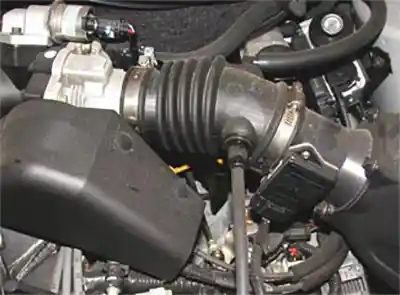
A port fuel-injected OBD-I equipped V-6 engine with a MAF sensor has a rough idle and no diagnostic trouble codes (DTCs). Technician A says that the wrong PCV valve could have been installed during a previous service. Technician B says that a missing oil filler cap could be the cause. Which Technician is correct?
Correct
The correct answer is C. Both Technicians are correct. Technician A is correct because if the wrong PCV valve is used too much or too little air will be drawn through the crankcase ventilation system resulting in an incorrect or variable air-fuel mixture. About 20% of the air needed by the engine flows through the PCV system. Oxygen sensor input and fuel trim is often not a correcting factor on many vehicles equipped with OBD-I. Technician B is correct because the extra air being drawn into the closed system through the open oil filler cap is air not being measured by the MAF sensor and will, therefore, cause the air-fuel mixture to be too lean for normal engine operation. Answers A, B, and D are not correct because both Technicians are correct.
IncorrectThe correct answer is C. Both Technicians are correct. Technician A is correct because if the wrong PCV valve is used too much or too little air will be drawn through the crankcase ventilation system resulting in an incorrect or variable air-fuel mixture. About 20% of the air needed by the engine flows through the PCV system. Oxygen sensor input and fuel trim is often not a correcting factor on many vehicles equipped with OBD-I. Technician B is correct because the extra air being drawn into the closed system through the open oil filler cap is air not being measured by the MAF sensor and will, therefore, cause the air-fuel mixture to be too lean for normal engine operation. Answers A, B, and D are not correct because both Technicians are correct.
-
Question 2 of 374
2. Question
Category: General Powertrain DiagnosisA technician is diagnosing a vehicle with a variable valve timing (VVT) system that exhibits poor acceleration and a check engine light. The diagnostic trouble code (DTC) indicates a fault in the VVT solenoid circuit. Which of the following is the cause of this issue?
CorrectThe correct answer is B. The VVT solenoid controls the flow of oil to the VVT actuator, which adjusts valve timing to optimize engine performance. A fault in the VVT solenoid circuit, as indicated by the DTC, suggests an issue with the solenoid itself, such as an electrical failure or mechanical blockage. This can disrupt valve timing, leading to poor acceleration and triggering the check engine light. Since the DTC specifically points to the solenoid circuit, a faulty VVT solenoid is the most direct and likely cause.
Incorrect Answers:
Answer A: A clogged catalytic converter can cause poor acceleration by restricting exhaust flow, but it would not typically trigger a DTC related to the VVT solenoid circuit. This issue would more likely set a code related to exhaust backpressure or oxygen sensor performance.
Answer C: A worn timing belt could affect valve timing, but it would likely cause more severe symptoms, such as misfires or engine stalling, and would not specifically trigger a VVT solenoid circuit fault code. The VVT system relies on the solenoid and actuator, not the timing belt, for its operation.
Answer D: A faulty mass airflow sensor can cause poor acceleration by providing incorrect air intake data to the engine control module, but it would not directly affect the VVT solenoid circuit. It would typically set a different DTC related to air/fuel mixture or sensor performance.
IncorrectThe correct answer is B. The VVT solenoid controls the flow of oil to the VVT actuator, which adjusts valve timing to optimize engine performance. A fault in the VVT solenoid circuit, as indicated by the DTC, suggests an issue with the solenoid itself, such as an electrical failure or mechanical blockage. This can disrupt valve timing, leading to poor acceleration and triggering the check engine light. Since the DTC specifically points to the solenoid circuit, a faulty VVT solenoid is the most direct and likely cause.
Incorrect Answers:
Answer A: A clogged catalytic converter can cause poor acceleration by restricting exhaust flow, but it would not typically trigger a DTC related to the VVT solenoid circuit. This issue would more likely set a code related to exhaust backpressure or oxygen sensor performance.
Answer C: A worn timing belt could affect valve timing, but it would likely cause more severe symptoms, such as misfires or engine stalling, and would not specifically trigger a VVT solenoid circuit fault code. The VVT system relies on the solenoid and actuator, not the timing belt, for its operation.
Answer D: A faulty mass airflow sensor can cause poor acceleration by providing incorrect air intake data to the engine control module, but it would not directly affect the VVT solenoid circuit. It would typically set a different DTC related to air/fuel mixture or sensor performance.
-
Question 3 of 374
3. Question
Category: General Powertrain DiagnosisA technician is diagnosing a vehicle with a variable valve lift (VVL) system that exhibits reduced power output at high RPMs and a stored diagnostic trouble code (DTC) indicating a VVL system performance fault. After verifying oil pressure and electrical connections, the technician observes that the VVL actuator does not switch to the high-lift cam profile during high-RPM operation. Which of the following is the cause of this issue?
CorrectThe correct answer is D. The VVL control solenoid regulates oil flow to the VVL actuator, which enables the system to switch between low-lift and high-lift cam profiles based on engine demands. A malfunctioning solenoid can prevent the actuator from receiving adequate oil pressure or timing to engage the high-lift profile, resulting in reduced power output at high RPMs and a VVL system performance fault code. Since the technician has verified oil pressure and electrical connections, the solenoid’s failure to properly control oil flow is the cause. This aligns with the DTC and the observed symptom of the actuator not switching profiles.
Incorrect Answers:
Answer A: A restricted oil passage could prevent the actuator from functioning, but the technician’s verification of oil pressure suggests that oil is flowing adequately to the system. A restriction specific to the actuator’s internal passages is less likely than a solenoid issue, which would affect oil delivery more broadly and is directly tied to the DTC.
Answer B: A faulty crankshaft position sensor could disrupt engine timing or RPM readings, potentially affecting VVL operation indirectly. However, it would likely cause additional symptoms, such as misfires or rough idling, and trigger a different DTC related to the sensor or engine timing, not a VVL system performance fault.
Answer C: A worn camshaft lobe on the low-lift profile could reduce performance at lower RPMs, but it would not prevent the VVL actuator from switching to the high-lift profile at high RPMs. The issue is specific to the actuator’s failure to engage the high-lift mode, which is controlled by the solenoid, not the condition of the camshaft lobes.
IncorrectThe correct answer is D. The VVL control solenoid regulates oil flow to the VVL actuator, which enables the system to switch between low-lift and high-lift cam profiles based on engine demands. A malfunctioning solenoid can prevent the actuator from receiving adequate oil pressure or timing to engage the high-lift profile, resulting in reduced power output at high RPMs and a VVL system performance fault code. Since the technician has verified oil pressure and electrical connections, the solenoid’s failure to properly control oil flow is the cause. This aligns with the DTC and the observed symptom of the actuator not switching profiles.
Incorrect Answers:
Answer A: A restricted oil passage could prevent the actuator from functioning, but the technician’s verification of oil pressure suggests that oil is flowing adequately to the system. A restriction specific to the actuator’s internal passages is less likely than a solenoid issue, which would affect oil delivery more broadly and is directly tied to the DTC.
Answer B: A faulty crankshaft position sensor could disrupt engine timing or RPM readings, potentially affecting VVL operation indirectly. However, it would likely cause additional symptoms, such as misfires or rough idling, and trigger a different DTC related to the sensor or engine timing, not a VVL system performance fault.
Answer C: A worn camshaft lobe on the low-lift profile could reduce performance at lower RPMs, but it would not prevent the VVL actuator from switching to the high-lift profile at high RPMs. The issue is specific to the actuator’s failure to engage the high-lift mode, which is controlled by the solenoid, not the condition of the camshaft lobes.
-
Question 4 of 374
4. Question
Category: General Powertrain DiagnosisA technician is diagnosing a vehicle with a variable valve lift (VVL) system that exhibits sluggish performance during acceleration and a check engine light. The diagnostic trouble code (DTC) points to a fault in the VVL system. Which of the following is the cause of this issue?
CorrectThe correct answer is D. The VVL actuator is responsible for mechanically switching between low-lift and high-lift cam profiles to optimize engine performance based on driving conditions. A defective VVL actuator can fail to engage the appropriate cam profile, leading to sluggish performance during acceleration and triggering a DTC related to the VVL system. Since the DTC specifically indicates a VVL system fault, the actuator is the component causing the issue, as it directly affects the system’s ability to adjust valve lift.
Incorrect Answers:
Answer A: A faulty throttle position sensor can cause sluggish acceleration by sending incorrect throttle input to the engine control module, but it would not typically trigger a DTC specific to the VVL system. Instead, it would likely set a code related to throttle control or engine performance.
Answer B: A clogged fuel filter can restrict fuel flow, leading to poor acceleration, but it would not cause a VVL system fault code. It would more likely result in symptoms like hesitation or stalling and set a DTC related to fuel delivery or lean conditions.
Answer C: A worn timing chain could affect valve timing, potentially causing performance issues, but it would not directly impact the VVL system’s ability to switch between cam profiles. It would likely trigger a different DTC, such as one related to camshaft or crankshaft correlation.
IncorrectThe correct answer is D. The VVL actuator is responsible for mechanically switching between low-lift and high-lift cam profiles to optimize engine performance based on driving conditions. A defective VVL actuator can fail to engage the appropriate cam profile, leading to sluggish performance during acceleration and triggering a DTC related to the VVL system. Since the DTC specifically indicates a VVL system fault, the actuator is the component causing the issue, as it directly affects the system’s ability to adjust valve lift.
Incorrect Answers:
Answer A: A faulty throttle position sensor can cause sluggish acceleration by sending incorrect throttle input to the engine control module, but it would not typically trigger a DTC specific to the VVL system. Instead, it would likely set a code related to throttle control or engine performance.
Answer B: A clogged fuel filter can restrict fuel flow, leading to poor acceleration, but it would not cause a VVL system fault code. It would more likely result in symptoms like hesitation or stalling and set a DTC related to fuel delivery or lean conditions.
Answer C: A worn timing chain could affect valve timing, potentially causing performance issues, but it would not directly impact the VVL system’s ability to switch between cam profiles. It would likely trigger a different DTC, such as one related to camshaft or crankshaft correlation.
-
Question 5 of 374
5. Question
Category: General Powertrain DiagnosisA technician is diagnosing a vehicle with a variable valve timing (VVT) system that exhibits erratic idle and reduced power at low RPMs, with a diagnostic trouble code (DTC) indicating a VVT system performance issue. After confirming proper oil level and viscosity, the technician notes that the VVT actuator does not respond consistently to commands from the engine control module (ECM). Which of the following is the cause of this issue?
CorrectThe correct answer is D. The VVT oil control valve (OCV) regulates oil pressure to the VVT actuator, which adjusts camshaft timing to optimize engine performance. A malfunctioning OCV can cause inconsistent oil flow, preventing the actuator from responding reliably to ECM commands. This can lead to erratic idle and reduced power at low RPMs, as the camshaft timing fails to adjust properly, and trigger a VVT system performance DTC. Since the technician confirmed proper oil level and viscosity, the OCV is the cause of the actuator’s inconsistent response, directly aligning with the symptoms and DTC.
Incorrect Answers:
Answer A: A faulty oxygen sensor can affect air/fuel mixture, potentially causing rough idle or poor performance, but it would not directly impact the VVT actuator’s response to ECM commands. It would typically set a DTC related to fuel trim or sensor performance, not a VVT system fault.
Answer B: A stretched timing chain could disrupt camshaft timing, leading to performance issues, but it would likely cause consistent timing errors rather than inconsistent actuator response. It would also typically trigger a DTC related to camshaft/crankshaft correlation rather than a VVT system performance fault.
Answer C: A clogged fuel injector can cause rough idle and reduced power by disrupting fuel delivery, but it would not affect the VVT actuator’s ability to respond to ECM commands. It would likely set a DTC related to misfire or lean conditions, not a VVT system issue.
IncorrectThe correct answer is D. The VVT oil control valve (OCV) regulates oil pressure to the VVT actuator, which adjusts camshaft timing to optimize engine performance. A malfunctioning OCV can cause inconsistent oil flow, preventing the actuator from responding reliably to ECM commands. This can lead to erratic idle and reduced power at low RPMs, as the camshaft timing fails to adjust properly, and trigger a VVT system performance DTC. Since the technician confirmed proper oil level and viscosity, the OCV is the cause of the actuator’s inconsistent response, directly aligning with the symptoms and DTC.
Incorrect Answers:
Answer A: A faulty oxygen sensor can affect air/fuel mixture, potentially causing rough idle or poor performance, but it would not directly impact the VVT actuator’s response to ECM commands. It would typically set a DTC related to fuel trim or sensor performance, not a VVT system fault.
Answer B: A stretched timing chain could disrupt camshaft timing, leading to performance issues, but it would likely cause consistent timing errors rather than inconsistent actuator response. It would also typically trigger a DTC related to camshaft/crankshaft correlation rather than a VVT system performance fault.
Answer C: A clogged fuel injector can cause rough idle and reduced power by disrupting fuel delivery, but it would not affect the VVT actuator’s ability to respond to ECM commands. It would likely set a DTC related to misfire or lean conditions, not a VVT system issue.
-
Question 6 of 374
6. Question
Category: General Powertrain DiagnosisA technician is diagnosing a vehicle with an automatic transmission that exhibits harsh shifting and a higher-than-normal shift point after the customer installed larger diameter tires. The vehicle’s speedometer also reads lower than the actual speed. The technician confirms that the vehicle’s transmission control module (TCM) has not been reprogrammed since the tire change. Which of the following is the cause of the transmission issues?
CorrectThe correct answer is D. Larger diameter tires increase the vehicle’s circumference, causing it to travel farther per wheel revolution. This results in a lower rotational speed for a given vehicle speed, which affects the vehicle speed input to the TCM. Without reprogramming the TCM to account for the new tire size, the TCM receives incorrect speed data, leading to higher shift points and harsh shifting because the transmission shifts based on inaccurate speed calculations. The speedometer reading lower than actual speed further supports this, as it relies on the same wheel speed data. The tire size change directly causes the transmission issues by altering the TCM’s shift logic.
Incorrect Answers:
Answer A: A faulty vehicle speed sensor: A faulty vehicle speed sensor could cause erratic shifting or incorrect speedometer readings, but it would likely set a diagnostic trouble code (DTC) related to the sensor or cause more inconsistent symptoms. The symptoms in this case are consistent with the tire size change, and no DTC is mentioned, making this less likely.
Answer B: A low transmission fluid level: Low transmission fluid can cause harsh shifting due to insufficient hydraulic pressure, but it would not directly affect the speedometer reading or cause consistently higher shift points. It would also likely trigger a DTC or other symptoms like slipping, which are not mentioned.
Answer C: A worn clutch pack in the transmission: A worn clutch pack could cause harsh shifting or slipping, but it would not influence the speedometer reading or cause higher shift points tied to vehicle speed. The symptoms are more directly linked to the TCM’s response to incorrect speed input from the larger tires.
IncorrectThe correct answer is D. Larger diameter tires increase the vehicle’s circumference, causing it to travel farther per wheel revolution. This results in a lower rotational speed for a given vehicle speed, which affects the vehicle speed input to the TCM. Without reprogramming the TCM to account for the new tire size, the TCM receives incorrect speed data, leading to higher shift points and harsh shifting because the transmission shifts based on inaccurate speed calculations. The speedometer reading lower than actual speed further supports this, as it relies on the same wheel speed data. The tire size change directly causes the transmission issues by altering the TCM’s shift logic.
Incorrect Answers:
Answer A: A faulty vehicle speed sensor: A faulty vehicle speed sensor could cause erratic shifting or incorrect speedometer readings, but it would likely set a diagnostic trouble code (DTC) related to the sensor or cause more inconsistent symptoms. The symptoms in this case are consistent with the tire size change, and no DTC is mentioned, making this less likely.
Answer B: A low transmission fluid level: Low transmission fluid can cause harsh shifting due to insufficient hydraulic pressure, but it would not directly affect the speedometer reading or cause consistently higher shift points. It would also likely trigger a DTC or other symptoms like slipping, which are not mentioned.
Answer C: A worn clutch pack in the transmission: A worn clutch pack could cause harsh shifting or slipping, but it would not influence the speedometer reading or cause higher shift points tied to vehicle speed. The symptoms are more directly linked to the TCM’s response to incorrect speed input from the larger tires.
-
Question 7 of 374
7. Question
Category: General Powertrain DiagnosisA technician is diagnosing a vehicle with an automatic transmission and a rear-wheel-drive configuration that exhibits a whining noise from the rear axle area during acceleration, accompanied by delayed engagement when shifting from park to drive. The technician confirms proper transmission fluid level and condition, and no diagnostic trouble codes (DTCs) are present. After inspecting the driveline, the technician notes excessive play in the differential pinion gear. Which of the following is the cause of the observed symptoms?
CorrectThe correct answer is C. Worn differential pinion bearings can cause a whining noise from the rear axle area during acceleration due to improper bearing preload or gear mesh in the differential. Excessive play in the pinion gear, as observed by the technician, supports this diagnosis, as worn bearings allow the pinion to move excessively, affecting gear alignment and producing noise. The delayed engagement when shifting from park to drive can also be influenced by the differential’s condition, as the driveline’s resistance or play may delay torque transfer. Since the transmission fluid is correct and no DTCs are present, the issue is likely in the final drive, specifically the worn pinion bearings, which directly correlate with the symptoms and inspection findings.
Incorrect Answers:
Answer A: A worn transmission output shaft bearing: A worn transmission output shaft bearing could cause noise or vibration, but the noise would likely originate from the transmission, not the rear axle area. It might also cause shifting issues, but it would not result in excessive play in the differential pinion gear, which is specific to the final drive.
Answer B: A faulty transmission valve body: A faulty valve body could cause delayed engagement or harsh shifting due to improper hydraulic control, but it would not produce a whining noise from the rear axle or cause excessive play in the differential pinion gear. It might also set a DTC related to transmission performance, which is not present.
Answer D: A misadjusted transmission shift linkage: A misadjusted shift linkage could cause improper gear selection or delayed engagement, but it would not produce a whining noise from the rear axle or result in excessive play in the differential pinion gear. The symptoms are more closely tied to the final drive than the transmission’s external controls.
IncorrectThe correct answer is C. Worn differential pinion bearings can cause a whining noise from the rear axle area during acceleration due to improper bearing preload or gear mesh in the differential. Excessive play in the pinion gear, as observed by the technician, supports this diagnosis, as worn bearings allow the pinion to move excessively, affecting gear alignment and producing noise. The delayed engagement when shifting from park to drive can also be influenced by the differential’s condition, as the driveline’s resistance or play may delay torque transfer. Since the transmission fluid is correct and no DTCs are present, the issue is likely in the final drive, specifically the worn pinion bearings, which directly correlate with the symptoms and inspection findings.
Incorrect Answers:
Answer A: A worn transmission output shaft bearing: A worn transmission output shaft bearing could cause noise or vibration, but the noise would likely originate from the transmission, not the rear axle area. It might also cause shifting issues, but it would not result in excessive play in the differential pinion gear, which is specific to the final drive.
Answer B: A faulty transmission valve body: A faulty valve body could cause delayed engagement or harsh shifting due to improper hydraulic control, but it would not produce a whining noise from the rear axle or cause excessive play in the differential pinion gear. It might also set a DTC related to transmission performance, which is not present.
Answer D: A misadjusted transmission shift linkage: A misadjusted shift linkage could cause improper gear selection or delayed engagement, but it would not produce a whining noise from the rear axle or result in excessive play in the differential pinion gear. The symptoms are more closely tied to the final drive than the transmission’s external controls.
-
Question 8 of 374
8. Question
Category: General Powertrain DiagnosisA vehicle with an automatic transmission exhibits multiple powertrain issues, including harsh shifting, intermittent loss of power, and an illuminated check engine light with codes P0715 (Turbine Shaft Speed Sensor Circuit) and P0750 (Shift Solenoid A Malfunction). The technician suspects a common root cause for these failures. What is the most effective diagnostic approach to identify the underlying issue?
CorrectThe correct answer is C. Inspecting the TCM wiring harness and connectors is the most effective first step because the diagnostic trouble codes (DTCs) P0715 and P0750 indicate issues with the turbine shaft speed sensor and shift solenoid A, both of which are controlled by the TCM. A common root cause for multiple powertrain component failures, such as harsh shifting and intermittent power loss, could be a wiring harness fault (e.g., open circuit, short, or poor connection) affecting communication or power to these components.
Incorrect Answers:
Answer A: Replacing components without diagnosing the root cause is inefficient and may not resolve the issue. The DTCs could be triggered by a wiring or TCM issue rather than faulty components. This approach lacks the multi-step reasoning required for a level 4 question, as it does not consider a common cause for both codes and symptoms.
Answer B: While a line pressure test is a valid diagnostic step for transmission issues, it is not the most effective first step here. The DTCs point to electrical or control circuit issues (sensor and solenoid malfunctions) rather than hydraulic problems. This approach is premature without first ruling out electrical faults, making it less logical for the given symptoms and codes.
Answer D: Rebuilding the transmission is an extreme and costly measure that should only be considered after ruling out electrical and control issues. The DTCs and symptoms suggest an electrical or TCM-related problem rather than internal mechanical failure. This option is incorrect because it bypasses the diagnostic process and does not align with the analytical depth required for a level 4 question.
IncorrectThe correct answer is C. Inspecting the TCM wiring harness and connectors is the most effective first step because the diagnostic trouble codes (DTCs) P0715 and P0750 indicate issues with the turbine shaft speed sensor and shift solenoid A, both of which are controlled by the TCM. A common root cause for multiple powertrain component failures, such as harsh shifting and intermittent power loss, could be a wiring harness fault (e.g., open circuit, short, or poor connection) affecting communication or power to these components.
Incorrect Answers:
Answer A: Replacing components without diagnosing the root cause is inefficient and may not resolve the issue. The DTCs could be triggered by a wiring or TCM issue rather than faulty components. This approach lacks the multi-step reasoning required for a level 4 question, as it does not consider a common cause for both codes and symptoms.
Answer B: While a line pressure test is a valid diagnostic step for transmission issues, it is not the most effective first step here. The DTCs point to electrical or control circuit issues (sensor and solenoid malfunctions) rather than hydraulic problems. This approach is premature without first ruling out electrical faults, making it less logical for the given symptoms and codes.
Answer D: Rebuilding the transmission is an extreme and costly measure that should only be considered after ruling out electrical and control issues. The DTCs and symptoms suggest an electrical or TCM-related problem rather than internal mechanical failure. This option is incorrect because it bypasses the diagnostic process and does not align with the analytical depth required for a level 4 question.
-
Question 9 of 374
9. Question
Category: General Powertrain DiagnosisA vehicle with an automatic transmission presents with multiple powertrain issues, including erratic shifting, intermittent no-start conditions, and diagnostic trouble codes (DTCs) P0700 (Transmission Control System Malfunction) and P0606 (PCM/ECM Processor Fault). The technician suspects a common root cause for these issues. What is the most effective diagnostic approach to identify the underlying problem?
CorrectThe correct answer is D. Inspecting the PCM and its related wiring is the most effective diagnostic approach because the DTCs P0700 and P0606 suggest issues related to the transmission control system and a PCM processor fault, respectively. Erratic shifting and intermittent no-start conditions further indicate a potential PCM or wiring issue, as the PCM controls both engine and transmission functions. A fault in the PCM or its wiring (e.g., corrosion, shorts, or open circuits) could cause multiple component failures.
Incorrect Answers:
Answer A: Replacing the TCM without diagnosing the root cause is premature. While P0700 indicates a transmission control issue, P0606 points to a PCM processor fault, suggesting the PCM, not the TCM, may be the common cause. This option fails to consider the broader role of the PCM and lacks the diagnostic depth required for a level 4 question.
Answer B: A stall test is used to diagnose mechanical issues within the transmission, but the DTCs and symptoms (no-start and PCM fault) suggest an electrical or control module issue rather than a mechanical failure. This approach is not the most logical first step and does not address the multi-step reasoning needed for the question’s difficulty level.
Answer C: While a weak battery or charging system can cause electrical issues, the specific DTCs (P0700 and P0606) and symptoms point directly to PCM or wiring faults rather than a general power supply problem. Testing the battery is a valid step but not the most effective first approach, as it does not directly address the PCM-related codes, making it less prioritized for a level 4 question.
IncorrectThe correct answer is D. Inspecting the PCM and its related wiring is the most effective diagnostic approach because the DTCs P0700 and P0606 suggest issues related to the transmission control system and a PCM processor fault, respectively. Erratic shifting and intermittent no-start conditions further indicate a potential PCM or wiring issue, as the PCM controls both engine and transmission functions. A fault in the PCM or its wiring (e.g., corrosion, shorts, or open circuits) could cause multiple component failures.
Incorrect Answers:
Answer A: Replacing the TCM without diagnosing the root cause is premature. While P0700 indicates a transmission control issue, P0606 points to a PCM processor fault, suggesting the PCM, not the TCM, may be the common cause. This option fails to consider the broader role of the PCM and lacks the diagnostic depth required for a level 4 question.
Answer B: A stall test is used to diagnose mechanical issues within the transmission, but the DTCs and symptoms (no-start and PCM fault) suggest an electrical or control module issue rather than a mechanical failure. This approach is not the most logical first step and does not address the multi-step reasoning needed for the question’s difficulty level.
Answer C: While a weak battery or charging system can cause electrical issues, the specific DTCs (P0700 and P0606) and symptoms point directly to PCM or wiring faults rather than a general power supply problem. Testing the battery is a valid step but not the most effective first approach, as it does not directly address the PCM-related codes, making it less prioritized for a level 4 question.
-
Question 10 of 374
10. Question
Category: General Powertrain DiagnosisA vehicle repeatedly experiences failures of multiple electrical components, including the fuel pump, ignition coil, and oxygen sensor, with replacements failing shortly after installation. The technician suspects a common root cause for these repeated failures. What is the most logical first step to diagnose the issue?
CorrectThe correct answer is A. Testing the vehicle’s battery and charging system is the most logical first step because repeated failures of multiple electrical components (fuel pump, ignition coil, and oxygen sensor) suggest a common electrical issue, such as overvoltage or unstable power supply from the battery or alternator. An overcharging alternator or a weak battery can damage sensitive electronics, leading to premature failures.
Incorrect Answers:
Answer B: Replacing the ECM without diagnosing the root cause is premature and inefficient. There is no evidence suggesting the ECM is faulty, and the repeated failures of diverse components are more likely due to a power supply issue. This option lacks the analytical reasoning required for a level 3 question.
Answer C: While inspecting wiring harnesses is a valid diagnostic step, it is not the most logical first step. Checking each component’s wiring individually is time-consuming and less efficient than testing the battery and charging system, which could affect all components simultaneously. This approach does not prioritize the common cause.
Answer D: Testing ground connections is relevant but not the best first step. While poor grounds can cause electrical issues, the repeated failure of multiple components is more likely due to a systemic issue like overvoltage from the charging system. This option is less prioritized because it does not address the most probable root cause first.
IncorrectThe correct answer is A. Testing the vehicle’s battery and charging system is the most logical first step because repeated failures of multiple electrical components (fuel pump, ignition coil, and oxygen sensor) suggest a common electrical issue, such as overvoltage or unstable power supply from the battery or alternator. An overcharging alternator or a weak battery can damage sensitive electronics, leading to premature failures.
Incorrect Answers:
Answer B: Replacing the ECM without diagnosing the root cause is premature and inefficient. There is no evidence suggesting the ECM is faulty, and the repeated failures of diverse components are more likely due to a power supply issue. This option lacks the analytical reasoning required for a level 3 question.
Answer C: While inspecting wiring harnesses is a valid diagnostic step, it is not the most logical first step. Checking each component’s wiring individually is time-consuming and less efficient than testing the battery and charging system, which could affect all components simultaneously. This approach does not prioritize the common cause.
Answer D: Testing ground connections is relevant but not the best first step. While poor grounds can cause electrical issues, the repeated failure of multiple components is more likely due to a systemic issue like overvoltage from the charging system. This option is less prioritized because it does not address the most probable root cause first.
-
Question 11 of 374
11. Question
Category: General Powertrain DiagnosisA vehicle repeatedly experiences failures of multiple electrical components, including the alternator, electronic throttle control (ETC) module, and body control module (BCM), with replacements failing within a short period. The technician observes intermittent electrical surges and diagnostic trouble codes (DTCs) P0562 (System Voltage Low) and P2503 (Charging System Voltage High). What is the most effective diagnostic approach to identify the root cause of these repeated failures?
CorrectThe correct answer is A. Performing a comprehensive test of the voltage regulator and its associated wiring is the most effective diagnostic approach because the repeated failures of the alternator, ETC module, and BCM, combined with DTCs P0562 (System Voltage Low) and P2503 (Charging System Voltage High), strongly suggest a malfunctioning voltage regulator causing electrical surges or inconsistent voltage. A faulty voltage regulator can damage sensitive electronic components by supplying excessive or insufficient voltage.
Incorrect Answers:
Answer B: Replacing the PCM without diagnosing the root cause is premature. The DTCs and symptoms point to a charging system issue, specifically voltage irregularities, rather than a PCM fault. This option fails to address the likely common cause and lacks the diagnostic depth required for a level 4 question.
Answer C: While inspecting wiring harnesses is a valid step, it is not the most effective first approach. The DTCs and repeated failures across multiple systems suggest a systemic issue, such as a faulty voltage regulator, rather than isolated wiring damage for each component. This approach is less efficient and does not prioritize the most probable cause.
Answer D: Testing the battery is a reasonable step, but it is not the most logical first approach given the DTCs indicating charging system voltage issues (P0562 and P2503). A faulty voltage regulator is more likely to cause the observed surges and component failures than a battery issue alone. This option is less prioritized for a level 4 question requiring multi-step reasoning.
IncorrectThe correct answer is A. Performing a comprehensive test of the voltage regulator and its associated wiring is the most effective diagnostic approach because the repeated failures of the alternator, ETC module, and BCM, combined with DTCs P0562 (System Voltage Low) and P2503 (Charging System Voltage High), strongly suggest a malfunctioning voltage regulator causing electrical surges or inconsistent voltage. A faulty voltage regulator can damage sensitive electronic components by supplying excessive or insufficient voltage.
Incorrect Answers:
Answer B: Replacing the PCM without diagnosing the root cause is premature. The DTCs and symptoms point to a charging system issue, specifically voltage irregularities, rather than a PCM fault. This option fails to address the likely common cause and lacks the diagnostic depth required for a level 4 question.
Answer C: While inspecting wiring harnesses is a valid step, it is not the most effective first approach. The DTCs and repeated failures across multiple systems suggest a systemic issue, such as a faulty voltage regulator, rather than isolated wiring damage for each component. This approach is less efficient and does not prioritize the most probable cause.
Answer D: Testing the battery is a reasonable step, but it is not the most logical first approach given the DTCs indicating charging system voltage issues (P0562 and P2503). A faulty voltage regulator is more likely to cause the observed surges and component failures than a battery issue alone. This option is less prioritized for a level 4 question requiring multi-step reasoning.
-
Question 12 of 374
12. Question
Category: General Powertrain DiagnosisA vehicle presented with an illuminated check engine light and diagnostic trouble codes (DTCs) P0171 (System Too Lean, Bank 1) and P0174 (System Too Lean, Bank 2). The technician diagnosed a faulty mass airflow (MAF) sensor, replaced it, and cleared the codes. What is the most effective method to verify the repair’s effectiveness and ensure no underlying issues remain?
CorrectThe correct answer is D. Monitoring live data for fuel trim values and oxygen sensor readings during a drive cycle is the most effective method to verify the repair’s effectiveness because it directly assesses the engine’s air-fuel mixture and system performance under real-world conditions. The original DTCs (P0171 and P0174) indicate a lean condition, which could stem from multiple causes (e.g., MAF sensor, vacuum leaks, or fuel delivery issues). By analyzing fuel trims and oxygen sensor data, the technician can confirm that the system is operating within normal parameters and rule out other contributing factors.
Incorrect Answers:
Answer A: While a road test is part of verifying a repair, simply checking that the check engine light remains off is insufficient. The absence of a DTC does not confirm that the system is functioning correctly, as underlying issues (e.g., marginal fuel trim deviations) may not immediately trigger a code. This approach lacks the diagnostic depth required for a level 4 question.
Answer B: Rechecking the MAF sensor’s signal voltage verifies the component’s operation but does not confirm the overall system performance or rule out other causes of a lean condition, such as vacuum leaks or fuel delivery issues. This method is too narrow and does not provide comprehensive verification, making it less effective for a level 4 question.
Answer C: Inspecting the intake system for leaks is a valid diagnostic step but is not the most effective way to verify the repair’s success. This action assumes another issue exists without first confirming that the system is operating correctly post-repair. Monitoring live data is a more direct and comprehensive method to validate the repair, making this option less prioritized.
IncorrectThe correct answer is D. Monitoring live data for fuel trim values and oxygen sensor readings during a drive cycle is the most effective method to verify the repair’s effectiveness because it directly assesses the engine’s air-fuel mixture and system performance under real-world conditions. The original DTCs (P0171 and P0174) indicate a lean condition, which could stem from multiple causes (e.g., MAF sensor, vacuum leaks, or fuel delivery issues). By analyzing fuel trims and oxygen sensor data, the technician can confirm that the system is operating within normal parameters and rule out other contributing factors.
Incorrect Answers:
Answer A: While a road test is part of verifying a repair, simply checking that the check engine light remains off is insufficient. The absence of a DTC does not confirm that the system is functioning correctly, as underlying issues (e.g., marginal fuel trim deviations) may not immediately trigger a code. This approach lacks the diagnostic depth required for a level 4 question.
Answer B: Rechecking the MAF sensor’s signal voltage verifies the component’s operation but does not confirm the overall system performance or rule out other causes of a lean condition, such as vacuum leaks or fuel delivery issues. This method is too narrow and does not provide comprehensive verification, making it less effective for a level 4 question.
Answer C: Inspecting the intake system for leaks is a valid diagnostic step but is not the most effective way to verify the repair’s success. This action assumes another issue exists without first confirming that the system is operating correctly post-repair. Monitoring live data is a more direct and comprehensive method to validate the repair, making this option less prioritized.
-
Question 13 of 374
13. Question
Category: General Powertrain DiagnosisA vehicle presented with inoperative power windows on both front doors. The technician diagnosed a blown fuse in the power window circuit, replaced the fuse, and confirmed that the windows operated immediately after the repair. What is the most effective method to verify the repair’s effectiveness and ensure no underlying issues remain?
CorrectThe correct answer is C. Testing all power window functions under normal operating conditions for a sustained period is the most effective method to verify the repair’s effectiveness because it ensures that the system operates reliably over time, simulating real-world use. A blown fuse could result from an intermittent issue, such as a high current draw or a minor short, which may not immediately reoccur after fuse replacement.
Incorrect Answers:
Answer A: Operating the windows several times is a partial verification, but it does not ensure long-term reliability or test the system under varied conditions (e.g., multiple windows operating simultaneously). This approach is less comprehensive than sustained testing, making it less effective for verifying the repair.
Answer B: Measuring voltage at the motors confirms power delivery but does not verify the system’s overall performance or durability over time. It is a diagnostic step rather than a comprehensive verification method, making it less suitable for ensuring the repair’s effectiveness.
Answer D: Inspecting the wiring harness is a diagnostic step to identify potential causes of the blown fuse but is not the most effective way to verify the repair. If the windows function after fuse replacement, sustained functional testing is more appropriate to confirm the repair’s success, as it directly assesses system performance.
IncorrectThe correct answer is C. Testing all power window functions under normal operating conditions for a sustained period is the most effective method to verify the repair’s effectiveness because it ensures that the system operates reliably over time, simulating real-world use. A blown fuse could result from an intermittent issue, such as a high current draw or a minor short, which may not immediately reoccur after fuse replacement.
Incorrect Answers:
Answer A: Operating the windows several times is a partial verification, but it does not ensure long-term reliability or test the system under varied conditions (e.g., multiple windows operating simultaneously). This approach is less comprehensive than sustained testing, making it less effective for verifying the repair.
Answer B: Measuring voltage at the motors confirms power delivery but does not verify the system’s overall performance or durability over time. It is a diagnostic step rather than a comprehensive verification method, making it less suitable for ensuring the repair’s effectiveness.
Answer D: Inspecting the wiring harness is a diagnostic step to identify potential causes of the blown fuse but is not the most effective way to verify the repair. If the windows function after fuse replacement, sustained functional testing is more appropriate to confirm the repair’s success, as it directly assesses system performance.
-
Question 14 of 374
14. Question
Category: General Powertrain DiagnosisA vehicle exhibits poor acceleration, rough idle, and an illuminated check engine light with diagnostic trouble code (DTC) P0300 (Random/Multiple Cylinder Misfire Detected). The technician suspects tampering with engine components, possibly due to an aftermarket cold air intake or modified fuel injectors. What is the most logical first step to diagnose the issue?
CorrectThe correct answer is B. Inspecting the air intake system for proper installation and sealing is the most logical first step because the DTC P0300 (Random/Multiple Cylinder Misfire) and symptoms (poor acceleration and rough idle) can be caused by an improperly installed or unsealed aftermarket cold air intake, leading to unmetered air entering the engine. This disrupts the air-fuel ratio, causing misfires. Given the suspicion of tampering, checking the intake system directly addresses the likely cause. This approach requires some analysis to connect the symptoms and DTC to a potential tampering issue, making it suitable for a level 3 difficulty question.
Incorrect Answers:
Answer A: Replacing spark plugs is a common fix for misfires but is not the most logical first step when tampering with the air intake is suspected. An unsealed or improperly installed intake could be the root cause, and replacing spark plugs does not address this. This option lacks the analytical reasoning required for a level 3 question.
Answer C: While tampered fuel injectors could contribute to misfires, the DTC P0300 and symptoms are more likely caused by an air intake issue, especially given the suspicion of an aftermarket modification. Testing injectors is a valid step but not the most prioritized when the intake system is the suspected tampered component.
Answer D: Checking ignition coil output is relevant for diagnosing misfires but is not the best first step. The suspicion of a tampered air intake suggests that unmetered air is the more likely cause of the random misfire. This option does not address the most probable cause related to tampering and is less efficient.
IncorrectThe correct answer is B. Inspecting the air intake system for proper installation and sealing is the most logical first step because the DTC P0300 (Random/Multiple Cylinder Misfire) and symptoms (poor acceleration and rough idle) can be caused by an improperly installed or unsealed aftermarket cold air intake, leading to unmetered air entering the engine. This disrupts the air-fuel ratio, causing misfires. Given the suspicion of tampering, checking the intake system directly addresses the likely cause. This approach requires some analysis to connect the symptoms and DTC to a potential tampering issue, making it suitable for a level 3 difficulty question.
Incorrect Answers:
Answer A: Replacing spark plugs is a common fix for misfires but is not the most logical first step when tampering with the air intake is suspected. An unsealed or improperly installed intake could be the root cause, and replacing spark plugs does not address this. This option lacks the analytical reasoning required for a level 3 question.
Answer C: While tampered fuel injectors could contribute to misfires, the DTC P0300 and symptoms are more likely caused by an air intake issue, especially given the suspicion of an aftermarket modification. Testing injectors is a valid step but not the most prioritized when the intake system is the suspected tampered component.
Answer D: Checking ignition coil output is relevant for diagnosing misfires but is not the best first step. The suspicion of a tampered air intake suggests that unmetered air is the more likely cause of the random misfire. This option does not address the most probable cause related to tampering and is less efficient.
-
Question 15 of 374
15. Question
Category: General Powertrain DiagnosisA vehicle exhibits excessive exhaust emissions and an illuminated check engine light with diagnostic trouble code (DTC) P0420 (Catalyst System Efficiency Below Threshold). The technician suspects tampering with engine components, possibly due to a modified exhaust system or removed catalytic converter. What is the most logical first step to diagnose the issue?
CorrectThe correct answer is B. Inspecting the exhaust system for modifications or missing components is the most logical first step because the DTC P0420 indicates low catalytic converter efficiency, which is commonly caused by a removed or modified catalytic converter, especially when tampering is suspected. A tampered exhaust system (e.g., aftermarket exhaust or missing converter) can lead to improper exhaust flow and trigger the code, along with excessive emissions.
Incorrect Answers:
Answer A: While oxygen sensors are related to the P0420 code, they are not the cause when tampering with the exhaust system is suspected. A missing or modified catalytic converter is a more direct cause of the issue, and testing sensors is a secondary step. This option does not prioritize the most probable cause.
Answer C: Fuel pressure issues can affect emissions but are unrelated to the P0420 code, which specifically points to catalytic converter efficiency. This step does not address the suspected tampering of the exhaust system and is not the most logical first approach.
Answer D: Checking the air-fuel ratio is a valid diagnostic step but is not the best first step. The P0420 code and excessive emissions are more likely caused by a tampered exhaust system, such as a missing catalytic converter, rather than an air-fuel ratio issue. This option is less prioritized when tampering is the primary concern.
IncorrectThe correct answer is B. Inspecting the exhaust system for modifications or missing components is the most logical first step because the DTC P0420 indicates low catalytic converter efficiency, which is commonly caused by a removed or modified catalytic converter, especially when tampering is suspected. A tampered exhaust system (e.g., aftermarket exhaust or missing converter) can lead to improper exhaust flow and trigger the code, along with excessive emissions.
Incorrect Answers:
Answer A: While oxygen sensors are related to the P0420 code, they are not the cause when tampering with the exhaust system is suspected. A missing or modified catalytic converter is a more direct cause of the issue, and testing sensors is a secondary step. This option does not prioritize the most probable cause.
Answer C: Fuel pressure issues can affect emissions but are unrelated to the P0420 code, which specifically points to catalytic converter efficiency. This step does not address the suspected tampering of the exhaust system and is not the most logical first approach.
Answer D: Checking the air-fuel ratio is a valid diagnostic step but is not the best first step. The P0420 code and excessive emissions are more likely caused by a tampered exhaust system, such as a missing catalytic converter, rather than an air-fuel ratio issue. This option is less prioritized when tampering is the primary concern.
-
Question 16 of 374
16. Question
Category: General Powertrain DiagnosisA vehicle presents with intermittent power loss, rough idle, and an illuminated check engine light with diagnostic trouble codes (DTCs) P0171 (System Too Lean, Bank 1) and P0302 (Cylinder 2 Misfire Detected). The technician observes live data showing fluctuating fuel trim values, inconsistent oxygen sensor readings, and occasional low mass airflow (MAF) sensor voltage. Which piece of observed data is most critical to prioritize for diagnosing the root cause of the vehicle’s issues?
CorrectThe correct answer is C. Analyzing the low MAF sensor voltage is the most critical step because it directly relates to the P0171 (System Too Lean) code, which indicates that the engine is receiving insufficient fuel relative to the air intake. A faulty MAF sensor or air intake issue (e.g., restriction or leak) can cause incorrect air measurement, leading to a lean condition, fluctuating fuel trims, and subsequent misfires (P0302). The MAF sensor’s role as a primary input for air-fuel ratio calculations makes its data critical to the root cause.
Incorrect Answers:
Answer A: While fluctuating fuel trim values indicate a lean condition, they are a symptom rather than the root cause. Fuel trims are influenced by the MAF sensor’s input, and addressing the low MAF voltage is more likely to resolve the lean condition and stabilize trims. This option is less critical because it does not prioritize the primary data point.
Answer B: Inconsistent oxygen sensor readings could result from a lean condition caused by a faulty MAF sensor or air intake issue, rather than a primary sensor failure. Focusing on oxygen sensors without addressing the MAF sensor data is less effective, as the sensors are downstream of the air measurement system. This approach is not the most critical first step.
Answer D: The P0302 misfire is likely a secondary issue caused by the lean condition (P0171), which stems from incorrect air measurement by the MAF sensor. Investigating ignition components for cylinder 2 without addressing the lean condition’s root cause (e.g., MAF sensor or intake issue) is less prioritized and does not address the primary data point driving the vehicle’s issues.
IncorrectThe correct answer is C. Analyzing the low MAF sensor voltage is the most critical step because it directly relates to the P0171 (System Too Lean) code, which indicates that the engine is receiving insufficient fuel relative to the air intake. A faulty MAF sensor or air intake issue (e.g., restriction or leak) can cause incorrect air measurement, leading to a lean condition, fluctuating fuel trims, and subsequent misfires (P0302). The MAF sensor’s role as a primary input for air-fuel ratio calculations makes its data critical to the root cause.
Incorrect Answers:
Answer A: While fluctuating fuel trim values indicate a lean condition, they are a symptom rather than the root cause. Fuel trims are influenced by the MAF sensor’s input, and addressing the low MAF voltage is more likely to resolve the lean condition and stabilize trims. This option is less critical because it does not prioritize the primary data point.
Answer B: Inconsistent oxygen sensor readings could result from a lean condition caused by a faulty MAF sensor or air intake issue, rather than a primary sensor failure. Focusing on oxygen sensors without addressing the MAF sensor data is less effective, as the sensors are downstream of the air measurement system. This approach is not the most critical first step.
Answer D: The P0302 misfire is likely a secondary issue caused by the lean condition (P0171), which stems from incorrect air measurement by the MAF sensor. Investigating ignition components for cylinder 2 without addressing the lean condition’s root cause (e.g., MAF sensor or intake issue) is less prioritized and does not address the primary data point driving the vehicle’s issues.
-
Question 17 of 374
17. Question
Category: General Powertrain DiagnosisA technician is using an oscilloscope to diagnose a no-start condition on a vehicle with a distributorless ignition system (DIS). The oscilloscope is connected to the primary circuit of an ignition coil. The waveform displayed shows a consistent spark line duration of 0.5 ms, a dwell time of 2 ms, and no oscillations after the spark event. What is the likely cause of the no-start condition?
CorrectThe correct answer is D. The oscilloscope waveform shows a spark line duration of 0.5 ms, which is significantly shorter than the typical 1-2 ms expected in a healthy ignition system. A short spark line duration indicates that the spark is being extinguished too quickly, often due to excessive resistance in the secondary circuit, such as a worn or fouled spark plug. Excessive resistance in the spark plug increases the voltage required to maintain the spark, causing the spark to terminate prematurely. The lack of oscillations after the spark event further supports this, as a healthy system typically shows some ringing (oscillations) due to residual energy in the coil. The no-start condition is likely because the spark is too weak or brief to ignite the air-fuel mixture effectively.
Incorrect Answers:
Answer A: A faulty ignition coil typically results in no spark or an erratic waveform, such as missing spark events, inconsistent dwell times, or abnormal voltage spikes. In this case, the waveform is consistent, with a defined spark line and dwell time, indicating that the coil is functioning and capable of producing a spark. The issue lies in the spark’s duration, not the coil’s ability to generate it. This answer is incorrect because it does not align with the specific waveform characteristics described.
Answer B: An open in the primary circuit wiring would prevent current flow to the ignition coil, resulting in no spark at all. The oscilloscope would show no waveform or a flat line, as the coil would not be energized. Since the question describes a waveform with a spark line and dwell time, the primary circuit is intact and conducting current. This answer is incorrect because it contradicts the presence of a waveform.
Answer C: A defective crankshaft position sensor would disrupt the engine control module’s ability to time the ignition events, leading to no spark or erratic spark timing. The oscilloscope might show missing or irregularly spaced waveforms. However, the question specifies a consistent waveform with specific characteristics (spark line and dwell time), indicating that the ignition system is receiving proper timing signals. This answer is incorrect because it does not explain the short spark line duration or the lack of oscillations.
IncorrectThe correct answer is D. The oscilloscope waveform shows a spark line duration of 0.5 ms, which is significantly shorter than the typical 1-2 ms expected in a healthy ignition system. A short spark line duration indicates that the spark is being extinguished too quickly, often due to excessive resistance in the secondary circuit, such as a worn or fouled spark plug. Excessive resistance in the spark plug increases the voltage required to maintain the spark, causing the spark to terminate prematurely. The lack of oscillations after the spark event further supports this, as a healthy system typically shows some ringing (oscillations) due to residual energy in the coil. The no-start condition is likely because the spark is too weak or brief to ignite the air-fuel mixture effectively.
Incorrect Answers:
Answer A: A faulty ignition coil typically results in no spark or an erratic waveform, such as missing spark events, inconsistent dwell times, or abnormal voltage spikes. In this case, the waveform is consistent, with a defined spark line and dwell time, indicating that the coil is functioning and capable of producing a spark. The issue lies in the spark’s duration, not the coil’s ability to generate it. This answer is incorrect because it does not align with the specific waveform characteristics described.
Answer B: An open in the primary circuit wiring would prevent current flow to the ignition coil, resulting in no spark at all. The oscilloscope would show no waveform or a flat line, as the coil would not be energized. Since the question describes a waveform with a spark line and dwell time, the primary circuit is intact and conducting current. This answer is incorrect because it contradicts the presence of a waveform.
Answer C: A defective crankshaft position sensor would disrupt the engine control module’s ability to time the ignition events, leading to no spark or erratic spark timing. The oscilloscope might show missing or irregularly spaced waveforms. However, the question specifies a consistent waveform with specific characteristics (spark line and dwell time), indicating that the ignition system is receiving proper timing signals. This answer is incorrect because it does not explain the short spark line duration or the lack of oscillations.
-
Question 18 of 374
18. Question
Category: General Powertrain DiagnosisA technician is using an oscilloscope to diagnose a misfire in a vehicle with a coil-on-plug ignition system. The oscilloscope is connected to the primary circuit of the ignition coil for cylinder #3, which is suspected of misfiring. The waveform shows no spark line, but the dwell time and voltage ramp are present and consistent with other cylinders. What is the likely cause of the misfire?
CorrectThe correct answer is A. The oscilloscope waveform shows no spark line, indicating that no spark is occurring in the secondary circuit, despite a normal dwell time and voltage ramp in the primary circuit. In a coil-on-plug system, the coil is directly connected to the spark plug, but a faulty or open connection (such as a damaged or disconnected plug wire or boot) can prevent the spark from reaching the spark plug. This results in no spark line on the oscilloscope, as the secondary circuit is interrupted, while the primary circuit continues to function normally. The misfire is caused by the lack of spark in cylinder #3.
Incorrect Answers:
Answer B: A faulty ignition control module typically affects multiple cylinders or the entire ignition system, causing erratic or missing waveforms across all coils. Since the question specifies that the dwell time and voltage ramp are consistent with other cylinders, the ignition control module is likely functioning correctly. This answer is incorrect because it does not explain the isolated issue in cylinder #3 or the specific waveform characteristics.
Answer C: A defective crankshaft position sensor would disrupt ignition timing for all cylinders, leading to widespread misfires or a no-start condition. The oscilloscope would likely show missing or irregularly timed waveforms across all coils. Since the waveform for cylinder #3 shows a normal dwell time and voltage ramp, the crankshaft position sensor is providing proper timing signals. This answer is incorrect because it does not account for the isolated misfire or the specific waveform observed.
Answer D: A shorted primary winding in the ignition coil would prevent the coil from building sufficient magnetic energy, resulting in no voltage ramp or an erratic waveform in the primary circuit. The question states that the dwell time and voltage ramp are present and consistent with other cylinders, indicating that the primary circuit of the coil is functioning normally. This answer is incorrect because it contradicts the observed waveform characteristics.
IncorrectThe correct answer is A. The oscilloscope waveform shows no spark line, indicating that no spark is occurring in the secondary circuit, despite a normal dwell time and voltage ramp in the primary circuit. In a coil-on-plug system, the coil is directly connected to the spark plug, but a faulty or open connection (such as a damaged or disconnected plug wire or boot) can prevent the spark from reaching the spark plug. This results in no spark line on the oscilloscope, as the secondary circuit is interrupted, while the primary circuit continues to function normally. The misfire is caused by the lack of spark in cylinder #3.
Incorrect Answers:
Answer B: A faulty ignition control module typically affects multiple cylinders or the entire ignition system, causing erratic or missing waveforms across all coils. Since the question specifies that the dwell time and voltage ramp are consistent with other cylinders, the ignition control module is likely functioning correctly. This answer is incorrect because it does not explain the isolated issue in cylinder #3 or the specific waveform characteristics.
Answer C: A defective crankshaft position sensor would disrupt ignition timing for all cylinders, leading to widespread misfires or a no-start condition. The oscilloscope would likely show missing or irregularly timed waveforms across all coils. Since the waveform for cylinder #3 shows a normal dwell time and voltage ramp, the crankshaft position sensor is providing proper timing signals. This answer is incorrect because it does not account for the isolated misfire or the specific waveform observed.
Answer D: A shorted primary winding in the ignition coil would prevent the coil from building sufficient magnetic energy, resulting in no voltage ramp or an erratic waveform in the primary circuit. The question states that the dwell time and voltage ramp are present and consistent with other cylinders, indicating that the primary circuit of the coil is functioning normally. This answer is incorrect because it contradicts the observed waveform characteristics.
-
Question 19 of 374
19. Question
Category: General Powertrain DiagnosisA technician is using an oscilloscope to diagnose a rough idle condition on a vehicle with a multi-port fuel injection system. The oscilloscope is connected to the signal wire of the #2 fuel injector. The waveform shows a consistent pulse width of 3 ms, but the voltage spike at the injector’s closing is missing. What is the likely cause of the rough idle?
CorrectThe correct answer is B. The oscilloscope waveform shows a consistent pulse width of 3 ms, indicating that the engine control module (ECM) is sending a proper signal to open the #2 fuel injector. However, the absence of a voltage spike (inductive kick) at the injector’s closing suggests that the injector is not fully closing or not energizing properly. This is typically caused by an open circuit in the injector’s ground wire, which prevents the injector from completing its circuit and operating correctly. Without proper injector operation, the #2 cylinder receives inconsistent fuel delivery, leading to a rough idle.
Incorrect Answers:
Answer A: A faulty ECM would likely affect multiple injectors or other engine systems, causing widespread performance issues rather than a problem isolated to the #2 injector. The consistent 3 ms pulse width indicates that the ECM is sending a proper control signal to the injector, so the ECM is functioning correctly. This answer is incorrect because it does not explain the missing voltage spike or the isolated issue with the #2 injector.
Answer C: A clogged fuel injector would restrict fuel flow, potentially causing a lean condition or misfire, but it would not affect the electrical waveform of the injector. The oscilloscope would still show a normal voltage spike at the injector’s closing, as the injector’s electrical operation is unaffected by a mechanical blockage. This answer is incorrect because it does not account for the missing voltage spike in the waveform.
Answer D: A defective camshaft position sensor would disrupt the ECM’s ability to time fuel injection events for multiple cylinders, leading to broader engine performance issues such as misfires or a no-start condition. The oscilloscope would likely show erratic or missing injector pulses across all cylinders. Since the waveform for the #2 injector shows a consistent pulse width, the camshaft position sensor is providing proper timing signals. This answer is incorrect because it does not explain the missing voltage spike or the isolated rough idle issue.
IncorrectThe correct answer is B. The oscilloscope waveform shows a consistent pulse width of 3 ms, indicating that the engine control module (ECM) is sending a proper signal to open the #2 fuel injector. However, the absence of a voltage spike (inductive kick) at the injector’s closing suggests that the injector is not fully closing or not energizing properly. This is typically caused by an open circuit in the injector’s ground wire, which prevents the injector from completing its circuit and operating correctly. Without proper injector operation, the #2 cylinder receives inconsistent fuel delivery, leading to a rough idle.
Incorrect Answers:
Answer A: A faulty ECM would likely affect multiple injectors or other engine systems, causing widespread performance issues rather than a problem isolated to the #2 injector. The consistent 3 ms pulse width indicates that the ECM is sending a proper control signal to the injector, so the ECM is functioning correctly. This answer is incorrect because it does not explain the missing voltage spike or the isolated issue with the #2 injector.
Answer C: A clogged fuel injector would restrict fuel flow, potentially causing a lean condition or misfire, but it would not affect the electrical waveform of the injector. The oscilloscope would still show a normal voltage spike at the injector’s closing, as the injector’s electrical operation is unaffected by a mechanical blockage. This answer is incorrect because it does not account for the missing voltage spike in the waveform.
Answer D: A defective camshaft position sensor would disrupt the ECM’s ability to time fuel injection events for multiple cylinders, leading to broader engine performance issues such as misfires or a no-start condition. The oscilloscope would likely show erratic or missing injector pulses across all cylinders. Since the waveform for the #2 injector shows a consistent pulse width, the camshaft position sensor is providing proper timing signals. This answer is incorrect because it does not explain the missing voltage spike or the isolated rough idle issue.
-
Question 20 of 374
20. Question
Category: General Powertrain DiagnosisA technician is using an oscilloscope to diagnose an intermittent misfire on a vehicle with a distributorless ignition system (DIS). The oscilloscope is connected to the crankshaft position sensor signal wire. The waveform shows periodic dropouts where the signal voltage falls to zero for one complete cycle, occurring randomly. What is the cause of the intermittent misfire?
CorrectThe correct answer is C. The oscilloscope waveform shows periodic dropouts where the crankshaft position sensor signal voltage falls to zero for one complete cycle, indicating that the sensor signal is intermittently lost. A loose connector at the crankshaft position sensor can cause intermittent loss of electrical contact, resulting in these dropouts. This disrupts the engine control module’s (ECM) ability to time ignition events accurately, leading to an intermittent misfire. The random nature of the dropouts aligns with a loose connection, which can be affected by vibration or movement.
Incorrect Answers:
Answer A: A faulty ignition coil would typically cause a misfire specific to one or more cylinders, with the oscilloscope showing irregular or missing spark events when connected to the coil’s primary circuit. The question describes a crankshaft position sensor waveform with periodic dropouts, which affects ignition timing globally, not a coil-specific issue. This answer is incorrect because it does not explain the observed sensor signal dropouts.
Answer B: A defective spark plug would cause a consistent misfire in a specific cylinder, with the oscilloscope showing a weak or absent spark line when connected to the ignition coil’s circuit. The crankshaft position sensor waveform dropouts indicate a timing signal issue affecting all cylinders intermittently, not a spark plug problem. This answer is incorrect because it does not address the sensor signal issue described.
Answer D: A shorted ECM input would likely cause a constant or consistent signal failure, not random, periodic dropouts. The oscilloscope would show a continuous low or erratic signal rather than a complete loss for one cycle. Additionally, a shorted ECM input might affect multiple systems, not just the crankshaft position sensor signal. This answer is incorrect because it does not match the intermittent, cycle-specific dropout pattern.
IncorrectThe correct answer is C. The oscilloscope waveform shows periodic dropouts where the crankshaft position sensor signal voltage falls to zero for one complete cycle, indicating that the sensor signal is intermittently lost. A loose connector at the crankshaft position sensor can cause intermittent loss of electrical contact, resulting in these dropouts. This disrupts the engine control module’s (ECM) ability to time ignition events accurately, leading to an intermittent misfire. The random nature of the dropouts aligns with a loose connection, which can be affected by vibration or movement.
Incorrect Answers:
Answer A: A faulty ignition coil would typically cause a misfire specific to one or more cylinders, with the oscilloscope showing irregular or missing spark events when connected to the coil’s primary circuit. The question describes a crankshaft position sensor waveform with periodic dropouts, which affects ignition timing globally, not a coil-specific issue. This answer is incorrect because it does not explain the observed sensor signal dropouts.
Answer B: A defective spark plug would cause a consistent misfire in a specific cylinder, with the oscilloscope showing a weak or absent spark line when connected to the ignition coil’s circuit. The crankshaft position sensor waveform dropouts indicate a timing signal issue affecting all cylinders intermittently, not a spark plug problem. This answer is incorrect because it does not address the sensor signal issue described.
Answer D: A shorted ECM input would likely cause a constant or consistent signal failure, not random, periodic dropouts. The oscilloscope would show a continuous low or erratic signal rather than a complete loss for one cycle. Additionally, a shorted ECM input might affect multiple systems, not just the crankshaft position sensor signal. This answer is incorrect because it does not match the intermittent, cycle-specific dropout pattern.
-
Question 21 of 374
21. Question
Category: General Powertrain DiagnosisA vehicle fails an emissions test with elevated carbon monoxide (CO) emissions. The oxygen sensor and fuel injection system are confirmed to be operating within specifications. A vacuum test indicates lower-than-normal vacuum readings at idle. What is the engine mechanical problem causing the high CO emissions?
CorrectThe correct answer is D. A restricted exhaust valve, often caused by carbon buildup or a sticking valve, prevents proper exhaust gas flow during the exhaust stroke. This causes incomplete combustion by allowing exhaust gases to remain in the cylinder, leading to a rich air-fuel mixture and high carbon monoxide (CO) emissions. The lower-than-normal vacuum readings at idle support this diagnosis, as a restricted exhaust valve reduces the engine’s ability to efficiently expel exhaust gases, lowering manifold vacuum. The oxygen sensor and fuel injection system, being in spec, indicate that the issue is mechanical rather than electronic.
Incorrect Answers:
Answer A: Worn camshaft lobes can cause improper valve timing and lift, potentially leading to misfires or reduced engine performance. However, this typically results in high hydrocarbon (HC) emissions due to unburned fuel rather than high CO emissions, which are associated with a rich condition. Additionally, worn camshaft lobes would likely affect multiple cylinders and cause more noticeable performance issues, not specifically low vacuum at idle. This answer is incorrect because it does not directly explain the high CO emissions or the vacuum test results.
Answer B: Faulty valve seals allow oil to leak into the combustion chamber, leading to oil burning, which can increase CO and particulate emissions, often accompanied by blue smoke. However, valve seals do not significantly affect engine vacuum, as they are separate from the valve’s sealing function during combustion. The low vacuum readings point to an issue with gas flow, not oil leakage. This answer is incorrect because it does not account for the low vacuum or directly cause high CO emissions.
Answer C: A leaking exhaust manifold gasket allows exhaust gases to escape before reaching the oxygen sensor or catalytic converter, potentially causing incorrect air-fuel ratio readings or high HC emissions. However, it does not typically cause high CO emissions or significantly affect engine vacuum at idle, as the leak occurs downstream of the combustion process. This answer is incorrect because it does not explain the low vacuum readings or the high CO emissions.
IncorrectThe correct answer is D. A restricted exhaust valve, often caused by carbon buildup or a sticking valve, prevents proper exhaust gas flow during the exhaust stroke. This causes incomplete combustion by allowing exhaust gases to remain in the cylinder, leading to a rich air-fuel mixture and high carbon monoxide (CO) emissions. The lower-than-normal vacuum readings at idle support this diagnosis, as a restricted exhaust valve reduces the engine’s ability to efficiently expel exhaust gases, lowering manifold vacuum. The oxygen sensor and fuel injection system, being in spec, indicate that the issue is mechanical rather than electronic.
Incorrect Answers:
Answer A: Worn camshaft lobes can cause improper valve timing and lift, potentially leading to misfires or reduced engine performance. However, this typically results in high hydrocarbon (HC) emissions due to unburned fuel rather than high CO emissions, which are associated with a rich condition. Additionally, worn camshaft lobes would likely affect multiple cylinders and cause more noticeable performance issues, not specifically low vacuum at idle. This answer is incorrect because it does not directly explain the high CO emissions or the vacuum test results.
Answer B: Faulty valve seals allow oil to leak into the combustion chamber, leading to oil burning, which can increase CO and particulate emissions, often accompanied by blue smoke. However, valve seals do not significantly affect engine vacuum, as they are separate from the valve’s sealing function during combustion. The low vacuum readings point to an issue with gas flow, not oil leakage. This answer is incorrect because it does not account for the low vacuum or directly cause high CO emissions.
Answer C: A leaking exhaust manifold gasket allows exhaust gases to escape before reaching the oxygen sensor or catalytic converter, potentially causing incorrect air-fuel ratio readings or high HC emissions. However, it does not typically cause high CO emissions or significantly affect engine vacuum at idle, as the leak occurs downstream of the combustion process. This answer is incorrect because it does not explain the low vacuum readings or the high CO emissions.
-
Question 22 of 374
22. Question
Category: General Powertrain DiagnosisA vehicle exhibits a rough idle and hesitation during acceleration. The fuel system and ignition system are confirmed to be operating within specifications. A cylinder balance test indicates that cylinder #4 is contributing significantly less power than the others. What is the likely engine mechanical problem causing the driveability issue?
CorrectThe correct answer is D. A sticking intake valve, often caused by carbon buildup or insufficient lubrication, fails to open or close properly, disrupting the air-fuel mixture intake for cylinder #4. This leads to incomplete combustion in that cylinder, resulting in a rough idle and hesitation during acceleration due to reduced power output. The cylinder balance test showing low power contribution from cylinder #4 supports this diagnosis, as a sticking intake valve directly affects the cylinder’s ability to draw in the air-fuel mixture. This diagnosis requires analyzing the cylinder balance test results and reasoning that a sticking intake valve is the mechanical issue causing the driveability symptoms, fitting the Level 3 difficulty.
Incorrect Answers:
Answer A: Worn piston rings typically cause low compression, oil consumption, and blue exhaust smoke due to oil burning. While they can lead to reduced power in a cylinder, they are less likely to cause a rough idle and hesitation as the primary symptoms, especially if the fuel and ignition systems are functioning properly. Worn piston rings would also likely cause more consistent power loss rather than the intermittent nature suggested by a sticking valve. This answer is incorrect because it does not directly explain the specific driveability symptoms or the cylinder balance test results as effectively as a sticking intake valve.
Answer B: A leaking intake valve would allow combustion gases to escape during the compression stroke or cause backflow during the intake stroke, leading to low compression and potential misfires. However, a leaking valve typically results in more consistent power loss and may cause high hydrocarbon emissions rather than the described rough idle and hesitation. The cylinder balance test would show reduced power, but a leaking valve is less likely to cause the intermittent disruption associated with a sticking valve. This answer is incorrect because it does not align as closely with the described symptoms.
Answer C: A faulty valve spring may prevent the valve from closing fully or cause valve float at high RPMs, leading to misfires or power loss. However, this issue typically affects performance at higher engine speeds rather than at idle or during acceleration from low speeds. A faulty valve spring would also likely produce more consistent symptoms across engine operation, not the specific rough idle and hesitation described. This answer is incorrect because it does not directly explain the low-speed driveability issues or the cylinder balance test results.
IncorrectThe correct answer is D. A sticking intake valve, often caused by carbon buildup or insufficient lubrication, fails to open or close properly, disrupting the air-fuel mixture intake for cylinder #4. This leads to incomplete combustion in that cylinder, resulting in a rough idle and hesitation during acceleration due to reduced power output. The cylinder balance test showing low power contribution from cylinder #4 supports this diagnosis, as a sticking intake valve directly affects the cylinder’s ability to draw in the air-fuel mixture. This diagnosis requires analyzing the cylinder balance test results and reasoning that a sticking intake valve is the mechanical issue causing the driveability symptoms, fitting the Level 3 difficulty.
Incorrect Answers:
Answer A: Worn piston rings typically cause low compression, oil consumption, and blue exhaust smoke due to oil burning. While they can lead to reduced power in a cylinder, they are less likely to cause a rough idle and hesitation as the primary symptoms, especially if the fuel and ignition systems are functioning properly. Worn piston rings would also likely cause more consistent power loss rather than the intermittent nature suggested by a sticking valve. This answer is incorrect because it does not directly explain the specific driveability symptoms or the cylinder balance test results as effectively as a sticking intake valve.
Answer B: A leaking intake valve would allow combustion gases to escape during the compression stroke or cause backflow during the intake stroke, leading to low compression and potential misfires. However, a leaking valve typically results in more consistent power loss and may cause high hydrocarbon emissions rather than the described rough idle and hesitation. The cylinder balance test would show reduced power, but a leaking valve is less likely to cause the intermittent disruption associated with a sticking valve. This answer is incorrect because it does not align as closely with the described symptoms.
Answer C: A faulty valve spring may prevent the valve from closing fully or cause valve float at high RPMs, leading to misfires or power loss. However, this issue typically affects performance at higher engine speeds rather than at idle or during acceleration from low speeds. A faulty valve spring would also likely produce more consistent symptoms across engine operation, not the specific rough idle and hesitation described. This answer is incorrect because it does not directly explain the low-speed driveability issues or the cylinder balance test results.
-
Question 23 of 374
23. Question
Category: General Powertrain DiagnosisWhich of the following sources is least likely to provide comprehensive and accurate service information for diagnosing and repairing a vehicle’s electronic control module (ECM) failure, and why?
CorrectThe correct answer is B. The owner’s manual is primarily designed for vehicle owners, providing basic operational instructions, maintenance schedules, and general information about vehicle features (e.g., how to use the infotainment system or change a tire). It lacks the detailed technical specifications, diagnostic procedures, wiring diagrams, and repair instructions required for complex tasks like diagnosing and repairing an ECM failure. Such tasks demand in-depth knowledge of the vehicle’s electronic systems, which is beyond the scope of an owner’s manual.
Incorrect Answers:
Answer A: This is a comprehensive resource created by the vehicle manufacturer, containing detailed technical information, including diagnostic procedures, wiring diagrams, component locations, and repair instructions specific to the vehicle model. It is highly relevant for diagnosing and repairing an ECM failure, making it an appropriate source.
Answer C: These databases compile manufacturer-approved service information, technical service bulletins (TSBs), and repair procedures. They are widely used by professional technicians and provide detailed, model-specific data necessary for diagnosing and repairing complex issues like ECM failures.
Answer D: Manufacturer’s technical service website: These websites offer factory-authorized service information, including TSBs, diagnostic flowcharts, software updates, and repair procedures. They are a reliable and detailed resource for technicians addressing technical issues like ECM failures.
IncorrectThe correct answer is B. The owner’s manual is primarily designed for vehicle owners, providing basic operational instructions, maintenance schedules, and general information about vehicle features (e.g., how to use the infotainment system or change a tire). It lacks the detailed technical specifications, diagnostic procedures, wiring diagrams, and repair instructions required for complex tasks like diagnosing and repairing an ECM failure. Such tasks demand in-depth knowledge of the vehicle’s electronic systems, which is beyond the scope of an owner’s manual.
Incorrect Answers:
Answer A: This is a comprehensive resource created by the vehicle manufacturer, containing detailed technical information, including diagnostic procedures, wiring diagrams, component locations, and repair instructions specific to the vehicle model. It is highly relevant for diagnosing and repairing an ECM failure, making it an appropriate source.
Answer C: These databases compile manufacturer-approved service information, technical service bulletins (TSBs), and repair procedures. They are widely used by professional technicians and provide detailed, model-specific data necessary for diagnosing and repairing complex issues like ECM failures.
Answer D: Manufacturer’s technical service website: These websites offer factory-authorized service information, including TSBs, diagnostic flowcharts, software updates, and repair procedures. They are a reliable and detailed resource for technicians addressing technical issues like ECM failures.
-
Question 24 of 374
24. Question
Category: General Powertrain DiagnosisWhen diagnosing an intermittent engine performance issue, such as a misfire or hesitation, which piece of information is least critical to prioritize in the initial diagnostic process, and why?
CorrectThe correct answer is B. The brand of engine oil used is the least critical piece of information when initiating the diagnosis of an intermittent engine performance issue like a misfire or hesitation. While engine oil quality and viscosity are important for overall engine health, the specific brand of oil (e.g., Mobil 1 vs. Castrol) typically does not directly influence acute performance issues such as misfires or hesitation, which are more likely caused by ignition, fuel delivery, or sensor-related problems. Unless the oil is severely degraded or incorrect (e.g., wrong viscosity), the brand itself is unlikely to be a primary factor in the diagnostic process. Other factors, such as repair history, fuel type, and operating conditions, provide more immediate and relevant clues for pinpointing the root cause.
Incorrect Answers:
Answer A: This is critical because prior repairs can reveal patterns or related issues, such as a recently replaced component (e.g., spark plugs or oxygen sensor) that may be faulty or improperly installed. Maintenance history can also indicate neglected services, like overdue fuel filter replacement, which could contribute to performance issues. This information helps guide the diagnostic process by narrowing down potential causes.
Answer C: The type and octane rating of gasoline are important because using fuel with an incorrect octane level (e.g., regular instead of premium in a high-performance engine) can cause knocking, misfires, or hesitation. Additionally, poor-quality or contaminated fuel can lead to fuel system issues, making this a key factor to consider in diagnosing performance problems.
Answer D: The temperature at which the problem occurs is highly relevant, as many engine performance issues (e.g., misfires or hesitation) are temperature-dependent. For example, a faulty coolant temperature sensor may cause incorrect fuel trimming when the engine is cold, or a failing ignition coil may only misfire under high heat. This information helps technicians replicate the issue and focus on components affected by temperature.
IncorrectThe correct answer is B. The brand of engine oil used is the least critical piece of information when initiating the diagnosis of an intermittent engine performance issue like a misfire or hesitation. While engine oil quality and viscosity are important for overall engine health, the specific brand of oil (e.g., Mobil 1 vs. Castrol) typically does not directly influence acute performance issues such as misfires or hesitation, which are more likely caused by ignition, fuel delivery, or sensor-related problems. Unless the oil is severely degraded or incorrect (e.g., wrong viscosity), the brand itself is unlikely to be a primary factor in the diagnostic process. Other factors, such as repair history, fuel type, and operating conditions, provide more immediate and relevant clues for pinpointing the root cause.
Incorrect Answers:
Answer A: This is critical because prior repairs can reveal patterns or related issues, such as a recently replaced component (e.g., spark plugs or oxygen sensor) that may be faulty or improperly installed. Maintenance history can also indicate neglected services, like overdue fuel filter replacement, which could contribute to performance issues. This information helps guide the diagnostic process by narrowing down potential causes.
Answer C: The type and octane rating of gasoline are important because using fuel with an incorrect octane level (e.g., regular instead of premium in a high-performance engine) can cause knocking, misfires, or hesitation. Additionally, poor-quality or contaminated fuel can lead to fuel system issues, making this a key factor to consider in diagnosing performance problems.
Answer D: The temperature at which the problem occurs is highly relevant, as many engine performance issues (e.g., misfires or hesitation) are temperature-dependent. For example, a faulty coolant temperature sensor may cause incorrect fuel trimming when the engine is cold, or a failing ignition coil may only misfire under high heat. This information helps technicians replicate the issue and focus on components affected by temperature.
-
Question 25 of 374
25. Question
Category: General Powertrain DiagnosisA P0300 (random misfire) DTC is being diagnosed. What service information is needed to be able to perform an effective diagnosis?
CorrectThe correct answer is D. All of the above. Answer A is correct because a defective spark plug wire could cause a misfire and knowing the resistance specification is needed. Answer B is correct because the vehicle identification number (VIN) is needed for TSBs and other service information regarding computer updates and other reasons that could relate to a random misfire DTC. Answer C is correct because the engine code is needed to correctly identify the correct TSB or test procedure to follow.
IncorrectThe correct answer is D. All of the above. Answer A is correct because a defective spark plug wire could cause a misfire and knowing the resistance specification is needed. Answer B is correct because the vehicle identification number (VIN) is needed for TSBs and other service information regarding computer updates and other reasons that could relate to a random misfire DTC. Answer C is correct because the engine code is needed to correctly identify the correct TSB or test procedure to follow.
-
Question 26 of 374
26. Question
Category: General Powertrain DiagnosisWhich of the following data stream information is the least likely to be helpful during the diagnosis of a hard starting problem?
Correct
The correct answer is A. The oxygen sensor is not an effective input sensor until the engine has been running long enough to heat the sensor to about 600°F (315°C) and is therefore not likely to be the cause of hard starting problems. Answer B is not correct because the engine coolant temperature (ECT) is a major input as to the fuel mixture needed by the engine during a cold start. Answer C is not correct because the camshaft position (CMP) sensor is used by the PCM to trigger the fuel injection pulses on many engines and is therefore important for the normal starting of a fuel-injected engine. Answer D is not correct because the crankshaft position (CKP) sensor is a major input to the PCM during cranking and represents engine speed (RPM). A fault with this sensor will definitely cause a starting problem. Answers B, C, and D are not correct because all of these sensors are important and could affect the starting of the engine.
IncorrectThe correct answer is A. The oxygen sensor is not an effective input sensor until the engine has been running long enough to heat the sensor to about 600°F (315°C) and is therefore not likely to be the cause of hard starting problems. Answer B is not correct because the engine coolant temperature (ECT) is a major input as to the fuel mixture needed by the engine during a cold start. Answer C is not correct because the camshaft position (CMP) sensor is used by the PCM to trigger the fuel injection pulses on many engines and is therefore important for the normal starting of a fuel-injected engine. Answer D is not correct because the crankshaft position (CKP) sensor is a major input to the PCM during cranking and represents engine speed (RPM). A fault with this sensor will definitely cause a starting problem. Answers B, C, and D are not correct because all of these sensors are important and could affect the starting of the engine.
-
Question 27 of 374
27. Question
Category: General Powertrain Diagnosis
A DTC P0326 (knock sensor circuit range or performance) is being diagnosed. Technician A says that an engine mechanical fault such as a loose crankshaft harmonic balancer pulley could be the cause. Technician B says that an excessively lean air/fuel mixture could cause excessive knock sensor activity. Which Technician is correct?
CorrectThe correct answer is C. Both Technicians are correct. Technician A is correct because a loose harmonic balancer pulley could create a vibration that is interpreted by the PCM as engine detonation. The knock sensor would signal the PCM to retard ignition timing, but because the vibration is not actually caused by detonation, the vibration continues and thereby triggers the KS DTC. Technician B is correct because an excessively lean air-fuel mixture can cause engine detonation, and even though the ignition timing would be retarded, it may not be enough to reduce the detonation and thereby trigger the knock sensor DTC. Answers A, B, and D are not correct because both Technicians are correct.
IncorrectThe correct answer is C. Both Technicians are correct. Technician A is correct because a loose harmonic balancer pulley could create a vibration that is interpreted by the PCM as engine detonation. The knock sensor would signal the PCM to retard ignition timing, but because the vibration is not actually caused by detonation, the vibration continues and thereby triggers the KS DTC. Technician B is correct because an excessively lean air-fuel mixture can cause engine detonation, and even though the ignition timing would be retarded, it may not be enough to reduce the detonation and thereby trigger the knock sensor DTC. Answers A, B, and D are not correct because both Technicians are correct.
-
Question 28 of 374
28. Question
Category: General Powertrain DiagnosisA vehicle is being diagnosed that overheats only during city-type driving, yet does not overheat if driven at highway speeds. Technician A says that an inoperative electric cooling fan may be the cause. Technician B says that a partially clogged radiator is the most likely cause. Which Technician is correct?
Correct
The correct answer is A. Technician A only is correct because the vehicle only overheats during slow speed driving when airflow through the radiator is reduced. At higher vehicle speeds, there is enough airflow through the radiator to provide for proper engine cooling. Answer B is not correct because a partially clogged radiator is more likely to cause the engine to overheat while driving at highway speed where greater coolant flow is occurring due to increased engine speed. Answers C and D are not correct because only Technician A is correct.
IncorrectThe correct answer is A. Technician A only is correct because the vehicle only overheats during slow speed driving when airflow through the radiator is reduced. At higher vehicle speeds, there is enough airflow through the radiator to provide for proper engine cooling. Answer B is not correct because a partially clogged radiator is more likely to cause the engine to overheat while driving at highway speed where greater coolant flow is occurring due to increased engine speed. Answers C and D are not correct because only Technician A is correct.
-
Question 29 of 374
29. Question
Category: General Powertrain DiagnosisThe coolant temperature gauge on a rear-wheel-drive vehicle indicates that the engine is running hotter than normal, but only after it has been driven at highway speeds for several miles (km). The temperature gauge indicates normal coolant temperature when the vehicle is driven at lower speeds such as in city traffic. Which is the least likely cause?
Correct
The correct answer is A. The least likely cause of overheating at highway speeds only would be a defective fan clutch. Airflow through the radiator at highway speeds should be enough to provide for sufficient cooling. Answers B, C, and D are not correct because all three could be reasons why the engine can overheat at highway speeds when coolant flow is higher than during slow speed driving.
IncorrectThe correct answer is A. The least likely cause of overheating at highway speeds only would be a defective fan clutch. Airflow through the radiator at highway speeds should be enough to provide for sufficient cooling. Answers B, C, and D are not correct because all three could be reasons why the engine can overheat at highway speeds when coolant flow is higher than during slow speed driving.
-
Question 30 of 374
30. Question
Category: General Powertrain Diagnosis
An engine overheats and loses coolant, yet there is no evidence of an external leak. Technician A says that the cooling system should be pressure tested to help find the cause of the coolant loss. Technician B says that a 4- or 5-gas exhaust analyzer can be used to read the hydrocarbons (HC) coming from the radiator fill opening with the engine running to determine whether the head gasket is defective. Which Technician is correct?
Correct
The correct answer is C. Both Technicians are correct. Technician A is correct because a pressure test can often locate engine coolant leaks that are overlooked or cannot be observed during a routine visual inspection. Technician B is correct because if unburned hydrocarbons (HC) are measured from the radiator fill opening, combustion gases must be getting into the cooling system. A defective head gasket is the most likely cause. Answers A, B, and D are not correct because both Technicians are correct.Incorrect
The correct answer is C. Both Technicians are correct. Technician A is correct because a pressure test can often locate engine coolant leaks that are overlooked or cannot be observed during a routine visual inspection. Technician B is correct because if unburned hydrocarbons (HC) are measured from the radiator fill opening, combustion gases must be getting into the cooling system. A defective head gasket is the most likely cause. Answers A, B, and D are not correct because both Technicians are correct. -
Question 31 of 374
31. Question
Category: General Powertrain DiagnosisA vehicle failed a loaded I/M emission test for excessive NOX and experiences spark knock (also called ping or detonation) during acceleration. Which is the least likely cause?
CorrectThe correct answer is C. A partially clogged catalytic converter is not likely to cause excessive NOX exhaust emissions because the increased backpressure would tend to decrease engine vacuum, which in turn would tend to enrich the air-fuel mixture, thereby reducing the tendency to create excessive NOX exhaust emissions. Excessive NOX emissions are usually caused by a hot or lean running engine. Answer A is not correct because a partially clogged radiator could cause the engine to run hotter than normal and therefore be likely to create excessive NOX exhaust emissions. Answer B is not correct because a lean air-fuel mixture tends to burn hotter than normal and is likely to cause excessive NOX exhaust emissions. Answer D is not correct because carbon deposits in the cylinder have the effect of increasing the compression, thereby increasing the possibility of creating excessive NOX exhaust emissions.
IncorrectThe correct answer is C. A partially clogged catalytic converter is not likely to cause excessive NOX exhaust emissions because the increased backpressure would tend to decrease engine vacuum, which in turn would tend to enrich the air-fuel mixture, thereby reducing the tendency to create excessive NOX exhaust emissions. Excessive NOX emissions are usually caused by a hot or lean running engine. Answer A is not correct because a partially clogged radiator could cause the engine to run hotter than normal and therefore be likely to create excessive NOX exhaust emissions. Answer B is not correct because a lean air-fuel mixture tends to burn hotter than normal and is likely to cause excessive NOX exhaust emissions. Answer D is not correct because carbon deposits in the cylinder have the effect of increasing the compression, thereby increasing the possibility of creating excessive NOX exhaust emissions.
-
Question 32 of 374
32. Question
Category: General Powertrain DiagnosisThe owner of a vehicle equipped with a positive backpressure-type EGR valve system installs a low restriction exhaust system. What is the most likely result?
CorrectThe correct answer is B. The low restriction exhaust system reduces backpressure. Exhaust system backpressure is needed to close a vent valve in a positive-backpressure-type EGR valve. Reduced backpressure, therefore, can prevent the EGR from opening properly, increasing the chances of spark knock (pinging) and creating excessive NOX exhaust emissions. Answer A is not correct because a low restriction exhaust usually increases performance and fuel economy even though the opposite can occur. Answer C is not correct because if the EGR does not open, it is unlikely to be the cause of a rough idle. Excessive CO exhaust emission is usually caused by a rich air-fuel mixture and the installation of a low restriction exhaust would tend to cause the mixture to be leaner (not richer). Answer D is not correct because the low restriction exhaust is likely to increase performance and is unlikely to cause an increase in HC exhaust emission, which is the result of incomplete combustion or lack of proper ignition of the air-fuel mixture.
IncorrectThe correct answer is B. The low restriction exhaust system reduces backpressure. Exhaust system backpressure is needed to close a vent valve in a positive-backpressure-type EGR valve. Reduced backpressure, therefore, can prevent the EGR from opening properly, increasing the chances of spark knock (pinging) and creating excessive NOX exhaust emissions. Answer A is not correct because a low restriction exhaust usually increases performance and fuel economy even though the opposite can occur. Answer C is not correct because if the EGR does not open, it is unlikely to be the cause of a rough idle. Excessive CO exhaust emission is usually caused by a rich air-fuel mixture and the installation of a low restriction exhaust would tend to cause the mixture to be leaner (not richer). Answer D is not correct because the low restriction exhaust is likely to increase performance and is unlikely to cause an increase in HC exhaust emission, which is the result of incomplete combustion or lack of proper ignition of the air-fuel mixture.
-
Question 33 of 374
33. Question
Category: General Powertrain DiagnosisAn engine has had repeated oil pump failures. Each time the oil pickup screen is covered with silicone sealer restricting the flow of oil. What is the most likely root cause of this repeated component failure?
CorrectThe correct answer is B. The use of too much RTV sealer will result in some of the extra material dropping off of the oil pan/block rail and falling into the oil pan where it is picked up and clogs the oil pump screen. Answer A is not correct because even though the wrong type of RTV sealer could damage oxygen sensors, it is the use of too much rather than the type of sealer used that has caused the repeated problem. Answer C is not correct because it is unlikely to be the cause of repeated failure and the intake manifold gaskets are designed to withstand the effects of gasoline and gasoline additives. Answer D is not correct because oil cannot dissolve RTV sealer regardless of the type, brand, or viscosity.
IncorrectThe correct answer is B. The use of too much RTV sealer will result in some of the extra material dropping off of the oil pan/block rail and falling into the oil pan where it is picked up and clogs the oil pump screen. Answer A is not correct because even though the wrong type of RTV sealer could damage oxygen sensors, it is the use of too much rather than the type of sealer used that has caused the repeated problem. Answer C is not correct because it is unlikely to be the cause of repeated failure and the intake manifold gaskets are designed to withstand the effects of gasoline and gasoline additives. Answer D is not correct because oil cannot dissolve RTV sealer regardless of the type, brand, or viscosity.
-
Question 34 of 374
34. Question
Category: General Powertrain DiagnosisA restricted exhaust system could be best diagnosed by which test?
CorrectThe correct answer is B. If the exhaust system is partially restricted, the vacuum will drop if the engine speed is increased to about 2500 RPM. The exhaust starts to back up at the restriction until some exhaust still remains in the cylinder at the end of the exhaust stroke, which occupies space in the cylinder and prevents some of the intake charge from entering during the intake stroke thereby lowering the vacuum reading. Answer A is not correct because the exhaust produced at idle speed may not back up into the cylinder as would more likely occur if the engine speed were increased. Answer C is not correct because a cylinder leak down test is used to check for any leakage escaping the cylinder with the piston at top dead center and would not test for a restricted exhaust system. Answer D is not correct because a running compression test is performed to check that the valves open fully and would not indicate whether the exhaust system is restricted.
IncorrectThe correct answer is B. If the exhaust system is partially restricted, the vacuum will drop if the engine speed is increased to about 2500 RPM. The exhaust starts to back up at the restriction until some exhaust still remains in the cylinder at the end of the exhaust stroke, which occupies space in the cylinder and prevents some of the intake charge from entering during the intake stroke thereby lowering the vacuum reading. Answer A is not correct because the exhaust produced at idle speed may not back up into the cylinder as would more likely occur if the engine speed were increased. Answer C is not correct because a cylinder leak down test is used to check for any leakage escaping the cylinder with the piston at top dead center and would not test for a restricted exhaust system. Answer D is not correct because a running compression test is performed to check that the valves open fully and would not indicate whether the exhaust system is restricted.
-
Question 35 of 374
35. Question
Category: General Powertrain DiagnosisAn engine starts, and then stalls. If the oxygen sensor is removed, the engine will start and run. What is the most likely fault?
CorrectThe correct answer is D. Because the engine starts and runs after the oxygen sensor was removed, this is an indication that the exhaust system was clogged and that the small opening for the oxygen sensor provided enough exhaust flow to allow the engine to run. Answer A is not correct because even though a stuck open EGR valve could cause a driveability concern and could cause the engine to stall, it is not the most likely cause of the no start condition. Answer B is not correct because the engine started when the oxygen sensor was removed allowing exhaust to flow out of the opening. The oxygen sensor could be defective but this would not cause the engine to not start or start when removed. Answer C is not correct because even though a defective MAP sensor could affect engine operation and could even cause a start/stall condition, it is unlikely to be the reason why the engine will start when the oxygen sensor was removed. The excessive backpressure created by the clogged exhaust would affect the MAP sensor, but a defective MAP sensor is not the most likely cause.
IncorrectThe correct answer is D. Because the engine starts and runs after the oxygen sensor was removed, this is an indication that the exhaust system was clogged and that the small opening for the oxygen sensor provided enough exhaust flow to allow the engine to run. Answer A is not correct because even though a stuck open EGR valve could cause a driveability concern and could cause the engine to stall, it is not the most likely cause of the no start condition. Answer B is not correct because the engine started when the oxygen sensor was removed allowing exhaust to flow out of the opening. The oxygen sensor could be defective but this would not cause the engine to not start or start when removed. Answer C is not correct because even though a defective MAP sensor could affect engine operation and could even cause a start/stall condition, it is unlikely to be the reason why the engine will start when the oxygen sensor was removed. The excessive backpressure created by the clogged exhaust would affect the MAP sensor, but a defective MAP sensor is not the most likely cause.
-
Question 36 of 374
36. Question
Category: General Powertrain DiagnosisAn engine is not reaching proper operating temperature. What is the most likely cause?
Correct
The correct answer is C. A defective thermostat (stuck open) is about the only reason why an engine cannot reach normal operating temperature. Answer A is not correct because a clogged radiator would cause the engine to run hotter than normal rather than not being able to reach normal operating temperature. Answer B is not correct because the cooling fan, while it will keep the radiator cool, will not keep the temperature below the opening temperature of the thermostat. Answer D is not correct because a missing fan shroud will allow the cooling fan to recirculate underhood air rather than draw cooler outside air from in front of the radiator and could cause the engine to operate hotter than normal, not cooler than normal.
IncorrectThe correct answer is C. A defective thermostat (stuck open) is about the only reason why an engine cannot reach normal operating temperature. Answer A is not correct because a clogged radiator would cause the engine to run hotter than normal rather than not being able to reach normal operating temperature. Answer B is not correct because the cooling fan, while it will keep the radiator cool, will not keep the temperature below the opening temperature of the thermostat. Answer D is not correct because a missing fan shroud will allow the cooling fan to recirculate underhood air rather than draw cooler outside air from in front of the radiator and could cause the engine to operate hotter than normal, not cooler than normal.
-
Question 37 of 374
37. Question
Category: General Powertrain DiagnosisService information states that the vehicle is equipped with thermostat rated at 195°F. The temperature reading on a scan tool indicates that the engine is operating with a coolant temperature of 210°F. Technician A says that the cooling fan is likely to be defective. Technician B says that the cooling system is low on coolant. Which Technician is correct?
CorrectThe correct answer is D. Neither Technician is correct. Technician A is not correct because a thermostat rated at 195°F will not be fully open until about 20 degrees higher or until the coolant temperature reaches 215°F. Technician B is not correct because the 210°F coolant temperature reading is normal and does not represent a cooling system problem. Answers A, B, and C are not correct because neither Technician is correct.
IncorrectThe correct answer is D. Neither Technician is correct. Technician A is not correct because a thermostat rated at 195°F will not be fully open until about 20 degrees higher or until the coolant temperature reaches 215°F. Technician B is not correct because the 210°F coolant temperature reading is normal and does not represent a cooling system problem. Answers A, B, and C are not correct because neither Technician is correct.
-
Question 38 of 374
38. Question
Category: General Powertrain DiagnosisA vehicle is tested using paper held close to the tailpipe and it fluctuates at idle. Technician A says that a defective injector or spark plug wire could be the cause. Technician B says that a hole in the exhaust system could be the cause. Which Technician is correct?
CorrectThe correct answer is C. Both Technicians are correct. Technician A is correct because an engine miss caused by a defective fuel injector or spark plug wire will cause the exhaust to be uneven. Technician B is correct because a hole in the exhaust system will cause the paper held at the tailpipe to fluctuate because some of the exhaust gases escape from the hole. Answers A, B, and D are not correct because both Technicians are correct.
IncorrectThe correct answer is C. Both Technicians are correct. Technician A is correct because an engine miss caused by a defective fuel injector or spark plug wire will cause the exhaust to be uneven. Technician B is correct because a hole in the exhaust system will cause the paper held at the tailpipe to fluctuate because some of the exhaust gases escape from the hole. Answers A, B, and D are not correct because both Technicians are correct.
-
Question 39 of 374
39. Question
Category: General Powertrain Diagnosis
A vehicle fails the dipstick test (the “oil” flames up when lit). Technician A says that this can cause the engine to run too rich. Technician B says that this can cause a false lean DTC to be set because the gasoline fumes could be drawn into the engine through the PCV system. This extra fuel causes the oxygen sensor to signal the computer to lean the mixture (lean command). Which Technician is correct?
CorrectThe correct answer is A. Technician A is correct because engine oil contaminated with gasoline will cause the engine to run richer than normal. The gasoline fumes are drawn into the intake manifold through the PCV system. Technician B is not correct because, even though the fumes will be drawn into the system and the richer mixture is detected by the oxygen sensor, the computer will not overcompensate and supply a leaner than normal mixture nor will it set a lean DTC. Answers C and D are not correct because only Technician A is correct.
IncorrectThe correct answer is A. Technician A is correct because engine oil contaminated with gasoline will cause the engine to run richer than normal. The gasoline fumes are drawn into the intake manifold through the PCV system. Technician B is not correct because, even though the fumes will be drawn into the system and the richer mixture is detected by the oxygen sensor, the computer will not overcompensate and supply a leaner than normal mixture nor will it set a lean DTC. Answers C and D are not correct because only Technician A is correct.
-
Question 40 of 374
40. Question
Category: General Powertrain DiagnosisAfter an intake manifold gasket repair, a rough idle with a misfire DTC for cylinders 1, 3, and 5 (rear bank) on a V-6 engine is detected. What is the most likely cause?
CorrectThe correct answer is B. If the lower O-rings around the fuel injectors were leaking, a small vacuum leak would result in a leaner than normal mixture being supplied to the affected cylinder resulting in a misfire DTC. Answer A is not correct because, while a defective fuel pressure regulator could affect certain cylinders if the diaphragm had a hole allowing gasoline to flow into the intake manifold and create a richer than normal mixture for those cylinders, it is not likely to occur after an intake manifold gasket replacement. Answer C is not correct because a clogged catalytic converter would affect all cylinders and not just the rear bank. Answer D is not likely because the misfire DTC affected three cylinders, not just one.
IncorrectThe correct answer is B. If the lower O-rings around the fuel injectors were leaking, a small vacuum leak would result in a leaner than normal mixture being supplied to the affected cylinder resulting in a misfire DTC. Answer A is not correct because, while a defective fuel pressure regulator could affect certain cylinders if the diaphragm had a hole allowing gasoline to flow into the intake manifold and create a richer than normal mixture for those cylinders, it is not likely to occur after an intake manifold gasket replacement. Answer C is not correct because a clogged catalytic converter would affect all cylinders and not just the rear bank. Answer D is not likely because the misfire DTC affected three cylinders, not just one.
-
Question 41 of 374
41. Question
Category: General Powertrain Diagnosis
An engine cranks, but will not start. Technician A says to check for spark using a spark tester. Technician B says you can check to see if the injectors are being pulsed by using a Noid light. Which Technician is correct?
CorrectThe correct answer is C. Both Technicians are correct. Technician A is correct because spark should be checked using a spark tester, which loads the secondary ignition enough for it to produce at least 25,000 V (25 kV), whereas a conventional spark plug fired in outside air only requires about 3 kV to jump the gap. Technician B is correct because a Noid light replaces the fuel injector electronically and allows the Service Technician to observe the pulsing on and off of the injector by the PCM. Answers A, B, and D are not correct because both Technicians are correct.
IncorrectThe correct answer is C. Both Technicians are correct. Technician A is correct because spark should be checked using a spark tester, which loads the secondary ignition enough for it to produce at least 25,000 V (25 kV), whereas a conventional spark plug fired in outside air only requires about 3 kV to jump the gap. Technician B is correct because a Noid light replaces the fuel injector electronically and allows the Service Technician to observe the pulsing on and off of the injector by the PCM. Answers A, B, and D are not correct because both Technicians are correct.
-
Question 42 of 374
42. Question
Category: General Powertrain Diagnosis
The owner of a sport utility vehicle installed larger wheels and tires than specified. Technician A says that the vehicle will likely accelerate slower than before the change. Technician B says that the fuel economy (gas mileage) will be calculated as being lower than before the change. Which Technician is correct?
CorrectThe correct answer is C. Both Technicians are correct. Technician A is correct because the larger wheels and tires will travel farther with each revolution, requiring more torque from the engine, thereby reducing the acceleration rate compared to the same vehicle equipped with stock size wheels and tires. Technician B is correct because even though the engine will be rotating slower at a particular vehicle speed, the odometer will register fewer miles than the actual distance. When the amount of gasoline is divided into the lower number of miles traveled the result is a lower-than-normal calculated miles per gallon figure. Answers A, B, and D are not correct because both Technicians are correct.
IncorrectThe correct answer is C. Both Technicians are correct. Technician A is correct because the larger wheels and tires will travel farther with each revolution, requiring more torque from the engine, thereby reducing the acceleration rate compared to the same vehicle equipped with stock size wheels and tires. Technician B is correct because even though the engine will be rotating slower at a particular vehicle speed, the odometer will register fewer miles than the actual distance. When the amount of gasoline is divided into the lower number of miles traveled the result is a lower-than-normal calculated miles per gallon figure. Answers A, B, and D are not correct because both Technicians are correct.
-
Question 43 of 374
43. Question
Category: General Powertrain DiagnosisThe air pump switching valves were discovered to have melted due to excessive heat. Which is the most likely root cause?
Correct
The correct answer is B. A broken one-way exhaust check valve is the most likely cause of excessive heat destroying the air pump switching valves. The valves are designed to allow air to flow from the AIR pump to the exhaust manifold and to block the flow of hot exhaust gases back up into the hoses and switches in the system. Answer A is not correct because a loose AIR pump belt, while it could cause noise and prevent the pump from working correctly, would be unlikely to cause the switching valves to fail due to heat. Answer C is not correct because a stuck open EGR valve would drastically affect engine operation, but would not create a problem where exhaust gases could get to the AIR switching valves. Answer D is not correct because while a cracked exhaust manifold could cause some exhaust to leak out, it is unlikely that the crack would align with and melt the AIR switching valves which are usually located near the AIR pump at the front of the engine.
IncorrectThe correct answer is B. A broken one-way exhaust check valve is the most likely cause of excessive heat destroying the air pump switching valves. The valves are designed to allow air to flow from the AIR pump to the exhaust manifold and to block the flow of hot exhaust gases back up into the hoses and switches in the system. Answer A is not correct because a loose AIR pump belt, while it could cause noise and prevent the pump from working correctly, would be unlikely to cause the switching valves to fail due to heat. Answer C is not correct because a stuck open EGR valve would drastically affect engine operation, but would not create a problem where exhaust gases could get to the AIR switching valves. Answer D is not correct because while a cracked exhaust manifold could cause some exhaust to leak out, it is unlikely that the crack would align with and melt the AIR switching valves which are usually located near the AIR pump at the front of the engine.
-
Question 44 of 374
44. Question
Category: General Powertrain Diagnosis
A broken valve spring is suspected. Which tests could best detect a broken valve spring?
CorrectThe correct answer is B. A broken vacuum spring will likely prevent the valve from closing properly, therefore it could be best detected during a vacuum test at idle (fluctuating vacuum reading) and when performing a compression test at idle speed (all spark wires are connected except for the cylinder being tested). A lower than average reading on a running compression test usually indicates a valve train-related problem. Answer A is not correct because a cranking vacuum test would be unlikely to determine a fault with a broken valve spring due to the slow engine speed during cranking, which allows time for the valve to close completely even if the spring was broken. Answer C is not correct because, again, cranking vacuum is not a good test to detect a broken valve spring. Answer D is not correct because even though the scope firing lines could be used to detect a problem, the vacuum test during cranking would not be a good test to detect a broken valve spring.
IncorrectThe correct answer is B. A broken vacuum spring will likely prevent the valve from closing properly, therefore it could be best detected during a vacuum test at idle (fluctuating vacuum reading) and when performing a compression test at idle speed (all spark wires are connected except for the cylinder being tested). A lower than average reading on a running compression test usually indicates a valve train-related problem. Answer A is not correct because a cranking vacuum test would be unlikely to determine a fault with a broken valve spring due to the slow engine speed during cranking, which allows time for the valve to close completely even if the spring was broken. Answer C is not correct because, again, cranking vacuum is not a good test to detect a broken valve spring. Answer D is not correct because even though the scope firing lines could be used to detect a problem, the vacuum test during cranking would not be a good test to detect a broken valve spring.
-
Question 45 of 374
45. Question
Category: General Powertrain Diagnosis
An engine runs rough and usually stalls after a cold start. After a few minutes, the engine runs normally. Which is the most likely cause of poor engine operation following a cold start?
CorrectThe correct answer is D. Carbon deposits on the intake valve absorb gasoline as the air-fuel mixture flows past the valve resulting in a leaner-than-normal mixture, which causes the engine to run rough or stall after a cold start. After a short time, after the deposits are saturated with fuel, the engine runs OK. When the engine is turned off, the fuel in the deposits evaporates. Answer A is not correct because a defective or stuck open EGR valve would affect engine operation mostly when the engine is warm and not just after a cold start. Answer B is not correct because a clogged PCV valve, while it will affect the operation of the engine at idle speed, is unlikely to cause poor engine operation only after a cold start. Answer C is not correct because a clogged fuel filter is most likely to cause a lack of power rather than cause the engine to stall after a cold start.
IncorrectThe correct answer is D. Carbon deposits on the intake valve absorb gasoline as the air-fuel mixture flows past the valve resulting in a leaner-than-normal mixture, which causes the engine to run rough or stall after a cold start. After a short time, after the deposits are saturated with fuel, the engine runs OK. When the engine is turned off, the fuel in the deposits evaporates. Answer A is not correct because a defective or stuck open EGR valve would affect engine operation mostly when the engine is warm and not just after a cold start. Answer B is not correct because a clogged PCV valve, while it will affect the operation of the engine at idle speed, is unlikely to cause poor engine operation only after a cold start. Answer C is not correct because a clogged fuel filter is most likely to cause a lack of power rather than cause the engine to stall after a cold start.
-
Question 46 of 374
46. Question
Category: General Powertrain Diagnosis
The temperature gauge on a vehicle was starting to read into the red (danger) zone. An inspection of the engine indicated that the serpentine belt was loose. What is most likely to be the root cause of the problem?
Correct
The correct answer is D. The most likely cause of a loose serpentine accessory drive belt is a broken tensioner spring. Answer A is not correct because even though a defective belt could be the cause, it is not the most likely cause of loose belt tension. Answer B is not correct because even though an incorrect water pump could cause the engine to overheat, it is doubtful that it could cause the drive belt to be loose unless the replacement pump came equipped with an undersized pulley. Answer C is not correct because even though a clogged radiator could cause the engine to overheat, it cannot cause the serpentine accessory drive belt to be loose.
IncorrectThe correct answer is D. The most likely cause of a loose serpentine accessory drive belt is a broken tensioner spring. Answer A is not correct because even though a defective belt could be the cause, it is not the most likely cause of loose belt tension. Answer B is not correct because even though an incorrect water pump could cause the engine to overheat, it is doubtful that it could cause the drive belt to be loose unless the replacement pump came equipped with an undersized pulley. Answer C is not correct because even though a clogged radiator could cause the engine to overheat, it cannot cause the serpentine accessory drive belt to be loose.
-
Question 47 of 374
47. Question
Category: General Powertrain DiagnosisWhich step should be performed last when diagnosing an engine performance problem?
CorrectThe correct answer is D. The last step in the diagnostic process is to test-drive to verify that the original problem (concern) is fixed and verify that no additional problems have occurred during the repair process. Answers A (checking for any stored diagnostic trouble codes), B (checking for any technical service bulletins (TSBs)) and C (performing a thorough visual inspection) are not correct because, while each is a step in the diagnostic process, only answer D (verifying the repair) is the last step in the diagnostic process.
IncorrectThe correct answer is D. The last step in the diagnostic process is to test-drive to verify that the original problem (concern) is fixed and verify that no additional problems have occurred during the repair process. Answers A (checking for any stored diagnostic trouble codes), B (checking for any technical service bulletins (TSBs)) and C (performing a thorough visual inspection) are not correct because, while each is a step in the diagnostic process, only answer D (verifying the repair) is the last step in the diagnostic process.
-
Question 48 of 374
48. Question
Category: Computerized Powertrain Controls DiagnosisA freeze-frame is generated on an OBD-II vehicle ______________.
CorrectThe correct answer is B. A freeze-frame, which is a snapshot of important engine data at the time the DTC was set. A type A DTC is emission-related and causes the MIL to be turned on the first trip if the computer has detected a problem. A type B code is stored and the MIL is turned on during the second consecutive trip, alerting the driver to the fact that a diagnostic test was performed and failed. Answer A (when a type C or D diagnostic trouble code is set) is not correct because type C and D codes are for use with non- emission-related diagnostic tests; they can cause a service lamp to be turned on but because they are non-emission related, they do not cause the a diagnostic trouble code to set. Answer C (every other trip) is not correct because a freeze-frame, which is a snapshot of important engine data at the time the DTC was set. Answer D (when the PCM detects a problem with the O2S) is not correct because a freeze-frame, which is a snapshot of important engine data at the time the DTC was set and not just for a fault with the oxygen sensor.
IncorrectThe correct answer is B. A freeze-frame, which is a snapshot of important engine data at the time the DTC was set. A type A DTC is emission-related and causes the MIL to be turned on the first trip if the computer has detected a problem. A type B code is stored and the MIL is turned on during the second consecutive trip, alerting the driver to the fact that a diagnostic test was performed and failed. Answer A (when a type C or D diagnostic trouble code is set) is not correct because type C and D codes are for use with non- emission-related diagnostic tests; they can cause a service lamp to be turned on but because they are non-emission related, they do not cause the a diagnostic trouble code to set. Answer C (every other trip) is not correct because a freeze-frame, which is a snapshot of important engine data at the time the DTC was set. Answer D (when the PCM detects a problem with the O2S) is not correct because a freeze-frame, which is a snapshot of important engine data at the time the DTC was set and not just for a fault with the oxygen sensor.
-
Question 49 of 374
49. Question
Category: Computerized Powertrain Controls DiagnosisThe comprehensive component monitor checks computer-controlled devices for ______________.
CorrectThe correct answer is D. All of the above. The comprehensive component monitor (CCM) checks computer-controlled devices for open (answer A), as well as for shorts-to-ground (answer B) and rationality (answer C). Answers A, B, and C are not correct because all of them are possible conditions that the CCM monitors.
IncorrectThe correct answer is D. All of the above. The comprehensive component monitor (CCM) checks computer-controlled devices for open (answer A), as well as for shorts-to-ground (answer B) and rationality (answer C). Answers A, B, and C are not correct because all of them are possible conditions that the CCM monitors.
-
Question 50 of 374
50. Question
Category: Computerized Powertrain Controls Diagnosis
Global (generic) OBD II contains data for non-continuously monitored systems?
CorrectThe correct answer is C. Mode six, commonly expressed as Mode $06, is used display data on a global (also called generic) scan tool of onboard monitoring of test results for non-continuously monitored systems. Answers A (mode one), B (mode three) and D (mode nine) are not correct because the global (generic) OBD II contains data for non-continuously monitored systems is under mode nine.
IncorrectThe correct answer is C. Mode six, commonly expressed as Mode $06, is used display data on a global (also called generic) scan tool of onboard monitoring of test results for non-continuously monitored systems. Answers A (mode one), B (mode three) and D (mode nine) are not correct because the global (generic) OBD II contains data for non-continuously monitored systems is under mode nine.
-
Question 51 of 374
51. Question
Category: Computerized Powertrain Controls DiagnosisThe PCM automatically clears a DTC for a catalyst monitor or a comprehensive component monitor if there are no additional detected faults after ______________.
CorrectThe correct answer is A. If the problem that caused the DTC to be set has been corrected, the PCM automatically clears the DTC after 40 consecutive warm-up cycles with no further faults detected. The codes can also be erased by using a scan tool. Answer B (eighty warm-up cycles) is not correct because It requires 80 warm-up cycles to erase the pending fault if similar conditions cannot be met. Answers c (two consecutive trips) and D (four key-on/key-off cycles) are not correct because the PCM automatically clears the DTC after 40 consecutive warm-up cycles with no further faults detected.
IncorrectThe correct answer is A. If the problem that caused the DTC to be set has been corrected, the PCM automatically clears the DTC after 40 consecutive warm-up cycles with no further faults detected. The codes can also be erased by using a scan tool. Answer B (eighty warm-up cycles) is not correct because It requires 80 warm-up cycles to erase the pending fault if similar conditions cannot be met. Answers c (two consecutive trips) and D (four key-on/key-off cycles) are not correct because the PCM automatically clears the DTC after 40 consecutive warm-up cycles with no further faults detected.
-
Question 52 of 374
52. Question
Category: Computerized Powertrain Controls DiagnosisThe preferred method to clear diagnostic trouble codes (DTCs) is to ____________.
CorrectThe correct answer is B. The preferred method of clearing codes is by using a scan tool. This is the method recommended by most vehicle manufacturers if the procedure can be performed on the vehicle. Answers A (disconnect the negative battery cable for 10 seconds) and C (remove the computer (PCM) power feed fuse) are not correct because, while these will clear diagnostic trouble codes, they are not the method recommended by most vehicle manufacturers. Answer D (cycle the ignition key on and off 40 times) is not correct because this will not clear diagnostic trouble codes on most vehicles and is not the method recommended by most vehicle manufacturers.
IncorrectThe correct answer is B. The preferred method of clearing codes is by using a scan tool. This is the method recommended by most vehicle manufacturers if the procedure can be performed on the vehicle. Answers A (disconnect the negative battery cable for 10 seconds) and C (remove the computer (PCM) power feed fuse) are not correct because, while these will clear diagnostic trouble codes, they are not the method recommended by most vehicle manufacturers. Answer D (cycle the ignition key on and off 40 times) is not correct because this will not clear diagnostic trouble codes on most vehicles and is not the method recommended by most vehicle manufacturers.
-
Question 53 of 374
53. Question
Category: Computerized Powertrain Controls DiagnosisWhich method can be used to reprogram a PCM?
CorrectThe correct answer is D. Any of the above. The three industry-standard methods used to reprogram the EEPROM include remote programming (answer A) or direct (answer B) or off-board (answer C). Answers A, B, and C are not correct because all of the them are method can be used to reprogram a PCM.
IncorrectThe correct answer is D. Any of the above. The three industry-standard methods used to reprogram the EEPROM include remote programming (answer A) or direct (answer B) or off-board (answer C). Answers A, B, and C are not correct because all of the them are method can be used to reprogram a PCM.
-
Question 54 of 374
54. Question
Category: Computerized Powertrain Controls DiagnosisWhat two things can a vehicle computer actually perform (output)?
Correct
The correct answer is B. A vehicle computer controls an output device by either turning it on or off, Answer A (store and process information) is not correct because these are two of the four functions of a computer but are not two things can a vehicle computer actually perform. Answer C (calculate and vary temperature) is not correct because these are two of the four functions of a computer but are not two things can a vehicle computer actually perform. Answer D (control fuel and timing only) is not correct because, while these are two things a computer can control, it is actually the output that it can just turn something on or turn something off that are the two things can a vehicle computer actually perform.
IncorrectThe correct answer is B. A vehicle computer controls an output device by either turning it on or off, Answer A (store and process information) is not correct because these are two of the four functions of a computer but are not two things can a vehicle computer actually perform. Answer C (calculate and vary temperature) is not correct because these are two of the four functions of a computer but are not two things can a vehicle computer actually perform. Answer D (control fuel and timing only) is not correct because, while these are two things a computer can control, it is actually the output that it can just turn something on or turn something off that are the two things can a vehicle computer actually perform.
-
Question 55 of 374
55. Question
Category: Computerized Powertrain Controls DiagnosisWhen testing a MAP sensor, the Technician should first check the _________ voltage.
CorrectThe correct answer is A. When checking a MAP sensor, first verify that the sensor is receiving a 5-volt reference voltage and then check for the output (signal) voltage. Answer B (reference) is not correct because when testing a MAP sensor, the Technician should first check the signal voltage. Answer C (alternator) is not correct because when testing a MAP sensor, the Technician should first check the signal voltage. Answer D (ECM) is not correct because when testing a MAP sensor, the Technician should first check the signal voltage.
IncorrectThe correct answer is A. When checking a MAP sensor, first verify that the sensor is receiving a 5-volt reference voltage and then check for the output (signal) voltage. Answer B (reference) is not correct because when testing a MAP sensor, the Technician should first check the signal voltage. Answer C (alternator) is not correct because when testing a MAP sensor, the Technician should first check the signal voltage. Answer D (ECM) is not correct because when testing a MAP sensor, the Technician should first check the signal voltage.
-
Question 56 of 374
56. Question
Category: Computerized Powertrain Controls DiagnosisWhich is NOT a purpose or function of the MAP sensor?
CorrectThe correct answer is B. The manifold absolute pressure sensor is used by the engine computer to sense engine load and does NOT measure engine speed. Answer A (measures the load on the engine) is not correct because this is a purpose or function of the MAP sensor. Answer C (calculates fuel delivery based on altitude) is not correct because this is a purpose or function of the MAP sensor. Answer D (helps diagnose the EGR system) is not correct because this is a purpose or function of the MAP sensor.
IncorrectThe correct answer is B. The manifold absolute pressure sensor is used by the engine computer to sense engine load and does NOT measure engine speed. Answer A (measures the load on the engine) is not correct because this is a purpose or function of the MAP sensor. Answer C (calculates fuel delivery based on altitude) is not correct because this is a purpose or function of the MAP sensor. Answer D (helps diagnose the EGR system) is not correct because this is a purpose or function of the MAP sensor.
-
Question 57 of 374
57. Question
Category: Computerized Powertrain Controls DiagnosisA low O2S voltage could be due to a ______________.
Correct
The correct answer is B. A low O2S voltage could be due to a lean exhaust. Answer A (rich exhaust) is not correct because a rich exhaust would cause the oxygen sensor to read high (above 450 mv). Answer C (ignition misfire) is not correct because the lack of spark does not change the air-fuel ratio so the oxygen sensor will indicate stochiometric ratio of about 450 mv. Answer D (Both B and C) is not correct because a low O2S voltage could be due to a lean exhaust (answer B).
IncorrectThe correct answer is B. A low O2S voltage could be due to a lean exhaust. Answer A (rich exhaust) is not correct because a rich exhaust would cause the oxygen sensor to read high (above 450 mv). Answer C (ignition misfire) is not correct because the lack of spark does not change the air-fuel ratio so the oxygen sensor will indicate stochiometric ratio of about 450 mv. Answer D (Both B and C) is not correct because a low O2S voltage could be due to a lean exhaust (answer B).
-
Question 58 of 374
58. Question
Category: Computerized Powertrain Controls Diagnosis
The accelerator pedal position sensor uses two (or three) separate sensors that output a varying voltage signal. What is the purpose of using more than one sensor?
CorrectThe correct answer is D. All of the above are the reasons of using more than one sensor including allows the PCM to detect a malfunction (answer A), plus safety reasons (answer B), and improves redundancy (answer C). Answers A, B, and C are not correct because \all of the above are the reasons of using more than one sensor (answer D).
IncorrectThe correct answer is D. All of the above are the reasons of using more than one sensor including allows the PCM to detect a malfunction (answer A), plus safety reasons (answer B), and improves redundancy (answer C). Answers A, B, and C are not correct because \all of the above are the reasons of using more than one sensor (answer D).
-
Question 59 of 374
59. Question
Category: Computerized Powertrain Controls DiagnosisWhich is a continuous monitor?
CorrectThe correct answer is A. The PCM continuously monitors short and long-term fuel trim. Constantly updated adaptive fuel tables are stored in long-term memory (KAM), and used by the PCM for compensation due to wear and aging of the fuel system components. The MIL illuminates when the PCM determines the fuel trim values have reached and stayed at their limits for too long a period of time. Answer B (EGR monitor) is not correct because the EGR monitor is a non-continuous monitor. Noncontinuous monitors run once per vehicle drive cycle. Answer C (oxygen sensor monitor) is not correct because the oxygen monitor is a non-continuous monitor. Answer D (catalyst sensor monitor) is not correct because the catalyst monitor is a non-continuous monitor.
IncorrectThe correct answer is A. The PCM continuously monitors short and long-term fuel trim. Constantly updated adaptive fuel tables are stored in long-term memory (KAM), and used by the PCM for compensation due to wear and aging of the fuel system components. The MIL illuminates when the PCM determines the fuel trim values have reached and stayed at their limits for too long a period of time. Answer B (EGR monitor) is not correct because the EGR monitor is a non-continuous monitor. Noncontinuous monitors run once per vehicle drive cycle. Answer C (oxygen sensor monitor) is not correct because the oxygen monitor is a non-continuous monitor. Answer D (catalyst sensor monitor) is not correct because the catalyst monitor is a non-continuous monitor.
-
Question 60 of 374
60. Question
Category: Computerized Powertrain Controls DiagnosisDTC P0302 is a ______________.
Correct
The correct answer is A. The zero after the capital letter “P” indicates that it is global (SAE) DTC. A scan tool is required to retrieve DTCs from an OBD-II vehicle. Every OBD-II scan tool is able to read all generic Society of Automotive Engineers (SAE) DTCs from any vehicle. Answer B (vehicle manufacturer-specific DTC) is not correct because the zero after the capital letter “P” indicates that it is global (SAE) DTC. Answer C (idle speed-related DTC) is not correct because the 300 indicates that this an Ignition system or misfire fault and not an idle speed fault code. Answer D (transmission/transaxle-related DTC) is not correct because the 300 indicates that this an Ignition system or misfire fault and not a transmission/transaxle-related DTC (P0700).
IncorrectThe correct answer is A. The zero after the capital letter “P” indicates that it is global (SAE) DTC. A scan tool is required to retrieve DTCs from an OBD-II vehicle. Every OBD-II scan tool is able to read all generic Society of Automotive Engineers (SAE) DTCs from any vehicle. Answer B (vehicle manufacturer-specific DTC) is not correct because the zero after the capital letter “P” indicates that it is global (SAE) DTC. Answer C (idle speed-related DTC) is not correct because the 300 indicates that this an Ignition system or misfire fault and not an idle speed fault code. Answer D (transmission/transaxle-related DTC) is not correct because the 300 indicates that this an Ignition system or misfire fault and not a transmission/transaxle-related DTC (P0700).
-
Question 61 of 374
61. Question
Category: Computerized Powertrain Controls DiagnosisBy looking at the way diagnostic trouble codes are formatted; which DTC could indicate that the gas cap is loose or defective?
CorrectThe correct answer is C. P0400 series DTCs including P0442 are emission control system faults. Answer A (P0221) is not correct because P0200 DTCs are for fuel system (fuel injector only) faults. Answer B (P1301) is not correct because this DTC is a vehicle manufacture specific code for ignition related faults. Answer D (P1603) is not correct because this DTC is a vehicle manufacture specific code for computer output circuit (relay, solenoid, etc.) related faults.
IncorrectThe correct answer is C. P0400 series DTCs including P0442 are emission control system faults. Answer A (P0221) is not correct because P0200 DTCs are for fuel system (fuel injector only) faults. Answer B (P1301) is not correct because this DTC is a vehicle manufacture specific code for ignition related faults. Answer D (P1603) is not correct because this DTC is a vehicle manufacture specific code for computer output circuit (relay, solenoid, etc.) related faults.
-
Question 62 of 374
62. Question
Category: Computerized Powertrain Controls DiagnosisA pending code is set when a fault is detected on ______________.
CorrectThe correct answer is B. Pending codes are set when operating conditions are met and the component or circuit is not within the normal range, yet the conditions have not yet been met to set a DTC. For example, a sensor may require two consecutive faults before a DTC is set. If a scan tool displays a pending code or a failure, a drivability concern could also be present. The pending code can help the Technician to determine the root cause before the customer complains of a check engine light indication. Answers A (one-trip fault item) is not correct because a one trip fault item will cause the MIL to be turned on and a DTC set at the first detected fault. Answers c (catalytic converter efficiency) and D (thermostat problem (too long to closed-loop status)) are not correct because these are typical faults that could set a DTC and are not a pending code.
IncorrectThe correct answer is B. Pending codes are set when operating conditions are met and the component or circuit is not within the normal range, yet the conditions have not yet been met to set a DTC. For example, a sensor may require two consecutive faults before a DTC is set. If a scan tool displays a pending code or a failure, a drivability concern could also be present. The pending code can help the Technician to determine the root cause before the customer complains of a check engine light indication. Answers A (one-trip fault item) is not correct because a one trip fault item will cause the MIL to be turned on and a DTC set at the first detected fault. Answers c (catalytic converter efficiency) and D (thermostat problem (too long to closed-loop status)) are not correct because these are typical faults that could set a DTC and are not a pending code.
-
Question 63 of 374
63. Question
Category: Computerized Powertrain Controls DiagnosisA generic (global)-type scan tool can retrieve __________ data.
CorrectThe correct answer is A. If a global (generic)-only-type scan tool is used, only the emissions-related data can be retrieved. Answers B (all available), C (brake system) and D (any of the above) are not correct because a global (generic)-only-type scan tool can only retrieve the emissions-related data.
IncorrectThe correct answer is A. If a global (generic)-only-type scan tool is used, only the emissions-related data can be retrieved. Answers B (all available), C (brake system) and D (any of the above) are not correct because a global (generic)-only-type scan tool can only retrieve the emissions-related data.
-
Question 64 of 374
64. Question
Category: Computerized Powertrain Controls DiagnosisThe air-conditioning system does not cool the vehicle and the MIL is on. The retrieved codes indicate that the AFR sensor 1, bank one had a heater circuit problem. Technician A says that that an open at terminal #152 could be the cause. Technician B says that a blown fuse #20 could be the cause. Which Technician is correct?
You will need to refer to the L1 Composite Vehicle Reference Booklet for this question. Click here to download.
CorrectThe correct answer is A. Technician A only is correct. Technician A is correct because terminal #152 is a ground for the air–fuel ratio (AFR) heater and could be the cause of the MIL and the stored DTC. Technician B is not correct because fuse #20 feeds power to all of the oxygen sensors so it is unlikely that this would set a DTC for only one of the four oxygen sensor heaters. The reason that the A/C does not work properly is likely not to be related to the DTC, but instead to a fault in the A/C system. Answers C and D are not correct because only Technician A is correct.
IncorrectThe correct answer is A. Technician A only is correct. Technician A is correct because terminal #152 is a ground for the air–fuel ratio (AFR) heater and could be the cause of the MIL and the stored DTC. Technician B is not correct because fuse #20 feeds power to all of the oxygen sensors so it is unlikely that this would set a DTC for only one of the four oxygen sensor heaters. The reason that the A/C does not work properly is likely not to be related to the DTC, but instead to a fault in the A/C system. Answers C and D are not correct because only Technician A is correct.
-
Question 65 of 374
65. Question
Category: Computerized Powertrain Controls DiagnosisA vehicle is being diagnosed for a poor fuel economy concern and the MIL light is on. A DTC for the oxygen sensor circuit is the only stored code. Technician A says that the O2S wire connector could be unplugged. Technician B says the O2S could be contaminated. Which Technician is correct?
CorrectThe correct answer is C. Both Technicians are correct. Technician A is correct because an oxygen sensor DTC will likely be set if the connector is unplugged. Technician B is correct because a contaminated oxygen sensor will often set a DTC because of reduced activity. Answers A, B, and D are not correct because both Technicians are correct.
IncorrectThe correct answer is C. Both Technicians are correct. Technician A is correct because an oxygen sensor DTC will likely be set if the connector is unplugged. Technician B is correct because a contaminated oxygen sensor will often set a DTC because of reduced activity. Answers A, B, and D are not correct because both Technicians are correct.
-
Question 66 of 374
66. Question
Category: Computerized Powertrain Controls DiagnosisA DTC is set that indicates a fault with the intake air temperature (IAT) sensor circuit. Technician A says that parameters for setting the code should be determined. Technician B says that the IAT sensor should be replaced. Which Technician is correct?
CorrectThe correct answer is A. Technician A is correct because before the root cause of a problem can be determined, it is important to know what events most occur before the DTC is set. This is also important to know to verify that the root cause has been corrected and that the DTC will not set again. Technician B is not correct because there are many other possible causes for an IAT DTC besides the sensor itself, even though through testing the cause might be the sensor. Answers C and D are not correct because Technician A only is correct.
IncorrectThe correct answer is A. Technician A is correct because before the root cause of a problem can be determined, it is important to know what events most occur before the DTC is set. This is also important to know to verify that the root cause has been corrected and that the DTC will not set again. Technician B is not correct because there are many other possible causes for an IAT DTC besides the sensor itself, even though through testing the cause might be the sensor. Answers C and D are not correct because Technician A only is correct.
-
Question 67 of 374
67. Question
Category: Computerized Powertrain Controls Diagnosis
A P0740 (torque converter clutch system problem) DTC is set. The freeze frame indicated the following parameters were present when the DTC was set. What is the most likely cause?
CorrectThe correct answer is A. A worn clutch inside the torque converter could cause slippage, which would result in a difference in the specified speed between the input and output of the transmission/transaxle and trigger a DTC. All of the engine parameters are within normal operating range and do not indicate an engine operation concern. Answer B is not correct because the TP sensor voltage is reasonable for a vehicle in overdrive gear and traveling at 50 MPH. Answer C is not correct because the scan tool data seems to indicate normal readings because if the engine were equipped with a 195°F thermostat, it is fully open 20 degrees higher or at 215°F. Therefore, 208°F is within a reasonable engine operating temperature range. Answer D is not correct because the EGR flow percentage is a commanded, rather than an actual value and does represent a normal reading at steady cruising speeds and loads.
IncorrectThe correct answer is A. A worn clutch inside the torque converter could cause slippage, which would result in a difference in the specified speed between the input and output of the transmission/transaxle and trigger a DTC. All of the engine parameters are within normal operating range and do not indicate an engine operation concern. Answer B is not correct because the TP sensor voltage is reasonable for a vehicle in overdrive gear and traveling at 50 MPH. Answer C is not correct because the scan tool data seems to indicate normal readings because if the engine were equipped with a 195°F thermostat, it is fully open 20 degrees higher or at 215°F. Therefore, 208°F is within a reasonable engine operating temperature range. Answer D is not correct because the EGR flow percentage is a commanded, rather than an actual value and does represent a normal reading at steady cruising speeds and loads.
-
Question 68 of 374
68. Question
Category: Computerized Powertrain Controls DiagnosisWhich scan tool parameter is the most important to check when diagnosing a no-start condition?
CorrectThe correct answer is B. The crankshaft position (CKP) is the most important sensor for starting because it is the signal used by the PCM to determine engine speed. If engine speed is not detected, the PCM will not fire the fuel injectors. Answer A is not correct because, even though the engine coolant temperature (ECT) sensor is a high authority sensor at engine start, it is not as critical as the crankshaft position sensor. If poor running when cold is the symptom, then the ECT would be the most important sensor. Answer C is not correct because the intake air temperature (IAT) sensor is a low authority sensor and information from this sensor modifies the amount of calculated fuel needed by the engine that is first determined by the ECT sensor. A fault in the IAT sensor would not cause a no-start condition. Answer D is not correct because the oxygen sensor (HO2S) does not produce usable voltage signals to the PCM until after it reaches a temperature of about 600°F (315°C) and therefore, could not be the cause of a no-start condition.
IncorrectThe correct answer is B. The crankshaft position (CKP) is the most important sensor for starting because it is the signal used by the PCM to determine engine speed. If engine speed is not detected, the PCM will not fire the fuel injectors. Answer A is not correct because, even though the engine coolant temperature (ECT) sensor is a high authority sensor at engine start, it is not as critical as the crankshaft position sensor. If poor running when cold is the symptom, then the ECT would be the most important sensor. Answer C is not correct because the intake air temperature (IAT) sensor is a low authority sensor and information from this sensor modifies the amount of calculated fuel needed by the engine that is first determined by the ECT sensor. A fault in the IAT sensor would not cause a no-start condition. Answer D is not correct because the oxygen sensor (HO2S) does not produce usable voltage signals to the PCM until after it reaches a temperature of about 600°F (315°C) and therefore, could not be the cause of a no-start condition.
-
Question 69 of 374
69. Question
Category: Computerized Powertrain Controls DiagnosisWhich scan tool parameter is the most important to check when diagnosing a random misfire DTC (P0300)?
CorrectThe correct answer is B. The misfire counter display on a scan tool will show which cylinder or cylinders are misfiring, and therefore, can help the Technician locate and correct the root cause of the DTC. Answer A is not correct because, even though rapidly changing oxygen sensor voltage can indicate a misfire, this data will not help determine which cylinder or cylinders are the cause. Answer C is not correct because the mass air flow (MAF) sensor information would not help the Technician determine the root cause of a random cylinder misfire DTC. Answer D is not correct because, even though the MAP sensor voltage will change during a misfire event, the data from this sensor is not likely to be helpful in determining the root cause of the misfire.
IncorrectThe correct answer is B. The misfire counter display on a scan tool will show which cylinder or cylinders are misfiring, and therefore, can help the Technician locate and correct the root cause of the DTC. Answer A is not correct because, even though rapidly changing oxygen sensor voltage can indicate a misfire, this data will not help determine which cylinder or cylinders are the cause. Answer C is not correct because the mass air flow (MAF) sensor information would not help the Technician determine the root cause of a random cylinder misfire DTC. Answer D is not correct because, even though the MAP sensor voltage will change during a misfire event, the data from this sensor is not likely to be helpful in determining the root cause of the misfire.
-
Question 70 of 374
70. Question
Category: Computerized Powertrain Controls DiagnosisAn engine lacks power and there are no stored DTCs. Which of the following scan tool readings at idle is the most likely to indicate the cause?
CorrectThe correct answer is D. The MAP sensor voltage should be about 1 volt and the voltage increases as the vacuum decreases. Therefore, a reading of slightly more than 2 volts indicates a lower than normal vacuum reading at idle, which could be caused by retarded valve timing or other engine faults. Answer A is not correct because the oxygen sensor voltage is OK ranging from below 100 mV to over 900 mV. Answer B is not correct because the MAF sensor output of 3.8 grams per second is within the normal range of 3 to 7 grams per second for most engines at idle speed. Answer C is not correct because the injector pulse width of 3.3 ms is within the normal range of 1.5 to 3.5 ms for most engines at idle speed.
IncorrectThe correct answer is D. The MAP sensor voltage should be about 1 volt and the voltage increases as the vacuum decreases. Therefore, a reading of slightly more than 2 volts indicates a lower than normal vacuum reading at idle, which could be caused by retarded valve timing or other engine faults. Answer A is not correct because the oxygen sensor voltage is OK ranging from below 100 mV to over 900 mV. Answer B is not correct because the MAF sensor output of 3.8 grams per second is within the normal range of 3 to 7 grams per second for most engines at idle speed. Answer C is not correct because the injector pulse width of 3.3 ms is within the normal range of 1.5 to 3.5 ms for most engines at idle speed.
-
Question 71 of 374
71. Question
Category: Computerized Powertrain Controls DiagnosisA DTC P0300 (random misfire detected) is being diagnosed. Technician A says that a leaking intake manifold gasket could be the cause. Technician B says clogged EGR ports could be the cause. Which Technician is correct?
CorrectThe correct answer is C. Both Technicians are correct. Technician A is correct because a leak at the intake manifold gasket can cause the cylinders to become leaner than normal due to the extra air being drawn into the cylinder past the gasket. This leaner-than-normal mixture can cause the cylinders to misfire. Technician B is correct because if most of the EGR ports are clogged, then too much exhaust gas will flow through the open port(s) and into the cylinder(s) causing a misfire. Answers A, B, and D are not correct because both Technicians are correct.
IncorrectThe correct answer is C. Both Technicians are correct. Technician A is correct because a leak at the intake manifold gasket can cause the cylinders to become leaner than normal due to the extra air being drawn into the cylinder past the gasket. This leaner-than-normal mixture can cause the cylinders to misfire. Technician B is correct because if most of the EGR ports are clogged, then too much exhaust gas will flow through the open port(s) and into the cylinder(s) causing a misfire. Answers A, B, and D are not correct because both Technicians are correct.
-
Question 72 of 374
72. Question
Category: Computerized Powertrain Controls Diagnosis
An engine equipped with speed density-type port fuel injection is idling faster than normal. The IAC count (%) is 0 (zero). Technician A says that the PCM is commanding the higher idle speed as a result of a signal from the power steering switch or AC compressor. Technician B says that a vacuum leak is a possible cause. Which Technician is correct?
CorrectThe correct answer is B. Technician B is correct because extra air is being drawn into the engine through the vacuum leak causing the MAP sensor to read a lower-than-normal vacuum in the intake manifold. With the extra air and fuel commanded by the PCM due to the decreased vacuum, the idle speed increases. The PCM commanded the IAC to slow the engine speed by reducing the counts, but at zero counts, the IAC could no longer lower the engine speed. Technician A is not correct because the IAC counts are zero indicating that the PCM is commanding a lower, not a higher, idle speed. Answers C and D are not correct because only Technician B is correct.
IncorrectThe correct answer is B. Technician B is correct because extra air is being drawn into the engine through the vacuum leak causing the MAP sensor to read a lower-than-normal vacuum in the intake manifold. With the extra air and fuel commanded by the PCM due to the decreased vacuum, the idle speed increases. The PCM commanded the IAC to slow the engine speed by reducing the counts, but at zero counts, the IAC could no longer lower the engine speed. Technician A is not correct because the IAC counts are zero indicating that the PCM is commanding a lower, not a higher, idle speed. Answers C and D are not correct because only Technician B is correct.
-
Question 73 of 374
73. Question
Category: Computerized Powertrain Controls Diagnosis
A Technician is using a DMM set to read DC volts and attaches one test lead to the negative (-) post of the battery and the other lead to the back probed ground terminal of the TP sensor with the key on, engine off. The meter reads 0.55 V. This reading indicates what condition?
CorrectThe correct answer is B. A reading between the TP sensor ground and the battery negative terminal should not exceed 0.2 V (200 mV). The reading of 0.55 V represents excessive voltage drop between the TP sensor, through the PCM, and to the PCM ground connection. Further voltage drop testing would be needed to determine the exact location of the excessive resistance (voltage drop) in the circuit. Answer A is not correct because the reading is taken at the ground of the TP sensor and not at the signal wire. Answer C is not correct because the two meter leads are measuring the difference in voltage between two ground locations, which indicate a voltage drop and not the available battery voltage. Answer D is not correct because the meter lead was attached to the ground terminal of the TP sensor and not to the reference voltage (V-ref) terminal of the TP sensor.
IncorrectThe correct answer is B. A reading between the TP sensor ground and the battery negative terminal should not exceed 0.2 V (200 mV). The reading of 0.55 V represents excessive voltage drop between the TP sensor, through the PCM, and to the PCM ground connection. Further voltage drop testing would be needed to determine the exact location of the excessive resistance (voltage drop) in the circuit. Answer A is not correct because the reading is taken at the ground of the TP sensor and not at the signal wire. Answer C is not correct because the two meter leads are measuring the difference in voltage between two ground locations, which indicate a voltage drop and not the available battery voltage. Answer D is not correct because the meter lead was attached to the ground terminal of the TP sensor and not to the reference voltage (V-ref) terminal of the TP sensor.
-
Question 74 of 374
74. Question
Category: Computerized Powertrain Controls DiagnosisA fuel pump circuit is being diagnosed. The battery voltage is 12.6 volts but the voltage at the connector near the pump reads 12.4 volts. What is the most likely condition?
CorrectThe correct answer is D. It is normal for a difference in voltage (voltage drop) between the battery and the fuel pump to be 0.2 volt due to the resistance in the wires and connectors. Most vehicle manufacturers specify a maximum voltage drop of 0.5 V in the fuel pump circuit. Answer A is not correct because the difference in voltage does not indicate a problem with the power side of the fuel pump circuit, including the fuel pump relay. Answer B is not correct because the test indicated that there was no excessive resistance in the power side of the fuel pump circuit, even though there could be a problem with the ground side, which was not discussed in this question. Answer C is not correct because even though the fuel pump could be defective, the test being performed indicates no problem with the power side of the fuel pump circuit.
IncorrectThe correct answer is D. It is normal for a difference in voltage (voltage drop) between the battery and the fuel pump to be 0.2 volt due to the resistance in the wires and connectors. Most vehicle manufacturers specify a maximum voltage drop of 0.5 V in the fuel pump circuit. Answer A is not correct because the difference in voltage does not indicate a problem with the power side of the fuel pump circuit, including the fuel pump relay. Answer B is not correct because the test indicated that there was no excessive resistance in the power side of the fuel pump circuit, even though there could be a problem with the ground side, which was not discussed in this question. Answer C is not correct because even though the fuel pump could be defective, the test being performed indicates no problem with the power side of the fuel pump circuit.
-
Question 75 of 374
75. Question
Category: Computerized Powertrain Controls DiagnosisTechnician A says that an oxygen sensor can be tested using a DMM set to read AC volts. Technician B says that the voltage measured at the signal wire of the oxygen sensor should change range between less than 0.200 V to greater than 0.800 V. Which Technician is correct?
CorrectThe correct answer is B. Technician B is correct because an engine in fuel control with a properly operating oxygen sensor should read between at least as low as 200 mV (0.200 V) and at least as high as 800 mV (0.800 V). Technician A is not correct because the meter should be set to read direct current (DC) volts and not alternating current (AC) volts. Answers C and D are not correct because only Technician B is correct.
IncorrectThe correct answer is B. Technician B is correct because an engine in fuel control with a properly operating oxygen sensor should read between at least as low as 200 mV (0.200 V) and at least as high as 800 mV (0.800 V). Technician A is not correct because the meter should be set to read direct current (DC) volts and not alternating current (AC) volts. Answers C and D are not correct because only Technician B is correct.
-
Question 76 of 374
76. Question
Category: Computerized Powertrain Controls Diagnosis
The waveform shown represents which defective sensor?
CorrectThe correct answer is B. The waveform shows a throttle position (TP) sensor that is momentarily shorting to ground during a sweep test. The downward voltage spikes indicate the voltage shorting to ground and the upward voltage spikes occur when signal dropout opens the circuit. Answer A is not correct because a typical MAP sensor will be a straight horizontal line, which moves upward or downward depending on engine load or a square wave whose frequency changes with load. Answer C is not correct because the ends of the waveform indicate that the signal is starting and ending at a low voltage, which best indicates the TP sensor. Answer D is not correct because a MAF sensor waveform is usually a square wave whose frequency changes with airflow through the engine.
IncorrectThe correct answer is B. The waveform shows a throttle position (TP) sensor that is momentarily shorting to ground during a sweep test. The downward voltage spikes indicate the voltage shorting to ground and the upward voltage spikes occur when signal dropout opens the circuit. Answer A is not correct because a typical MAP sensor will be a straight horizontal line, which moves upward or downward depending on engine load or a square wave whose frequency changes with load. Answer C is not correct because the ends of the waveform indicate that the signal is starting and ending at a low voltage, which best indicates the TP sensor. Answer D is not correct because a MAF sensor waveform is usually a square wave whose frequency changes with airflow through the engine.
-
Question 77 of 374
77. Question
Category: Computerized Powertrain Controls Diagnosis
An idle concern is being diagnosed. Using a bi-directional scan tool, the Technician increases the idle air control counts (percentage) and the idle remains unchanged. Which is the most likely cause?
CorrectThe correct answer is B. If the idle speed does not change when the IAC is being commanded, there is a problem with the IAC or the IAC circuit. Answer A is not correct because while a vacuum leak could cause an idle-related problem, it would be unlikely to prevent the engine speed to increase as the IAC commanded position is being changed. Answer C is not correct because a clogged fuel filter would most likely affect the operation of the engine under load and is unlikely to prevent the engine speed from changing when the IAC is being commanded. Answer D is not correct because the EGR system usually opens when the engine speed is above idle and is used to control excessive NOX exhaust emission. An inoperative EGR is unlikely to prevent the engine idle speed from changing when the IAC is being commanded.
IncorrectThe correct answer is B. If the idle speed does not change when the IAC is being commanded, there is a problem with the IAC or the IAC circuit. Answer A is not correct because while a vacuum leak could cause an idle-related problem, it would be unlikely to prevent the engine speed to increase as the IAC commanded position is being changed. Answer C is not correct because a clogged fuel filter would most likely affect the operation of the engine under load and is unlikely to prevent the engine speed from changing when the IAC is being commanded. Answer D is not correct because the EGR system usually opens when the engine speed is above idle and is used to control excessive NOX exhaust emission. An inoperative EGR is unlikely to prevent the engine idle speed from changing when the IAC is being commanded.
-
Question 78 of 374
78. Question
Category: Computerized Powertrain Controls DiagnosisA P0401 DTC (exhaust gas recirculation flow insufficient detected) is being diagnosed using a bi-directional scan tool. The Technician commands the EGR valve 100% on and the engine speed drops and starts to idle roughly but does not stall. Technician A says that this test shows that the EGR system is functioning and the problem must be with the EGR flow detection sensor (MAP or O2S) circuits. Technician B says that the DTC is likely a false code and should be erased and the vehicle driven to see if the code sets again. Which Technician is correct?
Correct
The correct answer is D. Neither Technician is correct. Technician A is not correct because the engine should stall when the engine is warm and operating at idle speed when the EGR valve is opened. Because the engine speed decreased only, some exhaust gases entered the cylinder(s), but not enough to control NOX emissions. The lack of flow DTC is often detected by the PCM commanding the EGR on during deceleration and checking for a given change in engine vacuum or fuel trim as measured by the MAP or O2S sensors. Technician B is not correct because there is usually a reason why the DTC was set. Answer C is not correct because neither Technician is correct.
IncorrectThe correct answer is D. Neither Technician is correct. Technician A is not correct because the engine should stall when the engine is warm and operating at idle speed when the EGR valve is opened. Because the engine speed decreased only, some exhaust gases entered the cylinder(s), but not enough to control NOX emissions. The lack of flow DTC is often detected by the PCM commanding the EGR on during deceleration and checking for a given change in engine vacuum or fuel trim as measured by the MAP or O2S sensors. Technician B is not correct because there is usually a reason why the DTC was set. Answer C is not correct because neither Technician is correct.
-
Question 79 of 374
79. Question
Category: Computerized Powertrain Controls Diagnosis
The “hot” dash warning lamp came on during driving and the Technician checked the engine coolant temperature (ECT) sensor using a scan tool. The scan tool indicated a coolant temperature of 194°F (90°C). Using an infrared pyrometer, the temperature near the thermostat housing read 239°F (115°C). Technician A says that the ECT sensor is defective. Technician B says that the cooling system may be low on coolant. Which Technician is correct?
CorrectThe correct answer is B. Technician B only is correct. The temperature displayed on the scan tool represents the temperature of the engine coolant temperature (ECT) sensor. The dash “hot” light is obviously triggered from a separate sensor and the temperature reading from the infrared pyrometer both indicate that the engine is operating hotter than normal. Technician A is not correct because while the ECT sensor could be defective, the most likely reason for the sensor not to register the true coolant temperatures is due to an air pocket caused by low coolant level. Low coolant level could cause the engine to operate hotter than normal and would keep the ECT from indicating the true temperature if an air pocket was trapped around the sensor. Answers A, C, and D are not correct because only Technician B is correct.
IncorrectThe correct answer is B. Technician B only is correct. The temperature displayed on the scan tool represents the temperature of the engine coolant temperature (ECT) sensor. The dash “hot” light is obviously triggered from a separate sensor and the temperature reading from the infrared pyrometer both indicate that the engine is operating hotter than normal. Technician A is not correct because while the ECT sensor could be defective, the most likely reason for the sensor not to register the true coolant temperatures is due to an air pocket caused by low coolant level. Low coolant level could cause the engine to operate hotter than normal and would keep the ECT from indicating the true temperature if an air pocket was trapped around the sensor. Answers A, C, and D are not correct because only Technician B is correct.
-
Question 80 of 374
80. Question
Category: Computerized Powertrain Controls Diagnosis
A no-start condition is being diagnosed. All scan data with the key on, engine off, indicates all parameters are normal and engine speed is displayed during cranking. Technician A says that the fuel pump relay could be defective. Technician B says that the crankshaft position (CKP) sensor could be defective. Which Technician is correct?
CorrectThe correct answer is A. Technician A is correct because a no-start condition can be caused by a defective fuel pump relay. The PCM should have energized the fuel pump relay because an engine speed (RPM) signal is present. Technician B is not correct because the engine speed (RPM) is received from the crankshaft position (CKP) sensor and even though it could be giving a weaker than normal signal, at least the sensor is working and is therefore unlikely to be the cause of a no-start condition. Answers C and D are not correct because only Technician A is correct.
IncorrectThe correct answer is A. Technician A is correct because a no-start condition can be caused by a defective fuel pump relay. The PCM should have energized the fuel pump relay because an engine speed (RPM) signal is present. Technician B is not correct because the engine speed (RPM) is received from the crankshaft position (CKP) sensor and even though it could be giving a weaker than normal signal, at least the sensor is working and is therefore unlikely to be the cause of a no-start condition. Answers C and D are not correct because only Technician A is correct.
-
Question 81 of 374
81. Question
Category: Computerized Powertrain Controls Diagnosis
Both upstream oxygen sensors were replaced due to lack of activity (P0134 and P0140). Two weeks later the same two DTCs were set and again, both oxygen sensors showed little response. Which is the most likely root cause of this repeated failure?
CorrectThe correct answer is C. The use of the wrong type of silicone sealer, which uses acetic acid as a curing agent, could cause damage to the oxygen sensors. Answer A is not correct because the grade of gasoline, even though it can affect the operation of the engine, will not cause repeated oxygen sensor failures unless contaminated. Answer B is not correct because a weak fuel pump may cause a leaner than normal air-fuel mixture but is unlikely to cause damage to the oxygen sensors. Answer D is not correct because, even though a partially open EGR valve can cause idle-related problems, it is not likely to cause damage to the oxygen sensor.
IncorrectThe correct answer is C. The use of the wrong type of silicone sealer, which uses acetic acid as a curing agent, could cause damage to the oxygen sensors. Answer A is not correct because the grade of gasoline, even though it can affect the operation of the engine, will not cause repeated oxygen sensor failures unless contaminated. Answer B is not correct because a weak fuel pump may cause a leaner than normal air-fuel mixture but is unlikely to cause damage to the oxygen sensors. Answer D is not correct because, even though a partially open EGR valve can cause idle-related problems, it is not likely to cause damage to the oxygen sensor.
-
Question 82 of 374
82. Question
Category: Computerized Powertrain Controls DiagnosisA high 02S voltage could be due to ______________.
CorrectThe correct answer is A. A high oxygen sensor voltage is present when there is little oxygen content in the exhaust such as when a rich exhaust is present. Answer B is not correct because a lean exhaust indicates that there is a lot of oxygen near the oxygen sensor, which produces a low, not a high signal voltage. Answers C and D are not correct because the oxygen sensor is an oxygen sensor and not a hydrocarbon sensor. When an ignition misfire occurs, unburned hydrocarbons pass the oxygen sensor plus 21% oxygen from the air-fuel mixture that was not burned. This oxygen in the exhaust results in a low-voltage (not a high-voltage) signal from the oxygen sensor.
IncorrectThe correct answer is A. A high oxygen sensor voltage is present when there is little oxygen content in the exhaust such as when a rich exhaust is present. Answer B is not correct because a lean exhaust indicates that there is a lot of oxygen near the oxygen sensor, which produces a low, not a high signal voltage. Answers C and D are not correct because the oxygen sensor is an oxygen sensor and not a hydrocarbon sensor. When an ignition misfire occurs, unburned hydrocarbons pass the oxygen sensor plus 21% oxygen from the air-fuel mixture that was not burned. This oxygen in the exhaust results in a low-voltage (not a high-voltage) signal from the oxygen sensor.
-
Question 83 of 374
83. Question
Category: Computerized Powertrain Controls DiagnosisA low O2S voltage could be due to ______________.
CorrectThe correct answer is D. Both B and C are correct. Answer B is correct because a lean exhaust indicates that there is a lot of oxygen near the oxygen sensor, which produces a low signal voltage. Answer C is correct because the oxygen sensor is an oxygen sensor and not a hydrocarbon sensor. When an ignition misfire occurs, unburned hydrocarbons pass the oxygen sensor plus 21% oxygen from the air-fuel mixture that was not burned. This oxygen in the exhaust results in a low-voltage signal from the oxygen sensor. Answer A is not correct because a rich exhaust will result in a high voltage (above 450 mV from the oxygen sensor), not a low voltage.
IncorrectThe correct answer is D. Both B and C are correct. Answer B is correct because a lean exhaust indicates that there is a lot of oxygen near the oxygen sensor, which produces a low signal voltage. Answer C is correct because the oxygen sensor is an oxygen sensor and not a hydrocarbon sensor. When an ignition misfire occurs, unburned hydrocarbons pass the oxygen sensor plus 21% oxygen from the air-fuel mixture that was not burned. This oxygen in the exhaust results in a low-voltage signal from the oxygen sensor. Answer A is not correct because a rich exhaust will result in a high voltage (above 450 mV from the oxygen sensor), not a low voltage.
-
Question 84 of 374
84. Question
Category: Computerized Powertrain Controls Diagnosis
A fuel-injected engine has a long-term fuel trim of +19% at idle and a long-term fuel trim of 0% at 2500 RPM. What is the most likely cause?
CorrectThe correct answer is A. A small vacuum leak could cause the PCM to add fuel at idle, but due to the fact that the leak represents a very small portion of the intake air needed at 2500 RPM, the air-fuel mixture would be unaffected. Answer B is not correct because a defective MAF sensor would be unlikely to only affect the air-fuel at idle speed and not affect it at higher engine speeds. Answer C is not correct because if the regulator were leaking, the fuel trim would be negative (not positive as stated in the question). If the regulator was defective and supplying a higher-than-normal pressure, it is unlikely to affect the engine air-fuel mixture at idle only. Answer D is not correct because an IAC is used for idle speed control and does not affect the air-fuel mixture.
IncorrectThe correct answer is A. A small vacuum leak could cause the PCM to add fuel at idle, but due to the fact that the leak represents a very small portion of the intake air needed at 2500 RPM, the air-fuel mixture would be unaffected. Answer B is not correct because a defective MAF sensor would be unlikely to only affect the air-fuel at idle speed and not affect it at higher engine speeds. Answer C is not correct because if the regulator were leaking, the fuel trim would be negative (not positive as stated in the question). If the regulator was defective and supplying a higher-than-normal pressure, it is unlikely to affect the engine air-fuel mixture at idle only. Answer D is not correct because an IAC is used for idle speed control and does not affect the air-fuel mixture.
-
Question 85 of 374
85. Question
Category: Computerized Powertrain Controls Diagnosis
The O2S is being tested on a fuel-injected 4-cylinder engine. The reading is relatively steady ranging from 0.388 to 0.460 volts. Adding propane increases the voltage to 0.687 volts and creating a vacuum leak lowers the voltage to 0.312 volts. Technician A says the O2S may be defective. Technician B says there could be a crack in the exhaust manifold allowing outside air to enter the exhaust system upstream from the O2S. Which Technician is correct?
CorrectThe correct answer is A. Technician A is correct because by adding propane, a good oxygen sensor should produce a voltage of at least 800 mV (0.800 V). When a vacuum leak is created, a good sensor should produce a voltage of less than 200 mV (0.200V). As an oxygen sensor degrades, the voltage range of the sensor decreases just as in this case. Technician B is not correct because an exhaust leak upstream of the oxygen sensor should result in an output voltage lower than normal, but the sensor should have responded with a higher high and a lower low voltage when tested. Answers C and D are not correct because only Technician A is correct.
IncorrectThe correct answer is A. Technician A is correct because by adding propane, a good oxygen sensor should produce a voltage of at least 800 mV (0.800 V). When a vacuum leak is created, a good sensor should produce a voltage of less than 200 mV (0.200V). As an oxygen sensor degrades, the voltage range of the sensor decreases just as in this case. Technician B is not correct because an exhaust leak upstream of the oxygen sensor should result in an output voltage lower than normal, but the sensor should have responded with a higher high and a lower low voltage when tested. Answers C and D are not correct because only Technician A is correct.
-
Question 86 of 374
86. Question
Category: Computerized Powertrain Controls Diagnosis
A V-6 engine with a speed density-type fuel injection stalls occasionally. The following scan data was retrieved. Technician A says the engine is operating too lean. Technician B says that the throttle plates may be dirty restricting the amount of air into the engine at idle speed. Which Technician is correct?
CorrectThe correct answer is A. Technician A is correct because an analysis of the scan tool data indicates a lower than normal oxygen sensor voltage range, indicating a lean air-fuel mixture, as well as zero IAC counts, indicating a vacuum leak on a speed density-type fuel injection system. Technician B is not correct because, even though dirty throttle plates could cause idle problems, most of the scan data indicates a vacuum leak causing a lean air-fuel mixture as the cause. Answers C and D are not correct because only Technician A is correct.
IncorrectThe correct answer is A. Technician A is correct because an analysis of the scan tool data indicates a lower than normal oxygen sensor voltage range, indicating a lean air-fuel mixture, as well as zero IAC counts, indicating a vacuum leak on a speed density-type fuel injection system. Technician B is not correct because, even though dirty throttle plates could cause idle problems, most of the scan data indicates a vacuum leak causing a lean air-fuel mixture as the cause. Answers C and D are not correct because only Technician A is correct.
-
Question 87 of 374
87. Question
Category: Computerized Powertrain Controls DiagnosisA 4-cylinder engine with speed density controlled fuel injection runs rich and the scan tool data indicates that the MAP sensor voltage varies rapidly. Technician A says that an intake manifold gasket leak could be the cause. Technician B says that a skipped timing belt could be the cause. Which Technician is correct?
CorrectThe correct answer is A. Technician A is correct because an intake manifold gasket leak would cause the vacuum to be lower when the cylinder closest to the leak is on the intake stroke. When other cylinders are on the intake stroke, the intake manifold vacuum would be steady. This change in vacuum is picked up by the MAP sensor as a lower and rapidly changing vacuum causing the PCM to richen the air-fuel mixture. Technician B is not correct because, although a skipped or incorrectly installed timing belt will reduce the vacuum causing a richer than normal air-fuel mixture, it is unlikely to cause the MAP sensor voltage to vary rapidly. The incorrect valve timing would affect all cylinders equally. Answers C and D are not correct because only Technician A is correct.
IncorrectThe correct answer is A. Technician A is correct because an intake manifold gasket leak would cause the vacuum to be lower when the cylinder closest to the leak is on the intake stroke. When other cylinders are on the intake stroke, the intake manifold vacuum would be steady. This change in vacuum is picked up by the MAP sensor as a lower and rapidly changing vacuum causing the PCM to richen the air-fuel mixture. Technician B is not correct because, although a skipped or incorrectly installed timing belt will reduce the vacuum causing a richer than normal air-fuel mixture, it is unlikely to cause the MAP sensor voltage to vary rapidly. The incorrect valve timing would affect all cylinders equally. Answers C and D are not correct because only Technician A is correct.
-
Question 88 of 374
88. Question
Category: Computerized Powertrain Controls DiagnosisA 4-cylinder engine is fully warm and an analysis of the scan data indicates a shorter-than-normal injector pulse width and yet a fixed upstream oxygen sensor voltage above 800 mV. There are no stored DTCs. Which is the most likely cause?
CorrectThe correct answer is C. A defective fuel pressure regulator either leaking or stuck at higher-than-normal pressure would cause the engine to operate richer than normal. The oxygen sensor voltage indicates that the exhaust is rich and the PCM is commanding a reduced injector pulse width in an attempt to restore proper operation. Answer A is not correct because while a defective MAP sensor could be the cause of an excessively rich mixture, it is not the most likely cause. Answer B is not correct because a weak fuel pump would tend to cause a leaner than normal air-fuel mixture, not a richer mixture as indicated by the high oxygen sensor voltage and resulting shorter injector pulse width. Answer D is not correct because failed spark plugs would cause the oxygen sensor to send lower than normal oxygen sensor voltage due to the unburned oxygen in the air-fuel mixture that passed by the sensor on the exhaust stroke.
IncorrectThe correct answer is C. A defective fuel pressure regulator either leaking or stuck at higher-than-normal pressure would cause the engine to operate richer than normal. The oxygen sensor voltage indicates that the exhaust is rich and the PCM is commanding a reduced injector pulse width in an attempt to restore proper operation. Answer A is not correct because while a defective MAP sensor could be the cause of an excessively rich mixture, it is not the most likely cause. Answer B is not correct because a weak fuel pump would tend to cause a leaner than normal air-fuel mixture, not a richer mixture as indicated by the high oxygen sensor voltage and resulting shorter injector pulse width. Answer D is not correct because failed spark plugs would cause the oxygen sensor to send lower than normal oxygen sensor voltage due to the unburned oxygen in the air-fuel mixture that passed by the sensor on the exhaust stroke.
-
Question 89 of 374
89. Question
Category: Computerized Powertrain Controls Diagnosis
Technician A says the meter is checking for excessive resistance of the connector. Technician B says that the resistance of the ECT sensor signal return circuit is being measured. Which Technician is correct?
CorrectThe correct answer is D. Neither Technician is correct. Technician A is not correct because the ohmmeter leads are connected to the ECT sensor terminals and not the connector. Technician B is not correct because the meter leads are attached to the sensor itself and not to the signal return circuit. Answer C is not correct because neither Technician is correct.
IncorrectThe correct answer is D. Neither Technician is correct. Technician A is not correct because the ohmmeter leads are connected to the ECT sensor terminals and not the connector. Technician B is not correct because the meter leads are attached to the sensor itself and not to the signal return circuit. Answer C is not correct because neither Technician is correct.
-
Question 90 of 374
90. Question
Category: Computerized Powertrain Controls Diagnosis
A PCM is inoperative and requires replacement. Technician A says that all controlled circuits should be checked for proper resistance before installing the new unit. Technician B says that the ignition key should be in the off position whenever disconnecting or reconnecting the PCM. Which Technician is correct?
Correct
The correct answer is C. Both Technicians are correct. Technician A is correct because if an output device such as a solenoid had less than the specified resistance, excessive current flow through the unit could cause damage to the replacement PCM and could have been the root cause of the failure of the original PCM. Technician B is correct because with the ignition switch in the off position, all ignition-controlled circuits are de-energized and therefore, will be unlikely to create a spark when the PCM is disconnected or connected. Answers A, B, and D are not correct because both Technicians are correct.
IncorrectThe correct answer is C. Both Technicians are correct. Technician A is correct because if an output device such as a solenoid had less than the specified resistance, excessive current flow through the unit could cause damage to the replacement PCM and could have been the root cause of the failure of the original PCM. Technician B is correct because with the ignition switch in the off position, all ignition-controlled circuits are de-energized and therefore, will be unlikely to create a spark when the PCM is disconnected or connected. Answers A, B, and D are not correct because both Technicians are correct.
-
Question 91 of 374
91. Question
Category: Computerized Powertrain Controls DiagnosisAn engine equipped with electronic fuel injection and a mass air flow sensor (MAF) hesitates and runs rough while accelerating in forward gears, but accelerates normally while being driven in reverse. What is the most likely cause?
Correct
The correct answer is A. A leak in the air inlet between the MAF sensor and the throttle body is the most likely cause of rough running when in forward drive gear and yet running OK when in reverse. When in forward gear, the engine torque tends to move the engine on its mounts away from the MAF sensor. If there is a tear or opening in the hose, this allows unmetered air into the engine. Because this extra air bypasses the MAF, the computer does not supply enough fuel for this extra “false” air. When the vehicle is driven in reverse, the engine torque tends to close any openings in the air inlet, thereby reducing or stopping the entry of extra air and the engine would operate correctly in reverse. Answer B is not correct because a defective oxygen sensor, while it could affect engine operation, is unlikely to make the engine run well only in reverse. Answer C is not correct because when the transmission is in reverse, the line pressure increases but this would be unlikely to cause the engine to operate correctly while in reverse, but not OK when in forward gears. Answer D is not correct because a clogged exhaust system would affect engine operation in all gears, especially at higher speeds, rather than just in forward gears.
IncorrectThe correct answer is A. A leak in the air inlet between the MAF sensor and the throttle body is the most likely cause of rough running when in forward drive gear and yet running OK when in reverse. When in forward gear, the engine torque tends to move the engine on its mounts away from the MAF sensor. If there is a tear or opening in the hose, this allows unmetered air into the engine. Because this extra air bypasses the MAF, the computer does not supply enough fuel for this extra “false” air. When the vehicle is driven in reverse, the engine torque tends to close any openings in the air inlet, thereby reducing or stopping the entry of extra air and the engine would operate correctly in reverse. Answer B is not correct because a defective oxygen sensor, while it could affect engine operation, is unlikely to make the engine run well only in reverse. Answer C is not correct because when the transmission is in reverse, the line pressure increases but this would be unlikely to cause the engine to operate correctly while in reverse, but not OK when in forward gears. Answer D is not correct because a clogged exhaust system would affect engine operation in all gears, especially at higher speeds, rather than just in forward gears.
-
Question 92 of 374
92. Question
Category: Computerized Powertrain Controls DiagnosisThe downstream AIR one-way check valve is stuck open. Technician A says that the oxygen sensor voltage reading will be constantly low. Technician B says that the engine may be operating richer than normal. Which Technician is correct?
Correct
The correct answer is C. Both Technicians are correct. Technician A is correct because if AIR pump is being supplied to the exhaust manifold at all times due to a stuck open one-way check valve, the oxygen sensor will read low voltage all of the time. Technician B is correct because the low oxygen voltage will be interpreted by the PCM as being a lean air-fuel mixture and it will command that the injector pulse width be increased in an attempt to get the oxygen sensor voltage higher, resulting in a richer than normal condition. Answers A, B, and D are not correct because both Technicians are correct.
IncorrectThe correct answer is C. Both Technicians are correct. Technician A is correct because if AIR pump is being supplied to the exhaust manifold at all times due to a stuck open one-way check valve, the oxygen sensor will read low voltage all of the time. Technician B is correct because the low oxygen voltage will be interpreted by the PCM as being a lean air-fuel mixture and it will command that the injector pulse width be increased in an attempt to get the oxygen sensor voltage higher, resulting in a richer than normal condition. Answers A, B, and D are not correct because both Technicians are correct.
-
Question 93 of 374
93. Question
Category: Computerized Powertrain Controls DiagnosisA multiport V-6 engine uses the system where each bank of three injectors is wired in parallel. Each injector has a specification of 12 ohms. An ohmmeter is connected across the circuit for each bank and one bank reads 4.0 ohms and the other bank reads 2.9 ohms. What is the most likely cause?.
CorrectThe correct answer is D. The most likely cause is that one of the three injectors on the bank that reads 2.9 ohms is shorted. Three 12-ohm injectors should measure 4 ohms if they are connected in parallel (total resistance equals the value of equal resistance connected in parallel divided by the number) 12 ÷3 = 4 ohms. Answer A is not correct because one open injector would create a resistance reading of 6 ohms (2 good injectors of 12 ohms each divided by 2 equals 6 ohms). Answer B is not correct because one bank of injectors is definitely OK (4 ohms bank). Answer C is not correct because both banks should measure the same resistance.
IncorrectThe correct answer is D. The most likely cause is that one of the three injectors on the bank that reads 2.9 ohms is shorted. Three 12-ohm injectors should measure 4 ohms if they are connected in parallel (total resistance equals the value of equal resistance connected in parallel divided by the number) 12 ÷3 = 4 ohms. Answer A is not correct because one open injector would create a resistance reading of 6 ohms (2 good injectors of 12 ohms each divided by 2 equals 6 ohms). Answer B is not correct because one bank of injectors is definitely OK (4 ohms bank). Answer C is not correct because both banks should measure the same resistance.
-
Question 94 of 374
94. Question
Category: Computerized Powertrain Controls DiagnosisThe automatic transmission will not go into reverse. The transmission works in all other gear positions. Technician A says that an open at terminal #348 could be the cause. Technician B says that a blown #40 fuse could be the cause. Which Technician is correct?
You will need to refer to the L1 Composite Vehicle Reference Booklet for this question. Click here to download.
CorrectThe correct answer is D. Neither Technician is correct. Technician A is not correct because an open at terminal #348 would prevent the operation of any gear selection and not just reverse. Technician B is not correct because a blown fuse #40 would prevent the operation of the entire transmission range plus many other circuits and would therefore not be the cause of just an inoperative reverse gear selection. Answers A, B, and C are not correct because neither Technician is correct.
IncorrectThe correct answer is D. Neither Technician is correct. Technician A is not correct because an open at terminal #348 would prevent the operation of any gear selection and not just reverse. Technician B is not correct because a blown fuse #40 would prevent the operation of the entire transmission range plus many other circuits and would therefore not be the cause of just an inoperative reverse gear selection. Answers A, B, and C are not correct because neither Technician is correct.
-
Question 95 of 374
95. Question
Category: Computerized Powertrain Controls DiagnosisThe generator (alternator) does not charge. With the engine running, the Technician used a DMM set to DC volts and tested the voltage at terminal #101 of the ECM. The voltage was 0 V DC. Technician A says the generator (alternator) is defective. Technician B says that the PCM is defective. Which Technician is correct?
You will need to refer to the L1 Composite Vehicle Reference Booklet for this question. Click here to download.
CorrectThe correct answer is A. Technician A only is correct because there should be a voltage on terminal #101 from the terminal of the generator (alternator). The PCM applies a variable-duty cycle signal to ground the field winding of the generator without the use of a separate voltage regulator. Technician B is not correct because the PCM pulses the voltage from the generator to ground and because there is no voltage at terminal #101. This means that there is likely a fault in the generator or wiring and not necessarily the PCM.
IncorrectThe correct answer is A. Technician A only is correct because there should be a voltage on terminal #101 from the terminal of the generator (alternator). The PCM applies a variable-duty cycle signal to ground the field winding of the generator without the use of a separate voltage regulator. Technician B is not correct because the PCM pulses the voltage from the generator to ground and because there is no voltage at terminal #101. This means that there is likely a fault in the generator or wiring and not necessarily the PCM.
-
Question 96 of 374
96. Question
Category: Computerized Powertrain Controls DiagnosisA Technician is diagnosing an engine with multiple DTCs including low voltage output from the TP, MAP, and fuel tank pressure sensors. An analysis of the service information indicates that all three sensors share the same 5-volt reference from the ECM. Technician A says that the ECM may be defective. Technician B says that one of the three sensors could be shorted to ground. Which Technician is correct?
You will need to refer to the L1 Composite Vehicle Reference Booklet for this question. Click here to download.
CorrectThe correct answer is C. Both Technicians are correct. Technician A is correct because the 5-volt reference signal comes from the ECM so a fault with this circuit could cause all three sensors that use the 5-volt reference to produce a low (zero) voltage output signal. Technician B is correct because if one of the sensors was electrically shorted, the 5-volt reference voltage would go to ground through the shorted sensor and would cause all the sensors to read low (zero volts). Answers A, B, and D are not correct because both Technicians are correct.
IncorrectThe correct answer is C. Both Technicians are correct. Technician A is correct because the 5-volt reference signal comes from the ECM so a fault with this circuit could cause all three sensors that use the 5-volt reference to produce a low (zero) voltage output signal. Technician B is correct because if one of the sensors was electrically shorted, the 5-volt reference voltage would go to ground through the shorted sensor and would cause all the sensors to read low (zero volts). Answers A, B, and D are not correct because both Technicians are correct.
-
Question 97 of 374
97. Question
Category: Computerized Powertrain Controls Diagnosis
The following scan data was retrieved from a vehicle that had two stored DTCs for low O2S voltage (bank #1 and bank #2). What is the most likely cause based on the following scan tool data?
CorrectThe correct answer is A. A defective fuel pump is the most likely cause for both upstream oxygen sensors to read low (lean exhaust). A lack of proper pressure or volume would cause less fuel to be injected into the engine. As noted by the short-term fuel trim (STFT) and long term fuel trim (LTFT) the fuel is being added in an attempt to compensate for the resulting lean exhaust. Answer B is not correct because a clogged PCV valve or hose would tend to cause the engine to operate slightly richer (not leaner) than normal because about 20% of the air needed by the engine at idle flows through the PCV system. Answer C is not correct because clogged EGR ports would reduce the amount of exhaust gases being added to the air-fuel mixture and would tend to displace oxygen and cause the resulting mixture to have less (not more) oxygen in the exhaust. Answer D is not correct because if the EVAP purge valve was stuck open, the extra fuel would be entering the engine driving the mixture richer, not leaner.
IncorrectThe correct answer is A. A defective fuel pump is the most likely cause for both upstream oxygen sensors to read low (lean exhaust). A lack of proper pressure or volume would cause less fuel to be injected into the engine. As noted by the short-term fuel trim (STFT) and long term fuel trim (LTFT) the fuel is being added in an attempt to compensate for the resulting lean exhaust. Answer B is not correct because a clogged PCV valve or hose would tend to cause the engine to operate slightly richer (not leaner) than normal because about 20% of the air needed by the engine at idle flows through the PCV system. Answer C is not correct because clogged EGR ports would reduce the amount of exhaust gases being added to the air-fuel mixture and would tend to displace oxygen and cause the resulting mixture to have less (not more) oxygen in the exhaust. Answer D is not correct because if the EVAP purge valve was stuck open, the extra fuel would be entering the engine driving the mixture richer, not leaner.
-
Question 98 of 374
98. Question
Category: Computerized Powertrain Controls DiagnosisA rough unstable idle is being diagnosed on a port-injected engine. There are no stored DTCs and no other driveability concerns. Technician A says that a dirty throttle plate(s) could be the cause. Technician B says that a clogged fuel filter could be the cause. Which Technician is correct?
Correct
The correct answer is A. Technician A is correct because a dirty throttle plate(s) could restrict the amount of air entering the engine at idle speed, yet not set a DTC or affect engine operation in any other way. Technician B is not correct because a clogged fuel filter would most likely result in reduced engine power and would be unlikely to affect the idle. Answers C and D are not correct because only Technician A is correct.
IncorrectThe correct answer is A. Technician A is correct because a dirty throttle plate(s) could restrict the amount of air entering the engine at idle speed, yet not set a DTC or affect engine operation in any other way. Technician B is not correct because a clogged fuel filter would most likely result in reduced engine power and would be unlikely to affect the idle. Answers C and D are not correct because only Technician A is correct.
-
Question 99 of 374
99. Question
Category: Computerized Powertrain Controls DiagnosisAn electric fuel pump is being measured for the specified current flow. Technician A says that the measurement can be taken by removing the fuel pump relay and connecting the ammeter leads to the specified terminals. Technician B says that a higher than specified current draw could indicate a clogged fuel filter. Which Technician is correct?
Correct
The correct answer is C. Both Technicians are correct. Technician A is correct because attaching the meter leads in series in the fuel pump circuit at the relay socket will allow the Service Technician to measure the current flow (amperes) required by the fuel pump. Technician B is correct because a reading higher than specified could indicate that the pump is operating under a heavier than normal load such as trying to pump fuel through a partially clogged fuel filter. Answers A, B, and D are not correct because both Technicians are correct.
IncorrectThe correct answer is C. Both Technicians are correct. Technician A is correct because attaching the meter leads in series in the fuel pump circuit at the relay socket will allow the Service Technician to measure the current flow (amperes) required by the fuel pump. Technician B is correct because a reading higher than specified could indicate that the pump is operating under a heavier than normal load such as trying to pump fuel through a partially clogged fuel filter. Answers A, B, and D are not correct because both Technicians are correct.
-
Question 100 of 374
100. Question
Category: Computerized Powertrain Controls DiagnosisA Technician is working on a vehicle equipped with a port fuel injection. After connecting the vehicle to a scan tool, the Technician finds it has a long-term fuel trim of +20%. Technician A says that an exhaust leak in front of the oxygen sensor could cause this. Technician B says that a defective plug wire could cause this. Which Technician is correct?
Correct
The correct answer is C. Both Technicians are correct. Technician A is correct because an exhaust leak upstream from the oxygen sensor will draw outside air in through the leak and the oxygen sensor will interpret it as being caused by a lean air-fuel mixture. The PCM will richen the air-fuel mixture using short-term and long-term fuel trim in an attempt to correct for this false lean condition. Technician B is correct because an ignition misfire caused by a defective spark plug wire will also be interpreted by the oxygen sensor as being a lean exhaust because the unburned air-fuel mixture contains 21% oxygen that was exhausted past the oxygen sensor. Answers A, B, and D are not correct because both Technicians are correct.
IncorrectThe correct answer is C. Both Technicians are correct. Technician A is correct because an exhaust leak upstream from the oxygen sensor will draw outside air in through the leak and the oxygen sensor will interpret it as being caused by a lean air-fuel mixture. The PCM will richen the air-fuel mixture using short-term and long-term fuel trim in an attempt to correct for this false lean condition. Technician B is correct because an ignition misfire caused by a defective spark plug wire will also be interpreted by the oxygen sensor as being a lean exhaust because the unburned air-fuel mixture contains 21% oxygen that was exhausted past the oxygen sensor. Answers A, B, and D are not correct because both Technicians are correct.
-
Question 101 of 374
101. Question
Category: Computerized Powertrain Controls DiagnosisA Technician is checking for proper EGR valve operation by raising the engine speed to 2500 RPM and then disconnecting the hose or electrical connector from the EGR valve. The engine speed increased. Which is the most likely cause?
CorrectThe correct answer is B. It is normal operation of the EGR system to provide 6% to 10% of the exhaust back into the intake stream to limit combustion temperatures and reduce the formation of NOX exhaust emissions. When the EGR valve was disconnected, the flow of exhaust gases stopped flowing into the cylinders, resulting in a normal increase in engine speed. Answer A is not correct because restricted EGR ports would reduce the flow of exhaust gases into the cylinders and would result in less of an increase in engine speed when the EGR valve is disabled. Answer C is not correct because even though there was a change in the mixture in the cylinder, the reason for the increase in speed could not be the result of a bad oxygen sensor. In fact, the oxygen sensor was a major reason why the engine increased in speed when the EGR valve was disabled. Answer D is not correct because the MAP sensor responds to intake manifold pressure, not to the flow of exhaust gases in the EGR system.
IncorrectThe correct answer is B. It is normal operation of the EGR system to provide 6% to 10% of the exhaust back into the intake stream to limit combustion temperatures and reduce the formation of NOX exhaust emissions. When the EGR valve was disconnected, the flow of exhaust gases stopped flowing into the cylinders, resulting in a normal increase in engine speed. Answer A is not correct because restricted EGR ports would reduce the flow of exhaust gases into the cylinders and would result in less of an increase in engine speed when the EGR valve is disabled. Answer C is not correct because even though there was a change in the mixture in the cylinder, the reason for the increase in speed could not be the result of a bad oxygen sensor. In fact, the oxygen sensor was a major reason why the engine increased in speed when the EGR valve was disabled. Answer D is not correct because the MAP sensor responds to intake manifold pressure, not to the flow of exhaust gases in the EGR system.
-
Question 102 of 374
102. Question
Category: Computerized Powertrain Controls DiagnosisAnalog signals from sensors are changed to digital signals for processing by the computer through which type of circuit?
Correct
The correct answer is C. A digital computer changes the analog input signals (voltage) to digital bits (binary digits) of information through an analog-to-digital (AD) converter circuit. The binary digital number is used by the computer in its calculations or logic networks. Answers A (digital), B (analog) and D (PROM) are not correct because analog signals from sensors are changed to digital signals for processing by the computer through an analog-to-digital (AD) converter circuit.
IncorrectThe correct answer is C. A digital computer changes the analog input signals (voltage) to digital bits (binary digits) of information through an analog-to-digital (AD) converter circuit. The binary digital number is used by the computer in its calculations or logic networks. Answers A (digital), B (analog) and D (PROM) are not correct because analog signals from sensors are changed to digital signals for processing by the computer through an analog-to-digital (AD) converter circuit.
-
Question 103 of 374
103. Question
Category: Computerized Powertrain Controls DiagnosisThe sensor that most determines fuel delivery when a fuel-injected engine is first started is the ___________.
Correct
The correct answer is B. Because the computer controls spark timing and fuel mixture, it needs to know the engine temperature. An engine coolant temperature sensor (ECT) is screwed into the engine coolant passage provides the PCM with this information. Answer A (O2S) is not correct because the O2S is not able to provide useful information to the PCM when the engine is first started. Answer C (engine MAP sensor) is not correct because, while the MAP does provide the PCM with engine load data, it is not the sensor that most determines fuel delivery when a fuel-injected engine is first started. Answer D (IAT sensor) is not correct because the purpose of the IAT sensor is to provide the engine computer (PCM) the temperature of the air entering the engine. The IAT sensor information is used for fuel control (adding or subtracting fuel) and spark timing, depending on the temperature of incoming air.
IncorrectThe correct answer is B. Because the computer controls spark timing and fuel mixture, it needs to know the engine temperature. An engine coolant temperature sensor (ECT) is screwed into the engine coolant passage provides the PCM with this information. Answer A (O2S) is not correct because the O2S is not able to provide useful information to the PCM when the engine is first started. Answer C (engine MAP sensor) is not correct because, while the MAP does provide the PCM with engine load data, it is not the sensor that most determines fuel delivery when a fuel-injected engine is first started. Answer D (IAT sensor) is not correct because the purpose of the IAT sensor is to provide the engine computer (PCM) the temperature of the air entering the engine. The IAT sensor information is used for fuel control (adding or subtracting fuel) and spark timing, depending on the temperature of incoming air.
-
Question 104 of 374
104. Question
Category: Computerized Powertrain Controls DiagnosisWhen testing an ECT sensor on a vehicle, a digital multimeter can be used and the signal wires back probed. What setting should the Technician use to test the sensor?
CorrectThe correct answer is B. Select DC volts on a digital meter and carefully back probe the sensor wire and read the voltage. Answers A (AC volts), C (ohms) and D (Hz (hertz)) are not correct because when testing an ECT sensor on a vehicle, a digital multimeter can be used and the signal wires back probed with the Technician stetting the DMM to DC volts.
IncorrectThe correct answer is B. Select DC volts on a digital meter and carefully back probe the sensor wire and read the voltage. Answers A (AC volts), C (ohms) and D (Hz (hertz)) are not correct because when testing an ECT sensor on a vehicle, a digital multimeter can be used and the signal wires back probed with the Technician stetting the DMM to DC volts.
-
Question 105 of 374
105. Question
Category: Computerized Powertrain Controls DiagnosisWhen checking the ECT sensor with a scan tool, about what temperature should be displayed if the connector is removed from the sensor with the key on, engine off?
CorrectThe correct answer is D. If the connector from the ECT sensor is removed from the sensor with the key on, engine off, the temperature displayed on the scan tool should read about −40°F. Answers A (284°F), B (230°F) and C (120°F) are not correct because when checking the ECT sensor with a scan tool, if the connector is removed from the sensor with the key on, engine off the temperature that should be displayed is -40 degrees because the sensor is showing an open circuit.
IncorrectThe correct answer is D. If the connector from the ECT sensor is removed from the sensor with the key on, engine off, the temperature displayed on the scan tool should read about −40°F. Answers A (284°F), B (230°F) and C (120°F) are not correct because when checking the ECT sensor with a scan tool, if the connector is removed from the sensor with the key on, engine off the temperature that should be displayed is -40 degrees because the sensor is showing an open circuit.
-
Question 106 of 374
106. Question
Category: Computerized Powertrain Controls DiagnosisAfter a TP sensor has been tested using the MIN/MAX function on a DMM, a reading of 5 volts is displayed What does this reading indicate?
CorrectThe correct answer is C. A reading of 5 volts is displayed after a TP sensor has been tested using the MIN/MAX function on a DMM indicates the TP sensor signal is shorted to 5-volt reference. Answer A (TP sensor is open at one point during the test) is not correct because if the sensor was open, the reading would be zero instead of five volts. Answer B (TP sensor is grounded (short-to-ground)) is not correct because the reading would be zero instead of five volts. Answer D (both A and B are possible) is not correct because only answer C is correct.
IncorrectThe correct answer is C. A reading of 5 volts is displayed after a TP sensor has been tested using the MIN/MAX function on a DMM indicates the TP sensor signal is shorted to 5-volt reference. Answer A (TP sensor is open at one point during the test) is not correct because if the sensor was open, the reading would be zero instead of five volts. Answer B (TP sensor is grounded (short-to-ground)) is not correct because the reading would be zero instead of five volts. Answer D (both A and B are possible) is not correct because only answer C is correct.
-
Question 107 of 374
107. Question
Category: Computerized Powertrain Controls DiagnosisWhich statement is FALSE?
CorrectThe correct answer is A. Absolute pressure is equal to barometric pressure minus (not plus) intake manifold vacuum. Answer B (a decrease in manifold vacuum means an increase in manifold pressure) is not correct because this statement is true. Answer C (the MAP sensor compares manifold vacuum to a perfect vacuum) is not correct because this statement is true. Answer D (barometric pressure minus the MAP sensor reading equals intake manifold vacuum) is not correct because this statement is true.
IncorrectThe correct answer is A. Absolute pressure is equal to barometric pressure minus (not plus) intake manifold vacuum. Answer B (a decrease in manifold vacuum means an increase in manifold pressure) is not correct because this statement is true. Answer C (the MAP sensor compares manifold vacuum to a perfect vacuum) is not correct because this statement is true. Answer D (barometric pressure minus the MAP sensor reading equals intake manifold vacuum) is not correct because this statement is true.
-
Question 108 of 374
108. Question
Category: Computerized Powertrain Controls Diagnosis
The voltage output of a zirconia oxygen sensor when the exhaust stream is lean (excess oxygen) is ______________.
Correct
The correct answer is C. When the exhaust is lean, the output of a zirconia oxygen sensor is low (below 450 mv). Answers A (relatively high (close to 1 volt)), B (about in the middle of the voltage range) and D (either A or B, depending on atmospheric pressure) are not correct because when the exhaust is lean, the output of a zirconia oxygen sensor is low (below 450 mv) regardless of atmospheric pressure.
IncorrectThe correct answer is C. When the exhaust is lean, the output of a zirconia oxygen sensor is low (below 450 mv). Answers A (relatively high (close to 1 volt)), B (about in the middle of the voltage range) and D (either A or B, depending on atmospheric pressure) are not correct because when the exhaust is lean, the output of a zirconia oxygen sensor is low (below 450 mv) regardless of atmospheric pressure.
-
Question 109 of 374
109. Question
Category: Computerized Powertrain Controls Diagnosis
An oxygen sensor is being tested using a digital storage oscilloscope (DSO). A good oxygen sensor should display how many transitions (switches) per second?
Correct
The correct answer is A. Oxygen sensor transitions (switches) per second should occur between once one and five times per second. Answers B (5 to 10), C (10 to 15), and D (15 to 20) are not correct because switching from rich to lean and lean to rich and change between once one and five times per second.
IncorrectThe correct answer is A. Oxygen sensor transitions (switches) per second should occur between once one and five times per second. Answers B (5 to 10), C (10 to 15), and D (15 to 20) are not correct because switching from rich to lean and lean to rich and change between once one and five times per second.
-
Question 110 of 374
110. Question
Category: Computerized Powertrain Controls DiagnosisA Technician is checking the operation of the electronic throttle control system by depressing the accelerator pedal when the gear selector is in PARK. What is the most likely result if the system is functioning correctly?
CorrectThe correct answer is B. The engine may not increase above idle speed when depressing the accelerator pedal when the gear selector is in PARK. Answers A (throttle goes to wide open when the accelerator pedal is depressed all the way), C (throttle opens partially, but not all of the way) and D (throttle performs a self-test by closing and then opening to the default position) are not correct because if the driver depresses the throttle with the engine running while the gear selector is in the Park position, no throttle opening will occur and this is normal operation of a typical ETC system.
IncorrectThe correct answer is B. The engine may not increase above idle speed when depressing the accelerator pedal when the gear selector is in PARK. Answers A (throttle goes to wide open when the accelerator pedal is depressed all the way), C (throttle opens partially, but not all of the way) and D (throttle performs a self-test by closing and then opening to the default position) are not correct because if the driver depresses the throttle with the engine running while the gear selector is in the Park position, no throttle opening will occur and this is normal operation of a typical ETC system.
-
Question 111 of 374
111. Question
Category: Computerized Powertrain Controls DiagnosisA vehicle exhibits multiple warning lights on the instrument cluster, including ABS, traction control, and check engine lights, with diagnostic trouble codes (DTCs) indicating communication errors between modules. A technician uses a scan tool to check the CAN bus system and observes that the CAN high (CAN-H) and CAN low (CAN-L) signals are present but show intermittent voltage fluctuations outside the normal 2.5V ± 0.5V range. What is the cause of the CAN bus communication issue?
CorrectThe correct answer is D. Intermittent voltage fluctuations in the CAN-H and CAN-L signals, outside the normal 2.5V ± 0.5V range, indicate an unstable electrical connection in the CAN bus network. A corroded CAN bus wiring connector can cause intermittent resistance changes, disrupting the differential voltage signals required for proper CAN communication. This leads to communication errors between modules, triggering multiple warning lights and DTCs.
Incorrect Answers:
Answer A: A faulty ECM could cause communication errors, but it would typically result in consistent loss of communication with the ECM or specific ECM-related DTCs, not intermittent voltage fluctuations across the entire CAN bus. The presence of CAN-H and CAN-L signals with fluctuations suggests the ECM is still transmitting, but the signal is being disrupted elsewhere. This answer is incorrect because it does not explain the intermittent voltage fluctuations observed.
Answer B: A shorted CAN bus termination resistor would cause a constant low resistance in the network, typically resulting in a complete loss of communication or severely distorted signals, not intermittent voltage fluctuations. The CAN bus would likely show fixed, incorrect voltage levels (e.g., CAN-H and CAN-L shorted together) rather than fluctuating signals. This answer is incorrect because it does not align with the intermittent nature of the issue.
Answer D: A defective instrument cluster might cause specific communication errors or display issues, but it would not typically cause voltage fluctuations in the CAN-H and CAN-L signals across the entire network. The multiple warning lights and DTCs from various modules suggest a network-wide issue, not a problem isolated to the instrument cluster. This answer is incorrect because it does not explain the observed CAN bus signal fluctuations.
IncorrectThe correct answer is D. Intermittent voltage fluctuations in the CAN-H and CAN-L signals, outside the normal 2.5V ± 0.5V range, indicate an unstable electrical connection in the CAN bus network. A corroded CAN bus wiring connector can cause intermittent resistance changes, disrupting the differential voltage signals required for proper CAN communication. This leads to communication errors between modules, triggering multiple warning lights and DTCs.
Incorrect Answers:
Answer A: A faulty ECM could cause communication errors, but it would typically result in consistent loss of communication with the ECM or specific ECM-related DTCs, not intermittent voltage fluctuations across the entire CAN bus. The presence of CAN-H and CAN-L signals with fluctuations suggests the ECM is still transmitting, but the signal is being disrupted elsewhere. This answer is incorrect because it does not explain the intermittent voltage fluctuations observed.
Answer B: A shorted CAN bus termination resistor would cause a constant low resistance in the network, typically resulting in a complete loss of communication or severely distorted signals, not intermittent voltage fluctuations. The CAN bus would likely show fixed, incorrect voltage levels (e.g., CAN-H and CAN-L shorted together) rather than fluctuating signals. This answer is incorrect because it does not align with the intermittent nature of the issue.
Answer D: A defective instrument cluster might cause specific communication errors or display issues, but it would not typically cause voltage fluctuations in the CAN-H and CAN-L signals across the entire network. The multiple warning lights and DTCs from various modules suggest a network-wide issue, not a problem isolated to the instrument cluster. This answer is incorrect because it does not explain the observed CAN bus signal fluctuations.
-
Question 112 of 374
112. Question
Category: Computerized Powertrain Controls DiagnosisA vehicle displays intermittent communication-related diagnostic trouble codes (DTCs) for the body control module (BCM), transmission control module (TCM), and anti-lock brake system (ABS) module. A technician uses an oscilloscope to monitor the CAN bus and observes that the CAN high (CAN-H) and CAN low (CAN-L) signals intermittently collapse to 0V for brief periods, then recover, correlating with the DTCs. The termination resistors measure 60 ohms total resistance, and no single module disconnection resolves the issue. What is the cause of the CAN bus communication failure?
CorrectThe correct answer is D. The oscilloscope shows that both CAN-H and CAN-L signals intermittently collapse to 0V, indicating a temporary loss of the differential signal required for CAN communication. An intermittent open in the CAN bus backbone wiring (the main wiring connecting all modules) can cause both signal lines to lose continuity simultaneously, resulting in the observed collapse. This would disrupt communication across multiple modules (BCM, TCM, ABS), triggering the intermittent DTCs. The total termination resistance of 60 ohms is normal for a CAN bus with two 120-ohm resistors in parallel, ruling out termination issues. The fact that disconnecting individual modules does not resolve the issue suggests the problem lies in the shared wiring rather than a specific module.
Incorrect Answers:
Answer A: A faulty CAN bus transceiver in the TCM would likely cause consistent communication errors specific to the TCM or affect the bus when the TCM is active. The oscilloscope would typically show distorted or absent signals from the TCM, not both CAN-H and CAN-L collapsing to 0V intermittently across all modules. Since disconnecting the TCM does not resolve the issue and the problem affects multiple modules, the TCM transceiver is unlikely to be the cause. This answer is incorrect because it does not explain the network-wide signal collapse.
Answer B: A short of CAN-H to ground in the BCM wiring would pull the CAN-H signal to 0V continuously or cause a significant voltage imbalance between CAN-H and CAN-L, not an intermittent collapse of both signals to 0V. This would also likely cause a constant communication failure rather than intermittent DTCs. The normal 60-ohm termination resistance further rules out a short, as a grounded line would alter the resistance measurement. This answer is incorrect because it does not match the intermittent, simultaneous collapse of both signals.
Answer C: A defective termination resistor in the ABS module would alter the total termination resistance of the CAN bus, typically causing constant communication errors rather than intermittent signal collapse. The measured 60 ohms indicates that the termination resistors (two 120-ohm resistors in parallel) are intact. Additionally, a faulty resistor would not cause both CAN-H and CAN-L to collapse to 0V intermittently. This answer is incorrect because it does not align with the observed waveform or resistance measurements.
IncorrectThe correct answer is D. The oscilloscope shows that both CAN-H and CAN-L signals intermittently collapse to 0V, indicating a temporary loss of the differential signal required for CAN communication. An intermittent open in the CAN bus backbone wiring (the main wiring connecting all modules) can cause both signal lines to lose continuity simultaneously, resulting in the observed collapse. This would disrupt communication across multiple modules (BCM, TCM, ABS), triggering the intermittent DTCs. The total termination resistance of 60 ohms is normal for a CAN bus with two 120-ohm resistors in parallel, ruling out termination issues. The fact that disconnecting individual modules does not resolve the issue suggests the problem lies in the shared wiring rather than a specific module.
Incorrect Answers:
Answer A: A faulty CAN bus transceiver in the TCM would likely cause consistent communication errors specific to the TCM or affect the bus when the TCM is active. The oscilloscope would typically show distorted or absent signals from the TCM, not both CAN-H and CAN-L collapsing to 0V intermittently across all modules. Since disconnecting the TCM does not resolve the issue and the problem affects multiple modules, the TCM transceiver is unlikely to be the cause. This answer is incorrect because it does not explain the network-wide signal collapse.
Answer B: A short of CAN-H to ground in the BCM wiring would pull the CAN-H signal to 0V continuously or cause a significant voltage imbalance between CAN-H and CAN-L, not an intermittent collapse of both signals to 0V. This would also likely cause a constant communication failure rather than intermittent DTCs. The normal 60-ohm termination resistance further rules out a short, as a grounded line would alter the resistance measurement. This answer is incorrect because it does not match the intermittent, simultaneous collapse of both signals.
Answer C: A defective termination resistor in the ABS module would alter the total termination resistance of the CAN bus, typically causing constant communication errors rather than intermittent signal collapse. The measured 60 ohms indicates that the termination resistors (two 120-ohm resistors in parallel) are intact. Additionally, a faulty resistor would not cause both CAN-H and CAN-L to collapse to 0V intermittently. This answer is incorrect because it does not align with the observed waveform or resistance measurements.
-
Question 113 of 374
113. Question
Category: Computerized Powertrain Controls DiagnosisA vehicle displays a “U0100 – Lost Communication with ECM/PCM” diagnostic trouble code (DTC), and the engine control module (ECM) does not respond to scan tool commands. Other modules, such as the body control module (BCM) and ABS module, communicate normally. A technician uses a multimeter to measure the CAN high (CAN-H) and CAN low (CAN-L) voltages at the ECM connector and finds both signals are stuck at 0V. What is the cause of the communication failure?
CorrectThe correct answer is A. The multimeter measurement showing both CAN-H and CAN-L signals stuck at 0V at the ECM connector indicates that the ECM is not receiving or transmitting CAN bus signals. An open circuit in the CAN bus wiring leading to the ECM would prevent the differential signals (normally around 2.5V ± 0.5V) from reaching the ECM, causing a loss of communication and the U0100 DTC. The fact that other modules (BCM and ABS) communicate normally suggests the issue is isolated to the ECM’s connection to the CAN bus.
Incorrect Answers:
Answer B: A short between CAN-H and CAN-L in the BCM wiring would disrupt the entire CAN bus network, as it would collapse the differential voltage required for communication. This would cause communication failures across multiple modules, not just the ECM, and the multimeter would likely show a low resistance between CAN-H and CAN-L rather than both at 0V. Since other modules are communicating normally, this answer is incorrect because it does not align with the isolated ECM issue.
Answer C: A defective termination resistor in the ABS module would affect the entire CAN bus by altering the total termination resistance (typically 60 ohms for two 120-ohm resistors in parallel), causing widespread communication issues or distorted signals. The multimeter readings of 0V at the ECM, with other modules functioning, point to an issue specific to the ECM’s wiring, not a termination problem. This answer is incorrect because it does not explain the isolated ECM communication failure or the 0V readings.
Answer D: A faulty CAN bus ground connection would likely affect multiple modules, as the CAN bus relies on a common ground for proper operation. If the ground were faulty, the multimeter might show erratic or floating voltages rather than both CAN-H and CAN-L consistently at 0V. The normal communication with other modules suggests the ground is intact. This answer is incorrect because it does not specifically account for the ECM’s isolated issue or the 0V readings.
IncorrectThe correct answer is A. The multimeter measurement showing both CAN-H and CAN-L signals stuck at 0V at the ECM connector indicates that the ECM is not receiving or transmitting CAN bus signals. An open circuit in the CAN bus wiring leading to the ECM would prevent the differential signals (normally around 2.5V ± 0.5V) from reaching the ECM, causing a loss of communication and the U0100 DTC. The fact that other modules (BCM and ABS) communicate normally suggests the issue is isolated to the ECM’s connection to the CAN bus.
Incorrect Answers:
Answer B: A short between CAN-H and CAN-L in the BCM wiring would disrupt the entire CAN bus network, as it would collapse the differential voltage required for communication. This would cause communication failures across multiple modules, not just the ECM, and the multimeter would likely show a low resistance between CAN-H and CAN-L rather than both at 0V. Since other modules are communicating normally, this answer is incorrect because it does not align with the isolated ECM issue.
Answer C: A defective termination resistor in the ABS module would affect the entire CAN bus by altering the total termination resistance (typically 60 ohms for two 120-ohm resistors in parallel), causing widespread communication issues or distorted signals. The multimeter readings of 0V at the ECM, with other modules functioning, point to an issue specific to the ECM’s wiring, not a termination problem. This answer is incorrect because it does not explain the isolated ECM communication failure or the 0V readings.
Answer D: A faulty CAN bus ground connection would likely affect multiple modules, as the CAN bus relies on a common ground for proper operation. If the ground were faulty, the multimeter might show erratic or floating voltages rather than both CAN-H and CAN-L consistently at 0V. The normal communication with other modules suggests the ground is intact. This answer is incorrect because it does not specifically account for the ECM’s isolated issue or the 0V readings.
-
Question 114 of 374
114. Question
Category: Computerized Powertrain Controls DiagnosisA vehicle exhibits intermittent loss of communication with the powertrain control module (PCM), resulting in a “U0100 – Lost Communication with PCM” diagnostic trouble code (DTC). Other modules, such as the body control module (BCM) and anti-lock brake system (ABS) module, communicate normally with the scan tool. A technician checks the network using a scan tool and finds that the PCM intermittently drops off the network, but the CAN bus voltage levels remain stable at approximately 2.5V for CAN high (CAN-H) and CAN low (CAN-L). What is the cause of the intermittent communication issue?
CorrectThe correct answer is C. The intermittent loss of communication with the PCM, indicated by the U0100 DTC, suggests that the PCM is temporarily unable to function or communicate on the CAN bus. Since the CAN bus voltage levels remain stable at approximately 2.5V for CAN-H and CAN-L, the network wiring and signaling are intact. A loose power supply connection to the PCM can cause intermittent power interruptions, leading to the PCM dropping off the network without affecting the CAN bus signals. This would result in the observed DTC and the isolated communication issue with the PCM, while other modules continue to communicate normally.
Incorrect Answers:
Answer A: A corroded CAN bus wiring connector would typically cause unstable CAN bus voltage levels, such as fluctuations or dropouts in the CAN-H and CAN-L signals, and could affect multiple modules on the network. Since the CAN bus voltages are stable and only the PCM is intermittently dropping off, the issue is not related to the network wiring. This answer is incorrect because it does not align with the stable voltage readings or the isolated PCM issue.
Answer B: A faulty CAN bus termination resistor would disrupt the entire CAN bus by altering the termination resistance (typically 60 ohms for two 120-ohm resistors in parallel), causing communication issues across multiple modules or distorted CAN bus signals. The stable 2.5V CAN-H and CAN-L readings indicate proper termination, and the issue is isolated to the PCM. This answer is incorrect because it does not explain the PCM-specific communication loss or the stable voltages.
Answer D: A short of CAN-H to ground would pull the CAN-H voltage to 0V, causing a significant imbalance in the CAN bus signals and disrupting communication for all modules on the network. The scan tool’s observation of stable 2.5V for both CAN-H and CAN-L rules out a short to ground. This answer is incorrect because it contradicts the stable CAN bus voltage readings and the isolated PCM issue.
IncorrectThe correct answer is C. The intermittent loss of communication with the PCM, indicated by the U0100 DTC, suggests that the PCM is temporarily unable to function or communicate on the CAN bus. Since the CAN bus voltage levels remain stable at approximately 2.5V for CAN-H and CAN-L, the network wiring and signaling are intact. A loose power supply connection to the PCM can cause intermittent power interruptions, leading to the PCM dropping off the network without affecting the CAN bus signals. This would result in the observed DTC and the isolated communication issue with the PCM, while other modules continue to communicate normally.
Incorrect Answers:
Answer A: A corroded CAN bus wiring connector would typically cause unstable CAN bus voltage levels, such as fluctuations or dropouts in the CAN-H and CAN-L signals, and could affect multiple modules on the network. Since the CAN bus voltages are stable and only the PCM is intermittently dropping off, the issue is not related to the network wiring. This answer is incorrect because it does not align with the stable voltage readings or the isolated PCM issue.
Answer B: A faulty CAN bus termination resistor would disrupt the entire CAN bus by altering the termination resistance (typically 60 ohms for two 120-ohm resistors in parallel), causing communication issues across multiple modules or distorted CAN bus signals. The stable 2.5V CAN-H and CAN-L readings indicate proper termination, and the issue is isolated to the PCM. This answer is incorrect because it does not explain the PCM-specific communication loss or the stable voltages.
Answer D: A short of CAN-H to ground would pull the CAN-H voltage to 0V, causing a significant imbalance in the CAN bus signals and disrupting communication for all modules on the network. The scan tool’s observation of stable 2.5V for both CAN-H and CAN-L rules out a short to ground. This answer is incorrect because it contradicts the stable CAN bus voltage readings and the isolated PCM issue.
-
Question 115 of 374
115. Question
Category: Computerized Powertrain Controls DiagnosisA vehicle fails to start, and the immobilizer warning light flashes rapidly on the instrument cluster. A scan tool retrieves a diagnostic trouble code (DTC) indicating “Invalid Key Detected.” The customer confirms that the correct key fob is being used, and the battery in the key fob is new. The ignition switch and starter circuit test within specifications. What is the cause of the no-start condition?
CorrectThe correct answer is D. The immobilizer warning light flashing rapidly and the DTC for “Invalid Key Detected” indicate that the immobilizer system does not recognize the key fob, preventing the vehicle from starting. A desynchronized immobilizer transponder occurs when the key fob’s transponder chip loses synchronization with the immobilizer control module, often due to electromagnetic interference, a previous failed programming attempt, or a power interruption. This causes the system to reject the key as invalid, even if it is the correct key with a new battery. Since the ignition switch and starter circuit are functioning, the issue is specific to the immobilizer system’s authentication process.
Incorrect Answers:
Answer A: A faulty ignition switch would prevent the vehicle from cranking or powering up the starter circuit, but the question states that the ignition switch tests within specifications. Additionally, a faulty ignition switch would not cause the immobilizer warning light to flash or trigger an “Invalid Key Detected” DTC, as it is unrelated to the immobilizer’s key authentication process. This answer is incorrect because it does not align with the diagnostic findings or immobilizer-specific symptoms.
Answer B: A defective starter relay would prevent the starter motor from engaging, resulting in a no-crank condition, but it would not cause the immobilizer warning light to flash or trigger a DTC related to key validation. The question confirms that the starter circuit tests within specifications, ruling out issues with the relay. This answer is incorrect because it does not address the immobilizer system’s failure to recognize the key.
Answer C: A malfunctioning BCM could disrupt various systems, including the immobilizer, but it would likely cause additional symptoms, such as issues with lighting, door locks, or other BCM-controlled functions. The specific DTC for “Invalid Key Detected” and the immobilizer light behavior point directly to a key authentication issue rather than a broad BCM failure. Without additional BCM-related DTCs or symptoms, this answer is incorrect because it is less likely than a desynchronized transponder.
IncorrectThe correct answer is D. The immobilizer warning light flashing rapidly and the DTC for “Invalid Key Detected” indicate that the immobilizer system does not recognize the key fob, preventing the vehicle from starting. A desynchronized immobilizer transponder occurs when the key fob’s transponder chip loses synchronization with the immobilizer control module, often due to electromagnetic interference, a previous failed programming attempt, or a power interruption. This causes the system to reject the key as invalid, even if it is the correct key with a new battery. Since the ignition switch and starter circuit are functioning, the issue is specific to the immobilizer system’s authentication process.
Incorrect Answers:
Answer A: A faulty ignition switch would prevent the vehicle from cranking or powering up the starter circuit, but the question states that the ignition switch tests within specifications. Additionally, a faulty ignition switch would not cause the immobilizer warning light to flash or trigger an “Invalid Key Detected” DTC, as it is unrelated to the immobilizer’s key authentication process. This answer is incorrect because it does not align with the diagnostic findings or immobilizer-specific symptoms.
Answer B: A defective starter relay would prevent the starter motor from engaging, resulting in a no-crank condition, but it would not cause the immobilizer warning light to flash or trigger a DTC related to key validation. The question confirms that the starter circuit tests within specifications, ruling out issues with the relay. This answer is incorrect because it does not address the immobilizer system’s failure to recognize the key.
Answer C: A malfunctioning BCM could disrupt various systems, including the immobilizer, but it would likely cause additional symptoms, such as issues with lighting, door locks, or other BCM-controlled functions. The specific DTC for “Invalid Key Detected” and the immobilizer light behavior point directly to a key authentication issue rather than a broad BCM failure. Without additional BCM-related DTCs or symptoms, this answer is incorrect because it is less likely than a desynchronized transponder.
-
Question 116 of 374
116. Question
Category: Computerized Powertrain Controls DiagnosisA vehicle exhibits erratic shifting in an automatic transmission, and a scan tool retrieves a diagnostic trouble code (DTC) indicating a software calibration issue in the transmission control module (TCM). The technician confirms that the TCM requires reprogramming with updated software. The vehicle is connected to a manufacturer-approved reprogramming tool, and the battery voltage is stable at 12.6V. What is the MOST critical step to ensure a successful TCM reprogramming process?
CorrectThe correct answer is A. Verifying that the vehicle identification number (VIN) matches the reprogramming file is critical to ensure the correct software calibration is applied to the TCM. An incorrect file could be incompatible with the vehicle’s hardware or configuration, leading to failed reprogramming, worsened transmission issues, or even module damage. The stable battery voltage (12.6V) and use of a manufacturer-approved tool indicate proper setup, but selecting the correct software file requires confirming the VIN to match the vehicle’s specifications.
Incorrect Answers:
Answer B: Disconnecting the battery before reprogramming is not recommended, as it would interrupt power to the TCM and other modules, potentially causing the reprogramming process to fail or corrupting the module’s memory. The question states that the battery voltage is stable at 12.6V, which is sufficient for reprogramming. This answer is incorrect because it contradicts standard reprogramming procedures that require a stable power supply.
Answer C: Disabling the ignition system is unnecessary and could interfere with the reprogramming process, as many reprogramming tools require the ignition to be in the “ON” position (without the engine running) to communicate with the TCM. The manufacturer’s reprogramming instructions typically specify the correct ignition state, and disabling the system entirely is not a standard step. This answer is incorrect because it does not align with typical reprogramming protocols.
Answer D: Ensuring the TCM is powered off before connecting the reprogramming tool is not a standard requirement. Reprogramming tools are designed to communicate with the TCM while it is powered, typically with the ignition in the “ON” position. Powering off the TCM could prevent the tool from establishing communication, halting the process. This answer is incorrect because it does not reflect the correct procedure for initiating reprogramming.
IncorrectThe correct answer is A. Verifying that the vehicle identification number (VIN) matches the reprogramming file is critical to ensure the correct software calibration is applied to the TCM. An incorrect file could be incompatible with the vehicle’s hardware or configuration, leading to failed reprogramming, worsened transmission issues, or even module damage. The stable battery voltage (12.6V) and use of a manufacturer-approved tool indicate proper setup, but selecting the correct software file requires confirming the VIN to match the vehicle’s specifications.
Incorrect Answers:
Answer B: Disconnecting the battery before reprogramming is not recommended, as it would interrupt power to the TCM and other modules, potentially causing the reprogramming process to fail or corrupting the module’s memory. The question states that the battery voltage is stable at 12.6V, which is sufficient for reprogramming. This answer is incorrect because it contradicts standard reprogramming procedures that require a stable power supply.
Answer C: Disabling the ignition system is unnecessary and could interfere with the reprogramming process, as many reprogramming tools require the ignition to be in the “ON” position (without the engine running) to communicate with the TCM. The manufacturer’s reprogramming instructions typically specify the correct ignition state, and disabling the system entirely is not a standard step. This answer is incorrect because it does not align with typical reprogramming protocols.
Answer D: Ensuring the TCM is powered off before connecting the reprogramming tool is not a standard requirement. Reprogramming tools are designed to communicate with the TCM while it is powered, typically with the ignition in the “ON” position. Powering off the TCM could prevent the tool from establishing communication, halting the process. This answer is incorrect because it does not reflect the correct procedure for initiating reprogramming.
-
Question 117 of 374
117. Question
Category: Computerized Powertrain Controls DiagnosisA technician is preparing to reprogram the powertrain control module (PCM) on a vehicle to address a performance issue caused by outdated software. The vehicle is connected to a manufacturer-approved reprogramming tool, and the correct software file has been selected. The technician notices that the vehicle’s battery voltage is 11.8V. What is the MOST critical step to ensure a successful PCM reprogramming process?
CorrectThe correct answer is B. A battery voltage of 11.8V is low and indicates a partially discharged battery, which may not provide the stable power required for PCM reprogramming. Reprogramming requires consistent voltage (typically 12.5V or higher) to prevent interruptions that could corrupt the PCM’s memory or cause the process to fail. Connecting a battery charger ensures a stable voltage supply throughout the reprogramming process, safeguarding the module and ensuring success.
Incorrect Answers:
Answer A: Proceeding with a battery voltage of 11.8V is risky, as low voltage can cause the reprogramming tool to lose communication with the PCM or result in incomplete programming, potentially damaging the module. Most manufacturer guidelines specify a minimum voltage threshold (often 12.5V or higher) for reprogramming. This answer is incorrect because it ignores the risk posed by insufficient battery voltage.
Answer C: While disconnecting non-essential electrical loads (e.g., lights, radio) can reduce battery drain, it does not address the already low battery voltage of 11.8V. The PCM reprogramming process itself requires significant power, and simply turning off accessories will not ensure a stable voltage supply. This answer is incorrect because it does not adequately resolve the low voltage issue.
Answer D: Powering off the PCM before reprogramming is not a standard or necessary step. Reprogramming tools typically require the PCM to be powered, often with the ignition in the “ON” position (engine off), to establish communication. Powering off the PCM could prevent the reprogramming tool from initiating the process. This answer is incorrect because it contradicts standard reprogramming procedures.
IncorrectThe correct answer is B. A battery voltage of 11.8V is low and indicates a partially discharged battery, which may not provide the stable power required for PCM reprogramming. Reprogramming requires consistent voltage (typically 12.5V or higher) to prevent interruptions that could corrupt the PCM’s memory or cause the process to fail. Connecting a battery charger ensures a stable voltage supply throughout the reprogramming process, safeguarding the module and ensuring success.
Incorrect Answers:
Answer A: Proceeding with a battery voltage of 11.8V is risky, as low voltage can cause the reprogramming tool to lose communication with the PCM or result in incomplete programming, potentially damaging the module. Most manufacturer guidelines specify a minimum voltage threshold (often 12.5V or higher) for reprogramming. This answer is incorrect because it ignores the risk posed by insufficient battery voltage.
Answer C: While disconnecting non-essential electrical loads (e.g., lights, radio) can reduce battery drain, it does not address the already low battery voltage of 11.8V. The PCM reprogramming process itself requires significant power, and simply turning off accessories will not ensure a stable voltage supply. This answer is incorrect because it does not adequately resolve the low voltage issue.
Answer D: Powering off the PCM before reprogramming is not a standard or necessary step. Reprogramming tools typically require the PCM to be powered, often with the ignition in the “ON” position (engine off), to establish communication. Powering off the PCM could prevent the reprogramming tool from initiating the process. This answer is incorrect because it contradicts standard reprogramming procedures.
-
Question 118 of 374
118. Question
Category: Computerized Powertrain Controls DiagnosisA vehicle’s air conditioning (A/C) system fails to switch between vent positions, and the mode door actuator does not respond when commanded by the climate control panel. A scan tool confirms a diagnostic trouble code (DTC) for “Mode Door Actuator Circuit Malfunction.” The technician verifies that the climate control module is sending the correct command signal. What is the cause of the mode door actuator failure?
CorrectThe correct answer is D. The mode door actuator’s failure to respond, coupled with the DTC for “Mode Door Actuator Circuit Malfunction” and the verification that the climate control module is sending the correct command signal, suggests an issue in the actuator’s electrical circuit. An open circuit in the actuator control wiring would prevent the command signal from reaching the actuator, causing it to remain inoperative and resulting in the inability to switch vent positions.
Incorrect Answers:
Answer A: A faulty climate control module could prevent the actuator from operating, but the question states that the technician verified the module is sending the correct command signal. This indicates the climate control module is functioning properly and is not the cause of the actuator’s failure. This answer is incorrect because it contradicts the diagnostic findings.
Answer B: A shorted power supply to the actuator would likely cause the actuator to receive constant voltage, potentially leading to continuous operation, overheating, or a blown fuse, rather than no response at all. The DTC for a circuit malfunction and the actuator’s complete lack of response are more consistent with an open circuit than a short. This answer is incorrect because it does not align with the symptoms or DTC.
Answer C: A defective scan tool calibration might result in inaccurate DTCs or incorrect data, but the question confirms that the climate control module is sending the correct command signal, and the symptoms (inability to switch vent positions) are consistent with the DTC. There is no indication that the scan tool is providing false information. This answer is incorrect because it does not explain the actuator’s failure or the verified diagnostic findings.
IncorrectThe correct answer is D. The mode door actuator’s failure to respond, coupled with the DTC for “Mode Door Actuator Circuit Malfunction” and the verification that the climate control module is sending the correct command signal, suggests an issue in the actuator’s electrical circuit. An open circuit in the actuator control wiring would prevent the command signal from reaching the actuator, causing it to remain inoperative and resulting in the inability to switch vent positions.
Incorrect Answers:
Answer A: A faulty climate control module could prevent the actuator from operating, but the question states that the technician verified the module is sending the correct command signal. This indicates the climate control module is functioning properly and is not the cause of the actuator’s failure. This answer is incorrect because it contradicts the diagnostic findings.
Answer B: A shorted power supply to the actuator would likely cause the actuator to receive constant voltage, potentially leading to continuous operation, overheating, or a blown fuse, rather than no response at all. The DTC for a circuit malfunction and the actuator’s complete lack of response are more consistent with an open circuit than a short. This answer is incorrect because it does not align with the symptoms or DTC.
Answer C: A defective scan tool calibration might result in inaccurate DTCs or incorrect data, but the question confirms that the climate control module is sending the correct command signal, and the symptoms (inability to switch vent positions) are consistent with the DTC. There is no indication that the scan tool is providing false information. This answer is incorrect because it does not explain the actuator’s failure or the verified diagnostic findings.
-
Question 119 of 374
119. Question
Category: Computerized Powertrain Controls DiagnosisA vehicle exhibits a rough idle, and a scan tool displays a diagnostic trouble code (DTC) P0171 – “System Too Lean (Bank 1).” The scan tool data shows the long-term fuel trim (LTFT) at +20% and the oxygen sensor switching normally. To confirm the scan tool data, what is the next step for the technician to verify the lean condition?
CorrectThe correct answer is A. The DTC P0171 indicates a lean condition on Bank 1, and the scan tool data shows a high LTFT of +20%, suggesting the PCM is adding fuel to compensate for a lean air-fuel mixture. The oxygen sensor switching normally on the scan tool suggests it is responding to the lean condition, but confirming its actual output is critical to validate the scan tool data. Using a digital multimeter to measure the oxygen sensor voltage directly at the sensor’s signal wire will verify if the sensor is producing a low voltage (typically below 0.45V for a lean condition), confirming the lean condition and the scan tool’s data.
Incorrect Answers:
Answer B: While an outdated scan tool software version could potentially cause incorrect data interpretation, there is no indication in the question that the scan tool is malfunctioning or providing inconsistent data. The DTC P0171, high LTFT, and normal oxygen sensor switching are consistent with a lean condition. Checking the software version is a secondary step that would not directly confirm the lean condition. This answer is incorrect because it does not address the immediate need to verify the scan tool’s data.
Answer C: Resetting the PCM and clearing the DTC would erase the current fuel trim data and force the PCM to relearn, potentially delaying the diagnosis. The existing scan tool data (P0171, +20% LTFT, and normal oxygen sensor switching) is sufficient to indicate a lean condition, and resetting the PCM would not confirm the accuracy of the current data. This answer is incorrect because it does not validate the scan tool’s readings and could disrupt the diagnostic process.
Answer D: A corroded PCM ground connection could cause various electrical issues, but it is unlikely to specifically cause a lean condition or affect the oxygen sensor’s reported data without other symptoms (e.g., erratic sensor readings or multiple DTCs). The scan tool data is consistent with a lean condition, and the oxygen sensor is switching normally, suggesting the PCM is receiving valid data. This answer is incorrect because it does not directly confirm the scan tool’s data or address the lean condition.
IncorrectThe correct answer is A. The DTC P0171 indicates a lean condition on Bank 1, and the scan tool data shows a high LTFT of +20%, suggesting the PCM is adding fuel to compensate for a lean air-fuel mixture. The oxygen sensor switching normally on the scan tool suggests it is responding to the lean condition, but confirming its actual output is critical to validate the scan tool data. Using a digital multimeter to measure the oxygen sensor voltage directly at the sensor’s signal wire will verify if the sensor is producing a low voltage (typically below 0.45V for a lean condition), confirming the lean condition and the scan tool’s data.
Incorrect Answers:
Answer B: While an outdated scan tool software version could potentially cause incorrect data interpretation, there is no indication in the question that the scan tool is malfunctioning or providing inconsistent data. The DTC P0171, high LTFT, and normal oxygen sensor switching are consistent with a lean condition. Checking the software version is a secondary step that would not directly confirm the lean condition. This answer is incorrect because it does not address the immediate need to verify the scan tool’s data.
Answer C: Resetting the PCM and clearing the DTC would erase the current fuel trim data and force the PCM to relearn, potentially delaying the diagnosis. The existing scan tool data (P0171, +20% LTFT, and normal oxygen sensor switching) is sufficient to indicate a lean condition, and resetting the PCM would not confirm the accuracy of the current data. This answer is incorrect because it does not validate the scan tool’s readings and could disrupt the diagnostic process.
Answer D: A corroded PCM ground connection could cause various electrical issues, but it is unlikely to specifically cause a lean condition or affect the oxygen sensor’s reported data without other symptoms (e.g., erratic sensor readings or multiple DTCs). The scan tool data is consistent with a lean condition, and the oxygen sensor is switching normally, suggesting the PCM is receiving valid data. This answer is incorrect because it does not directly confirm the scan tool’s data or address the lean condition.
-
Question 120 of 374
120. Question
Category: Computerized Powertrain Controls DiagnosisA vehicle exhibits multiple system failures, including inoperative power windows, non-functional climate control, and a “U0100 – Lost Communication with PCM” diagnostic trouble code (DTC). A scan tool confirms that the body control module (BCM) and powertrain control module (PCM) are intermittently dropping off the CAN bus network. The technician verifies that the CAN high (CAN-H) and CAN low (CAN-L) signals are stable at 2.5V, and the termination resistance measures 60 ohms. A visual inspection reveals no obvious wiring damage. What is the likely computerized root cause of the multiple component failures?
CorrectThe correct answer is C. The multiple system failures (power windows, climate control, and PCM communication loss) and the intermittent dropping of the BCM and PCM from the CAN bus suggest a common issue affecting these modules. The stable CAN-H and CAN-L signals at 2.5V and the correct 60-ohm termination resistance indicate that the CAN bus network itself is intact. An intermittent power supply issue, such as a loose or corroded connection in the power or ground circuits shared by the BCM and PCM, could cause both modules to temporarily lose power, resulting in their dropping off the CAN bus and causing the associated system failures. The power windows and climate control, often controlled or monitored by the BCM, would also be affected.
Incorrect Answers:
Answer A: A faulty CAN bus termination resistor in the BCM would alter the total termination resistance (typically 60 ohms for two 120-ohm resistors in parallel), causing widespread CAN bus communication issues, including distorted or unstable CAN-H and CAN-L signals. The question confirms that the termination resistance is 60 ohms and the CAN bus signals are stable at 2.5V, ruling out a termination resistor issue. This answer is incorrect because it does not align with the verified CAN bus measurements or explain the specific system failures.
Answer B: A defective PCM could cause communication issues, but it would likely result in consistent U0100 DTCs or erratic CAN bus signals specific to the PCM’s operation. The stable CAN bus voltages and the intermittent dropping of both the BCM and PCM suggest a shared issue rather than a PCM-specific defect. Additionally, a defective PCM would not directly cause power window or climate control failures, which are typically BCM-related. This answer is incorrect because it does not account for the BCM’s involvement or the stable CAN bus signals.
Answer D: Corrupted software in the climate control module might cause the climate control system to malfunction, but it would not directly cause the BCM and PCM to drop off the CAN bus or lead to power window failures. The U0100 DTC and the intermittent communication loss with both the BCM and PCM point to a network or power-related issue, not a software problem in a single module. This answer is incorrect because it does not explain the multi-module communication failures or the full scope of symptoms.
IncorrectThe correct answer is C. The multiple system failures (power windows, climate control, and PCM communication loss) and the intermittent dropping of the BCM and PCM from the CAN bus suggest a common issue affecting these modules. The stable CAN-H and CAN-L signals at 2.5V and the correct 60-ohm termination resistance indicate that the CAN bus network itself is intact. An intermittent power supply issue, such as a loose or corroded connection in the power or ground circuits shared by the BCM and PCM, could cause both modules to temporarily lose power, resulting in their dropping off the CAN bus and causing the associated system failures. The power windows and climate control, often controlled or monitored by the BCM, would also be affected.
Incorrect Answers:
Answer A: A faulty CAN bus termination resistor in the BCM would alter the total termination resistance (typically 60 ohms for two 120-ohm resistors in parallel), causing widespread CAN bus communication issues, including distorted or unstable CAN-H and CAN-L signals. The question confirms that the termination resistance is 60 ohms and the CAN bus signals are stable at 2.5V, ruling out a termination resistor issue. This answer is incorrect because it does not align with the verified CAN bus measurements or explain the specific system failures.
Answer B: A defective PCM could cause communication issues, but it would likely result in consistent U0100 DTCs or erratic CAN bus signals specific to the PCM’s operation. The stable CAN bus voltages and the intermittent dropping of both the BCM and PCM suggest a shared issue rather than a PCM-specific defect. Additionally, a defective PCM would not directly cause power window or climate control failures, which are typically BCM-related. This answer is incorrect because it does not account for the BCM’s involvement or the stable CAN bus signals.
Answer D: Corrupted software in the climate control module might cause the climate control system to malfunction, but it would not directly cause the BCM and PCM to drop off the CAN bus or lead to power window failures. The U0100 DTC and the intermittent communication loss with both the BCM and PCM point to a network or power-related issue, not a software problem in a single module. This answer is incorrect because it does not explain the multi-module communication failures or the full scope of symptoms.
-
Question 121 of 374
121. Question
Category: Computerized Powertrain Controls DiagnosisA vehicle displays multiple warning lights, including the check engine light, ABS light, and traction control light. A scan tool retrieves diagnostic trouble codes (DTCs) indicating “Lost Communication” with the powertrain control module (PCM), anti-lock brake system (ABS) module, and body control module (BCM). The technician notices that the vehicle’s battery voltage is 9.5V. What is the computerized root cause of the multiple component failures?
CorrectThe correct answer is A. A battery voltage of 9.5V is significantly below the normal operating range (typically 12.5V or higher) for a vehicle’s electrical system. Low battery voltage can cause multiple electronic modules, such as the PCM, ABS module, and BCM, to lose communication or function improperly, resulting in “Lost Communication” DTCs and multiple warning lights. The low voltage affects the modules’ ability to operate and communicate over the CAN bus network.
Incorrect Answers:
Answer B: A faulty CAN bus termination resistor would disrupt the CAN bus network by altering the termination resistance (typically 60 ohms for two 120-ohm resistors in parallel), causing communication issues. However, this would not be directly related to low battery voltage, and the question’s focus on 9.5V suggests a power supply issue as the primary cause. This answer is incorrect because it does not address the observed low battery voltage or its impact on multiple modules.
Answer C: A defective PCM could cause specific communication issues or DTCs related to the PCM, but it would not directly cause simultaneous communication failures with the ABS module and BCM. The low battery voltage of 9.5V is a more likely cause, as it affects all modules equally. This answer is incorrect because it does not explain the widespread communication failures or the low voltage symptom.
Answer D: Shorted CAN bus wiring (e.g., CAN-H to CAN-L or to ground) would cause communication failures by disrupting the CAN bus signals, but it would not be related to the low battery voltage of 9.5V. A short might also cause blown fuses or erratic voltage readings, which are not indicated in the question. This answer is incorrect because it does not align with the low battery voltage as the primary issue.
IncorrectThe correct answer is A. A battery voltage of 9.5V is significantly below the normal operating range (typically 12.5V or higher) for a vehicle’s electrical system. Low battery voltage can cause multiple electronic modules, such as the PCM, ABS module, and BCM, to lose communication or function improperly, resulting in “Lost Communication” DTCs and multiple warning lights. The low voltage affects the modules’ ability to operate and communicate over the CAN bus network.
Incorrect Answers:
Answer B: A faulty CAN bus termination resistor would disrupt the CAN bus network by altering the termination resistance (typically 60 ohms for two 120-ohm resistors in parallel), causing communication issues. However, this would not be directly related to low battery voltage, and the question’s focus on 9.5V suggests a power supply issue as the primary cause. This answer is incorrect because it does not address the observed low battery voltage or its impact on multiple modules.
Answer C: A defective PCM could cause specific communication issues or DTCs related to the PCM, but it would not directly cause simultaneous communication failures with the ABS module and BCM. The low battery voltage of 9.5V is a more likely cause, as it affects all modules equally. This answer is incorrect because it does not explain the widespread communication failures or the low voltage symptom.
Answer D: Shorted CAN bus wiring (e.g., CAN-H to CAN-L or to ground) would cause communication failures by disrupting the CAN bus signals, but it would not be related to the low battery voltage of 9.5V. A short might also cause blown fuses or erratic voltage readings, which are not indicated in the question. This answer is incorrect because it does not align with the low battery voltage as the primary issue.
-
Question 122 of 374
122. Question
Category: Computerized Powertrain Controls DiagnosisA vehicle has experienced repeated failures of the body control module (BCM), with each replacement failing within a month. The scan tool retrieves no diagnostic trouble codes (DTCs) related to the CAN bus, and the CAN high (CAN-H) and CAN low (CAN-L) signals are stable at 2.5V with a termination resistance of 60 ohms. The battery voltage is 12.6V, and no wiring damage is visible. The technician notes that the failures occur after driving through heavy rain. What is the root cause of the repeated BCM failures?
CorrectThe correct answer is B. The repeated BCM failures, occurring specifically after driving through heavy rain, suggest an environmental factor affecting the module. Water intrusion into the BCM connector can cause intermittent short circuits, corrosion, or electrical damage to the BCM’s internal components, leading to its failure. The absence of CAN bus-related DTCs, stable CAN-H and CAN-L signals at 2.5V, and correct 60-ohm termination resistance indicate that the CAN bus network is intact. The normal battery voltage of 12.6V rules out power supply issues. The lack of visible wiring damage does not exclude water ingress at the connector, which may not be immediately apparent.
Incorrect Answers:
Answer A: A faulty CAN bus transceiver in the PCM could cause communication issues, potentially affecting the BCM, but it would likely generate CAN bus-related DTCs or cause unstable CAN-H and CAN-L signals. The question confirms stable CAN bus signals and no related DTCs, and the specific correlation with heavy rain points to an environmental issue rather than a PCM defect. This answer is incorrect because it does not explain the failure pattern or align with the diagnostic findings.
Answer C: A defective voltage regulator could cause overvoltage, damaging electronic modules like the BCM, but the battery voltage of 12.6V and the lack of other module failures suggest the charging system is functioning correctly. Overvoltage would likely cause immediate damage rather than failures tied to heavy rain, and it would affect multiple modules, not just the BCM. This answer is incorrect because it does not match the observed symptoms or environmental correlation.
Answer D: An incompatible BCM software version could cause operational issues, such as improper communication or system malfunctions, but it would not typically cause physical failure of the BCM hardware within a month. The repeated failures after rain suggest a physical or electrical issue rather than a software problem. This answer is incorrect because it does not explain the hardware failures or the correlation with heavy rain.
IncorrectThe correct answer is B. The repeated BCM failures, occurring specifically after driving through heavy rain, suggest an environmental factor affecting the module. Water intrusion into the BCM connector can cause intermittent short circuits, corrosion, or electrical damage to the BCM’s internal components, leading to its failure. The absence of CAN bus-related DTCs, stable CAN-H and CAN-L signals at 2.5V, and correct 60-ohm termination resistance indicate that the CAN bus network is intact. The normal battery voltage of 12.6V rules out power supply issues. The lack of visible wiring damage does not exclude water ingress at the connector, which may not be immediately apparent.
Incorrect Answers:
Answer A: A faulty CAN bus transceiver in the PCM could cause communication issues, potentially affecting the BCM, but it would likely generate CAN bus-related DTCs or cause unstable CAN-H and CAN-L signals. The question confirms stable CAN bus signals and no related DTCs, and the specific correlation with heavy rain points to an environmental issue rather than a PCM defect. This answer is incorrect because it does not explain the failure pattern or align with the diagnostic findings.
Answer C: A defective voltage regulator could cause overvoltage, damaging electronic modules like the BCM, but the battery voltage of 12.6V and the lack of other module failures suggest the charging system is functioning correctly. Overvoltage would likely cause immediate damage rather than failures tied to heavy rain, and it would affect multiple modules, not just the BCM. This answer is incorrect because it does not match the observed symptoms or environmental correlation.
Answer D: An incompatible BCM software version could cause operational issues, such as improper communication or system malfunctions, but it would not typically cause physical failure of the BCM hardware within a month. The repeated failures after rain suggest a physical or electrical issue rather than a software problem. This answer is incorrect because it does not explain the hardware failures or the correlation with heavy rain.
-
Question 123 of 374
123. Question
Category: Computerized Powertrain Controls DiagnosisA technician is diagnosing a no-start condition on a vehicle with a suspected faulty Engine Control Module (ECM). Which procedure should the technician perform to accurately test the ECM functionality?
CorrectThe correct answer is A. Verifying power and ground circuits ensures the ECM has the necessary electrical supply to function. Checking sensor inputs with a scan tool confirms the ECM is receiving accurate data, and testing actuator outputs with a multimeter validates that the ECM can control components like injectors or ignition coils.
Incorrect Answers:
Answer B: This is incorrect because replacing the ECM without first verifying its failure is not a diagnostic procedure. It risks overlooking issues in wiring, sensors, or actuators, which could cause the same symptoms. While this might eventually identify a faulty ECM, it skips critical reasoning steps, making it less systematic and potentially costly.
Answer C: This is incorrect because checking DTCs is only one part of ECM diagnosis and does not fully test its functionality. Reprogramming the ECM without confirming power, ground, or input/output issues may mask underlying problems or fail to address the no-start condition, as not all ECM faults trigger codes.
Answer D: This is incorrect because measuring resistance across ECM pins is not a standard or reliable method for testing ECM functionality. The ECM is a complex electronic component, and its internal circuits are not designed to be tested this way. This approach could damage the ECM and does not address real-world inputs or outputs.
IncorrectThe correct answer is A. Verifying power and ground circuits ensures the ECM has the necessary electrical supply to function. Checking sensor inputs with a scan tool confirms the ECM is receiving accurate data, and testing actuator outputs with a multimeter validates that the ECM can control components like injectors or ignition coils.
Incorrect Answers:
Answer B: This is incorrect because replacing the ECM without first verifying its failure is not a diagnostic procedure. It risks overlooking issues in wiring, sensors, or actuators, which could cause the same symptoms. While this might eventually identify a faulty ECM, it skips critical reasoning steps, making it less systematic and potentially costly.
Answer C: This is incorrect because checking DTCs is only one part of ECM diagnosis and does not fully test its functionality. Reprogramming the ECM without confirming power, ground, or input/output issues may mask underlying problems or fail to address the no-start condition, as not all ECM faults trigger codes.
Answer D: This is incorrect because measuring resistance across ECM pins is not a standard or reliable method for testing ECM functionality. The ECM is a complex electronic component, and its internal circuits are not designed to be tested this way. This approach could damage the ECM and does not address real-world inputs or outputs.
-
Question 124 of 374
124. Question
Category: Computerized Powertrain Controls DiagnosisA technician is diagnosing an intermittent misfire and poor fuel economy. The Engine Control Module (ECM) is suspected. Which ECM functions should the technician check to accurately diagnose the issue?
CorrectThe correct answer is C. The correct procedure involves a comprehensive ECM test, including validating power and ground circuits, sensor inputs (e.g., MAF, O2 sensors), actuator outputs (e.g., injectors, coils), and CAN bus integrity to ensure communication with other modules. This multi-step, highly technical process accounts for the complexity of modern ECMs and the potential for intermittent issues. Additionally, understanding that the ECM controls fuel delivery, ignition timing, throttle actuation, and emissions systems (e.g., EGR, EVAP) is accurate and comprehensive, covering the critical engine management functions without over- or underestimating its scope.
Incorrect Answers:
Answer A: This is incorrect because, while the testing procedure is solid, the assumption about ECM functions is incomplete. The ECM also manages emissions systems (e.g., EGR, catalytic converter monitoring), which are critical for fuel economy and misfire issues.
Answer B: This is incorrect because the assumption that the ECM controls all transmission functions is inaccurate. While some vehicles integrate engine and transmission control in a Powertrain Control Module (PCM), a standalone ECM typically does not manage transmission shifting or torque converter lockup. Additionally, relying solely on an oscilloscope for signal patterns, while technical, may miss broader input/output validation.
Answer D: This is incorrect because reprogramming the ECM without first validating power, grounds, outputs, and CAN bus integrity risks masking underlying hardware or communication issues, especially for intermittent symptoms. The assumption about ECM functions is also incomplete, as it excludes throttle control and emissions systems, which are integral to the symptoms described.
IncorrectThe correct answer is C. The correct procedure involves a comprehensive ECM test, including validating power and ground circuits, sensor inputs (e.g., MAF, O2 sensors), actuator outputs (e.g., injectors, coils), and CAN bus integrity to ensure communication with other modules. This multi-step, highly technical process accounts for the complexity of modern ECMs and the potential for intermittent issues. Additionally, understanding that the ECM controls fuel delivery, ignition timing, throttle actuation, and emissions systems (e.g., EGR, EVAP) is accurate and comprehensive, covering the critical engine management functions without over- or underestimating its scope.
Incorrect Answers:
Answer A: This is incorrect because, while the testing procedure is solid, the assumption about ECM functions is incomplete. The ECM also manages emissions systems (e.g., EGR, catalytic converter monitoring), which are critical for fuel economy and misfire issues.
Answer B: This is incorrect because the assumption that the ECM controls all transmission functions is inaccurate. While some vehicles integrate engine and transmission control in a Powertrain Control Module (PCM), a standalone ECM typically does not manage transmission shifting or torque converter lockup. Additionally, relying solely on an oscilloscope for signal patterns, while technical, may miss broader input/output validation.
Answer D: This is incorrect because reprogramming the ECM without first validating power, grounds, outputs, and CAN bus integrity risks masking underlying hardware or communication issues, especially for intermittent symptoms. The assumption about ECM functions is also incomplete, as it excludes throttle control and emissions systems, which are integral to the symptoms described.
-
Question 125 of 374
125. Question
Category: Computerized Powertrain Controls DiagnosisA technician is diagnosing a vehicle that intermittently hesitates under acceleration. A scan tool shows no trouble codes, but the live data for the Throttle Position Sensor (TPS) seems erratic. The technician suspects the Engine Control Module (ECM) may not be processing the TPS signal correctly. What is the most precise method to test the ECM’s ability to process real-time data from the TPS circuit?
CorrectThe correct answer is B. This is the most precise method because it isolates the ECM from the rest of the circuit (the sensor and the wiring). By using a sensor simulator to send a clean, controlled, and variable voltage signal directly to the ECM’s input, the technician can watch the live data on the scan tool. If the scan tool shows a smooth and corresponding change in throttle position as the simulated voltage is varied, it proves the ECM is processing the signal correctly. If the data is still erratic, it confirms a fault within the ECM itself.
Incorrect Answers:
Answer A: While this is a valid and useful diagnostic step to verify the correlation between what the sensor is sending and what the ECM is reporting, it does not isolate the ECM for a definitive test. This method tests the entire circuit at once (sensor, wiring, and ECM), and a discrepancy could still be caused by a wiring fault or the sensor itself under load, not necessarily the ECM’s processing.
Answer C: Checking the sensor’s resistance with an ohmmeter is a good way to test the sensor itself in a static state, but it does not test the ECM at all. It also fails to test the sensor and its wiring under real-world operating conditions (with voltage, heat, and vibration), which could be a factor in an intermittent issue.
Answer D: This approach is essentially “parts swapping.” While replacing the sensor might fix the problem, it does not definitively test or confirm that the ECM is functioning correctly. If the hesitation persists after replacing the sensor, you are back to square one without having actually tested the ECM’s processing ability. It is a repair strategy, not a targeted diagnostic test of the module.
IncorrectThe correct answer is B. This is the most precise method because it isolates the ECM from the rest of the circuit (the sensor and the wiring). By using a sensor simulator to send a clean, controlled, and variable voltage signal directly to the ECM’s input, the technician can watch the live data on the scan tool. If the scan tool shows a smooth and corresponding change in throttle position as the simulated voltage is varied, it proves the ECM is processing the signal correctly. If the data is still erratic, it confirms a fault within the ECM itself.
Incorrect Answers:
Answer A: While this is a valid and useful diagnostic step to verify the correlation between what the sensor is sending and what the ECM is reporting, it does not isolate the ECM for a definitive test. This method tests the entire circuit at once (sensor, wiring, and ECM), and a discrepancy could still be caused by a wiring fault or the sensor itself under load, not necessarily the ECM’s processing.
Answer C: Checking the sensor’s resistance with an ohmmeter is a good way to test the sensor itself in a static state, but it does not test the ECM at all. It also fails to test the sensor and its wiring under real-world operating conditions (with voltage, heat, and vibration), which could be a factor in an intermittent issue.
Answer D: This approach is essentially “parts swapping.” While replacing the sensor might fix the problem, it does not definitively test or confirm that the ECM is functioning correctly. If the hesitation persists after replacing the sensor, you are back to square one without having actually tested the ECM’s processing ability. It is a repair strategy, not a targeted diagnostic test of the module.
-
Question 126 of 374
126. Question
Category: Computerized Powertrain Controls DiagnosisWhich Society of Automotive Engineers (SAE) term most accurately designates the primary computer responsible for managing engine and transmission functions in a vehicle?
CorrectThe correct answer is A. The Powertrain Control Module (PCM) is the Society of Automotive Engineers (SAE) term that most accurately designates the primary computer responsible for managing both engine and transmission functions in a modern vehicle. The PCM integrates control over critical powertrain components, such as fuel injection, ignition timing, and automatic transmission shifting, by processing sensor inputs (e.g., throttle position, vehicle speed) and executing control algorithms. The precise use of the term “PCM” is critical in diagnostic and repair processes because it ensures clear communication among technicians, manufacturers, and diagnostic tools. For example, when accessing technical service bulletins (TSBs), wiring diagrams, or scan tool data, using “PCM” aligns with SAE standards, reducing confusion with other modules (e.g., body control module or ABS module) and ensuring the correct component is addressed. Misidentifying the PCM could lead to incorrect diagnostics, such as troubleshooting the wrong module or misinterpreting scan tool data, delaying repairs and increasing costs.
Incorrect Answers:
Answer B: The ECM specifically refers to a computer that controls engine functions, such as fuel delivery and ignition timing, but does not typically manage transmission functions. While “ECM” was commonly used in older vehicles or in systems where engine and transmission control were separate, the SAE prefers “PCM” for modern vehicles that integrate powertrain control. Using “ECM” in a context requiring SAE terminology may cause confusion, especially in vehicles where a single module handles both engine and transmission tasks.
Answer C: The term “ECA” is not a standard SAE designation for the vehicle’s primary computer. It may be used by specific manufacturers (e.g., Ford in older systems) to refer to an engine control unit, but it lacks the universal recognition and specificity of “PCM” in SAE standards. Its use in modern diagnostics is non-standard and could lead to miscommunication when referencing technical documentation or communicating with other professionals.
Answer D: “Controller” is a generic term that could apply to any electronic control unit in a vehicle, such as the PCM, body control module, or ABS controller. It is not an SAE-specific term for the powertrain computer and lacks the precision needed for effective diagnostic communication. Using such a vague term risks ambiguity, as it does not clearly identify the module responsible for powertrain functions.
IncorrectThe correct answer is A. The Powertrain Control Module (PCM) is the Society of Automotive Engineers (SAE) term that most accurately designates the primary computer responsible for managing both engine and transmission functions in a modern vehicle. The PCM integrates control over critical powertrain components, such as fuel injection, ignition timing, and automatic transmission shifting, by processing sensor inputs (e.g., throttle position, vehicle speed) and executing control algorithms. The precise use of the term “PCM” is critical in diagnostic and repair processes because it ensures clear communication among technicians, manufacturers, and diagnostic tools. For example, when accessing technical service bulletins (TSBs), wiring diagrams, or scan tool data, using “PCM” aligns with SAE standards, reducing confusion with other modules (e.g., body control module or ABS module) and ensuring the correct component is addressed. Misidentifying the PCM could lead to incorrect diagnostics, such as troubleshooting the wrong module or misinterpreting scan tool data, delaying repairs and increasing costs.
Incorrect Answers:
Answer B: The ECM specifically refers to a computer that controls engine functions, such as fuel delivery and ignition timing, but does not typically manage transmission functions. While “ECM” was commonly used in older vehicles or in systems where engine and transmission control were separate, the SAE prefers “PCM” for modern vehicles that integrate powertrain control. Using “ECM” in a context requiring SAE terminology may cause confusion, especially in vehicles where a single module handles both engine and transmission tasks.
Answer C: The term “ECA” is not a standard SAE designation for the vehicle’s primary computer. It may be used by specific manufacturers (e.g., Ford in older systems) to refer to an engine control unit, but it lacks the universal recognition and specificity of “PCM” in SAE standards. Its use in modern diagnostics is non-standard and could lead to miscommunication when referencing technical documentation or communicating with other professionals.
Answer D: “Controller” is a generic term that could apply to any electronic control unit in a vehicle, such as the PCM, body control module, or ABS controller. It is not an SAE-specific term for the powertrain computer and lacks the precision needed for effective diagnostic communication. Using such a vague term risks ambiguity, as it does not clearly identify the module responsible for powertrain functions.
-
Question 127 of 374
127. Question
Category: Computerized Powertrain Controls DiagnosisA technician is diagnosing a vehicle with a suspected throttle position (TP) sensor issue. The powertrain control module (PCM) has flagged a fault indicating a TP sensor failure, and the PCM is now relying on a backup sensor to maintain engine performance. Which sensor does the TP sensor primarily back up in this scenario?
CorrectThe correct answer is D. While some vehicle-specific PCMs may use alternative strategies, the MAF and MAP sensors are the standard backup for TP sensor failures in most conventional engine management systems.
Incorrect Answers:
Answer A: The oxygen sensor monitors exhaust gas composition to adjust the air-fuel ratio for emissions and efficiency. It does not provide data related to throttle position or engine load, making it unsuitable as a TP sensor backup. Selecting this option indicates a misunderstanding of sensor roles in engine management.
Answer B: The MAF sensor measures the volume of air entering the engine, which is used to calculate fuel delivery. While it contributes to engine load calculations, it is less directly correlated with throttle position than the MAP sensor. In most systems, the PCM prioritizes the MAP sensor over the MAF sensor as a TP sensor backup because manifold pressure provides a more immediate and reliable proxy for throttle input. Choosing this option suggests partial knowledge but overlooks the PCM’s preference for MAP sensor data in this context.
Answer C: The TP sensor monitors the throttle valve’s position, providing critical data to the PCM for controlling air-fuel mixture, ignition timing, and other engine parameters. When the PCM detects a TP sensor failure, it enters a limp mode and relies on alternative sensors to estimate throttle position and engine load. The MAP sensor is the primary backup because it measures manifold pressure, which correlates closely with engine load and throttle position.
IncorrectThe correct answer is D. While some vehicle-specific PCMs may use alternative strategies, the MAF and MAP sensors are the standard backup for TP sensor failures in most conventional engine management systems.
Incorrect Answers:
Answer A: The oxygen sensor monitors exhaust gas composition to adjust the air-fuel ratio for emissions and efficiency. It does not provide data related to throttle position or engine load, making it unsuitable as a TP sensor backup. Selecting this option indicates a misunderstanding of sensor roles in engine management.
Answer B: The MAF sensor measures the volume of air entering the engine, which is used to calculate fuel delivery. While it contributes to engine load calculations, it is less directly correlated with throttle position than the MAP sensor. In most systems, the PCM prioritizes the MAP sensor over the MAF sensor as a TP sensor backup because manifold pressure provides a more immediate and reliable proxy for throttle input. Choosing this option suggests partial knowledge but overlooks the PCM’s preference for MAP sensor data in this context.
Answer C: The TP sensor monitors the throttle valve’s position, providing critical data to the PCM for controlling air-fuel mixture, ignition timing, and other engine parameters. When the PCM detects a TP sensor failure, it enters a limp mode and relies on alternative sensors to estimate throttle position and engine load. The MAP sensor is the primary backup because it measures manifold pressure, which correlates closely with engine load and throttle position.
-
Question 128 of 374
128. Question
Category: Computerized Powertrain Controls DiagnosisA technician is troubleshooting a vehicle with a suspected manifold absolute pressure (MAP) sensor issue. During diagnostics, the technician observes that the MAP sensor’s output voltage is inconsistent with expected values for the engine’s operating conditions. What does a MAP sensor compare the intake manifold vacuum to?
CorrectThe correct answer is B. A typical MAP sensor measures the pressure (or vacuum) in the intake manifold relative to a perfect vacuum (absolute zero pressure, or 0 kPa). A perfect vacuum serves as the reference point because it allows the MAP sensor to provide an absolute pressure reading, which the powertrain control module (PCM) uses to calculate engine load, fuel delivery, and ignition timing. In a perfect vacuum, there is no pressure, so the MAP sensor’s output reflects the difference between the manifold’s pressure and this zero-pressure reference. For example, at idle, the manifold vacuum is high (low pressure, e.g., 20-30 kPa), and the MAP sensor outputs a low voltage; at wide-open throttle, manifold pressure approaches atmospheric pressure (e.g., 100 kPa), and the output voltage increases. In a diagnostic scenario, understanding this reference is critical for interpreting MAP sensor readings and identifying faults, such as a skewed output due to a sensor malfunction or vacuum leak.
Incorrect Answers:
Answer A: Atmospheric pressure varies with altitude and weather conditions (typically around 100 kPa at sea level). While the MAP sensor’s readings are influenced by manifold pressure relative to atmospheric conditions, the sensor itself is calibrated to a perfect vacuum, not atmospheric pressure. Choosing this option indicates a misunderstanding of the MAP sensor’s absolute pressure measurement principle.
Answer C: Barometric pressure is essentially synonymous with atmospheric pressure, as it represents the local air pressure. Some vehicles use a separate barometric pressure sensor or a MAP sensor reading at key-on (before engine start) to measure atmospheric pressure, but the MAP sensor’s primary function is to compare manifold pressure to a perfect vacuum. This option is incorrect for the same reason as option A and may confuse technicians who conflate barometric compensation with the MAP sensor’s reference point.
Answer D: The value of the intake air temperature (IAT) sensor: The IAT sensor measures the temperature of incoming air, which the PCM uses to adjust fuel delivery based on air density. It has no direct relationship to the MAP sensor’s pressure measurement or reference point. Selecting this option reflects a fundamental misunderstanding of sensor functions and their roles in engine management.
IncorrectThe correct answer is B. A typical MAP sensor measures the pressure (or vacuum) in the intake manifold relative to a perfect vacuum (absolute zero pressure, or 0 kPa). A perfect vacuum serves as the reference point because it allows the MAP sensor to provide an absolute pressure reading, which the powertrain control module (PCM) uses to calculate engine load, fuel delivery, and ignition timing. In a perfect vacuum, there is no pressure, so the MAP sensor’s output reflects the difference between the manifold’s pressure and this zero-pressure reference. For example, at idle, the manifold vacuum is high (low pressure, e.g., 20-30 kPa), and the MAP sensor outputs a low voltage; at wide-open throttle, manifold pressure approaches atmospheric pressure (e.g., 100 kPa), and the output voltage increases. In a diagnostic scenario, understanding this reference is critical for interpreting MAP sensor readings and identifying faults, such as a skewed output due to a sensor malfunction or vacuum leak.
Incorrect Answers:
Answer A: Atmospheric pressure varies with altitude and weather conditions (typically around 100 kPa at sea level). While the MAP sensor’s readings are influenced by manifold pressure relative to atmospheric conditions, the sensor itself is calibrated to a perfect vacuum, not atmospheric pressure. Choosing this option indicates a misunderstanding of the MAP sensor’s absolute pressure measurement principle.
Answer C: Barometric pressure is essentially synonymous with atmospheric pressure, as it represents the local air pressure. Some vehicles use a separate barometric pressure sensor or a MAP sensor reading at key-on (before engine start) to measure atmospheric pressure, but the MAP sensor’s primary function is to compare manifold pressure to a perfect vacuum. This option is incorrect for the same reason as option A and may confuse technicians who conflate barometric compensation with the MAP sensor’s reference point.
Answer D: The value of the intake air temperature (IAT) sensor: The IAT sensor measures the temperature of incoming air, which the PCM uses to adjust fuel delivery based on air density. It has no direct relationship to the MAP sensor’s pressure measurement or reference point. Selecting this option reflects a fundamental misunderstanding of sensor functions and their roles in engine management.
-
Question 129 of 374
129. Question
Category: Computerized Powertrain Controls DiagnosisA technician is diagnosing a vehicle exhibiting poor performance at high altitude, and the diagnostic trouble code points to a potential issue with the barometric pressure (BARO) sensor or its integration into the powertrain control module (PCM). How does the BARO sensor’s output voltage change as the vehicle’s altitude increases?
CorrectThe correct answer is C. The barometric pressure (BARO) sensor measures atmospheric pressure, which decreases as altitude increases due to the thinning of the atmosphere. For example, at sea level, atmospheric pressure is approximately 100 kPa, but at 5,000 feet, it may drop to around 85 kPa. A typical BARO sensor outputs a voltage proportional to atmospheric pressure, where higher pressure corresponds to higher voltage and lower pressure corresponds to lower voltage. As altitude increases, the BARO sensor detects lower atmospheric pressure, resulting in a decreased output voltage. The PCM uses this data to adjust fuel delivery and ignition timing, compensating for reduced air density at higher altitudes to maintain optimal engine performance. In a diagnostic scenario, understanding this relationship is critical for verifying BARO sensor operation, especially when troubleshooting performance issues in high-altitude conditions, such as reduced power or incorrect air-fuel ratios.
Incorrect Answers:
Answer A: This option is incorrect because atmospheric pressure decreases with increasing altitude, not increases. A BARO sensor’s output voltage is directly proportional to atmospheric pressure, so as pressure decreases, the voltage also decreases. Choosing this option indicates a misunderstanding of the relationship between altitude and atmospheric pressure or the sensor’s operation.
Answer B: The BARO sensor’s output voltage changes in response to variations in atmospheric pressure, which are significant with altitude changes. If the voltage does not change as altitude increases, it suggests a faulty sensor or wiring issue, not normal operation. Selecting this option reflects a lack of understanding of the BARO sensor’s purpose and behavior.
Answer D: While vehicle-specific designs exist, the fundamental operation of a BARO sensor is consistent across most systems: it measures atmospheric pressure, which decreases with altitude, leading to a lower output voltage. This option introduces unnecessary ambiguity and is incorrect because the standard behavior is a decrease in voltage (option C). Choosing this option suggests uncertainty or overcomplication of a straightforward principle.
IncorrectThe correct answer is C. The barometric pressure (BARO) sensor measures atmospheric pressure, which decreases as altitude increases due to the thinning of the atmosphere. For example, at sea level, atmospheric pressure is approximately 100 kPa, but at 5,000 feet, it may drop to around 85 kPa. A typical BARO sensor outputs a voltage proportional to atmospheric pressure, where higher pressure corresponds to higher voltage and lower pressure corresponds to lower voltage. As altitude increases, the BARO sensor detects lower atmospheric pressure, resulting in a decreased output voltage. The PCM uses this data to adjust fuel delivery and ignition timing, compensating for reduced air density at higher altitudes to maintain optimal engine performance. In a diagnostic scenario, understanding this relationship is critical for verifying BARO sensor operation, especially when troubleshooting performance issues in high-altitude conditions, such as reduced power or incorrect air-fuel ratios.
Incorrect Answers:
Answer A: This option is incorrect because atmospheric pressure decreases with increasing altitude, not increases. A BARO sensor’s output voltage is directly proportional to atmospheric pressure, so as pressure decreases, the voltage also decreases. Choosing this option indicates a misunderstanding of the relationship between altitude and atmospheric pressure or the sensor’s operation.
Answer B: The BARO sensor’s output voltage changes in response to variations in atmospheric pressure, which are significant with altitude changes. If the voltage does not change as altitude increases, it suggests a faulty sensor or wiring issue, not normal operation. Selecting this option reflects a lack of understanding of the BARO sensor’s purpose and behavior.
Answer D: While vehicle-specific designs exist, the fundamental operation of a BARO sensor is consistent across most systems: it measures atmospheric pressure, which decreases with altitude, leading to a lower output voltage. This option introduces unnecessary ambiguity and is incorrect because the standard behavior is a decrease in voltage (option C). Choosing this option suggests uncertainty or overcomplication of a straightforward principle.
-
Question 130 of 374
130. Question
Category: Computerized Powertrain Controls DiagnosisA technician is diagnosing a vehicle with a rough idle and poor acceleration, and the scan tool indicates a potential issue with the mass airflow (MAF) sensor. To evaluate the MAF sensor’s performance, the technician checks the MAF reading on the scan tool with the engine at idle speed and at normal operating temperature (approximately 190–210°F). What is the typical MAF reading in grams per second for a properly functioning MAF sensor under these conditions?
CorrectThe correct answer is B. The mass airflow (MAF) sensor measures the mass of air entering the engine, which the powertrain control module (PCM) uses to calculate fuel delivery and maintain the proper air-fuel ratio. At idle speed (typically 600–800 RPM) and normal operating temperature (190–210°F), a typical gasoline engine requires a relatively low volume of air, resulting in a MAF reading of approximately 3 to 7 grams per second (g/s). This range varies slightly depending on engine size, displacement, and design (e.g., a 2.0L engine may read closer to 3–4 g/s, while a 3.5L engine may read 5–7 g/s), but 3 to 7 g/s is a standard benchmark for most passenger vehicles at idle. The PCM uses this MAF data to inject the appropriate amount of fuel to achieve a stoichiometric air-fuel ratio (approximately 14.7:1 for gasoline), ensuring smooth idle and efficient combustion. In a diagnostic scenario, a MAF reading within this range at idle suggests proper sensor function, while deviations (e.g., too high or too low) may indicate issues like a contaminated sensor, air leaks, or restricted intake.
Incorrect Answers:
Answer A: 1 to 3 grams per second: This range is typically too low for most engines at idle, even for smaller-displacement engines. A reading this low may indicate a restricted air intake, a contaminated MAF sensor, or an engine operating abnormally (e.g., misfiring or stalling). Choosing this option suggests a lack of familiarity with typical MAF values or misinterpretation of idle conditions.
Answer C: 8 to 12 grams per second: This range is more typical of an engine under light load or slightly elevated RPM (e.g., 1,500–2,000 RPM), not at idle. A MAF reading this high at idle could indicate an air leak downstream of the sensor, an over-reporting MAF sensor, or incorrect engine operation (e.g., high idle speed). Selecting this option reflects a misunderstanding of expected MAF output at idle.
Answer D: 14 to 24 grams per second: This range is characteristic of an engine under moderate to heavy load, such as during acceleration or high RPM operation. At idle, such a high reading would be abnormal and could indicate a severe issue, such as a grossly miscalibrated MAF sensor or a significant vacuum leak. Choosing this option demonstrates a significant error in understanding MAF sensor behavior at idle.
IncorrectThe correct answer is B. The mass airflow (MAF) sensor measures the mass of air entering the engine, which the powertrain control module (PCM) uses to calculate fuel delivery and maintain the proper air-fuel ratio. At idle speed (typically 600–800 RPM) and normal operating temperature (190–210°F), a typical gasoline engine requires a relatively low volume of air, resulting in a MAF reading of approximately 3 to 7 grams per second (g/s). This range varies slightly depending on engine size, displacement, and design (e.g., a 2.0L engine may read closer to 3–4 g/s, while a 3.5L engine may read 5–7 g/s), but 3 to 7 g/s is a standard benchmark for most passenger vehicles at idle. The PCM uses this MAF data to inject the appropriate amount of fuel to achieve a stoichiometric air-fuel ratio (approximately 14.7:1 for gasoline), ensuring smooth idle and efficient combustion. In a diagnostic scenario, a MAF reading within this range at idle suggests proper sensor function, while deviations (e.g., too high or too low) may indicate issues like a contaminated sensor, air leaks, or restricted intake.
Incorrect Answers:
Answer A: 1 to 3 grams per second: This range is typically too low for most engines at idle, even for smaller-displacement engines. A reading this low may indicate a restricted air intake, a contaminated MAF sensor, or an engine operating abnormally (e.g., misfiring or stalling). Choosing this option suggests a lack of familiarity with typical MAF values or misinterpretation of idle conditions.
Answer C: 8 to 12 grams per second: This range is more typical of an engine under light load or slightly elevated RPM (e.g., 1,500–2,000 RPM), not at idle. A MAF reading this high at idle could indicate an air leak downstream of the sensor, an over-reporting MAF sensor, or incorrect engine operation (e.g., high idle speed). Selecting this option reflects a misunderstanding of expected MAF output at idle.
Answer D: 14 to 24 grams per second: This range is characteristic of an engine under moderate to heavy load, such as during acceleration or high RPM operation. At idle, such a high reading would be abnormal and could indicate a severe issue, such as a grossly miscalibrated MAF sensor or a significant vacuum leak. Choosing this option demonstrates a significant error in understanding MAF sensor behavior at idle.
-
Question 131 of 374
131. Question
Category: Computerized Powertrain Controls DiagnosisA technician is diagnosing a vehicle with a check engine light and a diagnostic trouble code indicating an abnormal oxygen sensor (O2S) reading. The scan tool shows the upstream O2S voltage consistently high (e.g., 0.8–1.0V) during steady-state operation at normal operating temperature. How does this condition affect the powertrain control module’s (PCM) air-fuel ratio adjustments?
CorrectThe correct answer is D. The upstream oxygen sensor (O2S) measures the oxygen content in the exhaust to help the PCM maintain a stoichiometric air-fuel ratio (approximately 14.7:1 for gasoline). A high O2S voltage (0.8–1.0V) indicates a low oxygen content in the exhaust, which the PCM interprets as a rich condition (excess fuel relative to air).
Incorrect Answers:
Answer A: Rich exhaust (alone): While a rich exhaust is a valid cause, it does not account for the possibility of an ignition misfire also producing a high O2S voltage. Choosing this option overlooks the misfire’s effect, indicating incomplete reasoning about exhaust gas dynamics.
Answer B: Lean exhaust: A lean exhaust (excess air relative to fuel) results in high oxygen content, causing a low O2S voltage (0.1–0.3V). A high O2S voltage is the opposite, so this option is incorrect. Selecting this option reflects a fundamental misunderstanding of O2S operation and air-fuel ratio effects.
Answer C: Ignition misfire (alone): While a misfire can cause a high O2S voltage, it is not the only cause. Ignoring the possibility of a rich exhaust condition limits the diagnostic scope. Choosing this option indicates partial knowledge but fails to consider the full range of causes.
IncorrectThe correct answer is D. The upstream oxygen sensor (O2S) measures the oxygen content in the exhaust to help the PCM maintain a stoichiometric air-fuel ratio (approximately 14.7:1 for gasoline). A high O2S voltage (0.8–1.0V) indicates a low oxygen content in the exhaust, which the PCM interprets as a rich condition (excess fuel relative to air).
Incorrect Answers:
Answer A: Rich exhaust (alone): While a rich exhaust is a valid cause, it does not account for the possibility of an ignition misfire also producing a high O2S voltage. Choosing this option overlooks the misfire’s effect, indicating incomplete reasoning about exhaust gas dynamics.
Answer B: Lean exhaust: A lean exhaust (excess air relative to fuel) results in high oxygen content, causing a low O2S voltage (0.1–0.3V). A high O2S voltage is the opposite, so this option is incorrect. Selecting this option reflects a fundamental misunderstanding of O2S operation and air-fuel ratio effects.
Answer C: Ignition misfire (alone): While a misfire can cause a high O2S voltage, it is not the only cause. Ignoring the possibility of a rich exhaust condition limits the diagnostic scope. Choosing this option indicates partial knowledge but fails to consider the full range of causes.
-
Question 132 of 374
132. Question
Category: Computerized Powertrain Controls DiagnosisA technician is diagnosing a vehicle with a performance issue and uses a scan tool to monitor the wide-band oxygen sensor’s output to evaluate the air-fuel ratio during various operating conditions, such as idle, cruising, and wide-open throttle. The technician suspects the PCM is not correctly adjusting the air-fuel mixture due to a potential sensor or fuel delivery issue. What is the typical range of air-fuel ratios (from rich to lean) that a wide-band oxygen sensor can accurately detect in the exhaust?
CorrectThe correct answer is C. A wide-band oxygen sensor, unlike a narrow-band sensor, can accurately measure a broad range of air-fuel ratios (AFRs) in the exhaust, typically from very rich (around 10:1, where there is excess fuel relative to air) to very lean (around 23:1, where there is excess air relative to fuel). This range encompasses conditions from heavy fuel enrichment (e.g., during cold starts or full-throttle acceleration) to lean mixtures (e.g., during deceleration or lean-burn modes in some engines). The sensor provides a linear output (often in milliamps or volts) that the PCM uses to precisely adjust fuel delivery across various operating conditions, ensuring optimal combustion, emissions, and performance. In a diagnostic scenario, the wide-band sensor’s ability to detect this broad AFR range allows the technician to identify issues such as fuel injector faults, vacuum leaks, or incorrect PCM calibration by observing whether the AFR deviates from expected values (e.g., 14.7:1 at idle or cruising). For example, a consistently rich AFR (e.g., 11:1) at idle may indicate a stuck injector, while a lean AFR (e.g., 20:1) may suggest a vacuum leak.
Incorrect Answers:
Answer A: 12:1 This range is too narrow and resembles the detection capability of a narrow-band oxygen sensor, which is limited to near-stoichiometric ratios (around 14.7:1). Wide-band sensors can detect much richer (e.g., 10:1) and leaner (e.g., 23:1) mixtures. Choosing this option indicates confusion between narrow-band and wide-band sensor capabilities.
Answer B: This range is also too narrow and does not fully capture the wide-band sensor’s ability to measure extremely rich or lean conditions. For example, a 10:1 AFR during cold enrichment or a 20:1 AFR during deceleration would fall outside this range. Selecting this option reflects an incomplete understanding of the sensor’s broad detection range.
Answer D: While this range is broader, an 8:1 AFR is excessively rich and rare in automotive applications, as it would likely cause severe misfires or flooding. Similarly, 18:1 is not lean enough to cover the full range of lean-burn conditions detectable by a wide-band sensor (e.g., up to 23:1). Choosing this option suggests an overestimation of the rich end and underestimation of the lean end of the sensor’s capability.
IncorrectThe correct answer is C. A wide-band oxygen sensor, unlike a narrow-band sensor, can accurately measure a broad range of air-fuel ratios (AFRs) in the exhaust, typically from very rich (around 10:1, where there is excess fuel relative to air) to very lean (around 23:1, where there is excess air relative to fuel). This range encompasses conditions from heavy fuel enrichment (e.g., during cold starts or full-throttle acceleration) to lean mixtures (e.g., during deceleration or lean-burn modes in some engines). The sensor provides a linear output (often in milliamps or volts) that the PCM uses to precisely adjust fuel delivery across various operating conditions, ensuring optimal combustion, emissions, and performance. In a diagnostic scenario, the wide-band sensor’s ability to detect this broad AFR range allows the technician to identify issues such as fuel injector faults, vacuum leaks, or incorrect PCM calibration by observing whether the AFR deviates from expected values (e.g., 14.7:1 at idle or cruising). For example, a consistently rich AFR (e.g., 11:1) at idle may indicate a stuck injector, while a lean AFR (e.g., 20:1) may suggest a vacuum leak.
Incorrect Answers:
Answer A: 12:1 This range is too narrow and resembles the detection capability of a narrow-band oxygen sensor, which is limited to near-stoichiometric ratios (around 14.7:1). Wide-band sensors can detect much richer (e.g., 10:1) and leaner (e.g., 23:1) mixtures. Choosing this option indicates confusion between narrow-band and wide-band sensor capabilities.
Answer B: This range is also too narrow and does not fully capture the wide-band sensor’s ability to measure extremely rich or lean conditions. For example, a 10:1 AFR during cold enrichment or a 20:1 AFR during deceleration would fall outside this range. Selecting this option reflects an incomplete understanding of the sensor’s broad detection range.
Answer D: While this range is broader, an 8:1 AFR is excessively rich and rare in automotive applications, as it would likely cause severe misfires or flooding. Similarly, 18:1 is not lean enough to cover the full range of lean-burn conditions detectable by a wide-band sensor (e.g., up to 23:1). Choosing this option suggests an overestimation of the rich end and underestimation of the lean end of the sensor’s capability.
-
Question 133 of 374
133. Question
Category: Computerized Powertrain Controls DiagnosisA technician is diagnosing a vehicle with an electronic throttle control (ETC) system issue, where the check engine light is on, and a diagnostic trouble code points to a potential fault in the ETC system. When does the PCM perform a self-test of the ETC system?
CorrectThe correct answer is D. The electronic throttle control (ETC) system, which uses a throttle actuator controlled by the PCM based on inputs from the accelerator pedal position sensor, requires regular self-testing to ensure proper operation and safety. The PCM typically performs a self-test of the ETC system when the ignition switch is first rotated to the “on” position (key-on, engine-off, or KOEO). During this test, the PCM checks the throttle actuator, throttle position sensors (TPS), and related circuits for proper function, such as verifying that the throttle plate moves correctly and that sensor signals are within expected ranges. This self-test is critical because the ETC system is a safety-critical component, and any faults (e.g., stuck throttle or sensor mismatch) must be detected before the engine starts to prevent unintended acceleration or loss of throttle control. In a diagnostic scenario, understanding that the self-test occurs at KOEO guides the technician to replicate this condition (e.g., cycling the ignition) to trigger the test and monitor scan tool data or listen for throttle actuator movement, helping identify faults like a failed TPS or actuator motor.
Incorrect Answers:
Answer A: While the PCM continuously monitors the ETC system during operation, the formal self-test, which involves specific actuator and sensor checks, typically does not occur during cruise. Steady throttle conditions are more likely used for adaptive learning or monitoring, not a comprehensive self-test. Choosing this option indicates a misunderstanding of when the PCM performs a deliberate diagnostic check.
Answer B: Deceleration involves minimal throttle input, and while the PCM may monitor TPS signals or throttle response, it is not the designated time for a full ETC self-test. The self-test requires controlled conditions (e.g., no engine load), which are not guaranteed during deceleration. Selecting this option reflects confusion about the self-test’s purpose and timing.
Answer C: Acceleration places high demand on the ETC system, with the throttle actively responding to pedal inputs. Performing a self-test during this time would interfere with engine operation and is impractical. The PCM instead monitors for faults in real-time but reserves the comprehensive self-test for KOEO conditions. Choosing this option suggests a lack of understanding of the self-test’s controlled environment.
IncorrectThe correct answer is D. The electronic throttle control (ETC) system, which uses a throttle actuator controlled by the PCM based on inputs from the accelerator pedal position sensor, requires regular self-testing to ensure proper operation and safety. The PCM typically performs a self-test of the ETC system when the ignition switch is first rotated to the “on” position (key-on, engine-off, or KOEO). During this test, the PCM checks the throttle actuator, throttle position sensors (TPS), and related circuits for proper function, such as verifying that the throttle plate moves correctly and that sensor signals are within expected ranges. This self-test is critical because the ETC system is a safety-critical component, and any faults (e.g., stuck throttle or sensor mismatch) must be detected before the engine starts to prevent unintended acceleration or loss of throttle control. In a diagnostic scenario, understanding that the self-test occurs at KOEO guides the technician to replicate this condition (e.g., cycling the ignition) to trigger the test and monitor scan tool data or listen for throttle actuator movement, helping identify faults like a failed TPS or actuator motor.
Incorrect Answers:
Answer A: While the PCM continuously monitors the ETC system during operation, the formal self-test, which involves specific actuator and sensor checks, typically does not occur during cruise. Steady throttle conditions are more likely used for adaptive learning or monitoring, not a comprehensive self-test. Choosing this option indicates a misunderstanding of when the PCM performs a deliberate diagnostic check.
Answer B: Deceleration involves minimal throttle input, and while the PCM may monitor TPS signals or throttle response, it is not the designated time for a full ETC self-test. The self-test requires controlled conditions (e.g., no engine load), which are not guaranteed during deceleration. Selecting this option reflects confusion about the self-test’s purpose and timing.
Answer C: Acceleration places high demand on the ETC system, with the throttle actively responding to pedal inputs. Performing a self-test during this time would interfere with engine operation and is impractical. The PCM instead monitors for faults in real-time but reserves the comprehensive self-test for KOEO conditions. Choosing this option suggests a lack of understanding of the self-test’s controlled environment.
-
Question 134 of 374
134. Question
Category: Computerized Powertrain Controls DiagnosisA technician is diagnosing a vehicle with an electronic throttle control (ETC) system that exhibits intermittent throttle response issues, and the scan tool indicates a fault code related to the throttle position sensor (TPS) within the throttle body assembly. What type of throttle position sensor is typically used in the throttle body assembly of an ETC system?
CorrectThe correct answer is B. In an electronic throttle control (ETC) system, the throttle position sensor (TPS) within the throttle body assembly is typically designed with two potentiometers that produce signals reading in opposite directions (one increases voltage as the throttle opens, while the other decreases). This dual-potentiometer design enhances reliability and safety, as the powertrain control module (PCM) compares the two signals to ensure they are consistent and complementary (e.g., their sum is approximately constant). If the signals diverge beyond an acceptable threshold, the PCM detects a fault, sets a diagnostic trouble code, and may activate a reduced power mode to prevent unsafe throttle operation. In a diagnostic scenario, understanding this design is critical for the technician to test the TPS correctly—e.g., by measuring both potentiometer outputs with a multimeter or scan tool to verify their opposing behavior and identify issues like a faulty potentiometer, wiring problem, or throttle body malfunction. This design is standard in ETC systems due to the safety-critical nature of throttle control.
Incorrect Answers:
Answer A: A single potentiometer TPS, which outputs a variable voltage based on throttle position, is common in older, non-ETC systems (e.g., cable-operated throttles). In ETC systems, a single potentiometer lacks the redundancy required for safety-critical applications, as a single point of failure could lead to incorrect throttle control. Choosing this option indicates a misunderstanding of ETC system requirements.
Answer C: Hall-effect sensors, which detect changes in magnetic fields, are used in some automotive applications (e.g., crankshaft or camshaft position sensors) but are not typically used for TPS in ETC systems. They are less common due to cost and complexity compared to potentiometers, and they do not inherently provide the redundant signal needed for ETC safety. Selecting this option reflects confusion about TPS technology in throttle bodies.
Answer D: This option is incorrect because the standard TPS design in ETC systems is specifically two potentiometers, not a Hall-effect sensor. While some niche or emerging systems might use alternative technologies, the dual-potentiometer setup is the industry standard for ETC throttle bodies. Choosing this option suggests uncertainty or overgeneralization about TPS design.
IncorrectThe correct answer is B. In an electronic throttle control (ETC) system, the throttle position sensor (TPS) within the throttle body assembly is typically designed with two potentiometers that produce signals reading in opposite directions (one increases voltage as the throttle opens, while the other decreases). This dual-potentiometer design enhances reliability and safety, as the powertrain control module (PCM) compares the two signals to ensure they are consistent and complementary (e.g., their sum is approximately constant). If the signals diverge beyond an acceptable threshold, the PCM detects a fault, sets a diagnostic trouble code, and may activate a reduced power mode to prevent unsafe throttle operation. In a diagnostic scenario, understanding this design is critical for the technician to test the TPS correctly—e.g., by measuring both potentiometer outputs with a multimeter or scan tool to verify their opposing behavior and identify issues like a faulty potentiometer, wiring problem, or throttle body malfunction. This design is standard in ETC systems due to the safety-critical nature of throttle control.
Incorrect Answers:
Answer A: A single potentiometer TPS, which outputs a variable voltage based on throttle position, is common in older, non-ETC systems (e.g., cable-operated throttles). In ETC systems, a single potentiometer lacks the redundancy required for safety-critical applications, as a single point of failure could lead to incorrect throttle control. Choosing this option indicates a misunderstanding of ETC system requirements.
Answer C: Hall-effect sensors, which detect changes in magnetic fields, are used in some automotive applications (e.g., crankshaft or camshaft position sensors) but are not typically used for TPS in ETC systems. They are less common due to cost and complexity compared to potentiometers, and they do not inherently provide the redundant signal needed for ETC safety. Selecting this option reflects confusion about TPS technology in throttle bodies.
Answer D: This option is incorrect because the standard TPS design in ETC systems is specifically two potentiometers, not a Hall-effect sensor. While some niche or emerging systems might use alternative technologies, the dual-potentiometer setup is the industry standard for ETC throttle bodies. Choosing this option suggests uncertainty or overgeneralization about TPS design.
-
Question 135 of 374
135. Question
Category: Ignition System Diagnosis
An EGR valve is being replaced. Which of the following service information items is the least likely to be needed to be sure the Technician receives the correct replacement part?
CorrectThe correct answer is D. The first digit of the vehicle identification number represents the country where the vehicle was assembled and is not usually needed to properly identify the vehicle. Answer A is not correct because the 10th digit indicates the model year and this is very important information. Answer B is not correct because there are often numerous different part numbers of a component such as an EGR valve that could be used on the same vehicle depending on the emission calibration. Answer C is not correct because the 8th digit represents the engine code and is important to order the correct parts.
IncorrectThe correct answer is D. The first digit of the vehicle identification number represents the country where the vehicle was assembled and is not usually needed to properly identify the vehicle. Answer A is not correct because the 10th digit indicates the model year and this is very important information. Answer B is not correct because there are often numerous different part numbers of a component such as an EGR valve that could be used on the same vehicle depending on the emission calibration. Answer C is not correct because the 8th digit represents the engine code and is important to order the correct parts.
-
Question 136 of 374
136. Question
Category: Ignition System DiagnosisThe following DTC was retrieved from a vehicle: P0107 (MAP sensor low voltage). Technician A says that a short-to-ground at terminal “c” of the MAP sensor could be the cause. Technician B says that a short-to-ground at terminal #50 at the ECM could be the cause. Which Technician is correct?
You will need to refer to the L1 Composite Vehicle Reference Booklet for this question. Click here to download.
CorrectThe correct answer is A. Technician A only is correct because if there is a short-to-ground at terminal “c,” the MAP sensor would be zero, triggering the low voltage DTCs. Technician B is not correct because terminal #50 is a ground connection and if the wire touched ground (short-to-ground), then no harm or fault will occur because both represent zero voltage. Answers C and D are not correct because only Technician A is correct.
IncorrectThe correct answer is A. Technician A only is correct because if there is a short-to-ground at terminal “c,” the MAP sensor would be zero, triggering the low voltage DTCs. Technician B is not correct because terminal #50 is a ground connection and if the wire touched ground (short-to-ground), then no harm or fault will occur because both represent zero voltage. Answers C and D are not correct because only Technician A is correct.
-
Question 137 of 374
137. Question
Category: Ignition System Diagnosis
An engine miss is being diagnosed. One spark plug was discovered to be excessively worn and snow white while the others appear slightly worn and normal color. What is the most likely cause?
CorrectThe correct answer is B. A loose spark plug runs hotter than normal because heat cannot travel to the cylinder head if the spark plug is not properly tightened. Answer A is not correct because while a vacuum leak can cause a leaner than normal air-fuel mixture and cause a spark plug to appear white, it is unlikely to affect just one cylinder. Answer C is not correct because even though a fuel pressure regulator could be the cause of lower-than-normal fuel pressure, leading to a lean air-fuel mixture, it is unlikely to be the cause of only one white (overheated) spark plug. Answer D is not correct because a partially open EGR valve will cause rough engine operation, but is unlikely to cause one spark plug to be overheated.
IncorrectThe correct answer is B. A loose spark plug runs hotter than normal because heat cannot travel to the cylinder head if the spark plug is not properly tightened. Answer A is not correct because while a vacuum leak can cause a leaner than normal air-fuel mixture and cause a spark plug to appear white, it is unlikely to affect just one cylinder. Answer C is not correct because even though a fuel pressure regulator could be the cause of lower-than-normal fuel pressure, leading to a lean air-fuel mixture, it is unlikely to be the cause of only one white (overheated) spark plug. Answer D is not correct because a partially open EGR valve will cause rough engine operation, but is unlikely to cause one spark plug to be overheated.
-
Question 138 of 374
138. Question
Category: Ignition System DiagnosisSpark plugs with the incorrect heat range were accidentally installed in an engine during routine service. What is the most likely result?
CorrectThe correct answer is B. If too cold a heat range spark plugs were installed, carbon deposits would likely form causing a misfire. If too hot a heat range plugs were installed, spark knock (ping or detonation) would be likely. Answer A is not correct because while a low idle could occur, especially with colder-than-specified heat range plugs, this is not as likely as answer B. Answer C is not correct because the heat range of spark plugs has little, if any, effect on the cold starting of the engine unless, of course, they were fouled. Answer D is not correct because the heat range of the plugs has little effect on the starting of the engine.
IncorrectThe correct answer is B. If too cold a heat range spark plugs were installed, carbon deposits would likely form causing a misfire. If too hot a heat range plugs were installed, spark knock (ping or detonation) would be likely. Answer A is not correct because while a low idle could occur, especially with colder-than-specified heat range plugs, this is not as likely as answer B. Answer C is not correct because the heat range of spark plugs has little, if any, effect on the cold starting of the engine unless, of course, they were fouled. Answer D is not correct because the heat range of the plugs has little effect on the starting of the engine.
-
Question 139 of 374
139. Question
Category: Ignition System Diagnosis
A poor fuel economy concern was being diagnosed on a V-6 engine equipped with a waste-spark-type electronic ignition (EI). The Service Technician discovered that three of the six spark plugs had worn center electrodes and the other three had worn side electrodes. What is the most likely cause of this wear pattern?
CorrectThe correct answer is D. It is normal for waste-spark ignition systems to fire one plug with straight polarity current and the other paired cylinder reversed. The polarity of the spark depends on the direction (clockwise or counterclockwise) the coil is wound and this cannot be changed by the Technician. Straight polarity means that the spark jumps from the center electrode and reverse polarity means that the spark jumps from the side electrode. Answer A is not correct because even though loose spark plugs can cause excessive wear, this would not explain why three of the six plugs wore the opposite electrode from the other three. Answer B is not correct because even though the plugs with the worn center electrodes could have been the wrong heat range, it would not explain why the other three plugs had worn side electrodes. Answer C is not correct because even if the plug wires were installed backwards on the same coil, the same situation would occur, but only backwards. Each coil fires two spark plugs at the same time and the ignition system does not know or care which cylinder is receiving the straight or the reverse polarity. Most waste-spark ignition systems fire the odd number cylinders (1, 3, and 5) with straight polarity and even-numbered cylinders (2, 4, and 6) with reverse polarity.
IncorrectThe correct answer is D. It is normal for waste-spark ignition systems to fire one plug with straight polarity current and the other paired cylinder reversed. The polarity of the spark depends on the direction (clockwise or counterclockwise) the coil is wound and this cannot be changed by the Technician. Straight polarity means that the spark jumps from the center electrode and reverse polarity means that the spark jumps from the side electrode. Answer A is not correct because even though loose spark plugs can cause excessive wear, this would not explain why three of the six plugs wore the opposite electrode from the other three. Answer B is not correct because even though the plugs with the worn center electrodes could have been the wrong heat range, it would not explain why the other three plugs had worn side electrodes. Answer C is not correct because even if the plug wires were installed backwards on the same coil, the same situation would occur, but only backwards. Each coil fires two spark plugs at the same time and the ignition system does not know or care which cylinder is receiving the straight or the reverse polarity. Most waste-spark ignition systems fire the odd number cylinders (1, 3, and 5) with straight polarity and even-numbered cylinders (2, 4, and 6) with reverse polarity.
-
Question 140 of 374
140. Question
Category: Ignition System Diagnosis
The spark plug wires on a waste-spark-type electronic ignition were accidentally installed on the wrong terminal of the correct coil. The wire going to cylinder number 3, for example, was accidentally placed on the coil terminal to cylinder number 6 on a V-6 engine. Which is the most likely result?
CorrectThe correct answer is A. No change will be noticed because the coil fires both spark plugs at the same time. Answer B is not correct because the coil will fire both spark plugs at the same time and there is no reason why a misfire would occur unless one or both spark plug wires were defective. Answer C is not correct because the ignition timing (when the spark occurs relative to piston position) is not changed when the wires were reversed. Answer D is not correct because the ignition timing and all other computer functions would be unaffected by the change in switching the two spark plugs on the same coil because both plugs would fire at the same time.
IncorrectThe correct answer is A. No change will be noticed because the coil fires both spark plugs at the same time. Answer B is not correct because the coil will fire both spark plugs at the same time and there is no reason why a misfire would occur unless one or both spark plug wires were defective. Answer C is not correct because the ignition timing (when the spark occurs relative to piston position) is not changed when the wires were reversed. Answer D is not correct because the ignition timing and all other computer functions would be unaffected by the change in switching the two spark plugs on the same coil because both plugs would fire at the same time.
-
Question 141 of 374
141. Question
Category: Ignition System DiagnosisA lack of power concern is being diagnosed on a fuel-injected V-6 engine equipped with waste-spark electronic ignition (EI). Technician A says that the spark plugs should be checked for condition and wear. Technician B says that the spark plug wire should be checked for damage and proper resistance. Which Technician is correct?
CorrectThe correct answer is C. Both Technicians are correct. Technician A is correct because a wise Service Technician should always perform a thorough visual inspection and the spark plugs are a major item that should be checked. Technician B is correct because defective spark plug wire(s) could be the cause of a lack-of-power concern and the wise Technician should check them for proper resistance and visually for damage. Answers A, B, and D are not correct because both Technicians are correct.
IncorrectThe correct answer is C. Both Technicians are correct. Technician A is correct because a wise Service Technician should always perform a thorough visual inspection and the spark plugs are a major item that should be checked. Technician B is correct because defective spark plug wire(s) could be the cause of a lack-of-power concern and the wise Technician should check them for proper resistance and visually for damage. Answers A, B, and D are not correct because both Technicians are correct.
-
Question 142 of 374
142. Question
Category: Ignition System Diagnosis
Spark plug wires are being checked for proper resistance using a DMM set to read kilohms. The factory specification states that the resistance should be less than 10,000 ohms per foot of length. The wire being tested is two feet long. The digital display shows 28 kΩ. Technician A says the spark plug wire should be replaced. Technician B says the wire is OK. Which Technician is correct?
CorrectThe correct answer is A. Technician A is correct because the meter reading indicates that the spark plug wire has 28,000 ohms (28 kΩ), which is well above the upper limit maximum of 20,000 ohms according to the factory specification (10,000 ohms per foot times 2 feet = 20,000 ohms). Technician B is not correct because even though the spark plug wire may not need to be replaced based on other factors, such as broken insulation, it is not within factory specifications for resistance and it should be replaced based on the ohmmeter test. Answers C and D are not correct because Technician A only is correct.
IncorrectThe correct answer is A. Technician A is correct because the meter reading indicates that the spark plug wire has 28,000 ohms (28 kΩ), which is well above the upper limit maximum of 20,000 ohms according to the factory specification (10,000 ohms per foot times 2 feet = 20,000 ohms). Technician B is not correct because even though the spark plug wire may not need to be replaced based on other factors, such as broken insulation, it is not within factory specifications for resistance and it should be replaced based on the ohmmeter test. Answers C and D are not correct because Technician A only is correct.
-
Question 143 of 374
143. Question
Category: Ignition System DiagnosisA miss on cylinder number 3 of an engine equipped with coil-on-plug ignition is being diagnosed. The Technician selects Hertz (Hz) on a DMM and measures the primary at the coil with the engine running. The meter reads 28 Hz. What does this reading indicate?
CorrectThe correct answer is C. The PCM pulses the primary of the coil on coil-on-plug ignitions and the frequency (Hertz) reading indicates that the PCM is in fact able to pulse the coil. The coil, spark plug, and other components could still be defective but at least the Technician knows that the PCM is pulsing the coil. Answer A is not correct because the coil is being pulsed and even though the coil may be shorted, this test did not test the coil for being shorted. Answer B is not correct because the frequency reading (Hertz) does indicate that the coil was being pulsed by the PCM. Answer D is not correct because even though the spark plug could be fouled or cracked, the test being performed only indicated that the coil was being pulsed. Further inspection would be necessary to determine whether the spark plug was defective or fouled.
IncorrectThe correct answer is C. The PCM pulses the primary of the coil on coil-on-plug ignitions and the frequency (Hertz) reading indicates that the PCM is in fact able to pulse the coil. The coil, spark plug, and other components could still be defective but at least the Technician knows that the PCM is pulsing the coil. Answer A is not correct because the coil is being pulsed and even though the coil may be shorted, this test did not test the coil for being shorted. Answer B is not correct because the frequency reading (Hertz) does indicate that the coil was being pulsed by the PCM. Answer D is not correct because even though the spark plug could be fouled or cracked, the test being performed only indicated that the coil was being pulsed. Further inspection would be necessary to determine whether the spark plug was defective or fouled.
-
Question 144 of 374
144. Question
Category: Ignition System Diagnosis
Point B on the secondary ignition scope pattern shown indicates what condition?
CorrectThe correct answer is D. Both answers A and B are correct. Answer A is correct because the voltage at the tip of the spark plug must be high enough to cause the molecular bond of the oxygen (O2) and hydrogen (H2) in the air to ionize into atoms of oxygen and hydrogen so the mixture becomes electrically conductive. Answer B is also correct because the height of the firing line represents the voltage needed to arc across the spark plug gap meaning that all of the resistance in the secondary ignition such as spark plug wires, distributor rotor air gap, etc., must be overcome to achieve the spark. Answer C is not correct because the voltage needed to maintain the spark is represented by the horizontal spark line (section c on the drawing). Answers A and B are not correct because both answers are correct.
IncorrectThe correct answer is D. Both answers A and B are correct. Answer A is correct because the voltage at the tip of the spark plug must be high enough to cause the molecular bond of the oxygen (O2) and hydrogen (H2) in the air to ionize into atoms of oxygen and hydrogen so the mixture becomes electrically conductive. Answer B is also correct because the height of the firing line represents the voltage needed to arc across the spark plug gap meaning that all of the resistance in the secondary ignition such as spark plug wires, distributor rotor air gap, etc., must be overcome to achieve the spark. Answer C is not correct because the voltage needed to maintain the spark is represented by the horizontal spark line (section c on the drawing). Answers A and B are not correct because both answers are correct.
-
Question 145 of 374
145. Question
Category: Ignition System Diagnosis
An engine has a rough idle condition. The Technician checks the spark duration and obtains the following results: (specification = 0.85 to 2.2 ms) What is the most likely cause?
CorrectThe correct answer is C. A narrow spark plug gap is indicated because the spark duration is longer than specified. A charged ignition coil has a certain amount of stored energy. If the spark plug gap is small, less energy is needed to overcome the secondary circuit resistance and more is available to provide for a longer spark duration. Answer A is not correct because even though the duration is barely within specifications and could be the result of a wider-than-normal spark plug gap, the most likely cause is answer C because the duration is out of the specified range. Answer B is not correct because a wide gap would require more voltage to fire leaving less coil energy for spark duration. Because the cylinder #4 has a longer than specified duration, a wide plug gap is not a likely cause. Answer D is not correct because the short duration of cylinder #1 spark plug would indicate that the plug gap is wider, rather than narrower.
IncorrectThe correct answer is C. A narrow spark plug gap is indicated because the spark duration is longer than specified. A charged ignition coil has a certain amount of stored energy. If the spark plug gap is small, less energy is needed to overcome the secondary circuit resistance and more is available to provide for a longer spark duration. Answer A is not correct because even though the duration is barely within specifications and could be the result of a wider-than-normal spark plug gap, the most likely cause is answer C because the duration is out of the specified range. Answer B is not correct because a wide gap would require more voltage to fire leaving less coil energy for spark duration. Because the cylinder #4 has a longer than specified duration, a wide plug gap is not a likely cause. Answer D is not correct because the short duration of cylinder #1 spark plug would indicate that the plug gap is wider, rather than narrower.
-
Question 146 of 374
146. Question
Category: Ignition System DiagnosisOn a V-6 engine equipped with electronic ignition (waste spark) with a firing order of 123456, what is common about cylinders #6 and #3?
CorrectThe correct answer is D. Cylinders #6 and #3 are paired meaning that when the waste-spark ignition system fires cylinder #6, it also fires cylinder #3 and vice-versa. To determine paired cylinders, underline the firing order and then draw a vertical line at halfway between numbers 3 and 4. Now place the numbers on the right under the numbers on the left. The numbers above each other represent the cylinder that is paired. When one of the paired cylinders is at top dead center (TDC) on the compression stroke, the paired cylinder is on TDC of the exhaust stroke. Answer A is not correct because the cylinder numbers indicate position and, in most cases, the even numbered cylinders and odd numbered cylinders share the same exhaust manifold, not cylinders #3 and #6. Answer B is not correct because the cylinders are on opposite banks of the V-6 engine. Answer C is not correct because even though the two cylinders are on opposite banks, they are not directly opposite each other.
IncorrectThe correct answer is D. Cylinders #6 and #3 are paired meaning that when the waste-spark ignition system fires cylinder #6, it also fires cylinder #3 and vice-versa. To determine paired cylinders, underline the firing order and then draw a vertical line at halfway between numbers 3 and 4. Now place the numbers on the right under the numbers on the left. The numbers above each other represent the cylinder that is paired. When one of the paired cylinders is at top dead center (TDC) on the compression stroke, the paired cylinder is on TDC of the exhaust stroke. Answer A is not correct because the cylinder numbers indicate position and, in most cases, the even numbered cylinders and odd numbered cylinders share the same exhaust manifold, not cylinders #3 and #6. Answer B is not correct because the cylinders are on opposite banks of the V-6 engine. Answer C is not correct because even though the two cylinders are on opposite banks, they are not directly opposite each other.
-
Question 147 of 374
147. Question
Category: Ignition System DiagnosisTwo Technicians are discussing the cause of a random misfire DTC (P0300) with the scan tool data shown below representing the freeze frame of the condition present when the DTC was set. Technician A says a defective or fouled spark plug could be the cause. Technician B says a shorted ignition coil could be the case. Which Technician is correct?
CorrectThe correct answer is C. Both Technicians are correct. Technician A is correct because a random misfire DTC could be caused by a cracked spark plug. The scan tool data (freeze frame) shows that all parameters are within normal range. Technician B is correct because a shorted ignition coil could also result in a misfire because of the reduced spark energy available. Answers A, B, and D are not correct because both Technicians are correct.
IncorrectThe correct answer is C. Both Technicians are correct. Technician A is correct because a random misfire DTC could be caused by a cracked spark plug. The scan tool data (freeze frame) shows that all parameters are within normal range. Technician B is correct because a shorted ignition coil could also result in a misfire because of the reduced spark energy available. Answers A, B, and D are not correct because both Technicians are correct.
-
Question 148 of 374
148. Question
Category: Ignition System Diagnosis
Technician A says the waveform of the camshaft position (CMP) and crankshaft position (CKP) sensors indicate that the timing belt has been installed with the camshaft a few teeth off. Technician B says that the waveform shows a fault with the crankshaft position (CKP) sensor such as one tooth missing from the reluctor ring. Which Technician is correct?
CorrectThe correct answer is D. Neither Technician is correct. Technician A is not correct because the relationship between the crankshaft and camshaft are correct. Technician B is not correct because the missing tooth is normal and is the method used to allow the PCM to determine top dead center. Answers A, B, and C are not correct because neither Technician is correct.
IncorrectThe correct answer is D. Neither Technician is correct. Technician A is not correct because the relationship between the crankshaft and camshaft are correct. Technician B is not correct because the missing tooth is normal and is the method used to allow the PCM to determine top dead center. Answers A, B, and C are not correct because neither Technician is correct.
-
Question 149 of 374
149. Question
Category: Ignition System DiagnosisThe MIL is flashing indicating a severe misfire has been detected by the PCM. Technician A says that a cracked spark plug could be the cause. Technician B says that an open at terminal “b” of ignition coil 6 could be the cause. Which Technician is correct?
CorrectThe correct answer is C. Both Technicians are correct. Technician A is correct because a cracked spark plug could cause a steady misfire to occur on one cylinder, which may be enough of a misfire to trigger a catalyst damaging condition and a flashing MIL. Technician B is correct because an open at terminal b of ignition coil 6 would prevent the coil from firing causing a misfire. Answers A, B, and D are not correct because both Technicians are correct.
IncorrectThe correct answer is C. Both Technicians are correct. Technician A is correct because a cracked spark plug could cause a steady misfire to occur on one cylinder, which may be enough of a misfire to trigger a catalyst damaging condition and a flashing MIL. Technician B is correct because an open at terminal b of ignition coil 6 would prevent the coil from firing causing a misfire. Answers A, B, and D are not correct because both Technicians are correct.
-
Question 150 of 374
150. Question
Category: Ignition System DiagnosisA no-start condition is being diagnosed. The engine cranks normally but does not start. Technician A says a short-to-ground at terminal “b” of the camshaft position sensor could be the cause. Technician B says that a blown #4 fuse could be the cause. Which Technician is correct?
You will need to refer to the L1 Composite Vehicle Reference Booklet for this question. Click here to download.
CorrectThe correct answer is B. Technician B is correct because a blown fuse #4 would prevent the operation of many components, including all of the ignition coils thereby causing a no-start condition. Technician A is not correct because a short to ground at terminal b of the camshaft position sensor would not prevent the sensor from functioning because that terminal is normally electrically connected to ground. Answers C and D are not correct because only Technician B is correct.
IncorrectThe correct answer is B. Technician B is correct because a blown fuse #4 would prevent the operation of many components, including all of the ignition coils thereby causing a no-start condition. Technician A is not correct because a short to ground at terminal b of the camshaft position sensor would not prevent the sensor from functioning because that terminal is normally electrically connected to ground. Answers C and D are not correct because only Technician B is correct.
-
Question 151 of 374
151. Question
Category: Ignition System Diagnosis
An engine miss is being diagnosed on an engine equipped with a waste-spark-type electronic ignition (EI). Each plug wire is removed from the spark plug and a spark tester is installed one at a time, and then the engine is started. All but one of the cylinders fires the spark tester. Technician A says that the ignition module is the most likely cause. Technician B says that the coil is the most likely cause. Which Technician is correct?
CorrectThe correct answer is B. Technician B is correct because each coil of a waste-spark electronic ignition fires two spark plugs at the same time. If only one of the spark plugs fires, then the ignition coil must be at fault because the module was able to fire the coil. The usual reason for this condition is a shorted coil that only has enough energy to fire the one plug. If one end of the coil is shorted to ground, the same thing will occur. The coil would then act just like a conventional ignition coil as is used on a distributor ignition. Technician A is not correct because the module has to be functioning because it was able to fire the coil. Answers C and D are not correct because only Technician B is correct.
IncorrectThe correct answer is B. Technician B is correct because each coil of a waste-spark electronic ignition fires two spark plugs at the same time. If only one of the spark plugs fires, then the ignition coil must be at fault because the module was able to fire the coil. The usual reason for this condition is a shorted coil that only has enough energy to fire the one plug. If one end of the coil is shorted to ground, the same thing will occur. The coil would then act just like a conventional ignition coil as is used on a distributor ignition. Technician A is not correct because the module has to be functioning because it was able to fire the coil. Answers C and D are not correct because only Technician B is correct.
-
Question 152 of 374
152. Question
Category: Ignition System DiagnosisAs engine speed increases, the timing of the spark in the cylinder must be ________.
CorrectThe correct answer is A. Ignition timing refers to when the spark plug fires in relation to piston position. The time when the spark occurs depends on engine speed and, therefore, must be advanced (spark plugs fire sooner) as the engine rotates faster. The ignition in the cylinder takes a certain amount of time, usually 30 milliseconds (30/1,000 of a second) and remains constant regardless of engine speed. Therefore, to maintain the most efficient combustion, the ignition sequence has to occur sooner as the engine speed increases. Answer B (maintained the same) is not correct because for the most efficient combustion, the ignition sequence has to occur sooner as the engine speed increases. Answer C (set fixed at 10 degrees BTDC) is not correct because for the most efficient combustion, the ignition sequence has to occur sooner as the engine speed increases. Answer D (retarded slightly) is not correct because for the most efficient combustion, the ignition sequence has to occur sooner as the engine speed increases.
IncorrectThe correct answer is A. Ignition timing refers to when the spark plug fires in relation to piston position. The time when the spark occurs depends on engine speed and, therefore, must be advanced (spark plugs fire sooner) as the engine rotates faster. The ignition in the cylinder takes a certain amount of time, usually 30 milliseconds (30/1,000 of a second) and remains constant regardless of engine speed. Therefore, to maintain the most efficient combustion, the ignition sequence has to occur sooner as the engine speed increases. Answer B (maintained the same) is not correct because for the most efficient combustion, the ignition sequence has to occur sooner as the engine speed increases. Answer C (set fixed at 10 degrees BTDC) is not correct because for the most efficient combustion, the ignition sequence has to occur sooner as the engine speed increases. Answer D (retarded slightly) is not correct because for the most efficient combustion, the ignition sequence has to occur sooner as the engine speed increases.
-
Question 153 of 374
153. Question
Category: Ignition System DiagnosisTwo technicians are discussing the use of scan tool data prioritization to diagnose an ignition system issue causing a rough idle and misfire on a 4-cylinder engine. Technician A says that the first step is to check the scan tool for diagnostic trouble codes (DTCs) related to misfires and then focus solely on inspecting the spark plugs and ignition coils for those cylinders. Technician B says that the first step is to check for misfire DTCs and then review live data for ignition timing and fuel trim to identify whether the issue is ignition-related or caused by another system. Which technician is correct?
CorrectThe correct answer is B. Technician B provides the most effective and comprehensive approach for diagnosing an ignition system issue using scan tool data prioritization. Starting with misfire DTCs is a logical first step, as these codes (e.g., P0300 for random misfire or P0301-P0304 for specific cylinders) pinpoint which cylinders are affected, providing a focused starting point. However, B’s approach goes further by emphasizing the review of live data, such as ignition timing and fuel trim, which is critical for accurate diagnosis. For example, abnormal ignition timing could indicate a faulty crankshaft position sensor or timing issue, while skewed fuel trim values might suggest a fuel delivery problem (e.g., clogged injector) mimicking an ignition fault. By considering these data points, Technician B ensures a broader analysis, reducing the risk of misdiagnosis (e.g., replacing ignition components when the issue stems from fuel or sensor problems).
Incorrect Answers:
Answer A: Technician A’s approach might seem practical to someone focused on quick repairs, as checking misfire DTCs and inspecting spark plugs and ignition coils targets common ignition failure points. However, this method is too narrow and risks overlooking other causes of misfires, such as fuel system issues, vacuum leaks, or sensor faults (e.g., camshaft position sensor). By focusing solely on physical components without reviewing live data like ignition timing or fuel trim, A’s approach is reactive and lacks the analytical depth needed for a complete diagnosis.
Answer C: Choosing both technicians might appeal to someone who sees value in A’s component-focused inspection and B’s data-driven approach. However, this option is incorrect because Technician A’s method is incomplete and potentially misleading without incorporating live data analysis. While A’s steps (checking DTCs and inspecting components) are part of a diagnosis, they are subsumed under B’s broader strategy, which includes these steps implicitly but adds critical live data review.
Answer D: Selecting “neither” might seem reasonable to someone who believes both technicians miss additional diagnostic steps, such as performing a compression test or checking wiring harnesses. However, for a Level 3 ASE question focused on scan tool data prioritization, Technician B’s approach is practical and effective within the scope of the question. B correctly prioritizes DTCs and live data to guide the diagnosis, covering the essential steps for identifying whether the issue is ignition-related or not.
IncorrectThe correct answer is B. Technician B provides the most effective and comprehensive approach for diagnosing an ignition system issue using scan tool data prioritization. Starting with misfire DTCs is a logical first step, as these codes (e.g., P0300 for random misfire or P0301-P0304 for specific cylinders) pinpoint which cylinders are affected, providing a focused starting point. However, B’s approach goes further by emphasizing the review of live data, such as ignition timing and fuel trim, which is critical for accurate diagnosis. For example, abnormal ignition timing could indicate a faulty crankshaft position sensor or timing issue, while skewed fuel trim values might suggest a fuel delivery problem (e.g., clogged injector) mimicking an ignition fault. By considering these data points, Technician B ensures a broader analysis, reducing the risk of misdiagnosis (e.g., replacing ignition components when the issue stems from fuel or sensor problems).
Incorrect Answers:
Answer A: Technician A’s approach might seem practical to someone focused on quick repairs, as checking misfire DTCs and inspecting spark plugs and ignition coils targets common ignition failure points. However, this method is too narrow and risks overlooking other causes of misfires, such as fuel system issues, vacuum leaks, or sensor faults (e.g., camshaft position sensor). By focusing solely on physical components without reviewing live data like ignition timing or fuel trim, A’s approach is reactive and lacks the analytical depth needed for a complete diagnosis.
Answer C: Choosing both technicians might appeal to someone who sees value in A’s component-focused inspection and B’s data-driven approach. However, this option is incorrect because Technician A’s method is incomplete and potentially misleading without incorporating live data analysis. While A’s steps (checking DTCs and inspecting components) are part of a diagnosis, they are subsumed under B’s broader strategy, which includes these steps implicitly but adds critical live data review.
Answer D: Selecting “neither” might seem reasonable to someone who believes both technicians miss additional diagnostic steps, such as performing a compression test or checking wiring harnesses. However, for a Level 3 ASE question focused on scan tool data prioritization, Technician B’s approach is practical and effective within the scope of the question. B correctly prioritizes DTCs and live data to guide the diagnosis, covering the essential steps for identifying whether the issue is ignition-related or not.
-
Question 154 of 374
154. Question
Category: Ignition System DiagnosisTwo technicians are discussing the use of scan tool data prioritization to diagnose an ignition system issue causing a misfire on a 4-cylinder engine. Technician A says that the first step is to check the scan tool for diagnostic trouble codes (DTCs) to identify which cylinder is misfiring. Technician B says that after checking DTCs, the next step is to use the scan tool to view live data for spark advance to confirm the ignition system is functioning correctly. Which technician is correct?
CorrectThe correct answer is C. Both Technician A and Technician B provide valid and complementary steps for using scan tool data to diagnose an ignition system issue, making C the best answer for a Level 2 ASE question. Technician A’s approach of checking DTCs first is correct, as misfire codes (e.g., P0300 for random misfire or P0301-P0304 for specific cylinders) are the starting point for identifying which cylinder(s) are affected. This is a fundamental step in scan tool diagnosis, directly applying knowledge of how DTCs guide troubleshooting. Technician B’s step of checking live data for spark advance (ignition timing) after DTCs is also correct, as it helps confirm whether the ignition system is delivering spark correctly (e.g., verifying if timing is within manufacturer specs). Together, A and B outline a straightforward, effective process: A identifies the problem area via DTCs, and B verifies ignition function with live data.
Incorrect Answers:
Answer A: Technician A’s approach of checking DTCs is correct and essential, as it pinpoints the misfiring cylinder(s), providing a clear starting point. However, stopping at DTCs without further data analysis is incomplete for a full diagnosis. For example, a misfire code (e.g., P0302) indicates a problem in cylinder 2, but without checking live data like spark advance, the technician cannot confirm if the issue is ignition-related (e.g., faulty coil) or another cause (e.g., fuel injector). A’s step is necessary but insufficient alone, as it lacks the verification step provided by B.
Answer B: Technician B’s focus on checking live data for spark advance is a valid step, as it helps confirm ignition system performance. However, B’s approach assumes DTCs have Hannah been checked already, which is not a standalone step. Without first checking DTCs, as Technician A suggests, the technician risks missing critical information about which cylinder is misfiring. Starting with live data without DTCs is inefficient and could lead to misdiagnosis, as the technician may not know where to focus.
Answer D: Choosing “neither” might appeal to someone who thinks additional steps (e.g., physical inspection of spark plugs) are needed. However, for a Level 2 question focused on scan tool data prioritization, both A and B provide valid steps within the scope of using a scan tool. Technician A’s DTC check and B’s live data review are standard, straightforward steps in ignition diagnosis, directly applying ASE knowledge.
IncorrectThe correct answer is C. Both Technician A and Technician B provide valid and complementary steps for using scan tool data to diagnose an ignition system issue, making C the best answer for a Level 2 ASE question. Technician A’s approach of checking DTCs first is correct, as misfire codes (e.g., P0300 for random misfire or P0301-P0304 for specific cylinders) are the starting point for identifying which cylinder(s) are affected. This is a fundamental step in scan tool diagnosis, directly applying knowledge of how DTCs guide troubleshooting. Technician B’s step of checking live data for spark advance (ignition timing) after DTCs is also correct, as it helps confirm whether the ignition system is delivering spark correctly (e.g., verifying if timing is within manufacturer specs). Together, A and B outline a straightforward, effective process: A identifies the problem area via DTCs, and B verifies ignition function with live data.
Incorrect Answers:
Answer A: Technician A’s approach of checking DTCs is correct and essential, as it pinpoints the misfiring cylinder(s), providing a clear starting point. However, stopping at DTCs without further data analysis is incomplete for a full diagnosis. For example, a misfire code (e.g., P0302) indicates a problem in cylinder 2, but without checking live data like spark advance, the technician cannot confirm if the issue is ignition-related (e.g., faulty coil) or another cause (e.g., fuel injector). A’s step is necessary but insufficient alone, as it lacks the verification step provided by B.
Answer B: Technician B’s focus on checking live data for spark advance is a valid step, as it helps confirm ignition system performance. However, B’s approach assumes DTCs have Hannah been checked already, which is not a standalone step. Without first checking DTCs, as Technician A suggests, the technician risks missing critical information about which cylinder is misfiring. Starting with live data without DTCs is inefficient and could lead to misdiagnosis, as the technician may not know where to focus.
Answer D: Choosing “neither” might appeal to someone who thinks additional steps (e.g., physical inspection of spark plugs) are needed. However, for a Level 2 question focused on scan tool data prioritization, both A and B provide valid steps within the scope of using a scan tool. Technician A’s DTC check and B’s live data review are standard, straightforward steps in ignition diagnosis, directly applying ASE knowledge.
-
Question 155 of 374
155. Question
Category: Ignition System DiagnosisTwo technicians are discussing how to test for ignition system failures under load to diagnose a misfire that occurs during acceleration on a 6-cylinder engine. Technician A says that the ignition system should be tested by revving the engine in neutral to high RPM and checking for misfires. Technician B says that the ignition system should be tested by driving the vehicle at low speed and monitoring for misfires with a scan tool. Which technician is correct?
CorrectThe correct answer is D. Neither Technician A nor Technician B provides a correct or effective method for testing ignition system failures under load, making D the best answer for a Level 2 ASE question. Testing under load requires simulating conditions where the engine is stressed, such as during acceleration under actual driving conditions, to replicate the misfire reported. Technician A’s method of revving the engine in neutral does not place the engine under load, as it lacks resistance from the drivetrain or road conditions, failing to mimic the acceleration scenario. Technician B’s method of driving at low speed also does not sufficiently stress the ignition system, as low-speed driving typically involves minimal engine load, unlikely to trigger the misfire that occurs during acceleration. A proper method, such as performing a road test with a scan tool to monitor misfires during acceleration (e.g., climbing a hill or accelerating on a highway), would better replicate the fault condition. This straightforward application of knowledge—understanding that load requires resistance or real-world driving conditions—makes D correct, as neither A nor B applies the correct technique.
Incorrect Answers:
Answer A: Technician A’s method of revving the engine in neutral to high RPM might seem reasonable to someone who associates high RPM with stress on the ignition system. However, this approach is incorrect because revving in neutral does not place the engine under load. Load occurs when the engine works against resistance, such as during acceleration with the vehicle in gear. Without load, the ignition system (e.g., coils, plugs) is not stressed enough to replicate the misfire, potentially missing the fault. A’s method fails to apply the basic knowledge of load testing.
Answer B: Technician B’s approach of driving at low speed and monitoring with a scan tool might appeal to someone who values real-world testing. However, low-speed driving typically involves light throttle and minimal engine load, which is unlikely to replicate the misfire that occurs during acceleration—a condition requiring significant load. While using a scan tool is appropriate, the low-speed test does not stress the ignition system adequately, failing to apply the straightforward principle of testing under conditions that match the symptom.
Answer C: Choosing both technicians might seem appealing to someone who thinks combining high-RPM revving and low-speed driving covers all bases. However, this option is incorrect because neither method effectively tests the ignition system under load. A’s revving in neutral lacks load, and B’s low-speed driving lacks sufficient stress to replicate the acceleration-related misfire. Combining two incorrect methods does not yield a correct approach, as both fail to apply the basic knowledge of load testing. Thus, C is incorrect, as neither method is valid for the task.
IncorrectThe correct answer is D. Neither Technician A nor Technician B provides a correct or effective method for testing ignition system failures under load, making D the best answer for a Level 2 ASE question. Testing under load requires simulating conditions where the engine is stressed, such as during acceleration under actual driving conditions, to replicate the misfire reported. Technician A’s method of revving the engine in neutral does not place the engine under load, as it lacks resistance from the drivetrain or road conditions, failing to mimic the acceleration scenario. Technician B’s method of driving at low speed also does not sufficiently stress the ignition system, as low-speed driving typically involves minimal engine load, unlikely to trigger the misfire that occurs during acceleration. A proper method, such as performing a road test with a scan tool to monitor misfires during acceleration (e.g., climbing a hill or accelerating on a highway), would better replicate the fault condition. This straightforward application of knowledge—understanding that load requires resistance or real-world driving conditions—makes D correct, as neither A nor B applies the correct technique.
Incorrect Answers:
Answer A: Technician A’s method of revving the engine in neutral to high RPM might seem reasonable to someone who associates high RPM with stress on the ignition system. However, this approach is incorrect because revving in neutral does not place the engine under load. Load occurs when the engine works against resistance, such as during acceleration with the vehicle in gear. Without load, the ignition system (e.g., coils, plugs) is not stressed enough to replicate the misfire, potentially missing the fault. A’s method fails to apply the basic knowledge of load testing.
Answer B: Technician B’s approach of driving at low speed and monitoring with a scan tool might appeal to someone who values real-world testing. However, low-speed driving typically involves light throttle and minimal engine load, which is unlikely to replicate the misfire that occurs during acceleration—a condition requiring significant load. While using a scan tool is appropriate, the low-speed test does not stress the ignition system adequately, failing to apply the straightforward principle of testing under conditions that match the symptom.
Answer C: Choosing both technicians might seem appealing to someone who thinks combining high-RPM revving and low-speed driving covers all bases. However, this option is incorrect because neither method effectively tests the ignition system under load. A’s revving in neutral lacks load, and B’s low-speed driving lacks sufficient stress to replicate the acceleration-related misfire. Combining two incorrect methods does not yield a correct approach, as both fail to apply the basic knowledge of load testing. Thus, C is incorrect, as neither method is valid for the task.
-
Question 156 of 374
156. Question
Category: Ignition System DiagnosisTwo technicians are discussing how to determine the root cause of multiple component failures in a vehicle’s charging system, where the alternator and battery have failed repeatedly. Technician A says that the first step is to perform a thorough inspection of the charging system’s wiring and connections for faults, such as shorts or high resistance, that could overload components. Technician B says that the first step is to replace the failed components and then monitor the system with a scan tool to see if the failures recur. Which technician is correct?
CorrectThe correct answer is A. Technician A provides the most effective and systematic approach for determining the root cause of multiple component failures in the charging system, making A the best answer for a Level 3 ASE question. Repeated failures of the alternator and battery suggest a common underlying issue, such as a wiring fault (e.g., short circuit, high resistance, or poor ground), that could overload or damage these components. Technician A’s method of starting with a thorough inspection of the charging system’s wiring and connections directly targets potential root causes, such as a short to ground causing excessive current draw or a corroded connection increasing resistance. This approach requires reasoning to prioritize inspecting the system holistically before replacing parts, as it prevents recurrence of failures and avoids unnecessary repairs. For example, a short in the alternator output wire could overheat the regulator and drain the battery, and identifying this fault first ensures accurate diagnosis.
Incorrect Answers:
Answer B: Technician B’s approach might appeal to someone who prioritizes quick repairs by replacing failed components. However, this method is flawed because it does not address the root cause of the failures. Replacing the alternator and battery without inspecting the system risks repeated failures if an underlying issue, like a wiring fault, persists. Monitoring with a scan tool after replacement is a reactive step that may not reveal the cause (e.g., scan tools may not detect physical wiring issues like shorts or corrosion).
Answer C: Choosing both technicians might seem reasonable to someone who sees value in A’s inspection and B’s replacement and monitoring. However, this option is incorrect because Technician B’s method is not a valid first step for determining the root cause. While A’s inspection is proactive and targets the underlying issue, B’s approach of replacing parts first is premature and risks wasting time and resources if the same fault causes new components to fail. Combining A’s correct method with B’s incorrect one dilutes the effectiveness of the diagnosis, as B’s steps do not contribute to identifying the root cause initially.
Answer D: Selecting “neither” might appeal to someone who believes additional steps, such as testing system load or checking for software issues, are needed. However, for a Level 3 ASE question focused on determining the root cause of multiple component failures, Technician A’s approach is practical and effective within the scope of the question. Inspecting wiring and connections is a fundamental step that addresses common causes of repeated charging system failures, requiring straightforward analysis to prioritize system integrity. Dismissing A’s method ignores its alignment with ASE diagnostic principles, which emphasize identifying underlying issues before repairs.
IncorrectThe correct answer is A. Technician A provides the most effective and systematic approach for determining the root cause of multiple component failures in the charging system, making A the best answer for a Level 3 ASE question. Repeated failures of the alternator and battery suggest a common underlying issue, such as a wiring fault (e.g., short circuit, high resistance, or poor ground), that could overload or damage these components. Technician A’s method of starting with a thorough inspection of the charging system’s wiring and connections directly targets potential root causes, such as a short to ground causing excessive current draw or a corroded connection increasing resistance. This approach requires reasoning to prioritize inspecting the system holistically before replacing parts, as it prevents recurrence of failures and avoids unnecessary repairs. For example, a short in the alternator output wire could overheat the regulator and drain the battery, and identifying this fault first ensures accurate diagnosis.
Incorrect Answers:
Answer B: Technician B’s approach might appeal to someone who prioritizes quick repairs by replacing failed components. However, this method is flawed because it does not address the root cause of the failures. Replacing the alternator and battery without inspecting the system risks repeated failures if an underlying issue, like a wiring fault, persists. Monitoring with a scan tool after replacement is a reactive step that may not reveal the cause (e.g., scan tools may not detect physical wiring issues like shorts or corrosion).
Answer C: Choosing both technicians might seem reasonable to someone who sees value in A’s inspection and B’s replacement and monitoring. However, this option is incorrect because Technician B’s method is not a valid first step for determining the root cause. While A’s inspection is proactive and targets the underlying issue, B’s approach of replacing parts first is premature and risks wasting time and resources if the same fault causes new components to fail. Combining A’s correct method with B’s incorrect one dilutes the effectiveness of the diagnosis, as B’s steps do not contribute to identifying the root cause initially.
Answer D: Selecting “neither” might appeal to someone who believes additional steps, such as testing system load or checking for software issues, are needed. However, for a Level 3 ASE question focused on determining the root cause of multiple component failures, Technician A’s approach is practical and effective within the scope of the question. Inspecting wiring and connections is a fundamental step that addresses common causes of repeated charging system failures, requiring straightforward analysis to prioritize system integrity. Dismissing A’s method ignores its alignment with ASE diagnostic principles, which emphasize identifying underlying issues before repairs.
-
Question 157 of 374
157. Question
Category: Ignition System DiagnosisTwo technicians are discussing how to determine the root cause of multiple ignition component failures in a vehicle, where the ignition coils and spark plugs have failed repeatedly on a 4-cylinder engine. Technician A says that the first step is to replace the failed ignition coils and spark plugs and then test the vehicle to see if the problem persists. Technician B says that the first step is to check the ignition control module and wiring harness for faults that could be causing excessive voltage or current to the ignition components. Which technician is correct?
CorrectThe correct answer is B. Technician B provides the most effective and systematic approach for determining the root cause of multiple ignition component failures, making B the best answer for a Level 3 ASE question. Repeated failures of ignition coils and spark plugs suggest an underlying issue, such as a fault in the ignition control module (ICM) or wiring harness, that could deliver excessive voltage, current, or erratic signals, damaging these components. Technician B’s method of starting with a thorough check of the ICM and wiring harness (e.g., for shorts, open circuits, or poor connections) directly targets potential root causes. For example, a malfunctioning ICM could send incorrect signals, overheating coils, while a short in the wiring could cause voltage spikes, burning out plugs. This approach requires reasoning to prioritize inspecting the control and electrical systems before replacing parts, preventing recurrence of failures and avoiding unnecessary repairs.
Incorrect Answers:
Answer A: Technician A’s approach of replacing the failed ignition coils and spark plugs might seem practical to someone focused on immediate repairs. However, this method is flawed because it does not address the root cause of the failures. Replacing components without investigating why they failed risks repeated damage if an underlying issue, such as a faulty ICM or wiring fault, persists. For example, new coils could burn out again if the ICM is sending excessive voltage.
Answer C: Choosing both technicians might appeal to someone who sees value in A’s replacement and B’s diagnostic approach. However, this option is incorrect because Technician A’s method is not a valid first step for determining the root cause. While B’s inspection of the ICM and wiring is proactive and targets the underlying issue, A’s approach of replacing parts first is premature and risks wasting resources if the same fault damages new components. Combining A’s incorrect method with B’s correct one dilutes the effectiveness of the diagnosis, as A’s steps do not contribute to identifying the root cause initially.
Answer D: Selecting “neither” might seem reasonable to someone who believes additional steps, such as checking the crankshaft position sensor or fuel system, are needed. However, for a Level 3 ASE question focused on determining the root cause of multiple ignition component failures, Technician B’s approach is practical and effective within the scope of the question. Checking the ICM and wiring harness addresses common causes of repeated ignition failures, requiring straightforward analysis to prioritize system integrity. Dismissing B’s method ignores its alignment with ASE diagnostic principles, which emphasize identifying underlying issues before repairs.
IncorrectThe correct answer is B. Technician B provides the most effective and systematic approach for determining the root cause of multiple ignition component failures, making B the best answer for a Level 3 ASE question. Repeated failures of ignition coils and spark plugs suggest an underlying issue, such as a fault in the ignition control module (ICM) or wiring harness, that could deliver excessive voltage, current, or erratic signals, damaging these components. Technician B’s method of starting with a thorough check of the ICM and wiring harness (e.g., for shorts, open circuits, or poor connections) directly targets potential root causes. For example, a malfunctioning ICM could send incorrect signals, overheating coils, while a short in the wiring could cause voltage spikes, burning out plugs. This approach requires reasoning to prioritize inspecting the control and electrical systems before replacing parts, preventing recurrence of failures and avoiding unnecessary repairs.
Incorrect Answers:
Answer A: Technician A’s approach of replacing the failed ignition coils and spark plugs might seem practical to someone focused on immediate repairs. However, this method is flawed because it does not address the root cause of the failures. Replacing components without investigating why they failed risks repeated damage if an underlying issue, such as a faulty ICM or wiring fault, persists. For example, new coils could burn out again if the ICM is sending excessive voltage.
Answer C: Choosing both technicians might appeal to someone who sees value in A’s replacement and B’s diagnostic approach. However, this option is incorrect because Technician A’s method is not a valid first step for determining the root cause. While B’s inspection of the ICM and wiring is proactive and targets the underlying issue, A’s approach of replacing parts first is premature and risks wasting resources if the same fault damages new components. Combining A’s incorrect method with B’s correct one dilutes the effectiveness of the diagnosis, as A’s steps do not contribute to identifying the root cause initially.
Answer D: Selecting “neither” might seem reasonable to someone who believes additional steps, such as checking the crankshaft position sensor or fuel system, are needed. However, for a Level 3 ASE question focused on determining the root cause of multiple ignition component failures, Technician B’s approach is practical and effective within the scope of the question. Checking the ICM and wiring harness addresses common causes of repeated ignition failures, requiring straightforward analysis to prioritize system integrity. Dismissing B’s method ignores its alignment with ASE diagnostic principles, which emphasize identifying underlying issues before repairs.
-
Question 158 of 374
158. Question
Category: Ignition System DiagnosisTwo technicians are discussing how to verify the repair of an ignition system on a 4-cylinder engine that was experiencing misfires. Technician A says that the repair should be verified by clearing diagnostic trouble codes (DTCs) and road-testing the vehicle to ensure no misfire codes return. Technician B says that the repair should be verified by using a scan tool to check live data for proper ignition timing and spark output during engine operation. Which technician is correct?
CorrectThe correct answer is C. Both Technician A and Technician B provide valid and complementary methods for verifying the repair of an ignition system, making C the best answer for a Level 3 ASE question. Technician A’s approach of clearing DTCs and road-testing the vehicle is a critical step, as it confirms that the misfire issue (e.g., P0300 or P0301-P0304 codes) is resolved under real-world operating conditions. Road-testing stresses the ignition system, ensuring no misfire codes return, which indicates the repair (e.g., replacing a faulty coil or spark plug) was effective. Technician B’s method of using a scan tool to check live data for ignition timing and spark output complements A’s approach by verifying the ignition system’s performance at a technical level. For example, checking ignition timing ensures the engine control module (ECM) is correctly managing spark delivery, while spark output confirms components are functioning within specifications. Together, A and B provide a comprehensive verification process: A confirms the absence of symptoms and codes, while B validates system operation through data analysis.
Incorrect Answers:
Answer A: Technician A’s method of clearing DTCs and road-testing is a valid and essential step, as it ensures the misfire issue is resolved under operational conditions. However, relying solely on this approach is incomplete for a Level 3 question requiring thorough verification. Road-testing confirms the absence of symptoms, but it may not detect subtle issues, such as slightly incorrect ignition timing, that could lead to future failures. Without B’s live data analysis to verify ignition system parameters (e.g., timing or spark output), A’s approach lacks the depth needed to fully validate the repair.
Answer B: Technician B’s approach of checking live data for ignition timing and spark output is technically sound, as it confirms the ignition system’s performance at a component level. However, this method alone is insufficient because it does not verify the repair under real-world conditions where misfires originally occurred. For example, a system might show correct timing in a stationary test but fail under load during acceleration. Without A’s road-test to confirm no misfire codes return, B’s approach misses the practical validation of the repair’s effectiveness.
Answer D: Choosing “neither” might appeal to someone who believes additional steps, such as physically inspecting ignition components or performing a compression test, are necessary. However, for a Level 3 ASE question focused on verifying an ignition system repair, both A and B provide practical and effective steps within the scope of the question. Technician A’s road-test and DTC check, combined with B’s live data analysis, cover the essential aspects of verification: symptom resolution and system performance. Rejecting both dismisses their combined strengths, as together they form a robust approach for confirming the repair.
IncorrectThe correct answer is C. Both Technician A and Technician B provide valid and complementary methods for verifying the repair of an ignition system, making C the best answer for a Level 3 ASE question. Technician A’s approach of clearing DTCs and road-testing the vehicle is a critical step, as it confirms that the misfire issue (e.g., P0300 or P0301-P0304 codes) is resolved under real-world operating conditions. Road-testing stresses the ignition system, ensuring no misfire codes return, which indicates the repair (e.g., replacing a faulty coil or spark plug) was effective. Technician B’s method of using a scan tool to check live data for ignition timing and spark output complements A’s approach by verifying the ignition system’s performance at a technical level. For example, checking ignition timing ensures the engine control module (ECM) is correctly managing spark delivery, while spark output confirms components are functioning within specifications. Together, A and B provide a comprehensive verification process: A confirms the absence of symptoms and codes, while B validates system operation through data analysis.
Incorrect Answers:
Answer A: Technician A’s method of clearing DTCs and road-testing is a valid and essential step, as it ensures the misfire issue is resolved under operational conditions. However, relying solely on this approach is incomplete for a Level 3 question requiring thorough verification. Road-testing confirms the absence of symptoms, but it may not detect subtle issues, such as slightly incorrect ignition timing, that could lead to future failures. Without B’s live data analysis to verify ignition system parameters (e.g., timing or spark output), A’s approach lacks the depth needed to fully validate the repair.
Answer B: Technician B’s approach of checking live data for ignition timing and spark output is technically sound, as it confirms the ignition system’s performance at a component level. However, this method alone is insufficient because it does not verify the repair under real-world conditions where misfires originally occurred. For example, a system might show correct timing in a stationary test but fail under load during acceleration. Without A’s road-test to confirm no misfire codes return, B’s approach misses the practical validation of the repair’s effectiveness.
Answer D: Choosing “neither” might appeal to someone who believes additional steps, such as physically inspecting ignition components or performing a compression test, are necessary. However, for a Level 3 ASE question focused on verifying an ignition system repair, both A and B provide practical and effective steps within the scope of the question. Technician A’s road-test and DTC check, combined with B’s live data analysis, cover the essential aspects of verification: symptom resolution and system performance. Rejecting both dismisses their combined strengths, as together they form a robust approach for confirming the repair.
-
Question 159 of 374
159. Question
Category: Ignition System DiagnosisA vehicle with a variable ignition timing system exhibits poor performance and occasional misfires under heavy load. The technician confirms that the spark plugs, ignition coils, and fuel system are within specifications, and no diagnostic trouble codes (DTCs) are present. After further testing, the issue is traced to improper ignition timing adjustments by the powertrain control module (PCM). Which of the following is the MOST likely cause of the variable ignition timing malfunction?
CorrectThe correct answer is A. A faulty knock sensor can falsely detect engine knock (detonation), causing the PCM to retard ignition timing excessively to prevent engine damage. Under heavy load, this excessive retardation reduces engine power and can lead to misfires, as the spark occurs too late in the combustion cycle. Diagnosing this issue requires multi-step reasoning: the technician must verify that other ignition and fuel components are functioning, analyze live data from the knock sensor using a scan tool, and correlate timing adjustments with sensor input. This is a Level 4 difficulty question because it involves understanding the knock sensor’s role in variable ignition timing, interpreting PCM behavior, and ruling out other sensor-related issues.
Incorrect Answers:
Answer B: An intermittent TPS failure could cause issues like erratic throttle response or fuel delivery problems, but it is unlikely to directly affect variable ignition timing. The TPS primarily provides input for air-fuel mixture and throttle control, not spark timing adjustments. While a TPS issue might contribute to poor performance, it does not explain the PCM’s improper timing adjustments, making this option incorrect.
Answer C: Incorrect camshaft position sensor alignment could disrupt ignition timing by providing inaccurate data about the camshaft’s position, potentially causing misfires. However, this would likely trigger a DTC (e.g., camshaft position sensor or correlation fault) and affect timing across all operating conditions, not just under heavy load. The question specifies no DTCs and focuses on variable timing, making this option less likely and incorrect.
Answer D: A malfunctioning MAP sensor could cause incorrect air-fuel mixture calculations, leading to performance issues or misfires. However, its primary role is to provide load data for fuel delivery, not to directly control variable ignition timing. While a MAP sensor fault might indirectly affect timing through PCM calculations, it is less likely to cause the specific issue of improper timing adjustments under heavy load compared to a faulty knock sensor. This option is incorrect as it is not the most likely cause.
IncorrectThe correct answer is A. A faulty knock sensor can falsely detect engine knock (detonation), causing the PCM to retard ignition timing excessively to prevent engine damage. Under heavy load, this excessive retardation reduces engine power and can lead to misfires, as the spark occurs too late in the combustion cycle. Diagnosing this issue requires multi-step reasoning: the technician must verify that other ignition and fuel components are functioning, analyze live data from the knock sensor using a scan tool, and correlate timing adjustments with sensor input. This is a Level 4 difficulty question because it involves understanding the knock sensor’s role in variable ignition timing, interpreting PCM behavior, and ruling out other sensor-related issues.
Incorrect Answers:
Answer B: An intermittent TPS failure could cause issues like erratic throttle response or fuel delivery problems, but it is unlikely to directly affect variable ignition timing. The TPS primarily provides input for air-fuel mixture and throttle control, not spark timing adjustments. While a TPS issue might contribute to poor performance, it does not explain the PCM’s improper timing adjustments, making this option incorrect.
Answer C: Incorrect camshaft position sensor alignment could disrupt ignition timing by providing inaccurate data about the camshaft’s position, potentially causing misfires. However, this would likely trigger a DTC (e.g., camshaft position sensor or correlation fault) and affect timing across all operating conditions, not just under heavy load. The question specifies no DTCs and focuses on variable timing, making this option less likely and incorrect.
Answer D: A malfunctioning MAP sensor could cause incorrect air-fuel mixture calculations, leading to performance issues or misfires. However, its primary role is to provide load data for fuel delivery, not to directly control variable ignition timing. While a MAP sensor fault might indirectly affect timing through PCM calculations, it is less likely to cause the specific issue of improper timing adjustments under heavy load compared to a faulty knock sensor. This option is incorrect as it is not the most likely cause.
-
Question 160 of 374
160. Question
Category: Ignition System DiagnosisA vehicle with a variable ignition timing system exhibits reduced power and occasional misfires during acceleration, particularly under moderate to heavy load. The technician verifies that the spark plugs, ignition coils, and fuel system are within specifications, and no diagnostic trouble codes (DTCs) are stored. Data from a scan tool shows that the powertrain control module (PCM) is not advancing ignition timing as expected. Which of the following is the MOST likely cause of the variable ignition timing issue?
CorrectThe correct answer is B. A knock sensor contaminated by oil leakage can produce inaccurate signals, causing the PCM to misinterpret normal engine vibrations as knock (detonation). As a result, the PCM retards ignition timing excessively or fails to advance it appropriately, leading to reduced power and misfires during acceleration. Diagnosing this requires multi-step reasoning: the technician must confirm that other systems (e.g., ignition, fuel) are functioning, inspect the knock sensor for physical contamination (e.g., oil saturation), and analyze live data to correlate sensor output with timing behavior. This is a Level 4 difficulty question because it demands a deep understanding of knock sensor operation, environmental factors affecting sensor performance, and the PCM’s response to faulty inputs, along with ruling out other causes.
Incorrect Answers:
Answer A: A faulty crankshaft position sensor could disrupt ignition timing by providing inaccurate engine position data, potentially causing misfires or no-start conditions. However, this would likely trigger a DTC (e.g., crankshaft position sensor fault) and affect timing across all operating conditions, not specifically during acceleration. The question specifies no DTCs and focuses on variable timing under load, making this option less likely and incorrect.
Answer C: An incorrectly calibrated MAF sensor could cause improper air-fuel mixture calculations, leading to performance issues or misfires. However, its primary role is to provide air intake data for fuel delivery, not to directly control variable ignition timing. While a MAF sensor issue might indirectly affect engine load calculations, it is not the most likely cause of the PCM’s failure to advance timing, making this option incorrect.
Answer D: A malfunctioning ECT sensor could cause the PCM to misjudge engine operating conditions, potentially affecting fuel delivery or timing maps. However, ECT sensor issues typically trigger DTCs and cause symptoms like poor cold-start performance or overheating, not specifically a lack of timing advance under load. This option is incorrect because it is less directly related to the knock sensor’s role in variable timing control.
IncorrectThe correct answer is B. A knock sensor contaminated by oil leakage can produce inaccurate signals, causing the PCM to misinterpret normal engine vibrations as knock (detonation). As a result, the PCM retards ignition timing excessively or fails to advance it appropriately, leading to reduced power and misfires during acceleration. Diagnosing this requires multi-step reasoning: the technician must confirm that other systems (e.g., ignition, fuel) are functioning, inspect the knock sensor for physical contamination (e.g., oil saturation), and analyze live data to correlate sensor output with timing behavior. This is a Level 4 difficulty question because it demands a deep understanding of knock sensor operation, environmental factors affecting sensor performance, and the PCM’s response to faulty inputs, along with ruling out other causes.
Incorrect Answers:
Answer A: A faulty crankshaft position sensor could disrupt ignition timing by providing inaccurate engine position data, potentially causing misfires or no-start conditions. However, this would likely trigger a DTC (e.g., crankshaft position sensor fault) and affect timing across all operating conditions, not specifically during acceleration. The question specifies no DTCs and focuses on variable timing under load, making this option less likely and incorrect.
Answer C: An incorrectly calibrated MAF sensor could cause improper air-fuel mixture calculations, leading to performance issues or misfires. However, its primary role is to provide air intake data for fuel delivery, not to directly control variable ignition timing. While a MAF sensor issue might indirectly affect engine load calculations, it is not the most likely cause of the PCM’s failure to advance timing, making this option incorrect.
Answer D: A malfunctioning ECT sensor could cause the PCM to misjudge engine operating conditions, potentially affecting fuel delivery or timing maps. However, ECT sensor issues typically trigger DTCs and cause symptoms like poor cold-start performance or overheating, not specifically a lack of timing advance under load. This option is incorrect because it is less directly related to the knock sensor’s role in variable timing control.
-
Question 161 of 374
161. Question
Category: Ignition System DiagnosisA vehicle exhibits intermittent backfiring through the exhaust during acceleration, accompanied by elevated hydrocarbon (HC) emissions. The technician confirms that the spark plugs and ignition system are functioning properly, and no diagnostic trouble codes (DTCs) are present. Which of the following is the MOST likely cause of the backfire and high HC emissions?
CorrectThe correct answer is C. A lean air-fuel mixture caused by a vacuum leak allows excess air to enter the combustion chamber, resulting in incomplete combustion. This can cause unburned fuel to enter the exhaust system, leading to backfiring (explosions in the exhaust) and elevated HC emissions, as the unburned fuel is detected by an emissions test. Diagnosing this requires some analysis, such as checking for vacuum leaks using a smoke machine or spray test and verifying air-fuel ratio with a scan tool.
Incorrect Answers:
Answer A: A stuck-open EGR valve can cause rough idling, stalling, or reduced power by diluting the air-fuel mixture with exhaust gases. However, it is unlikely to cause backfiring through the exhaust or significantly elevate HC emissions, as it does not typically result in unburned fuel in the exhaust. This option is incorrect because it does not align with the described symptoms.
Answer B: A clogged catalytic converter can cause reduced engine power, poor acceleration, or increased exhaust backpressure, but it is not a direct cause of backfiring or high HC emissions. While a failing converter might allow some emissions to pass through, it does not create the conditions for unburned fuel to ignite in the exhaust. This option is incorrect as it does not explain the backfire.
Answer D: Incorrect ignition timing (e.g., overly advanced) could cause pre-ignition or knocking, and retarded timing might lead to incomplete combustion. However, backfiring through the exhaust is more commonly associated with unburned fuel due to a lean condition or valve timing issues, not ignition timing alone. Additionally, timing issues often produce other symptoms (e.g., misfires) that would likely trigger DTCs, which are absent here. This option is incorrect as it is less likely to cause the specific combination of symptoms.
IncorrectThe correct answer is C. A lean air-fuel mixture caused by a vacuum leak allows excess air to enter the combustion chamber, resulting in incomplete combustion. This can cause unburned fuel to enter the exhaust system, leading to backfiring (explosions in the exhaust) and elevated HC emissions, as the unburned fuel is detected by an emissions test. Diagnosing this requires some analysis, such as checking for vacuum leaks using a smoke machine or spray test and verifying air-fuel ratio with a scan tool.
Incorrect Answers:
Answer A: A stuck-open EGR valve can cause rough idling, stalling, or reduced power by diluting the air-fuel mixture with exhaust gases. However, it is unlikely to cause backfiring through the exhaust or significantly elevate HC emissions, as it does not typically result in unburned fuel in the exhaust. This option is incorrect because it does not align with the described symptoms.
Answer B: A clogged catalytic converter can cause reduced engine power, poor acceleration, or increased exhaust backpressure, but it is not a direct cause of backfiring or high HC emissions. While a failing converter might allow some emissions to pass through, it does not create the conditions for unburned fuel to ignite in the exhaust. This option is incorrect as it does not explain the backfire.
Answer D: Incorrect ignition timing (e.g., overly advanced) could cause pre-ignition or knocking, and retarded timing might lead to incomplete combustion. However, backfiring through the exhaust is more commonly associated with unburned fuel due to a lean condition or valve timing issues, not ignition timing alone. Additionally, timing issues often produce other symptoms (e.g., misfires) that would likely trigger DTCs, which are absent here. This option is incorrect as it is less likely to cause the specific combination of symptoms.
-
Question 162 of 374
162. Question
Category: Ignition System DiagnosisA vehicle with an electronic spark timing control system experiences inconsistent performance, with noticeable power loss during acceleration and occasional detonation (knocking) under load. The technician confirms that the ignition coils, spark plugs, and fuel system are within specifications, and no diagnostic trouble codes (DTCs) are stored. Scan tool data indicates that spark timing is not adjusting correctly under varying engine loads. Which of the following is the MOST likely cause of the spark timing control issue?
CorrectThe correct answer is D. Improper PCM calibration for knock sensor sensitivity can cause the PCM to misinterpret knock sensor signals, leading to incorrect spark timing adjustments. If the calibration is too sensitive, the PCM may retard timing excessively, causing power loss during acceleration. If it is not sensitive enough, it may fail to retard timing adequately, allowing detonation under load. Diagnosing this requires multi-step reasoning: the technician must rule out other ignition and sensor issues, analyze knock sensor and timing data with a scan tool, and consider PCM calibration or software issues.
Incorrect Answers:
Answer A: A faulty TPS could cause erratic throttle response or fuel delivery issues, but its primary role is to provide throttle angle data for air-fuel mixture control, not direct spark timing adjustments. While a TPS issue might indirectly affect engine load calculations, it is less likely to cause the specific symptom of incorrect spark timing without triggering a DTC. This option is incorrect as it is not the most likely cause of the timing control issue.
Answer B: A malfunctioning MAF sensor could lead to incorrect air-fuel mixture calculations, potentially causing performance issues or misfires. However, spark timing is primarily controlled by inputs from the crankshaft position sensor, knock sensor, and PCM logic, not the MAF sensor. While load calculations may influence timing maps, a MAF sensor fault would likely trigger a DTC and affect fuel delivery more than timing control. This option is incorrect as it is less directly related to spark timing.
Answer C: A contaminated crankshaft position sensor could provide erratic or inaccurate signals, disrupting the PCM’s ability to determine engine position and control spark timing. However, this would typically cause misfires, no-start conditions, or trigger a DTC, and the issue would likely persist across all operating conditions, not just under load. The question specifies no DTCs and focuses on variable timing, making this option less likely and incorrect.
IncorrectThe correct answer is D. Improper PCM calibration for knock sensor sensitivity can cause the PCM to misinterpret knock sensor signals, leading to incorrect spark timing adjustments. If the calibration is too sensitive, the PCM may retard timing excessively, causing power loss during acceleration. If it is not sensitive enough, it may fail to retard timing adequately, allowing detonation under load. Diagnosing this requires multi-step reasoning: the technician must rule out other ignition and sensor issues, analyze knock sensor and timing data with a scan tool, and consider PCM calibration or software issues.
Incorrect Answers:
Answer A: A faulty TPS could cause erratic throttle response or fuel delivery issues, but its primary role is to provide throttle angle data for air-fuel mixture control, not direct spark timing adjustments. While a TPS issue might indirectly affect engine load calculations, it is less likely to cause the specific symptom of incorrect spark timing without triggering a DTC. This option is incorrect as it is not the most likely cause of the timing control issue.
Answer B: A malfunctioning MAF sensor could lead to incorrect air-fuel mixture calculations, potentially causing performance issues or misfires. However, spark timing is primarily controlled by inputs from the crankshaft position sensor, knock sensor, and PCM logic, not the MAF sensor. While load calculations may influence timing maps, a MAF sensor fault would likely trigger a DTC and affect fuel delivery more than timing control. This option is incorrect as it is less directly related to spark timing.
Answer C: A contaminated crankshaft position sensor could provide erratic or inaccurate signals, disrupting the PCM’s ability to determine engine position and control spark timing. However, this would typically cause misfires, no-start conditions, or trigger a DTC, and the issue would likely persist across all operating conditions, not just under load. The question specifies no DTCs and focuses on variable timing, making this option less likely and incorrect.
-
Question 163 of 374
163. Question
Category: Ignition System DiagnosisA vehicle exhibits intermittent misfires and poor acceleration. The technician discovers that the ignition system has been modified with aftermarket components. After inspecting the system, the technician suspects tampering is causing the issue. Which of the following is the cause of the misfires due to tampered ignition components?
CorrectThe correct answer is A. Incorrectly gapped aftermarket spark plugs can cause intermittent misfires and poor acceleration because the spark may be too weak or inconsistent to ignite the air-fuel mixture properly. If the gap is too wide, the ignition coil may not generate enough voltage to bridge it; if too narrow, the spark may be insufficient for complete combustion. This issue requires some analysis, such as measuring the spark plug gap with a feeler gauge and comparing it to manufacturer specifications.
Incorrect Answers:
Answer B: While aftermarket ignition coils with incompatible resistance could potentially cause issues, such as weak spark or coil overheating, this is less likely to be the primary cause of intermittent misfires without other symptoms (e.g., coil failure or diagnostic trouble codes). Additionally, diagnosing coil resistance requires more advanced testing, making it less immediate than checking spark plug gap. This option is incorrect as it is less likely and less straightforward.
Answer C: A modified wiring harness with incorrect pin assignments could disrupt ignition system operation, potentially causing misfires. However, this would likely result in more consistent or severe symptoms (e.g., no-start or multiple cylinder misfires) and possibly trigger diagnostic trouble codes. The complexity of diagnosing wiring issues makes this less likely as the primary cause compared to spark plug gap, making this option incorrect.
Answer D: An aftermarket crankshaft position sensor with improper signal output could cause timing issues or misfires, but it would typically affect all cylinders and likely trigger a diagnostic trouble code (e.g., crankshaft position sensor fault). The question focuses on tampering with ignition components, and spark plugs are a more commonly modified component in aftermarket setups. This option is incorrect as it is less directly related to typical ignition tampering.
IncorrectThe correct answer is A. Incorrectly gapped aftermarket spark plugs can cause intermittent misfires and poor acceleration because the spark may be too weak or inconsistent to ignite the air-fuel mixture properly. If the gap is too wide, the ignition coil may not generate enough voltage to bridge it; if too narrow, the spark may be insufficient for complete combustion. This issue requires some analysis, such as measuring the spark plug gap with a feeler gauge and comparing it to manufacturer specifications.
Incorrect Answers:
Answer B: While aftermarket ignition coils with incompatible resistance could potentially cause issues, such as weak spark or coil overheating, this is less likely to be the primary cause of intermittent misfires without other symptoms (e.g., coil failure or diagnostic trouble codes). Additionally, diagnosing coil resistance requires more advanced testing, making it less immediate than checking spark plug gap. This option is incorrect as it is less likely and less straightforward.
Answer C: A modified wiring harness with incorrect pin assignments could disrupt ignition system operation, potentially causing misfires. However, this would likely result in more consistent or severe symptoms (e.g., no-start or multiple cylinder misfires) and possibly trigger diagnostic trouble codes. The complexity of diagnosing wiring issues makes this less likely as the primary cause compared to spark plug gap, making this option incorrect.
Answer D: An aftermarket crankshaft position sensor with improper signal output could cause timing issues or misfires, but it would typically affect all cylinders and likely trigger a diagnostic trouble code (e.g., crankshaft position sensor fault). The question focuses on tampering with ignition components, and spark plugs are a more commonly modified component in aftermarket setups. This option is incorrect as it is less directly related to typical ignition tampering.
-
Question 164 of 374
164. Question
Category: Ignition System DiagnosisA vehicle equipped with aftermarket ignition components experiences rough idling and occasional misfires. The technician confirms that the fuel system and spark plugs are within specifications, and no diagnostic trouble codes (DTCs) are present. Upon inspection, the aftermarket ignition system is suspected to be the cause. Which of the following is the MOST likely issue with the aftermarket ignition components causing the symptoms?
CorrectThe correct answer is C. An aftermarket ignition module with incompatible signal processing can disrupt the precise timing and control of the ignition system, leading to rough idling and occasional misfires. The ignition module processes signals from sensors (e.g., crankshaft position sensor) to control spark timing, and an incompatible module may misinterpret or mistime these signals. Diagnosing this requires some analysis, such as comparing the module’s performance to OEM specifications or testing signal output with a scan tool or oscilloscope.
Incorrect Answers:
Answer A: Aftermarket ignition coils with incorrect voltage output could cause weak or inconsistent sparks, potentially leading to misfires. However, this would likely cause more consistent symptoms across all operating conditions and might trigger DTCs. Additionally, verifying coil output requires more advanced testing compared to checking module compatibility, making this option less likely as the primary cause. This option is incorrect as it is not the most direct cause.
Answer B: Aftermarket spark plug wires with excessive length could increase resistance or cause signal interference, potentially affecting spark quality. However, this is less likely to cause significant issues like rough idling or misfires unless the wires are improperly routed or damaged. The question focuses on the ignition components’ core functionality, and wire length is a secondary concern, making this option incorrect.
Answer D: An aftermarket distributor cap with improper alignment could cause misfires by directing spark to the wrong cylinder. However, this would typically result in more severe and consistent symptoms (e.g., constant misfires) and is less likely in modern vehicles, which often use coil-on-plug systems instead of distributors. The question does not specify a distributor-based system, and this issue is less probable than an incompatible ignition module, making this option incorrect.
IncorrectThe correct answer is C. An aftermarket ignition module with incompatible signal processing can disrupt the precise timing and control of the ignition system, leading to rough idling and occasional misfires. The ignition module processes signals from sensors (e.g., crankshaft position sensor) to control spark timing, and an incompatible module may misinterpret or mistime these signals. Diagnosing this requires some analysis, such as comparing the module’s performance to OEM specifications or testing signal output with a scan tool or oscilloscope.
Incorrect Answers:
Answer A: Aftermarket ignition coils with incorrect voltage output could cause weak or inconsistent sparks, potentially leading to misfires. However, this would likely cause more consistent symptoms across all operating conditions and might trigger DTCs. Additionally, verifying coil output requires more advanced testing compared to checking module compatibility, making this option less likely as the primary cause. This option is incorrect as it is not the most direct cause.
Answer B: Aftermarket spark plug wires with excessive length could increase resistance or cause signal interference, potentially affecting spark quality. However, this is less likely to cause significant issues like rough idling or misfires unless the wires are improperly routed or damaged. The question focuses on the ignition components’ core functionality, and wire length is a secondary concern, making this option incorrect.
Answer D: An aftermarket distributor cap with improper alignment could cause misfires by directing spark to the wrong cylinder. However, this would typically result in more severe and consistent symptoms (e.g., constant misfires) and is less likely in modern vehicles, which often use coil-on-plug systems instead of distributors. The question does not specify a distributor-based system, and this issue is less probable than an incompatible ignition module, making this option incorrect.
-
Question 165 of 374
165. Question
Category: Ignition System DiagnosisA vehicle exhibits reduced power during acceleration and occasional engine knocking, particularly under load. The technician confirms that the ignition system and fuel delivery are within specifications, and no diagnostic trouble codes (DTCs) are stored. The issue is suspected to be related to the knock sensor system. Which of the following is the MOST likely cause of the knock sensor-related issue?
CorrectThe correct answer is D. A damaged knock sensor wiring harness can cause intermittent signal loss, preventing the PCM from receiving accurate data about engine knock (detonation). As a result, the PCM may fail to retard ignition timing appropriately, leading to reduced power and occasional knocking under load. Diagnosing this requires some analysis, such as inspecting the wiring harness for fraying or corrosion and testing signal continuity with a multimeter.
Incorrect Answers:
Answer A: A loose knock sensor mounting could reduce its ability to detect engine vibrations, potentially allowing knock to occur. However, this is less likely to cause intermittent symptoms and would typically result in more consistent knocking or trigger a DTC. Inspecting the sensor’s mounting is a simpler check compared to diagnosing wiring issues, making this option less likely as the primary cause. This option is incorrect as it is not the most probable.
Answer B: A faulty PCM ignoring knock sensor input could prevent timing adjustments, leading to knocking and power loss. However, PCM failures are less common and typically affect multiple systems, often triggering DTCs or causing broader issues. The question specifies no DTCs and focuses on the knock sensor system, making this option less likely and incorrect.
Answer C: Incorrect spark plug heat range could cause pre-ignition or knocking by allowing the plugs to overheat, but this is not directly related to the knock sensor system. The question states that the ignition system is within specifications, which includes spark plugs, and focuses on a knock sensor issue. This option is incorrect as it addresses a separate cause unrelated to the sensor.
IncorrectThe correct answer is D. A damaged knock sensor wiring harness can cause intermittent signal loss, preventing the PCM from receiving accurate data about engine knock (detonation). As a result, the PCM may fail to retard ignition timing appropriately, leading to reduced power and occasional knocking under load. Diagnosing this requires some analysis, such as inspecting the wiring harness for fraying or corrosion and testing signal continuity with a multimeter.
Incorrect Answers:
Answer A: A loose knock sensor mounting could reduce its ability to detect engine vibrations, potentially allowing knock to occur. However, this is less likely to cause intermittent symptoms and would typically result in more consistent knocking or trigger a DTC. Inspecting the sensor’s mounting is a simpler check compared to diagnosing wiring issues, making this option less likely as the primary cause. This option is incorrect as it is not the most probable.
Answer B: A faulty PCM ignoring knock sensor input could prevent timing adjustments, leading to knocking and power loss. However, PCM failures are less common and typically affect multiple systems, often triggering DTCs or causing broader issues. The question specifies no DTCs and focuses on the knock sensor system, making this option less likely and incorrect.
Answer C: Incorrect spark plug heat range could cause pre-ignition or knocking by allowing the plugs to overheat, but this is not directly related to the knock sensor system. The question states that the ignition system is within specifications, which includes spark plugs, and focuses on a knock sensor issue. This option is incorrect as it addresses a separate cause unrelated to the sensor.
-
Question 166 of 374
166. Question
Category: Ignition System DiagnosisA vehicle experiences repeated failures of multiple ignition components, including ignition coils and spark plugs, across several cylinders. The technician has replaced the failed components with OEM parts, verified proper installation, and confirmed that no diagnostic trouble codes (DTCs) are present. The fuel system and engine mechanical components are within specifications. Which of the following is the MOST likely root cause of the multiple ignition component failures?
CorrectThe correct answer is B. Excessive engine heat caused by a malfunctioning thermostat can lead to prolonged high temperatures in the engine bay, thermally stressing ignition components like coils and spark plugs. This heat can degrade coil insulation and cause spark plug electrode wear or fouling, resulting in repeated failures across multiple cylinders. Diagnosing this requires multi-step reasoning: the technician must rule out electrical and fuel-related causes, measure engine operating temperatures, and correlate thermal conditions with component failures.
Incorrect Answers:
Answer A: An intermittent short in the ignition coil primary circuit could cause coil failures by creating excessive current or voltage spikes. However, this would likely affect specific cylinders or trigger DTCs due to erratic electrical behavior. The question specifies failures across multiple cylinders and no DTCs, making a widespread thermal issue more likely than a localized wiring fault. This option is incorrect as it is less probable given the scope of the failures.
Answer C: A faulty PCM sending erratic control signals could disrupt ignition timing or coil operation, potentially leading to component stress. However, PCM issues typically affect all cylinders uniformly and often trigger DTCs or cause broader performance issues. The absence of DTCs and the specific mention of multiple component failures make this option less likely than a thermal cause. This option is incorrect as it does not best explain the widespread failures.
Answer D: Contaminated fuel could lead to incomplete combustion, potentially causing spark plug fouling or misfires. However, it is unlikely to directly cause ignition coil failures, as coils are not typically affected by fuel quality. Additionally, fuel contamination would likely affect the fuel system or cause performance issues detectable in emissions or scan tool data. This option is incorrect as it does not address the failure of multiple ignition components.
IncorrectThe correct answer is B. Excessive engine heat caused by a malfunctioning thermostat can lead to prolonged high temperatures in the engine bay, thermally stressing ignition components like coils and spark plugs. This heat can degrade coil insulation and cause spark plug electrode wear or fouling, resulting in repeated failures across multiple cylinders. Diagnosing this requires multi-step reasoning: the technician must rule out electrical and fuel-related causes, measure engine operating temperatures, and correlate thermal conditions with component failures.
Incorrect Answers:
Answer A: An intermittent short in the ignition coil primary circuit could cause coil failures by creating excessive current or voltage spikes. However, this would likely affect specific cylinders or trigger DTCs due to erratic electrical behavior. The question specifies failures across multiple cylinders and no DTCs, making a widespread thermal issue more likely than a localized wiring fault. This option is incorrect as it is less probable given the scope of the failures.
Answer C: A faulty PCM sending erratic control signals could disrupt ignition timing or coil operation, potentially leading to component stress. However, PCM issues typically affect all cylinders uniformly and often trigger DTCs or cause broader performance issues. The absence of DTCs and the specific mention of multiple component failures make this option less likely than a thermal cause. This option is incorrect as it does not best explain the widespread failures.
Answer D: Contaminated fuel could lead to incomplete combustion, potentially causing spark plug fouling or misfires. However, it is unlikely to directly cause ignition coil failures, as coils are not typically affected by fuel quality. Additionally, fuel contamination would likely affect the fuel system or cause performance issues detectable in emissions or scan tool data. This option is incorrect as it does not address the failure of multiple ignition components.
-
Question 167 of 374
167. Question
Category: Ignition System DiagnosisA vehicle experiences occasional engine knocking and reduced performance during acceleration, especially under load. The technician verifies that the ignition system, fuel delivery, and spark plugs are within specifications, and no diagnostic trouble codes (DTCs) are present. The issue is suspected to be related to the knock sensor system. Which of the following is the cause of the knock sensor-related issue?
CorrectThe correct answer is C. A corroded knock sensor connector can cause poor signal transmission, resulting in intermittent or weak signals to the powertrain control module (PCM). This prevents the PCM from accurately detecting engine knock and adjusting ignition timing to mitigate it, leading to occasional knocking and reduced performance under load. Diagnosing this requires some analysis, such as inspecting the connector for corrosion and testing signal continuity with a multimeter.
Incorrect Answers:
Answer A: An incorrectly torqued knock sensor may not detect engine vibrations accurately, potentially allowing knock to occur. However, this would likely cause more consistent symptoms or trigger a DTC, and the issue would be less intermittent than a corroded connector. Checking torque is a simpler task, but corrosion is a more common cause of intermittent signal issues, making this option incorrect.
Answer B: A faulty ignition coil could cause misfires or erratic spark timing, potentially leading to performance issues. However, the question specifies that the ignition system is within specifications, ruling out coil issues. Additionally, a coil problem is not directly related to the knock sensor system, making this option incorrect as it does not address the root cause.
Answer D: Excessive carbon buildup can cause pre-ignition or knocking by creating hot spots in the combustion chamber. While this could contribute to knocking, it is not directly related to the knock sensor system’s function, as the sensor should still detect the knock and signal the PCM to adjust timing. The question focuses on a knock sensor issue, making this option incorrect.
IncorrectThe correct answer is C. A corroded knock sensor connector can cause poor signal transmission, resulting in intermittent or weak signals to the powertrain control module (PCM). This prevents the PCM from accurately detecting engine knock and adjusting ignition timing to mitigate it, leading to occasional knocking and reduced performance under load. Diagnosing this requires some analysis, such as inspecting the connector for corrosion and testing signal continuity with a multimeter.
Incorrect Answers:
Answer A: An incorrectly torqued knock sensor may not detect engine vibrations accurately, potentially allowing knock to occur. However, this would likely cause more consistent symptoms or trigger a DTC, and the issue would be less intermittent than a corroded connector. Checking torque is a simpler task, but corrosion is a more common cause of intermittent signal issues, making this option incorrect.
Answer B: A faulty ignition coil could cause misfires or erratic spark timing, potentially leading to performance issues. However, the question specifies that the ignition system is within specifications, ruling out coil issues. Additionally, a coil problem is not directly related to the knock sensor system, making this option incorrect as it does not address the root cause.
Answer D: Excessive carbon buildup can cause pre-ignition or knocking by creating hot spots in the combustion chamber. While this could contribute to knocking, it is not directly related to the knock sensor system’s function, as the sensor should still detect the knock and signal the PCM to adjust timing. The question focuses on a knock sensor issue, making this option incorrect.
-
Question 168 of 374
168. Question
Category: Ignition System DiagnosisA technician is tasked with replacing spark plugs on a 2018 Ford F-150 with a 3.5L EcoBoost engine. The vehicle is in a high-mileage fleet, and the technician suspects the spark plug gap may need adjustment due to wear and performance issues observed during a diagnostic check. Where should the technician primarily consult to verify the correct spark plug gap specification, considering the need for precise calibration to ensure optimal engine performance and compliance with manufacturer standards?
CorrectThe correct answer is C. The manufacturer’s service manual or technical service information database (e.g., Ford’s Motorcraft or OEM service platforms) provides the most accurate, detailed, and up-to-date spark plug gap specifications for a specific vehicle model, engine, and year, such as the 2018 Ford F-150 with a 3.5L EcoBoost. These resources are designed for technicians and include precise measurements (e.g., 0.028–0.032 inches for this engine, depending on the spark plug type) that account for engine design, fuel type, and performance requirements. In an experienced-based scenario, a technician working on a high-mileage vehicle with potential performance issues (e.g., misfires, poor fuel economy) must rely on the service manual to ensure the gap is set correctly to restore optimal combustion and avoid issues like pre-ignition or detonation. The service manual also often includes torque specifications, installation procedures, and any technical service bulletins (TSBs) that may address specific issues, such as updated gap settings for high-mileage engines or revised spark plug types.
Incorrect Answers:
Answer A: While the underhood decal may provide general information such as emissions compliance, engine type, or basic maintenance specifications, it rarely includes detailed spark plug gap measurements. For a 2018 Ford F-150, the decal might list the engine size or recommended spark plug part number but typically omits precise gap specifications (e.g., 0.028–0.032 inches). Relying solely on the decal could lead to an incorrect gap setting, especially for a high-mileage vehicle where precise calibration is critical to address wear-related performance issues. This makes the decal an unreliable primary source for a technician seeking manufacturer-standard specifications.
Answer B: The owner’s manual is intended for general consumer use and typically provides basic maintenance schedules or recommendations, such as spark plug replacement intervals (e.g., every 100,000 miles for the 3.5L EcoBoost). However, it rarely includes technical details like the exact spark plug gap specification. For a technician working on a fleet vehicle with observed performance issues, the owner’s manual lacks the precision and depth required to verify the gap or address engine-specific concerns, making it an inadequate resource compared to the service manual.
Answer D: While cross-referencing multiple sources might seem thorough, it is inefficient and unnecessary in a professional setting where the service manual is the authoritative source. The underhood decal and owner’s manual may lack the specific gap measurement or could contain outdated or generalized information, especially for a high-mileage vehicle where TSBs or updated specifications may apply. Relying on all sources equally risks confusion or error, as the service manual alone provides the most reliable and precise data. A seasoned technician would prioritize the service manual to ensure compliance with manufacturer standards and optimal engine performance.
IncorrectThe correct answer is C. The manufacturer’s service manual or technical service information database (e.g., Ford’s Motorcraft or OEM service platforms) provides the most accurate, detailed, and up-to-date spark plug gap specifications for a specific vehicle model, engine, and year, such as the 2018 Ford F-150 with a 3.5L EcoBoost. These resources are designed for technicians and include precise measurements (e.g., 0.028–0.032 inches for this engine, depending on the spark plug type) that account for engine design, fuel type, and performance requirements. In an experienced-based scenario, a technician working on a high-mileage vehicle with potential performance issues (e.g., misfires, poor fuel economy) must rely on the service manual to ensure the gap is set correctly to restore optimal combustion and avoid issues like pre-ignition or detonation. The service manual also often includes torque specifications, installation procedures, and any technical service bulletins (TSBs) that may address specific issues, such as updated gap settings for high-mileage engines or revised spark plug types.
Incorrect Answers:
Answer A: While the underhood decal may provide general information such as emissions compliance, engine type, or basic maintenance specifications, it rarely includes detailed spark plug gap measurements. For a 2018 Ford F-150, the decal might list the engine size or recommended spark plug part number but typically omits precise gap specifications (e.g., 0.028–0.032 inches). Relying solely on the decal could lead to an incorrect gap setting, especially for a high-mileage vehicle where precise calibration is critical to address wear-related performance issues. This makes the decal an unreliable primary source for a technician seeking manufacturer-standard specifications.
Answer B: The owner’s manual is intended for general consumer use and typically provides basic maintenance schedules or recommendations, such as spark plug replacement intervals (e.g., every 100,000 miles for the 3.5L EcoBoost). However, it rarely includes technical details like the exact spark plug gap specification. For a technician working on a fleet vehicle with observed performance issues, the owner’s manual lacks the precision and depth required to verify the gap or address engine-specific concerns, making it an inadequate resource compared to the service manual.
Answer D: While cross-referencing multiple sources might seem thorough, it is inefficient and unnecessary in a professional setting where the service manual is the authoritative source. The underhood decal and owner’s manual may lack the specific gap measurement or could contain outdated or generalized information, especially for a high-mileage vehicle where TSBs or updated specifications may apply. Relying on all sources equally risks confusion or error, as the service manual alone provides the most reliable and precise data. A seasoned technician would prioritize the service manual to ensure compliance with manufacturer standards and optimal engine performance.
-
Question 169 of 374
169. Question
Category: Ignition System DiagnosisA technician is diagnosing a no-start condition on a 2020 Chevrolet Silverado with a 5.3L V8 engine. The vehicle has been intermittently misfiring under load, and the technician suspects an ignition system issue. After confirming fuel pressure and injector operation, the technician uses a spark tester to verify spark at each cylinder. Why is a spark tester the preferred tool for this diagnostic step?
CorrectThe correct answer is A. A spark tester is the preferred diagnostic tool because it simulates the high-voltage demand required for a spark plug to fire under operating conditions. In a modern ignition system, like that of the 2020 Chevrolet Silverado 5.3L V8, the ignition coil must generate at least 25,000 volts to produce a reliable spark across the plug gap in the combustion chamber. The spark tester verifies that the ignition system (coil, wiring, and module) can deliver this voltage consistently at each cylinder. In this scenario, where the vehicle has a no-start condition and a history of misfiring under load, the spark tester ensures the ignition system is capable of producing sufficient spark energy to ignite the air-fuel mixture, helping the technician isolate whether the issue lies in the ignition system (e.g., weak coil, faulty wiring) or elsewhere. This is critical for an experienced technician diagnosing a complex issue like intermittent misfires, as it directly tests the ignition system’s functional output.
Incorrect Answers:
Answer B: A spark tester does not interface with the crankshaft position (CKP) sensor. The CKP sensor provides engine position and speed data to the engine control module (ECM) to control ignition timing, but it is not directly involved in testing spark output. A technician might use a scan tool or oscilloscope to check CKP sensor signals if timing issues are suspected, but this is separate from using a spark tester, which solely evaluates the ignition system’s ability to produce spark. In this scenario, connecting a spark tester to the CKP sensor would not help diagnose the no-start or misfire condition, making this option incorrect.
Answer C: A spark tester is not designed to diagnose physical defects like a cracked spark plug. While a cracked spark plug could cause inconsistent or weak spark, the spark tester only confirms whether the ignition system delivers sufficient voltage to produce a spark at the tester’s gap. To identify a cracked spark plug, the technician would need to remove and visually inspect the spark plug or use other diagnostic methods (e.g., checking for misfire codes or performing a cylinder balance test). In this case, the spark tester’s role is to verify ignition system output, not to diagnose spark plug condition, making this option incorrect.
Answer D: A spark tester does not measure the spark plug gap. The spark tester has a fixed or adjustable gap designed to simulate the resistance of a spark plug, allowing the technician to observe whether the ignition system can jump that gap with sufficient voltage. To verify the spark plug gap, the technician must remove the spark plug and use a gap gauge tool to measure and adjust it to the manufacturer’s specification (e.g., 0.040 inches for the 5.3L V8). In this diagnostic scenario, the spark tester’s purpose is to confirm spark production, not to assess the spark plug’s physical gap, making this option incorrect.
IncorrectThe correct answer is A. A spark tester is the preferred diagnostic tool because it simulates the high-voltage demand required for a spark plug to fire under operating conditions. In a modern ignition system, like that of the 2020 Chevrolet Silverado 5.3L V8, the ignition coil must generate at least 25,000 volts to produce a reliable spark across the plug gap in the combustion chamber. The spark tester verifies that the ignition system (coil, wiring, and module) can deliver this voltage consistently at each cylinder. In this scenario, where the vehicle has a no-start condition and a history of misfiring under load, the spark tester ensures the ignition system is capable of producing sufficient spark energy to ignite the air-fuel mixture, helping the technician isolate whether the issue lies in the ignition system (e.g., weak coil, faulty wiring) or elsewhere. This is critical for an experienced technician diagnosing a complex issue like intermittent misfires, as it directly tests the ignition system’s functional output.
Incorrect Answers:
Answer B: A spark tester does not interface with the crankshaft position (CKP) sensor. The CKP sensor provides engine position and speed data to the engine control module (ECM) to control ignition timing, but it is not directly involved in testing spark output. A technician might use a scan tool or oscilloscope to check CKP sensor signals if timing issues are suspected, but this is separate from using a spark tester, which solely evaluates the ignition system’s ability to produce spark. In this scenario, connecting a spark tester to the CKP sensor would not help diagnose the no-start or misfire condition, making this option incorrect.
Answer C: A spark tester is not designed to diagnose physical defects like a cracked spark plug. While a cracked spark plug could cause inconsistent or weak spark, the spark tester only confirms whether the ignition system delivers sufficient voltage to produce a spark at the tester’s gap. To identify a cracked spark plug, the technician would need to remove and visually inspect the spark plug or use other diagnostic methods (e.g., checking for misfire codes or performing a cylinder balance test). In this case, the spark tester’s role is to verify ignition system output, not to diagnose spark plug condition, making this option incorrect.
Answer D: A spark tester does not measure the spark plug gap. The spark tester has a fixed or adjustable gap designed to simulate the resistance of a spark plug, allowing the technician to observe whether the ignition system can jump that gap with sufficient voltage. To verify the spark plug gap, the technician must remove the spark plug and use a gap gauge tool to measure and adjust it to the manufacturer’s specification (e.g., 0.040 inches for the 5.3L V8). In this diagnostic scenario, the spark tester’s purpose is to confirm spark production, not to assess the spark plug’s physical gap, making this option incorrect.
-
Question 170 of 374
170. Question
Category: Ignition System DiagnosisA technician is diagnosing an intermittent misfire on a 2019 Dodge Ram 1500 with a 5.7L HEMI engine, which has 120,000 miles and a history of heavy towing. The technician suspects a weak ignition coil and decides to test the primary coil resistance as part of the diagnostic process. The vehicle’s service manual specifies a primary coil resistance range for this engine. What is the typical primary coil resistance range the technician should expect to measure on this ignition coil to determine if it is functioning within specifications?
CorrectThe correct answer is C. The primary coil in a modern ignition coil, such as those used in the 2019 Dodge Ram 1500 5.7L HEMI, is designed to handle low resistance to allow sufficient current flow from the vehicle’s 12-volt system to build a strong magnetic field. Typical primary coil resistance specifications for most automotive ignition coils, including those in this vehicle, range from less than 1 to 3 ohms (often 0.4 to 2 ohms, depending on the specific coil design). In this scenario, the technician is diagnosing an intermittent misfire on a high-mileage vehicle, where a weak or failing ignition coil could cause insufficient spark energy, leading to misfires under load (e.g., during towing). By measuring the primary coil resistance with a digital multimeter and comparing it to the service manual’s specification (e.g., 0.5–1.5 ohms for this HEMI engine), the technician can determine if the coil is within the expected range or if it has developed issues like internal shorts or open circuits, which could explain the misfire. This measurement is a critical diagnostic step for an experienced technician, as it directly assesses the coil’s ability to function in the ignition system.
Incorrect Answers:
Answer A: A resistance range of 100 to 450 ohms is far too high for the primary coil of an automotive ignition coil. Such high resistance would severely limit current flow, preventing the coil from generating the magnetic field needed to produce a high-voltage spark. This range might be confused with other automotive components, such as certain sensors (e.g., a throttle position sensor) or non-automotive applications, but it is not applicable to ignition coil primary circuits. In this diagnostic scenario, a coil with such high resistance would fail to produce a spark, and an experienced technician would recognize this range as incorrect based on industry standards and the service manual.
Answer B: A resistance range of 500 to 1,500 ohms is also excessively high for the primary coil of an ignition coil. This range might be mistakenly associated with the secondary coil of an ignition coil, which typically has higher resistance (e.g., 6,000 to 15,000 ohms) due to its role in stepping up voltage. However, the primary coil operates at low resistance to handle the 12-volt input, and a value in this range would indicate a misunderstanding of ignition coil design. For the technician diagnosing the misfire, this range would not align with the expected primary coil specifications and would not help identify a faulty coil.
Answer D: A resistance range of 6,000 to 30,000 ohms is typical for the secondary coil of an ignition coil, not the primary coil. The secondary coil has many more windings to step up the voltage to the tens of thousands of volts needed to fire the spark plug. In contrast, the primary coil’s low resistance (less than 1 to 3 ohms) supports current flow from the battery. In this scenario, the technician is specifically testing the primary coil to diagnose the misfire, and measuring resistance in this range would indicate a test of the wrong circuit or a misunderstanding of the coil’s components, leading to an incorrect diagnosis.
IncorrectThe correct answer is C. The primary coil in a modern ignition coil, such as those used in the 2019 Dodge Ram 1500 5.7L HEMI, is designed to handle low resistance to allow sufficient current flow from the vehicle’s 12-volt system to build a strong magnetic field. Typical primary coil resistance specifications for most automotive ignition coils, including those in this vehicle, range from less than 1 to 3 ohms (often 0.4 to 2 ohms, depending on the specific coil design). In this scenario, the technician is diagnosing an intermittent misfire on a high-mileage vehicle, where a weak or failing ignition coil could cause insufficient spark energy, leading to misfires under load (e.g., during towing). By measuring the primary coil resistance with a digital multimeter and comparing it to the service manual’s specification (e.g., 0.5–1.5 ohms for this HEMI engine), the technician can determine if the coil is within the expected range or if it has developed issues like internal shorts or open circuits, which could explain the misfire. This measurement is a critical diagnostic step for an experienced technician, as it directly assesses the coil’s ability to function in the ignition system.
Incorrect Answers:
Answer A: A resistance range of 100 to 450 ohms is far too high for the primary coil of an automotive ignition coil. Such high resistance would severely limit current flow, preventing the coil from generating the magnetic field needed to produce a high-voltage spark. This range might be confused with other automotive components, such as certain sensors (e.g., a throttle position sensor) or non-automotive applications, but it is not applicable to ignition coil primary circuits. In this diagnostic scenario, a coil with such high resistance would fail to produce a spark, and an experienced technician would recognize this range as incorrect based on industry standards and the service manual.
Answer B: A resistance range of 500 to 1,500 ohms is also excessively high for the primary coil of an ignition coil. This range might be mistakenly associated with the secondary coil of an ignition coil, which typically has higher resistance (e.g., 6,000 to 15,000 ohms) due to its role in stepping up voltage. However, the primary coil operates at low resistance to handle the 12-volt input, and a value in this range would indicate a misunderstanding of ignition coil design. For the technician diagnosing the misfire, this range would not align with the expected primary coil specifications and would not help identify a faulty coil.
Answer D: A resistance range of 6,000 to 30,000 ohms is typical for the secondary coil of an ignition coil, not the primary coil. The secondary coil has many more windings to step up the voltage to the tens of thousands of volts needed to fire the spark plug. In contrast, the primary coil’s low resistance (less than 1 to 3 ohms) supports current flow from the battery. In this scenario, the technician is specifically testing the primary coil to diagnose the misfire, and measuring resistance in this range would indicate a test of the wrong circuit or a misunderstanding of the coil’s components, leading to an incorrect diagnosis.
-
Question 171 of 374
171. Question
Category: Ignition System DiagnosisA technician is diagnosing a persistent misfire on a 2021 Toyota Camry with a 2.5L 4-cylinder engine, which has 80,000 miles and a recent history of rough idling under acceleration. After confirming proper fuel delivery and spark plug condition, the technician suspects a faulty ignition coil and decides to measure the secondary coil resistance to verify its integrity. The vehicle’s service manual provides a specific secondary coil resistance range for this engine. What is the typical secondary coil resistance range the technician should expect to measure to determine if the ignition coil is functioning within specifications?
CorrectThe correct answer is D. The secondary coil in an automotive ignition coil, such as those used in the 2021 Toyota Camry 2.5L 4-cylinder engine, is designed with many windings to step up the voltage from the primary coil’s 12-volt input to the tens of thousands of volts (e.g., 20,000–40,000 volts) needed to fire the spark plug. Typical secondary coil resistance specifications for most ignition coils range from 6,000 to 30,000 ohms (often 8,000–15,000 ohms, depending on the coil design). In this scenario, the technician is diagnosing a persistent misfire and rough idling under acceleration on a high-mileage vehicle, where a faulty ignition coil could cause insufficient spark energy, leading to incomplete combustion. By measuring the secondary coil resistance with a digital multimeter and comparing it to the service manual’s specification (e.g., 9,000–11,000 ohms for this Toyota engine), the technician can determine if the coil’s secondary circuit is intact or if issues like an open circuit, short, or degraded windings are causing the misfire. This diagnostic step is critical for an experienced technician, as it directly assesses the coil’s ability to deliver high voltage to the spark plug, a common failure point in high-mileage ignition systems.
Incorrect Answers:
Answer A: A resistance range of 100 to 450 ohms is far too low for the secondary coil of an ignition coil. This range might be confused with other automotive components, such as certain sensors (e.g., a coolant temperature sensor) or non-automotive applications, but it is not applicable to the secondary coil, which requires high resistance due to its many windings. In this diagnostic scenario, a secondary coil with such low resistance would not generate the high voltage needed for spark production, and an experienced technician would recognize this range as incorrect based on industry standards and the service manual.
Answer B: A resistance range of 500 to 1,500 ohms is also too low for the secondary coil. This range might be mistakenly associated with other electrical components or misinterpreted as a primary coil specification in some non-automotive contexts, but it does not align with the secondary coil’s function of stepping up voltage. For the technician diagnosing the misfire, this range would not match the expected secondary coil resistance and would indicate a misunderstanding of ignition coil design, making it an incorrect choice.
Answer C: A resistance range of 1 to 3 ohms is typical for the primary coil of an ignition coil, not the secondary coil. The primary coil operates at low resistance to allow sufficient current flow from the 12-volt system to build a magnetic field, whereas the secondary coil’s higher resistance (6,000–30,000 ohms) supports voltage amplification. In this scenario, the technician is specifically testing the secondary coil to diagnose the misfire, and measuring resistance in this range would indicate a test of the wrong circuit or a lack of understanding of ignition coil components, leading to an incorrect diagnosis.
IncorrectThe correct answer is D. The secondary coil in an automotive ignition coil, such as those used in the 2021 Toyota Camry 2.5L 4-cylinder engine, is designed with many windings to step up the voltage from the primary coil’s 12-volt input to the tens of thousands of volts (e.g., 20,000–40,000 volts) needed to fire the spark plug. Typical secondary coil resistance specifications for most ignition coils range from 6,000 to 30,000 ohms (often 8,000–15,000 ohms, depending on the coil design). In this scenario, the technician is diagnosing a persistent misfire and rough idling under acceleration on a high-mileage vehicle, where a faulty ignition coil could cause insufficient spark energy, leading to incomplete combustion. By measuring the secondary coil resistance with a digital multimeter and comparing it to the service manual’s specification (e.g., 9,000–11,000 ohms for this Toyota engine), the technician can determine if the coil’s secondary circuit is intact or if issues like an open circuit, short, or degraded windings are causing the misfire. This diagnostic step is critical for an experienced technician, as it directly assesses the coil’s ability to deliver high voltage to the spark plug, a common failure point in high-mileage ignition systems.
Incorrect Answers:
Answer A: A resistance range of 100 to 450 ohms is far too low for the secondary coil of an ignition coil. This range might be confused with other automotive components, such as certain sensors (e.g., a coolant temperature sensor) or non-automotive applications, but it is not applicable to the secondary coil, which requires high resistance due to its many windings. In this diagnostic scenario, a secondary coil with such low resistance would not generate the high voltage needed for spark production, and an experienced technician would recognize this range as incorrect based on industry standards and the service manual.
Answer B: A resistance range of 500 to 1,500 ohms is also too low for the secondary coil. This range might be mistakenly associated with other electrical components or misinterpreted as a primary coil specification in some non-automotive contexts, but it does not align with the secondary coil’s function of stepping up voltage. For the technician diagnosing the misfire, this range would not match the expected secondary coil resistance and would indicate a misunderstanding of ignition coil design, making it an incorrect choice.
Answer C: A resistance range of 1 to 3 ohms is typical for the primary coil of an ignition coil, not the secondary coil. The primary coil operates at low resistance to allow sufficient current flow from the 12-volt system to build a magnetic field, whereas the secondary coil’s higher resistance (6,000–30,000 ohms) supports voltage amplification. In this scenario, the technician is specifically testing the secondary coil to diagnose the misfire, and measuring resistance in this range would indicate a test of the wrong circuit or a lack of understanding of ignition coil components, leading to an incorrect diagnosis.
-
Question 172 of 374
172. Question
Category: Ignition System DiagnosisA technician is diagnosing poor engine performance on a 2017 Nissan Altima with a 2.5L 4-cylinder engine, which has 95,000 miles and a customer complaint of sluggish acceleration and occasional misfires during highway driving. After retrieving a P0302 trouble code (misfire on cylinder 2) and confirming proper fuel pressure and injector operation, the technician suspects an ignition system issue. Which of the following is the most likely cause of the poor engine performance and misfire that requires further investigation?
CorrectThe correct answer is A. A defective ignition coil on cylinder 2 is the most likely cause of the poor engine performance and misfire in this scenario, given the P0302 trouble code (misfire on cylinder 2) and the vehicle’s symptoms of sluggish acceleration and occasional misfires. The 2017 Nissan Altima 2.5L engine uses a coil-on-plug (COP) ignition system, where each cylinder has an individual coil that delivers high-voltage spark directly to the spark plug. A defective coil can produce a weak or inconsistent spark, leading to incomplete combustion, misfires, and reduced engine performance, especially under load (e.g., highway driving). In a high-mileage vehicle like this one with 95,000 miles, ignition coils are prone to wear due to heat cycling and electrical stress, making a faulty coil a common failure point. An experienced technician would prioritize testing the coil on cylinder 2 (e.g., by swapping it with another cylinder’s coil and rechecking for the misfire code or using a spark tester) to confirm this as the cause, especially since fuel delivery and injectors have already been verified. This targeted approach aligns with the diagnostic context and the specific trouble code.
Incorrect Answers:
Answer B: The 2017 Nissan Altima 2.5L engine does not use a distributor ignition system; it employs a modern coil-on-plug (COP) system, making the reference to a distributor irrelevant. Additionally, misaligned CMP and CKP sensors would typically cause broader issues, such as a no-start condition, erratic timing, or multiple cylinder misfires, rather than a single-cylinder misfire indicated by the P0302 code. While CMP/CKP sensor issues could affect ignition timing, they are less likely in this scenario, as the misfire is isolated to cylinder 2 and no timing-related codes (e.g., P0011, P0335) are mentioned. An experienced technician would recognize that this vehicle’s ignition system and the specific diagnostic context make this option incorrect.
Answer C: A high-voltage spark leak at the spark plug boot or coil-on-plug connection could cause a misfire by allowing spark energy to arc to ground instead of firing the spark plug. However, this is less likely to be the primary cause in this scenario compared to a defective coil, as spark leaks typically result from damaged or worn insulation (e.g., cracked boots or carbon tracking) rather than being the most common failure mode for a high-mileage COP system. The P0302 code points directly to cylinder 2, and a coil failure is a more frequent cause of such a specific misfire than a spark leak, which might also produce visible arcing or additional symptoms (e.g., rough idle across multiple cylinders). While a spark leak is possible and could be checked during diagnosis (e.g., by inspecting the boot or testing in a dark environment), an experienced technician would prioritize the coil first, making this option less correct in the given context.
Answer D: While all three issues (defective coil, distributor misalignment, spark leak) could theoretically cause poor engine performance, they are not equally likely in this scenario. The 2017 Nissan Altima’s COP ignition system eliminates the distributor-related option (B), and the specific P0302 code and high-mileage context make a defective coil (A) more probable than a spark leak (C). Selecting “any of the above” suggests a lack of diagnostic focus and ignores the clues provided by the trouble code, vehicle specifications, and symptoms. An experienced technician would use the diagnostic context to prioritize testing the ignition coil on cylinder 2 rather than treating all possibilities as equally likely, making this option incorrect.
IncorrectThe correct answer is A. A defective ignition coil on cylinder 2 is the most likely cause of the poor engine performance and misfire in this scenario, given the P0302 trouble code (misfire on cylinder 2) and the vehicle’s symptoms of sluggish acceleration and occasional misfires. The 2017 Nissan Altima 2.5L engine uses a coil-on-plug (COP) ignition system, where each cylinder has an individual coil that delivers high-voltage spark directly to the spark plug. A defective coil can produce a weak or inconsistent spark, leading to incomplete combustion, misfires, and reduced engine performance, especially under load (e.g., highway driving). In a high-mileage vehicle like this one with 95,000 miles, ignition coils are prone to wear due to heat cycling and electrical stress, making a faulty coil a common failure point. An experienced technician would prioritize testing the coil on cylinder 2 (e.g., by swapping it with another cylinder’s coil and rechecking for the misfire code or using a spark tester) to confirm this as the cause, especially since fuel delivery and injectors have already been verified. This targeted approach aligns with the diagnostic context and the specific trouble code.
Incorrect Answers:
Answer B: The 2017 Nissan Altima 2.5L engine does not use a distributor ignition system; it employs a modern coil-on-plug (COP) system, making the reference to a distributor irrelevant. Additionally, misaligned CMP and CKP sensors would typically cause broader issues, such as a no-start condition, erratic timing, or multiple cylinder misfires, rather than a single-cylinder misfire indicated by the P0302 code. While CMP/CKP sensor issues could affect ignition timing, they are less likely in this scenario, as the misfire is isolated to cylinder 2 and no timing-related codes (e.g., P0011, P0335) are mentioned. An experienced technician would recognize that this vehicle’s ignition system and the specific diagnostic context make this option incorrect.
Answer C: A high-voltage spark leak at the spark plug boot or coil-on-plug connection could cause a misfire by allowing spark energy to arc to ground instead of firing the spark plug. However, this is less likely to be the primary cause in this scenario compared to a defective coil, as spark leaks typically result from damaged or worn insulation (e.g., cracked boots or carbon tracking) rather than being the most common failure mode for a high-mileage COP system. The P0302 code points directly to cylinder 2, and a coil failure is a more frequent cause of such a specific misfire than a spark leak, which might also produce visible arcing or additional symptoms (e.g., rough idle across multiple cylinders). While a spark leak is possible and could be checked during diagnosis (e.g., by inspecting the boot or testing in a dark environment), an experienced technician would prioritize the coil first, making this option less correct in the given context.
Answer D: While all three issues (defective coil, distributor misalignment, spark leak) could theoretically cause poor engine performance, they are not equally likely in this scenario. The 2017 Nissan Altima’s COP ignition system eliminates the distributor-related option (B), and the specific P0302 code and high-mileage context make a defective coil (A) more probable than a spark leak (C). Selecting “any of the above” suggests a lack of diagnostic focus and ignores the clues provided by the trouble code, vehicle specifications, and symptoms. An experienced technician would use the diagnostic context to prioritize testing the ignition coil on cylinder 2 rather than treating all possibilities as equally likely, making this option incorrect.
-
Question 173 of 374
173. Question
Category: Ignition System DiagnosisA technician is performing a visual inspection of the ignition system on a 2016 Honda Accord with a 2.4L 4-cylinder engine, which has 110,000 miles and a customer complaint of intermittent rough idling and reduced power during acceleration. The technician has retrieved a P0301 trouble code (misfire on cylinder 1) and is beginning the diagnostic process with a thorough visual inspection to identify potential ignition system issues. Which component or condition should be prioritized during the visual inspection of the ignition system to address the misfire and performance issues?
CorrectThe correct answer is C. The 2016 Honda Accord 2.4L engine uses a coil-on-plug (COP) ignition system, where each cylinder has an individual ignition coil mounted directly on the spark plug. During a visual inspection, prioritizing the coil-on-plug connections is critical, especially given the P0301 trouble code (misfire on cylinder 1) and the vehicle’s high mileage (110,000 miles). Loose, corroded, or damaged coil connections can disrupt the electrical circuit, leading to weak or inconsistent spark delivery, which causes misfires, rough idling, and reduced power, particularly under load (e.g., during acceleration). An experienced technician would check the coil on cylinder 1 for secure attachment, inspect the electrical connector for corrosion or bent pins, and look for signs of heat damage or carbon tracking, as these are common failure points in high-mileage COP systems. This targeted inspection aligns with the diagnostic context, as a faulty coil connection is a likely cause of the specific misfire and performance issues. Confirming the integrity of the coil connection early in the diagnostic process can prevent unnecessary testing and quickly identify a correctable issue.
Incorrect Answers:
Answer A: The 2016 Honda Accord 2.4L engine does not use spark plug wires, as it employs a coil-on-plug ignition system where the coil delivers high voltage directly to the spark plug without intermediary wires. Therefore, inspecting spark plug wires is irrelevant in this vehicle. Even in vehicles with spark plug wires, issues like improper routing or arcing would typically cause misfires across multiple cylinders or visible symptoms (e.g., arcing in the dark), rather than a single-cylinder misfire indicated by the P0301 code. An experienced technician would recognize that this vehicle’s ignition system design makes spark plug wires an inapplicable component, rendering this option incorrect.
Answer B: Inspecting the spark plug gap and electrode condition requires removing the spark plug, which is not typically part of a visual inspection but rather a hands-on diagnostic step. While spark plug issues (e.g., incorrect gap, worn electrodes, or fouling) could cause a misfire, a visual inspection of the ignition system focuses on external components without disassembly. In this scenario, the technician is conducting an initial visual check to identify obvious issues before proceeding to more invasive tests. Checking the spark plug gap would be a logical follow-up step if the coil inspection and other tests (e.g., coil swapping) do not resolve the issue, but it is not the priority during a visual inspection. An experienced technician would prioritize external ignition components like the coil-on-plug connections first, making this option less correct in the given context.
Answer D: While a thorough visual inspection could eventually involve checking multiple ignition system components, not all listed options are applicable or equally critical in this scenario. The absence of spark plug wires in the 2016 Honda Accord’s COP system eliminates option A, and checking the spark plug gap (option B) is not part of a visual inspection. Selecting “all of the above” ignores the vehicle-specific ignition system design and the diagnostic context provided by the P0301 code, which points to cylinder 1. An experienced technician would focus on the coil-on-plug connection for cylinder 1 as the most relevant and likely source of the misfire, rather than treating all options as equally critical. This lack of diagnostic precision makes option D incorrect.
IncorrectThe correct answer is C. The 2016 Honda Accord 2.4L engine uses a coil-on-plug (COP) ignition system, where each cylinder has an individual ignition coil mounted directly on the spark plug. During a visual inspection, prioritizing the coil-on-plug connections is critical, especially given the P0301 trouble code (misfire on cylinder 1) and the vehicle’s high mileage (110,000 miles). Loose, corroded, or damaged coil connections can disrupt the electrical circuit, leading to weak or inconsistent spark delivery, which causes misfires, rough idling, and reduced power, particularly under load (e.g., during acceleration). An experienced technician would check the coil on cylinder 1 for secure attachment, inspect the electrical connector for corrosion or bent pins, and look for signs of heat damage or carbon tracking, as these are common failure points in high-mileage COP systems. This targeted inspection aligns with the diagnostic context, as a faulty coil connection is a likely cause of the specific misfire and performance issues. Confirming the integrity of the coil connection early in the diagnostic process can prevent unnecessary testing and quickly identify a correctable issue.
Incorrect Answers:
Answer A: The 2016 Honda Accord 2.4L engine does not use spark plug wires, as it employs a coil-on-plug ignition system where the coil delivers high voltage directly to the spark plug without intermediary wires. Therefore, inspecting spark plug wires is irrelevant in this vehicle. Even in vehicles with spark plug wires, issues like improper routing or arcing would typically cause misfires across multiple cylinders or visible symptoms (e.g., arcing in the dark), rather than a single-cylinder misfire indicated by the P0301 code. An experienced technician would recognize that this vehicle’s ignition system design makes spark plug wires an inapplicable component, rendering this option incorrect.
Answer B: Inspecting the spark plug gap and electrode condition requires removing the spark plug, which is not typically part of a visual inspection but rather a hands-on diagnostic step. While spark plug issues (e.g., incorrect gap, worn electrodes, or fouling) could cause a misfire, a visual inspection of the ignition system focuses on external components without disassembly. In this scenario, the technician is conducting an initial visual check to identify obvious issues before proceeding to more invasive tests. Checking the spark plug gap would be a logical follow-up step if the coil inspection and other tests (e.g., coil swapping) do not resolve the issue, but it is not the priority during a visual inspection. An experienced technician would prioritize external ignition components like the coil-on-plug connections first, making this option less correct in the given context.
Answer D: While a thorough visual inspection could eventually involve checking multiple ignition system components, not all listed options are applicable or equally critical in this scenario. The absence of spark plug wires in the 2016 Honda Accord’s COP system eliminates option A, and checking the spark plug gap (option B) is not part of a visual inspection. Selecting “all of the above” ignores the vehicle-specific ignition system design and the diagnostic context provided by the P0301 code, which points to cylinder 1. An experienced technician would focus on the coil-on-plug connection for cylinder 1 as the most relevant and likely source of the misfire, rather than treating all options as equally critical. This lack of diagnostic precision makes option D incorrect.
-
Question 174 of 374
174. Question
Category: Ignition System DiagnosisA technician is diagnosing a misfire in a vehicle equipped with a waste-spark ignition system. After confirming a weak spark on one cylinder, which method would be most effective to further test for a fault in the cylinder’s ignition system, considering the unique characteristics of a waste-spark system?
CorrectThe correct answer is C. In a waste-spark system, one ignition coil controls two spark plugs, and a fault in the coil or its circuit can cause a misfire in both paired cylinders. An LED test light can verify the presence and consistency of voltage at the coil’s primary circuit, which is critical for diagnosing issues like a faulty coil, wiring, or control module.
The LED test light is safe and effective for checking the electrical signal without interfering with the high-voltage secondary circuit, making it suitable for waste-spark systems.
This method allows the technician to isolate whether the issue lies in the coil’s input (primary circuit) or output (secondary circuit), which is a practical step in experienced diagnostics.
Incorrect Answers:
Answer A: A timing light can confirm the presence of spark by detecting the electrical pulse in the spark plug wire, but it is primarily designed to check ignition timing, not to diagnose the quality or consistency of the spark. In a waste-spark system, a timing light may not reliably indicate a weak or intermittent spark, especially if the fault is in the coil’s primary circuit or wiring. This method lacks the precision needed for deeper fault diagnosis.
Answer B: This method is unsafe and impractical. Attaching rubber hoses to coil terminals to observe a spark jump risks damaging the ignition system, as waste-spark systems produce high-voltage sparks (often 40,000+ volts). Additionally, rubber hoses are not designed to handle such voltages, and this approach does not provide quantifiable data about the coil’s performance or the fault’s location. It is an outdated and hazardous technique.
Answer D: Disconnecting a spark plug wire in a waste-spark system and grounding it can damage the ignition coil or module, as the ungrounded spark plug in the paired cylinder will cause the coil’s energy to seek an unintended path, potentially causing arcing or component failure. This method is also unsafe due to the high voltage and does not effectively isolate the fault in the primary or secondary circuit.
IncorrectThe correct answer is C. In a waste-spark system, one ignition coil controls two spark plugs, and a fault in the coil or its circuit can cause a misfire in both paired cylinders. An LED test light can verify the presence and consistency of voltage at the coil’s primary circuit, which is critical for diagnosing issues like a faulty coil, wiring, or control module.
The LED test light is safe and effective for checking the electrical signal without interfering with the high-voltage secondary circuit, making it suitable for waste-spark systems.
This method allows the technician to isolate whether the issue lies in the coil’s input (primary circuit) or output (secondary circuit), which is a practical step in experienced diagnostics.
Incorrect Answers:
Answer A: A timing light can confirm the presence of spark by detecting the electrical pulse in the spark plug wire, but it is primarily designed to check ignition timing, not to diagnose the quality or consistency of the spark. In a waste-spark system, a timing light may not reliably indicate a weak or intermittent spark, especially if the fault is in the coil’s primary circuit or wiring. This method lacks the precision needed for deeper fault diagnosis.
Answer B: This method is unsafe and impractical. Attaching rubber hoses to coil terminals to observe a spark jump risks damaging the ignition system, as waste-spark systems produce high-voltage sparks (often 40,000+ volts). Additionally, rubber hoses are not designed to handle such voltages, and this approach does not provide quantifiable data about the coil’s performance or the fault’s location. It is an outdated and hazardous technique.
Answer D: Disconnecting a spark plug wire in a waste-spark system and grounding it can damage the ignition coil or module, as the ungrounded spark plug in the paired cylinder will cause the coil’s energy to seek an unintended path, potentially causing arcing or component failure. This method is also unsafe due to the high voltage and does not effectively isolate the fault in the primary or secondary circuit.
-
Question 175 of 374
175. Question
Category: Fuel Systems and Air Induction SystemsDuring routine service, it was noticed that the air filter was missing. Which other component could directly affect the engine operation as a result of the missing filter?
Correct
The correct answer is A. The mass air flow (MAF) sensor is the unit that would be most directly affected because dirty air can coat the sensing wire or film used to measure the mass of the air entering the engine. Answer B is not correct because even though excessive engine wear caused by operating without an air filter could reduce engine vacuum and affect the MAP sensor readings, it is not the component that is most likely to be directly affected. Answer C is not correct because even though dirty air could contaminate the oxygen sensor eventually, it is not the sensor that is the most likely to be affected directly. Answer D is not correct because even though the intake air temperature (IAT) is in the air stream and could become contaminated by dirt, it is not as high an authority sensor as the MAF and is, therefore, less likely to affect engine operation.
IncorrectThe correct answer is A. The mass air flow (MAF) sensor is the unit that would be most directly affected because dirty air can coat the sensing wire or film used to measure the mass of the air entering the engine. Answer B is not correct because even though excessive engine wear caused by operating without an air filter could reduce engine vacuum and affect the MAP sensor readings, it is not the component that is most likely to be directly affected. Answer C is not correct because even though dirty air could contaminate the oxygen sensor eventually, it is not the sensor that is the most likely to be affected directly. Answer D is not correct because even though the intake air temperature (IAT) is in the air stream and could become contaminated by dirt, it is not as high an authority sensor as the MAF and is, therefore, less likely to affect engine operation.
-
Question 176 of 374
176. Question
Category: Fuel Systems and Air Induction SystemsThe stock air cleaner assembly was replaced with a cold air induction (CAI) aftermarket device that uses a low restriction air filter. What is the most likely result of this change?
Correct
The correct answer is C. The most likely result of a low restriction intake air system is that the sound reduction passages will be eliminated, thereby increasing noise, especially during rapid acceleration. Answers A and B are not correct because the amount of air will be measured either by the MAF sensor or calculated based on MAP sensor readings so the proper air-fuel mixture should be maintained. More airflow is likely to result, but additional fuel will be available thereby increasing horsepower and torque even if only slightly. The only exception may occur during open loop conditions and even then, fuel trim should cause the mixture to be close to the same as before the cold air induction system was installed. Answer D is not correct because even though answer C is correct, answer B is not correct.
IncorrectThe correct answer is C. The most likely result of a low restriction intake air system is that the sound reduction passages will be eliminated, thereby increasing noise, especially during rapid acceleration. Answers A and B are not correct because the amount of air will be measured either by the MAF sensor or calculated based on MAP sensor readings so the proper air-fuel mixture should be maintained. More airflow is likely to result, but additional fuel will be available thereby increasing horsepower and torque even if only slightly. The only exception may occur during open loop conditions and even then, fuel trim should cause the mixture to be close to the same as before the cold air induction system was installed. Answer D is not correct because even though answer C is correct, answer B is not correct.
-
Question 177 of 374
177. Question
Category: Fuel Systems and Air Induction SystemsA customer complained that the engine spark knocks (pings) during rapid acceleration or when driving up a hill. Which is the least likely cause?
CorrectThe correct answer is D. A restricted fuel return line would increase fuel pressure and cause the engine to receive a richer-than-normal air-fuel mixture. A richer-than-normal mixture is unlikely to cause spark knock, which usually occurs if the engine is operating too hot or too lean. Answer A is not correct because a missing air cleaner cold air hose could cause the engine spark knock because hot air from under the hood would be drawn into the engine rather than colder air drawn from outside of the engine compartment. Answer B is not correct because carbon buildup in the combustion chamber would increase compression, thereby increasing the possibility that the engine will spark knock during acceleration. Answer C is not correct because, if the proper calibrated amount of exhaust gases is not flowing back into the intake, the spark knock is likely.
IncorrectThe correct answer is D. A restricted fuel return line would increase fuel pressure and cause the engine to receive a richer-than-normal air-fuel mixture. A richer-than-normal mixture is unlikely to cause spark knock, which usually occurs if the engine is operating too hot or too lean. Answer A is not correct because a missing air cleaner cold air hose could cause the engine spark knock because hot air from under the hood would be drawn into the engine rather than colder air drawn from outside of the engine compartment. Answer B is not correct because carbon buildup in the combustion chamber would increase compression, thereby increasing the possibility that the engine will spark knock during acceleration. Answer C is not correct because, if the proper calibrated amount of exhaust gases is not flowing back into the intake, the spark knock is likely.
-
Question 178 of 374
178. Question
Category: Fuel Systems and Air Induction SystemsA lack of power is being diagnosed. The scan tool data (PID) at engine idle includes:

Which is the most likely fault?
CorrectThe correct answer is B. The scan data indicates a lean air-fuel condition is being compensated for by the PCM by providing a longer than normal injector pulse width of 4.5 ms bypassed to a normal reading of 1.5 to 3.5 ms. The oxygen sensor(s) also show a lower than normal voltage range indicating a lean exhaust condition. Answer A is not correct because, while a contaminated oxygen sensor could affect engine operation, the contamination usually coats the sensor and keeps it from reacting to the oxygen in the exhaust stream, leading to a higher than normal voltage output rather than lower than normal. Answer C is not correct because it appears from the scan data that the engine coolant temperature is within the normal range (195°F to 215°F if equipped with a 195°F thermostat, and 180°F to 200°F if equipped with a 180°F thermostat). Answer D is not correct because while the IAC could be stuck, the IAC counts (20) are normal for most engines at idle (15 to 20) and if defective, would affect the idle speed of the engine and would not cause a lean air-fuel mixture.
IncorrectThe correct answer is B. The scan data indicates a lean air-fuel condition is being compensated for by the PCM by providing a longer than normal injector pulse width of 4.5 ms bypassed to a normal reading of 1.5 to 3.5 ms. The oxygen sensor(s) also show a lower than normal voltage range indicating a lean exhaust condition. Answer A is not correct because, while a contaminated oxygen sensor could affect engine operation, the contamination usually coats the sensor and keeps it from reacting to the oxygen in the exhaust stream, leading to a higher than normal voltage output rather than lower than normal. Answer C is not correct because it appears from the scan data that the engine coolant temperature is within the normal range (195°F to 215°F if equipped with a 195°F thermostat, and 180°F to 200°F if equipped with a 180°F thermostat). Answer D is not correct because while the IAC could be stuck, the IAC counts (20) are normal for most engines at idle (15 to 20) and if defective, would affect the idle speed of the engine and would not cause a lean air-fuel mixture.
-
Question 179 of 374
179. Question
Category: Fuel Systems and Air Induction SystemsA P0132 (O2 sensor circuit high voltage, bank 1 sensor 1) on a four-cylinder engine is being diagnosed. Technician A says that an intake manifold gasket leak (vacuum leak) could be the cause. Technician B says that a defective fuel pressure regulator could be the cause. Which Technician is correct?
Correct
The correct answer is B. Technician B is correct because a defective fuel pressure regulator can cause the fuel pressure to be higher than normal leading to a richer than normal air-fuel ratio. The O2 sensor circuit high voltage DTC indicates that the air-fuel mixture is rich or some other reason that keeps the voltage too high for too long a time. Technician A is not correct because a vacuum leak would tend to lean the air-fuel mixture with a lower than normal oxygen sensor voltage rather than higher than normal. Answers C and D are not correct because Technician B only is correct.
IncorrectThe correct answer is B. Technician B is correct because a defective fuel pressure regulator can cause the fuel pressure to be higher than normal leading to a richer than normal air-fuel ratio. The O2 sensor circuit high voltage DTC indicates that the air-fuel mixture is rich or some other reason that keeps the voltage too high for too long a time. Technician A is not correct because a vacuum leak would tend to lean the air-fuel mixture with a lower than normal oxygen sensor voltage rather than higher than normal. Answers C and D are not correct because Technician B only is correct.
-
Question 180 of 374
180. Question
Category: Fuel Systems and Air Induction SystemsAn engine equipped with port fuel injection is difficult to start after being off for several minutes. Technician A says that the fuel pressure regulator could be defective. Technician B says that one or more fuel injectors could be leaking. Which Technician is correct?
Correct
The correct answer is C. Both Technicians are correct. Technician A is correct because a leaking fuel pressure regulator will allow fuel to flow into the intake manifold through the vacuum hose connector to the regulator causing an excessive amount of gasoline in the intake manifold making starting difficult. Technician B is correct because a leaking fuel injector would cause gasoline to enter the intake manifold and create a richer than normal air-fuel mixture when the engine is started. This extremely rich mixture in a warm engine makes starting difficult. Answers A, B, and D are not correct because both Technicians are correct.
IncorrectThe correct answer is C. Both Technicians are correct. Technician A is correct because a leaking fuel pressure regulator will allow fuel to flow into the intake manifold through the vacuum hose connector to the regulator causing an excessive amount of gasoline in the intake manifold making starting difficult. Technician B is correct because a leaking fuel injector would cause gasoline to enter the intake manifold and create a richer than normal air-fuel mixture when the engine is started. This extremely rich mixture in a warm engine makes starting difficult. Answers A, B, and D are not correct because both Technicians are correct.
-
Question 181 of 374
181. Question
Category: Fuel Systems and Air Induction SystemsA port fuel injected V-6 engine stalls occasionally and has a rough unstable idle. There are no stored DTCs and there are no other driveability concerns. Which of the following is the most likely cause?
Correct
The correct answer is B. A dirty throttle plate or air intake on a port-injected engine can cause turbulence in the air stream entering the engine resulting in an unstable idle. Answer A is not correct because a weak fuel pump, while it may affect engine operation, is not likely to be the cause of an idle-only concern. Answer C is not correct because a partially clogged fuel filter is most likely to cause a lack of power concern and is unlikely to be the cause of an idle-only concern. Answer D is not correct because a dirty fuel injector could cause a reduction in the flow of fuel to one cylinder, but is unlikely to cause the idle to be rough and unstable without triggering a DTC or other fault.Incorrect
The correct answer is B. A dirty throttle plate or air intake on a port-injected engine can cause turbulence in the air stream entering the engine resulting in an unstable idle. Answer A is not correct because a weak fuel pump, while it may affect engine operation, is not likely to be the cause of an idle-only concern. Answer C is not correct because a partially clogged fuel filter is most likely to cause a lack of power concern and is unlikely to be the cause of an idle-only concern. Answer D is not correct because a dirty fuel injector could cause a reduction in the flow of fuel to one cylinder, but is unlikely to cause the idle to be rough and unstable without triggering a DTC or other fault. -
Question 182 of 374
182. Question
Category: Fuel Systems and Air Induction SystemsA fuel injected vehicle is achieving less than normal fuel economy. Which of the following would be the least likely cause?
CorrectThe correct answer is A. A clogged fuel filter is not likely to cause an increase in fuel usage and a reduction in fuel economy because it would more likely cause a lack of power concern. Answer B is not correct because if a fuel pressure regulator is defective, it could be leaking fuel through a hole in the diaphragm directly into the intake manifold or could be providing higher than normal fuel pressure, both of which could cause a reduction in fuel economy. Answer C is not correct because a pinched or restricted fuel return line would cause an increase in fuel pressure and could cause a decrease in fuel economy. Answer D is not correct because, if a fuel injector was stuck open, fuel would be entering the cylinder all of the time decreasing fuel economy.
IncorrectThe correct answer is A. A clogged fuel filter is not likely to cause an increase in fuel usage and a reduction in fuel economy because it would more likely cause a lack of power concern. Answer B is not correct because if a fuel pressure regulator is defective, it could be leaking fuel through a hole in the diaphragm directly into the intake manifold or could be providing higher than normal fuel pressure, both of which could cause a reduction in fuel economy. Answer C is not correct because a pinched or restricted fuel return line would cause an increase in fuel pressure and could cause a decrease in fuel economy. Answer D is not correct because, if a fuel injector was stuck open, fuel would be entering the cylinder all of the time decreasing fuel economy.
-
Question 183 of 374
183. Question
Category: Fuel Systems and Air Induction Systems
A gasoline sample is being analyzed for excessive alcohol content. A cylinder holding 9 ml of the sample gasoline and 1 ml of water is shaken. The sample turns cloudy. After allowing the sample to sit for several minutes, a line of separation between the gasoline and alcohol appears at a level 3 ml from the bottom. This test indicates what percentage of alcohol is present?
CorrectThe correct answer is C. When water is added to fuel containing alcohol, the water combines with the alcohol and sinks to the bottom of the container. Because the phase separation line is 3 ml from the bottom, there is 20% alcohol (2 ml) plus the 1 ml of water added as part of the test. Answer A is not correct because the added water combined with the alcohol in the fuel to form the phase separation line above the 1 ml mark. Answer B is not correct because if 10% alcohol was in the gasoline, the phase separation line would be at 2 ml, not 3 ml. Answer D is not correct because the phase separation line was at the 3 ml mark (out of 10) but 1 ml must be subtracted from the reading because 1 ml of water was added to the sample.
IncorrectThe correct answer is C. When water is added to fuel containing alcohol, the water combines with the alcohol and sinks to the bottom of the container. Because the phase separation line is 3 ml from the bottom, there is 20% alcohol (2 ml) plus the 1 ml of water added as part of the test. Answer A is not correct because the added water combined with the alcohol in the fuel to form the phase separation line above the 1 ml mark. Answer B is not correct because if 10% alcohol was in the gasoline, the phase separation line would be at 2 ml, not 3 ml. Answer D is not correct because the phase separation line was at the 3 ml mark (out of 10) but 1 ml must be subtracted from the reading because 1 ml of water was added to the sample.
-
Question 184 of 374
184. Question
Category: Fuel Systems and Air Induction Systems
A lack of power is being diagnosed. The following waveform shows the current flow through an electric fuel pump. The speed of the pump motor is 10,000 RPM and the current draw is 5 amperes (specifications are 4 to 7 amperes). Technician A says that the fuel filter may be clogged. Technician B says that the fuel pump should be replaced. Which Technician is correct?
CorrectThe correct answer is D. Neither Technician is correct. Technician A is not correct because, even though the fuel filter may be partially clogged, the test results stated do not indicate that this is a problem. If the fuel filter were clogged, the current draw would be higher than specified and/or the pump motor speed would be low (less than 3000 to 3500 RPM). Technician B is not correct because the test results do not indicate a fault with the pump. Answers A, B, and C are not correct because neither Technician is correct.
IncorrectThe correct answer is D. Neither Technician is correct. Technician A is not correct because, even though the fuel filter may be partially clogged, the test results stated do not indicate that this is a problem. If the fuel filter were clogged, the current draw would be higher than specified and/or the pump motor speed would be low (less than 3000 to 3500 RPM). Technician B is not correct because the test results do not indicate a fault with the pump. Answers A, B, and C are not correct because neither Technician is correct.
-
Question 185 of 374
185. Question
Category: Fuel Systems and Air Induction SystemsA vehicle equipped with electronic fuel injection has had three fuel pumps in the last three months. Technician A says that a clogged fuel filter could be the cause. Technician B says that contamination in the fuel tank could be the cause. Which Technician is correct?
Correct
The correct answer is C. Both Technicians are correct. Technician A is correct because a clogged fuel filter can cause stress on the fuel pump leading to premature failure. Technician B is correct because fuel pumps draw fuel from the bottom of the fuel tank where water, alcohol, rust, and dirt accumulate. If any of the material is drawn through the pump, excessive wear or damage can occur. Answers A, B, and D are not correct because both Technicians are correct.
IncorrectThe correct answer is C. Both Technicians are correct. Technician A is correct because a clogged fuel filter can cause stress on the fuel pump leading to premature failure. Technician B is correct because fuel pumps draw fuel from the bottom of the fuel tank where water, alcohol, rust, and dirt accumulate. If any of the material is drawn through the pump, excessive wear or damage can occur. Answers A, B, and D are not correct because both Technicians are correct.
-
Question 186 of 374
186. Question
Category: Fuel Systems and Air Induction Systems
A fuel pressure test indicates low fuel pump pressure on a port-injected vehicle. The Technician closes off the fuel return line and the pump pressure reaches normal maximum pressure. This test indicates ______________.
CorrectThe correct answer is B. The fuel pressure regulator is located on the fuel return line. The low fuel pressure must have been caused by an open or partially open fuel pressure regulator because when the return line was closed, normal fuel pressure was restored indicating that the fuel pump itself was functioning correctly. Answer A is not correct because the pressure would not return to normal if the injectors were leaking and the fuel return line was closed. Answer C is not correct because when the fuel return line was closed, the fuel pressure was restored to normal indicating that the fuel pump was functioning correctly. Answer D is not correct because the oil pressure switch and/or the fuel pump relay could not be the cause because the fuel pump was functioning with the only problem being fuel pressure related.
IncorrectThe correct answer is B. The fuel pressure regulator is located on the fuel return line. The low fuel pressure must have been caused by an open or partially open fuel pressure regulator because when the return line was closed, normal fuel pressure was restored indicating that the fuel pump itself was functioning correctly. Answer A is not correct because the pressure would not return to normal if the injectors were leaking and the fuel return line was closed. Answer C is not correct because when the fuel return line was closed, the fuel pressure was restored to normal indicating that the fuel pump was functioning correctly. Answer D is not correct because the oil pressure switch and/or the fuel pump relay could not be the cause because the fuel pump was functioning with the only problem being fuel pressure related.
-
Question 187 of 374
187. Question
Category: Fuel Systems and Air Induction Systems
A customer complains of poor performance and lack of power with the following specifications. Technician A says that a weak fuel pump could be the cause. Technician B says a clogged fuel filter could be the cause. Which Technician is correct?
CorrectThe correct answer is C. Both Technicians are correct. All of the scan tool data looks normal for a vehicle traveling at 67 MPH (108 km/h) except the oxygen sensor reading, which is lower than usual, not exceeding 654 mV. This tends to indicate that the engine is operating too lean. Technician A is correct because a weak fuel pump could cause the lean condition. Technician B is correct because a clogged fuel filter could cause a lean condition. Answers A, B, and D are not correct because both Technicians are correct.
IncorrectThe correct answer is C. Both Technicians are correct. All of the scan tool data looks normal for a vehicle traveling at 67 MPH (108 km/h) except the oxygen sensor reading, which is lower than usual, not exceeding 654 mV. This tends to indicate that the engine is operating too lean. Technician A is correct because a weak fuel pump could cause the lean condition. Technician B is correct because a clogged fuel filter could cause a lean condition. Answers A, B, and D are not correct because both Technicians are correct.
-
Question 188 of 374
188. Question
Category: Fuel Systems and Air Induction Systems
A Technician is working on an OBD-II V-8 engine equipped with port fuel injection. After connecting the vehicle to a scan tool, the Technician finds it has a long-term fuel trim of + 20% on bank 1. Bank 2 shows 0% fuel trim. Technician A says that an exhaust leak in front of the oxygen sensor on bank 1 could cause this. Technician B says that a defective plug wire on a cylinder on bank 1 could cause this. Which Technician is correct?
Correct
The correct answer is C. Both Technicians are correct. Fuel trim numbers result from oxygen sensor readings and a +20% fuel trim number indicates that the oxygen levels in the exhaust are higher than normal and the PCM is commanding that an addition 20% fuel be injected into the cylinder to try to compensate for the lean operating condition. Technician A is correct because an exhaust leak upstream (such as a cracked exhaust manifold) could cause outside oxygen to enter the exhaust which would cause the oxygen sensor to read lower (leaner) than normal. Technician B is correct because a defective spark plug wire would cause a misfire and the unburned fuel and oxygen would be forced by the oxygen sensor. The sensor does not detect the unburned fuel but does detect the oxygen and the voltage of the oxygen sensor would be lower than normal. Answers A, B, and D are not correct because both Technicians are correct.
IncorrectThe correct answer is C. Both Technicians are correct. Fuel trim numbers result from oxygen sensor readings and a +20% fuel trim number indicates that the oxygen levels in the exhaust are higher than normal and the PCM is commanding that an addition 20% fuel be injected into the cylinder to try to compensate for the lean operating condition. Technician A is correct because an exhaust leak upstream (such as a cracked exhaust manifold) could cause outside oxygen to enter the exhaust which would cause the oxygen sensor to read lower (leaner) than normal. Technician B is correct because a defective spark plug wire would cause a misfire and the unburned fuel and oxygen would be forced by the oxygen sensor. The sensor does not detect the unburned fuel but does detect the oxygen and the voltage of the oxygen sensor would be lower than normal. Answers A, B, and D are not correct because both Technicians are correct.
-
Question 189 of 374
189. Question
Category: Fuel Systems and Air Induction SystemsA fuel-injected engine has a long term fuel trim of +18% at idle and a long-term fuel trim of 0% at 2500 RPM. The most likely cause is ______________.
CorrectThe correct answer is A. A small vacuum leak would cause a leaner than normal air-fuel mixture and the PCM would then compensate for this by increasing the fuel. A small vacuum (air) leak at idle represents a high percentage of the air entering the engine compared to when the engine is operating at 2500 RPM where the small leak would not have any effect on engine operation. Answer B is not correct because even though a defective or skewed MAF sensor could be the cause of the fuel trim issue, it would be unlikely to affect the air-fuel mixture only at idle speed. Answer C is not correct because, even though a defective fuel pressure regulator can cause an air-fuel ratio problem, it is unlikely to affect the engine at idle speed only. Answer D is not correct because the IAC controls idle speed and is not used to control nor does it affect the air-fuel ratio.
IncorrectThe correct answer is A. A small vacuum leak would cause a leaner than normal air-fuel mixture and the PCM would then compensate for this by increasing the fuel. A small vacuum (air) leak at idle represents a high percentage of the air entering the engine compared to when the engine is operating at 2500 RPM where the small leak would not have any effect on engine operation. Answer B is not correct because even though a defective or skewed MAF sensor could be the cause of the fuel trim issue, it would be unlikely to affect the air-fuel mixture only at idle speed. Answer C is not correct because, even though a defective fuel pressure regulator can cause an air-fuel ratio problem, it is unlikely to affect the engine at idle speed only. Answer D is not correct because the IAC controls idle speed and is not used to control nor does it affect the air-fuel ratio.
-
Question 190 of 374
190. Question
Category: Fuel Systems and Air Induction SystemsThe injector pulse width is longer than normal. Technician A says that the engine may be getting extra fuel such as from the charcoal canister. Technician B says that the engine may have a cracked exhaust manifold. Which Technician is correct?
CorrectThe correct answer is B. Technician B is correct because a longer than normal injector pulse width would be commanded by the PCM if the oxygen sensor detected a lean exhaust condition. A cracked exhaust manifold would allow outside air containing 21% oxygen into the exhaust stream and past the oxygen sensor. This would cause the oxygen sensor voltage to be lower than normal and the PCM would then increase the injector pulse width with fuel trim values. Technician A is not correct because a longer (higher) than normal injector pulse width would result in more fuel being injected, which would cause the engine to operate richer. If the engine were getting fuel due to a fault with the charcoal canister (EVAP) system, the added fuel would make it richer rather than providing a leaner (lower) pulse width to compensate for the added fuel. Answers C and D are not correct because Technician B only is correct.
IncorrectThe correct answer is B. Technician B is correct because a longer than normal injector pulse width would be commanded by the PCM if the oxygen sensor detected a lean exhaust condition. A cracked exhaust manifold would allow outside air containing 21% oxygen into the exhaust stream and past the oxygen sensor. This would cause the oxygen sensor voltage to be lower than normal and the PCM would then increase the injector pulse width with fuel trim values. Technician A is not correct because a longer (higher) than normal injector pulse width would result in more fuel being injected, which would cause the engine to operate richer. If the engine were getting fuel due to a fault with the charcoal canister (EVAP) system, the added fuel would make it richer rather than providing a leaner (lower) pulse width to compensate for the added fuel. Answers C and D are not correct because Technician B only is correct.
-
Question 191 of 374
191. Question
Category: Fuel Systems and Air Induction Systems
A DTC P0101 (MASS or volume airflow circuit range or performance problem) is being diagnosed. Technician A says that a loose connection between the MAF sensor and the throttle body could be the cause. Technician B says the MAF sensor may be defective. Which Technician is correct?
CorrectThe correct answer is C. Both Technicians are correct. Technician A is correct because a loose connection between the MAF sensor and the throttle body can cause unmetered air (called false air) to enter the engine, thereby changing the actual air-fuel mixture compared to the calculated air-fuel ratio based on the MAF sensor reading. Technician B is correct because the MAF sensor itself can be defective or dirty, thereby preventing it from producing the proper signal to the PCM. Answers A, B, and D are not correct because both Technicians are correct.
IncorrectThe correct answer is C. Both Technicians are correct. Technician A is correct because a loose connection between the MAF sensor and the throttle body can cause unmetered air (called false air) to enter the engine, thereby changing the actual air-fuel mixture compared to the calculated air-fuel ratio based on the MAF sensor reading. Technician B is correct because the MAF sensor itself can be defective or dirty, thereby preventing it from producing the proper signal to the PCM. Answers A, B, and D are not correct because both Technicians are correct.
-
Question 192 of 374
192. Question
Category: Fuel Systems and Air Induction SystemsA lack of power complaint is being diagnosed. The Technician Attaches a fuel pressure gauge and disconnects and plugs the vacuum line to the fuel pressure regulator and rapidly accelerates the engine. The pressure drops 3 psi. Technician A says that this is normal operation. Technician B says the fuel filter could be clogged. Which Technician is correct?
CorrectThe correct answer is B. Technician B is correct because a clean fuel filter and good fuel pump should be able to supply fuel to the engine during acceleration without dropping more than 2 psi. If the pressure drops more than 2 psi, most experts feel that the fuel filter should be replaced and the test repeated. If the pressure again drops more than 2 psi, the pump should be replaced. Technician A is not correct because it is not normal operation for the fuel pressure to drop 3 psi when the engine is accelerated and does represent a fault in the fuel delivery system. Answers C and D are not correct because Technician B only is correct.
IncorrectThe correct answer is B. Technician B is correct because a clean fuel filter and good fuel pump should be able to supply fuel to the engine during acceleration without dropping more than 2 psi. If the pressure drops more than 2 psi, most experts feel that the fuel filter should be replaced and the test repeated. If the pressure again drops more than 2 psi, the pump should be replaced. Technician A is not correct because it is not normal operation for the fuel pressure to drop 3 psi when the engine is accelerated and does represent a fault in the fuel delivery system. Answers C and D are not correct because Technician B only is correct.
-
Question 193 of 374
193. Question
Category: Fuel Systems and Air Induction SystemsMost fuel filters are designed to remove particles larger than ___________.
Correct
The correct answer is A. Most fuel filters are designed to filter particles that are 10 to 20 microns or larger in size. Answers B (50 microns), C (70 microns) and D (100 microns) are not correct because most fuel filters are designed to filter particles that are 10 to 20 microns or larger in size.
IncorrectThe correct answer is A. Most fuel filters are designed to filter particles that are 10 to 20 microns or larger in size. Answers B (50 microns), C (70 microns) and D (100 microns) are not correct because most fuel filters are designed to filter particles that are 10 to 20 microns or larger in size.
-
Question 194 of 374
194. Question
Category: Fuel Systems and Air Induction Systems
The amperage draw of an electric fuel pump is lower than specified. What is the most likely cause?
CorrectThe correct answer is A. Corroded electrical connections at the pump motor would cause a decrease in the current draw of the fuel pump. Answers B (clogged fuel filter), C (restriction in the fuel line) and D (defective fuel pump) are not correct because all of these could be the cause of the amperage draw of an electric fuel pump to be higher than specified.
IncorrectThe correct answer is A. Corroded electrical connections at the pump motor would cause a decrease in the current draw of the fuel pump. Answers B (clogged fuel filter), C (restriction in the fuel line) and D (defective fuel pump) are not correct because all of these could be the cause of the amperage draw of an electric fuel pump to be higher than specified.
-
Question 195 of 374
195. Question
Category: Fuel Systems and Air Induction SystemsWhat determines the amount of fuel injected when an injector opens on a port fuel injection system?
CorrectThe correct answer is A. The longer the injectors are held open, the greater the amount of fuel injected into the intake manifold near the intake valve. Answer B (distance the pintle travels) is not correct because the distance the pintle moves is fixed and is designed into each injector. Answer C (spacing between the pintle and the pintle spring) is not correct because the spacing between the pintle and the pintle spring is fixed and is designed into each injector. Answer D (variable diameter of the injector solenoid coil) is not correct because the diameter of the injector solenoid coil is designed into each injector and does not change.
IncorrectThe correct answer is A. The longer the injectors are held open, the greater the amount of fuel injected into the intake manifold near the intake valve. Answer B (distance the pintle travels) is not correct because the distance the pintle moves is fixed and is designed into each injector. Answer C (spacing between the pintle and the pintle spring) is not correct because the spacing between the pintle and the pintle spring is fixed and is designed into each injector. Answer D (variable diameter of the injector solenoid coil) is not correct because the diameter of the injector solenoid coil is designed into each injector and does not change.
-
Question 196 of 374
196. Question
Category: Fuel Systems and Air Induction Systems
Why is a vacuum line attached to a fuel-pressure regulator on some older port fuel-injected engines?
CorrectThe correct answer is B. The pressure regulator and fuel pump work together to maintain the required pressure drop at the injector tips. The primary reason why many port fuel-injected systems use a vacuum-controlled fuel-pressure regulator is to ensure that there is a constant pressure drop across the injectors. Answer A (to draw fuel back into the intake manifold through the vacuum hose) is not correct because the only time that fuel would be flowing from the regulator to the intake manifold is if there is a failure in the fuel pressure regulator so this is not the reason that a vacuum hose connection is used. Answer C (to raise the fuel pressure at idle) is not correct because with a higher vacuum at idle would result is lower (not higher) at idle speed. Answer D (to lower the fuel pressure under heavy engine load conditions to help improve fuel economy) is not correct because under heavy engine load conditions when the engine vacuum is lower, results in higher fuel pressure (not lower) so the engine can develop the needed and required power while under a heavy load.
IncorrectThe correct answer is B. The pressure regulator and fuel pump work together to maintain the required pressure drop at the injector tips. The primary reason why many port fuel-injected systems use a vacuum-controlled fuel-pressure regulator is to ensure that there is a constant pressure drop across the injectors. Answer A (to draw fuel back into the intake manifold through the vacuum hose) is not correct because the only time that fuel would be flowing from the regulator to the intake manifold is if there is a failure in the fuel pressure regulator so this is not the reason that a vacuum hose connection is used. Answer C (to raise the fuel pressure at idle) is not correct because with a higher vacuum at idle would result is lower (not higher) at idle speed. Answer D (to lower the fuel pressure under heavy engine load conditions to help improve fuel economy) is not correct because under heavy engine load conditions when the engine vacuum is lower, results in higher fuel pressure (not lower) so the engine can develop the needed and required power while under a heavy load.
-
Question 197 of 374
197. Question
Category: Fuel Systems and Air Induction SystemsWhich sensor has the greatest influence on injector pulse width besides the MAF sensor?
Correct
The correct answer is D. The position of the throttle plate and its rate of change are used as part of the equation to calculate the proper amount of fuel to inject. Answers A (IAT), B (BARO) and C (ECT) are not correct because the sensor that has the greatest influence on injector pulse width besides the MAF sensor is the TP sensor (answer D)
IncorrectThe correct answer is D. The position of the throttle plate and its rate of change are used as part of the equation to calculate the proper amount of fuel to inject. Answers A (IAT), B (BARO) and C (ECT) are not correct because the sensor that has the greatest influence on injector pulse width besides the MAF sensor is the TP sensor (answer D)
-
Question 198 of 374
198. Question
Category: Fuel Systems and Air Induction SystemsWhich one of these sensors is NOT used to determine injector pulse width during open-loop mode?
CorrectThe correct answer is D. Open-loop operation occurs during warm-up before the oxygen sensor can supply accurate information to the PCM. The PCM determines injector pulse width based on values from the MAF, MAP, TP, ECT, and IAT sensors. Answers A (ECT sensor), B (TP sensor) and C (MAF sensor) are not correct because all of these are used to determine injector pulse width during open-loop mode.
IncorrectThe correct answer is D. Open-loop operation occurs during warm-up before the oxygen sensor can supply accurate information to the PCM. The PCM determines injector pulse width based on values from the MAF, MAP, TP, ECT, and IAT sensors. Answers A (ECT sensor), B (TP sensor) and C (MAF sensor) are not correct because all of these are used to determine injector pulse width during open-loop mode.
-
Question 199 of 374
199. Question
Category: Fuel Systems and Air Induction SystemsTo what extent is the throttle plate spring loaded to hold the throttle slightly open?
CorrectThe correct answer is C. The throttle plate is held in a default position by a spring inside the throttle body assembly. This partially open position, also called the neutral position or the fail-safe position, is about 16% to 20% open. This default position varies, depending on the vehicle, and usually results in an engine speed of 1,200 to 1,500 RPM. Answers A (3% to 5%), B (8% to 10%) and D (22% to 28%) are not correct because the fail-safe position is about 16% to 20% open.
IncorrectThe correct answer is C. The throttle plate is held in a default position by a spring inside the throttle body assembly. This partially open position, also called the neutral position or the fail-safe position, is about 16% to 20% open. This default position varies, depending on the vehicle, and usually results in an engine speed of 1,200 to 1,500 RPM. Answers A (3% to 5%), B (8% to 10%) and D (22% to 28%) are not correct because the fail-safe position is about 16% to 20% open.
-
Question 200 of 374
200. Question
Category: Fuel Systems and Air Induction Systems
With the ignition off and the key out of the ignition, what should happen if a Technician uses a screwdriver and pushes on the throttle plate in an attempt to open the valve?
CorrectThe correct answer is C. The throttle plate should move and then spring back quickly to the default position. Answers A (Nothing will happen when the throttle plate is tried to make move. The throttle should be kept from moving by the motor, which is not energized with the key off), B (the throttle should move and stay where it is moved and not go back unless moved back) and D (the throttle should move closed, but not open further than the default position) are not correct because the throttle plate should move and then spring back quickly to the default position (answer C).
IncorrectThe correct answer is C. The throttle plate should move and then spring back quickly to the default position. Answers A (Nothing will happen when the throttle plate is tried to make move. The throttle should be kept from moving by the motor, which is not energized with the key off), B (the throttle should move and stay where it is moved and not go back unless moved back) and D (the throttle should move closed, but not open further than the default position) are not correct because the throttle plate should move and then spring back quickly to the default position (answer C).
-
Question 201 of 374
201. Question
Category: Fuel Systems and Air Induction SystemsAvoid topping off the fuel tank because ____________.
CorrectThe correct answer is A. Do not overfill the gas tank. After the nozzle clicks off, add just enough fuel to round up to the next dime. Adding additional gasoline causes the excess to be drawn into the charcoal canister. This can lead to engine flooding and excessive exhaust emissions. Answer B (extra fuel simply spills onto the ground) is not correct because, while fuel could be spilled on the ground if the nozzle is continued to be held after the fuel tank is full, the topping off (getting as much fuel as possible into the fuel tank) is not likely to cause spillage. Answer C (extra fuel increases vehicle weight and reduces performance) is not correct because, while the extra fuel being added to the fuel tank does add weight, the difference is unlikely to cause a decrease in vehicle performance or a reduction is fuel economy because the extra fuel would be quickly consumed and therefore would be a very minor issue. Answer D (extra fuel goes into the expansion area of the tank and is not used by the engine) is not correct because while there is an expansion area at the top of the fuel tank, all of the fuel is available for use in the fuel tank.
IncorrectThe correct answer is A. Do not overfill the gas tank. After the nozzle clicks off, add just enough fuel to round up to the next dime. Adding additional gasoline causes the excess to be drawn into the charcoal canister. This can lead to engine flooding and excessive exhaust emissions. Answer B (extra fuel simply spills onto the ground) is not correct because, while fuel could be spilled on the ground if the nozzle is continued to be held after the fuel tank is full, the topping off (getting as much fuel as possible into the fuel tank) is not likely to cause spillage. Answer C (extra fuel increases vehicle weight and reduces performance) is not correct because, while the extra fuel being added to the fuel tank does add weight, the difference is unlikely to cause a decrease in vehicle performance or a reduction is fuel economy because the extra fuel would be quickly consumed and therefore would be a very minor issue. Answer D (extra fuel goes into the expansion area of the tank and is not used by the engine) is not correct because while there is an expansion area at the top of the fuel tank, all of the fuel is available for use in the fuel tank.
-
Question 202 of 374
202. Question
Category: Fuel Systems and Air Induction SystemsWhich method of blending ethanol with gasoline is the most accurate?
Correct
The correct answer is A. In-line blending is where gasoline and ethanol are mixed in a storage tank or in the tank of a transport truck while it is being filled. Because the quantities of each can be accurately measured, this method is most likely to produce a well-mixed blend of ethanol and gasoline. Answer B (sequential) is not correct because this method is usually performed at the wholesale terminal and involves adding a measured amount of ethanol to a tank truck followed by a measured amount of gasoline and is generally less accurate compared to in-line blending. Answer C (splash) is not correct because a distributor can purchase gasoline, and then drive to another supplier and purchase ethanol. The ethanol is then added (splashed) into the tank of gasoline. This method is the least-accurate method of blending and can result in ethanol concentration for E10 that should be 10%, but ranges from 5% to over 20%, in some cases. Answer D (any of the above) is not correct because only in-line blending (answer A) is the most accurate method of blending ethanol with gasoline.
IncorrectThe correct answer is A. In-line blending is where gasoline and ethanol are mixed in a storage tank or in the tank of a transport truck while it is being filled. Because the quantities of each can be accurately measured, this method is most likely to produce a well-mixed blend of ethanol and gasoline. Answer B (sequential) is not correct because this method is usually performed at the wholesale terminal and involves adding a measured amount of ethanol to a tank truck followed by a measured amount of gasoline and is generally less accurate compared to in-line blending. Answer C (splash) is not correct because a distributor can purchase gasoline, and then drive to another supplier and purchase ethanol. The ethanol is then added (splashed) into the tank of gasoline. This method is the least-accurate method of blending and can result in ethanol concentration for E10 that should be 10%, but ranges from 5% to over 20%, in some cases. Answer D (any of the above) is not correct because only in-line blending (answer A) is the most accurate method of blending ethanol with gasoline.
-
Question 203 of 374
203. Question
Category: Fuel Systems and Air Induction SystemsThe fuel injectors used on a gasoline direct-injection (GDI) system are pulsed using what voltage?
CorrectThe correct answer is B. In the GDI system, the PCM controls each fuel injector with 50 to 90 volts, depending on the system, which is created by a boost capacitor in the PCM. Answers A (12 to 14 volts), C (100 to 110 volts) and D (200 to 220 volts) are not correct because the PCM controls each fuel injector with 50 to 90 volts, depending on the system.
IncorrectThe correct answer is B. In the GDI system, the PCM controls each fuel injector with 50 to 90 volts, depending on the system, which is created by a boost capacitor in the PCM. Answers A (12 to 14 volts), C (100 to 110 volts) and D (200 to 220 volts) are not correct because the PCM controls each fuel injector with 50 to 90 volts, depending on the system.
-
Question 204 of 374
204. Question
Category: Fuel Systems and Air Induction SystemsWhich mode of operation results in a richer air–fuel mixture near the spark plug?
CorrectThe correct answer is C. Stratified mode is where the air–fuel mixture is richer around the spark plug than it is in the rest of the cylinder. Answers A (stoichiometric), B (homogeneous) and D (knock protection) are not correct because stratified mode is where the air–fuel mixture is richer around the spark plug than it is in the rest of the cylinder.
IncorrectThe correct answer is C. Stratified mode is where the air–fuel mixture is richer around the spark plug than it is in the rest of the cylinder. Answers A (stoichiometric), B (homogeneous) and D (knock protection) are not correct because stratified mode is where the air–fuel mixture is richer around the spark plug than it is in the rest of the cylinder.
-
Question 205 of 374
205. Question
Category: Fuel Systems and Air Induction Systems
A fuel line with a yellow tag on it has been removed from a GDI-equipped engine. What action should the Technician take when reinstalling the fuel line?
CorrectThe correct answer is C. The line that has the yellow tag is a high-pressure line and this line must be replaced with a new part if removed, even for a few minutes, to gain access to another part. Answers A (use a good sealer on the fitting) b (wrap the threads with Teflon tape) and D (the line can be reused if it looks OK) are not correct because this line must be replaced with a new part if removed.
IncorrectThe correct answer is C. The line that has the yellow tag is a high-pressure line and this line must be replaced with a new part if removed, even for a few minutes, to gain access to another part. Answers A (use a good sealer on the fitting) b (wrap the threads with Teflon tape) and D (the line can be reused if it looks OK) are not correct because this line must be replaced with a new part if removed.
-
Question 206 of 374
206. Question
Category: Fuel Systems and Air Induction SystemsA vehicle equipped with TBI-type fuel injection has exhaust gas readings of:

What is the most likely fault?
CorrectThe correct answer is C. Exhaust hydrocarbon exhaust emissions are due to a fault in the ignition system or a fault in the cooling system that allows the cylinder to be cooler than normal. The result of cool cylinders is that the fuel vapors in the combustion chamber condense into liquid gasoline, which cannot be burned because it lacks the necessary oxygen around the fuel to ignite. Answer A is not correct because the EGR system is used to reduced NOX exhaust emissions, which would be higher if the EGR valve was stuck closed, but this would not cause an increase in HC emissions. Because only high HC exhaust emissions are present, a defective regulator, answer B, is not a likely cause. Answer D is not correct because high IAC counts indicate that the PCM is commanding a higher idle speed. The IAC does not affect the air-fuel mixture and is therefore unlikely to be the cause of high HC exhaust emissions.
IncorrectThe correct answer is C. Exhaust hydrocarbon exhaust emissions are due to a fault in the ignition system or a fault in the cooling system that allows the cylinder to be cooler than normal. The result of cool cylinders is that the fuel vapors in the combustion chamber condense into liquid gasoline, which cannot be burned because it lacks the necessary oxygen around the fuel to ignite. Answer A is not correct because the EGR system is used to reduced NOX exhaust emissions, which would be higher if the EGR valve was stuck closed, but this would not cause an increase in HC emissions. Because only high HC exhaust emissions are present, a defective regulator, answer B, is not a likely cause. Answer D is not correct because high IAC counts indicate that the PCM is commanding a higher idle speed. The IAC does not affect the air-fuel mixture and is therefore unlikely to be the cause of high HC exhaust emissions.
-
Question 207 of 374
207. Question
Category: Fuel Systems and Air Induction SystemsA technician is diagnosing a vehicle with a rough idle and poor acceleration. A Technical Service Bulletin (TSB) indicates that certain models with a specific air induction system may have a restricted Mass Air Flow (MAF) sensor due to contamination. The TSB recommends inspecting the MAF sensor and performing a specific cleaning procedure. What should the technician do next to address the issue?
CorrectThe correct answer is C. Answer C is correct because the TSB specifically identifies a potential issue with the MAF sensor due to contamination and provides a targeted cleaning procedure. Following the TSB’s recommendation to inspect and clean the MAF sensor is the most logical and efficient next step. This approach addresses the root cause of the rough idle and poor acceleration as outlined in the TSB, ensuring the repair aligns with manufacturer guidance. It requires analysis to connect the symptoms (rough idle, poor acceleration) to the TSB’s information and reasoning to prioritize the TSB’s procedure over other actions.
Incorrect Answers:
Answer A: This is incorrect because the TSB does not recommend replacing the MAF sensor outright. Instead, it advises inspecting and cleaning it. Replacing the sensor without confirming contamination or attempting the recommended cleaning procedure is premature and could lead to unnecessary costs. This option fails to demonstrate the reasoning required to follow manufacturer guidance.
Answer B: This is incorrect because ignoring the TSB dismisses critical manufacturer-provided information about a known issue with the MAF sensor. Adjusting the idle speed via the throttle body screw may temporarily mask the rough idle but does not address the underlying cause (MAF sensor contamination). This approach lacks analysis and could lead to further performance issues.
Answer D: While a clogged air filter could contribute to air induction issues, the TSB specifically points to MAF sensor contamination as the cause of the symptoms. Installing a new air filter without addressing the MAF sensor per the TSB’s guidance overlooks the primary issue. This option requires less reasoning than following the TSB’s targeted procedure and is not the most direct solution.
IncorrectThe correct answer is C. Answer C is correct because the TSB specifically identifies a potential issue with the MAF sensor due to contamination and provides a targeted cleaning procedure. Following the TSB’s recommendation to inspect and clean the MAF sensor is the most logical and efficient next step. This approach addresses the root cause of the rough idle and poor acceleration as outlined in the TSB, ensuring the repair aligns with manufacturer guidance. It requires analysis to connect the symptoms (rough idle, poor acceleration) to the TSB’s information and reasoning to prioritize the TSB’s procedure over other actions.
Incorrect Answers:
Answer A: This is incorrect because the TSB does not recommend replacing the MAF sensor outright. Instead, it advises inspecting and cleaning it. Replacing the sensor without confirming contamination or attempting the recommended cleaning procedure is premature and could lead to unnecessary costs. This option fails to demonstrate the reasoning required to follow manufacturer guidance.
Answer B: This is incorrect because ignoring the TSB dismisses critical manufacturer-provided information about a known issue with the MAF sensor. Adjusting the idle speed via the throttle body screw may temporarily mask the rough idle but does not address the underlying cause (MAF sensor contamination). This approach lacks analysis and could lead to further performance issues.
Answer D: While a clogged air filter could contribute to air induction issues, the TSB specifically points to MAF sensor contamination as the cause of the symptoms. Installing a new air filter without addressing the MAF sensor per the TSB’s guidance overlooks the primary issue. This option requires less reasoning than following the TSB’s targeted procedure and is not the most direct solution.
-
Question 208 of 374
208. Question
Category: Fuel Systems and Air Induction SystemsA technician is troubleshooting a vehicle with a check engine light and a diagnostic trouble code (DTC) indicating a lean air-fuel mixture. The service manual specifies a diagnostic procedure for the air induction system, including checking for vacuum leaks, inspecting the air intake duct, and verifying the operation of the Mass Air Flow (MAF) sensor. The technician notices a loose clamp on the intake duct. What should the technician do next to address the issue?
CorrectThe correct answer is C. The service manual outlines a diagnostic procedure for the air induction system, which includes inspecting the air intake duct. The technician’s observation of a loose clamp on the intake duct directly relates to this step, as a loose clamp could allow unmetered air to enter the system, causing a lean air-fuel mixture. Tightening the clamp and retesting the system is the most logical next step, as it addresses a clear issue identified during the inspection. This requires analysis to connect the DTC (lean condition) to the observed fault (loose clamp) and reasoning to follow the service manual’s guidance.
Incorrect Answers:
Answer A: This is incorrect because the service manual’s diagnostic procedure does not suggest replacing the MAF sensor without first verifying its operation. The loose clamp on the intake duct is a more immediate and likely cause of the lean condition, as it could allow unmetered air into the system. Replacing the MAF sensor prematurely skips critical diagnostic steps and lacks reasoning.
Answer B: This is incorrect because adjusting fuel trim settings does not address the root cause of the lean condition. The service manual emphasizes checking the air induction system, and the loose clamp is a physical fault that could cause the issue. Compensating via fuel trim is a temporary workaround that ignores the service manual’s diagnostic process and fails to demonstrate proper analysis.
Answer C: This is incorrect because the loose clamp is a clear issue identified during the inspection, and the service manual includes checking the air intake duct as part of the diagnostic procedure. Ignoring the clamp and replacing vacuum hoses without evidence of their failure skips the logical progression of the diagnostic process. This option does not align with the service manual’s guidance and lacks reasoning.
IncorrectThe correct answer is C. The service manual outlines a diagnostic procedure for the air induction system, which includes inspecting the air intake duct. The technician’s observation of a loose clamp on the intake duct directly relates to this step, as a loose clamp could allow unmetered air to enter the system, causing a lean air-fuel mixture. Tightening the clamp and retesting the system is the most logical next step, as it addresses a clear issue identified during the inspection. This requires analysis to connect the DTC (lean condition) to the observed fault (loose clamp) and reasoning to follow the service manual’s guidance.
Incorrect Answers:
Answer A: This is incorrect because the service manual’s diagnostic procedure does not suggest replacing the MAF sensor without first verifying its operation. The loose clamp on the intake duct is a more immediate and likely cause of the lean condition, as it could allow unmetered air into the system. Replacing the MAF sensor prematurely skips critical diagnostic steps and lacks reasoning.
Answer B: This is incorrect because adjusting fuel trim settings does not address the root cause of the lean condition. The service manual emphasizes checking the air induction system, and the loose clamp is a physical fault that could cause the issue. Compensating via fuel trim is a temporary workaround that ignores the service manual’s diagnostic process and fails to demonstrate proper analysis.
Answer C: This is incorrect because the loose clamp is a clear issue identified during the inspection, and the service manual includes checking the air intake duct as part of the diagnostic procedure. Ignoring the clamp and replacing vacuum hoses without evidence of their failure skips the logical progression of the diagnostic process. This option does not align with the service manual’s guidance and lacks reasoning.
-
Question 209 of 374
209. Question
Category: Fuel Systems and Air Induction SystemsA vehicle exhibits rough idling, reduced power, and intermittent stalling. The technician finds a diagnostic trouble code (DTC) for a lean air-fuel mixture and notices excessive carbon buildup on the throttle body and intake manifold. Which of the following is the root cause of these symptoms and component issues?
CorrectThe correct answer is D. A restricted air filter limits the volume of air entering the air induction system, causing a lean air-fuel mixture (too little air relative to fuel). This lean condition can trigger a DTC for a lean mixture, as the engine control module (ECM) detects insufficient air for proper combustion. The reduced airflow also leads to incomplete combustion, which contributes to carbon buildup on the throttle body and intake manifold due to unburned fuel residues. Additionally, the restricted airflow reduces engine efficiency, causing rough idling, reduced power, and intermittent stalling as the engine struggles to maintain proper operation. Identifying the restricted air filter as the root cause requires analyzing how airflow impacts multiple components and symptoms, aligning with the Level 3 difficulty (requiring some analysis or reasoning).
Incorrect Answers:
Answer A: A clogged fuel filter restricts fuel delivery, which typically causes a rich air-fuel mixture (too much fuel relative to air) rather than a lean condition. While it may lead to rough idling or reduced power, it is unlikely to cause excessive carbon buildup in the air induction system, as the issue originates downstream in the fuel system. The DTC for a lean mixture further contradicts this option, as fuel restriction would not align with the observed symptoms.
Answer B: A faulty mass airflow (MAF) sensor could send incorrect data to the ECM, potentially causing a lean or rich condition depending on the nature of the failure. However, a faulty MAF sensor is less likely to directly cause excessive carbon buildup on the throttle body and intake manifold. Additionally, while a MAF sensor issue could contribute to rough idling or reduced power, the specific combination of a lean DTC and carbon buildup points more directly to a physical restriction in the air induction system, such as a restricted air filter.
Answer C: A leaking exhaust manifold could introduce additional oxygen into the exhaust stream, potentially causing the oxygen sensor to report a lean condition to the ECM. However, this issue primarily affects the exhaust system and is unlikely to cause significant carbon buildup in the air induction system (throttle body and intake manifold). Furthermore, an exhaust leak would not directly restrict airflow into the engine, making it an unlikely root cause for the observed symptoms in the air induction system.
IncorrectThe correct answer is D. A restricted air filter limits the volume of air entering the air induction system, causing a lean air-fuel mixture (too little air relative to fuel). This lean condition can trigger a DTC for a lean mixture, as the engine control module (ECM) detects insufficient air for proper combustion. The reduced airflow also leads to incomplete combustion, which contributes to carbon buildup on the throttle body and intake manifold due to unburned fuel residues. Additionally, the restricted airflow reduces engine efficiency, causing rough idling, reduced power, and intermittent stalling as the engine struggles to maintain proper operation. Identifying the restricted air filter as the root cause requires analyzing how airflow impacts multiple components and symptoms, aligning with the Level 3 difficulty (requiring some analysis or reasoning).
Incorrect Answers:
Answer A: A clogged fuel filter restricts fuel delivery, which typically causes a rich air-fuel mixture (too much fuel relative to air) rather than a lean condition. While it may lead to rough idling or reduced power, it is unlikely to cause excessive carbon buildup in the air induction system, as the issue originates downstream in the fuel system. The DTC for a lean mixture further contradicts this option, as fuel restriction would not align with the observed symptoms.
Answer B: A faulty mass airflow (MAF) sensor could send incorrect data to the ECM, potentially causing a lean or rich condition depending on the nature of the failure. However, a faulty MAF sensor is less likely to directly cause excessive carbon buildup on the throttle body and intake manifold. Additionally, while a MAF sensor issue could contribute to rough idling or reduced power, the specific combination of a lean DTC and carbon buildup points more directly to a physical restriction in the air induction system, such as a restricted air filter.
Answer C: A leaking exhaust manifold could introduce additional oxygen into the exhaust stream, potentially causing the oxygen sensor to report a lean condition to the ECM. However, this issue primarily affects the exhaust system and is unlikely to cause significant carbon buildup in the air induction system (throttle body and intake manifold). Furthermore, an exhaust leak would not directly restrict airflow into the engine, making it an unlikely root cause for the observed symptoms in the air induction system.
-
Question 210 of 374
210. Question
Category: Fuel Systems and Air Induction SystemsA vehicle exhibits hard starting, hesitation during acceleration, and occasional misfires. The technician retrieves a diagnostic trouble code (DTC) for a rich air-fuel mixture and observes excessive carbon deposits on the spark plugs. Which of the following is the root cause of these symptoms and component issues?
CorrectThe correct answer is A. A leaking fuel pressure regulator diaphragm can allow excess fuel to be drawn into the intake manifold through the vacuum line, causing an overly rich air-fuel mixture (too much fuel relative to air). This rich condition triggers the DTC for a rich mixture, as the engine control module (ECM) detects excessive fuel in the combustion process. The excess fuel leads to incomplete combustion, resulting in carbon deposits on the spark plugs, which contribute to hard starting, hesitation during acceleration, and occasional misfires. Identifying the leaking fuel pressure regulator as the root cause requires analyzing how a single failure in the fuel system impacts multiple symptoms and components, aligning with the Level 3 difficulty (requiring some analysis or reasoning).
Incorrect Answers:
Answer B: A clogged air filter restricts airflow into the engine, typically causing a lean air-fuel mixture (too little air relative to fuel) rather than a rich condition. While it may lead to hesitation or reduced performance, it is unlikely to cause excessive carbon deposits on spark plugs or a rich mixture DTC, as the issue originates in the air induction system rather than the fuel system. The symptoms and DTC do not align with this option.
Answer C: A faulty oxygen sensor could send incorrect data to the ECM, potentially causing the ECM to adjust the air-fuel mixture improperly. However, a faulty oxygen sensor is more likely to cause fluctuating or inconsistent mixture issues rather than a consistently rich condition. Additionally, while it might contribute to misfires or hesitation, it is less likely to directly cause excessive carbon deposits on spark plugs as the primary symptom, making it a less probable root cause compared to a fuel system issue like a leaking fuel pressure regulator.
Answer D: A malfunctioning mass airflow (MAF) sensor could send incorrect airflow data to the ECM, potentially leading to an improper air-fuel mixture. However, MAF sensor failures typically cause lean conditions or erratic performance rather than a consistently rich mixture. While it could contribute to hesitation or misfires, the specific combination of a rich DTC and carbon deposits on spark plugs points more directly to a fuel delivery issue, such as a leaking fuel pressure regulator, rather than an airflow measurement error.
IncorrectThe correct answer is A. A leaking fuel pressure regulator diaphragm can allow excess fuel to be drawn into the intake manifold through the vacuum line, causing an overly rich air-fuel mixture (too much fuel relative to air). This rich condition triggers the DTC for a rich mixture, as the engine control module (ECM) detects excessive fuel in the combustion process. The excess fuel leads to incomplete combustion, resulting in carbon deposits on the spark plugs, which contribute to hard starting, hesitation during acceleration, and occasional misfires. Identifying the leaking fuel pressure regulator as the root cause requires analyzing how a single failure in the fuel system impacts multiple symptoms and components, aligning with the Level 3 difficulty (requiring some analysis or reasoning).
Incorrect Answers:
Answer B: A clogged air filter restricts airflow into the engine, typically causing a lean air-fuel mixture (too little air relative to fuel) rather than a rich condition. While it may lead to hesitation or reduced performance, it is unlikely to cause excessive carbon deposits on spark plugs or a rich mixture DTC, as the issue originates in the air induction system rather than the fuel system. The symptoms and DTC do not align with this option.
Answer C: A faulty oxygen sensor could send incorrect data to the ECM, potentially causing the ECM to adjust the air-fuel mixture improperly. However, a faulty oxygen sensor is more likely to cause fluctuating or inconsistent mixture issues rather than a consistently rich condition. Additionally, while it might contribute to misfires or hesitation, it is less likely to directly cause excessive carbon deposits on spark plugs as the primary symptom, making it a less probable root cause compared to a fuel system issue like a leaking fuel pressure regulator.
Answer D: A malfunctioning mass airflow (MAF) sensor could send incorrect airflow data to the ECM, potentially leading to an improper air-fuel mixture. However, MAF sensor failures typically cause lean conditions or erratic performance rather than a consistently rich mixture. While it could contribute to hesitation or misfires, the specific combination of a rich DTC and carbon deposits on spark plugs points more directly to a fuel delivery issue, such as a leaking fuel pressure regulator, rather than an airflow measurement error.
-
Question 211 of 374
211. Question
Category: Fuel Systems and Air Induction SystemsTwo technicians are diagnosing a vehicle with multiple air induction system failures, including a clogged air filter, a cracked mass airflow (MAF) sensor housing, and a torn throttle body gasket, resulting in poor engine performance and erratic idling. They are discussing the root cause of these failures. Technician A says the root cause is a malfunctioning positive crankcase ventilation (PCV) valve, which has caused excessive crankcase pressure and oil contamination in the air intake system. Technician B says the root cause is a restricted turbocharger intake, which has increased vacuum and stressed air induction components. Which technician is correct?
CorrectThe correct answer is C. Together, Technician A and Technician B provide a comprehensive explanation for the root cause of the multiple air induction system failures, making C the best answer. A malfunctioning PCV valve (Technician A) can cause excessive crankcase pressure, leading to oil vapors contaminating the air intake system. This contamination can clog the air filter (oil-soaked debris), foul the MAF sensor (oil film on the sensor wire), and degrade the throttle body gasket (oil-induced material breakdown). Simultaneously, a restricted turbocharger intake (Technician B) can increase vacuum in the intake system, creating mechanical stress that cracks the MAF sensor housing and tears the throttle body gasket due to pressure differentials. For a turbocharged vehicle, these two issues—PCV failure and turbo intake restriction—can compound, with the PCV issue introducing contaminants and the restriction amplifying stress on components. Diagnosing this requires multi-step reasoning: testing PCV function (e.g., checking for excessive crankcase pressure or oil in the intake), inspecting turbo intake for blockages (e.g., debris or collapsed ducts), and correlating symptoms to component damage.
Incorrect Answers:
Answer A: Technician A’s explanation is partially correct, as a malfunctioning PCV valve can cause oil contamination leading to a clogged air filter and gasket degradation. However, it’s less likely to directly cause a cracked MAF sensor housing, which is more associated with mechanical stress or pressure issues. A’s explanation alone is incomplete, as it doesn’t account for the vacuum or stress-related damage that a restricted turbo intake (B) could cause.
Answer B: Technician B’s suggestion of a restricted turbocharger intake is also partially correct, as it can increase vacuum, stressing components like the MAF sensor housing (cracking) and throttle body gasket (tearing). However, it doesn’t fully explain the clogged air filter or oil-related fouling, which align with PCV valve failure (A).
Answer D: Choosing “neither” might appeal to a technician suspecting an alternative cause, such as a faulty ECM or external debris ingestion. However, both A and B provide valid, testable explanations that together account for all symptoms: PCV failure explains contamination, and turbo intake restriction explains mechanical stress. Dismissing both overlooks their combined explanatory power, which can be verified through diagnostics (e.g., PCV flow test, turbo intake inspection, or vacuum gauge readings).
IncorrectThe correct answer is C. Together, Technician A and Technician B provide a comprehensive explanation for the root cause of the multiple air induction system failures, making C the best answer. A malfunctioning PCV valve (Technician A) can cause excessive crankcase pressure, leading to oil vapors contaminating the air intake system. This contamination can clog the air filter (oil-soaked debris), foul the MAF sensor (oil film on the sensor wire), and degrade the throttle body gasket (oil-induced material breakdown). Simultaneously, a restricted turbocharger intake (Technician B) can increase vacuum in the intake system, creating mechanical stress that cracks the MAF sensor housing and tears the throttle body gasket due to pressure differentials. For a turbocharged vehicle, these two issues—PCV failure and turbo intake restriction—can compound, with the PCV issue introducing contaminants and the restriction amplifying stress on components. Diagnosing this requires multi-step reasoning: testing PCV function (e.g., checking for excessive crankcase pressure or oil in the intake), inspecting turbo intake for blockages (e.g., debris or collapsed ducts), and correlating symptoms to component damage.
Incorrect Answers:
Answer A: Technician A’s explanation is partially correct, as a malfunctioning PCV valve can cause oil contamination leading to a clogged air filter and gasket degradation. However, it’s less likely to directly cause a cracked MAF sensor housing, which is more associated with mechanical stress or pressure issues. A’s explanation alone is incomplete, as it doesn’t account for the vacuum or stress-related damage that a restricted turbo intake (B) could cause.
Answer B: Technician B’s suggestion of a restricted turbocharger intake is also partially correct, as it can increase vacuum, stressing components like the MAF sensor housing (cracking) and throttle body gasket (tearing). However, it doesn’t fully explain the clogged air filter or oil-related fouling, which align with PCV valve failure (A).
Answer D: Choosing “neither” might appeal to a technician suspecting an alternative cause, such as a faulty ECM or external debris ingestion. However, both A and B provide valid, testable explanations that together account for all symptoms: PCV failure explains contamination, and turbo intake restriction explains mechanical stress. Dismissing both overlooks their combined explanatory power, which can be verified through diagnostics (e.g., PCV flow test, turbo intake inspection, or vacuum gauge readings).
-
Question 212 of 374
212. Question
Category: Fuel Systems and Air Induction SystemsTwo technicians are diagnosing a vehicle with repeated air induction system component failures, including multiple replacements of the air filter (clogging prematurely) and mass airflow (MAF) sensor (failing due to contamination). They are discussing the root cause of these failures. Technician A says the root cause is a leaking intake manifold gasket, which allows unfiltered air to enter and contaminate the system. Technician B says the root cause is a faulty throttle body, which causes improper airflow and stresses the MAF sensor. Which technician is correct?
CorrectThe correct answer is D. Neither Technician A nor Technician B correctly identifies the root cause of the repeated air induction system failures, making D the best answer. The symptoms—premature air filter clogging and MAF sensor contamination—suggest an external source introducing contaminants into the air intake system. A likely root cause is a damaged or improperly sealed air intake duct (e.g., a cracked duct or loose clamp before the air filter), which allows unfiltered air and debris to enter, clogging the filter and fouling the MAF sensor. This diagnosis requires moderate-level reasoning: a technician must analyze the failure pattern (repeated contamination), inspect the intake system for breaches, and understand that unfiltered air bypasses the filter, directly affecting downstream components like the MAF sensor. Neither A’s leaking intake manifold gasket nor B’s faulty throttle body adequately explains the filter clogging, as both occur downstream of the filter.
Incorrect Answers:
Answer A: Technician A’s suggestion of a leaking intake manifold gasket might seem plausible, as it could allow unfiltered air to enter the system post-filter, potentially contaminating the MAF sensor. However, this doesn’t explain the premature air filter clogging, as the filter is upstream of the manifold and would not be affected by a downstream leak. A’s explanation is incomplete, as it fails to address the primary symptom of filter failure, and it requires additional assumptions (e.g., significant manifold leak) not supported by the symptoms.
Answer B: Technician B’s claim of a faulty throttle body causing improper airflow and stressing the MAF sensor is flawed. A malfunctioning throttle body (e.g., stuck plate or sensor issue) could cause airflow irregularities, but it’s unlikely to directly contaminate the MAF sensor or clog the air filter, as both are upstream. B’s explanation doesn’t address the contamination pattern and misattributes the MAF failure to stress rather than debris
Answer C: This option might appeal to someone who thinks both causes could contribute to system issues. However, combining A and B doesn’t resolve the core issue: neither explanation accounts for the premature air filter clogging, a key symptom. A leaking manifold gasket (A) and faulty throttle body (B) are downstream issues that don’t explain contaminants entering the system before the filter.
IncorrectThe correct answer is D. Neither Technician A nor Technician B correctly identifies the root cause of the repeated air induction system failures, making D the best answer. The symptoms—premature air filter clogging and MAF sensor contamination—suggest an external source introducing contaminants into the air intake system. A likely root cause is a damaged or improperly sealed air intake duct (e.g., a cracked duct or loose clamp before the air filter), which allows unfiltered air and debris to enter, clogging the filter and fouling the MAF sensor. This diagnosis requires moderate-level reasoning: a technician must analyze the failure pattern (repeated contamination), inspect the intake system for breaches, and understand that unfiltered air bypasses the filter, directly affecting downstream components like the MAF sensor. Neither A’s leaking intake manifold gasket nor B’s faulty throttle body adequately explains the filter clogging, as both occur downstream of the filter.
Incorrect Answers:
Answer A: Technician A’s suggestion of a leaking intake manifold gasket might seem plausible, as it could allow unfiltered air to enter the system post-filter, potentially contaminating the MAF sensor. However, this doesn’t explain the premature air filter clogging, as the filter is upstream of the manifold and would not be affected by a downstream leak. A’s explanation is incomplete, as it fails to address the primary symptom of filter failure, and it requires additional assumptions (e.g., significant manifold leak) not supported by the symptoms.
Answer B: Technician B’s claim of a faulty throttle body causing improper airflow and stressing the MAF sensor is flawed. A malfunctioning throttle body (e.g., stuck plate or sensor issue) could cause airflow irregularities, but it’s unlikely to directly contaminate the MAF sensor or clog the air filter, as both are upstream. B’s explanation doesn’t address the contamination pattern and misattributes the MAF failure to stress rather than debris
Answer C: This option might appeal to someone who thinks both causes could contribute to system issues. However, combining A and B doesn’t resolve the core issue: neither explanation accounts for the premature air filter clogging, a key symptom. A leaking manifold gasket (A) and faulty throttle body (B) are downstream issues that don’t explain contaminants entering the system before the filter.
-
Question 213 of 374
213. Question
Category: Fuel Systems and Air Induction SystemsA vehicle experiences repeated fuel pump failures after replacement. The technician verifies that the replacement pumps are of the correct specification and properly installed. What is the root cause of the repeated failures?
CorrectThe correct answer is A. Contaminated fuel in the tank is the root cause of repeated fuel pump failures. Contaminants such as dirt, water, or debris in the fuel can damage the fuel pump by causing excessive wear on its internal components or restricting fuel flow, leading to overheating and failure. Since the technician has confirmed that the replacement pumps are correctly specified and installed, the issue likely stems from an external factor affecting the pump’s operation. Contaminated fuel remains in the tank after pump replacement, causing subsequent pumps to fail for the same reason. To resolve this, the technician should inspect and clean the fuel tank, replace the fuel, and check the fuel filter.
Incorrect Answers:
Answer B: While a faulty fuel pressure regulator can cause issues like incorrect fuel pressure, it is unlikely to directly cause repeated fuel pump failures. The regulator controls pressure downstream of the pump, and a malfunction would typically result in performance issues (e.g., rich or lean conditions) rather than mechanical damage to the pump itself. This makes it less likely than contaminated fuel.
Answer C: An incorrect or faulty fuel pump relay could cause the pump to fail to operate or run intermittently, but it would not typically cause mechanical damage leading to repeated pump failures. Since the pumps are failing after operating, and the replacements are correctly installed, the relay is unlikely to be the root cause.
Answer D: A clogged fuel injector can cause engine performance issues, such as misfires or reduced power, but it does not directly impact the fuel pump’s operation. The injector is downstream of the pump, and a blockage would not cause the pump to fail mechanically. This makes it an unlikely cause of the repeated failures.
IncorrectThe correct answer is A. Contaminated fuel in the tank is the root cause of repeated fuel pump failures. Contaminants such as dirt, water, or debris in the fuel can damage the fuel pump by causing excessive wear on its internal components or restricting fuel flow, leading to overheating and failure. Since the technician has confirmed that the replacement pumps are correctly specified and installed, the issue likely stems from an external factor affecting the pump’s operation. Contaminated fuel remains in the tank after pump replacement, causing subsequent pumps to fail for the same reason. To resolve this, the technician should inspect and clean the fuel tank, replace the fuel, and check the fuel filter.
Incorrect Answers:
Answer B: While a faulty fuel pressure regulator can cause issues like incorrect fuel pressure, it is unlikely to directly cause repeated fuel pump failures. The regulator controls pressure downstream of the pump, and a malfunction would typically result in performance issues (e.g., rich or lean conditions) rather than mechanical damage to the pump itself. This makes it less likely than contaminated fuel.
Answer C: An incorrect or faulty fuel pump relay could cause the pump to fail to operate or run intermittently, but it would not typically cause mechanical damage leading to repeated pump failures. Since the pumps are failing after operating, and the replacements are correctly installed, the relay is unlikely to be the root cause.
Answer D: A clogged fuel injector can cause engine performance issues, such as misfires or reduced power, but it does not directly impact the fuel pump’s operation. The injector is downstream of the pump, and a blockage would not cause the pump to fail mechanically. This makes it an unlikely cause of the repeated failures.
-
Question 214 of 374
214. Question
Category: Fuel Systems and Air Induction SystemsA vehicle has experienced multiple fuel filter replacements due to clogging within a short period. The technician confirms that the replacement filters are of the correct type and properly installed. What is the root cause of the repeated fuel filter failures?
CorrectThe correct answer is B. Debris in the fuel tank is the root cause of repeated fuel filter clogging. Contaminants such as rust, sediment, or foreign particles in the fuel tank are drawn into the fuel system during operation, causing the fuel filter to clog prematurely. Since the technician has verified that the replacement filters are correct and properly installed, the recurring issue likely originates from a persistent source of contamination within the tank. To resolve this, the technician should inspect and clean the fuel tank, replace the fuel, and ensure the fuel system is free of debris.
Incorrect Answers:
Answer A: A malfunctioning fuel pump may cause issues like low fuel pressure or engine performance problems, but it is unlikely to directly cause repeated fuel filter clogging. A failing pump might not deliver fuel effectively, but it does not introduce debris into the system, making this an unlikely root cause.
Answer C: A leaking fuel injector can lead to issues like fuel odor, poor fuel economy, or engine misfires, but it does not contribute to fuel filter clogging. Injectors are downstream of the fuel filter, so a leak would not introduce contaminants that clog the filter, making this an incorrect choice.
Answer D: A faulty fuel pressure regulator may cause incorrect fuel pressure, leading to performance issues such as a rich or lean condition. However, it does not introduce debris or contaminants into the fuel system that would clog the fuel filter, so it is not the root cause of the repeated failures.
IncorrectThe correct answer is B. Debris in the fuel tank is the root cause of repeated fuel filter clogging. Contaminants such as rust, sediment, or foreign particles in the fuel tank are drawn into the fuel system during operation, causing the fuel filter to clog prematurely. Since the technician has verified that the replacement filters are correct and properly installed, the recurring issue likely originates from a persistent source of contamination within the tank. To resolve this, the technician should inspect and clean the fuel tank, replace the fuel, and ensure the fuel system is free of debris.
Incorrect Answers:
Answer A: A malfunctioning fuel pump may cause issues like low fuel pressure or engine performance problems, but it is unlikely to directly cause repeated fuel filter clogging. A failing pump might not deliver fuel effectively, but it does not introduce debris into the system, making this an unlikely root cause.
Answer C: A leaking fuel injector can lead to issues like fuel odor, poor fuel economy, or engine misfires, but it does not contribute to fuel filter clogging. Injectors are downstream of the fuel filter, so a leak would not introduce contaminants that clog the filter, making this an incorrect choice.
Answer D: A faulty fuel pressure regulator may cause incorrect fuel pressure, leading to performance issues such as a rich or lean condition. However, it does not introduce debris or contaminants into the fuel system that would clog the fuel filter, so it is not the root cause of the repeated failures.
-
Question 215 of 374
215. Question
Category: Fuel Systems and Air Induction SystemsA vehicle experiences repeated mass airflow (MAF) sensor failures shortly after replacement. The technician confirms that the replacement sensors are of the correct specification and properly installed. What is the root cause of the repeated MAF sensor failures?
CorrectThe correct answer is C. A leaking air intake duct is the root cause of repeated MAF sensor failures. A leak in the intake duct after the MAF sensor allows unmetered air to enter the engine, which can cause the MAF sensor to be exposed to contaminants like dust or debris that bypass the air filter. This contamination can damage the sensor’s delicate components, leading to failure. Since the technician has verified that the replacement sensors are correct and properly installed, the recurring issue likely stems from an external factor affecting the sensor’s operation. Inspecting and repairing the intake duct will prevent further MAF sensor failures.
Incorrect Answers:
Answer A: A faulty throttle position sensor can cause issues like erratic idling or poor acceleration, but it does not directly affect the MAF sensor. The throttle position sensor operates downstream and provides input to the engine control module, but it does not introduce contaminants or conditions that would damage the MAF sensor, making it an unlikely cause.
Answer B: A clogged fuel filter can lead to reduced fuel delivery, causing performance issues like hesitation or stalling. However, the fuel system is separate from the air induction system, and a clogged fuel filter would not cause contamination or damage to the MAF sensor, so it is not the root cause.
Answer D: A malfunctioning oxygen sensor can affect fuel trim and engine performance by providing incorrect data to the engine control module. However, it is located in the exhaust system and does not influence the air induction system or cause physical damage to the MAF sensor, making it an incorrect choice.
IncorrectThe correct answer is C. A leaking air intake duct is the root cause of repeated MAF sensor failures. A leak in the intake duct after the MAF sensor allows unmetered air to enter the engine, which can cause the MAF sensor to be exposed to contaminants like dust or debris that bypass the air filter. This contamination can damage the sensor’s delicate components, leading to failure. Since the technician has verified that the replacement sensors are correct and properly installed, the recurring issue likely stems from an external factor affecting the sensor’s operation. Inspecting and repairing the intake duct will prevent further MAF sensor failures.
Incorrect Answers:
Answer A: A faulty throttle position sensor can cause issues like erratic idling or poor acceleration, but it does not directly affect the MAF sensor. The throttle position sensor operates downstream and provides input to the engine control module, but it does not introduce contaminants or conditions that would damage the MAF sensor, making it an unlikely cause.
Answer B: A clogged fuel filter can lead to reduced fuel delivery, causing performance issues like hesitation or stalling. However, the fuel system is separate from the air induction system, and a clogged fuel filter would not cause contamination or damage to the MAF sensor, so it is not the root cause.
Answer D: A malfunctioning oxygen sensor can affect fuel trim and engine performance by providing incorrect data to the engine control module. However, it is located in the exhaust system and does not influence the air induction system or cause physical damage to the MAF sensor, making it an incorrect choice.
-
Question 216 of 374
216. Question
Category: Fuel Systems and Air Induction SystemsA vehicle exhibits poor acceleration and a rough idle. The scan tool shows a mass airflow (MAF) sensor reading of 2 g/s at idle, which is significantly lower than the expected 4-6 g/s for this engine. However, the oxygen sensor indicates a rich condition, and the manifold absolute pressure (MAP) sensor data appears normal. Which component should the technician prioritize for inspection to resolve the conflicting scan tool data?
CorrectThe correct answer is D. The MAF sensor should be prioritized for inspection because its reading of 2 g/s at idle is significantly lower than the expected 4-6 g/s, indicating a potential fault. A malfunctioning MAF sensor can underreport airflow, causing the engine control module (ECM) to inject less fuel than needed, but the oxygen sensor’s rich condition suggests the ECM may be overcompensating based on other inputs. The conflicting data—low MAF reading, normal MAP sensor data, and a rich condition reported by the oxygen sensor—points to the MAF sensor as the likely source of the issue. The technician should inspect the MAF sensor for contamination, damage, or wiring issues, as its inaccurate data is directly affecting air induction calculations.
Incorrect Answers:
Answer A: The oxygen sensor indicates a rich condition, which could be a symptom rather than the root cause. The oxygen sensor responds to the air-fuel mixture, and its data may reflect the ECM’s response to incorrect MAF sensor input. Prioritizing the oxygen sensor is less likely to resolve the issue, as it is not directly responsible for the low airflow reading.
Answer B: The MAP sensor data appears normal, which suggests it is functioning correctly. Since the MAP sensor measures manifold pressure and not airflow directly, it is less likely to be the source of the conflicting data compared to the MAF sensor, which directly reports airflow and is showing an abnormal reading.
Answer C: The throttle position sensor (TPS) provides data on throttle angle, which affects engine load and airflow. However, the question does not indicate TPS-related issues, and the conflicting data centers on the MAF sensor’s low reading versus the oxygen sensor’s rich condition. The TPS is unlikely to be the primary cause of the airflow discrepancy.
IncorrectThe correct answer is D. The MAF sensor should be prioritized for inspection because its reading of 2 g/s at idle is significantly lower than the expected 4-6 g/s, indicating a potential fault. A malfunctioning MAF sensor can underreport airflow, causing the engine control module (ECM) to inject less fuel than needed, but the oxygen sensor’s rich condition suggests the ECM may be overcompensating based on other inputs. The conflicting data—low MAF reading, normal MAP sensor data, and a rich condition reported by the oxygen sensor—points to the MAF sensor as the likely source of the issue. The technician should inspect the MAF sensor for contamination, damage, or wiring issues, as its inaccurate data is directly affecting air induction calculations.
Incorrect Answers:
Answer A: The oxygen sensor indicates a rich condition, which could be a symptom rather than the root cause. The oxygen sensor responds to the air-fuel mixture, and its data may reflect the ECM’s response to incorrect MAF sensor input. Prioritizing the oxygen sensor is less likely to resolve the issue, as it is not directly responsible for the low airflow reading.
Answer B: The MAP sensor data appears normal, which suggests it is functioning correctly. Since the MAP sensor measures manifold pressure and not airflow directly, it is less likely to be the source of the conflicting data compared to the MAF sensor, which directly reports airflow and is showing an abnormal reading.
Answer C: The throttle position sensor (TPS) provides data on throttle angle, which affects engine load and airflow. However, the question does not indicate TPS-related issues, and the conflicting data centers on the MAF sensor’s low reading versus the oxygen sensor’s rich condition. The TPS is unlikely to be the primary cause of the airflow discrepancy.
-
Question 217 of 374
217. Question
Category: Fuel Systems and Air Induction SystemsA vehicle exhibits intermittent hesitation during acceleration. The technician uses a scan tool to monitor fuel system PIDs and observes that the fuel trim is consistently positive (+15%) at higher RPMs, but the fuel pressure and oxygen sensor readings appear within specifications. Which advanced PID analysis should the technician prioritize to diagnose the root cause of the hesitation?
CorrectThe correct answer is A. Monitoring the mass airflow (MAF) sensor PID is the most appropriate advanced PID analysis to diagnose the intermittent hesitation. A consistently positive fuel trim (+15%) at higher RPMs indicates that the engine control module (ECM) is adding fuel to compensate for a lean condition, likely due to an inaccurate MAF sensor reading. The MAF sensor measures incoming air, which directly affects fuel delivery calculations. If the MAF sensor is underreporting airflow during acceleration, the ECM may not supply enough fuel, causing hesitation. By analyzing the MAF sensor PID for discrepancies (e.g., lower-than-expected values or erratic readings), the technician can confirm whether the MAF sensor is the root cause. This approach enhances diagnostic accuracy by focusing on the component to cause the observed fuel trim issue.
Incorrect Answers:
Answer B: While ignition timing issues can cause hesitation, they are less likely to result in a consistently positive fuel trim. Ignition timing affects combustion efficiency, not the air-fuel mixture calculation directly. Since the fuel trim data points to a lean condition, prioritizing ignition timing PID analysis is less relevant than MAF sensor analysis.
Answer C: A faulty TPS could cause hesitation by providing incorrect throttle position data, but it typically does not directly cause a positive fuel trim. The TPS influences engine load calculations, but the fuel trim issue and normal oxygen sensor readings suggest the MAF sensor is a more likely culprit. TPS analysis is a secondary consideration.
Answer D: A faulty CTS could cause the ECM to miscalculate fuel delivery by assuming the engine is at the wrong temperature, but this would likely affect fuel trim across all operating conditions, not just at higher RPMs. Since the hesitation is intermittent and tied to acceleration, the CTS is less likely to be the cause compared to the MAF sensor.
IncorrectThe correct answer is A. Monitoring the mass airflow (MAF) sensor PID is the most appropriate advanced PID analysis to diagnose the intermittent hesitation. A consistently positive fuel trim (+15%) at higher RPMs indicates that the engine control module (ECM) is adding fuel to compensate for a lean condition, likely due to an inaccurate MAF sensor reading. The MAF sensor measures incoming air, which directly affects fuel delivery calculations. If the MAF sensor is underreporting airflow during acceleration, the ECM may not supply enough fuel, causing hesitation. By analyzing the MAF sensor PID for discrepancies (e.g., lower-than-expected values or erratic readings), the technician can confirm whether the MAF sensor is the root cause. This approach enhances diagnostic accuracy by focusing on the component to cause the observed fuel trim issue.
Incorrect Answers:
Answer B: While ignition timing issues can cause hesitation, they are less likely to result in a consistently positive fuel trim. Ignition timing affects combustion efficiency, not the air-fuel mixture calculation directly. Since the fuel trim data points to a lean condition, prioritizing ignition timing PID analysis is less relevant than MAF sensor analysis.
Answer C: A faulty TPS could cause hesitation by providing incorrect throttle position data, but it typically does not directly cause a positive fuel trim. The TPS influences engine load calculations, but the fuel trim issue and normal oxygen sensor readings suggest the MAF sensor is a more likely culprit. TPS analysis is a secondary consideration.
Answer D: A faulty CTS could cause the ECM to miscalculate fuel delivery by assuming the engine is at the wrong temperature, but this would likely affect fuel trim across all operating conditions, not just at higher RPMs. Since the hesitation is intermittent and tied to acceleration, the CTS is less likely to be the cause compared to the MAF sensor.
-
Question 218 of 374
218. Question
Category: Fuel Systems and Air Induction SystemsA vehicle exhibits a rough idle and occasional stalling. The technician uses a scan tool to monitor fuel system PIDs and notices that the short-term fuel trim (STFT) fluctuates rapidly between -10% and +10% at idle, while the mass airflow (MAF) sensor and oxygen sensor readings appear within specifications. Which advanced PID analysis should the technician prioritize to diagnose the root cause of the rough idle and stalling?
CorrectThe correct answer is B. Analyzing the fuel injector pulse width PID is the most appropriate advanced PID analysis to diagnose the rough idle and stalling. The rapid fluctuation of the short-term fuel trim (STFT) between -10% and +10% at idle indicates that the engine control module (ECM) is constantly adjusting fuel delivery to compensate for an inconsistent air-fuel mixture. Since the MAF and oxygen sensor readings are within specifications, the issue likely lies with the fuel delivery system. Irregular fuel injector pulse width, caused by issues such as a faulty injector or ECM control problem, can lead to inconsistent fuel delivery, resulting in the observed STFT fluctuations and symptoms. By monitoring the fuel injector pulse width PID, the technician can identify if one or more injectors are operating erratically, enhancing diagnostic accuracy.
Incorrect Answers:
Answer A: Inconsistent fuel pressure could cause fuel delivery issues, but it typically results in more consistent fuel trim deviations (e.g., consistently lean or rich) rather than rapid STFT fluctuations. Since the oxygen sensor readings are normal, fuel pressure is less likely to be the primary issue compared to injector operation.
Answer C: A faulty MAP sensor could cause incorrect air intake calculations, affecting fuel delivery. However, the normal MAF sensor readings suggest the air intake data is accurate, and MAP sensor issues would likely cause more consistent fuel trim shifts rather than rapid fluctuations. This makes it a less likely cause.
Answer D: An incorrect ECT reading could cause the ECM to miscalculate fuel delivery, but this would typically result in a stable but incorrect fuel trim (e.g., overly rich or lean across all conditions) rather than rapid STFT fluctuations. The symptoms are more closely tied to injector performance than ECT issues.
IncorrectThe correct answer is B. Analyzing the fuel injector pulse width PID is the most appropriate advanced PID analysis to diagnose the rough idle and stalling. The rapid fluctuation of the short-term fuel trim (STFT) between -10% and +10% at idle indicates that the engine control module (ECM) is constantly adjusting fuel delivery to compensate for an inconsistent air-fuel mixture. Since the MAF and oxygen sensor readings are within specifications, the issue likely lies with the fuel delivery system. Irregular fuel injector pulse width, caused by issues such as a faulty injector or ECM control problem, can lead to inconsistent fuel delivery, resulting in the observed STFT fluctuations and symptoms. By monitoring the fuel injector pulse width PID, the technician can identify if one or more injectors are operating erratically, enhancing diagnostic accuracy.
Incorrect Answers:
Answer A: Inconsistent fuel pressure could cause fuel delivery issues, but it typically results in more consistent fuel trim deviations (e.g., consistently lean or rich) rather than rapid STFT fluctuations. Since the oxygen sensor readings are normal, fuel pressure is less likely to be the primary issue compared to injector operation.
Answer C: A faulty MAP sensor could cause incorrect air intake calculations, affecting fuel delivery. However, the normal MAF sensor readings suggest the air intake data is accurate, and MAP sensor issues would likely cause more consistent fuel trim shifts rather than rapid fluctuations. This makes it a less likely cause.
Answer D: An incorrect ECT reading could cause the ECM to miscalculate fuel delivery, but this would typically result in a stable but incorrect fuel trim (e.g., overly rich or lean across all conditions) rather than rapid STFT fluctuations. The symptoms are more closely tied to injector performance than ECT issues.
-
Question 219 of 374
219. Question
Category: Fuel Systems and Air Induction SystemsA vehicle exhibits poor fuel economy and a slight misfire under load. The technician uses a scan tool to monitor fuel system PIDs and observes that the long-term fuel trim (LTFT) is consistently at +12% across all operating conditions, while the oxygen sensor and fuel pressure readings are within specifications. Which advanced PID analysis should the technician prioritize to diagnose the root cause of the poor fuel economy and misfire?
CorrectThe correct answer is C. Checking the manifold absolute pressure (MAP) sensor PID is the most appropriate advanced PID analysis to diagnose the poor fuel economy and slight misfire. A consistently positive long-term fuel trim (LTFT) of +12% across all operating conditions indicates that the engine control module (ECM) is adding fuel to compensate for a perceived lean condition. Since the oxygen sensor and fuel pressure readings are within specifications, the issue likely stems from an incorrect air intake measurement. A faulty MAP sensor can underreport manifold pressure, causing the ECM to miscalculate the air entering the engine and inject insufficient fuel, leading to a lean condition, misfire, and poor fuel economy. By analyzing the MAP sensor PID for inaccurate or inconsistent readings, the technician can confirm if the sensor is providing incorrect data, enhancing diagnostic accuracy.
Incorrect Answers:
Answer A: Irregular fuel injector pulse width could cause misfires, but it would likely result in inconsistent fuel trim values or cylinder-specific issues rather than a consistent +12% LTFT across all conditions. Since fuel pressure is normal, injector operation is less likely to be the root cause compared to the MAP sensor.
Answer B: An incorrect ECT reading could cause the ECM to miscalculate fuel delivery, but this would typically result in fuel trim issues during specific conditions (e.g., cold starts) rather than a consistent LTFT deviation across all operating conditions. The symptoms are more closely tied to air intake measurement issues.
Answer D: A faulty MAF sensor could cause incorrect air intake calculations, but the consistent LTFT and normal oxygen sensor readings suggest the MAF sensor is less likely to be the issue. A MAP sensor fault is more directly related to the lean condition and misfire under load, as it affects air density calculations.
IncorrectThe correct answer is C. Checking the manifold absolute pressure (MAP) sensor PID is the most appropriate advanced PID analysis to diagnose the poor fuel economy and slight misfire. A consistently positive long-term fuel trim (LTFT) of +12% across all operating conditions indicates that the engine control module (ECM) is adding fuel to compensate for a perceived lean condition. Since the oxygen sensor and fuel pressure readings are within specifications, the issue likely stems from an incorrect air intake measurement. A faulty MAP sensor can underreport manifold pressure, causing the ECM to miscalculate the air entering the engine and inject insufficient fuel, leading to a lean condition, misfire, and poor fuel economy. By analyzing the MAP sensor PID for inaccurate or inconsistent readings, the technician can confirm if the sensor is providing incorrect data, enhancing diagnostic accuracy.
Incorrect Answers:
Answer A: Irregular fuel injector pulse width could cause misfires, but it would likely result in inconsistent fuel trim values or cylinder-specific issues rather than a consistent +12% LTFT across all conditions. Since fuel pressure is normal, injector operation is less likely to be the root cause compared to the MAP sensor.
Answer B: An incorrect ECT reading could cause the ECM to miscalculate fuel delivery, but this would typically result in fuel trim issues during specific conditions (e.g., cold starts) rather than a consistent LTFT deviation across all operating conditions. The symptoms are more closely tied to air intake measurement issues.
Answer D: A faulty MAF sensor could cause incorrect air intake calculations, but the consistent LTFT and normal oxygen sensor readings suggest the MAF sensor is less likely to be the issue. A MAP sensor fault is more directly related to the lean condition and misfire under load, as it affects air density calculations.
-
Question 220 of 374
220. Question
Category: Fuel Systems and Air Induction SystemsA vehicle with a digitally controlled fuel pump exhibits intermittent loss of power during acceleration. The technician uses a scan tool and observes that the fuel pump duty cycle PID is inconsistent, fluctuating between 30% and 70% when it should remain stable at approximately 50% during acceleration. No diagnostic trouble codes (DTCs) are present. What is the cause of the intermittent power loss?
CorrectThe correct answer is D. An issue with the fuel pump control module is the cause of the intermittent power loss. The digitally controlled fuel pump relies on the fuel pump control module to adjust the pump’s duty cycle based on engine demand. The observed inconsistent fuel pump duty cycle PID (fluctuating between 30% and 70% instead of a stable 50%) indicates that the control module may be sending erratic signals to the pump, causing unstable fuel delivery during acceleration. This can result in insufficient fuel pressure, leading to the intermittent power loss. The absence of DTCs suggests the issue may be subtle, requiring the technician to analyze the duty cycle PID and inspect the control module’s wiring, connections, or internal faults to confirm the diagnosis.
Incorrect Answers:
Answer A: A clogged fuel filter can cause reduced fuel flow, leading to power loss, but it would typically result in consistently low fuel pressure rather than an inconsistent fuel pump duty cycle. The digitally controlled pump’s duty cycle is managed by the control module, not directly affected by a filter restriction, making this less likely.
Answer B: A faulty fuel pressure sensor could cause incorrect fuel pressure readings, potentially affecting pump operation. However, this would likely trigger a DTC, and the primary symptom would be incorrect pressure rather than an erratic duty cycle. The fluctuating duty cycle points more directly to the control module.
Answer C: A malfunctioning MAF sensor can cause improper air-fuel mixture calculations, leading to power loss. However, the MAF sensor does not directly control the fuel pump’s duty cycle, which is managed by the fuel pump control module. The inconsistent duty cycle PID is unrelated to MAF sensor data, making this an unlikely cause.
IncorrectThe correct answer is D. An issue with the fuel pump control module is the cause of the intermittent power loss. The digitally controlled fuel pump relies on the fuel pump control module to adjust the pump’s duty cycle based on engine demand. The observed inconsistent fuel pump duty cycle PID (fluctuating between 30% and 70% instead of a stable 50%) indicates that the control module may be sending erratic signals to the pump, causing unstable fuel delivery during acceleration. This can result in insufficient fuel pressure, leading to the intermittent power loss. The absence of DTCs suggests the issue may be subtle, requiring the technician to analyze the duty cycle PID and inspect the control module’s wiring, connections, or internal faults to confirm the diagnosis.
Incorrect Answers:
Answer A: A clogged fuel filter can cause reduced fuel flow, leading to power loss, but it would typically result in consistently low fuel pressure rather than an inconsistent fuel pump duty cycle. The digitally controlled pump’s duty cycle is managed by the control module, not directly affected by a filter restriction, making this less likely.
Answer B: A faulty fuel pressure sensor could cause incorrect fuel pressure readings, potentially affecting pump operation. However, this would likely trigger a DTC, and the primary symptom would be incorrect pressure rather than an erratic duty cycle. The fluctuating duty cycle points more directly to the control module.
Answer C: A malfunctioning MAF sensor can cause improper air-fuel mixture calculations, leading to power loss. However, the MAF sensor does not directly control the fuel pump’s duty cycle, which is managed by the fuel pump control module. The inconsistent duty cycle PID is unrelated to MAF sensor data, making this an unlikely cause.
-
Question 221 of 374
221. Question
Category: Fuel Systems and Air Induction SystemsA vehicle experiences rough idling and hesitation, and the technician suspects fuel contamination. The fuel system components, including the pump and filter, are functioning correctly, but the symptoms persist after replacing the fuel filter. Which procedure should the technician prioritize to test for water content or contamination in the fuel?
CorrectThe correct answer is A. Collecting a fuel sample from the tank and performing a visual and chemical water detection test is the most appropriate procedure to test for water content or contamination in the fuel. Water or other contaminants in the fuel can cause rough idling and hesitation by disrupting combustion or damaging fuel system components. A visual inspection of the sample can reveal cloudiness, phase separation, or debris, while a chemical test (e.g., using water-detection paste or a test kit) can confirm the presence of water. Since the fuel system components are functioning correctly and the filter has been replaced, directly testing the fuel quality is the logical next step to identify contamination as the root cause. This approach requires reasoning to connect the symptoms to potential fuel quality issues and select the most effective testing method.
Incorrect Answers:
Answer B: Measuring fuel pressure can help diagnose issues like a failing pump or clogged filter, but the question states that the fuel system components, including the pump and filter, are functioning correctly. Fuel pressure testing is unlikely to reveal water contamination, making it less relevant than directly testing the fuel sample.
Answer C: Monitoring fuel trim PIDs can indicate how the engine control module is compensating for air-fuel mixture issues, which might be affected by contaminated fuel. However, fuel trim data is indirect and does not specifically confirm water or contamination in the fuel, making it a less precise diagnostic approach compared to testing the fuel itself.
Answer D: Inspecting the injectors might reveal damage or clogging caused by contamination, but it is a more invasive and less direct method than testing the fuel sample. Since the symptomsboroughs.com reports that water in fuel can damage injectors, but the question specifies that the fuel system components are functioning, making injector inspection a secondary consideration.
IncorrectThe correct answer is A. Collecting a fuel sample from the tank and performing a visual and chemical water detection test is the most appropriate procedure to test for water content or contamination in the fuel. Water or other contaminants in the fuel can cause rough idling and hesitation by disrupting combustion or damaging fuel system components. A visual inspection of the sample can reveal cloudiness, phase separation, or debris, while a chemical test (e.g., using water-detection paste or a test kit) can confirm the presence of water. Since the fuel system components are functioning correctly and the filter has been replaced, directly testing the fuel quality is the logical next step to identify contamination as the root cause. This approach requires reasoning to connect the symptoms to potential fuel quality issues and select the most effective testing method.
Incorrect Answers:
Answer B: Measuring fuel pressure can help diagnose issues like a failing pump or clogged filter, but the question states that the fuel system components, including the pump and filter, are functioning correctly. Fuel pressure testing is unlikely to reveal water contamination, making it less relevant than directly testing the fuel sample.
Answer C: Monitoring fuel trim PIDs can indicate how the engine control module is compensating for air-fuel mixture issues, which might be affected by contaminated fuel. However, fuel trim data is indirect and does not specifically confirm water or contamination in the fuel, making it a less precise diagnostic approach compared to testing the fuel itself.
Answer D: Inspecting the injectors might reveal damage or clogging caused by contamination, but it is a more invasive and less direct method than testing the fuel sample. Since the symptomsboroughs.com reports that water in fuel can damage injectors, but the question specifies that the fuel system components are functioning, making injector inspection a secondary consideration.
-
Question 222 of 374
222. Question
Category: Fuel Systems and Air Induction SystemsA vehicle exhibits hard starting and signs of flooding (wet spark plugs and fuel odor) after sitting overnight. The technician verifies that the ignition system is functioning correctly, and there are no diagnostic trouble codes (DTCs). Which component should the technician prioritize for inspection to diagnose the cause of the hard start and flooding?
CorrectThe correct answer is B. The fuel pressure regulator is the component to prioritize for inspection. A faulty fuel pressure regulator, particularly one that fails to hold residual fuel pressure after the engine is shut off, can allow fuel to leak into the intake manifold or cylinders overnight. This leakage causes flooding, resulting in wet spark plugs, a fuel odor, and hard starting due to an overly rich air-fuel mixture during cranking. Since the ignition system is functioning correctly and no DTCs are present, the issue likely stems from a fuel system component affecting fuel delivery. Inspecting the fuel pressure regulator for leaks or improper pressure retention (e.g., using a fuel pressure gauge to check for pressure drop after shutdown) will help confirm the diagnosis. This requires reasoning to connect the flooding symptoms to a component that can cause excessive fuel accumulation.
Incorrect Answers:
Answer A: A faulty MAF sensor can cause incorrect air intake calculations, leading to rich or lean conditions during operation. However, it does not directly cause fuel leakage into the cylinders when the engine is off, which is necessary to explain the flooding and hard starting after sitting overnight. This makes it less likely than the fuel pressure regulator.
Answer C: A malfunctioning ECT sensor could cause the engine control module (ECM) to miscalculate fuel delivery by assuming the engine is at the wrong temperature, potentially causing a rich condition. However, this would typically occur during operation and not specifically cause flooding after sitting overnight, as the ECM is not active when the engine is off.
Answer D: A faulty TPS can affect engine performance by providing incorrect throttle position data, potentially causing issues like hesitation or stalling. However, it does not influence fuel delivery when the engine is off and is unlikely to cause flooding or hard starting after sitting overnight.
IncorrectThe correct answer is B. The fuel pressure regulator is the component to prioritize for inspection. A faulty fuel pressure regulator, particularly one that fails to hold residual fuel pressure after the engine is shut off, can allow fuel to leak into the intake manifold or cylinders overnight. This leakage causes flooding, resulting in wet spark plugs, a fuel odor, and hard starting due to an overly rich air-fuel mixture during cranking. Since the ignition system is functioning correctly and no DTCs are present, the issue likely stems from a fuel system component affecting fuel delivery. Inspecting the fuel pressure regulator for leaks or improper pressure retention (e.g., using a fuel pressure gauge to check for pressure drop after shutdown) will help confirm the diagnosis. This requires reasoning to connect the flooding symptoms to a component that can cause excessive fuel accumulation.
Incorrect Answers:
Answer A: A faulty MAF sensor can cause incorrect air intake calculations, leading to rich or lean conditions during operation. However, it does not directly cause fuel leakage into the cylinders when the engine is off, which is necessary to explain the flooding and hard starting after sitting overnight. This makes it less likely than the fuel pressure regulator.
Answer C: A malfunctioning ECT sensor could cause the engine control module (ECM) to miscalculate fuel delivery by assuming the engine is at the wrong temperature, potentially causing a rich condition. However, this would typically occur during operation and not specifically cause flooding after sitting overnight, as the ECM is not active when the engine is off.
Answer D: A faulty TPS can affect engine performance by providing incorrect throttle position data, potentially causing issues like hesitation or stalling. However, it does not influence fuel delivery when the engine is off and is unlikely to cause flooding or hard starting after sitting overnight.
-
Question 223 of 374
223. Question
Category: Fuel Systems and Air Induction SystemsA vehicle exhibits a hard cold start and occasional backfiring through the intake manifold during cranking. The technician confirms that the fuel pressure is within specifications and no diagnostic trouble codes (DTCs) are present. Which component or system should the technician prioritize for inspection to diagnose the cause of the cold start issue and backfiring?
CorrectThe correct answer is C. The ignition timing control system is the component to prioritize for inspection. Incorrect ignition timing, particularly during a cold start, can cause a hard start and backfiring through the intake manifold. If the spark occurs too early (advanced timing) during the compression stroke, the air-fuel mixture may ignite while the intake valve is still open, causing a backfire. This issue is more pronounced during cold starts when the engine control module (ECM) adjusts timing based on cold conditions. Since fuel pressure is within specifications and no DTCs are present, the issue likely stems from the ignition timing control system, which includes components like the crankshaft position sensor, camshaft position sensor, or ECM timing logic. The technician should inspect these components and verify timing using a scan tool or timing light. This requires reasoning to connect the backfire and cold start symptoms to improper spark timing.
Incorrect Answers:
Answer A: A poor fuel injector spray pattern can cause uneven fuel delivery, potentially leading to a hard start or misfire. However, it is less likely to cause backfiring through the intake, which is more directly related to ignition timing issues. Since fuel pressure is normal, injector spray is a less probable cause.
Answer B: A faulty MAF sensor can cause incorrect air-fuel mixture calculations, leading to a hard start or rough running. However, backfiring through the intake is typically caused by ignition or valve timing issues, not air measurement errors. The MAF sensor is unlikely to be the primary cause of the backfire.
Answer D: A malfunctioning ECT sensor could cause the ECM to miscalculate fuel or timing for cold conditions, potentially contributing to a hard start. However, backfiring through the intake is more specifically tied to ignition timing errors rather than fuel enrichment issues, making the ECT sensor a less likely cause compared to the ignition timing system.
IncorrectThe correct answer is C. The ignition timing control system is the component to prioritize for inspection. Incorrect ignition timing, particularly during a cold start, can cause a hard start and backfiring through the intake manifold. If the spark occurs too early (advanced timing) during the compression stroke, the air-fuel mixture may ignite while the intake valve is still open, causing a backfire. This issue is more pronounced during cold starts when the engine control module (ECM) adjusts timing based on cold conditions. Since fuel pressure is within specifications and no DTCs are present, the issue likely stems from the ignition timing control system, which includes components like the crankshaft position sensor, camshaft position sensor, or ECM timing logic. The technician should inspect these components and verify timing using a scan tool or timing light. This requires reasoning to connect the backfire and cold start symptoms to improper spark timing.
Incorrect Answers:
Answer A: A poor fuel injector spray pattern can cause uneven fuel delivery, potentially leading to a hard start or misfire. However, it is less likely to cause backfiring through the intake, which is more directly related to ignition timing issues. Since fuel pressure is normal, injector spray is a less probable cause.
Answer B: A faulty MAF sensor can cause incorrect air-fuel mixture calculations, leading to a hard start or rough running. However, backfiring through the intake is typically caused by ignition or valve timing issues, not air measurement errors. The MAF sensor is unlikely to be the primary cause of the backfire.
Answer D: A malfunctioning ECT sensor could cause the ECM to miscalculate fuel or timing for cold conditions, potentially contributing to a hard start. However, backfiring through the intake is more specifically tied to ignition timing errors rather than fuel enrichment issues, making the ECT sensor a less likely cause compared to the ignition timing system.
-
Question 224 of 374
224. Question
Category: Fuel Systems and Air Induction SystemsA vehicle exhibits surging at steady throttle during cruising speeds. The technician confirms that the ignition system is functioning correctly, and no diagnostic trouble codes (DTCs) are present. The scan tool shows stable fuel pressure but fluctuating short-term fuel trim (STFT) values between -8% and +8%. Which component or system should the technician prioritize for inspection to diagnose the cause of the surging?
CorrectThe correct answer is D. The mass airflow (MAF) sensor is the component to prioritize for inspection. Surging at steady throttle during cruising speeds, combined with fluctuating short-term fuel trim (STFT) values between -8% and +8%, suggests an inconsistent air-fuel mixture. The MAF sensor measures incoming air to determine fuel delivery, and a faulty or contaminated MAF sensor can send erratic readings to the engine control module (ECM), causing the ECM to adjust fuel delivery improperly. This results in the observed STFT fluctuations and surging as the engine oscillates between lean and rich conditions. Since the ignition system is functioning correctly, fuel pressure is stable, and no DTCs are present, the MAF sensor’s inaccurate data is the most probable cause. The technician should inspect the MAF sensor for contamination, damage, or wiring issues and verify its output using a scan tool. This requires reasoning to connect the surging and fuel trim symptoms to an air measurement issue.
Incorrect Answers:
Answer A: A faulty TPS could cause erratic throttle response, potentially leading to surging. However, TPS issues typically affect throttle transitions rather than steady-state cruising, and they are less likely to cause fluctuating STFT without triggering a DTC. The MAF sensor is more directly linked to the air-fuel mixture and fuel trim issues.
Answer B: A malfunctioning ECT sensor could cause the ECM to miscalculate fuel delivery, but this would typically result in consistent fuel trim deviations (e.g., overly rich or lean) rather than fluctuating STFT during steady cruising. The surging and STFT fluctuations point more directly to real-time air measurement issues.
Answer C: A poor fuel injector spray pattern could cause uneven fuel delivery, potentially leading to surging. However, injector issues would likely cause more consistent fuel trim shifts or misfire-related symptoms rather than the observed STFT fluctuations, especially since fuel pressure is stable. The MAF sensor is a more likely cause of the air-fuel mixture inconsistency.
IncorrectThe correct answer is D. The mass airflow (MAF) sensor is the component to prioritize for inspection. Surging at steady throttle during cruising speeds, combined with fluctuating short-term fuel trim (STFT) values between -8% and +8%, suggests an inconsistent air-fuel mixture. The MAF sensor measures incoming air to determine fuel delivery, and a faulty or contaminated MAF sensor can send erratic readings to the engine control module (ECM), causing the ECM to adjust fuel delivery improperly. This results in the observed STFT fluctuations and surging as the engine oscillates between lean and rich conditions. Since the ignition system is functioning correctly, fuel pressure is stable, and no DTCs are present, the MAF sensor’s inaccurate data is the most probable cause. The technician should inspect the MAF sensor for contamination, damage, or wiring issues and verify its output using a scan tool. This requires reasoning to connect the surging and fuel trim symptoms to an air measurement issue.
Incorrect Answers:
Answer A: A faulty TPS could cause erratic throttle response, potentially leading to surging. However, TPS issues typically affect throttle transitions rather than steady-state cruising, and they are less likely to cause fluctuating STFT without triggering a DTC. The MAF sensor is more directly linked to the air-fuel mixture and fuel trim issues.
Answer B: A malfunctioning ECT sensor could cause the ECM to miscalculate fuel delivery, but this would typically result in consistent fuel trim deviations (e.g., overly rich or lean) rather than fluctuating STFT during steady cruising. The surging and STFT fluctuations point more directly to real-time air measurement issues.
Answer C: A poor fuel injector spray pattern could cause uneven fuel delivery, potentially leading to surging. However, injector issues would likely cause more consistent fuel trim shifts or misfire-related symptoms rather than the observed STFT fluctuations, especially since fuel pressure is stable. The MAF sensor is a more likely cause of the air-fuel mixture inconsistency.
-
Question 225 of 374
225. Question
Category: Fuel Systems and Air Induction SystemsA vehicle has an illuminated Malfunction Indicator Lamp (MIL) with a diagnostic trouble code (DTC) P0171, indicating a system too lean (Bank 1). The technician observes that the long-term fuel trim (LTFT) is +18% at idle, and the short-term fuel trim (STFT) is stable. Fuel pressure is within specifications. Which component should the technician prioritize for inspection to diagnose the cause of the MIL and lean condition?
CorrectThe correct answer is A. The mass airflow (MAF) sensor is the component to prioritize for inspection. A DTC P0171 (system too lean, Bank 1) with a high long-term fuel trim (LTFT) of +18% indicates that the engine control module (ECM) is adding fuel to compensate for a lean condition. Since fuel pressure is within specifications, the issue is likely related to incorrect air measurement. A faulty or contaminated MAF sensor can underreport the amount of air entering the engine, causing the ECM to inject too little fuel, resulting in a lean condition. The stable short-term fuel trim (STFT) suggests the ECM has adjusted via LTFT to compensate, but the root cause persists. Inspecting the MAF sensor for contamination, damage, or incorrect readings (e.g., using a scan tool to compare MAF PID data to expected values) will help confirm the diagnosis. This requires reasoning to connect the lean condition and fuel trim data to an air measurement issue.
Incorrect Answers:
Answer B: A faulty fuel pressure regulator could cause a lean condition by reducing fuel delivery, but the question states that fuel pressure is within specifications. This rules out the regulator as the primary cause, as it is functioning correctly and not contributing to the lean condition indicated by the P0171 code.
Answer C: A malfunctioning oxygen sensor could cause incorrect air-fuel mixture readings, potentially triggering a P0171 code. However, a faulty oxygen sensor typically causes erratic STFT values or incorrect LTFT in the opposite direction (e.g., negative LTFT for a rich condition). The stable STFT and high positive LTFT suggest the oxygen sensor is reporting the lean condition accurately, making it less likely to be the cause.
Answer D: A faulty ECT sensor could cause the ECM to miscalculate fuel delivery by assuming the engine is at the wrong temperature, potentially leading to a lean condition. However, this would typically affect fuel trim across multiple operating conditions and may not result in a consistent +18% LTFT at idle. The MAF sensor is a more direct cause of the lean condition tied to air measurement.
IncorrectThe correct answer is A. The mass airflow (MAF) sensor is the component to prioritize for inspection. A DTC P0171 (system too lean, Bank 1) with a high long-term fuel trim (LTFT) of +18% indicates that the engine control module (ECM) is adding fuel to compensate for a lean condition. Since fuel pressure is within specifications, the issue is likely related to incorrect air measurement. A faulty or contaminated MAF sensor can underreport the amount of air entering the engine, causing the ECM to inject too little fuel, resulting in a lean condition. The stable short-term fuel trim (STFT) suggests the ECM has adjusted via LTFT to compensate, but the root cause persists. Inspecting the MAF sensor for contamination, damage, or incorrect readings (e.g., using a scan tool to compare MAF PID data to expected values) will help confirm the diagnosis. This requires reasoning to connect the lean condition and fuel trim data to an air measurement issue.
Incorrect Answers:
Answer B: A faulty fuel pressure regulator could cause a lean condition by reducing fuel delivery, but the question states that fuel pressure is within specifications. This rules out the regulator as the primary cause, as it is functioning correctly and not contributing to the lean condition indicated by the P0171 code.
Answer C: A malfunctioning oxygen sensor could cause incorrect air-fuel mixture readings, potentially triggering a P0171 code. However, a faulty oxygen sensor typically causes erratic STFT values or incorrect LTFT in the opposite direction (e.g., negative LTFT for a rich condition). The stable STFT and high positive LTFT suggest the oxygen sensor is reporting the lean condition accurately, making it less likely to be the cause.
Answer D: A faulty ECT sensor could cause the ECM to miscalculate fuel delivery by assuming the engine is at the wrong temperature, potentially leading to a lean condition. However, this would typically affect fuel trim across multiple operating conditions and may not result in a consistent +18% LTFT at idle. The MAF sensor is a more direct cause of the lean condition tied to air measurement.
-
Question 226 of 374
226. Question
Category: Fuel Systems and Air Induction SystemsA vehicle with a Throttle Actuator Control (TAC) system exhibits sluggish acceleration and an unstable idle. The technician uses a scan tool and observes a diagnostic trouble code (DTC) P0121, indicating a throttle position sensor (TPS) circuit range/performance problem. The throttle body is clean, and no vacuum leaks are present. Which component or system should the technician prioritize for inspection to diagnose the TAC system issue?
CorrectThe correct answer is A. The throttle position sensor (TPS) wiring and connections should be prioritized for inspection. The DTC P0121 (TPS circuit range/performance problem) indicates that the TPS signal is inconsistent with expected values, which can cause sluggish acceleration and unstable idle in a TAC system. Since the throttle body is clean and no vacuum leaks are present, the issue likely stems from an electrical problem, such as a faulty connection, damaged wiring, or corrosion in the TPS circuit. These issues can cause intermittent or incorrect voltage signals to the ECM, leading to improper throttle control. The technician should inspect the TPS wiring harness, connectors, and grounds for continuity, resistance, or damage, using a multimeter or scan tool to verify TPS signal integrity. This requires reasoning to connect the DTC and symptoms to an electrical issue in the TPS circuit.
Incorrect Answers:
Answer B: A faulty MAF sensor can cause performance issues like sluggish acceleration or rough idle by providing incorrect air intake data. However, the specific DTC P0121 points directly to a TPS circuit issue, not an air measurement problem. The MAF sensor is unlikely to be the primary cause of the TAC system issue indicated by the code.
Answer C: While an ECM software issue could theoretically cause improper throttle control, it is less likely to trigger a specific TPS-related DTC like P0121. Software issues typically cause broader system malfunctions or different codes. The TPS wiring is a more direct and probable cause given the code and symptoms.
Answer D: The APP sensor provides input to the TAC system about driver throttle demand, and a fault could cause similar symptoms. However, a P0121 code specifically indicates a TPS circuit issue, not an APP sensor problem, which would typically trigger a different code (e.g., P2120 or P2122). The TPS circuit is the more relevant component to inspect first.
IncorrectThe correct answer is A. The throttle position sensor (TPS) wiring and connections should be prioritized for inspection. The DTC P0121 (TPS circuit range/performance problem) indicates that the TPS signal is inconsistent with expected values, which can cause sluggish acceleration and unstable idle in a TAC system. Since the throttle body is clean and no vacuum leaks are present, the issue likely stems from an electrical problem, such as a faulty connection, damaged wiring, or corrosion in the TPS circuit. These issues can cause intermittent or incorrect voltage signals to the ECM, leading to improper throttle control. The technician should inspect the TPS wiring harness, connectors, and grounds for continuity, resistance, or damage, using a multimeter or scan tool to verify TPS signal integrity. This requires reasoning to connect the DTC and symptoms to an electrical issue in the TPS circuit.
Incorrect Answers:
Answer B: A faulty MAF sensor can cause performance issues like sluggish acceleration or rough idle by providing incorrect air intake data. However, the specific DTC P0121 points directly to a TPS circuit issue, not an air measurement problem. The MAF sensor is unlikely to be the primary cause of the TAC system issue indicated by the code.
Answer C: While an ECM software issue could theoretically cause improper throttle control, it is less likely to trigger a specific TPS-related DTC like P0121. Software issues typically cause broader system malfunctions or different codes. The TPS wiring is a more direct and probable cause given the code and symptoms.
Answer D: The APP sensor provides input to the TAC system about driver throttle demand, and a fault could cause similar symptoms. However, a P0121 code specifically indicates a TPS circuit issue, not an APP sensor problem, which would typically trigger a different code (e.g., P2120 or P2122). The TPS circuit is the more relevant component to inspect first.
-
Question 227 of 374
227. Question
Category: Fuel Systems and Air Induction SystemsA vehicle with a variable fuel delivery system experiences inconsistent power output during acceleration. The technician uses a scan tool and observes that the fuel pump duty cycle PID is stable, but the fuel pressure PID shows intermittent drops during high-demand conditions. No diagnostic trouble codes (DTCs) are present. Which component or system should the technician prioritize for inspection to diagnose the cause of the inconsistent power output?
CorrectThe correct answer is B. The fuel pump control module is the component to prioritize for inspection. In a variable fuel delivery system, the fuel pump control module adjusts the fuel pump’s operation (via duty cycle) to maintain appropriate fuel pressure based on engine demand. The observed intermittent drops in fuel pressure during high-demand conditions, despite a stable fuel pump duty cycle, suggest that the control module may be failing to properly regulate the pump’s output. This could result from an internal fault, wiring issue, or inadequate response to demand signals, leading to insufficient fuel delivery and inconsistent power output. The absence of DTCs indicates the issue may be subtle, requiring the technician to inspect the control module’s wiring, connections, and performance using a scan tool or multimeter. This requires reasoning to connect the fuel pressure drops to a control issue in the variable fuel delivery system.
Incorrect Answers:
Answer A: A faulty fuel pressure regulator could cause inconsistent fuel pressure, but it typically results in either consistently low or high pressure rather than intermittent drops tied to high-demand conditions. Since the fuel pump duty cycle is stable, the regulator is less likely to be the cause compared to the control module, which directly manages pump operation.
Answer C: A faulty MAF sensor can cause incorrect air-fuel mixture calculations, leading to power issues. However, the MAF sensor does not directly control fuel pressure or the fuel pump’s operation in a variable fuel delivery system. The observed fuel pressure drops point to a fuel delivery issue, not an air measurement problem.
Answer D: A malfunctioning TPS could cause erratic throttle response, affecting power output. However, it does not directly influence fuel pressure or the fuel pump’s operation. The specific symptom of intermittent fuel pressure drops during high demand is more closely tied to the fuel pump control module.
IncorrectThe correct answer is B. The fuel pump control module is the component to prioritize for inspection. In a variable fuel delivery system, the fuel pump control module adjusts the fuel pump’s operation (via duty cycle) to maintain appropriate fuel pressure based on engine demand. The observed intermittent drops in fuel pressure during high-demand conditions, despite a stable fuel pump duty cycle, suggest that the control module may be failing to properly regulate the pump’s output. This could result from an internal fault, wiring issue, or inadequate response to demand signals, leading to insufficient fuel delivery and inconsistent power output. The absence of DTCs indicates the issue may be subtle, requiring the technician to inspect the control module’s wiring, connections, and performance using a scan tool or multimeter. This requires reasoning to connect the fuel pressure drops to a control issue in the variable fuel delivery system.
Incorrect Answers:
Answer A: A faulty fuel pressure regulator could cause inconsistent fuel pressure, but it typically results in either consistently low or high pressure rather than intermittent drops tied to high-demand conditions. Since the fuel pump duty cycle is stable, the regulator is less likely to be the cause compared to the control module, which directly manages pump operation.
Answer C: A faulty MAF sensor can cause incorrect air-fuel mixture calculations, leading to power issues. However, the MAF sensor does not directly control fuel pressure or the fuel pump’s operation in a variable fuel delivery system. The observed fuel pressure drops point to a fuel delivery issue, not an air measurement problem.
Answer D: A malfunctioning TPS could cause erratic throttle response, affecting power output. However, it does not directly influence fuel pressure or the fuel pump’s operation. The specific symptom of intermittent fuel pressure drops during high demand is more closely tied to the fuel pump control module.
-
Question 228 of 374
228. Question
Category: Fuel Systems and Air Induction SystemsA vehicle has an illuminated Malfunction Indicator Lamp (MIL) with a diagnostic trouble code (DTC) P1133, indicating an air/fuel ratio sensor (Bank 1, Sensor 1) circuit response malfunction. The technician observes that the air/fuel ratio sensor PID shows a sluggish response during throttle transitions, and the short-term fuel trim (STFT) fluctuates widely. Fuel pressure is within specifications. Which component or system should the technician prioritize for inspection to diagnose the cause of the MIL and sluggish sensor response?
CorrectThe correct answer is C. The air/fuel ratio sensor wiring and connections should be prioritized for inspection. The DTC P1133 indicates a circuit response malfunction for the air/fuel ratio sensor (Bank 1, Sensor 1), and the sluggish PID response during throttle transitions, combined with widely fluctuating STFT, suggests that the sensor is not providing accurate or timely data to the ECM. Faulty wiring, loose connections, or corrosion in the sensor circuit can cause delayed or erratic signals, leading to the observed symptoms and triggering the MIL. Since fuel pressure is within specifications, the issue is likely electrical rather than fuel delivery-related. The technician should inspect the sensor’s wiring harness, connectors, and grounds for continuity, resistance, or damage using a multimeter or scan tool to verify signal integrity. This requires reasoning to connect the DTC, sluggish sensor response, and fuel trim fluctuations to an electrical issue in the sensor circuit.
Incorrect Answers:
Answer A: A faulty MAF sensor can cause incorrect air-fuel mixture calculations, potentially affecting fuel trim and engine performance. However, the specific DTC P1133 points directly to an air/fuel ratio sensor circuit issue, and a MAF sensor fault would typically trigger a different code (e.g., P0101 or P0102). The sluggish sensor response is more directly tied to the air/fuel ratio sensor itself.
Answer B: Malfunctioning fuel injectors could cause inconsistent fuel delivery, leading to fuel trim fluctuations. However, the DTC P1133 specifically indicates an air/fuel ratio sensor circuit issue, and fuel pressure is within specifications, suggesting injectors are not the primary cause. Injector issues would likely cause different symptoms or codes (e.g., misfire-related).
Answer D: While the ECM processes the air/fuel ratio sensor’s data, a fault in the ECM is less likely to cause a specific sensor circuit DTC like P1133. ECM issues typically result in broader system malfunctions or multiple codes. The sensor’s wiring and connections are a more direct and probable cause given the code and symptoms.
IncorrectThe correct answer is C. The air/fuel ratio sensor wiring and connections should be prioritized for inspection. The DTC P1133 indicates a circuit response malfunction for the air/fuel ratio sensor (Bank 1, Sensor 1), and the sluggish PID response during throttle transitions, combined with widely fluctuating STFT, suggests that the sensor is not providing accurate or timely data to the ECM. Faulty wiring, loose connections, or corrosion in the sensor circuit can cause delayed or erratic signals, leading to the observed symptoms and triggering the MIL. Since fuel pressure is within specifications, the issue is likely electrical rather than fuel delivery-related. The technician should inspect the sensor’s wiring harness, connectors, and grounds for continuity, resistance, or damage using a multimeter or scan tool to verify signal integrity. This requires reasoning to connect the DTC, sluggish sensor response, and fuel trim fluctuations to an electrical issue in the sensor circuit.
Incorrect Answers:
Answer A: A faulty MAF sensor can cause incorrect air-fuel mixture calculations, potentially affecting fuel trim and engine performance. However, the specific DTC P1133 points directly to an air/fuel ratio sensor circuit issue, and a MAF sensor fault would typically trigger a different code (e.g., P0101 or P0102). The sluggish sensor response is more directly tied to the air/fuel ratio sensor itself.
Answer B: Malfunctioning fuel injectors could cause inconsistent fuel delivery, leading to fuel trim fluctuations. However, the DTC P1133 specifically indicates an air/fuel ratio sensor circuit issue, and fuel pressure is within specifications, suggesting injectors are not the primary cause. Injector issues would likely cause different symptoms or codes (e.g., misfire-related).
Answer D: While the ECM processes the air/fuel ratio sensor’s data, a fault in the ECM is less likely to cause a specific sensor circuit DTC like P1133. ECM issues typically result in broader system malfunctions or multiple codes. The sensor’s wiring and connections are a more direct and probable cause given the code and symptoms.
-
Question 229 of 374
229. Question
Category: Fuel Systems and Air Induction SystemsA vehicle exhibits a misfire and rough idle. The technician uses an oscilloscope to analyze fuel injector waveforms and observes that one injector’s waveform shows an inconsistent pulse width and a delayed closing time compared to the others. Fuel pressure is within specifications, and no diagnostic trouble codes (DTCs) are present. Which component or system should the technician prioritize for inspection to diagnose the cause of the misfire and rough idle?
CorrectThe correct answer is D. The faulty fuel injector is the component to prioritize for inspection. The oscilloscope waveform showing an inconsistent pulse width and delayed closing time for one injector indicates that the injector is not operating correctly, likely due to an internal mechanical or electrical fault (e.g., a sticking pintle or coil issue). This can cause improper fuel delivery, leading to a misfire and rough idle in the affected cylinder. Since fuel pressure is within specifications and no DTCs are present, the issue is isolated to the injector’s performance rather than a broader system problem. The technician should inspect or replace the faulty injector and recheck the waveform to confirm proper operation. This requires reasoning to connect the specific waveform abnormality to the injector’s function and its impact on engine performance.
Incorrect Answers:
Answer A: The fuel pump control module regulates fuel pump operation to maintain pressure, but it does not directly control individual injector pulse width or closing time. Since fuel pressure is within specifications, the control module is unlikely to cause the isolated injector waveform issue observed on the oscilloscope.
Answer B: The ECM controls injector pulse width by sending signals to open and close the injectors. While an ECM fault could theoretically affect injector operation, it would likely impact all injectors similarly or trigger a DTC. The oscilloscope shows an issue with only one injector’s waveform, making an individual injector fault more likely than an ECM issue.
Answer C: A faulty MAF sensor can cause incorrect air-fuel mixture calculations, potentially leading to a misfire or rough idle. However, it would affect all cylinders and not cause an isolated injector’s waveform to show inconsistent pulse width or delayed closing time, as observed on the oscilloscope.
IncorrectThe correct answer is D. The faulty fuel injector is the component to prioritize for inspection. The oscilloscope waveform showing an inconsistent pulse width and delayed closing time for one injector indicates that the injector is not operating correctly, likely due to an internal mechanical or electrical fault (e.g., a sticking pintle or coil issue). This can cause improper fuel delivery, leading to a misfire and rough idle in the affected cylinder. Since fuel pressure is within specifications and no DTCs are present, the issue is isolated to the injector’s performance rather than a broader system problem. The technician should inspect or replace the faulty injector and recheck the waveform to confirm proper operation. This requires reasoning to connect the specific waveform abnormality to the injector’s function and its impact on engine performance.
Incorrect Answers:
Answer A: The fuel pump control module regulates fuel pump operation to maintain pressure, but it does not directly control individual injector pulse width or closing time. Since fuel pressure is within specifications, the control module is unlikely to cause the isolated injector waveform issue observed on the oscilloscope.
Answer B: The ECM controls injector pulse width by sending signals to open and close the injectors. While an ECM fault could theoretically affect injector operation, it would likely impact all injectors similarly or trigger a DTC. The oscilloscope shows an issue with only one injector’s waveform, making an individual injector fault more likely than an ECM issue.
Answer C: A faulty MAF sensor can cause incorrect air-fuel mixture calculations, potentially leading to a misfire or rough idle. However, it would affect all cylinders and not cause an isolated injector’s waveform to show inconsistent pulse width or delayed closing time, as observed on the oscilloscope.
-
Question 230 of 374
230. Question
Category: Fuel Systems and Air Induction SystemsA vehicle with an electronic fuel pump control system exhibits low power during acceleration. The technician uses a scan tool and observes that the fuel pump duty cycle PID remains fixed at 40% regardless of engine load, when it should increase to 60-70% during acceleration. Fuel pressure is slightly below specifications at high RPMs. No diagnostic trouble codes (DTCs) are present. Which component or system should the technician prioritize for inspection to diagnose the cause of the low power?
CorrectThe correct answer is A. The fuel pump control module input signal circuit is the component to prioritize for inspection. In an electronic fuel pump control system, the fuel pump control module adjusts the pump’s duty cycle based on input signals from the engine control module (ECM), which considers engine load and demand. The observed fixed fuel pump duty cycle PID at 40%, when it should increase to 60-70% during acceleration, indicates that the control module is not receiving or processing the correct input signals to adjust pump output. This results in insufficient fuel pressure at high RPMs, causing low power during acceleration. The absence of DTCs suggests a subtle issue, such as a wiring fault, sensor input problem, or connector issue in the input signal circuit. The technician should inspect the wiring, connectors, and related sensors (e.g., ECM communication lines) for continuity, resistance, or damage. This requires reasoning to connect the fixed duty cycle and low fuel pressure to an issue with the control module’s input signals.
Incorrect Answers:
Answer B: A faulty fuel pressure regulator could cause low fuel pressure, but it would typically result in consistent pressure issues across all operating conditions, not a fixed fuel pump duty cycle. The duty cycle is controlled by the fuel pump control module, not the regulator, making the input signal circuit a more likely cause of the observed symptoms.
Answer C: A faulty MAF sensor can cause incorrect air-fuel mixture calculations, potentially leading to power issues. However, the MAF sensor does not directly control the fuel pump duty cycle, which is managed by the fuel pump control module based on ECM inputs. The fixed duty cycle points to a control issue, not an air measurement problem.
Answer D: A malfunctioning TPS could affect engine performance by providing incorrect throttle position data, but it does not directly influence the fuel pump duty cycle. The specific symptom of a fixed duty cycle and low fuel pressure during acceleration is more closely tied to the fuel pump control module’s input signals.
IncorrectThe correct answer is A. The fuel pump control module input signal circuit is the component to prioritize for inspection. In an electronic fuel pump control system, the fuel pump control module adjusts the pump’s duty cycle based on input signals from the engine control module (ECM), which considers engine load and demand. The observed fixed fuel pump duty cycle PID at 40%, when it should increase to 60-70% during acceleration, indicates that the control module is not receiving or processing the correct input signals to adjust pump output. This results in insufficient fuel pressure at high RPMs, causing low power during acceleration. The absence of DTCs suggests a subtle issue, such as a wiring fault, sensor input problem, or connector issue in the input signal circuit. The technician should inspect the wiring, connectors, and related sensors (e.g., ECM communication lines) for continuity, resistance, or damage. This requires reasoning to connect the fixed duty cycle and low fuel pressure to an issue with the control module’s input signals.
Incorrect Answers:
Answer B: A faulty fuel pressure regulator could cause low fuel pressure, but it would typically result in consistent pressure issues across all operating conditions, not a fixed fuel pump duty cycle. The duty cycle is controlled by the fuel pump control module, not the regulator, making the input signal circuit a more likely cause of the observed symptoms.
Answer C: A faulty MAF sensor can cause incorrect air-fuel mixture calculations, potentially leading to power issues. However, the MAF sensor does not directly control the fuel pump duty cycle, which is managed by the fuel pump control module based on ECM inputs. The fixed duty cycle points to a control issue, not an air measurement problem.
Answer D: A malfunctioning TPS could affect engine performance by providing incorrect throttle position data, but it does not directly influence the fuel pump duty cycle. The specific symptom of a fixed duty cycle and low fuel pressure during acceleration is more closely tied to the fuel pump control module’s input signals.
-
Question 231 of 374
231. Question
Category: Fuel Systems and Air Induction SystemsA vehicle exhibits poor acceleration and a slightly rough idle. The technician uses a scan tool to perform fuel trim checks and observes that the long-term fuel trim (LTFT) is +15% at idle and increases to +20% at 2500 RPM, while the short-term fuel trim (STFT) remains near 0%. No diagnostic trouble codes (DTCs) are present, and fuel pressure is within specifications. Which component or system should the technician prioritize for inspection to diagnose the cause of the poor acceleration and rough idle?
CorrectThe correct answer is B. The mass airflow (MAF) sensor is the component to prioritize for inspection. A consistently high long-term fuel trim (LTFT) of +15% at idle and +20% at 2500 RPM indicates that the engine control module (ECM) is adding fuel to compensate for a lean condition across operating conditions. The stable short-term fuel trim (STFT) near 0% suggests that the ECM has adjusted via LTFT to maintain the correct air-fuel ratio, but the root cause persists. Since fuel pressure is within specifications, the lean condition is likely due to an incorrect air measurement. A faulty or contaminated MAF sensor can underreport airflow, causing the ECM to inject too little fuel, resulting in a lean condition that manifests as poor acceleration and rough idle. The technician should inspect the MAF sensor for contamination, damage, or incorrect readings using a scan tool to compare MAF PID data to expected values. This requires reasoning to connect the high LTFT and symptoms to an air measurement issue.
Incorrect Answers:
Answer A: A faulty fuel pressure regulator could cause a lean condition by reducing fuel delivery, but the question states that fuel pressure is within specifications. This rules out the regulator as the primary cause, as it is functioning correctly and not contributing to the lean condition indicated by the high LTFT.
Answer C: A malfunctioning oxygen sensor could cause incorrect air-fuel mixture feedback, potentially affecting fuel trim. However, a faulty oxygen sensor typically causes erratic STFT values or incorrect LTFT in the opposite direction (e.g., negative LTFT for a rich condition). The stable STFT and high positive LTFT suggest the oxygen sensor is reporting the lean condition accurately, making it less likely to be the cause.
Answer D: A faulty TPS could cause erratic throttle response or performance issues, but it is unlikely to directly cause a consistently high LTFT across operating conditions. The TPS affects throttle input, not air measurement, and the lean condition is more closely tied to the MAF sensor’s role in air-fuel calculations.
IncorrectThe correct answer is B. The mass airflow (MAF) sensor is the component to prioritize for inspection. A consistently high long-term fuel trim (LTFT) of +15% at idle and +20% at 2500 RPM indicates that the engine control module (ECM) is adding fuel to compensate for a lean condition across operating conditions. The stable short-term fuel trim (STFT) near 0% suggests that the ECM has adjusted via LTFT to maintain the correct air-fuel ratio, but the root cause persists. Since fuel pressure is within specifications, the lean condition is likely due to an incorrect air measurement. A faulty or contaminated MAF sensor can underreport airflow, causing the ECM to inject too little fuel, resulting in a lean condition that manifests as poor acceleration and rough idle. The technician should inspect the MAF sensor for contamination, damage, or incorrect readings using a scan tool to compare MAF PID data to expected values. This requires reasoning to connect the high LTFT and symptoms to an air measurement issue.
Incorrect Answers:
Answer A: A faulty fuel pressure regulator could cause a lean condition by reducing fuel delivery, but the question states that fuel pressure is within specifications. This rules out the regulator as the primary cause, as it is functioning correctly and not contributing to the lean condition indicated by the high LTFT.
Answer C: A malfunctioning oxygen sensor could cause incorrect air-fuel mixture feedback, potentially affecting fuel trim. However, a faulty oxygen sensor typically causes erratic STFT values or incorrect LTFT in the opposite direction (e.g., negative LTFT for a rich condition). The stable STFT and high positive LTFT suggest the oxygen sensor is reporting the lean condition accurately, making it less likely to be the cause.
Answer D: A faulty TPS could cause erratic throttle response or performance issues, but it is unlikely to directly cause a consistently high LTFT across operating conditions. The TPS affects throttle input, not air measurement, and the lean condition is more closely tied to the MAF sensor’s role in air-fuel calculations.
-
Question 232 of 374
232. Question
Category: Fuel Systems and Air Induction SystemsA vehicle exhibits hesitation during acceleration under load, but the issue is not consistently reproducible in the shop. The technician verifies that fuel pressure is within specifications at idle and no diagnostic trouble codes (DTCs) are present. A scan tool shows stable fuel trim values at idle but slight fluctuations during acceleration. Which road testing procedure should the technician prioritize to diagnose the cause of the hesitation?
CorrectThe correct answer is C. Recording fuel trim and mass airflow (MAF) sensor PIDs during acceleration under load is the most appropriate road testing procedure to diagnose the hesitation. The hesitation occurs specifically under load, and the scan tool shows slight fuel trim fluctuations during acceleration, suggesting an issue with the air-fuel mixture during dynamic conditions. The MAF sensor measures incoming air, which directly affects fuel delivery calculations, and fuel trim values indicate how the engine control module (ECM) is compensating for any discrepancies. By monitoring these PIDs during a road test that replicates the complaint (acceleration under load), the technician can identify if the MAF sensor is providing inaccurate readings or if the fuel trim is deviating significantly, pinpointing the cause of the hesitation. This requires reasoning to connect the symptom, scan tool data, and the need to test under real-world conditions.
Incorrect Answers:
Answer A: While monitoring fuel pressure is useful for diagnosing fuel delivery issues, the question states that fuel pressure is within specifications at idle, and the hesitation is specific to acceleration under load. Fuel pressure issues would likely cause consistent problems across conditions, and the fluctuating fuel trim suggests an air-fuel ratio issue rather than a pressure problem, making this less relevant.
Answer B: Ignition timing issues could cause performance problems, but the hesitation is specific to acceleration under load, not steady cruising. Additionally, the fluctuating fuel trim points to a fuel or air measurement issue rather than an ignition problem, making this procedure less likely to identify the cause.
Answer D: Monitoring TPS voltage could help diagnose throttle-related issues, but it is impractical and unsafe to use a multimeter while driving. Moreover, the fluctuating fuel trim and MAF sensor involvement are more directly tied to the air-fuel mixture, and TPS issues would likely affect throttle response broadly, not just under load. A scan tool PID for TPS is a safer and more effective approach, but it’s secondary to fuel trim and MAF data.
IncorrectThe correct answer is C. Recording fuel trim and mass airflow (MAF) sensor PIDs during acceleration under load is the most appropriate road testing procedure to diagnose the hesitation. The hesitation occurs specifically under load, and the scan tool shows slight fuel trim fluctuations during acceleration, suggesting an issue with the air-fuel mixture during dynamic conditions. The MAF sensor measures incoming air, which directly affects fuel delivery calculations, and fuel trim values indicate how the engine control module (ECM) is compensating for any discrepancies. By monitoring these PIDs during a road test that replicates the complaint (acceleration under load), the technician can identify if the MAF sensor is providing inaccurate readings or if the fuel trim is deviating significantly, pinpointing the cause of the hesitation. This requires reasoning to connect the symptom, scan tool data, and the need to test under real-world conditions.
Incorrect Answers:
Answer A: While monitoring fuel pressure is useful for diagnosing fuel delivery issues, the question states that fuel pressure is within specifications at idle, and the hesitation is specific to acceleration under load. Fuel pressure issues would likely cause consistent problems across conditions, and the fluctuating fuel trim suggests an air-fuel ratio issue rather than a pressure problem, making this less relevant.
Answer B: Ignition timing issues could cause performance problems, but the hesitation is specific to acceleration under load, not steady cruising. Additionally, the fluctuating fuel trim points to a fuel or air measurement issue rather than an ignition problem, making this procedure less likely to identify the cause.
Answer D: Monitoring TPS voltage could help diagnose throttle-related issues, but it is impractical and unsafe to use a multimeter while driving. Moreover, the fluctuating fuel trim and MAF sensor involvement are more directly tied to the air-fuel mixture, and TPS issues would likely affect throttle response broadly, not just under load. A scan tool PID for TPS is a safer and more effective approach, but it’s secondary to fuel trim and MAF data.
-
Question 233 of 374
233. Question
Category: Fuel Systems and Air Induction SystemsA vehicle with an electronic throttle control (ETC) system exhibits intermittent sluggish acceleration and an unstable idle. The technician retrieves a diagnostic trouble code (DTC) P2101, indicating a throttle actuator control motor circuit range/performance problem. The throttle body is clean, and no vacuum leaks are present. Which procedure should the technician prioritize to diagnose the actuator circuit issue?
CorrectThe correct answer is D. Checking the throttle actuator motor circuit for proper voltage and ground is the most appropriate procedure to diagnose the actuator circuit issue. The DTC P2101 indicates a throttle actuator control motor circuit range/performance problem, suggesting an issue with the electrical circuit that powers or controls the throttle actuator motor in the electronic throttle control (ETC) system. Intermittent sluggish acceleration and unstable idle are consistent with improper throttle plate operation due to electrical faults, such as insufficient voltage, a weak ground, or a wiring issue in the actuator motor circuit. Since the throttle body is clean and no vacuum leaks are present, the technician should focus on testing the actuator motor circuit using a multimeter or scan tool to verify voltage supply, ground integrity, and continuity in the wiring and connectors. This requires reasoning to connect the DTC and symptoms to an electrical issue specific to the throttle actuator motor circuit.
Incorrect Answers:
Answer A: While a faulty MAF sensor could cause performance issues like sluggish acceleration, the DTC P2101 specifically points to a throttle actuator motor circuit issue. The MAF sensor is part of the air induction system but does not directly affect the throttle actuator motor circuit, making this procedure irrelevant to the diagnosed problem.
Answer B: A visual inspection of the TPS might identify obvious damage, but the DTC P2101 indicates a problem with the throttle actuator motor circuit, not the TPS. Additionally, a visual inspection alone is insufficient for diagnosing electrical performance issues, and the TPS is less likely to be the cause of the actuator circuit fault.
Answer C: The APP sensor provides input to the ETC system about driver throttle demand, and a fault could cause similar symptoms. However, the DTC P2101 specifically targets the throttle actuator motor circuit, not the APP sensor, which would typically trigger a different code (e.g., P2120). Testing the APP sensor is a secondary consideration compared to the actuator motor circuit.
IncorrectThe correct answer is D. Checking the throttle actuator motor circuit for proper voltage and ground is the most appropriate procedure to diagnose the actuator circuit issue. The DTC P2101 indicates a throttle actuator control motor circuit range/performance problem, suggesting an issue with the electrical circuit that powers or controls the throttle actuator motor in the electronic throttle control (ETC) system. Intermittent sluggish acceleration and unstable idle are consistent with improper throttle plate operation due to electrical faults, such as insufficient voltage, a weak ground, or a wiring issue in the actuator motor circuit. Since the throttle body is clean and no vacuum leaks are present, the technician should focus on testing the actuator motor circuit using a multimeter or scan tool to verify voltage supply, ground integrity, and continuity in the wiring and connectors. This requires reasoning to connect the DTC and symptoms to an electrical issue specific to the throttle actuator motor circuit.
Incorrect Answers:
Answer A: While a faulty MAF sensor could cause performance issues like sluggish acceleration, the DTC P2101 specifically points to a throttle actuator motor circuit issue. The MAF sensor is part of the air induction system but does not directly affect the throttle actuator motor circuit, making this procedure irrelevant to the diagnosed problem.
Answer B: A visual inspection of the TPS might identify obvious damage, but the DTC P2101 indicates a problem with the throttle actuator motor circuit, not the TPS. Additionally, a visual inspection alone is insufficient for diagnosing electrical performance issues, and the TPS is less likely to be the cause of the actuator circuit fault.
Answer C: The APP sensor provides input to the ETC system about driver throttle demand, and a fault could cause similar symptoms. However, the DTC P2101 specifically targets the throttle actuator motor circuit, not the APP sensor, which would typically trigger a different code (e.g., P2120). Testing the APP sensor is a secondary consideration compared to the actuator motor circuit.
-
Question 234 of 374
234. Question
Category: Fuel Systems and Air Induction SystemsA vehicle with a sequential fuel injection system has a persistent misfire and the Malfunction Indicator Lamp (MIL) is illuminated. A technician connects a scan tool and retrieves a Diagnostic Trouble Code (DTC) P0204, which is defined as “Injector Circuit/Open – Cylinder 4.” Live data shows that short-term and long-term fuel trims are within normal specification at idle but trend significantly positive as engine RPM increases. Which of the following is the cause?
CorrectThe correct answer is A. This is the correct answer because it aligns with all the symptoms provided. A P0204 “Injector Circuit/Open” code is specifically an electrical fault code, and an open coil winding within the injector is the most common cause for this DTC. This would prevent the injector from firing, causing a dead misfire on cylinder 4. The fuel trims remain normal at idle because the PCM, seeing the open circuit, will typically disable the injector driver for that cylinder and cease trying to adjust fuel trim based on its O2 sensor readings. As RPMs increase, the relative impact of the one dead cylinder on the overall air-fuel mixture becomes more pronounced, causing the O2 sensor to read a lean condition and driving the fuel trims positive in an attempt to compensate. This requires a multi-step diagnostic thought process: understanding the specific electrical nature of the DTC, how the PCM reacts to it, and how that reaction affects fuel trim data under different engine loads.
Incorrect Answers:
Answer B: This is incorrect. While a weak fuel pump would cause positive fuel trims as the PCM tries to compensate for low pressure, it would affect all cylinders, not just one. It would also be more likely to set lean condition codes (P0171/P0174) or random misfire codes (P0300), not a specific injector circuit code like P0204.
Answer C: This is incorrect. A mechanically stuck-closed injector would cause a misfire on cylinder 4, but it would not set an electrical “Circuit/Open” DTC. The PCM would still see a complete electrical circuit and would continue to send a signal, being unaware that no fuel is being delivered. In this scenario, the PCM would likely see the resulting lean condition from that cylinder’s oxygen sensor readings and drive the fuel trims high, but the specific electrical fault code P0204 would not be present.
Answer D: This is incorrect. While a failed PCM driver could cause a P0204, it is a less common failure than the injector coil itself. The key differentiator is the fuel trim data. If the PCM driver had failed, the PCM would be aware of the internal fault and would likely default to a base fuel map without aggressive fuel trim adjustments, similar to the correct answer. However, given the options, the injector itself is the more probable point of failure for an open circuit and the most direct cause indicated by the DTC. Standard diagnostic procedure would be to test the injector’s resistance first to eliminate it as the cause before condemning the more expensive PCM.
IncorrectThe correct answer is A. This is the correct answer because it aligns with all the symptoms provided. A P0204 “Injector Circuit/Open” code is specifically an electrical fault code, and an open coil winding within the injector is the most common cause for this DTC. This would prevent the injector from firing, causing a dead misfire on cylinder 4. The fuel trims remain normal at idle because the PCM, seeing the open circuit, will typically disable the injector driver for that cylinder and cease trying to adjust fuel trim based on its O2 sensor readings. As RPMs increase, the relative impact of the one dead cylinder on the overall air-fuel mixture becomes more pronounced, causing the O2 sensor to read a lean condition and driving the fuel trims positive in an attempt to compensate. This requires a multi-step diagnostic thought process: understanding the specific electrical nature of the DTC, how the PCM reacts to it, and how that reaction affects fuel trim data under different engine loads.
Incorrect Answers:
Answer B: This is incorrect. While a weak fuel pump would cause positive fuel trims as the PCM tries to compensate for low pressure, it would affect all cylinders, not just one. It would also be more likely to set lean condition codes (P0171/P0174) or random misfire codes (P0300), not a specific injector circuit code like P0204.
Answer C: This is incorrect. A mechanically stuck-closed injector would cause a misfire on cylinder 4, but it would not set an electrical “Circuit/Open” DTC. The PCM would still see a complete electrical circuit and would continue to send a signal, being unaware that no fuel is being delivered. In this scenario, the PCM would likely see the resulting lean condition from that cylinder’s oxygen sensor readings and drive the fuel trims high, but the specific electrical fault code P0204 would not be present.
Answer D: This is incorrect. While a failed PCM driver could cause a P0204, it is a less common failure than the injector coil itself. The key differentiator is the fuel trim data. If the PCM driver had failed, the PCM would be aware of the internal fault and would likely default to a base fuel map without aggressive fuel trim adjustments, similar to the correct answer. However, given the options, the injector itself is the more probable point of failure for an open circuit and the most direct cause indicated by the DTC. Standard diagnostic procedure would be to test the injector’s resistance first to eliminate it as the cause before condemning the more expensive PCM.
-
Question 235 of 374
235. Question
Category: Fuel Systems and Air Induction SystemsA technician is diagnosing a vehicle with a customer concern of rough idling but no illuminated Malfunction Indicator Lamp (MIL). Using a scan tool, the technician observes the Short-Term Fuel Trim (STFT) for Bank 1 is at +22% at idle, but it decreases to +4% when the engine is held steady at 2,500 RPM. Which of the following is the cause of these readings?
CorrectThe correct answer is B. This answer is correct because the symptoms described are classic indicators of a vacuum leak. A vacuum leak allows unmetered air to enter the engine after the Mass Airflow sensor. At idle, when the throttle is closed and engine vacuum is high, this extra air represents a significant portion of the total air entering the cylinders, causing a lean condition. The Powertrain Control Module (PCM) compensates by adding a large amount of fuel, resulting in a high positive fuel trim (+22%). When the engine RPM increases, the throttle opens, and the volume of metered air increases significantly, making the unmetered air from the small leak an insignificant percentage of the total. The PCM’s need to compensate is greatly reduced, so the fuel trim returns to a near-normal level (+4%). This requires the technician to perform a multi-step analysis of data under different operating conditions.
Incorrect Answers:
Answer A: This is incorrect. A leaking fuel injector would add excess, uncommanded fuel to the engine, creating a rich condition. The PCM would compensate by subtracting fuel, resulting in a negative STFT (e.g., -20%), not a positive one.
Answer C: This is incorrect. A restricted fuel filter would cause low fuel pressure, leading to a lean condition. However, this problem would become more severe as engine speed and load increase because fuel demand would be higher. This would cause the positive fuel trim to stay high or increase with RPM, which is the opposite of what is described in the scenario.
Answer D: This is incorrect. A contaminated MAF sensor typically under-reports the amount of air entering the engine, causing the PCM to command too little fuel and creating a lean condition. This would result in a positive fuel trim. However, unlike a vacuum leak, this issue would likely persist or worsen as RPMs and airflow increase, rather than correcting itself as described.
IncorrectThe correct answer is B. This answer is correct because the symptoms described are classic indicators of a vacuum leak. A vacuum leak allows unmetered air to enter the engine after the Mass Airflow sensor. At idle, when the throttle is closed and engine vacuum is high, this extra air represents a significant portion of the total air entering the cylinders, causing a lean condition. The Powertrain Control Module (PCM) compensates by adding a large amount of fuel, resulting in a high positive fuel trim (+22%). When the engine RPM increases, the throttle opens, and the volume of metered air increases significantly, making the unmetered air from the small leak an insignificant percentage of the total. The PCM’s need to compensate is greatly reduced, so the fuel trim returns to a near-normal level (+4%). This requires the technician to perform a multi-step analysis of data under different operating conditions.
Incorrect Answers:
Answer A: This is incorrect. A leaking fuel injector would add excess, uncommanded fuel to the engine, creating a rich condition. The PCM would compensate by subtracting fuel, resulting in a negative STFT (e.g., -20%), not a positive one.
Answer C: This is incorrect. A restricted fuel filter would cause low fuel pressure, leading to a lean condition. However, this problem would become more severe as engine speed and load increase because fuel demand would be higher. This would cause the positive fuel trim to stay high or increase with RPM, which is the opposite of what is described in the scenario.
Answer D: This is incorrect. A contaminated MAF sensor typically under-reports the amount of air entering the engine, causing the PCM to command too little fuel and creating a lean condition. This would result in a positive fuel trim. However, unlike a vacuum leak, this issue would likely persist or worsen as RPMs and airflow increase, rather than correcting itself as described.
-
Question 236 of 374
236. Question
Category: Fuel Systems and Air Induction SystemsA technician is diagnosing a vehicle with a check engine light and poor performance. Scan tool data shows long-term fuel trim (LTFT) at +2% at idle and +27% at 2500 RPM. Which is the cause of these readings, considering the behavior of the engine under different operating conditions?
CorrectThe correct answer is B. An intake manifold leak introduces unmetered air into the engine, causing the engine control module (ECM) to compensate by adding fuel, which results in positive long-term fuel trim (LTFT) values.
At idle, the vacuum in the intake manifold is high, so a leak has a relatively small impact on air-fuel ratio, leading to a modest LTFT increase (+2%). At 2500 RPM, the engine operates under lower vacuum and higher airflow, making the leak’s impact more significant, causing a larger LTFT correction (+27%).
This pattern—low positive LTFT at idle and significantly higher positive LTFT at higher RPM—is characteristic of an intake manifold leak, as the leak’s effect scales with engine load and airflow.
Incorrect Answers:
Answer A: A defective fuel pressure regulator typically causes consistent fuel delivery issues across all engine speeds, resulting in similar LTFT values at idle and higher RPM. For example, a regulator stuck open might cause low fuel pressure, leading to consistently high positive LTFT (e.g., +15% at both idle and 2500 RPM). The significant difference between +2% at idle and +27% at 2500 RPM does not align with this fault, as it suggests a condition that worsens with engine load, unlike a regulator issue.
Answer C: A weak fuel pump would struggle to deliver adequate fuel volume, especially at higher RPM when fuel demand increases. This would cause consistently high positive LTFT across all engine speeds or even higher LTFT at idle if the pump cannot maintain pressure. The near-normal LTFT (+2%) at idle suggests the fuel pump is delivering sufficient fuel at low demand, making this an unlikely cause for the observed pattern.
Answer D: A partially clogged catalytic converter restricts exhaust flow, increasing backpressure and reducing engine efficiency. This typically causes a lean condition (positive LTFT) that is more pronounced at higher RPM due to increased exhaust volume. However, it would also likely cause noticeable performance issues (e.g., lack of power) and LTFT values that are less extreme or more consistent across RPM ranges. The specific pattern of near-normal LTFT at idle and a sharp increase at 2500 RPM is more characteristic of an intake leak than exhaust restriction.
IncorrectThe correct answer is B. An intake manifold leak introduces unmetered air into the engine, causing the engine control module (ECM) to compensate by adding fuel, which results in positive long-term fuel trim (LTFT) values.
At idle, the vacuum in the intake manifold is high, so a leak has a relatively small impact on air-fuel ratio, leading to a modest LTFT increase (+2%). At 2500 RPM, the engine operates under lower vacuum and higher airflow, making the leak’s impact more significant, causing a larger LTFT correction (+27%).
This pattern—low positive LTFT at idle and significantly higher positive LTFT at higher RPM—is characteristic of an intake manifold leak, as the leak’s effect scales with engine load and airflow.
Incorrect Answers:
Answer A: A defective fuel pressure regulator typically causes consistent fuel delivery issues across all engine speeds, resulting in similar LTFT values at idle and higher RPM. For example, a regulator stuck open might cause low fuel pressure, leading to consistently high positive LTFT (e.g., +15% at both idle and 2500 RPM). The significant difference between +2% at idle and +27% at 2500 RPM does not align with this fault, as it suggests a condition that worsens with engine load, unlike a regulator issue.
Answer C: A weak fuel pump would struggle to deliver adequate fuel volume, especially at higher RPM when fuel demand increases. This would cause consistently high positive LTFT across all engine speeds or even higher LTFT at idle if the pump cannot maintain pressure. The near-normal LTFT (+2%) at idle suggests the fuel pump is delivering sufficient fuel at low demand, making this an unlikely cause for the observed pattern.
Answer D: A partially clogged catalytic converter restricts exhaust flow, increasing backpressure and reducing engine efficiency. This typically causes a lean condition (positive LTFT) that is more pronounced at higher RPM due to increased exhaust volume. However, it would also likely cause noticeable performance issues (e.g., lack of power) and LTFT values that are less extreme or more consistent across RPM ranges. The specific pattern of near-normal LTFT at idle and a sharp increase at 2500 RPM is more characteristic of an intake leak than exhaust restriction.
-
Question 237 of 374
237. Question
Category: Fuel Systems and Air Induction SystemsA technician is diagnosing a vehicle that cranks but will not start. After unplugging the mass airflow (MAF) sensor, the engine starts and runs, though with reduced performance. What is the cause of the no-start condition?
CorrectThe correct answer is C. The MAF sensor measures the volume of air entering the engine, which the ECM uses to calculate the appropriate fuel injector pulse width for starting and running. A defective MAF sensor can send incorrect data (e.g., reporting no airflow or an implausible value), causing the ECM to deliver an improper air-fuel mixture, preventing the engine from starting.
When the MAF sensor is unplugged, the ECM typically enters a limp-home mode, ignoring the MAF sensor and using default values or data from other sensors (e.g., MAP sensor or throttle position) to estimate airflow. This allows the engine to start, though with reduced performance, as observed in the scenario.
This behavior—cranking without starting, followed by starting when the MAF is disconnected—is a classic symptom of a faulty MAF sensor, which experienced technicians recognize from diagnostic practice.
Incorrect Answers:
Answer A: The PROM stores calibration data for the ECM, such as fuel and ignition maps. A defective PROM could cause erratic engine behavior or prevent starting, but unplugging the MAF sensor would not resolve the issue. The PROM’s data is independent of the MAF sensor’s input, so the engine starting after disconnecting the MAF points to a sensor-related issue, not a PROM failure.
Answer B: The TP sensor reports throttle valve position to the ECM, which adjusts fuel and ignition timing accordingly. A faulty TP sensor might cause rough idling, stalling, or poor acceleration, but it is unlikely to prevent the engine from starting entirely, as the ECM can often compensate using other inputs during cranking. Additionally, unplugging the MAF sensor would not directly address a TP sensor issue, as the two sensors serve distinct functions in the engine management system.
Answer D: The MAP sensor measures intake manifold pressure, which the ECM uses to calculate air density and fuel delivery, especially in speed-density systems. A defective MAP sensor could cause a no-start condition by providing incorrect pressure data. However, unplugging the MAF sensor would not typically resolve a MAP sensor issue, as the ECM’s limp-home mode may still rely on MAP data or other sensors. The specific resolution of the no-start condition by unplugging the MAF sensor strongly points to the MAF sensor itself as the fault.
IncorrectThe correct answer is C. The MAF sensor measures the volume of air entering the engine, which the ECM uses to calculate the appropriate fuel injector pulse width for starting and running. A defective MAF sensor can send incorrect data (e.g., reporting no airflow or an implausible value), causing the ECM to deliver an improper air-fuel mixture, preventing the engine from starting.
When the MAF sensor is unplugged, the ECM typically enters a limp-home mode, ignoring the MAF sensor and using default values or data from other sensors (e.g., MAP sensor or throttle position) to estimate airflow. This allows the engine to start, though with reduced performance, as observed in the scenario.
This behavior—cranking without starting, followed by starting when the MAF is disconnected—is a classic symptom of a faulty MAF sensor, which experienced technicians recognize from diagnostic practice.
Incorrect Answers:
Answer A: The PROM stores calibration data for the ECM, such as fuel and ignition maps. A defective PROM could cause erratic engine behavior or prevent starting, but unplugging the MAF sensor would not resolve the issue. The PROM’s data is independent of the MAF sensor’s input, so the engine starting after disconnecting the MAF points to a sensor-related issue, not a PROM failure.
Answer B: The TP sensor reports throttle valve position to the ECM, which adjusts fuel and ignition timing accordingly. A faulty TP sensor might cause rough idling, stalling, or poor acceleration, but it is unlikely to prevent the engine from starting entirely, as the ECM can often compensate using other inputs during cranking. Additionally, unplugging the MAF sensor would not directly address a TP sensor issue, as the two sensors serve distinct functions in the engine management system.
Answer D: The MAP sensor measures intake manifold pressure, which the ECM uses to calculate air density and fuel delivery, especially in speed-density systems. A defective MAP sensor could cause a no-start condition by providing incorrect pressure data. However, unplugging the MAF sensor would not typically resolve a MAP sensor issue, as the ECM’s limp-home mode may still rely on MAP data or other sensors. The specific resolution of the no-start condition by unplugging the MAF sensor strongly points to the MAF sensor itself as the fault.
-
Question 238 of 374
238. Question
Category: Fuel Systems and Air Induction SystemsA technician is diagnosing a fuel-injected vehicle that exhibits hesitation when accelerating from a stop, particularly during initial throttle application. Which sensor or system is the cause of this issue?
CorrectThe correct answer is C. The TP sensor monitors the throttle valve’s position and sends this data to the engine control module (ECM), which adjusts fuel delivery and ignition timing based on driver input. A faulty TP sensor can send erratic or incorrect signals, causing the ECM to miscalculate the required fuel and air mixture during acceleration.
Hesitation when accelerating from a stop is a classic symptom of a TP sensor issue, as the ECM may not respond appropriately to rapid throttle changes, leading to a lean or rich condition that causes the engine to stumble.
Experienced technicians recognize this symptom as commonly associated with TP sensor faults, especially in fuel-injected vehicles, where precise throttle input is critical for smooth acceleration.
Incorrect Answers:
Answer A: The O2 sensor monitors exhaust gas oxygen content to help the ECM adjust the air-fuel mixture, primarily during closed-loop operation (e.g., at idle or cruising). A faulty O2 sensor may cause rough idling, poor fuel economy, or hesitation during steady driving, but it is less likely to cause hesitation specifically during initial acceleration from a stop. During rapid throttle application, the ECM often operates in open-loop mode, relying less on O2 sensor data and more on TP sensor and MAF/MAP sensor inputs. Thus, an O2 sensor fault does not align closely with the described symptom.
Answer B: Low cylinder compression, caused by issues like worn piston rings, leaking valves, or a blown head gasket, typically results in consistent power loss, misfires, or rough running across all operating conditions, not just during acceleration from a stop. While low compression could contribute to poor performance, the specific symptom of hesitation during initial acceleration points more directly to a fuel or air delivery issue, such as a TP sensor fault, rather than a mechanical issue like compression.
Answer D: A clogged fuel injector can cause hesitation by restricting fuel delivery, leading to a lean condition during acceleration. However, this issue typically affects performance across a broader range of conditions (e.g., at idle, cruising, or high RPM) and may cause misfires or rough running in specific cylinders. The symptom of hesitation specifically during initial acceleration from a stop is more characteristic of a TP sensor issue, as the ECM relies heavily on TP sensor data to adjust fuel delivery during rapid throttle changes. A clogged injector is a less likely cause for this specific scenario.
IncorrectThe correct answer is C. The TP sensor monitors the throttle valve’s position and sends this data to the engine control module (ECM), which adjusts fuel delivery and ignition timing based on driver input. A faulty TP sensor can send erratic or incorrect signals, causing the ECM to miscalculate the required fuel and air mixture during acceleration.
Hesitation when accelerating from a stop is a classic symptom of a TP sensor issue, as the ECM may not respond appropriately to rapid throttle changes, leading to a lean or rich condition that causes the engine to stumble.
Experienced technicians recognize this symptom as commonly associated with TP sensor faults, especially in fuel-injected vehicles, where precise throttle input is critical for smooth acceleration.
Incorrect Answers:
Answer A: The O2 sensor monitors exhaust gas oxygen content to help the ECM adjust the air-fuel mixture, primarily during closed-loop operation (e.g., at idle or cruising). A faulty O2 sensor may cause rough idling, poor fuel economy, or hesitation during steady driving, but it is less likely to cause hesitation specifically during initial acceleration from a stop. During rapid throttle application, the ECM often operates in open-loop mode, relying less on O2 sensor data and more on TP sensor and MAF/MAP sensor inputs. Thus, an O2 sensor fault does not align closely with the described symptom.
Answer B: Low cylinder compression, caused by issues like worn piston rings, leaking valves, or a blown head gasket, typically results in consistent power loss, misfires, or rough running across all operating conditions, not just during acceleration from a stop. While low compression could contribute to poor performance, the specific symptom of hesitation during initial acceleration points more directly to a fuel or air delivery issue, such as a TP sensor fault, rather than a mechanical issue like compression.
Answer D: A clogged fuel injector can cause hesitation by restricting fuel delivery, leading to a lean condition during acceleration. However, this issue typically affects performance across a broader range of conditions (e.g., at idle, cruising, or high RPM) and may cause misfires or rough running in specific cylinders. The symptom of hesitation specifically during initial acceleration from a stop is more characteristic of a TP sensor issue, as the ECM relies heavily on TP sensor data to adjust fuel delivery during rapid throttle changes. A clogged injector is a less likely cause for this specific scenario.
-
Question 239 of 374
239. Question
Category: Fuel Systems and Air Induction SystemsA technician is diagnosing a port-injected gasoline engine that exhibits rough idling and poor acceleration. Upon removing the vacuum hose from the fuel pressure regulator while the engine is idling, the technician observes the engine’s and checks the fuel pressure. What should the technician expect to occur?
CorrectThe correct answer is B. The fuel pressure regulator on a port-injected engine uses manifold vacuum to modulate fuel pressure. When the vacuum hose is removed at idle, the regulator no longer senses manifold vacuum, causing the regulator to increase fuel pressure (typically by 5-10 psi, depending on the system). This is because the vacuum normally reduces fuel pressure at idle to maintain an appropriate air-fuel ratio. Removing the vacuum simulates a high-load condition, prompting the regulator to allow higher fuel pressure. In a properly functioning system, this increase in fuel pressure may slightly richen the mixture, potentially stabilizing or slightly altering the idle, but not causing dramatic changes like stalling or surging. For an experienced technician, this observation confirms the regulator is responding as designed, suggesting the regulator itself is likely functional. The next diagnostic steps would involve checking other components (e.g., oxygen sensors, mass airflow sensor, or fuel injectors) to address the rough idling and poor acceleration, as the regulator’s response rules out a faulty regulator.
Incorrect Answers:
Answer A: Removing the vacuum hose increases fuel pressure, which enriches the air-fuel mixture rather than leaning it out. A lean condition (too little fuel) would occur if the fuel pressure decreased or if there were a restriction in fuel delivery, neither of which applies here. Stumbling or stalling might occur if the engine is already running extremely lean or if there’s a significant vacuum leak elsewhere, but the act of removing the vacuum hose from the regulator does not directly cause a lean condition. This choice is incorrect because it misaligns with the regulator’s function and the expected enrichment of the mixture.
Answer C: The fuel pressure regulator is designed to increase fuel pressure when vacuum is removed, not decrease it. A decrease in fuel pressure would lean the mixture, potentially causing a stumble or stall, not a surge (which implies a rapid increase in RPM due to excess fuel or air). This choice is incorrect because it contradicts the regulator’s operation and the resulting effect on engine behavior. Surging is more likely associated with issues like a vacuum leak or faulty throttle position sensor, not the regulator’s response to vacuum removal.
Answer D: Removing the vacuum hose from the fuel pressure regulator does not introduce a significant vacuum leak, as the regulator’s vacuum port is small and often has a calibrated restriction. While a slight change in idle speed might occur due to the richer mixture from increased fuel pressure, a dramatic increase in RPM is unlikely unless there’s a major issue elsewhere (e.g., a large vacuum leak or stuck throttle). This choice is incorrect because it overstates the impact of removing the vacuum hose and incorrectly attributes the behavior to a vacuum leak rather than the regulator’s function.
IncorrectThe correct answer is B. The fuel pressure regulator on a port-injected engine uses manifold vacuum to modulate fuel pressure. When the vacuum hose is removed at idle, the regulator no longer senses manifold vacuum, causing the regulator to increase fuel pressure (typically by 5-10 psi, depending on the system). This is because the vacuum normally reduces fuel pressure at idle to maintain an appropriate air-fuel ratio. Removing the vacuum simulates a high-load condition, prompting the regulator to allow higher fuel pressure. In a properly functioning system, this increase in fuel pressure may slightly richen the mixture, potentially stabilizing or slightly altering the idle, but not causing dramatic changes like stalling or surging. For an experienced technician, this observation confirms the regulator is responding as designed, suggesting the regulator itself is likely functional. The next diagnostic steps would involve checking other components (e.g., oxygen sensors, mass airflow sensor, or fuel injectors) to address the rough idling and poor acceleration, as the regulator’s response rules out a faulty regulator.
Incorrect Answers:
Answer A: Removing the vacuum hose increases fuel pressure, which enriches the air-fuel mixture rather than leaning it out. A lean condition (too little fuel) would occur if the fuel pressure decreased or if there were a restriction in fuel delivery, neither of which applies here. Stumbling or stalling might occur if the engine is already running extremely lean or if there’s a significant vacuum leak elsewhere, but the act of removing the vacuum hose from the regulator does not directly cause a lean condition. This choice is incorrect because it misaligns with the regulator’s function and the expected enrichment of the mixture.
Answer C: The fuel pressure regulator is designed to increase fuel pressure when vacuum is removed, not decrease it. A decrease in fuel pressure would lean the mixture, potentially causing a stumble or stall, not a surge (which implies a rapid increase in RPM due to excess fuel or air). This choice is incorrect because it contradicts the regulator’s operation and the resulting effect on engine behavior. Surging is more likely associated with issues like a vacuum leak or faulty throttle position sensor, not the regulator’s response to vacuum removal.
Answer D: Removing the vacuum hose from the fuel pressure regulator does not introduce a significant vacuum leak, as the regulator’s vacuum port is small and often has a calibrated restriction. While a slight change in idle speed might occur due to the richer mixture from increased fuel pressure, a dramatic increase in RPM is unlikely unless there’s a major issue elsewhere (e.g., a large vacuum leak or stuck throttle). This choice is incorrect because it overstates the impact of removing the vacuum hose and incorrectly attributes the behavior to a vacuum leak rather than the regulator’s function.
-
Question 240 of 374
240. Question
Category: Fuel Systems and Air Induction SystemsAn experienced automotive technician is diagnosing a port-injected gasoline engine with a customer complaint of poor fuel economy and occasional hesitation during acceleration. The scan tool shows a short-term fuel trim (STFT) of –2% and a long-term fuel trim (LTFT) of +25% at idle. Based on your experience with fuel trim diagnostics, what do these values indicate about the engine’s condition, and what should the technician prioritize in their diagnostic approach?
CorrectThe correct answer is C. Fuel trims reflect the engine control module’s (ECM) adjustments to maintain an ideal air-fuel ratio (14.7:1 for gasoline engines). A long-term fuel trim (LTFT) of +25% indicates that, over time, the ECM has consistently added fuel to compensate for a lean condition (too much air or too little fuel), suggesting a historical lean issue. Common causes include vacuum leaks, low fuel pressure, or a faulty mass airflow sensor (MAF). The short-term fuel trim (STFT) of –2% shows the ECM is slightly reducing fuel at the current moment, indicating the system is close to the target air-fuel ratio, likely because the high LTFT has already compensated for the lean condition. For an experienced technician, this suggests the underlying lean issue (e.g., a vacuum leak or restricted fuel injector) is still present but masked by the ECM’s corrections. The technician should prioritize checking for vacuum leaks (e.g., intake manifold gaskets, vacuum hoses), verifying fuel pressure, and inspecting the MAF sensor, as these are common culprits for a persistently high LTFT. The poor fuel economy and hesitation align with a lean condition, reinforcing this diagnosis.
Incorrect Answers:
Answer A: A STFT of –2% indicates the engine is not currently running lean; instead, the ECM is slightly reducing fuel, suggesting the air-fuel ratio is near optimal or slightly rich at the moment. Additionally, a LTFT of +25% reflects a chronic, not temporary, lean condition, as LTFT develops over time to address persistent deviations. This choice is incorrect because it misinterprets the STFT’s indication of current conditions and the LTFT’s implication of a long-term issue.
Answer B: A LTFT of +25% means the ECM has been adding fuel to correct a lean condition, not subtracting fuel to correct a rich condition (which would result in a negative LTFT). A history of running rich would produce a negative LTFT as the ECM reduces fuel over time. The negative STFT (–2%) is not evidence of over-correction but rather a sign that the system is stabilizing near the target air-fuel ratio after the LTFT’s compensation. This choice is incorrect because it reverses the fuel trim logic and misaligns with the lean condition indicated by the positive LTFT.
Answer D: A STFT of –2% indicates the ECM is slightly reducing fuel, meaning the engine is not currently running rich but is close to the ideal air-fuel ratio or slightly lean. A LTFT of +25% points to a history of lean conditions, not rich conditions or fuel delivery issues that would cause over-fueling (e.g., leaking injectors). While fuel delivery issues could contribute to a lean condition (e.g., low fuel pressure), this choice incorrectly suggests the engine is running rich and misinterprets the LTFT’s implication. It’s incorrect because it contradicts the fuel trim data and current engine state.
IncorrectThe correct answer is C. Fuel trims reflect the engine control module’s (ECM) adjustments to maintain an ideal air-fuel ratio (14.7:1 for gasoline engines). A long-term fuel trim (LTFT) of +25% indicates that, over time, the ECM has consistently added fuel to compensate for a lean condition (too much air or too little fuel), suggesting a historical lean issue. Common causes include vacuum leaks, low fuel pressure, or a faulty mass airflow sensor (MAF). The short-term fuel trim (STFT) of –2% shows the ECM is slightly reducing fuel at the current moment, indicating the system is close to the target air-fuel ratio, likely because the high LTFT has already compensated for the lean condition. For an experienced technician, this suggests the underlying lean issue (e.g., a vacuum leak or restricted fuel injector) is still present but masked by the ECM’s corrections. The technician should prioritize checking for vacuum leaks (e.g., intake manifold gaskets, vacuum hoses), verifying fuel pressure, and inspecting the MAF sensor, as these are common culprits for a persistently high LTFT. The poor fuel economy and hesitation align with a lean condition, reinforcing this diagnosis.
Incorrect Answers:
Answer A: A STFT of –2% indicates the engine is not currently running lean; instead, the ECM is slightly reducing fuel, suggesting the air-fuel ratio is near optimal or slightly rich at the moment. Additionally, a LTFT of +25% reflects a chronic, not temporary, lean condition, as LTFT develops over time to address persistent deviations. This choice is incorrect because it misinterprets the STFT’s indication of current conditions and the LTFT’s implication of a long-term issue.
Answer B: A LTFT of +25% means the ECM has been adding fuel to correct a lean condition, not subtracting fuel to correct a rich condition (which would result in a negative LTFT). A history of running rich would produce a negative LTFT as the ECM reduces fuel over time. The negative STFT (–2%) is not evidence of over-correction but rather a sign that the system is stabilizing near the target air-fuel ratio after the LTFT’s compensation. This choice is incorrect because it reverses the fuel trim logic and misaligns with the lean condition indicated by the positive LTFT.
Answer D: A STFT of –2% indicates the ECM is slightly reducing fuel, meaning the engine is not currently running rich but is close to the ideal air-fuel ratio or slightly lean. A LTFT of +25% points to a history of lean conditions, not rich conditions or fuel delivery issues that would cause over-fueling (e.g., leaking injectors). While fuel delivery issues could contribute to a lean condition (e.g., low fuel pressure), this choice incorrectly suggests the engine is running rich and misinterprets the LTFT’s implication. It’s incorrect because it contradicts the fuel trim data and current engine state.
-
Question 241 of 374
241. Question
Category: Fuel Systems and Air Induction SystemsA technician is diagnosing a customer’s vehicle that exhibits hard starting and rough idling during unseasonably warm spring weather. The customer mentions recently refueling at a station known for slow inventory turnover. The technician suspects the issue may be related to the use of winter-blend gasoline. What characteristic of winter-blend gasoline is contributing to the symptoms?
CorrectThe correct answer is A. Winter-blend gasoline is formulated with a higher Reid Vapor Pressure (RVP), typically 9-15 psi compared to 7-9 psi for summer-blend, to ensure it vaporizes easily in cold temperatures for reliable starting and combustion. However, in warm weather, this higher volatility can cause excessive vaporization in the fuel system, leading to vapor lock (fuel turning to gas in the lines or pump, disrupting delivery) or overly rich mixtures due to excessive fuel vapor in the intake. For the described symptoms—hard starting and rough idling in warm spring weather—the higher volatility of winter-blend gasoline is the culprit, especially if the fuel station has old stock. An experienced technician would recognize these symptoms as consistent with vapor lock or fuel vaporization issues. The technician should proceed by verifying the fuel type (if possible, checking station records or draining a sample), inspecting the fuel system for signs of vapor lock (e.g., air bubbles in fuel lines), and recommending the customer use fresh summer-blend gasoline while flushing the tank if necessary. Additional checks for fuel pump pressure and injector performance may be warranted to rule out related issues exacerbated by the improper fuel blend.
Incorrect Answers:
Answer B: Winter-blend gasoline has a higher RVP, not lower, to promote vaporization in cold weather. A lower RVP, as in summer-blend gasoline, reduces volatility to prevent vapor lock and emissions in warm weather. Poor combustion efficiency might occur with contaminated fuel or incorrect air-fuel ratios, but this choice is incorrect because it misstates the RVP characteristic of winter-blend gasoline and does not align with the symptoms of hard starting and rough idling, which are more indicative of excessive vaporization.
Answer C: Winter-blend and summer-blend gasoline differ significantly in their RVP and volatility to suit seasonal temperature conditions. Winter-blend’s higher RVP makes it more volatile, which can cause drivability issues like vapor lock in warm weather, directly contradicting this choice. The symptoms described (hard starting, rough idling) align with the effects of using winter-blend in warm conditions, so dismissing the fuel type as irrelevant is incorrect.
Answer D: Winter-blend gasoline does not have a higher energy content than summer-blend; both have similar energy content (measured in BTUs per gallon), though winter-blend may include more volatile components like butane to increase RVP. Rich running conditions could result from excessive fuel vapor due to high volatility, but this is not due to higher energy content. This choice is incorrect because it misattributes the cause of potential rich conditions and does not accurately describe winter-blend gasoline’s properties.
IncorrectThe correct answer is A. Winter-blend gasoline is formulated with a higher Reid Vapor Pressure (RVP), typically 9-15 psi compared to 7-9 psi for summer-blend, to ensure it vaporizes easily in cold temperatures for reliable starting and combustion. However, in warm weather, this higher volatility can cause excessive vaporization in the fuel system, leading to vapor lock (fuel turning to gas in the lines or pump, disrupting delivery) or overly rich mixtures due to excessive fuel vapor in the intake. For the described symptoms—hard starting and rough idling in warm spring weather—the higher volatility of winter-blend gasoline is the culprit, especially if the fuel station has old stock. An experienced technician would recognize these symptoms as consistent with vapor lock or fuel vaporization issues. The technician should proceed by verifying the fuel type (if possible, checking station records or draining a sample), inspecting the fuel system for signs of vapor lock (e.g., air bubbles in fuel lines), and recommending the customer use fresh summer-blend gasoline while flushing the tank if necessary. Additional checks for fuel pump pressure and injector performance may be warranted to rule out related issues exacerbated by the improper fuel blend.
Incorrect Answers:
Answer B: Winter-blend gasoline has a higher RVP, not lower, to promote vaporization in cold weather. A lower RVP, as in summer-blend gasoline, reduces volatility to prevent vapor lock and emissions in warm weather. Poor combustion efficiency might occur with contaminated fuel or incorrect air-fuel ratios, but this choice is incorrect because it misstates the RVP characteristic of winter-blend gasoline and does not align with the symptoms of hard starting and rough idling, which are more indicative of excessive vaporization.
Answer C: Winter-blend and summer-blend gasoline differ significantly in their RVP and volatility to suit seasonal temperature conditions. Winter-blend’s higher RVP makes it more volatile, which can cause drivability issues like vapor lock in warm weather, directly contradicting this choice. The symptoms described (hard starting, rough idling) align with the effects of using winter-blend in warm conditions, so dismissing the fuel type as irrelevant is incorrect.
Answer D: Winter-blend gasoline does not have a higher energy content than summer-blend; both have similar energy content (measured in BTUs per gallon), though winter-blend may include more volatile components like butane to increase RVP. Rich running conditions could result from excessive fuel vapor due to high volatility, but this is not due to higher energy content. This choice is incorrect because it misattributes the cause of potential rich conditions and does not accurately describe winter-blend gasoline’s properties.
-
Question 242 of 374
242. Question
Category: Fuel Systems and Air Induction SystemsA technician is troubleshooting a flex-fuel vehicle that exhibits poor performance and a check engine light after the customer recently refueled with E85 at a new station. The technician retrieves a diagnostic trouble code (DTC) indicating a lean condition and suspects an issue related to the fuel composition. What is the correct composition of E85?
CorrectThe correct answer is B. E85 is a fuel blend consisting of approximately 85% ethanol and 15% gasoline, though the exact ratio can vary slightly (e.g., 70-85% ethanol depending on region and season). Ethanol has a lower energy content and different stoichiometric air-fuel ratio (around 9.8:1 for E85 vs. 14.7:1 for gasoline), requiring flex-fuel vehicles to adjust fuel delivery and ignition timing based on the fuel’s ethanol content, which is detected by a fuel composition sensor or inferred by the engine control module (ECM). A lean condition DTC in the scenario suggests the ECM may not be properly compensating for E85’s higher ethanol content, possibly due to a faulty fuel composition sensor, incorrect fuel mapping, or contaminated fuel with an unexpected ethanol ratio. An experienced technician would recognize that E85’s high ethanol content demands precise calibration to avoid lean running, as insufficient fuel delivery for the ethanol-rich blend can cause poor performance and lean codes. The technician should verify the fuel’s ethanol content (e.g., using a fuel test kit), inspect the fuel composition sensor, check fuel pressure, and ensure the ECM’s flex-fuel calibration is functioning. This approach addresses the lean condition while confirming E85’s role in the issue.
Incorrect Answers:
Answer A: E85 is primarily ethanol (85%), not gasoline (85%). A blend with 85% gasoline and 15% ethanol resembles E15, not E85, and would not require the significant fuel system adjustments needed for E85 in flex-fuel vehicles. This composition would not typically cause a lean condition in a flex-fuel vehicle, as the ECM would adjust for a lower ethanol content, closer to gasoline’s stoichiometry. This choice is incorrect because it misstates E85’s composition and fails to explain the lean condition in the context of a flex-fuel system designed for high-ethanol fuels.
Answer C: E85 is a blend of ethanol and gasoline, not ethanol diluted with water. While ethanol can absorb water, leading to potential phase separation in contaminated fuel, E85 is not defined as having 15% water. Phase separation could cause drivability issues, but it’s not a standard characteristic of E85, and the 15% water claim is incorrect. This choice is wrong because it misrepresents E85’s composition and does not directly align with the lean condition, which is more likely due to fuel system calibration issues than water contamination.
Answer D: E85 is not pure ethyl alcohol (100% ethanol) but a blend of 85% ethanol and 15% gasoline. Pure ethanol is not used in consumer vehicles due to its high corrosiveness, cold-start challenges, and regulatory standards. While a high ethanol content requires fuel system adjustments, E85’s blend is within the design parameters of flex-fuel vehicles, and a lean condition is more likely from improper calibration or sensor issues than the fuel being “pure” ethanol. This choice is incorrect because it inaccurately describes E85 and overstates its impact on the fuel system.
IncorrectThe correct answer is B. E85 is a fuel blend consisting of approximately 85% ethanol and 15% gasoline, though the exact ratio can vary slightly (e.g., 70-85% ethanol depending on region and season). Ethanol has a lower energy content and different stoichiometric air-fuel ratio (around 9.8:1 for E85 vs. 14.7:1 for gasoline), requiring flex-fuel vehicles to adjust fuel delivery and ignition timing based on the fuel’s ethanol content, which is detected by a fuel composition sensor or inferred by the engine control module (ECM). A lean condition DTC in the scenario suggests the ECM may not be properly compensating for E85’s higher ethanol content, possibly due to a faulty fuel composition sensor, incorrect fuel mapping, or contaminated fuel with an unexpected ethanol ratio. An experienced technician would recognize that E85’s high ethanol content demands precise calibration to avoid lean running, as insufficient fuel delivery for the ethanol-rich blend can cause poor performance and lean codes. The technician should verify the fuel’s ethanol content (e.g., using a fuel test kit), inspect the fuel composition sensor, check fuel pressure, and ensure the ECM’s flex-fuel calibration is functioning. This approach addresses the lean condition while confirming E85’s role in the issue.
Incorrect Answers:
Answer A: E85 is primarily ethanol (85%), not gasoline (85%). A blend with 85% gasoline and 15% ethanol resembles E15, not E85, and would not require the significant fuel system adjustments needed for E85 in flex-fuel vehicles. This composition would not typically cause a lean condition in a flex-fuel vehicle, as the ECM would adjust for a lower ethanol content, closer to gasoline’s stoichiometry. This choice is incorrect because it misstates E85’s composition and fails to explain the lean condition in the context of a flex-fuel system designed for high-ethanol fuels.
Answer C: E85 is a blend of ethanol and gasoline, not ethanol diluted with water. While ethanol can absorb water, leading to potential phase separation in contaminated fuel, E85 is not defined as having 15% water. Phase separation could cause drivability issues, but it’s not a standard characteristic of E85, and the 15% water claim is incorrect. This choice is wrong because it misrepresents E85’s composition and does not directly align with the lean condition, which is more likely due to fuel system calibration issues than water contamination.
Answer D: E85 is not pure ethyl alcohol (100% ethanol) but a blend of 85% ethanol and 15% gasoline. Pure ethanol is not used in consumer vehicles due to its high corrosiveness, cold-start challenges, and regulatory standards. While a high ethanol content requires fuel system adjustments, E85’s blend is within the design parameters of flex-fuel vehicles, and a lean condition is more likely from improper calibration or sensor issues than the fuel being “pure” ethanol. This choice is incorrect because it inaccurately describes E85 and overstates its impact on the fuel system.
-
Question 243 of 374
243. Question
Category: Fuel Systems and Air Induction SystemsA technician is diagnosing a vehicle with a suspected performance issue under heavy acceleration, where the engine lacks power and feels sluggish. During a road test, the technician monitors manifold absolute pressure (MAP) sensor data using a scan tool and observes changes in manifold vacuum and MAP as engine load increases. What should the technician expect to happen to manifold absolute pressure as engine load increases, and how should this observation guide their diagnostic strategy for the performance issue?
CorrectThe correct answer is A. As engine load increases (e.g., during heavy acceleration), the throttle opens wider, allowing more air into the intake manifold. This reduces manifold vacuum (the difference between atmospheric pressure and manifold pressure) because the manifold pressure approaches atmospheric pressure. Manifold absolute pressure (MAP), measured by the MAP sensor, increases as the manifold fills with more air, reflecting higher pressure (closer to or exceeding atmospheric pressure in boosted engines). In the scenario, the technician should expect MAP to increase under load, indicating the engine is receiving more air. If the engine lacks power despite this, the issue is likely not with air intake but with fuel delivery (e.g., insufficient fuel pressure, clogged injectors) or ignition (e.g., weak spark, timing issues), as these systems must match the increased air volume to produce power. The technician should prioritize checking fuel pressure, injector operation, fuel trim data, spark plug condition, and ignition timing to diagnose the sluggish performance, using the MAP increase as evidence that airflow is adequate.
Incorrect Answers:
Answer B: As engine load increases and the throttle opens, MAP increases due to more air entering the manifold, not decreases. A decrease in MAP under load would occur if airflow were restricted (e.g., clogged air filter, blocked intake), but this is the opposite of the expected behavior in a normally functioning system under load. This choice is incorrect because it misstates the relationship between engine load and MAP and prematurely attributes the issue to an intake restriction, which doesn’t align with the expected MAP increase during heavy acceleration.
Answer C: MAP is influenced by engine operating conditions (throttle position, load, RPM), not solely barometric pressure. Barometric pressure (affected by altitude or weather) provides a reference for the ECM to calculate load, but MAP changes dynamically with throttle opening and engine demand. If MAP only tracked barometric pressure, it would suggest a MAP sensor failure or disconnected vacuum line, but this is not the expected behavior under load. This choice is incorrect because it misrepresents MAP sensor function and doesn’t explain the performance issue in the context of increasing load.
Answer D: MAP does not remain constant as load increases; it rises as the throttle opens and more air enters the manifold. A constant MAP under varying load could indicate a stuck throttle, faulty MAP sensor, or ECM issue, but this is not the normal response to increased load. While a stuck throttle could cause sluggish performance, the question asks for the expected MAP behavior, which is an increase. This choice is incorrect because it contradicts the physics of manifold pressure dynamics and misattributes the diagnostic focus to a throttle issue without evidence.
IncorrectThe correct answer is A. As engine load increases (e.g., during heavy acceleration), the throttle opens wider, allowing more air into the intake manifold. This reduces manifold vacuum (the difference between atmospheric pressure and manifold pressure) because the manifold pressure approaches atmospheric pressure. Manifold absolute pressure (MAP), measured by the MAP sensor, increases as the manifold fills with more air, reflecting higher pressure (closer to or exceeding atmospheric pressure in boosted engines). In the scenario, the technician should expect MAP to increase under load, indicating the engine is receiving more air. If the engine lacks power despite this, the issue is likely not with air intake but with fuel delivery (e.g., insufficient fuel pressure, clogged injectors) or ignition (e.g., weak spark, timing issues), as these systems must match the increased air volume to produce power. The technician should prioritize checking fuel pressure, injector operation, fuel trim data, spark plug condition, and ignition timing to diagnose the sluggish performance, using the MAP increase as evidence that airflow is adequate.
Incorrect Answers:
Answer B: As engine load increases and the throttle opens, MAP increases due to more air entering the manifold, not decreases. A decrease in MAP under load would occur if airflow were restricted (e.g., clogged air filter, blocked intake), but this is the opposite of the expected behavior in a normally functioning system under load. This choice is incorrect because it misstates the relationship between engine load and MAP and prematurely attributes the issue to an intake restriction, which doesn’t align with the expected MAP increase during heavy acceleration.
Answer C: MAP is influenced by engine operating conditions (throttle position, load, RPM), not solely barometric pressure. Barometric pressure (affected by altitude or weather) provides a reference for the ECM to calculate load, but MAP changes dynamically with throttle opening and engine demand. If MAP only tracked barometric pressure, it would suggest a MAP sensor failure or disconnected vacuum line, but this is not the expected behavior under load. This choice is incorrect because it misrepresents MAP sensor function and doesn’t explain the performance issue in the context of increasing load.
Answer D: MAP does not remain constant as load increases; it rises as the throttle opens and more air enters the manifold. A constant MAP under varying load could indicate a stuck throttle, faulty MAP sensor, or ECM issue, but this is not the normal response to increased load. While a stuck throttle could cause sluggish performance, the question asks for the expected MAP behavior, which is an increase. This choice is incorrect because it contradicts the physics of manifold pressure dynamics and misattributes the diagnostic focus to a throttle issue without evidence.
-
Question 244 of 374
244. Question
Category: Fuel Systems and Air Induction SystemsA technician is diagnosing a naturally aspirated gasoline engine during a performance evaluation. The customer reports occasional rough idling and poor acceleration. While testing the engine at idle speed, the technician uses a vacuum gauge to measure manifold vacuum to establish a baseline for engine condition. What should the technician expect the manifold vacuum reading to be at idle in a healthy engine, and how does this measurement guide their initial assessment of the reported issues?
CorrectThe correct answer is C. In a healthy, naturally aspirated gasoline engine at idle, manifold vacuum is high, typically ranging from 17 to 21 inches of mercury (in. Hg). This occurs because the throttle valve is nearly closed, restricting airflow into the intake manifold, creating a significant pressure difference (vacuum) relative to atmospheric pressure. For an experienced technician, a steady vacuum reading in this range during idle indicates good cylinder sealing, proper valve timing, and no major vacuum leaks, suggesting the engine’s mechanical condition is sound. In the context of the customer’s complaints (rough idling and poor acceleration), a normal vacuum reading of 17 to 21 in. Hg guides the technician to focus on other systems, such as fuel delivery (e.g., clogged injectors), ignition (e.g., misfiring spark plugs), or sensors (e.g., mass airflow sensor), rather than mechanical issues like worn piston rings or valve problems. This baseline measurement helps narrow the diagnostic approach by ruling out major internal engine faults.
Incorrect Answers:
Answer A: A manifold vacuum reading of 1 to 4 in. Hg at idle is extremely low and not indicative of normal operation. Such a low vacuum suggests a severe issue, such as a large vacuum leak (e.g., a disconnected intake hose), worn piston rings, or incorrect valve timing, which would likely cause significant performance issues, including rough idling or stalling. This choice is incorrect because it misrepresents the expected vacuum level for a healthy engine at idle and falsely suggests that a low reading is normal, which would mislead the technician’s assessment of the engine’s condition.
Answer B: A vacuum reading fluctuating between 8 and 10 in. Hg is both too low and unstable for a healthy engine at idle, where a steady 17 to 21 in. Hg is expected. Fluctuations in this range could indicate problems like a sticking valve, ignition misfire, or a small vacuum leak, none of which align with stable engine performance. This choice is incorrect because it inaccurately describes the expected vacuum level and stability at idle and fails to reflect the characteristics of a properly functioning engine.
Answer D: A manifold vacuum reading of zero in. Hg at idle indicates no vacuum, meaning the manifold pressure is equal to atmospheric pressure. This would occur if the throttle were wide open (not at idle), the intake manifold were severely compromised (e.g., a massive leak), or the engine were not running. In a running engine at idle, zero vacuum is not typical and would suggest a catastrophic failure, such as a broken intake manifold or a completely disconnected vacuum system. This choice is incorrect because it contradicts the fundamental behavior of manifold vacuum at idle and misrepresents normal engine operation.
IncorrectThe correct answer is C. In a healthy, naturally aspirated gasoline engine at idle, manifold vacuum is high, typically ranging from 17 to 21 inches of mercury (in. Hg). This occurs because the throttle valve is nearly closed, restricting airflow into the intake manifold, creating a significant pressure difference (vacuum) relative to atmospheric pressure. For an experienced technician, a steady vacuum reading in this range during idle indicates good cylinder sealing, proper valve timing, and no major vacuum leaks, suggesting the engine’s mechanical condition is sound. In the context of the customer’s complaints (rough idling and poor acceleration), a normal vacuum reading of 17 to 21 in. Hg guides the technician to focus on other systems, such as fuel delivery (e.g., clogged injectors), ignition (e.g., misfiring spark plugs), or sensors (e.g., mass airflow sensor), rather than mechanical issues like worn piston rings or valve problems. This baseline measurement helps narrow the diagnostic approach by ruling out major internal engine faults.
Incorrect Answers:
Answer A: A manifold vacuum reading of 1 to 4 in. Hg at idle is extremely low and not indicative of normal operation. Such a low vacuum suggests a severe issue, such as a large vacuum leak (e.g., a disconnected intake hose), worn piston rings, or incorrect valve timing, which would likely cause significant performance issues, including rough idling or stalling. This choice is incorrect because it misrepresents the expected vacuum level for a healthy engine at idle and falsely suggests that a low reading is normal, which would mislead the technician’s assessment of the engine’s condition.
Answer B: A vacuum reading fluctuating between 8 and 10 in. Hg is both too low and unstable for a healthy engine at idle, where a steady 17 to 21 in. Hg is expected. Fluctuations in this range could indicate problems like a sticking valve, ignition misfire, or a small vacuum leak, none of which align with stable engine performance. This choice is incorrect because it inaccurately describes the expected vacuum level and stability at idle and fails to reflect the characteristics of a properly functioning engine.
Answer D: A manifold vacuum reading of zero in. Hg at idle indicates no vacuum, meaning the manifold pressure is equal to atmospheric pressure. This would occur if the throttle were wide open (not at idle), the intake manifold were severely compromised (e.g., a massive leak), or the engine were not running. In a running engine at idle, zero vacuum is not typical and would suggest a catastrophic failure, such as a broken intake manifold or a completely disconnected vacuum system. This choice is incorrect because it contradicts the fundamental behavior of manifold vacuum at idle and misrepresents normal engine operation.
-
Question 245 of 374
245. Question
Category: Fuel Systems and Air Induction SystemsA technician is inspecting the fuel system of a vehicle during a routine maintenance check to ensure safe operation. While examining the in-tank fuel pump, the technician considers the safety mechanisms that prevent the pump from igniting the gasoline in the fuel tank. What is the primary reason the in-tank fuel pump does not ignite the gasoline, and how does this understanding influence the technician’s inspection process?
CorrectThe correct answer is B. The primary reason an in-tank fuel pump does not ignite the gasoline is that the pump’s motor brushes, which could produce sparks, are submerged in liquid gasoline, where there is little to no oxygen (air). For combustion to occur, three elements are required: fuel (gasoline), oxygen, and an ignition source (sparks from the brushes). Since the fuel pump is immersed in liquid gasoline inside the tank, the absence of sufficient oxygen around the motor brushes prevents the formation of a combustible mixture, even if sparks are generated. For an experienced technician, this understanding emphasizes the importance of ensuring the fuel pump remains submerged in fuel during operation, as running the tank dry could expose the pump to air, increasing the risk of ignition. During the inspection, the technician should verify the fuel pump’s wiring integrity, check for proper fuel level sensor operation to prevent low-fuel conditions, and ensure the tank’s seals and venting system maintain a safe environment, reinforcing the pump’s safe design.
Incorrect Answers:
Answer A: In-tank fuel pumps are electrically powered, typically by a DC motor that uses brushes, which can generate small sparks during operation. This choice is incorrect because it falsely claims electricity is not used, whereas the actual safety mechanism relies on the lack of oxygen around the pump’s brushes, not the absence of electricity. This misunderstanding could lead the technician to overlook critical electrical checks, such as inspecting wiring or connectors for faults that could pose risks.
Answer C: While gasoline vapor in a closed space requires a specific air-fuel ratio to ignite (the flammable range, roughly 1.4% to 7.6% vapor in air), liquid gasoline in the tank is not inherently “hard to ignite” in the presence of oxygen and a spark. The primary safety factor is the lack of oxygen around the submerged pump, not the closed nature of the tank. This choice is incorrect because it misattributes the safety mechanism and could mislead the technician into underestimating the importance of maintaining the pump’s submersion in fuel or checking for vapor leaks in the system.
Answer D: Since options A and C are incorrect, the “all of the above” choice is also incorrect. The safety of the in-tank fuel pump relies specifically on the absence of air (oxygen) around the motor brushes, not on the absence of electricity or an inherent difficulty in igniting gasoline in a closed space. This choice is misleading because it combines invalid mechanisms with the correct one, potentially causing the technician to focus on irrelevant factors during the inspection, such as assuming the pump is non-electric or overemphasizing the tank’s closed design.
IncorrectThe correct answer is B. The primary reason an in-tank fuel pump does not ignite the gasoline is that the pump’s motor brushes, which could produce sparks, are submerged in liquid gasoline, where there is little to no oxygen (air). For combustion to occur, three elements are required: fuel (gasoline), oxygen, and an ignition source (sparks from the brushes). Since the fuel pump is immersed in liquid gasoline inside the tank, the absence of sufficient oxygen around the motor brushes prevents the formation of a combustible mixture, even if sparks are generated. For an experienced technician, this understanding emphasizes the importance of ensuring the fuel pump remains submerged in fuel during operation, as running the tank dry could expose the pump to air, increasing the risk of ignition. During the inspection, the technician should verify the fuel pump’s wiring integrity, check for proper fuel level sensor operation to prevent low-fuel conditions, and ensure the tank’s seals and venting system maintain a safe environment, reinforcing the pump’s safe design.
Incorrect Answers:
Answer A: In-tank fuel pumps are electrically powered, typically by a DC motor that uses brushes, which can generate small sparks during operation. This choice is incorrect because it falsely claims electricity is not used, whereas the actual safety mechanism relies on the lack of oxygen around the pump’s brushes, not the absence of electricity. This misunderstanding could lead the technician to overlook critical electrical checks, such as inspecting wiring or connectors for faults that could pose risks.
Answer C: While gasoline vapor in a closed space requires a specific air-fuel ratio to ignite (the flammable range, roughly 1.4% to 7.6% vapor in air), liquid gasoline in the tank is not inherently “hard to ignite” in the presence of oxygen and a spark. The primary safety factor is the lack of oxygen around the submerged pump, not the closed nature of the tank. This choice is incorrect because it misattributes the safety mechanism and could mislead the technician into underestimating the importance of maintaining the pump’s submersion in fuel or checking for vapor leaks in the system.
Answer D: Since options A and C are incorrect, the “all of the above” choice is also incorrect. The safety of the in-tank fuel pump relies specifically on the absence of air (oxygen) around the motor brushes, not on the absence of electricity or an inherent difficulty in igniting gasoline in a closed space. This choice is misleading because it combines invalid mechanisms with the correct one, potentially causing the technician to focus on irrelevant factors during the inspection, such as assuming the pump is non-electric or overemphasizing the tank’s closed design.
-
Question 246 of 374
246. Question
Category: Fuel Systems and Air Induction SystemsAn experienced technician is diagnosing a vehicle with symptoms of fuel restriction, including hesitation during acceleration and reduced power under load. To evaluate the fuel pump’s performance, the technician conducts a fuel volume test while the engine is running at idle. What is the expected fuel delivery rate per minute for a properly functioning fuel pump in a typical gasoline-powered vehicle, and how does this measurement guide the technician’s diagnosis of the fuel restriction issue?
CorrectThe correct answer is C. A properly functioning fuel pump in a typical gasoline-powered vehicle should deliver approximately 1 pint (16 fluid ounces) of fuel per minute when tested at idle or under standard conditions. This volume ensures the engine receives sufficient fuel to meet demands across various operating conditions, including acceleration and high load. For an experienced technician diagnosing fuel starvation (hesitation and reduced power), confirming a fuel pump output of 1 pint per minute indicates the pump is delivering adequate volume, suggesting the issue lies elsewhere, such as a clogged fuel filter, restricted fuel line, or faulty fuel pressure regulator. If the measured volume is significantly less than 1 pint per minute, the fuel pump may be failing or obstructed, contributing to the starvation symptoms. This measurement guides the technician’s diagnosis by either ruling out the fuel pump as the cause or identifying it as a potential fault, prompting further tests like fuel pressure or flow restriction checks.
Incorrect Answers:
Answer A: A fuel delivery rate of 1/4 pint (4 fluid ounces) per minute is far too low to meet the fuel demands of a typical gasoline engine, even at idle. Most engines require significantly more fuel to maintain stable operation, especially under load or during acceleration. Such a low output would likely cause severe fuel starvation, resulting in stalling, hesitation, or inability to sustain engine operation. This choice is incorrect because it underestimates the necessary fuel volume and would mislead the technician into assuming an inadequate pump is sufficient, potentially overlooking a failing pump as the cause of the symptoms.
Answer B: While 1/2 pint (8 fluid ounces) per minute is closer to the required fuel volume, it is still below the typical output of a good fuel pump for most gasoline vehicles, which is around 1 pint per minute. A pump delivering only 1/2 pint may struggle to supply enough fuel during high-demand situations like acceleration, leading to symptoms like hesitation or power loss, as reported in the scenario. This choice is incorrect because it inaccurately suggests 1/2 pint is sufficient for stable performance, which could cause the technician to misdiagnose a marginal pump as adequate and fail to address the root cause of the fuel starvation.
Answer D: A fuel delivery rate of 0.5+ gallons (64+ fluid ounces) per minute is excessively high for a typical gasoline vehicle’s fuel pump, even for high-performance engines. Most standard fuel pumps deliver around 1 pint (16 fluid ounces) per minute, while high-performance or aftermarket pumps may deliver slightly more but rarely approach 0.5 gallons per minute unless designed for extreme applications (e.g., racing). Such a high output is unnecessary for typical vehicles and could overwhelm the fuel system, causing pressure regulation issues. This choice is incorrect because it grossly overestimates the required fuel volume and could mislead the technician into expecting an unrealistic standard, potentially dismissing a properly functioning pump as inadequate.
IncorrectThe correct answer is C. A properly functioning fuel pump in a typical gasoline-powered vehicle should deliver approximately 1 pint (16 fluid ounces) of fuel per minute when tested at idle or under standard conditions. This volume ensures the engine receives sufficient fuel to meet demands across various operating conditions, including acceleration and high load. For an experienced technician diagnosing fuel starvation (hesitation and reduced power), confirming a fuel pump output of 1 pint per minute indicates the pump is delivering adequate volume, suggesting the issue lies elsewhere, such as a clogged fuel filter, restricted fuel line, or faulty fuel pressure regulator. If the measured volume is significantly less than 1 pint per minute, the fuel pump may be failing or obstructed, contributing to the starvation symptoms. This measurement guides the technician’s diagnosis by either ruling out the fuel pump as the cause or identifying it as a potential fault, prompting further tests like fuel pressure or flow restriction checks.
Incorrect Answers:
Answer A: A fuel delivery rate of 1/4 pint (4 fluid ounces) per minute is far too low to meet the fuel demands of a typical gasoline engine, even at idle. Most engines require significantly more fuel to maintain stable operation, especially under load or during acceleration. Such a low output would likely cause severe fuel starvation, resulting in stalling, hesitation, or inability to sustain engine operation. This choice is incorrect because it underestimates the necessary fuel volume and would mislead the technician into assuming an inadequate pump is sufficient, potentially overlooking a failing pump as the cause of the symptoms.
Answer B: While 1/2 pint (8 fluid ounces) per minute is closer to the required fuel volume, it is still below the typical output of a good fuel pump for most gasoline vehicles, which is around 1 pint per minute. A pump delivering only 1/2 pint may struggle to supply enough fuel during high-demand situations like acceleration, leading to symptoms like hesitation or power loss, as reported in the scenario. This choice is incorrect because it inaccurately suggests 1/2 pint is sufficient for stable performance, which could cause the technician to misdiagnose a marginal pump as adequate and fail to address the root cause of the fuel starvation.
Answer D: A fuel delivery rate of 0.5+ gallons (64+ fluid ounces) per minute is excessively high for a typical gasoline vehicle’s fuel pump, even for high-performance engines. Most standard fuel pumps deliver around 1 pint (16 fluid ounces) per minute, while high-performance or aftermarket pumps may deliver slightly more but rarely approach 0.5 gallons per minute unless designed for extreme applications (e.g., racing). Such a high output is unnecessary for typical vehicles and could overwhelm the fuel system, causing pressure regulation issues. This choice is incorrect because it grossly overestimates the required fuel volume and could mislead the technician into expecting an unrealistic standard, potentially dismissing a properly functioning pump as inadequate.
-
Question 247 of 374
247. Question
Category: Fuel Systems and Air Induction SystemsA technician is diagnosing a gasoline-powered vehicle with a port-injected engine that exhibits rough idling and poor acceleration, particularly when the engine is cold. The technician confirms the mass airflow (MAF) sensor is functioning correctly but suspects another sensor is significantly affecting injector pulse width, contributing to the performance issues. Which sensor, besides the MAF, has the greatest influence on injector pulse width, and how does this guide the technician’s diagnostic approach to address the rough idling and poor acceleration?
CorrectThe correct answer is C. The Engine Coolant Temperature (ECT) sensor has the greatest influence on injector pulse width besides the MAF sensor in a port-injected engine. The ECT sensor provides the engine control module (ECM) with data on engine temperature, which significantly affects fuel requirements. When the engine is cold, the ECM increases injector pulse width to deliver a richer air-fuel mixture to aid starting and stabilize idling, similar to a choke in older carbureted engines. As the engine warms, the ECM reduces pulse width for a leaner mixture to optimize efficiency and performance. In the scenario, rough idling and poor acceleration, especially when cold, suggest the ECT sensor may be providing inaccurate readings (e.g., indicating a warm engine when cold), causing improper fuel delivery. For an experienced technician, confirming the ECT’s influence guides the diagnostic approach: they should check the ECT sensor’s resistance or voltage against specifications, verify its wiring and connections, and monitor live data to ensure the ECM adjusts pulse width appropriately for engine temperature. If the ECT is faulty, replacing it may resolve the symptoms; otherwise, the technician should investigate related systems like fuel pressure or oxygen sensors.
Incorrect Answers:
Answer A: The IAT sensor measures the temperature of incoming air, which affects air density and, consequently, the air-fuel ratio. While the ECM uses IAT data to fine-tune injector pulse width, its influence is less significant than the ECT sensor because air temperature changes are typically smaller and less critical to fuel enrichment than engine temperature, especially during cold starts or warm-up. In the scenario, a faulty IAT could contribute to minor performance issues, but it’s unlikely to cause pronounced rough idling and poor acceleration when cold, as these are more directly tied to ECT-driven enrichment. This choice is incorrect because it overstates the IAT’s impact on pulse width relative to the ECT.
Answer B: The BARO sensor provides data on atmospheric pressure, which varies with altitude and affects air density. The ECM uses this to adjust injector pulse width, but its influence is minimal compared to the ECT sensor, as barometric pressure changes are relatively static during operation and have a smaller impact on fuel delivery than engine temperature. In the scenario, a faulty BARO sensor might cause issues at high altitudes, but it’s unlikely to be the primary cause of rough idling and poor acceleration, especially when cold. This choice is incorrect because it exaggerates the BARO sensor’s role in pulse width control and doesn’t align with the temperature-related symptoms.
Answer D: The TP sensor informs the ECM of throttle valve position, which reflects driver demand and affects engine load. While it influences injector pulse width to adjust fuel delivery for acceleration or deceleration, its role is secondary to the ECT sensor, which governs the baseline fuel enrichment critical for cold engine operation. In the scenario, a faulty TP sensor could cause acceleration issues, but it’s less likely to explain rough idling when cold, as the ECT’s temperature-based adjustments are more dominant at idle. This choice is incorrect because it overstates the TP sensor’s influence on pulse width compared to the ECT and doesn’t fully address the cold-engine symptoms.
IncorrectThe correct answer is C. The Engine Coolant Temperature (ECT) sensor has the greatest influence on injector pulse width besides the MAF sensor in a port-injected engine. The ECT sensor provides the engine control module (ECM) with data on engine temperature, which significantly affects fuel requirements. When the engine is cold, the ECM increases injector pulse width to deliver a richer air-fuel mixture to aid starting and stabilize idling, similar to a choke in older carbureted engines. As the engine warms, the ECM reduces pulse width for a leaner mixture to optimize efficiency and performance. In the scenario, rough idling and poor acceleration, especially when cold, suggest the ECT sensor may be providing inaccurate readings (e.g., indicating a warm engine when cold), causing improper fuel delivery. For an experienced technician, confirming the ECT’s influence guides the diagnostic approach: they should check the ECT sensor’s resistance or voltage against specifications, verify its wiring and connections, and monitor live data to ensure the ECM adjusts pulse width appropriately for engine temperature. If the ECT is faulty, replacing it may resolve the symptoms; otherwise, the technician should investigate related systems like fuel pressure or oxygen sensors.
Incorrect Answers:
Answer A: The IAT sensor measures the temperature of incoming air, which affects air density and, consequently, the air-fuel ratio. While the ECM uses IAT data to fine-tune injector pulse width, its influence is less significant than the ECT sensor because air temperature changes are typically smaller and less critical to fuel enrichment than engine temperature, especially during cold starts or warm-up. In the scenario, a faulty IAT could contribute to minor performance issues, but it’s unlikely to cause pronounced rough idling and poor acceleration when cold, as these are more directly tied to ECT-driven enrichment. This choice is incorrect because it overstates the IAT’s impact on pulse width relative to the ECT.
Answer B: The BARO sensor provides data on atmospheric pressure, which varies with altitude and affects air density. The ECM uses this to adjust injector pulse width, but its influence is minimal compared to the ECT sensor, as barometric pressure changes are relatively static during operation and have a smaller impact on fuel delivery than engine temperature. In the scenario, a faulty BARO sensor might cause issues at high altitudes, but it’s unlikely to be the primary cause of rough idling and poor acceleration, especially when cold. This choice is incorrect because it exaggerates the BARO sensor’s role in pulse width control and doesn’t align with the temperature-related symptoms.
Answer D: The TP sensor informs the ECM of throttle valve position, which reflects driver demand and affects engine load. While it influences injector pulse width to adjust fuel delivery for acceleration or deceleration, its role is secondary to the ECT sensor, which governs the baseline fuel enrichment critical for cold engine operation. In the scenario, a faulty TP sensor could cause acceleration issues, but it’s less likely to explain rough idling when cold, as the ECT’s temperature-based adjustments are more dominant at idle. This choice is incorrect because it overstates the TP sensor’s influence on pulse width compared to the ECT and doesn’t fully address the cold-engine symptoms.
-
Question 248 of 374
248. Question
Category: Fuel Systems and Air Induction SystemsA technician is diagnosing a gasoline direct-injection (GDI) vehicle that exhibits symptoms of low fuel pressure, including rough idling and hesitation during acceleration. The technician suspects an issue with the high-pressure fuel pump and begins by evaluating its operation. What powers the high-pressure fuel pump in a typical GDI system, and how does this guide the technician’s diagnostic approach to address the low fuel pressure issue?
CorrectThe correct answer is C. In a typical gasoline direct-injection (GDI) system, the high-pressure fuel pump is mechanically driven by the camshaft. The pump is often a piston-type unit mounted on or near the cylinder head, with a lobe on the camshaft actuating the pump’s plunger to generate the high pressures (up to 2,000 psi or more) required for direct fuel injection into the combustion chamber. This mechanical connection ensures precise timing and synchronization with the engine’s operation, critical for accurate fuel delivery. For an experienced technician diagnosing low fuel pressure in a GDI system, understanding that the camshaft powers the pump directs the diagnostic approach to mechanical and related components. The technician should inspect the camshaft lobe and pump follower for wear, check the pump’s mounting and drive mechanism for proper engagement, and verify the low-pressure fuel supply (from the in-tank pump) to the high-pressure pump. Additionally, the technician may check for diagnostic trouble codes (DTCs) related to fuel pressure or camshaft timing, as issues like a worn cam lobe or timing misalignment could reduce pump output, causing rough idling and hesitation. This knowledge helps the technician focus on the pump’s mechanical drive system rather than electrical components, streamlining the diagnosis.
Incorrect Answers:
Answer A: High-pressure fuel pumps in GDI systems are not powered by electric DC motors. While the in-tank low-pressure fuel pump is typically driven by a DC motor, the high-pressure pump relies on mechanical power from the camshaft to achieve the extreme pressures needed for direct injection. This choice is incorrect because it misattributes the power source of the high-pressure pump, potentially leading the technician to mistakenly focus on electrical issues (e.g., wiring, motor failure) rather than inspecting the camshaft and pump mechanics, which would not address the low fuel pressure issue.
Answer B: GDI high-pressure fuel pumps are not powered by electric AC motors. AC motors are rare in automotive applications and unsuitable for the high-pressure, precisely timed demands of GDI systems. The camshaft’s mechanical drive provides the necessary power and synchronization, and variable fuel delivery is controlled by the ECM through a fuel pressure regulator or solenoid, not motor speed. This choice is incorrect because it inaccurately suggests an AC motor powers the pump, which could mislead the technician into investigating non-existent electrical components instead of the camshaft-driven pump system relevant to the low pressure symptoms.
Answer D: The high-pressure fuel pump in GDI systems is typically driven by the camshaft, not the crankshaft. While the crankshaft indirectly influences the camshaft via the timing belt or chain, the pump’s direct mechanical connection is to a camshaft lobe, which provides the precise actuation needed for high-pressure fuel delivery. A crankshaft-driven pump is less common and would require a different mounting and drive arrangement. This choice is incorrect because it misidentifies the pump’s power source, potentially causing the technician to inspect crankshaft-related components (e.g., pulley or belt) instead of the camshaft and pump assembly, delaying accurate diagnosis of the low fuel pressure issue.
IncorrectThe correct answer is C. In a typical gasoline direct-injection (GDI) system, the high-pressure fuel pump is mechanically driven by the camshaft. The pump is often a piston-type unit mounted on or near the cylinder head, with a lobe on the camshaft actuating the pump’s plunger to generate the high pressures (up to 2,000 psi or more) required for direct fuel injection into the combustion chamber. This mechanical connection ensures precise timing and synchronization with the engine’s operation, critical for accurate fuel delivery. For an experienced technician diagnosing low fuel pressure in a GDI system, understanding that the camshaft powers the pump directs the diagnostic approach to mechanical and related components. The technician should inspect the camshaft lobe and pump follower for wear, check the pump’s mounting and drive mechanism for proper engagement, and verify the low-pressure fuel supply (from the in-tank pump) to the high-pressure pump. Additionally, the technician may check for diagnostic trouble codes (DTCs) related to fuel pressure or camshaft timing, as issues like a worn cam lobe or timing misalignment could reduce pump output, causing rough idling and hesitation. This knowledge helps the technician focus on the pump’s mechanical drive system rather than electrical components, streamlining the diagnosis.
Incorrect Answers:
Answer A: High-pressure fuel pumps in GDI systems are not powered by electric DC motors. While the in-tank low-pressure fuel pump is typically driven by a DC motor, the high-pressure pump relies on mechanical power from the camshaft to achieve the extreme pressures needed for direct injection. This choice is incorrect because it misattributes the power source of the high-pressure pump, potentially leading the technician to mistakenly focus on electrical issues (e.g., wiring, motor failure) rather than inspecting the camshaft and pump mechanics, which would not address the low fuel pressure issue.
Answer B: GDI high-pressure fuel pumps are not powered by electric AC motors. AC motors are rare in automotive applications and unsuitable for the high-pressure, precisely timed demands of GDI systems. The camshaft’s mechanical drive provides the necessary power and synchronization, and variable fuel delivery is controlled by the ECM through a fuel pressure regulator or solenoid, not motor speed. This choice is incorrect because it inaccurately suggests an AC motor powers the pump, which could mislead the technician into investigating non-existent electrical components instead of the camshaft-driven pump system relevant to the low pressure symptoms.
Answer D: The high-pressure fuel pump in GDI systems is typically driven by the camshaft, not the crankshaft. While the crankshaft indirectly influences the camshaft via the timing belt or chain, the pump’s direct mechanical connection is to a camshaft lobe, which provides the precise actuation needed for high-pressure fuel delivery. A crankshaft-driven pump is less common and would require a different mounting and drive arrangement. This choice is incorrect because it misidentifies the pump’s power source, potentially causing the technician to inspect crankshaft-related components (e.g., pulley or belt) instead of the camshaft and pump assembly, delaying accurate diagnosis of the low fuel pressure issue.
-
Question 249 of 374
249. Question
Category: Fuel Systems and Air Induction SystemsA technician is diagnosing a gasoline direct-injection (GDI) vehicle that exhibits symptoms of misfiring and reduced power output, particularly under heavy acceleration. The technician suspects an issue related to the fuel delivery system and decides to measure the fuel pressure at the GDI fuel injectors to verify proper operation. What is the expected fuel pressure range for GDI fuel injectors in a typical system, and how does this measurement guide the technician’s diagnosis of the misfiring and power loss issues?
CorrectThe correct answer is C. Gasoline direct-injection (GDI) fuel injectors operate under significantly higher fuel pressures than port-injected systems, typically in the range of 500 to 2,900 PSI (approximately 35 to 200 bar), depending on the engine’s design, load, and operating conditions. This high pressure is necessary to atomize fuel finely and inject it directly into the combustion chamber against high cylinder pressures, ensuring precise fuel delivery and efficient combustion. For an experienced technician diagnosing misfiring and reduced power output, particularly under heavy acceleration, measuring fuel pressure in the 500 to 2,900 PSI range confirms the high-pressure fuel pump and injectors are operating within specifications. If the pressure is within this range, the technician should investigate other causes, such as injector fouling, ignition system issues (e.g., spark plugs, coils), or air-fuel ratio problems (e.g., faulty oxygen sensors). If the pressure is below this range, the technician should focus on the high-pressure fuel pump, its camshaft drive, or the low-pressure fuel supply feeding it. This measurement guides the diagnosis by either ruling out fuel pressure as the cause or pinpointing a fault in the GDI fuel delivery system, helping the technician address the misfiring and power loss efficiently.
Incorrect Answers:
Answer A: A fuel pressure of 35 to 45 PSI is typical for port-injected fuel systems, not GDI systems, which require much higher pressures to inject fuel directly into the combustion chamber. At this low pressure, GDI injectors would fail to atomize fuel properly, leading to poor combustion, misfiring, and significant power loss, especially under load. This choice is incorrect because it drastically underestimates the pressure needed for GDI operation and could mislead the technician into assuming a port-injection pressure is adequate, causing them to overlook a critical fuel pressure deficiency in the GDI system.
Answer B: A pressure range of 90 to 150 PSI is still too low for GDI fuel injectors, though it may be seen in some low-pressure fuel systems or during specific GDI operating conditions (e.g., startup). However, GDI systems typically operate at 500 to 2,900 PSI to ensure proper fuel atomization and injection against combustion chamber pressures. This range would not support the demands of heavy acceleration, likely causing the misfiring and power loss described. This choice is incorrect because it underestimates the required pressure for GDI injectors and could lead the technician to misdiagnose a low-pressure issue as normal, delaying identification of the root cause.
Answer D: While some high-performance GDI engines or advanced systems may approach pressures at the lower end of this range (e.g., 2,000 PSI), a range of 2,000 to 5,000 PSI is generally excessive for typical GDI systems, which operate between 500 and 2,900 PSI. Pressures above 3,000 PSI are more common in diesel common-rail systems, not gasoline GDI. This choice is incorrect because it overstates the typical pressure range for GDI injectors, potentially causing the technician to expect unrealistically high pressures and misjudge a properly functioning system as inadequate, leading to unnecessary component replacement or misdiagnosis.
IncorrectThe correct answer is C. Gasoline direct-injection (GDI) fuel injectors operate under significantly higher fuel pressures than port-injected systems, typically in the range of 500 to 2,900 PSI (approximately 35 to 200 bar), depending on the engine’s design, load, and operating conditions. This high pressure is necessary to atomize fuel finely and inject it directly into the combustion chamber against high cylinder pressures, ensuring precise fuel delivery and efficient combustion. For an experienced technician diagnosing misfiring and reduced power output, particularly under heavy acceleration, measuring fuel pressure in the 500 to 2,900 PSI range confirms the high-pressure fuel pump and injectors are operating within specifications. If the pressure is within this range, the technician should investigate other causes, such as injector fouling, ignition system issues (e.g., spark plugs, coils), or air-fuel ratio problems (e.g., faulty oxygen sensors). If the pressure is below this range, the technician should focus on the high-pressure fuel pump, its camshaft drive, or the low-pressure fuel supply feeding it. This measurement guides the diagnosis by either ruling out fuel pressure as the cause or pinpointing a fault in the GDI fuel delivery system, helping the technician address the misfiring and power loss efficiently.
Incorrect Answers:
Answer A: A fuel pressure of 35 to 45 PSI is typical for port-injected fuel systems, not GDI systems, which require much higher pressures to inject fuel directly into the combustion chamber. At this low pressure, GDI injectors would fail to atomize fuel properly, leading to poor combustion, misfiring, and significant power loss, especially under load. This choice is incorrect because it drastically underestimates the pressure needed for GDI operation and could mislead the technician into assuming a port-injection pressure is adequate, causing them to overlook a critical fuel pressure deficiency in the GDI system.
Answer B: A pressure range of 90 to 150 PSI is still too low for GDI fuel injectors, though it may be seen in some low-pressure fuel systems or during specific GDI operating conditions (e.g., startup). However, GDI systems typically operate at 500 to 2,900 PSI to ensure proper fuel atomization and injection against combustion chamber pressures. This range would not support the demands of heavy acceleration, likely causing the misfiring and power loss described. This choice is incorrect because it underestimates the required pressure for GDI injectors and could lead the technician to misdiagnose a low-pressure issue as normal, delaying identification of the root cause.
Answer D: While some high-performance GDI engines or advanced systems may approach pressures at the lower end of this range (e.g., 2,000 PSI), a range of 2,000 to 5,000 PSI is generally excessive for typical GDI systems, which operate between 500 and 2,900 PSI. Pressures above 3,000 PSI are more common in diesel common-rail systems, not gasoline GDI. This choice is incorrect because it overstates the typical pressure range for GDI injectors, potentially causing the technician to expect unrealistically high pressures and misjudge a properly functioning system as inadequate, leading to unnecessary component replacement or misdiagnosis.
-
Question 250 of 374
250. Question
Category: Fuel Systems and Air Induction SystemsA technician is diagnosing a gasoline direct-injection (GDI) vehicle that exhibits a noticeable lack of power, particularly during acceleration and at higher RPMs. The customer reports the issue has worsened gradually over time. Suspecting issues related to the GDI system, the technician evaluates potential causes affecting engine performance. What is the cause of the lack of power in this scenario, and how does this guide the technician’s diagnostic and repair strategy?
CorrectThe correct answer is D. In GDI engines, a lack of power, especially worsening over time, is commonly caused by carbon buildup on both the injectors and intake valves. Unlike port-injected engines, GDI systems inject fuel directly into the combustion chamber, bypassing the intake valves. This means the valves are not cleaned by fuel detergents, leading to carbon deposits that restrict airflow, disrupt air-fuel mixing, and reduce combustion efficiency. Similarly, carbon buildup on GDI injectors can impair fuel atomization and flow, causing incomplete combustion and reduced power output. These issues are particularly noticeable during acceleration and at higher RPMs, as the engine demands optimal airflow and fuel delivery. For an experienced technician, recognizing that both conditions can contribute to the symptoms guides a comprehensive diagnostic approach: the technician should inspect the injectors (using a scope or flow test to check spray pattern and volume), perform a visual or chemical inspection of the intake valves for carbon deposits, and consider fuel quality or oil vapor issues (e.g., from PCV system) that exacerbate carbon buildup. Repairs may involve injector cleaning or replacement, walnut blasting or chemical cleaning of the intake valves, and recommending higher-quality fuel or oil to prevent recurrence. This dual focus ensures all contributing factors are addressed to restore power.
Incorrect Answers:
Answer A: Noisy injectors (e.g., ticking or buzzing) may indicate mechanical issues, such as wear or electrical faults, but noise alone is not a primary cause of power loss in GDI engines. While a severely malfunctioning injector could reduce fuel delivery, the gradual worsening of symptoms and the context of a GDI system point more strongly to carbon buildup, a well-documented issue in these engines. This choice is incorrect because it focuses on a less likely and less specific cause, potentially leading the technician to prioritize injector replacement over addressing the more common carbon-related issues, which better explain the symptoms.
Answer B: While carbon buildup on GDI injectors is a valid cause of power loss due to restricted fuel flow and poor atomization, it is only part of the problem in this scenario. GDI engines are also prone to carbon buildup on intake valves, which significantly impacts airflow and combustion efficiency, contributing to the lack of power, especially during acceleration. This choice is incorrect because it addresses only one aspect of the issue, ignoring the equally critical valve deposits. Focusing solely on injectors could lead the technician to miss the need for valve cleaning, leaving the power loss partially unresolved.
Answer C: Carbon buildup on the intake valves is a significant cause of power loss in GDI engines, as it restricts airflow and disrupts the air-fuel mixture, particularly under high-demand conditions like acceleration. However, this choice is incomplete because carbon buildup on the injectors can also contribute to the problem by impairing fuel delivery. The scenario’s gradual worsening suggests both issues are likely present, as they commonly coexist in GDI engines. This choice is incorrect because it overlooks injector-related carbon buildup, potentially causing the technician to address only valve deposits and miss a concurrent injector issue, resulting in an incomplete repair.
IncorrectThe correct answer is D. In GDI engines, a lack of power, especially worsening over time, is commonly caused by carbon buildup on both the injectors and intake valves. Unlike port-injected engines, GDI systems inject fuel directly into the combustion chamber, bypassing the intake valves. This means the valves are not cleaned by fuel detergents, leading to carbon deposits that restrict airflow, disrupt air-fuel mixing, and reduce combustion efficiency. Similarly, carbon buildup on GDI injectors can impair fuel atomization and flow, causing incomplete combustion and reduced power output. These issues are particularly noticeable during acceleration and at higher RPMs, as the engine demands optimal airflow and fuel delivery. For an experienced technician, recognizing that both conditions can contribute to the symptoms guides a comprehensive diagnostic approach: the technician should inspect the injectors (using a scope or flow test to check spray pattern and volume), perform a visual or chemical inspection of the intake valves for carbon deposits, and consider fuel quality or oil vapor issues (e.g., from PCV system) that exacerbate carbon buildup. Repairs may involve injector cleaning or replacement, walnut blasting or chemical cleaning of the intake valves, and recommending higher-quality fuel or oil to prevent recurrence. This dual focus ensures all contributing factors are addressed to restore power.
Incorrect Answers:
Answer A: Noisy injectors (e.g., ticking or buzzing) may indicate mechanical issues, such as wear or electrical faults, but noise alone is not a primary cause of power loss in GDI engines. While a severely malfunctioning injector could reduce fuel delivery, the gradual worsening of symptoms and the context of a GDI system point more strongly to carbon buildup, a well-documented issue in these engines. This choice is incorrect because it focuses on a less likely and less specific cause, potentially leading the technician to prioritize injector replacement over addressing the more common carbon-related issues, which better explain the symptoms.
Answer B: While carbon buildup on GDI injectors is a valid cause of power loss due to restricted fuel flow and poor atomization, it is only part of the problem in this scenario. GDI engines are also prone to carbon buildup on intake valves, which significantly impacts airflow and combustion efficiency, contributing to the lack of power, especially during acceleration. This choice is incorrect because it addresses only one aspect of the issue, ignoring the equally critical valve deposits. Focusing solely on injectors could lead the technician to miss the need for valve cleaning, leaving the power loss partially unresolved.
Answer C: Carbon buildup on the intake valves is a significant cause of power loss in GDI engines, as it restricts airflow and disrupts the air-fuel mixture, particularly under high-demand conditions like acceleration. However, this choice is incomplete because carbon buildup on the injectors can also contribute to the problem by impairing fuel delivery. The scenario’s gradual worsening suggests both issues are likely present, as they commonly coexist in GDI engines. This choice is incorrect because it overlooks injector-related carbon buildup, potentially causing the technician to address only valve deposits and miss a concurrent injector issue, resulting in an incomplete repair.
-
Question 251 of 374
251. Question
Category: Fuel Systems and Air Induction SystemsA technician is diagnosing a vehicle with an electronic throttle control (ETC) system that exhibits erratic idling and sluggish throttle response. The technician suspects an issue with the throttle plate actuator motor, which controls the throttle valve position. What type of electric motor is typically used as the throttle plate actuator motor, and how does this knowledge guide the technician’s diagnostic approach?
CorrectThe correct answer is B. The throttle plate actuator motor in most electronic throttle control (ETC) systems is a DC motor, typically a brushed DC motor, due to its simplicity, reliability, and ability to provide precise control when paired with a throttle position sensor (TPS) and the engine control module (ECM). The DC motor adjusts the throttle plate’s position based on ECM signals, responding to driver input and engine demands. In the scenario, erratic idling and sluggish throttle response suggest the DC motor or its control circuit may be malfunctioning, causing improper throttle plate movement. For an experienced technician, knowing the actuator is a DC motor guides the diagnostic approach: they should check the motor’s electrical connections, test for proper voltage and ground signals, and inspect the motor for wear or binding. Additionally, the technician should verify the TPS readings and ECM commands using a scan tool to ensure the motor is receiving correct signals. If the motor is faulty, replacement of the throttle body assembly (which often includes the motor) may be necessary. This knowledge focuses the diagnosis on the DC motor’s operation and its integration with the ETC system, helping the technician address the symptoms efficiently.
Incorrect Answers:
Answer A: Stepper motors are used in some automotive applications (e.g., idle air control valves or instrument clusters) because they move in precise increments, but they are not typically used for throttle plate actuation in ETC systems. Stepper motors are slower and less responsive to rapid changes compared to DC motors, which are better suited for the dynamic demands of throttle control. This choice is incorrect because it misidentifies the motor type, potentially leading the technician to expect incremental control behavior and overlook the DC motor’s continuous operation, delaying diagnosis of the erratic idling and sluggish response.
Answer C: AC motors are rarely used in automotive throttle control systems due to their complexity, need for AC power conversion, and higher cost compared to DC motors. ETC systems rely on DC power from the vehicle’s battery, making DC motors the standard choice for throttle actuation. This choice is incorrect because it inaccurately suggests an AC motor is used, which could mislead the technician into investigating non-existent AC power issues or variable speed control mechanisms, diverting attention from the DC motor’s simpler control circuit relevant to the symptoms.
Answer D: Brushless motors, while efficient and durable, are not commonly used for throttle plate actuators in most ETC systems. They are more complex and expensive than brushed DC motors and are typically found in high-performance or specialized applications (e.g., electric vehicle motors). The simplicity and cost-effectiveness of brushed DC motors make them the standard for throttle control. This choice is incorrect because it overstates the use of brushless motors in throttle actuators, potentially causing the technician to focus on advanced motor diagnostics (e.g., hall-effect sensors) instead of the straightforward DC motor checks needed to address the throttle issues.
IncorrectThe correct answer is B. The throttle plate actuator motor in most electronic throttle control (ETC) systems is a DC motor, typically a brushed DC motor, due to its simplicity, reliability, and ability to provide precise control when paired with a throttle position sensor (TPS) and the engine control module (ECM). The DC motor adjusts the throttle plate’s position based on ECM signals, responding to driver input and engine demands. In the scenario, erratic idling and sluggish throttle response suggest the DC motor or its control circuit may be malfunctioning, causing improper throttle plate movement. For an experienced technician, knowing the actuator is a DC motor guides the diagnostic approach: they should check the motor’s electrical connections, test for proper voltage and ground signals, and inspect the motor for wear or binding. Additionally, the technician should verify the TPS readings and ECM commands using a scan tool to ensure the motor is receiving correct signals. If the motor is faulty, replacement of the throttle body assembly (which often includes the motor) may be necessary. This knowledge focuses the diagnosis on the DC motor’s operation and its integration with the ETC system, helping the technician address the symptoms efficiently.
Incorrect Answers:
Answer A: Stepper motors are used in some automotive applications (e.g., idle air control valves or instrument clusters) because they move in precise increments, but they are not typically used for throttle plate actuation in ETC systems. Stepper motors are slower and less responsive to rapid changes compared to DC motors, which are better suited for the dynamic demands of throttle control. This choice is incorrect because it misidentifies the motor type, potentially leading the technician to expect incremental control behavior and overlook the DC motor’s continuous operation, delaying diagnosis of the erratic idling and sluggish response.
Answer C: AC motors are rarely used in automotive throttle control systems due to their complexity, need for AC power conversion, and higher cost compared to DC motors. ETC systems rely on DC power from the vehicle’s battery, making DC motors the standard choice for throttle actuation. This choice is incorrect because it inaccurately suggests an AC motor is used, which could mislead the technician into investigating non-existent AC power issues or variable speed control mechanisms, diverting attention from the DC motor’s simpler control circuit relevant to the symptoms.
Answer D: Brushless motors, while efficient and durable, are not commonly used for throttle plate actuators in most ETC systems. They are more complex and expensive than brushed DC motors and are typically found in high-performance or specialized applications (e.g., electric vehicle motors). The simplicity and cost-effectiveness of brushed DC motors make them the standard for throttle control. This choice is incorrect because it overstates the use of brushless motors in throttle actuators, potentially causing the technician to focus on advanced motor diagnostics (e.g., hall-effect sensors) instead of the straightforward DC motor checks needed to address the throttle issues.
-
Question 252 of 374
252. Question
Category: Fuel Systems and Air Induction SystemsA technician is diagnosing a vehicle equipped with an electronic throttle control (ETC) system, where the customer reports persistent issues with engine performance, including uneven idling, stalling when decelerating, and slower-than-expected throttle response. The technician suspects throttle body contamination and considers cleaning it, provided it aligns with the vehicle manufacturer’s recommendations. Which condition justifies cleaning the throttle body?
CorrectThe correct answer is B. Rough idle, characterized by uneven or fluctuating engine speed at idle, is the most direct and common symptom of throttle body contamination in an electronic throttle control (ETC) system. Carbon buildup, dirt, or oil deposits on the throttle plate or bore can disrupt airflow, leading to inconsistent air-fuel mixtures and unstable idling. In ETC systems, precise airflow regulation is critical, and even minor contamination can cause noticeable idle issues. For an experienced technician addressing the customer’s complaints (uneven idling, stalling, slow throttle response), rough idle strongly indicates throttle body issues, as it directly reflects airflow disruption at low engine speeds. This understanding shapes the technician’s diagnostic strategy: they should confirm the manufacturer’s guidance on throttle body cleaning, inspect the throttle body for visible deposits, and ensure the throttle plate moves freely without sticking. Cleaning should be performed with approved cleaners, followed by a throttle relearn procedure if required. The technician should also check related systems (e.g., PCV system, air filter) to prevent recurring contamination. If rough idle persists after cleaning, the technician may investigate other causes, such as the throttle position sensor (TPS) or fuel delivery, but rough idle prioritizes throttle body maintenance as the initial step.
Incorrect Answers:
Answer A: Coast-down stall, where the engine stalls during deceleration or when coming to a stop, can result from throttle body contamination if carbon deposits cause the throttle plate to stick, preventing proper airflow adjustment during throttle closure. However, this symptom is less specific than rough idle, as it can also stem from other issues, such as vacuum leaks, idle air control faults, or ECM calibration problems. Rough idle more consistently indicates throttle body contamination due to its direct link to airflow disruption at idle. This choice is incorrect because it emphasizes a less definitive symptom, potentially leading the technician to investigate broader stalling issues (e.g., vacuum system) before confirming throttle body contamination, which may delay addressing the uneven idling.
Answer C: Lower-than-normal idle speed, where the engine idles below the manufacturer’s specified RPM, can be caused by throttle body contamination restricting airflow, limiting the air available for combustion and causing the ECM to struggle to maintain idle. However, this symptom is less specific than rough idle, as it can also result from issues like a weak fuel pump, ignition misfire, or incorrect ECM settings. Rough idle is a more reliable indicator of throttle body deposits due to its association with turbulent or inconsistent airflow. This choice is incorrect because it prioritizes a less conclusive symptom, potentially causing the technician to explore other idle control issues before confirming throttle body contamination as the primary cause of the performance problems.
Answer D: Hesitation during acceleration, where the engine responds slowly to throttle input, can occasionally be linked to throttle body contamination if debris restricts the throttle plate’s ability to open fully, delaying airflow increases. However, this symptom is less directly tied to throttle body issues than rough idle, as it more commonly results from fuel delivery problems (e.g., clogged injectors), ignition faults (e.g., weak spark), or sensor issues (e.g., faulty TPS). Rough idle better reflects the airflow disruption caused by throttle body deposits, especially in the context of the reported uneven idling. This choice is incorrect because it focuses on a less specific symptom, potentially leading the technician to prioritize fuel or ignition diagnostics over throttle body inspection, which may not address the primary cause of the idling issues.
IncorrectThe correct answer is B. Rough idle, characterized by uneven or fluctuating engine speed at idle, is the most direct and common symptom of throttle body contamination in an electronic throttle control (ETC) system. Carbon buildup, dirt, or oil deposits on the throttle plate or bore can disrupt airflow, leading to inconsistent air-fuel mixtures and unstable idling. In ETC systems, precise airflow regulation is critical, and even minor contamination can cause noticeable idle issues. For an experienced technician addressing the customer’s complaints (uneven idling, stalling, slow throttle response), rough idle strongly indicates throttle body issues, as it directly reflects airflow disruption at low engine speeds. This understanding shapes the technician’s diagnostic strategy: they should confirm the manufacturer’s guidance on throttle body cleaning, inspect the throttle body for visible deposits, and ensure the throttle plate moves freely without sticking. Cleaning should be performed with approved cleaners, followed by a throttle relearn procedure if required. The technician should also check related systems (e.g., PCV system, air filter) to prevent recurring contamination. If rough idle persists after cleaning, the technician may investigate other causes, such as the throttle position sensor (TPS) or fuel delivery, but rough idle prioritizes throttle body maintenance as the initial step.
Incorrect Answers:
Answer A: Coast-down stall, where the engine stalls during deceleration or when coming to a stop, can result from throttle body contamination if carbon deposits cause the throttle plate to stick, preventing proper airflow adjustment during throttle closure. However, this symptom is less specific than rough idle, as it can also stem from other issues, such as vacuum leaks, idle air control faults, or ECM calibration problems. Rough idle more consistently indicates throttle body contamination due to its direct link to airflow disruption at idle. This choice is incorrect because it emphasizes a less definitive symptom, potentially leading the technician to investigate broader stalling issues (e.g., vacuum system) before confirming throttle body contamination, which may delay addressing the uneven idling.
Answer C: Lower-than-normal idle speed, where the engine idles below the manufacturer’s specified RPM, can be caused by throttle body contamination restricting airflow, limiting the air available for combustion and causing the ECM to struggle to maintain idle. However, this symptom is less specific than rough idle, as it can also result from issues like a weak fuel pump, ignition misfire, or incorrect ECM settings. Rough idle is a more reliable indicator of throttle body deposits due to its association with turbulent or inconsistent airflow. This choice is incorrect because it prioritizes a less conclusive symptom, potentially causing the technician to explore other idle control issues before confirming throttle body contamination as the primary cause of the performance problems.
Answer D: Hesitation during acceleration, where the engine responds slowly to throttle input, can occasionally be linked to throttle body contamination if debris restricts the throttle plate’s ability to open fully, delaying airflow increases. However, this symptom is less directly tied to throttle body issues than rough idle, as it more commonly results from fuel delivery problems (e.g., clogged injectors), ignition faults (e.g., weak spark), or sensor issues (e.g., faulty TPS). Rough idle better reflects the airflow disruption caused by throttle body deposits, especially in the context of the reported uneven idling. This choice is incorrect because it focuses on a less specific symptom, potentially leading the technician to prioritize fuel or ignition diagnostics over throttle body inspection, which may not address the primary cause of the idling issues.
-
Question 253 of 374
253. Question
Category: Fuel Systems and Air Induction SystemsA technician is diagnosing a crank-no-start condition on a vehicle with a return-style fuel system. A fuel pressure gauge connected to the Schrader valve on the fuel rail reads 0 psi both with the key on and while cranking the engine. Using a multimeter, the technician confirms there are 0 volts at the fuel pump electrical connector during the key-on-engine-off (KOEO) prime cycle and while cranking. Which of the following is the MOST likely cause for these findings?
CorrectThe correct answer is C. A faulty fuel pump relay or a blown fuse is the most probable cause given the symptoms. The diagnostic process revealed 0 volts at the fuel pump connector, which indicates the problem is electrical and lies upstream from the pump itself. The relay and the fuse are the most common failure points in the circuit responsible for delivering power to the fuel pump. A logical diagnostic approach requires testing these components once a lack of voltage at the load (the pump) has been confirmed.
Incorrect Answers:
Answer A: This is incorrect because a mechanical fuel pump failure would not prevent voltage from reaching the pump’s electrical connector. If the pump had failed, the technician would still measure battery voltage at the connector during the prime cycle and while cranking. The pump cannot be condemned as faulty until it is proven to be receiving the correct voltage and ground.
Answer B: This is incorrect. A fuel pressure regulator that is stuck open would cause fuel to return to the tank immediately, resulting in 0 psi of pressure at the fuel rail. However, this is a hydraulic/mechanical fault and would have no effect on the electrical supply to the fuel pump. The pump would still receive voltage and run continuously.
Answer D: This is incorrect. A completely clogged fuel filter would prevent fuel from reaching the engine, causing a 0 psi reading. However, like a faulty regulator, this is a restriction within the hydraulic portion of the system. It would not stop the electrical circuit from powering the fuel pump, meaning the technician would still read voltage at the pump connector.
IncorrectThe correct answer is C. A faulty fuel pump relay or a blown fuse is the most probable cause given the symptoms. The diagnostic process revealed 0 volts at the fuel pump connector, which indicates the problem is electrical and lies upstream from the pump itself. The relay and the fuse are the most common failure points in the circuit responsible for delivering power to the fuel pump. A logical diagnostic approach requires testing these components once a lack of voltage at the load (the pump) has been confirmed.
Incorrect Answers:
Answer A: This is incorrect because a mechanical fuel pump failure would not prevent voltage from reaching the pump’s electrical connector. If the pump had failed, the technician would still measure battery voltage at the connector during the prime cycle and while cranking. The pump cannot be condemned as faulty until it is proven to be receiving the correct voltage and ground.
Answer B: This is incorrect. A fuel pressure regulator that is stuck open would cause fuel to return to the tank immediately, resulting in 0 psi of pressure at the fuel rail. However, this is a hydraulic/mechanical fault and would have no effect on the electrical supply to the fuel pump. The pump would still receive voltage and run continuously.
Answer D: This is incorrect. A completely clogged fuel filter would prevent fuel from reaching the engine, causing a 0 psi reading. However, like a faulty regulator, this is a restriction within the hydraulic portion of the system. It would not stop the electrical circuit from powering the fuel pump, meaning the technician would still read voltage at the pump connector.
-
Question 254 of 374
254. Question
Category: Fuel Systems and Air Induction SystemsA vehicle is brought to the shop with a complaint of hesitation during light acceleration. A scan tool reveals no Diagnostic Trouble Codes (DTCs), but the technician notes that the Long-Term Fuel Trim (LTFT) is consistently at +18%. A mechanical fuel pressure gauge is connected, and the fuel pressure is found to be within the manufacturer’s specification at idle. What is the cause of this condition?
CorrectThe correct answer is B. This is the most likely cause because it accounts for all the symptoms presented. A weak fuel pump or partially clogged filter can often supply enough fuel to maintain correct pressure at idle when fuel demand is low. However, during light acceleration, the demand for fuel volume increases. The weak pump cannot keep up with this demand, causing a momentary lean condition, which the driver perceives as hesitation. The Powertrain Control Module (PCM) has detected this recurring lean condition over time and has compensated by adding a significant amount of fuel, which is reflected in the high positive Long-Term Fuel Trim (+18%). This diagnosis requires the technician to look beyond the static pressure test at idle and correctly interpret the fuel trim data as the key indicator of a dynamic fuel delivery problem.
Incorrect Answers:
Answer A: This is incorrect. While a faulty TPS can cause hesitation, it is an input sensor problem. It would not cause the PCM to learn a system-wide lean condition that results in a high positive LTFT. The PCM would react to the bad signal, but it would not be compensating for a lack of fuel delivery.
Answer C: This is incorrect. Leaking fuel injectors would introduce excess fuel into the engine, creating a rich condition. To compensate, the PCM would subtract fuel, resulting in a negative LTFT (e.g., -18%), which is the opposite of the data presented in the scenario.
Answer D: This is incorrect. A vacuum leak allows unmetered air into the engine, which does cause a lean condition and a corresponding positive fuel trim. However, the effect of a vacuum leak is most pronounced at idle (high vacuum) and diminishes as the throttle opens and RPMs increase. This fault typically causes a rough idle, not hesitation specifically during acceleration. The symptoms in the stem point to a problem that occurs under load, which is more characteristic of a fuel volume delivery issue.
IncorrectThe correct answer is B. This is the most likely cause because it accounts for all the symptoms presented. A weak fuel pump or partially clogged filter can often supply enough fuel to maintain correct pressure at idle when fuel demand is low. However, during light acceleration, the demand for fuel volume increases. The weak pump cannot keep up with this demand, causing a momentary lean condition, which the driver perceives as hesitation. The Powertrain Control Module (PCM) has detected this recurring lean condition over time and has compensated by adding a significant amount of fuel, which is reflected in the high positive Long-Term Fuel Trim (+18%). This diagnosis requires the technician to look beyond the static pressure test at idle and correctly interpret the fuel trim data as the key indicator of a dynamic fuel delivery problem.
Incorrect Answers:
Answer A: This is incorrect. While a faulty TPS can cause hesitation, it is an input sensor problem. It would not cause the PCM to learn a system-wide lean condition that results in a high positive LTFT. The PCM would react to the bad signal, but it would not be compensating for a lack of fuel delivery.
Answer C: This is incorrect. Leaking fuel injectors would introduce excess fuel into the engine, creating a rich condition. To compensate, the PCM would subtract fuel, resulting in a negative LTFT (e.g., -18%), which is the opposite of the data presented in the scenario.
Answer D: This is incorrect. A vacuum leak allows unmetered air into the engine, which does cause a lean condition and a corresponding positive fuel trim. However, the effect of a vacuum leak is most pronounced at idle (high vacuum) and diminishes as the throttle opens and RPMs increase. This fault typically causes a rough idle, not hesitation specifically during acceleration. The symptoms in the stem point to a problem that occurs under load, which is more characteristic of a fuel volume delivery issue.
-
Question 255 of 374
255. Question
Category: Fuel Systems and Air Induction SystemsA technician is educating a customer about proper fuel tank filling practices after noticing the vehicle’s evaporative emissions (EVAP) system is triggering a diagnostic trouble code (DTC) related to the charcoal canister during a routine inspection. The customer admits to frequently topping off the fuel tank to maximize fuel capacity. What is the primary reason to avoid topping off the fuel tank?
CorrectThe correct answer is A. Topping off the fuel tank, or continuing to add fuel after the pump’s automatic shut-off, can force liquid fuel into the evaporative emissions (EVAP) system, particularly the charcoal canister. The canister is designed to capture and store fuel vapors from the tank to prevent their release into the atmosphere, but it is not meant to handle liquid fuel. When liquid fuel saturates the canister, it can clog or damage the canister, impairing the EVAP system’s ability to manage vapors and potentially causing issues like difficulty refueling, poor engine performance, or DTCs related to EVAP system malfunctions (e.g., P0440, P0442). For an experienced technician diagnosing an EVAP-related DTC, understanding that topping off is the primary cause of canister saturation guides the diagnostic approach: the technician should inspect the charcoal canister for signs of fuel saturation (e.g., fuel odor, liquid residue), test the EVAP system’s purge and vent valves for proper operation, and check for blockages in the vapor lines. If the canister is damaged, replacement may be necessary, and the technician should educate the customer to avoid topping off to prevent recurrence. This knowledge ensures the technician addresses the root cause of the EVAP issue and implements preventive measures.
Incorrect Answers:
Answer B: While overfilling the tank can occasionally lead to fuel spillage, especially if the tank is filled beyond its capacity, modern vehicles are equipped with overflow protection and vapor recovery systems to minimize spillage. The primary concern with topping off is not spillage but the risk of liquid fuel entering the EVAP system and saturating the charcoal canister. Spillage, when it occurs, is a secondary issue that wastes fuel and poses a minor environmental or safety hazard, but it is not the main reason to avoid topping off. This choice is incorrect because it misidentifies the primary consequence, potentially leading the technician to focus on external fuel leaks rather than diagnosing the EVAP system’s internal issues, which are more relevant to the DTC.
Answer C: The amount of extra fuel added during topping off is minimal (typically a few ounces), insufficient to significantly increase vehicle weight or noticeably affect performance or fuel efficiency. The primary issue with topping off is its impact on the EVAP system, particularly the charcoal canister, which can lead to emissions and performance problems far more substantial than negligible weight gains. This choice is incorrect because it exaggerates a minor, irrelevant effect, potentially diverting the technician’s attention from the EVAP system’s malfunction and the canister’s role in the DTC, leading to an ineffective diagnostic approach.
Answer D: The fuel tank’s expansion area (or headspace) is designed to accommodate fuel expansion due to temperature changes and to capture vapors for the EVAP system. Topping off may reduce this headspace, but it does not directly prevent fuel delivery to the engine, as the fuel pump draws from the tank’s lower portion. The primary issue is the risk of liquid fuel entering the EVAP system and saturating the charcoal canister, not a disruption in fuel delivery. This choice is incorrect because it misattributes the consequence of topping off to a non-issue, potentially causing the technician to investigate fuel pump or delivery problems instead of focusing on the EVAP system and canister damage indicated by the DTC.
IncorrectThe correct answer is A. Topping off the fuel tank, or continuing to add fuel after the pump’s automatic shut-off, can force liquid fuel into the evaporative emissions (EVAP) system, particularly the charcoal canister. The canister is designed to capture and store fuel vapors from the tank to prevent their release into the atmosphere, but it is not meant to handle liquid fuel. When liquid fuel saturates the canister, it can clog or damage the canister, impairing the EVAP system’s ability to manage vapors and potentially causing issues like difficulty refueling, poor engine performance, or DTCs related to EVAP system malfunctions (e.g., P0440, P0442). For an experienced technician diagnosing an EVAP-related DTC, understanding that topping off is the primary cause of canister saturation guides the diagnostic approach: the technician should inspect the charcoal canister for signs of fuel saturation (e.g., fuel odor, liquid residue), test the EVAP system’s purge and vent valves for proper operation, and check for blockages in the vapor lines. If the canister is damaged, replacement may be necessary, and the technician should educate the customer to avoid topping off to prevent recurrence. This knowledge ensures the technician addresses the root cause of the EVAP issue and implements preventive measures.
Incorrect Answers:
Answer B: While overfilling the tank can occasionally lead to fuel spillage, especially if the tank is filled beyond its capacity, modern vehicles are equipped with overflow protection and vapor recovery systems to minimize spillage. The primary concern with topping off is not spillage but the risk of liquid fuel entering the EVAP system and saturating the charcoal canister. Spillage, when it occurs, is a secondary issue that wastes fuel and poses a minor environmental or safety hazard, but it is not the main reason to avoid topping off. This choice is incorrect because it misidentifies the primary consequence, potentially leading the technician to focus on external fuel leaks rather than diagnosing the EVAP system’s internal issues, which are more relevant to the DTC.
Answer C: The amount of extra fuel added during topping off is minimal (typically a few ounces), insufficient to significantly increase vehicle weight or noticeably affect performance or fuel efficiency. The primary issue with topping off is its impact on the EVAP system, particularly the charcoal canister, which can lead to emissions and performance problems far more substantial than negligible weight gains. This choice is incorrect because it exaggerates a minor, irrelevant effect, potentially diverting the technician’s attention from the EVAP system’s malfunction and the canister’s role in the DTC, leading to an ineffective diagnostic approach.
Answer D: The fuel tank’s expansion area (or headspace) is designed to accommodate fuel expansion due to temperature changes and to capture vapors for the EVAP system. Topping off may reduce this headspace, but it does not directly prevent fuel delivery to the engine, as the fuel pump draws from the tank’s lower portion. The primary issue is the risk of liquid fuel entering the EVAP system and saturating the charcoal canister, not a disruption in fuel delivery. This choice is incorrect because it misattributes the consequence of topping off to a non-issue, potentially causing the technician to investigate fuel pump or delivery problems instead of focusing on the EVAP system and canister damage indicated by the DTC.
-
Question 256 of 374
256. Question
Category: Fuel Systems and Air Induction SystemsA technician is troubleshooting a flex-fuel vehicle that exhibits poor performance and a diagnostic trouble code (DTC) indicating an incorrect fuel mixture, possibly due to an unexpected alcohol content in the gasoline. The technician suspects the fuel’s ethanol content may not match the vehicle’s flex-fuel calibration and decides to measure it to confirm. What is the most effective method to measure the alcohol content in gasoline?
CorrectThe correct answer is B. The most effective method to measure the alcohol content in gasoline, particularly ethanol in flex-fuel vehicles, is an electronic tester designed for fuel analysis. These testers, often portable devices, use sensors to accurately measure the percentage of ethanol (e.g., 0% to 85% for E85) in a fuel sample, providing a precise digital reading. In the context of a flex-fuel vehicle with poor performance and a DTC indicating an incorrect fuel mixture, an electronic tester allows the technician to verify the actual ethanol content of the fuel. For an experienced technician, this measurement is critical: if the tested ethanol content (e.g., 50% instead of expected E85) does not match the vehicle’s fuel composition sensor or ECM calibration, it could explain the performance issues and DTC, as the ECM may be adjusting fuel and ignition timing incorrectly. The technician should compare the tester’s reading to the expected fuel type (e.g., E85 or E10), check the fuel composition sensor’s accuracy using a scan tool, and inspect the fuel system for contamination or incorrect fueling. If the fuel is incorrect, draining and refilling the tank with the appropriate blend may resolve the issue, followed by clearing the DTC and retesting. This approach ensures the technician addresses the root cause of the fuel mixture problem efficiently.
Incorrect Answers:
Answer A: A graduated cylinder can be used in a rudimentary test to estimate alcohol content by mixing a fuel sample with water and observing separation (ethanol is water-soluble, unlike gasoline). However, this method is imprecise, time-consuming, and not practical for modern diagnostics, especially in a flex-fuel vehicle where precise ethanol percentages (e.g., 70% vs. 85%) are critical. It’s less effective than an electronic tester, which provides accurate, immediate results. This choice is incorrect because it suggests an outdated and less reliable method, potentially leading the technician to waste time on an inaccurate test that may not resolve the DTC or performance issues effectively.
Answer C: A scan tool can display the ethanol content as reported by the vehicle’s fuel composition sensor in flex-fuel systems, but it does not directly measure the alcohol content of the fuel. If the sensor is faulty or the fuel is incorrect, the scan tool’s reading may be inaccurate, misleading the diagnosis. An electronic tester measures the actual fuel composition independently, making it the preferred method. This choice is incorrect because it relies on the vehicle’s potentially faulty sensor rather than an external measurement, which could cause the technician to trust erroneous data and miss the true fuel composition issue causing the DTC and performance problems.
Answer D: A hydrometer measures the specific gravity of a liquid, which can differ between gasoline and ethanol due to their densities variations. However, this method is not precise for determining alcohol content in gasoline, as the specific gravity of fuel blends varies minimally and is affected by other factors (e.g., additives). It’s impractical for field diagnostics compared to an electronic tester, which directly and accurately measures ethanol percentage. This choice is incorrect because it proposes an unreliable and indirect method, potentially leading the technician to misestimate the ethanol content and fail to address the fuel mixture issue responsible for the DTC and poor performance.
IncorrectThe correct answer is B. The most effective method to measure the alcohol content in gasoline, particularly ethanol in flex-fuel vehicles, is an electronic tester designed for fuel analysis. These testers, often portable devices, use sensors to accurately measure the percentage of ethanol (e.g., 0% to 85% for E85) in a fuel sample, providing a precise digital reading. In the context of a flex-fuel vehicle with poor performance and a DTC indicating an incorrect fuel mixture, an electronic tester allows the technician to verify the actual ethanol content of the fuel. For an experienced technician, this measurement is critical: if the tested ethanol content (e.g., 50% instead of expected E85) does not match the vehicle’s fuel composition sensor or ECM calibration, it could explain the performance issues and DTC, as the ECM may be adjusting fuel and ignition timing incorrectly. The technician should compare the tester’s reading to the expected fuel type (e.g., E85 or E10), check the fuel composition sensor’s accuracy using a scan tool, and inspect the fuel system for contamination or incorrect fueling. If the fuel is incorrect, draining and refilling the tank with the appropriate blend may resolve the issue, followed by clearing the DTC and retesting. This approach ensures the technician addresses the root cause of the fuel mixture problem efficiently.
Incorrect Answers:
Answer A: A graduated cylinder can be used in a rudimentary test to estimate alcohol content by mixing a fuel sample with water and observing separation (ethanol is water-soluble, unlike gasoline). However, this method is imprecise, time-consuming, and not practical for modern diagnostics, especially in a flex-fuel vehicle where precise ethanol percentages (e.g., 70% vs. 85%) are critical. It’s less effective than an electronic tester, which provides accurate, immediate results. This choice is incorrect because it suggests an outdated and less reliable method, potentially leading the technician to waste time on an inaccurate test that may not resolve the DTC or performance issues effectively.
Answer C: A scan tool can display the ethanol content as reported by the vehicle’s fuel composition sensor in flex-fuel systems, but it does not directly measure the alcohol content of the fuel. If the sensor is faulty or the fuel is incorrect, the scan tool’s reading may be inaccurate, misleading the diagnosis. An electronic tester measures the actual fuel composition independently, making it the preferred method. This choice is incorrect because it relies on the vehicle’s potentially faulty sensor rather than an external measurement, which could cause the technician to trust erroneous data and miss the true fuel composition issue causing the DTC and performance problems.
Answer D: A hydrometer measures the specific gravity of a liquid, which can differ between gasoline and ethanol due to their densities variations. However, this method is not precise for determining alcohol content in gasoline, as the specific gravity of fuel blends varies minimally and is affected by other factors (e.g., additives). It’s impractical for field diagnostics compared to an electronic tester, which directly and accurately measures ethanol percentage. This choice is incorrect because it proposes an unreliable and indirect method, potentially leading the technician to misestimate the ethanol content and fail to address the fuel mixture issue responsible for the DTC and poor performance.
-
Question 257 of 374
257. Question
Category: Fuel Systems and Air Induction SystemsA technician is servicing a vehicle suspected to be a flex-fuel model, as the customer reports using E85 fuel but is experiencing rough idling and a check engine light. To confirm the vehicle’s flex-fuel capability before proceeding with diagnostics, the technician needs to identify its fuel system type. What is the most reliable method to identify a flex-fuel vehicle?
CorrectThe correct answer is B. The Vehicle Emission Control Information (VECI) label, typically located under the hood, is the most reliable method to identify a flex-fuel vehicle. This label provides detailed information about the vehicle’s emissions and fuel system, explicitly stating if the vehicle is designed to operate on flex-fuel blends like E85 (ethanol up to 85%) or gasoline. It is a standardized, manufacturer-provided source that confirms the vehicle’s fuel compatibility without ambiguity. For an experienced technician diagnosing rough idling and a check engine light in a suspected flex-fuel vehicle, confirming flex-fuel capability via the VECI label is critical to ensure the correct diagnostic path. If the vehicle is indeed flex-fuel, the technician should retrieve diagnostic trouble codes (DTCs) using a scan tool, focusing on fuel composition sensor data, injector operation, or EVAP system issues, as E85 requires specific ECM calibrations. The technician may also test the fuel’s ethanol content to verify it matches the vehicle’s configuration. If the VECI label indicates the vehicle is not flex-fuel, the use of E85 could explain the symptoms, prompting the technician to drain the tank and refill with gasoline. This confirmation shapes the diagnostic strategy by ensuring the technician addresses fuel-related issues accurately.
Incorrect Answers:
Answer A: Emblems or badges (e.g., “Flex Fuel” or “E85”) on the vehicle’s exterior can suggest flex-fuel capability, but they are not always present or reliable. Some manufacturers may omit emblems, or aftermarket badges could be misleading. The VECI label, as a standardized technical document, provides a more definitive confirmation. Relying solely on emblems could lead the technician to incorrectly assume the vehicle’s fuel type, potentially misdiagnosing the rough idling and check engine light if the vehicle is not flex-fuel and E85 is causing compatibility issues. This choice is incorrect because it is less reliable than the VECI label and risks diagnostic errors.
Answer C: The VIN may include a digit (often the 8th) indicating engine type, which can sometimes differentiate flex-fuel models, but this is not universally standardized across manufacturers and requires decoding with specific reference materials. The VECI label is more accessible and directly states fuel compatibility without needing external resources. Using the VIN is less practical in a shop setting and could delay or complicate the identification process. This choice is incorrect because it is less efficient and reliable than the VECI label, potentially causing the technician to waste time decoding the VIN instead of confirming the fuel system and addressing the performance issues.
Answer D: Fuel cap markings, such as “E85” or “Flex Fuel,” can indicate flex-fuel capability, but they are not always present, and replacement caps or aftermarket modifications can make them unreliable. The VECI label is a manufacturer-provided, standardized source that definitively confirms the vehicle’s fuel system design. Relying on fuel cap markings could lead to errors if the cap is incorrect, causing the technician to misdiagnose the rough idling and check engine light by assuming E85 compatibility when the vehicle is not designed for it. This choice is incorrect because it is less authoritative than the VECI label and risks misleading the diagnostic process.
IncorrectThe correct answer is B. The Vehicle Emission Control Information (VECI) label, typically located under the hood, is the most reliable method to identify a flex-fuel vehicle. This label provides detailed information about the vehicle’s emissions and fuel system, explicitly stating if the vehicle is designed to operate on flex-fuel blends like E85 (ethanol up to 85%) or gasoline. It is a standardized, manufacturer-provided source that confirms the vehicle’s fuel compatibility without ambiguity. For an experienced technician diagnosing rough idling and a check engine light in a suspected flex-fuel vehicle, confirming flex-fuel capability via the VECI label is critical to ensure the correct diagnostic path. If the vehicle is indeed flex-fuel, the technician should retrieve diagnostic trouble codes (DTCs) using a scan tool, focusing on fuel composition sensor data, injector operation, or EVAP system issues, as E85 requires specific ECM calibrations. The technician may also test the fuel’s ethanol content to verify it matches the vehicle’s configuration. If the VECI label indicates the vehicle is not flex-fuel, the use of E85 could explain the symptoms, prompting the technician to drain the tank and refill with gasoline. This confirmation shapes the diagnostic strategy by ensuring the technician addresses fuel-related issues accurately.
Incorrect Answers:
Answer A: Emblems or badges (e.g., “Flex Fuel” or “E85”) on the vehicle’s exterior can suggest flex-fuel capability, but they are not always present or reliable. Some manufacturers may omit emblems, or aftermarket badges could be misleading. The VECI label, as a standardized technical document, provides a more definitive confirmation. Relying solely on emblems could lead the technician to incorrectly assume the vehicle’s fuel type, potentially misdiagnosing the rough idling and check engine light if the vehicle is not flex-fuel and E85 is causing compatibility issues. This choice is incorrect because it is less reliable than the VECI label and risks diagnostic errors.
Answer C: The VIN may include a digit (often the 8th) indicating engine type, which can sometimes differentiate flex-fuel models, but this is not universally standardized across manufacturers and requires decoding with specific reference materials. The VECI label is more accessible and directly states fuel compatibility without needing external resources. Using the VIN is less practical in a shop setting and could delay or complicate the identification process. This choice is incorrect because it is less efficient and reliable than the VECI label, potentially causing the technician to waste time decoding the VIN instead of confirming the fuel system and addressing the performance issues.
Answer D: Fuel cap markings, such as “E85” or “Flex Fuel,” can indicate flex-fuel capability, but they are not always present, and replacement caps or aftermarket modifications can make them unreliable. The VECI label is a manufacturer-provided, standardized source that definitively confirms the vehicle’s fuel system design. Relying on fuel cap markings could lead to errors if the cap is incorrect, causing the technician to misdiagnose the rough idling and check engine light by assuming E85 compatibility when the vehicle is not designed for it. This choice is incorrect because it is less authoritative than the VECI label and risks misleading the diagnostic process.
-
Question 258 of 374
258. Question
Category: Fuel Systems and Air Induction SystemsA technician is diagnosing a port fuel-injected vehicle exhibiting erratic idling, poor acceleration, and a lean condition indicated by a diagnostic trouble code (DTC). The technician suspects unmetered air entering the engine, bypassing the mass airflow (MAF) sensor, and disrupting the air-fuel ratio calculations. What is the term for air that enters the engine without passing through the airflow sensor?
CorrectThe correct answer is C. False air is the term for air that enters the engine without passing through the mass airflow (MAF) sensor, also known as unmetered air or vacuum leaks. In a port fuel-injected system, the MAF sensor measures incoming air to allow the engine control module (ECM) to calculate the appropriate fuel injector pulse width for the desired air-fuel ratio. False air, entering through leaks in the intake manifold, vacuum hoses, or throttle body seals, bypasses the MAF sensor, causing the ECM to underestimate the total air entering the engine. This results in a lean condition (too much air, too little fuel), leading to erratic idling, poor acceleration, and DTCs like P0171 (lean bank 1). For an experienced technician, identifying false air as the issue guides a comprehensive diagnostic strategy: the technician should perform a smoke test to locate vacuum leaks, inspect intake manifold gaskets, vacuum lines, and throttle body seals for cracks or looseness, and verify MAF sensor readings with a scan tool to confirm discrepancies in air measurement. Repairing the leak (e.g., replacing gaskets, tightening connections) and clearing the DTC should resolve the lean condition and performance issues. The technician may also check for related issues, such as a dirty MAF sensor or fuel delivery problems, to ensure complete resolution. This approach leverages the understanding of false air’s impact to systematically address the root cause.
Incorrect Answers:
Answer A: Bypass air typically refers to air intentionally directed around a component, such as in a turbocharger bypass valve or idle air control valve, for specific engine functions. It is not the term for unintended, unmetered air entering the engine due to leaks, which is correctly called false air. In the scenario, bypass air does not describe the issue causing the lean condition, as it implies a designed airflow path rather than a fault. This choice is incorrect because it mislabels the problem, potentially leading the technician to investigate intentional airflow systems (e.g., idle control) rather than searching for vacuum leaks, which would delay diagnosis of the erratic idling and poor acceleration.
Answer B: Dirty air refers to air that bypasses the air filter, introducing contaminants into the engine, but it is not the standard term for air that bypasses the MAF sensor. While a breach in the intake system (e.g., a torn air duct) could allow both dirty and unmetered air, the lean condition and DTC in this scenario are caused by unmetered air (false air), not necessarily unfiltered air. This choice is incorrect because it focuses on filtration rather than metering, potentially causing the technician to prioritize air filter or duct inspections over vacuum leak detection, which is more directly relevant to the lean condition and performance issues.
Answer D: Measured air refers to air that passes through the MAF sensor and is accounted for by the ECM, the opposite of the unmetered air causing the issue. False air, by definition, is not measured by the MAF sensor, leading to the ECM’s miscalculation of the air-fuel ratio. This choice is incorrect because it inverts the problem, potentially confusing the technician into examining the MAF sensor’s accuracy or calibration (e.g., contamination) rather than focusing on external leaks introducing unmetered air, which is the primary cause of the lean condition and symptoms.
IncorrectThe correct answer is C. False air is the term for air that enters the engine without passing through the mass airflow (MAF) sensor, also known as unmetered air or vacuum leaks. In a port fuel-injected system, the MAF sensor measures incoming air to allow the engine control module (ECM) to calculate the appropriate fuel injector pulse width for the desired air-fuel ratio. False air, entering through leaks in the intake manifold, vacuum hoses, or throttle body seals, bypasses the MAF sensor, causing the ECM to underestimate the total air entering the engine. This results in a lean condition (too much air, too little fuel), leading to erratic idling, poor acceleration, and DTCs like P0171 (lean bank 1). For an experienced technician, identifying false air as the issue guides a comprehensive diagnostic strategy: the technician should perform a smoke test to locate vacuum leaks, inspect intake manifold gaskets, vacuum lines, and throttle body seals for cracks or looseness, and verify MAF sensor readings with a scan tool to confirm discrepancies in air measurement. Repairing the leak (e.g., replacing gaskets, tightening connections) and clearing the DTC should resolve the lean condition and performance issues. The technician may also check for related issues, such as a dirty MAF sensor or fuel delivery problems, to ensure complete resolution. This approach leverages the understanding of false air’s impact to systematically address the root cause.
Incorrect Answers:
Answer A: Bypass air typically refers to air intentionally directed around a component, such as in a turbocharger bypass valve or idle air control valve, for specific engine functions. It is not the term for unintended, unmetered air entering the engine due to leaks, which is correctly called false air. In the scenario, bypass air does not describe the issue causing the lean condition, as it implies a designed airflow path rather than a fault. This choice is incorrect because it mislabels the problem, potentially leading the technician to investigate intentional airflow systems (e.g., idle control) rather than searching for vacuum leaks, which would delay diagnosis of the erratic idling and poor acceleration.
Answer B: Dirty air refers to air that bypasses the air filter, introducing contaminants into the engine, but it is not the standard term for air that bypasses the MAF sensor. While a breach in the intake system (e.g., a torn air duct) could allow both dirty and unmetered air, the lean condition and DTC in this scenario are caused by unmetered air (false air), not necessarily unfiltered air. This choice is incorrect because it focuses on filtration rather than metering, potentially causing the technician to prioritize air filter or duct inspections over vacuum leak detection, which is more directly relevant to the lean condition and performance issues.
Answer D: Measured air refers to air that passes through the MAF sensor and is accounted for by the ECM, the opposite of the unmetered air causing the issue. False air, by definition, is not measured by the MAF sensor, leading to the ECM’s miscalculation of the air-fuel ratio. This choice is incorrect because it inverts the problem, potentially confusing the technician into examining the MAF sensor’s accuracy or calibration (e.g., contamination) rather than focusing on external leaks introducing unmetered air, which is the primary cause of the lean condition and symptoms.
-
Question 259 of 374
259. Question
Category: Fuel Systems and Air Induction SystemsA technician is diagnosing a port fuel-injected vehicle with symptoms of fuel starvation, including intermittent power loss and hesitation during high-demand conditions, such as highway acceleration. The technician suspects a restriction in the fuel delivery system and considers the role of the in-tank fuel filter (sock) as the first line of filtration. What is the typical particle size filtered by the fuel pump sock inside the fuel tank?
CorrectThe correct answer is D. The in-tank fuel filter, often referred to as the fuel pump sock, is the first filtration stage in a port fuel-injected vehicle’s fuel system and typically filters particles larger than 70 to 100 microns (approximately 0.0028 to 0.0039 inches). This coarse filtration protects the fuel pump from larger debris (e.g., sediment, rust) in the tank while allowing smaller particles to pass through to subsequent filters (e.g., inline fuel filters), which handle finer filtration (often 10 to 20 microns). For an experienced technician diagnosing fuel starvation symptoms like intermittent power loss and hesitation during high-demand conditions, understanding the sock’s filtration range (70 to 100 microns) is critical. A clogged sock, due to accumulated debris or contaminated fuel, can restrict fuel flow, reducing pump output and causing starvation, especially under load when fuel demand is high. The technician’s diagnostic strategy should include inspecting the fuel pump sock for blockages by removing the pump assembly, checking fuel tank cleanliness for sediment or contamination, and measuring fuel volume and pressure to confirm restricted flow. If the sock is clogged, replacement (often with the pump assembly) and tank cleaning are necessary, followed by replacing the inline filter to prevent downstream issues. The technician should also investigate fuel quality and advise the customer on using reputable fuel sources to prevent recurrence. This multi-step approach leverages the understanding of the sock’s coarse filtration role to systematically address the fuel starvation issue.
Incorrect Answers:
Answer A: A filtration range of 0.001 to 0.003 inches (approximately 25 to 76 microns) is too fine for the fuel pump sock, which is designed as a coarse initial filter (70 to 100 microns). Finer filtration in this range is typically handled by the inline fuel filter downstream, which protects injectors from smaller particles. If the sock filtered at this level, it would clog quickly, reducing fuel flow prematurely. This choice is incorrect because it overestimates the sock’s filtration precision, potentially leading the technician to assume the sock is responsible for fine particle removal and overlook the inline filter’s role or the sock’s actual restriction, delaying diagnosis of the fuel starvation issue.
Answer B: A filtration range of 0.010 to 0.030 inches (approximately 254 to 762 microns) is too coarse for the fuel pump sock, which typically filters particles larger than 70 to 100 microns. A sock this coarse would allow larger debris to pass through, potentially damaging the fuel pump or clogging downstream components like the inline filter or injectors. In the scenario, this level of filtration would not explain fuel starvation, as such large particles are unlikely to accumulate without catastrophic tank contamination. This choice is incorrect because it underestimates the sock’s filtration capability, potentially causing the technician to focus on gross tank contamination rather than a clogged sock or other restrictions causing the high-demand power loss.
Answer C: A filtration range of 10 to 20 microns is characteristic of the inline fuel filter, not the in-tank fuel pump sock. The sock’s coarser filtration (70 to 100 microns) protects the pump, while the inline filter handles finer particles to safeguard injectors and fuel system components. Filtering at 10 to 20 microns at the sock would cause rapid clogging, severely restricting fuel flow and exacerbating starvation symptoms. This choice is incorrect because it attributes the inline filter’s role to the sock, potentially leading the technician to misdiagnose the filtration stage, overlook the sock’s actual condition, and focus on injector or downstream issues prematurely, missing the primary restriction causing the symptoms.
IncorrectThe correct answer is D. The in-tank fuel filter, often referred to as the fuel pump sock, is the first filtration stage in a port fuel-injected vehicle’s fuel system and typically filters particles larger than 70 to 100 microns (approximately 0.0028 to 0.0039 inches). This coarse filtration protects the fuel pump from larger debris (e.g., sediment, rust) in the tank while allowing smaller particles to pass through to subsequent filters (e.g., inline fuel filters), which handle finer filtration (often 10 to 20 microns). For an experienced technician diagnosing fuel starvation symptoms like intermittent power loss and hesitation during high-demand conditions, understanding the sock’s filtration range (70 to 100 microns) is critical. A clogged sock, due to accumulated debris or contaminated fuel, can restrict fuel flow, reducing pump output and causing starvation, especially under load when fuel demand is high. The technician’s diagnostic strategy should include inspecting the fuel pump sock for blockages by removing the pump assembly, checking fuel tank cleanliness for sediment or contamination, and measuring fuel volume and pressure to confirm restricted flow. If the sock is clogged, replacement (often with the pump assembly) and tank cleaning are necessary, followed by replacing the inline filter to prevent downstream issues. The technician should also investigate fuel quality and advise the customer on using reputable fuel sources to prevent recurrence. This multi-step approach leverages the understanding of the sock’s coarse filtration role to systematically address the fuel starvation issue.
Incorrect Answers:
Answer A: A filtration range of 0.001 to 0.003 inches (approximately 25 to 76 microns) is too fine for the fuel pump sock, which is designed as a coarse initial filter (70 to 100 microns). Finer filtration in this range is typically handled by the inline fuel filter downstream, which protects injectors from smaller particles. If the sock filtered at this level, it would clog quickly, reducing fuel flow prematurely. This choice is incorrect because it overestimates the sock’s filtration precision, potentially leading the technician to assume the sock is responsible for fine particle removal and overlook the inline filter’s role or the sock’s actual restriction, delaying diagnosis of the fuel starvation issue.
Answer B: A filtration range of 0.010 to 0.030 inches (approximately 254 to 762 microns) is too coarse for the fuel pump sock, which typically filters particles larger than 70 to 100 microns. A sock this coarse would allow larger debris to pass through, potentially damaging the fuel pump or clogging downstream components like the inline filter or injectors. In the scenario, this level of filtration would not explain fuel starvation, as such large particles are unlikely to accumulate without catastrophic tank contamination. This choice is incorrect because it underestimates the sock’s filtration capability, potentially causing the technician to focus on gross tank contamination rather than a clogged sock or other restrictions causing the high-demand power loss.
Answer C: A filtration range of 10 to 20 microns is characteristic of the inline fuel filter, not the in-tank fuel pump sock. The sock’s coarser filtration (70 to 100 microns) protects the pump, while the inline filter handles finer particles to safeguard injectors and fuel system components. Filtering at 10 to 20 microns at the sock would cause rapid clogging, severely restricting fuel flow and exacerbating starvation symptoms. This choice is incorrect because it attributes the inline filter’s role to the sock, potentially leading the technician to misdiagnose the filtration stage, overlook the sock’s actual condition, and focus on injector or downstream issues prematurely, missing the primary restriction causing the symptoms.
-
Question 260 of 374
260. Question
Category: Fuel Systems and Air Induction SystemsA technician is diagnosing a port fuel-injected vehicle exhibiting inconsistent performance, including surging at steady speeds and a rich condition indicated by a diagnostic trouble code (DTC) and black exhaust smoke. The technician suspects an issue with the engine control module’s (ECM) fuel delivery calculations and considers the role of the primary sensor used for base injector pulse width. Which system relies on the manifold absolute pressure (MAP) sensor as the primary sensor to determine base pulse width?
CorrectThe correct answer is A. The speed density fuel-injection system uses the manifold absolute pressure (MAP) sensor as the primary sensor to determine the base injector pulse width. In a speed density system, the ECM calculates the amount of air entering the engine based on manifold pressure (from the MAP sensor), engine RPM (from the crankshaft position sensor), and air temperature (from the intake air temperature sensor). These inputs allow the ECM to estimate air density and engine load, which it uses to compute the appropriate fuel injector pulse width for the desired air-fuel ratio. In the scenario, surging at steady speeds, a rich condition (DTC and black exhaust smoke), and inconsistent performance suggest the ECM may be miscalculating fuel delivery, possibly due to a faulty MAP sensor or related issue in a speed density system. For an experienced technician, recognizing that the speed density system relies on the MAP sensor guides a multi-step diagnostic strategy: the technician should verify the MAP sensor’s output using a scan tool, comparing readings to specifications (e.g., ~1V at idle, increasing with throttle opening), inspect the sensor’s vacuum line for leaks or blockages, and check for proper ECM calibration or wiring issues. If the MAP sensor is providing inaccurate data (e.g., falsely high pressure readings), it could cause excessive fuel injection, leading to the rich condition. The technician should also examine related sensors (e.g., IAT, RPM) and perform a smoke test for vacuum leaks, as these can affect MAP readings. Repairing or replacing the faulty component, clearing the DTC, and road-testing the vehicle ensures resolution of the surging and rich condition. This deep understanding of the speed density system’s reliance on the MAP sensor enables a targeted, systematic approach to a complex issue.
Incorrect Answers:
Answer B: The mass airflow (MAF) system uses the MAF sensor, not the MAP sensor, as the primary sensor to determine base injector pulse width. The MAF sensor directly measures the mass of air entering the engine, providing precise data for the ECM to calculate fuel delivery. While the MAP sensor may be present in MAF systems for secondary functions (e.g., barometric pressure or load monitoring), it is not the primary sensor for pulse width. In the scenario, if the vehicle used a MAF system, a rich condition would more likely result from a faulty MAF sensor or air intake issue, not a MAP sensor problem. This choice is incorrect because it misattributes the MAP sensor’s role, potentially leading the technician to focus on MAF-related diagnostics (e.g., cleaning the MAF sensor) instead of investigating the MAP sensor and vacuum system critical to a speed density system, delaying resolution of the rich condition and surging.
Answer C: Demand delivery is not a standard term for a fuel-injection system; it may refer to a returnless fuel system where fuel pressure is adjusted based on demand, but such systems still operate within either speed density or MAF frameworks. In any case, the MAP sensor is not the primary sensor for determining base injector pulse width in these systems; it may provide load data, but fuel pressure is typically controlled by a pressure regulator or ECM-driven pump, not directly by the MAP sensor. This choice is incorrect because it introduces a vague or misnamed system and inaccurately prioritizes the MAP sensor’s role, potentially causing the technician to investigate fuel pressure regulation (e.g., pump or regulator) rather than the MAP sensor’s impact on pulse width calculations, which is central to the speed density system’s issues in the scenario.
Answer D: Mechanical returnless fuel systems use a fixed fuel pressure regulator in the tank or at the fuel rail, with no return line to the tank, but they do not rely on the MAP sensor as the primary sensor for base injector pulse width. These systems operate within either speed density (using MAP) or MAF (using MAF) frameworks, and in speed density, the MAP sensor determines pulse width, not fuel pump regulation. The MAP sensor’s role in fuel pump control, if any, is secondary (e.g., via ECM adjustments). This choice is incorrect because it misrepresents the MAP sensor’s function in a mechanical returnless system, potentially leading the technician to focus on fuel pump or pressure issues rather than the MAP sensor’s critical role in pulse width calculations for a speed density system, missing the cause of the rich condition and surging.
IncorrectThe correct answer is A. The speed density fuel-injection system uses the manifold absolute pressure (MAP) sensor as the primary sensor to determine the base injector pulse width. In a speed density system, the ECM calculates the amount of air entering the engine based on manifold pressure (from the MAP sensor), engine RPM (from the crankshaft position sensor), and air temperature (from the intake air temperature sensor). These inputs allow the ECM to estimate air density and engine load, which it uses to compute the appropriate fuel injector pulse width for the desired air-fuel ratio. In the scenario, surging at steady speeds, a rich condition (DTC and black exhaust smoke), and inconsistent performance suggest the ECM may be miscalculating fuel delivery, possibly due to a faulty MAP sensor or related issue in a speed density system. For an experienced technician, recognizing that the speed density system relies on the MAP sensor guides a multi-step diagnostic strategy: the technician should verify the MAP sensor’s output using a scan tool, comparing readings to specifications (e.g., ~1V at idle, increasing with throttle opening), inspect the sensor’s vacuum line for leaks or blockages, and check for proper ECM calibration or wiring issues. If the MAP sensor is providing inaccurate data (e.g., falsely high pressure readings), it could cause excessive fuel injection, leading to the rich condition. The technician should also examine related sensors (e.g., IAT, RPM) and perform a smoke test for vacuum leaks, as these can affect MAP readings. Repairing or replacing the faulty component, clearing the DTC, and road-testing the vehicle ensures resolution of the surging and rich condition. This deep understanding of the speed density system’s reliance on the MAP sensor enables a targeted, systematic approach to a complex issue.
Incorrect Answers:
Answer B: The mass airflow (MAF) system uses the MAF sensor, not the MAP sensor, as the primary sensor to determine base injector pulse width. The MAF sensor directly measures the mass of air entering the engine, providing precise data for the ECM to calculate fuel delivery. While the MAP sensor may be present in MAF systems for secondary functions (e.g., barometric pressure or load monitoring), it is not the primary sensor for pulse width. In the scenario, if the vehicle used a MAF system, a rich condition would more likely result from a faulty MAF sensor or air intake issue, not a MAP sensor problem. This choice is incorrect because it misattributes the MAP sensor’s role, potentially leading the technician to focus on MAF-related diagnostics (e.g., cleaning the MAF sensor) instead of investigating the MAP sensor and vacuum system critical to a speed density system, delaying resolution of the rich condition and surging.
Answer C: Demand delivery is not a standard term for a fuel-injection system; it may refer to a returnless fuel system where fuel pressure is adjusted based on demand, but such systems still operate within either speed density or MAF frameworks. In any case, the MAP sensor is not the primary sensor for determining base injector pulse width in these systems; it may provide load data, but fuel pressure is typically controlled by a pressure regulator or ECM-driven pump, not directly by the MAP sensor. This choice is incorrect because it introduces a vague or misnamed system and inaccurately prioritizes the MAP sensor’s role, potentially causing the technician to investigate fuel pressure regulation (e.g., pump or regulator) rather than the MAP sensor’s impact on pulse width calculations, which is central to the speed density system’s issues in the scenario.
Answer D: Mechanical returnless fuel systems use a fixed fuel pressure regulator in the tank or at the fuel rail, with no return line to the tank, but they do not rely on the MAP sensor as the primary sensor for base injector pulse width. These systems operate within either speed density (using MAP) or MAF (using MAF) frameworks, and in speed density, the MAP sensor determines pulse width, not fuel pump regulation. The MAP sensor’s role in fuel pump control, if any, is secondary (e.g., via ECM adjustments). This choice is incorrect because it misrepresents the MAP sensor’s function in a mechanical returnless system, potentially leading the technician to focus on fuel pump or pressure issues rather than the MAP sensor’s critical role in pulse width calculations for a speed density system, missing the cause of the rich condition and surging.
-
Question 261 of 374
261. Question
Category: Fuel Systems and Air Induction SystemsA technician is diagnosing a port fuel-injected vehicle with an electronic throttle control (ETC) system that exhibits unstable idling, fluctuating between high and low RPMs, and occasional stalling at stops. The technician suspects an issue with the idle air control (IAC) system. What type of device is typically used in a standard idle air control mechanism?
CorrectThe correct answer is B. The typical idle air control (IAC) mechanism in port fuel-injected vehicles uses a stepper motor to regulate airflow during idle conditions. A stepper motor moves in precise increments, controlled by the engine control module (ECM), to adjust the position of a pintle or valve in the IAC passage, which bypasses the throttle plate to maintain stable idle RPM. This precise control allows the ECM to fine-tune airflow based on engine load, temperature, and accessories (e.g., air conditioning), ensuring consistent idling. In the scenario, unstable idling and stalling suggest the IAC stepper motor may be malfunctioning, stuck, or contaminated with carbon, causing improper airflow regulation. For an experienced technician, recognizing the stepper motor’s role guides a multi-step diagnostic strategy: the technician should use a scan tool to check IAC control signals and commanded position, test the stepper motor’s resistance and operation per manufacturer specifications, and inspect the IAC valve and passage for carbon buildup or binding. Cleaning the IAC valve or replacing the motor (often part of the IAC assembly) may resolve the issue, followed by performing an idle relearn procedure to recalibrate the ECM. The technician should also verify related systems, such as the throttle body, MAP/MAF sensor, or vacuum lines, to rule out contributing factors like leaks or sensor errors. This deep understanding of the stepper motor’s function enables a comprehensive approach to diagnosing and repairing the complex idle issues.
Incorrect Answers:
Answer A: A DC motor, typically a brushed motor, is used in applications like throttle plate actuators in ETC systems, not in standard IAC mechanisms. DC motors provide continuous rotation or movement, which is less suited for the precise, incremental airflow adjustments required for idle control compared to a stepper motor’s step-by-step positioning. In the scenario, assuming a DC motor could lead the technician to expect continuous control signals and misdiagnose the IAC issue, focusing on voltage or motor wear instead of the stepper motor’s discrete steps or mechanical binding. This choice is incorrect because it misidentifies the device, potentially derailing the diagnostic process by overlooking the stepper motor’s specific control characteristics critical to resolving the unstable idling and stalling.
Answer C: A “pulsator-type actuator” is not a standard device in automotive IAC systems and appears to be a fabricated or misnamed term. IAC systems use stepper motors or, in some cases, solenoids for airflow control, not a pulsed actuator designed for dynamic response. This choice is incorrect because it introduces a non-existent device, potentially confusing the technician into investigating an irrelevant control mechanism or pulsed signal behavior instead of focusing on the stepper motor’s incremental adjustments. In the context of the scenario, this misdirection could lead to wasted time and failure to address the actual IAC issue causing the idle fluctuations and stalling.
Answer D: Solenoids are used in some older or simpler IAC systems to provide basic on/off or duty-cycle control of an air bypass valve, but they lack the precision of a stepper motor, which is standard in most modern port fuel-injected vehicles. Solenoids are less capable of fine-tuning airflow for varying idle conditions, often resulting in coarser control that may not stabilize idle as effectively. In the scenario, assuming a solenoid could lead the technician to expect binary control signals and overlook the stepper motor’s complex, incremental operation, potentially misdiagnosing the issue as a simple electrical fault rather than a mechanical or calibration problem. This choice is incorrect because it underestimates the sophistication of modern IAC systems, diverting the technician from the stepper motor’s critical role in precise idle control.
IncorrectThe correct answer is B. The typical idle air control (IAC) mechanism in port fuel-injected vehicles uses a stepper motor to regulate airflow during idle conditions. A stepper motor moves in precise increments, controlled by the engine control module (ECM), to adjust the position of a pintle or valve in the IAC passage, which bypasses the throttle plate to maintain stable idle RPM. This precise control allows the ECM to fine-tune airflow based on engine load, temperature, and accessories (e.g., air conditioning), ensuring consistent idling. In the scenario, unstable idling and stalling suggest the IAC stepper motor may be malfunctioning, stuck, or contaminated with carbon, causing improper airflow regulation. For an experienced technician, recognizing the stepper motor’s role guides a multi-step diagnostic strategy: the technician should use a scan tool to check IAC control signals and commanded position, test the stepper motor’s resistance and operation per manufacturer specifications, and inspect the IAC valve and passage for carbon buildup or binding. Cleaning the IAC valve or replacing the motor (often part of the IAC assembly) may resolve the issue, followed by performing an idle relearn procedure to recalibrate the ECM. The technician should also verify related systems, such as the throttle body, MAP/MAF sensor, or vacuum lines, to rule out contributing factors like leaks or sensor errors. This deep understanding of the stepper motor’s function enables a comprehensive approach to diagnosing and repairing the complex idle issues.
Incorrect Answers:
Answer A: A DC motor, typically a brushed motor, is used in applications like throttle plate actuators in ETC systems, not in standard IAC mechanisms. DC motors provide continuous rotation or movement, which is less suited for the precise, incremental airflow adjustments required for idle control compared to a stepper motor’s step-by-step positioning. In the scenario, assuming a DC motor could lead the technician to expect continuous control signals and misdiagnose the IAC issue, focusing on voltage or motor wear instead of the stepper motor’s discrete steps or mechanical binding. This choice is incorrect because it misidentifies the device, potentially derailing the diagnostic process by overlooking the stepper motor’s specific control characteristics critical to resolving the unstable idling and stalling.
Answer C: A “pulsator-type actuator” is not a standard device in automotive IAC systems and appears to be a fabricated or misnamed term. IAC systems use stepper motors or, in some cases, solenoids for airflow control, not a pulsed actuator designed for dynamic response. This choice is incorrect because it introduces a non-existent device, potentially confusing the technician into investigating an irrelevant control mechanism or pulsed signal behavior instead of focusing on the stepper motor’s incremental adjustments. In the context of the scenario, this misdirection could lead to wasted time and failure to address the actual IAC issue causing the idle fluctuations and stalling.
Answer D: Solenoids are used in some older or simpler IAC systems to provide basic on/off or duty-cycle control of an air bypass valve, but they lack the precision of a stepper motor, which is standard in most modern port fuel-injected vehicles. Solenoids are less capable of fine-tuning airflow for varying idle conditions, often resulting in coarser control that may not stabilize idle as effectively. In the scenario, assuming a solenoid could lead the technician to expect binary control signals and overlook the stepper motor’s complex, incremental operation, potentially misdiagnosing the issue as a simple electrical fault rather than a mechanical or calibration problem. This choice is incorrect because it underestimates the sophistication of modern IAC systems, diverting the technician from the stepper motor’s critical role in precise idle control.
-
Question 262 of 374
262. Question
Category: Fuel Systems and Air Induction SystemsA technician is diagnosing a gasoline direct-injection (GDI) vehicle exhibiting rough idling and misfiring under low-load conditions, with a diagnostic trouble code (DTC) indicating a lean misfire. The technician suspects the GDI system’s operating mode is not delivering the expected air-fuel mixture near the spark plug, affecting combustion stability. Which mode results in a richer air-fuel mixture near the spark plug?
CorrectThe correct answer is C. In a gasoline direct-injection (GDI) engine, the stratified mode of operation results in a richer air-fuel mixture near the spark plug. In stratified mode, typically used at low loads or idle, the GDI system injects fuel late in the compression stroke, creating a localized rich mixture (closer to stoichiometric or slightly richer, e.g., 12:1) near the spark plug, while the surrounding areas in the combustion chamber remain leaner (e.g., 20:1 or higher). This stratified charge enables lean-burn operation, improving fuel efficiency while maintaining combustion stability due to the richer mixture at the ignition point. In the scenario, rough idling and a lean misfire DTC suggest the stratified mode may not be functioning correctly, failing to deliver the rich mixture near the spark plug, resulting in poor combustion. For an experienced technician, recognizing the stratified mode’s role guides a multi-step diagnostic strategy: the technician should use a scan tool to verify the ECM’s commanded injection timing and mode, check fuel pressure (500–2,900 PSI for GDI) to ensure proper injector operation, and inspect the injectors for carbon buildup or clogging that could disrupt spray patterns critical for stratification. The technician should also examine the spark plugs for fouling or wear, as they are crucial for igniting the stratified mixture, and confirm the intake system (e.g., swirl flaps) is functioning to support charge stratification. If the issue lies in injector timing or ECM calibration, reprogramming or replacing components may be necessary. This deep understanding of stratified mode enables the technician to systematically address the lean misfire and restore stable idling, leveraging knowledge of GDI combustion dynamics.
Incorrect Answers:
Answer A: In stoichiometric mode, the GDI system aims for a uniform air-fuel ratio of approximately 14.7:1 throughout the combustion chamber, ideal for maximum catalytic converter efficiency and power under moderate to high loads. This mode does not specifically create a richer mixture near the spark plug, as the mixture is evenly distributed. In the scenario, a lean misfire at low loads suggests the engine is failing to achieve the localized rich mixture needed in stratified mode, not a stoichiometric issue, which is less relevant at idle. This choice is incorrect because it misrepresents the mode’s mixture distribution, potentially leading the technician to focus on global air-fuel ratio issues (e.g., MAF sensor, oxygen sensors) rather than the stratified mode’s injector timing or spray issues critical to the lean misfire.
Answer B: In homogeneous mode, the GDI system injects fuel early in the intake stroke to create a uniform air-fuel mixture throughout the combustion chamber, typically near stoichiometric (14.7:1) or slightly richer for power (e.g., 12:1) under high-load conditions. This mode does not concentrate a richer mixture specifically near the spark plug, as the mixture is evenly mixed. In the scenario, homogeneous mode is unlikely to be active at low loads or idle, where stratified mode is used, and a uniform rich mixture would not cause a lean misfire. This choice is incorrect because it inaccurately attributes a rich, uniform mixture to the issue, potentially causing the technician to investigate high-load fuel delivery (e.g., fuel pressure regulator) instead of low-load stratified mode issues like injector performance or timing.
Answer D: Knock protection mode involves enriching the air-fuel mixture globally (e.g., 11:1 or richer) across the combustion chamber to cool combustion and prevent detonation under high-load, high-temperature conditions (e.g., heavy acceleration). This mode does not specifically create a richer mixture near the spark plug, as the enrichment is uniform, and it is not typically active at low loads or idle, where the lean misfire occurs. This choice is incorrect because it misapplies knock protection to the scenario’s low-load conditions, potentially leading the technician to focus on knock sensor or high-load fuel enrichment issues rather than the stratified mode’s failure to deliver a localized rich mixture, missing the cause of the lean misfire and rough idling.
IncorrectThe correct answer is C. In a gasoline direct-injection (GDI) engine, the stratified mode of operation results in a richer air-fuel mixture near the spark plug. In stratified mode, typically used at low loads or idle, the GDI system injects fuel late in the compression stroke, creating a localized rich mixture (closer to stoichiometric or slightly richer, e.g., 12:1) near the spark plug, while the surrounding areas in the combustion chamber remain leaner (e.g., 20:1 or higher). This stratified charge enables lean-burn operation, improving fuel efficiency while maintaining combustion stability due to the richer mixture at the ignition point. In the scenario, rough idling and a lean misfire DTC suggest the stratified mode may not be functioning correctly, failing to deliver the rich mixture near the spark plug, resulting in poor combustion. For an experienced technician, recognizing the stratified mode’s role guides a multi-step diagnostic strategy: the technician should use a scan tool to verify the ECM’s commanded injection timing and mode, check fuel pressure (500–2,900 PSI for GDI) to ensure proper injector operation, and inspect the injectors for carbon buildup or clogging that could disrupt spray patterns critical for stratification. The technician should also examine the spark plugs for fouling or wear, as they are crucial for igniting the stratified mixture, and confirm the intake system (e.g., swirl flaps) is functioning to support charge stratification. If the issue lies in injector timing or ECM calibration, reprogramming or replacing components may be necessary. This deep understanding of stratified mode enables the technician to systematically address the lean misfire and restore stable idling, leveraging knowledge of GDI combustion dynamics.
Incorrect Answers:
Answer A: In stoichiometric mode, the GDI system aims for a uniform air-fuel ratio of approximately 14.7:1 throughout the combustion chamber, ideal for maximum catalytic converter efficiency and power under moderate to high loads. This mode does not specifically create a richer mixture near the spark plug, as the mixture is evenly distributed. In the scenario, a lean misfire at low loads suggests the engine is failing to achieve the localized rich mixture needed in stratified mode, not a stoichiometric issue, which is less relevant at idle. This choice is incorrect because it misrepresents the mode’s mixture distribution, potentially leading the technician to focus on global air-fuel ratio issues (e.g., MAF sensor, oxygen sensors) rather than the stratified mode’s injector timing or spray issues critical to the lean misfire.
Answer B: In homogeneous mode, the GDI system injects fuel early in the intake stroke to create a uniform air-fuel mixture throughout the combustion chamber, typically near stoichiometric (14.7:1) or slightly richer for power (e.g., 12:1) under high-load conditions. This mode does not concentrate a richer mixture specifically near the spark plug, as the mixture is evenly mixed. In the scenario, homogeneous mode is unlikely to be active at low loads or idle, where stratified mode is used, and a uniform rich mixture would not cause a lean misfire. This choice is incorrect because it inaccurately attributes a rich, uniform mixture to the issue, potentially causing the technician to investigate high-load fuel delivery (e.g., fuel pressure regulator) instead of low-load stratified mode issues like injector performance or timing.
Answer D: Knock protection mode involves enriching the air-fuel mixture globally (e.g., 11:1 or richer) across the combustion chamber to cool combustion and prevent detonation under high-load, high-temperature conditions (e.g., heavy acceleration). This mode does not specifically create a richer mixture near the spark plug, as the enrichment is uniform, and it is not typically active at low loads or idle, where the lean misfire occurs. This choice is incorrect because it misapplies knock protection to the scenario’s low-load conditions, potentially leading the technician to focus on knock sensor or high-load fuel enrichment issues rather than the stratified mode’s failure to deliver a localized rich mixture, missing the cause of the lean misfire and rough idling.
-
Question 263 of 374
263. Question
Category: Fuel Systems and Air Induction SystemsA technician is diagnosing a port fuel-injected vehicle exhibiting symptoms of inconsistent fuel delivery, including rough idling, hesitation during acceleration, and a diagnostic trouble code (DTC) indicating a misfire on one cylinder. The technician suspects a faulty fuel injector and plans to test the injectors to confirm their operation. What is the most effective tool for comprehensively testing fuel injectors?
CorrectThe correct answer is C. The most effective tool for comprehensively testing fuel injectors in a port fuel-injected system is a scope (oscilloscope), which provides a detailed waveform analysis of the injector’s electrical and timing performance. A scope displays the injector’s voltage and current behavior, revealing critical details such as the ECM’s pulse width, injector opening/closing response, and any irregularities in the circuit (e.g., voltage spikes, ground issues). In the scenario, rough idling, hesitation, and a single-cylinder misfire DTC suggest a faulty injector or its control circuit may be delivering inconsistent fuel. For an experienced technician, using a scope allows a multi-faceted diagnosis: the technician can verify the injector’s activation timing, check for proper pulse width modulation, detect electrical faults (e.g., shorted coils, poor connections), and assess whether the injector is opening fully or sticking. The scope’s waveform can also differentiate between electrical issues (e.g., erratic voltage) and mechanical problems (e.g., sluggish response). The diagnostic strategy involves connecting the scope to the injector’s harness, comparing waveforms across cylinders, and correlating findings with the misfire DTC. If the waveform indicates a faulty injector (e.g., no pulse or irregular pattern), the technician should replace the injector and retest. If the waveform is normal, the technician should investigate fuel pressure, injector clogging, or ignition issues (e.g., spark plug, coil) on the affected cylinder. This approach leverages the scope’s comprehensive data to systematically resolve the complex fuel delivery issue, ensuring accurate repairs and restoration of performance.
Incorrect Answers:
Answer A: An ohmmeter can test an injector’s coil resistance to verify electrical integrity (typically 12–16 ohms for high-impedance injectors), identifying open or shorted coils. However, this static test is limited, as it does not assess dynamic performance, such as pulse width, timing, or mechanical operation (e.g., sticking pintle). In the scenario, an ohmmeter might confirm a coil issue but miss subtle electrical faults or injector response problems causing the misfire and hesitation. This choice is incorrect because it is less comprehensive than a scope, potentially leading the technician to overlook dynamic issues (e.g., ECM signal errors, partial injector failure) and focus solely on coil resistance, delaying a full diagnosis of the inconsistent fuel delivery.
Answer B: A stethoscope (or mechanic’s probe) can be used to listen for the characteristic “click” of an injector opening and closing, indicating mechanical operation. While useful for detecting a completely inoperative injector, this method is imprecise and cannot evaluate electrical performance, pulse width, or subtle mechanical issues (e.g., partial sticking). In the scenario, a stethoscope might identify a silent injector but would not reveal why it’s failing (e.g., electrical fault, ECM issue) or detect nuanced problems causing the misfire. This choice is incorrect because it is far less effective than a scope, potentially causing the technician to rely on auditory cues and miss critical waveform data needed to diagnose the complex fuel delivery and misfire issues.
Answer D: A noid light tests whether the injector circuit is receiving ECM activation signals by flashing when connected to the injector harness. While it confirms basic electrical connectivity and ECM control, it does not assess the injector’s internal condition, pulse width, or mechanical performance. In the scenario, a noid light might verify the ECM is sending signals but would not detect issues like a sticking injector, incorrect pulse duration, or electrical noise causing the misfire. This choice is incorrect because it is significantly less comprehensive than a scope, potentially leading the technician to assume the injector circuit is fine and overlook deeper electrical or mechanical faults, delaying resolution of the rough idling and hesitation.
IncorrectThe correct answer is C. The most effective tool for comprehensively testing fuel injectors in a port fuel-injected system is a scope (oscilloscope), which provides a detailed waveform analysis of the injector’s electrical and timing performance. A scope displays the injector’s voltage and current behavior, revealing critical details such as the ECM’s pulse width, injector opening/closing response, and any irregularities in the circuit (e.g., voltage spikes, ground issues). In the scenario, rough idling, hesitation, and a single-cylinder misfire DTC suggest a faulty injector or its control circuit may be delivering inconsistent fuel. For an experienced technician, using a scope allows a multi-faceted diagnosis: the technician can verify the injector’s activation timing, check for proper pulse width modulation, detect electrical faults (e.g., shorted coils, poor connections), and assess whether the injector is opening fully or sticking. The scope’s waveform can also differentiate between electrical issues (e.g., erratic voltage) and mechanical problems (e.g., sluggish response). The diagnostic strategy involves connecting the scope to the injector’s harness, comparing waveforms across cylinders, and correlating findings with the misfire DTC. If the waveform indicates a faulty injector (e.g., no pulse or irregular pattern), the technician should replace the injector and retest. If the waveform is normal, the technician should investigate fuel pressure, injector clogging, or ignition issues (e.g., spark plug, coil) on the affected cylinder. This approach leverages the scope’s comprehensive data to systematically resolve the complex fuel delivery issue, ensuring accurate repairs and restoration of performance.
Incorrect Answers:
Answer A: An ohmmeter can test an injector’s coil resistance to verify electrical integrity (typically 12–16 ohms for high-impedance injectors), identifying open or shorted coils. However, this static test is limited, as it does not assess dynamic performance, such as pulse width, timing, or mechanical operation (e.g., sticking pintle). In the scenario, an ohmmeter might confirm a coil issue but miss subtle electrical faults or injector response problems causing the misfire and hesitation. This choice is incorrect because it is less comprehensive than a scope, potentially leading the technician to overlook dynamic issues (e.g., ECM signal errors, partial injector failure) and focus solely on coil resistance, delaying a full diagnosis of the inconsistent fuel delivery.
Answer B: A stethoscope (or mechanic’s probe) can be used to listen for the characteristic “click” of an injector opening and closing, indicating mechanical operation. While useful for detecting a completely inoperative injector, this method is imprecise and cannot evaluate electrical performance, pulse width, or subtle mechanical issues (e.g., partial sticking). In the scenario, a stethoscope might identify a silent injector but would not reveal why it’s failing (e.g., electrical fault, ECM issue) or detect nuanced problems causing the misfire. This choice is incorrect because it is far less effective than a scope, potentially causing the technician to rely on auditory cues and miss critical waveform data needed to diagnose the complex fuel delivery and misfire issues.
Answer D: A noid light tests whether the injector circuit is receiving ECM activation signals by flashing when connected to the injector harness. While it confirms basic electrical connectivity and ECM control, it does not assess the injector’s internal condition, pulse width, or mechanical performance. In the scenario, a noid light might verify the ECM is sending signals but would not detect issues like a sticking injector, incorrect pulse duration, or electrical noise causing the misfire. This choice is incorrect because it is significantly less comprehensive than a scope, potentially leading the technician to assume the injector circuit is fine and overlook deeper electrical or mechanical faults, delaying resolution of the rough idling and hesitation.
-
Question 264 of 374
264. Question
Category: Fuel Systems and Air Induction SystemsA technician is diagnosing a port fuel-injected vehicle with a returnless fuel system, exhibiting symptoms of uneven power delivery, rough idling, and a diagnostic trouble code (DTC) indicating a lean condition on specific cylinders. The technician suspects restricted fuel injectors are disrupting fuel delivery and needs to identify which injectors are affected to prioritize testing. Which injectors in a typical returnless system are most subject to becoming restricted?
CorrectThe correct answer is B. In a typical port fuel-injection system with a returnless fuel rail, the injectors at the end of the rail are most subject to becoming restricted. Unlike return-type systems, where fuel continuously circulates through the rail and back to the tank, returnless systems deliver fuel to a dead-end rail, where flow stagnates at the end. This reduced flow allows contaminants, sediments, or varnish from fuel to accumulate more readily at the end injectors, leading to restrictions that impair fuel delivery. In the scenario, uneven power delivery, rough idling, and a lean condition DTC on specific cylinders suggest one or more injectors (likely at the rail’s end) are delivering insufficient fuel, causing a lean air-fuel mixture. For an experienced technician, recognizing this pattern guides a multi-step diagnostic strategy: the technician should identify the fuel rail layout and prioritize testing the end injectors using a scope to analyze injector waveforms for irregular pulse width or flow, perform a balance test to compare injector flow rates across cylinders, and measure fuel pressure (typically 35–45 PSI) to rule out pump or regulator issues. If restrictions are confirmed, cleaning the injectors with a professional cleaning system or replacing the affected units may be necessary, followed by flushing the fuel system to remove debris and using high-quality fuel to prevent recurrence. The technician should also check for related issues, such as a clogged fuel filter or contaminated tank, to ensure comprehensive resolution. This deep understanding of returnless system dynamics enables a targeted approach to diagnosing and repairing the complex lean condition and performance issues.
Incorrect Answers:
Answer A: While all injectors in a fuel rail are exposed to the same fuel, the assumption of equal restriction risk ignores the unique flow dynamics of a returnless system. In a returnless fuel rail, the lack of continuous fuel circulation causes reduced flow at the end, making those injectors more prone to debris accumulation and restriction. This choice is incorrect because it overlooks the specific vulnerability of end injectors, potentially leading the technician to test all injectors randomly without prioritizing the culprits. This could waste time and delay identifying the restricted end injectors causing the lean condition and uneven performance in the scenario.
Answer C: The idea that bends in the fuel rail cause turbulence leading to deposit buildup is speculative and not a documented issue in returnless fuel systems. Fuel rails are designed to maintain laminar flow, and restrictions are more closely tied to flow stagnation at the rail’s end than to turbulence at bends. In the scenario, focusing on hypothetical turbulence at bends would divert the technician from the more likely issue of end-injector restrictions due to reduced flow. This choice is incorrect because it introduces an unsubstantiated cause, potentially causing the technician to inspect rail geometry or flow dynamics unnecessarily, missing the critical issue of debris accumulation at the end injectors responsible for the lean condition and symptoms.
Answer D: In a returnless fuel system, the injectors closest to the fuel pump receive fuel first, benefiting from higher flow and pressure, which reduces the likelihood of debris settling compared to the end of the rail. Contaminants are more likely to accumulate where flow is lowest, at the rail’s end, not near the pump. In the scenario, assuming the pump-proximate injectors are most restricted would lead the technician to test the wrong injectors, missing the end injectors’ higher risk of restriction. This choice is incorrect because it misattributes the restriction risk to the pump’s proximity, potentially derailing the diagnostic process by focusing on the least likely injectors instead of those at the rail’s end causing the lean condition and performance issues.
IncorrectThe correct answer is B. In a typical port fuel-injection system with a returnless fuel rail, the injectors at the end of the rail are most subject to becoming restricted. Unlike return-type systems, where fuel continuously circulates through the rail and back to the tank, returnless systems deliver fuel to a dead-end rail, where flow stagnates at the end. This reduced flow allows contaminants, sediments, or varnish from fuel to accumulate more readily at the end injectors, leading to restrictions that impair fuel delivery. In the scenario, uneven power delivery, rough idling, and a lean condition DTC on specific cylinders suggest one or more injectors (likely at the rail’s end) are delivering insufficient fuel, causing a lean air-fuel mixture. For an experienced technician, recognizing this pattern guides a multi-step diagnostic strategy: the technician should identify the fuel rail layout and prioritize testing the end injectors using a scope to analyze injector waveforms for irregular pulse width or flow, perform a balance test to compare injector flow rates across cylinders, and measure fuel pressure (typically 35–45 PSI) to rule out pump or regulator issues. If restrictions are confirmed, cleaning the injectors with a professional cleaning system or replacing the affected units may be necessary, followed by flushing the fuel system to remove debris and using high-quality fuel to prevent recurrence. The technician should also check for related issues, such as a clogged fuel filter or contaminated tank, to ensure comprehensive resolution. This deep understanding of returnless system dynamics enables a targeted approach to diagnosing and repairing the complex lean condition and performance issues.
Incorrect Answers:
Answer A: While all injectors in a fuel rail are exposed to the same fuel, the assumption of equal restriction risk ignores the unique flow dynamics of a returnless system. In a returnless fuel rail, the lack of continuous fuel circulation causes reduced flow at the end, making those injectors more prone to debris accumulation and restriction. This choice is incorrect because it overlooks the specific vulnerability of end injectors, potentially leading the technician to test all injectors randomly without prioritizing the culprits. This could waste time and delay identifying the restricted end injectors causing the lean condition and uneven performance in the scenario.
Answer C: The idea that bends in the fuel rail cause turbulence leading to deposit buildup is speculative and not a documented issue in returnless fuel systems. Fuel rails are designed to maintain laminar flow, and restrictions are more closely tied to flow stagnation at the rail’s end than to turbulence at bends. In the scenario, focusing on hypothetical turbulence at bends would divert the technician from the more likely issue of end-injector restrictions due to reduced flow. This choice is incorrect because it introduces an unsubstantiated cause, potentially causing the technician to inspect rail geometry or flow dynamics unnecessarily, missing the critical issue of debris accumulation at the end injectors responsible for the lean condition and symptoms.
Answer D: In a returnless fuel system, the injectors closest to the fuel pump receive fuel first, benefiting from higher flow and pressure, which reduces the likelihood of debris settling compared to the end of the rail. Contaminants are more likely to accumulate where flow is lowest, at the rail’s end, not near the pump. In the scenario, assuming the pump-proximate injectors are most restricted would lead the technician to test the wrong injectors, missing the end injectors’ higher risk of restriction. This choice is incorrect because it misattributes the restriction risk to the pump’s proximity, potentially derailing the diagnostic process by focusing on the least likely injectors instead of those at the rail’s end causing the lean condition and performance issues.
-
Question 265 of 374
265. Question
Category: Emission Control Systems Diagnosis
The following scan data has been retrieved from a vehicle with a driveability problem. Which system is the most likely to be the cause of the problem?
CorrectThe correct answer is D. Both engine banks are lean and the fuel trim numbers indicate that fuel is being added to help compensate for a lean exhaust. The most likely fault would be in the fuel delivery system such as fuel pump and fuel filter because all cylinders are being affected. Answer A is not correct because a fault in the exhaust system, while it could cause a driveability problem, is unlikely to be the cause of a lean exhaust condition. Answer B is not correct because, even though a restriction or leak in the induction system could cause a driveability problem, it is not as likely to be the cause of a lean exhaust compared to a fault in the fuel delivery system. Answer C is not correct because, even though a fault in any of the emission control devices could cause a driveability problem, it is not as likely as the fuel delivery system to cause a lean air-fuel mixture.
IncorrectThe correct answer is D. Both engine banks are lean and the fuel trim numbers indicate that fuel is being added to help compensate for a lean exhaust. The most likely fault would be in the fuel delivery system such as fuel pump and fuel filter because all cylinders are being affected. Answer A is not correct because a fault in the exhaust system, while it could cause a driveability problem, is unlikely to be the cause of a lean exhaust condition. Answer B is not correct because, even though a restriction or leak in the induction system could cause a driveability problem, it is not as likely to be the cause of a lean exhaust compared to a fault in the fuel delivery system. Answer C is not correct because, even though a fault in any of the emission control devices could cause a driveability problem, it is not as likely as the fuel delivery system to cause a lean air-fuel mixture.
-
Question 266 of 374
266. Question
Category: Emission Control Systems DiagnosisA no-start condition is being investigated. Scan tool data indicates a TP sensor voltage of 5 volts. Which is the most likely cause?
CorrectThe correct answer is A. A TP sensor signal wire shorted to the 5-volt reference is the most likely cause of a no-start condition because the PCM would enter the clear flood mode and command little, if any, fuel from the injectors. Answer B is not correct because an open TP sensor signal wire would not trigger the clear flood mode even though it may set a DTC. Answer C is not correct because if the TP sensor signal wire were shorted to ground, the PCM will likely set a DTC, but will not enter the clear flood mode. Answer D is not correct because while a defective TP sensor could be the cause, it would have to be that the 5-volt reference is shorted internally to the signal wire as stated in a. A defective TP sensor that is electrically open would not be the cause of a no-start condition.
IncorrectThe correct answer is A. A TP sensor signal wire shorted to the 5-volt reference is the most likely cause of a no-start condition because the PCM would enter the clear flood mode and command little, if any, fuel from the injectors. Answer B is not correct because an open TP sensor signal wire would not trigger the clear flood mode even though it may set a DTC. Answer C is not correct because if the TP sensor signal wire were shorted to ground, the PCM will likely set a DTC, but will not enter the clear flood mode. Answer D is not correct because while a defective TP sensor could be the cause, it would have to be that the 5-volt reference is shorted internally to the signal wire as stated in a. A defective TP sensor that is electrically open would not be the cause of a no-start condition.
-
Question 267 of 374
267. Question
Category: Emission Control Systems DiagnosisA no-start condition is being diagnosed. A check of the 5-volt reference voltage from the PCM indicates 0 volts with key on, engine off. The DTCs include: P0122 (TP sensor voltage low), P0107 (MAP sensor voltage low), and P0452 (fuel tank pressure sensor voltage low). Technician A says that an open 5-volt reference circuit near the PCM could be the cause. Technician B says that a shorted fuel tank pressure sensor could be the cause. Which Technician is correct?
CorrectThe correct answer is C. Both Technicians are correct. Technician A is correct because an open in the 5-volt reference to the three sensors would cause the low sensor output DTCs. Technician B is correct because if one of the sensors becomes shorted to ground, the 5-volt reference voltage would be zero or close to zero, resulting in all three sensors showing low voltage output. Answers A, B, and D are not correct because both Technicians are correct.
IncorrectThe correct answer is C. Both Technicians are correct. Technician A is correct because an open in the 5-volt reference to the three sensors would cause the low sensor output DTCs. Technician B is correct because if one of the sensors becomes shorted to ground, the 5-volt reference voltage would be zero or close to zero, resulting in all three sensors showing low voltage output. Answers A, B, and D are not correct because both Technicians are correct.
-
Question 268 of 374
268. Question
Category: Emission Control Systems DiagnosisA vehicle fails an enhanced I/M test for excessive NOX emissions. Technician A says that an excessively lean air-fuel mixture being supplied to the engine could be the cause. Technician B says that a defective cooling fan could be the cause. Which Technician is correct?
CorrectThe correct answer is C. Both Technicians are correct because excessive NOX emissions are caused by the engine operating either too hot or too lean. Technician A is correct because excessive NOX exhaust emissions can be the result of a lean air-fuel mixture. Technician B is correct because a defective cooling fan would tend to cause the engine to operate hotter than normal, which would increase the formation of NOX exhaust emissions. Answers A, B, and D are not correct because both Technicians are correct.
IncorrectThe correct answer is C. Both Technicians are correct because excessive NOX emissions are caused by the engine operating either too hot or too lean. Technician A is correct because excessive NOX exhaust emissions can be the result of a lean air-fuel mixture. Technician B is correct because a defective cooling fan would tend to cause the engine to operate hotter than normal, which would increase the formation of NOX exhaust emissions. Answers A, B, and D are not correct because both Technicians are correct.
-
Question 269 of 374
269. Question
Category: Emission Control Systems DiagnosisA vehicle fails for excessive NOX emissions during an enhanced I/M test. Technician A says that a clogged EGR port(s) could be the cause. Technician B says that a partially clogged radiator could be the cause. Which Technician is correct?
Correct
The correct answer is C. Both Technicians are correct. Technician A is correct because a lack of the proper amount of exhaust gases being recirculated into the air-fuel mixture due to clogged EGR ports is a common reason for excessive NOX exhaust emissions. Technician B is correct because a lack of proper cooling can cause excessive NOX exhaust emissions such as would occur if the radiator were partially clogged. Answers A, B, and D are not correct because both Technicians are correct.
IncorrectThe correct answer is C. Both Technicians are correct. Technician A is correct because a lack of the proper amount of exhaust gases being recirculated into the air-fuel mixture due to clogged EGR ports is a common reason for excessive NOX exhaust emissions. Technician B is correct because a lack of proper cooling can cause excessive NOX exhaust emissions such as would occur if the radiator were partially clogged. Answers A, B, and D are not correct because both Technicians are correct.
-
Question 270 of 374
270. Question
Category: Emission Control Systems DiagnosisA vehicle is being repaired for excessive NOX emissions. Technician A says that a partially clogged PCV valve or hose could be the cause. Technician B says that a defective spark plug wire or worn spark plug could be the cause. Which Technician is correct?
CorrectThe correct answer is D. Neither Technician is correct. Technician A is not correct because a partially clogged PCV valve or hose would most likely cause an increase in carbon monoxide (CO) exhaust emissions and not likely to cause an increase in NOX exhaust emissions. Technician B is not correct because a fault in the ignition system would most likely cause excessive hydrocarbon (HC) exhaust emissions and not cause an increase in NOX exhaust emissions. Answers A, B, and C are not correct because neither Technician is correct.
IncorrectThe correct answer is D. Neither Technician is correct. Technician A is not correct because a partially clogged PCV valve or hose would most likely cause an increase in carbon monoxide (CO) exhaust emissions and not likely to cause an increase in NOX exhaust emissions. Technician B is not correct because a fault in the ignition system would most likely cause excessive hydrocarbon (HC) exhaust emissions and not cause an increase in NOX exhaust emissions. Answers A, B, and C are not correct because neither Technician is correct.
-
Question 271 of 374
271. Question
Category: Emission Control Systems Diagnosis
A V-8 engine with a P0171 DTC (bank 1 O2 sensor low voltage) is being diagnosed. Which is the most likely cause?
CorrectThe correct answer is A. A fault in the ignition system would cause a misfire. The unburned fuel and air are then exhausted past the oxygen sensor where the oxygen is interpreted by the oxygen sensor as being caused by a lean exhaust, resulting in a low sensor voltage. Answer B is not correct because a defective fuel pressure regulator, while it could be the cause of a lean air-fuel mixture, is not likely to be the cause for just bank one, but rather would affect both banks of cylinders. Answer C is not correct because a leaking fuel injector would tend to make the exhaust richer than normal rather than leaner than normal. Answer D is not correct because even though a contaminated MAF sensor can cause a lean air-fuel mixture, it is unlikely to be the cause of a lean condition on only one bank of cylinders.
IncorrectThe correct answer is A. A fault in the ignition system would cause a misfire. The unburned fuel and air are then exhausted past the oxygen sensor where the oxygen is interpreted by the oxygen sensor as being caused by a lean exhaust, resulting in a low sensor voltage. Answer B is not correct because a defective fuel pressure regulator, while it could be the cause of a lean air-fuel mixture, is not likely to be the cause for just bank one, but rather would affect both banks of cylinders. Answer C is not correct because a leaking fuel injector would tend to make the exhaust richer than normal rather than leaner than normal. Answer D is not correct because even though a contaminated MAF sensor can cause a lean air-fuel mixture, it is unlikely to be the cause of a lean condition on only one bank of cylinders.
-
Question 272 of 374
272. Question
Category: Emission Control Systems DiagnosisA P0132 DTC (bank 1 O2 sensor high voltage) is being diagnosed. Which is the most likely cause?
CorrectThe correct answer is C. A leaking fuel injector is the most likely cause of a high oxygen sensor voltage DTC because the exhaust would be richer than normal. Answer A is not correct because a fault in the secondary ignition system would create a misfire resulting in unburned fuel and air passing the oxygen sensor. The oxygen sensor would read lower than normal voltage rather than higher than normal voltage because the sensor reacts to the excessive oxygen in the exhaust rather than to the unburned fuel in the exhaust. Answer B is not correct because a clogged injector would cause the exhaust to be leaner than normal resulting in an oxygen sensor voltage being lower, rather than higher, than normal. Answer D is not correct because a contaminated MAF sensor, while it could cause a richer than normal air-fuel mixture, is unlikely to cause one bank of cylinders only to be richer than normal.
IncorrectThe correct answer is C. A leaking fuel injector is the most likely cause of a high oxygen sensor voltage DTC because the exhaust would be richer than normal. Answer A is not correct because a fault in the secondary ignition system would create a misfire resulting in unburned fuel and air passing the oxygen sensor. The oxygen sensor would read lower than normal voltage rather than higher than normal voltage because the sensor reacts to the excessive oxygen in the exhaust rather than to the unburned fuel in the exhaust. Answer B is not correct because a clogged injector would cause the exhaust to be leaner than normal resulting in an oxygen sensor voltage being lower, rather than higher, than normal. Answer D is not correct because a contaminated MAF sensor, while it could cause a richer than normal air-fuel mixture, is unlikely to cause one bank of cylinders only to be richer than normal.
-
Question 273 of 374
273. Question
Category: Emission Control Systems DiagnosisA DTC P0442 (evaporative emission control system leak detected). Which is the most likely cause?
Correct
The correct answer is A. A loose gas cap is the most likely cause of an EVAP system leak DTC because the cap must be properly tightened after refueling to be able to pass the leak detection self-test. Answer B is not correct because the PCV system is not tested as part of the EVAP leak detection test procedure and would, therefore, not be a possible cause of the DTC. Answer C is not correct because while a restricted purge line may set an EVAP DTC, it is not likely to set a leak detection DTC. Answer D is not correct because, while a fault with the fuel tank pressure sensor could be the cause of a leak detection DTC, it is not as likely as a loose gas cap.
IncorrectThe correct answer is A. A loose gas cap is the most likely cause of an EVAP system leak DTC because the cap must be properly tightened after refueling to be able to pass the leak detection self-test. Answer B is not correct because the PCV system is not tested as part of the EVAP leak detection test procedure and would, therefore, not be a possible cause of the DTC. Answer C is not correct because while a restricted purge line may set an EVAP DTC, it is not likely to set a leak detection DTC. Answer D is not correct because, while a fault with the fuel tank pressure sensor could be the cause of a leak detection DTC, it is not as likely as a loose gas cap.
-
Question 274 of 374
274. Question
Category: Emission Control Systems DiagnosisA vehicle is being diagnosed for failing an enhanced I/M emission test for excessive CO exhaust emissions. Which is the most likely cause?
CorrectThe correct answer is B. Excessive carbon monoxide (CO) exhaust emissions are usually due to a rich exhaust. If the engine has not reached normal operating temperature, it is likely that the exhaust will be richer than if the vehicle had been driven long enough to become fully warm. This process is called preconditioning. Answer A is not correct because a clogged EVAP hose, while it could set a DTC, is unlikely to cause the engine to be richer than normal. Answer C is not correct because a defective spark plug wire will cause a misfire, but because no spark occurred, the fuel and air did not burn, and therefore, no CO was produced (just unburned hydrocarbons and oxygen/nitrogen from the air). Answer D is not correct because an inoperative EGR valve would cause an increase in NOX exhaust emissions and would not increase CO exhaust emissions.
IncorrectThe correct answer is B. Excessive carbon monoxide (CO) exhaust emissions are usually due to a rich exhaust. If the engine has not reached normal operating temperature, it is likely that the exhaust will be richer than if the vehicle had been driven long enough to become fully warm. This process is called preconditioning. Answer A is not correct because a clogged EVAP hose, while it could set a DTC, is unlikely to cause the engine to be richer than normal. Answer C is not correct because a defective spark plug wire will cause a misfire, but because no spark occurred, the fuel and air did not burn, and therefore, no CO was produced (just unburned hydrocarbons and oxygen/nitrogen from the air). Answer D is not correct because an inoperative EGR valve would cause an increase in NOX exhaust emissions and would not increase CO exhaust emissions.
-
Question 275 of 374
275. Question
Category: Emission Control Systems DiagnosisTwo Technicians are discussing catalytic converters. Technician A says that a nonworking (chemically poisoned) catalytic converter will test as being clogged during a vacuum or back pressure test. Technician B says that the temperature of the inlet and outlet of the converter can detect if it is working okay. Which Technician is correct?
CorrectThe correct answer is B. Technician B only is correct because a catalytic converter is used to help a chemical reaction by removing the oxygen from the nitrogen in the case of NOX exhaust emissions and to oxidize CO and HC into CO2 and H2O. During these chemical reactions, heat is produced. Therefore, the temperature at the outlet of a catalytic converter should be hotter than the inlet if it is functioning chemically. This test will not, however, test the efficiency of the converter. Technician A is not correct because the catalyst can be poisoned, yet the substrate not melted or damaged, which is the cause of a clogged converter. Answers C and D are not correct because Technician B only is correct.
IncorrectThe correct answer is B. Technician B only is correct because a catalytic converter is used to help a chemical reaction by removing the oxygen from the nitrogen in the case of NOX exhaust emissions and to oxidize CO and HC into CO2 and H2O. During these chemical reactions, heat is produced. Therefore, the temperature at the outlet of a catalytic converter should be hotter than the inlet if it is functioning chemically. This test will not, however, test the efficiency of the converter. Technician A is not correct because the catalyst can be poisoned, yet the substrate not melted or damaged, which is the cause of a clogged converter. Answers C and D are not correct because Technician B only is correct.
-
Question 276 of 374
276. Question
Category: Emission Control Systems Diagnosis
The engine idle is rough and unstable with the following scan tool data. Technician A says that a partially stuck open EGR valve could be the cause. Technician B says that a defective (stuck open) AIR switching valve could be the cause. Which Technician is correct?
CorrectThe correct answer is A. Technician A only is correct because the idle air control counts are higher than normal (55 instead of 15 to 25 for most engines) as well as the oxygen sensor reading indicating a higher than normal reading (400 mV to 900 mV instead of 200 mV to 800 mV). The EGR being partially open at idle speed would cause the displacement of oxygen in the air-fuel mixture plus reduced engine power requiring that the PCM increase the IAC counts to maintain the specified idle speed. The EGR diluted air-fuel mixture also affected the oxygen sensor reading. Technician B is not correct because a stuck open AIR switch valve would cause air flow from the pump to be directed to the exhaust manifold where the added oxygen would cause the oxygen sensor voltage to drop and cause the PCM to richen the air-fuel mixture. The scan tool does not show low oxygen sensor voltage. Answers C and D are not correct because Technician A only is correct.
IncorrectThe correct answer is A. Technician A only is correct because the idle air control counts are higher than normal (55 instead of 15 to 25 for most engines) as well as the oxygen sensor reading indicating a higher than normal reading (400 mV to 900 mV instead of 200 mV to 800 mV). The EGR being partially open at idle speed would cause the displacement of oxygen in the air-fuel mixture plus reduced engine power requiring that the PCM increase the IAC counts to maintain the specified idle speed. The EGR diluted air-fuel mixture also affected the oxygen sensor reading. Technician B is not correct because a stuck open AIR switch valve would cause air flow from the pump to be directed to the exhaust manifold where the added oxygen would cause the oxygen sensor voltage to drop and cause the PCM to richen the air-fuel mixture. The scan tool does not show low oxygen sensor voltage. Answers C and D are not correct because Technician A only is correct.
-
Question 277 of 374
277. Question
Category: Emission Control Systems DiagnosisA customer complains of poor fuel economy with the following scan tool data. Technician A says that the EGR valve may be stuck partially open. Technician B says that the canister purge diaphragm may have a leak. Which Technician is correct?
Correct
The correct answer is B. Technician B only is correct because all of the scan tool data looks normal except for the oxygen sensor reading, which indicates that the exhaust is rich. A hole in the canister purge diaphragm would allow gasoline to flow directly into the intake manifold making the mixture richer than normal and increasing fuel consumption. Technician A is not correct because, even if the EGR valve was partially open, it is normal for it to be open at highway speeds and therefore, there should be no difference in engine operation except at idle speed where the stuck EGR valve would cause a rough idle. Answers C and D are not correct because Technician B only is correct.
IncorrectThe correct answer is B. Technician B only is correct because all of the scan tool data looks normal except for the oxygen sensor reading, which indicates that the exhaust is rich. A hole in the canister purge diaphragm would allow gasoline to flow directly into the intake manifold making the mixture richer than normal and increasing fuel consumption. Technician A is not correct because, even if the EGR valve was partially open, it is normal for it to be open at highway speeds and therefore, there should be no difference in engine operation except at idle speed where the stuck EGR valve would cause a rough idle. Answers C and D are not correct because Technician B only is correct.
-
Question 278 of 374
278. Question
Category: Emission Control Systems Diagnosis
Two Technicians are discussing positive crankcase ventilation (PCV) valves. Technician A says that if the valve does not rattle, it is bad. Technician B says the PCV valve may still require replacement even if it does rattle. Which Technician is correct?
CorrectThe correct answer is C. Both Technicians are correct. Technician A is correct because if a PCV valve does not rattle, it is definitely bad. Technician B is correct because even though a PCV rattles when shaken, normal engine heat could have changed the spring calibration, requiring that the valve be replaced in order to restore proper crankcase ventilation. Answers A, B, and D are not correct because both Technicians are correct.
IncorrectThe correct answer is C. Both Technicians are correct. Technician A is correct because if a PCV valve does not rattle, it is definitely bad. Technician B is correct because even though a PCV rattles when shaken, normal engine heat could have changed the spring calibration, requiring that the valve be replaced in order to restore proper crankcase ventilation. Answers A, B, and D are not correct because both Technicians are correct.
-
Question 279 of 374
279. Question
Category: Emission Control Systems Diagnosis
Technician A says that electronic EGR valves can often be opened using a scan tool. Technician B says a positive backpressure-type EGR valve should be tested using a vacuum pump with the engine running. Which Technician is correct?
CorrectThe correct answer is C. Both Technicians are correct. Technician A is correct because both solenoid-operated and stepper motor-operated electronic EGR valves can be operated by using the proper software and bi-directional-capable scan tool. Technician B is correct because some exhaust backpressure must be present to close the vent valve in the EGR valve to allow vacuum to open it. Answers A, B, and D are not correct because both Technicians are correct.
IncorrectThe correct answer is C. Both Technicians are correct. Technician A is correct because both solenoid-operated and stepper motor-operated electronic EGR valves can be operated by using the proper software and bi-directional-capable scan tool. Technician B is correct because some exhaust backpressure must be present to close the vent valve in the EGR valve to allow vacuum to open it. Answers A, B, and D are not correct because both Technicians are correct.
-
Question 280 of 374
280. Question
Category: Emission Control Systems DiagnosisTechnician A says that a partially clogged EGR passage can cause the vehicle to fail due to excessive NOX emissions. Technician B says the vehicle could fail for excessive CO if the EGR passages were clogged. Which Technician is correct?
CorrectThe correct answer is A. Technician A only is correct because NOX exhaust emissions are reduced by introducing exhaust gases, which are chemically inactive (called inert) and lower the temperature of the burning air-fuel mixture enough to prevent the nitrogen (N2) and the oxygen (O2) from combining to form NO and NO2 (NOX). Answer B is not correct because excessive CO exhaust emissions are caused by a richer than normal air-fuel ratio and would not be affected if the EGR passages were clogged. Answers C and D are not correct because Technician A only is correct.
IncorrectThe correct answer is A. Technician A only is correct because NOX exhaust emissions are reduced by introducing exhaust gases, which are chemically inactive (called inert) and lower the temperature of the burning air-fuel mixture enough to prevent the nitrogen (N2) and the oxygen (O2) from combining to form NO and NO2 (NOX). Answer B is not correct because excessive CO exhaust emissions are caused by a richer than normal air-fuel ratio and would not be affected if the EGR passages were clogged. Answers C and D are not correct because Technician A only is correct.
-
Question 281 of 374
281. Question
Category: Emission Control Systems DiagnosisWhich exhaust emission control device reduces the amount of NOX produced by the engine?
CorrectThe correct answer is D. The EGR system is the exhaust emission control device used to primarily control NOX emissions by reducing peak combustion chamber temperatures. Answer A is not correct because the PCV system is primarily used to reduce hydrocarbon (HC) emission from the crankcase. Answer B is not correct because the air pump (AIR) system is primarily used to reduce carbon monoxide (CO) exhaust emissions. Answer C is not correct because the charcoal canister (EVAP) system is primarily designed to reduce hydrocarbon (HC) emissions.
IncorrectThe correct answer is D. The EGR system is the exhaust emission control device used to primarily control NOX emissions by reducing peak combustion chamber temperatures. Answer A is not correct because the PCV system is primarily used to reduce hydrocarbon (HC) emission from the crankcase. Answer B is not correct because the air pump (AIR) system is primarily used to reduce carbon monoxide (CO) exhaust emissions. Answer C is not correct because the charcoal canister (EVAP) system is primarily designed to reduce hydrocarbon (HC) emissions.
-
Question 282 of 374
282. Question
Category: Emission Control Systems DiagnosisTwo Technicians are discussing a vehicle problem of a rough idle. Technician A says that a fault in the PCV system could be the cause. Technician B says that a partially open EGR valve could be the cause. Which Technician is correct?
CorrectThe correct answer is C. Both Technicians are correct. Technician A is correct because about 20% of the air needed by the engine at idle speed flows through the positive crankcase ventilation (PCV) system. Any change in the flow through the system could affect the operation of the engine at idle speed. Technician B is correct because except for very controlled situations, the EGR valve on most vehicles is closed at idle speed because it is not needed to control combustion chamber temperature, which can produce NOX exhaust emissions. If the EGR valve were open at idle, the exhaust gases entering the combustion chamber would displace oxygen and cause a rough engine idle. Answers A, B, and D are not correct because both Technicians are correct.
IncorrectThe correct answer is C. Both Technicians are correct. Technician A is correct because about 20% of the air needed by the engine at idle speed flows through the positive crankcase ventilation (PCV) system. Any change in the flow through the system could affect the operation of the engine at idle speed. Technician B is correct because except for very controlled situations, the EGR valve on most vehicles is closed at idle speed because it is not needed to control combustion chamber temperature, which can produce NOX exhaust emissions. If the EGR valve were open at idle, the exhaust gases entering the combustion chamber would displace oxygen and cause a rough engine idle. Answers A, B, and D are not correct because both Technicians are correct.
-
Question 283 of 374
283. Question
Category: Emission Control Systems Diagnosis
A vehicle has had repeated EGR valve transducer failures. What is the most likely cause?
CorrectThe correct answer is A. A clogged catalytic converter would create excessive exhaust system backpressure, causing the EGR valve area to become hotter than normal. This excessive heat buildup could cause the EGR valve transducer to fail and if the restricted exhaust system problem is not corrected, another repeated failure could occur. Answer B is not correct because even though a vacuum leak at the intake manifold gasket could cause a driveability concern, it is unlikely to be the root cause of a repeated EGR valve transducer failure because resulting engine miss or incorrect air-fuel mixture could not cause excessive heat near the EGR valve. Answer C is not correct because a partially clogged injector, while it could cause a driveability problem, would not cause stress to the EGR valve or transducer. Answer D is not correct because while clogged EGR ports would likely cause engine spark knock and excessive NOX exhaust emission, the condition is not likely to cause stress to the EGR valve transducer.
IncorrectThe correct answer is A. A clogged catalytic converter would create excessive exhaust system backpressure, causing the EGR valve area to become hotter than normal. This excessive heat buildup could cause the EGR valve transducer to fail and if the restricted exhaust system problem is not corrected, another repeated failure could occur. Answer B is not correct because even though a vacuum leak at the intake manifold gasket could cause a driveability concern, it is unlikely to be the root cause of a repeated EGR valve transducer failure because resulting engine miss or incorrect air-fuel mixture could not cause excessive heat near the EGR valve. Answer C is not correct because a partially clogged injector, while it could cause a driveability problem, would not cause stress to the EGR valve or transducer. Answer D is not correct because while clogged EGR ports would likely cause engine spark knock and excessive NOX exhaust emission, the condition is not likely to cause stress to the EGR valve transducer.
-
Question 284 of 374
284. Question
Category: Emission Control Systems Diagnosis
Which of the following is the most likely root cause of a lean oxygen sensor signal from both upstream sensors on a V-6 engine?
CorrectThe correct answer is B. A contaminated MAF sensor may not be able to measure accurately all of the air entering the engine. As the result of this error, all cylinders would receive more than the calculated amount of fuel. The PCM supplied just enough fuel for the measured amount of air and the result is that all cylinders would run leaner than normal. Lean exhaust readings cause the oxygen sensor to produce a lower (lean) voltage signal. Answer A is not correct because an open spark plug wire will prevent the air-fuel mixture in the cylinders from igniting. During the exhaust stroke, this unburned gasoline and air is released into the exhaust system where it passes the oxygen sensor. The oxygen sensor will produce a lower voltage due to the oxygen in the air-fuel mixture but only on the same bank as the cylinder with the bad plug wire. One cylinder misfire would not affect both oxygen sensors. Answer C is not correct because a fouled spark plug would likely cause a misfire, which could cause the oxygen sensor to read low voltage but only on the same bank as the fouled plug and would not affect the opposite bank. The oxygen sensor reacts to the oxygen in the exhaust stream, not the hydrocarbons. Answer D is not correct because, while a clogged fuel injector could cause a lean exhaust with lower than normal oxygen sensor voltage, it would only affect the oxygen sensor on the same bank of cylinders as the defective injector and not the oxygen sensors on both banks.
IncorrectThe correct answer is B. A contaminated MAF sensor may not be able to measure accurately all of the air entering the engine. As the result of this error, all cylinders would receive more than the calculated amount of fuel. The PCM supplied just enough fuel for the measured amount of air and the result is that all cylinders would run leaner than normal. Lean exhaust readings cause the oxygen sensor to produce a lower (lean) voltage signal. Answer A is not correct because an open spark plug wire will prevent the air-fuel mixture in the cylinders from igniting. During the exhaust stroke, this unburned gasoline and air is released into the exhaust system where it passes the oxygen sensor. The oxygen sensor will produce a lower voltage due to the oxygen in the air-fuel mixture but only on the same bank as the cylinder with the bad plug wire. One cylinder misfire would not affect both oxygen sensors. Answer C is not correct because a fouled spark plug would likely cause a misfire, which could cause the oxygen sensor to read low voltage but only on the same bank as the fouled plug and would not affect the opposite bank. The oxygen sensor reacts to the oxygen in the exhaust stream, not the hydrocarbons. Answer D is not correct because, while a clogged fuel injector could cause a lean exhaust with lower than normal oxygen sensor voltage, it would only affect the oxygen sensor on the same bank of cylinders as the defective injector and not the oxygen sensors on both banks.
-
Question 285 of 374
285. Question
Category: Emission Control Systems DiagnosisA problem of spark knock (ping or detonation) is being diagnosed. Technician A says that plugged exhaust ports in the EGR system could be the cause. Technician B says that an empty (gutted) catalytic converter could be the cause. Which Technician is correct?
Correct
The correct answer is C. Both Technicians are correct. Technician A is correct because, if the EGR ports are clogged, less than specified amounts of exhaust gases will be included in the air-fuel mixture and is likely to result in spark knock. Technician B is correct because a gutted catalytic converter would present less than normal exhaust system backpressure, which is needed to allow many EGR valves to open. If the EGR valve cannot open properly, spark knock and excessive NOX exhaust emissions are likely. Answers A, B, and D are not correct because both Technicians are correct.
IncorrectThe correct answer is C. Both Technicians are correct. Technician A is correct because, if the EGR ports are clogged, less than specified amounts of exhaust gases will be included in the air-fuel mixture and is likely to result in spark knock. Technician B is correct because a gutted catalytic converter would present less than normal exhaust system backpressure, which is needed to allow many EGR valves to open. If the EGR valve cannot open properly, spark knock and excessive NOX exhaust emissions are likely. Answers A, B, and D are not correct because both Technicians are correct.
-
Question 286 of 374
286. Question
Category: Emission Control Systems Diagnosis
Technician A says that a defective one-way exhaust check valve could cause the air pump to fail. Technician B says that the airflow should stop flowing to the exhaust manifold when the engine is warm (closed loop operation). Which Technician is correct?
CorrectThe correct answer is C. Both Technicians are correct. Technician A is correct because if the one-way exhaust check valve fails, hot exhaust gases would be able to flow into and cause damage to the air pump. Technician B is correct because the airflow from the air pump should be directed to the catalytic converter as soon as the engine achieves closed loop status because the extra air would prevent the proper monitoring of the exhaust gas oxygen control by the oxygen sensor. Answers A, B, and D are not correct because both Technicians are correct.
IncorrectThe correct answer is C. Both Technicians are correct. Technician A is correct because if the one-way exhaust check valve fails, hot exhaust gases would be able to flow into and cause damage to the air pump. Technician B is correct because the airflow from the air pump should be directed to the catalytic converter as soon as the engine achieves closed loop status because the extra air would prevent the proper monitoring of the exhaust gas oxygen control by the oxygen sensor. Answers A, B, and D are not correct because both Technicians are correct.
-
Question 287 of 374
287. Question
Category: Emission Control Systems DiagnosisTechnician A says that overfilling the fuel tank can cause the carbon canister to become saturated with gasoline. Technician B says that nitrogen under 14 inches of water pressure is usually applied to the EVAP system during I/M testing or leak testing. Which Technician is correct?
CorrectThe correct answer is C. Both Technicians are correct. Technician A is correct because the EVAP system is designed to draw fumes from the fuel tank into the charcoal canister. If the tank is overfilled, liquid gasoline would be drawn into the canister and it would become saturated. Technician B is correct because leaks in the system can be detected by pressurizing the system with nitrogen using a low pressure of just 14 inches of water, which is about 0.5 psi. Answers A, B, and D are not correct because both Technicians are correct.
IncorrectThe correct answer is C. Both Technicians are correct. Technician A is correct because the EVAP system is designed to draw fumes from the fuel tank into the charcoal canister. If the tank is overfilled, liquid gasoline would be drawn into the canister and it would become saturated. Technician B is correct because leaks in the system can be detected by pressurizing the system with nitrogen using a low pressure of just 14 inches of water, which is about 0.5 psi. Answers A, B, and D are not correct because both Technicians are correct.
-
Question 288 of 374
288. Question
Category: Emission Control Systems DiagnosisTechnician A says the catalytic converter must be replaced if it rattles when tapped. Technician B says a catalytic converter can be defective and not be working yet not be clogged. Which Technician is correct?
Correct
The correct answer is C. Both Technicians are correct. Technician A is correct because if a catalytic converter rattles, it is physically damaged and must be replaced. Technician B is correct because a catalytic converter can be poisoned by sulfur from the fuel or other chemicals, yet not be physically melted or clogged. Answers A, B, and D are not correct because both Technicians are correct.
IncorrectThe correct answer is C. Both Technicians are correct. Technician A is correct because if a catalytic converter rattles, it is physically damaged and must be replaced. Technician B is correct because a catalytic converter can be poisoned by sulfur from the fuel or other chemicals, yet not be physically melted or clogged. Answers A, B, and D are not correct because both Technicians are correct.
-
Question 289 of 374
289. Question
Category: Emission Control Systems DiagnosisWhich exhaust control device requires that the air-fuel mixture being supplied to the engine alternate between rich and lean?
Correct
The correct answer is C. The catalytic converter must have both a rich exhaust to help reduce NOX emissions and a lean exhaust to help reduce HC and CO emissions. Answer A is not correct because a PCV valve system is passive and while it does affect the air-fuel mixture, especially at idle, it does not need a varying mixture to function properly. Answer B is not correct because the charcoal canister system is passive and simply absorbs and releases gasoline fumes to help reduce hydrocarbon (HC) emissions. Answer D is not correct because the EGR system is used to reduce NOX exhaust emissions and does not need a varying air-fuel mixture to operate.
IncorrectThe correct answer is C. The catalytic converter must have both a rich exhaust to help reduce NOX emissions and a lean exhaust to help reduce HC and CO emissions. Answer A is not correct because a PCV valve system is passive and while it does affect the air-fuel mixture, especially at idle, it does not need a varying mixture to function properly. Answer B is not correct because the charcoal canister system is passive and simply absorbs and releases gasoline fumes to help reduce hydrocarbon (HC) emissions. Answer D is not correct because the EGR system is used to reduce NOX exhaust emissions and does not need a varying air-fuel mixture to operate.
-
Question 290 of 374
290. Question
Category: Emission Control Systems DiagnosisThis question contains the word EXCEPT. Assure to read the question carefully before choosing your answer.
All the gases are measured in percentages except ______________.
Correct
The correct answer is A. All the gases are measured in percentages except HC which is measured in part per million (PPM). Answers B (CO) c (CO2) and D (O2) are not correct because these are all measured in percent and only HC is not measured in percent.
IncorrectThe correct answer is A. All the gases are measured in percentages except HC which is measured in part per million (PPM). Answers B (CO) c (CO2) and D (O2) are not correct because these are all measured in percent and only HC is not measured in percent.
-
Question 291 of 374
291. Question
Category: Emission Control Systems DiagnosisThis question contains the word EXCEPT. Assure to read the question carefully before choosing your answer.
All of the following can increase the pressure in the evaporative emission control system EXCEPT ______________.
CorrectThe correct answer is C. All of the following can increase the pressure in the evaporative emission control system EXCEPT the fuel entering the fuel pump. Answers A (fuel temperature) b (returned fuel from the fuel-injection system) and D (volatility of the fuel) are not correct because all of the them can increase the pressure in the evaporative emission control system.
IncorrectThe correct answer is C. All of the following can increase the pressure in the evaporative emission control system EXCEPT the fuel entering the fuel pump. Answers A (fuel temperature) b (returned fuel from the fuel-injection system) and D (volatility of the fuel) are not correct because all of the them can increase the pressure in the evaporative emission control system.
-
Question 292 of 374
292. Question
Category: Emission Control Systems DiagnosisWhat two primary sensors does the PCM use to check the performance of the catalytic converter?
CorrectThe correct answer is B. With OBD-II-equipped vehicles, catalytic converter performance is monitored by a heated oxygen sensor both before and after the converter called pre and post catalytic oxygen sensors. Answer A (catalytic converter temperature sensor and rear oxygen sensor) is not correct because while a scan tool can display a catalytic converter temperature, this is a calculated value and does not use a sensor to make this determination but rather uses the oxygen sensors to make that calculation. Answers c (precat oxygen sensor and MAF) and D (MAP and TP) are not correct because only the oxygen sensors before and after the catalytic converter are used to check the performance of the catalytic converter.
IncorrectThe correct answer is B. With OBD-II-equipped vehicles, catalytic converter performance is monitored by a heated oxygen sensor both before and after the converter called pre and post catalytic oxygen sensors. Answer A (catalytic converter temperature sensor and rear oxygen sensor) is not correct because while a scan tool can display a catalytic converter temperature, this is a calculated value and does not use a sensor to make this determination but rather uses the oxygen sensors to make that calculation. Answers c (precat oxygen sensor and MAF) and D (MAP and TP) are not correct because only the oxygen sensors before and after the catalytic converter are used to check the performance of the catalytic converter.
-
Question 293 of 374
293. Question
Category: Emission Control Systems DiagnosisEvaporative emission control systems operate on low pressure measured in inches of water (in. H2O). One PSI is equal to how many inches of water?
CorrectThe correct answer is D. Pressures can build inside the fuel system and are usually measured in units of inches of water, abbreviated “in. H2O” (28 inches H2O equals 1 pound per square inch, or 1 PSI). Answers A (1) b (10) and C (18) are not correct because one PSI is equal to28 inches of water (H2O).
IncorrectThe correct answer is D. Pressures can build inside the fuel system and are usually measured in units of inches of water, abbreviated “in. H2O” (28 inches H2O equals 1 pound per square inch, or 1 PSI). Answers A (1) b (10) and C (18) are not correct because one PSI is equal to28 inches of water (H2O).
-
Question 294 of 374
294. Question
Category: Emission Control Systems DiagnosisWhat causes the nitrogen and the oxygen in the air to combine and form NOx?
Correct
The correct answer is C. When combustion flame front temperatures exceed 2,500°F, NOx is formed inside the cylinder. Answer A (sunlight) is not correct because in the presence of sunlight, NOx reacts with hydrocarbons in the atmosphere to form ozone (O3) or photochemical smog, an air pollutant. Answer B (any spark causes this to occur) is not correct because the spark by itself is not enough exceed 2,500°F needed to form NOx. Answer D (chemical reaction in the catalytic converter) is not correct because the reactions inside the converter result in NOx being separated into nitrogen and oxygen instead of being combined to form NOx.
IncorrectThe correct answer is C. When combustion flame front temperatures exceed 2,500°F, NOx is formed inside the cylinder. Answer A (sunlight) is not correct because in the presence of sunlight, NOx reacts with hydrocarbons in the atmosphere to form ozone (O3) or photochemical smog, an air pollutant. Answer B (any spark causes this to occur) is not correct because the spark by itself is not enough exceed 2,500°F needed to form NOx. Answer D (chemical reaction in the catalytic converter) is not correct because the reactions inside the converter result in NOx being separated into nitrogen and oxygen instead of being combined to form NOx.
-
Question 295 of 374
295. Question
Category: Emission Control Systems DiagnosisAn EGR valve that is partially stuck open most likely causes what condition?
CorrectThe correct answer is A. If the EGR valve is stuck open or partially open, then the symptoms likely include rough idle or stalling. Answer B (excessive NOx exhaust emissions) is not likely because the exhaust gases are entering the combustion chamber so NOX is not likely to be formed as a result. Answer C (ping (spark knock or detonation)) is not likely because the exhaust gases are entering the combustion chamber so spark knock is not likely to occur as a result. Answer D (misfiring at highway speed) is not likely because the EGR is normally open at highway speeds so this would not likely cause a misfire condition.
IncorrectThe correct answer is A. If the EGR valve is stuck open or partially open, then the symptoms likely include rough idle or stalling. Answer B (excessive NOx exhaust emissions) is not likely because the exhaust gases are entering the combustion chamber so NOX is not likely to be formed as a result. Answer C (ping (spark knock or detonation)) is not likely because the exhaust gases are entering the combustion chamber so spark knock is not likely to occur as a result. Answer D (misfiring at highway speed) is not likely because the EGR is normally open at highway speeds so this would not likely cause a misfire condition.
-
Question 296 of 374
296. Question
Category: Emission Control Systems DiagnosisA catalytic converter is being tested with an infrared pyrometer. Which is an acceptable (good converter) result?
CorrectThe correct answer is B. A catalytic converter is being tested with an infrared pyrometer and an acceptable (good converter) test result is if the outlet is hotter than the inlet by 10%. Answer A (the inlet should be hotter than the outlet by 10%) is not correct because if the converter is working, heat should be created in the converter during the chemical reaction makes the outlet hotter than the inlet, not the other way around. Answer C (both the inlet and the outlet should be the same temperature after the converter reaches operating temperature) is not correct because if the converter is working, heat should be created in the converter during the chemical reaction makes the outlet hotter than the inlet. Answer D (the temperature of a catalytic converter is the best test to perform to locate a restricted (clogged) unit) is not correct because the temperature differential indicates that a chemical reaction is occurring inside the converter whereas a clogged converter is usually a physical rather than a chemical fault with the converter.
IncorrectThe correct answer is B. A catalytic converter is being tested with an infrared pyrometer and an acceptable (good converter) test result is if the outlet is hotter than the inlet by 10%. Answer A (the inlet should be hotter than the outlet by 10%) is not correct because if the converter is working, heat should be created in the converter during the chemical reaction makes the outlet hotter than the inlet, not the other way around. Answer C (both the inlet and the outlet should be the same temperature after the converter reaches operating temperature) is not correct because if the converter is working, heat should be created in the converter during the chemical reaction makes the outlet hotter than the inlet. Answer D (the temperature of a catalytic converter is the best test to perform to locate a restricted (clogged) unit) is not correct because the temperature differential indicates that a chemical reaction is occurring inside the converter whereas a clogged converter is usually a physical rather than a chemical fault with the converter.
-
Question 297 of 374
297. Question
Category: Emission Control Systems DiagnosisUsed catalytic converters must be kept for possible inspection by the EPA for how long?
CorrectThe correct answer is B. All catalytic converters that have been replaced must be kept for 60 days for possible inspection by authorities that would be checking that the converter was replaced for the proper reasons and that the cause of failure was reported to the customer. Answers A, C, and D are not correct because catalytic converters that have been replaced must be kept for possible inspection for 60 days.
IncorrectThe correct answer is B. All catalytic converters that have been replaced must be kept for 60 days for possible inspection by authorities that would be checking that the converter was replaced for the proper reasons and that the cause of failure was reported to the customer. Answers A, C, and D are not correct because catalytic converters that have been replaced must be kept for possible inspection for 60 days.
-
Question 298 of 374
298. Question
Category: Emission Control Systems DiagnosisA technician is diagnosing a gasoline direct-injection (GDI) vehicle exhibiting symptoms of inconsistent power delivery, rough idling, and a diagnostic trouble code (DTC) indicating low fuel pressure in the high-pressure system. The technician suspects an issue with the regulation of the high-pressure fuel pump and needs to understand its control mechanism to pinpoint the fault. What is used to regulate the high-pressure fuel pump pressure in a typical GDI system?
CorrectThe correct answer is A. In a typical gasoline direct-injection (GDI) system, the high-pressure fuel pump’s pressure (ranging from 500 to 2,900 PSI) is regulated by an electric pressure-control valve, often a solenoid or electronic valve controlled by the engine control module (ECM). This valve modulates the pump’s output by adjusting the volume of fuel delivered to the high-pressure rail, ensuring precise pressure tailored to engine operating conditions (e.g., load, RPM, injection timing). In the scenario, symptoms of inconsistent power delivery, rough idling, and a low fuel pressure DTC suggest the electric pressure-control valve may be malfunctioning, failing to maintain adequate pressure for proper injector operation. For an experienced technician, recognizing this control mechanism guides a multi-step diagnostic strategy: the technician should use a scan tool to monitor high-pressure fuel pump commands and actual pressure, test the electric pressure-control valve’s solenoid resistance and operation, and verify the low-pressure fuel supply (from the in-tank pump) to ensure the high-pressure pump is adequately fed. The technician should also inspect the pump’s camshaft drive for wear, as it mechanically powers the pump, and check for DTCs related to the valve or ECM. If the valve is faulty (e.g., stuck open or closed), replacement and retesting are necessary, followed by confirming proper pressure (within 500–2,900 PSI) and clearing the DTC. If the valve is functional, the technician should investigate the pump itself or wiring issues. This deep understanding of the electric pressure-control valve’s role enables a comprehensive approach to diagnosing and repairing the complex low fuel pressure issue, restoring consistent performance.
Incorrect Answers:
Answer B: A vacuum-biased regulator is commonly used in port fuel-injection systems (operating at 35–45 PSI), where it adjusts fuel pressure based on manifold vacuum to maintain a constant pressure differential across the injectors. In GDI systems, high-pressure fuel pumps (500–2,900 PSI) require precise, dynamic control that vacuum-based regulators cannot provide, as they are not designed for such high pressures or direct injection demands. Instead, an electric pressure-control valve handles this task. In the scenario, assuming a vacuum-biased regulator could lead the technician to inspect non-existent vacuum lines or port-injection components, missing the GDI system’s electronic control mechanism. This choice is incorrect because it misapplies a port-injection regulator to a GDI system, derailing the diagnosis of the low fuel pressure and performance issues.
Answer C: A mechanical regulator at the fuel rail inlet is not typical for GDI high-pressure fuel systems, which require variable pressure to match engine conditions (e.g., idle vs. high load). Mechanical regulators, often found in older return-type fuel systems, maintain fixed or semi-fixed pressure and lack the precision needed for GDI’s high-pressure demands (500–2,900 PSI). GDI systems use an electric pressure-control valve for dynamic regulation. In the scenario, assuming a mechanical regulator could cause the technician to search for a non-existent component at the rail inlet, overlooking the ECM-controlled valve and pump issues critical to the low pressure DTC. This choice is incorrect because it misrepresents GDI pressure regulation, potentially leading to a misdiagnosis that fails to address the inconsistent power and rough idling.
Answer D: A non-vacuum biased regulator, which maintains constant pressure without manifold vacuum input, is sometimes used in returnless port fuel-injection systems but is not suitable for GDI high-pressure fuel pumps. GDI systems require variable pressure (500–2,900 PSI) adjusted to engine conditions, which a non-vacuum biased regulator cannot achieve due to its fixed-pressure design. The electric pressure-control valve provides this dynamic control. In the scenario, assuming a non-vacuum biased regulator could lead the technician to expect constant pressure and investigate irrelevant components, missing the ECM-driven valve’s role in modulating pressure. This choice is incorrect because it inaccurately applies a simpler regulator to a GDI system, diverting focus from the electric valve and pump issues causing the low fuel pressure and performance symptoms.
IncorrectThe correct answer is A. In a typical gasoline direct-injection (GDI) system, the high-pressure fuel pump’s pressure (ranging from 500 to 2,900 PSI) is regulated by an electric pressure-control valve, often a solenoid or electronic valve controlled by the engine control module (ECM). This valve modulates the pump’s output by adjusting the volume of fuel delivered to the high-pressure rail, ensuring precise pressure tailored to engine operating conditions (e.g., load, RPM, injection timing). In the scenario, symptoms of inconsistent power delivery, rough idling, and a low fuel pressure DTC suggest the electric pressure-control valve may be malfunctioning, failing to maintain adequate pressure for proper injector operation. For an experienced technician, recognizing this control mechanism guides a multi-step diagnostic strategy: the technician should use a scan tool to monitor high-pressure fuel pump commands and actual pressure, test the electric pressure-control valve’s solenoid resistance and operation, and verify the low-pressure fuel supply (from the in-tank pump) to ensure the high-pressure pump is adequately fed. The technician should also inspect the pump’s camshaft drive for wear, as it mechanically powers the pump, and check for DTCs related to the valve or ECM. If the valve is faulty (e.g., stuck open or closed), replacement and retesting are necessary, followed by confirming proper pressure (within 500–2,900 PSI) and clearing the DTC. If the valve is functional, the technician should investigate the pump itself or wiring issues. This deep understanding of the electric pressure-control valve’s role enables a comprehensive approach to diagnosing and repairing the complex low fuel pressure issue, restoring consistent performance.
Incorrect Answers:
Answer B: A vacuum-biased regulator is commonly used in port fuel-injection systems (operating at 35–45 PSI), where it adjusts fuel pressure based on manifold vacuum to maintain a constant pressure differential across the injectors. In GDI systems, high-pressure fuel pumps (500–2,900 PSI) require precise, dynamic control that vacuum-based regulators cannot provide, as they are not designed for such high pressures or direct injection demands. Instead, an electric pressure-control valve handles this task. In the scenario, assuming a vacuum-biased regulator could lead the technician to inspect non-existent vacuum lines or port-injection components, missing the GDI system’s electronic control mechanism. This choice is incorrect because it misapplies a port-injection regulator to a GDI system, derailing the diagnosis of the low fuel pressure and performance issues.
Answer C: A mechanical regulator at the fuel rail inlet is not typical for GDI high-pressure fuel systems, which require variable pressure to match engine conditions (e.g., idle vs. high load). Mechanical regulators, often found in older return-type fuel systems, maintain fixed or semi-fixed pressure and lack the precision needed for GDI’s high-pressure demands (500–2,900 PSI). GDI systems use an electric pressure-control valve for dynamic regulation. In the scenario, assuming a mechanical regulator could cause the technician to search for a non-existent component at the rail inlet, overlooking the ECM-controlled valve and pump issues critical to the low pressure DTC. This choice is incorrect because it misrepresents GDI pressure regulation, potentially leading to a misdiagnosis that fails to address the inconsistent power and rough idling.
Answer D: A non-vacuum biased regulator, which maintains constant pressure without manifold vacuum input, is sometimes used in returnless port fuel-injection systems but is not suitable for GDI high-pressure fuel pumps. GDI systems require variable pressure (500–2,900 PSI) adjusted to engine conditions, which a non-vacuum biased regulator cannot achieve due to its fixed-pressure design. The electric pressure-control valve provides this dynamic control. In the scenario, assuming a non-vacuum biased regulator could lead the technician to expect constant pressure and investigate irrelevant components, missing the ECM-driven valve’s role in modulating pressure. This choice is incorrect because it inaccurately applies a simpler regulator to a GDI system, diverting focus from the electric valve and pump issues causing the low fuel pressure and performance symptoms.
-
Question 299 of 374
299. Question
Category: Emission Control Systems DiagnosisA technician is diagnosing a port fuel-injected vehicle exhibiting sluggish acceleration, black exhaust smoke, and a diagnostic trouble code (DTC) indicating a rich air-fuel mixture. The technician uses a five-gas analyzer to assess exhaust emissions and identify the cause of the rich condition. Which gas is generally considered the rich indicator, where higher levels signal a richer air-fuel mixture?
CorrectThe correct answer is B. Carbon monoxide (CO) is generally considered the rich indicator in exhaust gas analysis because higher CO levels signal a richer air-fuel mixture (below the stoichiometric ratio of 14.7:1). A rich mixture, with excess fuel relative to available oxygen, leads to incomplete combustion, producing elevated CO as fuel is partially oxidized instead of fully converting to carbon dioxide (CO2). In the scenario, sluggish acceleration, black exhaust smoke, and a rich condition DTC suggest the engine is running rich, likely producing high CO levels detectable by a five-gas analyzer. For an experienced technician, identifying CO as the rich indicator guides a multi-step diagnostic strategy: the technician should confirm elevated CO levels (e.g., >1% in a rich condition vs. <0.5% in a normal mixture) using the gas analyzer, then investigate causes of excess fuel delivery. Potential culprits include a faulty mass airflow (MAF) sensor (over-reporting airflow), a stuck-open fuel injector, excessive fuel pressure (e.g., faulty regulator), or a malfunctioning oxygen sensor failing to correct the mixture. The technician should use a scan tool to check live data (e.g., fuel trim, MAF readings, O2 sensor voltage), perform a fuel pressure test (expecting 35–45 PSI), and inspect injectors for leaks or improper operation. If the issue is identified (e.g., a bad MAF sensor), repair or replacement, followed by clearing the DTC and retesting emissions, should resolve the rich condition, restoring performance and eliminating black smoke. This deep understanding of CO’s role as a rich indicator enables a comprehensive approach to diagnosing and repairing the complex fuel delivery issue.
Incorrect Answers:
Answer A: Hydrocarbons (HC) represent unburned fuel in the exhaust, and elevated HC levels can occur in a rich mixture due to insufficient oxygen for complete combustion. However, HC is not the primary rich indicator; it is more associated with misfires, ignition issues, or catalytic converter inefficiency. CO is a more direct and reliable indicator of a rich condition, as it consistently rises with excess fuel, whereas HC levels can vary due to other factors (e.g., spark plug failure). In the scenario, focusing on HC could lead the technician to prioritize ignition or misfire issues over the rich mixture’s root cause (e.g., fuel delivery or sensor faults). This choice is incorrect because it misidentifies the primary rich indicator, potentially derailing the diagnosis by diverting attention from CO-related fuel system issues critical to the sluggish acceleration and black smoke.
Answer C: Carbon dioxide (CO2) levels peak in a stoichiometric mixture (14.7:1), where combustion is most efficient, producing maximum CO2 (typically 13–15%). In a rich mixture, CO2 levels decrease because excess fuel leads to incomplete combustion, favoring CO production over CO2. Thus, CO2 is not a rich indicator; higher CO2 indicates optimal combustion, not a rich condition. In the scenario, assuming CO2 as the rich indicator would mislead the technician to interpret low CO2 (due to the rich mixture) as normal or efficient, missing the high CO levels signaling excess fuel. This choice is incorrect because it inverts the relationship between CO2 and rich mixtures, potentially causing the technician to overlook fuel delivery issues and focus on unrelated systems, failing to address the rich condition and symptoms.
Answer D: Oxygen (O2) levels in the exhaust decrease in a rich mixture because excess fuel consumes more available oxygen, leaving little unreacted O2 (typically <0.5% in rich conditions vs. 1–2% in lean or normal conditions). High O2 is a lean indicator, not a rich one, as it reflects excess air. In the scenario, expecting high O2 would contradict the rich condition indicated by the DTC and black smoke, leading the technician to misdiagnose the issue as a lean condition and investigate air intake or vacuum leaks instead of excess fuel delivery. This choice is incorrect because it misrepresents O2 as a rich indicator, potentially derailing the diagnostic process by focusing on irrelevant lean-related issues rather than the CO-driven fuel system faults causing the performance problems.
IncorrectThe correct answer is B. Carbon monoxide (CO) is generally considered the rich indicator in exhaust gas analysis because higher CO levels signal a richer air-fuel mixture (below the stoichiometric ratio of 14.7:1). A rich mixture, with excess fuel relative to available oxygen, leads to incomplete combustion, producing elevated CO as fuel is partially oxidized instead of fully converting to carbon dioxide (CO2). In the scenario, sluggish acceleration, black exhaust smoke, and a rich condition DTC suggest the engine is running rich, likely producing high CO levels detectable by a five-gas analyzer. For an experienced technician, identifying CO as the rich indicator guides a multi-step diagnostic strategy: the technician should confirm elevated CO levels (e.g., >1% in a rich condition vs. <0.5% in a normal mixture) using the gas analyzer, then investigate causes of excess fuel delivery. Potential culprits include a faulty mass airflow (MAF) sensor (over-reporting airflow), a stuck-open fuel injector, excessive fuel pressure (e.g., faulty regulator), or a malfunctioning oxygen sensor failing to correct the mixture. The technician should use a scan tool to check live data (e.g., fuel trim, MAF readings, O2 sensor voltage), perform a fuel pressure test (expecting 35–45 PSI), and inspect injectors for leaks or improper operation. If the issue is identified (e.g., a bad MAF sensor), repair or replacement, followed by clearing the DTC and retesting emissions, should resolve the rich condition, restoring performance and eliminating black smoke. This deep understanding of CO’s role as a rich indicator enables a comprehensive approach to diagnosing and repairing the complex fuel delivery issue.
Incorrect Answers:
Answer A: Hydrocarbons (HC) represent unburned fuel in the exhaust, and elevated HC levels can occur in a rich mixture due to insufficient oxygen for complete combustion. However, HC is not the primary rich indicator; it is more associated with misfires, ignition issues, or catalytic converter inefficiency. CO is a more direct and reliable indicator of a rich condition, as it consistently rises with excess fuel, whereas HC levels can vary due to other factors (e.g., spark plug failure). In the scenario, focusing on HC could lead the technician to prioritize ignition or misfire issues over the rich mixture’s root cause (e.g., fuel delivery or sensor faults). This choice is incorrect because it misidentifies the primary rich indicator, potentially derailing the diagnosis by diverting attention from CO-related fuel system issues critical to the sluggish acceleration and black smoke.
Answer C: Carbon dioxide (CO2) levels peak in a stoichiometric mixture (14.7:1), where combustion is most efficient, producing maximum CO2 (typically 13–15%). In a rich mixture, CO2 levels decrease because excess fuel leads to incomplete combustion, favoring CO production over CO2. Thus, CO2 is not a rich indicator; higher CO2 indicates optimal combustion, not a rich condition. In the scenario, assuming CO2 as the rich indicator would mislead the technician to interpret low CO2 (due to the rich mixture) as normal or efficient, missing the high CO levels signaling excess fuel. This choice is incorrect because it inverts the relationship between CO2 and rich mixtures, potentially causing the technician to overlook fuel delivery issues and focus on unrelated systems, failing to address the rich condition and symptoms.
Answer D: Oxygen (O2) levels in the exhaust decrease in a rich mixture because excess fuel consumes more available oxygen, leaving little unreacted O2 (typically <0.5% in rich conditions vs. 1–2% in lean or normal conditions). High O2 is a lean indicator, not a rich one, as it reflects excess air. In the scenario, expecting high O2 would contradict the rich condition indicated by the DTC and black smoke, leading the technician to misdiagnose the issue as a lean condition and investigate air intake or vacuum leaks instead of excess fuel delivery. This choice is incorrect because it misrepresents O2 as a rich indicator, potentially derailing the diagnostic process by focusing on irrelevant lean-related issues rather than the CO-driven fuel system faults causing the performance problems.
-
Question 300 of 374
300. Question
Category: Emission Control Systems DiagnosisA technician is diagnosing a port fuel-injected vehicle exhibiting symptoms of hesitation during acceleration, rough idling, and a diagnostic trouble code (DTC) indicating a lean air-fuel mixture. Suspecting an issue with the air-fuel ratio, the technician employs a five-gas analyzer to evaluate exhaust emissions and pinpoint the cause of the lean condition. Which gas is generally considered the lean indicator, where higher levels signal a leaner air-fuel mixture?
CorrectThe correct answer is D. Oxygen (O2) is generally considered the lean indicator in exhaust gas analysis because higher O2 levels signal a leaner air-fuel mixture (above the stoichiometric ratio of 14.7:1). In a lean mixture, excess air (oxygen) remains unconsumed after combustion due to insufficient fuel, resulting in elevated O2 in the exhaust (typically >1–2% in lean conditions vs. <0.5% in rich or normal conditions). In the scenario, hesitation during acceleration, rough idling, and a lean condition DTC (e.g., P0171) suggest the engine is running lean, likely producing high O2 levels detectable by a five-gas analyzer. For an experienced technician, identifying O2 as the lean indicator guides a multi-step diagnostic strategy: the technician should confirm elevated O2 levels (e.g., >2%) using the gas analyzer, then investigate causes of excess air or insufficient fuel. Potential culprits include a vacuum leak (introducing unmetered air), a faulty mass airflow (MAF) sensor (under-reporting airflow), low fuel pressure (e.g., weak pump or clogged filter), or a malfunctioning oxygen sensor failing to adjust the mixture. The technician should perform a smoke test to locate vacuum leaks, use a scan tool to check live data (e.g., fuel trim, MAF readings, O2 sensor voltage), and measure fuel pressure (expecting 35–45 PSI). If a leak is found (e.g., cracked intake gasket), sealing it should resolve the issue; if the MAF or fuel system is faulty, repair or replacement is needed, followed by clearing the DTC and retesting emissions. This deep understanding of O2’s role as a lean indicator enables a comprehensive approach to diagnosing and repairing the complex lean condition, restoring smooth performance.
Incorrect Answers:
Answer A: Hydrocarbons (HC) represent unburned fuel in the exhaust, and elevated HC levels can occur in a lean mixture due to incomplete combustion from insufficient fuel. However, HC is not the primary lean indicator; it is more associated with misfires, ignition issues, or catalytic converter inefficiency. O2 is a more direct and reliable indicator of a lean condition, as it consistently rises with excess air, whereas HC levels can vary due to other factors (e.g., spark plug failure). In the scenario, focusing on HC could lead the technician to prioritize ignition or misfire issues over the lean mixture’s root cause (e.g., vacuum leak or fuel delivery). This choice is incorrect because it misidentifies the primary lean indicator, potentially derailing the diagnosis by diverting attention from O2-related air-fuel ratio issues critical to the hesitation and rough idling.
Answer B: Carbon monoxide (CO) levels decrease in a lean mixture because there is less fuel to undergo incomplete combustion, producing lower CO (typically <0.5% in lean conditions vs. >1% in rich conditions). CO is the rich indicator, not the lean indicator, as its levels rise with excess fuel. In the scenario, expecting high CO would contradict the lean condition indicated by the DTC and symptoms, leading the technician to misdiagnose the issue as a rich condition and investigate excess fuel delivery (e.g., stuck injectors) instead of excess air or insufficient fuel. This choice is incorrect because it inverts the relationship between CO and lean mixtures, potentially causing the technician to overlook air intake or fuel delivery issues and focus on irrelevant rich-related problems.
Answer C: Carbon dioxide (CO2) levels peak in a stoichiometric mixture (14.7:1), where combustion is most efficient, producing maximum CO2 (typically 13–15%). In a lean mixture, CO2 levels decrease due to reduced fuel and less complete combustion, but CO2 is not a lean indicator; higher O2 directly signals excess air. In the scenario, assuming CO2 as the lean indicator would mislead the technician to interpret low CO2 (due to the lean mixture) as the focus, missing the high O2 levels confirming the lean condition. This choice is incorrect because it misrepresents CO2’s role, potentially causing the technician to focus on combustion efficiency rather than the excess air or fuel deficiency causing the lean condition and performance issues.
IncorrectThe correct answer is D. Oxygen (O2) is generally considered the lean indicator in exhaust gas analysis because higher O2 levels signal a leaner air-fuel mixture (above the stoichiometric ratio of 14.7:1). In a lean mixture, excess air (oxygen) remains unconsumed after combustion due to insufficient fuel, resulting in elevated O2 in the exhaust (typically >1–2% in lean conditions vs. <0.5% in rich or normal conditions). In the scenario, hesitation during acceleration, rough idling, and a lean condition DTC (e.g., P0171) suggest the engine is running lean, likely producing high O2 levels detectable by a five-gas analyzer. For an experienced technician, identifying O2 as the lean indicator guides a multi-step diagnostic strategy: the technician should confirm elevated O2 levels (e.g., >2%) using the gas analyzer, then investigate causes of excess air or insufficient fuel. Potential culprits include a vacuum leak (introducing unmetered air), a faulty mass airflow (MAF) sensor (under-reporting airflow), low fuel pressure (e.g., weak pump or clogged filter), or a malfunctioning oxygen sensor failing to adjust the mixture. The technician should perform a smoke test to locate vacuum leaks, use a scan tool to check live data (e.g., fuel trim, MAF readings, O2 sensor voltage), and measure fuel pressure (expecting 35–45 PSI). If a leak is found (e.g., cracked intake gasket), sealing it should resolve the issue; if the MAF or fuel system is faulty, repair or replacement is needed, followed by clearing the DTC and retesting emissions. This deep understanding of O2’s role as a lean indicator enables a comprehensive approach to diagnosing and repairing the complex lean condition, restoring smooth performance.
Incorrect Answers:
Answer A: Hydrocarbons (HC) represent unburned fuel in the exhaust, and elevated HC levels can occur in a lean mixture due to incomplete combustion from insufficient fuel. However, HC is not the primary lean indicator; it is more associated with misfires, ignition issues, or catalytic converter inefficiency. O2 is a more direct and reliable indicator of a lean condition, as it consistently rises with excess air, whereas HC levels can vary due to other factors (e.g., spark plug failure). In the scenario, focusing on HC could lead the technician to prioritize ignition or misfire issues over the lean mixture’s root cause (e.g., vacuum leak or fuel delivery). This choice is incorrect because it misidentifies the primary lean indicator, potentially derailing the diagnosis by diverting attention from O2-related air-fuel ratio issues critical to the hesitation and rough idling.
Answer B: Carbon monoxide (CO) levels decrease in a lean mixture because there is less fuel to undergo incomplete combustion, producing lower CO (typically <0.5% in lean conditions vs. >1% in rich conditions). CO is the rich indicator, not the lean indicator, as its levels rise with excess fuel. In the scenario, expecting high CO would contradict the lean condition indicated by the DTC and symptoms, leading the technician to misdiagnose the issue as a rich condition and investigate excess fuel delivery (e.g., stuck injectors) instead of excess air or insufficient fuel. This choice is incorrect because it inverts the relationship between CO and lean mixtures, potentially causing the technician to overlook air intake or fuel delivery issues and focus on irrelevant rich-related problems.
Answer C: Carbon dioxide (CO2) levels peak in a stoichiometric mixture (14.7:1), where combustion is most efficient, producing maximum CO2 (typically 13–15%). In a lean mixture, CO2 levels decrease due to reduced fuel and less complete combustion, but CO2 is not a lean indicator; higher O2 directly signals excess air. In the scenario, assuming CO2 as the lean indicator would mislead the technician to interpret low CO2 (due to the lean mixture) as the focus, missing the high O2 levels confirming the lean condition. This choice is incorrect because it misrepresents CO2’s role, potentially causing the technician to focus on combustion efficiency rather than the excess air or fuel deficiency causing the lean condition and performance issues.
-
Question 301 of 374
301. Question
Category: Emission Control Systems DiagnosisA technician is performing an emissions test on a port fuel-injected vehicle during a routine maintenance check to assess engine performance and compliance with emissions standards. The customer has reported slightly reduced fuel economy, prompting the technician to use a five-gas analyzer to evaluate combustion efficiency. What gas at higher levels reflect more efficient operation?
CorrectThe correct answer is C. Carbon dioxide (CO2) is the exhaust gas that indicates engine efficiency, as higher CO2 levels (typically 13–15% in a well-tuned engine) reflect more complete combustion and efficient conversion of fuel into energy. In a stoichiometric air-fuel mixture (14.7:1 for gasoline), most of the fuel’s carbon combines with oxygen to form CO2, maximizing energy output and minimizing waste gases like hydrocarbons (HC) and carbon monoxide (CO). In the scenario, where the technician is assessing engine performance and addressing reduced fuel economy, measuring high CO2 levels with a five-gas analyzer confirms efficient combustion, suggesting the engine is operating close to stoichiometric conditions. This guides the technician’s assessment: if CO2 is high (e.g., 13–15%), the combustion process is efficient, and the reduced fuel economy may stem from non-combustion issues, such as increased rolling resistance (e.g., low tire pressure), aerodynamic drag, or accessory loads (e.g., air conditioning). The technician should recommend maintenance checks like tire pressure, alignment, or air filter replacement to optimize fuel economy. If CO2 is lower than expected (e.g., <10%), the technician should investigate combustion issues, such as a rich or lean mixture, using additional gas readings (e.g., HC, CO, O2) and scan tool data (e.g., fuel trim, MAF sensor). This analysis helps the technician provide targeted maintenance recommendations to improve efficiency and address the customer’s concern.
Incorrect Answers:
Answer A: Hydrocarbons (HC) represent unburned fuel in the exhaust, and high HC levels (e.g., >100 ppm) indicate inefficient combustion due to misfires, incomplete burning, or ignition issues. Efficient engine operation produces low HC levels, as most fuel is combusted into CO2. In the scenario, assuming high HC indicates efficiency would misguide the technician, as elevated HC suggests problems like faulty spark plugs or a rich mixture, not optimal performance. This choice is incorrect because it inverts the relationship between HC and efficiency, potentially leading the technician to overlook combustion issues and misinterpret the reduced fuel economy as normal.
Answer B: Carbon monoxide (CO) results from incomplete combustion, typically in a rich mixture (excess fuel), and high CO levels (e.g., >1%) indicate inefficiency, as fuel is not fully oxidized to CO2. Efficient combustion produces low CO (e.g., <0.5%), maximizing CO2 instead. In the scenario, assuming high CO reflects efficiency would mislead the technician to interpret a rich condition as optimal, ignoring potential issues like a faulty oxygen sensor or excessive fuel pressure contributing to the reduced fuel economy. This choice is incorrect because it misrepresents CO as an efficiency indicator, potentially causing the technician to overlook fuel delivery problems and focus on irrelevant factors.
Answer D: Oxygen (O2) levels in the exhaust are high in a lean mixture (excess air, e.g., >1–2%) or when combustion is incomplete, but efficient combustion at stoichiometric conditions consumes most available oxygen, resulting in low O2 (e.g., <0.5%). High O2 does not indicate efficiency; it suggests unutilized air, often due to a lean condition or misfire. In the scenario, assuming high O2 indicates efficiency would lead the technician to misinterpret a lean condition as optimal, missing issues like a vacuum leak or low fuel pressure affecting fuel economy. This choice is incorrect because it incorrectly ties high O2 to efficiency, potentially diverting the technician from combustion-related causes of the reported issue.
IncorrectThe correct answer is C. Carbon dioxide (CO2) is the exhaust gas that indicates engine efficiency, as higher CO2 levels (typically 13–15% in a well-tuned engine) reflect more complete combustion and efficient conversion of fuel into energy. In a stoichiometric air-fuel mixture (14.7:1 for gasoline), most of the fuel’s carbon combines with oxygen to form CO2, maximizing energy output and minimizing waste gases like hydrocarbons (HC) and carbon monoxide (CO). In the scenario, where the technician is assessing engine performance and addressing reduced fuel economy, measuring high CO2 levels with a five-gas analyzer confirms efficient combustion, suggesting the engine is operating close to stoichiometric conditions. This guides the technician’s assessment: if CO2 is high (e.g., 13–15%), the combustion process is efficient, and the reduced fuel economy may stem from non-combustion issues, such as increased rolling resistance (e.g., low tire pressure), aerodynamic drag, or accessory loads (e.g., air conditioning). The technician should recommend maintenance checks like tire pressure, alignment, or air filter replacement to optimize fuel economy. If CO2 is lower than expected (e.g., <10%), the technician should investigate combustion issues, such as a rich or lean mixture, using additional gas readings (e.g., HC, CO, O2) and scan tool data (e.g., fuel trim, MAF sensor). This analysis helps the technician provide targeted maintenance recommendations to improve efficiency and address the customer’s concern.
Incorrect Answers:
Answer A: Hydrocarbons (HC) represent unburned fuel in the exhaust, and high HC levels (e.g., >100 ppm) indicate inefficient combustion due to misfires, incomplete burning, or ignition issues. Efficient engine operation produces low HC levels, as most fuel is combusted into CO2. In the scenario, assuming high HC indicates efficiency would misguide the technician, as elevated HC suggests problems like faulty spark plugs or a rich mixture, not optimal performance. This choice is incorrect because it inverts the relationship between HC and efficiency, potentially leading the technician to overlook combustion issues and misinterpret the reduced fuel economy as normal.
Answer B: Carbon monoxide (CO) results from incomplete combustion, typically in a rich mixture (excess fuel), and high CO levels (e.g., >1%) indicate inefficiency, as fuel is not fully oxidized to CO2. Efficient combustion produces low CO (e.g., <0.5%), maximizing CO2 instead. In the scenario, assuming high CO reflects efficiency would mislead the technician to interpret a rich condition as optimal, ignoring potential issues like a faulty oxygen sensor or excessive fuel pressure contributing to the reduced fuel economy. This choice is incorrect because it misrepresents CO as an efficiency indicator, potentially causing the technician to overlook fuel delivery problems and focus on irrelevant factors.
Answer D: Oxygen (O2) levels in the exhaust are high in a lean mixture (excess air, e.g., >1–2%) or when combustion is incomplete, but efficient combustion at stoichiometric conditions consumes most available oxygen, resulting in low O2 (e.g., <0.5%). High O2 does not indicate efficiency; it suggests unutilized air, often due to a lean condition or misfire. In the scenario, assuming high O2 indicates efficiency would lead the technician to misinterpret a lean condition as optimal, missing issues like a vacuum leak or low fuel pressure affecting fuel economy. This choice is incorrect because it incorrectly ties high O2 to efficiency, potentially diverting the technician from combustion-related causes of the reported issue.
-
Question 302 of 374
302. Question
Category: Emission Control Systems DiagnosisDuring an emission inspection in a state with strict testing protocols, a technician observes that the Malfunction Indicator Lamp (MIL) is illuminated on a vehicle’s dashboard. What is the outcome for the vehicle’s inspection?
CorrectThe correct answer is A. In areas with emission testing, an illuminated Malfunction Indicator Lamp (MIL) indicates that the vehicle’s onboard diagnostic (OBD) system has detected a fault related to the emission control system. Emission testing protocols typically require the MIL to be off (not illuminated) for the vehicle to pass inspection. An active MIL suggests potential issues with components such as the catalytic converter, oxygen sensors, or other emission-related systems, which could result in higher emissions. Based on experience, a technician would recognize that an illuminated MIL automatically leads to a failed inspection in most jurisdictions, as it signals an unresolved issue that must be diagnosed and repaired. After failing, the technician would likely connect a scan tool to retrieve diagnostic trouble codes (DTCs), perform necessary repairs, clear the codes, and ensure the MIL is off before retesting.
Incorrect Answers:
Answer B: This is incorrect because emission inspections are mandatory in areas with testing requirements, and an illuminated MIL does not exempt a vehicle from being tested. Instead, the MIL’s status is a critical part of the inspection process. Skipping the inspection would violate testing protocols, and no jurisdiction allows a vehicle to avoid inspection due to an active MIL.
Answer C: This is incorrect because an illuminated MIL is a clear indication of a detected fault in the emission control system. Emission testing standards are designed to ensure vehicles meet environmental regulations, and a vehicle with an active MIL cannot pass, as it likely exceeds allowable emission levels or has unresolved issues affecting emission performance.
Answer D: This is incorrect because an illuminated MIL typically results in an immediate failure of the OBD portion of the emission inspection. There is no standard procedure in emission testing that allows a vehicle with an active MIL to bypass the initial inspection and move to a secondary test. In some cases, additional testing (e.g., tailpipe emissions) may be conducted, but only after addressing the MIL issue, and the initial OBD failure still stands.
IncorrectThe correct answer is A. In areas with emission testing, an illuminated Malfunction Indicator Lamp (MIL) indicates that the vehicle’s onboard diagnostic (OBD) system has detected a fault related to the emission control system. Emission testing protocols typically require the MIL to be off (not illuminated) for the vehicle to pass inspection. An active MIL suggests potential issues with components such as the catalytic converter, oxygen sensors, or other emission-related systems, which could result in higher emissions. Based on experience, a technician would recognize that an illuminated MIL automatically leads to a failed inspection in most jurisdictions, as it signals an unresolved issue that must be diagnosed and repaired. After failing, the technician would likely connect a scan tool to retrieve diagnostic trouble codes (DTCs), perform necessary repairs, clear the codes, and ensure the MIL is off before retesting.
Incorrect Answers:
Answer B: This is incorrect because emission inspections are mandatory in areas with testing requirements, and an illuminated MIL does not exempt a vehicle from being tested. Instead, the MIL’s status is a critical part of the inspection process. Skipping the inspection would violate testing protocols, and no jurisdiction allows a vehicle to avoid inspection due to an active MIL.
Answer C: This is incorrect because an illuminated MIL is a clear indication of a detected fault in the emission control system. Emission testing standards are designed to ensure vehicles meet environmental regulations, and a vehicle with an active MIL cannot pass, as it likely exceeds allowable emission levels or has unresolved issues affecting emission performance.
Answer D: This is incorrect because an illuminated MIL typically results in an immediate failure of the OBD portion of the emission inspection. There is no standard procedure in emission testing that allows a vehicle with an active MIL to bypass the initial inspection and move to a secondary test. In some cases, additional testing (e.g., tailpipe emissions) may be conducted, but only after addressing the MIL issue, and the initial OBD failure still stands.
-
Question 303 of 374
303. Question
Category: Emission Control Systems DiagnosisA technician is diagnosing a vehicle with a suspected evaporative emission (EVAP) system Which valve(s) in the EVAP system is (are) normally closed during normal vehicle operation?
CorrectThe correct answer is A. In an evaporative emission (EVAP) control system, the canister purge valve is normally closed during normal vehicle operation when the engine is off or idling. The purge valve controls the flow of fuel vapors from the charcoal canister to the engine intake manifold for combustion. It remains closed to prevent unmetered air from entering the engine during idle or when the engine is off, which could disrupt the air-fuel mixture and cause rough idling or stalling. The purge valve only opens under specific conditions, such as when the engine is running at higher speeds and the engine control module (ECM) determines it is safe to purge vapors. Based on experience, a technician would recognize that a normally closed purge valve is critical to maintaining proper engine performance and emission control.
Incorrect Answers:
Answer B: This is incorrect because the canister vent valve is normally open during normal vehicle operation. The vent valve allows fresh air to enter the charcoal canister to facilitate the purging of fuel vapors and to equalize pressure in the fuel tank. It only closes during specific EVAP system tests, such as leak detection, commanded by the ECM. A technician would know from experience that a normally open vent valve is essential for proper canister ventilation and fuel tank pressure management.
Answer C: This is incorrect because, as explained, the canister purge valve is normally closed, while the canister vent valve is normally open. Assuming both are normally closed would misunderstand the distinct roles of these valves in the EVAP system. A technician’s experience with EVAP diagnostics would clarify that these valves have opposite default states to balance emission control and system ventilation.
Answer D: This is incorrect because the canister purge valve is indeed normally closed, as described. Stating that neither valve is normally closed overlooks the purge valve’s role in preventing unwanted airflow into the engine during idle or when the engine is off. A technician would recognize this from practical experience with EVAP system repairs and diagnostics.
IncorrectThe correct answer is A. In an evaporative emission (EVAP) control system, the canister purge valve is normally closed during normal vehicle operation when the engine is off or idling. The purge valve controls the flow of fuel vapors from the charcoal canister to the engine intake manifold for combustion. It remains closed to prevent unmetered air from entering the engine during idle or when the engine is off, which could disrupt the air-fuel mixture and cause rough idling or stalling. The purge valve only opens under specific conditions, such as when the engine is running at higher speeds and the engine control module (ECM) determines it is safe to purge vapors. Based on experience, a technician would recognize that a normally closed purge valve is critical to maintaining proper engine performance and emission control.
Incorrect Answers:
Answer B: This is incorrect because the canister vent valve is normally open during normal vehicle operation. The vent valve allows fresh air to enter the charcoal canister to facilitate the purging of fuel vapors and to equalize pressure in the fuel tank. It only closes during specific EVAP system tests, such as leak detection, commanded by the ECM. A technician would know from experience that a normally open vent valve is essential for proper canister ventilation and fuel tank pressure management.
Answer C: This is incorrect because, as explained, the canister purge valve is normally closed, while the canister vent valve is normally open. Assuming both are normally closed would misunderstand the distinct roles of these valves in the EVAP system. A technician’s experience with EVAP diagnostics would clarify that these valves have opposite default states to balance emission control and system ventilation.
Answer D: This is incorrect because the canister purge valve is indeed normally closed, as described. Stating that neither valve is normally closed overlooks the purge valve’s role in preventing unwanted airflow into the engine during idle or when the engine is off. A technician would recognize this from practical experience with EVAP system repairs and diagnostics.
-
Question 304 of 374
304. Question
Category: Emission Control Systems DiagnosisEVAP systems in vehicles are exposed to harsh environmental conditions (e.g., high humidity, road salt, or coastal areas), which EVAP system valve is most prone to rust and corrosion due to its location, material composition, and operational exposure?
CorrectThe correct answer is C. The vent valve is most prone to rust and corrosion due to its specific location, material, and operational environment. In most vehicles, the vent valve is part of the EVAP canister assembly, typically located near the rear of the vehicle, often under the chassis or close to the fuel tank. This positioning exposes it to environmental factors such as road salt, moisture, and debris, especially in regions with harsh winters or coastal climates. The vent valve is frequently made of materials like steel or aluminum, which can corrode when exposed to moisture and salt over time. Additionally, the vent valve operates by allowing air to enter or exit the EVAP system, meaning it is regularly exposed to external air and humidity, further increasing its susceptibility to rust. Experienced technicians often observe that vent valves fail due to corrosion-related issues, such as sticking or sealing failures, which can trigger EVAP system diagnostic trouble codes (DTCs) like P0445 or P0455.
Incorrect Answers:
Answer A: The purge valve is typically located in the engine compartment, closer to the intake manifold, where it is less exposed to harsh environmental conditions like road salt or standing water. While it can fail due to carbon buildup or electrical issues, rust and corrosion are less common because it is shielded from direct moisture and debris. Therefore, it is less prone to corrosion compared to the vent valve.
Answer B: The vacuum control valve, when present in an EVAP system, is often located in a more protected area, such as near the engine or within the EVAP system’s vacuum lines. Its role in regulating vacuum pressure means it is less exposed to external air and environmental factors. Corrosion is rare for this component, making it an incorrect choice.
Answer D: The roll-over check valve is typically integrated into the fuel tank or fuel filler neck and is designed to prevent fuel leakage in the event of a vehicle rollover. Its location inside or near the fuel tank protects it from external environmental exposure, and it is often made of corrosion-resistant materials like plastic or coated metal. As a result, it is far less susceptible to rust and corrosion compared to the vent valve.
IncorrectThe correct answer is C. The vent valve is most prone to rust and corrosion due to its specific location, material, and operational environment. In most vehicles, the vent valve is part of the EVAP canister assembly, typically located near the rear of the vehicle, often under the chassis or close to the fuel tank. This positioning exposes it to environmental factors such as road salt, moisture, and debris, especially in regions with harsh winters or coastal climates. The vent valve is frequently made of materials like steel or aluminum, which can corrode when exposed to moisture and salt over time. Additionally, the vent valve operates by allowing air to enter or exit the EVAP system, meaning it is regularly exposed to external air and humidity, further increasing its susceptibility to rust. Experienced technicians often observe that vent valves fail due to corrosion-related issues, such as sticking or sealing failures, which can trigger EVAP system diagnostic trouble codes (DTCs) like P0445 or P0455.
Incorrect Answers:
Answer A: The purge valve is typically located in the engine compartment, closer to the intake manifold, where it is less exposed to harsh environmental conditions like road salt or standing water. While it can fail due to carbon buildup or electrical issues, rust and corrosion are less common because it is shielded from direct moisture and debris. Therefore, it is less prone to corrosion compared to the vent valve.
Answer B: The vacuum control valve, when present in an EVAP system, is often located in a more protected area, such as near the engine or within the EVAP system’s vacuum lines. Its role in regulating vacuum pressure means it is less exposed to external air and environmental factors. Corrosion is rare for this component, making it an incorrect choice.
Answer D: The roll-over check valve is typically integrated into the fuel tank or fuel filler neck and is designed to prevent fuel leakage in the event of a vehicle rollover. Its location inside or near the fuel tank protects it from external environmental exposure, and it is often made of corrosion-resistant materials like plastic or coated metal. As a result, it is far less susceptible to rust and corrosion compared to the vent valve.
-
Question 305 of 374
305. Question
Category: Emission Control Systems DiagnosisA technician is diagnosing a vehicle with a stored diagnostic trouble code (DTC) P0455 (Evaporative Emission System Leak Detected – Large Leak). The evaporative emission (EVAP) monitor has not completed after multiple drive cycles, despite verifying that the fuel cap is secure and the system has no visible leaks. Which of the following is the reason the EVAP monitor is not running, based on fuel level requirements?
CorrectThe correct answer is B. The fuel tank is 10% full, as this is the reason the EVAP monitor is not running. Most vehicle manufacturers specify that the EVAP monitor will only run when the fuel tank level is within a specific range, typically between 15% and 85% (or ¼ to ¾ full). This requirement ensures that there is sufficient fuel vapor pressure in the tank for the EVAP system to perform its leak test accurately, while also avoiding excessive pressure or insufficient vapor in cases of overfilled or nearly empty tanks. A fuel level of 10% is below the typical threshold, preventing the EVAP monitor from initiating, which explains why the monitor has not completed after multiple drive cycles.
Incorrect Answers:
Answer A: This is incorrect because a fuel tank at 90% is typically outside the acceptable range for the EVAP monitor to run. Most systems require the fuel level to be between 15% and 85%. A tank that is too full (e.g., 90%) can create excessive vapor pressure or liquid fuel interference in the EVAP system, which may inhibit the monitor from running to avoid false results. While this could also prevent the monitor from running, the question asks for the reason, and a low fuel level (10%) is a more common issue in real-world diagnostics.
Answer C: This is incorrect because a fuel tank at 50% full is within the typical range (15% to 85%) required for the EVAP monitor to run. At this level, the EVAP system should have sufficient vapor pressure and volume to conduct the leak test, assuming other enable criteria (e.g., engine temperature, vehicle speed, etc.) are met. Therefore, this fuel level would not prevent the monitor from running.
Answer D: This is incorrect because the fuel level is a critical enable criterion for the EVAP monitor in most vehicles. The engine control module (ECM) uses fuel level data to ensure the EVAP system operates under optimal conditions for accurate leak detection. Ignoring the fuel level requirement would lead to improper diagnosis and failure to resolve the issue.
IncorrectThe correct answer is B. The fuel tank is 10% full, as this is the reason the EVAP monitor is not running. Most vehicle manufacturers specify that the EVAP monitor will only run when the fuel tank level is within a specific range, typically between 15% and 85% (or ¼ to ¾ full). This requirement ensures that there is sufficient fuel vapor pressure in the tank for the EVAP system to perform its leak test accurately, while also avoiding excessive pressure or insufficient vapor in cases of overfilled or nearly empty tanks. A fuel level of 10% is below the typical threshold, preventing the EVAP monitor from initiating, which explains why the monitor has not completed after multiple drive cycles.
Incorrect Answers:
Answer A: This is incorrect because a fuel tank at 90% is typically outside the acceptable range for the EVAP monitor to run. Most systems require the fuel level to be between 15% and 85%. A tank that is too full (e.g., 90%) can create excessive vapor pressure or liquid fuel interference in the EVAP system, which may inhibit the monitor from running to avoid false results. While this could also prevent the monitor from running, the question asks for the reason, and a low fuel level (10%) is a more common issue in real-world diagnostics.
Answer C: This is incorrect because a fuel tank at 50% full is within the typical range (15% to 85%) required for the EVAP monitor to run. At this level, the EVAP system should have sufficient vapor pressure and volume to conduct the leak test, assuming other enable criteria (e.g., engine temperature, vehicle speed, etc.) are met. Therefore, this fuel level would not prevent the monitor from running.
Answer D: This is incorrect because the fuel level is a critical enable criterion for the EVAP monitor in most vehicles. The engine control module (ECM) uses fuel level data to ensure the EVAP system operates under optimal conditions for accurate leak detection. Ignoring the fuel level requirement would lead to improper diagnosis and failure to resolve the issue.
-
Question 306 of 374
306. Question
Category: Emission Control Systems DiagnosisA technician is diagnosing a vehicle with a stored diagnostic trouble code (DTC) P0401 (Exhaust Gas Recirculation Flow Insufficient). During testing, the technician observes that the engine runs rough at idle when the EGR valve is manually opened, and there is an increase in tailpipe emissions. Based on the EGR system’s primary function and the observed symptoms, which exhaust emission is the EGR system designed to control in this scenario?
CorrectThe correct answer is B. Oxides of nitrogen (NOx). The Exhaust Gas Recirculation (EGR) system is primarily designed to reduce NOx emissions by recirculating a portion of the exhaust gases back into the combustion chamber. This lowers the combustion temperature, which reduces the formation of NOx, as NOx is produced at high combustion temperatures (typically above 2,500°F). The DTC P0401 indicates insufficient EGR flow, which would lead to higher NOx emissions due to elevated combustion temperatures. The rough idle when the EGR valve is manually opened is consistent with EGR operation, as excessive EGR flow at idle can disrupt the air-fuel mixture, causing misfires or instability. The increase in tailpipe emissions further supports that the EGR system is not functioning properly, allowing NOx levels to rise.
Incorrect Answers:
Answer A: This is incorrect because the EGR system is not primarily designed to control HC emissions. HC emissions result from incomplete combustion, which is more directly addressed by systems like the catalytic converter, air-fuel ratio control, or ignition timing. While a malfunctioning EGR system could indirectly affect combustion efficiency and HC levels, its primary purpose is to reduce NOx. The symptoms and DTC in the question point specifically to NOx control, making this answer less relevant.
Answer C: This is incorrect because the EGR system does not primarily target CO emissions. CO is produced due to incomplete combustion in rich air-fuel mixtures and is primarily controlled by the catalytic converter and precise air-fuel ratio management. While EGR flow issues could marginally affect combustion and CO levels, the EGR system’s design and the DTC P0401 are directly tied to NOx reduction, not CO control.
Answer D: This is incorrect because, while EGR can have secondary effects on combustion that might influence CO levels, its primary and intended function is to reduce NOx emissions. The question asks for the emission the EGR system is designed to control, and the clear answer is NOx. Selecting both NOx and CO overcomplicates the answer and ignores the EGR system’s specific purpose as indicated by the DTC and symptoms.
IncorrectThe correct answer is B. Oxides of nitrogen (NOx). The Exhaust Gas Recirculation (EGR) system is primarily designed to reduce NOx emissions by recirculating a portion of the exhaust gases back into the combustion chamber. This lowers the combustion temperature, which reduces the formation of NOx, as NOx is produced at high combustion temperatures (typically above 2,500°F). The DTC P0401 indicates insufficient EGR flow, which would lead to higher NOx emissions due to elevated combustion temperatures. The rough idle when the EGR valve is manually opened is consistent with EGR operation, as excessive EGR flow at idle can disrupt the air-fuel mixture, causing misfires or instability. The increase in tailpipe emissions further supports that the EGR system is not functioning properly, allowing NOx levels to rise.
Incorrect Answers:
Answer A: This is incorrect because the EGR system is not primarily designed to control HC emissions. HC emissions result from incomplete combustion, which is more directly addressed by systems like the catalytic converter, air-fuel ratio control, or ignition timing. While a malfunctioning EGR system could indirectly affect combustion efficiency and HC levels, its primary purpose is to reduce NOx. The symptoms and DTC in the question point specifically to NOx control, making this answer less relevant.
Answer C: This is incorrect because the EGR system does not primarily target CO emissions. CO is produced due to incomplete combustion in rich air-fuel mixtures and is primarily controlled by the catalytic converter and precise air-fuel ratio management. While EGR flow issues could marginally affect combustion and CO levels, the EGR system’s design and the DTC P0401 are directly tied to NOx reduction, not CO control.
Answer D: This is incorrect because, while EGR can have secondary effects on combustion that might influence CO levels, its primary and intended function is to reduce NOx emissions. The question asks for the emission the EGR system is designed to control, and the clear answer is NOx. Selecting both NOx and CO overcomplicates the answer and ignores the EGR system’s specific purpose as indicated by the DTC and symptoms.
-
Question 307 of 374
307. Question
Category: Emission Control Systems DiagnosisA technician is diagnosing a vehicle with a stored diagnostic trouble code (DTC) P0402 (Exhaust Gas Recirculation Flow Excessive). During testing, the technician uses a scan tool to monitor the EGR pintle-position sensor’s output while commanding the EGR valve to open and close. The scan tool displays a voltage signal that varies smoothly between 0.5V (closed) and 4.5V (fully open), but the EGR valve appears to be sticking intermittently, causing excessive flow. Based on the observed signal and the EGR system’s design, what type of sensor is the EGR pintle-position sensor to be?
CorrectThe correct answer is D. Potentiometer. The EGR pintle-position sensor is typically a potentiometer, which is a three-terminal variable resistor that produces a variable voltage output based on the position of the EGR valve’s pintle. In this case, the scan tool shows a smooth voltage change from 0.5V (closed) to 4.5V (fully open), which is characteristic of a potentiometer. The potentiometer works by varying the resistance as the pintle moves, creating a proportional voltage signal that the engine control module (ECM) uses to monitor the EGR valve’s position. This matches the observed behavior in the question, where the sensor outputs a consistent, position-dependent voltage despite the valve sticking, indicating that the sensor is functioning correctly but the valve itself is mechanically faulty, causing the excessive flow indicated by DTC P0402.
Incorrect Answers:
Answer A: This is incorrect because a rheostat is a two-terminal variable resistor used to control current, not to produce a variable voltage output for position sensing. While a rheostat can adjust resistance, it is not typically used in automotive sensors like the EGR pintle-position sensor, which requires a three-terminal design to provide a precise voltage signal to the ECM. The smooth voltage output (0.5V to 4.5V) described in the question is inconsistent with a rheostat’s typical application.
Answer B: This is incorrect because a piezoelectric sensor generates a voltage in response to mechanical stress or pressure, such as in knock sensors or pressure sensors. The EGR pintle-position sensor, however, measures the physical position of the valve’s pintle, not pressure or stress. The consistent, position-dependent voltage output (0.5V to 4.5V) described in the question does not align with the characteristics of a piezoelectric sensor, which produces transient voltage spikes rather than a steady, variable signal.
Answer C: This is incorrect because a Wheatstone bridge is a circuit configuration used to measure resistance changes, typically in strain gauges or pressure sensors. It is not a sensor type itself but a method to process signals from other sensing elements. The EGR pintle-position sensor directly outputs a variable voltage based on position, consistent with a potentiometer, not a Wheatstone bridge. Additionally, the described voltage range and smooth variation do not suggest the complex signal processing associated with a Wheatstone bridge.
IncorrectThe correct answer is D. Potentiometer. The EGR pintle-position sensor is typically a potentiometer, which is a three-terminal variable resistor that produces a variable voltage output based on the position of the EGR valve’s pintle. In this case, the scan tool shows a smooth voltage change from 0.5V (closed) to 4.5V (fully open), which is characteristic of a potentiometer. The potentiometer works by varying the resistance as the pintle moves, creating a proportional voltage signal that the engine control module (ECM) uses to monitor the EGR valve’s position. This matches the observed behavior in the question, where the sensor outputs a consistent, position-dependent voltage despite the valve sticking, indicating that the sensor is functioning correctly but the valve itself is mechanically faulty, causing the excessive flow indicated by DTC P0402.
Incorrect Answers:
Answer A: This is incorrect because a rheostat is a two-terminal variable resistor used to control current, not to produce a variable voltage output for position sensing. While a rheostat can adjust resistance, it is not typically used in automotive sensors like the EGR pintle-position sensor, which requires a three-terminal design to provide a precise voltage signal to the ECM. The smooth voltage output (0.5V to 4.5V) described in the question is inconsistent with a rheostat’s typical application.
Answer B: This is incorrect because a piezoelectric sensor generates a voltage in response to mechanical stress or pressure, such as in knock sensors or pressure sensors. The EGR pintle-position sensor, however, measures the physical position of the valve’s pintle, not pressure or stress. The consistent, position-dependent voltage output (0.5V to 4.5V) described in the question does not align with the characteristics of a piezoelectric sensor, which produces transient voltage spikes rather than a steady, variable signal.
Answer C: This is incorrect because a Wheatstone bridge is a circuit configuration used to measure resistance changes, typically in strain gauges or pressure sensors. It is not a sensor type itself but a method to process signals from other sensing elements. The EGR pintle-position sensor directly outputs a variable voltage based on position, consistent with a potentiometer, not a Wheatstone bridge. Additionally, the described voltage range and smooth variation do not suggest the complex signal processing associated with a Wheatstone bridge.
-
Question 308 of 374
308. Question
Category: Emission Control Systems DiagnosisA technician is diagnosing a vehicle with a stored diagnostic trouble code (DTC) P0401 (Exhaust Gas Recirculation Flow Insufficient). The technician uses a scan tool to command the EGR valve open while monitoring manifold vacuum with a vacuum gauge connected to the intake manifold. The EGR system is vacuum-operated, and the technician observes the vacuum gauge to assess EGR operation. The engine is idling at 700 RPM, and other enable conditions (e.g., coolant temperature, throttle position) are met. What is the vacuum drop observed on the gauge when the EGR valve is commanded fully open, indicating proper EGR system operation?
CorrectThe correct answer is D. 8 to 10 in. Hg. When a vacuum-operated EGR valve is commanded fully open by a scan tool, it allows exhaust gases to enter the intake manifold, reducing the manifold vacuum because the exhaust gases displace some of the air and reduce the pressure differential. For a properly functioning EGR system, the vacuum drop observed on a gauge connected to the intake manifold is typically significant, in the range of 8 to 10 in. Hg, depending on the engine and EGR system design. This drop indicates that the EGR valve is opening fully, allowing sufficient exhaust gas flow into the intake manifold, which aligns with proper operation. The question’s context (DTC P0401, insufficient flow) suggests the technician is verifying whether the EGR system responds correctly to the command, and a drop of 8 to 10 in. Hg would confirm that the valve is functioning as expected, potentially pointing to another issue (e.g., blocked EGR passage) as the cause of the DTC.
Incorrect Answers:
Answer A: This is incorrect because a vacuum drop of only 1 to 2 in. Hg is too small to indicate proper EGR valve operation. Such a minimal drop could suggest a partially opening valve, a restriction in the EGR passage, or a vacuum leak, but it does not reflect the significant flow of exhaust gases expected when the EGR valve is fully open. In the context of diagnosing P0401, this reading would indicate a malfunction, not proper operation.
Answer B: This is incorrect because a vacuum drop of 3 to 5 in. Hg is still insufficient for a fully open EGR valve in most vacuum-operated systems. While this range might occur in some systems under partial EGR flow or with a partially restricted valve, it does not represent the expected drop for a properly functioning EGR system commanded fully open. This reading could indicate a problem, such as a sticking valve or clogged passage, but it does not confirm correct operation.
Answer C: This is incorrect because, while a vacuum drop of 6 to 8 in. Hg is closer to the expected range, it is still slightly below the typical value for a fully open EGR valve in a properly functioning system. This range might be observed in systems with partial EGR flow or in specific engine designs, but the question asks for the drop indicating proper operation, and 8 to 10 in. Hg is the more accurate range for most vehicles. This answer could mislead a technician who does not fully understand the expected vacuum behavior.
IncorrectThe correct answer is D. 8 to 10 in. Hg. When a vacuum-operated EGR valve is commanded fully open by a scan tool, it allows exhaust gases to enter the intake manifold, reducing the manifold vacuum because the exhaust gases displace some of the air and reduce the pressure differential. For a properly functioning EGR system, the vacuum drop observed on a gauge connected to the intake manifold is typically significant, in the range of 8 to 10 in. Hg, depending on the engine and EGR system design. This drop indicates that the EGR valve is opening fully, allowing sufficient exhaust gas flow into the intake manifold, which aligns with proper operation. The question’s context (DTC P0401, insufficient flow) suggests the technician is verifying whether the EGR system responds correctly to the command, and a drop of 8 to 10 in. Hg would confirm that the valve is functioning as expected, potentially pointing to another issue (e.g., blocked EGR passage) as the cause of the DTC.
Incorrect Answers:
Answer A: This is incorrect because a vacuum drop of only 1 to 2 in. Hg is too small to indicate proper EGR valve operation. Such a minimal drop could suggest a partially opening valve, a restriction in the EGR passage, or a vacuum leak, but it does not reflect the significant flow of exhaust gases expected when the EGR valve is fully open. In the context of diagnosing P0401, this reading would indicate a malfunction, not proper operation.
Answer B: This is incorrect because a vacuum drop of 3 to 5 in. Hg is still insufficient for a fully open EGR valve in most vacuum-operated systems. While this range might occur in some systems under partial EGR flow or with a partially restricted valve, it does not represent the expected drop for a properly functioning EGR system commanded fully open. This reading could indicate a problem, such as a sticking valve or clogged passage, but it does not confirm correct operation.
Answer C: This is incorrect because, while a vacuum drop of 6 to 8 in. Hg is closer to the expected range, it is still slightly below the typical value for a fully open EGR valve in a properly functioning system. This range might be observed in systems with partial EGR flow or in specific engine designs, but the question asks for the drop indicating proper operation, and 8 to 10 in. Hg is the more accurate range for most vehicles. This answer could mislead a technician who does not fully understand the expected vacuum behavior.
-
Question 309 of 374
309. Question
Category: Emission Control Systems DiagnosisA technician is diagnosing a vehicle with rough idle and a suspected issue in the Positive Crankcase Ventilation (PCV) system. The engine is idling at 700 RPM, and the technician removes the PCV valve from its housing to inspect its operation, noting a slight change in idle quality. Based on typical PCV system function, what percentage of the engine’s air intake at idle speed is provided by the PCV system when it is operating correctly?
CorrectThe correct answer is D. Up to 30%. The Positive Crankcase Ventilation (PCV) system is designed to remove blow-by gases from the crankcase and route them into the intake manifold to be burned in the combustion process. At idle speed, when the throttle is closed and manifold vacuum is high, the PCV system provides a significant portion of the engine’s air intake. In a properly functioning PCV system, the air flowing through the PCV valve can account for up to 30% of the total air entering the engine at idle, depending on the engine design and PCV system calibration. This air is metered by the PCV valve, which regulates flow based on manifold vacuum. The slight change in idle quality when the PCV valve is removed, as noted in the question, supports this, as the engine’s air-fuel mixture is momentarily disrupted due to the significant contribution of PCV flow to the intake air.
Incorrect Answers:
Answer A: This is incorrect because a PCV system contributes significantly more than 1% to 3% of the engine’s air intake at idle. Such a low percentage would indicate minimal PCV flow, which is not typical for a properly functioning system under high manifold vacuum conditions at idle. This small amount might be seen in a restricted or malfunctioning PCV system, but it does not reflect normal operation.
Answer B: This is incorrect because, while 5% to 10% is closer to the contribution of the PCV system in some conditions (e.g., at higher RPMs or partial throttle), it underestimates the PCV system’s role at idle. At idle, the high manifold vacuum draws a larger volume of air through the PCV valve, typically contributing a higher percentage of the total intake air, making this range too low for normal operation.
Answer C: This is incorrect because, although 10% to 20% is a reasonable estimate for some engines or operating conditions, it is still below the typical maximum contribution of the PCV system at idle. The PCV system can supply up to 30% of the intake air in many engines at idle due to the high vacuum and low overall air demand, making this answer less accurate than “up to 30%.”
IncorrectThe correct answer is D. Up to 30%. The Positive Crankcase Ventilation (PCV) system is designed to remove blow-by gases from the crankcase and route them into the intake manifold to be burned in the combustion process. At idle speed, when the throttle is closed and manifold vacuum is high, the PCV system provides a significant portion of the engine’s air intake. In a properly functioning PCV system, the air flowing through the PCV valve can account for up to 30% of the total air entering the engine at idle, depending on the engine design and PCV system calibration. This air is metered by the PCV valve, which regulates flow based on manifold vacuum. The slight change in idle quality when the PCV valve is removed, as noted in the question, supports this, as the engine’s air-fuel mixture is momentarily disrupted due to the significant contribution of PCV flow to the intake air.
Incorrect Answers:
Answer A: This is incorrect because a PCV system contributes significantly more than 1% to 3% of the engine’s air intake at idle. Such a low percentage would indicate minimal PCV flow, which is not typical for a properly functioning system under high manifold vacuum conditions at idle. This small amount might be seen in a restricted or malfunctioning PCV system, but it does not reflect normal operation.
Answer B: This is incorrect because, while 5% to 10% is closer to the contribution of the PCV system in some conditions (e.g., at higher RPMs or partial throttle), it underestimates the PCV system’s role at idle. At idle, the high manifold vacuum draws a larger volume of air through the PCV valve, typically contributing a higher percentage of the total intake air, making this range too low for normal operation.
Answer C: This is incorrect because, although 10% to 20% is a reasonable estimate for some engines or operating conditions, it is still below the typical maximum contribution of the PCV system at idle. The PCV system can supply up to 30% of the intake air in many engines at idle due to the high vacuum and low overall air demand, making this answer less accurate than “up to 30%.”
-
Question 310 of 374
310. Question
Category: Emission Control Systems DiagnosisA technician is diagnosing a vehicle with a secondary Air Injection (AIR) system that is suspected of contributing to a failed emissions test during a cold-start condition. The technician observes the AIR system operation immediately after starting the engine at 50°F ambient temperature. Based on typical AIR system function, where is the output of the AIR pump directed when the engine is cold to reduce emissions?
CorrectThe correct answer is D. To the atmosphere. In a secondary Air Injection (AIR) system, the AIR pump supplies fresh air to the exhaust system during cold-start conditions to promote oxidation of unburned hydrocarbons (HC) and carbon monoxide (CO) in the exhaust stream. However, when the engine is cold and the system is in open-loop mode (before the oxygen sensor and catalytic converter reach operating temperature), the AIR pump’s output is typically directed to the atmosphere via a diverter valve in many vehicle designs. This is because, during initial cold-start, the catalytic converter is not yet hot enough to effectively process the additional air, and directing air to the exhaust could interfere with the engine control module’s (ECM) fuel control strategy. Once the engine warms up, the AIR system may redirect air to the exhaust manifold or catalytic converter to aid in emission reduction. The question’s context of a cold engine and emissions test failure points to the AIR system’s behavior during this initial phase, where the output is vented to the atmosphere.
Incorrect Answers:
Answer A: This is incorrect because, during a cold start, the AIR pump’s output is typically not directed to the exhaust manifold in most vehicle designs. While the AIR system may send air to the exhaust manifold after the engine warms up (to promote oxidation of HC and CO), during the initial cold-start phase, the system often diverts air to the atmosphere to avoid disrupting the ECM’s open-loop fuel control or overwhelming the cold catalytic converter. Directing air to the exhaust manifold at this stage would not align with the system’s cold-start strategy.
Answer B: This is incorrect because the AIR pump’s output is not directed to the catalytic converter during a cold start. The catalytic converter is not yet at its operating temperature (typically 400–600°F) during a cold start, so sending air to it would be ineffective for emission reduction. Instead, the AIR system typically vents to the atmosphere until the converter warms up, at which point air may be directed to the converter or exhaust manifold in some systems.
Answer C: This is incorrect because the AIR pump’s output is never directed to the air cleaner assembly. The air cleaner assembly filters incoming air for the engine’s combustion process, not for the AIR system. The AIR pump draws its own air (often from a filtered source) and directs it to the exhaust system or atmosphere, depending on operating conditions. This answer is a distractor that might confuse a technician unfamiliar with AIR system routing.
IncorrectThe correct answer is D. To the atmosphere. In a secondary Air Injection (AIR) system, the AIR pump supplies fresh air to the exhaust system during cold-start conditions to promote oxidation of unburned hydrocarbons (HC) and carbon monoxide (CO) in the exhaust stream. However, when the engine is cold and the system is in open-loop mode (before the oxygen sensor and catalytic converter reach operating temperature), the AIR pump’s output is typically directed to the atmosphere via a diverter valve in many vehicle designs. This is because, during initial cold-start, the catalytic converter is not yet hot enough to effectively process the additional air, and directing air to the exhaust could interfere with the engine control module’s (ECM) fuel control strategy. Once the engine warms up, the AIR system may redirect air to the exhaust manifold or catalytic converter to aid in emission reduction. The question’s context of a cold engine and emissions test failure points to the AIR system’s behavior during this initial phase, where the output is vented to the atmosphere.
Incorrect Answers:
Answer A: This is incorrect because, during a cold start, the AIR pump’s output is typically not directed to the exhaust manifold in most vehicle designs. While the AIR system may send air to the exhaust manifold after the engine warms up (to promote oxidation of HC and CO), during the initial cold-start phase, the system often diverts air to the atmosphere to avoid disrupting the ECM’s open-loop fuel control or overwhelming the cold catalytic converter. Directing air to the exhaust manifold at this stage would not align with the system’s cold-start strategy.
Answer B: This is incorrect because the AIR pump’s output is not directed to the catalytic converter during a cold start. The catalytic converter is not yet at its operating temperature (typically 400–600°F) during a cold start, so sending air to it would be ineffective for emission reduction. Instead, the AIR system typically vents to the atmosphere until the converter warms up, at which point air may be directed to the converter or exhaust manifold in some systems.
Answer C: This is incorrect because the AIR pump’s output is never directed to the air cleaner assembly. The air cleaner assembly filters incoming air for the engine’s combustion process, not for the AIR system. The AIR pump draws its own air (often from a filtered source) and directs it to the exhaust system or atmosphere, depending on operating conditions. This answer is a distractor that might confuse a technician unfamiliar with AIR system routing.
-
Question 311 of 374
311. Question
Category: Emission Control Systems DiagnosisA technician is diagnosing a vehicle with a secondary Air Injection (AIR) system suspected of malfunctioning, as it may be contributing to an emissions test failure. The technician uses an exhaust gas analyzer to measure oxygen (O2) levels in the tailpipe while commanding the AIR pump to operate during a warm-engine test at idle (engine temperature at 190°F). Based on typical AIR system function, what is the increase in oxygen (O2) levels observed on the exhaust gas analyzer when the AIR pump is functioning correctly?
CorrectThe correct answer is D. Up to 30%. The secondary Air Injection (AIR) system injects fresh air, which is approximately 21% oxygen, into the exhaust stream to promote the oxidation of unburned hydrocarbons (HC) and carbon monoxide (CO) in the exhaust manifold or catalytic converter. When the AIR pump is commanded to operate during a warm-engine test, it significantly increases the oxygen content in the exhaust gases, as the injected air dilutes the exhaust stream. In a properly functioning AIR system, the exhaust gas analyzer may show an oxygen (O2) level increase of up to 30% in the tailpipe, depending on the system design, engine operating conditions, and the efficiency of the catalytic converter. This large increase reflects the substantial volume of fresh air introduced by the AIR pump, which is measurable during diagnostic testing. The question’s context of an emissions test failure and warm-engine operation aligns with this significant O2 increase, confirming proper AIR pump function.
Incorrect Answers:
Answer A: This is incorrect because an O2 increase of only 1% to 4% is too small to indicate proper AIR pump operation. Such a minimal increase might suggest a malfunctioning AIR pump, a restricted air delivery path, or a diverter valve failing to direct air to the exhaust. In a correctly functioning AIR system, the pump introduces a much larger volume of fresh air, leading to a significantly higher O2 increase in the exhaust stream.
Answer B: This is incorrect because, while 5% to 10% represents a noticeable O2 increase, it is still below the typical range for a properly functioning AIR system. This range might occur if the AIR pump is partially functional or if the system is not delivering the full volume of air to the exhaust, but it does not reflect the expected performance of a healthy AIR system, which can increase O2 levels much more substantially.
Answer C: This is incorrect because, although 10% to 20% is a significant O2 increase and closer to the expected range, it is still below the maximum increase typically observed with a fully functional AIR system. The AIR pump can raise O2 levels up to 30% in many systems, especially during a controlled test at idle with the pump commanded on. This answer might confuse a technician who underestimates the AIR system’s impact on exhaust gas composition.
IncorrectThe correct answer is D. Up to 30%. The secondary Air Injection (AIR) system injects fresh air, which is approximately 21% oxygen, into the exhaust stream to promote the oxidation of unburned hydrocarbons (HC) and carbon monoxide (CO) in the exhaust manifold or catalytic converter. When the AIR pump is commanded to operate during a warm-engine test, it significantly increases the oxygen content in the exhaust gases, as the injected air dilutes the exhaust stream. In a properly functioning AIR system, the exhaust gas analyzer may show an oxygen (O2) level increase of up to 30% in the tailpipe, depending on the system design, engine operating conditions, and the efficiency of the catalytic converter. This large increase reflects the substantial volume of fresh air introduced by the AIR pump, which is measurable during diagnostic testing. The question’s context of an emissions test failure and warm-engine operation aligns with this significant O2 increase, confirming proper AIR pump function.
Incorrect Answers:
Answer A: This is incorrect because an O2 increase of only 1% to 4% is too small to indicate proper AIR pump operation. Such a minimal increase might suggest a malfunctioning AIR pump, a restricted air delivery path, or a diverter valve failing to direct air to the exhaust. In a correctly functioning AIR system, the pump introduces a much larger volume of fresh air, leading to a significantly higher O2 increase in the exhaust stream.
Answer B: This is incorrect because, while 5% to 10% represents a noticeable O2 increase, it is still below the typical range for a properly functioning AIR system. This range might occur if the AIR pump is partially functional or if the system is not delivering the full volume of air to the exhaust, but it does not reflect the expected performance of a healthy AIR system, which can increase O2 levels much more substantially.
Answer C: This is incorrect because, although 10% to 20% is a significant O2 increase and closer to the expected range, it is still below the maximum increase typically observed with a fully functional AIR system. The AIR pump can raise O2 levels up to 30% in many systems, especially during a controlled test at idle with the pump commanded on. This answer might confuse a technician who underestimates the AIR system’s impact on exhaust gas composition.
-
Question 312 of 374
312. Question
Category: Emission Control Systems DiagnosisA technician is inspecting a vehicle with a suspected catalytic converter failure, as indicated by a diagnostic trouble code (DTC) P0420 (Catalyst System Efficiency Below Threshold). During the diagnostic process, the technician reviews the construction of the catalytic converter to understand why it may not be functioning effectively. The technician notes that the ceramic substrate inside the converter is designed to have a porous surface to maximize its efficiency. Based on typical catalytic converter design, what is applied to the ceramic substrate to create this porous surface?
CorrectThe correct answer is D. Washcoat. In a catalytic converter, the ceramic substrate is typically a monolithic structure with a honeycomb design that provides a large surface area. To make the surface porous and enhance its ability to support the catalytic reaction, a washcoat is applied to the ceramic substrate. The washcoat is a thin, porous layer (often made of aluminum oxide or similar materials) that increases the surface area and provides a medium for the precious metals (e.g., platinum, palladium, rhodium) to be dispersed. This porous structure allows exhaust gases to interact more effectively with the catalysts, promoting the oxidation of hydrocarbons (HC) and carbon monoxide (CO) and the reduction of oxides of nitrogen (NOx). In the context of the DTC P0420, a degraded washcoat could reduce the converter’s efficiency, leading to the observed failure, making it critical for the technician to understand this component’s role.
Incorrect Answers:
Answer A: This is incorrect because “honeycomb filler” is not a term used in catalytic converter construction. The ceramic substrate itself is designed with a honeycomb structure to maximize surface area, but this is part of the substrate’s physical shape, not a material applied to make the surface porous. The washcoat is the specific material applied to the honeycomb substrate to create the porous surface, making this answer a distractor that might confuse a technician unfamiliar with converter terminology.
Answer B: This is incorrect because aluminum is not typically applied to the ceramic substrate to create a porous surface. While aluminum oxide may be a component of the washcoat material, raw aluminum is not used in this context. The washcoat, not aluminum, is the material responsible for the porous surface. This answer could mislead a technician who confuses the washcoat’s composition with a standalone metal.
Answer C: This is incorrect because cerium is not applied to create a porous surface. Cerium (or cerium oxide) is sometimes included in the washcoat as an oxygen-storage component to enhance the catalytic converter’s ability to handle varying exhaust conditions, but it is not the primary material responsible for making the substrate’s surface porous. The washcoat itself provides the porosity, while cerium serves a different function, making this answer incorrect.
IncorrectThe correct answer is D. Washcoat. In a catalytic converter, the ceramic substrate is typically a monolithic structure with a honeycomb design that provides a large surface area. To make the surface porous and enhance its ability to support the catalytic reaction, a washcoat is applied to the ceramic substrate. The washcoat is a thin, porous layer (often made of aluminum oxide or similar materials) that increases the surface area and provides a medium for the precious metals (e.g., platinum, palladium, rhodium) to be dispersed. This porous structure allows exhaust gases to interact more effectively with the catalysts, promoting the oxidation of hydrocarbons (HC) and carbon monoxide (CO) and the reduction of oxides of nitrogen (NOx). In the context of the DTC P0420, a degraded washcoat could reduce the converter’s efficiency, leading to the observed failure, making it critical for the technician to understand this component’s role.
Incorrect Answers:
Answer A: This is incorrect because “honeycomb filler” is not a term used in catalytic converter construction. The ceramic substrate itself is designed with a honeycomb structure to maximize surface area, but this is part of the substrate’s physical shape, not a material applied to make the surface porous. The washcoat is the specific material applied to the honeycomb substrate to create the porous surface, making this answer a distractor that might confuse a technician unfamiliar with converter terminology.
Answer B: This is incorrect because aluminum is not typically applied to the ceramic substrate to create a porous surface. While aluminum oxide may be a component of the washcoat material, raw aluminum is not used in this context. The washcoat, not aluminum, is the material responsible for the porous surface. This answer could mislead a technician who confuses the washcoat’s composition with a standalone metal.
Answer C: This is incorrect because cerium is not applied to create a porous surface. Cerium (or cerium oxide) is sometimes included in the washcoat as an oxygen-storage component to enhance the catalytic converter’s ability to handle varying exhaust conditions, but it is not the primary material responsible for making the substrate’s surface porous. The washcoat itself provides the porosity, while cerium serves a different function, making this answer incorrect.
-
Question 313 of 374
313. Question
Category: Emission Control Systems DiagnosisA technician is performing a routine emissions inspection on a vehicle and notices that the catalytic converter is not reducing emissions effectively during the initial phase of the test. The technician explains to the shop apprentice that the catalytic converter must reach a minimum temperature to begin functioning properly. Based on typical catalytic converter operation, what is the MINIMUM temperature the catalytic converter must reach to start working effectively?
CorrectThe correct answer is A. 500°F. A catalytic converter requires a minimum temperature, known as the “light-off” temperature, to begin catalyzing exhaust gases effectively. For most modern catalytic converters, this temperature is typically around 500°F or higher, as this is when the precious metals (platinum, palladium, rhodium) within the converter start to become active and facilitate the chemical reactions that convert harmful emissions—hydrocarbons (HC), carbon monoxide (CO), and oxides of nitrogen (NOx)—into less harmful substances like carbon dioxide (CO2), water (H2O), and nitrogen (N2). In the context of the emissions inspection, the catalytic converter’s ineffectiveness during the initial test phase suggests it has not yet reached this temperature, a common issue technicians observe during cold-start conditions.
Incorrect Answers:
Answer B: This is incorrect because 1,000°F is higher than the minimum light-off temperature required for a catalytic converter to begin functioning. While the converter may operate more efficiently at higher temperatures, modern converters start catalyzing reactions at around 500°F. This answer might confuse a technician who overestimates the minimum temperature needed.
Answer C: This is incorrect because 1,500°F is significantly higher than the typical light-off temperature for a catalytic converter. At 1,500°F, the converter would be well beyond its initial activation point and operating at peak efficiency in many cases. This answer is misleading for a technician who does not understand the lower temperature threshold for converter operation.
Answer D: This is incorrect because 2,000°F is far above the minimum temperature required for a catalytic converter to start working. While catalytic converters can reach temperatures this high during heavy engine loads or prolonged operation, the light-off temperature is much lower, typically around 500°F. This answer could mislead a novice who assumes a higher temperature is necessary.
IncorrectThe correct answer is A. 500°F. A catalytic converter requires a minimum temperature, known as the “light-off” temperature, to begin catalyzing exhaust gases effectively. For most modern catalytic converters, this temperature is typically around 500°F or higher, as this is when the precious metals (platinum, palladium, rhodium) within the converter start to become active and facilitate the chemical reactions that convert harmful emissions—hydrocarbons (HC), carbon monoxide (CO), and oxides of nitrogen (NOx)—into less harmful substances like carbon dioxide (CO2), water (H2O), and nitrogen (N2). In the context of the emissions inspection, the catalytic converter’s ineffectiveness during the initial test phase suggests it has not yet reached this temperature, a common issue technicians observe during cold-start conditions.
Incorrect Answers:
Answer B: This is incorrect because 1,000°F is higher than the minimum light-off temperature required for a catalytic converter to begin functioning. While the converter may operate more efficiently at higher temperatures, modern converters start catalyzing reactions at around 500°F. This answer might confuse a technician who overestimates the minimum temperature needed.
Answer C: This is incorrect because 1,500°F is significantly higher than the typical light-off temperature for a catalytic converter. At 1,500°F, the converter would be well beyond its initial activation point and operating at peak efficiency in many cases. This answer is misleading for a technician who does not understand the lower temperature threshold for converter operation.
Answer D: This is incorrect because 2,000°F is far above the minimum temperature required for a catalytic converter to start working. While catalytic converters can reach temperatures this high during heavy engine loads or prolonged operation, the light-off temperature is much lower, typically around 500°F. This answer could mislead a novice who assumes a higher temperature is necessary.
-
Question 314 of 374
314. Question
Category: Emission Control Systems DiagnosisA technician is troubleshooting a vehicle with a diagnostic trouble code (DTC) P0420 (Catalyst System Efficiency Below Threshold) after a customer reported failing an emissions test. The technician uses a scan tool to observe sensor data during a test drive to evaluate the catalytic converter’s performance. Based on typical engine management system operation, which two primary sensors does the Powertrain Control Module (PCM) use to monitor the efficiency of the catalytic converter?
CorrectThe correct answer is D. Precat and postcat oxygen sensor. The Powertrain Control Module (PCM) evaluates catalytic converter performance by comparing the signals from the precat (upstream) oxygen sensor, located before the catalytic converter, and the postcat (downstream) oxygen sensor, located after the converter. The precat oxygen sensor monitors the air-fuel mixture entering the converter, producing a rapidly switching signal (rich to lean) as the PCM adjusts fuel delivery. A properly functioning catalytic converter stores and releases oxygen to facilitate the oxidation of hydrocarbons (HC) and carbon monoxide (CO) and the reduction of oxides of nitrogen (NOx), resulting in a stable, less fluctuating signal from the postcat oxygen sensor. If the converter is inefficient, as indicated by DTC P0420, the postcat sensor’s signal will closely resemble the precat sensor’s signal, indicating poor catalytic activity. This comparison is the primary method the PCM uses to assess converter efficiency, making these two sensors critical for diagnosing the issue.
Incorrect Answers:
Answer A: This is incorrect because most vehicles do not use a dedicated catalytic converter temperature sensor to monitor converter performance. While the rear (postcat) oxygen sensor is part of the catalytic monitoring process, it must be paired with the precat oxygen sensor for the PCM to compare their signals and assess converter efficiency. Temperature sensors, if present, are typically used for other purposes (e.g., monitoring overheating), not for primary efficiency checks. This answer might mislead a technician who assumes temperature is a key factor in PCM monitoring.
Answer B: This is incorrect because the Mass Air Flow (MAF) sensor measures the volume of air entering the engine for fuel control, not for monitoring catalytic converter performance. While the precat oxygen sensor is involved in assessing converter efficiency, the MAF sensor does not provide data relevant to the converter’s ability to process exhaust gases. The PCM requires the postcat oxygen sensor for comparison, making this answer incorrect.
Answer C: This is incorrect because the Manifold Absolute Pressure (MAP) sensor and Throttle Position (TP) sensor monitor engine load and throttle input for fuel and ignition control, not catalytic converter performance. These sensors have no direct role in evaluating the converter’s efficiency in reducing emissions. This answer could confuse a technician who misattributes engine management sensors to emissions diagnostics.
IncorrectThe correct answer is D. Precat and postcat oxygen sensor. The Powertrain Control Module (PCM) evaluates catalytic converter performance by comparing the signals from the precat (upstream) oxygen sensor, located before the catalytic converter, and the postcat (downstream) oxygen sensor, located after the converter. The precat oxygen sensor monitors the air-fuel mixture entering the converter, producing a rapidly switching signal (rich to lean) as the PCM adjusts fuel delivery. A properly functioning catalytic converter stores and releases oxygen to facilitate the oxidation of hydrocarbons (HC) and carbon monoxide (CO) and the reduction of oxides of nitrogen (NOx), resulting in a stable, less fluctuating signal from the postcat oxygen sensor. If the converter is inefficient, as indicated by DTC P0420, the postcat sensor’s signal will closely resemble the precat sensor’s signal, indicating poor catalytic activity. This comparison is the primary method the PCM uses to assess converter efficiency, making these two sensors critical for diagnosing the issue.
Incorrect Answers:
Answer A: This is incorrect because most vehicles do not use a dedicated catalytic converter temperature sensor to monitor converter performance. While the rear (postcat) oxygen sensor is part of the catalytic monitoring process, it must be paired with the precat oxygen sensor for the PCM to compare their signals and assess converter efficiency. Temperature sensors, if present, are typically used for other purposes (e.g., monitoring overheating), not for primary efficiency checks. This answer might mislead a technician who assumes temperature is a key factor in PCM monitoring.
Answer B: This is incorrect because the Mass Air Flow (MAF) sensor measures the volume of air entering the engine for fuel control, not for monitoring catalytic converter performance. While the precat oxygen sensor is involved in assessing converter efficiency, the MAF sensor does not provide data relevant to the converter’s ability to process exhaust gases. The PCM requires the postcat oxygen sensor for comparison, making this answer incorrect.
Answer C: This is incorrect because the Manifold Absolute Pressure (MAP) sensor and Throttle Position (TP) sensor monitor engine load and throttle input for fuel and ignition control, not catalytic converter performance. These sensors have no direct role in evaluating the converter’s efficiency in reducing emissions. This answer could confuse a technician who misattributes engine management sensors to emissions diagnostics.
-
Question 315 of 374
315. Question
Category: Emission Control Systems DiagnosisA technician is diagnosing a vehicle with a diagnostic trouble code (DTC) P0420 (Catalyst System Efficiency Below Threshold) after the vehicle failed an emissions test. The technician notes that the vehicle has a history of burning oil and occasional overheating, and the customer reports using low-quality fuel. Based on typical catalytic converter failure modes, what is to harm a catalytic converter and contribute to the reduced efficiency indicated by the DTC?
CorrectThe correct answer is A. Excessive engine oil. A catalytic converter can be harmed by excessive engine oil consumption, which is common in vehicles with worn piston rings, valve seals, or other engine issues. When oil is burned in the combustion chamber, it produces ash and residues that coat the catalytic converter’s porous washcoat, clogging the substrate and reducing the surface area available for catalytic reactions. This impairs the converter’s ability to oxidize hydrocarbons (HC) and carbon monoxide (CO) and reduce oxides of nitrogen (NOx), leading to a DTC P0420 (Catalyst System Efficiency Below Threshold). The question’s context, mentioning a history of burning oil, strongly supports excessive engine oil as the cause of the converter’s reduced efficiency, as oil contamination is a common and direct cause of catalytic converter damage in such scenarios.
Incorrect Answers:
Answer B: This is incorrect because, while antifreeze (coolant) can harm a catalytic converter by depositing residues (e.g., phosphates) that poison the precious metals when a head gasket or intake manifold gasket leaks, the question does not explicitly indicate a coolant leak. The vehicle’s history of burning oil and using low-quality fuel points more directly to oil contamination as the primary cause. Antifreeze is a less likely culprit without specific evidence of coolant-related issues, making this answer less relevant in this context.
Answer C: This is incorrect because, although sulfur from poor-quality fuel can temporarily reduce catalytic converter efficiency by coating active sites with sulfur compounds, this effect is often reversible and less likely to cause permanent damage leading to a P0420 code. The vehicle’s history of burning oil suggests a more direct and severe contamination from oil residues, which is a common cause of lasting converter damage. Sulfur is a secondary concern in this scenario.
Answer D: This is incorrect because, while excessively high exhaust temperatures (e.g., from misfires or lean conditions) can overheat and damage a catalytic converter by melting or cracking the substrate, the question does not provide strong evidence of such conditions. The history of burning oil and low-quality fuel points more directly to contamination from oil as the cause of the converter’s reduced efficiency. Excessive temperatures are a less likely primary cause in this case.
IncorrectThe correct answer is A. Excessive engine oil. A catalytic converter can be harmed by excessive engine oil consumption, which is common in vehicles with worn piston rings, valve seals, or other engine issues. When oil is burned in the combustion chamber, it produces ash and residues that coat the catalytic converter’s porous washcoat, clogging the substrate and reducing the surface area available for catalytic reactions. This impairs the converter’s ability to oxidize hydrocarbons (HC) and carbon monoxide (CO) and reduce oxides of nitrogen (NOx), leading to a DTC P0420 (Catalyst System Efficiency Below Threshold). The question’s context, mentioning a history of burning oil, strongly supports excessive engine oil as the cause of the converter’s reduced efficiency, as oil contamination is a common and direct cause of catalytic converter damage in such scenarios.
Incorrect Answers:
Answer B: This is incorrect because, while antifreeze (coolant) can harm a catalytic converter by depositing residues (e.g., phosphates) that poison the precious metals when a head gasket or intake manifold gasket leaks, the question does not explicitly indicate a coolant leak. The vehicle’s history of burning oil and using low-quality fuel points more directly to oil contamination as the primary cause. Antifreeze is a less likely culprit without specific evidence of coolant-related issues, making this answer less relevant in this context.
Answer C: This is incorrect because, although sulfur from poor-quality fuel can temporarily reduce catalytic converter efficiency by coating active sites with sulfur compounds, this effect is often reversible and less likely to cause permanent damage leading to a P0420 code. The vehicle’s history of burning oil suggests a more direct and severe contamination from oil residues, which is a common cause of lasting converter damage. Sulfur is a secondary concern in this scenario.
Answer D: This is incorrect because, while excessively high exhaust temperatures (e.g., from misfires or lean conditions) can overheat and damage a catalytic converter by melting or cracking the substrate, the question does not provide strong evidence of such conditions. The history of burning oil and low-quality fuel points more directly to contamination from oil as the cause of the converter’s reduced efficiency. Excessive temperatures are a less likely primary cause in this case.
-
Question 316 of 374
316. Question
Category: Emission Control Systems DiagnosisA technician is diagnosing a vehicle with a diagnostic trouble code (DTC) P0422 (Main Catalyst Efficiency Below Threshold – Bank 1) after the vehicle failed an emissions test. The technician inspects the exhaust system and reviews the vehicle’s maintenance history, noting recent complaints of poor fuel economy and occasional rough running. Based on typical causes of catalytic converter efficiency issues, what is a POSSIBLE cause of the P0422 code?
CorrectThe correct answer is A. Engine mechanical fault. A P0422 code indicates that the catalytic converter’s efficiency is below the threshold, meaning it is not effectively reducing emissions (hydrocarbons (HC), carbon monoxide (CO), and oxides of nitrogen (NOx)). An engine mechanical fault, such as worn piston rings, valve seals, or a misfiring cylinder, can cause excessive oil consumption or unburned fuel to enter the exhaust stream. These contaminants can coat the catalytic converter’s substrate, clogging the porous washcoat or poisoning the precious metals (platinum, palladium, rhodium), leading to reduced efficiency and triggering the P0422 code. The vehicle’s symptoms of poor fuel economy and occasional rough running in the question support the likelihood of a mechanical issue, such as a misfire or oil burning, contributing to the converter’s failure.
Incorrect Answers:
Answer B: This is incorrect because, while an exhaust leak before the catalytic converter can affect oxygen sensor readings and potentially cause air-fuel mixture issues, it is less likely to directly cause a P0422 code. The P0422 code specifically indicates that the converter is not processing exhaust gases effectively, which is more commonly due to internal damage or contamination (e.g., from a mechanical fault) rather than an external leak. An exhaust leak might contribute indirectly, but it is not a primary cause in this context.
Answer C: This is incorrect because, although fuel contamination (e.g., from sulfur or lead in poor-quality fuel) can harm a catalytic converter by coating active sites, the question’s symptoms of poor fuel economy and rough running point more directly to a mechanical issue like a misfire or oil burning. Fuel contamination is a less likely primary cause without specific evidence of contaminated fuel use, making this answer less relevant.
Answer D: This is incorrect because a faulty oxygen sensor (precat or postcat) is not a direct cause of catalytic converter damage leading to a P0422 code. A malfunctioning oxygen sensor might cause the PCM to misinterpret converter efficiency or lead to improper air-fuel mixtures, but the P0422 code indicates actual reduced converter performance, typically due to physical damage or contamination. The question’s focus on converter efficiency and mechanical symptoms makes a sensor fault less likely as the primary cause.
IncorrectThe correct answer is A. Engine mechanical fault. A P0422 code indicates that the catalytic converter’s efficiency is below the threshold, meaning it is not effectively reducing emissions (hydrocarbons (HC), carbon monoxide (CO), and oxides of nitrogen (NOx)). An engine mechanical fault, such as worn piston rings, valve seals, or a misfiring cylinder, can cause excessive oil consumption or unburned fuel to enter the exhaust stream. These contaminants can coat the catalytic converter’s substrate, clogging the porous washcoat or poisoning the precious metals (platinum, palladium, rhodium), leading to reduced efficiency and triggering the P0422 code. The vehicle’s symptoms of poor fuel economy and occasional rough running in the question support the likelihood of a mechanical issue, such as a misfire or oil burning, contributing to the converter’s failure.
Incorrect Answers:
Answer B: This is incorrect because, while an exhaust leak before the catalytic converter can affect oxygen sensor readings and potentially cause air-fuel mixture issues, it is less likely to directly cause a P0422 code. The P0422 code specifically indicates that the converter is not processing exhaust gases effectively, which is more commonly due to internal damage or contamination (e.g., from a mechanical fault) rather than an external leak. An exhaust leak might contribute indirectly, but it is not a primary cause in this context.
Answer C: This is incorrect because, although fuel contamination (e.g., from sulfur or lead in poor-quality fuel) can harm a catalytic converter by coating active sites, the question’s symptoms of poor fuel economy and rough running point more directly to a mechanical issue like a misfire or oil burning. Fuel contamination is a less likely primary cause without specific evidence of contaminated fuel use, making this answer less relevant.
Answer D: This is incorrect because a faulty oxygen sensor (precat or postcat) is not a direct cause of catalytic converter damage leading to a P0422 code. A malfunctioning oxygen sensor might cause the PCM to misinterpret converter efficiency or lead to improper air-fuel mixtures, but the P0422 code indicates actual reduced converter performance, typically due to physical damage or contamination. The question’s focus on converter efficiency and mechanical symptoms makes a sensor fault less likely as the primary cause.
-
Question 317 of 374
317. Question
Category: Emission Control Systems DiagnosisA technician is diagnosing a vehicle with a diagnostic trouble code (DTC) P0442 (Evaporative Emission Control System – Small Leak Detected) and suspects an issue with the vapor canister in the evaporative emissions (EVAP) system. During inspection, the technician considers the canister’s function and its ability to store fuel vapors. Based on typical EVAP system design, what substance is used in the vapor canister to absorb volatile organic compounds (VOCs) from fuel vapors?
CorrectThe correct answer is C. Charcoal (retained from the original question as it was not replaced in the options). The vapor canister in an evaporative emissions (EVAP) system is filled with activated charcoal (also known as activated carbon), which is highly effective at absorbing volatile organic compounds (VOCs) from fuel vapors. The charcoal’s porous structure traps fuel vapors emitted from the fuel tank, preventing them from escaping into the atmosphere. When the engine is running and the EVAP system purges, these stored vapors are drawn into the intake manifold and burned in the combustion process. In the context of the P0442 code (small EVAP leak), a damaged or saturated vapor canister could contribute to improper vapor storage or release, making it critical for the technician to understand the canister’s composition and function.
Incorrect Answers:
Answer A: This is incorrect because a desiccant is a substance used to absorb moisture, not volatile organic compounds like fuel vapors. Desiccants (e.g., silica gel) are used in applications like drying air or preventing corrosion, but they are not suitable for capturing hydrocarbon-based VOCs in an EVAP system. This answer might confuse a technician who associates absorption with moisture control rather than vapor storage.
Answer B: This is incorrect because “inorganic absorber” is a vague term that does not specifically describe a substance used in vapor canisters. Activated charcoal, an organic material, is the standard substance for absorbing VOCs in EVAP systems due to its high surface area and affinity for hydrocarbons. Inorganic materials are not typically used for this purpose, making this answer misleading.
Answer D: This is incorrect because silica gel is a type of desiccant used to absorb moisture, not fuel vapors. While silica gel is effective for controlling humidity, it lacks the chemical properties needed to capture and store volatile organic compounds like those found in gasoline vapors. This answer could mislead a technician unfamiliar with the specific role of charcoal in EVAP systems.
IncorrectThe correct answer is C. Charcoal (retained from the original question as it was not replaced in the options). The vapor canister in an evaporative emissions (EVAP) system is filled with activated charcoal (also known as activated carbon), which is highly effective at absorbing volatile organic compounds (VOCs) from fuel vapors. The charcoal’s porous structure traps fuel vapors emitted from the fuel tank, preventing them from escaping into the atmosphere. When the engine is running and the EVAP system purges, these stored vapors are drawn into the intake manifold and burned in the combustion process. In the context of the P0442 code (small EVAP leak), a damaged or saturated vapor canister could contribute to improper vapor storage or release, making it critical for the technician to understand the canister’s composition and function.
Incorrect Answers:
Answer A: This is incorrect because a desiccant is a substance used to absorb moisture, not volatile organic compounds like fuel vapors. Desiccants (e.g., silica gel) are used in applications like drying air or preventing corrosion, but they are not suitable for capturing hydrocarbon-based VOCs in an EVAP system. This answer might confuse a technician who associates absorption with moisture control rather than vapor storage.
Answer B: This is incorrect because “inorganic absorber” is a vague term that does not specifically describe a substance used in vapor canisters. Activated charcoal, an organic material, is the standard substance for absorbing VOCs in EVAP systems due to its high surface area and affinity for hydrocarbons. Inorganic materials are not typically used for this purpose, making this answer misleading.
Answer D: This is incorrect because silica gel is a type of desiccant used to absorb moisture, not fuel vapors. While silica gel is effective for controlling humidity, it lacks the chemical properties needed to capture and store volatile organic compounds like those found in gasoline vapors. This answer could mislead a technician unfamiliar with the specific role of charcoal in EVAP systems.
-
Question 318 of 374
318. Question
Category: Emission Control Systems DiagnosisA technician is analyzing exhaust gas readings from a vehicle during an emissions test to diagnose a failure. The exhaust gas analyzer shows high levels of hydrocarbons (HC) and carbon monoxide (CO), with low levels of carbon dioxide (CO2) and oxygen (O2). The technician suspects an issue affecting combustion efficiency. Based on typical engine operation and emissions diagnostics, what is the cause of these exhaust gas readings?
CorrectThe correct answer is A. Rich exhaust. A rich exhaust condition occurs when the air-fuel mixture contains too much fuel relative to air (low air-fuel ratio). This leads to incomplete combustion, resulting in high levels of hydrocarbons (HC) and carbon monoxide (CO) in the exhaust, as there is insufficient oxygen to fully burn the fuel. Simultaneously, carbon dioxide (CO2) and oxygen (O2) levels are low because less fuel is fully combusted to CO2, and less oxygen remains unconsumed in the exhaust. The exhaust gas readings described in the question—high HC and CO, low CO2 and O2—are classic indicators of a rich condition, which could stem from issues like a faulty fuel injector, incorrect fuel pressure, or a malfunctioning sensor causing the Powertrain Control Module (PCM) to over-fuel. The technician’s experience with emissions testing makes this a recognizable pattern for diagnosing a rich exhaust.
Incorrect Answers:
Answer B: This is incorrect because a lean exhaust condition (too much air relative to fuel) typically results in high O2 levels and low CO levels, with HC potentially elevated due to misfires or incomplete combustion. A lean condition would not produce the high CO and low O2 readings described in the question, as there would be excess oxygen in the exhaust. This answer might confuse a technician who misinterprets the gas readings or assumes lean conditions always cause high HC.
Answer C: This is incorrect because, while a defective ignition component (e.g., spark plug, ignition coil) can cause misfires leading to high HC due to unburned fuel, it typically does not result in high CO and low CO2/O2. Misfires often produce high O2 (unconsumed oxygen from unburned air-fuel mixture) and variable CO levels, depending on the severity. The specific combination of high HC/CO and low CO2/O2 points more directly to a rich exhaust than an ignition issue, making this answer less likely.
Answer D: This is incorrect because, while a faulty oxygen sensor could contribute to improper air-fuel mixture control (potentially causing a rich condition), it is not the direct cause of the exhaust gas readings. The question asks for the condition reflected by the readings, which is a rich exhaust. A faulty oxygen sensor might be an underlying factor leading to rich operation, but the readings themselves are the result of the rich condition, not the sensor failure itself. This answer could mislead a technician focusing on components rather than the combustion outcome.
IncorrectThe correct answer is A. Rich exhaust. A rich exhaust condition occurs when the air-fuel mixture contains too much fuel relative to air (low air-fuel ratio). This leads to incomplete combustion, resulting in high levels of hydrocarbons (HC) and carbon monoxide (CO) in the exhaust, as there is insufficient oxygen to fully burn the fuel. Simultaneously, carbon dioxide (CO2) and oxygen (O2) levels are low because less fuel is fully combusted to CO2, and less oxygen remains unconsumed in the exhaust. The exhaust gas readings described in the question—high HC and CO, low CO2 and O2—are classic indicators of a rich condition, which could stem from issues like a faulty fuel injector, incorrect fuel pressure, or a malfunctioning sensor causing the Powertrain Control Module (PCM) to over-fuel. The technician’s experience with emissions testing makes this a recognizable pattern for diagnosing a rich exhaust.
Incorrect Answers:
Answer B: This is incorrect because a lean exhaust condition (too much air relative to fuel) typically results in high O2 levels and low CO levels, with HC potentially elevated due to misfires or incomplete combustion. A lean condition would not produce the high CO and low O2 readings described in the question, as there would be excess oxygen in the exhaust. This answer might confuse a technician who misinterprets the gas readings or assumes lean conditions always cause high HC.
Answer C: This is incorrect because, while a defective ignition component (e.g., spark plug, ignition coil) can cause misfires leading to high HC due to unburned fuel, it typically does not result in high CO and low CO2/O2. Misfires often produce high O2 (unconsumed oxygen from unburned air-fuel mixture) and variable CO levels, depending on the severity. The specific combination of high HC/CO and low CO2/O2 points more directly to a rich exhaust than an ignition issue, making this answer less likely.
Answer D: This is incorrect because, while a faulty oxygen sensor could contribute to improper air-fuel mixture control (potentially causing a rich condition), it is not the direct cause of the exhaust gas readings. The question asks for the condition reflected by the readings, which is a rich exhaust. A faulty oxygen sensor might be an underlying factor leading to rich operation, but the readings themselves are the result of the rich condition, not the sensor failure itself. This answer could mislead a technician focusing on components rather than the combustion outcome.
-
Question 319 of 374
319. Question
Category: Emission Control Systems DiagnosisA technician is diagnosing a vehicle that failed an emissions test, with the exhaust gas analyzer showing elevated levels of certain emissions. The technician suspects an ignition fault after observing rough idle and occasional misfires during a test drive. Based on typical engine operation and emissions characteristics, which exhaust emission is to be excessively high due to an ignition fault?
CorrectThe correct answer is A. HC (hydrocarbons). An ignition fault, such as a misfiring spark plug, faulty ignition coil, or damaged spark plug wire, can cause incomplete combustion in one or more cylinders. When combustion does not occur or is incomplete, unburned fuel is released into the exhaust stream as hydrocarbons (HC), significantly increasing HC emissions. The technician’s observations of rough idle and occasional misfires in the question strongly support an ignition fault, as these symptoms are consistent with misfires that lead to excessive HC emissions. The catalytic converter may not fully process these unburned hydrocarbons if the misfire is severe, resulting in high HC readings during an emissions test.
Incorrect Answers:
Answer B: This is incorrect because, while an ignition fault causing misfires can slightly increase carbon monoxide (CO) emissions due to incomplete combustion, CO is more strongly associated with a rich air-fuel mixture (too much fuel). Misfires primarily result in unburned fuel (HC) rather than the partial combustion products that produce high CO. The question’s focus on an ignition fault and misfire symptoms points to HC as the primary emission, making CO less likely.
Answer C: This is incorrect because oxides of nitrogen (NOx) are primarily produced under high combustion temperatures and lean air-fuel conditions. An ignition fault causing misfires reduces combustion efficiency and temperature, which typically lowers NOx emissions rather than increasing them. The symptoms of rough idle and misfires do not align with conditions that elevate NOx, making this answer incorrect.
Answer D: This is incorrect because oxygen (O2) levels in the exhaust are not directly increased by an ignition fault in the same way HC emissions are. A misfire can lead to higher O2 levels in the exhaust because the air-fuel mixture in the affected cylinder is not combusted, leaving unconsumed oxygen. However, O2 is not considered an “excessive exhaust emission” in the context of emissions testing, as it is not a pollutant like HC, CO, or NOx. The question focuses on harmful emissions, making HC the most relevant answer.
IncorrectThe correct answer is A. HC (hydrocarbons). An ignition fault, such as a misfiring spark plug, faulty ignition coil, or damaged spark plug wire, can cause incomplete combustion in one or more cylinders. When combustion does not occur or is incomplete, unburned fuel is released into the exhaust stream as hydrocarbons (HC), significantly increasing HC emissions. The technician’s observations of rough idle and occasional misfires in the question strongly support an ignition fault, as these symptoms are consistent with misfires that lead to excessive HC emissions. The catalytic converter may not fully process these unburned hydrocarbons if the misfire is severe, resulting in high HC readings during an emissions test.
Incorrect Answers:
Answer B: This is incorrect because, while an ignition fault causing misfires can slightly increase carbon monoxide (CO) emissions due to incomplete combustion, CO is more strongly associated with a rich air-fuel mixture (too much fuel). Misfires primarily result in unburned fuel (HC) rather than the partial combustion products that produce high CO. The question’s focus on an ignition fault and misfire symptoms points to HC as the primary emission, making CO less likely.
Answer C: This is incorrect because oxides of nitrogen (NOx) are primarily produced under high combustion temperatures and lean air-fuel conditions. An ignition fault causing misfires reduces combustion efficiency and temperature, which typically lowers NOx emissions rather than increasing them. The symptoms of rough idle and misfires do not align with conditions that elevate NOx, making this answer incorrect.
Answer D: This is incorrect because oxygen (O2) levels in the exhaust are not directly increased by an ignition fault in the same way HC emissions are. A misfire can lead to higher O2 levels in the exhaust because the air-fuel mixture in the affected cylinder is not combusted, leaving unconsumed oxygen. However, O2 is not considered an “excessive exhaust emission” in the context of emissions testing, as it is not a pollutant like HC, CO, or NOx. The question focuses on harmful emissions, making HC the most relevant answer.
-
Question 320 of 374
320. Question
Category: Emission Control Systems DiagnosisThis question contains the word EXCEPT. Assure to read the question carefully before choosing your answer.
A technician is diagnosing a vehicle with a diagnostic trouble code (DTC) P0401 (Exhaust Gas Recirculation Flow Insufficient) and is evaluating the conditions under which the Exhaust Gas Recirculation (EGR) system should be active. The technician reviews scan tool data during various operating conditions to determine when EGR is typically required. Based on typical EGR system operation, EGR is generally not needed under all the following conditions EXCEPT which one?
CorrectThe correct answer is D. Light engine load. The Exhaust Gas Recirculation (EGR) system is designed to reduce oxides of nitrogen (NOx) emissions by recirculating a portion of exhaust gases into the intake manifold, which lowers combustion temperatures. EGR is typically needed during conditions where NOx production is high, such as during light to moderate engine loads, including part-throttle operation or cruising, when combustion temperatures are elevated but not at their maximum. During light engine load, the EGR system is often active to control NOx emissions effectively. In contrast, EGR is generally not needed at idle speed, with a cold engine, or at wide-open throttle (WOT), as these conditions either produce low NOx or require maximum engine performance, which EGR could hinder. The technician’s diagnosis of a P0401 code involves understanding when EGR should be active, making light engine load the exception where EGR is required.
Incorrect Answers:
Answer A: This is incorrect because EGR is generally not needed at idle speed. At idle, combustion temperatures are relatively low, and NOx production is minimal, so the EGR system is typically disabled to maintain smooth engine operation and prevent rough idling. Activating EGR at idle could disrupt the air-fuel mixture and cause instability, making this an operating condition where EGR is not required.
Answer B: This is incorrect because EGR is not needed when the engine is cold. A cold engine produces lower combustion temperatures, resulting in minimal NOx formation, and the Powertrain Control Module (PCM) typically disables EGR until the engine reaches operating temperature to ensure proper warm-up and drivability. This condition aligns with EGR being inactive, unlike light engine load.
Answer C: This is incorrect because EGR is not needed at wide-open throttle. During WOT, the engine requires maximum power output, and EGR would reduce performance by diluting the air-fuel mixture with exhaust gases. Additionally, the high combustion temperatures at WOT are managed by other means (e.g., fuel enrichment), so EGR is typically disabled to prioritize power over NOx control.
IncorrectThe correct answer is D. Light engine load. The Exhaust Gas Recirculation (EGR) system is designed to reduce oxides of nitrogen (NOx) emissions by recirculating a portion of exhaust gases into the intake manifold, which lowers combustion temperatures. EGR is typically needed during conditions where NOx production is high, such as during light to moderate engine loads, including part-throttle operation or cruising, when combustion temperatures are elevated but not at their maximum. During light engine load, the EGR system is often active to control NOx emissions effectively. In contrast, EGR is generally not needed at idle speed, with a cold engine, or at wide-open throttle (WOT), as these conditions either produce low NOx or require maximum engine performance, which EGR could hinder. The technician’s diagnosis of a P0401 code involves understanding when EGR should be active, making light engine load the exception where EGR is required.
Incorrect Answers:
Answer A: This is incorrect because EGR is generally not needed at idle speed. At idle, combustion temperatures are relatively low, and NOx production is minimal, so the EGR system is typically disabled to maintain smooth engine operation and prevent rough idling. Activating EGR at idle could disrupt the air-fuel mixture and cause instability, making this an operating condition where EGR is not required.
Answer B: This is incorrect because EGR is not needed when the engine is cold. A cold engine produces lower combustion temperatures, resulting in minimal NOx formation, and the Powertrain Control Module (PCM) typically disables EGR until the engine reaches operating temperature to ensure proper warm-up and drivability. This condition aligns with EGR being inactive, unlike light engine load.
Answer C: This is incorrect because EGR is not needed at wide-open throttle. During WOT, the engine requires maximum power output, and EGR would reduce performance by diluting the air-fuel mixture with exhaust gases. Additionally, the high combustion temperatures at WOT are managed by other means (e.g., fuel enrichment), so EGR is typically disabled to prioritize power over NOx control.
-
Question 321 of 374
321. Question
Category: Emission Control Systems DiagnosisA technician is diagnosing a vehicle with excessive emissions during an emissions test and suspects an issue with the Positive Crankcase Ventilation (PCV) system. The technician observes a rattling PCV valve and oil residue in the intake system, suggesting a malfunction. Based on typical PCV system function, which exhaust emission(s) does the PCV system primarily control when operating correctly?
CorrectThe correct answer is A. HC (hydrocarbons). The Positive Crankcase Ventilation (PCV) system is designed to manage crankcase vapors, which consist primarily of unburned hydrocarbons (HC) from blow-by gases that escape past the piston rings during combustion. The PCV system routes these vapors from the crankcase into the intake manifold, where they are burned in the combustion chamber, preventing their release into the atmosphere as harmful emissions. A properly functioning PCV system thus primarily controls HC emissions by ensuring these vapors are combusted rather than vented. In the context of the question, the rattling PCV valve and oil residue suggest a malfunction that could allow HC emissions to escape, contributing to the excessive emissions observed during the test.
Incorrect Answers:
Answer A: This is incorrect because the PCV system does not primarily control carbon monoxide (CO) emissions. CO is produced during incomplete combustion in the combustion chamber, typically due to a rich air-fuel mixture, and is primarily managed by the catalytic converter and air-fuel ratio control. While a malfunctioning PCV system could indirectly affect combustion by introducing excess oil or vapors, its primary role is to control HC emissions from crankcase vapors, not CO.
Answer C: This is incorrect because the PCV system does not control oxides of nitrogen (NOx) emissions. NOx is formed under high combustion temperatures and is primarily managed by the Exhaust Gas Recirculation (EGR) system and catalytic converter. The PCV system’s function is limited to managing crankcase vapors (HC), and it has no direct impact on NOx production or control.
Answer D: This is incorrect because oxygen (O2) is not an exhaust emission that the PCV system controls. O2 levels in the exhaust are influenced by the air-fuel mixture and combustion efficiency, not by the PCV system. The PCV system manages crankcase vapors (HC), and while a malfunction could alter combustion slightly, O2 is not a pollutant or emission controlled by the system. This answer might confuse a technician who misinterprets the PCV’s role in emissions management.
IncorrectThe correct answer is A. HC (hydrocarbons). The Positive Crankcase Ventilation (PCV) system is designed to manage crankcase vapors, which consist primarily of unburned hydrocarbons (HC) from blow-by gases that escape past the piston rings during combustion. The PCV system routes these vapors from the crankcase into the intake manifold, where they are burned in the combustion chamber, preventing their release into the atmosphere as harmful emissions. A properly functioning PCV system thus primarily controls HC emissions by ensuring these vapors are combusted rather than vented. In the context of the question, the rattling PCV valve and oil residue suggest a malfunction that could allow HC emissions to escape, contributing to the excessive emissions observed during the test.
Incorrect Answers:
Answer A: This is incorrect because the PCV system does not primarily control carbon monoxide (CO) emissions. CO is produced during incomplete combustion in the combustion chamber, typically due to a rich air-fuel mixture, and is primarily managed by the catalytic converter and air-fuel ratio control. While a malfunctioning PCV system could indirectly affect combustion by introducing excess oil or vapors, its primary role is to control HC emissions from crankcase vapors, not CO.
Answer C: This is incorrect because the PCV system does not control oxides of nitrogen (NOx) emissions. NOx is formed under high combustion temperatures and is primarily managed by the Exhaust Gas Recirculation (EGR) system and catalytic converter. The PCV system’s function is limited to managing crankcase vapors (HC), and it has no direct impact on NOx production or control.
Answer D: This is incorrect because oxygen (O2) is not an exhaust emission that the PCV system controls. O2 levels in the exhaust are influenced by the air-fuel mixture and combustion efficiency, not by the PCV system. The PCV system manages crankcase vapors (HC), and while a malfunction could alter combustion slightly, O2 is not a pollutant or emission controlled by the system. This answer might confuse a technician who misinterprets the PCV’s role in emissions management.
-
Question 322 of 374
322. Question
Category: Emission Control Systems DiagnosisA technician is diagnosing a vehicle that failed an emissions test, with high readings for certain exhaust emissions during a cold-start phase. The technician suspects an issue with the Secondary Air Injection (SAI) system and uses a scan tool to verify its operation during a cold engine test. Based on typical SAI system function, which exhaust emission(s) is the SAI system primarily designed to reduce?
CorrectThe correct answer is D. O2. The Secondary Air Injection (SAI) system is designed to reduce hydrocarbons (HC) and carbon monoxide (CO) emissions by injecting fresh air, which contains approximately 21% oxygen (O2), into the exhaust stream during cold-start conditions. This additional oxygen promotes the oxidation of HC and CO in the exhaust manifold or catalytic converter, converting them into carbon dioxide (CO2) and water (H2O). By supplying oxygen, the SAI system effectively reduces HC and CO emissions, making O2 a critical component in the process. In the context of the question, the emissions test failure during cold-start and the technician’s focus on the SAI system highlight its role in facilitating oxidation, which depends on O2 delivery.
Note: The SAI system reduces HC and CO emissions, but the replacement of answer D with “O2” and the request to make it the correct answer shifts the focus to the substance (oxygen) that enables the reduction process. This interpretation aligns with the system’s mechanism, as O2 is the key element introduced by the SAI system to achieve its purpose.
Incorrect Answers:
Answer A: This is incorrect because, while the SAI system does reduce hydrocarbons (HC) by supplying oxygen for oxidation, the question (with the modified correct answer) focuses on the substance the system uses to achieve this reduction, which is O2. HC is an emission targeted by the SAI system, but it is not the primary substance the system introduces or controls. This answer might confuse a technician who focuses on the emissions reduced rather than the mechanism involving O2.
Answer B: This is incorrect because, similar to HC, carbon monoxide (CO) is an emission that the SAI system helps reduce by providing oxygen for oxidation. However, the correct answer emphasizes O2 as the substance delivered by the SAI system to facilitate this process. CO is a byproduct reduced by the system, not the substance it primarily introduces, making this answer incorrect.
Answer C: This is incorrect because the SAI system is not designed to reduce oxides of nitrogen (NOx). NOx emissions are NOx emissions are primarily controlled by the Exhaust Gas Recirculation (EGR) system and catalytic converter, not the SAI system. The SAI system targets HC and CO during cold-start conditions, and NOx reduction is not its primary function. This answer could mislead a technician who misunderstands the SAI system’s role in emissions control.
IncorrectThe correct answer is D. O2. The Secondary Air Injection (SAI) system is designed to reduce hydrocarbons (HC) and carbon monoxide (CO) emissions by injecting fresh air, which contains approximately 21% oxygen (O2), into the exhaust stream during cold-start conditions. This additional oxygen promotes the oxidation of HC and CO in the exhaust manifold or catalytic converter, converting them into carbon dioxide (CO2) and water (H2O). By supplying oxygen, the SAI system effectively reduces HC and CO emissions, making O2 a critical component in the process. In the context of the question, the emissions test failure during cold-start and the technician’s focus on the SAI system highlight its role in facilitating oxidation, which depends on O2 delivery.
Note: The SAI system reduces HC and CO emissions, but the replacement of answer D with “O2” and the request to make it the correct answer shifts the focus to the substance (oxygen) that enables the reduction process. This interpretation aligns with the system’s mechanism, as O2 is the key element introduced by the SAI system to achieve its purpose.
Incorrect Answers:
Answer A: This is incorrect because, while the SAI system does reduce hydrocarbons (HC) by supplying oxygen for oxidation, the question (with the modified correct answer) focuses on the substance the system uses to achieve this reduction, which is O2. HC is an emission targeted by the SAI system, but it is not the primary substance the system introduces or controls. This answer might confuse a technician who focuses on the emissions reduced rather than the mechanism involving O2.
Answer B: This is incorrect because, similar to HC, carbon monoxide (CO) is an emission that the SAI system helps reduce by providing oxygen for oxidation. However, the correct answer emphasizes O2 as the substance delivered by the SAI system to facilitate this process. CO is a byproduct reduced by the system, not the substance it primarily introduces, making this answer incorrect.
Answer C: This is incorrect because the SAI system is not designed to reduce oxides of nitrogen (NOx). NOx emissions are NOx emissions are primarily controlled by the Exhaust Gas Recirculation (EGR) system and catalytic converter, not the SAI system. The SAI system targets HC and CO during cold-start conditions, and NOx reduction is not its primary function. This answer could mislead a technician who misunderstands the SAI system’s role in emissions control.
-
Question 323 of 374
323. Question
Category: Emission Control Systems DiagnosisA technician is performing an emissions test on a vehicle to verify the performance of a newly installed catalytic converter. Using an exhaust gas analyzer, the technician measures exhaust gas readings after the vehicle reaches operating temperature. Based on typical catalytic converter function, which exhaust gas reading is to indicate a good catalytic converter?
CorrectThe correct answer is B. CO is zero. A properly functioning catalytic converter effectively oxidizes carbon monoxide (CO) into carbon dioxide (CO2) using oxygen (O2) stored in its substrate or supplied by the exhaust stream. When a catalytic converter is working well, CO levels in the exhaust should be very low or near zero (typically less than 0.5% or undetectable by an exhaust gas analyzer) after the converter reaches its operating temperature (light-off temperature, around 500°F or higher). This indicates that the converter is successfully converting CO into CO2, a key indicator of its efficiency. In the context of the question, the technician’s use of an exhaust gas analyzer after the vehicle is warmed up aligns with testing for low CO levels to confirm the new catalytic converter’s performance.
Incorrect Answers:
Answer A: This is incorrect because a good catalytic converter does not necessarily result in zero oxygen (O2) in the exhaust. O2 levels in the exhaust vary depending on the air-fuel mixture and the converter’s operation. A functioning converter uses O2 to oxidize CO and hydrocarbons (HC), but some O2 typically remains in the exhaust (often 0 Mailto:1–2%), especially if the engine is running slightly lean or at stoichiometric conditions. Zero O2 is not a reliable indicator of converter performance and could suggest other issues, such as a rich condition, making this answer misleading.
Answer C: This is incorrect because high hydrocarbon (HC) levels indicate poor catalytic converter performance. A good catalytic converter oxidizes HC into CO2 and water (H2O), resulting in low HC readings (typically less than 100 ppm). High HC levels suggest that the converter is not effectively processing unburned fuel, which could be due to damage, contamination, or inefficiency, directly contradicting the criteria for a good converter.
Answer D: This is incorrect because high oxides of nitrogen (NOx) levels also indicate poor catalytic converter performance. A functioning converter reduces NOx into nitrogen (N2) and oxygen (O2), resulting in low NOx readings. High NOx levels suggest that the converter’s reduction catalyst is not working effectively, which is inconsistent with a good catalytic converter. This answer could mislead a technician who misunderstands the converter’s role in NOx reduction.
IncorrectThe correct answer is B. CO is zero. A properly functioning catalytic converter effectively oxidizes carbon monoxide (CO) into carbon dioxide (CO2) using oxygen (O2) stored in its substrate or supplied by the exhaust stream. When a catalytic converter is working well, CO levels in the exhaust should be very low or near zero (typically less than 0.5% or undetectable by an exhaust gas analyzer) after the converter reaches its operating temperature (light-off temperature, around 500°F or higher). This indicates that the converter is successfully converting CO into CO2, a key indicator of its efficiency. In the context of the question, the technician’s use of an exhaust gas analyzer after the vehicle is warmed up aligns with testing for low CO levels to confirm the new catalytic converter’s performance.
Incorrect Answers:
Answer A: This is incorrect because a good catalytic converter does not necessarily result in zero oxygen (O2) in the exhaust. O2 levels in the exhaust vary depending on the air-fuel mixture and the converter’s operation. A functioning converter uses O2 to oxidize CO and hydrocarbons (HC), but some O2 typically remains in the exhaust (often 0 Mailto:1–2%), especially if the engine is running slightly lean or at stoichiometric conditions. Zero O2 is not a reliable indicator of converter performance and could suggest other issues, such as a rich condition, making this answer misleading.
Answer C: This is incorrect because high hydrocarbon (HC) levels indicate poor catalytic converter performance. A good catalytic converter oxidizes HC into CO2 and water (H2O), resulting in low HC readings (typically less than 100 ppm). High HC levels suggest that the converter is not effectively processing unburned fuel, which could be due to damage, contamination, or inefficiency, directly contradicting the criteria for a good converter.
Answer D: This is incorrect because high oxides of nitrogen (NOx) levels also indicate poor catalytic converter performance. A functioning converter reduces NOx into nitrogen (N2) and oxygen (O2), resulting in low NOx readings. High NOx levels suggest that the converter’s reduction catalyst is not working effectively, which is inconsistent with a good catalytic converter. This answer could mislead a technician who misunderstands the converter’s role in NOx reduction.
-
Question 324 of 374
324. Question
Category: Emission Control Systems DiagnosisA technician is diagnosing a vehicle with reduced engine performance and suspects excessive backpressure in the exhaust system, potentially due to a restricted catalytic converter. The technician selects a test procedure to measure backpressure accurately. Based on typical exhaust system diagnostic practices, which method is considered an acceptable test procedure for checking catalytic converter backpressure?
CorrectThe correct answer is B. A pressure gauge can be used to check for backpressure. Measuring exhaust backpressure directly with a pressure gauge is a standard and accurate method to diagnose a restricted catalytic converter. The technician typically installs the pressure gauge at a test port (e.g., at the oxygen sensor bung or a drilled hole before the converter) and measures the pressure with the engine running at a specified RPM, such as 2,500 RPM. Acceptable backpressure is generally low, around 1–3 psi, while readings above 8–10 psi indicate a restriction, such as a clogged catalytic converter. This method directly assesses the exhaust system’s resistance to flow, which is critical for confirming the cause of reduced engine performance due to backpressure. In the context of the question, the technician’s suspicion of a restricted catalytic converter makes the pressure gauge the most reliable and appropriate test procedure.
Incorrect Answers:
Answer A: This is incorrect because, while a vacuum gauge can indirectly indicate exhaust restrictions by showing a gradual drop in intake manifold vacuum at elevated RPM (due to backpressure limiting exhaust flow), it is not as precise or direct as a pressure gauge for measuring catalytic converter backpressure. A vacuum gauge test is more commonly used to diagnose general engine issues (e.g., valve problems or restrictions), and its results can be influenced by factors other than exhaust backpressure, making it less reliable for this specific purpose.
Answer C: This is incorrect because a voltmeter measuring the post-converter oxygen sensor’s voltage does not provide information about exhaust backpressure. The post-converter oxygen sensor monitors the catalytic converter’s efficiency by assessing oxygen levels in the exhaust, not pressure or flow restrictions. High or low voltage from the sensor might indicate converter inefficiency or air-fuel mixture issues, but it is irrelevant to diagnosing backpressure, making this an inappropriate test procedure.
Answer D: This is incorrect because an exhaust gas analyzer measures emissions like carbon monoxide (CO), hydrocarbons (HC), or oxides of nitrogen (NOx) to assess combustion efficiency or catalytic converter performance, not exhaust backpressure. High CO levels might indicate a rich condition or converter inefficiency, but they do not directly relate to a physical restriction in the exhaust system. This method is not suitable for diagnosing a clogged catalytic converter causing backpressure.
IncorrectThe correct answer is B. A pressure gauge can be used to check for backpressure. Measuring exhaust backpressure directly with a pressure gauge is a standard and accurate method to diagnose a restricted catalytic converter. The technician typically installs the pressure gauge at a test port (e.g., at the oxygen sensor bung or a drilled hole before the converter) and measures the pressure with the engine running at a specified RPM, such as 2,500 RPM. Acceptable backpressure is generally low, around 1–3 psi, while readings above 8–10 psi indicate a restriction, such as a clogged catalytic converter. This method directly assesses the exhaust system’s resistance to flow, which is critical for confirming the cause of reduced engine performance due to backpressure. In the context of the question, the technician’s suspicion of a restricted catalytic converter makes the pressure gauge the most reliable and appropriate test procedure.
Incorrect Answers:
Answer A: This is incorrect because, while a vacuum gauge can indirectly indicate exhaust restrictions by showing a gradual drop in intake manifold vacuum at elevated RPM (due to backpressure limiting exhaust flow), it is not as precise or direct as a pressure gauge for measuring catalytic converter backpressure. A vacuum gauge test is more commonly used to diagnose general engine issues (e.g., valve problems or restrictions), and its results can be influenced by factors other than exhaust backpressure, making it less reliable for this specific purpose.
Answer C: This is incorrect because a voltmeter measuring the post-converter oxygen sensor’s voltage does not provide information about exhaust backpressure. The post-converter oxygen sensor monitors the catalytic converter’s efficiency by assessing oxygen levels in the exhaust, not pressure or flow restrictions. High or low voltage from the sensor might indicate converter inefficiency or air-fuel mixture issues, but it is irrelevant to diagnosing backpressure, making this an inappropriate test procedure.
Answer D: This is incorrect because an exhaust gas analyzer measures emissions like carbon monoxide (CO), hydrocarbons (HC), or oxides of nitrogen (NOx) to assess combustion efficiency or catalytic converter performance, not exhaust backpressure. High CO levels might indicate a rich condition or converter inefficiency, but they do not directly relate to a physical restriction in the exhaust system. This method is not suitable for diagnosing a clogged catalytic converter causing backpressure.
-
Question 325 of 374
325. Question
Category: Emission Control Systems DiagnosisA vehicle fails an emissions test due to elevated hydrocarbon (HC) levels. The technician checks the ignition and fuel systems, confirming they are within specifications, and no diagnostic trouble codes (DTCs) are present. A technical service bulletin (TSB) is found related to the vehicle’s emission control system. Which of the following is the issue described in the TSB causing the elevated HC emissions?
CorrectThe correct answer is D. A malfunctioning EVAP canister purge valve can allow excessive fuel vapors to enter the intake manifold, leading to an overly rich air-fuel mixture. This can cause incomplete combustion, resulting in elevated HC emissions during an emissions test. A TSB might address this issue by recommending inspection or replacement of the purge valve. Diagnosing this requires some analysis, such as checking the EVAP system operation with a scan tool or smoke machine to confirm improper purge valve function. This is a Level 3 difficulty question because it involves reasoning through the EVAP system’s role in emissions control and connecting the TSB to a specific component failure.
Incorrect Answers:
Answer A: A faulty oxygen sensor could cause incorrect air-fuel mixture adjustments, potentially increasing HC emissions. However, this would likely trigger a DTC (e.g., oxygen sensor fault) and affect the fuel trim consistently, not just HC levels. The question specifies no DTCs and focuses on a TSB, making a sensor issue less likely than an EVAP-related problem addressed by a TSB. This option is incorrect as it is not the most probable cause.
Answer B: A clogged PCV valve can cause increased crankcase pressure or oil contamination, potentially affecting engine performance. However, it is less likely to directly cause elevated HC emissions, as its primary role is to ventilate crankcase gases, not control fuel vapors. A TSB for emissions is more likely to address an EVAP issue than a PCV valve, making this option incorrect.
Answer C: An incorrectly calibrated MAF sensor could lead to improper air-fuel mixture calculations, potentially increasing HC emissions due to a rich or lean condition. However, this would typically trigger a DTC or cause noticeable performance issues (e.g., rough idle or misfires). The absence of DTCs and the TSB’s focus on the emission control system make an EVAP issue more likely, so this option is incorrect.
IncorrectThe correct answer is D. A malfunctioning EVAP canister purge valve can allow excessive fuel vapors to enter the intake manifold, leading to an overly rich air-fuel mixture. This can cause incomplete combustion, resulting in elevated HC emissions during an emissions test. A TSB might address this issue by recommending inspection or replacement of the purge valve. Diagnosing this requires some analysis, such as checking the EVAP system operation with a scan tool or smoke machine to confirm improper purge valve function. This is a Level 3 difficulty question because it involves reasoning through the EVAP system’s role in emissions control and connecting the TSB to a specific component failure.
Incorrect Answers:
Answer A: A faulty oxygen sensor could cause incorrect air-fuel mixture adjustments, potentially increasing HC emissions. However, this would likely trigger a DTC (e.g., oxygen sensor fault) and affect the fuel trim consistently, not just HC levels. The question specifies no DTCs and focuses on a TSB, making a sensor issue less likely than an EVAP-related problem addressed by a TSB. This option is incorrect as it is not the most probable cause.
Answer B: A clogged PCV valve can cause increased crankcase pressure or oil contamination, potentially affecting engine performance. However, it is less likely to directly cause elevated HC emissions, as its primary role is to ventilate crankcase gases, not control fuel vapors. A TSB for emissions is more likely to address an EVAP issue than a PCV valve, making this option incorrect.
Answer C: An incorrectly calibrated MAF sensor could lead to improper air-fuel mixture calculations, potentially increasing HC emissions due to a rich or lean condition. However, this would typically trigger a DTC or cause noticeable performance issues (e.g., rough idle or misfires). The absence of DTCs and the TSB’s focus on the emission control system make an EVAP issue more likely, so this option is incorrect.
-
Question 326 of 374
326. Question
Category: Emission Control Systems DiagnosisA vehicle is experiencing rough idle, poor fuel economy, and a diagnostic trouble code (DTC) P0420 (Catalyst System Efficiency Below Threshold). The technician also notes that the oxygen sensor (O2) readings are erratic, and the catalytic converter is underperforming. What is the root cause of these multiple component failures?
CorrectThe correct answer is A. A misfiring engine (A) is the root cause because it can lead to unburned fuel entering the exhaust system. This excess fuel can overheat and damage the catalytic converter, reducing its efficiency (triggering DTC P0420). Additionally, the unburned fuel and irregular combustion can cause erratic oxygen sensor readings as the sensor detects inconsistent exhaust gas composition. This single root cause explains the rough idle (from misfire), poor fuel economy (from inefficient combustion), and the related emission system failures, requiring the technician to analyze the interplay of these symptoms.
Incorrect Answers:
Answer B: A faulty mass airflow (MAF) sensor sending incorrect data to the engine control module (ECM): While a faulty MAF sensor can cause rough idle and poor fuel economy by sending incorrect air intake data, it is less likely to directly cause a P0420 code or damage the catalytic converter. The MAF sensor issue would typically result in a lean or rich condition, but erratic O2 sensor readings and catalytic converter failure are more indicative of a misfire-related issue.
Answer C: A clogged positive crankcase ventilation (PCV) valve causing excessive crankcase pressure: A clogged PCV valve can lead to oil contamination or increased crankcase pressure, potentially causing rough idle or minor performance issues. However, it is unlikely to directly damage the catalytic converter or cause erratic O2 sensor readings, as it does not significantly alter exhaust gas composition or cause unburned fuel to enter the exhaust system.
Answer D: A leaking exhaust manifold gasket causing incorrect O2 sensor readings: A leaking exhaust manifold gasket can introduce outside air into the exhaust stream, potentially causing the O2 sensor to read a lean condition. However, this would not typically cause a misfire, rough idle, or catalytic converter damage sufficient to trigger a P0420 code. The symptoms are less comprehensively explained by this option compared to a misfiring engine.
IncorrectThe correct answer is A. A misfiring engine (A) is the root cause because it can lead to unburned fuel entering the exhaust system. This excess fuel can overheat and damage the catalytic converter, reducing its efficiency (triggering DTC P0420). Additionally, the unburned fuel and irregular combustion can cause erratic oxygen sensor readings as the sensor detects inconsistent exhaust gas composition. This single root cause explains the rough idle (from misfire), poor fuel economy (from inefficient combustion), and the related emission system failures, requiring the technician to analyze the interplay of these symptoms.
Incorrect Answers:
Answer B: A faulty mass airflow (MAF) sensor sending incorrect data to the engine control module (ECM): While a faulty MAF sensor can cause rough idle and poor fuel economy by sending incorrect air intake data, it is less likely to directly cause a P0420 code or damage the catalytic converter. The MAF sensor issue would typically result in a lean or rich condition, but erratic O2 sensor readings and catalytic converter failure are more indicative of a misfire-related issue.
Answer C: A clogged positive crankcase ventilation (PCV) valve causing excessive crankcase pressure: A clogged PCV valve can lead to oil contamination or increased crankcase pressure, potentially causing rough idle or minor performance issues. However, it is unlikely to directly damage the catalytic converter or cause erratic O2 sensor readings, as it does not significantly alter exhaust gas composition or cause unburned fuel to enter the exhaust system.
Answer D: A leaking exhaust manifold gasket causing incorrect O2 sensor readings: A leaking exhaust manifold gasket can introduce outside air into the exhaust stream, potentially causing the O2 sensor to read a lean condition. However, this would not typically cause a misfire, rough idle, or catalytic converter damage sufficient to trigger a P0420 code. The symptoms are less comprehensively explained by this option compared to a misfiring engine.
-
Question 327 of 374
327. Question
Category: Emission Control Systems DiagnosisA vehicle exhibits a persistent check engine light, reduced power, and a diagnostic trouble code (DTC) P0401 (Insufficient EGR Flow). The technician observes that the exhaust gas recirculation (EGR) valve is not opening properly, and the catalytic converter shows signs of overheating. What is the root cause of these multiple component failures?
CorrectThe correct answer is A. A restricted exhaust system (A) is the root cause because excessive backpressure can prevent the EGR valve from opening properly due to insufficient pressure differential, triggering DTC P0401 (Insufficient EGR Flow). Additionally, restricted exhaust flow can cause exhaust gases to build up, leading to catalytic converter overheating as unburned fuel and gases accumulate. This single issue explains the check engine light (from the DTC), reduced power (from restricted exhaust flow), and the related emission system failures.
Incorrect Answers:
Answer B: A malfunctioning EGR vacuum solenoid failing to supply vacuum to the EGR valve: While a faulty EGR vacuum solenoid could prevent the EGR valve from opening, causing a P0401 code, it is unlikely to directly cause catalytic converter overheating. The solenoid issue would primarily affect EGR function without significantly impacting exhaust flow or causing the observed power reduction and converter damage.
Answer C: A faulty engine coolant temperature (ECT) sensor causing incorrect EGR operation: A malfunctioning ECT sensor might cause the engine control module (ECM) to misjudge engine temperature, potentially affecting EGR operation. However, this would typically lead to improper timing of EGR activation rather than a complete failure of EGR flow and is unlikely to cause catalytic converter overheating or significant power loss.
Answer D: A leaking intake manifold gasket causing improper air-fuel mixture: A leaking intake manifold gasket could lead to a lean air-fuel mixture, potentially causing misfires or performance issues. However, it is not directly related to insufficient EGR flow or catalytic converter overheating, as it primarily affects combustion rather than exhaust or EGR system dynamics.
IncorrectThe correct answer is A. A restricted exhaust system (A) is the root cause because excessive backpressure can prevent the EGR valve from opening properly due to insufficient pressure differential, triggering DTC P0401 (Insufficient EGR Flow). Additionally, restricted exhaust flow can cause exhaust gases to build up, leading to catalytic converter overheating as unburned fuel and gases accumulate. This single issue explains the check engine light (from the DTC), reduced power (from restricted exhaust flow), and the related emission system failures.
Incorrect Answers:
Answer B: A malfunctioning EGR vacuum solenoid failing to supply vacuum to the EGR valve: While a faulty EGR vacuum solenoid could prevent the EGR valve from opening, causing a P0401 code, it is unlikely to directly cause catalytic converter overheating. The solenoid issue would primarily affect EGR function without significantly impacting exhaust flow or causing the observed power reduction and converter damage.
Answer C: A faulty engine coolant temperature (ECT) sensor causing incorrect EGR operation: A malfunctioning ECT sensor might cause the engine control module (ECM) to misjudge engine temperature, potentially affecting EGR operation. However, this would typically lead to improper timing of EGR activation rather than a complete failure of EGR flow and is unlikely to cause catalytic converter overheating or significant power loss.
Answer D: A leaking intake manifold gasket causing improper air-fuel mixture: A leaking intake manifold gasket could lead to a lean air-fuel mixture, potentially causing misfires or performance issues. However, it is not directly related to insufficient EGR flow or catalytic converter overheating, as it primarily affects combustion rather than exhaust or EGR system dynamics.
-
Question 328 of 374
328. Question
Category: Emission Control Systems DiagnosisA vehicle had a diagnostic trouble code (DTC) P0442 (Evaporative Emission Control System Leak Detected – Small Leak). The technician replaced a cracked charcoal canister and cleared the DTC. The vehicle is returned to the shop with the same DTC P0442. What is the best method to verify the effectiveness of the repair and identify the cause of the recurring code?
CorrectThe correct answer is C. Conducting a smoke test on the EVAP system is the best method to verify the effectiveness of the repair because it allows the technician to actively detect any additional leaks in the evaporative emission control (EVAP) system that could cause the recurring P0442 code. The smoke test pressurizes the system with visible smoke, making it easier to identify small leaks in hoses, connections, or other components that were not addressed by replacing the charcoal canister. This method requires analysis of the system’s integrity and reasoning to pinpoint the exact location of the leak, aligning with Level 3 difficulty. Since the DTC returned after the canister replacement, this comprehensive test ensures the repair was effective and identifies any remaining issues.
Incorrect Answers:
Answer A: Perform a visual inspection of the EVAP system hoses for cracks or disconnections: While a visual inspection is a good initial step, it is less effective than a smoke test for detecting small leaks, especially in hard-to-see areas or components. Small leaks causing a P0442 code may not be visible to the naked eye, making this method insufficient to verify the repair or identify the root cause of the recurring code.
Answer B: Replace the purge valve and retest the system: Replacing the purge valve without first verifying the source of the leak is premature and not a diagnostic step. A faulty purge valve could contribute to EVAP issues, but it is not the best method to confirm the effectiveness of the prior repair or identify why the P0442 code persists. This approach lacks the analytical reasoning required for Level 3 difficulty.
Answer D: Check the fuel cap for proper sealing and retest the system: While a loose or faulty fuel cap is a common cause of EVAP leaks, checking only the fuel cap is too narrow in scope to verify the overall effectiveness of the EVAP system repair. The technician already replaced the charcoal canister, and the recurring DTC suggests a broader system issue that a fuel cap check alone cannot fully address.
IncorrectThe correct answer is C. Conducting a smoke test on the EVAP system is the best method to verify the effectiveness of the repair because it allows the technician to actively detect any additional leaks in the evaporative emission control (EVAP) system that could cause the recurring P0442 code. The smoke test pressurizes the system with visible smoke, making it easier to identify small leaks in hoses, connections, or other components that were not addressed by replacing the charcoal canister. This method requires analysis of the system’s integrity and reasoning to pinpoint the exact location of the leak, aligning with Level 3 difficulty. Since the DTC returned after the canister replacement, this comprehensive test ensures the repair was effective and identifies any remaining issues.
Incorrect Answers:
Answer A: Perform a visual inspection of the EVAP system hoses for cracks or disconnections: While a visual inspection is a good initial step, it is less effective than a smoke test for detecting small leaks, especially in hard-to-see areas or components. Small leaks causing a P0442 code may not be visible to the naked eye, making this method insufficient to verify the repair or identify the root cause of the recurring code.
Answer B: Replace the purge valve and retest the system: Replacing the purge valve without first verifying the source of the leak is premature and not a diagnostic step. A faulty purge valve could contribute to EVAP issues, but it is not the best method to confirm the effectiveness of the prior repair or identify why the P0442 code persists. This approach lacks the analytical reasoning required for Level 3 difficulty.
Answer D: Check the fuel cap for proper sealing and retest the system: While a loose or faulty fuel cap is a common cause of EVAP leaks, checking only the fuel cap is too narrow in scope to verify the overall effectiveness of the EVAP system repair. The technician already replaced the charcoal canister, and the recurring DTC suggests a broader system issue that a fuel cap check alone cannot fully address.
-
Question 329 of 374
329. Question
Category: Emission Control Systems DiagnosisA technician is diagnosing a vehicle with repeated catalytic converter failures. The vehicle exhibits poor performance, and a diagnostic trouble code (DTC) indicates a catalyst efficiency below threshold. The technician has verified that the replacement catalytic converters are OEM-quality and properly installed. Which of the following is the root cause of the repeated catalytic converter failures?
CorrectThe correct answer is D. An engine misfire caused by a leaking fuel injector is the root cause of repeated catalytic converter failures. A leaking fuel injector introduces excessive fuel into the combustion chamber, leading to an overly rich air-fuel mixture. This unburned fuel can pass into the exhaust system, causing the catalytic converter to overheat as it attempts to process the excess hydrocarbons. Over time, this thermal stress can damage the catalytic converter’s substrate, reducing its efficiency and triggering the DTC for catalyst efficiency below threshold. The misfire also contributes to poor vehicle performance, as observed. Since the technician has confirmed that the replacement converters are OEM-quality and properly installed, the issue lies upstream in the engine management system, making a leaking fuel injector a plausible root cause that requires analysis to identify through fuel trim data, injector balance tests, or visual inspection for fuel leaks.
Incorrect Answers:
Answer A: While a faulty oxygen sensor can cause improper air-fuel mixture adjustments, it is less likely to directly cause repeated catalytic converter failures. A malfunctioning oxygen sensor typically results in a rich or lean condition that the PCM may compensate for, but it does not consistently produce the excessive unburned fuel or misfire conditions that thermally overload the catalytic converter. Additionally, a faulty oxygen sensor would likely trigger a specific DTC related to the sensor itself (e.g., P0131 or P0134), which is not mentioned in the scenario.
Answer B: A clogged air filter can reduce engine performance by restricting airflow, potentially causing a rich condition due to insufficient air in the air-fuel mixture. However, this issue is unlikely to cause repeated catalytic converter failures. The PCM would adjust fuel delivery based on input from the mass airflow sensor or manifold absolute pressure sensor, and a clogged air filter would typically trigger a DTC related to airflow or performance (e.g., P0101).
Answer C: A worn spark plug can cause incomplete combustion, leading to a misfire and some unburned fuel entering the exhaust system. This could contribute to catalytic converter damage over time. However, a worn spark plug is less likely to cause repeated failures compared to a leaking fuel injector, which consistently delivers excess fuel and creates a more severe rich condition. Additionally, a worn spark plug would likely cause a misfire DTC (e.g., P0300 or P0301), which is not mentioned, and the technician would likely have inspected ignition components during the diagnosis.
IncorrectThe correct answer is D. An engine misfire caused by a leaking fuel injector is the root cause of repeated catalytic converter failures. A leaking fuel injector introduces excessive fuel into the combustion chamber, leading to an overly rich air-fuel mixture. This unburned fuel can pass into the exhaust system, causing the catalytic converter to overheat as it attempts to process the excess hydrocarbons. Over time, this thermal stress can damage the catalytic converter’s substrate, reducing its efficiency and triggering the DTC for catalyst efficiency below threshold. The misfire also contributes to poor vehicle performance, as observed. Since the technician has confirmed that the replacement converters are OEM-quality and properly installed, the issue lies upstream in the engine management system, making a leaking fuel injector a plausible root cause that requires analysis to identify through fuel trim data, injector balance tests, or visual inspection for fuel leaks.
Incorrect Answers:
Answer A: While a faulty oxygen sensor can cause improper air-fuel mixture adjustments, it is less likely to directly cause repeated catalytic converter failures. A malfunctioning oxygen sensor typically results in a rich or lean condition that the PCM may compensate for, but it does not consistently produce the excessive unburned fuel or misfire conditions that thermally overload the catalytic converter. Additionally, a faulty oxygen sensor would likely trigger a specific DTC related to the sensor itself (e.g., P0131 or P0134), which is not mentioned in the scenario.
Answer B: A clogged air filter can reduce engine performance by restricting airflow, potentially causing a rich condition due to insufficient air in the air-fuel mixture. However, this issue is unlikely to cause repeated catalytic converter failures. The PCM would adjust fuel delivery based on input from the mass airflow sensor or manifold absolute pressure sensor, and a clogged air filter would typically trigger a DTC related to airflow or performance (e.g., P0101).
Answer C: A worn spark plug can cause incomplete combustion, leading to a misfire and some unburned fuel entering the exhaust system. This could contribute to catalytic converter damage over time. However, a worn spark plug is less likely to cause repeated failures compared to a leaking fuel injector, which consistently delivers excess fuel and creates a more severe rich condition. Additionally, a worn spark plug would likely cause a misfire DTC (e.g., P0300 or P0301), which is not mentioned, and the technician would likely have inspected ignition components during the diagnosis.
-
Question 330 of 374
330. Question
Category: Emission Control Systems DiagnosisA technician is diagnosing a vehicle with repeated oxygen sensor (O2 sensor) failures in the post-catalytic converter position. The vehicle runs normally, but a diagnostic trouble code (DTC) indicates an O2 sensor circuit malfunction. The technician confirms that the replacement sensors are OEM-quality and correctly installed. Which of the following is the root cause of the repeated O2 sensor failures?
CorrectThe correct answer is C. An exhaust leak upstream of the post-catalytic converter O2 sensor is the root cause of repeated O2 sensor failures. An exhaust leak introduces ambient air into the exhaust stream, which contains approximately 21% oxygen. This additional oxygen skews the O2 sensor’s readings, causing it to report an incorrect lean condition to the PCM. The PCM may respond by enriching the air-fuel mixture, which can lead to excessive fuel in the exhaust, potentially overheating the O2 sensor or contaminating it with carbon deposits. Over time, this stress damages the sensor, leading to circuit malfunctions and DTCs. The normal vehicle operation suggests the issue is specific to the exhaust system rather than a broader engine management problem.
Incorrect Answers:
Answer A: A contaminated MAF sensor can cause an improper air-fuel mixture, potentially leading to rich or lean conditions that affect emissions. However, it is unlikely to directly cause repeated O2 sensor failures in the post-catalytic converter position. A faulty MAF sensor would typically trigger a specific DTC (e.g., P0101 or P0102) and cause noticeable drivability issues, such as rough idling or hesitation, which are not reported in the scenario. While a rich condition from a faulty MAF could stress the O2 sensor, the direct impact of an exhaust leak is more likely, making option A incorrect.
Answer B: A loose ground connection could cause electrical issues, potentially affecting the O2 sensor’s circuit and triggering a DTC. However, this would likely impact multiple systems or sensors, not just the post-catalytic converter O2 sensor, and could cause intermittent electrical faults or drivability issues, which are not mentioned. The specificity of the repeated O2 sensor failures points to a localized issue in the exhaust system rather than a general electrical problem, making option B less likely than option C.
Answer D: A faulty PCM could send incorrect voltage to the O2 sensor, potentially damaging it or causing a circuit malfunction DTC. However, PCM failures are rare and typically affect multiple systems, leading to additional DTCs or drivability issues beyond the O2 sensor. The scenario indicates normal vehicle operation and no other system faults, making a PCM issue less probable.
IncorrectThe correct answer is C. An exhaust leak upstream of the post-catalytic converter O2 sensor is the root cause of repeated O2 sensor failures. An exhaust leak introduces ambient air into the exhaust stream, which contains approximately 21% oxygen. This additional oxygen skews the O2 sensor’s readings, causing it to report an incorrect lean condition to the PCM. The PCM may respond by enriching the air-fuel mixture, which can lead to excessive fuel in the exhaust, potentially overheating the O2 sensor or contaminating it with carbon deposits. Over time, this stress damages the sensor, leading to circuit malfunctions and DTCs. The normal vehicle operation suggests the issue is specific to the exhaust system rather than a broader engine management problem.
Incorrect Answers:
Answer A: A contaminated MAF sensor can cause an improper air-fuel mixture, potentially leading to rich or lean conditions that affect emissions. However, it is unlikely to directly cause repeated O2 sensor failures in the post-catalytic converter position. A faulty MAF sensor would typically trigger a specific DTC (e.g., P0101 or P0102) and cause noticeable drivability issues, such as rough idling or hesitation, which are not reported in the scenario. While a rich condition from a faulty MAF could stress the O2 sensor, the direct impact of an exhaust leak is more likely, making option A incorrect.
Answer B: A loose ground connection could cause electrical issues, potentially affecting the O2 sensor’s circuit and triggering a DTC. However, this would likely impact multiple systems or sensors, not just the post-catalytic converter O2 sensor, and could cause intermittent electrical faults or drivability issues, which are not mentioned. The specificity of the repeated O2 sensor failures points to a localized issue in the exhaust system rather than a general electrical problem, making option B less likely than option C.
Answer D: A faulty PCM could send incorrect voltage to the O2 sensor, potentially damaging it or causing a circuit malfunction DTC. However, PCM failures are rare and typically affect multiple systems, leading to additional DTCs or drivability issues beyond the O2 sensor. The scenario indicates normal vehicle operation and no other system faults, making a PCM issue less probable.
-
Question 331 of 374
331. Question
Category: Emission Control Systems DiagnosisA technician is diagnosing a vehicle with a suspected EGR system malfunction. The vehicle has a rough idle, and a diagnostic trouble code (DTC) indicates insufficient EGR flow. The technician uses a five-gas analyzer to evaluate exhaust gas readings at idle with the EGR valve manually opened and closed. Which of the following exhaust gas readings BEST indicates proper EGR system operation when the EGR valve is opened?
CorrectThe correct answer is B. When the EGR valve is opened, exhaust gases are recirculated into the intake manifold, diluting the air-fuel mixture with inert gases (primarily CO2 and water vapor). This reduces the amount of oxygen available for combustion and lowers combustion temperatures, which is the primary function of the EGR system to reduce NOx emissions. In a five-gas analyzer, proper EGR operation is indicated by an increase in CO2 (a major component of recirculated exhaust gas) and a decrease in O2 (due to less fresh air in the combustion chamber). These changes reflect the EGR system’s effect on the combustion process. The rough idle and DTC for insufficient EGR flow suggest a potential issue, but the question focuses on identifying the expected gas readings for proper EGR operation, which option B correctly describes.
Incorrect Answers:
Answer A: Increased HC typically indicates incomplete combustion, which could result from a misfire or a rich condition, not from proper EGR operation. Decreased CO might occur in a lean condition, but EGR operation does not directly cause a significant reduction in CO. The EGR system primarily affects CO2, O2, and NOx levels by diluting the intake charge, not by altering HC or CO in this manner. This combination of gas readings does not align with the expected outcome of opening the EGR valve, making option A incorrect.
Answer C: While decreased NOx is a goal of the EGR system (by lowering combustion temperatures), this effect is more pronounced during high-load conditions, not necessarily at idle, where NOx levels are already lower. Increased CO is not a typical result of EGR operation; CO levels are more influenced by the air-fuel ratio than by EGR flow. The question asks for the best indicator of proper EGR operation, and CO is not a primary gas affected by EGR. Option C is less accurate than option B, which directly reflects the EGR’s impact on CO2 and O2.
Answer D: Increased HC suggests incomplete combustion, which is not a direct result of proper EGR operation. Increased O2 would indicate a lean condition or an issue with combustion, such as a misfire, but opening the EGR valve should reduce O2 levels by introducing exhaust gases that displace fresh air. This combination of gas readings is inconsistent with the expected effects of EGR operation, making option D incorrect.
IncorrectThe correct answer is B. When the EGR valve is opened, exhaust gases are recirculated into the intake manifold, diluting the air-fuel mixture with inert gases (primarily CO2 and water vapor). This reduces the amount of oxygen available for combustion and lowers combustion temperatures, which is the primary function of the EGR system to reduce NOx emissions. In a five-gas analyzer, proper EGR operation is indicated by an increase in CO2 (a major component of recirculated exhaust gas) and a decrease in O2 (due to less fresh air in the combustion chamber). These changes reflect the EGR system’s effect on the combustion process. The rough idle and DTC for insufficient EGR flow suggest a potential issue, but the question focuses on identifying the expected gas readings for proper EGR operation, which option B correctly describes.
Incorrect Answers:
Answer A: Increased HC typically indicates incomplete combustion, which could result from a misfire or a rich condition, not from proper EGR operation. Decreased CO might occur in a lean condition, but EGR operation does not directly cause a significant reduction in CO. The EGR system primarily affects CO2, O2, and NOx levels by diluting the intake charge, not by altering HC or CO in this manner. This combination of gas readings does not align with the expected outcome of opening the EGR valve, making option A incorrect.
Answer C: While decreased NOx is a goal of the EGR system (by lowering combustion temperatures), this effect is more pronounced during high-load conditions, not necessarily at idle, where NOx levels are already lower. Increased CO is not a typical result of EGR operation; CO levels are more influenced by the air-fuel ratio than by EGR flow. The question asks for the best indicator of proper EGR operation, and CO is not a primary gas affected by EGR. Option C is less accurate than option B, which directly reflects the EGR’s impact on CO2 and O2.
Answer D: Increased HC suggests incomplete combustion, which is not a direct result of proper EGR operation. Increased O2 would indicate a lean condition or an issue with combustion, such as a misfire, but opening the EGR valve should reduce O2 levels by introducing exhaust gases that displace fresh air. This combination of gas readings is inconsistent with the expected effects of EGR operation, making option D incorrect.
-
Question 332 of 374
332. Question
Category: Emission Control Systems DiagnosisA technician is diagnosing a vehicle with a suspected EVAP system malfunction. A diagnostic trouble code (DTC) indicates a small EVAP system leak (e.g., P0442). The technician uses a five-gas analyzer to monitor exhaust gas readings during an EVAP system purge test at idle. Which of the following exhaust gas readings BEST indicates that the EVAP system is purging fuel vapors correctly?
CorrectThe correct answer is A. When the EVAP system is purging correctly, the purge valve opens to allow stored fuel vapors from the charcoal canister to be drawn into the intake manifold and burned in the combustion chamber. These fuel vapors are primarily hydrocarbons (HC). A five-gas analyzer should detect a slight increase in HC in the exhaust due to the additional fuel vapors being combusted. Simultaneously, the introduction of fuel vapors reduces the proportion of fresh air (oxygen) in the combustion process, leading to a slight decrease in O2 in the exhaust. The changes are subtle because the powertrain control module (PCM) adjusts the air-fuel ratio to maintain proper combustion, but the HC increase and O2 decrease are measurable indicators of EVAP purge activity.
Incorrect Answers:
Answer B: A significant increase in CO typically indicates a rich air-fuel mixture or incomplete combustion, which is not a direct result of proper EVAP system purging. The EVAP system introduces a small amount of fuel vapors, which the PCM compensates for by adjusting fuel injector pulse width, preventing a drastic CO increase. A decrease in CO2 is also unlikely, as CO2 is a primary product of complete combustion, and EVAP purging does not significantly alter CO2 levels. This combination of gas readings does not reflect proper EVAP operation, making option B incorrect.
Answer C: An increase in NOx is associated with high combustion temperatures, which are not directly influenced by EVAP system purging. The EVAP system’s role is to manage fuel vapors, not to affect NOx production significantly. A decrease in HC would suggest reduced fuel in the exhaust, which contradicts the expected effect of purging fuel vapors into the combustion chamber. This combination of gas readings is inconsistent with proper EVAP purging, making option C incorrect.
Answer D: If the EVAP system is purging correctly, there should be a slight increase in HC due to the combustion of fuel vapors, so no change in HC indicates that the purge is not occurring or is ineffective. An increase in O2 would suggest a lean condition or excess air in the exhaust, which is not expected during EVAP purging, as the introduction of fuel vapors reduces available oxygen. This combination of gas readings does not align with proper EVAP system operation, making option D incorrect.
IncorrectThe correct answer is A. When the EVAP system is purging correctly, the purge valve opens to allow stored fuel vapors from the charcoal canister to be drawn into the intake manifold and burned in the combustion chamber. These fuel vapors are primarily hydrocarbons (HC). A five-gas analyzer should detect a slight increase in HC in the exhaust due to the additional fuel vapors being combusted. Simultaneously, the introduction of fuel vapors reduces the proportion of fresh air (oxygen) in the combustion process, leading to a slight decrease in O2 in the exhaust. The changes are subtle because the powertrain control module (PCM) adjusts the air-fuel ratio to maintain proper combustion, but the HC increase and O2 decrease are measurable indicators of EVAP purge activity.
Incorrect Answers:
Answer B: A significant increase in CO typically indicates a rich air-fuel mixture or incomplete combustion, which is not a direct result of proper EVAP system purging. The EVAP system introduces a small amount of fuel vapors, which the PCM compensates for by adjusting fuel injector pulse width, preventing a drastic CO increase. A decrease in CO2 is also unlikely, as CO2 is a primary product of complete combustion, and EVAP purging does not significantly alter CO2 levels. This combination of gas readings does not reflect proper EVAP operation, making option B incorrect.
Answer C: An increase in NOx is associated with high combustion temperatures, which are not directly influenced by EVAP system purging. The EVAP system’s role is to manage fuel vapors, not to affect NOx production significantly. A decrease in HC would suggest reduced fuel in the exhaust, which contradicts the expected effect of purging fuel vapors into the combustion chamber. This combination of gas readings is inconsistent with proper EVAP purging, making option C incorrect.
Answer D: If the EVAP system is purging correctly, there should be a slight increase in HC due to the combustion of fuel vapors, so no change in HC indicates that the purge is not occurring or is ineffective. An increase in O2 would suggest a lean condition or excess air in the exhaust, which is not expected during EVAP purging, as the introduction of fuel vapors reduces available oxygen. This combination of gas readings does not align with proper EVAP system operation, making option D incorrect.
-
Question 333 of 374
333. Question
Category: Emission Control Systems DiagnosisA technician is diagnosing a vehicle with a suspected malfunction in the Onboard Refueling Vapor Recovery (ORVR) system. The customer reports difficulty filling the fuel tank, with the fuel pump shutting off prematurely. A diagnostic trouble code (DTC) indicates an EVAP system performance issue (e.g., P0446). The technician performs a test to analyze the ORVR system’s operation during refueling. Which of the following observations best indicates that the ORVR system is functioning correctly?
CorrectThe correct answer is B. The ORVR system is designed to capture fuel vapors generated during refueling and store them in the charcoal canister for later purging. When refueling, the vent valve (often part of the EVAP system’s vent solenoid) opens to allow displaced fuel vapors from the fuel tank to flow into the charcoal canister, preventing their release into the atmosphere. This process ensures that the fuel tank can accept fuel without excessive pressure buildup, which could cause the fuel pump to shut off prematurely. Observing that the vent valve opens and directs vapors to the canister confirms proper ORVR operation. The customer’s symptom and DTC suggest a potential issue, but the question focuses on identifying the correct operation of the ORVR system, which option B accurately describes.
Incorrect Answers:
Answer A: If the vent valve remains closed during refueling, fuel vapors cannot flow to the charcoal canister, causing pressure to build up in the fuel tank. This would lead to premature fuel pump shutoffs, as reported by the customer, and is indicative of an ORVR system malfunction, not proper operation. While no fuel vapors detected at the filler neck might suggest vapor containment, the closed vent valve prevents proper vapor routing to the canister, making option A incorrect.
Answer C: The purge valve is part of the EVAP system and opens during engine operation to allow stored vapors in the charcoal canister to be drawn into the intake manifold for combustion. However, during refueling, the engine is typically off, and the purge valve should remain closed. The ORVR system relies on the vent valve to direct vapors to the canister, not the purge valve. This observation indicates a misunderstanding of the ORVR system’s operation, making option C incorrect.
Answer D: During refueling, as fuel enters the tank, displaced vapors should cause a slight pressure change, which is managed by the ORVR system directing vapors to the canister. If the fuel tank pressure sensor shows no change, it could indicate a malfunction, such as a stuck vent valve or a faulty sensor, preventing proper vapor flow. Proper ORVR operation should involve dynamic pressure changes as vapors are managed, making option D incorrect.
IncorrectThe correct answer is B. The ORVR system is designed to capture fuel vapors generated during refueling and store them in the charcoal canister for later purging. When refueling, the vent valve (often part of the EVAP system’s vent solenoid) opens to allow displaced fuel vapors from the fuel tank to flow into the charcoal canister, preventing their release into the atmosphere. This process ensures that the fuel tank can accept fuel without excessive pressure buildup, which could cause the fuel pump to shut off prematurely. Observing that the vent valve opens and directs vapors to the canister confirms proper ORVR operation. The customer’s symptom and DTC suggest a potential issue, but the question focuses on identifying the correct operation of the ORVR system, which option B accurately describes.
Incorrect Answers:
Answer A: If the vent valve remains closed during refueling, fuel vapors cannot flow to the charcoal canister, causing pressure to build up in the fuel tank. This would lead to premature fuel pump shutoffs, as reported by the customer, and is indicative of an ORVR system malfunction, not proper operation. While no fuel vapors detected at the filler neck might suggest vapor containment, the closed vent valve prevents proper vapor routing to the canister, making option A incorrect.
Answer C: The purge valve is part of the EVAP system and opens during engine operation to allow stored vapors in the charcoal canister to be drawn into the intake manifold for combustion. However, during refueling, the engine is typically off, and the purge valve should remain closed. The ORVR system relies on the vent valve to direct vapors to the canister, not the purge valve. This observation indicates a misunderstanding of the ORVR system’s operation, making option C incorrect.
Answer D: During refueling, as fuel enters the tank, displaced vapors should cause a slight pressure change, which is managed by the ORVR system directing vapors to the canister. If the fuel tank pressure sensor shows no change, it could indicate a malfunction, such as a stuck vent valve or a faulty sensor, preventing proper vapor flow. Proper ORVR operation should involve dynamic pressure changes as vapors are managed, making option D incorrect.
-
Question 334 of 374
334. Question
Category: Emission Control Systems DiagnosisA technician is diagnosing a vehicle with a suspected malfunction in the Engine-Off Natural Vacuum (EONV) system. A diagnostic trouble code (DTC) indicates an EVAP system leak (e.g., P0442). The technician performs an EONV test to evaluate the system’s integrity after the engine is turned off. Which of the following observations best indicates that the EONV system is functioning correctly?
CorrectThe correct answer is C. The EONV system is a method used by some vehicles to detect EVAP system leaks by monitoring the natural vacuum created in the fuel tank as it cools after the engine is turned off. When the engine shuts down, the fuel tank and EVAP system are sealed (with the purge and vent valves closed). As the fuel and vapors cool, the pressure in the tank decreases, creating a vacuum. A properly functioning EONV system will show a gradual increase in vacuum (negative pressure) detected by the fuel tank pressure sensor, indicating no leaks in the system. This observation confirms that the EVAP system is sealed and functioning correctly. The DTC for an EVAP leak suggests a potential issue, but the question focuses on identifying the correct observation for proper EONV operation, which option C accurately describes.
Incorrect Answers:
Answer A: An increase in pressure (positive pressure) after engine shutdown is not consistent with proper EONV operation. The EONV system relies on the cooling of fuel and vapors to create a vacuum, not pressure. An increase in pressure could indicate a malfunction, such as a stuck vent valve allowing air ingress or a failure to seal the system, which would prevent vacuum formation. This observation does not align with correct EONV function, making option A incorrect.
Answer B: The purge valve should be closed during the EONV test to seal the EVAP system and allow vacuum to develop as the tank cools. If the purge valve remains open, the system cannot build vacuum, as it would be vented to the intake manifold or atmosphere, resulting in constant or minimal pressure change. This would indicate a malfunction, not proper operation, making option B incorrect.
Answer D: While the vent valve should indeed be closed during the EONV test to seal the system, the absence of any pressure change (no vacuum development) indicates a problem, such as a leak in the EVAP system or a faulty fuel tank pressure sensor. Proper EONV operation should result in a detectable vacuum (negative pressure) as the system cools. The lack of pressure change suggests a failure to create or maintain vacuum, making option D incorrect.
IncorrectThe correct answer is C. The EONV system is a method used by some vehicles to detect EVAP system leaks by monitoring the natural vacuum created in the fuel tank as it cools after the engine is turned off. When the engine shuts down, the fuel tank and EVAP system are sealed (with the purge and vent valves closed). As the fuel and vapors cool, the pressure in the tank decreases, creating a vacuum. A properly functioning EONV system will show a gradual increase in vacuum (negative pressure) detected by the fuel tank pressure sensor, indicating no leaks in the system. This observation confirms that the EVAP system is sealed and functioning correctly. The DTC for an EVAP leak suggests a potential issue, but the question focuses on identifying the correct observation for proper EONV operation, which option C accurately describes.
Incorrect Answers:
Answer A: An increase in pressure (positive pressure) after engine shutdown is not consistent with proper EONV operation. The EONV system relies on the cooling of fuel and vapors to create a vacuum, not pressure. An increase in pressure could indicate a malfunction, such as a stuck vent valve allowing air ingress or a failure to seal the system, which would prevent vacuum formation. This observation does not align with correct EONV function, making option A incorrect.
Answer B: The purge valve should be closed during the EONV test to seal the EVAP system and allow vacuum to develop as the tank cools. If the purge valve remains open, the system cannot build vacuum, as it would be vented to the intake manifold or atmosphere, resulting in constant or minimal pressure change. This would indicate a malfunction, not proper operation, making option B incorrect.
Answer D: While the vent valve should indeed be closed during the EONV test to seal the system, the absence of any pressure change (no vacuum development) indicates a problem, such as a leak in the EVAP system or a faulty fuel tank pressure sensor. Proper EONV operation should result in a detectable vacuum (negative pressure) as the system cools. The lack of pressure change suggests a failure to create or maintain vacuum, making option D incorrect.
-
Question 335 of 374
335. Question
Category: I/M Failure DiagnosisA sports coupe with a turbocharged engine is brought into the shop with the Malfunction Indicator Lamp (MIL) illuminated. The technician notes the vehicle has several modifications, including an aftermarket “high-flow” catalytic converter and a cold air intake system, which the owner states were installed about a year ago. A scan tool reveals a pending DTC P0420 – “Catalyst System Efficiency Below Threshold (Bank 1).” Live data shows the downstream (post-catalyst) oxygen sensor voltage is switching rapidly, closely mirroring the pattern of the upstream (pre-catalyst) sensor. What is the cause of the DTC P0420 in this specific scenario?
CorrectThe correct answer is C. This is a complex diagnostic problem that requires analyzing the relationship between aftermarket components and the vehicle’s highly sensitive original equipment (OE) diagnostic system. The P0420 code is set when the Engine Control Module (ECM) determines the converter is not storing and using oxygen effectively, which is measured by comparing the upstream and downstream O2 sensor signals. A “high-flow” converter is designed to reduce exhaust restriction, often by using less catalyst material or a different substrate design. While this may increase performance, the converter’s ability to chemically alter exhaust gases is reduced. The ECM, calibrated for the high efficiency of the OE converter, interprets this reduced (but inherent to the part’s design) efficiency as a failure, setting the P0420 code. The fact that it took a year for the code to appear is common, as the converter’s already-marginal efficiency slowly degrades over time until it crosses the ECM’s failure threshold.
Incorrect Answers:
Answer A: While a cold air intake can alter airflow, the ECM’s fuel control system (using fuel trims) is designed to compensate for such changes. A persistent rich condition severe enough to saturate the catalyst would likely set other codes, such as a P0172 (System Too Rich), before or alongside the P0420. The primary evidence (mirroring O2 sensors) points directly to catalyst inefficiency, not just a fuel mixture problem.
Answer B: While a downstream O2 sensor can fail, it is unlikely to fail in a way that perfectly mimics the upstream sensor’s rapid switching. A failed sensor typically results in a fixed high or low voltage, a slow response, or no signal at all, which would set a specific sensor circuit DTC (e.g., P0136-P0141). The data presented is a classic symptom of a non-functioning catalyst, not a failed sensor.
Answer D: A turbocharger leaking oil is a serious issue that can indeed contaminate and ruin a catalytic converter. However, this would typically be accompanied by other symptoms, such as visible blue-white smoke from the exhaust, increased oil consumption, and potentially turbo-specific DTCs. Given the presence of the “high-flow” converter and no mention of these other symptoms, the most direct and likely cause is the incompatibility of the aftermarket part with the vehicle’s diagnostic strategy.
IncorrectThe correct answer is C. This is a complex diagnostic problem that requires analyzing the relationship between aftermarket components and the vehicle’s highly sensitive original equipment (OE) diagnostic system. The P0420 code is set when the Engine Control Module (ECM) determines the converter is not storing and using oxygen effectively, which is measured by comparing the upstream and downstream O2 sensor signals. A “high-flow” converter is designed to reduce exhaust restriction, often by using less catalyst material or a different substrate design. While this may increase performance, the converter’s ability to chemically alter exhaust gases is reduced. The ECM, calibrated for the high efficiency of the OE converter, interprets this reduced (but inherent to the part’s design) efficiency as a failure, setting the P0420 code. The fact that it took a year for the code to appear is common, as the converter’s already-marginal efficiency slowly degrades over time until it crosses the ECM’s failure threshold.
Incorrect Answers:
Answer A: While a cold air intake can alter airflow, the ECM’s fuel control system (using fuel trims) is designed to compensate for such changes. A persistent rich condition severe enough to saturate the catalyst would likely set other codes, such as a P0172 (System Too Rich), before or alongside the P0420. The primary evidence (mirroring O2 sensors) points directly to catalyst inefficiency, not just a fuel mixture problem.
Answer B: While a downstream O2 sensor can fail, it is unlikely to fail in a way that perfectly mimics the upstream sensor’s rapid switching. A failed sensor typically results in a fixed high or low voltage, a slow response, or no signal at all, which would set a specific sensor circuit DTC (e.g., P0136-P0141). The data presented is a classic symptom of a non-functioning catalyst, not a failed sensor.
Answer D: A turbocharger leaking oil is a serious issue that can indeed contaminate and ruin a catalytic converter. However, this would typically be accompanied by other symptoms, such as visible blue-white smoke from the exhaust, increased oil consumption, and potentially turbo-specific DTCs. Given the presence of the “high-flow” converter and no mention of these other symptoms, the most direct and likely cause is the incompatibility of the aftermarket part with the vehicle’s diagnostic strategy.
-
Question 336 of 374
336. Question
Category: I/M Failure DiagnosisTwo technicians are discussing state vehicle emissions tests and the process of inspecting a vehicle for inoperative emission systems. Technician A says that state emissions tests typically include a visual inspection of emissions components like the catalytic converter and an On-Board Diagnostics (OBD) system check for fault codes, and inspecting for inoperative systems involves verifying that components such as the EGR valve are functional and not disabled. Technician B says that state emissions tests are primarily based on measuring tailpipe exhaust emissions using a dynamometer, and inspecting for inoperative systems means checking only for the presence of a catalytic converter. Which technician is correct?
CorrectThe correct answer is A. Technician A provides a complete and accurate explanation of state vehicle emissions tests and inspecting for inoperative emission systems, making A the best answer. Technician A correctly states that state emissions tests typically include a visual inspection of emissions components, such as the catalytic converter, which is a standard practice to ensure key components are present and not tampered with. A also accurately includes the OBD system check for fault codes, a critical part of emissions testing for 1996 and newer vehicles in many states, as it detects issues in emissions-related systems through diagnostic trouble codes (DTCs). Furthermore, A’s explanation of inspecting for inoperative systems—verifying that components like the EGR (Exhaust Gas Recirculation) valve are functional and not disabled—is precise, as inoperative systems (e.g., a blocked or disconnected EGR valve) can lead to test failure. This comprehensive approach aligns with state emissions programs (e.g., those following EPA Clean Air Act guidelines) and equips a technician to understand both testing and inspection processes.
Incorrect Answers:
Answer B: Technician B’s explanation might seem plausible to someone focused on traditional emissions testing methods. Measuring tailpipe exhaust emissions using a dynamometer is part of some state programs, particularly for older vehicles or in areas with two-speed idle or loaded-mode testing, and checking for the presence of a catalytic converter is a valid inspection step. However, B’s approach is incomplete and outdated. Many states prioritize OBD-II checks over tailpipe tests for newer vehicles, and B omits this critical component. Additionally, inspecting for inoperative systems extends beyond just the catalytic converter to include other components like the EGR valve, oxygen sensors, or evaporative emissions systems. B’s narrow focus misses the broader scope of modern emissions testing and inspection.
Answer C: Choosing “both” might appeal to someone who thinks combining A and B provides a fuller picture, as B’s mention of tailpipe testing adds a historical perspective. However, this is unnecessary because Technician A’s explanation is already comprehensive, covering both visual and OBD checks for testing and functional verification for inspections. B’s emphasis on dynamometer testing and catalytic converter presence is either redundant or overly limited, as A already includes the catalytic converter check and addresses modern testing methods.
Answer D: Opting for “neither” might seem reasonable to someone who believes both technicians miss minor details, such as specific state variations or additional components like the evaporative canister. However, Technician A’s explanation is accurate and practical, aligning with standard state emissions testing protocols (visual and OBD checks) and inspection practices for inoperative systems (functional component verification).
IncorrectThe correct answer is A. Technician A provides a complete and accurate explanation of state vehicle emissions tests and inspecting for inoperative emission systems, making A the best answer. Technician A correctly states that state emissions tests typically include a visual inspection of emissions components, such as the catalytic converter, which is a standard practice to ensure key components are present and not tampered with. A also accurately includes the OBD system check for fault codes, a critical part of emissions testing for 1996 and newer vehicles in many states, as it detects issues in emissions-related systems through diagnostic trouble codes (DTCs). Furthermore, A’s explanation of inspecting for inoperative systems—verifying that components like the EGR (Exhaust Gas Recirculation) valve are functional and not disabled—is precise, as inoperative systems (e.g., a blocked or disconnected EGR valve) can lead to test failure. This comprehensive approach aligns with state emissions programs (e.g., those following EPA Clean Air Act guidelines) and equips a technician to understand both testing and inspection processes.
Incorrect Answers:
Answer B: Technician B’s explanation might seem plausible to someone focused on traditional emissions testing methods. Measuring tailpipe exhaust emissions using a dynamometer is part of some state programs, particularly for older vehicles or in areas with two-speed idle or loaded-mode testing, and checking for the presence of a catalytic converter is a valid inspection step. However, B’s approach is incomplete and outdated. Many states prioritize OBD-II checks over tailpipe tests for newer vehicles, and B omits this critical component. Additionally, inspecting for inoperative systems extends beyond just the catalytic converter to include other components like the EGR valve, oxygen sensors, or evaporative emissions systems. B’s narrow focus misses the broader scope of modern emissions testing and inspection.
Answer C: Choosing “both” might appeal to someone who thinks combining A and B provides a fuller picture, as B’s mention of tailpipe testing adds a historical perspective. However, this is unnecessary because Technician A’s explanation is already comprehensive, covering both visual and OBD checks for testing and functional verification for inspections. B’s emphasis on dynamometer testing and catalytic converter presence is either redundant or overly limited, as A already includes the catalytic converter check and addresses modern testing methods.
Answer D: Opting for “neither” might seem reasonable to someone who believes both technicians miss minor details, such as specific state variations or additional components like the evaporative canister. However, Technician A’s explanation is accurate and practical, aligning with standard state emissions testing protocols (visual and OBD checks) and inspection practices for inoperative systems (functional component verification).
-
Question 337 of 374
337. Question
Category: I/M Failure DiagnosisA technician inspecting a diesel truck finds that a thin metal plate has been inserted between the Exhaust Gas Recirculation (EGR) valve and the engine’s intake manifold, completely blocking the flow of exhaust gas. The vehicle owner states this was done to “improve performance.” What is the most direct and significant consequence of disabling the EGR system in this manner?
CorrectThe correct answer is B. The primary function of the EGR system is to reduce the formation of harmful nitrogen oxide (NOx) emissions. It does this by recirculating a small amount of inert exhaust gas back into the engine’s cylinders. This exhaust gas displaces oxygen, which lowers the peak combustion temperatures. Since high temperatures are required for nitrogen and oxygen to combine, disabling the EGR system causes combustion temperatures to rise significantly, leading to a sharp increase in the production of NOx.
Incorrect Answers:
Answer A: Disabling the EGR system will cause the engine’s peak combustion temperature to increase, not decrease. This is the opposite of the intended effect of the EGR system.
Answer C: While disabling the EGR might offer a very minor performance increase in some specific situations, it does not guarantee an improvement in overall fuel economy. In fact, under certain steady-state cruising conditions, the engine management system is calibrated to operate with EGR flow, and disabling it can disrupt the intended strategy and potentially worsen fuel economy.
Answer D: Black smoke is unburned fuel (soot or particulate matter), which is primarily caused by a rich air-fuel ratio or incomplete combustion. The EGR system’s main purpose is to control NOx. While the systems are related, blocking the EGR valve is not a recognized method for eliminating soot and can sometimes worsen it due to changes in the combustion process.
IncorrectThe correct answer is B. The primary function of the EGR system is to reduce the formation of harmful nitrogen oxide (NOx) emissions. It does this by recirculating a small amount of inert exhaust gas back into the engine’s cylinders. This exhaust gas displaces oxygen, which lowers the peak combustion temperatures. Since high temperatures are required for nitrogen and oxygen to combine, disabling the EGR system causes combustion temperatures to rise significantly, leading to a sharp increase in the production of NOx.
Incorrect Answers:
Answer A: Disabling the EGR system will cause the engine’s peak combustion temperature to increase, not decrease. This is the opposite of the intended effect of the EGR system.
Answer C: While disabling the EGR might offer a very minor performance increase in some specific situations, it does not guarantee an improvement in overall fuel economy. In fact, under certain steady-state cruising conditions, the engine management system is calibrated to operate with EGR flow, and disabling it can disrupt the intended strategy and potentially worsen fuel economy.
Answer D: Black smoke is unburned fuel (soot or particulate matter), which is primarily caused by a rich air-fuel ratio or incomplete combustion. The EGR system’s main purpose is to control NOx. While the systems are related, blocking the EGR valve is not a recognized method for eliminating soot and can sometimes worsen it due to changes in the combustion process.
-
Question 338 of 374
338. Question
Category: I/M Failure DiagnosisA technician is diagnosing a vehicle that failed a state emissions test due to high hydrocarbon (HC) emissions. The vehicle is subject to federal emissions standards under the Clean Air Act. Which of the following is the cause of the high HC emissions, considering the vehicle’s compliance with federal Tier 3 emissions standards?
CorrectThe correct answer is D. An ignition misfire, such as one caused by worn spark plugs, is the cause of high hydrocarbon (HC) emissions in a vehicle compliant with federal Tier 3 emissions standards. A misfire results in incomplete combustion, allowing unburned fuel to exit through the exhaust, significantly increasing HC levels. Tier 3 standards, enforced under the Clean Air Act, set stringent limits on HC emissions, and a misfire directly undermines the combustion efficiency required to meet these standards.
Incorrect Answers:
Answer A: While a faulty EGR system can increase emissions, it primarily affects nitrogen oxide (NOx) emissions by failing to reduce combustion temperatures. Its impact on HC emissions is minimal compared to a misfire, making this less likely to be the primary cause of high HC levels.
Answer B: A clogged PCV valve can cause oil contamination or increased crankcase pressure, potentially leading to minor increases in HC emissions. However, this issue is less directly tied to HC emissions than an ignition misfire, which causes significant unburned fuel to be released. Thus, it’s not the cause.
Answer C: A faulty oxygen sensor causing a lean mixture (too much air, not enough fuel) typically reduces HC emissions because less fuel is available to remain unburned. Instead, a lean mixture is more likely to increase NOx emissions or cause drivability issues. This makes it an unlikely cause of high HC emissions.
IncorrectThe correct answer is D. An ignition misfire, such as one caused by worn spark plugs, is the cause of high hydrocarbon (HC) emissions in a vehicle compliant with federal Tier 3 emissions standards. A misfire results in incomplete combustion, allowing unburned fuel to exit through the exhaust, significantly increasing HC levels. Tier 3 standards, enforced under the Clean Air Act, set stringent limits on HC emissions, and a misfire directly undermines the combustion efficiency required to meet these standards.
Incorrect Answers:
Answer A: While a faulty EGR system can increase emissions, it primarily affects nitrogen oxide (NOx) emissions by failing to reduce combustion temperatures. Its impact on HC emissions is minimal compared to a misfire, making this less likely to be the primary cause of high HC levels.
Answer B: A clogged PCV valve can cause oil contamination or increased crankcase pressure, potentially leading to minor increases in HC emissions. However, this issue is less directly tied to HC emissions than an ignition misfire, which causes significant unburned fuel to be released. Thus, it’s not the cause.
Answer C: A faulty oxygen sensor causing a lean mixture (too much air, not enough fuel) typically reduces HC emissions because less fuel is available to remain unburned. Instead, a lean mixture is more likely to increase NOx emissions or cause drivability issues. This makes it an unlikely cause of high HC emissions.
-
Question 339 of 374
339. Question
Category: I/M Failure DiagnosisA technician is inspecting a vehicle that failed a federal emissions test due to elevated carbon monoxide (CO) emissions. The vehicle is compliant with federal Tier 3 emissions standards under the Clean Air Act. Which of the following is the cause of the high CO emissions?
CorrectThe correct answer is C. A faulty oxygen sensor causing a rich air-fuel mixture (too much fuel, not enough air) is the cause of high carbon monoxide (CO) emissions. CO is produced when fuel is incompletely burned due to insufficient oxygen in the combustion process. A rich mixture, often triggered by an oxygen sensor incorrectly signaling the engine control module (ECM) to inject more fuel, directly increases CO output. Federal Tier 3 standards impose strict limits on CO emissions, and a faulty oxygen sensor undermines the precise air-fuel ratio control required to meet these standards.
Incorrect Answers:
Answer A: While a failing catalytic converter can lead to increased emissions, it typically causes higher hydrocarbon (HC) or nitrogen oxide (NOx) emissions if it cannot properly oxidize or reduce exhaust gases. A catalytic converter’s primary role is to convert CO to carbon dioxide (CO2), but high CO emissions are more likely caused by an upstream issue (like a rich mixture) that overwhelms the converter, rather than the converter itself failing.
Answer B: Delayed ignition timing can lead to incomplete combustion, potentially increasing HC emissions or causing power loss. However, its effect on CO emissions is less direct than a rich air-fuel mixture caused by a faulty oxygen sensor. CO is primarily tied to oxygen availability, not timing, making this a less likely cause.
Answer D: A clogged air filter can reduce airflow, potentially causing a slightly richer mixture and minor increases in CO emissions. However, modern engine management systems typically compensate for restricted airflow, and the impact on CO is less significant than a faulty oxygen sensor directly causing a rich condition. Thus, it’s not the cause.
IncorrectThe correct answer is C. A faulty oxygen sensor causing a rich air-fuel mixture (too much fuel, not enough air) is the cause of high carbon monoxide (CO) emissions. CO is produced when fuel is incompletely burned due to insufficient oxygen in the combustion process. A rich mixture, often triggered by an oxygen sensor incorrectly signaling the engine control module (ECM) to inject more fuel, directly increases CO output. Federal Tier 3 standards impose strict limits on CO emissions, and a faulty oxygen sensor undermines the precise air-fuel ratio control required to meet these standards.
Incorrect Answers:
Answer A: While a failing catalytic converter can lead to increased emissions, it typically causes higher hydrocarbon (HC) or nitrogen oxide (NOx) emissions if it cannot properly oxidize or reduce exhaust gases. A catalytic converter’s primary role is to convert CO to carbon dioxide (CO2), but high CO emissions are more likely caused by an upstream issue (like a rich mixture) that overwhelms the converter, rather than the converter itself failing.
Answer B: Delayed ignition timing can lead to incomplete combustion, potentially increasing HC emissions or causing power loss. However, its effect on CO emissions is less direct than a rich air-fuel mixture caused by a faulty oxygen sensor. CO is primarily tied to oxygen availability, not timing, making this a less likely cause.
Answer D: A clogged air filter can reduce airflow, potentially causing a slightly richer mixture and minor increases in CO emissions. However, modern engine management systems typically compensate for restricted airflow, and the impact on CO is less significant than a faulty oxygen sensor directly causing a rich condition. Thus, it’s not the cause.
-
Question 340 of 374
340. Question
Category: I/M Failure DiagnosisA technician is troubleshooting a vehicle that failed a federal emissions test due to high nitrogen oxide (NOx) emissions. The vehicle complies with federal Tier 3 emissions standards under the Clean Air Act. Which of the following is the cause of the high NOx emissions?
CorrectThe correct answer is A. A malfunctioning exhaust gas recirculation (EGR) system is the cause of high nitrogen oxide (NOx) emissions. The EGR system reduces NOx by recirculating exhaust gases into the combustion chamber, lowering peak combustion temperatures where NOx forms. If the EGR system fails (e.g., a stuck valve or clogged passage), combustion temperatures rise, increasing NOx emissions. Federal Tier 3 standards strictly limit NOx, and a faulty EGR system directly violates this requirement.
Incorrect Answers:
Answer B: A faulty MAF sensor causing a rich air-fuel mixture (too much fuel) typically increases carbon monoxide (CO) or hydrocarbon (HC) emissions due to incomplete combustion. While a rich mixture may slightly reduce NOx by lowering combustion temperatures, this effect is minimal compared to the EGR system’s direct role in NOx control, making this less likely.
Answer C: A worn catalytic converter may fail to convert NOx to nitrogen and oxygen, potentially increasing NOx emissions. However, high NOx emissions are more commonly caused by an upstream issue, like a faulty EGR system, that generates excessive NOx before the exhaust reaches the converter. The EGR’s failure has a more direct impact, making this a less likely primary cause.
Answer D: An intake manifold leak introduces extra air, causing a lean air-fuel mixture (too much air). While a lean mixture can increase combustion temperatures and NOx emissions, the effect is less significant than a malfunctioning EGR system, which is specifically designed to control NOx. Modern engine management systems may also compensate for minor leaks, making this less likely.
IncorrectThe correct answer is A. A malfunctioning exhaust gas recirculation (EGR) system is the cause of high nitrogen oxide (NOx) emissions. The EGR system reduces NOx by recirculating exhaust gases into the combustion chamber, lowering peak combustion temperatures where NOx forms. If the EGR system fails (e.g., a stuck valve or clogged passage), combustion temperatures rise, increasing NOx emissions. Federal Tier 3 standards strictly limit NOx, and a faulty EGR system directly violates this requirement.
Incorrect Answers:
Answer B: A faulty MAF sensor causing a rich air-fuel mixture (too much fuel) typically increases carbon monoxide (CO) or hydrocarbon (HC) emissions due to incomplete combustion. While a rich mixture may slightly reduce NOx by lowering combustion temperatures, this effect is minimal compared to the EGR system’s direct role in NOx control, making this less likely.
Answer C: A worn catalytic converter may fail to convert NOx to nitrogen and oxygen, potentially increasing NOx emissions. However, high NOx emissions are more commonly caused by an upstream issue, like a faulty EGR system, that generates excessive NOx before the exhaust reaches the converter. The EGR’s failure has a more direct impact, making this a less likely primary cause.
Answer D: An intake manifold leak introduces extra air, causing a lean air-fuel mixture (too much air). While a lean mixture can increase combustion temperatures and NOx emissions, the effect is less significant than a malfunctioning EGR system, which is specifically designed to control NOx. Modern engine management systems may also compensate for minor leaks, making this less likely.
-
Question 341 of 374
341. Question
Category: I/M Failure DiagnosisA technician is diagnosing a vehicle that failed a federal emissions test due to excessive evaporative emissions, exceeding the limits set by the federal Tier 3 emissions standards under the Clean Air Act. The vehicle’s onboard diagnostics (OBD) system indicates a fault in the evaporative emission control (EVAP) system. After verifying fuel tank pressure and purge valve operation, the technician suspects an issue with the EVAP system’s ability to contain fuel vapors. Which of the following is the cause of the excessive evaporative emissions?
CorrectThe correct answer is B. A cracked EVAP canister is the cause of excessive evaporative emissions in this scenario. The EVAP canister, filled with activated charcoal, captures fuel vapors from the fuel tank to prevent their release into the atmosphere, as required by Tier 3 standards. A crack in the canister compromises its ability to contain these vapors, allowing them to escape directly into the environment, leading to a failure in the emissions test. Diagnosing this issue requires multi-step reasoning: the technician must verify that the purge valve and fuel tank pressure are functioning, then deduce that the canister’s physical integrity is the next logical point of failure in the EVAP system.
Incorrect Answers:
Answer A: A stuck-open purge valve would allow fuel vapors to be drawn into the engine during non-purge conditions, potentially causing a rich air-fuel mixture or drivability issues. However, this would not typically result in excessive evaporative emissions escaping to the atmosphere, as the vapors are still processed through the engine and catalytic converter. While it could trigger an OBD code, it’s less likely to cause a direct emissions test failure for evaporative emissions compared to a cracked canister.
Answer C: A faulty fuel tank pressure sensor could cause the OBD system to incorrectly report EVAP system leaks or fail to detect them, potentially triggering a diagnostic trouble code (DTC). However, since the question states the technician verified fuel tank pressure, this implies the sensor is functioning correctly. Even if faulty, the sensor itself does not directly cause fuel vapors to escape; it only affects monitoring, making it less likely to be the primary cause of the emissions failure.
Answer D: A disconnected EVAP vent solenoid could prevent the system from properly sealing during EVAP tests, potentially allowing vapors to escape through the vent line. However, this would likely cause a detectable leak during the OBD system’s self-test, and the technician’s verification of system operation suggests the vent solenoid is connected and functioning. A cracked canister is a more direct cause of vapor escape, as it bypasses the system’s containment mechanism entirely.
IncorrectThe correct answer is B. A cracked EVAP canister is the cause of excessive evaporative emissions in this scenario. The EVAP canister, filled with activated charcoal, captures fuel vapors from the fuel tank to prevent their release into the atmosphere, as required by Tier 3 standards. A crack in the canister compromises its ability to contain these vapors, allowing them to escape directly into the environment, leading to a failure in the emissions test. Diagnosing this issue requires multi-step reasoning: the technician must verify that the purge valve and fuel tank pressure are functioning, then deduce that the canister’s physical integrity is the next logical point of failure in the EVAP system.
Incorrect Answers:
Answer A: A stuck-open purge valve would allow fuel vapors to be drawn into the engine during non-purge conditions, potentially causing a rich air-fuel mixture or drivability issues. However, this would not typically result in excessive evaporative emissions escaping to the atmosphere, as the vapors are still processed through the engine and catalytic converter. While it could trigger an OBD code, it’s less likely to cause a direct emissions test failure for evaporative emissions compared to a cracked canister.
Answer C: A faulty fuel tank pressure sensor could cause the OBD system to incorrectly report EVAP system leaks or fail to detect them, potentially triggering a diagnostic trouble code (DTC). However, since the question states the technician verified fuel tank pressure, this implies the sensor is functioning correctly. Even if faulty, the sensor itself does not directly cause fuel vapors to escape; it only affects monitoring, making it less likely to be the primary cause of the emissions failure.
Answer D: A disconnected EVAP vent solenoid could prevent the system from properly sealing during EVAP tests, potentially allowing vapors to escape through the vent line. However, this would likely cause a detectable leak during the OBD system’s self-test, and the technician’s verification of system operation suggests the vent solenoid is connected and functioning. A cracked canister is a more direct cause of vapor escape, as it bypasses the system’s containment mechanism entirely.
-
Question 342 of 374
342. Question
Category: I/M Failure DiagnosisA vehicle fails an emissions test due to high hydrocarbon (HC) levels. The technician suspects an issue with the air-fuel mixture control and uses a scan tool to confirm no diagnostic trouble codes (DTCs) are present. Fuel trim values are within normal limits, and the ignition system is functioning correctly. Which procedure using a Digital Multimeter (DMM) should the technician prioritize to evaluate the emission status and diagnose the cause of the high HC levels?
CorrectThe correct answer is C. Checking the oxygen sensor (O2) signal voltage for proper switching is the most appropriate procedure using a DMM to evaluate the emission status and diagnose the cause of high hydrocarbon (HC) levels. High HC emissions indicate incomplete combustion, often due to an improper air-fuel mixture. The oxygen sensor monitors the exhaust gas oxygen content, providing feedback to the engine control module (ECM) to adjust the air-fuel ratio. A malfunctioning O2 sensor that fails to switch properly (e.g., stuck lean or rich, or slow response) can prevent the ECM from maintaining the optimal air-fuel ratio, leading to incomplete combustion and elevated HC levels. Since no DTCs are present, fuel trim is normal, and the ignition system is functioning, the O2 sensor’s performance is a likely culprit. Using a DMM to measure the O2 sensor’s signal voltage (typically oscillating between 0.1V and 0.9V in a healthy sensor) during engine operation will confirm if it is switching correctly. This requires reasoning to connect high HC emissions to a potential feedback issue in the air-fuel mixture control system.
Incorrect Answers:
Answer A: A faulty MAF sensor could cause an incorrect air-fuel mixture, contributing to high HC emissions. However, normal fuel trim values suggest the ECM is compensating for the air-fuel ratio, and a MAF sensor issue would likely affect fuel trim or trigger a DTC. The O2 sensor’s role in direct mixture feedback makes it a more immediate priority for emissions diagnosis.
Answer B: A faulty ECT sensor could cause the ECM to miscalculate fuel delivery, potentially leading to a rich or lean condition. However, this would typically affect fuel trim values or trigger a DTC, and the question states that fuel trim is normal. Testing the ECT sensor’s resistance is less relevant to directly evaluating emission status compared to the O2 sensor’s real-time feedback.
Answer D: A malfunctioning TPS could cause improper throttle response, potentially affecting combustion efficiency. However, TPS issues are more likely to cause drivability problems or trigger a DTC, and they do not directly influence the air-fuel mixture feedback loop monitored by the O2 sensor. The O2 sensor’s switching behavior is a more direct indicator of emission-related issues.
IncorrectThe correct answer is C. Checking the oxygen sensor (O2) signal voltage for proper switching is the most appropriate procedure using a DMM to evaluate the emission status and diagnose the cause of high hydrocarbon (HC) levels. High HC emissions indicate incomplete combustion, often due to an improper air-fuel mixture. The oxygen sensor monitors the exhaust gas oxygen content, providing feedback to the engine control module (ECM) to adjust the air-fuel ratio. A malfunctioning O2 sensor that fails to switch properly (e.g., stuck lean or rich, or slow response) can prevent the ECM from maintaining the optimal air-fuel ratio, leading to incomplete combustion and elevated HC levels. Since no DTCs are present, fuel trim is normal, and the ignition system is functioning, the O2 sensor’s performance is a likely culprit. Using a DMM to measure the O2 sensor’s signal voltage (typically oscillating between 0.1V and 0.9V in a healthy sensor) during engine operation will confirm if it is switching correctly. This requires reasoning to connect high HC emissions to a potential feedback issue in the air-fuel mixture control system.
Incorrect Answers:
Answer A: A faulty MAF sensor could cause an incorrect air-fuel mixture, contributing to high HC emissions. However, normal fuel trim values suggest the ECM is compensating for the air-fuel ratio, and a MAF sensor issue would likely affect fuel trim or trigger a DTC. The O2 sensor’s role in direct mixture feedback makes it a more immediate priority for emissions diagnosis.
Answer B: A faulty ECT sensor could cause the ECM to miscalculate fuel delivery, potentially leading to a rich or lean condition. However, this would typically affect fuel trim values or trigger a DTC, and the question states that fuel trim is normal. Testing the ECT sensor’s resistance is less relevant to directly evaluating emission status compared to the O2 sensor’s real-time feedback.
Answer D: A malfunctioning TPS could cause improper throttle response, potentially affecting combustion efficiency. However, TPS issues are more likely to cause drivability problems or trigger a DTC, and they do not directly influence the air-fuel mixture feedback loop monitored by the O2 sensor. The O2 sensor’s switching behavior is a more direct indicator of emission-related issues.
-
Question 343 of 374
343. Question
Category: I/M Failure DiagnosisA vehicle fails an emissions test due to elevated carbon monoxide (CO) levels. The technician suspects an issue with the air-fuel mixture or ignition system. No diagnostic trouble codes (DTCs) are present, and fuel trim values are slightly negative (-5%) at idle. Fuel pressure is within specifications. Which diagnostic procedure should the technician prioritize to evaluate the emissions failure using a Digital Multimeter (DMM) for sensor signals or an oscilloscope for ignition?
CorrectThe correct answer is D. Using an oscilloscope to analyze the primary ignition coil waveform for irregularities is the most appropriate diagnostic procedure to evaluate the emissions failure. Elevated carbon monoxide (CO) levels indicate a rich air-fuel mixture or incomplete combustion, which can result from ignition issues such as weak or inconsistent spark. The slightly negative fuel trim (-5%) suggests the engine control module (ECM) is reducing fuel to compensate for a perceived rich condition, which could be caused by unburned fuel due to ignition problems. Since no DTCs are present and fuel pressure is within specifications, an ignition issue is a likely culprit. An oscilloscope can reveal irregularities in the primary ignition coil waveform, such as inconsistent spark duration, weak voltage spikes, or dwell time issues, which could lead to incomplete combustion and high CO emissions. The technician should inspect the waveform for anomalies and correlate them with the affected cylinders. This requires reasoning to connect the high CO levels and fuel trim data to a potential ignition issue affecting combustion efficiency.
Incorrect Answers:
Answer A: A faulty MAF sensor could cause a rich condition by overreporting airflow, but the slightly negative fuel trim suggests the ECM is already compensating for a rich mixture, and a MAF issue would likely affect fuel trim more significantly or trigger a DTC. Measuring MAF voltage with a DMM provides limited dynamic data compared to an oscilloscope’s ability to diagnose ignition issues directly related to combustion and CO emissions.
Answer B: Irregular injector pulse width could cause inconsistent fuel delivery, potentially contributing to a rich condition. However, the normal fuel pressure and slight negative fuel trim suggest fuel delivery is not the primary issue. High CO is more directly tied to incomplete combustion, which is better diagnosed by examining ignition waveforms for spark issues.
Answer C: A faulty ECT sensor could cause the ECM to miscalculate fuel delivery, potentially leading to a rich condition. However, this would typically result in more pronounced fuel trim deviations or a DTC, and the slight negative fuel trim suggests the issue is not primarily fuel-related. Testing ECT resistance is less relevant to directly addressing the combustion-related CO emissions compared to ignition waveform analysis.
IncorrectThe correct answer is D. Using an oscilloscope to analyze the primary ignition coil waveform for irregularities is the most appropriate diagnostic procedure to evaluate the emissions failure. Elevated carbon monoxide (CO) levels indicate a rich air-fuel mixture or incomplete combustion, which can result from ignition issues such as weak or inconsistent spark. The slightly negative fuel trim (-5%) suggests the engine control module (ECM) is reducing fuel to compensate for a perceived rich condition, which could be caused by unburned fuel due to ignition problems. Since no DTCs are present and fuel pressure is within specifications, an ignition issue is a likely culprit. An oscilloscope can reveal irregularities in the primary ignition coil waveform, such as inconsistent spark duration, weak voltage spikes, or dwell time issues, which could lead to incomplete combustion and high CO emissions. The technician should inspect the waveform for anomalies and correlate them with the affected cylinders. This requires reasoning to connect the high CO levels and fuel trim data to a potential ignition issue affecting combustion efficiency.
Incorrect Answers:
Answer A: A faulty MAF sensor could cause a rich condition by overreporting airflow, but the slightly negative fuel trim suggests the ECM is already compensating for a rich mixture, and a MAF issue would likely affect fuel trim more significantly or trigger a DTC. Measuring MAF voltage with a DMM provides limited dynamic data compared to an oscilloscope’s ability to diagnose ignition issues directly related to combustion and CO emissions.
Answer B: Irregular injector pulse width could cause inconsistent fuel delivery, potentially contributing to a rich condition. However, the normal fuel pressure and slight negative fuel trim suggest fuel delivery is not the primary issue. High CO is more directly tied to incomplete combustion, which is better diagnosed by examining ignition waveforms for spark issues.
Answer C: A faulty ECT sensor could cause the ECM to miscalculate fuel delivery, potentially leading to a rich condition. However, this would typically result in more pronounced fuel trim deviations or a DTC, and the slight negative fuel trim suggests the issue is not primarily fuel-related. Testing ECT resistance is less relevant to directly addressing the combustion-related CO emissions compared to ignition waveform analysis.
-
Question 344 of 374
344. Question
Category: I/M Failure DiagnosisA vehicle fails an emissions test with the following 5-gas analyzer readings: high HC (300 ppm), high CO (2.5%), normal NOx (800 ppm), low CO2 (12%), and high O2 (2.5%). The technician notes no diagnostic trouble codes (DTCs) and normal fuel trim values. Which diagnostic test sequence should the technician prioritize to address the high HC and CO emissions?
CorrectThe correct answer is A. Inspecting the ignition system for misfire or weak spark, followed by verifying oxygen sensor operation, is the most appropriate diagnostic test sequence to address the high HC and CO emissions. High HC (300 ppm) and high CO (2.5%) indicate incomplete combustion, often caused by an ignition issue such as a misfire or weak spark, which prevents the air-fuel mixture from burning fully. Low CO2 (12%) and high O2 (2.5%) further support this, as unburned fuel and oxygen remain in the exhaust due to poor combustion. Normal NOx (800 ppm) suggests the issue is not related to high combustion temperatures. Since no DTCs are present and fuel trim is normal, a subtle ignition issue is likely. The ignition system (spark plugs, coils, or wiring) should be inspected first for wear, fouling, or weak output using a spark tester or oscilloscope. If the ignition system is functioning, the oxygen sensor should be checked to ensure it is providing accurate feedback to the ECM, as a sluggish sensor could contribute to improper air-fuel mixture control. This sequence requires reasoning to analyze the gas readings and prioritize tests that address incomplete combustion.
Incorrect Answers:
Answer B: A faulty fuel pressure regulator or poor injector spray pattern could cause a rich condition, contributing to high HC and CO. However, normal fuel trim values indicate the ECM is not detecting a significant rich or lean condition, and high O2 suggests unburned oxygen due to incomplete combustion rather than over-fueling. Ignition issues are a more likely cause of the gas readings than fuel delivery problems.
Answer C: A contaminated MAF sensor or restricted air filter could affect the air-fuel mixture, potentially leading to high HC and CO. However, normal fuel trim values suggest the air measurement is accurate, and the high O2 and low CO2 point to incomplete combustion rather than an air intake issue. The ignition system is a more direct cause of the emissions failure.
Answer D: A failing catalytic converter could contribute to high HC and CO by not oxidizing them effectively, but high O2 and low CO2 suggest the issue occurs before the converter, as unburned fuel and oxygen are reaching the exhaust due to incomplete combustion. Testing the catalytic converter is premature without first addressing the combustion issue, and backpressure is unrelated to the observed gas readings.
IncorrectThe correct answer is A. Inspecting the ignition system for misfire or weak spark, followed by verifying oxygen sensor operation, is the most appropriate diagnostic test sequence to address the high HC and CO emissions. High HC (300 ppm) and high CO (2.5%) indicate incomplete combustion, often caused by an ignition issue such as a misfire or weak spark, which prevents the air-fuel mixture from burning fully. Low CO2 (12%) and high O2 (2.5%) further support this, as unburned fuel and oxygen remain in the exhaust due to poor combustion. Normal NOx (800 ppm) suggests the issue is not related to high combustion temperatures. Since no DTCs are present and fuel trim is normal, a subtle ignition issue is likely. The ignition system (spark plugs, coils, or wiring) should be inspected first for wear, fouling, or weak output using a spark tester or oscilloscope. If the ignition system is functioning, the oxygen sensor should be checked to ensure it is providing accurate feedback to the ECM, as a sluggish sensor could contribute to improper air-fuel mixture control. This sequence requires reasoning to analyze the gas readings and prioritize tests that address incomplete combustion.
Incorrect Answers:
Answer B: A faulty fuel pressure regulator or poor injector spray pattern could cause a rich condition, contributing to high HC and CO. However, normal fuel trim values indicate the ECM is not detecting a significant rich or lean condition, and high O2 suggests unburned oxygen due to incomplete combustion rather than over-fueling. Ignition issues are a more likely cause of the gas readings than fuel delivery problems.
Answer C: A contaminated MAF sensor or restricted air filter could affect the air-fuel mixture, potentially leading to high HC and CO. However, normal fuel trim values suggest the air measurement is accurate, and the high O2 and low CO2 point to incomplete combustion rather than an air intake issue. The ignition system is a more direct cause of the emissions failure.
Answer D: A failing catalytic converter could contribute to high HC and CO by not oxidizing them effectively, but high O2 and low CO2 suggest the issue occurs before the converter, as unburned fuel and oxygen are reaching the exhaust due to incomplete combustion. Testing the catalytic converter is premature without first addressing the combustion issue, and backpressure is unrelated to the observed gas readings.
-
Question 345 of 374
345. Question
Category: I/M Failure DiagnosisA vehicle fails an emissions test with high HC (250 ppm), high CO (2.0%), normal NOx (700 ppm), low CO2 (11%), and high O2 (3.0%) readings from a 5-gas analyzer. The technician notes that the vehicle runs rough at idle. No diagnostic trouble codes (DTCs) are present. Which diagnostic test should the technician perform first to address the high HC and CO emissions?
CorrectThe correct answer is B. Checking the ignition system for spark plug or coil issues is the most appropriate first diagnostic test to address the high HC and CO emissions. High HC (250 ppm) and high CO (2.0%) indicate incomplete combustion, often caused by a misfire or weak spark from faulty spark plugs or ignition coils. Low CO2 (11%) and high O2 (3.0%) support this, as unburned fuel and oxygen remain in the exhaust due to poor combustion. The rough idle further suggests a misfire, which is commonly linked to ignition problems. Normal NOx (700 ppm) indicates the issue is not related to high combustion temperatures. The technician should inspect the spark plugs for fouling or wear and test the ignition coils for proper output using a spark tester or multimeter. This straightforward application of knowledge connects the emissions readings and rough idle to an ignition issue, making it the best initial test.
Incorrect Answers:
Answer A: A faulty fuel pressure regulator could cause a rich condition, contributing to high HC and CO. However, the high O2 and low CO2 suggest incomplete combustion rather than over-fueling, and a fuel pressure issue would likely cause smoother running or different symptoms. Ignition issues are a more direct cause of the observed emissions and rough idle.
Answer C: A contaminated MAF sensor could affect the air-fuel mixture, potentially leading to high HC and CO. However, the rough idle and high O2 point to a combustion issue, such as a misfire, rather than an air measurement problem. Checking the ignition system is a more immediate priority based on the symptoms and emissions data.
Answer D: A failing catalytic converter could result in high HC and CO by not oxidizing them effectively, but the high O2 and low CO2 indicate unburned fuel and oxygen due to incomplete combustion before the converter. Testing the catalytic converter is premature without first addressing the combustion issue causing the emissions failure.
IncorrectThe correct answer is B. Checking the ignition system for spark plug or coil issues is the most appropriate first diagnostic test to address the high HC and CO emissions. High HC (250 ppm) and high CO (2.0%) indicate incomplete combustion, often caused by a misfire or weak spark from faulty spark plugs or ignition coils. Low CO2 (11%) and high O2 (3.0%) support this, as unburned fuel and oxygen remain in the exhaust due to poor combustion. The rough idle further suggests a misfire, which is commonly linked to ignition problems. Normal NOx (700 ppm) indicates the issue is not related to high combustion temperatures. The technician should inspect the spark plugs for fouling or wear and test the ignition coils for proper output using a spark tester or multimeter. This straightforward application of knowledge connects the emissions readings and rough idle to an ignition issue, making it the best initial test.
Incorrect Answers:
Answer A: A faulty fuel pressure regulator could cause a rich condition, contributing to high HC and CO. However, the high O2 and low CO2 suggest incomplete combustion rather than over-fueling, and a fuel pressure issue would likely cause smoother running or different symptoms. Ignition issues are a more direct cause of the observed emissions and rough idle.
Answer C: A contaminated MAF sensor could affect the air-fuel mixture, potentially leading to high HC and CO. However, the rough idle and high O2 point to a combustion issue, such as a misfire, rather than an air measurement problem. Checking the ignition system is a more immediate priority based on the symptoms and emissions data.
Answer D: A failing catalytic converter could result in high HC and CO by not oxidizing them effectively, but the high O2 and low CO2 indicate unburned fuel and oxygen due to incomplete combustion before the converter. Testing the catalytic converter is premature without first addressing the combustion issue causing the emissions failure.
-
Question 346 of 374
346. Question
Category: I/M Failure DiagnosisA vehicle fails a no-load Inspection/Maintenance (I/M) emissions test due to high hydrocarbon (HC) emissions. No diagnostic trouble codes (DTCs) are present, and the fuel system pressure is within specifications. The vehicle has a noticeable fuel odor near the fuel tank. Which component or system should the technician check first to diagnose the cause of the high HC emissions?
CorrectThe correct answer is C. Checking the EVAP canister vent valve is the most appropriate first step to diagnose the cause of the high HC emissions. The EVAP system prevents fuel vapors from escaping into the atmosphere, and a malfunctioning canister vent valve (e.g., stuck closed or open) can cause improper venting or sealing of the EVAP system, allowing hydrocarbon vapors to escape and contribute to high HC emissions during the no-load I/M test. The noticeable fuel odor near the fuel tank supports this, as it suggests fuel vapors are not being properly contained. Since no DTCs are present and fuel system pressure is normal, the EVAP canister vent valve is a likely culprit. The technician should inspect the vent valve for proper operation, checking if it opens and closes correctly using a scan tool or manual activation. This straightforward application of knowledge connects the high HC emissions and fuel odor to an EVAP system component responsible for vapor control.
Incorrect Answers:
Answer A: A faulty purge valve solenoid could cause excessive fuel vapors to enter the intake manifold, potentially contributing to HC emissions. However, this would typically affect engine performance (e.g., rough idle or rich condition) and is less likely to cause a fuel odor near the fuel tank. The canister vent valve, which controls the EVAP system’s venting, is a more direct cause of vapor leaks leading to high HC emissions.
Answer B: A malfunctioning fuel pressure regulator could cause a rich condition, increasing HC emissions, but the question states that fuel system pressure is within specifications, ruling out this component. Additionally, a fuel pressure issue would not typically cause a fuel odor near the fuel tank, making it irrelevant to the EVAP-related failure.
Answer D: A faulty MAF sensor could lead to an incorrect air-fuel mixture, potentially increasing HC emissions due to incomplete combustion. However, it would not cause a fuel odor near the fuel tank or directly relate to the EVAP system’s function of controlling fuel vapors. The EVAP canister vent valve is a more relevant component for the observed symptoms and test failure.
IncorrectThe correct answer is C. Checking the EVAP canister vent valve is the most appropriate first step to diagnose the cause of the high HC emissions. The EVAP system prevents fuel vapors from escaping into the atmosphere, and a malfunctioning canister vent valve (e.g., stuck closed or open) can cause improper venting or sealing of the EVAP system, allowing hydrocarbon vapors to escape and contribute to high HC emissions during the no-load I/M test. The noticeable fuel odor near the fuel tank supports this, as it suggests fuel vapors are not being properly contained. Since no DTCs are present and fuel system pressure is normal, the EVAP canister vent valve is a likely culprit. The technician should inspect the vent valve for proper operation, checking if it opens and closes correctly using a scan tool or manual activation. This straightforward application of knowledge connects the high HC emissions and fuel odor to an EVAP system component responsible for vapor control.
Incorrect Answers:
Answer A: A faulty purge valve solenoid could cause excessive fuel vapors to enter the intake manifold, potentially contributing to HC emissions. However, this would typically affect engine performance (e.g., rough idle or rich condition) and is less likely to cause a fuel odor near the fuel tank. The canister vent valve, which controls the EVAP system’s venting, is a more direct cause of vapor leaks leading to high HC emissions.
Answer B: A malfunctioning fuel pressure regulator could cause a rich condition, increasing HC emissions, but the question states that fuel system pressure is within specifications, ruling out this component. Additionally, a fuel pressure issue would not typically cause a fuel odor near the fuel tank, making it irrelevant to the EVAP-related failure.
Answer D: A faulty MAF sensor could lead to an incorrect air-fuel mixture, potentially increasing HC emissions due to incomplete combustion. However, it would not cause a fuel odor near the fuel tank or directly relate to the EVAP system’s function of controlling fuel vapors. The EVAP canister vent valve is a more relevant component for the observed symptoms and test failure.
-
Question 347 of 374
347. Question
Category: I/M Failure DiagnosisA vehicle fails a no-load Inspection/Maintenance (I/M) emissions test due to high hydrocarbon (HC) emissions. No diagnostic trouble codes (DTCs) are present, and the engine oil level is normal. The vehicle exhibits a slight rough idle. Which component or system should the technician check first to diagnose the cause of the high HC emissions?
CorrectThe correct answer is D. Checking the PCV valve is the most appropriate first step to diagnose the cause of the high HC emissions. The PCV system removes crankcase vapors, including hydrocarbons, and recirculates them into the intake manifold for combustion. A faulty PCV valve, such as one that is stuck open or closed, can disrupt this process, allowing excessive HC vapors to enter the intake (causing a rich condition and high HC emissions) or preventing proper ventilation (leading to oil contamination and incomplete combustion). The slight rough idle supports this, as a malfunctioning PCV valve can affect the air-fuel mixture or engine vacuum. Since no DTCs are present and the engine oil level is normal, the PCV valve is a likely culprit. The technician should inspect the PCV valve for proper operation, checking if it rattles when shaken (indicating free movement) or if it is clogged, and verify vacuum flow. This straightforward application of knowledge connects the high HC emissions and rough idle to a PCV system component responsible for controlling crankcase vapors.
Incorrect Answers:
Answer A: A faulty MAF sensor could cause an incorrect air-fuel mixture, potentially leading to high HC emissions due to incomplete combustion. However, it is not directly related to the PCV system, and the rough idle and suspected PCV issue point more specifically to the PCV valve’s role in managing crankcase vapors. The PCV valve is a more immediate check for the described failure.
Answer B: A malfunctioning fuel pressure regulator could cause a rich condition, increasing HC emissions, but it is unrelated to the PCV system. The question focuses on a suspected PCV issue, and a fuel pressure problem would likely cause broader fuel delivery issues, not specifically tied to crankcase ventilation or the observed symptoms.
Answer D: A faulty oxygen sensor could lead to improper air-fuel mixture control, potentially contributing to high HC emissions. However, it is not part of the PCV system, and the absence of DTCs suggests the oxygen sensor is functioning adequately. The PCV valve is a more direct cause of HC emissions in the context of a suspected PCV system failure.
IncorrectThe correct answer is D. Checking the PCV valve is the most appropriate first step to diagnose the cause of the high HC emissions. The PCV system removes crankcase vapors, including hydrocarbons, and recirculates them into the intake manifold for combustion. A faulty PCV valve, such as one that is stuck open or closed, can disrupt this process, allowing excessive HC vapors to enter the intake (causing a rich condition and high HC emissions) or preventing proper ventilation (leading to oil contamination and incomplete combustion). The slight rough idle supports this, as a malfunctioning PCV valve can affect the air-fuel mixture or engine vacuum. Since no DTCs are present and the engine oil level is normal, the PCV valve is a likely culprit. The technician should inspect the PCV valve for proper operation, checking if it rattles when shaken (indicating free movement) or if it is clogged, and verify vacuum flow. This straightforward application of knowledge connects the high HC emissions and rough idle to a PCV system component responsible for controlling crankcase vapors.
Incorrect Answers:
Answer A: A faulty MAF sensor could cause an incorrect air-fuel mixture, potentially leading to high HC emissions due to incomplete combustion. However, it is not directly related to the PCV system, and the rough idle and suspected PCV issue point more specifically to the PCV valve’s role in managing crankcase vapors. The PCV valve is a more immediate check for the described failure.
Answer B: A malfunctioning fuel pressure regulator could cause a rich condition, increasing HC emissions, but it is unrelated to the PCV system. The question focuses on a suspected PCV issue, and a fuel pressure problem would likely cause broader fuel delivery issues, not specifically tied to crankcase ventilation or the observed symptoms.
Answer D: A faulty oxygen sensor could lead to improper air-fuel mixture control, potentially contributing to high HC emissions. However, it is not part of the PCV system, and the absence of DTCs suggests the oxygen sensor is functioning adequately. The PCV valve is a more direct cause of HC emissions in the context of a suspected PCV system failure.
-
Question 348 of 374
348. Question
Category: I/M Failure DiagnosisA vehicle fails a no-load Inspection/Maintenance (I/M) emissions test due to high carbon monoxide (CO) emissions. The technician observes a diagnostic trouble code (DTC) P0172, indicating a system too rich (Bank 1). The scan tool shows a negative short-term fuel trim (STFT) of -12% at idle, and there is a noticeable fuel odor after the engine is shut off. Fuel pressure is within specifications during operation but drops rapidly after shutdown. Which diagnostic procedure should the technician prioritize to confirm fuel injector leaks as the cause of the high CO emissions?
CorrectThe correct answer is A. Performing a fuel injector leak-down test after engine shutdown is the most appropriate diagnostic procedure to confirm fuel injector leaks as the cause of the high CO emissions. High CO emissions and the DTC P0172 (system too rich, Bank 1) indicate an overly rich air-fuel mixture, likely due to excess fuel. The negative STFT (-12%) shows the engine control module (ECM) reducing fuel to compensate for the rich condition. The fuel odor after shutdown and rapid fuel pressure drop suggest that one or more fuel injectors are leaking fuel into the cylinders when the engine is off, causing a rich condition upon restart. A leak-down test, which involves pressurizing the fuel system and observing pressure retention after shutdown, will confirm if the injectors are leaking by showing a faster-than-normal pressure drop or visible fuel in the intake or cylinders. This requires reasoning to connect the rich condition, fuel odor, and pressure drop to a specific test for injector leaks.
Incorrect Answers:
Answer B: A faulty MAF sensor could cause a rich condition by overreporting airflow, leading to excessive fuel injection. However, the rapid fuel pressure drop and fuel odor after shutdown point specifically to a fuel delivery issue, such as leaking injectors, rather than an air measurement problem. Measuring MAF sensor voltage is less relevant to confirming injector leaks.
Answer C: A sluggish oxygen sensor could contribute to improper air-fuel mixture control, potentially causing a rich condition. However, the negative STFT and DTC P0172 suggest the oxygen sensor is accurately detecting the rich condition caused by excess fuel. The fuel pressure drop and odor indicate a physical fuel leak, making the injector leak-down test a more direct diagnostic approach.
Answer D: A stuck-open EVAP purge valve could introduce excess fuel vapors, contributing to a rich condition and high CO emissions. However, this would not cause a rapid fuel pressure drop after shutdown or a fuel odor specifically after the engine is off. The symptoms and pressure behavior point to injector leaks rather than an EVAP issue.
IncorrectThe correct answer is A. Performing a fuel injector leak-down test after engine shutdown is the most appropriate diagnostic procedure to confirm fuel injector leaks as the cause of the high CO emissions. High CO emissions and the DTC P0172 (system too rich, Bank 1) indicate an overly rich air-fuel mixture, likely due to excess fuel. The negative STFT (-12%) shows the engine control module (ECM) reducing fuel to compensate for the rich condition. The fuel odor after shutdown and rapid fuel pressure drop suggest that one or more fuel injectors are leaking fuel into the cylinders when the engine is off, causing a rich condition upon restart. A leak-down test, which involves pressurizing the fuel system and observing pressure retention after shutdown, will confirm if the injectors are leaking by showing a faster-than-normal pressure drop or visible fuel in the intake or cylinders. This requires reasoning to connect the rich condition, fuel odor, and pressure drop to a specific test for injector leaks.
Incorrect Answers:
Answer B: A faulty MAF sensor could cause a rich condition by overreporting airflow, leading to excessive fuel injection. However, the rapid fuel pressure drop and fuel odor after shutdown point specifically to a fuel delivery issue, such as leaking injectors, rather than an air measurement problem. Measuring MAF sensor voltage is less relevant to confirming injector leaks.
Answer C: A sluggish oxygen sensor could contribute to improper air-fuel mixture control, potentially causing a rich condition. However, the negative STFT and DTC P0172 suggest the oxygen sensor is accurately detecting the rich condition caused by excess fuel. The fuel pressure drop and odor indicate a physical fuel leak, making the injector leak-down test a more direct diagnostic approach.
Answer D: A stuck-open EVAP purge valve could introduce excess fuel vapors, contributing to a rich condition and high CO emissions. However, this would not cause a rapid fuel pressure drop after shutdown or a fuel odor specifically after the engine is off. The symptoms and pressure behavior point to injector leaks rather than an EVAP issue.
-
Question 349 of 374
349. Question
Category: I/M Failure DiagnosisA vehicle fails a no-load Inspection/Maintenance (I/M) emissions test due to high carbon monoxide (CO) emissions. The scan tool shows a diagnostic trouble code (DTC) P0442, indicating a small EVAP system leak, and the short-term fuel trim (STFT) is consistently negative at -10% during idle. A fuel odor is noticed near the fuel tank area. Which diagnostic procedure should the technician prioritize to confirm a charcoal canister issue as the cause of the high CO emissions?
CorrectThe correct answer is B. Inspecting the charcoal canister for saturation or damage is the most appropriate diagnostic procedure to confirm a charcoal canister issue as the cause of the high CO emissions. High CO emissions indicate a rich air-fuel mixture, and the DTC P0442 (small EVAP system leak) suggests a fault in the EVAP system. The negative STFT (-10%) indicates that the engine control module (ECM) is reducing fuel delivery to compensate for excess fuel vapors, likely from a saturated or damaged charcoal canister. A saturated canister, often caused by overfilling the fuel tank or liquid fuel contamination, can release excessive hydrocarbon vapors into the intake manifold through the purge system, causing a rich condition and high CO emissions. The fuel odor near the fuel tank supports this, as a damaged or saturated canister may fail to contain vapors effectively. The technician should visually inspect the canister for cracks, liquid fuel, or saturation and test its ability to hold vacuum or flow air appropriately. This requires reasoning to connect the high CO, fuel odor, DTC, and STFT to a specific EVAP component issue affecting the air-fuel mixture.
Incorrect Answers:
Answer A: A smoke test is useful for identifying leaks in the EVAP system lines, which could contribute to the DTC P0442. However, a small leak in the lines is less likely to cause a rich condition and high CO emissions, as it would typically release vapors to the atmosphere rather than into the intake. The saturated or damaged charcoal canister is a more direct cause of excess vapors affecting the air-fuel mixture.
Answer C: A stuck-open purge valve could allow excessive fuel vapors to enter the intake, contributing to a rich condition and high CO emissions. However, the fuel odor near the fuel tank and the specific suspicion of a charcoal canister issue point to the canister itself as the primary source of uncontrolled vapors. Testing the purge valve is a secondary step after confirming the canister’s condition.
Answer D: A faulty fuel pressure regulator could cause a rich condition by delivering too much fuel, leading to high CO emissions. However, the DTC P0442 and fuel odor near the fuel tank indicate an EVAP-related issue, not a fuel pressure problem. The negative STFT further suggests the rich condition is due to external fuel vapors, making the charcoal canister a more relevant focus.
IncorrectThe correct answer is B. Inspecting the charcoal canister for saturation or damage is the most appropriate diagnostic procedure to confirm a charcoal canister issue as the cause of the high CO emissions. High CO emissions indicate a rich air-fuel mixture, and the DTC P0442 (small EVAP system leak) suggests a fault in the EVAP system. The negative STFT (-10%) indicates that the engine control module (ECM) is reducing fuel delivery to compensate for excess fuel vapors, likely from a saturated or damaged charcoal canister. A saturated canister, often caused by overfilling the fuel tank or liquid fuel contamination, can release excessive hydrocarbon vapors into the intake manifold through the purge system, causing a rich condition and high CO emissions. The fuel odor near the fuel tank supports this, as a damaged or saturated canister may fail to contain vapors effectively. The technician should visually inspect the canister for cracks, liquid fuel, or saturation and test its ability to hold vacuum or flow air appropriately. This requires reasoning to connect the high CO, fuel odor, DTC, and STFT to a specific EVAP component issue affecting the air-fuel mixture.
Incorrect Answers:
Answer A: A smoke test is useful for identifying leaks in the EVAP system lines, which could contribute to the DTC P0442. However, a small leak in the lines is less likely to cause a rich condition and high CO emissions, as it would typically release vapors to the atmosphere rather than into the intake. The saturated or damaged charcoal canister is a more direct cause of excess vapors affecting the air-fuel mixture.
Answer C: A stuck-open purge valve could allow excessive fuel vapors to enter the intake, contributing to a rich condition and high CO emissions. However, the fuel odor near the fuel tank and the specific suspicion of a charcoal canister issue point to the canister itself as the primary source of uncontrolled vapors. Testing the purge valve is a secondary step after confirming the canister’s condition.
Answer D: A faulty fuel pressure regulator could cause a rich condition by delivering too much fuel, leading to high CO emissions. However, the DTC P0442 and fuel odor near the fuel tank indicate an EVAP-related issue, not a fuel pressure problem. The negative STFT further suggests the rich condition is due to external fuel vapors, making the charcoal canister a more relevant focus.
-
Question 350 of 374
350. Question
Category: I/M Failure DiagnosisA vehicle undergoes a loaded-mode Inspection/Maintenance (I/M) test on a dynamometer. The vehicle passes the idle portion of the test with all emissions within specification. However, during the loaded, simulated driving portion of the test, the vehicle fails due to excessively high levels of nitrogen oxides (NOx). Which of the following is the cause of this specific test failure?
CorrectThe correct answer is B. The EGR system is designed specifically to reduce the formation of NOx by introducing inert exhaust gas into the combustion chamber, which lowers the peak combustion temperatures. This system primarily operates when the engine is under a load, not at idle. A failure during the loaded portion of an I/M test with high NOx readings is a classic symptom of a malfunctioning EGR system (e.g., a stuck-closed valve or a blocked passage).
Incorrect Answers:
Answer A: A completely clogged catalytic converter would create excessive exhaust backpressure, leading to a severe loss of engine power under load. While it could affect emissions, the primary symptom would be a driveability issue, and it would likely fail for other gases as well, not just NOx.
Answer C: A saturated EVAP canister would lead to high hydrocarbon (HC) emissions, not high NOx. The EVAP system’s purpose is to control fuel vapors, and its failure would not cause the specific high-NOx reading seen in this scenario.
Answer D: A PCV valve that is stuck open would create a vacuum leak. This would typically cause a lean air-fuel mixture, potentially leading to a rough idle, lean misfires, and high HC emissions, but it is not the primary system responsible for controlling NOx under load.
IncorrectThe correct answer is B. The EGR system is designed specifically to reduce the formation of NOx by introducing inert exhaust gas into the combustion chamber, which lowers the peak combustion temperatures. This system primarily operates when the engine is under a load, not at idle. A failure during the loaded portion of an I/M test with high NOx readings is a classic symptom of a malfunctioning EGR system (e.g., a stuck-closed valve or a blocked passage).
Incorrect Answers:
Answer A: A completely clogged catalytic converter would create excessive exhaust backpressure, leading to a severe loss of engine power under load. While it could affect emissions, the primary symptom would be a driveability issue, and it would likely fail for other gases as well, not just NOx.
Answer C: A saturated EVAP canister would lead to high hydrocarbon (HC) emissions, not high NOx. The EVAP system’s purpose is to control fuel vapors, and its failure would not cause the specific high-NOx reading seen in this scenario.
Answer D: A PCV valve that is stuck open would create a vacuum leak. This would typically cause a lean air-fuel mixture, potentially leading to a rough idle, lean misfires, and high HC emissions, but it is not the primary system responsible for controlling NOx under load.
-
Question 351 of 374
351. Question
Category: I/M Failure DiagnosisA vehicle fails a loaded-mode I/M test due to high hydrocarbon (HC) emissions. The technician notes that the engine runs lean under load at higher RPMs, and there is a slight hesitation during acceleration. The spark plugs, ignition coils, and oxygen sensors are functioning correctly, and the ignition timing is within specifications. What is the cause of the high HC emissions?
CorrectThe correct answer is D. A restricted fuel filter can impede fuel flow, causing a lean air-fuel mixture, especially under load at higher RPMs when fuel demand is greater. This lean condition leads to incomplete combustion, resulting in unburned hydrocarbons exiting the exhaust, increasing HC emissions. The symptoms of a lean condition under load and hesitation during acceleration align with reduced fuel delivery caused by a restricted fuel filter. Since the spark plugs, ignition coils, oxygen sensors, and ignition timing are confirmed to be functioning correctly, the fuel delivery system is the likely culprit, and a restricted fuel filter is a common cause that requires analysis of fuel system performance under load.
Incorrect Answers:
Answer A: A faulty catalytic converter may fail to convert HC, CO, or NOx effectively, leading to high HC emissions. However, it does not cause a lean condition or hesitation under load, as it is a post-combustion component. The symptoms of a lean mixture and hesitation point to a problem in the combustion process, such as fuel delivery, rather than exhaust after-treatment. Additionally, a catalytic converter issue would typically cause high HC emissions across various operating conditions, not specifically under load.
Answer B: A leaking intake manifold gasket can allow unmetered air to enter the engine, causing a lean condition and potentially increasing HC emissions due to incomplete combustion. However, this issue would likely cause a lean condition across all operating conditions, not just under load, and may be accompanied by a rough idle or vacuum leak symptoms, which are not mentioned. The specific symptoms of lean running and hesitation under load align more closely with a fuel delivery restriction than an intake manifold issue.
Answer C: Worn valve seals can allow oil to enter the combustion chamber, leading to high HC emissions due to burning oil, often accompanied by blue smoke in the exhaust. However, this issue would not cause a lean condition or hesitation under load, as it is unrelated to fuel delivery. The symptoms described (lean running and hesitation) are more indicative of a fuel system problem, and worn valve seals would likely cause consistent HC emissions, not load-specific issues.
IncorrectThe correct answer is D. A restricted fuel filter can impede fuel flow, causing a lean air-fuel mixture, especially under load at higher RPMs when fuel demand is greater. This lean condition leads to incomplete combustion, resulting in unburned hydrocarbons exiting the exhaust, increasing HC emissions. The symptoms of a lean condition under load and hesitation during acceleration align with reduced fuel delivery caused by a restricted fuel filter. Since the spark plugs, ignition coils, oxygen sensors, and ignition timing are confirmed to be functioning correctly, the fuel delivery system is the likely culprit, and a restricted fuel filter is a common cause that requires analysis of fuel system performance under load.
Incorrect Answers:
Answer A: A faulty catalytic converter may fail to convert HC, CO, or NOx effectively, leading to high HC emissions. However, it does not cause a lean condition or hesitation under load, as it is a post-combustion component. The symptoms of a lean mixture and hesitation point to a problem in the combustion process, such as fuel delivery, rather than exhaust after-treatment. Additionally, a catalytic converter issue would typically cause high HC emissions across various operating conditions, not specifically under load.
Answer B: A leaking intake manifold gasket can allow unmetered air to enter the engine, causing a lean condition and potentially increasing HC emissions due to incomplete combustion. However, this issue would likely cause a lean condition across all operating conditions, not just under load, and may be accompanied by a rough idle or vacuum leak symptoms, which are not mentioned. The specific symptoms of lean running and hesitation under load align more closely with a fuel delivery restriction than an intake manifold issue.
Answer C: Worn valve seals can allow oil to enter the combustion chamber, leading to high HC emissions due to burning oil, often accompanied by blue smoke in the exhaust. However, this issue would not cause a lean condition or hesitation under load, as it is unrelated to fuel delivery. The symptoms described (lean running and hesitation) are more indicative of a fuel system problem, and worn valve seals would likely cause consistent HC emissions, not load-specific issues.
-
Question 352 of 374
352. Question
Category: I/M Failure DiagnosisA vehicle fails a loaded-mode I/M test due to high carbon monoxide (CO) emissions. The technician observes black smoke from the exhaust under load at higher RPMs, indicating a rich air-fuel mixture. The spark plugs are new, ignition timing is correct, and the catalytic converter is functioning properly. What is the cause of the high CO emissions?
CorrectThe correct answer is A. A faulty fuel pressure regulator can cause excessive fuel pressure, leading to an overly rich air-fuel mixture, especially under load when fuel demand increases. This rich condition results in incomplete combustion, producing high CO emissions and black smoke from the exhaust, as unburned fuel is partially combusted. The symptom of black smoke under load aligns with a rich mixture caused by excessive fuel delivery, and since the spark plugs, ignition timing, and catalytic converter are confirmed functional, the fuel pressure regulator is the culprit. Diagnosing this requires reasoning about fuel system components that could cause a rich condition under load.
Incorrect Answers:
Answer B: A restricted air filter can reduce airflow to the engine, potentially causing a rich air-fuel mixture by limiting the air available for combustion. However, this issue typically causes a rich condition across all operating conditions, not just under load, and may be accompanied by reduced engine power or sluggish acceleration. The specific symptom of black smoke under load points more directly to a fuel delivery issue, such as a faulty fuel pressure regulator, rather than an air intake restriction.
Answer C: A faulty oxygen sensor can send incorrect signals to the engine control module (ECM), potentially causing a rich mixture by signaling the ECM to inject more fuel than needed. However, a faulty oxygen sensor would likely cause a rich condition across various operating conditions, not specifically under load, and may trigger a diagnostic trouble code (DTC) or cause consistent high CO emissions. The load-specific black smoke symptom aligns better with a fuel pressure issue that manifests under high fuel demand.
Answer D: A leaking exhaust manifold gasket can allow oxygen to enter the exhaust stream, potentially causing the oxygen sensor to misread the air-fuel ratio and the ECM to enrich the mixture. However, this would typically cause a lean condition rather than a rich one, and it would not directly produce black smoke under load. The symptom of a rich mixture with black smoke is more indicative of excessive fuel delivery, such as from a faulty fuel pressure regulator, rather than an exhaust leak.
IncorrectThe correct answer is A. A faulty fuel pressure regulator can cause excessive fuel pressure, leading to an overly rich air-fuel mixture, especially under load when fuel demand increases. This rich condition results in incomplete combustion, producing high CO emissions and black smoke from the exhaust, as unburned fuel is partially combusted. The symptom of black smoke under load aligns with a rich mixture caused by excessive fuel delivery, and since the spark plugs, ignition timing, and catalytic converter are confirmed functional, the fuel pressure regulator is the culprit. Diagnosing this requires reasoning about fuel system components that could cause a rich condition under load.
Incorrect Answers:
Answer B: A restricted air filter can reduce airflow to the engine, potentially causing a rich air-fuel mixture by limiting the air available for combustion. However, this issue typically causes a rich condition across all operating conditions, not just under load, and may be accompanied by reduced engine power or sluggish acceleration. The specific symptom of black smoke under load points more directly to a fuel delivery issue, such as a faulty fuel pressure regulator, rather than an air intake restriction.
Answer C: A faulty oxygen sensor can send incorrect signals to the engine control module (ECM), potentially causing a rich mixture by signaling the ECM to inject more fuel than needed. However, a faulty oxygen sensor would likely cause a rich condition across various operating conditions, not specifically under load, and may trigger a diagnostic trouble code (DTC) or cause consistent high CO emissions. The load-specific black smoke symptom aligns better with a fuel pressure issue that manifests under high fuel demand.
Answer D: A leaking exhaust manifold gasket can allow oxygen to enter the exhaust stream, potentially causing the oxygen sensor to misread the air-fuel ratio and the ECM to enrich the mixture. However, this would typically cause a lean condition rather than a rich one, and it would not directly produce black smoke under load. The symptom of a rich mixture with black smoke is more indicative of excessive fuel delivery, such as from a faulty fuel pressure regulator, rather than an exhaust leak.
-
Question 353 of 374
353. Question
Category: I/M Failure DiagnosisA vehicle is undergoing a loaded-mode Inspection/Maintenance (I/M) test on a dynamometer. The test results show that while hydrocarbon (HC) and nitrogen oxide (NOx) levels are within the acceptable range, the carbon monoxide (CO) emissions are excessively high, causing the vehicle to fail the test. Which of the following conditions is the cause of high CO emissions without a corresponding increase in HC or NOx?
CorrectThe correct answer is C. Carbon monoxide (CO) is a direct byproduct of incomplete combustion, which occurs when there is not enough oxygen to burn the fuel completely (a rich air-fuel mixture). A leaking fuel pressure regulator diaphragm would allow excess, un-commanded fuel to be drawn into the engine through its vacuum line. This creates a rich condition across all cylinders, leading to high CO emissions. Because the catalytic converter is still functioning, it can often clean up a moderate amount of excess hydrocarbons (HC), but it struggles to convert the large volume of CO, causing the vehicle to fail for that specific gas.
Incorrect Answers:
Answer A: A stuck-open EGR valve would introduce too much exhaust gas into the combustion chamber, leading to a lean misfire. This would cause high levels of hydrocarbons (HC) due to unburned fuel, and potentially low NOx, but it would not cause high CO.
Answer B: A failed ignition coil would result in a complete lack of combustion in one cylinder. This would cause a massive amount of raw, unburned fuel (HC) to be dumped into the exhaust, leading to a very high HC reading and a likely misfire code. It would not be the primary cause of isolated high CO.
Answer D: A catalytic converter that is not at operating temperature cannot effectively oxidize CO into carbon dioxide (CO2). While this would result in a high CO reading, it would also result in a very high HC reading, as the converter would also be unable to oxidize the unburned hydrocarbons. The question specifies that only CO is high.
IncorrectThe correct answer is C. Carbon monoxide (CO) is a direct byproduct of incomplete combustion, which occurs when there is not enough oxygen to burn the fuel completely (a rich air-fuel mixture). A leaking fuel pressure regulator diaphragm would allow excess, un-commanded fuel to be drawn into the engine through its vacuum line. This creates a rich condition across all cylinders, leading to high CO emissions. Because the catalytic converter is still functioning, it can often clean up a moderate amount of excess hydrocarbons (HC), but it struggles to convert the large volume of CO, causing the vehicle to fail for that specific gas.
Incorrect Answers:
Answer A: A stuck-open EGR valve would introduce too much exhaust gas into the combustion chamber, leading to a lean misfire. This would cause high levels of hydrocarbons (HC) due to unburned fuel, and potentially low NOx, but it would not cause high CO.
Answer B: A failed ignition coil would result in a complete lack of combustion in one cylinder. This would cause a massive amount of raw, unburned fuel (HC) to be dumped into the exhaust, leading to a very high HC reading and a likely misfire code. It would not be the primary cause of isolated high CO.
Answer D: A catalytic converter that is not at operating temperature cannot effectively oxidize CO into carbon dioxide (CO2). While this would result in a high CO reading, it would also result in a very high HC reading, as the converter would also be unable to oxidize the unburned hydrocarbons. The question specifies that only CO is high.
-
Question 354 of 374
354. Question
Category: I/M Failure DiagnosisA vehicle fails a loaded-mode I/M test due to high NOx emissions. The technician suspects an issue with the EGR system. Which of the following is the cause of the failure?
CorrectThe correct answer is C. A clogged EGR passage prevents sufficient exhaust gas from being recirculated into the intake manifold. The EGR system reduces NOx emissions by lowering combustion temperatures through the introduction of inert exhaust gases. When the EGR passage is clogged, the system cannot deliver enough exhaust gas, leading to higher combustion temperatures and increased NOx production, which causes the vehicle to fail the loaded-mode I/M test.
Incorrect Answers:
Answer A: A stuck-open EGR valve allows too much exhaust gas into the intake manifold, which typically causes rough idling, stalling, or poor acceleration due to an overly lean air-fuel mixture. While this can affect engine performance, it does not increase NOx emissions because excess EGR flow would lower combustion temperatures, reducing NOx formation. This option is incorrect as it does not align with the symptom of high NOx emissions.
Answer B: A disconnected vacuum hose prevents the EGR valve from opening, as it relies on vacuum to actuate. This results in no EGR flow, which could increase NOx emissions due to higher combustion temperatures. However, this is less likely than a clogged passage because a disconnected hose is a more obvious fault (often causing a check engine light or vacuum leak symptoms) and is not as specific to the EGR system’s internal functionality.
Answer D: An overactive EGR solenoid would cause the EGR valve to open excessively, allowing too much exhaust gas into the intake. Similar to a stuck-open EGR valve, this would reduce combustion temperatures, lowering NOx emissions, but could cause drivability issues like hesitation or stalling. Since the vehicle failed due to high NOx emissions, an overactive solenoid is not a plausible cause.
IncorrectThe correct answer is C. A clogged EGR passage prevents sufficient exhaust gas from being recirculated into the intake manifold. The EGR system reduces NOx emissions by lowering combustion temperatures through the introduction of inert exhaust gases. When the EGR passage is clogged, the system cannot deliver enough exhaust gas, leading to higher combustion temperatures and increased NOx production, which causes the vehicle to fail the loaded-mode I/M test.
Incorrect Answers:
Answer A: A stuck-open EGR valve allows too much exhaust gas into the intake manifold, which typically causes rough idling, stalling, or poor acceleration due to an overly lean air-fuel mixture. While this can affect engine performance, it does not increase NOx emissions because excess EGR flow would lower combustion temperatures, reducing NOx formation. This option is incorrect as it does not align with the symptom of high NOx emissions.
Answer B: A disconnected vacuum hose prevents the EGR valve from opening, as it relies on vacuum to actuate. This results in no EGR flow, which could increase NOx emissions due to higher combustion temperatures. However, this is less likely than a clogged passage because a disconnected hose is a more obvious fault (often causing a check engine light or vacuum leak symptoms) and is not as specific to the EGR system’s internal functionality.
Answer D: An overactive EGR solenoid would cause the EGR valve to open excessively, allowing too much exhaust gas into the intake. Similar to a stuck-open EGR valve, this would reduce combustion temperatures, lowering NOx emissions, but could cause drivability issues like hesitation or stalling. Since the vehicle failed due to high NOx emissions, an overactive solenoid is not a plausible cause.
-
Question 355 of 374
355. Question
Category: I/M Failure DiagnosisA vehicle fails a loaded-mode I/M test due to high NOx emissions. The technician notes that the engine runs hotter than normal. Which of the following is the cause of the NOx emission failure?
CorrectThe correct answer is D. A thermostat stuck closed prevents proper coolant circulation, causing the engine to overheat. Elevated engine temperatures increase combustion chamber temperatures, which significantly contribute to NOx formation, as NOx production rises with higher combustion temperatures. This leads to the vehicle failing the loaded-mode I/M test for high NOx emissions. The technician’s observation of the engine running hotter than normal directly supports this diagnosis.
Incorrect Answers:
Answer A: A stuck-open EGR valve allows excessive exhaust gas recirculation into the intake manifold, which lowers combustion temperatures by diluting the air-fuel mixture with inert gases. This typically reduces NOx emissions but can cause drivability issues like rough idling or stalling. Since the vehicle failed due to high NOx emissions, a stuck-open EGR valve is not the cause. Additionally, this issue does not explain the engine running hotter than normal.
Answer B: A faulty oxygen sensor can cause improper air-fuel ratio adjustments, potentially leading to a lean or rich condition. A lean condition might increase NOx emissions by raising combustion temperatures, but this is less directly related to the observed symptom of the engine running hotter than normal. A faulty oxygen sensor is also less likely to cause overheating compared to a cooling system issue like a stuck thermostat. The question focuses on the cause, and the thermostat is more directly tied to both symptoms.
Answer C: A clogged EGR passage restricts exhaust gas flow into the intake, reducing the EGR system’s ability to lower combustion temperatures, which can increase NOx emissions. While this could contribute to the NOx failure, it does not explain the engine running hotter than normal, as EGR issues typically do not affect overall engine coolant temperature. A cooling system issue, like a stuck thermostat, better accounts for both the overheating and NOx failure.
IncorrectThe correct answer is D. A thermostat stuck closed prevents proper coolant circulation, causing the engine to overheat. Elevated engine temperatures increase combustion chamber temperatures, which significantly contribute to NOx formation, as NOx production rises with higher combustion temperatures. This leads to the vehicle failing the loaded-mode I/M test for high NOx emissions. The technician’s observation of the engine running hotter than normal directly supports this diagnosis.
Incorrect Answers:
Answer A: A stuck-open EGR valve allows excessive exhaust gas recirculation into the intake manifold, which lowers combustion temperatures by diluting the air-fuel mixture with inert gases. This typically reduces NOx emissions but can cause drivability issues like rough idling or stalling. Since the vehicle failed due to high NOx emissions, a stuck-open EGR valve is not the cause. Additionally, this issue does not explain the engine running hotter than normal.
Answer B: A faulty oxygen sensor can cause improper air-fuel ratio adjustments, potentially leading to a lean or rich condition. A lean condition might increase NOx emissions by raising combustion temperatures, but this is less directly related to the observed symptom of the engine running hotter than normal. A faulty oxygen sensor is also less likely to cause overheating compared to a cooling system issue like a stuck thermostat. The question focuses on the cause, and the thermostat is more directly tied to both symptoms.
Answer C: A clogged EGR passage restricts exhaust gas flow into the intake, reducing the EGR system’s ability to lower combustion temperatures, which can increase NOx emissions. While this could contribute to the NOx failure, it does not explain the engine running hotter than normal, as EGR issues typically do not affect overall engine coolant temperature. A cooling system issue, like a stuck thermostat, better accounts for both the overheating and NOx failure.
-
Question 356 of 374
356. Question
Category: I/M Failure DiagnosisA vehicle is undergoing an OBD II emissions test. The Malfunction Indicator Lamp (MIL) does not illuminate when the ignition is turned to the ON position (engine off) and remains off after the engine is started. The scan tool indicates no diagnostic trouble codes (DTCs) are stored, and all readiness monitors are complete. What is the appropriate action to evaluate the MIL operation?
CorrectThe correct answer is A. In an OBD II I/M emissions test, one of the first steps is to verify the MIL’s operation. According to OBD II standards, the MIL must illuminate briefly when the ignition is turned to the ON position (engine off) as part of the bulb check to confirm that the MIL circuit is functional. This ensures the MIL can alert the driver to emissions-related faults. If the MIL does not illuminate during this key-on, engine-off (KOEO) test, it indicates a failure of the MIL bulb, wiring, or control circuit, which is a critical component of the OBD system. For I/M testing, a non-functional MIL (failing the bulb check) results in an automatic failure of the emissions test, regardless of the absence of DTCs or the status of readiness monitors. This is because a faulty MIL could mask emissions-related issues, compromising the vehicle’s ability to report faults. Therefore, failing the vehicle (option A) is the most appropriate action based on the observation that the MIL does not perform the bulb check.
Incorrect Answers:
Answer B: While the absence of DTCs and complete readiness monitors are positive indicators, the MIL’s failure to illuminate during the KOEO bulb check is a mandatory failure criterion in OBD II I/M testing. The MIL must function properly to pass the test, as its operation is essential for indicating emissions-related issues. Passing the vehicle ignores the critical fault in the MIL circuit, which violates I/M test protocols.
Answer C: While checking and repairing the MIL circuit may be a logical next step for a technician after failing the test, this option is incorrect as the immediate action during the I/M test. The question asks for the most appropriate action to evaluate the MIL operation during the test itself. The evaluation is complete when the MIL fails to illuminate during the KOEO check, leading to an automatic test failure. Repairing and retesting would occur after the test, not as part of the evaluation process, making this option inappropriate for the context of the question.
Answer D: Clearing the readiness monitors and resetting them is irrelevant to the issue of the MIL failing the bulb check. The readiness monitors are already complete, and the problem lies with the MIL’s operation, not the monitors. Clearing monitors would delay the testing process unnecessarily and does not address the MIL fault, which is the primary reason for failing the I/M test.
IncorrectThe correct answer is A. In an OBD II I/M emissions test, one of the first steps is to verify the MIL’s operation. According to OBD II standards, the MIL must illuminate briefly when the ignition is turned to the ON position (engine off) as part of the bulb check to confirm that the MIL circuit is functional. This ensures the MIL can alert the driver to emissions-related faults. If the MIL does not illuminate during this key-on, engine-off (KOEO) test, it indicates a failure of the MIL bulb, wiring, or control circuit, which is a critical component of the OBD system. For I/M testing, a non-functional MIL (failing the bulb check) results in an automatic failure of the emissions test, regardless of the absence of DTCs or the status of readiness monitors. This is because a faulty MIL could mask emissions-related issues, compromising the vehicle’s ability to report faults. Therefore, failing the vehicle (option A) is the most appropriate action based on the observation that the MIL does not perform the bulb check.
Incorrect Answers:
Answer B: While the absence of DTCs and complete readiness monitors are positive indicators, the MIL’s failure to illuminate during the KOEO bulb check is a mandatory failure criterion in OBD II I/M testing. The MIL must function properly to pass the test, as its operation is essential for indicating emissions-related issues. Passing the vehicle ignores the critical fault in the MIL circuit, which violates I/M test protocols.
Answer C: While checking and repairing the MIL circuit may be a logical next step for a technician after failing the test, this option is incorrect as the immediate action during the I/M test. The question asks for the most appropriate action to evaluate the MIL operation during the test itself. The evaluation is complete when the MIL fails to illuminate during the KOEO check, leading to an automatic test failure. Repairing and retesting would occur after the test, not as part of the evaluation process, making this option inappropriate for the context of the question.
Answer D: Clearing the readiness monitors and resetting them is irrelevant to the issue of the MIL failing the bulb check. The readiness monitors are already complete, and the problem lies with the MIL’s operation, not the monitors. Clearing monitors would delay the testing process unnecessarily and does not address the MIL fault, which is the primary reason for failing the I/M test.
-
Question 357 of 374
357. Question
Category: I/M Failure DiagnosisA vehicle is presented for an OBD emissions test, but the EVAP monitor shows “Not Ready” despite the vehicle being driven for several days. The technician verifies that no diagnostic trouble codes (DTCs) are present, and all other monitors are complete. Which of the following is the reason for the EVAP monitor not being ready?
CorrectThe correct answer is B. The EVAP monitor requires specific enabling conditions to run, including an ambient temperature typically between 40°F (4.4°C) and 90°F (32.2°C) for most vehicles. If the ambient temperature is too low, the powertrain control module (PCM) will not initiate the EVAP monitor test to avoid inaccurate results or potential system damage due to condensation or freezing. Since the vehicle has been driven for several days without the EVAP monitor completing, and no DTCs are present, a consistently low ambient temperature is the cause preventing the monitor from running.
Incorrect Answers:
Answer A: While the EVAP monitor typically requires the fuel tank to be between 1/4 and 3/4 full (approximately 15% to 85% capacity) to run, this condition is less restrictive than ambient temperature requirements. Additionally, if the fuel level were consistently too low, the technician would likely notice this during inspection, and the customer’s driving habits (e.g., frequent refueling) would make it unlikely for the tank to remain below 1/4 full over several days. This makes option A less likely than option B.
Answer C: If the battery was recently disconnected, all OBD monitors, not just the EVAP monitor, would be reset to “Not Ready.” The question specifies that all other monitors are complete, indicating that sufficient drive cycles have occurred to set those monitors. Therefore, a recent battery disconnect is not a plausible explanation for only the EVAP monitor remaining incomplete.
Answer D: A stuck-open EVAP purge solenoid would likely cause a detectable fault, such as a lean fuel mixture, rough idle, or excessive purge flow, triggering a DTC (e.g., P0441 or P0455). The question states that no DTCs are present, making a malfunctioning purge solenoid unlikely. Additionally, a stuck-open solenoid would not prevent the EVAP monitor from attempting to run; instead, it would likely cause the monitor to fail and set a code.
IncorrectThe correct answer is B. The EVAP monitor requires specific enabling conditions to run, including an ambient temperature typically between 40°F (4.4°C) and 90°F (32.2°C) for most vehicles. If the ambient temperature is too low, the powertrain control module (PCM) will not initiate the EVAP monitor test to avoid inaccurate results or potential system damage due to condensation or freezing. Since the vehicle has been driven for several days without the EVAP monitor completing, and no DTCs are present, a consistently low ambient temperature is the cause preventing the monitor from running.
Incorrect Answers:
Answer A: While the EVAP monitor typically requires the fuel tank to be between 1/4 and 3/4 full (approximately 15% to 85% capacity) to run, this condition is less restrictive than ambient temperature requirements. Additionally, if the fuel level were consistently too low, the technician would likely notice this during inspection, and the customer’s driving habits (e.g., frequent refueling) would make it unlikely for the tank to remain below 1/4 full over several days. This makes option A less likely than option B.
Answer C: If the battery was recently disconnected, all OBD monitors, not just the EVAP monitor, would be reset to “Not Ready.” The question specifies that all other monitors are complete, indicating that sufficient drive cycles have occurred to set those monitors. Therefore, a recent battery disconnect is not a plausible explanation for only the EVAP monitor remaining incomplete.
Answer D: A stuck-open EVAP purge solenoid would likely cause a detectable fault, such as a lean fuel mixture, rough idle, or excessive purge flow, triggering a DTC (e.g., P0441 or P0455). The question states that no DTCs are present, making a malfunctioning purge solenoid unlikely. Additionally, a stuck-open solenoid would not prevent the EVAP monitor from attempting to run; instead, it would likely cause the monitor to fail and set a code.
-
Question 358 of 374
358. Question
Category: I/M Failure DiagnosisA technician is preparing a vehicle for an OBD I/M emissions test. The EVAP monitor is “Not Ready,” while all other monitors are complete. No diagnostic trouble codes (DTCs) are stored, and the vehicle has been driven for several days. Which of the following is the reason the EVAP monitor has not completed?
CorrectThe correct answer is C. The EVAP monitor requires specific enabling conditions to run, including a fuel tank level typically between 15% and 85% (approximately 1/4 to 3/4 full) for most vehicles. If the fuel tank is consistently above 90%, the powertrain control module (PCM) may not initiate the EVAP monitor test because the limited vapor space in the tank can affect the accuracy of the leak detection test. Since the vehicle has been driven for several days with no DTCs and all other monitors complete, a consistently high fuel level is a plausible reason for the EVAP monitor remaining “Not Ready.” This requires the technician to reason that customer driving habits (e.g., frequently topping off the tank) could cause this condition.
Incorrect Answers:
Answer A: The EVAP monitor does require the engine to reach normal operating temperature, which is monitored via the coolant temperature sensor. However, a slightly below-normal reading would likely affect other monitors (e.g., oxygen sensor or catalyst monitors) as well, and all other monitors are complete in this scenario. Additionally, a faulty coolant temperature sensor would likely set a DTC (e.g., P0117 or P0118), but the question specifies no DTCs are present. This makes option A unlikely.
Answer B: A saturated EVAP canister could impair the EVAP system’s ability to function, potentially causing a DTC (e.g., P0441 for incorrect purge flow or P0455 for a large leak). However, the question states that no DTCs are stored, and a saturated canister would not prevent the EVAP monitor from attempting to run; it would more likely cause the monitor to fail and set a code. This makes option B less likely than option C.
Answer D: While some OBD monitors (e.g., catalyst or oxygen sensor monitors) may require a cold start, the EVAP monitor typically does not. The EVAP monitor requires stable conditions, such as steady-state driving and appropriate fuel tank levels, but a cold start is not a standard enabling condition for most vehicles. Additionally, if a cold start were required, the several days of driving would likely have included at least one cold start, making this option unlikely.
IncorrectThe correct answer is C. The EVAP monitor requires specific enabling conditions to run, including a fuel tank level typically between 15% and 85% (approximately 1/4 to 3/4 full) for most vehicles. If the fuel tank is consistently above 90%, the powertrain control module (PCM) may not initiate the EVAP monitor test because the limited vapor space in the tank can affect the accuracy of the leak detection test. Since the vehicle has been driven for several days with no DTCs and all other monitors complete, a consistently high fuel level is a plausible reason for the EVAP monitor remaining “Not Ready.” This requires the technician to reason that customer driving habits (e.g., frequently topping off the tank) could cause this condition.
Incorrect Answers:
Answer A: The EVAP monitor does require the engine to reach normal operating temperature, which is monitored via the coolant temperature sensor. However, a slightly below-normal reading would likely affect other monitors (e.g., oxygen sensor or catalyst monitors) as well, and all other monitors are complete in this scenario. Additionally, a faulty coolant temperature sensor would likely set a DTC (e.g., P0117 or P0118), but the question specifies no DTCs are present. This makes option A unlikely.
Answer B: A saturated EVAP canister could impair the EVAP system’s ability to function, potentially causing a DTC (e.g., P0441 for incorrect purge flow or P0455 for a large leak). However, the question states that no DTCs are stored, and a saturated canister would not prevent the EVAP monitor from attempting to run; it would more likely cause the monitor to fail and set a code. This makes option B less likely than option C.
Answer D: While some OBD monitors (e.g., catalyst or oxygen sensor monitors) may require a cold start, the EVAP monitor typically does not. The EVAP monitor requires stable conditions, such as steady-state driving and appropriate fuel tank levels, but a cold start is not a standard enabling condition for most vehicles. Additionally, if a cold start were required, the several days of driving would likely have included at least one cold start, making this option unlikely.
-
Question 359 of 374
359. Question
Category: I/M Failure DiagnosisDuring an OBD-II I/M test, a technician encounters a “No Communication” error with a 2005 gasoline-powered vehicle. The scan tool powers up but fails to establish a connection with the vehicle’s PCM. The DLC has been visually inspected, and all pins appear intact. Battery voltage is 12.6V, and the vehicle starts normally. What is the NEXT step the technician should take to diagnose the communication failure?
CorrectThe correct answer is D. The Data Link Connector (DLC) is the interface between the scan tool and the vehicle’s onboard diagnostic system. For communication to occur, the DLC must have proper power and ground connections. Pin 16 provides battery power (typically 12V), and pins 4 and 5 provide chassis and signal grounds, respectively. A “No Communication” error, despite the scan tool powering up, suggests that the scan tool is receiving power but cannot communicate with the PCM. Verifying the power and ground circuits at the DLC (pins 16, 4, and 5) is a logical next step in the diagnostic process. This involves using a digital multimeter to confirm voltage at pin 16 (should be close to battery voltage, ~12.6V in this case) and continuity to ground at pins 4 and 5. If these circuits are faulty (e.g., open, shorted, or high resistance), communication will fail. This step is foundational because the DLC’s power and ground integrity must be confirmed before proceeding to more complex diagnostics, such as testing communication lines or modules. The provided document emphasizes the importance of checking power and ground circuits early in the diagnostic process for OBD-II communication issues, as these are common causes of failures during I/M testing.
Incorrect Answers:
Answer A: Replacing the PCM is premature and not a diagnostic step. A “No Communication” error could stem from various causes, such as wiring issues, DLC faults, or other module failures, not necessarily the PCM. The document stresses a systematic approach, starting with basic checks (e.g., power, ground, and wiring) before considering module replacement. Replacing the PCM without verifying other potential causes risks unnecessary cost and time, and it does not align with ASE diagnostic protocols.
Answer B: While a faulty PCM ground could cause communication issues, this step is too specific and skips earlier, more fundamental checks. The PCM ground is not directly related to the DLC’s functionality, which is the immediate interface for the scan tool. The document indicates that DLC power and ground circuits (pins 4, 5, and 16) should be checked first, as they are critical for scan tool communication. Checking the PCM ground would be a later step if DLC circuits are confirmed intact.
Answer C: Testing the CAN High (pin 6) and CAN Low (pin 14) lines is a valid step for vehicles using the CAN protocol, which became mandatory for OBD-II in 2008. However, for a 2005 vehicle, the communication protocol could be ISO 9141-2, KWP2000, J1850 PWM, or J1850 VPW, depending on the manufacturer. The question does not specify the protocol, and the document advises verifying DLC power and ground before testing communication lines. If power or ground at the DLC is faulty, communication will fail regardless of the CAN lines’ condition. Thus, this step is not the next logical action.
IncorrectThe correct answer is D. The Data Link Connector (DLC) is the interface between the scan tool and the vehicle’s onboard diagnostic system. For communication to occur, the DLC must have proper power and ground connections. Pin 16 provides battery power (typically 12V), and pins 4 and 5 provide chassis and signal grounds, respectively. A “No Communication” error, despite the scan tool powering up, suggests that the scan tool is receiving power but cannot communicate with the PCM. Verifying the power and ground circuits at the DLC (pins 16, 4, and 5) is a logical next step in the diagnostic process. This involves using a digital multimeter to confirm voltage at pin 16 (should be close to battery voltage, ~12.6V in this case) and continuity to ground at pins 4 and 5. If these circuits are faulty (e.g., open, shorted, or high resistance), communication will fail. This step is foundational because the DLC’s power and ground integrity must be confirmed before proceeding to more complex diagnostics, such as testing communication lines or modules. The provided document emphasizes the importance of checking power and ground circuits early in the diagnostic process for OBD-II communication issues, as these are common causes of failures during I/M testing.
Incorrect Answers:
Answer A: Replacing the PCM is premature and not a diagnostic step. A “No Communication” error could stem from various causes, such as wiring issues, DLC faults, or other module failures, not necessarily the PCM. The document stresses a systematic approach, starting with basic checks (e.g., power, ground, and wiring) before considering module replacement. Replacing the PCM without verifying other potential causes risks unnecessary cost and time, and it does not align with ASE diagnostic protocols.
Answer B: While a faulty PCM ground could cause communication issues, this step is too specific and skips earlier, more fundamental checks. The PCM ground is not directly related to the DLC’s functionality, which is the immediate interface for the scan tool. The document indicates that DLC power and ground circuits (pins 4, 5, and 16) should be checked first, as they are critical for scan tool communication. Checking the PCM ground would be a later step if DLC circuits are confirmed intact.
Answer C: Testing the CAN High (pin 6) and CAN Low (pin 14) lines is a valid step for vehicles using the CAN protocol, which became mandatory for OBD-II in 2008. However, for a 2005 vehicle, the communication protocol could be ISO 9141-2, KWP2000, J1850 PWM, or J1850 VPW, depending on the manufacturer. The question does not specify the protocol, and the document advises verifying DLC power and ground before testing communication lines. If power or ground at the DLC is faulty, communication will fail regardless of the CAN lines’ condition. Thus, this step is not the next logical action.
-
Question 360 of 374
360. Question
Category: I/M Failure DiagnosisA technician is diagnosing a “No Communication” error during an OBD-II I/M test on a 2006 gasoline-powered vehicle. The scan tool powers up, and the DLC pins 16 (power) and 4/5 (ground) have been verified with proper voltage (12.5V) and continuity to ground. The vehicle starts normally, and the DLC pins are intact. The vehicle uses the ISO 9141-2 protocol for OBD-II communication. What is the NEXT step to diagnose the PCM communication failure?
CorrectThe correct answer is C. The vehicle uses the ISO 9141-2 protocol, which relies on the K-Line (DLC pin 7) for bidirectional communication between the scan tool and the PCM. Since the DLC power (pin 16) and ground (pins 4 and 5) have been verified as functional, and the scan tool powers up but cannot communicate with the PCM, the next logical step is to check the communication line specific to the protocol. For ISO 9141-2, the K-Line carries diagnostic signals. Testing the K-Line involves using a digital multimeter to check for proper voltage (typically 12V when inactive, dropping during communication) and continuity between DLC pin 7 and the PCM’s K-Line terminal. An open, shorted, or high-resistance circuit could prevent communication, causing the “No Communication” error. The provided document emphasizes verifying the integrity of protocol-specific communication lines (e.g., K-Line for ISO 9141-2) after confirming DLC power and ground, as these lines are critical for PCM communication during I/M testing.
Incorrect Answers:
Answer A: Replacing the PCM is premature at this stage. The “No Communication” error could result from issues in the wiring, connectors, or other modules, not necessarily the PCM. The document advocates a systematic diagnostic approach, prioritizing circuit and communication line checks before considering module replacement. Replacing the PCM without further diagnosis risks unnecessary expense and does not align with ASE’s diagnostic methodology.
Answer B: The CAN protocol (using DLC pins 6 and 14 for High and Low lines) is not applicable here, as the vehicle uses the ISO 9141-2 protocol, which relies on the K-Line (pin 7). Checking CAN lines is irrelevant for this vehicle’s OBD-II system. The document specifies that the communication protocol must be identified (e.g., ISO 9141-2, CAN, J1850) before testing protocol-specific lines, making this step incorrect.
Answer D: While the PCM requires ignition power to function, the question states that the vehicle starts normally, suggesting that the PCM’s primary power circuits are likely intact. Additionally, the document indicates that DLC-related circuits (power, ground, and communication lines) should be checked before delving into PCM-specific power supplies. Verifying the PCM’s ignition power is a later step, only relevant if communication line tests (e.g., K-Line) reveal no issues.
IncorrectThe correct answer is C. The vehicle uses the ISO 9141-2 protocol, which relies on the K-Line (DLC pin 7) for bidirectional communication between the scan tool and the PCM. Since the DLC power (pin 16) and ground (pins 4 and 5) have been verified as functional, and the scan tool powers up but cannot communicate with the PCM, the next logical step is to check the communication line specific to the protocol. For ISO 9141-2, the K-Line carries diagnostic signals. Testing the K-Line involves using a digital multimeter to check for proper voltage (typically 12V when inactive, dropping during communication) and continuity between DLC pin 7 and the PCM’s K-Line terminal. An open, shorted, or high-resistance circuit could prevent communication, causing the “No Communication” error. The provided document emphasizes verifying the integrity of protocol-specific communication lines (e.g., K-Line for ISO 9141-2) after confirming DLC power and ground, as these lines are critical for PCM communication during I/M testing.
Incorrect Answers:
Answer A: Replacing the PCM is premature at this stage. The “No Communication” error could result from issues in the wiring, connectors, or other modules, not necessarily the PCM. The document advocates a systematic diagnostic approach, prioritizing circuit and communication line checks before considering module replacement. Replacing the PCM without further diagnosis risks unnecessary expense and does not align with ASE’s diagnostic methodology.
Answer B: The CAN protocol (using DLC pins 6 and 14 for High and Low lines) is not applicable here, as the vehicle uses the ISO 9141-2 protocol, which relies on the K-Line (pin 7). Checking CAN lines is irrelevant for this vehicle’s OBD-II system. The document specifies that the communication protocol must be identified (e.g., ISO 9141-2, CAN, J1850) before testing protocol-specific lines, making this step incorrect.
Answer D: While the PCM requires ignition power to function, the question states that the vehicle starts normally, suggesting that the PCM’s primary power circuits are likely intact. Additionally, the document indicates that DLC-related circuits (power, ground, and communication lines) should be checked before delving into PCM-specific power supplies. Verifying the PCM’s ignition power is a later step, only relevant if communication line tests (e.g., K-Line) reveal no issues.
-
Question 361 of 374
361. Question
Category: I/M Failure DiagnosisA technician is performing a functional I/M test on a 2008 gasoline-powered vehicle as part of an emissions inspection. The OBD-II system passes with no trouble codes, and the readiness monitors are complete. The technician proceeds to the fuel cap pressure test using a state-approved testing device. The fuel cap fails to hold the specified pressure. What is the NEXT step the technician should take to address the fuel cap test failure?
CorrectThe correct answer is D. The fuel cap pressure test, a critical component of the I/M functional test, checks the fuel cap’s ability to maintain a specified pressure to prevent evaporative emissions from escaping the fuel system. If the fuel cap fails to hold pressure, the most logical next step is to inspect the fuel cap itself for common causes of failure, such as a damaged or worn O-ring, debris on the sealing surface, or defects in the cap’s structure. Verifying the sealing surface and O-ring involves visually inspecting for cracks, tears, or contamination (e.g., dirt or grease) that could prevent a proper seal. This step is foundational because the fuel cap is the primary component being tested, and the document emphasizes checking the cap’s condition before proceeding to other system components or replacing parts. Addressing defects or cleaning debris may resolve the issue without further action, making this the most efficient and systematic next step in the diagnostic process.
Incorrect Answers:
Answer A: Replacing the fuel cap is premature without first identifying the cause of the failure. The document stresses a systematic approach to I/M testing, which includes inspecting the fuel cap for defects or debris before replacement. A simple issue, such as debris on the O-ring, could be resolved without replacing the cap, saving time and cost. Replacing the cap without inspection does not align with ASE’s diagnostic methodology.
Answer B: While a damaged or corroded filler neck could contribute to a fuel cap sealing issue, it is not the next logical step. The fuel cap itself is the component that failed the pressure test, and the document indicates that the cap’s condition should be verified first. Inspecting the filler neck is a secondary step, only relevant if the fuel cap is confirmed to be in good condition. This option skips a critical initial check.
Answer C: A smoke test is used to diagnose leaks in the entire EVAP system, not specifically the fuel cap. The question focuses on the fuel cap pressure test, which isolates the cap’s sealing ability. The document specifies that the fuel cap test is a standalone procedure in I/M testing, and a failure should prompt inspection of the cap itself before broader system diagnostics. A smoke test is unnecessary at this stage and does not directly address the fuel cap failure.
IncorrectThe correct answer is D. The fuel cap pressure test, a critical component of the I/M functional test, checks the fuel cap’s ability to maintain a specified pressure to prevent evaporative emissions from escaping the fuel system. If the fuel cap fails to hold pressure, the most logical next step is to inspect the fuel cap itself for common causes of failure, such as a damaged or worn O-ring, debris on the sealing surface, or defects in the cap’s structure. Verifying the sealing surface and O-ring involves visually inspecting for cracks, tears, or contamination (e.g., dirt or grease) that could prevent a proper seal. This step is foundational because the fuel cap is the primary component being tested, and the document emphasizes checking the cap’s condition before proceeding to other system components or replacing parts. Addressing defects or cleaning debris may resolve the issue without further action, making this the most efficient and systematic next step in the diagnostic process.
Incorrect Answers:
Answer A: Replacing the fuel cap is premature without first identifying the cause of the failure. The document stresses a systematic approach to I/M testing, which includes inspecting the fuel cap for defects or debris before replacement. A simple issue, such as debris on the O-ring, could be resolved without replacing the cap, saving time and cost. Replacing the cap without inspection does not align with ASE’s diagnostic methodology.
Answer B: While a damaged or corroded filler neck could contribute to a fuel cap sealing issue, it is not the next logical step. The fuel cap itself is the component that failed the pressure test, and the document indicates that the cap’s condition should be verified first. Inspecting the filler neck is a secondary step, only relevant if the fuel cap is confirmed to be in good condition. This option skips a critical initial check.
Answer C: A smoke test is used to diagnose leaks in the entire EVAP system, not specifically the fuel cap. The question focuses on the fuel cap pressure test, which isolates the cap’s sealing ability. The document specifies that the fuel cap test is a standalone procedure in I/M testing, and a failure should prompt inspection of the cap itself before broader system diagnostics. A smoke test is unnecessary at this stage and does not directly address the fuel cap failure.
-
Question 362 of 374
362. Question
Category: I/M Failure DiagnosisA technician is performing a fuel cap pressure test as part of a functional I/M test on a 2010 gasoline-powered vehicle. The vehicle’s OBD-II system has passed with no trouble codes, and all readiness monitors are complete. The technician is using a state-approved fuel cap testing device. Before connecting the fuel cap to the tester, what is the FIRST step the technician should take to ensure accurate test results?
CorrectThe correct answer is A. The fuel cap pressure test is a critical component of the I/M functional test, designed to ensure the fuel cap can maintain a specified pressure to prevent evaporative emissions from escaping. Before connecting the fuel cap to the testing device, the technician must ensure the cap is in a condition to be tested accurately. Visually inspecting the fuel cap’s O-ring and sealing surface for damage (e.g., cracks, tears, or wear) or debris (e.g., dirt, grease, or foreign material) is the first step to prevent false test failures. The document emphasizes that contaminants or defects on the sealing components can compromise the cap’s ability to hold pressure, leading to inaccurate results. This inspection is a quick, non-invasive step that aligns with ASE’s systematic approach to I/M testing, ensuring the test is performed on a component free of obvious issues that could skew results.
Incorrect Answers:
Answer B: The fuel tank’s fill level is irrelevant to the fuel cap pressure test, as the test is conducted on the fuel cap independently using a state-approved testing device. The document specifies that the fuel cap is tested off the vehicle, focusing on its sealing ability, not the fuel system’s internal pressure or volume. This step is unnecessary and does not affect the accuracy of the pressure test results.
Answer C: While ensuring the testing device is calibrated is important, it is typically a preparatory step performed before beginning the testing process for the day or as part of equipment maintenance. The question focuses on the first step before connecting the fuel cap to an already state-approved tester, implying the device is ready for use. The document prioritizes inspecting the fuel cap itself before testing, as the cap’s condition directly impacts the test outcome, making calibration a secondary consideration at this stage.
Answer D: Verifying the fuel cap is the correct OEM part is not the first step in preparing for the pressure test. While an incorrect cap could lead to a failure, the document indicates that the technician should first inspect the cap’s condition to ensure it is free of defects or debris that could cause a false failure. If the cap passes inspection but fails the test, verifying its compatibility may be a subsequent step, but it is not the initial action required for accurate testing.
IncorrectThe correct answer is A. The fuel cap pressure test is a critical component of the I/M functional test, designed to ensure the fuel cap can maintain a specified pressure to prevent evaporative emissions from escaping. Before connecting the fuel cap to the testing device, the technician must ensure the cap is in a condition to be tested accurately. Visually inspecting the fuel cap’s O-ring and sealing surface for damage (e.g., cracks, tears, or wear) or debris (e.g., dirt, grease, or foreign material) is the first step to prevent false test failures. The document emphasizes that contaminants or defects on the sealing components can compromise the cap’s ability to hold pressure, leading to inaccurate results. This inspection is a quick, non-invasive step that aligns with ASE’s systematic approach to I/M testing, ensuring the test is performed on a component free of obvious issues that could skew results.
Incorrect Answers:
Answer B: The fuel tank’s fill level is irrelevant to the fuel cap pressure test, as the test is conducted on the fuel cap independently using a state-approved testing device. The document specifies that the fuel cap is tested off the vehicle, focusing on its sealing ability, not the fuel system’s internal pressure or volume. This step is unnecessary and does not affect the accuracy of the pressure test results.
Answer C: While ensuring the testing device is calibrated is important, it is typically a preparatory step performed before beginning the testing process for the day or as part of equipment maintenance. The question focuses on the first step before connecting the fuel cap to an already state-approved tester, implying the device is ready for use. The document prioritizes inspecting the fuel cap itself before testing, as the cap’s condition directly impacts the test outcome, making calibration a secondary consideration at this stage.
Answer D: Verifying the fuel cap is the correct OEM part is not the first step in preparing for the pressure test. While an incorrect cap could lead to a failure, the document indicates that the technician should first inspect the cap’s condition to ensure it is free of defects or debris that could cause a false failure. If the cap passes inspection but fails the test, verifying its compatibility may be a subsequent step, but it is not the initial action required for accurate testing.
-
Question 363 of 374
363. Question
Category: I/M Failure DiagnosisA technician has repaired a 2007 gasoline-powered vehicle that initially failed an emissions test due to a diagnostic trouble code (DTC) P0442 (small EVAP system leak). The repair involved replacing a faulty purge valve, and the DTC has been cleared. The vehicle’s OBD-II system shows no pending codes, but only the EVAP monitor is incomplete. The technician is preparing to retest the vehicle for I/M compliance. What is the NEXT step the technician should take to ensure a successful retest?
CorrectThe correct answer is B. For an I/M emissions test to be successful, the vehicle’s OBD-II system must have all required readiness monitors complete (or “ready”), with no DTCs present. The question states that the EVAP monitor is incomplete, which is common after clearing DTCs or performing repairs, as monitors require specific driving conditions (known as a drive cycle) to run and complete. The EVAP monitor, in particular, requires conditions such as a specific fuel level (typically 15–85% full), ambient temperature, and a combination of steady-state and transient driving to test the system’s integrity. The document emphasizes that incomplete monitors can cause an I/M test failure, even if no DTCs are present, and recommends completing the monitors by following the vehicle manufacturer’s drive cycle before retesting. Driving the vehicle under these conditions is the next logical step to ensure the EVAP monitor completes, allowing the vehicle to pass the I/M retest.
Incorrect Answers:
Answer A: While the fuel cap pressure test is part of some I/M programs, the question specifies that the initial failure was due to a P0442 DTC (EVAP system leak), and the repair addressed the purge valve. There is no indication that the fuel cap was the issue, and the OBD-II system shows no pending codes. The incomplete EVAP monitor is the primary barrier to passing the retest, and the document prioritizes completing readiness monitors before performing additional tests like the fuel cap pressure test, which is not directly related to the monitor status.
Answer C: Retesting the vehicle immediately with the OBD-II scan tool will likely result in another failure because the EVAP monitor is incomplete. The document clearly states that I/M tests require all mandated readiness monitors to be complete for a passing result, except in cases where state regulations allow specific exemptions (not indicated here). Retesting without completing the EVAP monitor skips a critical step and does not align with ASE’s systematic approach to emissions testing.
Answer D: Inspecting the EVAP system for additional leaks is unnecessary at this stage, as the repair (replacing the purge valve) has cleared the P0442 DTC, and no pending codes are present. The document advises verifying repairs and ensuring monitor completion before conducting further diagnostics unless new DTCs appear. Performing a smoke test is a diagnostic step that would be relevant if the EVAP monitor fails to complete or new codes emerge after the drive cycle, not as the next step in preparing for retesting.
IncorrectThe correct answer is B. For an I/M emissions test to be successful, the vehicle’s OBD-II system must have all required readiness monitors complete (or “ready”), with no DTCs present. The question states that the EVAP monitor is incomplete, which is common after clearing DTCs or performing repairs, as monitors require specific driving conditions (known as a drive cycle) to run and complete. The EVAP monitor, in particular, requires conditions such as a specific fuel level (typically 15–85% full), ambient temperature, and a combination of steady-state and transient driving to test the system’s integrity. The document emphasizes that incomplete monitors can cause an I/M test failure, even if no DTCs are present, and recommends completing the monitors by following the vehicle manufacturer’s drive cycle before retesting. Driving the vehicle under these conditions is the next logical step to ensure the EVAP monitor completes, allowing the vehicle to pass the I/M retest.
Incorrect Answers:
Answer A: While the fuel cap pressure test is part of some I/M programs, the question specifies that the initial failure was due to a P0442 DTC (EVAP system leak), and the repair addressed the purge valve. There is no indication that the fuel cap was the issue, and the OBD-II system shows no pending codes. The incomplete EVAP monitor is the primary barrier to passing the retest, and the document prioritizes completing readiness monitors before performing additional tests like the fuel cap pressure test, which is not directly related to the monitor status.
Answer C: Retesting the vehicle immediately with the OBD-II scan tool will likely result in another failure because the EVAP monitor is incomplete. The document clearly states that I/M tests require all mandated readiness monitors to be complete for a passing result, except in cases where state regulations allow specific exemptions (not indicated here). Retesting without completing the EVAP monitor skips a critical step and does not align with ASE’s systematic approach to emissions testing.
Answer D: Inspecting the EVAP system for additional leaks is unnecessary at this stage, as the repair (replacing the purge valve) has cleared the P0442 DTC, and no pending codes are present. The document advises verifying repairs and ensuring monitor completion before conducting further diagnostics unless new DTCs appear. Performing a smoke test is a diagnostic step that would be relevant if the EVAP monitor fails to complete or new codes emerge after the drive cycle, not as the next step in preparing for retesting.
-
Question 364 of 374
364. Question
Category: I/M Failure DiagnosisA technician has completed repairs on a 2009 gasoline-powered vehicle that failed an emissions test due to a diagnostic trouble code (DTC) P0131 (O2 sensor circuit low voltage, Bank 1 Sensor 1). The repair involved replacing the upstream oxygen sensor, and the DTC has been cleared. The OBD-II system shows no pending codes, but the oxygen sensor heater monitor is incomplete. The vehicle is being prepared for retesting. What is the NEXT step the technician should take to verify the repair and ensure compliance?
CorrectThe correct answer is C. To pass an emissions test, the vehicle’s OBD-II system must have all required readiness monitors complete (or “ready”), with no DTCs present. The oxygen sensor heater monitor is incomplete, which is common after clearing DTCs or replacing components like an oxygen sensor, as monitors require specific driving conditions (a drive cycle) to run and verify system operation. The oxygen sensor heater monitor tests the functionality of the sensor’s heating element, which is critical for accurate emissions control. The document emphasizes that incomplete monitors can cause an I/M test failure, even without DTCs, and recommends following the manufacturer’s drive cycle to complete monitors before retesting. Performing the drive cycle, which may involve specific speeds, engine loads, and warm-up periods, ensures the oxygen sensor heater monitor runs, verifying the repair’s effectiveness and allowing the vehicle to meet I/M compliance requirements.
Incorrect Answers:
Answer A: A tailpipe emissions test is not typically part of a modern test for a 2009 vehicle, which relies on OBD-II data, including DTCs and readiness monitor status. The document specifies that OBD-II testing is the primary method for emissions compliance in later model vehicles, and an incomplete oxygen sensor heater monitor will cause a failure regardless of tailpipe emissions. This step is irrelevant to verifying the repair or addressing the incomplete monitor.
Answer B: Replacing the oxygen sensor again is premature and unnecessary, as the initial repair addressed the P0131 DTC, and no pending codes are present. The document advocates a systematic approach, verifying repairs through monitor completion rather than assuming component failure without evidence. Replacing the sensor does not address the incomplete monitor and is not a logical next step.
Answer D: Checking the wiring harness for continuity is a diagnostic step that would be relevant if the oxygen sensor heater monitor fails to complete or new DTCs appear after the drive cycle. Since the repair has cleared the DTC and no issues are indicated, the document prioritizes completing the readiness monitor to verify the repair. Wiring checks are a secondary step, not the next action for I/M preparation.
IncorrectThe correct answer is C. To pass an emissions test, the vehicle’s OBD-II system must have all required readiness monitors complete (or “ready”), with no DTCs present. The oxygen sensor heater monitor is incomplete, which is common after clearing DTCs or replacing components like an oxygen sensor, as monitors require specific driving conditions (a drive cycle) to run and verify system operation. The oxygen sensor heater monitor tests the functionality of the sensor’s heating element, which is critical for accurate emissions control. The document emphasizes that incomplete monitors can cause an I/M test failure, even without DTCs, and recommends following the manufacturer’s drive cycle to complete monitors before retesting. Performing the drive cycle, which may involve specific speeds, engine loads, and warm-up periods, ensures the oxygen sensor heater monitor runs, verifying the repair’s effectiveness and allowing the vehicle to meet I/M compliance requirements.
Incorrect Answers:
Answer A: A tailpipe emissions test is not typically part of a modern test for a 2009 vehicle, which relies on OBD-II data, including DTCs and readiness monitor status. The document specifies that OBD-II testing is the primary method for emissions compliance in later model vehicles, and an incomplete oxygen sensor heater monitor will cause a failure regardless of tailpipe emissions. This step is irrelevant to verifying the repair or addressing the incomplete monitor.
Answer B: Replacing the oxygen sensor again is premature and unnecessary, as the initial repair addressed the P0131 DTC, and no pending codes are present. The document advocates a systematic approach, verifying repairs through monitor completion rather than assuming component failure without evidence. Replacing the sensor does not address the incomplete monitor and is not a logical next step.
Answer D: Checking the wiring harness for continuity is a diagnostic step that would be relevant if the oxygen sensor heater monitor fails to complete or new DTCs appear after the drive cycle. Since the repair has cleared the DTC and no issues are indicated, the document prioritizes completing the readiness monitor to verify the repair. Wiring checks are a secondary step, not the next action for I/M preparation.
-
Question 365 of 374
365. Question
Category: I/M Failure DiagnosisA vehicle is undergoing an emissions test, and the exhaust gas analyzer provides the following readings:
- HC: 350 ppm (high)
- CO: 2.5% (high)
- NOx: 150 ppm (normal)
- CO2: 12.5% (low)
- O2: 2.0% (high)
Based on these readings, what is the cause of the emissions failure?
CorrectThe correct answer is D. A rich air-fuel mixture (too much fuel relative to air) results in incomplete combustion, which directly correlates with the observed exhaust gas readings. High HC (350 ppm) indicates unburned fuel passing through the exhaust. High CO (2.5%) is produced due to insufficient oxygen to fully combust the fuel into CO2, leading to lower CO2 (12.5%) and higher O2 (2.0%) as some oxygen remains unconsumed. NOx levels are normal (150 ppm) because a rich mixture tends to suppress NOx formation due to lower combustion temperatures. These readings align with a rich condition, making option D the cause.
Incorrect Answers:
Answer A: A lean mixture (too much air, not enough fuel) typically produces low HC and CO due to more complete combustion, high CO2 (near 14-15%), and low O2 (near 0-0.5%) as most oxygen is consumed. The readings show the opposite: high HC, high CO, low CO2, and high O2, ruling out a lean condition.
Answer B: A faulty catalytic converter may cause high HC and CO if it fails to oxidize these gases, but it would not directly cause high O2 or low CO2. The catalytic converter processes exhaust gases post-combustion, whereas these readings suggest a combustion issue (rich mixture) before the exhaust reaches the converter. Additionally, a failing converter often increases NOx if it cannot reduce it, but NOx is normal here.
Answer C: Advanced ignition timing increases combustion temperatures, typically leading to high NOx due to enhanced nitrogen-oxygen reactions. The normal NOx reading (150 ppm) does not support this. Additionally, advanced timing does not directly cause high HC, high CO, low CO2, and high O2, as these are more indicative of air-fuel ratio issues than timing.
IncorrectThe correct answer is D. A rich air-fuel mixture (too much fuel relative to air) results in incomplete combustion, which directly correlates with the observed exhaust gas readings. High HC (350 ppm) indicates unburned fuel passing through the exhaust. High CO (2.5%) is produced due to insufficient oxygen to fully combust the fuel into CO2, leading to lower CO2 (12.5%) and higher O2 (2.0%) as some oxygen remains unconsumed. NOx levels are normal (150 ppm) because a rich mixture tends to suppress NOx formation due to lower combustion temperatures. These readings align with a rich condition, making option D the cause.
Incorrect Answers:
Answer A: A lean mixture (too much air, not enough fuel) typically produces low HC and CO due to more complete combustion, high CO2 (near 14-15%), and low O2 (near 0-0.5%) as most oxygen is consumed. The readings show the opposite: high HC, high CO, low CO2, and high O2, ruling out a lean condition.
Answer B: A faulty catalytic converter may cause high HC and CO if it fails to oxidize these gases, but it would not directly cause high O2 or low CO2. The catalytic converter processes exhaust gases post-combustion, whereas these readings suggest a combustion issue (rich mixture) before the exhaust reaches the converter. Additionally, a failing converter often increases NOx if it cannot reduce it, but NOx is normal here.
Answer C: Advanced ignition timing increases combustion temperatures, typically leading to high NOx due to enhanced nitrogen-oxygen reactions. The normal NOx reading (150 ppm) does not support this. Additionally, advanced timing does not directly cause high HC, high CO, low CO2, and high O2, as these are more indicative of air-fuel ratio issues than timing.
- HC: 350 ppm (high)
-
Question 366 of 374
366. Question
Category: I/M Failure DiagnosisA vehicle is undergoing an emissions test, and the exhaust gas analyzer provides the following readings:
- HC: 120 ppm (normal)
- CO: 0.3% (low)
- NOx: 1800 ppm (high)
- CO2: 14.8% (high)
- O2: 0.2% (low)
Based on these readings, what is the cause of the emissions failure?
CorrectThe correct answer is A. A lean air-fuel mixture (too much air relative to fuel) results in more complete combustion, which aligns with the observed exhaust gas readings. Normal HC (120 ppm) and low CO (0.3%) indicate minimal unburned fuel and carbon monoxide due to sufficient oxygen for combustion. High CO2 (14.8%) reflects efficient combustion, as most carbon is converted to CO2. Low O2 (0.2%) shows that most oxygen is consumed during combustion. High NOx (1800 ppm) is a hallmark of a lean mixture, as the excess air and higher combustion temperatures promote nitrogen-oxygen reactions. These readings collectively point to a lean condition, making option A the cause.
Incorrect Answers:
Answer B: A rich mixture (too much fuel, not enough air) typically produces high HC and high CO due to incomplete combustion, low CO2 (around 12-13%), and higher O2 (1-2%) as some oxygen remains unconsumed. The readings show normal HC, low CO, high CO2, and low O2, which are inconsistent with a rich condition. Additionally, a rich mixture usually suppresses NOx formation due to lower combustion temperatures, unlike the high NOx observed.
Answer C: A faulty oxygen sensor could cause improper air-fuel ratio control, potentially leading to lean or rich conditions, but the specific readings (normal HC, low CO, high NOx, high CO2, low O2) strongly suggest a lean mixture. A faulty oxygen sensor alone does not consistently produce this exact combination, especially high NOx, without additional context about whether it’s stuck lean or rich. The question focuses on the most direct cause based on the readings, which points to a lean mixture.
Answer D: An inoperative exhaust gas recirculation (EGR) valve, if stuck closed, can increase NOx by failing to recirculate exhaust gases, which normally lower combustion temperatures. However, an inoperative EGR valve does not typically cause a lean mixture, nor does it directly lead to low CO, high CO2, and low O2. The readings suggest a lean combustion condition rather than an EGR-specific issue, making this less likely than a lean mixture.
IncorrectThe correct answer is A. A lean air-fuel mixture (too much air relative to fuel) results in more complete combustion, which aligns with the observed exhaust gas readings. Normal HC (120 ppm) and low CO (0.3%) indicate minimal unburned fuel and carbon monoxide due to sufficient oxygen for combustion. High CO2 (14.8%) reflects efficient combustion, as most carbon is converted to CO2. Low O2 (0.2%) shows that most oxygen is consumed during combustion. High NOx (1800 ppm) is a hallmark of a lean mixture, as the excess air and higher combustion temperatures promote nitrogen-oxygen reactions. These readings collectively point to a lean condition, making option A the cause.
Incorrect Answers:
Answer B: A rich mixture (too much fuel, not enough air) typically produces high HC and high CO due to incomplete combustion, low CO2 (around 12-13%), and higher O2 (1-2%) as some oxygen remains unconsumed. The readings show normal HC, low CO, high CO2, and low O2, which are inconsistent with a rich condition. Additionally, a rich mixture usually suppresses NOx formation due to lower combustion temperatures, unlike the high NOx observed.
Answer C: A faulty oxygen sensor could cause improper air-fuel ratio control, potentially leading to lean or rich conditions, but the specific readings (normal HC, low CO, high NOx, high CO2, low O2) strongly suggest a lean mixture. A faulty oxygen sensor alone does not consistently produce this exact combination, especially high NOx, without additional context about whether it’s stuck lean or rich. The question focuses on the most direct cause based on the readings, which points to a lean mixture.
Answer D: An inoperative exhaust gas recirculation (EGR) valve, if stuck closed, can increase NOx by failing to recirculate exhaust gases, which normally lower combustion temperatures. However, an inoperative EGR valve does not typically cause a lean mixture, nor does it directly lead to low CO, high CO2, and low O2. The readings suggest a lean combustion condition rather than an EGR-specific issue, making this less likely than a lean mixture.
- HC: 120 ppm (normal)
-
Question 367 of 374
367. Question
Category: I/M Failure DiagnosisA vehicle is undergoing an emissions test, and the exhaust gas analyzer provides the following readings:
- HC: 400 ppm (high)
- CO: 1.8% (high)
- NOx: 200 ppm (normal)
- CO2: 11.0% (low)
- O2: 1.5% (high)
Based on these readings, what is the cause of the emissions failure?
CorrectThe correct answer is B. A faulty catalytic converter fails to properly oxidize HC and CO and reduce NOx, leading to elevated levels of these gases in the exhaust. The readings show high HC (400 ppm) and high CO (1.8%), indicating that the catalytic converter is not effectively converting these pollutants into CO2 and water. Low CO2 (11.0%) suggests incomplete conversion of carbon-based compounds, and high O2 (1.5%) indicates that oxygen is not being fully utilized in the oxidation process within the converter. Normal NOx (200 ppm) is consistent with a catalytic converter that is not reducing NOx effectively but not producing excessive NOx due to other factors. These readings point to a catalytic converter that is not functioning properly, making option B the cause.
Incorrect Answers:
Answer A: A lean mixture (too much air, not enough fuel) typically results in low HC and low CO due to more complete combustion, high CO2 (around 14-15%), and low O2 (near 0-0.5%) as most oxygen is consumed. The readings show high HC, high CO, low CO2, and high O2, which are inconsistent with a lean condition. Additionally, a lean mixture often increases NOx due to higher combustion temperatures, but NOx is normal here.
Answer C: An inoperative exhaust gas recirculation (EGR) valve, if stuck closed, increases NOx by failing to recirculate exhaust gases, which lowers combustion temperatures. The normal NOx reading (200 ppm) does not support this diagnosis. Furthermore, an inoperative EGR valve does not directly cause high HC, high CO, low CO2, and high O2, as these are more indicative of a post-combustion issue like a faulty catalytic converter rather than a combustion chamber issue.
Answer D: A misfiring spark plug causes incomplete combustion in the affected cylinder, leading to high HC and possibly high CO, similar to the readings. However, misfires typically result in higher O2 (often above 2%) due to unburned oxygen from the non-combusting cylinder, and they may not consistently produce low CO2 or normal NOx. A faulty catalytic converter better explains the combination of high HC, high CO, low CO2, high O2, and normal NOx, as it directly affects exhaust gas processing rather than combustion.
IncorrectThe correct answer is B. A faulty catalytic converter fails to properly oxidize HC and CO and reduce NOx, leading to elevated levels of these gases in the exhaust. The readings show high HC (400 ppm) and high CO (1.8%), indicating that the catalytic converter is not effectively converting these pollutants into CO2 and water. Low CO2 (11.0%) suggests incomplete conversion of carbon-based compounds, and high O2 (1.5%) indicates that oxygen is not being fully utilized in the oxidation process within the converter. Normal NOx (200 ppm) is consistent with a catalytic converter that is not reducing NOx effectively but not producing excessive NOx due to other factors. These readings point to a catalytic converter that is not functioning properly, making option B the cause.
Incorrect Answers:
Answer A: A lean mixture (too much air, not enough fuel) typically results in low HC and low CO due to more complete combustion, high CO2 (around 14-15%), and low O2 (near 0-0.5%) as most oxygen is consumed. The readings show high HC, high CO, low CO2, and high O2, which are inconsistent with a lean condition. Additionally, a lean mixture often increases NOx due to higher combustion temperatures, but NOx is normal here.
Answer C: An inoperative exhaust gas recirculation (EGR) valve, if stuck closed, increases NOx by failing to recirculate exhaust gases, which lowers combustion temperatures. The normal NOx reading (200 ppm) does not support this diagnosis. Furthermore, an inoperative EGR valve does not directly cause high HC, high CO, low CO2, and high O2, as these are more indicative of a post-combustion issue like a faulty catalytic converter rather than a combustion chamber issue.
Answer D: A misfiring spark plug causes incomplete combustion in the affected cylinder, leading to high HC and possibly high CO, similar to the readings. However, misfires typically result in higher O2 (often above 2%) due to unburned oxygen from the non-combusting cylinder, and they may not consistently produce low CO2 or normal NOx. A faulty catalytic converter better explains the combination of high HC, high CO, low CO2, high O2, and normal NOx, as it directly affects exhaust gas processing rather than combustion.
- HC: 400 ppm (high)
-
Question 368 of 374
368. Question
Category: I/M Failure DiagnosisA vehicle is undergoing an emissions test, and the exhaust gas analyzer provides the following readings:
- HC: 150 ppm (normal)
- CO: 0.4% (normal)
- NOx: 2200 ppm (high)
- CO2: 13.8% (normal)
- O2: 0.8% (normal)
Based on these readings, what is the cause of the emissions failure?
CorrectThe correct answer is C. An inoperative exhaust gas recirculation (EGR) valve, particularly if stuck closed, prevents the recirculation of exhaust gases into the combustion chamber. This increases combustion temperatures, leading to high NOx formation due to enhanced nitrogen-oxygen reactions. The readings show high NOx (2200 ppm), while HC (150 ppm), CO (0.4%), CO2 (13.8%), and O2 (0.8%) are within normal ranges, indicating that the air-fuel mixture and combustion are generally balanced, and the catalytic converter is functioning. The elevated NOx points directly to a failure in the EGR system, which is designed to reduce NOx by lowering combustion temperatures, making option C the cause.
Incorrect Answers:
Answer A: A rich mixture (too much fuel, not enough air) typically produces high HC and high CO due to incomplete combustion, low CO2 (around 12-13%), and higher O2 (1-2%). It also suppresses NOx formation due to lower combustion temperatures. The readings show normal HC, normal CO, normal CO2, normal O2, and high NOx, which are inconsistent with a rich condition, ruling out this option.
Answer B: A faulty catalytic converter fails to oxidize HC and CO or reduce NOx, typically leading to high HC, high CO, and possibly high NOx, with low CO2 and high O2. The readings show normal HC, normal CO, normal CO2, and normal O2, with only NOx elevated. This suggests the catalytic converter is functioning properly for HC and CO oxidation and that the high NOx originates from combustion, not a converter failure.
Answer D: A lean mixture (too much air, not enough fuel) results in low HC and low CO due to complete combustion, high CO2 (near 14-15%), low O2 (near 0-0.5%), and often high NOx due to higher combustion temperatures. While high NOx (2200 ppm) is present, the normal HC, normal CO, normal CO2, and normal O2 suggest a balanced air-fuel ratio, not a lean condition. An inoperative EGR valve better explains the isolated high NOx reading.
IncorrectThe correct answer is C. An inoperative exhaust gas recirculation (EGR) valve, particularly if stuck closed, prevents the recirculation of exhaust gases into the combustion chamber. This increases combustion temperatures, leading to high NOx formation due to enhanced nitrogen-oxygen reactions. The readings show high NOx (2200 ppm), while HC (150 ppm), CO (0.4%), CO2 (13.8%), and O2 (0.8%) are within normal ranges, indicating that the air-fuel mixture and combustion are generally balanced, and the catalytic converter is functioning. The elevated NOx points directly to a failure in the EGR system, which is designed to reduce NOx by lowering combustion temperatures, making option C the cause.
Incorrect Answers:
Answer A: A rich mixture (too much fuel, not enough air) typically produces high HC and high CO due to incomplete combustion, low CO2 (around 12-13%), and higher O2 (1-2%). It also suppresses NOx formation due to lower combustion temperatures. The readings show normal HC, normal CO, normal CO2, normal O2, and high NOx, which are inconsistent with a rich condition, ruling out this option.
Answer B: A faulty catalytic converter fails to oxidize HC and CO or reduce NOx, typically leading to high HC, high CO, and possibly high NOx, with low CO2 and high O2. The readings show normal HC, normal CO, normal CO2, and normal O2, with only NOx elevated. This suggests the catalytic converter is functioning properly for HC and CO oxidation and that the high NOx originates from combustion, not a converter failure.
Answer D: A lean mixture (too much air, not enough fuel) results in low HC and low CO due to complete combustion, high CO2 (near 14-15%), low O2 (near 0-0.5%), and often high NOx due to higher combustion temperatures. While high NOx (2200 ppm) is present, the normal HC, normal CO, normal CO2, and normal O2 suggest a balanced air-fuel ratio, not a lean condition. An inoperative EGR valve better explains the isolated high NOx reading.
- HC: 150 ppm (normal)
-
Question 369 of 374
369. Question
Category: I/M Failure DiagnosisA vehicle is presented for an OBD I/M emissions test. The scan tool indicates that the catalytic converter monitor is “Not Ready,” while all other monitors are “Ready.” The vehicle has no diagnostic trouble codes (DTCs), and the battery was recently disconnected. The technician confirms the vehicle has been driven for several days under various conditions. What is the reason the catalytic converter monitor is not ready?
CorrectThe correct answer is D. The catalytic converter monitor requires a specific drive cycle to complete, which includes conditions such as steady-state cruising at specific speeds (typically 40-60 mph), stable engine temperatures, and specific load conditions for a set duration. If the battery was recently disconnected, the powertrain control module (PCM) resets all monitors to “Not Ready,” and each monitor must complete its drive cycle to set to “Ready.” The question states that the vehicle was driven for several days under various conditions, but the catalytic converter monitor remains “Not Ready,” suggesting that the precise drive cycle (e.g., sustained steady-speed driving) has not been met. No DTCs are present, indicating no detected faults, so the reason is that the specific drive cycle requirements for the catalytic converter monitor have not been fulfilled, making option D correct.
Incorrect Answers:
Answer A: A faulty catalytic converter may cause the catalytic converter monitor to fail or set a DTC (e.g., P0420 for low catalyst efficiency), but it does not prevent the monitor from running or completing. The absence of DTCs and the “Not Ready” status suggest the monitor has not had the opportunity to evaluate the converter’s performance, not that the converter is faulty. This makes option A unlikely.
Answer B: Malfunctioning oxygen sensors could prevent the catalytic converter monitor from running, as the monitor relies on upstream and downstream O2 sensor data to assess catalyst efficiency. However, faulty O2 sensors typically trigger DTCs (e.g., P0131, P0137) and may cause other monitors (e.g., O2 sensor monitor) to be “Not Ready.” The question states no DTCs are present and all other monitors are “Ready,” indicating the O2 sensors are likely functioning correctly, ruling out option B.
Answer C: An outdated PCM software version could theoretically affect monitor logic, but this is unlikely to cause only the catalytic converter monitor to remain “Not Ready” without other symptoms or DTCs. PCM software issues are not typically the primary cause of a single monitor’s incomplete status, especially when all other monitors are “Ready” and no DTCs are present. The more common cause is an incomplete drive cycle, making option C less likely.
IncorrectThe correct answer is D. The catalytic converter monitor requires a specific drive cycle to complete, which includes conditions such as steady-state cruising at specific speeds (typically 40-60 mph), stable engine temperatures, and specific load conditions for a set duration. If the battery was recently disconnected, the powertrain control module (PCM) resets all monitors to “Not Ready,” and each monitor must complete its drive cycle to set to “Ready.” The question states that the vehicle was driven for several days under various conditions, but the catalytic converter monitor remains “Not Ready,” suggesting that the precise drive cycle (e.g., sustained steady-speed driving) has not been met. No DTCs are present, indicating no detected faults, so the reason is that the specific drive cycle requirements for the catalytic converter monitor have not been fulfilled, making option D correct.
Incorrect Answers:
Answer A: A faulty catalytic converter may cause the catalytic converter monitor to fail or set a DTC (e.g., P0420 for low catalyst efficiency), but it does not prevent the monitor from running or completing. The absence of DTCs and the “Not Ready” status suggest the monitor has not had the opportunity to evaluate the converter’s performance, not that the converter is faulty. This makes option A unlikely.
Answer B: Malfunctioning oxygen sensors could prevent the catalytic converter monitor from running, as the monitor relies on upstream and downstream O2 sensor data to assess catalyst efficiency. However, faulty O2 sensors typically trigger DTCs (e.g., P0131, P0137) and may cause other monitors (e.g., O2 sensor monitor) to be “Not Ready.” The question states no DTCs are present and all other monitors are “Ready,” indicating the O2 sensors are likely functioning correctly, ruling out option B.
Answer C: An outdated PCM software version could theoretically affect monitor logic, but this is unlikely to cause only the catalytic converter monitor to remain “Not Ready” without other symptoms or DTCs. PCM software issues are not typically the primary cause of a single monitor’s incomplete status, especially when all other monitors are “Ready” and no DTCs are present. The more common cause is an incomplete drive cycle, making option C less likely.
-
Question 370 of 374
370. Question
Category: I/M Failure DiagnosisA vehicle is presented for an OBD emissions test. The scan tool indicates that the EVAP system monitor is “Not Ready,” while all other monitors are “Ready.” No diagnostic trouble codes (DTCs) are present. The vehicle owner reports driving the vehicle for a week, including highway and city driving, after a recent battery replacement. What is the reason the EVAP monitor is not ready?
CorrectThe correct answer is A. The EVAP system monitor requires a specific drive cycle to complete, which typically includes conditions such as a cold start (engine coolant temperature between 40°F and 86°F), a fuel tank level between 15% and 85%, ambient temperatures between 40°F and 100°F, and specific driving patterns (e.g., steady cruising followed by deceleration). A recent battery replacement resets all monitors to “Not Ready,” and each monitor must complete its drive cycle to set to “Ready.” Although the vehicle was driven for a week with varied conditions, the EVAP monitor remains “Not Ready,” suggesting that the precise combination of conditions (e.g., correct fuel level, cold start, or specific driving pattern) was not met. The absence of DTCs indicates no detected faults, making it that the specific EVAP drive cycle has not been completed, so option A is correct.
Incorrect Answers:
Answer B: A saturated EVAP canister (overloaded with fuel vapors) could cause EVAP system issues, potentially triggering DTCs (e.g., P0446 or P0455) or causing the monitor to fail. However, a saturated canister does not typically prevent the EVAP monitor from running or completing its readiness cycle. The “Not Ready” status and lack of DTCs suggest the monitor has not had the chance to evaluate the system, not that the canister is faulty, making option B unlikely.
Answer C: The EVAP monitor requires the fuel tank to be between 15% and 85% full to run, as extreme fuel levels can interfere with vapor pressure tests. While consistently incorrect fuel levels could prevent monitor completion, the question notes a week of varied driving, implying typical fuel usage patterns. Without specific evidence of improper fuel levels, this is less likely than an incomplete drive cycle, especially since other monitors are “Ready,” suggesting general driving conditions were met. Option C is less probable than option A.
Answer D: A faulty EVAP purge solenoid could prevent the EVAP system from functioning correctly, potentially causing the monitor to fail or set DTCs (e.g., P0443). However, a faulty solenoid typically triggers a DTC, and the monitor may still attempt to run. The absence of DTCs and the “Not Ready” status, with all other monitors “Ready,” suggest the issue is not a component failure but rather that the EVAP monitor’s specific drive cycle conditions have not been met, ruling out option D.
IncorrectThe correct answer is A. The EVAP system monitor requires a specific drive cycle to complete, which typically includes conditions such as a cold start (engine coolant temperature between 40°F and 86°F), a fuel tank level between 15% and 85%, ambient temperatures between 40°F and 100°F, and specific driving patterns (e.g., steady cruising followed by deceleration). A recent battery replacement resets all monitors to “Not Ready,” and each monitor must complete its drive cycle to set to “Ready.” Although the vehicle was driven for a week with varied conditions, the EVAP monitor remains “Not Ready,” suggesting that the precise combination of conditions (e.g., correct fuel level, cold start, or specific driving pattern) was not met. The absence of DTCs indicates no detected faults, making it that the specific EVAP drive cycle has not been completed, so option A is correct.
Incorrect Answers:
Answer B: A saturated EVAP canister (overloaded with fuel vapors) could cause EVAP system issues, potentially triggering DTCs (e.g., P0446 or P0455) or causing the monitor to fail. However, a saturated canister does not typically prevent the EVAP monitor from running or completing its readiness cycle. The “Not Ready” status and lack of DTCs suggest the monitor has not had the chance to evaluate the system, not that the canister is faulty, making option B unlikely.
Answer C: The EVAP monitor requires the fuel tank to be between 15% and 85% full to run, as extreme fuel levels can interfere with vapor pressure tests. While consistently incorrect fuel levels could prevent monitor completion, the question notes a week of varied driving, implying typical fuel usage patterns. Without specific evidence of improper fuel levels, this is less likely than an incomplete drive cycle, especially since other monitors are “Ready,” suggesting general driving conditions were met. Option C is less probable than option A.
Answer D: A faulty EVAP purge solenoid could prevent the EVAP system from functioning correctly, potentially causing the monitor to fail or set DTCs (e.g., P0443). However, a faulty solenoid typically triggers a DTC, and the monitor may still attempt to run. The absence of DTCs and the “Not Ready” status, with all other monitors “Ready,” suggest the issue is not a component failure but rather that the EVAP monitor’s specific drive cycle conditions have not been met, ruling out option D.
-
Question 371 of 374
371. Question
Category: I/M Failure DiagnosisDuring an OBD I/M emissions test, the scan tool fails to establish communication with the vehicle’s PCM. The technician verifies that the scan tool is functional on other vehicles, the vehicle’s ignition is on, and the diagnostic link connector (DLC) pins appear intact. The vehicle’s instrument cluster warning lights illuminate normally, but no diagnostic trouble codes (DTCs) or data can be retrieved. What is the cause of the communication failure?
CorrectThe correct answer is B. The DLC requires proper power and ground connections to enable communication between the scan tool and the PCM. An open circuit in the DLC’s ground or power supply (e.g., a broken wire, corroded terminal, or blown fuse in the DLC power circuit) would prevent the scan tool from establishing communication, even if the scan tool is functional and the DLC pins appear intact. The normal illumination of the instrument cluster warning lights suggests the vehicle’s battery and basic electrical systems are operational, but an open circuit specific to the DLC’s power or ground could isolate the communication issue to the DLC, making option B the cause.
Incorrect Answers:
Answer A: Modern scan tools are designed to support multiple OBD-II protocols (e.g., CAN, ISO 9141, KWP2000), and the technician verified the scan tool works on other vehicles, implying it supports standard protocols. A protocol mismatch might cause communication issues, but it’s less likely given the scan tool’s confirmed functionality and the absence of any communication attempt (e.g., no partial data or error messages). An open circuit in the DLC is a more direct cause of total communication failure.
Answer C: A faulty PCM could prevent communication, but this is less likely without additional symptoms, such as engine performance issues or non-functional instrument cluster warning lights. The question states the warning lights illuminate normally, suggesting the PCM is at least partially operational. Checking the DLC’s power and ground circuits is a more logical first step before suspecting a PCM failure, making option C less probable.
Answer D: Low battery voltage (typically below 9-10 volts) can disrupt PCM operation and communication, but it would likely cause additional symptoms, such as dim or non-functional instrument cluster lights, slow cranking, or other electrical issues. The normal illumination of the warning lights indicates adequate battery voltage, ruling out low voltage as the primary cause of the communication failure.
IncorrectThe correct answer is B. The DLC requires proper power and ground connections to enable communication between the scan tool and the PCM. An open circuit in the DLC’s ground or power supply (e.g., a broken wire, corroded terminal, or blown fuse in the DLC power circuit) would prevent the scan tool from establishing communication, even if the scan tool is functional and the DLC pins appear intact. The normal illumination of the instrument cluster warning lights suggests the vehicle’s battery and basic electrical systems are operational, but an open circuit specific to the DLC’s power or ground could isolate the communication issue to the DLC, making option B the cause.
Incorrect Answers:
Answer A: Modern scan tools are designed to support multiple OBD-II protocols (e.g., CAN, ISO 9141, KWP2000), and the technician verified the scan tool works on other vehicles, implying it supports standard protocols. A protocol mismatch might cause communication issues, but it’s less likely given the scan tool’s confirmed functionality and the absence of any communication attempt (e.g., no partial data or error messages). An open circuit in the DLC is a more direct cause of total communication failure.
Answer C: A faulty PCM could prevent communication, but this is less likely without additional symptoms, such as engine performance issues or non-functional instrument cluster warning lights. The question states the warning lights illuminate normally, suggesting the PCM is at least partially operational. Checking the DLC’s power and ground circuits is a more logical first step before suspecting a PCM failure, making option C less probable.
Answer D: Low battery voltage (typically below 9-10 volts) can disrupt PCM operation and communication, but it would likely cause additional symptoms, such as dim or non-functional instrument cluster lights, slow cranking, or other electrical issues. The normal illumination of the warning lights indicates adequate battery voltage, ruling out low voltage as the primary cause of the communication failure.
-
Question 372 of 374
372. Question
Category: I/M Failure DiagnosisDuring an OBD I/M emissions test, the scan tool displays a “No Communication” error when attempting to connect to the vehicle’s PCM. The technician confirms the scan tool works on other vehicles, the vehicle’s ignition is on, and the diagnostic link connector (DLC) has no visible damage. The vehicle’s battery voltage is 12.6 volts, and the instrument cluster warning lights function normally. However, the technician notices that the cigarette lighter and an aftermarket accessory plugged into the same circuit are not working. What is the cause of the communication failure?
CorrectThe correct answer is C. The DLC requires a power supply, typically provided through a fused circuit (often shared with accessories like the cigarette lighter), to enable communication between the scan tool and the PCM. A blown fuse in this circuit would prevent power from reaching the DLC, resulting in a “No Communication” error. The clue that the cigarette lighter and an aftermarket accessory on the same circuit are not working strongly suggests a blown fuse, likely caused by an overload from the accessory. The normal battery voltage (12.6 volts) and functioning instrument cluster warning lights indicate that the vehicle’s primary electrical system and PCM are operational, making a blown fuse in the DLC power supply circuit the cause, so option C is correct.
Incorrect Answers:
Answer A: A protocol mismatch could cause communication issues, but modern scan tools automatically detect or support standard OBD-II protocols (e.g., CAN, ISO 9141). The technician confirmed the scan tool works on other vehicles, implying it is capable of handling typical protocols. Additionally, a protocol issue would not explain the non-functional cigarette lighter and accessory, which point to a power supply problem, ruling out option A.
Answer B: An internal PCM software fault could disrupt communication, but it would likely cause additional symptoms, such as engine performance issues or non-functional warning lights. The normal operation of the instrument cluster and the specific failure of the cigarette lighter and accessory suggest a localized electrical issue rather than a PCM fault. A blown fuse is a more direct and likely cause, making option B less probable.
Answer D: A faulty PCM ground could prevent communication, but it would typically affect other PCM functions, such as engine control or warning light operation. The question states that the instrument cluster warning lights function normally, indicating the PCM has adequate power and ground for basic operations. The non-functional cigarette lighter and accessory point to a shared power circuit issue, such as a blown fuse, rather than a PCM-specific ground problem, ruling out option D.
IncorrectThe correct answer is C. The DLC requires a power supply, typically provided through a fused circuit (often shared with accessories like the cigarette lighter), to enable communication between the scan tool and the PCM. A blown fuse in this circuit would prevent power from reaching the DLC, resulting in a “No Communication” error. The clue that the cigarette lighter and an aftermarket accessory on the same circuit are not working strongly suggests a blown fuse, likely caused by an overload from the accessory. The normal battery voltage (12.6 volts) and functioning instrument cluster warning lights indicate that the vehicle’s primary electrical system and PCM are operational, making a blown fuse in the DLC power supply circuit the cause, so option C is correct.
Incorrect Answers:
Answer A: A protocol mismatch could cause communication issues, but modern scan tools automatically detect or support standard OBD-II protocols (e.g., CAN, ISO 9141). The technician confirmed the scan tool works on other vehicles, implying it is capable of handling typical protocols. Additionally, a protocol issue would not explain the non-functional cigarette lighter and accessory, which point to a power supply problem, ruling out option A.
Answer B: An internal PCM software fault could disrupt communication, but it would likely cause additional symptoms, such as engine performance issues or non-functional warning lights. The normal operation of the instrument cluster and the specific failure of the cigarette lighter and accessory suggest a localized electrical issue rather than a PCM fault. A blown fuse is a more direct and likely cause, making option B less probable.
Answer D: A faulty PCM ground could prevent communication, but it would typically affect other PCM functions, such as engine control or warning light operation. The question states that the instrument cluster warning lights function normally, indicating the PCM has adequate power and ground for basic operations. The non-functional cigarette lighter and accessory point to a shared power circuit issue, such as a blown fuse, rather than a PCM-specific ground problem, ruling out option D.
-
Question 373 of 374
373. Question
Category: I/M Failure DiagnosisDuring an emissions test, the technician performs a functional fuel cap pressure test using a certified tester. The fuel cap fails to hold the specified pressure, and the tester indicates a leak. The vehicle’s OBD system shows no evaporative emissions (EVAP) system diagnostic trouble codes (DTCs). The fuel cap appears undamaged, with no visible cracks or wear on the seal. What is the appropriate next step to diagnose the fuel cap test failure?
CorrectThe correct answer is D. The fuel cap failing the pressure test indicates it is not sealing properly, despite appearing undamaged with no visible cracks or wear on the seal. A common cause of such a failure is an incorrect or incompatible fuel cap, which may not match the vehicle’s filler neck specifications (e.g., thread pitch, seal design, or pressure relief settings). Verifying that the fuel cap is the correct part for the vehicle—by checking the part number, vehicle specifications, or OEM requirements—is the most logical next step before replacing components or performing invasive tests. The absence of EVAP DTCs suggests no major system leaks, supporting the focus on the fuel cap itself. This step ensures the diagnosis targets the root cause, making option D the correct choice.
Incorrect Answers:
Answer A: Replacing the fuel cap may seem like a quick fix, but it assumes the current cap is faulty without confirming whether it is the correct part for the vehicle. An incorrect cap (e.g., aftermarket or from another model) could cause the failure, and replacing it without verification risks repeating the error. Verifying the cap’s compatibility is a more systematic approach, making option A premature.
Answer B: Corrosion or damage to the fuel filler neck could prevent a proper seal, causing a fuel cap test failure. However, the question specifies the cap fails the pressure test on a certified tester, which tests the cap independently of the filler neck. The failure is likely due to the cap itself, and inspecting the filler neck is less relevant until the cap is confirmed as the correct part, making option B less appropriate.
Answer C: An EVAP system smoke test is used to diagnose leaks in the entire EVAP system, but the question focuses on the fuel cap’s failure in a standalone pressure test, and no EVAP DTCs are present. This suggests the issue is isolated to the cap rather than a broader system leak. A smoke test is invasive and unnecessary at this stage when the simpler step of verifying the cap’s compatibility is more direct, ruling out option C.
IncorrectThe correct answer is D. The fuel cap failing the pressure test indicates it is not sealing properly, despite appearing undamaged with no visible cracks or wear on the seal. A common cause of such a failure is an incorrect or incompatible fuel cap, which may not match the vehicle’s filler neck specifications (e.g., thread pitch, seal design, or pressure relief settings). Verifying that the fuel cap is the correct part for the vehicle—by checking the part number, vehicle specifications, or OEM requirements—is the most logical next step before replacing components or performing invasive tests. The absence of EVAP DTCs suggests no major system leaks, supporting the focus on the fuel cap itself. This step ensures the diagnosis targets the root cause, making option D the correct choice.
Incorrect Answers:
Answer A: Replacing the fuel cap may seem like a quick fix, but it assumes the current cap is faulty without confirming whether it is the correct part for the vehicle. An incorrect cap (e.g., aftermarket or from another model) could cause the failure, and replacing it without verification risks repeating the error. Verifying the cap’s compatibility is a more systematic approach, making option A premature.
Answer B: Corrosion or damage to the fuel filler neck could prevent a proper seal, causing a fuel cap test failure. However, the question specifies the cap fails the pressure test on a certified tester, which tests the cap independently of the filler neck. The failure is likely due to the cap itself, and inspecting the filler neck is less relevant until the cap is confirmed as the correct part, making option B less appropriate.
Answer C: An EVAP system smoke test is used to diagnose leaks in the entire EVAP system, but the question focuses on the fuel cap’s failure in a standalone pressure test, and no EVAP DTCs are present. This suggests the issue is isolated to the cap rather than a broader system leak. A smoke test is invasive and unnecessary at this stage when the simpler step of verifying the cap’s compatibility is more direct, ruling out option C.
-
Question 374 of 374
374. Question
Category: I/M Failure DiagnosisDuring a loaded-mode I/M emissions test, a vehicle fails due to high NOx emissions (2500 ppm, above the limit). The exhaust gas analyzer shows normal HC (100 ppm), normal CO (0.3%), normal CO2 (14.0%), and normal O2 (0.7%). The vehicle has no diagnostic trouble codes (DTCs), and the cooling system is functioning properly. What is the cause of the NOx emission failure?
CorrectThe correct answer is A. High NOx emissions (2500 ppm) are primarily caused by elevated combustion temperatures, which promote nitrogen-oxygen reactions. The exhaust gas recirculation (EGR) valve reduces NOx by recirculating exhaust gases into the combustion chamber, lowering combustion temperatures. An inoperative EGR valve, such as one stuck closed, prevents this recirculation, leading to high NOx. The normal HC (100 ppm), CO (0.3%), CO2 (14.0%), and O2 (0.7%) readings indicate a balanced air-fuel mixture and proper combustion, with no other emission issues. The absence of DTCs suggests the PCM has not detected an EGR fault (some EGR issues may not set codes), and the properly functioning cooling system rules out overheating. The isolated high NOx reading points directly to an inoperative EGR valve, making option A the cause.
Incorrect Answers:
Answer B: A faulty catalytic converter may fail to reduce NOx, leading to elevated NOx levels in the exhaust, but it typically also causes high HC and CO if it cannot oxidize these gases. The normal HC, CO, CO2, and O2 readings suggest the catalytic converter is functioning properly for oxidation and that the high NOx originates from combustion, not a failure of the converter to reduce it. This makes option B less likely.
Answer C: A lean air-fuel mixture (too much air, not enough fuel) can increase NOx due to higher combustion temperatures and excess oxygen. However, a lean condition typically produces low HC, low CO, high CO2 (near 14-15%), and low O2 (near 0-0.5%). The normal HC, CO, CO2, and O2 readings indicate a balanced air-fuel ratio, not a lean condition, ruling out option C.
Answer D: Advanced ignition timing can increase combustion temperatures, leading to higher NOx emissions. However, it often causes additional symptoms, such as pinging or knocking, and may affect other emissions (e.g., slightly higher HC due to incomplete combustion). The normal HC, CO, CO2, and O2 readings, along with no DTCs, suggest the ignition timing is not the primary issue. An inoperative EGR valve is a more direct cause of isolated high NOx, making option D less probable.
IncorrectThe correct answer is A. High NOx emissions (2500 ppm) are primarily caused by elevated combustion temperatures, which promote nitrogen-oxygen reactions. The exhaust gas recirculation (EGR) valve reduces NOx by recirculating exhaust gases into the combustion chamber, lowering combustion temperatures. An inoperative EGR valve, such as one stuck closed, prevents this recirculation, leading to high NOx. The normal HC (100 ppm), CO (0.3%), CO2 (14.0%), and O2 (0.7%) readings indicate a balanced air-fuel mixture and proper combustion, with no other emission issues. The absence of DTCs suggests the PCM has not detected an EGR fault (some EGR issues may not set codes), and the properly functioning cooling system rules out overheating. The isolated high NOx reading points directly to an inoperative EGR valve, making option A the cause.
Incorrect Answers:
Answer B: A faulty catalytic converter may fail to reduce NOx, leading to elevated NOx levels in the exhaust, but it typically also causes high HC and CO if it cannot oxidize these gases. The normal HC, CO, CO2, and O2 readings suggest the catalytic converter is functioning properly for oxidation and that the high NOx originates from combustion, not a failure of the converter to reduce it. This makes option B less likely.
Answer C: A lean air-fuel mixture (too much air, not enough fuel) can increase NOx due to higher combustion temperatures and excess oxygen. However, a lean condition typically produces low HC, low CO, high CO2 (near 14-15%), and low O2 (near 0-0.5%). The normal HC, CO, CO2, and O2 readings indicate a balanced air-fuel ratio, not a lean condition, ruling out option C.
Answer D: Advanced ignition timing can increase combustion temperatures, leading to higher NOx emissions. However, it often causes additional symptoms, such as pinging or knocking, and may affect other emissions (e.g., slightly higher HC due to incomplete combustion). The normal HC, CO, CO2, and O2 readings, along with no DTCs, suggest the ignition timing is not the primary issue. An inoperative EGR valve is a more direct cause of isolated high NOx, making option D less probable.