IMPORTANT: Do not use your browsers back button to go back to a question. This will leave the test in progress.
2025 C1
Test-summary
0 of 127 questions completed
Questions:
- 1
- 2
- 3
- 4
- 5
- 6
- 7
- 8
- 9
- 10
- 11
- 12
- 13
- 14
- 15
- 16
- 17
- 18
- 19
- 20
- 21
- 22
- 23
- 24
- 25
- 26
- 27
- 28
- 29
- 30
- 31
- 32
- 33
- 34
- 35
- 36
- 37
- 38
- 39
- 40
- 41
- 42
- 43
- 44
- 45
- 46
- 47
- 48
- 49
- 50
- 51
- 52
- 53
- 54
- 55
- 56
- 57
- 58
- 59
- 60
- 61
- 62
- 63
- 64
- 65
- 66
- 67
- 68
- 69
- 70
- 71
- 72
- 73
- 74
- 75
- 76
- 77
- 78
- 79
- 80
- 81
- 82
- 83
- 84
- 85
- 86
- 87
- 88
- 89
- 90
- 91
- 92
- 93
- 94
- 95
- 96
- 97
- 98
- 99
- 100
- 101
- 102
- 103
- 104
- 105
- 106
- 107
- 108
- 109
- 110
- 111
- 112
- 113
- 114
- 115
- 116
- 117
- 118
- 119
- 120
- 121
- 122
- 123
- 124
- 125
- 126
- 127
Information
This is a 25 question test covering (C1) Automotive Service Consultant.
Emailing your test score: In order for your test to register in our system and receive your test score via email, you must click on the blue Finish Test button at the end of the test.
You have already completed the quiz before. Hence you can not start it again.
Test is loading...
You must sign in or sign up to start the quiz.
You have to finish following quiz, to start this quiz:
Results
0 of 127 questions answered correctly
Your time:
Time has elapsed
You have reached 0 of 0 points, (0)
| Average score |
|
| Your score |
|
Categories
- Automatic Transmission/Transaxle 0%
- Brakes 0%
- Communications 0%
- Electrical 0%
- Engine Systems 0%
- Heating and Air Conditioning 0%
- Manual Drive Train and Axles 0%
- Product Knowledge 0%
- Shop Operations 0%
- Suspension and Steering 0%
- Vehicle Systems Knowledge 0%
-
Your score is noted above and is also broken out by Content Area. Click on the Restart test button to start a new test or go back to the All Tests page to take a different test.
Clicking the Restart test button will start a fresh test with some different questions presented in a new random order.
Clicking on the View questions button will open the entire test below for you to review your answers and help reinforce the material.
- 1
- 2
- 3
- 4
- 5
- 6
- 7
- 8
- 9
- 10
- 11
- 12
- 13
- 14
- 15
- 16
- 17
- 18
- 19
- 20
- 21
- 22
- 23
- 24
- 25
- 26
- 27
- 28
- 29
- 30
- 31
- 32
- 33
- 34
- 35
- 36
- 37
- 38
- 39
- 40
- 41
- 42
- 43
- 44
- 45
- 46
- 47
- 48
- 49
- 50
- 51
- 52
- 53
- 54
- 55
- 56
- 57
- 58
- 59
- 60
- 61
- 62
- 63
- 64
- 65
- 66
- 67
- 68
- 69
- 70
- 71
- 72
- 73
- 74
- 75
- 76
- 77
- 78
- 79
- 80
- 81
- 82
- 83
- 84
- 85
- 86
- 87
- 88
- 89
- 90
- 91
- 92
- 93
- 94
- 95
- 96
- 97
- 98
- 99
- 100
- 101
- 102
- 103
- 104
- 105
- 106
- 107
- 108
- 109
- 110
- 111
- 112
- 113
- 114
- 115
- 116
- 117
- 118
- 119
- 120
- 121
- 122
- 123
- 124
- 125
- 126
- 127
- Answered
- Review
-
Question 1 of 127
1. Question
Category: Vehicle Systems KnowledgeThe camshaft in a pushrod operated engine is located where?
CorrectThe correct answer is A. Answer A is correct because in a pushrod engine (cam-in-block design), the camshaft resides in the cylinder block above the crankshaft, driven by the timing chain or gears. It actuates lifters, pushrods, and rocker arms to open valves in the cylinder head, a common setup in older V8s (e.g., small-block Chevy). This contrasts with overhead cam engines, making the block location definitive for pushrod systems.
Incorrect Answers:
Answer B: The camshaft is in the head in overhead cam (OHC) engines, not pushrod designs, where pushrods bridge the block-to-head gap.
Answer C: The crankcase houses the crankshaft, not the camshaft, which sits higher in the block for valve actuation.
Answer D: Manifolds (intake/exhaust) manage airflow, not camshaft placement, which is internal to the engine block.
IncorrectThe correct answer is A. Answer A is correct because in a pushrod engine (cam-in-block design), the camshaft resides in the cylinder block above the crankshaft, driven by the timing chain or gears. It actuates lifters, pushrods, and rocker arms to open valves in the cylinder head, a common setup in older V8s (e.g., small-block Chevy). This contrasts with overhead cam engines, making the block location definitive for pushrod systems.
Incorrect Answers:
Answer B: The camshaft is in the head in overhead cam (OHC) engines, not pushrod designs, where pushrods bridge the block-to-head gap.
Answer C: The crankcase houses the crankshaft, not the camshaft, which sits higher in the block for valve actuation.
Answer D: Manifolds (intake/exhaust) manage airflow, not camshaft placement, which is internal to the engine block.
-
Question 2 of 127
2. Question
Category: Vehicle Systems KnowledgeTri-metal engine bearing inserts have which of the following?
CorrectThe correct answer is A. Tri-metal engine bearing inserts are designed to provide a balance of durability, strength, and reduced friction in high-performance or heavy-duty engines. The construction typically begins with a steel shell as the foundational layer, providing structural integrity. Over this, a copper-lead alloy layer is applied, which is stronger and more durable than softer bearing materials like Babbitt alone. This copper-lead layer often includes small amounts of tin to enhance its properties, such as corrosion resistance and strength. Finally, a thin overlay of Babbitt—a soft, lead- or tin-based alloy—is added as the third layer. This Babbitt layer provides excellent conformability and embeddability, allowing it to absorb small debris and reduce wear on the crankshaft, while the copper-lead layer underneath supports heavier loads. This tri-metal configuration is widely used in automotive and industrial engines due to its superior performance characteristics compared to bi-metal bearings.
Incorrect Answers:
Answer B: This is incorrect because tri-metal bearings do not typically use a simple lead-over-aluminum configuration. While aluminum is sometimes used in bi-metal bearings (e.g., aluminum alloy over steel), tri-metal bearings specifically incorporate a copper-lead intermediate layer rather than just lead over aluminum. The absence of the copper-lead alloy and Babbitt overlay disqualifies this as a tri-metal bearing design.
Answer C: This is incorrect because tri-metal bearings are not composed of multiple aluminum layers. Aluminum-based bearings exist, but they are typically bi-metal (aluminum alloy over steel) and lack the third layer of Babbitt that defines tri-metal bearings. Additionally, stacking three layers of aluminum would not provide the strength or frictional properties required for engine bearings.
Answer D: This is incorrect because tri-metal bearings do not use an aluminum shell as the base (they use steel) nor do they consist of multiple layers of lead. Lead might be present in Babbitt as part of the overlay, but the intermediate copper-lead layer and steel shell are critical components missing from this description, making it an inaccurate representation of tri-metal bearing construction.
IncorrectThe correct answer is A. Tri-metal engine bearing inserts are designed to provide a balance of durability, strength, and reduced friction in high-performance or heavy-duty engines. The construction typically begins with a steel shell as the foundational layer, providing structural integrity. Over this, a copper-lead alloy layer is applied, which is stronger and more durable than softer bearing materials like Babbitt alone. This copper-lead layer often includes small amounts of tin to enhance its properties, such as corrosion resistance and strength. Finally, a thin overlay of Babbitt—a soft, lead- or tin-based alloy—is added as the third layer. This Babbitt layer provides excellent conformability and embeddability, allowing it to absorb small debris and reduce wear on the crankshaft, while the copper-lead layer underneath supports heavier loads. This tri-metal configuration is widely used in automotive and industrial engines due to its superior performance characteristics compared to bi-metal bearings.
Incorrect Answers:
Answer B: This is incorrect because tri-metal bearings do not typically use a simple lead-over-aluminum configuration. While aluminum is sometimes used in bi-metal bearings (e.g., aluminum alloy over steel), tri-metal bearings specifically incorporate a copper-lead intermediate layer rather than just lead over aluminum. The absence of the copper-lead alloy and Babbitt overlay disqualifies this as a tri-metal bearing design.
Answer C: This is incorrect because tri-metal bearings are not composed of multiple aluminum layers. Aluminum-based bearings exist, but they are typically bi-metal (aluminum alloy over steel) and lack the third layer of Babbitt that defines tri-metal bearings. Additionally, stacking three layers of aluminum would not provide the strength or frictional properties required for engine bearings.
Answer D: This is incorrect because tri-metal bearings do not use an aluminum shell as the base (they use steel) nor do they consist of multiple layers of lead. Lead might be present in Babbitt as part of the overlay, but the intermediate copper-lead layer and steel shell are critical components missing from this description, making it an inaccurate representation of tri-metal bearing construction.
-
Question 3 of 127
3. Question
Category: Vehicle Systems KnowledgeFor the majority of late-model Overhead Camshaft (OHC) engines, what is the recommended replacement interval for timing belts?
CorrectThe correct answer is B. For most late-model Overhead Camshaft (OHC) engines equipped with timing belts, manufacturers typically recommend replacing the timing belt around 60,000 miles to prevent unexpected failure. The timing belt is a critical component that synchronizes the crankshaft and camshaft, ensuring proper engine timing. Over time, the rubber material in timing belts degrades due to heat, stress, and age, increasing the risk of snapping. A failure can lead to catastrophic engine damage, especially in interference engines where pistons and valves can collide. The 60,000-mile interval is a widely accepted standard across many manufacturers (e.g., Honda, Toyota, and others), though specific intervals can vary slightly based on the make, model, and driving conditions. This interval balances preventative maintenance with practical service life, making it the most common recommendation.
Incorrect Answers:
Answer A: This is incorrect because 25,000 miles is excessively frequent for timing belt replacement in modern OHC engines. While older vehicles or those with lower-quality belts might have had shorter intervals, late-model engines use improved materials (e.g., reinforced rubber with Kevlar or fiberglass) that extend service life well beyond this point. Replacing a belt this often would be unnecessarily costly and is not supported by manufacturer guidelines.
Answer C: This is incorrect because, while some modern timing belts are designed for longer intervals (e.g., certain Volkswagen or Subaru models), 100,000 miles exceeds the typical recommendation for the majority of late-model OHC engines. Waiting this long increases the risk of belt failure, especially in interference engines, and is not the standard practice across most manufacturers.
Answer D: This is incorrect because timing belts are wear items with a finite lifespan, and all manufacturers provide a replacement interval to ensure reliability and prevent engine damage. Unlike timing chains, which may last the life of the engine in some cases, timing belts require periodic replacement, making this option invalid.
IncorrectThe correct answer is B. For most late-model Overhead Camshaft (OHC) engines equipped with timing belts, manufacturers typically recommend replacing the timing belt around 60,000 miles to prevent unexpected failure. The timing belt is a critical component that synchronizes the crankshaft and camshaft, ensuring proper engine timing. Over time, the rubber material in timing belts degrades due to heat, stress, and age, increasing the risk of snapping. A failure can lead to catastrophic engine damage, especially in interference engines where pistons and valves can collide. The 60,000-mile interval is a widely accepted standard across many manufacturers (e.g., Honda, Toyota, and others), though specific intervals can vary slightly based on the make, model, and driving conditions. This interval balances preventative maintenance with practical service life, making it the most common recommendation.
Incorrect Answers:
Answer A: This is incorrect because 25,000 miles is excessively frequent for timing belt replacement in modern OHC engines. While older vehicles or those with lower-quality belts might have had shorter intervals, late-model engines use improved materials (e.g., reinforced rubber with Kevlar or fiberglass) that extend service life well beyond this point. Replacing a belt this often would be unnecessarily costly and is not supported by manufacturer guidelines.
Answer C: This is incorrect because, while some modern timing belts are designed for longer intervals (e.g., certain Volkswagen or Subaru models), 100,000 miles exceeds the typical recommendation for the majority of late-model OHC engines. Waiting this long increases the risk of belt failure, especially in interference engines, and is not the standard practice across most manufacturers.
Answer D: This is incorrect because timing belts are wear items with a finite lifespan, and all manufacturers provide a replacement interval to ensure reliability and prevent engine damage. Unlike timing chains, which may last the life of the engine in some cases, timing belts require periodic replacement, making this option invalid.
-
Question 4 of 127
4. Question
Category: Vehicle Systems KnowledgeWhich of the following is not needed to replace if a timing belt or chain breaks on an interference engine
CorrectThe correct answer is D. In an interference engine, the pistons and valves share overlapping space in the combustion chamber, and their movements are precisely timed by the timing belt or chain. If the belt or chain breaks, this synchronization is lost, and pistons can collide with open valves. While this can cause significant damage—like bent valves or a stopped engine—it does not directly lead to a head gasket failure. Head gasket failure typically results from extreme overheating, excessive pressure, or a warped cylinder head, none of which are immediate consequences of a timing component failure. Thus, D is the least likely outcome and the correct exception.
Incorrect Answers:
Answer A: This is incorrect as an answer to exclude because a broken timing belt or chain in an interference engine often prevents the engine from starting. If valves are bent during the failure, they may obstruct piston movement or fail to seal properly, making cranking impossible. This is a common outcome, so it does not fit the “except” criterion.
Answer B: This is incorrect as an exception because a timing belt or chain break will immediately halt engine operation. Without the camshafts turning, the valves stop moving, and the engine cannot sustain combustion, causing it to stall. This is a typical result, not an exception.
Answer C: This is incorrect as an exception because, in an interference engine, a timing belt or chain failure often results in pistons striking open valves, bending them. This is a hallmark of interference engine damage and a frequent consequence, making it an incorrect choice for the “except” option.
IncorrectThe correct answer is D. In an interference engine, the pistons and valves share overlapping space in the combustion chamber, and their movements are precisely timed by the timing belt or chain. If the belt or chain breaks, this synchronization is lost, and pistons can collide with open valves. While this can cause significant damage—like bent valves or a stopped engine—it does not directly lead to a head gasket failure. Head gasket failure typically results from extreme overheating, excessive pressure, or a warped cylinder head, none of which are immediate consequences of a timing component failure. Thus, D is the least likely outcome and the correct exception.
Incorrect Answers:
Answer A: This is incorrect as an answer to exclude because a broken timing belt or chain in an interference engine often prevents the engine from starting. If valves are bent during the failure, they may obstruct piston movement or fail to seal properly, making cranking impossible. This is a common outcome, so it does not fit the “except” criterion.
Answer B: This is incorrect as an exception because a timing belt or chain break will immediately halt engine operation. Without the camshafts turning, the valves stop moving, and the engine cannot sustain combustion, causing it to stall. This is a typical result, not an exception.
Answer C: This is incorrect as an exception because, in an interference engine, a timing belt or chain failure often results in pistons striking open valves, bending them. This is a hallmark of interference engine damage and a frequent consequence, making it an incorrect choice for the “except” option.
-
Question 5 of 127
5. Question
Category: Vehicle Systems KnowledgeParts Specialist A states that the amount of fluid leaking from an engine is a good clue for identifying which type of fluid is leaking. Parts Specialist B states that the color of fluid leaking from an engine is a good clue for identifying which type of fluid is leaking. Which Parts Specialist is correct?
CorrectThe correct answer is B. Parts Specialist B is correct because the color of a leaking fluid is a reliable and practical clue for identifying its type. For example, engine oil is typically brown or black, coolant is often green, orange, or pink (depending on the type), transmission fluid is usually red or pink, and brake fluid is clear to amber. These distinct colors help technicians quickly narrow down the source of a leak when inspecting a vehicle. While other factors like location or smell can assist, color is a widely recognized and immediate indicator in automotive diagnostics.
Incorrect Answers:
Answer A: This is incorrect because Parts Specialist A’s statement—that the amount of fluid leaking identifies its type—is not accurate. The volume of a leak depends on factors like the size of the breach, pressure in the system, and driving conditions, not the fluid’s identity. For instance, a small coolant leak and a small oil leak could drip at similar rates, making amount an unreliable identifier.
Answer C: This is incorrect because only Parts Specialist B’s statement is valid. While color (B) is a useful clue, the amount (A) does not consistently indicate the type of fluid, so both cannot be correct.
Answer D: This is incorrect because Parts Specialist B’s statement about color is indeed a valid and practical diagnostic method, widely used in the automotive field. Thus, “neither” does not apply.
IncorrectThe correct answer is B. Parts Specialist B is correct because the color of a leaking fluid is a reliable and practical clue for identifying its type. For example, engine oil is typically brown or black, coolant is often green, orange, or pink (depending on the type), transmission fluid is usually red or pink, and brake fluid is clear to amber. These distinct colors help technicians quickly narrow down the source of a leak when inspecting a vehicle. While other factors like location or smell can assist, color is a widely recognized and immediate indicator in automotive diagnostics.
Incorrect Answers:
Answer A: This is incorrect because Parts Specialist A’s statement—that the amount of fluid leaking identifies its type—is not accurate. The volume of a leak depends on factors like the size of the breach, pressure in the system, and driving conditions, not the fluid’s identity. For instance, a small coolant leak and a small oil leak could drip at similar rates, making amount an unreliable identifier.
Answer C: This is incorrect because only Parts Specialist B’s statement is valid. While color (B) is a useful clue, the amount (A) does not consistently indicate the type of fluid, so both cannot be correct.
Answer D: This is incorrect because Parts Specialist B’s statement about color is indeed a valid and practical diagnostic method, widely used in the automotive field. Thus, “neither” does not apply.
-
Question 6 of 127
6. Question
Category: Vehicle Systems KnowledgeWhich of the following is a common problem with Gasoline Direct Injection (GDI)?
CorrectThe correct answer is C. Gasoline Direct Injection (GDI) engines inject fuel directly into the combustion chamber rather than the intake manifold, bypassing the intake valves. In traditional port injection systems, fuel passing over the intake valves helps clean them by washing away deposits. In GDI engines, this cleaning effect is absent, and crankcase vapors (from the PCV system) containing oil and fuel residues deposit carbon on the backside of the intake valves. Over time, this buildup restricts airflow, reduces engine efficiency, and can lead to symptoms like rough idling, misfires, or reduced power, especially under acceleration. Higher injection pressures and increased fuel volumes in GDI systems exacerbate this issue, making carbon buildup a well-documented and common problem requiring periodic cleaning or design mitigations (e.g., dual injection systems).
Incorrect Answers:
Answer A: This is incorrect because increased oil consumption is not a widespread issue tied specifically to GDI technology. Oil consumption is more often linked to engine design flaws (e.g., worn piston rings or valve seals) rather than the fuel injection method. GDI engines do not inherently burn more oil due to their injection process.
Answer B: This is incorrect because oil fouling of spark plugs is typically caused by oil leaking into the combustion chamber (e.g., via worn valve guides or piston rings), not by GDI itself. GDI’s direct injection improves fuel atomization and combustion efficiency, reducing—not increasing—the likelihood of oil-related spark plug issues.
Answer D: This is incorrect because stalling is not a common or direct result of GDI systems. Stalling might occur due to unrelated issues like faulty sensors or fuel pumps, but GDI engines are not inherently prone to this problem. Carbon buildup (C) can cause performance issues, but stalling is not a primary symptom associated with GDI technology.
IncorrectThe correct answer is C. Gasoline Direct Injection (GDI) engines inject fuel directly into the combustion chamber rather than the intake manifold, bypassing the intake valves. In traditional port injection systems, fuel passing over the intake valves helps clean them by washing away deposits. In GDI engines, this cleaning effect is absent, and crankcase vapors (from the PCV system) containing oil and fuel residues deposit carbon on the backside of the intake valves. Over time, this buildup restricts airflow, reduces engine efficiency, and can lead to symptoms like rough idling, misfires, or reduced power, especially under acceleration. Higher injection pressures and increased fuel volumes in GDI systems exacerbate this issue, making carbon buildup a well-documented and common problem requiring periodic cleaning or design mitigations (e.g., dual injection systems).
Incorrect Answers:
Answer A: This is incorrect because increased oil consumption is not a widespread issue tied specifically to GDI technology. Oil consumption is more often linked to engine design flaws (e.g., worn piston rings or valve seals) rather than the fuel injection method. GDI engines do not inherently burn more oil due to their injection process.
Answer B: This is incorrect because oil fouling of spark plugs is typically caused by oil leaking into the combustion chamber (e.g., via worn valve guides or piston rings), not by GDI itself. GDI’s direct injection improves fuel atomization and combustion efficiency, reducing—not increasing—the likelihood of oil-related spark plug issues.
Answer D: This is incorrect because stalling is not a common or direct result of GDI systems. Stalling might occur due to unrelated issues like faulty sensors or fuel pumps, but GDI engines are not inherently prone to this problem. Carbon buildup (C) can cause performance issues, but stalling is not a primary symptom associated with GDI technology.
-
Question 7 of 127
7. Question
Category: Vehicle Systems KnowledgeWhen replacing a bad valve lifter in an Overhead Valve (OHV) Cam-in-block V8 engine, which type of gaskets will be needed?
CorrectThe correct answer is B. In an Overhead Valve (OHV) Cam-in-block V8 engine, the camshaft is located within the engine block, and the valve lifters (often hydraulic) sit between the camshaft lobes and the pushrods. To replace a faulty valve lifter, a technician must access the lifter valley, which requires removing the intake manifold, as it sits atop the engine block and covers the lifters. Removing the intake manifold involves disconnecting it from the cylinder heads and lifting it off, necessitating a new intake manifold gasket during reassembly to ensure a proper seal and prevent vacuum or coolant leaks (since some OHV V8s have coolant passages in the manifold). Additionally, to remove the pushrods and access the lifters, the valve covers must be removed from the cylinder heads, requiring new valve cover gaskets to prevent oil leaks upon reassembly. These two gaskets are directly tied to the components disturbed during the lifter replacement process, making B the correct choice.
Incorrect Answers:
Answer A: This is incorrect because replacing a valve lifter in an OHV Cam-in-block V8 does not require removing the cylinder heads. The cylinder heads remain in place, as the lifters are accessed from the top via the intake manifold and valve covers. Head gaskets are only needed when the heads are removed, such as during a head overhaul or replacement, which is unnecessary for this task.
Answer C: This is incorrect because the oil pan, located at the bottom of the engine block, does not need to be removed to access the valve lifters. The lifters are situated above the camshaft in the lifter valley, accessible from the top of the engine after removing the intake manifold. Removing the oil pan might be required for camshaft replacement, but not for lifter replacement alone.
Answer D: This is incorrect because the front cover (often called the timing cover) houses the timing chain or gears and is located at the front of the engine block. Replacing a valve lifter does not involve disturbing the timing components or the front cover, as the lifters are accessed from the top center of the engine. Thus, a front cover gasket is not needed for this repair.
IncorrectThe correct answer is B. In an Overhead Valve (OHV) Cam-in-block V8 engine, the camshaft is located within the engine block, and the valve lifters (often hydraulic) sit between the camshaft lobes and the pushrods. To replace a faulty valve lifter, a technician must access the lifter valley, which requires removing the intake manifold, as it sits atop the engine block and covers the lifters. Removing the intake manifold involves disconnecting it from the cylinder heads and lifting it off, necessitating a new intake manifold gasket during reassembly to ensure a proper seal and prevent vacuum or coolant leaks (since some OHV V8s have coolant passages in the manifold). Additionally, to remove the pushrods and access the lifters, the valve covers must be removed from the cylinder heads, requiring new valve cover gaskets to prevent oil leaks upon reassembly. These two gaskets are directly tied to the components disturbed during the lifter replacement process, making B the correct choice.
Incorrect Answers:
Answer A: This is incorrect because replacing a valve lifter in an OHV Cam-in-block V8 does not require removing the cylinder heads. The cylinder heads remain in place, as the lifters are accessed from the top via the intake manifold and valve covers. Head gaskets are only needed when the heads are removed, such as during a head overhaul or replacement, which is unnecessary for this task.
Answer C: This is incorrect because the oil pan, located at the bottom of the engine block, does not need to be removed to access the valve lifters. The lifters are situated above the camshaft in the lifter valley, accessible from the top of the engine after removing the intake manifold. Removing the oil pan might be required for camshaft replacement, but not for lifter replacement alone.
Answer D: This is incorrect because the front cover (often called the timing cover) houses the timing chain or gears and is located at the front of the engine block. Replacing a valve lifter does not involve disturbing the timing components or the front cover, as the lifters are accessed from the top center of the engine. Thus, a front cover gasket is not needed for this repair.
-
Question 8 of 127
8. Question
Category: Vehicle Systems KnowledgeParts Specialist A states that late model vehicles use a crossflow radiator where the coolant flows from one side to the other. Parts Specialist B states late model vehicles have radiators that are made out of aluminum. Which Parts Specialist is correct?
CorrectThe correct answer is C. Parts Specialist A is correct because late-model vehicles predominantly use crossflow radiators, where coolant flows horizontally from one side tank to the other through the core. This design evolved to accommodate modern vehicle aesthetics and engineering demands, such as lower hood lines and wider, shorter grilles. Unlike older downflow radiators (where coolant flows vertically from a top tank to a bottom tank), crossflow radiators provide efficient cooling with a low-profile core, improving airflow and heat dissipation in compact engine bays. Parts Specialist B is also correct because aluminum has become the standard material for radiators in late-model vehicles. Starting in the 1970s and becoming dominant by the 1980s, aluminum replaced copper and brass due to its lighter weight, lower cost, and comparable heat transfer properties when paired with modern manufacturing techniques (e.g., brazed aluminum cores with plastic tanks). Both statements accurately reflect current automotive trends, making C the correct choice.
Incorrect Answers:
Answer A: This is incorrect because while Parts Specialist A is correct about crossflow radiators, Parts Specialist B’s statement about aluminum radiators is also true. Limiting the answer to A alone ignores the widespread use of aluminum in late-model radiator construction.
Answer B: This is incorrect because although Parts Specialist B is accurate about aluminum radiators, Parts Specialist A’s statement about crossflow designs is equally valid for late-model vehicles. Excluding A overlooks a key design feature of modern cooling systems.
Answer D: This is incorrect because both specialists’ statements are factually correct. Crossflow radiators and aluminum construction are standard in late-model vehicles, so “neither” does not apply.
IncorrectThe correct answer is C. Parts Specialist A is correct because late-model vehicles predominantly use crossflow radiators, where coolant flows horizontally from one side tank to the other through the core. This design evolved to accommodate modern vehicle aesthetics and engineering demands, such as lower hood lines and wider, shorter grilles. Unlike older downflow radiators (where coolant flows vertically from a top tank to a bottom tank), crossflow radiators provide efficient cooling with a low-profile core, improving airflow and heat dissipation in compact engine bays. Parts Specialist B is also correct because aluminum has become the standard material for radiators in late-model vehicles. Starting in the 1970s and becoming dominant by the 1980s, aluminum replaced copper and brass due to its lighter weight, lower cost, and comparable heat transfer properties when paired with modern manufacturing techniques (e.g., brazed aluminum cores with plastic tanks). Both statements accurately reflect current automotive trends, making C the correct choice.
Incorrect Answers:
Answer A: This is incorrect because while Parts Specialist A is correct about crossflow radiators, Parts Specialist B’s statement about aluminum radiators is also true. Limiting the answer to A alone ignores the widespread use of aluminum in late-model radiator construction.
Answer B: This is incorrect because although Parts Specialist B is accurate about aluminum radiators, Parts Specialist A’s statement about crossflow designs is equally valid for late-model vehicles. Excluding A overlooks a key design feature of modern cooling systems.
Answer D: This is incorrect because both specialists’ statements are factually correct. Crossflow radiators and aluminum construction are standard in late-model vehicles, so “neither” does not apply.
-
Question 9 of 127
9. Question
Category: Vehicle Systems Knowledge What system engine cooling subgroup is shown in the above illustration?
CorrectThe correct answer is B. The radiator dissipates heat from the coolant by passing it through a core of tubes and fins, cooled by airflow (either from vehicle motion or a fan). “Radiator and components” encompasses the radiator itself, its tanks, and associated parts like hoses or mounting brackets, making it a fitting subgroup within the engine cooling system. The radiator’s size, shape, and central role in cooling distinguish it from other components, aligning with the description that it is larger than an intercooler and excludes belts, pulleys, or fans.
Incorrect Answers:
Answer A: This is incorrect because an intercooler, while a heat exchanger, is typically smaller and serves a different purpose—cooling compressed air from a turbocharger or supercharger before it enters the engine. The description notes the depicted cooler is “significantly larger than an intercooler,” which aligns with a radiator’s larger size and role in engine coolant management.
Answer C: This is incorrect because belts and pulleys are mechanical components that drive accessories like the water pump or fan, not heat exchangers. The description confirms these are not shown, ruling out this subgroup of the cooling system.
Answer D: This is incorrect because a cooling fan, while part of the cooling system, is a separate component that assists the radiator by forcing air through it. The description states a cooling fan is not shown, making this an inaccurate choice.
IncorrectThe correct answer is B. The radiator dissipates heat from the coolant by passing it through a core of tubes and fins, cooled by airflow (either from vehicle motion or a fan). “Radiator and components” encompasses the radiator itself, its tanks, and associated parts like hoses or mounting brackets, making it a fitting subgroup within the engine cooling system. The radiator’s size, shape, and central role in cooling distinguish it from other components, aligning with the description that it is larger than an intercooler and excludes belts, pulleys, or fans.
Incorrect Answers:
Answer A: This is incorrect because an intercooler, while a heat exchanger, is typically smaller and serves a different purpose—cooling compressed air from a turbocharger or supercharger before it enters the engine. The description notes the depicted cooler is “significantly larger than an intercooler,” which aligns with a radiator’s larger size and role in engine coolant management.
Answer C: This is incorrect because belts and pulleys are mechanical components that drive accessories like the water pump or fan, not heat exchangers. The description confirms these are not shown, ruling out this subgroup of the cooling system.
Answer D: This is incorrect because a cooling fan, while part of the cooling system, is a separate component that assists the radiator by forcing air through it. The description states a cooling fan is not shown, making this an inaccurate choice.
-
Question 10 of 127
10. Question
Category: Vehicle Systems KnowledgeWhich of the following statements is not true regarding a radiator pressure cap.
CorrectThe correct answer is A. A radiator pressure cap’s primary functions are to maintain system pressure and manage coolant flow, not to prevent freezing. Freezing is prevented by the antifreeze in the coolant mixture, not by pressure regulation. The cap’s pressure valve increases system pressure to raise the boiling point (e.g., from 212°F to 250°F or higher), preventing coolant loss through boiling. Its vacuum valve allows coolant to return from the expansion tank as the system cools, but relieving pressure has no direct link to freezing prevention, making A false and the correct exception.
Incorrect Answers:
Answer B: This is incorrect as an exception because it’s true. The pressure valve (or blow-off valve) uses a spring to hold pressure until a specified limit (e.g., 15 psi), enhancing cooling efficiency by keeping coolant liquid under higher temperatures.
Answer C: This is incorrect as an exception because it’s true. Pressurization increases the boiling point (e.g., by about 3°F per psi), preventing vaporization and coolant loss, a fundamental function of the pressure cap.
Answer D: This is incorrect as an exception because it’s true. As the engine cools, coolant contracts, creating a vacuum. The vacuum valve opens to draw coolant back from the expansion tank, maintaining system balance.
IncorrectThe correct answer is A. A radiator pressure cap’s primary functions are to maintain system pressure and manage coolant flow, not to prevent freezing. Freezing is prevented by the antifreeze in the coolant mixture, not by pressure regulation. The cap’s pressure valve increases system pressure to raise the boiling point (e.g., from 212°F to 250°F or higher), preventing coolant loss through boiling. Its vacuum valve allows coolant to return from the expansion tank as the system cools, but relieving pressure has no direct link to freezing prevention, making A false and the correct exception.
Incorrect Answers:
Answer B: This is incorrect as an exception because it’s true. The pressure valve (or blow-off valve) uses a spring to hold pressure until a specified limit (e.g., 15 psi), enhancing cooling efficiency by keeping coolant liquid under higher temperatures.
Answer C: This is incorrect as an exception because it’s true. Pressurization increases the boiling point (e.g., by about 3°F per psi), preventing vaporization and coolant loss, a fundamental function of the pressure cap.
Answer D: This is incorrect as an exception because it’s true. As the engine cools, coolant contracts, creating a vacuum. The vacuum valve opens to draw coolant back from the expansion tank, maintaining system balance.
-
Question 11 of 127
11. Question
Category: Vehicle Systems KnowledgeParts Specialist A states that a head gasket that has failed is a common cause of coolant loss and engine overheating. Parts Specialist B states that fluid coming from the water pump weep hole are signs that it is operating normally. Which Parts Specialist is correct?
CorrectThe correct answer is A. Parts Specialist A is correct because a failed head gasket is a well-known cause of coolant loss and engine overheating. The head gasket seals the cylinder head to the engine block, containing coolant, oil, and combustion gases. When it fails, coolant can leak into the combustion chamber (evident as white exhaust smoke), externally, or into the oil system, reducing coolant levels and leading to overheating. This is a common issue in high-mileage or improperly maintained engines. Parts Specialist B is incorrect because fluid leaking from the water pump weep hole indicates a failure, not normal operation. The weep hole is a designed outlet that releases coolant or lubricant when the pump’s internal seal or bearing fails, signaling the need for replacement.
Incorrect Answers:
Answer B: This is incorrect because Parts Specialist B’s statement is false. Fluid from the weep hole means the water pump’s seal has breached, allowing coolant to escape—a clear sign of malfunction, not normal function.
Answer C: This is incorrect because while A is true, B is not. Only Parts Specialist A’s statement aligns with automotive principles, so “both” cannot apply.
Answer D: This is incorrect because Parts Specialist A’s statement is accurate. A failed head gasket does cause coolant loss and overheating, making “neither” an invalid choice.
IncorrectThe correct answer is A. Parts Specialist A is correct because a failed head gasket is a well-known cause of coolant loss and engine overheating. The head gasket seals the cylinder head to the engine block, containing coolant, oil, and combustion gases. When it fails, coolant can leak into the combustion chamber (evident as white exhaust smoke), externally, or into the oil system, reducing coolant levels and leading to overheating. This is a common issue in high-mileage or improperly maintained engines. Parts Specialist B is incorrect because fluid leaking from the water pump weep hole indicates a failure, not normal operation. The weep hole is a designed outlet that releases coolant or lubricant when the pump’s internal seal or bearing fails, signaling the need for replacement.
Incorrect Answers:
Answer B: This is incorrect because Parts Specialist B’s statement is false. Fluid from the weep hole means the water pump’s seal has breached, allowing coolant to escape—a clear sign of malfunction, not normal function.
Answer C: This is incorrect because while A is true, B is not. Only Parts Specialist A’s statement aligns with automotive principles, so “both” cannot apply.
Answer D: This is incorrect because Parts Specialist A’s statement is accurate. A failed head gasket does cause coolant loss and overheating, making “neither” an invalid choice.
-
Question 12 of 127
12. Question
Category: Vehicle Systems KnowledgeFor a majority of vehicles, which of the following is the recommended antifreeze/water mixture?
CorrectThe correct answer is C. For the majority of vehicles, a 50/50 mixture of antifreeze (typically ethylene glycol) and distilled water is recommended by coolant manufacturers and automakers. This ratio provides an optimal balance of heat transfer, freeze protection (down to approximately -34°F/-37°C), and boiling point elevation (up to about 265°F/129°C under pressure). The equal mix ensures efficient cooling in summer and prevents freezing in winter while minimizing corrosion through antifreeze additives. Distilled water is specified to avoid mineral deposits that could clog the cooling system. Many manufacturers also offer pre-mixed 50/50 coolant for convenience, reinforcing this as the industry standard.
Incorrect Answers:
Answer A: This is incorrect because a higher antifreeze concentration reduces heat transfer efficiency. Pure antifreeze has a lower specific heat capacity than water, so a 70/30 mix compromises cooling performance while offering only marginally better freeze protection, which isn’t needed for most climates.
Answer B: This is incorrect because, while closer to the ideal, it still tilts the balance toward antifreeze, slightly reducing heat dissipation compared to 50/50. It’s not the standard recommendation for most vehicles unless specified for extreme cold conditions.
Answer D: This is incorrect because a lower antifreeze ratio weakens freeze and corrosion protection. While it improves heat transfer slightly, it risks freezing above -34°F and reduces the coolant’s longevity, making it less versatile than the 50/50 mix.
IncorrectThe correct answer is C. For the majority of vehicles, a 50/50 mixture of antifreeze (typically ethylene glycol) and distilled water is recommended by coolant manufacturers and automakers. This ratio provides an optimal balance of heat transfer, freeze protection (down to approximately -34°F/-37°C), and boiling point elevation (up to about 265°F/129°C under pressure). The equal mix ensures efficient cooling in summer and prevents freezing in winter while minimizing corrosion through antifreeze additives. Distilled water is specified to avoid mineral deposits that could clog the cooling system. Many manufacturers also offer pre-mixed 50/50 coolant for convenience, reinforcing this as the industry standard.
Incorrect Answers:
Answer A: This is incorrect because a higher antifreeze concentration reduces heat transfer efficiency. Pure antifreeze has a lower specific heat capacity than water, so a 70/30 mix compromises cooling performance while offering only marginally better freeze protection, which isn’t needed for most climates.
Answer B: This is incorrect because, while closer to the ideal, it still tilts the balance toward antifreeze, slightly reducing heat dissipation compared to 50/50. It’s not the standard recommendation for most vehicles unless specified for extreme cold conditions.
Answer D: This is incorrect because a lower antifreeze ratio weakens freeze and corrosion protection. While it improves heat transfer slightly, it risks freezing above -34°F and reduces the coolant’s longevity, making it less versatile than the 50/50 mix.
-
Question 13 of 127
13. Question
Category: Vehicle Systems KnowledgeThe correct answer is C. Organic Acid Technology (OAT) DEX-COOL® coolant, developed by Texaco for General Motors, is an ethylene glycol-based antifreeze with a distinctive bright orange color. Introduced in the 1990s for GM vehicles (e.g., the 6.5L diesel), it uses organic acid inhibitors instead of traditional silicates or phosphates, forming a protective film on metal surfaces, especially aluminum, to prevent corrosion. Its long-life formula (up to 5 years or 150,000 miles) and compatibility with GM, Volkswagen, and some Asian vehicles make it recognizable by its orange hue, distinguishing it from older green Inorganic Acid Technology (IAT) coolants or other formulations.
Incorrect Answers:
Answer A: This is incorrect because green is typically associated with older IAT coolants, which use silicates and phosphates for shorter service intervals. DEX-COOL®’s OAT formula is distinctly orange to avoid confusion with these traditional coolants.
Answer B: This is incorrect because blue is not a standard color for DEX-COOL®. Blue coolants exist (e.g., some European or hybrid OAT formulations), but DEX-COOL® is specifically orange per GM’s specification.
Answer D: This is incorrect because yellow is not associated with DEX-COOL®. Yellow coolants are rare and typically linked to specific brands or formulations (e.g., some older phosphate-free coolants), but DEX-COOL®’s signature orange color sets it apart.
CorrectThe correct answer is C. Organic Acid Technology (OAT) DEX-COOL® coolant, developed by Texaco for General Motors, is an ethylene glycol-based antifreeze with a distinctive bright orange color. Introduced in the 1990s for GM vehicles (e.g., the 6.5L diesel), it uses organic acid inhibitors instead of traditional silicates or phosphates, forming a protective film on metal surfaces, especially aluminum, to prevent corrosion. Its long-life formula (up to 5 years or 150,000 miles) and compatibility with GM, Volkswagen, and some Asian vehicles make it recognizable by its orange hue, distinguishing it from older green Inorganic Acid Technology (IAT) coolants or other formulations.
Incorrect Answers:
Answer A: This is incorrect because green is typically associated with older IAT coolants, which use silicates and phosphates for shorter service intervals. DEX-COOL®’s OAT formula is distinctly orange to avoid confusion with these traditional coolants.
Answer B: This is incorrect because blue is not a standard color for DEX-COOL®. Blue coolants exist (e.g., some European or hybrid OAT formulations), but DEX-COOL® is specifically orange per GM’s specification.
Answer D: This is incorrect because yellow is not associated with DEX-COOL®. Yellow coolants are rare and typically linked to specific brands or formulations (e.g., some older phosphate-free coolants), but DEX-COOL®’s signature orange color sets it apart.
IncorrectThe correct answer is C. Organic Acid Technology (OAT) DEX-COOL® coolant, developed by Texaco for General Motors, is an ethylene glycol-based antifreeze with a distinctive bright orange color. Introduced in the 1990s for GM vehicles (e.g., the 6.5L diesel), it uses organic acid inhibitors instead of traditional silicates or phosphates, forming a protective film on metal surfaces, especially aluminum, to prevent corrosion. Its long-life formula (up to 5 years or 150,000 miles) and compatibility with GM, Volkswagen, and some Asian vehicles make it recognizable by its orange hue, distinguishing it from older green Inorganic Acid Technology (IAT) coolants or other formulations.
Incorrect Answers:
Answer A: This is incorrect because green is typically associated with older IAT coolants, which use silicates and phosphates for shorter service intervals. DEX-COOL®’s OAT formula is distinctly orange to avoid confusion with these traditional coolants.
Answer B: This is incorrect because blue is not a standard color for DEX-COOL®. Blue coolants exist (e.g., some European or hybrid OAT formulations), but DEX-COOL® is specifically orange per GM’s specification.
Answer D: This is incorrect because yellow is not associated with DEX-COOL®. Yellow coolants are rare and typically linked to specific brands or formulations (e.g., some older phosphate-free coolants), but DEX-COOL®’s signature orange color sets it apart.
-
Question 14 of 127
14. Question
Category: Vehicle Systems KnowledgeParts Specialist A states that mixing ordinary antifreeze with DEX-COOL does not affect the service life of the coolant. Parts Specialist B states the reserve alkalinity of a coolant is a measure of its resistance to freezing. Which Parts Specialist is correct?
CorrectThe correct answer is D. Parts Specialist A is incorrect because mixing ordinary antifreeze (typically Inorganic Acid Technology, IAT) with DEX-COOL (an Organic Acid Technology, OAT, coolant) can significantly affect the coolant’s service life and performance. DEX-COOL relies on organic acid inhibitors for long-term corrosion protection, while ordinary antifreeze often contains silicates, phosphates, or borates. Mixing these incompatible chemistries can cause the inhibitors to react, forming sludge or gel that clogs cooling system components like the radiator or heater core, reducing service life and potentially damaging the engine. Parts Specialist B is also incorrect because reserve alkalinity refers to a coolant’s ability to neutralize acids formed from ethylene glycol oxidation, not its resistance to freezing. Freeze protection is determined by the antifreeze-to-water ratio (e.g., 50/50 for -34°F), not alkalinity. Reserve alkalinity helps maintain pH stability and prevent corrosion, but it has no direct bearing on freezing point. Since both statements are false, D is the correct choice.
Incorrect Answers:
Answer A: This is incorrect because Parts Specialist A’s statement is false. Mixing DEX-COOL with ordinary antifreeze does affect service life due to chemical incompatibility, so A alone cannot be correct.
Answer B: This is incorrect because Parts Specialist B’s statement is inaccurate. Reserve alkalinity measures acid buffering capacity, not freeze resistance, making B alone an invalid choice.
Answer C: This is incorrect because neither statement is true. Mixing coolants compromises DEX-COOL’s longevity, and reserve alkalinity does not relate to freezing, so “both” cannot apply.
IncorrectThe correct answer is D. Parts Specialist A is incorrect because mixing ordinary antifreeze (typically Inorganic Acid Technology, IAT) with DEX-COOL (an Organic Acid Technology, OAT, coolant) can significantly affect the coolant’s service life and performance. DEX-COOL relies on organic acid inhibitors for long-term corrosion protection, while ordinary antifreeze often contains silicates, phosphates, or borates. Mixing these incompatible chemistries can cause the inhibitors to react, forming sludge or gel that clogs cooling system components like the radiator or heater core, reducing service life and potentially damaging the engine. Parts Specialist B is also incorrect because reserve alkalinity refers to a coolant’s ability to neutralize acids formed from ethylene glycol oxidation, not its resistance to freezing. Freeze protection is determined by the antifreeze-to-water ratio (e.g., 50/50 for -34°F), not alkalinity. Reserve alkalinity helps maintain pH stability and prevent corrosion, but it has no direct bearing on freezing point. Since both statements are false, D is the correct choice.
Incorrect Answers:
Answer A: This is incorrect because Parts Specialist A’s statement is false. Mixing DEX-COOL with ordinary antifreeze does affect service life due to chemical incompatibility, so A alone cannot be correct.
Answer B: This is incorrect because Parts Specialist B’s statement is inaccurate. Reserve alkalinity measures acid buffering capacity, not freeze resistance, making B alone an invalid choice.
Answer C: This is incorrect because neither statement is true. Mixing coolants compromises DEX-COOL’s longevity, and reserve alkalinity does not relate to freezing, so “both” cannot apply.
-
Question 15 of 127
15. Question
Category: Vehicle Systems KnowledgeParts Specialist A states that the majority of Long-Life coolants have a service life of 5-7 years or 100,000 to 150,000 miles. Parts Specialist B states that failure to change coolant regularly can cause corrosion inside the radiator, heater core, and engine. Which Parts Specialist is correct?
CorrectThe correct answer is C. Parts Specialist A is correct because most Long-Life or Extended Life Coolants (ELCs), based on Organic Acid Technology (OAT), are designed for a service life of 5-7 years or 100,000 to 150,000 miles when properly diluted (e.g., 50/50 with distilled water) and used as an initial fill. OAT coolants, such as DEX-COOL, use organic acids instead of silicates, phosphates, or borates, providing long-term corrosion protection for metals like aluminum and iron in modern engines. This extended lifespan suits newer vehicles with aluminum components, making A’s statement accurate. Parts Specialist B is also correct because failure to change coolant regularly allows corrosion inhibitors to deplete over time, even if the antifreeze base (e.g., ethylene glycol) remains functional. Without active inhibitors, acids form, corroding the radiator, heater core, and engine block, potentially causing leaks or blockages. Both statements reflect automotive cooling system realities, making C the correct choice.
Incorrect Answers:
Answer A: This is incorrect because while A is true, B is also accurate. Ignoring B’s valid point about corrosion from neglected coolant changes excludes a critical aspect of coolant maintenance.
Answer B: This is incorrect because although B is correct, A’s statement about Long-Life coolant service life is equally valid. Limiting the answer to B overlooks A’s accuracy.
Answer D: This is incorrect because both statements are true. Long-Life coolants do have the specified service life, and neglecting coolant changes does cause corrosion, so “neither” does not apply.
IncorrectThe correct answer is C. Parts Specialist A is correct because most Long-Life or Extended Life Coolants (ELCs), based on Organic Acid Technology (OAT), are designed for a service life of 5-7 years or 100,000 to 150,000 miles when properly diluted (e.g., 50/50 with distilled water) and used as an initial fill. OAT coolants, such as DEX-COOL, use organic acids instead of silicates, phosphates, or borates, providing long-term corrosion protection for metals like aluminum and iron in modern engines. This extended lifespan suits newer vehicles with aluminum components, making A’s statement accurate. Parts Specialist B is also correct because failure to change coolant regularly allows corrosion inhibitors to deplete over time, even if the antifreeze base (e.g., ethylene glycol) remains functional. Without active inhibitors, acids form, corroding the radiator, heater core, and engine block, potentially causing leaks or blockages. Both statements reflect automotive cooling system realities, making C the correct choice.
Incorrect Answers:
Answer A: This is incorrect because while A is true, B is also accurate. Ignoring B’s valid point about corrosion from neglected coolant changes excludes a critical aspect of coolant maintenance.
Answer B: This is incorrect because although B is correct, A’s statement about Long-Life coolant service life is equally valid. Limiting the answer to B overlooks A’s accuracy.
Answer D: This is incorrect because both statements are true. Long-Life coolants do have the specified service life, and neglecting coolant changes does cause corrosion, so “neither” does not apply.
-
Question 16 of 127
16. Question
Category: Vehicle Systems KnowledgeA Mass Air Flow (MAF) sensor performs which of the following functions?
CorrectThe correct answer is D. A Mass Air Flow (MAF) sensor is a critical component in modern fuel-injected engines, located between the air filter and intake manifold. It measures the mass of incoming air by assessing its volume, density, and often temperature, using technologies like a hot wire or film that cools as air passes over it. The engine control unit (ECU) uses this data to calculate the precise amount of fuel to inject for optimal combustion, adjusting for variables like humidity or altitude. Accurate airflow measurement ensures proper air-fuel ratios, improving efficiency and reducing emissions, making D the correct function of the MAF sensor.
Incorrect Answers:
Answer A: This is incorrect because a MAF sensor does not measure fuel flow. Fuel flow is managed by the fuel pump and injectors, with pressure regulated separately (e.g., by a fuel pressure regulator), not by the MAF sensor, which focuses solely on air.
Answer B: This is incorrect because manifold vacuum is measured by a Manifold Absolute Pressure (MAP) sensor or a vacuum sensor, not a MAF sensor. The MAF measures air entering the system before it reaches the manifold, not the vacuum within it.
Answer C: This is incorrect because manifold pressure is also a function of the MAP sensor, not the MAF sensor. The MAF sensor operates upstream of the throttle body, measuring airflow, while manifold pressure is assessed downstream.
IncorrectThe correct answer is D. A Mass Air Flow (MAF) sensor is a critical component in modern fuel-injected engines, located between the air filter and intake manifold. It measures the mass of incoming air by assessing its volume, density, and often temperature, using technologies like a hot wire or film that cools as air passes over it. The engine control unit (ECU) uses this data to calculate the precise amount of fuel to inject for optimal combustion, adjusting for variables like humidity or altitude. Accurate airflow measurement ensures proper air-fuel ratios, improving efficiency and reducing emissions, making D the correct function of the MAF sensor.
Incorrect Answers:
Answer A: This is incorrect because a MAF sensor does not measure fuel flow. Fuel flow is managed by the fuel pump and injectors, with pressure regulated separately (e.g., by a fuel pressure regulator), not by the MAF sensor, which focuses solely on air.
Answer B: This is incorrect because manifold vacuum is measured by a Manifold Absolute Pressure (MAP) sensor or a vacuum sensor, not a MAF sensor. The MAF measures air entering the system before it reaches the manifold, not the vacuum within it.
Answer C: This is incorrect because manifold pressure is also a function of the MAP sensor, not the MAF sensor. The MAF sensor operates upstream of the throttle body, measuring airflow, while manifold pressure is assessed downstream.
-
Question 17 of 127
17. Question
Category: Vehicle Systems KnowledgeIn a returnless fuel injection system, where is the fuel filter located?
CorrectThe correct answer is C. In a returnless fuel injection system, unlike traditional return-type systems, excess fuel is not sent back to the tank via a return line. Instead, fuel pressure is regulated either electronically (via a pressure transducer and ECU) or mechanically (via a bypass regulator near the tank). The fuel filter in both types of returnless systems is typically an inline filter mounted in the chassis, positioned between the fuel tank and the fuel rail. This location ensures that fuel from the in-tank pump is filtered before reaching the injectors, removing contaminants while accommodating the system’s single-line design. In mechanical returnless systems, a short return line may loop excess fuel back to the tank after the filter, but the filter remains between the tank and rail, making C correct.
Incorrect Answers:
Answer A: This is incorrect because an in-tank fuel filter is characteristic of return-type fuel systems, where the filter is often integrated with the pump assembly. Returnless systems typically use an external inline filter outside the tank.
Answer B: This is incorrect because the fuel filter is not located at the fuel rail. In returnless systems, the regulator (if present) is near the tank or integrated with the pump, and the filter is upstream of the rail, not beside it.
Answer D: This is incorrect because all fuel injection systems, including returnless ones, require a fuel filter to protect injectors from contaminants. Eliminating the filter would lead to injector clogging and engine damage.
IncorrectThe correct answer is C. In a returnless fuel injection system, unlike traditional return-type systems, excess fuel is not sent back to the tank via a return line. Instead, fuel pressure is regulated either electronically (via a pressure transducer and ECU) or mechanically (via a bypass regulator near the tank). The fuel filter in both types of returnless systems is typically an inline filter mounted in the chassis, positioned between the fuel tank and the fuel rail. This location ensures that fuel from the in-tank pump is filtered before reaching the injectors, removing contaminants while accommodating the system’s single-line design. In mechanical returnless systems, a short return line may loop excess fuel back to the tank after the filter, but the filter remains between the tank and rail, making C correct.
Incorrect Answers:
Answer A: This is incorrect because an in-tank fuel filter is characteristic of return-type fuel systems, where the filter is often integrated with the pump assembly. Returnless systems typically use an external inline filter outside the tank.
Answer B: This is incorrect because the fuel filter is not located at the fuel rail. In returnless systems, the regulator (if present) is near the tank or integrated with the pump, and the filter is upstream of the rail, not beside it.
Answer D: This is incorrect because all fuel injection systems, including returnless ones, require a fuel filter to protect injectors from contaminants. Eliminating the filter would lead to injector clogging and engine damage.
-
Question 18 of 127
18. Question
Category: Vehicle Systems KnowledgeWhich of the following will not cause an injector to clog?
CorrectThe correct answer is D. Fuel injectors can clog due to solid or sticky contaminants that obstruct their fine nozzles, but water does not typically cause clogging. Instead, water in the fuel system can corrode injector components or disrupt fuel delivery, potentially causing the injector to seize or stop functioning, but it doesn’t form the physical blockages associated with clogging. Water is usually separated by the fuel filter or settles in the tank, making it less likely to clog injectors compared to particulate matter or residues, so D is the correct exception.
Incorrect Answers:
Answer A: This is incorrect as an exception because low-quality gasoline often contains impurities or additives that leave deposits, clogging injectors over time. It’s a common cause, not an exception.
Answer B: This is incorrect as an exception because fuel varnish (sticky residues from evaporated fuel) and carbon deposits (from combustion byproducts) can accumulate in injectors, restricting flow and causing clogs. This is a frequent issue.
Answer C: This is incorrect as an exception because dirty fuel with dirt, rust, or debris can directly clog injectors by blocking their nozzles, making it a typical cause rather than an exception.
IncorrectThe correct answer is D. Fuel injectors can clog due to solid or sticky contaminants that obstruct their fine nozzles, but water does not typically cause clogging. Instead, water in the fuel system can corrode injector components or disrupt fuel delivery, potentially causing the injector to seize or stop functioning, but it doesn’t form the physical blockages associated with clogging. Water is usually separated by the fuel filter or settles in the tank, making it less likely to clog injectors compared to particulate matter or residues, so D is the correct exception.
Incorrect Answers:
Answer A: This is incorrect as an exception because low-quality gasoline often contains impurities or additives that leave deposits, clogging injectors over time. It’s a common cause, not an exception.
Answer B: This is incorrect as an exception because fuel varnish (sticky residues from evaporated fuel) and carbon deposits (from combustion byproducts) can accumulate in injectors, restricting flow and causing clogs. This is a frequent issue.
Answer C: This is incorrect as an exception because dirty fuel with dirt, rust, or debris can directly clog injectors by blocking their nozzles, making it a typical cause rather than an exception.
-
Question 19 of 127
19. Question
Category: Vehicle Systems KnowledgeParts Specialist A states that a defective fuel pump is a common cause of engine no-start problems. Parts Specialist B states that a replacement electric fuel pump for a fuel-injected engine is required to have the same pressure rating as the original. Which Parts Specialist is correct?
CorrectThe correct answer is C. Parts Specialist A is correct because a defective fuel pump is a frequent cause of no-start conditions in fuel-injected engines. The pump supplies pressurized fuel to the injectors; if it fails (e.g., due to electrical issues or wear), insufficient or no fuel reaches the engine, preventing combustion and starting. This is a common diagnostic point in no-start troubleshooting. Parts Specialist B is also correct because a replacement electric fuel pump for a fuel-injected engine must match the original’s pressure rating (e.g., 40-60 psi, depending on the system). Incorrect pressure can disrupt fuel delivery—too low starves the engine, too high overwhelms the injectors or regulator—causing poor performance or damage. OEM specifications ensure compatibility, making both statements accurate and C the correct choice.
Incorrect Answers:
Answer A: This is incorrect because while A is true, B is also correct. Limiting the answer to A ignores B’s valid point about replacement pump specifications.
Answer B: This is incorrect because although B is accurate, A’s statement about fuel pump failure is equally true. Excluding A overlooks a common no-start cause.
Answer D: This is incorrect because both statements are factually correct. Fuel pump failure causes no-starts, and replacement pumps need matching pressure ratings, so “neither” does not apply.
IncorrectThe correct answer is C. Parts Specialist A is correct because a defective fuel pump is a frequent cause of no-start conditions in fuel-injected engines. The pump supplies pressurized fuel to the injectors; if it fails (e.g., due to electrical issues or wear), insufficient or no fuel reaches the engine, preventing combustion and starting. This is a common diagnostic point in no-start troubleshooting. Parts Specialist B is also correct because a replacement electric fuel pump for a fuel-injected engine must match the original’s pressure rating (e.g., 40-60 psi, depending on the system). Incorrect pressure can disrupt fuel delivery—too low starves the engine, too high overwhelms the injectors or regulator—causing poor performance or damage. OEM specifications ensure compatibility, making both statements accurate and C the correct choice.
Incorrect Answers:
Answer A: This is incorrect because while A is true, B is also correct. Limiting the answer to A ignores B’s valid point about replacement pump specifications.
Answer B: This is incorrect because although B is accurate, A’s statement about fuel pump failure is equally true. Excluding A overlooks a common no-start cause.
Answer D: This is incorrect because both statements are factually correct. Fuel pump failure causes no-starts, and replacement pumps need matching pressure ratings, so “neither” does not apply.
-
Question 20 of 127
20. Question
Category: Vehicle Systems KnowledgeAn IAC engine does which of the following?
CorrectThe correct answer is B. An Idle Air Control (IAC) valve, typically mounted on the throttle body of fuel-injected engines, regulates idle speed by controlling the amount of air bypassing the closed throttle plate. The IAC works with the engine control unit (ECU), which adjusts the valve’s position based on inputs like engine load, temperature, and accessories (e.g., air conditioning). By modulating this bypass air, the IAC maintains a stable idle RPM (e.g., 600-800 RPM), preventing stalling or racing. It does not directly manage fuel or throttle position, making B the precise function of the IAC.
Incorrect Answers:
Answer A: This is incorrect because the air-fuel mixture at idle is controlled by the ECU via fuel injectors and sensors (e.g., MAF or O2 sensors), not the IAC. The IAC only adjusts air volume, not the mixture ratio.
Answer C: This is incorrect because throttle opening is mechanically or electronically controlled by the throttle plate (via the accelerator or throttle-by-wire system), not the IAC. The IAC bypasses the throttle, not opens it.
Answer D: This is incorrect because fuel pressure is managed by the fuel pump and pressure regulator, not the IAC, which deals solely with air for idle speed regulation.
IncorrectThe correct answer is B. An Idle Air Control (IAC) valve, typically mounted on the throttle body of fuel-injected engines, regulates idle speed by controlling the amount of air bypassing the closed throttle plate. The IAC works with the engine control unit (ECU), which adjusts the valve’s position based on inputs like engine load, temperature, and accessories (e.g., air conditioning). By modulating this bypass air, the IAC maintains a stable idle RPM (e.g., 600-800 RPM), preventing stalling or racing. It does not directly manage fuel or throttle position, making B the precise function of the IAC.
Incorrect Answers:
Answer A: This is incorrect because the air-fuel mixture at idle is controlled by the ECU via fuel injectors and sensors (e.g., MAF or O2 sensors), not the IAC. The IAC only adjusts air volume, not the mixture ratio.
Answer C: This is incorrect because throttle opening is mechanically or electronically controlled by the throttle plate (via the accelerator or throttle-by-wire system), not the IAC. The IAC bypasses the throttle, not opens it.
Answer D: This is incorrect because fuel pressure is managed by the fuel pump and pressure regulator, not the IAC, which deals solely with air for idle speed regulation.
-
Question 21 of 127
21. Question
Category: Vehicle Systems KnowledgeWhich of the following is not a product return condition that is typically covered by a warranty?
CorrectThe correct answer is A. Warranty and return policies for auto parts typically allow returns for unopened, unused products in their original packaging, provided they meet store-specific conditions (e.g., within 30 days with a receipt). An unopened box of brake shoes qualifies as a new, unused item, making it eligible for return under most policies, unlike the other options, which involve used or non-standard parts. Parts specialists must understand these policies to assist customers accurately, and A stands out as the condition typically covered, making it the correct exception.
Incorrect Answers:
Answer B: This is incorrect as an exception because used parts are generally not covered by warranties or return policies. Once installed or worn, they lose their “new” status, disqualifying them from standard returns.
Answer C: This is incorrect as an exception because salvaged parts, sourced from wrecked or recycled vehicles, are sold “as-is” and rarely carry warranties or return eligibility due to their uncertain condition.
Answer D: This is incorrect as an exception because parts used in racing are often excluded from warranties. Racing subjects components to extreme conditions beyond normal use, voiding coverage under most policies.
IncorrectThe correct answer is A. Warranty and return policies for auto parts typically allow returns for unopened, unused products in their original packaging, provided they meet store-specific conditions (e.g., within 30 days with a receipt). An unopened box of brake shoes qualifies as a new, unused item, making it eligible for return under most policies, unlike the other options, which involve used or non-standard parts. Parts specialists must understand these policies to assist customers accurately, and A stands out as the condition typically covered, making it the correct exception.
Incorrect Answers:
Answer B: This is incorrect as an exception because used parts are generally not covered by warranties or return policies. Once installed or worn, they lose their “new” status, disqualifying them from standard returns.
Answer C: This is incorrect as an exception because salvaged parts, sourced from wrecked or recycled vehicles, are sold “as-is” and rarely carry warranties or return eligibility due to their uncertain condition.
Answer D: This is incorrect as an exception because parts used in racing are often excluded from warranties. Racing subjects components to extreme conditions beyond normal use, voiding coverage under most policies.
-
Question 22 of 127
22. Question
Category: Vehicle Systems KnowledgeA fuel filter that is plugged with rust typically indicates which of the following faults?
CorrectThe correct answer is D. A fuel filter plugged with rust strongly suggests that the source of the rust is upstream of the filter, and the fuel tank is the most likely culprit. Fuel tanks, especially older steel ones, can corrode internally due to moisture accumulation (e.g., from condensation or water-contaminated fuel) or exposure to ethanol-blended gasoline, which can accelerate rust formation. As fuel is drawn from the tank by the pump, rust particles are carried into the fuel system and trapped by the filter, which is designed to catch such contaminants before they reach downstream components like the fuel lines, regulator, or injectors. A corroded tank is a common issue in aging vehicles or those exposed to harsh conditions, making D the correct fault indicated by a rust-plugged filter.
Incorrect Answers:
Answer A: This is incorrect because corroded fuel injectors are downstream of the fuel filter in the fuel delivery system. The filter’s role is to prevent contaminants like rust from reaching the injectors. If the filter is plugged with rust, the source must be before it, not at the injectors, which would instead suffer from restricted flow or clogging, not rust generation.
Answer B: This is incorrect because fuel lines are also downstream of the filter in most systems (typically located between the tank and the engine bay). While lines can corrode, rust from them would not reach the filter in significant amounts to plug it, as the filter precedes them in the fuel flow path. The rust must originate earlier, pointing to the tank.
Answer C: This is incorrect because the fuel pressure regulator is located after the filter, often at the fuel rail’s end or near the tank in returnless systems. Rust from a corroded regulator would not flow backward to plug the filter; instead, it would affect components further downstream or be caught in a secondary filter (if present), not the primary one.
IncorrectThe correct answer is D. A fuel filter plugged with rust strongly suggests that the source of the rust is upstream of the filter, and the fuel tank is the most likely culprit. Fuel tanks, especially older steel ones, can corrode internally due to moisture accumulation (e.g., from condensation or water-contaminated fuel) or exposure to ethanol-blended gasoline, which can accelerate rust formation. As fuel is drawn from the tank by the pump, rust particles are carried into the fuel system and trapped by the filter, which is designed to catch such contaminants before they reach downstream components like the fuel lines, regulator, or injectors. A corroded tank is a common issue in aging vehicles or those exposed to harsh conditions, making D the correct fault indicated by a rust-plugged filter.
Incorrect Answers:
Answer A: This is incorrect because corroded fuel injectors are downstream of the fuel filter in the fuel delivery system. The filter’s role is to prevent contaminants like rust from reaching the injectors. If the filter is plugged with rust, the source must be before it, not at the injectors, which would instead suffer from restricted flow or clogging, not rust generation.
Answer B: This is incorrect because fuel lines are also downstream of the filter in most systems (typically located between the tank and the engine bay). While lines can corrode, rust from them would not reach the filter in significant amounts to plug it, as the filter precedes them in the fuel flow path. The rust must originate earlier, pointing to the tank.
Answer C: This is incorrect because the fuel pressure regulator is located after the filter, often at the fuel rail’s end or near the tank in returnless systems. Rust from a corroded regulator would not flow backward to plug the filter; instead, it would affect components further downstream or be caught in a secondary filter (if present), not the primary one.
-
Question 23 of 127
23. Question
Category: Vehicle Systems KnowledgeWhich of the following components generates a timing signal for an ignition system?
CorrectThe correct answer is A. The CKP sensor is an essential electronic device that monitors the crankshaft’s rotational position and speed, generating a timing signal critical for the ignition system. Mounted near a toothed reluctor ring on the crankshaft, it uses magnetic or optical detection to produce a pulse signal as the crankshaft rotates. This signal is sent to the engine control unit (ECU), which uses it to determine the precise timing for spark plug firing, fuel injection, and other engine functions. A faulty CKP sensor can cause starting difficulties, intermittent stalling, or a complete no-start condition due to the ECU’s inability to synchronize ignition timing, making A the component responsible for generating the ignition system’s timing signal.
Incorrect Answers:
Answer B: This is incorrect because “ignition cap” likely refers to a distributor cap, which distributes high voltage from the coil to the spark plugs in older systems but does not generate a timing signal. It relies on the CKP or camshaft position sensor for timing input in modern setups, or a mechanical trigger in older distributors, not generating the signal itself.
Answer C: This is incorrect because the primary coil (part of the ignition coil assembly) amplifies battery voltage to create the high-voltage spark but does not generate a timing signal. It activates based on signals from the ECU, which relies on the CKP sensor for timing data.
Answer D: This is incorrect because the rotor, found in distributor-based ignition systems, mechanically directs voltage from the coil to the correct spark plug via the distributor cap. It does not generate a timing signal; it follows timing dictated by the CKP sensor or distributor’s internal mechanism.
IncorrectThe correct answer is A. The CKP sensor is an essential electronic device that monitors the crankshaft’s rotational position and speed, generating a timing signal critical for the ignition system. Mounted near a toothed reluctor ring on the crankshaft, it uses magnetic or optical detection to produce a pulse signal as the crankshaft rotates. This signal is sent to the engine control unit (ECU), which uses it to determine the precise timing for spark plug firing, fuel injection, and other engine functions. A faulty CKP sensor can cause starting difficulties, intermittent stalling, or a complete no-start condition due to the ECU’s inability to synchronize ignition timing, making A the component responsible for generating the ignition system’s timing signal.
Incorrect Answers:
Answer B: This is incorrect because “ignition cap” likely refers to a distributor cap, which distributes high voltage from the coil to the spark plugs in older systems but does not generate a timing signal. It relies on the CKP or camshaft position sensor for timing input in modern setups, or a mechanical trigger in older distributors, not generating the signal itself.
Answer C: This is incorrect because the primary coil (part of the ignition coil assembly) amplifies battery voltage to create the high-voltage spark but does not generate a timing signal. It activates based on signals from the ECU, which relies on the CKP sensor for timing data.
Answer D: This is incorrect because the rotor, found in distributor-based ignition systems, mechanically directs voltage from the coil to the correct spark plug via the distributor cap. It does not generate a timing signal; it follows timing dictated by the CKP sensor or distributor’s internal mechanism.
-
Question 24 of 127
24. Question
Category: Vehicle Systems KnowledgeWhich of the following is not a component of a Direct Ignition System (DIS)?
CorrectThe correct answer is B. A Direct Ignition System (DIS), also known as a distributor-less ignition system, eliminates the distributor and its components, including the rotor. In a DIS, ignition coils (often Coil-On-Plug, COP) are mounted directly on or near the spark plugs, delivering high-voltage pulses without a rotor’s mechanical distribution. Key DIS components include ignition coils (to generate spark), an ignition module (to control coil firing), a Crankshaft Position (CKP) sensor (to provide timing data via a reluctor ring), and an electronic control module (ECM) to manage the system. The rotor, used in traditional distributor systems to route voltage, is obsolete in DIS, making B the component that does not belong.
Incorrect Answers:
Answer A: This is incorrect because ignition coils are integral to a DIS, generating the high voltage needed to fire spark plugs directly, often one coil per cylinder in COP setups.
Answer C: This is incorrect because the ignition module is a core DIS component, switching the primary circuit of the coils on and off based on ECM signals to ensure precise spark timing.
Answer D: This is incorrect because the CKP sensor is essential in a DIS, providing crankshaft position and speed data to the ECM, which uses it to time coil activation without a distributor.
IncorrectThe correct answer is B. A Direct Ignition System (DIS), also known as a distributor-less ignition system, eliminates the distributor and its components, including the rotor. In a DIS, ignition coils (often Coil-On-Plug, COP) are mounted directly on or near the spark plugs, delivering high-voltage pulses without a rotor’s mechanical distribution. Key DIS components include ignition coils (to generate spark), an ignition module (to control coil firing), a Crankshaft Position (CKP) sensor (to provide timing data via a reluctor ring), and an electronic control module (ECM) to manage the system. The rotor, used in traditional distributor systems to route voltage, is obsolete in DIS, making B the component that does not belong.
Incorrect Answers:
Answer A: This is incorrect because ignition coils are integral to a DIS, generating the high voltage needed to fire spark plugs directly, often one coil per cylinder in COP setups.
Answer C: This is incorrect because the ignition module is a core DIS component, switching the primary circuit of the coils on and off based on ECM signals to ensure precise spark timing.
Answer D: This is incorrect because the CKP sensor is essential in a DIS, providing crankshaft position and speed data to the ECM, which uses it to time coil activation without a distributor.
-
Question 25 of 127
25. Question
Category: Vehicle Systems KnowledgeWhich of the following is not a symptoms of a faulty ignition coil that will require replacement?
CorrectThe correct answer is B. A faulty ignition coil, which transforms 12 volts from the battery into thousands of volts for spark plugs, typically causes performance degradation, not enhancement. When an ignition coil fails, it delivers weak or no spark, disrupting combustion and reducing engine power, not increasing it. Symptoms like rough idle, misfires, or a check engine light are common, but a sudden power boost contradicts the coil’s role in maintaining consistent combustion, making B the exception that does not indicate a faulty coil requiring replacement.
Incorrect Answers:
Answer A: This is incorrect as an exception because a faulty ignition coil can cause inconsistent spark delivery, leading to uneven combustion and a rough idle as the engine struggles to maintain smooth operation.
Answer C: This is incorrect as an exception because a failing coil often triggers a misfire code (e.g., P0300 series), illuminating the check engine light as the ECU detects combustion issues.
Answer D: This is incorrect as an exception because a defective coil may fail to ignite the air-fuel mixture in one or more cylinders, causing a misfire, reduced power, and noticeable shaking or stumbling.
IncorrectThe correct answer is B. A faulty ignition coil, which transforms 12 volts from the battery into thousands of volts for spark plugs, typically causes performance degradation, not enhancement. When an ignition coil fails, it delivers weak or no spark, disrupting combustion and reducing engine power, not increasing it. Symptoms like rough idle, misfires, or a check engine light are common, but a sudden power boost contradicts the coil’s role in maintaining consistent combustion, making B the exception that does not indicate a faulty coil requiring replacement.
Incorrect Answers:
Answer A: This is incorrect as an exception because a faulty ignition coil can cause inconsistent spark delivery, leading to uneven combustion and a rough idle as the engine struggles to maintain smooth operation.
Answer C: This is incorrect as an exception because a failing coil often triggers a misfire code (e.g., P0300 series), illuminating the check engine light as the ECU detects combustion issues.
Answer D: This is incorrect as an exception because a defective coil may fail to ignite the air-fuel mixture in one or more cylinders, causing a misfire, reduced power, and noticeable shaking or stumbling.
-
Question 26 of 127
26. Question
Category: Vehicle Systems KnowledgeParts Specialist A states that a defective Crankshaft Position (CKP) sensor may prevent an engine from starting or cause the engine to suddenly quit running. Parts Specialist B states ignition coil output voltage drops as spark plugs wear. Which Parts Specialist is correct?
CorrectThe correct answer is A. Parts Specialist A is correct because a defective Crankshaft Position (CKP) sensor can indeed prevent an engine from starting or cause it to stop running. The CKP sensor provides critical data on crankshaft speed and position to the ECU, which uses it to time ignition and fuel injection. If the sensor fails, the ECU may not detect crankshaft rotation, halting spark and fuel delivery, resulting in a no-start condition or sudden shutdown during operation. Parts Specialist B is incorrect because as spark plugs wear, their electrode gap widens, requiring the ignition coil to produce higher voltage to jump the gap and create a spark, not lower voltage. This increased demand can strain the coil, but output voltage rises, not drops, making A the only correct statement.
Incorrect Answers:
Answer B: This is incorrect because Parts Specialist B’s statement is false. Worn spark plugs increase voltage demand on the coil, not decrease it, so B alone cannot be correct.
Answer C: This is incorrect because while A is true, B is not. Only A accurately describes the CKP sensor’s impact, so “both” does not apply.
Answer D: This is incorrect because Parts Specialist A’s statement is accurate. A defective CKP sensor does affect starting and running, making “neither” an invalid choice.
IncorrectThe correct answer is A. Parts Specialist A is correct because a defective Crankshaft Position (CKP) sensor can indeed prevent an engine from starting or cause it to stop running. The CKP sensor provides critical data on crankshaft speed and position to the ECU, which uses it to time ignition and fuel injection. If the sensor fails, the ECU may not detect crankshaft rotation, halting spark and fuel delivery, resulting in a no-start condition or sudden shutdown during operation. Parts Specialist B is incorrect because as spark plugs wear, their electrode gap widens, requiring the ignition coil to produce higher voltage to jump the gap and create a spark, not lower voltage. This increased demand can strain the coil, but output voltage rises, not drops, making A the only correct statement.
Incorrect Answers:
Answer B: This is incorrect because Parts Specialist B’s statement is false. Worn spark plugs increase voltage demand on the coil, not decrease it, so B alone cannot be correct.
Answer C: This is incorrect because while A is true, B is not. Only A accurately describes the CKP sensor’s impact, so “both” does not apply.
Answer D: This is incorrect because Parts Specialist A’s statement is accurate. A defective CKP sensor does affect starting and running, making “neither” an invalid choice.
-
Question 27 of 127
27. Question
Category: Vehicle Systems KnowledgeParts Specialist A states that a water spray bottle is a good diagnostic tool that can be used to find an intermittent engine misfire caused by a break in a secondary ignition circuit component. Parts Specialist B states that carburetor cleaner can be used to clean Iridium spark plugs. Which Parts Specialist is correct?
CorrectThe correct answer is A. Parts Specialist A is correct because a water spray bottle is an effective diagnostic tool for identifying intermittent misfires due to faults in secondary ignition components (e.g., spark plug wires, coils, or distributor caps). With the engine running, spraying water on these components can reveal insulation breaches—water conducts electricity, causing arcing or shorting that triggers a misfire or stall, pinpointing the defective part. Parts Specialist B is incorrect because cleaning iridium spark plugs with carburetor cleaner is not recommended. Iridium plugs have fine, durable electrodes that solvents like carburetor cleaner can damage or leave residues on, shortening their service life. While cleaning might temporarily restore function, new plugs are preferred for reliability, making A the only correct statement.
Incorrect Answers:
Answer B: This is incorrect because Parts Specialist B’s statement is inaccurate. Carburetor cleaner can harm iridium spark plugs, so B alone cannot be correct.
Answer C: This is incorrect because while A is true, B is not. Only A’s diagnostic method is valid, so “both” does not apply.
Answer D: This is incorrect because Parts Specialist A’s statement is correct. The water spray method is a proven diagnostic technique, making “neither” invalid.
IncorrectThe correct answer is A. Parts Specialist A is correct because a water spray bottle is an effective diagnostic tool for identifying intermittent misfires due to faults in secondary ignition components (e.g., spark plug wires, coils, or distributor caps). With the engine running, spraying water on these components can reveal insulation breaches—water conducts electricity, causing arcing or shorting that triggers a misfire or stall, pinpointing the defective part. Parts Specialist B is incorrect because cleaning iridium spark plugs with carburetor cleaner is not recommended. Iridium plugs have fine, durable electrodes that solvents like carburetor cleaner can damage or leave residues on, shortening their service life. While cleaning might temporarily restore function, new plugs are preferred for reliability, making A the only correct statement.
Incorrect Answers:
Answer B: This is incorrect because Parts Specialist B’s statement is inaccurate. Carburetor cleaner can harm iridium spark plugs, so B alone cannot be correct.
Answer C: This is incorrect because while A is true, B is not. Only A’s diagnostic method is valid, so “both” does not apply.
Answer D: This is incorrect because Parts Specialist A’s statement is correct. The water spray method is a proven diagnostic technique, making “neither” invalid.
-
Question 28 of 127
28. Question
Category: Vehicle Systems KnowledgeWhich of the following is not an advantage of iridium spark plugs?
CorrectThe correct answer is C. Iridium spark plugs are premium components with significant advantages, but they are far more expensive than copper plugs due to iridium’s rarity and durability. Advantages include better fuel economy (from a stronger, more focused spark), more complete combustion (due to a smaller, hotter spark compared to platinum), and longer life (typically 25% or more beyond platinum’s 60,000-100,000 miles, often reaching 120,000 miles). Their fine-tipped electrodes require less voltage, enhancing performance in modern Coil-On-Plug (COP) systems, but their high cost (often $10-$20 each vs. $2-$5 for copper) makes C false and the correct exception.
Incorrect Answers:
Answer A: This is incorrect as an exception because it’s true. Iridium’s efficient spark improves combustion, potentially boosting fuel economy over copper plugs.
Answer B: This is incorrect as an exception because it’s true. Iridium’s smaller electrode produces a hotter, more precise spark, enhancing combustion compared to platinum.
Answer D: This is incorrect as an exception because it’s true. Iridium’s durability extends its lifespan beyond platinum, often by 25% or more, depending on driving conditions.
IncorrectThe correct answer is C. Iridium spark plugs are premium components with significant advantages, but they are far more expensive than copper plugs due to iridium’s rarity and durability. Advantages include better fuel economy (from a stronger, more focused spark), more complete combustion (due to a smaller, hotter spark compared to platinum), and longer life (typically 25% or more beyond platinum’s 60,000-100,000 miles, often reaching 120,000 miles). Their fine-tipped electrodes require less voltage, enhancing performance in modern Coil-On-Plug (COP) systems, but their high cost (often $10-$20 each vs. $2-$5 for copper) makes C false and the correct exception.
Incorrect Answers:
Answer A: This is incorrect as an exception because it’s true. Iridium’s efficient spark improves combustion, potentially boosting fuel economy over copper plugs.
Answer B: This is incorrect as an exception because it’s true. Iridium’s smaller electrode produces a hotter, more precise spark, enhancing combustion compared to platinum.
Answer D: This is incorrect as an exception because it’s true. Iridium’s durability extends its lifespan beyond platinum, often by 25% or more, depending on driving conditions.
-
Question 29 of 127
29. Question
Category: Vehicle Systems KnowledgeA spark plug’s heat range is determined by which of the following?
CorrectThe correct answer is A. A spark plug’s heat range is defined by its ability to dissipate heat from the combustion chamber, primarily determined by the length and configuration of the ceramic insulator tip around the center electrode, as well as the electrode’s conductivity. A longer insulator tip (a “cold” plug) retains less heat, transferring it to the cylinder head faster, ideal for high-performance or hot-running engines. A shorter tip (a “hot” plug) retains more heat, preventing fouling in cooler-running engines. Manufacturers select a heat range to balance pre-ignition (too hot) and fouling (too cold), ensuring optimal performance across operating conditions, making A the correct determinant.
Incorrect Answers:
Answer B: This is incorrect because overall plug length (including threads and body) affects fitment, not heat range. Heat range is about heat dissipation, not physical size.
Answer C: This is incorrect because diameter (e.g., 14mm thread) determines compatibility with the engine’s head, not how heat is managed by the plug.
Answer D: This is incorrect because the number of electrodes (e.g., single vs. multi-ground) affects spark longevity or performance, not heat range, which is tied to insulator design.
IncorrectThe correct answer is A. A spark plug’s heat range is defined by its ability to dissipate heat from the combustion chamber, primarily determined by the length and configuration of the ceramic insulator tip around the center electrode, as well as the electrode’s conductivity. A longer insulator tip (a “cold” plug) retains less heat, transferring it to the cylinder head faster, ideal for high-performance or hot-running engines. A shorter tip (a “hot” plug) retains more heat, preventing fouling in cooler-running engines. Manufacturers select a heat range to balance pre-ignition (too hot) and fouling (too cold), ensuring optimal performance across operating conditions, making A the correct determinant.
Incorrect Answers:
Answer B: This is incorrect because overall plug length (including threads and body) affects fitment, not heat range. Heat range is about heat dissipation, not physical size.
Answer C: This is incorrect because diameter (e.g., 14mm thread) determines compatibility with the engine’s head, not how heat is managed by the plug.
Answer D: This is incorrect because the number of electrodes (e.g., single vs. multi-ground) affects spark longevity or performance, not heat range, which is tied to insulator design.
-
Question 30 of 127
30. Question
Category: Vehicle Systems KnowledgeWhich of the following is not required to be the same for replacement spark plugs?
CorrectThe correct answer is D. Replacement spark plugs must match the engine’s specifications for thread size, thread length (reach), and seat configuration to ensure proper fit, sealing, and heat range, but the brand is not a requirement. As long as the plug meets OEM specs (e.g., NGK, Bosch, or Champion), any reputable brand can be used. This flexibility allows customers to choose based on availability or preference, provided critical physical and performance characteristics align with the engine’s needs, making D the non-essential factor.
Incorrect Answers:
Answer A: This is incorrect as an exception because thread size (e.g., 14mm) must match the cylinder head to thread properly and seal combustion gases.
Answer B: This is incorrect as an exception because thread length (reach) must match to position the spark correctly in the chamber—too short fouls, too long risks piston damage.
Answer C: This is incorrect as an exception because the seat (flat with a gasket or tapered) must match the head for a proper seal, preventing leaks or misinstallation.
IncorrectThe correct answer is D. Replacement spark plugs must match the engine’s specifications for thread size, thread length (reach), and seat configuration to ensure proper fit, sealing, and heat range, but the brand is not a requirement. As long as the plug meets OEM specs (e.g., NGK, Bosch, or Champion), any reputable brand can be used. This flexibility allows customers to choose based on availability or preference, provided critical physical and performance characteristics align with the engine’s needs, making D the non-essential factor.
Incorrect Answers:
Answer A: This is incorrect as an exception because thread size (e.g., 14mm) must match the cylinder head to thread properly and seal combustion gases.
Answer B: This is incorrect as an exception because thread length (reach) must match to position the spark correctly in the chamber—too short fouls, too long risks piston damage.
Answer C: This is incorrect as an exception because the seat (flat with a gasket or tapered) must match the head for a proper seal, preventing leaks or misinstallation.
-
Question 31 of 127
31. Question
Category: Vehicle Systems KnowledgeWhich of the following statements about spark plug wires is false?
CorrectThe correct answer is D. Spark plug wires deliver high-voltage current from the coil or distributor to the spark plugs, typically made of silicone rubber with a resistive fiber core (e.g., carbon or fiberglass) to suppress interference. While OEM wires have specific materials, replacements don’t need to match exactly—owners can upgrade to superior materials (e.g., spiral-wound copper or high-performance silicone) for better durability or conductivity, as long as resistance and fitment meet specs (typically <30,000 ohms). This flexibility makes D false, as the other statements align with standard maintenance practices.
Incorrect Answers:
Answer A: This is incorrect as an exception because it’s true. Excessive resistance (beyond manufacturer specs) can cause misfires or coil strain, necessitating replacement.
Answer B: This is incorrect as an exception because it’s true. Cracks or wear allow voltage leaks or arcing, requiring new wires to restore performance.
Answer C: This is incorrect as an exception because it’s true. Wires can be swapped individually if one fails, or as a set for uniformity, depending on need or preference.
IncorrectThe correct answer is D. Spark plug wires deliver high-voltage current from the coil or distributor to the spark plugs, typically made of silicone rubber with a resistive fiber core (e.g., carbon or fiberglass) to suppress interference. While OEM wires have specific materials, replacements don’t need to match exactly—owners can upgrade to superior materials (e.g., spiral-wound copper or high-performance silicone) for better durability or conductivity, as long as resistance and fitment meet specs (typically <30,000 ohms). This flexibility makes D false, as the other statements align with standard maintenance practices.
Incorrect Answers:
Answer A: This is incorrect as an exception because it’s true. Excessive resistance (beyond manufacturer specs) can cause misfires or coil strain, necessitating replacement.
Answer B: This is incorrect as an exception because it’s true. Cracks or wear allow voltage leaks or arcing, requiring new wires to restore performance.
Answer C: This is incorrect as an exception because it’s true. Wires can be swapped individually if one fails, or as a set for uniformity, depending on need or preference.
-
Question 32 of 127
32. Question
Category: Vehicle Systems KnowledgeOn a typical 4-cylinder engine, which component in the exhaust system is attached to the cylinder head?
CorrectThe correct answer is C. In a typical 4-cylinder engine, the exhaust manifold is the component directly attached to the cylinder head. It is a cast-iron or stainless-steel assembly designed to collect high-temperature exhaust gases from each cylinder’s exhaust ports (one per cylinder, typically four in this case) and channel them into a single outlet. This outlet then connects to the rest of the exhaust system, such as the header pipe or catalytic converter. The manifold bolts directly to the cylinder head, sealing against it with a gasket to prevent leaks, and its proximity to the engine ensures that exhaust gases are efficiently directed away from the combustion chambers. This design is standard in inline 4-cylinder engines, where a single manifold serves all cylinders, making C the correct choice.
Incorrect Answers:
Answer A: This is incorrect because the header pipe (or downpipe) is not attached directly to the cylinder head. It connects to the exhaust manifold’s outlet, serving as the next segment in the exhaust system to direct gases toward the catalytic converter or further downstream components. The manifold precedes it in the flow path.
Answer B: This is incorrect because the muffler is located much further downstream in the exhaust system, typically near the rear of the vehicle after the catalytic converter and resonator (if present). Its purpose is to reduce noise, not to connect directly to the cylinder head, which handles the initial exhaust collection.
Answer D: This is incorrect because a Y-pipe is not typically used in a 4-cylinder engine’s exhaust system. Y-pipes are more common in V6 or V8 engines with dual exhaust manifolds, where they merge two separate exhaust streams into one. In a 4-cylinder inline engine, a single manifold and straight pipe configuration is standard, making a Y-pipe irrelevant here.
IncorrectThe correct answer is C. In a typical 4-cylinder engine, the exhaust manifold is the component directly attached to the cylinder head. It is a cast-iron or stainless-steel assembly designed to collect high-temperature exhaust gases from each cylinder’s exhaust ports (one per cylinder, typically four in this case) and channel them into a single outlet. This outlet then connects to the rest of the exhaust system, such as the header pipe or catalytic converter. The manifold bolts directly to the cylinder head, sealing against it with a gasket to prevent leaks, and its proximity to the engine ensures that exhaust gases are efficiently directed away from the combustion chambers. This design is standard in inline 4-cylinder engines, where a single manifold serves all cylinders, making C the correct choice.
Incorrect Answers:
Answer A: This is incorrect because the header pipe (or downpipe) is not attached directly to the cylinder head. It connects to the exhaust manifold’s outlet, serving as the next segment in the exhaust system to direct gases toward the catalytic converter or further downstream components. The manifold precedes it in the flow path.
Answer B: This is incorrect because the muffler is located much further downstream in the exhaust system, typically near the rear of the vehicle after the catalytic converter and resonator (if present). Its purpose is to reduce noise, not to connect directly to the cylinder head, which handles the initial exhaust collection.
Answer D: This is incorrect because a Y-pipe is not typically used in a 4-cylinder engine’s exhaust system. Y-pipes are more common in V6 or V8 engines with dual exhaust manifolds, where they merge two separate exhaust streams into one. In a 4-cylinder inline engine, a single manifold and straight pipe configuration is standard, making a Y-pipe irrelevant here.
-
Question 33 of 127
33. Question
Category: Vehicle Systems KnowledgeWhere on a vehicle is a catalytic converter typically located?
CorrectThe correct answer is B. A catalytic converter is typically positioned in the exhaust system immediately after the exhaust manifold (or header pipe/Y-pipe in some designs) and before the resonator (if equipped) or muffler. Its location close to the engine maximizes the heat from exhaust gases, which is essential for the converter’s catalysts (e.g., platinum, palladium, rhodium) to reach operating temperatures (around 600°F or higher) and efficiently reduce emissions like carbon monoxide (CO), hydrocarbons (HC), and oxides of nitrogen (NOx). In some modern engines with integrated manifolds cast into the cylinder head, the converter may attach directly to the head, but it still follows the manifold in the flow path, aligning with B as the standard placement.
Incorrect Answers:
Answer A: This is incorrect because the exhaust manifold is attached to the engine’s cylinder head, and there is no space or component between them for a catalytic converter. The converter follows the manifold, not precedes it, in the exhaust flow.
Answer C: This is incorrect because placing the catalytic converter this far downstream (near the vehicle’s rear) would reduce its effectiveness. Exhaust gases cool significantly by the time they reach the muffler, lowering the converter’s operating temperature and efficiency, which contradicts its design purpose.
Answer D: This is incorrect because the terms “exhaust pipe” and “tailpipe” are vague, but typically, the tailpipe is the final exit after the muffler, and the converter is much earlier in the system. Positioning it here would similarly cool the gases too much for effective catalysis.
IncorrectThe correct answer is B. A catalytic converter is typically positioned in the exhaust system immediately after the exhaust manifold (or header pipe/Y-pipe in some designs) and before the resonator (if equipped) or muffler. Its location close to the engine maximizes the heat from exhaust gases, which is essential for the converter’s catalysts (e.g., platinum, palladium, rhodium) to reach operating temperatures (around 600°F or higher) and efficiently reduce emissions like carbon monoxide (CO), hydrocarbons (HC), and oxides of nitrogen (NOx). In some modern engines with integrated manifolds cast into the cylinder head, the converter may attach directly to the head, but it still follows the manifold in the flow path, aligning with B as the standard placement.
Incorrect Answers:
Answer A: This is incorrect because the exhaust manifold is attached to the engine’s cylinder head, and there is no space or component between them for a catalytic converter. The converter follows the manifold, not precedes it, in the exhaust flow.
Answer C: This is incorrect because placing the catalytic converter this far downstream (near the vehicle’s rear) would reduce its effectiveness. Exhaust gases cool significantly by the time they reach the muffler, lowering the converter’s operating temperature and efficiency, which contradicts its design purpose.
Answer D: This is incorrect because the terms “exhaust pipe” and “tailpipe” are vague, but typically, the tailpipe is the final exit after the muffler, and the converter is much earlier in the system. Positioning it here would similarly cool the gases too much for effective catalysis.
-
Question 34 of 127
34. Question
Category: Vehicle Systems KnowledgeAn exhaust system resonator performs which of the following functions?
CorrectThe correct answer is C. A resonator in an exhaust system is a chamber designed to tune and refine the exhaust gas flow, reducing noise by canceling out specific sound frequencies created by the engine’s exhaust pulses. It smooths the flow by providing additional expansion space, which helps dampen harsh tones and resonance (e.g., droning) without significantly altering backpressure. While the catalytic converter and muffler also contribute to noise reduction, the resonator’s primary role is to enhance sound quality and flow consistency, complementing these components, making C the accurate function.
Incorrect Answers:
Answer A: This is incorrect because emission reduction is the catalytic converter’s job, not the resonator’s. The resonator focuses on sound and flow, not chemical conversion of pollutants like CO, HC, or NOx.
Answer B: This is incorrect because while any exhaust component adds slight resistance, the resonator’s purpose is not to increase backpressure. It’s designed to minimize flow disruption, and excessive backpressure would hinder engine performance, which resonators avoid.
Answer D: This is incorrect because the resonator does not actively reduce backpressure either. Its role is passive—smoothing flow and sound—rather than altering pressure dynamics, which depends more on pipe diameter and system design.
IncorrectThe correct answer is C. A resonator in an exhaust system is a chamber designed to tune and refine the exhaust gas flow, reducing noise by canceling out specific sound frequencies created by the engine’s exhaust pulses. It smooths the flow by providing additional expansion space, which helps dampen harsh tones and resonance (e.g., droning) without significantly altering backpressure. While the catalytic converter and muffler also contribute to noise reduction, the resonator’s primary role is to enhance sound quality and flow consistency, complementing these components, making C the accurate function.
Incorrect Answers:
Answer A: This is incorrect because emission reduction is the catalytic converter’s job, not the resonator’s. The resonator focuses on sound and flow, not chemical conversion of pollutants like CO, HC, or NOx.
Answer B: This is incorrect because while any exhaust component adds slight resistance, the resonator’s purpose is not to increase backpressure. It’s designed to minimize flow disruption, and excessive backpressure would hinder engine performance, which resonators avoid.
Answer D: This is incorrect because the resonator does not actively reduce backpressure either. Its role is passive—smoothing flow and sound—rather than altering pressure dynamics, which depends more on pipe diameter and system design.
-
Question 35 of 127
35. Question
Category: Vehicle Systems KnowledgeWhich of the following is the most dangerous and poisonous pollutant in a vehicle’s exhaust?
CorrectThe correct answer is B. Carbon monoxide is the most dangerous and poisonous pollutant in a vehicle’s exhaust due to its lethal properties. Produced during incomplete combustion (when insufficient oxygen is available to fully oxidize carbon in fuel to CO2), CO is a colorless, odorless, and tasteless gas that binds to hemoglobin in the blood 200 times more effectively than oxygen, causing oxygen deprivation. Symptoms of CO poisoning include headaches, dizziness, weakness, shortness of breath, confusion, and potentially death in high concentrations (e.g., in enclosed spaces like garages). Its stealth and toxicity make it far more hazardous than other exhaust pollutants, solidifying B as the correct choice.
Incorrect Answers:
Answer A: This is incorrect because CO2, while a greenhouse gas contributing to climate change, is not acutely poisonous. It’s a natural byproduct of complete combustion and human respiration, posing no immediate toxic threat in typical exhaust levels.
Answer C: This is incorrect because, although NOx contributes to smog and respiratory irritation (e.g., asthma), it is less immediately lethal than CO. NOx forms under high combustion temperatures but doesn’t match CO’s rapid toxicity.
Answer D: This is incorrect because unburned HCs indicate incomplete combustion and contribute to smog and ozone, but they are not as directly poisonous as CO. Their health effects are chronic rather than acute, unlike CO’s deadly potential.
IncorrectThe correct answer is B. Carbon monoxide is the most dangerous and poisonous pollutant in a vehicle’s exhaust due to its lethal properties. Produced during incomplete combustion (when insufficient oxygen is available to fully oxidize carbon in fuel to CO2), CO is a colorless, odorless, and tasteless gas that binds to hemoglobin in the blood 200 times more effectively than oxygen, causing oxygen deprivation. Symptoms of CO poisoning include headaches, dizziness, weakness, shortness of breath, confusion, and potentially death in high concentrations (e.g., in enclosed spaces like garages). Its stealth and toxicity make it far more hazardous than other exhaust pollutants, solidifying B as the correct choice.
Incorrect Answers:
Answer A: This is incorrect because CO2, while a greenhouse gas contributing to climate change, is not acutely poisonous. It’s a natural byproduct of complete combustion and human respiration, posing no immediate toxic threat in typical exhaust levels.
Answer C: This is incorrect because, although NOx contributes to smog and respiratory irritation (e.g., asthma), it is less immediately lethal than CO. NOx forms under high combustion temperatures but doesn’t match CO’s rapid toxicity.
Answer D: This is incorrect because unburned HCs indicate incomplete combustion and contribute to smog and ozone, but they are not as directly poisonous as CO. Their health effects are chronic rather than acute, unlike CO’s deadly potential.
-
Question 36 of 127
36. Question
Category: Vehicle Systems KnowledgeA customer informs a Parts Specialist that their vehicle’s exhaust smells of sulfur or rotten eggs. What is the likely problem with the customer’s exhaust system?
CorrectThe correct answer is A. A sulfur or rotten egg smell in the exhaust is most commonly caused by a malfunctioning catalytic converter. This odor results from hydrogen sulfide (H2S), formed when the converter fails to properly process sulfur compounds from fuel. Normally, the converter oxidizes sulfur dioxide (SO2) into less odorous forms, but if it’s clogged, damaged, or overheated (e.g., from a rich fuel mixture), it can produce H2S instead. Other symptoms of a faulty converter include dark exhaust smoke, excessive under-vehicle heat, sluggish performance, and poor acceleration, reinforcing A as the likely issue.
Incorrect Answers:
Answer B: This is incorrect because a muffler hole typically causes louder exhaust noise, not a sulfur smell. It might alter sound or release gases early, but it doesn’t chemically produce H2S like a failing converter.
Answer C: This is incorrect because while high-sulfur fuel can contribute to the smell, the converter should handle it unless faulty. Bad fuel more often causes rough idling, stalling, or reduced fuel economy, not directly the rotten egg odor without converter involvement.
Answer D: This is incorrect because a cracked or leaking manifold leads to loud exhaust, reduced power, poor fuel economy, or a burning smell from escaping gases near the engine, not a sulfur odor, which is tied to catalytic conversion.
IncorrectThe correct answer is A. A sulfur or rotten egg smell in the exhaust is most commonly caused by a malfunctioning catalytic converter. This odor results from hydrogen sulfide (H2S), formed when the converter fails to properly process sulfur compounds from fuel. Normally, the converter oxidizes sulfur dioxide (SO2) into less odorous forms, but if it’s clogged, damaged, or overheated (e.g., from a rich fuel mixture), it can produce H2S instead. Other symptoms of a faulty converter include dark exhaust smoke, excessive under-vehicle heat, sluggish performance, and poor acceleration, reinforcing A as the likely issue.
Incorrect Answers:
Answer B: This is incorrect because a muffler hole typically causes louder exhaust noise, not a sulfur smell. It might alter sound or release gases early, but it doesn’t chemically produce H2S like a failing converter.
Answer C: This is incorrect because while high-sulfur fuel can contribute to the smell, the converter should handle it unless faulty. Bad fuel more often causes rough idling, stalling, or reduced fuel economy, not directly the rotten egg odor without converter involvement.
Answer D: This is incorrect because a cracked or leaking manifold leads to loud exhaust, reduced power, poor fuel economy, or a burning smell from escaping gases near the engine, not a sulfur odor, which is tied to catalytic conversion.
-
Question 37 of 127
37. Question
Category: Vehicle Systems KnowledgeHow many catalytic converters would a vehicle with a “Y-pipe” likely have in its exhaust system?
CorrectThe correct answer is A. A vehicle with a Y-pipe—a component typically found in V6 or V8 engines with dual exhaust manifolds—usually has one catalytic converter in standard configurations. The Y-pipe merges the exhaust streams from two manifolds into a single pipe, and a single catalytic converter is placed downstream to process the combined gases. This setup is common in most production vehicles for cost, simplicity, and compliance with emissions standards, making A the typical number unless the vehicle is a high-performance model with dual exhausts, which is less common.
Incorrect Answers:
Answer B: This is incorrect because two catalytic converters are rare in Y-pipe systems unless it’s a performance or luxury vehicle with a dual exhaust setup (e.g., one per bank), not the norm for standard Y-pipe designs.
Answer C: This is incorrect because three converters are highly unusual in a Y-pipe system and typically seen only in specialized applications (e.g., heavy-duty trucks or multi-stage emissions systems), not standard vehicles.
Answer D: This is incorrect because four converters are excessive for a Y-pipe configuration, reserved for extreme performance vehicles or those with multiple exhaust paths, far beyond typical use.
IncorrectThe correct answer is A. A vehicle with a Y-pipe—a component typically found in V6 or V8 engines with dual exhaust manifolds—usually has one catalytic converter in standard configurations. The Y-pipe merges the exhaust streams from two manifolds into a single pipe, and a single catalytic converter is placed downstream to process the combined gases. This setup is common in most production vehicles for cost, simplicity, and compliance with emissions standards, making A the typical number unless the vehicle is a high-performance model with dual exhausts, which is less common.
Incorrect Answers:
Answer B: This is incorrect because two catalytic converters are rare in Y-pipe systems unless it’s a performance or luxury vehicle with a dual exhaust setup (e.g., one per bank), not the norm for standard Y-pipe designs.
Answer C: This is incorrect because three converters are highly unusual in a Y-pipe system and typically seen only in specialized applications (e.g., heavy-duty trucks or multi-stage emissions systems), not standard vehicles.
Answer D: This is incorrect because four converters are excessive for a Y-pipe configuration, reserved for extreme performance vehicles or those with multiple exhaust paths, far beyond typical use.
-
Question 38 of 127
38. Question
Category: Vehicle Systems KnowledgeCat-Back exhaust systems refer to the components that exhaust gases flow through after leaving a catalytic converter. Which of the components in a Cat-Back exhaust system is not included in the following?
CorrectThe correct answer is B. A Cat-Back exhaust system replaces stock components from the catalytic converter’s outlet to the exhaust tip, often to improve performance, sound, or fuel economy. Typical components include the mid-pipe (connecting the converter to the muffler), the muffler (for noise reduction), and the tailpipe (the final exit). An “S-pipe” is not a standard term or component in Cat-Back systems; it might be confused with a curved section, but it’s not recognized as a distinct part, making B the item not typically included.
Incorrect Answers:
Answer A: This is incorrect as an exception because the tailpipe is a core Cat-Back component, directing gases out of the vehicle and often styled for aesthetics or sound.
Answer C: This is incorrect as an exception because the mid-pipe links the catalytic converter to the muffler, a standard part of Cat-Back systems for flow and sound tuning.
Answer D: This is incorrect as an exception because the muffler is essential in a Cat-Back system, reducing noise and shaping the exhaust note, a key upgrade focus.
IncorrectThe correct answer is B. A Cat-Back exhaust system replaces stock components from the catalytic converter’s outlet to the exhaust tip, often to improve performance, sound, or fuel economy. Typical components include the mid-pipe (connecting the converter to the muffler), the muffler (for noise reduction), and the tailpipe (the final exit). An “S-pipe” is not a standard term or component in Cat-Back systems; it might be confused with a curved section, but it’s not recognized as a distinct part, making B the item not typically included.
Incorrect Answers:
Answer A: This is incorrect as an exception because the tailpipe is a core Cat-Back component, directing gases out of the vehicle and often styled for aesthetics or sound.
Answer C: This is incorrect as an exception because the mid-pipe links the catalytic converter to the muffler, a standard part of Cat-Back systems for flow and sound tuning.
Answer D: This is incorrect as an exception because the muffler is essential in a Cat-Back system, reducing noise and shaping the exhaust note, a key upgrade focus.
-
Question 39 of 127
39. Question
Category: Vehicle Systems KnowledgeWhich of the following is not a component of an emission control system?
CorrectThe correct answer is B. An emission control system reduces harmful exhaust gases (e.g., CO, NOx, HC) through components like the EGR valve (recirculating exhaust to lower NOx), oxygen sensor (monitoring air-fuel mixture for efficient combustion), and PCM (managing engine parameters to minimize emissions). The HVAC module, however, controls heating, ventilation, and air conditioning, regulating cabin climate via sensors and actuators, not exhaust emissions, making B the component not part of this system.
Incorrect Answers:
Answer A: This is incorrect as an exception because the EGR valve reduces NOx by recirculating exhaust into the intake, a key emission control component.
Answer C: This is incorrect as an exception because oxygen sensors monitor exhaust oxygen levels, aiding the PCM in adjusting fuel trim to reduce emissions.
Answer D: This is incorrect as an exception because the PCM oversees engine and emission controls, integrating sensor data to optimize combustion and emissions.
IncorrectThe correct answer is B. An emission control system reduces harmful exhaust gases (e.g., CO, NOx, HC) through components like the EGR valve (recirculating exhaust to lower NOx), oxygen sensor (monitoring air-fuel mixture for efficient combustion), and PCM (managing engine parameters to minimize emissions). The HVAC module, however, controls heating, ventilation, and air conditioning, regulating cabin climate via sensors and actuators, not exhaust emissions, making B the component not part of this system.
Incorrect Answers:
Answer A: This is incorrect as an exception because the EGR valve reduces NOx by recirculating exhaust into the intake, a key emission control component.
Answer C: This is incorrect as an exception because oxygen sensors monitor exhaust oxygen levels, aiding the PCM in adjusting fuel trim to reduce emissions.
Answer D: This is incorrect as an exception because the PCM oversees engine and emission controls, integrating sensor data to optimize combustion and emissions.
-
Question 40 of 127
40. Question
Category: Vehicle Systems KnowledgeParts Specialist A states that oxygen sensors monitor the engine’s air/fuel mixture. Parts Specialist B states that three-wire and four-wire oxygen sensors have a heater element to help reach operating temperature quickly. Which Parts Specialist is correct?
CorrectThe correct answer is C. Parts Specialist A is correct because oxygen sensors, located in the exhaust manifold or downstream, monitor the air-fuel mixture by measuring unburned oxygen in the exhaust. They generate a voltage signal (0.1-0.9V) based on oxygen levels—low for rich mixtures, high for lean—allowing the PCM to adjust fuel delivery for optimal combustion and reduced emissions. Parts Specialist B is also correct because three-wire and four-wire oxygen sensors include a heater element. Three-wire sensors have one signal wire, a heater power wire, and a ground, while four-wire sensors add a second signal wire for precision. The heater ensures the sensor reaches its operating temperature (600°F+) quickly, especially during cold starts, improving accuracy and emissions control, making C the correct choice.
Incorrect Answers:
Answer A: This is incorrect because while A is true, B is also accurate. Limiting it to A ignores the heater function in multi-wire sensors.
Answer B: This is incorrect because although B is correct, A’s statement about mixture monitoring is equally valid, so B alone is incomplete.
Answer D: This is incorrect because both statements are true, reflecting oxygen sensor roles and designs in modern vehicles.
IncorrectThe correct answer is C. Parts Specialist A is correct because oxygen sensors, located in the exhaust manifold or downstream, monitor the air-fuel mixture by measuring unburned oxygen in the exhaust. They generate a voltage signal (0.1-0.9V) based on oxygen levels—low for rich mixtures, high for lean—allowing the PCM to adjust fuel delivery for optimal combustion and reduced emissions. Parts Specialist B is also correct because three-wire and four-wire oxygen sensors include a heater element. Three-wire sensors have one signal wire, a heater power wire, and a ground, while four-wire sensors add a second signal wire for precision. The heater ensures the sensor reaches its operating temperature (600°F+) quickly, especially during cold starts, improving accuracy and emissions control, making C the correct choice.
Incorrect Answers:
Answer A: This is incorrect because while A is true, B is also accurate. Limiting it to A ignores the heater function in multi-wire sensors.
Answer B: This is incorrect because although B is correct, A’s statement about mixture monitoring is equally valid, so B alone is incomplete.
Answer D: This is incorrect because both statements are true, reflecting oxygen sensor roles and designs in modern vehicles.
-
Question 41 of 127
41. Question
Category: Vehicle Systems KnowledgeSigns of an oil leak may include smoke from the engine, engine overheating, oil dashboard warning light alert, and __________.
CorrectThe correct answer is C. Oil leaks manifest in multiple ways, including smoke (from oil burning on hot engine parts), overheating (from low oil levels), and a dashboard warning light (indicating low pressure or volume). Additionally, a smell of burning oil occurs when leaking oil contacts hot surfaces like the exhaust manifold, producing a distinct industrial odor. Dark puddles under the car—typically dark brown or yellowish—also indicate oil escaping from seals, gaskets, or the pan, detectable by placing cardboard underneath. Both A and B are common, verifiable signs, making C the correct completion of the list.
Incorrect Answers:
Answer A: This is incorrect as a standalone answer because, while true, it omits B, which is also a valid sign, making it incomplete without C.
Answer B: This is incorrect as a standalone answer because, while accurate, it excludes A, another common symptom, rendering it insufficient without C.
Answer D: This is incorrect because both A and B are true signs of an oil leak, supported by observable evidence in automotive diagnostics.
IncorrectThe correct answer is C. Oil leaks manifest in multiple ways, including smoke (from oil burning on hot engine parts), overheating (from low oil levels), and a dashboard warning light (indicating low pressure or volume). Additionally, a smell of burning oil occurs when leaking oil contacts hot surfaces like the exhaust manifold, producing a distinct industrial odor. Dark puddles under the car—typically dark brown or yellowish—also indicate oil escaping from seals, gaskets, or the pan, detectable by placing cardboard underneath. Both A and B are common, verifiable signs, making C the correct completion of the list.
Incorrect Answers:
Answer A: This is incorrect as a standalone answer because, while true, it omits B, which is also a valid sign, making it incomplete without C.
Answer B: This is incorrect as a standalone answer because, while accurate, it excludes A, another common symptom, rendering it insufficient without C.
Answer D: This is incorrect because both A and B are true signs of an oil leak, supported by observable evidence in automotive diagnostics.
-
Question 42 of 127
42. Question
Category: Vehicle Systems KnowledgeParts Specialist A states a check engine light typically indicates a fault that affects vehicle emissions. Parts Specialist B states a car can usually pass an OBD II emissions test by clearing any trouble codes just before the test. Which Parts Specialist is correct?
CorrectThe correct answer is A. Parts Specialist A is correct because the check engine light, or Malfunction Indicator Lamp (MIL), is designed to illuminate when the On-Board Diagnostics II (OBD II) system detects a fault that impacts vehicle emissions. This includes issues like a malfunctioning oxygen sensor (affecting air-fuel mixture), a failing catalytic converter (increasing emissions), or a faulty mass airflow sensor (disrupting combustion efficiency). Federal regulations mandate that the MIL alerts drivers to emissions-related problems, which could cause the vehicle to exceed allowable emissions levels, making A’s statement accurate. Parts Specialist B is incorrect because simply clearing trouble codes before an OBD II emissions test does not guarantee a pass. After clearing codes, the OBD II system resets its readiness monitors (e.g., for the catalytic converter, oxygen sensors, or EGR), which must complete their diagnostic cycles to confirm proper operation. If these monitors haven’t run—typically requiring specific driving conditions over miles or days—the vehicle will fail the test for incomplete readiness, even without active codes. Additionally, if the fault persists, codes may reappear during the test, further ensuring failure.
Incorrect Answers:
Answer B: This is incorrect because Parts Specialist B’s statement is false. Clearing codes resets monitors, leaving them incomplete, and recurring faults can re-trigger codes, causing an OBD II test failure. B alone cannot be correct.
Answer C: This is incorrect because while A is true, B is not. The inability to bypass emissions tests by clearing codes means “both” does not apply.
Answer D: This is incorrect because Parts Specialist A’s statement is accurate. The MIL’s primary role in emissions fault detection makes “neither” an invalid choice.
IncorrectThe correct answer is A. Parts Specialist A is correct because the check engine light, or Malfunction Indicator Lamp (MIL), is designed to illuminate when the On-Board Diagnostics II (OBD II) system detects a fault that impacts vehicle emissions. This includes issues like a malfunctioning oxygen sensor (affecting air-fuel mixture), a failing catalytic converter (increasing emissions), or a faulty mass airflow sensor (disrupting combustion efficiency). Federal regulations mandate that the MIL alerts drivers to emissions-related problems, which could cause the vehicle to exceed allowable emissions levels, making A’s statement accurate. Parts Specialist B is incorrect because simply clearing trouble codes before an OBD II emissions test does not guarantee a pass. After clearing codes, the OBD II system resets its readiness monitors (e.g., for the catalytic converter, oxygen sensors, or EGR), which must complete their diagnostic cycles to confirm proper operation. If these monitors haven’t run—typically requiring specific driving conditions over miles or days—the vehicle will fail the test for incomplete readiness, even without active codes. Additionally, if the fault persists, codes may reappear during the test, further ensuring failure.
Incorrect Answers:
Answer B: This is incorrect because Parts Specialist B’s statement is false. Clearing codes resets monitors, leaving them incomplete, and recurring faults can re-trigger codes, causing an OBD II test failure. B alone cannot be correct.
Answer C: This is incorrect because while A is true, B is not. The inability to bypass emissions tests by clearing codes means “both” does not apply.
Answer D: This is incorrect because Parts Specialist A’s statement is accurate. The MIL’s primary role in emissions fault detection makes “neither” an invalid choice.
-
Question 43 of 127
43. Question
Category: Vehicle Systems KnowledgeCrankcase combustion blowby is eliminated by which of the following emission control devices?
CorrectThe correct answer is B. Crankcase blowby occurs when combustion gases leak past the piston rings into the crankcase during the power stroke, creating pressure and potentially harmful vapors (e.g., hydrocarbons, CO). The PCV valve addresses this by venting these gases from the crankcase back into the intake manifold. It uses engine vacuum to draw blowby gases through a hose, where they mix with incoming air and are re-burned in the combustion chamber, reducing emissions and preventing crankcase pressure buildup. This closed-loop system, mandated since the 1960s, is a key emissions control device, making B the correct answer.
Incorrect Answers:
Answer A: This is incorrect because the EGR valve reduces oxides of nitrogen (NOx) by recirculating a portion of exhaust gas into the intake to lower combustion temperatures, not managing crankcase blowby.
Answer C: This is incorrect because the catalytic converter, located in the exhaust system, chemically reduces tailpipe emissions (HC, CO, NOx) but has no role in handling crankcase gases, which are addressed before reaching the exhaust.
Answer D: This is incorrect because a diverter valve, part of the Secondary Air Injection (SAI) system, directs air into the exhaust to aid emissions during cold starts, not managing crankcase blowby.
IncorrectThe correct answer is B. Crankcase blowby occurs when combustion gases leak past the piston rings into the crankcase during the power stroke, creating pressure and potentially harmful vapors (e.g., hydrocarbons, CO). The PCV valve addresses this by venting these gases from the crankcase back into the intake manifold. It uses engine vacuum to draw blowby gases through a hose, where they mix with incoming air and are re-burned in the combustion chamber, reducing emissions and preventing crankcase pressure buildup. This closed-loop system, mandated since the 1960s, is a key emissions control device, making B the correct answer.
Incorrect Answers:
Answer A: This is incorrect because the EGR valve reduces oxides of nitrogen (NOx) by recirculating a portion of exhaust gas into the intake to lower combustion temperatures, not managing crankcase blowby.
Answer C: This is incorrect because the catalytic converter, located in the exhaust system, chemically reduces tailpipe emissions (HC, CO, NOx) but has no role in handling crankcase gases, which are addressed before reaching the exhaust.
Answer D: This is incorrect because a diverter valve, part of the Secondary Air Injection (SAI) system, directs air into the exhaust to aid emissions during cold starts, not managing crankcase blowby.
-
Question 44 of 127
44. Question
Category: Vehicle Systems KnowledgeTo release a clutch, most vehicles use hydraulically controlled clutches. A hydraulic clutch uses a primary cylinder to apply hydraulic pressure against a piston in the __________.
CorrectThe correct answer is A. In a hydraulic clutch system, common in many modern vehicles, the master cylinder—activated by the clutch pedal—generates hydraulic pressure via brake fluid in a reservoir. This pressure is transmitted through a hydraulic line to the release cylinder (also called the slave cylinder), mounted on the transmission’s bell housing. Inside the release cylinder, a piston moves under this pressure, pushing a rod that actuates the clutch fork. The fork then moves the release bearing against the pressure plate’s diaphragm spring, disengaging the clutch disc from the flywheel. This system reduces pedal effort and minimizes free play compared to mechanical linkages, making A the correct component receiving the hydraulic pressure.
Incorrect Answers:
Answer B: This is incorrect because the master cylinder generates the hydraulic pressure, not receives it. It’s the input device, while the release cylinder is the output actuator.
Answer C: This is incorrect because the pressure plate is a mechanical clutch component, not part of the hydraulic system. It’s acted upon by the release bearing, not directly by hydraulic pressure.
Answer D: This is incorrect because a power booster is a brake system component that amplifies pedal force, not used in clutch hydraulics, which rely solely on fluid pressure.
IncorrectThe correct answer is A. In a hydraulic clutch system, common in many modern vehicles, the master cylinder—activated by the clutch pedal—generates hydraulic pressure via brake fluid in a reservoir. This pressure is transmitted through a hydraulic line to the release cylinder (also called the slave cylinder), mounted on the transmission’s bell housing. Inside the release cylinder, a piston moves under this pressure, pushing a rod that actuates the clutch fork. The fork then moves the release bearing against the pressure plate’s diaphragm spring, disengaging the clutch disc from the flywheel. This system reduces pedal effort and minimizes free play compared to mechanical linkages, making A the correct component receiving the hydraulic pressure.
Incorrect Answers:
Answer B: This is incorrect because the master cylinder generates the hydraulic pressure, not receives it. It’s the input device, while the release cylinder is the output actuator.
Answer C: This is incorrect because the pressure plate is a mechanical clutch component, not part of the hydraulic system. It’s acted upon by the release bearing, not directly by hydraulic pressure.
Answer D: This is incorrect because a power booster is a brake system component that amplifies pedal force, not used in clutch hydraulics, which rely solely on fluid pressure.
-
Question 45 of 127
45. Question
Category: Vehicle Systems KnowledgeWhich of the following are used in manual transmissions/transaxles to make shifting easier?
CorrectThe correct answer is B. In manual transmissions and transaxles, synchronizers (or synchros) are critical for smooth gear shifting. Positioned between adjacent gears on the main shaft, synchronizers match the rotational speeds of the input shaft (from the engine) and output shaft (to the wheels) during a shift. They use friction cones or rings to briefly connect the gear and shaft, aligning their speeds before engagement, preventing grinding and reducing shift effort. This synchronization ensures gears mesh seamlessly, enhancing driver comfort and transmission longevity, making B the component designed to ease shifting.
Incorrect Answers:
Answer A: This is incorrect because shift forks move the synchronizer hub or collar to engage gears but don’t inherently make shifting easier. They facilitate the mechanical action, not speed matching.
Answer C: This is incorrect because the release bearing is part of the clutch assembly, disengaging the clutch to allow shifting, not a transmission component that eases gear engagement.
Answer D: This is incorrect because damper springs, found in the clutch disc, absorb torsional vibrations from the engine, not aiding the shifting process within the transmission.
IncorrectThe correct answer is B. In manual transmissions and transaxles, synchronizers (or synchros) are critical for smooth gear shifting. Positioned between adjacent gears on the main shaft, synchronizers match the rotational speeds of the input shaft (from the engine) and output shaft (to the wheels) during a shift. They use friction cones or rings to briefly connect the gear and shaft, aligning their speeds before engagement, preventing grinding and reducing shift effort. This synchronization ensures gears mesh seamlessly, enhancing driver comfort and transmission longevity, making B the component designed to ease shifting.
Incorrect Answers:
Answer A: This is incorrect because shift forks move the synchronizer hub or collar to engage gears but don’t inherently make shifting easier. They facilitate the mechanical action, not speed matching.
Answer C: This is incorrect because the release bearing is part of the clutch assembly, disengaging the clutch to allow shifting, not a transmission component that eases gear engagement.
Answer D: This is incorrect because damper springs, found in the clutch disc, absorb torsional vibrations from the engine, not aiding the shifting process within the transmission.
-
Question 46 of 127
46. Question
Category: Vehicle Systems KnowledgeWhich of the following is not a fluid used in manual transmissions/transaxles?
CorrectThe correct answer is D. Polyalkylene Glycol (PAG) oil is a synthetic, hygroscopic lubricant used in automotive air conditioning systems, specifically for R134a and R1234yf refrigerants. It lubricates A/C compressors and absorbs moisture to prevent corrosion, but it has no application in manual transmissions or transaxles, which require gear-specific lubricants to handle high loads and friction. SAE 80W-90 (GL-4), Synchromesh Transmission Fluid (STF), and even ATF are all used in various manual transmissions, making D the fluid not applicable.
Incorrect Answers:
Answer A: SAE 80W-90 (GL-4) gear lube: This is incorrect as an exception because this heavy-duty gear oil, rated GL-4 for moderate extreme pressure, is commonly used in manual transmissions for its durability and gear protection.
Answer B: Synchromesh Transmission Fluid (STF): This is incorrect as an exception because STF is formulated for manual transmissions with synchronizers, offering smoother shifting and wear protection.
Answer C: Automatic Transmission Fluid (ATF): This is incorrect as an exception because some manual transmissions (e.g., certain Hondas or older designs) specify ATF for its lower viscosity and compatibility with synchros.
IncorrectThe correct answer is D. Polyalkylene Glycol (PAG) oil is a synthetic, hygroscopic lubricant used in automotive air conditioning systems, specifically for R134a and R1234yf refrigerants. It lubricates A/C compressors and absorbs moisture to prevent corrosion, but it has no application in manual transmissions or transaxles, which require gear-specific lubricants to handle high loads and friction. SAE 80W-90 (GL-4), Synchromesh Transmission Fluid (STF), and even ATF are all used in various manual transmissions, making D the fluid not applicable.
Incorrect Answers:
Answer A: SAE 80W-90 (GL-4) gear lube: This is incorrect as an exception because this heavy-duty gear oil, rated GL-4 for moderate extreme pressure, is commonly used in manual transmissions for its durability and gear protection.
Answer B: Synchromesh Transmission Fluid (STF): This is incorrect as an exception because STF is formulated for manual transmissions with synchronizers, offering smoother shifting and wear protection.
Answer C: Automatic Transmission Fluid (ATF): This is incorrect as an exception because some manual transmissions (e.g., certain Hondas or older designs) specify ATF for its lower viscosity and compatibility with synchros.
-
Question 47 of 127
47. Question
Category: Vehicle Systems KnowledgeExtreme Pressure (EP) lubricants have additives that decrease wear of gears exposed to extremely high pressures, work well in a wide range of temperatures, and _________.
CorrectThe correct answer is A. Extreme Pressure (EP) lubricants, such as gear oils (e.g., GL-5), are designed for high-load applications like differentials and manual transmissions. They contain additives like sulfur-phosphorus compounds that form a protective film on metal surfaces under extreme pressure, reducing wear. These sulfur compounds can be corrosive and irritating to skin, requiring handlers to wear Personal Protective Equipment (PPE) per the Safety Data Sheet (SDS). EP lubricants also perform across a wide temperature range due to their robust formulation, making A a key characteristic.
Incorrect Answers:
Answer B: This is incorrect because EP lubricants are too viscous and specialized for gear systems, not suited to replace motor oil, which lubricates engine internals under different conditions.
Answer C: This is incorrect because EP lubricants are heavy-duty, not light, designed for extreme conditions rather than mild anti-wear applications like hydraulic fluids.
Answer D: This is incorrect because EP lubricants are effective on gears of all sizes, particularly in high-pressure environments like large differentials, not limited to small gears.
IncorrectThe correct answer is A. Extreme Pressure (EP) lubricants, such as gear oils (e.g., GL-5), are designed for high-load applications like differentials and manual transmissions. They contain additives like sulfur-phosphorus compounds that form a protective film on metal surfaces under extreme pressure, reducing wear. These sulfur compounds can be corrosive and irritating to skin, requiring handlers to wear Personal Protective Equipment (PPE) per the Safety Data Sheet (SDS). EP lubricants also perform across a wide temperature range due to their robust formulation, making A a key characteristic.
Incorrect Answers:
Answer B: This is incorrect because EP lubricants are too viscous and specialized for gear systems, not suited to replace motor oil, which lubricates engine internals under different conditions.
Answer C: This is incorrect because EP lubricants are heavy-duty, not light, designed for extreme conditions rather than mild anti-wear applications like hydraulic fluids.
Answer D: This is incorrect because EP lubricants are effective on gears of all sizes, particularly in high-pressure environments like large differentials, not limited to small gears.
-
Question 48 of 127
48. Question
Category: Vehicle Systems KnowledgeWhich of the following is not true regarding automatic transmission torque converters?
CorrectThe correct answer is B. A torque converter is a fluid coupling device in an automatic transmission, positioned between the engine’s flexplate and the transmission input shaft. It transmits and multiplies engine torque to the transmission, not between the transmission and driveshaft, which is downstream of the transmission output. The other statements—its location (A), fluid filling (C), and lack of a drain plug (D)—are true, making B the false statement and correct exception.
Incorrect Answers:
Answer A: This is incorrect as an exception because it’s true. The torque converter sits in the bell housing, connecting the engine to the transmission.
Answer C: This is incorrect as an exception because it’s true. ATF fills the converter to transfer torque via fluid dynamics between the impeller, turbine, and stator.
Answer D: This is incorrect as an exception because it’s true. Most torque converters lack a drain plug, requiring fluid removal via the transmission pan or pump.
IncorrectThe correct answer is B. A torque converter is a fluid coupling device in an automatic transmission, positioned between the engine’s flexplate and the transmission input shaft. It transmits and multiplies engine torque to the transmission, not between the transmission and driveshaft, which is downstream of the transmission output. The other statements—its location (A), fluid filling (C), and lack of a drain plug (D)—are true, making B the false statement and correct exception.
Incorrect Answers:
Answer A: This is incorrect as an exception because it’s true. The torque converter sits in the bell housing, connecting the engine to the transmission.
Answer C: This is incorrect as an exception because it’s true. ATF fills the converter to transfer torque via fluid dynamics between the impeller, turbine, and stator.
Answer D: This is incorrect as an exception because it’s true. Most torque converters lack a drain plug, requiring fluid removal via the transmission pan or pump.
-
Question 49 of 127
49. Question
Category: Vehicle Systems KnowledgeThe components shown in the illustration would be categorized under ________.
CorrectThe correct answer is A. Although no illustration is provided, the context suggests an automatic transmission or transaxle gear shifter (e.g., a shift lever or linkage), a key component of automatic transmission systems. It allows the driver to select gears (e.g., Park, Reverse, Drive) and connects mechanically or electronically to the transmission, fitting squarely under the “Automatic Transmissions” category, which encompasses all related components, making A the appropriate classification.
Incorrect Answers:
Answer B: This is incorrect because a gear shifter, while possibly using electrical signals in modern designs (e.g., shift-by-wire), is primarily a mechanical transmission component, not an electrical system part like wiring or sensors.
Answer C: This is incorrect because “Controls” is too vague and typically refers to steering or suspension components, not transmission shifters, which are specific to drivetrain function.
Answer D: This is incorrect because while cables may link the shifter to the transmission, the shifter itself is a broader assembly, categorized under transmissions, not just its connecting cables.
IncorrectThe correct answer is A. Although no illustration is provided, the context suggests an automatic transmission or transaxle gear shifter (e.g., a shift lever or linkage), a key component of automatic transmission systems. It allows the driver to select gears (e.g., Park, Reverse, Drive) and connects mechanically or electronically to the transmission, fitting squarely under the “Automatic Transmissions” category, which encompasses all related components, making A the appropriate classification.
Incorrect Answers:
Answer B: This is incorrect because a gear shifter, while possibly using electrical signals in modern designs (e.g., shift-by-wire), is primarily a mechanical transmission component, not an electrical system part like wiring or sensors.
Answer C: This is incorrect because “Controls” is too vague and typically refers to steering or suspension components, not transmission shifters, which are specific to drivetrain function.
Answer D: This is incorrect because while cables may link the shifter to the transmission, the shifter itself is a broader assembly, categorized under transmissions, not just its connecting cables.
-
Question 50 of 127
50. Question
Category: Vehicle Systems KnowledgeWhich of the following is not true about Continuously Variable Transmissions (CVTs)?
CorrectThe correct answer is B. Continuously Variable Transmissions (CVTs) use a belt or chain and variable-diameter pulleys to provide seamless gear ratios, maintaining engine speed in an efficient range. Like automatic transmissions, CVTs have a filter (often in the pan or inline) to remove debris from the fluid, ensuring smooth operation and longevity of the pulley system. The other statements—reducing emissions (A), having fluid change intervals (C), and improving fuel economy (D)—are true, making B the false statement and correct exception.
Incorrect Answers:
Answer A: This is incorrect as an exception because it’s true. CVTs optimize engine efficiency, lowering emissions by keeping the engine at ideal RPMs.
Answer C: This is incorrect as an exception because it’s true. CVTs require periodic fluid changes (e.g., every 30,000-60,000 miles) to maintain performance, similar to automatics.
Answer D: This is incorrect as an exception because it’s true. CVTs enhance fuel efficiency by avoiding fixed gear steps, allowing continuous power optimization.
IncorrectThe correct answer is B. Continuously Variable Transmissions (CVTs) use a belt or chain and variable-diameter pulleys to provide seamless gear ratios, maintaining engine speed in an efficient range. Like automatic transmissions, CVTs have a filter (often in the pan or inline) to remove debris from the fluid, ensuring smooth operation and longevity of the pulley system. The other statements—reducing emissions (A), having fluid change intervals (C), and improving fuel economy (D)—are true, making B the false statement and correct exception.
Incorrect Answers:
Answer A: This is incorrect as an exception because it’s true. CVTs optimize engine efficiency, lowering emissions by keeping the engine at ideal RPMs.
Answer C: This is incorrect as an exception because it’s true. CVTs require periodic fluid changes (e.g., every 30,000-60,000 miles) to maintain performance, similar to automatics.
Answer D: This is incorrect as an exception because it’s true. CVTs enhance fuel efficiency by avoiding fixed gear steps, allowing continuous power optimization.
-
Question 51 of 127
51. Question
Category: Vehicle Systems KnowledgeParts Specialist A states a defective torque converter may exhibit poor acceleration and low power. Parts Specialist B states a torque converter clutch does not function after 3rd or 4th gear. Which Parts Specialist is correct?
CorrectThe correct answer is A. Parts Specialist A is correct because a defective torque converter can cause poor acceleration and low power. If the stator (which multiplies torque) fails, excessive slippage occurs between the impeller and turbine, reducing power transfer to the transmission and resulting in sluggish performance. Other issues, like worn bearings or fluid leaks, can exacerbate this. Parts Specialist B is incorrect because the torque converter clutch (TCC), which locks the converter for direct drive, typically engages in higher gears (e.g., 3rd or 4th) and continues functioning beyond them to improve efficiency and reduce heat. It doesn’t stop after these gears in a properly operating system, making A the only correct statement.
Incorrect Answers:
Answer B: This is incorrect because Parts Specialist B’s statement is false. The TCC functions in and beyond higher gears, so B alone cannot be correct.
Answer C: This is incorrect because while A is true, B is not. The TCC’s continued operation in higher gears rules out “both.”
Answer D: This is incorrect because Parts Specialist A’s statement is accurate. A defective torque converter does impact acceleration and power, making “neither” invalid.
IncorrectThe correct answer is A. Parts Specialist A is correct because a defective torque converter can cause poor acceleration and low power. If the stator (which multiplies torque) fails, excessive slippage occurs between the impeller and turbine, reducing power transfer to the transmission and resulting in sluggish performance. Other issues, like worn bearings or fluid leaks, can exacerbate this. Parts Specialist B is incorrect because the torque converter clutch (TCC), which locks the converter for direct drive, typically engages in higher gears (e.g., 3rd or 4th) and continues functioning beyond them to improve efficiency and reduce heat. It doesn’t stop after these gears in a properly operating system, making A the only correct statement.
Incorrect Answers:
Answer B: This is incorrect because Parts Specialist B’s statement is false. The TCC functions in and beyond higher gears, so B alone cannot be correct.
Answer C: This is incorrect because while A is true, B is not. The TCC’s continued operation in higher gears rules out “both.”
Answer D: This is incorrect because Parts Specialist A’s statement is accurate. A defective torque converter does impact acceleration and power, making “neither” invalid.
-
Question 52 of 127
52. Question
Category: Vehicle Systems KnowledgeSigns of a failing automatic transmission may include gear slippage, a transmission that will not engage or stay in gear, leaking transmission fluid, and __________?
CorrectThe correct answer is A. A failing automatic transmission often exhibits symptoms like gear slippage (where gears disengage unexpectedly), failure to engage or hold gears, and fluid leaks, all of which compromise its ability to transfer engine power effectively to the driveline. An engine revving too high is a classic sign of transmission failure, particularly when internal components like clutches or bands wear out. Worn clutches can slip under load, causing the engine to rev higher than normal without corresponding vehicle acceleration, as power isn’t fully transmitted to the wheels. Other indicators of a failing transmission include delayed or harsh shifts, a burning smell from overheated fluid, buzzing or humming noises from damaged gears or bearings, reduced power output, and an illuminated check engine light triggered by transmission-related diagnostic trouble codes (e.g., P0700 series). This makes A a consistent and logical addition to the list of symptoms.
Incorrect Answers:
Answer B: This is incorrect because a failing transmission reduces power delivery to the wheels due to slippage or engagement issues, not increases it. Enhanced power would suggest improved engine or drivetrain performance, the opposite of a failure state.
Answer C: This is incorrect because foul exhaust odors (e.g., sulfur or rotten eggs) are typically linked to a failing catalytic converter or fuel system issues, not the transmission. A burning smell might occur from overheated transmission fluid, but it’s distinct from exhaust-related odors and not a primary symptom here.
Answer D: This is incorrect because a failing transmission typically causes rough, delayed, or erratic shifts, not smooth operation. Smooth shifting is a sign of a healthy transmission, directly contradicting the failure context.
IncorrectThe correct answer is A. A failing automatic transmission often exhibits symptoms like gear slippage (where gears disengage unexpectedly), failure to engage or hold gears, and fluid leaks, all of which compromise its ability to transfer engine power effectively to the driveline. An engine revving too high is a classic sign of transmission failure, particularly when internal components like clutches or bands wear out. Worn clutches can slip under load, causing the engine to rev higher than normal without corresponding vehicle acceleration, as power isn’t fully transmitted to the wheels. Other indicators of a failing transmission include delayed or harsh shifts, a burning smell from overheated fluid, buzzing or humming noises from damaged gears or bearings, reduced power output, and an illuminated check engine light triggered by transmission-related diagnostic trouble codes (e.g., P0700 series). This makes A a consistent and logical addition to the list of symptoms.
Incorrect Answers:
Answer B: This is incorrect because a failing transmission reduces power delivery to the wheels due to slippage or engagement issues, not increases it. Enhanced power would suggest improved engine or drivetrain performance, the opposite of a failure state.
Answer C: This is incorrect because foul exhaust odors (e.g., sulfur or rotten eggs) are typically linked to a failing catalytic converter or fuel system issues, not the transmission. A burning smell might occur from overheated transmission fluid, but it’s distinct from exhaust-related odors and not a primary symptom here.
Answer D: This is incorrect because a failing transmission typically causes rough, delayed, or erratic shifts, not smooth operation. Smooth shifting is a sign of a healthy transmission, directly contradicting the failure context.
-
Question 53 of 127
53. Question
Category: Vehicle Systems KnowledgeATF+4 automatic transmission fluid is used primarily in what make of vehicle?
CorrectThe correct answer is A. ATF+4 is a full-synthetic automatic transmission fluid specifically formulated to meet the stringent requirements of Chrysler, Dodge, Jeep, and Ram vehicles (under the Fiat-Chrysler Automobiles umbrella) with automatic transmissions and transaxles. Introduced in the mid-1990s, it replaced earlier fluids like ATF+3, offering superior performance in extreme temperatures (both high and low), enhanced anti-wear properties, and improved oxidation resistance to extend transmission life. Its additives, including anti-foaming agents, ensure smooth shifting and protect against clutch wear in Chrysler’s unique transmission designs. While some Hyundai and Mitsubishi models also specify ATF+4 due to shared engineering standards, its primary association is with Fiat-Chrysler, making A the correct answer.
Incorrect Answers:
Answer B: This is incorrect because GM vehicles typically use Dexron fluids (e.g., Dexron III, VI), tailored to their transmission designs, not ATF+4, which lacks compatibility with GM’s specifications.
Answer C: This is incorrect because Ford predominantly uses Mercon fluids (e.g., Mercon V, LV), formulated for their automatic transmissions, not ATF+4, which differs in viscosity and additive composition.
Answer D: This is incorrect because Toyota specifies its own fluids, such as Toyota ATF WS (World Standard) or Type T-IV, designed for their transmissions, not ATF+4, which doesn’t match Toyota’s requirements.
IncorrectThe correct answer is A. ATF+4 is a full-synthetic automatic transmission fluid specifically formulated to meet the stringent requirements of Chrysler, Dodge, Jeep, and Ram vehicles (under the Fiat-Chrysler Automobiles umbrella) with automatic transmissions and transaxles. Introduced in the mid-1990s, it replaced earlier fluids like ATF+3, offering superior performance in extreme temperatures (both high and low), enhanced anti-wear properties, and improved oxidation resistance to extend transmission life. Its additives, including anti-foaming agents, ensure smooth shifting and protect against clutch wear in Chrysler’s unique transmission designs. While some Hyundai and Mitsubishi models also specify ATF+4 due to shared engineering standards, its primary association is with Fiat-Chrysler, making A the correct answer.
Incorrect Answers:
Answer B: This is incorrect because GM vehicles typically use Dexron fluids (e.g., Dexron III, VI), tailored to their transmission designs, not ATF+4, which lacks compatibility with GM’s specifications.
Answer C: This is incorrect because Ford predominantly uses Mercon fluids (e.g., Mercon V, LV), formulated for their automatic transmissions, not ATF+4, which differs in viscosity and additive composition.
Answer D: This is incorrect because Toyota specifies its own fluids, such as Toyota ATF WS (World Standard) or Type T-IV, designed for their transmissions, not ATF+4, which doesn’t match Toyota’s requirements.
-
Question 54 of 127
54. Question
Category: Vehicle Systems KnowledgeWhich of the following will not result from using the incorrect transmission fluid?
CorrectThe correct answer is D. Using the incorrect automatic transmission fluid (ATF)—one not matching the manufacturer’s viscosity, friction modifiers, or additive package—can lead to operational issues like shifting problems (A), slipping (B), and internal damage (C). However, a “no reverse condition” is typically a mechanical or hydraulic failure (e.g., low fluid levels, a clogged valve body, broken reverse gear teeth, or a faulty transmission position sensor) rather than a direct result of fluid type alone. While incorrect fluid might contribute indirectly over time by degrading components, it’s not a common immediate symptom, unlike the others, making D the exception.
Incorrect Answers:
Answer A: This is incorrect as an exception because incorrect ATF can disrupt friction characteristics, leading to harsh, delayed, or erratic shifts as clutches and bands fail to engage properly.
Answer B: This is incorrect as an exception because improper fluid viscosity or additives can reduce clutch grip, causing slippage where gears disengage under load, a frequent outcome of fluid mismatch.
Answer C: This is incorrect as an exception because incorrect ATF can accelerate wear on gears, seals, and clutches due to inadequate lubrication or oxidation, directly damaging the transmission over time.
IncorrectThe correct answer is D. Using the incorrect automatic transmission fluid (ATF)—one not matching the manufacturer’s viscosity, friction modifiers, or additive package—can lead to operational issues like shifting problems (A), slipping (B), and internal damage (C). However, a “no reverse condition” is typically a mechanical or hydraulic failure (e.g., low fluid levels, a clogged valve body, broken reverse gear teeth, or a faulty transmission position sensor) rather than a direct result of fluid type alone. While incorrect fluid might contribute indirectly over time by degrading components, it’s not a common immediate symptom, unlike the others, making D the exception.
Incorrect Answers:
Answer A: This is incorrect as an exception because incorrect ATF can disrupt friction characteristics, leading to harsh, delayed, or erratic shifts as clutches and bands fail to engage properly.
Answer B: This is incorrect as an exception because improper fluid viscosity or additives can reduce clutch grip, causing slippage where gears disengage under load, a frequent outcome of fluid mismatch.
Answer C: This is incorrect as an exception because incorrect ATF can accelerate wear on gears, seals, and clutches due to inadequate lubrication or oxidation, directly damaging the transmission over time.
-
Question 55 of 127
55. Question
Category: Vehicle Systems KnowledgeWhich of the following does not relate to Automatic Transmission Fluid (ATF) that is brown and smells burnt?
CorrectThe correct answer is D. Brown, burnt-smelling ATF indicates degradation—typically from oxidation (A), overheating (C), or prolonged use—which can harm transmission components like composition plates (B). Overfilling, however, causes foaming and aeration due to excess fluid being churned by moving parts, leading to wear or pressure issues, but it doesn’t directly cause the fluid to turn brown or smell burnt. That discoloration and odor stem from heat breaking down the fluid’s additives and base oil, not volume, making D unrelated to the described condition.
Incorrect Answers:
Answer A: This is incorrect as an exception because oxidation from heat exposure darkens ATF to brown and produces a sharp, burnt smell, necessitating replacement.
Answer B: This is incorrect as an exception because degraded, burnt ATF loses lubricity, increasing friction and wear on clutch plates, potentially causing damage.
Answer C: This is incorrect as an exception because overheating (e.g., from towing or low fluid) breaks down ATF, turning it brown with a burnt odor, a primary cause of this condition.
IncorrectThe correct answer is D. Brown, burnt-smelling ATF indicates degradation—typically from oxidation (A), overheating (C), or prolonged use—which can harm transmission components like composition plates (B). Overfilling, however, causes foaming and aeration due to excess fluid being churned by moving parts, leading to wear or pressure issues, but it doesn’t directly cause the fluid to turn brown or smell burnt. That discoloration and odor stem from heat breaking down the fluid’s additives and base oil, not volume, making D unrelated to the described condition.
Incorrect Answers:
Answer A: This is incorrect as an exception because oxidation from heat exposure darkens ATF to brown and produces a sharp, burnt smell, necessitating replacement.
Answer B: This is incorrect as an exception because degraded, burnt ATF loses lubricity, increasing friction and wear on clutch plates, potentially causing damage.
Answer C: This is incorrect as an exception because overheating (e.g., from towing or low fluid) breaks down ATF, turning it brown with a burnt odor, a primary cause of this condition.
-
Question 56 of 127
56. Question
Category: Vehicle Systems KnowledgeDraining an automatic transmission by removing the pan removes what percentage of Automatic Transmission Fluid (ATF)?
CorrectThe correct answer is C. Removing the transmission pan to drain ATF typically removes about half to three-quarters of the total fluid, depending on the transmission design and capacity (e.g., 4-12 quarts total in most vehicles). The pan holds a significant portion of the fluid, but the torque converter, cooler lines, and internal passages retain the rest—often 25%-50%—since most torque converters lack a drain plug. This partial drain is why a full fluid exchange often requires a flush machine or repeated drain-and-fill cycles, making C the accurate range for a standard pan removal.
Incorrect Answers:
Answer A: This is incorrect because a pan drain cannot remove all ATF; the torque converter and other components trap a substantial amount, preventing complete drainage.
Answer B: This is incorrect because 80% exceeds the typical amount removed via the pan (50%-75%), as significant fluid remains in the converter and lines, even in larger systems.
Answer D: This is incorrect because this underestimates the pan’s capacity relative to the total system; most transmissions drain more than this when the pan is dropped.
IncorrectThe correct answer is C. Removing the transmission pan to drain ATF typically removes about half to three-quarters of the total fluid, depending on the transmission design and capacity (e.g., 4-12 quarts total in most vehicles). The pan holds a significant portion of the fluid, but the torque converter, cooler lines, and internal passages retain the rest—often 25%-50%—since most torque converters lack a drain plug. This partial drain is why a full fluid exchange often requires a flush machine or repeated drain-and-fill cycles, making C the accurate range for a standard pan removal.
Incorrect Answers:
Answer A: This is incorrect because a pan drain cannot remove all ATF; the torque converter and other components trap a substantial amount, preventing complete drainage.
Answer B: This is incorrect because 80% exceeds the typical amount removed via the pan (50%-75%), as significant fluid remains in the converter and lines, even in larger systems.
Answer D: This is incorrect because this underestimates the pan’s capacity relative to the total system; most transmissions drain more than this when the pan is dropped.
-
Question 57 of 127
57. Question
Category: Vehicle Systems KnowledgeWhat type of Constant Velocity (CV) joint does not allow the joint to plunge in or out allowing the half shaft to change as a result of changes in suspension movement?
CorrectThe correct answer is C. Constant Velocity (CV) joints are critical in front-wheel-drive (FWD) and all-wheel-drive (AWD) vehicles, transmitting power from the transmission to the wheels through the half shafts while accommodating suspension movement and steering angles. Fixed CV joints, such as the Rzeppa type, are designed to handle significant angular changes (up to about 45°-50° for steering) but do not allow axial plunging (in-and-out movement) to adjust the half shaft’s length. Typically used on the outboard side of the half shaft (near the wheel), fixed joints maintain a constant position relative to the shaft, relying on their inner counterparts (e.g., plunging joints) to compensate for length changes during suspension travel. Their rigidity ensures smooth power delivery at varying angles without altering shaft length, making C the correct choice for a non-plunging CV joint.
Incorrect Answers:
Answer A: This is incorrect because tulip CV joints, a variant of tripod joints, are plunging joints. They feature three equally spaced, star-shaped fingers with roller bearings that slide within grooves in an outer race, allowing both angular flexing and in-and-out movement to adapt to suspension changes. This plunging capability disqualifies them as the answer.
Answer B: This is incorrect because tripod CV joints are designed to plunge. They use three roller bearings on a tripod spider that move along axial grooves in the outer housing, permitting the half shaft to extend or contract (e.g., during suspension compression or rebound) while maintaining constant velocity, unlike fixed joints.
Answer D: This is incorrect because Cardan joints (universal joints or U-joints) are not CV joints and are not typically used in half shafts of modern FWD or AWD vehicles. Found in rear-wheel-drive (RWD) drivelines, they don’t maintain constant velocity at sharp angles and lack plunging ability, but their irrelevance to half shafts excludes them here.
IncorrectThe correct answer is C. Constant Velocity (CV) joints are critical in front-wheel-drive (FWD) and all-wheel-drive (AWD) vehicles, transmitting power from the transmission to the wheels through the half shafts while accommodating suspension movement and steering angles. Fixed CV joints, such as the Rzeppa type, are designed to handle significant angular changes (up to about 45°-50° for steering) but do not allow axial plunging (in-and-out movement) to adjust the half shaft’s length. Typically used on the outboard side of the half shaft (near the wheel), fixed joints maintain a constant position relative to the shaft, relying on their inner counterparts (e.g., plunging joints) to compensate for length changes during suspension travel. Their rigidity ensures smooth power delivery at varying angles without altering shaft length, making C the correct choice for a non-plunging CV joint.
Incorrect Answers:
Answer A: This is incorrect because tulip CV joints, a variant of tripod joints, are plunging joints. They feature three equally spaced, star-shaped fingers with roller bearings that slide within grooves in an outer race, allowing both angular flexing and in-and-out movement to adapt to suspension changes. This plunging capability disqualifies them as the answer.
Answer B: This is incorrect because tripod CV joints are designed to plunge. They use three roller bearings on a tripod spider that move along axial grooves in the outer housing, permitting the half shaft to extend or contract (e.g., during suspension compression or rebound) while maintaining constant velocity, unlike fixed joints.
Answer D: This is incorrect because Cardan joints (universal joints or U-joints) are not CV joints and are not typically used in half shafts of modern FWD or AWD vehicles. Found in rear-wheel-drive (RWD) drivelines, they don’t maintain constant velocity at sharp angles and lack plunging ability, but their irrelevance to half shafts excludes them here.
-
Question 58 of 127
58. Question
Category: Vehicle Systems KnowledgeSealed wheel bearings have which of the following features?
CorrectThe correct answer is D. Sealed wheel bearings are pre-lubricated, maintenance-free units encased in a protective seal, commonly used in modern vehicles at the wheel hub to support the vehicle’s weight and allow smooth wheel rotation. Unlike older tapered roller bearings, sealed bearings (often ball or roller types) are not designed for disassembly or individual part replacement. When they fail—due to wear, contamination, or damage—the entire assembly, including the bearing, seal, and sometimes the hub, is replaced as a single unit. This design enhances durability and eliminates the need for periodic maintenance, making D the defining feature of sealed wheel bearings.
Incorrect Answers:
Answer A: This is incorrect because sealed wheel bearings cannot be repacked. Their grease is factory-installed and sealed inside, unlike serviceable bearings that require periodic regreasing (e.g., every 30,000-50,000 miles in older designs).
Answer B: This is incorrect because the bearing cage (which holds the rolling elements) is an integral part of the sealed unit. Sealed bearings are not disassembled for part replacement; the entire assembly is swapped out.
Answer C: This is incorrect because sealed bearings are pre-set with precise internal clearances and cannot be adjusted. Adjustable bearings (e.g., tapered rollers) use a nut to set preload, a feature absent in sealed designs.
IncorrectThe correct answer is D. Sealed wheel bearings are pre-lubricated, maintenance-free units encased in a protective seal, commonly used in modern vehicles at the wheel hub to support the vehicle’s weight and allow smooth wheel rotation. Unlike older tapered roller bearings, sealed bearings (often ball or roller types) are not designed for disassembly or individual part replacement. When they fail—due to wear, contamination, or damage—the entire assembly, including the bearing, seal, and sometimes the hub, is replaced as a single unit. This design enhances durability and eliminates the need for periodic maintenance, making D the defining feature of sealed wheel bearings.
Incorrect Answers:
Answer A: This is incorrect because sealed wheel bearings cannot be repacked. Their grease is factory-installed and sealed inside, unlike serviceable bearings that require periodic regreasing (e.g., every 30,000-50,000 miles in older designs).
Answer B: This is incorrect because the bearing cage (which holds the rolling elements) is an integral part of the sealed unit. Sealed bearings are not disassembled for part replacement; the entire assembly is swapped out.
Answer C: This is incorrect because sealed bearings are pre-set with precise internal clearances and cannot be adjusted. Adjustable bearings (e.g., tapered rollers) use a nut to set preload, a feature absent in sealed designs.
-
Question 59 of 127
59. Question
Category: Vehicle Systems KnowledgeParts Specialist A states a worn U-joint will not cause driveline clunks or vibrations. Parts Specialist B states a torn boot can cause a CV joint failure. Which Parts Specialist is correct?
CorrectThe correct answer is B. “B only.” Parts Specialist B is correct because a torn boot on a Constant Velocity (CV) joint allows contaminants like water, dirt, and road debris to enter while letting grease escape. This compromises lubrication, leading to accelerated wear, corrosion, and eventual CV joint failure, often marked by clicking noises during turns or complete power loss to the wheel. Parts Specialist A is incorrect because a worn universal joint (U-joint), commonly used in RWD or 4WD drivelines, does cause driveline clunks and vibrations. As the U-joint’s bearings wear, they develop play, resulting in clunking during acceleration or deceleration and vibrations at speed due to imbalance, contradicting A’s statement. Thus, only B is accurate.
Incorrect Answers:
Answer A: This is incorrect because Parts Specialist A’s statement is false. A worn U-joint directly causes clunks and vibrations, making A alone invalid.
Answer C: This is incorrect because while B is true, A is not. The clear impact of a worn U-joint on driveline noise and feel rules out “both.”
Answer D: This is incorrect because Parts Specialist B’s statement is correct. A torn boot’s effect on CV joint failure is well-established, making “neither” an invalid choice.
IncorrectThe correct answer is B. “B only.” Parts Specialist B is correct because a torn boot on a Constant Velocity (CV) joint allows contaminants like water, dirt, and road debris to enter while letting grease escape. This compromises lubrication, leading to accelerated wear, corrosion, and eventual CV joint failure, often marked by clicking noises during turns or complete power loss to the wheel. Parts Specialist A is incorrect because a worn universal joint (U-joint), commonly used in RWD or 4WD drivelines, does cause driveline clunks and vibrations. As the U-joint’s bearings wear, they develop play, resulting in clunking during acceleration or deceleration and vibrations at speed due to imbalance, contradicting A’s statement. Thus, only B is accurate.
Incorrect Answers:
Answer A: This is incorrect because Parts Specialist A’s statement is false. A worn U-joint directly causes clunks and vibrations, making A alone invalid.
Answer C: This is incorrect because while B is true, A is not. The clear impact of a worn U-joint on driveline noise and feel rules out “both.”
Answer D: This is incorrect because Parts Specialist B’s statement is correct. A torn boot’s effect on CV joint failure is well-established, making “neither” an invalid choice.
-
Question 60 of 127
60. Question
Category: Vehicle Systems KnowledgeWhich of the following is not true regarding a Rzeppa-type constant-velocity joint?
CorrectThe correct answer is A. The Rzeppa-type CV joint, a widely used fixed joint in front-wheel-drive (FWD) vehicles, cannot operate at a 90° angle. It typically handles angles up to 45°-50°, sufficient for steering and suspension movement, but a 90° angle (a right angle) exceeds its design limits. Such angles require gears like bevel, spiral bevel, or hypoid types, not CV joints, which maintain constant velocity through ball-and-groove mechanics. The other statements—using six steel balls (B), being an outer joint on FWD vehicles (C), and having a rubber boot (D)—are true, making A the false statement and correct exception.
Incorrect Answers:
Answer B: This is incorrect as an exception because it’s true. The Rzeppa joint employs six steel balls in grooves between an inner and outer race to transmit torque smoothly across angles.
Answer C: This is incorrect as an exception because it’s true. Rzeppa joints are standard on the outboard (wheel-side) of FWD half shafts, handling steering angles effectively.
D. Uses a rubber boot to keep out moisture: This is incorrect as an exception because it’s true. A rubber boot seals the joint, retaining grease and protecting against water and debris.
IncorrectThe correct answer is A. The Rzeppa-type CV joint, a widely used fixed joint in front-wheel-drive (FWD) vehicles, cannot operate at a 90° angle. It typically handles angles up to 45°-50°, sufficient for steering and suspension movement, but a 90° angle (a right angle) exceeds its design limits. Such angles require gears like bevel, spiral bevel, or hypoid types, not CV joints, which maintain constant velocity through ball-and-groove mechanics. The other statements—using six steel balls (B), being an outer joint on FWD vehicles (C), and having a rubber boot (D)—are true, making A the false statement and correct exception.
Incorrect Answers:
Answer B: This is incorrect as an exception because it’s true. The Rzeppa joint employs six steel balls in grooves between an inner and outer race to transmit torque smoothly across angles.
Answer C: This is incorrect as an exception because it’s true. Rzeppa joints are standard on the outboard (wheel-side) of FWD half shafts, handling steering angles effectively.
D. Uses a rubber boot to keep out moisture: This is incorrect as an exception because it’s true. A rubber boot seals the joint, retaining grease and protecting against water and debris.
-
Question 61 of 127
61. Question
Category: Vehicle Systems KnowledgeConstant Velocity (CV) joints require what type of grease?
CorrectThe correct answer is A. CV joints, found in FWD and AWD drivelines, operate under high loads, extreme angles, and rapid motion, requiring a specialized lubricant. CV joint grease is an extreme-pressure (EP) grease, often molybdenum disulfide-based, designed for high shear resistance and sustained protection. It withstands the intense sliding and rolling forces within the joint’s balls or rollers, prevents wear under pressure, and maintains stability across temperature extremes (e.g., -40°F to 300°F). This grease is typically dark gray or black due to its additives, ensuring long-term lubrication and corrosion resistance, making A the only suitable choice for CV joints.
Incorrect Answers:
Answer B: This is incorrect because chassis grease, used for suspension or steering components (e.g., tie rods), lacks the EP properties and shear strength needed for CV joints’ high-pressure environment.
Answer C: This is incorrect because silicone grease, often used in rubber or electrical applications, is too light and lacks the durability and load-bearing capacity required for CV joint operation.
Answer D: This is incorrect because general-purpose lithium grease, while versatile (e.g., for wheel bearings), doesn’t provide the extreme-pressure resistance or adhesion CV joints demand under dynamic conditions.
IncorrectThe correct answer is A. CV joints, found in FWD and AWD drivelines, operate under high loads, extreme angles, and rapid motion, requiring a specialized lubricant. CV joint grease is an extreme-pressure (EP) grease, often molybdenum disulfide-based, designed for high shear resistance and sustained protection. It withstands the intense sliding and rolling forces within the joint’s balls or rollers, prevents wear under pressure, and maintains stability across temperature extremes (e.g., -40°F to 300°F). This grease is typically dark gray or black due to its additives, ensuring long-term lubrication and corrosion resistance, making A the only suitable choice for CV joints.
Incorrect Answers:
Answer B: This is incorrect because chassis grease, used for suspension or steering components (e.g., tie rods), lacks the EP properties and shear strength needed for CV joints’ high-pressure environment.
Answer C: This is incorrect because silicone grease, often used in rubber or electrical applications, is too light and lacks the durability and load-bearing capacity required for CV joint operation.
Answer D: This is incorrect because general-purpose lithium grease, while versatile (e.g., for wheel bearings), doesn’t provide the extreme-pressure resistance or adhesion CV joints demand under dynamic conditions.
-
Question 62 of 127
62. Question
Category: Vehicle Systems KnowledgeWhich of the following regarding tripod Constant-Velocity (CV) joints is not correct?
CorrectThe correct answer is D. Tripod CV joints are plunging joints, typically used as inner joints (transmission-side) on the half shafts of front-wheel-drive (FWD) and all-wheel-drive (AWD) vehicles with independent suspension. They feature a three-legged spider with roller bearings that slide within grooves, allowing the half shaft to extend or contract during suspension travel (e.g., up to 2-3 inches). This plunging action (A), three-roller design (B), and inner joint application (C) are true, but tripod joints are not used as outer joints (wheel-side) in FWD vehicles, where fixed joints like Rzeppa types handle steering angles, making D the false statement and correct exception.
Incorrect Answers:
Answer A: This is incorrect as an exception because it’s true. Tripod joints are designed to plunge, accommodating length changes as the suspension moves.
Answer B: This is incorrect as an exception because it’s true. The tripod’s three roller bearings enable smooth power transfer and plunging motion.
Answer C: This is incorrect as an exception because it’s true. Tripod joints are standard inner joints, managing suspension-induced length variations.
IncorrectThe correct answer is D. Tripod CV joints are plunging joints, typically used as inner joints (transmission-side) on the half shafts of front-wheel-drive (FWD) and all-wheel-drive (AWD) vehicles with independent suspension. They feature a three-legged spider with roller bearings that slide within grooves, allowing the half shaft to extend or contract during suspension travel (e.g., up to 2-3 inches). This plunging action (A), three-roller design (B), and inner joint application (C) are true, but tripod joints are not used as outer joints (wheel-side) in FWD vehicles, where fixed joints like Rzeppa types handle steering angles, making D the false statement and correct exception.
Incorrect Answers:
Answer A: This is incorrect as an exception because it’s true. Tripod joints are designed to plunge, accommodating length changes as the suspension moves.
Answer B: This is incorrect as an exception because it’s true. The tripod’s three roller bearings enable smooth power transfer and plunging motion.
Answer C: This is incorrect as an exception because it’s true. Tripod joints are standard inner joints, managing suspension-induced length variations.
-
Question 63 of 127
63. Question
Category: Vehicle Systems KnowledgeFor a manufacturer’s defect on a new drive shaft, what type of warranty is typically provided?
CorrectThe correct answer is D. A Limited Warranty is the most common type provided for automotive parts like a new drive shaft, covering manufacturer defects (e.g., material flaws or workmanship errors) under specific conditions, such as a defined time (e.g., 1 year) or mileage (e.g., 12,000 miles), and often excluding misuse or wear. Governed by the Magnuson-Moss Warranty Act in the U.S., it outlines clear stipulations for returns or replacements, balancing consumer protection with manufacturer liability. For a drive shaft, this typically means coverage for defects like premature joint failure or shaft imbalance, making D the standard warranty type in this context.
Incorrect Answers:
Answer A: This is incorrect because Implied Warranties are unwritten legal assurances (e.g., merchantability or fitness for purpose) under state law, not explicitly offered by manufacturers for specific defects, unlike a formal Limited Warranty.
Answer B: This is incorrect because a Full Warranty, per the Magnuson-Moss Act, offers comprehensive coverage (e.g., free repairs, no cost to the consumer) without significant limitations, rare for auto parts like drive shafts, which typically carry conditional terms.
Answer C: This is incorrect because a Customer Satisfaction Warranty is a broad, discretionary guarantee (e.g., refund if unsatisfied), not typically tied to specific defects and less common for mechanical components like drive shafts.
IncorrectThe correct answer is D. A Limited Warranty is the most common type provided for automotive parts like a new drive shaft, covering manufacturer defects (e.g., material flaws or workmanship errors) under specific conditions, such as a defined time (e.g., 1 year) or mileage (e.g., 12,000 miles), and often excluding misuse or wear. Governed by the Magnuson-Moss Warranty Act in the U.S., it outlines clear stipulations for returns or replacements, balancing consumer protection with manufacturer liability. For a drive shaft, this typically means coverage for defects like premature joint failure or shaft imbalance, making D the standard warranty type in this context.
Incorrect Answers:
Answer A: This is incorrect because Implied Warranties are unwritten legal assurances (e.g., merchantability or fitness for purpose) under state law, not explicitly offered by manufacturers for specific defects, unlike a formal Limited Warranty.
Answer B: This is incorrect because a Full Warranty, per the Magnuson-Moss Act, offers comprehensive coverage (e.g., free repairs, no cost to the consumer) without significant limitations, rare for auto parts like drive shafts, which typically carry conditional terms.
Answer C: This is incorrect because a Customer Satisfaction Warranty is a broad, discretionary guarantee (e.g., refund if unsatisfied), not typically tied to specific defects and less common for mechanical components like drive shafts.
-
Question 64 of 127
64. Question
Category: Vehicle Systems KnowledgeParts Specialist A states a worn wheel bearing will make chirping or growling noises while driving. Parts Specialist B states wheel bearing grease seals can always be reused when servicing the wheel bearings or front disc brakes. Which Parts Specialist is correct?
CorrectThe correct answer is A. Parts Specialist A is correct because a worn wheel bearing typically produces audible symptoms such as chirping, growling, rumbling, whirring, or howling noises emanating from the wheel area while driving. These sounds result from excessive play or wear in the bearing’s rolling elements (e.g., balls or rollers), causing metal-to-metal contact or uneven rotation. The noise often increases with vehicle speed and may intensify when steering applies lateral load—for example, a louder growl when turning right suggests a failing left-side bearing due to increased weight shift. Parts Specialist B is incorrect because wheel bearing grease seals should never be reused during service. These seals, which retain lubricant and protect against contaminants, are prone to deformation, cracking, or wear upon removal. Reusing them risks leaks or dirt ingress, accelerating bearing failure, so standard practice mandates replacement with new seals when servicing wheel bearings or brakes (e.g., during rotor or hub work). Thus, only A’s statement aligns with automotive reality.
Incorrect Answers:
Answer B: This is incorrect because Parts Specialist B’s statement is false. Grease seals are single-use components, and reusing them compromises bearing integrity, making B alone invalid.
Answer C: This is incorrect because while A is true, B is not. The necessity of replacing grease seals during service rules out “both” as a viable option.
Answer D: This is incorrect because Parts Specialist A’s statement is accurate. Worn wheel bearings do produce characteristic noises, making “neither” an invalid choice.
IncorrectThe correct answer is A. Parts Specialist A is correct because a worn wheel bearing typically produces audible symptoms such as chirping, growling, rumbling, whirring, or howling noises emanating from the wheel area while driving. These sounds result from excessive play or wear in the bearing’s rolling elements (e.g., balls or rollers), causing metal-to-metal contact or uneven rotation. The noise often increases with vehicle speed and may intensify when steering applies lateral load—for example, a louder growl when turning right suggests a failing left-side bearing due to increased weight shift. Parts Specialist B is incorrect because wheel bearing grease seals should never be reused during service. These seals, which retain lubricant and protect against contaminants, are prone to deformation, cracking, or wear upon removal. Reusing them risks leaks or dirt ingress, accelerating bearing failure, so standard practice mandates replacement with new seals when servicing wheel bearings or brakes (e.g., during rotor or hub work). Thus, only A’s statement aligns with automotive reality.
Incorrect Answers:
Answer B: This is incorrect because Parts Specialist B’s statement is false. Grease seals are single-use components, and reusing them compromises bearing integrity, making B alone invalid.
Answer C: This is incorrect because while A is true, B is not. The necessity of replacing grease seals during service rules out “both” as a viable option.
Answer D: This is incorrect because Parts Specialist A’s statement is accurate. Worn wheel bearings do produce characteristic noises, making “neither” an invalid choice.
-
Question 65 of 127
65. Question
Category: Vehicle Systems KnowledgeParts Specialist A states that low-copper material brake pads are replacing some current friction materials. Parts Specialist B states that low-copper brake pads are required in certain states. Which Parts Specialist is correct?
CorrectThe correct answer is C. Parts Specialist A is correct because the automotive industry is transitioning from traditional high-copper brake pads to low-copper or zero-copper friction materials. Copper in brake pads, once valued for heat dissipation and durability, contributes to environmental pollution when released as dust into waterways, harming aquatic life. Major manufacturers have responded by developing next-generation formulations (e.g., ceramic, organic, or semi-metallic with reduced copper), fully integrating these into product lines by deadlines like 2021-2025, driven by regulations and sustainability goals. Parts Specialist B is also correct because certain U.S. states, notably California and Washington, mandate low-copper brake pads under laws like California’s SB 346 and Washington’s Better Brakes Law. These regulations, phased in since 2010, require copper content below 5% by 2021 and 0.5% by 2025, with compliance markings (e.g., “N” for low-copper) enforced via testing. Both statements reflect current industry and legal trends, making C the correct choice
Incorrect Answers:
Answer A: This is incorrect because while A is true, B is also accurate. Limiting the answer to A ignores state-specific mandates requiring low-copper pads.
Answer B: This is incorrect because although B is correct, A’s statement about the industry shift to low-copper materials is equally valid, making B alone incomplete.
Answer D: This is incorrect because both statements are factually correct, reflecting documented changes in brake pad composition and regional regulations.
IncorrectThe correct answer is C. Parts Specialist A is correct because the automotive industry is transitioning from traditional high-copper brake pads to low-copper or zero-copper friction materials. Copper in brake pads, once valued for heat dissipation and durability, contributes to environmental pollution when released as dust into waterways, harming aquatic life. Major manufacturers have responded by developing next-generation formulations (e.g., ceramic, organic, or semi-metallic with reduced copper), fully integrating these into product lines by deadlines like 2021-2025, driven by regulations and sustainability goals. Parts Specialist B is also correct because certain U.S. states, notably California and Washington, mandate low-copper brake pads under laws like California’s SB 346 and Washington’s Better Brakes Law. These regulations, phased in since 2010, require copper content below 5% by 2021 and 0.5% by 2025, with compliance markings (e.g., “N” for low-copper) enforced via testing. Both statements reflect current industry and legal trends, making C the correct choice
Incorrect Answers:
Answer A: This is incorrect because while A is true, B is also accurate. Limiting the answer to A ignores state-specific mandates requiring low-copper pads.
Answer B: This is incorrect because although B is correct, A’s statement about the industry shift to low-copper materials is equally valid, making B alone incomplete.
Answer D: This is incorrect because both statements are factually correct, reflecting documented changes in brake pad composition and regional regulations.
-
Question 66 of 127
66. Question
Category: Vehicle Systems KnowledgeBrake pedal vibration or shudder is a symptom of what common cause?
CorrectThe correct answer is A. Brake pedal vibration or shudder during braking is most commonly caused by excessive rotor runout, where the brake rotor wobbles due to being out of parallel with the hub (e.g., beyond 0.002-0.005 inches). This wobble occurs from uneven wear, improper installation, or hub distortion, causing the rotor to push the brake pads and caliper piston unevenly against the hydraulic system. The resulting pulsation transfers through the brake lines to the pedal, felt as a rhythmic shudder, especially at higher speeds (e.g., 40-60 mph). Measuring runout with a dial indicator confirms this, and correction involves resurfacing or replacing the rotor, making A the primary and most common cause.
Incorrect Answers:
Answer B: This is incorrect because scored rotors (with grooves or scratches) typically cause noise (e.g., squealing) or reduced braking efficiency, not vibration. The uneven surface affects pad contact but doesn’t produce the cyclic wobble of runout.
Answer C: This is incorrect because a leaky seal leads to fluid loss, a soft or spongy pedal, or brake drag from contamination, not a shudder. Vibration requires a mechanical oscillation, not a hydraulic leak.
Answer D: This is incorrect because low fluid results in a soft pedal or reduced braking power due to air in the system, not a shudder. Vibration stems from rotor motion, not fluid volume.
IncorrectThe correct answer is A. Brake pedal vibration or shudder during braking is most commonly caused by excessive rotor runout, where the brake rotor wobbles due to being out of parallel with the hub (e.g., beyond 0.002-0.005 inches). This wobble occurs from uneven wear, improper installation, or hub distortion, causing the rotor to push the brake pads and caliper piston unevenly against the hydraulic system. The resulting pulsation transfers through the brake lines to the pedal, felt as a rhythmic shudder, especially at higher speeds (e.g., 40-60 mph). Measuring runout with a dial indicator confirms this, and correction involves resurfacing or replacing the rotor, making A the primary and most common cause.
Incorrect Answers:
Answer B: This is incorrect because scored rotors (with grooves or scratches) typically cause noise (e.g., squealing) or reduced braking efficiency, not vibration. The uneven surface affects pad contact but doesn’t produce the cyclic wobble of runout.
Answer C: This is incorrect because a leaky seal leads to fluid loss, a soft or spongy pedal, or brake drag from contamination, not a shudder. Vibration requires a mechanical oscillation, not a hydraulic leak.
Answer D: This is incorrect because low fluid results in a soft pedal or reduced braking power due to air in the system, not a shudder. Vibration stems from rotor motion, not fluid volume.
-
Question 67 of 127
67. Question
Category: Vehicle Systems KnowledgeParts Specialist A states the drum brake return springs and hold down springs should be replaced when drum brakes are relined. Parts Specialist B states brake linings should always be replaced if contaminated with brake fluid or grease. Which Parts Specialist is correct?
CorrectThe correct answer is C. Parts Specialist A is correct because return springs (which retract brake shoes from the drum) and hold-down springs (which secure shoes to the backing plate) should be replaced during a drum brake reline. Over time, these springs lose tension due to heat, fatigue, or corrosion (e.g., after 50,000-100,000 miles), reducing their effectiveness. Replacing them ensures proper shoe retraction and alignment, preventing drag or uneven wear on new linings. Parts Specialist B is also correct because brake linings contaminated with brake fluid, grease, or oil must be replaced. Contaminants penetrate the porous lining material, reducing friction and causing erratic braking (e.g., grabbing or fading), which cannot be cleaned out effectively. Both practices are standard in brake service, making C the correct choice.
Incorrect Answers:
Answer A: This is incorrect because while A is true, B is also accurate. Ignoring B’s valid point about contaminated linings limits the answer’s completeness.
Answer B: This is incorrect because although B is correct, A’s statement about spring replacement is equally valid, making B alone insufficient.
Answer D: This is incorrect because both statements align with best practices in brake maintenance, rendering “neither” invalid.
IncorrectThe correct answer is C. Parts Specialist A is correct because return springs (which retract brake shoes from the drum) and hold-down springs (which secure shoes to the backing plate) should be replaced during a drum brake reline. Over time, these springs lose tension due to heat, fatigue, or corrosion (e.g., after 50,000-100,000 miles), reducing their effectiveness. Replacing them ensures proper shoe retraction and alignment, preventing drag or uneven wear on new linings. Parts Specialist B is also correct because brake linings contaminated with brake fluid, grease, or oil must be replaced. Contaminants penetrate the porous lining material, reducing friction and causing erratic braking (e.g., grabbing or fading), which cannot be cleaned out effectively. Both practices are standard in brake service, making C the correct choice.
Incorrect Answers:
Answer A: This is incorrect because while A is true, B is also accurate. Ignoring B’s valid point about contaminated linings limits the answer’s completeness.
Answer B: This is incorrect because although B is correct, A’s statement about spring replacement is equally valid, making B alone insufficient.
Answer D: This is incorrect because both statements align with best practices in brake maintenance, rendering “neither” invalid.
-
Question 68 of 127
68. Question
Category: Vehicle Systems KnowledgeOf the following brake fluids, which is the most common type used in passenger cars?
CorrectThe correct answer is A. DOT 3 brake fluid, a glycol-based hydraulic fluid, is the most widely used in passenger cars due to its affordability, compatibility, and adequate performance for typical braking systems. With a dry boiling point of at least 401°F (205°C) and wet boiling point of 284°F (140°C), it meets the needs of most domestic and import vehicles (e.g., Ford, GM, Toyota). Its hygroscopic nature (absorbing water from the air) requires sealed storage and periodic replacement (e.g., every 2-3 years), but this trait is common among glycol fluids (DOT 3, 4, 5.1). Unlike DOT 5 (silicone-based, non-hygroscopic), DOT 3’s prevalence stems from its balance of cost and function, making it the standard choice specified by most manufacturers.
Incorrect Answers:
Answer B: This is incorrect because, while DOT 4 (also glycol-based, with a higher boiling point of 446°F dry/311°F wet) is used in some European and performance vehicles, it’s less common than DOT 3 due to higher cost and isn’t the default for most passenger cars.
Answer C: This is incorrect because DOT 5 (silicone-based, 500°F dry/wet) is rare in passenger cars, mainly specified for motorcycles or vintage vehicles due to its non-hygroscopic nature, but it’s incompatible with ABS systems common in cars.
Answer D: This is incorrect because DOT 5.1 (glycol-based, 500°F dry/356°F wet) is a high-performance fluid for specific applications (e.g., racing), not widely used in standard passenger cars due to cost and limited need.
IncorrectThe correct answer is A. DOT 3 brake fluid, a glycol-based hydraulic fluid, is the most widely used in passenger cars due to its affordability, compatibility, and adequate performance for typical braking systems. With a dry boiling point of at least 401°F (205°C) and wet boiling point of 284°F (140°C), it meets the needs of most domestic and import vehicles (e.g., Ford, GM, Toyota). Its hygroscopic nature (absorbing water from the air) requires sealed storage and periodic replacement (e.g., every 2-3 years), but this trait is common among glycol fluids (DOT 3, 4, 5.1). Unlike DOT 5 (silicone-based, non-hygroscopic), DOT 3’s prevalence stems from its balance of cost and function, making it the standard choice specified by most manufacturers.
Incorrect Answers:
Answer B: This is incorrect because, while DOT 4 (also glycol-based, with a higher boiling point of 446°F dry/311°F wet) is used in some European and performance vehicles, it’s less common than DOT 3 due to higher cost and isn’t the default for most passenger cars.
Answer C: This is incorrect because DOT 5 (silicone-based, 500°F dry/wet) is rare in passenger cars, mainly specified for motorcycles or vintage vehicles due to its non-hygroscopic nature, but it’s incompatible with ABS systems common in cars.
Answer D: This is incorrect because DOT 5.1 (glycol-based, 500°F dry/356°F wet) is a high-performance fluid for specific applications (e.g., racing), not widely used in standard passenger cars due to cost and limited need.
-
Question 69 of 127
69. Question
Category: Vehicle Systems KnowledgeWhat is the most common reason for flushing an automobile braking system?
CorrectThe correct answer is B. Flushing a brake system replaces all fluid in the reservoir, lines, calipers, and master cylinder, typically every 2-3 years or 30,000 miles, to remove degraded fluid. Old fluid darkens (e.g., from clear to brown) due to oxidation and heat, while contaminants like mineral oil, engine oil, or transmission fluid (e.g., from improper servicing) reduce boiling points and braking efficiency. This process often includes replacing rubber components (e.g., seals) if contamination is severe, as degraded fluid can swell or soften them. B addresses the primary maintenance goal of restoring hydraulic integrity, making it the most common reason.
Incorrect Answers:
Answer A: This is incorrect because while moisture absorption lowers fluid boiling points (e.g., wet vs. dry specs), there’s no specific “move moisture” procedure; flushing (B) inherently removes moisture-laden fluid.
Answer C: This is incorrect because corrosion protection is a byproduct of fresh fluid’s additives, not a standalone procedure. Flushing aims to replace old fluid, not “restore” protection as a primary goal.
Answer D: This is incorrect because removing air is “bleeding,” a distinct process to ensure a firm pedal, often done after flushing but not the main reason for it. Flushing targets fluid quality, not air.
IncorrectThe correct answer is B. Flushing a brake system replaces all fluid in the reservoir, lines, calipers, and master cylinder, typically every 2-3 years or 30,000 miles, to remove degraded fluid. Old fluid darkens (e.g., from clear to brown) due to oxidation and heat, while contaminants like mineral oil, engine oil, or transmission fluid (e.g., from improper servicing) reduce boiling points and braking efficiency. This process often includes replacing rubber components (e.g., seals) if contamination is severe, as degraded fluid can swell or soften them. B addresses the primary maintenance goal of restoring hydraulic integrity, making it the most common reason.
Incorrect Answers:
Answer A: This is incorrect because while moisture absorption lowers fluid boiling points (e.g., wet vs. dry specs), there’s no specific “move moisture” procedure; flushing (B) inherently removes moisture-laden fluid.
Answer C: This is incorrect because corrosion protection is a byproduct of fresh fluid’s additives, not a standalone procedure. Flushing aims to replace old fluid, not “restore” protection as a primary goal.
Answer D: This is incorrect because removing air is “bleeding,” a distinct process to ensure a firm pedal, often done after flushing but not the main reason for it. Flushing targets fluid quality, not air.
-
Question 70 of 127
70. Question
Category: Vehicle Systems KnowledgeIf a brake pedal slowly sinks either partially or fully to the floor when the vehicle is stopped, which component would likely need to be replaced?
CorrectThe correct answer is C. A brake pedal that slowly sinks to the floor when held at a stop indicates an internal leak within the master cylinder, where fluid bypasses worn or damaged seals (e.g., piston seals) rather than maintaining pressure in the brake lines. This can be confirmed with a bypass test: if the pedal sinks and the “brake” warning light illuminates without visible reservoir fluid loss, the master cylinder is faulty. The master cylinder generates hydraulic pressure for the entire system, so its failure allows fluid to leak internally back to the reservoir or between circuits, causing the pedal drop. Replacement is necessary to restore braking integrity, making C the likely culprit.
Incorrect Answers:
Answer A: This is incorrect because a leaky caliper causes external fluid loss (e.g., visible drips) and a soft pedal, not a slow sink at rest, as pressure would bleed off externally, not internally.
Answer B: This is incorrect because the proportioning valve balances brake pressure between front and rear; a failure might affect braking distribution but not cause a sinking pedal from internal leakage.
Answer D: This is incorrect because worn pads reduce stopping power and may lower reservoir fluid slightly, but they don’t affect hydraulic pressure retention, which is required for a sinking pedal.
IncorrectThe correct answer is C. A brake pedal that slowly sinks to the floor when held at a stop indicates an internal leak within the master cylinder, where fluid bypasses worn or damaged seals (e.g., piston seals) rather than maintaining pressure in the brake lines. This can be confirmed with a bypass test: if the pedal sinks and the “brake” warning light illuminates without visible reservoir fluid loss, the master cylinder is faulty. The master cylinder generates hydraulic pressure for the entire system, so its failure allows fluid to leak internally back to the reservoir or between circuits, causing the pedal drop. Replacement is necessary to restore braking integrity, making C the likely culprit.
Incorrect Answers:
Answer A: This is incorrect because a leaky caliper causes external fluid loss (e.g., visible drips) and a soft pedal, not a slow sink at rest, as pressure would bleed off externally, not internally.
Answer B: This is incorrect because the proportioning valve balances brake pressure between front and rear; a failure might affect braking distribution but not cause a sinking pedal from internal leakage.
Answer D: This is incorrect because worn pads reduce stopping power and may lower reservoir fluid slightly, but they don’t affect hydraulic pressure retention, which is required for a sinking pedal.
-
Question 71 of 127
71. Question
Category: Vehicle Systems KnowledgeWhat is the most likely fault if the ABS (Anti-Lock Brake System) amber warning light is illuminated?
CorrectThe correct answer is B. The amber ABS warning light specifically indicates a malfunction within the Anti-Lock Brake System, such as a failed wheel speed sensor, a malfunctioning ABS module, a hydraulic pump issue, or wiring faults (e.g., codes like C0035 or C0040). When illuminated continuously, it signals that the ABS is disabled, though basic braking remains functional. The light’s dedicated purpose distinguishes it from other warnings (e.g., red brake light for hydraulic issues), making B the most direct and likely fault tied to its activation.
Incorrect Answers:
Answer A: This is incorrect because worn pads might trigger a separate pad wear sensor light (if equipped) or a red brake warning, not the ABS amber light, which monitors ABS-specific components.
Answer C: This is incorrect because a stuck parking brake typically activates the red brake warning light, not the ABS light, which is unrelated to parking brake status.
Answer D: This is incorrect because low tire pressure activates the Tire Pressure Monitoring System (TPMS) light (a distinct amber symbol), not the ABS light, which focuses on braking system faults.
IncorrectThe correct answer is B. The amber ABS warning light specifically indicates a malfunction within the Anti-Lock Brake System, such as a failed wheel speed sensor, a malfunctioning ABS module, a hydraulic pump issue, or wiring faults (e.g., codes like C0035 or C0040). When illuminated continuously, it signals that the ABS is disabled, though basic braking remains functional. The light’s dedicated purpose distinguishes it from other warnings (e.g., red brake light for hydraulic issues), making B the most direct and likely fault tied to its activation.
Incorrect Answers:
Answer A: This is incorrect because worn pads might trigger a separate pad wear sensor light (if equipped) or a red brake warning, not the ABS amber light, which monitors ABS-specific components.
Answer C: This is incorrect because a stuck parking brake typically activates the red brake warning light, not the ABS light, which is unrelated to parking brake status.
Answer D: This is incorrect because low tire pressure activates the Tire Pressure Monitoring System (TPMS) light (a distinct amber symbol), not the ABS light, which focuses on braking system faults.
-
Question 72 of 127
72. Question
Category: Vehicle Systems KnowledgeWhat is the total number of ball joints used in an SLA (short long arm) front suspension?
CorrectThe correct answer is C. A Short Long Arm (SLA) front suspension, commonly used in trucks, SUVs, and some cars, features an upper and lower control arm on each side of the vehicle (left and right), totaling four arms. Each control arm connects to the steering knuckle via a ball joint: the upper arm has an upper ball joint, and the lower arm has a lower ball joint. This results in two upper ball joints (one per side) and two lower ball joints (one per side), or four total. The SLA design uses these ball joints to allow the knuckle to pivot for steering and move vertically with suspension travel, while a coil spring or torsion bar (typically attached to the lower control arm) supports the vehicle’s weight. This configuration provides stability and precise wheel control, making C the accurate count for an SLA system.
Incorrect Answers:
Answer A: This is incorrect because an SLA suspension uses only two upper ball joints—one per side—not four. Doubling the upper joints would imply an unconventional design not typical of SLA systems, which balance one upper and one lower per side.
Answer B: This is incorrect because it omits the upper ball joints. An SLA suspension requires both upper and lower ball joints on each side (four total) to articulate the steering knuckle, not just two lowers.
Answer D: This is incorrect because ball joints are fundamental to SLA suspensions, enabling the multi-axis movement needed for steering and suspension articulation, unlike systems (e.g., solid axles) that might avoid them.
IncorrectThe correct answer is C. A Short Long Arm (SLA) front suspension, commonly used in trucks, SUVs, and some cars, features an upper and lower control arm on each side of the vehicle (left and right), totaling four arms. Each control arm connects to the steering knuckle via a ball joint: the upper arm has an upper ball joint, and the lower arm has a lower ball joint. This results in two upper ball joints (one per side) and two lower ball joints (one per side), or four total. The SLA design uses these ball joints to allow the knuckle to pivot for steering and move vertically with suspension travel, while a coil spring or torsion bar (typically attached to the lower control arm) supports the vehicle’s weight. This configuration provides stability and precise wheel control, making C the accurate count for an SLA system.
Incorrect Answers:
Answer A: This is incorrect because an SLA suspension uses only two upper ball joints—one per side—not four. Doubling the upper joints would imply an unconventional design not typical of SLA systems, which balance one upper and one lower per side.
Answer B: This is incorrect because it omits the upper ball joints. An SLA suspension requires both upper and lower ball joints on each side (four total) to articulate the steering knuckle, not just two lowers.
Answer D: This is incorrect because ball joints are fundamental to SLA suspensions, enabling the multi-axis movement needed for steering and suspension articulation, unlike systems (e.g., solid axles) that might avoid them.
-
Question 73 of 127
73. Question
Category: Vehicle Systems KnowledgeHow many total lower ball joints are used in a MacPherson strut front suspension?
CorrectThe correct answer is B. A MacPherson strut front suspension, widely used in passenger cars for its simplicity and cost-effectiveness, features a single lower control arm per side (left and right), each with one lower ball joint, totaling two. The strut itself—a telescopic shock absorber with a coil spring mounted around it—connects directly to the steering knuckle at the top (via a bearing mount for steering) and to the vehicle’s suspension tower. The lower control arm, secured to the frame or subframe with bushings, uses a single ball joint at its outer end to attach to the steering knuckle’s base. This ball joint allows the knuckle to pivot for steering and move vertically with suspension travel, while the strut handles vertical load and damping. Unlike SLA systems, MacPherson eliminates upper control arms and ball joints, making B the correct number of lower ball joints.
Incorrect Answers:
Answer A: This is incorrect because a MacPherson strut suspension requires one lower ball joint per side (left and right), totaling two, not one, to support both front wheels.
Answer C: This is incorrect because four lower ball joints would imply two per side, which exceeds the MacPherson design’s single lower control arm and ball joint per side.
Answer D: This is incorrect because six ball joints far exceed the MacPherson strut’s minimalist design, which uses only two lower ball joints (one per side) and no upper ones.
IncorrectThe correct answer is B. A MacPherson strut front suspension, widely used in passenger cars for its simplicity and cost-effectiveness, features a single lower control arm per side (left and right), each with one lower ball joint, totaling two. The strut itself—a telescopic shock absorber with a coil spring mounted around it—connects directly to the steering knuckle at the top (via a bearing mount for steering) and to the vehicle’s suspension tower. The lower control arm, secured to the frame or subframe with bushings, uses a single ball joint at its outer end to attach to the steering knuckle’s base. This ball joint allows the knuckle to pivot for steering and move vertically with suspension travel, while the strut handles vertical load and damping. Unlike SLA systems, MacPherson eliminates upper control arms and ball joints, making B the correct number of lower ball joints.
Incorrect Answers:
Answer A: This is incorrect because a MacPherson strut suspension requires one lower ball joint per side (left and right), totaling two, not one, to support both front wheels.
Answer C: This is incorrect because four lower ball joints would imply two per side, which exceeds the MacPherson design’s single lower control arm and ball joint per side.
Answer D: This is incorrect because six ball joints far exceed the MacPherson strut’s minimalist design, which uses only two lower ball joints (one per side) and no upper ones.
-
Question 74 of 127
74. Question
Category: Vehicle Systems KnowledgeParts Specialist A states that low-friction ball joints with polymer bushings are used in most late-model vehicles to reduce friction and steering effort. Parts Specialist B states that if the wear indicator on a ball joint protrudes from the housing, it means the joint needs replaced. Which Parts Specialist is correct?
CorrectThe correct answer is A. Parts Specialist A is correct because most late-model vehicles (e.g., post-2010) increasingly use low-friction ball joints with polymer bushings or bearings to reduce friction and steering effort. These advanced designs incorporate materials like nylon or PTFE (Teflon) in the joint’s socket, minimizing resistance compared to traditional grease-lubricated steel-on-steel joints. This improves steering responsiveness, fuel efficiency (by reducing power steering pump load), and durability, aligning with modern automotive trends. Parts Specialist B is incorrect because a protruding wear indicator on a ball joint typically signifies that the joint is still good, not worn out. In many designs (e.g., Moog or Delphi), the indicator protrudes when new and recedes as wear increases; replacement is needed when it’s flush or recessed, not protruding. Thus, only A’s statement is accurate.
Incorrect Answers:
Answer B: This is incorrect because Parts Specialist B’s statement is false. A protruding wear indicator means the ball joint is functional, not needing replacement, making B alone invalid.
Answer C: This is incorrect because while A is true, B is not. The reversed interpretation of the wear indicator rules out “both” as correct.
Answer D: This is incorrect because Parts Specialist A’s statement is correct, reflecting current ball joint technology, making “neither” an invalid choice.
IncorrectThe correct answer is A. Parts Specialist A is correct because most late-model vehicles (e.g., post-2010) increasingly use low-friction ball joints with polymer bushings or bearings to reduce friction and steering effort. These advanced designs incorporate materials like nylon or PTFE (Teflon) in the joint’s socket, minimizing resistance compared to traditional grease-lubricated steel-on-steel joints. This improves steering responsiveness, fuel efficiency (by reducing power steering pump load), and durability, aligning with modern automotive trends. Parts Specialist B is incorrect because a protruding wear indicator on a ball joint typically signifies that the joint is still good, not worn out. In many designs (e.g., Moog or Delphi), the indicator protrudes when new and recedes as wear increases; replacement is needed when it’s flush or recessed, not protruding. Thus, only A’s statement is accurate.
Incorrect Answers:
Answer B: This is incorrect because Parts Specialist B’s statement is false. A protruding wear indicator means the ball joint is functional, not needing replacement, making B alone invalid.
Answer C: This is incorrect because while A is true, B is not. The reversed interpretation of the wear indicator rules out “both” as correct.
Answer D: This is incorrect because Parts Specialist A’s statement is correct, reflecting current ball joint technology, making “neither” an invalid choice.
-
Question 75 of 127
75. Question
Category: Vehicle Systems KnowledgeWhat type of fluid should be used in a hydraulic power steering system?
CorrectThe correct answer is D. Hydraulic power steering systems rely on fluid to transmit pressure from the pump to the steering gear, but the specific fluid type depends on the vehicle’s make and model. Manufacturers specify fluids like ATF (e.g., Dexron III for GM or Chrysler), dedicated power steering fluid (e.g., Honda or European brands like Pentosin CHF 11S), or proprietary blends (e.g., Ford Mercon V) to match system materials, seals, and performance needs (e.g., viscosity, anti-wear additives). Using the wrong fluid can cause seal damage, pump wear, or poor steering feel, so consulting the owner’s manual or service information is essential. D reflects this variability, making it the most accurate answer.
Incorrect Answers:
Answer A: This is incorrect because no true “universal” fluid suits all systems; while marketed as compatible, it may not meet specific manufacturer specs (e.g., Honda’s unique fluid), risking performance issues.
Answer B: This is incorrect because, while ATF is used in some systems (e.g., older GM or Chrysler), it’s not universal—European or Asian vehicles often require distinct fluids, limiting its applicability.
Answer C: This is incorrect because “special” is vague; while some systems use unique fluids (e.g., CHF 11S), the term doesn’t cover the full range of manufacturer-specific requirements.
IncorrectThe correct answer is D. Hydraulic power steering systems rely on fluid to transmit pressure from the pump to the steering gear, but the specific fluid type depends on the vehicle’s make and model. Manufacturers specify fluids like ATF (e.g., Dexron III for GM or Chrysler), dedicated power steering fluid (e.g., Honda or European brands like Pentosin CHF 11S), or proprietary blends (e.g., Ford Mercon V) to match system materials, seals, and performance needs (e.g., viscosity, anti-wear additives). Using the wrong fluid can cause seal damage, pump wear, or poor steering feel, so consulting the owner’s manual or service information is essential. D reflects this variability, making it the most accurate answer.
Incorrect Answers:
Answer A: This is incorrect because no true “universal” fluid suits all systems; while marketed as compatible, it may not meet specific manufacturer specs (e.g., Honda’s unique fluid), risking performance issues.
Answer B: This is incorrect because, while ATF is used in some systems (e.g., older GM or Chrysler), it’s not universal—European or Asian vehicles often require distinct fluids, limiting its applicability.
Answer C: This is incorrect because “special” is vague; while some systems use unique fluids (e.g., CHF 11S), the term doesn’t cover the full range of manufacturer-specific requirements.
-
Question 76 of 127
76. Question
Category: Vehicle Systems KnowledgeWhich of the following components should be replaced if a vehicle’s ride height is below specifications?
CorrectThe correct answer is D. Ride height—the distance from the ground to a specified point on the vehicle (e.g., wheel arch)—is primarily determined by the springs (coil, leaf, or torsion bars), which support the vehicle’s weight. If ride height is below specifications, it indicates weak, sagging, or incorrect springs, often due to age, fatigue (e.g., metal losing elasticity after 100,000+ miles), or overloading. Replacing the springs restores proper height, alignment, and suspension geometry, addressing the root cause. Other components may affect handling or alignment, but only springs directly dictate static height, making D the correct choice.
Incorrect Answers:
Answer A: This is incorrect because tie rod ends, part of the steering linkage, affect wheel alignment and steering precision, not ride height, which is a suspension load-bearing issue.
Answer B: This is incorrect because ball joints connect control arms to the steering knuckle, enabling movement; worn joints may cause play or noise but don’t reduce ride height, a function of spring support.
Answer C: This is incorrect because shocks dampen spring oscillations and control ride quality, not support weight. Worn shocks may cause bouncing or poor handling, but ride height remains spring-dependent.
IncorrectThe correct answer is D. Ride height—the distance from the ground to a specified point on the vehicle (e.g., wheel arch)—is primarily determined by the springs (coil, leaf, or torsion bars), which support the vehicle’s weight. If ride height is below specifications, it indicates weak, sagging, or incorrect springs, often due to age, fatigue (e.g., metal losing elasticity after 100,000+ miles), or overloading. Replacing the springs restores proper height, alignment, and suspension geometry, addressing the root cause. Other components may affect handling or alignment, but only springs directly dictate static height, making D the correct choice.
Incorrect Answers:
Answer A: This is incorrect because tie rod ends, part of the steering linkage, affect wheel alignment and steering precision, not ride height, which is a suspension load-bearing issue.
Answer B: This is incorrect because ball joints connect control arms to the steering knuckle, enabling movement; worn joints may cause play or noise but don’t reduce ride height, a function of spring support.
Answer C: This is incorrect because shocks dampen spring oscillations and control ride quality, not support weight. Worn shocks may cause bouncing or poor handling, but ride height remains spring-dependent.
-
Question 77 of 127
77. Question
Category: Vehicle Systems KnowledgeThe fixed orifice tube in an A/C system controls the flow of ________.
CorrectThe correct answer is A. In an automotive air conditioning system with a fixed orifice tube (common in older or simpler designs), this component acts as the expansion device, controlling the flow of high-pressure liquid refrigerant from the condenser into the evaporator. Located at the evaporator inlet, the tube’s small, fixed opening causes a pressure drop, transforming the refrigerant into a low-pressure vapor. This expansion cools the refrigerant as it enters the evaporator, where it absorbs heat from cabin air, facilitating cooling. The precise metering ensures efficient operation, making A the correct function of the fixed orifice tube.
Incorrect Answers:
Answer B: This is incorrect because the orifice tube is downstream of the condenser, not upstream of the compressor. The compressor receives low-pressure vapor from the evaporator, not the orifice tube’s output.
Answer C: This is incorrect because the orifice tube is part of the A/C refrigerant cycle, not the engine cooling system, which uses coolant (e.g., antifreeze) regulated by a thermostat, unrelated to A/C.
Answer D: This is incorrect because the condenser receives high-pressure gas from the compressor, not the orifice tube, which sits between the condenser and evaporator in the refrigerant flow path.
IncorrectThe correct answer is A. In an automotive air conditioning system with a fixed orifice tube (common in older or simpler designs), this component acts as the expansion device, controlling the flow of high-pressure liquid refrigerant from the condenser into the evaporator. Located at the evaporator inlet, the tube’s small, fixed opening causes a pressure drop, transforming the refrigerant into a low-pressure vapor. This expansion cools the refrigerant as it enters the evaporator, where it absorbs heat from cabin air, facilitating cooling. The precise metering ensures efficient operation, making A the correct function of the fixed orifice tube.
Incorrect Answers:
Answer B: This is incorrect because the orifice tube is downstream of the condenser, not upstream of the compressor. The compressor receives low-pressure vapor from the evaporator, not the orifice tube’s output.
Answer C: This is incorrect because the orifice tube is part of the A/C refrigerant cycle, not the engine cooling system, which uses coolant (e.g., antifreeze) regulated by a thermostat, unrelated to A/C.
Answer D: This is incorrect because the condenser receives high-pressure gas from the compressor, not the orifice tube, which sits between the condenser and evaporator in the refrigerant flow path.
-
Question 78 of 127
78. Question
Category: Vehicle Systems KnowledgeParts Specialist A states that the accumulator can be reused if an A/C system has been dismantled and contaminated by outside air. Parts Specialist B states a plugged fixed orifice tube is a common cause of compressor failure. Which Parts Specialist is correct?
CorrectThe correct answer is B. Parts Specialist B is correct because a plugged fixed orifice tube can indeed cause compressor failure. In an orifice tube A/C system, the tube regulates refrigerant flow into the evaporator; if clogged (e.g., by debris from a failing compressor or contamination), it restricts flow, increasing pressure upstream and overworking the compressor, leading to overheating or mechanical failure. Parts Specialist A is incorrect because the accumulator, which traps moisture and debris in the low-pressure side, should not be reused after the system is opened and contaminated by outside air. Exposure introduces moisture, which the accumulator’s desiccant absorbs; once saturated, it cannot be dried or restored, necessitating replacement to prevent corrosion or refrigerant degradation. Thus, only B is accurate.
Incorrect Answers:
Answer A: This is incorrect because Parts Specialist A’s statement is false. Reusing a contaminated accumulator risks system failure, making A alone invalid.
Answer C: This is incorrect because while B is true, A is not. The accumulator’s replacement requirement after contamination rules out “both.”
Answer D: This is incorrect because Parts Specialist B’s statement is correct, reflecting a common A/C failure mode, making “neither” an invalid choice.
IncorrectThe correct answer is B. Parts Specialist B is correct because a plugged fixed orifice tube can indeed cause compressor failure. In an orifice tube A/C system, the tube regulates refrigerant flow into the evaporator; if clogged (e.g., by debris from a failing compressor or contamination), it restricts flow, increasing pressure upstream and overworking the compressor, leading to overheating or mechanical failure. Parts Specialist A is incorrect because the accumulator, which traps moisture and debris in the low-pressure side, should not be reused after the system is opened and contaminated by outside air. Exposure introduces moisture, which the accumulator’s desiccant absorbs; once saturated, it cannot be dried or restored, necessitating replacement to prevent corrosion or refrigerant degradation. Thus, only B is accurate.
Incorrect Answers:
Answer A: This is incorrect because Parts Specialist A’s statement is false. Reusing a contaminated accumulator risks system failure, making A alone invalid.
Answer C: This is incorrect because while B is true, A is not. The accumulator’s replacement requirement after contamination rules out “both.”
Answer D: This is incorrect because Parts Specialist B’s statement is correct, reflecting a common A/C failure mode, making “neither” an invalid choice.
-
Question 79 of 127
79. Question
Category: Vehicle Systems KnowledgeParts Specialist A states that flushing an A/C evaporator with an approved flushing chemical can remove debris. Parts Specialist B states that some condensers cannot be flushed by design, and must be replaced if contaminated. Which Parts Specialist is correct?
CorrectThe correct answer is C. Parts Specialist A is correct because flushing an A/C evaporator with an approved chemical (e.g., A/C flush solvent) can effectively remove debris, oil, or contaminants. The evaporator’s larger internal passages allow fluid to circulate and dislodge particles, restoring heat transfer efficiency, provided the flush is followed by thorough drying (e.g., with nitrogen). Parts Specialist B is also correct because many modern condensers, especially parallel-flow or micro-tube designs, have tiny channels (e.g., 1-2 mm) that cannot be flushed due to clogging risks or inaccessible flow paths. Contamination (e.g., from compressor failure debris) requires replacement, as flushing is impractical or ineffective. Both statements reflect standard A/C service practices, making C the correct choice.
Incorrect Answers:
Answer A: This is incorrect because while A is true, B is also accurate. Ignoring B’s valid point about condenser design limits the answer’s scope.
Answer B: This is incorrect because although B is correct, A’s statement about evaporator flushing is equally valid, making B alone incomplete.
Answer D: This is incorrect because both statements are true, supported by A/C system maintenance principles and manufacturer guidelines.
IncorrectThe correct answer is C. Parts Specialist A is correct because flushing an A/C evaporator with an approved chemical (e.g., A/C flush solvent) can effectively remove debris, oil, or contaminants. The evaporator’s larger internal passages allow fluid to circulate and dislodge particles, restoring heat transfer efficiency, provided the flush is followed by thorough drying (e.g., with nitrogen). Parts Specialist B is also correct because many modern condensers, especially parallel-flow or micro-tube designs, have tiny channels (e.g., 1-2 mm) that cannot be flushed due to clogging risks or inaccessible flow paths. Contamination (e.g., from compressor failure debris) requires replacement, as flushing is impractical or ineffective. Both statements reflect standard A/C service practices, making C the correct choice.
Incorrect Answers:
Answer A: This is incorrect because while A is true, B is also accurate. Ignoring B’s valid point about condenser design limits the answer’s scope.
Answer B: This is incorrect because although B is correct, A’s statement about evaporator flushing is equally valid, making B alone incomplete.
Answer D: This is incorrect because both statements are true, supported by A/C system maintenance principles and manufacturer guidelines.
-
Question 80 of 127
80. Question
Category: Vehicle Systems KnowledgeParts Specialist A states that vehicles with R134a A/C systems can be recharged with the new R1234yf refrigerant. Parts Specialist B states most R134a compressors require PAG oil lubricant. Which Parts Specialist is correct?
CorrectThe correct answer is B. Parts Specialist B is correct because most compressors in R134a air conditioning systems require Polyalkylene Glycol (PAG) oil as the lubricant. PAG oil is specifically formulated for R134a systems, providing essential lubrication for the compressor’s moving parts (e.g., pistons, bearings) while being compatible with R134a refrigerant’s chemical properties. It comes in varying viscosities (e.g., PAG 46, 100, 150) to match manufacturer specifications, ensuring proper performance and longevity. Parts Specialist A is incorrect because R134a systems cannot be directly recharged with R1234yf refrigerant. Although both refrigerants operate at similar pressures, they are chemically distinct—R134a is an HFC (hydrofluorocarbon), while R1234yf is an HFO (hydrofluoroolefin)—and require different lubricants (PAG for R134a, specialized PAG or POE for R1234yf). Mixing them risks system damage (e.g., seal failure, compressor wear) due to lubricant incompatibility and differing thermodynamic properties, making retrofitting necessary rather than simple recharging. Thus, only B is accurate.
Incorrect Answers:
Answer A: This is incorrect because Parts Specialist A’s statement is false. R1234yf cannot be used in R134a systems without significant modifications (e.g., seals, hoses, lubricant), making A alone invalid.
Answer C: This is incorrect because while B is true, A is not. The incompatibility of R1234yf with R134a systems rules out “both” as a viable option.
Answer D: This is incorrect because Parts Specialist B’s statement is correct. PAG oil’s role in R134a compressors is well-established, making “neither” an invalid choice.
IncorrectThe correct answer is B. Parts Specialist B is correct because most compressors in R134a air conditioning systems require Polyalkylene Glycol (PAG) oil as the lubricant. PAG oil is specifically formulated for R134a systems, providing essential lubrication for the compressor’s moving parts (e.g., pistons, bearings) while being compatible with R134a refrigerant’s chemical properties. It comes in varying viscosities (e.g., PAG 46, 100, 150) to match manufacturer specifications, ensuring proper performance and longevity. Parts Specialist A is incorrect because R134a systems cannot be directly recharged with R1234yf refrigerant. Although both refrigerants operate at similar pressures, they are chemically distinct—R134a is an HFC (hydrofluorocarbon), while R1234yf is an HFO (hydrofluoroolefin)—and require different lubricants (PAG for R134a, specialized PAG or POE for R1234yf). Mixing them risks system damage (e.g., seal failure, compressor wear) due to lubricant incompatibility and differing thermodynamic properties, making retrofitting necessary rather than simple recharging. Thus, only B is accurate.
Incorrect Answers:
Answer A: This is incorrect because Parts Specialist A’s statement is false. R1234yf cannot be used in R134a systems without significant modifications (e.g., seals, hoses, lubricant), making A alone invalid.
Answer C: This is incorrect because while B is true, A is not. The incompatibility of R1234yf with R134a systems rules out “both” as a viable option.
Answer D: This is incorrect because Parts Specialist B’s statement is correct. PAG oil’s role in R134a compressors is well-established, making “neither” an invalid choice.
-
Question 81 of 127
81. Question
Category: Vehicle Systems Knowledge
What type of drive pulley is being used on this alternator?
CorrectThe correct answer is A. Although no illustration is provided, the context suggests an alternator pulley common in late-model vehicles, and the OAD fits this description. An OAD pulley integrates a one-way clutch and a torsional damper (e.g., a spring or rubber element), enhancing engine efficiency and reducing accessory drive belt system stress. The one-way clutch allows the alternator rotor to freewheel when engine speed drops (e.g., during deceleration or idle), preventing belt slip and tension fluctuations caused by the rotor’s inertia (mass resisting speed changes). The damper absorbs engine power pulses—slight crankshaft speed variations from cylinder firing—reducing noise (e.g., belt chatter) and vibration, especially at idle (e.g., 600-800 RPM). Widely adopted since the early 2000s in vehicles like GM, Ford, and Chrysler models, OADs improve belt life and fuel economy, making A the precise pulley type.
Incorrect Answers:
Answer B: This is incorrect because “oscillating” implies back-and-forth motion, which an OAD prevents via its one-way clutch. No such standard pulley type exists in alternator applications; it’s a misnomer here.
Answer C: This is incorrect because “overdrive” suggests the pulley spins faster than the rotor (e.g., via gearing), but alternator pulleys, including OADs, maintain a direct or underdriven ratio (e.g., 2:1 to 3:1) to match engine speed, not overdrive it.
Answer D: This is incorrect because “declutching” implies complete disconnection, whereas an OAD allows continuous drive in one direction and freewheeling in the other, not a full disengagement from the rotor.
IncorrectThe correct answer is A. Although no illustration is provided, the context suggests an alternator pulley common in late-model vehicles, and the OAD fits this description. An OAD pulley integrates a one-way clutch and a torsional damper (e.g., a spring or rubber element), enhancing engine efficiency and reducing accessory drive belt system stress. The one-way clutch allows the alternator rotor to freewheel when engine speed drops (e.g., during deceleration or idle), preventing belt slip and tension fluctuations caused by the rotor’s inertia (mass resisting speed changes). The damper absorbs engine power pulses—slight crankshaft speed variations from cylinder firing—reducing noise (e.g., belt chatter) and vibration, especially at idle (e.g., 600-800 RPM). Widely adopted since the early 2000s in vehicles like GM, Ford, and Chrysler models, OADs improve belt life and fuel economy, making A the precise pulley type.
Incorrect Answers:
Answer B: This is incorrect because “oscillating” implies back-and-forth motion, which an OAD prevents via its one-way clutch. No such standard pulley type exists in alternator applications; it’s a misnomer here.
Answer C: This is incorrect because “overdrive” suggests the pulley spins faster than the rotor (e.g., via gearing), but alternator pulleys, including OADs, maintain a direct or underdriven ratio (e.g., 2:1 to 3:1) to match engine speed, not overdrive it.
Answer D: This is incorrect because “declutching” implies complete disconnection, whereas an OAD allows continuous drive in one direction and freewheeling in the other, not a full disengagement from the rotor.
-
Question 82 of 127
82. Question
Category: Vehicle Systems Knowledge
As shown in an online parts catalog, what component is found at #3?
CorrectThe correct answer is D. Without an illustration, the context implies a parts catalog diagram with numbered components, and the distinctions provided suggest #3 is the structural enclosure. The fuse box housing is the main body or shell that encases the fuses, relays, and wiring terminals, providing mounting points and protection. In a typical catalog, it’s distinct from the cover (#2), the fuse/relay contents (#1), and individual fuses (#4). The housing is a foundational part, often made of durable plastic, that holds the electrical components securely in the engine bay or cabin, making D the most fitting description for #3 based on standard catalog labeling.
Incorrect Answers:
Answer A: This is incorrect because #4 is specified as the mini fuses (sold separately), not #3. The housing (#3) contains the fuse slots but isn’t defined by the fuses themselves.
Answer B: This is incorrect because #1 indicates the specific fuse and relay box components (e.g., the assembled unit with fuses and relays), while #3 is just the housing, a separate structural element.
Answer C: This is incorrect because #2 is identified as the cover, which sits atop the housing (#3) to shield the contents, not the housing itself.
IncorrectThe correct answer is D. Without an illustration, the context implies a parts catalog diagram with numbered components, and the distinctions provided suggest #3 is the structural enclosure. The fuse box housing is the main body or shell that encases the fuses, relays, and wiring terminals, providing mounting points and protection. In a typical catalog, it’s distinct from the cover (#2), the fuse/relay contents (#1), and individual fuses (#4). The housing is a foundational part, often made of durable plastic, that holds the electrical components securely in the engine bay or cabin, making D the most fitting description for #3 based on standard catalog labeling.
Incorrect Answers:
Answer A: This is incorrect because #4 is specified as the mini fuses (sold separately), not #3. The housing (#3) contains the fuse slots but isn’t defined by the fuses themselves.
Answer B: This is incorrect because #1 indicates the specific fuse and relay box components (e.g., the assembled unit with fuses and relays), while #3 is just the housing, a separate structural element.
Answer C: This is incorrect because #2 is identified as the cover, which sits atop the housing (#3) to shield the contents, not the housing itself.
-
Question 83 of 127
83. Question
Category: Vehicle Systems KnowledgeDuring a repair that requires the automobile doors to remain open, what may be used to retain the radio and driver-specific presets?
CorrectThe correct answer is A. During repairs with doors open (e.g., interior work), the vehicle’s battery may drain from active systems (lights, radio memory) or be disconnected, risking loss of presets (e.g., radio stations, seat positions). A 12-volt DC power supply (e.g., a battery charger or jump box) connected to the DLC—typically the OBD II port under the dash—delivers power via pins 16 (battery positive) and 4/5 (ground) to the vehicle’s electrical system. This maintains the Powertrain Control Module (PCM) and other modules’ volatile memory, preserving settings without running down the main battery, making A the most effective solution for this scenario.
Incorrect Answers:
Answer B: This is incorrect because a scan tool draws power from the DLC (pins 16 and 4) for diagnostics, not supplies it to retain memory, lacking the capacity to sustain vehicle systems.
Answer C: This is incorrect because scan tools aren’t powered via the 12-volt port (cigarette lighter), and even if adapted, they don’t supply sufficient power to maintain memory across the system.
Answer D: This is incorrect because a 9-volt memory minder (a small battery device) works for short tasks (e.g., battery replacement) with doors closed, but its limited capacity (e.g., 100-200 mAh) drains quickly with doors open, activating lights and drawing excess current.
IncorrectThe correct answer is A. During repairs with doors open (e.g., interior work), the vehicle’s battery may drain from active systems (lights, radio memory) or be disconnected, risking loss of presets (e.g., radio stations, seat positions). A 12-volt DC power supply (e.g., a battery charger or jump box) connected to the DLC—typically the OBD II port under the dash—delivers power via pins 16 (battery positive) and 4/5 (ground) to the vehicle’s electrical system. This maintains the Powertrain Control Module (PCM) and other modules’ volatile memory, preserving settings without running down the main battery, making A the most effective solution for this scenario.
Incorrect Answers:
Answer B: This is incorrect because a scan tool draws power from the DLC (pins 16 and 4) for diagnostics, not supplies it to retain memory, lacking the capacity to sustain vehicle systems.
Answer C: This is incorrect because scan tools aren’t powered via the 12-volt port (cigarette lighter), and even if adapted, they don’t supply sufficient power to maintain memory across the system.
Answer D: This is incorrect because a 9-volt memory minder (a small battery device) works for short tasks (e.g., battery replacement) with doors closed, but its limited capacity (e.g., 100-200 mAh) drains quickly with doors open, activating lights and drawing excess current.
-
Question 84 of 127
84. Question
Category: Vehicle Systems KnowledgeWhat is commonly used to clean battery terminals?
CorrectThe correct answer is A. Battery terminals often develop corrosion from sulfuric acid residue (e.g., from electrolyte leakage or vapor), forming lead sulfate deposits. Baking soda (sodium bicarbonate), mixed with water (e.g., 1 tablespoon per cup), neutralizes this acid via a chemical reaction (NaHCO₃ + H₂SO₄ → Na₂SO₄ + H₂O + CO₂), producing harmless salt, water, and carbon dioxide gas. This fizzing action lifts corrosion, which can then be brushed off and rinsed, restoring conductivity without damaging terminals or cables. Its effectiveness and safety make it the most common cleaning method in automotive practice.
Incorrect Answers:
Answer B: This is incorrect because brake cleaner (e.g., chlorinated solvents) evaporates quickly and removes grease but doesn’t neutralize acid, risking residue persistence and potential cable damage.
Answer C: This is incorrect because throttle body cleaner (e.g., petroleum distillates) is designed for carbon deposits, not acid neutralization, and may harm rubber battery components.
Answer D: Soap and water: This is incorrect because soap cleans grease but doesn’t neutralize sulfuric acid effectively, leaving corrosive residue that could worsen terminal degradation.
IncorrectThe correct answer is A. Battery terminals often develop corrosion from sulfuric acid residue (e.g., from electrolyte leakage or vapor), forming lead sulfate deposits. Baking soda (sodium bicarbonate), mixed with water (e.g., 1 tablespoon per cup), neutralizes this acid via a chemical reaction (NaHCO₃ + H₂SO₄ → Na₂SO₄ + H₂O + CO₂), producing harmless salt, water, and carbon dioxide gas. This fizzing action lifts corrosion, which can then be brushed off and rinsed, restoring conductivity without damaging terminals or cables. Its effectiveness and safety make it the most common cleaning method in automotive practice.
Incorrect Answers:
Answer B: This is incorrect because brake cleaner (e.g., chlorinated solvents) evaporates quickly and removes grease but doesn’t neutralize acid, risking residue persistence and potential cable damage.
Answer C: This is incorrect because throttle body cleaner (e.g., petroleum distillates) is designed for carbon deposits, not acid neutralization, and may harm rubber battery components.
Answer D: Soap and water: This is incorrect because soap cleans grease but doesn’t neutralize sulfuric acid effectively, leaving corrosive residue that could worsen terminal degradation.
-
Question 85 of 127
85. Question
Category: Vehicle Systems KnowledgeFor vehicles using OBD II (On Board Diagnostics 2) emissions, which of these is the tool to used when performing a power balance test?
CorrectThe correct answer is D. In OBD II-equipped vehicles (post-1996), a power balance test assesses each cylinder’s contribution to engine power by disabling injectors or ignition coils sequentially and monitoring RPM drop. A scan tool is the most likely tool because it interfaces with the Powertrain Control Module (PCM) via the DLC, accessing diagnostic trouble codes (DTCs) for misfires (e.g., P0301 for cylinder 1), Mode 6 data (misfire counts per cylinder), and, in many cases, commanding an automated power balance test. For example, on a V6, it might disable cylinder 1’s injector, note a 50 RPM drop, and compare across cylinders, displaying results instantly. This precision and integration with OBD II systems make the scan tool the primary choice over analog tools.
Incorrect Answers:
Answer A: This is incorrect because a vacuum gauge measures manifold pressure to diagnose overall engine health (e.g., 18-22 inHg at idle), but it can’t isolate individual cylinder performance for a power balance test.
Answer B: This is incorrect because a pressure transducer analyzes in-cylinder pressure waveforms (e.g., via a scope), useful for detailed diagnostics but not a standard, accessible method for OBD II power balance testing.
Answer C: This is incorrect because a fuel pressure tester checks system pressure (e.g., 40-60 psi), diagnosing pump or regulator issues, not cylinder-specific power output.
IncorrectThe correct answer is D. In OBD II-equipped vehicles (post-1996), a power balance test assesses each cylinder’s contribution to engine power by disabling injectors or ignition coils sequentially and monitoring RPM drop. A scan tool is the most likely tool because it interfaces with the Powertrain Control Module (PCM) via the DLC, accessing diagnostic trouble codes (DTCs) for misfires (e.g., P0301 for cylinder 1), Mode 6 data (misfire counts per cylinder), and, in many cases, commanding an automated power balance test. For example, on a V6, it might disable cylinder 1’s injector, note a 50 RPM drop, and compare across cylinders, displaying results instantly. This precision and integration with OBD II systems make the scan tool the primary choice over analog tools.
Incorrect Answers:
Answer A: This is incorrect because a vacuum gauge measures manifold pressure to diagnose overall engine health (e.g., 18-22 inHg at idle), but it can’t isolate individual cylinder performance for a power balance test.
Answer B: This is incorrect because a pressure transducer analyzes in-cylinder pressure waveforms (e.g., via a scope), useful for detailed diagnostics but not a standard, accessible method for OBD II power balance testing.
Answer C: This is incorrect because a fuel pressure tester checks system pressure (e.g., 40-60 psi), diagnosing pump or regulator issues, not cylinder-specific power output.
-
Question 86 of 127
86. Question
Category: Vehicle Systems KnowledgeWhen referring to automotive batteries, the term CCA (Cold Cranking Amps) rating refers to?
CorrectThe correct answer is A. Cold Cranking Amps (CCA) is a standardized measure of a battery’s ability to start an engine in cold conditions, defined by the Battery Council International (BCI). It specifies the amperes a 12-volt battery can deliver for 30 seconds while maintaining at least 7.2 volts (1.2 volts per cell) at 0°F (-18°C). For example, a 600 CCA battery can supply 600 amps under these conditions, critical for overcoming thickened engine oil and sluggish starter motors in winter. CCA differs from Cranking Amps (CA), measured at 32°F, where capacity is higher (e.g., a 500 CCA battery might be 600 CA), making A the precise definition.
Incorrect Answers:
Answer B: This is incorrect because 32°F defines CA, not CCA, which is specifically tested at 0°F to reflect colder, more demanding conditions.
Answer C: This is incorrect because 60°F is far above CCA’s cold-start benchmark, irrelevant to the standard’s focus on low-temperature performance.
Answer D: This is incorrect because 100°F relates to hot weather capacity (not a standard rating), not CCA’s cold-start specification at 0°F.
IncorrectThe correct answer is A. Cold Cranking Amps (CCA) is a standardized measure of a battery’s ability to start an engine in cold conditions, defined by the Battery Council International (BCI). It specifies the amperes a 12-volt battery can deliver for 30 seconds while maintaining at least 7.2 volts (1.2 volts per cell) at 0°F (-18°C). For example, a 600 CCA battery can supply 600 amps under these conditions, critical for overcoming thickened engine oil and sluggish starter motors in winter. CCA differs from Cranking Amps (CA), measured at 32°F, where capacity is higher (e.g., a 500 CCA battery might be 600 CA), making A the precise definition.
Incorrect Answers:
Answer B: This is incorrect because 32°F defines CA, not CCA, which is specifically tested at 0°F to reflect colder, more demanding conditions.
Answer C: This is incorrect because 60°F is far above CCA’s cold-start benchmark, irrelevant to the standard’s focus on low-temperature performance.
Answer D: This is incorrect because 100°F relates to hot weather capacity (not a standard rating), not CCA’s cold-start specification at 0°F.
-
Question 87 of 127
87. Question
Category: Vehicle Systems KnowledgeHow does an AGM (Absorbed Glass Mat) battery differ from a wet cell battery?
CorrectThe correct answer is C. An Absorbed Glass Mat (AGM) battery differs from a traditional wet cell (flooded) battery by using glass mat separators that absorb and immobilize the sulfuric acid electrolyte. In a wet cell, the electrolyte is free-flowing liquid between lead plates; in an AGM, it’s fully soaked into the mats, making the battery spill-proof and leak-proof even if punctured. This design, assembled under compression, enhances durability, allows versatile mounting (e.g., sideways), and improves charge efficiency, making C the key distinguishing feature.
Incorrect Answers:
Answer A: This is incorrect because AGM batteries, like wet cells, use lead plates for the electrochemical reaction; the difference lies in electrolyte containment, not plate material.
Answer B: This is incorrect because AGM batteries are less sensitive to vibration due to their compressed, solid structure, unlike wet cells where liquid sloshing can damage plates.
Answer D: This is incorrect because AGM batteries rely on glass mat separators to hold electrolyte, whereas wet cells use simpler separators; AGM’s mats are a defining feature, not an absence.
IncorrectThe correct answer is C. An Absorbed Glass Mat (AGM) battery differs from a traditional wet cell (flooded) battery by using glass mat separators that absorb and immobilize the sulfuric acid electrolyte. In a wet cell, the electrolyte is free-flowing liquid between lead plates; in an AGM, it’s fully soaked into the mats, making the battery spill-proof and leak-proof even if punctured. This design, assembled under compression, enhances durability, allows versatile mounting (e.g., sideways), and improves charge efficiency, making C the key distinguishing feature.
Incorrect Answers:
Answer A: This is incorrect because AGM batteries, like wet cells, use lead plates for the electrochemical reaction; the difference lies in electrolyte containment, not plate material.
Answer B: This is incorrect because AGM batteries are less sensitive to vibration due to their compressed, solid structure, unlike wet cells where liquid sloshing can damage plates.
Answer D: This is incorrect because AGM batteries rely on glass mat separators to hold electrolyte, whereas wet cells use simpler separators; AGM’s mats are a defining feature, not an absence.
-
Question 88 of 127
88. Question
Category: Vehicle Systems KnowledgeParts Specialist A states halogen headlight bulbs should never be touched with bare fingers as this may cause the bulb to fail. Parts Specialist B states LED headlights are more susceptible to vibration damage than conventional filament bulbs. Which Parts Specialist is correct?
CorrectThe correct answer is A. Parts Specialist A is correct because halogen bulbs, operating at high temperatures (e.g., 500-1000°F), are sensitive to skin oils. Touching them with bare fingers leaves oily residues that create hot spots on the quartz glass, causing uneven heating and premature failure (e.g., within hours instead of 500-1000 hours). Gloves or a cloth are recommended during installation. Parts Specialist B is incorrect because LED headlights are less susceptible to vibration damage than conventional filament bulbs (e.g., incandescent or halogen). LEDs lack fragile filaments, using solid-state diodes that withstand shock and vibration better, often lasting 15,000-50,000 hours versus 1,000 for filaments, even in rugged conditions. Thus, only A’s statement is accurate.
Incorrect Answers:
Answer B: This is incorrect because Parts Specialist B’s statement is false. LEDs’ durability against vibration contradicts B’s claim, making B alone invalid.
Answer C: This is incorrect because while A is true, B is not. LED resilience to vibration rules out “both” as correct.
Answer D: This is incorrect because Parts Specialist A’s statement is correct, reflecting halogen bulb handling best practices, making “neither” an invalid choice.
IncorrectThe correct answer is A. Parts Specialist A is correct because halogen bulbs, operating at high temperatures (e.g., 500-1000°F), are sensitive to skin oils. Touching them with bare fingers leaves oily residues that create hot spots on the quartz glass, causing uneven heating and premature failure (e.g., within hours instead of 500-1000 hours). Gloves or a cloth are recommended during installation. Parts Specialist B is incorrect because LED headlights are less susceptible to vibration damage than conventional filament bulbs (e.g., incandescent or halogen). LEDs lack fragile filaments, using solid-state diodes that withstand shock and vibration better, often lasting 15,000-50,000 hours versus 1,000 for filaments, even in rugged conditions. Thus, only A’s statement is accurate.
Incorrect Answers:
Answer B: This is incorrect because Parts Specialist B’s statement is false. LEDs’ durability against vibration contradicts B’s claim, making B alone invalid.
Answer C: This is incorrect because while A is true, B is not. LED resilience to vibration rules out “both” as correct.
Answer D: This is incorrect because Parts Specialist A’s statement is correct, reflecting halogen bulb handling best practices, making “neither” an invalid choice.
-
Question 89 of 127
89. Question
Category: Vehicle Systems KnowledgeParts Specialist A states a new battery should be fully charged before it is installed. Parts Specialist B states that bench testing a questionable alternator will confirm if it is functioning properly or if it should be replaced. Which Parts Specialist is correct?
CorrectThe correct answer is C. Parts Specialist A is correct because a new battery should be fully charged before installation to maximize its service life and performance. While new batteries are typically shipped with a partial charge (e.g., 70-80% capacity), factors like storage time or self-discharge can reduce this level. Charging to 100% (e.g., 12.6-12.8 volts for a 12-volt battery) ensures optimal electrolyte activation, prevents sulfation (lead sulfate buildup on plates), and supports immediate cranking demands, aligning with manufacturer recommendations (e.g., Battery Council International guidelines). Parts Specialist B is also correct because bench testing an alternator—using a dedicated tester (e.g., with a variable load)—verifies its output (e.g., 13.8-14.4 volts, 50-150 amps depending on rating) and identifies faults like diode failure, worn brushes, or regulator issues. This off-vehicle test, conducted at auto parts stores or repair shops, confirms functionality or the need for replacement, avoiding in-vehicle guesswork. Both statements reflect standard automotive practices, making C the correct choice.
Incorrect Answers:
Answer A: This is incorrect because while A is true, B is also accurate. Limiting the answer to A overlooks B’s valid point about alternator testing.
Answer B: This is incorrect because although B is correct, A’s statement about charging a new battery is equally valid, making B alone incomplete.
Answer D: This is incorrect because both statements are factually correct, supported by battery and alternator service best practices.
IncorrectThe correct answer is C. Parts Specialist A is correct because a new battery should be fully charged before installation to maximize its service life and performance. While new batteries are typically shipped with a partial charge (e.g., 70-80% capacity), factors like storage time or self-discharge can reduce this level. Charging to 100% (e.g., 12.6-12.8 volts for a 12-volt battery) ensures optimal electrolyte activation, prevents sulfation (lead sulfate buildup on plates), and supports immediate cranking demands, aligning with manufacturer recommendations (e.g., Battery Council International guidelines). Parts Specialist B is also correct because bench testing an alternator—using a dedicated tester (e.g., with a variable load)—verifies its output (e.g., 13.8-14.4 volts, 50-150 amps depending on rating) and identifies faults like diode failure, worn brushes, or regulator issues. This off-vehicle test, conducted at auto parts stores or repair shops, confirms functionality or the need for replacement, avoiding in-vehicle guesswork. Both statements reflect standard automotive practices, making C the correct choice.
Incorrect Answers:
Answer A: This is incorrect because while A is true, B is also accurate. Limiting the answer to A overlooks B’s valid point about alternator testing.
Answer B: This is incorrect because although B is correct, A’s statement about charging a new battery is equally valid, making B alone incomplete.
Answer D: This is incorrect because both statements are factually correct, supported by battery and alternator service best practices.
-
Question 90 of 127
90. Question
Category: Vehicle Systems KnowledgeWhich of the following methods is not used to rate automotive battery capacity?
CorrectThe correct answer is D. Automotive battery capacity is rated by metrics that measure electrical performance, not physical attributes like terminal size. Reserve Capacity (RC) quantifies minutes a fully charged battery at 80°F (27°C) can deliver 25 amps before dropping below 10.5 volts, approximating driving time if the alternator fails (e.g., 120 minutes). Cranking Amps (CA) measures amps delivered for 30 seconds at 32°F (0°C) while maintaining 7.2 volts, indicating starting power in moderate conditions. Cold Cranking Amps (CCA) measures the same at 0°F (-18°C), critical for cold-weather starts (e.g., 600 CCA). Terminal size (e.g., top-post, side-post) affects connection but not capacity, making D unrelated to performance ratings.
Incorrect Answers:
Answer A: This is incorrect as an exception because RC is a standard capacity rating, reflecting battery endurance under load, widely specified by manufacturers.
Answer B: This is incorrect as an exception because CA is a recognized metric for battery starting power at 32°F, used alongside CCA for comparison.
Answer C: This is incorrect as an exception because CCA is a key capacity rating, essential for assessing cold-start performance per Battery Council International standards.
IncorrectThe correct answer is D. Automotive battery capacity is rated by metrics that measure electrical performance, not physical attributes like terminal size. Reserve Capacity (RC) quantifies minutes a fully charged battery at 80°F (27°C) can deliver 25 amps before dropping below 10.5 volts, approximating driving time if the alternator fails (e.g., 120 minutes). Cranking Amps (CA) measures amps delivered for 30 seconds at 32°F (0°C) while maintaining 7.2 volts, indicating starting power in moderate conditions. Cold Cranking Amps (CCA) measures the same at 0°F (-18°C), critical for cold-weather starts (e.g., 600 CCA). Terminal size (e.g., top-post, side-post) affects connection but not capacity, making D unrelated to performance ratings.
Incorrect Answers:
Answer A: This is incorrect as an exception because RC is a standard capacity rating, reflecting battery endurance under load, widely specified by manufacturers.
Answer B: This is incorrect as an exception because CA is a recognized metric for battery starting power at 32°F, used alongside CCA for comparison.
Answer C: This is incorrect as an exception because CCA is a key capacity rating, essential for assessing cold-start performance per Battery Council International standards.
-
Question 91 of 127
91. Question
Category: Vehicle Systems Knowledge In the above photo, what is the special tool attached to the battery post used for
CorrectThe correct answer is C. Although no photo is provided, the description suggests a parasitic draw switch—a specialized tool clamped to the battery post with a switch and multimeter connection points. This device measures excessive current draw (e.g., 20-50 mA acceptable, >100 mA problematic) from components like lights, modules, or relays when the vehicle is off, draining the battery over time. The switch allows easy disconnection of the battery circuit while attaching a multimeter in series (e.g., between the negative post and cable), avoiding fuse-pulling or cable removal. Service manuals specify acceptable draw (e.g., <50 mA after module sleep), and exceeding this requires diagnosis (e.g., isolating circuits), making C the tool’s purpose.
Incorrect Answers:
Answer A: This is incorrect because alternator output (volts/amps) is tested with a multimeter or alternator tester at the alternator or battery with the engine running, not via a post-attached draw switch.
Answer B: This is incorrect because voltage drop (e.g., <0.2V across cables) is tested with a multimeter across cable ends under load (e.g., cranking), not with a draw switch designed for current.
Answer D: This is incorrect because battery voltage (e.g., 12.6V) is measured directly with a multimeter across posts, not requiring a switch tool meant for parasitic current measurement.
IncorrectThe correct answer is C. Although no photo is provided, the description suggests a parasitic draw switch—a specialized tool clamped to the battery post with a switch and multimeter connection points. This device measures excessive current draw (e.g., 20-50 mA acceptable, >100 mA problematic) from components like lights, modules, or relays when the vehicle is off, draining the battery over time. The switch allows easy disconnection of the battery circuit while attaching a multimeter in series (e.g., between the negative post and cable), avoiding fuse-pulling or cable removal. Service manuals specify acceptable draw (e.g., <50 mA after module sleep), and exceeding this requires diagnosis (e.g., isolating circuits), making C the tool’s purpose.
Incorrect Answers:
Answer A: This is incorrect because alternator output (volts/amps) is tested with a multimeter or alternator tester at the alternator or battery with the engine running, not via a post-attached draw switch.
Answer B: This is incorrect because voltage drop (e.g., <0.2V across cables) is tested with a multimeter across cable ends under load (e.g., cranking), not with a draw switch designed for current.
Answer D: This is incorrect because battery voltage (e.g., 12.6V) is measured directly with a multimeter across posts, not requiring a switch tool meant for parasitic current measurement.
-
Question 92 of 127
92. Question
Category: Vehicle Systems Knowledge On an SAE grade 8 bolt, how many radial lines are shown on head?
CorrectThe correct answer is C. SAE (Society of Automotive Engineers) grade 8 bolts are high-strength fasteners identified by six evenly spaced radial lines on the bolt head, per SAE J429 standards. These markings indicate a tensile strength of 150,000 psi and a yield strength of 130,000 psi, suitable for demanding automotive applications (e.g., engine mounts, suspension components). The number of lines correlates with grade: grade 2 (none or 2), grade 5 (3), and grade 8 (6), with grade 8 being among the strongest in common use, heat-treated for durability. The distinct six-line pattern ensures easy identification, making C the correct answer.
Incorrect Answers:
Answer A: This is incorrect because SAE standards don’t define a grade with 4 lines; it falls between grades 5 (3) and 8 (6), an invalid marking.
Answer B: This is incorrect because 5 lines aren’t used in SAE grading; grade 7 (a rare variant) isn’t standard, and grade 8 uses 6, per J429.
Answer D: This is incorrect because 8 lines exceed SAE grade 8’s marking; no SAE grade uses 8, though metric grades (e.g., 10.9) use numbers, not lines matching this count.
IncorrectThe correct answer is C. SAE (Society of Automotive Engineers) grade 8 bolts are high-strength fasteners identified by six evenly spaced radial lines on the bolt head, per SAE J429 standards. These markings indicate a tensile strength of 150,000 psi and a yield strength of 130,000 psi, suitable for demanding automotive applications (e.g., engine mounts, suspension components). The number of lines correlates with grade: grade 2 (none or 2), grade 5 (3), and grade 8 (6), with grade 8 being among the strongest in common use, heat-treated for durability. The distinct six-line pattern ensures easy identification, making C the correct answer.
Incorrect Answers:
Answer A: This is incorrect because SAE standards don’t define a grade with 4 lines; it falls between grades 5 (3) and 8 (6), an invalid marking.
Answer B: This is incorrect because 5 lines aren’t used in SAE grading; grade 7 (a rare variant) isn’t standard, and grade 8 uses 6, per J429.
Answer D: This is incorrect because 8 lines exceed SAE grade 8’s marking; no SAE grade uses 8, though metric grades (e.g., 10.9) use numbers, not lines matching this count.
-
Question 93 of 127
93. Question
Category: Vehicle Systems Knowledge What is the proper way to measure the length of a bolt?
CorrectThe correct answer is A. Bolt length is standardized as the distance from the bearing surface under the head (where it contacts the fastened material) to the tip of the threaded end, per ASME B18.2.1 and SAE standards. For example, a 1-inch bolt has 1 inch from the bottom of the head to the tip, including both threaded and unthreaded (shank) portions if present. This measurement ensures accurate sizing for threading into a nut or tapped hole, accounting for the full functional length, making A the proper method universally adopted in automotive and industrial applications.
Incorrect Answers:
Answer B: This is incorrect because it reverses the standard, measuring head-to-tip (including head thickness), which isn’t how bolts are cataloged or specified.
Answer C: This is incorrect because it only measures the unthreaded portion (if any), ignoring the threaded length critical to bolt function and standard sizing.
Answer D: This is incorrect because it excludes the shank and includes the head, misrepresenting the effective length used in fastening applications.
IncorrectThe correct answer is A. Bolt length is standardized as the distance from the bearing surface under the head (where it contacts the fastened material) to the tip of the threaded end, per ASME B18.2.1 and SAE standards. For example, a 1-inch bolt has 1 inch from the bottom of the head to the tip, including both threaded and unthreaded (shank) portions if present. This measurement ensures accurate sizing for threading into a nut or tapped hole, accounting for the full functional length, making A the proper method universally adopted in automotive and industrial applications.
Incorrect Answers:
Answer B: This is incorrect because it reverses the standard, measuring head-to-tip (including head thickness), which isn’t how bolts are cataloged or specified.
Answer C: This is incorrect because it only measures the unthreaded portion (if any), ignoring the threaded length critical to bolt function and standard sizing.
Answer D: This is incorrect because it excludes the shank and includes the head, misrepresenting the effective length used in fastening applications.
-
Question 94 of 127
94. Question
Category: Vehicle Systems Knowledge Parts Specialist A states slotted nuts are pinned using a cotter pin to prevent the nut from turning/loosening. Parts Specialist B states castle nuts that are used with front wheel bearings, are torqued, and then are slightly loosened to align with hole where the cotter pin is inserted. Which Parts Specialist is correct?
CorrectThe correct answer is C. Parts Specialist A is correct because slotted nuts (often synonymous with castle nuts in common usage) feature slots cut into their tops, allowing a cotter pin to pass through a hole in the bolt and the nut’s slots, locking it in place. This prevents rotation and loosening under vibration or load, a common practice in steering, suspension, and axle assemblies. Parts Specialist B is also correct because castle nuts used with adjustable front wheel bearings (e.g., tapered roller bearings) follow a specific procedure: they’re torqued to a preload specification (e.g., 20-30 ft-lbs to seat the bearing), then slightly loosened (e.g., 1/8 turn) to a lower running torque (e.g., 1-2 ft-lbs) and aligned with the shaft’s cotter pin hole. This ensures proper bearing play (e.g., 0.001-0.005 inches) while securing the nut, per manufacturer service manuals (e.g., Ford or GM specs). Both statements reflect accurate fastener practices, making C the correct choice.
Incorrect Answers:
Answer A: This is incorrect because while A is true, B is also accurate. Limiting the answer to A ignores B’s correct wheel bearing procedure.
Answer B: This is incorrect because although B is correct, A’s statement about slotted nuts and cotter pins is equally valid, making B alone incomplete.
Answer D: This is incorrect because both statements are factually correct, aligned with standard automotive fastening techniques.
IncorrectThe correct answer is C. Parts Specialist A is correct because slotted nuts (often synonymous with castle nuts in common usage) feature slots cut into their tops, allowing a cotter pin to pass through a hole in the bolt and the nut’s slots, locking it in place. This prevents rotation and loosening under vibration or load, a common practice in steering, suspension, and axle assemblies. Parts Specialist B is also correct because castle nuts used with adjustable front wheel bearings (e.g., tapered roller bearings) follow a specific procedure: they’re torqued to a preload specification (e.g., 20-30 ft-lbs to seat the bearing), then slightly loosened (e.g., 1/8 turn) to a lower running torque (e.g., 1-2 ft-lbs) and aligned with the shaft’s cotter pin hole. This ensures proper bearing play (e.g., 0.001-0.005 inches) while securing the nut, per manufacturer service manuals (e.g., Ford or GM specs). Both statements reflect accurate fastener practices, making C the correct choice.
Incorrect Answers:
Answer A: This is incorrect because while A is true, B is also accurate. Limiting the answer to A ignores B’s correct wheel bearing procedure.
Answer B: This is incorrect because although B is correct, A’s statement about slotted nuts and cotter pins is equally valid, making B alone incomplete.
Answer D: This is incorrect because both statements are factually correct, aligned with standard automotive fastening techniques.
-
Question 95 of 127
95. Question
Category: Vehicle Systems Knowledge What type of fastener uses threads on both ends?
CorrectThe correct answer is B. A stud is a rod-like fastener with threads on both ends, typically featuring coarse threads on one end (e.g., UNC) for screwing into a tapped hole (e.g., engine block) and finer threads (e.g., UNF) on the other for a nut to secure a component (e.g., exhaust manifold). This dual-threaded design allows permanent mounting on one end and removable attachment on the other, common in automotive applications like cylinder heads or wheel hubs. Studs differ from bolts or screws by lacking a head, making B the only fastener matching the description.
Incorrect Answers:
Answer A: This is incorrect because a cap screw has threads on one end and a head (e.g., hex or socket) on the other, not threads on both ends, used for direct fastening into tapped holes.
Answer C: This is incorrect because a machine screw has a head and threads on one end, designed to pass through a clearance hole and secure with a nut or tap, not threaded on both ends.
Answer D: This is incorrect because a carriage bolt has a domed head and threads on one end, with a square shank under the head to prevent turning, not threads on both ends.
IncorrectThe correct answer is B. A stud is a rod-like fastener with threads on both ends, typically featuring coarse threads on one end (e.g., UNC) for screwing into a tapped hole (e.g., engine block) and finer threads (e.g., UNF) on the other for a nut to secure a component (e.g., exhaust manifold). This dual-threaded design allows permanent mounting on one end and removable attachment on the other, common in automotive applications like cylinder heads or wheel hubs. Studs differ from bolts or screws by lacking a head, making B the only fastener matching the description.
Incorrect Answers:
Answer A: This is incorrect because a cap screw has threads on one end and a head (e.g., hex or socket) on the other, not threads on both ends, used for direct fastening into tapped holes.
Answer C: This is incorrect because a machine screw has a head and threads on one end, designed to pass through a clearance hole and secure with a nut or tap, not threaded on both ends.
Answer D: This is incorrect because a carriage bolt has a domed head and threads on one end, with a square shank under the head to prevent turning, not threads on both ends.
-
Question 96 of 127
96. Question
Category: Vehicle Systems KnowledgeWhat is the best way to identify a high-strength bolt?
CorrectThe correct answer is C. For metric bolts, high strength is identified by property class numbers stamped on the head (e.g., 8.8, 10.9, 12.9), per ISO 898-1 standards. These codes indicate tensile strength: 8.8 (800 MPa), 10.9 (1000 MPa), and 12.9 (1200 MPa), with the first number representing tensile strength in hundreds of MPa and the second (multiplied by 10) the yield-to-tensile ratio (e.g., 8.8 yields at 80% of 800 MPa). This system, universal in automotive metric fasteners (e.g., engine or chassis bolts), provides a clear, precise strength indicator, making C the best identification method for metric high-strength bolts.
Incorrect Answers:
Answer A: This is incorrect because UNC (Unified National Coarse) denotes thread pitch for SAE bolts, not strength, and lacks a specific symbol; it’s irrelevant to high-strength identification.
Answer B: This is incorrect because radial lines identify SAE bolt grades (e.g., 3 for grade 5, 6 for grade 8), not metric bolts, which use numbers, making it less applicable to “high-strength bolts” broadly.
Answer D: This is incorrect because thread pitch (coarse like UNC or fine like UNF) defines threading style, not strength; a 10.9 bolt can be coarse or fine, with strength tied to material and heat treatment, not pitch.
IncorrectThe correct answer is C. For metric bolts, high strength is identified by property class numbers stamped on the head (e.g., 8.8, 10.9, 12.9), per ISO 898-1 standards. These codes indicate tensile strength: 8.8 (800 MPa), 10.9 (1000 MPa), and 12.9 (1200 MPa), with the first number representing tensile strength in hundreds of MPa and the second (multiplied by 10) the yield-to-tensile ratio (e.g., 8.8 yields at 80% of 800 MPa). This system, universal in automotive metric fasteners (e.g., engine or chassis bolts), provides a clear, precise strength indicator, making C the best identification method for metric high-strength bolts.
Incorrect Answers:
Answer A: This is incorrect because UNC (Unified National Coarse) denotes thread pitch for SAE bolts, not strength, and lacks a specific symbol; it’s irrelevant to high-strength identification.
Answer B: This is incorrect because radial lines identify SAE bolt grades (e.g., 3 for grade 5, 6 for grade 8), not metric bolts, which use numbers, making it less applicable to “high-strength bolts” broadly.
Answer D: This is incorrect because thread pitch (coarse like UNC or fine like UNF) defines threading style, not strength; a 10.9 bolt can be coarse or fine, with strength tied to material and heat treatment, not pitch.
-
Question 97 of 127
97. Question
Category: Vehicle Systems KnowledgeWhat type of wrench is used to remove fittings on metal fuel lines and transmission cooler lines?
CorrectThe correct answer is D. A flare-nut wrench, also called a line wrench, is specifically designed for removing fittings on metal fuel lines and transmission cooler lines (e.g., 3/8″ or 1/2″ sizes). Its six-point, semi-open design grips the fitting’s hex flats on five sides, with a slot to slip over the line, providing superior torque transfer and minimizing the risk of rounding off soft brass or steel fittings. Thicker and stronger than an open-end wrench, it handles the high torque needed (e.g., 15-30 ft-lbs) for corroded or tight fittings common in under-vehicle lines, making D the best tool for this task per automotive standards (e.g., ASE recommendations).
Incorrect Answers:
Answer A: This is incorrect because an open-end wrench contacts only two flats, slipping easily and rounding fittings under torque, especially on delicate fuel or cooler lines.
Answer B: This is incorrect because a fully enclosed box-end wrench cannot fit over continuous lines, requiring line disconnection, which is impractical for in-place removal.
Answer C: This is incorrect because an adjustable wrench, like an open-end, grips only two flats and adjusts loosely, risking slippage and damage to fittings under load.
IncorrectThe correct answer is D. A flare-nut wrench, also called a line wrench, is specifically designed for removing fittings on metal fuel lines and transmission cooler lines (e.g., 3/8″ or 1/2″ sizes). Its six-point, semi-open design grips the fitting’s hex flats on five sides, with a slot to slip over the line, providing superior torque transfer and minimizing the risk of rounding off soft brass or steel fittings. Thicker and stronger than an open-end wrench, it handles the high torque needed (e.g., 15-30 ft-lbs) for corroded or tight fittings common in under-vehicle lines, making D the best tool for this task per automotive standards (e.g., ASE recommendations).
Incorrect Answers:
Answer A: This is incorrect because an open-end wrench contacts only two flats, slipping easily and rounding fittings under torque, especially on delicate fuel or cooler lines.
Answer B: This is incorrect because a fully enclosed box-end wrench cannot fit over continuous lines, requiring line disconnection, which is impractical for in-place removal.
Answer C: This is incorrect because an adjustable wrench, like an open-end, grips only two flats and adjusts loosely, risking slippage and damage to fittings under load.
-
Question 98 of 127
98. Question
Category: Vehicle Systems KnowledgeThe difference between a UNF bolt and a USC bolt is ________.
CorrectThe correct answer is A. Assuming “USC” is a typo for “UNC” (Unified National Coarse), the difference between a UNF (Unified National Fine) bolt and a UNC bolt lies in thread pitch—the distance between threads. UNF bolts have finer, closer threads (e.g., 1/4-28 UNF, 28 threads per inch), while UNC bolts have coarser, wider-spaced threads (e.g., 1/4-20 UNC, 20 threads per inch), per ASME B1.1 standards. Pitch affects application: fine threads offer greater strength and precision (e.g., in engines), while coarse threads resist stripping and install faster (e.g., in chassis). For a given diameter, pitch is the defining distinction, making A correct.
Incorrect Answers:
Answer B: This is incorrect because “width” isn’t a standard bolt term; it might imply head size or shank, but UNF and UNC bolts of the same size share these, differing only in pitch.
Answer C: This is incorrect because diameter (e.g., 1/4 inch) can be identical for UNF and UNC bolts; pitch, not diameter, differentiates them within the same size class.
Answer D: This is incorrect because length (e.g., 1 inch) is independent of UNF vs. UNC classification; both types can vary in length, with pitch as the key difference.
IncorrectThe correct answer is A. Assuming “USC” is a typo for “UNC” (Unified National Coarse), the difference between a UNF (Unified National Fine) bolt and a UNC bolt lies in thread pitch—the distance between threads. UNF bolts have finer, closer threads (e.g., 1/4-28 UNF, 28 threads per inch), while UNC bolts have coarser, wider-spaced threads (e.g., 1/4-20 UNC, 20 threads per inch), per ASME B1.1 standards. Pitch affects application: fine threads offer greater strength and precision (e.g., in engines), while coarse threads resist stripping and install faster (e.g., in chassis). For a given diameter, pitch is the defining distinction, making A correct.
Incorrect Answers:
Answer B: This is incorrect because “width” isn’t a standard bolt term; it might imply head size or shank, but UNF and UNC bolts of the same size share these, differing only in pitch.
Answer C: This is incorrect because diameter (e.g., 1/4 inch) can be identical for UNF and UNC bolts; pitch, not diameter, differentiates them within the same size class.
Answer D: This is incorrect because length (e.g., 1 inch) is independent of UNF vs. UNC classification; both types can vary in length, with pitch as the key difference.
-
Question 99 of 127
99. Question
Category: Vehicle Systems KnowledgeBody and paint materials should be rotated/replaced ________.
CorrectThe correct answer is B. Body and paint materials (e.g., primers, paints, sealants) have shelf lives (e.g., 6 months to 2 years) affected by storage conditions (e.g., 50-80°F, low humidity). Rotating stock when new shipments arrive ensures older materials are used first (first-in, first-out, FIFO), preventing expiration and waste. For example, a quart of paint with a 1-year shelf life from January 2025 should be used before a new batch from July 2025, avoiding degraded performance (e.g., poor adhesion, clumping). This practice, standard in auto body shops, optimizes inventory freshness and efficiency, making B the best method.
Incorrect Answers:
Answer A: This is incorrect because a fixed 6-month rotation may not align with stock arrival or usage rates, risking premature disposal or neglect of fresher stock.
Answer C: This is incorrect because inventory checks (e.g., quarterly) assess stock levels, not freshness; rotation tied to arrivals is more proactive and efficient.
Answer D: This is incorrect because annual rotation is too infrequent for materials with shorter shelf lives (e.g., 6-12 months), potentially leaving expired stock unused.
IncorrectThe correct answer is B. Body and paint materials (e.g., primers, paints, sealants) have shelf lives (e.g., 6 months to 2 years) affected by storage conditions (e.g., 50-80°F, low humidity). Rotating stock when new shipments arrive ensures older materials are used first (first-in, first-out, FIFO), preventing expiration and waste. For example, a quart of paint with a 1-year shelf life from January 2025 should be used before a new batch from July 2025, avoiding degraded performance (e.g., poor adhesion, clumping). This practice, standard in auto body shops, optimizes inventory freshness and efficiency, making B the best method.
Incorrect Answers:
Answer A: This is incorrect because a fixed 6-month rotation may not align with stock arrival or usage rates, risking premature disposal or neglect of fresher stock.
Answer C: This is incorrect because inventory checks (e.g., quarterly) assess stock levels, not freshness; rotation tied to arrivals is more proactive and efficient.
Answer D: This is incorrect because annual rotation is too infrequent for materials with shorter shelf lives (e.g., 6-12 months), potentially leaving expired stock unused.
-
Question 100 of 127
100. Question
Category: Vehicle Systems KnowledgeParts Specialist A states that emission hoses are rated to handle oil and fuel vapors. Parts Specialist B states that vacuum hoses must be used to route engine vacuum to the EGR (Exhaust Gas Recirculation) valve. Which Parts Specialist is correct?
CorrectThe correct answer is C. Parts Specialist A is correct because emission hoses (e.g., PCV, EVAP lines) are engineered to withstand oil and fuel vapors, per SAE J30 standards (e.g., J30R7 for fuel vapor). Made of reinforced rubber or synthetics (e.g., nitrile), they resist degradation from hydrocarbons in crankcase or fuel tank vapors, ensuring durability in emission control systems. Parts Specialist B is also correct because vacuum hoses, typically thick-walled rubber (e.g., 7/32″ ID), route engine vacuum (e.g., 15-20 inHg) to the EGR valve to regulate exhaust gas recirculation, per manufacturer specs (e.g., Ford, GM). These hoses must resist collapse under vacuum, unlike emission hoses focused on vapor resistance, making both statements accurate for their contexts.
Incorrect Answers:
Answer A: This is incorrect because while A is true, B is also accurate. Limiting the answer to A ignores B’s valid EGR hose requirement.
Answer B: This is incorrect because although B is correct, A’s statement about emission hoses is equally valid, making B alone incomplete.
Answer D: This is incorrect because both statements are factually correct, reflecting hose specifications in automotive systems.
IncorrectThe correct answer is C. Parts Specialist A is correct because emission hoses (e.g., PCV, EVAP lines) are engineered to withstand oil and fuel vapors, per SAE J30 standards (e.g., J30R7 for fuel vapor). Made of reinforced rubber or synthetics (e.g., nitrile), they resist degradation from hydrocarbons in crankcase or fuel tank vapors, ensuring durability in emission control systems. Parts Specialist B is also correct because vacuum hoses, typically thick-walled rubber (e.g., 7/32″ ID), route engine vacuum (e.g., 15-20 inHg) to the EGR valve to regulate exhaust gas recirculation, per manufacturer specs (e.g., Ford, GM). These hoses must resist collapse under vacuum, unlike emission hoses focused on vapor resistance, making both statements accurate for their contexts.
Incorrect Answers:
Answer A: This is incorrect because while A is true, B is also accurate. Limiting the answer to A ignores B’s valid EGR hose requirement.
Answer B: This is incorrect because although B is correct, A’s statement about emission hoses is equally valid, making B alone incomplete.
Answer D: This is incorrect because both statements are factually correct, reflecting hose specifications in automotive systems.
-
Question 101 of 127
101. Question
Category: Vehicle Systems KnowledgeRubber vacuum hose is measured by ________.
CorrectThe correct answer is B. Rubber vacuum hoses, used for engine vacuum systems (e.g., brake boosters, EGR), are sized by their inner diameter (e.g., 3/32″, 7/32″, 5/16″), per SAE J1037 standards. ID determines airflow capacity and fit onto fittings or barbs (e.g., a 1/4″ ID hose for a 1/4″ nipple), critical for maintaining vacuum pressure (e.g., 15-22 inHg). Manufacturers and catalogs (e.g., Gates, Dayco) list hoses by ID, as outer diameter and wall thickness vary with reinforcement or material (e.g., 1/8″ wall), making B the industry-standard measurement.
Incorrect Answers:
Answer A: This is incorrect because OD varies with wall thickness and isn’t the functional measure for vacuum flow or fitting compatibility; ID is the standard.
Answer C: This is incorrect because wall thickness (e.g., 1/16″-1/8″) affects durability but isn’t the primary sizing metric; ID governs specification.
Answer D: This is incorrect because material (e.g., rubber, silicone) defines properties, not size; hoses are measured by ID regardless of composition.
IncorrectThe correct answer is B. Rubber vacuum hoses, used for engine vacuum systems (e.g., brake boosters, EGR), are sized by their inner diameter (e.g., 3/32″, 7/32″, 5/16″), per SAE J1037 standards. ID determines airflow capacity and fit onto fittings or barbs (e.g., a 1/4″ ID hose for a 1/4″ nipple), critical for maintaining vacuum pressure (e.g., 15-22 inHg). Manufacturers and catalogs (e.g., Gates, Dayco) list hoses by ID, as outer diameter and wall thickness vary with reinforcement or material (e.g., 1/8″ wall), making B the industry-standard measurement.
Incorrect Answers:
Answer A: This is incorrect because OD varies with wall thickness and isn’t the functional measure for vacuum flow or fitting compatibility; ID is the standard.
Answer C: This is incorrect because wall thickness (e.g., 1/16″-1/8″) affects durability but isn’t the primary sizing metric; ID governs specification.
Answer D: This is incorrect because material (e.g., rubber, silicone) defines properties, not size; hoses are measured by ID regardless of composition.
-
Question 102 of 127
102. Question
Category: Vehicle Systems KnowledgeBefore a used oil filter can be crushed/disposed of as regular solid waste, the filter must be ________.
CorrectThe correct answer is C. Per U.S. EPA guidelines (40 CFR 261.4(b)(13)), a used oil filter can be disposed of as non-hazardous solid waste if it’s “hot drained” to remove free-flowing oil. Hot draining involves removing the filter soon after operation (e.g., when oil is 120-150°F) and letting it drain for at least 12 hours at a minimum temperature like 70°F to ensure viscosity allows maximum oil extraction (e.g., 1-2 ounces residual vs. 4-6 ounces cold). This process, often followed by crushing, renders the filter scrap metal, but local regulations (e.g., California, Texas) may vary, requiring compliance checks. C aligns with federal standards for effective oil removal.
Incorrect Answers:
Answer A: This is incorrect because cold draining (e.g., at 60-80°F after sitting) retains more viscous oil, failing EPA “no free-flowing oil” criteria despite the 12-hour duration.
Answer B: This is incorrect because, while longer, cold draining still leaves oil due to higher viscosity, not meeting hot-drain standards; temperature, not just time, is key.
Answer D: This is incorrect because 8 hours falls short of the EPA’s 12-hour minimum for thorough draining, even if hot, risking residual oil classification as hazardous.
IncorrectThe correct answer is C. Per U.S. EPA guidelines (40 CFR 261.4(b)(13)), a used oil filter can be disposed of as non-hazardous solid waste if it’s “hot drained” to remove free-flowing oil. Hot draining involves removing the filter soon after operation (e.g., when oil is 120-150°F) and letting it drain for at least 12 hours at a minimum temperature like 70°F to ensure viscosity allows maximum oil extraction (e.g., 1-2 ounces residual vs. 4-6 ounces cold). This process, often followed by crushing, renders the filter scrap metal, but local regulations (e.g., California, Texas) may vary, requiring compliance checks. C aligns with federal standards for effective oil removal.
Incorrect Answers:
Answer A: This is incorrect because cold draining (e.g., at 60-80°F after sitting) retains more viscous oil, failing EPA “no free-flowing oil” criteria despite the 12-hour duration.
Answer B: This is incorrect because, while longer, cold draining still leaves oil due to higher viscosity, not meeting hot-drain standards; temperature, not just time, is key.
Answer D: This is incorrect because 8 hours falls short of the EPA’s 12-hour minimum for thorough draining, even if hot, risking residual oil classification as hazardous.
-
Question 103 of 127
103. Question
Category: Vehicle Systems KnowledgeWhich statement is true about nylon locking nuts?
CorrectThe correct answer is C. Nylon locking nuts, also known as nylon-insert lock nuts or Nyloc nuts, feature a polymer (nylon) ring inside the nut’s upper threads. When threaded onto a bolt, the nylon deforms around the bolt threads, creating a frictional grip that resists loosening under vibration or dynamic loads. This self-locking mechanism, standardized under specifications like ASME B18.16.6, makes them ideal for automotive applications (e.g., suspension, engine mounts) where reliability is critical. The nylon insert provides a prevailing torque—additional resistance felt during installation and removal—ensuring the nut stays secure without external locking devices (e.g., cotter pins), making C the true statement about their primary function.
Incorrect Answers:
Answer A: This is incorrect because nylon locking nuts don’t require heat for removal, unlike high-strength thread lockers (e.g., red Loctite), which bond and need heat (e.g., 500°F) to break. The nylon insert yields to standard wrench force, though it may wear after repeated use.
Answer B: This is incorrect because “pale nut” is likely a typo for “plain nut” (unlocked), and nylon lock nuts can be reused if undamaged or replaced with another nylon lock nut, not a plain one, to maintain locking integrity.
Answer D: This is incorrect because torque step tightening (incremental torque application) is specific to torque-to-yield bolts (e.g., head bolts), not a requirement for nylon lock nuts, which use standard torque specs (e.g., 20-50 ft-lbs depending on size).
IncorrectThe correct answer is C. Nylon locking nuts, also known as nylon-insert lock nuts or Nyloc nuts, feature a polymer (nylon) ring inside the nut’s upper threads. When threaded onto a bolt, the nylon deforms around the bolt threads, creating a frictional grip that resists loosening under vibration or dynamic loads. This self-locking mechanism, standardized under specifications like ASME B18.16.6, makes them ideal for automotive applications (e.g., suspension, engine mounts) where reliability is critical. The nylon insert provides a prevailing torque—additional resistance felt during installation and removal—ensuring the nut stays secure without external locking devices (e.g., cotter pins), making C the true statement about their primary function.
Incorrect Answers:
Answer A: This is incorrect because nylon locking nuts don’t require heat for removal, unlike high-strength thread lockers (e.g., red Loctite), which bond and need heat (e.g., 500°F) to break. The nylon insert yields to standard wrench force, though it may wear after repeated use.
Answer B: This is incorrect because “pale nut” is likely a typo for “plain nut” (unlocked), and nylon lock nuts can be reused if undamaged or replaced with another nylon lock nut, not a plain one, to maintain locking integrity.
Answer D: This is incorrect because torque step tightening (incremental torque application) is specific to torque-to-yield bolts (e.g., head bolts), not a requirement for nylon lock nuts, which use standard torque specs (e.g., 20-50 ft-lbs depending on size).
-
Question 104 of 127
104. Question
Category: Vehicle Systems KnowledgeA customer approaches a parts specialist asking for guidance on engine maintenance for their vehicle, specifically about oil change intervals and filter replacement. How should the parts specialist provide and assist the customer with this information?
CorrectThe correct answer is D. Correct because accessing vehicle-specific maintenance data ensures the information is accurate and tailored to the customer’s vehicle, enhancing reliability. Explaining both the oil change interval and filter requirements provides comprehensive guidance, while recommending a suitable filter with its benefits (e.g., improved filtration or durability) demonstrates expertise and assists the customer in making an informed decision. This approach aligns with professional standards for parts specialists, balancing technical accuracy, customer education, and product support, making it the best option.
Incorrect Answers:
Answer A: Incorrect because, while looking up the maintenance schedule and suggesting a compatible filter is a solid approach, it stops short of fully assisting the customer. It lacks an explanation of filter requirements and the benefits of the recommended filter, which could leave the customer less informed about their options. This option is close to correct but less thorough than the best practice.
Answer B: Incorrect because relying solely on the owner’s manual shifts the burden onto the customer to find specific information, which diminishes the parts specialist’s role in providing assistance. Offering a generic oil filter without verifying compatibility or explaining its suitability risks an improper fit or performance issue. While nearly correct in intent, this approach lacks proactivity and specificity.
Answer C: Incorrect because giving a generic 5,000-mile recommendation ignores vehicle-specific requirements, which can vary widely based on make, model, and driving conditions. Showing a range of filters and leaving the choice entirely to the customer fails to leverage the specialist’s expertise in recommending the best option. This option is close to correct but lacks precision and guidance.
IncorrectThe correct answer is D. Correct because accessing vehicle-specific maintenance data ensures the information is accurate and tailored to the customer’s vehicle, enhancing reliability. Explaining both the oil change interval and filter requirements provides comprehensive guidance, while recommending a suitable filter with its benefits (e.g., improved filtration or durability) demonstrates expertise and assists the customer in making an informed decision. This approach aligns with professional standards for parts specialists, balancing technical accuracy, customer education, and product support, making it the best option.
Incorrect Answers:
Answer A: Incorrect because, while looking up the maintenance schedule and suggesting a compatible filter is a solid approach, it stops short of fully assisting the customer. It lacks an explanation of filter requirements and the benefits of the recommended filter, which could leave the customer less informed about their options. This option is close to correct but less thorough than the best practice.
Answer B: Incorrect because relying solely on the owner’s manual shifts the burden onto the customer to find specific information, which diminishes the parts specialist’s role in providing assistance. Offering a generic oil filter without verifying compatibility or explaining its suitability risks an improper fit or performance issue. While nearly correct in intent, this approach lacks proactivity and specificity.
Answer C: Incorrect because giving a generic 5,000-mile recommendation ignores vehicle-specific requirements, which can vary widely based on make, model, and driving conditions. Showing a range of filters and leaving the choice entirely to the customer fails to leverage the specialist’s expertise in recommending the best option. This option is close to correct but lacks precision and guidance.
-
Question 105 of 127
105. Question
Category: Vehicle Systems KnowledgeA customer contacts a parts specialist for assistance with engine installation information, asking about torque specifications and compatible gaskets for their vehicle’s engine replacement. How should the parts specialist provide and assist the customer with this information?
CorrectThe correct answer is A. Correct because retrieving vehicle-specific torque specifications and gasket details from the system ensures accuracy tailored to the customer’s engine, which is critical for a successful installation. Explaining the installation requirements educates the customer on proper procedures, while recommending compatible parts with their benefits (e.g., durability or precise fit) leverages the specialist’s expertise to assist effectively. This approach demonstrates professionalism, technical knowledge, and customer support, aligning with ASE standards for parts specialists, making it the best choice.
Incorrect Answers:
Answer B: Incorrect because relying on general torque specifications from an online source lacks the precision required for a specific vehicle, potentially leading to installation errors. Suggesting a range of gaskets without guidance shifts the decision-making burden to the customer, neglecting the specialist’s role in providing expert assistance. While close to correct, this option compromises accuracy and support.
Answer C: Incorrect because, while accessing system data is a good start, providing torque specs without explaining installation requirements leaves the customer without context, reducing their ability to apply the information effectively. Recommending a gasket based solely on availability rather than compatibility or benefits overlooks the need for tailored advice. This option is nearly correct but falls short in education and specificity.
Answer D: Incorrect because directing the customer to a service manual avoids providing direct assistance, which undermines the specialist’s role in supporting the customer. Offering a universal gasket kit without confirming compatibility risks improper fitment or performance issues during engine installation. Although close to correct in intent, this approach lacks proactivity and precision.
IncorrectThe correct answer is A. Correct because retrieving vehicle-specific torque specifications and gasket details from the system ensures accuracy tailored to the customer’s engine, which is critical for a successful installation. Explaining the installation requirements educates the customer on proper procedures, while recommending compatible parts with their benefits (e.g., durability or precise fit) leverages the specialist’s expertise to assist effectively. This approach demonstrates professionalism, technical knowledge, and customer support, aligning with ASE standards for parts specialists, making it the best choice.
Incorrect Answers:
Answer B: Incorrect because relying on general torque specifications from an online source lacks the precision required for a specific vehicle, potentially leading to installation errors. Suggesting a range of gaskets without guidance shifts the decision-making burden to the customer, neglecting the specialist’s role in providing expert assistance. While close to correct, this option compromises accuracy and support.
Answer C: Incorrect because, while accessing system data is a good start, providing torque specs without explaining installation requirements leaves the customer without context, reducing their ability to apply the information effectively. Recommending a gasket based solely on availability rather than compatibility or benefits overlooks the need for tailored advice. This option is nearly correct but falls short in education and specificity.
Answer D: Incorrect because directing the customer to a service manual avoids providing direct assistance, which undermines the specialist’s role in supporting the customer. Offering a universal gasket kit without confirming compatibility risks improper fitment or performance issues during engine installation. Although close to correct in intent, this approach lacks proactivity and precision.
-
Question 106 of 127
106. Question
Category: Vehicle Systems KnowledgeA customer contacts a parts specialist seeking information about the warranty on a recently purchased remanufactured engine, including coverage details and claim procedures. How should the parts specialist provide and assist the customer with this warranty information?
CorrectThe correct answer is C. Correct because accessing the specific warranty details in the system ensures the information is accurate and tailored to the customer’s purchased engine, which is essential for reliability. Explaining both the coverage (e.g., duration and what’s included) and the claim process (e.g., steps to file a claim) fully informs the customer, while providing a printed copy offers a tangible reference, enhancing convenience and trust. This approach demonstrates thorough assistance, professionalism, and customer focus, aligning with ASE standards for parts specialists, making it the best option.
Incorrect Answers:
Answer A: Incorrect because, while accessing the system for warranty information is a good step, only providing the coverage period without explaining the claim process leaves the customer partially informed. Directing them to the manufacturer’s website shifts responsibility away from the specialist, reducing assistance. This option is close to correct but lacks comprehensive support and direct help.
Answer B: Incorrect because relying on general warranty terms from a catalog risks inaccuracy, as warranties vary by product and manufacturer. Explaining a standard coverage period without specifics and suggesting a call-back for claims fails to provide immediate, detailed assistance. While nearly correct in intent, this approach lacks precision and proactivity.
Answer D: Incorrect because, although checking the system and offering an email link is efficient, summarizing the coverage briefly without explaining the claim process leaves gaps in the customer’s understanding. Providing a link rather than a direct copy of the terms requires the customer to take additional steps, which is less helpful than a printed handout. This option is close to correct but falls short in clarity and immediate support.
IncorrectThe correct answer is C. Correct because accessing the specific warranty details in the system ensures the information is accurate and tailored to the customer’s purchased engine, which is essential for reliability. Explaining both the coverage (e.g., duration and what’s included) and the claim process (e.g., steps to file a claim) fully informs the customer, while providing a printed copy offers a tangible reference, enhancing convenience and trust. This approach demonstrates thorough assistance, professionalism, and customer focus, aligning with ASE standards for parts specialists, making it the best option.
Incorrect Answers:
Answer A: Incorrect because, while accessing the system for warranty information is a good step, only providing the coverage period without explaining the claim process leaves the customer partially informed. Directing them to the manufacturer’s website shifts responsibility away from the specialist, reducing assistance. This option is close to correct but lacks comprehensive support and direct help.
Answer B: Incorrect because relying on general warranty terms from a catalog risks inaccuracy, as warranties vary by product and manufacturer. Explaining a standard coverage period without specifics and suggesting a call-back for claims fails to provide immediate, detailed assistance. While nearly correct in intent, this approach lacks precision and proactivity.
Answer D: Incorrect because, although checking the system and offering an email link is efficient, summarizing the coverage briefly without explaining the claim process leaves gaps in the customer’s understanding. Providing a link rather than a direct copy of the terms requires the customer to take additional steps, which is less helpful than a printed handout. This option is close to correct but falls short in clarity and immediate support.
-
Question 107 of 127
107. Question
Category: Vehicle Systems KnowledgeA customer approaches a parts specialist asking about the warranty on a recently purchased radiator for their vehicle’s cooling system, including coverage scope and how to handle a potential claim. How should the parts specialist provide and assist the customer with this cooling system warranty information?
CorrectThe correct answer is D. Correct because verifying the specific radiator warranty in the system ensures the information is accurate and relevant to the customer’s purchase, which is critical for trust and reliability. Explaining both the coverage (e.g., duration, parts covered) and the claim process (e.g., steps to initiate a claim) in a clear manner fully equips the customer with actionable knowledge. Providing a printed summary offers a convenient, tangible reference, enhancing customer support and satisfaction. This approach balances accuracy, clarity, and proactive assistance, aligning with ASE standards for parts specialists, making it the best choice.
Incorrect Answers:
Answer A: Incorrect because, while checking the system for the warranty is a solid start, only providing the coverage duration without detailing the claim process leaves the customer without complete assistance. Directing them to the manufacturer shifts responsibility away from the specialist, reducing the level of support offered. This option is close to correct but lacks comprehensive guidance.
Answer B: Incorrect because relying on general warranty information from a catalog risks inaccuracy, as cooling system warranties can vary by product and supplier. Offering a typical coverage period and vague advice to return later fails to provide specific, immediate help with claims. While nearly correct in intent, this approach lacks precision and direct assistance.
Answer C: Incorrect because retrieving warranty details from the system is appropriate, but a brief outline of coverage without a clear explanation of the claim process leaves gaps in the customer’s understanding. Offering an email with full terms is helpful, but it requires the customer to take additional steps compared to a printed summary, making it less immediate and convenient. This option is close to correct but falls short in clarity and accessibility.
IncorrectThe correct answer is D. Correct because verifying the specific radiator warranty in the system ensures the information is accurate and relevant to the customer’s purchase, which is critical for trust and reliability. Explaining both the coverage (e.g., duration, parts covered) and the claim process (e.g., steps to initiate a claim) in a clear manner fully equips the customer with actionable knowledge. Providing a printed summary offers a convenient, tangible reference, enhancing customer support and satisfaction. This approach balances accuracy, clarity, and proactive assistance, aligning with ASE standards for parts specialists, making it the best choice.
Incorrect Answers:
Answer A: Incorrect because, while checking the system for the warranty is a solid start, only providing the coverage duration without detailing the claim process leaves the customer without complete assistance. Directing them to the manufacturer shifts responsibility away from the specialist, reducing the level of support offered. This option is close to correct but lacks comprehensive guidance.
Answer B: Incorrect because relying on general warranty information from a catalog risks inaccuracy, as cooling system warranties can vary by product and supplier. Offering a typical coverage period and vague advice to return later fails to provide specific, immediate help with claims. While nearly correct in intent, this approach lacks precision and direct assistance.
Answer C: Incorrect because retrieving warranty details from the system is appropriate, but a brief outline of coverage without a clear explanation of the claim process leaves gaps in the customer’s understanding. Offering an email with full terms is helpful, but it requires the customer to take additional steps compared to a printed summary, making it less immediate and convenient. This option is close to correct but falls short in clarity and accessibility.
-
Question 108 of 127
108. Question
Category: Vehicle Systems KnowledgeA customer asks a parts specialist for advice on maintaining their vehicle’s cooling system, specifically about coolant flush intervals and compatible radiator hoses. How should the parts specialist provide and assist the customer with this cooling system maintenance information?
CorrectThe correct answer is A. Correct because retrieving vehicle-specific coolant flush intervals and hose specifications from the system ensures the information is precise and tailored to the customer’s vehicle, which is essential for effective maintenance. Explaining the maintenance schedule (e.g., flush every 30,000 miles) provides clear guidance, while recommending suitable hoses with their advantages (e.g., durability or heat resistance) leverages the specialist’s expertise to assist the customer fully. This approach demonstrates technical accuracy, customer education, and proactive support, aligning with ASE standards for parts specialists, making it the best option.
Incorrect Answers:
Answer B: Incorrect because relying on a general coolant flush interval from an online source lacks the specificity needed for the customer’s vehicle, risking improper maintenance timing. Suggesting a variety of hoses without tailored recommendations leaves the customer to guess compatibility, reducing the specialist’s assistance. While close to correct, this option compromises precision and expert guidance.
Answer C: Incorrect because accessing system data is a good step, but providing the flush interval without explaining its importance or context limits the customer’s understanding of the maintenance process. Recommending a hose based solely on availability rather than suitability or benefits fails to prioritize the customer’s needs. This option is nearly correct but lacks depth and customer-focused advice.
Answer D: Incorrect because using a parts catalog for standard recommendations may not match the customer’s vehicle-specific needs, potentially leading to inaccurate advice. Offering a universal hose kit without confirming compatibility risks fitment or performance issues, and a basic explanation misses the opportunity to fully educate the customer. While close to correct in intent, this approach lacks specificity and tailored support.
IncorrectThe correct answer is A. Correct because retrieving vehicle-specific coolant flush intervals and hose specifications from the system ensures the information is precise and tailored to the customer’s vehicle, which is essential for effective maintenance. Explaining the maintenance schedule (e.g., flush every 30,000 miles) provides clear guidance, while recommending suitable hoses with their advantages (e.g., durability or heat resistance) leverages the specialist’s expertise to assist the customer fully. This approach demonstrates technical accuracy, customer education, and proactive support, aligning with ASE standards for parts specialists, making it the best option.
Incorrect Answers:
Answer B: Incorrect because relying on a general coolant flush interval from an online source lacks the specificity needed for the customer’s vehicle, risking improper maintenance timing. Suggesting a variety of hoses without tailored recommendations leaves the customer to guess compatibility, reducing the specialist’s assistance. While close to correct, this option compromises precision and expert guidance.
Answer C: Incorrect because accessing system data is a good step, but providing the flush interval without explaining its importance or context limits the customer’s understanding of the maintenance process. Recommending a hose based solely on availability rather than suitability or benefits fails to prioritize the customer’s needs. This option is nearly correct but lacks depth and customer-focused advice.
Answer D: Incorrect because using a parts catalog for standard recommendations may not match the customer’s vehicle-specific needs, potentially leading to inaccurate advice. Offering a universal hose kit without confirming compatibility risks fitment or performance issues, and a basic explanation misses the opportunity to fully educate the customer. While close to correct in intent, this approach lacks specificity and tailored support.
-
Question 109 of 127
109. Question
Category: Vehicle Systems KnowledgeA customer asks advice from a parts specialist about maintaining their vehicle’s fuel system, asking about fuel filter replacement intervals and compatible fuel pumps. How should the parts specialist provide and assist the customer with this fuel system maintenance information?
CorrectThe correct answer is B. Correct because accessing vehicle-specific fuel system data ensures the information is accurate and relevant to the customer’s vehicle, which is critical for proper maintenance. Explaining the filter replacement interval (e.g., every 20,000 miles) and pump specifications (e.g., flow rate) educates the customer thoroughly, while recommending a compatible fuel pump with its benefits (e.g., reliability or efficiency) provides expert guidance tailored to their needs. This approach demonstrates technical precision, customer education, and proactive assistance, aligning with ASE standards for parts specialists, making it the best choice.
Incorrect Answers:
Answer A: Incorrect because relying on general intervals from an online source lacks specificity, as fuel system maintenance varies by vehicle, potentially leading to incorrect advice. Suggesting a range of fuel pumps without specific recommendations leaves the customer without clear guidance, reducing the specialist’s role in assisting. While close to correct, this option lacks precision and tailored support.
Answer C: Incorrect because retrieving system data is a good step, but providing the replacement interval without explaining its significance or the pump’s role limits the customer’s understanding. Recommending a fuel pump based solely on inventory rather than compatibility or benefits prioritizes convenience over customer needs. This option is nearly correct but falls short in education and specificity.
Answer D: Incorrect because using a catalog for standard intervals may not align with the customer’s vehicle-specific requirements, risking inaccurate advice. Offering a universal fuel pump kit without verifying compatibility could lead to performance issues, and a basic explanation misses the chance to fully inform the customer. While close to correct in intent, this approach lacks accuracy and detailed assistance.
IncorrectThe correct answer is B. Correct because accessing vehicle-specific fuel system data ensures the information is accurate and relevant to the customer’s vehicle, which is critical for proper maintenance. Explaining the filter replacement interval (e.g., every 20,000 miles) and pump specifications (e.g., flow rate) educates the customer thoroughly, while recommending a compatible fuel pump with its benefits (e.g., reliability or efficiency) provides expert guidance tailored to their needs. This approach demonstrates technical precision, customer education, and proactive assistance, aligning with ASE standards for parts specialists, making it the best choice.
Incorrect Answers:
Answer A: Incorrect because relying on general intervals from an online source lacks specificity, as fuel system maintenance varies by vehicle, potentially leading to incorrect advice. Suggesting a range of fuel pumps without specific recommendations leaves the customer without clear guidance, reducing the specialist’s role in assisting. While close to correct, this option lacks precision and tailored support.
Answer C: Incorrect because retrieving system data is a good step, but providing the replacement interval without explaining its significance or the pump’s role limits the customer’s understanding. Recommending a fuel pump based solely on inventory rather than compatibility or benefits prioritizes convenience over customer needs. This option is nearly correct but falls short in education and specificity.
Answer D: Incorrect because using a catalog for standard intervals may not align with the customer’s vehicle-specific requirements, risking inaccurate advice. Offering a universal fuel pump kit without verifying compatibility could lead to performance issues, and a basic explanation misses the chance to fully inform the customer. While close to correct in intent, this approach lacks accuracy and detailed assistance.
-
Question 110 of 127
110. Question
Category: Vehicle Systems KnowledgeA customer contacts a parts specialist for help with installing a new fuel pump in their vehicle’s fuel system, asking about torque specifications and compatible fuel lines. How should the parts specialist provide and assist the customer with this fuel system installation information?
CorrectThe correct answer is C. Correct because retrieving vehicle-specific torque specifications and fuel line details from the system ensures accuracy tailored to the customer’s vehicle, which is crucial for a successful fuel pump installation. Explaining the installation steps (e.g., torque sequence and line connection) provides clear, actionable guidance, while recommending a compatible fuel line with its benefits (e.g., durability or leak resistance) leverages the specialist’s expertise to assist effectively. This approach balances technical precision, customer education, and product support, aligning with ASE standards for parts specialists, making it the best option.
Incorrect Answers:
Answer A: Incorrect because using general torque specs from an online source lacks the precision required for the customer’s specific vehicle, risking improper installation. Explaining a basic process and suggesting a variety of fuel lines without specific recommendations leaves the customer without tailored guidance, diminishing the specialist’s assistance. While close to correct, this option lacks specificity and expert support.
Answer B: Incorrect because accessing system data is a strong start, but providing torque specs without explaining the installation steps limits the customer’s ability to apply the information effectively. Recommending a fuel line based solely on availability rather than compatibility or benefits fails to prioritize the customer’s needs. This option is nearly correct but falls short in education and relevance.
Answer D: Incorrect because relying on standard torque values from a catalog may not match the customer’s vehicle, potentially leading to installation errors. Offering a brief overview and a universal fuel line kit without confirming compatibility risks fitment or performance issues, and it lacks detailed assistance. While close to correct in intent, this approach lacks accuracy and comprehensive support.
IncorrectThe correct answer is C. Correct because retrieving vehicle-specific torque specifications and fuel line details from the system ensures accuracy tailored to the customer’s vehicle, which is crucial for a successful fuel pump installation. Explaining the installation steps (e.g., torque sequence and line connection) provides clear, actionable guidance, while recommending a compatible fuel line with its benefits (e.g., durability or leak resistance) leverages the specialist’s expertise to assist effectively. This approach balances technical precision, customer education, and product support, aligning with ASE standards for parts specialists, making it the best option.
Incorrect Answers:
Answer A: Incorrect because using general torque specs from an online source lacks the precision required for the customer’s specific vehicle, risking improper installation. Explaining a basic process and suggesting a variety of fuel lines without specific recommendations leaves the customer without tailored guidance, diminishing the specialist’s assistance. While close to correct, this option lacks specificity and expert support.
Answer B: Incorrect because accessing system data is a strong start, but providing torque specs without explaining the installation steps limits the customer’s ability to apply the information effectively. Recommending a fuel line based solely on availability rather than compatibility or benefits fails to prioritize the customer’s needs. This option is nearly correct but falls short in education and relevance.
Answer D: Incorrect because relying on standard torque values from a catalog may not match the customer’s vehicle, potentially leading to installation errors. Offering a brief overview and a universal fuel line kit without confirming compatibility risks fitment or performance issues, and it lacks detailed assistance. While close to correct in intent, this approach lacks accuracy and comprehensive support.
-
Question 111 of 127
111. Question
Category: Vehicle Systems KnowledgeA customer asks a parts specialist for assistance with installing a new ignition coil in their vehicle’s ignition system, inquiring about torque specifications and compatible spark plugs. How should the parts specialist provide and assist the customer with this ignition system installation information?
CorrectThe correct answer is D. Correct because retrieving vehicle-specific torque specifications and spark plug details from the system ensures accuracy tailored to the customer’s vehicle, which is essential for a proper ignition coil installation. Explaining the installation procedure (e.g., torque sequence and spark plug gap settings) provides clear, actionable guidance, while recommending a compatible spark plug with its benefits (e.g., improved ignition performance or longevity) leverages the specialist’s expertise to assist effectively. This approach balances technical precision, customer education, and product support, aligning with ASE standards for parts specialists, making it the best option.
Incorrect Answers:
Answer A: Incorrect because relying on general torque specs from an online source lacks the precision required for the customer’s specific vehicle, risking installation errors. Explaining a basic process and suggesting a variety of spark plugs without specific recommendations leaves the customer without tailored guidance, reducing the specialist’s assistance. While close to correct, this option lacks specificity and expert support.
Answer B: Incorrect because accessing system data is a good step, but providing torque specs without explaining the installation procedure limits the customer’s ability to apply the information effectively. Recommending a spark plug based solely on stock availability rather than compatibility or benefits fails to prioritize the customer’s needs. This option is nearly correct but falls short in education and relevance.
Answer C: Incorrect because using a parts catalog for standard torque values may not match the customer’s vehicle-specific requirements, potentially leading to improper installation. Offering a brief overview and a universal spark plug set without confirming compatibility risks performance issues, and it lacks detailed assistance. While close to correct in intent, this approach lacks accuracy and comprehensive support.
IncorrectThe correct answer is D. Correct because retrieving vehicle-specific torque specifications and spark plug details from the system ensures accuracy tailored to the customer’s vehicle, which is essential for a proper ignition coil installation. Explaining the installation procedure (e.g., torque sequence and spark plug gap settings) provides clear, actionable guidance, while recommending a compatible spark plug with its benefits (e.g., improved ignition performance or longevity) leverages the specialist’s expertise to assist effectively. This approach balances technical precision, customer education, and product support, aligning with ASE standards for parts specialists, making it the best option.
Incorrect Answers:
Answer A: Incorrect because relying on general torque specs from an online source lacks the precision required for the customer’s specific vehicle, risking installation errors. Explaining a basic process and suggesting a variety of spark plugs without specific recommendations leaves the customer without tailored guidance, reducing the specialist’s assistance. While close to correct, this option lacks specificity and expert support.
Answer B: Incorrect because accessing system data is a good step, but providing torque specs without explaining the installation procedure limits the customer’s ability to apply the information effectively. Recommending a spark plug based solely on stock availability rather than compatibility or benefits fails to prioritize the customer’s needs. This option is nearly correct but falls short in education and relevance.
Answer C: Incorrect because using a parts catalog for standard torque values may not match the customer’s vehicle-specific requirements, potentially leading to improper installation. Offering a brief overview and a universal spark plug set without confirming compatibility risks performance issues, and it lacks detailed assistance. While close to correct in intent, this approach lacks accuracy and comprehensive support.
-
Question 112 of 127
112. Question
Category: Vehicle Systems KnowledgeA customer asks a parts specialist to identify the major components of their vehicle’s emissions control system for a repair project. How should the parts specialist identify these components?
CorrectThe correct answer is A. Correct because accessing vehicle-specific data in the system ensures the identification of major emissions control components is accurate and tailored to the customer’s vehicle, which is critical for reliability. The catalytic converter (reduces harmful exhaust gases), oxygen sensors (monitor exhaust for air-fuel ratio), and EGR valve (recirculates exhaust to reduce NOx emissions) are universally recognized as key components in emissions control systems across most vehicles. This approach demonstrates technical precision and relevance, aligning with ASE standards for parts specialists, making it the best option.
Incorrect Answers:
Answer B: Incorrect because, while a general parts catalog may provide useful information, it lacks vehicle-specific accuracy, and the air filter is not a primary emissions control component—it’s part of the intake system. The catalytic converter and oxygen sensors are correct, but including the air filter instead of a component like the EGR valve reduces the response’s relevance. This option is close to correct but flawed in specificity and component selection.
Answer C: Incorrect because using the system is a solid approach, but fuel injectors, while critical to engine operation and indirectly affecting emissions, are not classified as major emissions control components—they’re part of the fuel system. The catalytic converter and EGR valve are accurate, but the inclusion of fuel injectors over oxygen sensors misses a key emissions-specific part. This option is nearly correct but inaccurate in component identification.
Answer D: Incorrect because relying on online resources risks inconsistency and lacks vehicle-specific confirmation. While oxygen sensors are correct, the PCV valve (positive crankcase ventilation) primarily manages crankcase emissions and is a secondary component, and the muffler is part of the exhaust system, not an emissions control device. Missing the catalytic converter and EGR valve weakens the response. This option is close to correct in intent but imprecise and incomplete.
IncorrectThe correct answer is A. Correct because accessing vehicle-specific data in the system ensures the identification of major emissions control components is accurate and tailored to the customer’s vehicle, which is critical for reliability. The catalytic converter (reduces harmful exhaust gases), oxygen sensors (monitor exhaust for air-fuel ratio), and EGR valve (recirculates exhaust to reduce NOx emissions) are universally recognized as key components in emissions control systems across most vehicles. This approach demonstrates technical precision and relevance, aligning with ASE standards for parts specialists, making it the best option.
Incorrect Answers:
Answer B: Incorrect because, while a general parts catalog may provide useful information, it lacks vehicle-specific accuracy, and the air filter is not a primary emissions control component—it’s part of the intake system. The catalytic converter and oxygen sensors are correct, but including the air filter instead of a component like the EGR valve reduces the response’s relevance. This option is close to correct but flawed in specificity and component selection.
Answer C: Incorrect because using the system is a solid approach, but fuel injectors, while critical to engine operation and indirectly affecting emissions, are not classified as major emissions control components—they’re part of the fuel system. The catalytic converter and EGR valve are accurate, but the inclusion of fuel injectors over oxygen sensors misses a key emissions-specific part. This option is nearly correct but inaccurate in component identification.
Answer D: Incorrect because relying on online resources risks inconsistency and lacks vehicle-specific confirmation. While oxygen sensors are correct, the PCV valve (positive crankcase ventilation) primarily manages crankcase emissions and is a secondary component, and the muffler is part of the exhaust system, not an emissions control device. Missing the catalytic converter and EGR valve weakens the response. This option is close to correct in intent but imprecise and incomplete.
-
Question 113 of 127
113. Question
Category: Vehicle Systems KnowledgeA customer asks a parts specialist to identify key components in their vehicle’s emissions control system and explain common reasons for replacing them. How should the parts specialist respond?
CorrectThe correct answer is B. Correct because accessing vehicle-specific data in the system ensures the identification of key emissions control components—the catalytic converter and oxygen sensors—is accurate and relevant to the customer’s vehicle, which is essential for precision. Explaining common replacement reasons, such as clogging or contamination (for the catalytic converter, often from oil or coolant leaks) and sensor failure (for oxygen sensors, due to carbon buildup or electrical issues), provides specific, technically sound causes that align with real-world emissions system issues. This approach demonstrates expertise, accuracy, and customer assistance, aligning with ASE standards for parts specialists, making it the best option.
Incorrect Answers:
Answer A: Incorrect because, while a general parts catalog may list the catalytic converter and oxygen sensors, it lacks vehicle-specific accuracy, and the reasons provided—wear and poor fuel economy—are vague and incomplete. “Wear” is too broad, and poor fuel economy is a symptom, not a direct cause of replacement (e.g., contamination or failure is the root issue). This option is close to correct but lacks specificity in both method and explanation.
Answer C: Incorrect because using the system is a good approach, and identifying the catalytic converter and EGR valve is partially accurate, but it omits the oxygen sensors, a critical component. Rust and general wear are plausible but not the most common or precise reasons—catalytic converters typically fail due to clogging, and EGR valves due to carbon buildup or sticking. This option is nearly correct but misses a key component and provides less accurate reasons.
Answer D: Incorrect because relying on online resources risks inconsistency and lacks vehicle-specific confirmation. Identifying oxygen sensors and the EGR valve is reasonable, but omitting the catalytic converter is a significant gap. Age and overheating are possible factors, but they’re not the most common reasons—sensor failure (e.g., contamination) and EGR valve clogging are more typical. This option is close to correct in intent but flawed in method, completeness, and precision.
IncorrectThe correct answer is B. Correct because accessing vehicle-specific data in the system ensures the identification of key emissions control components—the catalytic converter and oxygen sensors—is accurate and relevant to the customer’s vehicle, which is essential for precision. Explaining common replacement reasons, such as clogging or contamination (for the catalytic converter, often from oil or coolant leaks) and sensor failure (for oxygen sensors, due to carbon buildup or electrical issues), provides specific, technically sound causes that align with real-world emissions system issues. This approach demonstrates expertise, accuracy, and customer assistance, aligning with ASE standards for parts specialists, making it the best option.
Incorrect Answers:
Answer A: Incorrect because, while a general parts catalog may list the catalytic converter and oxygen sensors, it lacks vehicle-specific accuracy, and the reasons provided—wear and poor fuel economy—are vague and incomplete. “Wear” is too broad, and poor fuel economy is a symptom, not a direct cause of replacement (e.g., contamination or failure is the root issue). This option is close to correct but lacks specificity in both method and explanation.
Answer C: Incorrect because using the system is a good approach, and identifying the catalytic converter and EGR valve is partially accurate, but it omits the oxygen sensors, a critical component. Rust and general wear are plausible but not the most common or precise reasons—catalytic converters typically fail due to clogging, and EGR valves due to carbon buildup or sticking. This option is nearly correct but misses a key component and provides less accurate reasons.
Answer D: Incorrect because relying on online resources risks inconsistency and lacks vehicle-specific confirmation. Identifying oxygen sensors and the EGR valve is reasonable, but omitting the catalytic converter is a significant gap. Age and overheating are possible factors, but they’re not the most common reasons—sensor failure (e.g., contamination) and EGR valve clogging are more typical. This option is close to correct in intent but flawed in method, completeness, and precision.
-
Question 114 of 127
114. Question
Category: Vehicle Systems KnowledgeA customer asks a parts specialist for guidance on installing a replacement catalytic converter in their vehicle’s emissions control system, including torque specifications and related components. How should the parts specialist provide this installation information?
CorrectThe correct answer is C. Correct because accessing vehicle-specific torque specifications and installation details from the system ensures accuracy tailored to the customer’s vehicle, which is critical for a successful catalytic converter installation in the emissions control system. Explaining the procedure clearly (e.g., torque sequence, mounting steps) provides the customer with actionable, detailed guidance, while advising to verify oxygen sensor compatibility addresses a key related component that directly interacts with the catalytic converter to maintain emissions performance. This approach demonstrates technical precision, thorough education, and relevant support, aligning with ASE standards for parts specialists assisting customers, making it the best option.
Incorrect Answers:
Answer A: Incorrect because relying on general torque specs from an online source lacks the precision required for the customer’s specific vehicle, risking improper installation. Explaining a basic process is a start, and suggesting to check oxygen sensors is relevant, but the lack of detailed, vehicle-specific guidance and a comprehensive explanation reduces its effectiveness. This option is close to correct but compromises accuracy and depth.
Answer B: Incorrect because using a parts catalog for standard torque values may not match the customer’s vehicle-specific needs, potentially leading to installation errors. A brief overview lacks the clarity needed for proper guidance, and while inspecting the EGR valve is related to emissions, it’s less directly tied to the catalytic converter installation than oxygen sensors. This option is nearly correct but lacks specificity and relevance in component focus.
Answer D: Incorrect because retrieving system data is a strong approach, but listing steps without explaining them limits the customer’s understanding and ability to execute the installation correctly. Suggesting to ensure the PCV valve is functional is tangentially related to emissions but not as critical to the catalytic converter’s function as oxygen sensors. This option is close to correct but falls short in education and component prioritization.
IncorrectThe correct answer is C. Correct because accessing vehicle-specific torque specifications and installation details from the system ensures accuracy tailored to the customer’s vehicle, which is critical for a successful catalytic converter installation in the emissions control system. Explaining the procedure clearly (e.g., torque sequence, mounting steps) provides the customer with actionable, detailed guidance, while advising to verify oxygen sensor compatibility addresses a key related component that directly interacts with the catalytic converter to maintain emissions performance. This approach demonstrates technical precision, thorough education, and relevant support, aligning with ASE standards for parts specialists assisting customers, making it the best option.
Incorrect Answers:
Answer A: Incorrect because relying on general torque specs from an online source lacks the precision required for the customer’s specific vehicle, risking improper installation. Explaining a basic process is a start, and suggesting to check oxygen sensors is relevant, but the lack of detailed, vehicle-specific guidance and a comprehensive explanation reduces its effectiveness. This option is close to correct but compromises accuracy and depth.
Answer B: Incorrect because using a parts catalog for standard torque values may not match the customer’s vehicle-specific needs, potentially leading to installation errors. A brief overview lacks the clarity needed for proper guidance, and while inspecting the EGR valve is related to emissions, it’s less directly tied to the catalytic converter installation than oxygen sensors. This option is nearly correct but lacks specificity and relevance in component focus.
Answer D: Incorrect because retrieving system data is a strong approach, but listing steps without explaining them limits the customer’s understanding and ability to execute the installation correctly. Suggesting to ensure the PCV valve is functional is tangentially related to emissions but not as critical to the catalytic converter’s function as oxygen sensors. This option is close to correct but falls short in education and component prioritization.
-
Question 115 of 127
115. Question
Category: Vehicle Systems KnowledgeA customer asks a parts specialist to identify the major components of their vehicle’s exhaust system for a replacement project. How should the parts specialist identify these components?
CorrectThe correct answer is D. Correct because accessing vehicle-specific data in the system ensures the identification of major exhaust system components is accurate and tailored to the customer’s vehicle, which is essential for precision and relevance. The exhaust manifold (collects exhaust gases from the engine), catalytic converter (reduces harmful emissions), and muffler (reduces noise) are widely recognized as the core components of an exhaust system across most vehicles. This approach demonstrates technical accuracy and reliability, aligning with ASE standards for parts specialists, making it the best option.
Incorrect Answers:
Answer A: Incorrect because, while a general parts catalog may provide useful information, it lacks vehicle-specific accuracy. The muffler and tailpipe are part of the exhaust system, but oxygen sensors are emissions control components, not core exhaust system parts. Omitting the catalytic converter and exhaust manifold weakens the response. This option is close to correct but flawed in component selection and specificity.
Answer B: Incorrect because relying on online resources risks inconsistency and lacks the assurance of vehicle-specific confirmation from a system database. The catalytic converter, muffler, and exhaust manifold are correct components, but the method of identification is less reliable than using a system tailored to the customer’s vehicle. This option is nearly correct but falls short in precision due to its source.
Answer C: Incorrect because using a system database is a good approach, but the exhaust pipe and resonator, while parts of the exhaust system, are secondary compared to the exhaust manifold and catalytic converter. The muffler is correct, but omitting the catalytic converter (a critical emissions-reducing component) and exhaust manifold (the starting point of the system) reduces accuracy. This option is close to correct but incomplete in identifying the most significant components.
IncorrectThe correct answer is D. Correct because accessing vehicle-specific data in the system ensures the identification of major exhaust system components is accurate and tailored to the customer’s vehicle, which is essential for precision and relevance. The exhaust manifold (collects exhaust gases from the engine), catalytic converter (reduces harmful emissions), and muffler (reduces noise) are widely recognized as the core components of an exhaust system across most vehicles. This approach demonstrates technical accuracy and reliability, aligning with ASE standards for parts specialists, making it the best option.
Incorrect Answers:
Answer A: Incorrect because, while a general parts catalog may provide useful information, it lacks vehicle-specific accuracy. The muffler and tailpipe are part of the exhaust system, but oxygen sensors are emissions control components, not core exhaust system parts. Omitting the catalytic converter and exhaust manifold weakens the response. This option is close to correct but flawed in component selection and specificity.
Answer B: Incorrect because relying on online resources risks inconsistency and lacks the assurance of vehicle-specific confirmation from a system database. The catalytic converter, muffler, and exhaust manifold are correct components, but the method of identification is less reliable than using a system tailored to the customer’s vehicle. This option is nearly correct but falls short in precision due to its source.
Answer C: Incorrect because using a system database is a good approach, but the exhaust pipe and resonator, while parts of the exhaust system, are secondary compared to the exhaust manifold and catalytic converter. The muffler is correct, but omitting the catalytic converter (a critical emissions-reducing component) and exhaust manifold (the starting point of the system) reduces accuracy. This option is close to correct but incomplete in identifying the most significant components.
-
Question 116 of 127
116. Question
Category: Vehicle Systems KnowledgeA customer asks a parts specialist to explain the function of their vehicle’s exhaust system. How should the parts specialist respond?
CorrectThe correct answer is A. Correct because this explanation accurately captures the three primary functions of the exhaust system: directing exhaust gases away from the engine (via the exhaust manifold), reducing harmful emissions (via the catalytic converter), and quieting engine noise (via the muffler). Referencing these specific components ties the explanation to the system’s major parts, providing a clear, comprehensive, and technically sound response. This approach demonstrates expertise and customer education, aligning with ASE standards for parts specialists, making it the best option.
Incorrect Answers:
Answer B: Incorrect because, while removing exhaust gases is accurate, improving fuel efficiency is not a primary function of the exhaust system—it’s an indirect benefit influenced more by engine tuning or emissions components like oxygen sensors, which are not part of the exhaust system itself. The muffler and tailpipe are correct parts, but oxygen sensors belong to the emissions control system, not the exhaust system. This option is close to correct but misattributes function and includes an incorrect component.
Answer C: Incorrect because channeling exhaust gases and reducing noise are accurate functions, but omitting the critical role of reducing harmful emissions (handled by the catalytic converter) makes the explanation incomplete. The exhaust pipe, muffler, and resonator are parts of the system, but they don’t cover the full scope of function or include the most significant components like the catalytic converter and exhaust manifold. This option is nearly correct but lacks a key function and major component reference.
Answer D: Incorrect because expelling gases and controlling emissions are valid functions, but the explanation misses the noise reduction role (handled by the muffler). The catalytic converter and exhaust manifold are correct components, but the PCV valve (positive crankcase ventilation) is part of the emissions control system, not the exhaust system. This option is close to correct but omits a primary function and includes an incorrect component.
IncorrectThe correct answer is A. Correct because this explanation accurately captures the three primary functions of the exhaust system: directing exhaust gases away from the engine (via the exhaust manifold), reducing harmful emissions (via the catalytic converter), and quieting engine noise (via the muffler). Referencing these specific components ties the explanation to the system’s major parts, providing a clear, comprehensive, and technically sound response. This approach demonstrates expertise and customer education, aligning with ASE standards for parts specialists, making it the best option.
Incorrect Answers:
Answer B: Incorrect because, while removing exhaust gases is accurate, improving fuel efficiency is not a primary function of the exhaust system—it’s an indirect benefit influenced more by engine tuning or emissions components like oxygen sensors, which are not part of the exhaust system itself. The muffler and tailpipe are correct parts, but oxygen sensors belong to the emissions control system, not the exhaust system. This option is close to correct but misattributes function and includes an incorrect component.
Answer C: Incorrect because channeling exhaust gases and reducing noise are accurate functions, but omitting the critical role of reducing harmful emissions (handled by the catalytic converter) makes the explanation incomplete. The exhaust pipe, muffler, and resonator are parts of the system, but they don’t cover the full scope of function or include the most significant components like the catalytic converter and exhaust manifold. This option is nearly correct but lacks a key function and major component reference.
Answer D: Incorrect because expelling gases and controlling emissions are valid functions, but the explanation misses the noise reduction role (handled by the muffler). The catalytic converter and exhaust manifold are correct components, but the PCV valve (positive crankcase ventilation) is part of the emissions control system, not the exhaust system. This option is close to correct but omits a primary function and includes an incorrect component.
-
Question 117 of 127
117. Question
Category: Vehicle Systems KnowledgeA customer asks a parts specialist to explain how to install a new muffler as part of their vehicle’s exhaust system, including necessary steps and related components. How should the parts specialist explain this installation?
CorrectThe correct answer is B. Correct because accessing vehicle-specific torque specifications and installation steps from the system ensures accuracy tailored to the customer’s vehicle, which is critical for a proper muffler installation within the exhaust system. Explaining the procedure with details like bolt tightening (using precise torque) and gasket use (to prevent leaks) provides clear, actionable guidance, while advising to verify the catalytic converter connection addresses a key related component that ensures exhaust flow and emissions performance. This approach balances technical precision, thorough explanation, and relevant support, aligning with ASE standards for parts specialists assisting customers, making it the best option.
Incorrect Answers:
Answer A: Incorrect because relying on a general process and standard torque values from a catalog lacks vehicle-specific accuracy, risking improper installation. The explanation of bolting to the exhaust pipe is basic but omits critical details like gasket use, and while checking tailpipe alignment is relevant, it’s less critical than ensuring the catalytic converter connection. This option is close to correct but lacks specificity and key procedural details.
Answer C: Incorrect because using online torque specs risks inconsistency and lacks the reliability of vehicle-specific system data. The basic explanation with attachment details is a step up, but it misses essentials like gasket use or precise torque application. Suggesting resonator fitment inspection is related but secondary compared to the catalytic converter’s role in the system. This option is nearly correct but falls short in accuracy and prioritization.
Answer D: Incorrect because retrieving steps from the system is a strong start, but outlining bolt attachment without specifying torque details or gasket use leaves the explanation incomplete and vague, reducing its usefulness. Recommending exhaust manifold alignment is relevant but less directly tied to muffler installation than the catalytic converter connection. This option is close to correct but lacks critical details and focus.
IncorrectThe correct answer is B. Correct because accessing vehicle-specific torque specifications and installation steps from the system ensures accuracy tailored to the customer’s vehicle, which is critical for a proper muffler installation within the exhaust system. Explaining the procedure with details like bolt tightening (using precise torque) and gasket use (to prevent leaks) provides clear, actionable guidance, while advising to verify the catalytic converter connection addresses a key related component that ensures exhaust flow and emissions performance. This approach balances technical precision, thorough explanation, and relevant support, aligning with ASE standards for parts specialists assisting customers, making it the best option.
Incorrect Answers:
Answer A: Incorrect because relying on a general process and standard torque values from a catalog lacks vehicle-specific accuracy, risking improper installation. The explanation of bolting to the exhaust pipe is basic but omits critical details like gasket use, and while checking tailpipe alignment is relevant, it’s less critical than ensuring the catalytic converter connection. This option is close to correct but lacks specificity and key procedural details.
Answer C: Incorrect because using online torque specs risks inconsistency and lacks the reliability of vehicle-specific system data. The basic explanation with attachment details is a step up, but it misses essentials like gasket use or precise torque application. Suggesting resonator fitment inspection is related but secondary compared to the catalytic converter’s role in the system. This option is nearly correct but falls short in accuracy and prioritization.
Answer D: Incorrect because retrieving steps from the system is a strong start, but outlining bolt attachment without specifying torque details or gasket use leaves the explanation incomplete and vague, reducing its usefulness. Recommending exhaust manifold alignment is relevant but less directly tied to muffler installation than the catalytic converter connection. This option is close to correct but lacks critical details and focus.
-
Question 118 of 127
118. Question
Category: Vehicle Systems KnowledgeA customer asks a parts specialist to explain how to install a replacement manual transaxle in their vehicle, including key steps and related components. How should the parts specialist explain this installation?
CorrectThe correct answer is C. Correct because accessing vehicle-specific torque specifications and installation steps from the system ensures accuracy tailored to the customer’s vehicle, which is essential for a proper manual transaxle installation. Explaining the mounting process (e.g., securing to the engine block) and clutch connection (e.g., proper engagement with the clutch disc) with precision provides clear, detailed guidance, while recommending verification of input shaft alignment addresses a critical related component that ensures smooth operation and power transfer. This approach balances technical accuracy, comprehensive explanation, and relevant support, aligning with ASE standards for parts specialists assisting customers, making it the best option.
Incorrect Answers:
Answer A: Incorrect because relying on a general parts catalog for a basic outline and standard torque specs lacks vehicle-specific precision, risking improper installation. Mentioning clutch alignment is relevant, but the explanation omits critical details like clutch connection specifics or input shaft alignment, and the generic approach reduces its usefulness. This option is close to correct but lacks specificity and depth.
Answer B: Incorrect because using online sources for a basic explanation risks inconsistency and lacks the reliability of vehicle-specific system data. Detailing mounting to the engine block is a good start, but it misses key steps like clutch connection, and advising shifter linkage inspection, while related, is less critical than input shaft alignment for the transaxle itself. This option is nearly correct but falls short in accuracy and prioritization.
Answer D: Incorrect because retrieving system data is a strong approach, but listing steps without specifying torque values or explaining clutch connection leaves the guidance vague and incomplete. Suggesting to ensure flywheel condition is relevant but secondary compared to input shaft alignment, which directly affects transaxle function. This option is close to correct but lacks essential details and focus.
IncorrectThe correct answer is C. Correct because accessing vehicle-specific torque specifications and installation steps from the system ensures accuracy tailored to the customer’s vehicle, which is essential for a proper manual transaxle installation. Explaining the mounting process (e.g., securing to the engine block) and clutch connection (e.g., proper engagement with the clutch disc) with precision provides clear, detailed guidance, while recommending verification of input shaft alignment addresses a critical related component that ensures smooth operation and power transfer. This approach balances technical accuracy, comprehensive explanation, and relevant support, aligning with ASE standards for parts specialists assisting customers, making it the best option.
Incorrect Answers:
Answer A: Incorrect because relying on a general parts catalog for a basic outline and standard torque specs lacks vehicle-specific precision, risking improper installation. Mentioning clutch alignment is relevant, but the explanation omits critical details like clutch connection specifics or input shaft alignment, and the generic approach reduces its usefulness. This option is close to correct but lacks specificity and depth.
Answer B: Incorrect because using online sources for a basic explanation risks inconsistency and lacks the reliability of vehicle-specific system data. Detailing mounting to the engine block is a good start, but it misses key steps like clutch connection, and advising shifter linkage inspection, while related, is less critical than input shaft alignment for the transaxle itself. This option is nearly correct but falls short in accuracy and prioritization.
Answer D: Incorrect because retrieving system data is a strong approach, but listing steps without specifying torque values or explaining clutch connection leaves the guidance vague and incomplete. Suggesting to ensure flywheel condition is relevant but secondary compared to input shaft alignment, which directly affects transaxle function. This option is close to correct but lacks essential details and focus.
-
Question 119 of 127
119. Question
Category: Vehicle Systems KnowledgeA customer asks a parts specialist to identify the major components of their vehicle’s manual transaxle for a repair project. How should the parts specialist identify these components?
CorrectThe correct answer is D. Correct because accessing vehicle-specific data in the system ensures the identification of major manual transaxle components is accurate and tailored to the customer’s vehicle, which is critical for precision and relevance. The gears (transfer power between shafts), input shaft (receives engine power), and output shaft (delivers power to the driveline) are universally recognized as the core internal components of a manual transaxle, essential to its function of transmitting power from the engine to the wheels. This approach demonstrates technical accuracy and reliability, aligning with ASE standards for parts specialists, making it the best option.
Incorrect Answers:
Answer A: Incorrect because, while a general parts catalog may provide useful information, it lacks vehicle-specific accuracy. The gears and input shaft are correct, but the clutch disc is an external component of the clutch system, not an internal part of the transaxle itself. Omitting the output shaft, a critical power-delivery component, weakens the response. This option is close to correct but flawed in component selection and specificity.
Answer B: Incorrect because relying on online resources risks inconsistency and lacks the assurance of vehicle-specific system data. The gears are correct, and shift forks (which engage gears) are part of the transaxle, but the transmission case is a housing, not a functional “major component” in the same sense as power-transmitting parts like the input and output shafts. This option is nearly correct but less precise in method and component prioritization.
Answer C: Incorrect because using a system database is a good approach, and the gears and output shaft are accurate, but the shifter linkage is an external control mechanism, not an internal major component of the transaxle itself. Omitting the input shaft, which brings power into the transaxle, reduces the response’s completeness. This option is close to correct but inaccurate in component selection.
IncorrectThe correct answer is D. Correct because accessing vehicle-specific data in the system ensures the identification of major manual transaxle components is accurate and tailored to the customer’s vehicle, which is critical for precision and relevance. The gears (transfer power between shafts), input shaft (receives engine power), and output shaft (delivers power to the driveline) are universally recognized as the core internal components of a manual transaxle, essential to its function of transmitting power from the engine to the wheels. This approach demonstrates technical accuracy and reliability, aligning with ASE standards for parts specialists, making it the best option.
Incorrect Answers:
Answer A: Incorrect because, while a general parts catalog may provide useful information, it lacks vehicle-specific accuracy. The gears and input shaft are correct, but the clutch disc is an external component of the clutch system, not an internal part of the transaxle itself. Omitting the output shaft, a critical power-delivery component, weakens the response. This option is close to correct but flawed in component selection and specificity.
Answer B: Incorrect because relying on online resources risks inconsistency and lacks the assurance of vehicle-specific system data. The gears are correct, and shift forks (which engage gears) are part of the transaxle, but the transmission case is a housing, not a functional “major component” in the same sense as power-transmitting parts like the input and output shafts. This option is nearly correct but less precise in method and component prioritization.
Answer C: Incorrect because using a system database is a good approach, and the gears and output shaft are accurate, but the shifter linkage is an external control mechanism, not an internal major component of the transaxle itself. Omitting the input shaft, which brings power into the transaxle, reduces the response’s completeness. This option is close to correct but inaccurate in component selection.
-
Question 120 of 127
120. Question
Category: Vehicle Systems KnowledgeA customer asks a parts specialist to recommend the appropriate transmission fluid for their vehicle’s manual transaxle. How should the parts specialist make this recommendation?
CorrectThe correct answer is A. Correct because accessing vehicle-specific fluid specifications in the system ensures the recommendation is accurate and tailored to the customer’s manual transaxle, which is critical for compatibility and optimal performance. Recommending the manufacturer-approved fluid type (e.g., a specific gear oil like SAE 75W-90) guarantees it meets the transaxle’s requirements, while explaining its viscosity (e.g., proper lubrication under temperature extremes) and performance benefits (e.g., reduced wear on gears) educates the customer and justifies the choice. This approach demonstrates technical precision, customer support, and adherence to ASE standards for parts specialists, making it the best option.
Incorrect Answers:
Answer B: Incorrect because relying on a general parts catalog lacks vehicle-specific accuracy, as manual transaxles vary in fluid requirements (e.g., some need GL-4, others GL-5). Suggesting a common gear oil without confirming compatibility risks improper lubrication or damage, and focusing on availability and cost rather than performance or specs provides insufficient justification. This option is close to correct but lacks specificity and technical grounding.
Answer C: Incorrect because using the system is a good start, but recommending a synthetic gear oil without confirming it matches the vehicle’s specific requirements (e.g., viscosity or additive package) risks incompatibility. Mentioning durability is relevant, but without tying it to the manufacturer’s specs or the transaxle’s needs, the explanation lacks precision. This option is nearly correct but falls short in ensuring vehicle-specific accuracy.
Answer D: Incorrect because searching online risks inconsistency and lacks the reliability of vehicle-specific system data. Recommending a multi-purpose transmission fluid without verifying it meets the transaxle’s requirements (e.g., some fluids are unsuitable for certain gear types) could lead to performance issues or damage, and citing versatility over specific compatibility is inadequate. This option is close to correct in intent but flawed in method and specificity.
IncorrectThe correct answer is A. Correct because accessing vehicle-specific fluid specifications in the system ensures the recommendation is accurate and tailored to the customer’s manual transaxle, which is critical for compatibility and optimal performance. Recommending the manufacturer-approved fluid type (e.g., a specific gear oil like SAE 75W-90) guarantees it meets the transaxle’s requirements, while explaining its viscosity (e.g., proper lubrication under temperature extremes) and performance benefits (e.g., reduced wear on gears) educates the customer and justifies the choice. This approach demonstrates technical precision, customer support, and adherence to ASE standards for parts specialists, making it the best option.
Incorrect Answers:
Answer B: Incorrect because relying on a general parts catalog lacks vehicle-specific accuracy, as manual transaxles vary in fluid requirements (e.g., some need GL-4, others GL-5). Suggesting a common gear oil without confirming compatibility risks improper lubrication or damage, and focusing on availability and cost rather than performance or specs provides insufficient justification. This option is close to correct but lacks specificity and technical grounding.
Answer C: Incorrect because using the system is a good start, but recommending a synthetic gear oil without confirming it matches the vehicle’s specific requirements (e.g., viscosity or additive package) risks incompatibility. Mentioning durability is relevant, but without tying it to the manufacturer’s specs or the transaxle’s needs, the explanation lacks precision. This option is nearly correct but falls short in ensuring vehicle-specific accuracy.
Answer D: Incorrect because searching online risks inconsistency and lacks the reliability of vehicle-specific system data. Recommending a multi-purpose transmission fluid without verifying it meets the transaxle’s requirements (e.g., some fluids are unsuitable for certain gear types) could lead to performance issues or damage, and citing versatility over specific compatibility is inadequate. This option is close to correct in intent but flawed in method and specificity.
-
Question 121 of 127
121. Question
Category: Vehicle Systems KnowledgeA customer asks a parts specialist to recommend the appropriate automatic transmission fluid (ATF) for their vehicle’s automatic transaxle. How should the parts specialist make this recommendation?
CorrectThe correct answer is B. Correct because accessing vehicle-specific ATF specifications in the system ensures the recommendation is precise and tailored to the customer’s automatic transaxle, which is critical for compatibility and optimal function. Recommending the manufacturer-approved fluid (e.g., Dexron VI or ATF+4) guarantees it meets the transaxle’s specific requirements, while explaining its compatibility (e.g., designed for the vehicle’s friction materials) and performance benefits (e.g., improved shifting and longevity) provides the customer with a clear, justified choice. This approach demonstrates technical accuracy, customer education, and adherence to ASE standards for parts specialists, making it the best option.
Incorrect Answers:
Answer A: Incorrect because relying on a general parts catalog lacks vehicle-specific accuracy, as automatic transaxles require precise ATF formulations that vary by manufacturer (e.g., some need low-viscosity fluids). Suggesting a common synthetic ATF without confirming compatibility risks transaxle damage or poor performance, and focusing on availability and smooth shifting over specific requirements is insufficient. This option is close to correct but lacks specificity and technical rigor.
Answer C: Incorrect because using the system is a solid approach, but recommending a multi-vehicle ATF without verifying it fully matches the vehicle’s specifications (e.g., some transaxles reject broad-spectrum fluids) risks incompatibility. Noting versatility is appealing but doesn’t ensure the fluid meets the manufacturer’s standards, weakening the recommendation’s reliability. This option is nearly correct but falls short in ensuring precise compatibility.
Answer D: Incorrect because searching online risks inconsistency and lacks the assurance of vehicle-specific system data. Recommending a high-performance ATF without confirming it aligns with the transaxle’s requirements (e.g., some fluids may be too thick or lack specific additives) could lead to shifting issues or wear, and emphasizing durability and heat resistance over compatibility is inadequate. This option is close to correct in intent but flawed in method and specificity.
IncorrectThe correct answer is B. Correct because accessing vehicle-specific ATF specifications in the system ensures the recommendation is precise and tailored to the customer’s automatic transaxle, which is critical for compatibility and optimal function. Recommending the manufacturer-approved fluid (e.g., Dexron VI or ATF+4) guarantees it meets the transaxle’s specific requirements, while explaining its compatibility (e.g., designed for the vehicle’s friction materials) and performance benefits (e.g., improved shifting and longevity) provides the customer with a clear, justified choice. This approach demonstrates technical accuracy, customer education, and adherence to ASE standards for parts specialists, making it the best option.
Incorrect Answers:
Answer A: Incorrect because relying on a general parts catalog lacks vehicle-specific accuracy, as automatic transaxles require precise ATF formulations that vary by manufacturer (e.g., some need low-viscosity fluids). Suggesting a common synthetic ATF without confirming compatibility risks transaxle damage or poor performance, and focusing on availability and smooth shifting over specific requirements is insufficient. This option is close to correct but lacks specificity and technical rigor.
Answer C: Incorrect because using the system is a solid approach, but recommending a multi-vehicle ATF without verifying it fully matches the vehicle’s specifications (e.g., some transaxles reject broad-spectrum fluids) risks incompatibility. Noting versatility is appealing but doesn’t ensure the fluid meets the manufacturer’s standards, weakening the recommendation’s reliability. This option is nearly correct but falls short in ensuring precise compatibility.
Answer D: Incorrect because searching online risks inconsistency and lacks the assurance of vehicle-specific system data. Recommending a high-performance ATF without confirming it aligns with the transaxle’s requirements (e.g., some fluids may be too thick or lack specific additives) could lead to shifting issues or wear, and emphasizing durability and heat resistance over compatibility is inadequate. This option is close to correct in intent but flawed in method and specificity.
-
Question 122 of 127
122. Question
Category: Vehicle Systems KnowledgeA customer asks a parts specialist to identify the major components of their vehicle’s automatic transaxle system for a maintenance project. How should the parts specialist identify these components?
CorrectThe correct answer is C. Correct because accessing vehicle-specific data in the system ensures the identification of major automatic transaxle components is accurate and tailored to the customer’s vehicle, which is essential for precision and relevance. The torque converter (transfers engine power to the transaxle), planetary gear set (provides gear ratios for automatic shifting), and valve body (controls hydraulic fluid flow for gear changes) are universally recognized as the core functional components of an automatic transaxle, critical to its operation. This approach demonstrates technical accuracy and reliability, aligning with ASE standards for parts specialists, making it the best option.
Incorrect Answers:
Answer A: Incorrect because, while a general parts catalog may provide useful information, it lacks vehicle-specific accuracy. The torque converter and valve body are correct, but “gears” is too vague—automatic transaxles use planetary gear sets specifically, and this lack of precision weakens the response. This option is close to correct but flawed in specificity and method.
Answer B: Incorrect because relying on online resources risks inconsistency and lacks the assurance of vehicle-specific system data. The torque converter and planetary gears (part of the gear set) are correct, but the transmission case is a housing, not a functional “major component” in the same sense as power-transmitting or control parts like the valve body. This option is nearly correct but less precise in method and component prioritization.
Answer D: Incorrect because using a system database is a good approach, and planetary gears (part of the gear set) are accurate, but the output shaft, while important, is a secondary component compared to the torque converter, which initiates power transfer. Shift solenoids are part of the valve body’s operation, not a standalone major component. Omitting the torque converter and valve body reduces completeness. This option is close to correct but inaccurate in component selection.
IncorrectThe correct answer is C. Correct because accessing vehicle-specific data in the system ensures the identification of major automatic transaxle components is accurate and tailored to the customer’s vehicle, which is essential for precision and relevance. The torque converter (transfers engine power to the transaxle), planetary gear set (provides gear ratios for automatic shifting), and valve body (controls hydraulic fluid flow for gear changes) are universally recognized as the core functional components of an automatic transaxle, critical to its operation. This approach demonstrates technical accuracy and reliability, aligning with ASE standards for parts specialists, making it the best option.
Incorrect Answers:
Answer A: Incorrect because, while a general parts catalog may provide useful information, it lacks vehicle-specific accuracy. The torque converter and valve body are correct, but “gears” is too vague—automatic transaxles use planetary gear sets specifically, and this lack of precision weakens the response. This option is close to correct but flawed in specificity and method.
Answer B: Incorrect because relying on online resources risks inconsistency and lacks the assurance of vehicle-specific system data. The torque converter and planetary gears (part of the gear set) are correct, but the transmission case is a housing, not a functional “major component” in the same sense as power-transmitting or control parts like the valve body. This option is nearly correct but less precise in method and component prioritization.
Answer D: Incorrect because using a system database is a good approach, and planetary gears (part of the gear set) are accurate, but the output shaft, while important, is a secondary component compared to the torque converter, which initiates power transfer. Shift solenoids are part of the valve body’s operation, not a standalone major component. Omitting the torque converter and valve body reduces completeness. This option is close to correct but inaccurate in component selection.
-
Question 123 of 127
123. Question
Category: Vehicle Systems KnowledgeA customer asks a parts specialist to describe the major function of their vehicle’s automatic transmission. How should the parts specialist respond?
CorrectThe correct answer is D. Correct because this explanation accurately captures the primary function of an automatic transmission: it automatically shifts gears to transfer engine power to the driveline (e.g., wheels via the transaxle), which is its core purpose. Highlighting the use of fluid (hydraulic pressure in the valve body) and torque conversion (via the torque converter) specifies the key mechanisms that enable smooth, efficient operation without driver input. This response is comprehensive, technically precise, and customer-friendly, aligning with ASE standards for parts specialists, making it the best option.
Incorrect Answers:
Answer A: Incorrect because, while automatic gear shifting and hydraulic pressure are accurate, the primary function is transferring engine power to the driveline, not just improving fuel efficiency (a secondary benefit) or ease of driving (a result, not the function). Omitting torque conversion also weakens the explanation. This option is close to correct but incomplete and misfocused.
Answer B: Incorrect because transferring engine power to the wheels is partially correct, but “relying on gears to reduce noise and enhance performance” is inaccurate—noise reduction is a muffler function, and performance enhancement is a byproduct, not the primary role. It misses hydraulic fluid and torque conversion, key to automatic operation. This option is nearly correct but flawed in mechanism and purpose.
Answer C: Incorrect because controlling gear changes with fluid pressure is accurate, but “delivering power smoothly and supporting vehicle speed” is vague and doesn’t fully articulate the primary function of transferring engine power to the driveline. It omits torque conversion, a critical component, making it less comprehensive. This option is close to correct but lacks precision and completeness.
IncorrectThe correct answer is D. Correct because this explanation accurately captures the primary function of an automatic transmission: it automatically shifts gears to transfer engine power to the driveline (e.g., wheels via the transaxle), which is its core purpose. Highlighting the use of fluid (hydraulic pressure in the valve body) and torque conversion (via the torque converter) specifies the key mechanisms that enable smooth, efficient operation without driver input. This response is comprehensive, technically precise, and customer-friendly, aligning with ASE standards for parts specialists, making it the best option.
Incorrect Answers:
Answer A: Incorrect because, while automatic gear shifting and hydraulic pressure are accurate, the primary function is transferring engine power to the driveline, not just improving fuel efficiency (a secondary benefit) or ease of driving (a result, not the function). Omitting torque conversion also weakens the explanation. This option is close to correct but incomplete and misfocused.
Answer B: Incorrect because transferring engine power to the wheels is partially correct, but “relying on gears to reduce noise and enhance performance” is inaccurate—noise reduction is a muffler function, and performance enhancement is a byproduct, not the primary role. It misses hydraulic fluid and torque conversion, key to automatic operation. This option is nearly correct but flawed in mechanism and purpose.
Answer C: Incorrect because controlling gear changes with fluid pressure is accurate, but “delivering power smoothly and supporting vehicle speed” is vague and doesn’t fully articulate the primary function of transferring engine power to the driveline. It omits torque conversion, a critical component, making it less comprehensive. This option is close to correct but lacks precision and completeness.
-
Question 124 of 127
124. Question
Category: Vehicle Systems KnowledgeA customer asks a parts specialist to describe what a half shaft is in their vehicle. How should the parts specialist respond?
CorrectThe correct answer is A. Correct because this explanation accurately defines a half shaft as a drive axle that connects the transaxle (a combined transmission and differential in front-wheel-drive or all-wheel-drive vehicles) to the front wheels, with its primary function being to transfer engine power to drive the vehicle. Specifying its typical use in front-wheel-drive systems clarifies its context, as half shafts are most commonly associated with such setups. This response is precise, technically sound, and customer-friendly, aligning with ASE standards for parts specialists, making it the best option.
Incorrect Answers:
Answer B: Incorrect because, while it correctly notes the half shaft’s role in delivering engine power to the wheels, calling it a “component linking the transmission to the wheels” is imprecise—half shafts connect the transaxle (not just the transmission) to the wheels. Additionally, “supporting suspension movement” is a secondary effect (via CV joints), not its primary function, making the description less focused. This option is close to correct but lacks specificity and misattributes purpose.
Answer C: Incorrect because this description confuses a half shaft with a rear axle shaft in rear-wheel-drive vehicles. Half shafts are typically found in front-wheel-drive or all-wheel-drive systems, connecting the transaxle to the front wheels, not the differential to the rear wheels. Saying it’s “common in most vehicles” is also misleading, as it’s specific to certain drivetrain layouts. This option is nearly correct but inaccurate in application and context.
Answer D: Incorrect because referring to the transaxle as a “gearbox” is imprecise—the gearbox is just the transmission, while the transaxle includes the differential. While power transfer is correct, “allowing steering flexibility” (via CV joints) is a feature, not the primary definition, and the term “axle part” is vague. This option is close to correct but less precise in terminology and focus.
IncorrectThe correct answer is A. Correct because this explanation accurately defines a half shaft as a drive axle that connects the transaxle (a combined transmission and differential in front-wheel-drive or all-wheel-drive vehicles) to the front wheels, with its primary function being to transfer engine power to drive the vehicle. Specifying its typical use in front-wheel-drive systems clarifies its context, as half shafts are most commonly associated with such setups. This response is precise, technically sound, and customer-friendly, aligning with ASE standards for parts specialists, making it the best option.
Incorrect Answers:
Answer B: Incorrect because, while it correctly notes the half shaft’s role in delivering engine power to the wheels, calling it a “component linking the transmission to the wheels” is imprecise—half shafts connect the transaxle (not just the transmission) to the wheels. Additionally, “supporting suspension movement” is a secondary effect (via CV joints), not its primary function, making the description less focused. This option is close to correct but lacks specificity and misattributes purpose.
Answer C: Incorrect because this description confuses a half shaft with a rear axle shaft in rear-wheel-drive vehicles. Half shafts are typically found in front-wheel-drive or all-wheel-drive systems, connecting the transaxle to the front wheels, not the differential to the rear wheels. Saying it’s “common in most vehicles” is also misleading, as it’s specific to certain drivetrain layouts. This option is nearly correct but inaccurate in application and context.
Answer D: Incorrect because referring to the transaxle as a “gearbox” is imprecise—the gearbox is just the transmission, while the transaxle includes the differential. While power transfer is correct, “allowing steering flexibility” (via CV joints) is a feature, not the primary definition, and the term “axle part” is vague. This option is close to correct but less precise in terminology and focus.
-
Question 125 of 127
125. Question
Category: Vehicle Systems KnowledgeA customer asks a parts specialist to describe what a CV joint is in their vehicle. How should the parts specialist respond?
CorrectThe correct answer is B. Correct because this explanation accurately defines a CV joint as a constant velocity joint, a specific type of joint on the half shaft (drive axle) that transmits power from the transaxle (combining transmission and differential) to the wheels, which is its primary function in front-wheel-drive or all-wheel-drive vehicles. Highlighting its role in enabling smooth turning (maintaining consistent power delivery at varying angles) captures its key purpose and distinguishes it from other joints. This response is precise, technically accurate, and customer-friendly, aligning with ASE standards for parts specialists, making it the best option.
Incorrect Answers:
Answer A: Incorrect because calling it a “flexible joint in the driveline” is vague and doesn’t specify it as a constant velocity joint on the half shaft. It connects the transaxle (not just the transmission) to the wheels, and while power transfer is correct, “suspension movement” is a secondary effect, not its primary role—smooth turning is more accurate. This option is close to correct but lacks precision and focus.
Answer C: Incorrect because, while a CV joint is on the axle (half shaft), saying it “links the differential to the wheels” oversimplifies its role in front-wheel-drive systems where it’s part of the transaxle-to-wheel connection, not just differential-to-wheel (as in rear-wheel-drive). “Flexibility for steering” is related but less precise than “smooth turning,” and it misses the constant velocity aspect. This option is nearly correct but inaccurate in context and specificity.
Answer D: Incorrect because referring to it as a “pivot point on the drive shaft” is imprecise—CV joints are on half shafts, not a singular drive shaft, and “pivot point” doesn’t convey the constant velocity function. Delivering power is correct, but “supports wheel alignment” is misleading—alignment is a suspension function, not a CV joint’s role. This option is close to correct but flawed in terminology and purpose.
IncorrectThe correct answer is B. Correct because this explanation accurately defines a CV joint as a constant velocity joint, a specific type of joint on the half shaft (drive axle) that transmits power from the transaxle (combining transmission and differential) to the wheels, which is its primary function in front-wheel-drive or all-wheel-drive vehicles. Highlighting its role in enabling smooth turning (maintaining consistent power delivery at varying angles) captures its key purpose and distinguishes it from other joints. This response is precise, technically accurate, and customer-friendly, aligning with ASE standards for parts specialists, making it the best option.
Incorrect Answers:
Answer A: Incorrect because calling it a “flexible joint in the driveline” is vague and doesn’t specify it as a constant velocity joint on the half shaft. It connects the transaxle (not just the transmission) to the wheels, and while power transfer is correct, “suspension movement” is a secondary effect, not its primary role—smooth turning is more accurate. This option is close to correct but lacks precision and focus.
Answer C: Incorrect because, while a CV joint is on the axle (half shaft), saying it “links the differential to the wheels” oversimplifies its role in front-wheel-drive systems where it’s part of the transaxle-to-wheel connection, not just differential-to-wheel (as in rear-wheel-drive). “Flexibility for steering” is related but less precise than “smooth turning,” and it misses the constant velocity aspect. This option is nearly correct but inaccurate in context and specificity.
Answer D: Incorrect because referring to it as a “pivot point on the drive shaft” is imprecise—CV joints are on half shafts, not a singular drive shaft, and “pivot point” doesn’t convey the constant velocity function. Delivering power is correct, but “supports wheel alignment” is misleading—alignment is a suspension function, not a CV joint’s role. This option is close to correct but flawed in terminology and purpose.
-
Question 126 of 127
126. Question
Category: Vehicle Systems KnowledgeA customer asks a parts specialist to describe how a four-wheel drive (4WD) system works in their vehicle. How should the parts specialist respond?
CorrectThe correct answer is C. Correct because this explanation accurately captures how a four-wheel drive system works: it transfers engine power to all four wheels (its defining feature) through a transfer case (which splits power between front and rear axles) and differentials (which allow wheels to rotate at different speeds while distributing torque). Highlighting its purpose—providing traction control for off-road conditions—ties the function to its practical application, making it clear and relevant. This response is technically precise, comprehensive, and customer-friendly, aligning with ASE standards for parts specialists, making it the best option.
Incorrect Answers:
Answer A: Incorrect because, while sending power to all four wheels and improving traction are correct, stating it goes “through the transmission” omits the critical role of the transfer case, which is the key component splitting power in a 4WD system. “Using axles” is vague and misses the differentials’ role in managing power distribution. This option is close to correct but lacks key components and precision.
Answer B: Incorrect because distributing power to both front and rear wheels via a transfer case is accurate, but “differential gears” is imprecise—differentials (not just their gears) manage power to individual wheels, and the explanation doesn’t fully clarify their role. “Enhancing grip” is a benefit, not the full function, making it less complete than traction control for off-road use. This option is nearly correct but less specific and comprehensive.
Answer D: Incorrect because delivering power to the front and rear axles is partially correct, but stating it comes directly “from the transmission” skips the transfer case, a vital 4WD component. “Using gears to manage speed and stability” is vague and doesn’t specify differentials, which are essential for wheel speed variation, and stability is a secondary outcome, not the primary function. This option is close to correct but inaccurate in mechanism and focus.
IncorrectThe correct answer is C. Correct because this explanation accurately captures how a four-wheel drive system works: it transfers engine power to all four wheels (its defining feature) through a transfer case (which splits power between front and rear axles) and differentials (which allow wheels to rotate at different speeds while distributing torque). Highlighting its purpose—providing traction control for off-road conditions—ties the function to its practical application, making it clear and relevant. This response is technically precise, comprehensive, and customer-friendly, aligning with ASE standards for parts specialists, making it the best option.
Incorrect Answers:
Answer A: Incorrect because, while sending power to all four wheels and improving traction are correct, stating it goes “through the transmission” omits the critical role of the transfer case, which is the key component splitting power in a 4WD system. “Using axles” is vague and misses the differentials’ role in managing power distribution. This option is close to correct but lacks key components and precision.
Answer B: Incorrect because distributing power to both front and rear wheels via a transfer case is accurate, but “differential gears” is imprecise—differentials (not just their gears) manage power to individual wheels, and the explanation doesn’t fully clarify their role. “Enhancing grip” is a benefit, not the full function, making it less complete than traction control for off-road use. This option is nearly correct but less specific and comprehensive.
Answer D: Incorrect because delivering power to the front and rear axles is partially correct, but stating it comes directly “from the transmission” skips the transfer case, a vital 4WD component. “Using gears to manage speed and stability” is vague and doesn’t specify differentials, which are essential for wheel speed variation, and stability is a secondary outcome, not the primary function. This option is close to correct but inaccurate in mechanism and focus.
-
Question 127 of 127
127. Question
Category: Vehicle Systems KnowledgeA customer asks a parts specialist to describe how to replace a driveshaft in their vehicle. How should the parts specialist explain this process?
CorrectThe correct answer is D. Correct because accessing vehicle-specific steps and torque specifications from the system ensures the explanation is accurate and tailored to the customer’s vehicle, which is critical for a proper driveshaft replacement. Detailing the process—unbolting the driveshaft from the differential (rear axle) and transmission (or transfer case in some setups), installing the new one with proper torque—provides clear, precise guidance. Recommending inspection of the U-joints (universal joints, which connect the driveshaft and can wear out) adds practical, related advice that enhances the replacement’s success. This approach balances technical accuracy, detailed instruction, and customer support, aligning with ASE standards for parts specialists, making it the best option.
Incorrect Answers:
Answer A: Incorrect because relying on a general process and standard torque values from a catalog lacks vehicle-specific accuracy, risking improper fit or torque application. It mentions only the differential, omitting the transmission end, and fails to address related components like U-joints, making it incomplete. This option is close to correct but lacks specificity and thoroughness.
Answer B: Incorrect because using online information risks inconsistency and lacks the reliability of vehicle-specific system data. Detaching from the transmission and rear axle (differential) and suggesting U-joint checks are relevant, but the explanation misses torque specifications and detailed steps, reducing its precision and usefulness. This option is nearly correct but flawed in method and detail.
Answer C: Incorrect because using system data is a good start, and unbolting from the differential and transmission is accurate, but the explanation is basic and lacks torque specs or detailed installation steps. Advising alignment with the pinion yoke (at the differential) is relevant but less critical than U-joint inspection, which directly affects driveshaft performance. This option is close to correct but incomplete and less focused.
IncorrectThe correct answer is D. Correct because accessing vehicle-specific steps and torque specifications from the system ensures the explanation is accurate and tailored to the customer’s vehicle, which is critical for a proper driveshaft replacement. Detailing the process—unbolting the driveshaft from the differential (rear axle) and transmission (or transfer case in some setups), installing the new one with proper torque—provides clear, precise guidance. Recommending inspection of the U-joints (universal joints, which connect the driveshaft and can wear out) adds practical, related advice that enhances the replacement’s success. This approach balances technical accuracy, detailed instruction, and customer support, aligning with ASE standards for parts specialists, making it the best option.
Incorrect Answers:
Answer A: Incorrect because relying on a general process and standard torque values from a catalog lacks vehicle-specific accuracy, risking improper fit or torque application. It mentions only the differential, omitting the transmission end, and fails to address related components like U-joints, making it incomplete. This option is close to correct but lacks specificity and thoroughness.
Answer B: Incorrect because using online information risks inconsistency and lacks the reliability of vehicle-specific system data. Detaching from the transmission and rear axle (differential) and suggesting U-joint checks are relevant, but the explanation misses torque specifications and detailed steps, reducing its precision and usefulness. This option is nearly correct but flawed in method and detail.
Answer C: Incorrect because using system data is a good start, and unbolting from the differential and transmission is accurate, but the explanation is basic and lacks torque specs or detailed installation steps. Advising alignment with the pinion yoke (at the differential) is relevant but less critical than U-joint inspection, which directly affects driveshaft performance. This option is close to correct but incomplete and less focused.
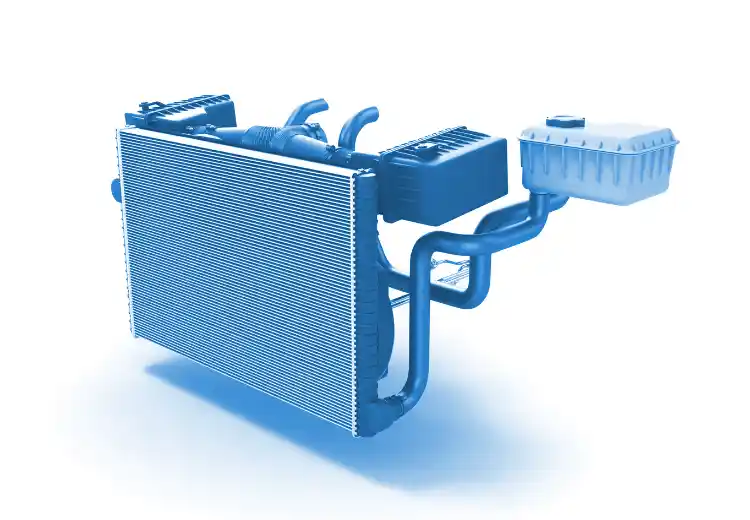 What system engine cooling subgroup is shown in the above illustration?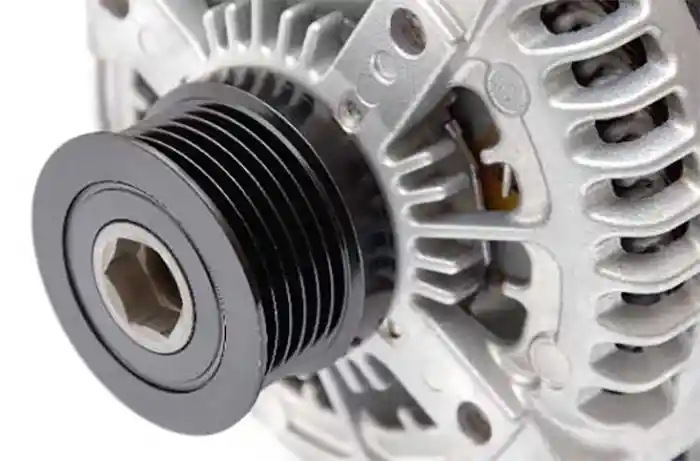
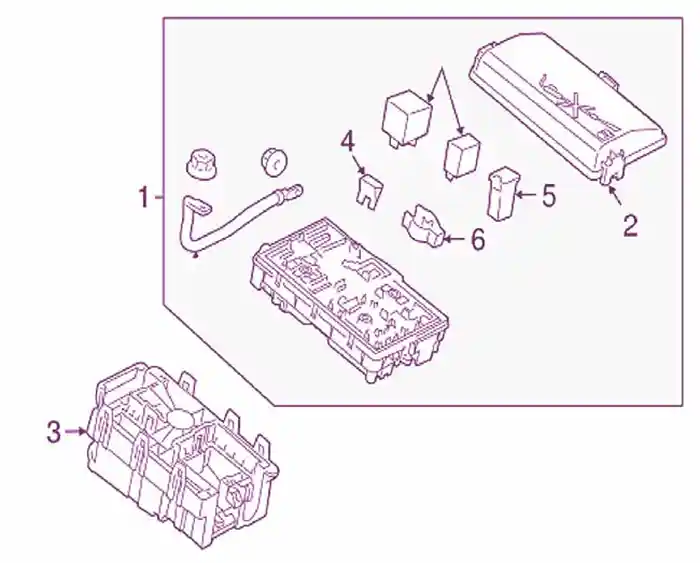
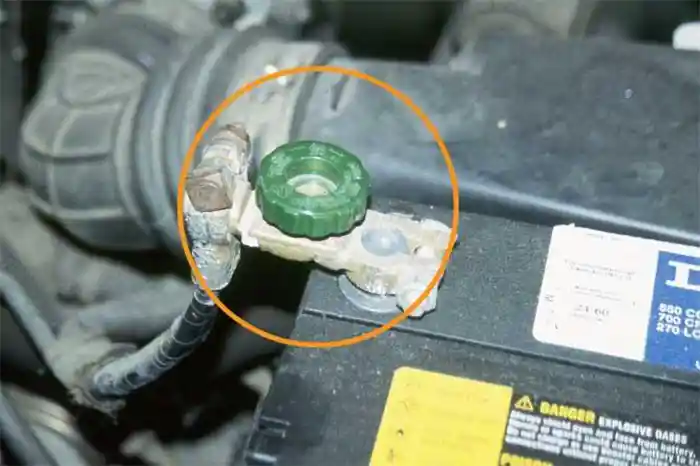 In the above photo, what is the special tool attached to the battery post used for
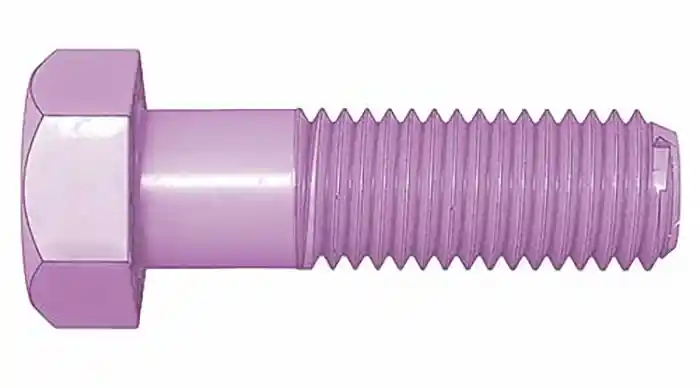 On an SAE grade 8 bolt, how many radial lines are shown on head?
 What is the proper way to measure the length of a bolt?
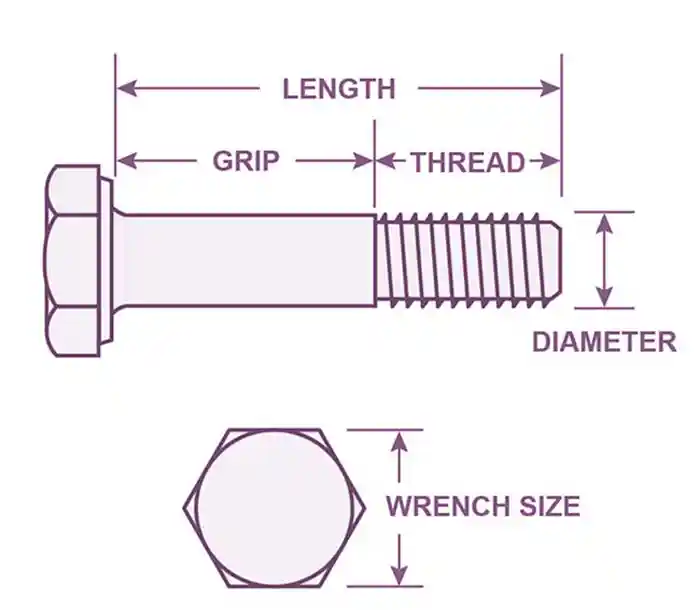 Parts Specialist A states slotted nuts are pinned using a cotter pin to prevent the nut from turning/loosening. Parts Specialist B states castle nuts that are used with front wheel bearings, are torqued, and then are slightly loosened to align with hole where the cotter pin is inserted. Which Parts Specialist is correct?
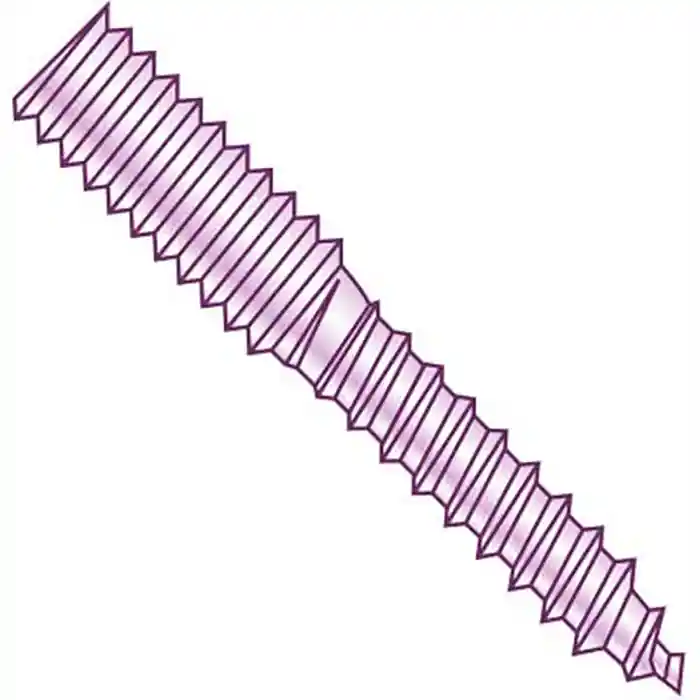 What type of fastener uses threads on both ends?